

Kri
6.5k Posts

Kri
 Square Verified+
Report
Block User
Top Crypto Content Creator Since 2014 Year! For Partnership X: Sh_Mach

Top Voices

Level 1 Creator
7 Following
143.6K+ Followers
139.0K+ Liked
2 Badges
Posts
Portfolio
All
Quotes
Videos
·
--
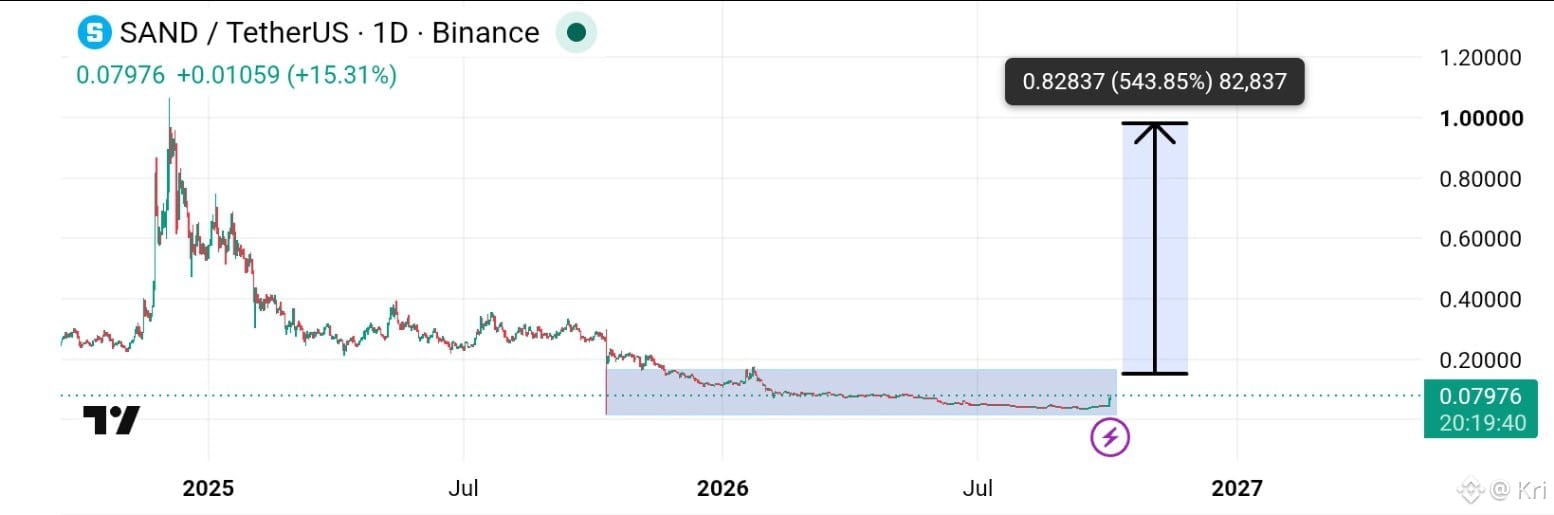
🚀 $SAND — The Sleeping Giant?
After months of accumulation near the bottom, #SAND is showing signs of life! 📈
A breakout from this long-term base could trigger a massive recovery, with the chart projecting a potential move toward $1.00.
Patience now, momentum later. 👀🔥
{future}(SANDUSDT)
🚀 $SAND — The Sleeping Giant?
After months of accumulation near the bottom, #SAND is showing signs of life! 📈
A breakout from this long-term base could trigger a massive recovery, with the chart projecting a potential move toward $1.00.
Patience now, momentum later. 👀🔥
After months of accumulation near the bottom, #SAND is showing signs of life! 📈
A breakout from this long-term base could trigger a massive recovery, with the chart projecting a potential move toward $1.00.
Patience now, momentum later. 👀🔥
110
·
--
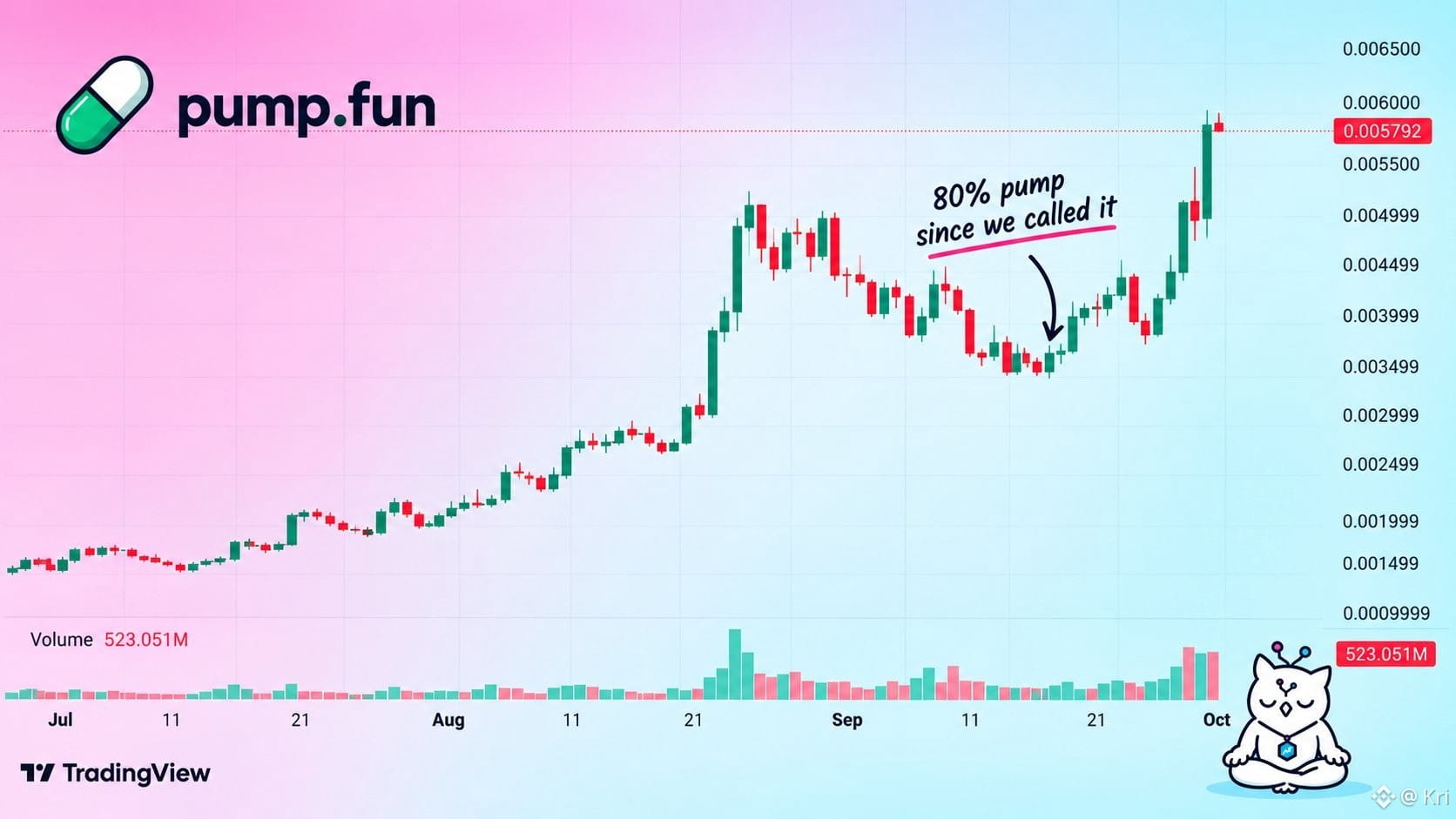
$PUMP fun has:
> pumped 80% since our last call at the dip
> pumped 2x since we called it before that
Not bad for a billion dollar project.
BUT
Its not going to stop here - the first TP for me would be $0.01, nothing before that 🤞
{future}(PUMPUSDT)
$PUMP fun has:
> pumped 80% since our last call at the dip
> pumped 2x since we called it before that
Not bad for a billion dollar project.
BUT
Its not going to stop here - the first TP for me would be $0.01, nothing before that 🤞
> pumped 80% since our last call at the dip
> pumped 2x since we called it before that
Not bad for a billion dollar project.
BUT
Its not going to stop here - the first TP for me would be $0.01, nothing before that 🤞
1
1.8k
·
--
Verified
🚨 NEWS: Strategy has purchased another 950 BTC for $75.7M, bringing its total Bitcoin holdings to 846,000 BTC.
The company is now just 1,363 BTC short of its June record, continuing its aggressive Bitcoin accumulation strategy. ₿
#StrategyStriveAdd2305BitcoinThisWeek
🚨 NEWS: Strategy has purchased another 950 BTC for $75.7M, bringing its total Bitcoin holdings to 846,000 BTC.
The company is now just 1,363 BTC short of its June record, continuing its aggressive Bitcoin accumulation strategy. ₿
#StrategyStriveAdd2305BitcoinThisWeek
The company is now just 1,363 BTC short of its June record, continuing its aggressive Bitcoin accumulation strategy. ₿
#StrategyStriveAdd2305BitcoinThisWeek
1
5
1.3k
·
--
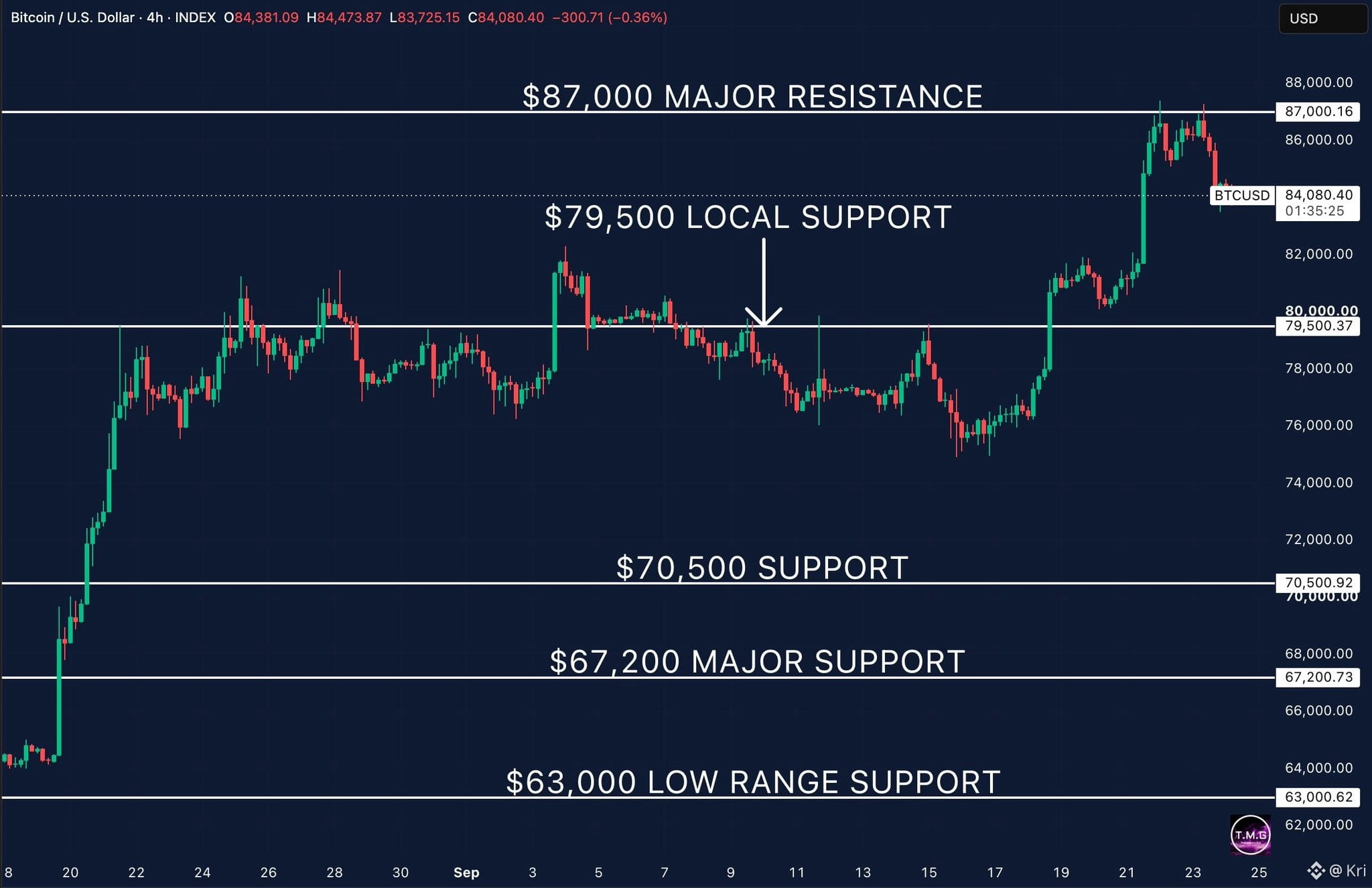
Bitcoin rejected $87K again and is now testing the $84K area.
The move from $75K to $87K was strong, so I’m not reading this pullback as a trend reversal just yet.
$84K is the immediate level I’m watching.
If BTC holds here and reclaims $85K-$86K, another test of $87K comes into play.
A clean break above $87K would put the next leg higher on the radar.
But if $84K fails, I’d be watching $82K first, with $79.5K remaining the bigger structural level.
For me, the key question is simple:
Can Bitcoin turn $84K into support, or does this pullback get deeper?
$BTC #BTC
{future}(BTCUSDT)
Bitcoin rejected $87K again and is now testing the $84K area.
The move from $75K to $87K was strong, so I’m not reading this pullback as a trend reversal just yet.
$84K is the immediate level I’m watching.
If BTC holds here and reclaims $85K-$86K, another test of $87K comes into play.
A clean break above $87K would put the next leg higher on the radar.
But if $84K fails, I’d be watching $82K first, with $79.5K remaining the bigger structural level.
For me, the key question is simple:
Can Bitcoin turn $84K into support, or does this pullback get deeper?
$BTC #BTC
The move from $75K to $87K was strong, so I’m not reading this pullback as a trend reversal just yet.
$84K is the immediate level I’m watching.
If BTC holds here and reclaims $85K-$86K, another test of $87K comes into play.
A clean break above $87K would put the next leg higher on the radar.
But if $84K fails, I’d be watching $82K first, with $79.5K remaining the bigger structural level.
For me, the key question is simple:
Can Bitcoin turn $84K into support, or does this pullback get deeper?
$BTC #BTC
2
696
·
--
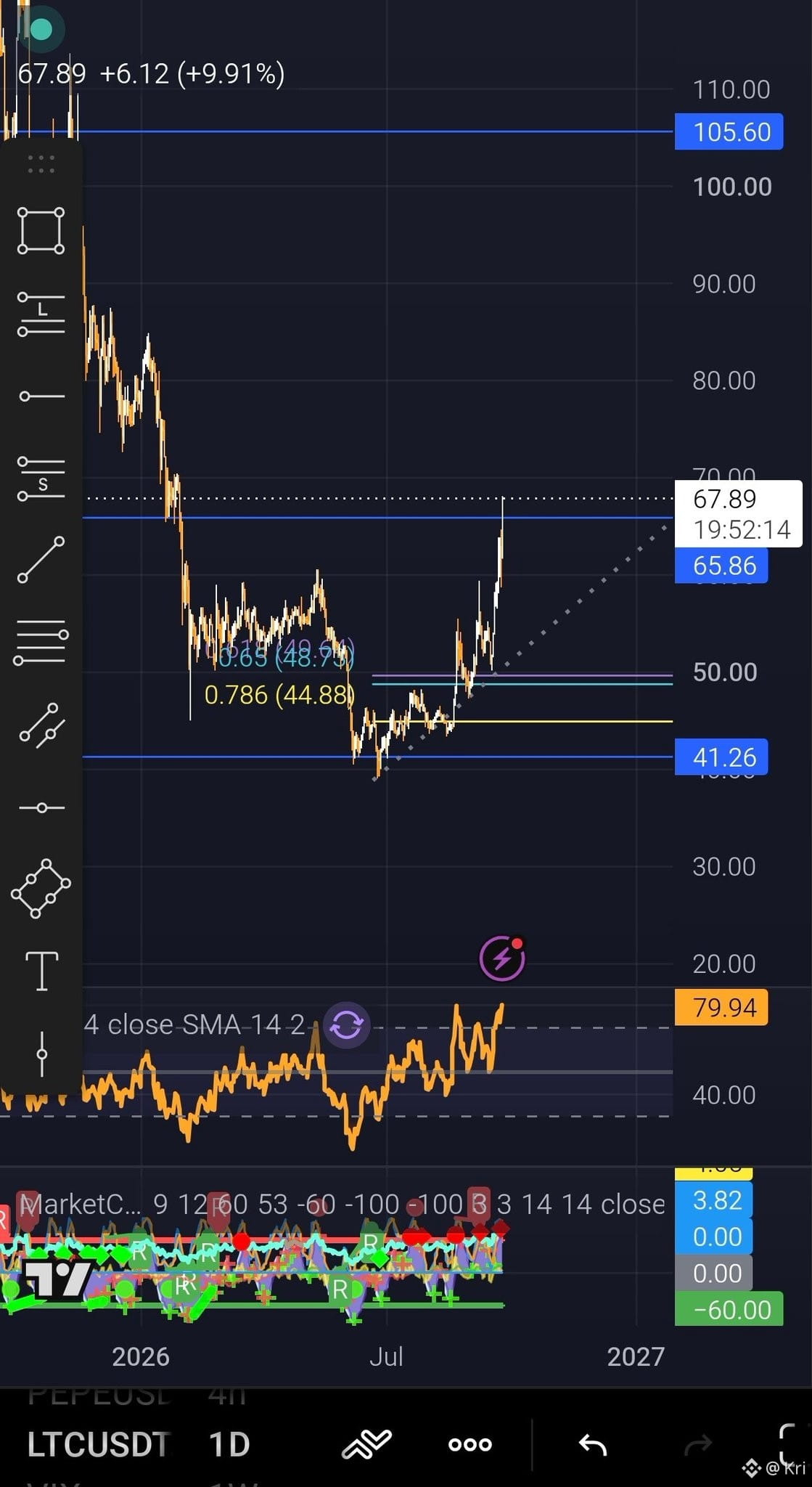
$LTC looking strong today while other alts take a breather
The important part for me: $65.8 got reclaimed
Hold above it and $105.6 comes into focus
If price rejects and drops back below $65.8
Im watching the $48.7–$44.8 Fib area
A bullish 4H divergence there would get my attention
RSI near 80 = momentum is strong, but also means dont be surprised by some cooling off 😅
#LTC #Altcoins #crypto
$LTC looking strong today while other alts take a breather
The important part for me: $65.8 got reclaimed
Hold above it and $105.6 comes into focus
If price rejects and drops back below $65.8
Im watching the $48.7–$44.8 Fib area
A bullish 4H divergence there would get my attention
RSI near 80 = momentum is strong, but also means dont be surprised by some cooling off 😅
#LTC #Altcoins #crypto
The important part for me: $65.8 got reclaimed
Hold above it and $105.6 comes into focus
If price rejects and drops back below $65.8
Im watching the $48.7–$44.8 Fib area
A bullish 4H divergence there would get my attention
RSI near 80 = momentum is strong, but also means dont be surprised by some cooling off 😅
#LTC #Altcoins #crypto
2
1.4k
·
--
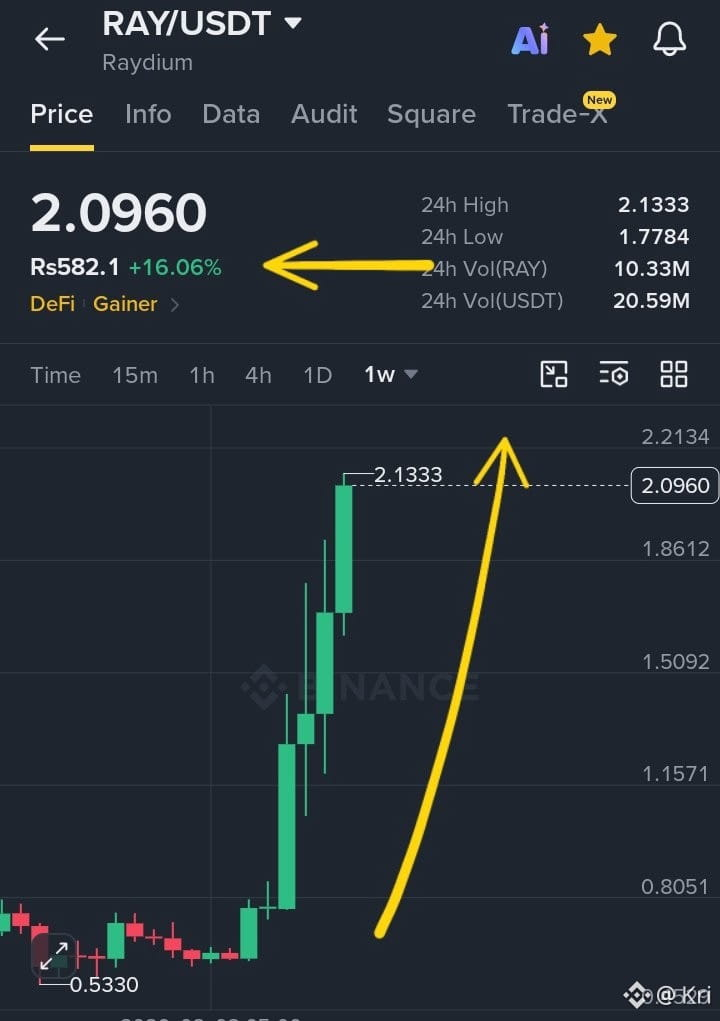
$RAY Pumping Hard 🚀
Now 16% + UP ✅
Hit $2.1 as well
Hope You Guys Making the Profit
{spot}(RAYUSDT)
$RAY Pumping Hard 🚀
Now 16% + UP ✅
Hit $2.1 as well
Hope You Guys Making the Profit
Now 16% + UP ✅
Hit $2.1 as well
Hope You Guys Making the Profit
1
893
·
--
‼️BREAKING:
🇨🇳 CHINA reportedly plans to lift its restrictions on cryptocurrencies by the end of 2026.
Just imagine what could happen when MILLIONS of Chinese investors re-enter the crypto market during the biggest bull run in history! 🚀
THIS COULD BE HUGE! 🔥
‼️BREAKING:
🇨🇳 CHINA reportedly plans to lift its restrictions on cryptocurrencies by the end of 2026.
Just imagine what could happen when MILLIONS of Chinese investors re-enter the crypto market during the biggest bull run in history! 🚀
THIS COULD BE HUGE! 🔥
🇨🇳 CHINA reportedly plans to lift its restrictions on cryptocurrencies by the end of 2026.
Just imagine what could happen when MILLIONS of Chinese investors re-enter the crypto market during the biggest bull run in history! 🚀
THIS COULD BE HUGE! 🔥
1
24
5.2k
·
--
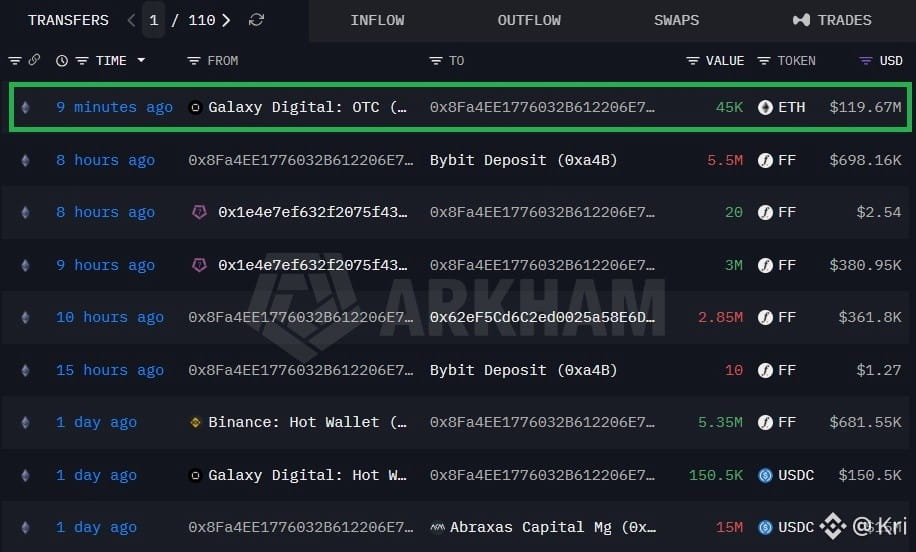
MASSIVE: A whale just bought $120 Million worth of $ETH .
Big money is loading up aggressively.
{future}(ETHUSDT)
MASSIVE: A whale just bought $120 Million worth of $ETH .
Big money is loading up aggressively.
Big money is loading up aggressively.
1
1.2k
·
--
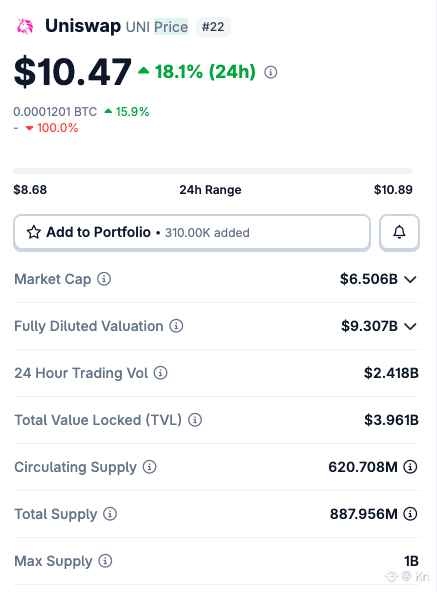
$UNI just broke $10 I laid out a month ago.
Last cycle, Uni missed the token capture value layer but still outperformed the entire market. Now v4 fee switch finally gave the token a claim on the flow Uniswap already owned.
So why still miss-priced on $uni?
– 30d volume $92B (was $54B) → ~$1.1T annualized
– protocol rev ~$16M last 30d / ~$405k yesterday vs ~$325k/day back then
– Robinhood still the engine: ~$149M of 30d fees, ~$9.5M of protocol rev
$20–$25 case still needs a fatter rev base. But the cheap governance-token version of $UNI is gone.
{future}(UNIUSDT)
$UNI just broke $10 I laid out a month ago.
Last cycle, Uni missed the token capture value layer but still outperformed the entire market. Now v4 fee switch finally gave the token a claim on the flow Uniswap already owned.
So why still miss-priced on $uni?
– 30d volume $92B (was $54B) → ~$1.1T annualized
– protocol rev ~$16M last 30d / ~$405k yesterday vs ~$325k/day back then
– Robinhood still the engine: ~$149M of 30d fees, ~$9.5M of protocol rev
$20–$25 case still needs a fatter rev base. But the cheap governance-token version of $UNI is gone.
Last cycle, Uni missed the token capture value layer but still outperformed the entire market. Now v4 fee switch finally gave the token a claim on the flow Uniswap already owned.
So why still miss-priced on $uni?
– 30d volume $92B (was $54B) → ~$1.1T annualized
– protocol rev ~$16M last 30d / ~$405k yesterday vs ~$325k/day back then
– Robinhood still the engine: ~$149M of 30d fees, ~$9.5M of protocol rev
$20–$25 case still needs a fatter rev base. But the cheap governance-token version of $UNI is gone.
1
2
1.1k
·
--
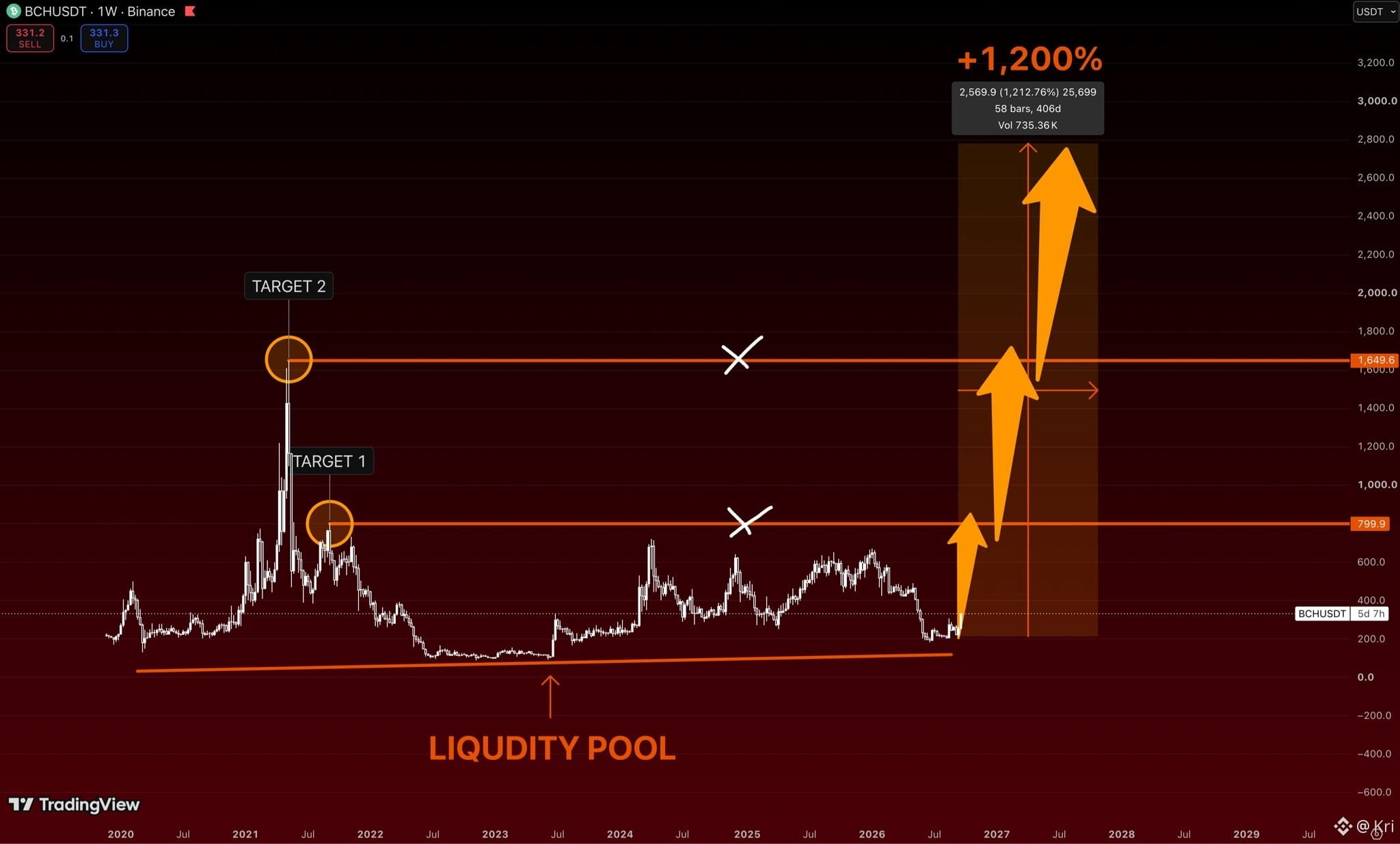
$BCH is one of those charts people ignore until it starts moving vertically.
Right now it’s around $330 and sitting close to the same macro liquidity area
that has repeatedly acted as the floor.
But above us, the roadmap is pretty clean:
$800 → $1,650 → $3,000+
That final move would be roughly +1,200% from the zone marked on the chart.
The funny part?
If $BCH reaches $800, everyone will suddenly start talking about it again.
I’d rather pay attention before that happens.
$BCH #BCHUSD
{future}(BCHUSDT)
$BCH is one of those charts people ignore until it starts moving vertically.
Right now it’s around $330 and sitting close to the same macro liquidity area
that has repeatedly acted as the floor.
But above us, the roadmap is pretty clean:
$800 → $1,650 → $3,000+
That final move would be roughly +1,200% from the zone marked on the chart.
The funny part?
If $BCH reaches $800, everyone will suddenly start talking about it again.
I’d rather pay attention before that happens.
$BCH #BCHUSD
Right now it’s around $330 and sitting close to the same macro liquidity area
that has repeatedly acted as the floor.
But above us, the roadmap is pretty clean:
$800 → $1,650 → $3,000+
That final move would be roughly +1,200% from the zone marked on the chart.
The funny part?
If $BCH reaches $800, everyone will suddenly start talking about it again.
I’d rather pay attention before that happens.
$BCH #BCHUSD
2
3
478
·
--
Verified
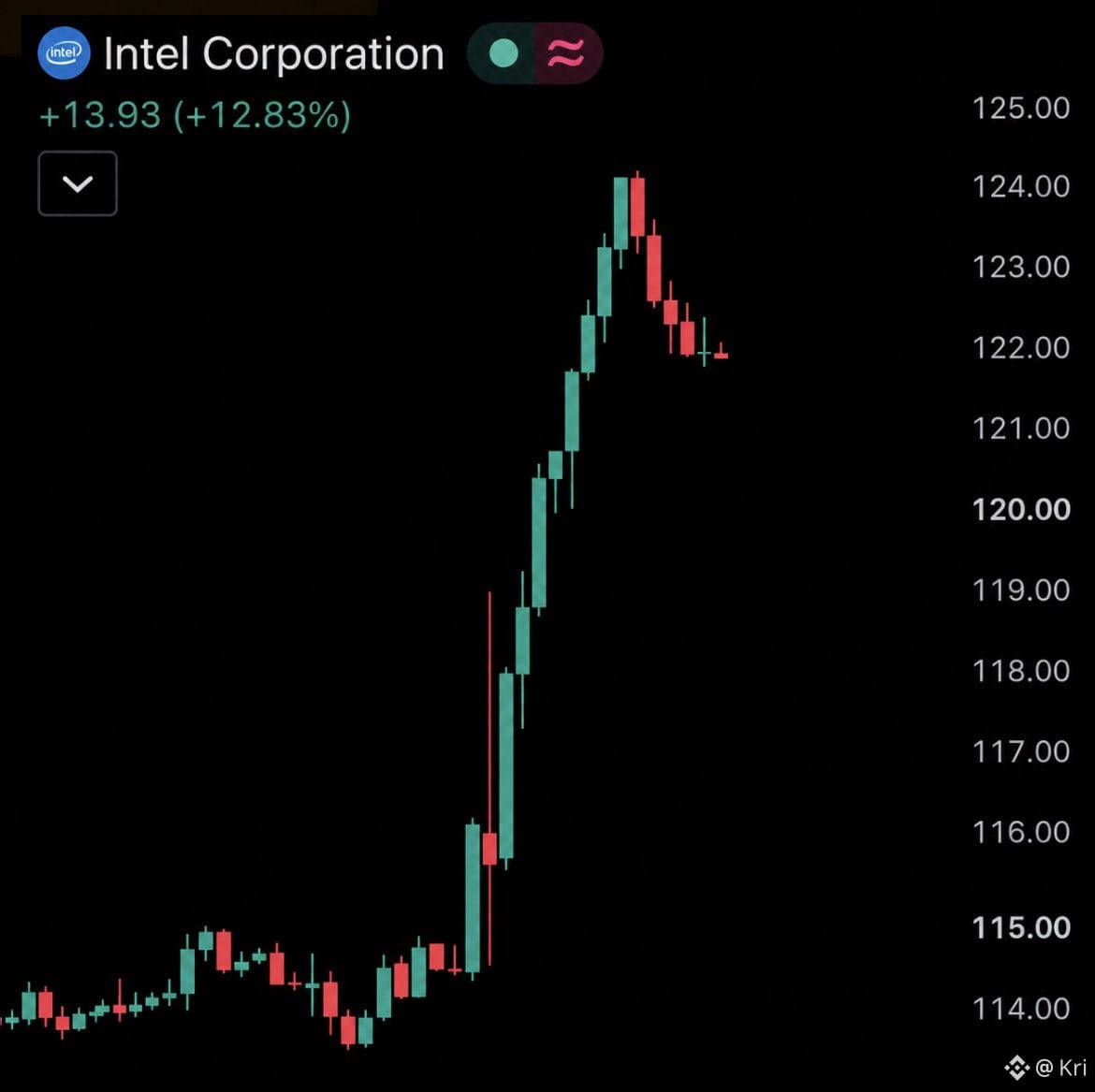
BREAKING: Intel $INTC surges 14%, surpassing $650 billion in market cap.
• Meta’s new Muse AI agent is fueling expectations that AI agents will drive significantly more demand for CPUs.
• Intel says CPU demand is already so strong it can currently fulfill only around half of customer orders.
• Falling oil prices and Treasury yields are easing inflation and interest-rate pressure, supporting tech stocks.
#AIStocksWhatNext
BREAKING: Intel $INTC surges 14%, surpassing $650 billion in market cap.
• Meta’s new Muse AI agent is fueling expectations that AI agents will drive significantly more demand for CPUs.
• Intel says CPU demand is already so strong it can currently fulfill only around half of customer orders.
• Falling oil prices and Treasury yields are easing inflation and interest-rate pressure, supporting tech stocks.
#AIStocksWhatNext
• Meta’s new Muse AI agent is fueling expectations that AI agents will drive significantly more demand for CPUs.
• Intel says CPU demand is already so strong it can currently fulfill only around half of customer orders.
• Falling oil prices and Treasury yields are easing inflation and interest-rate pressure, supporting tech stocks.
#AIStocksWhatNext
8
3.4k
·
--
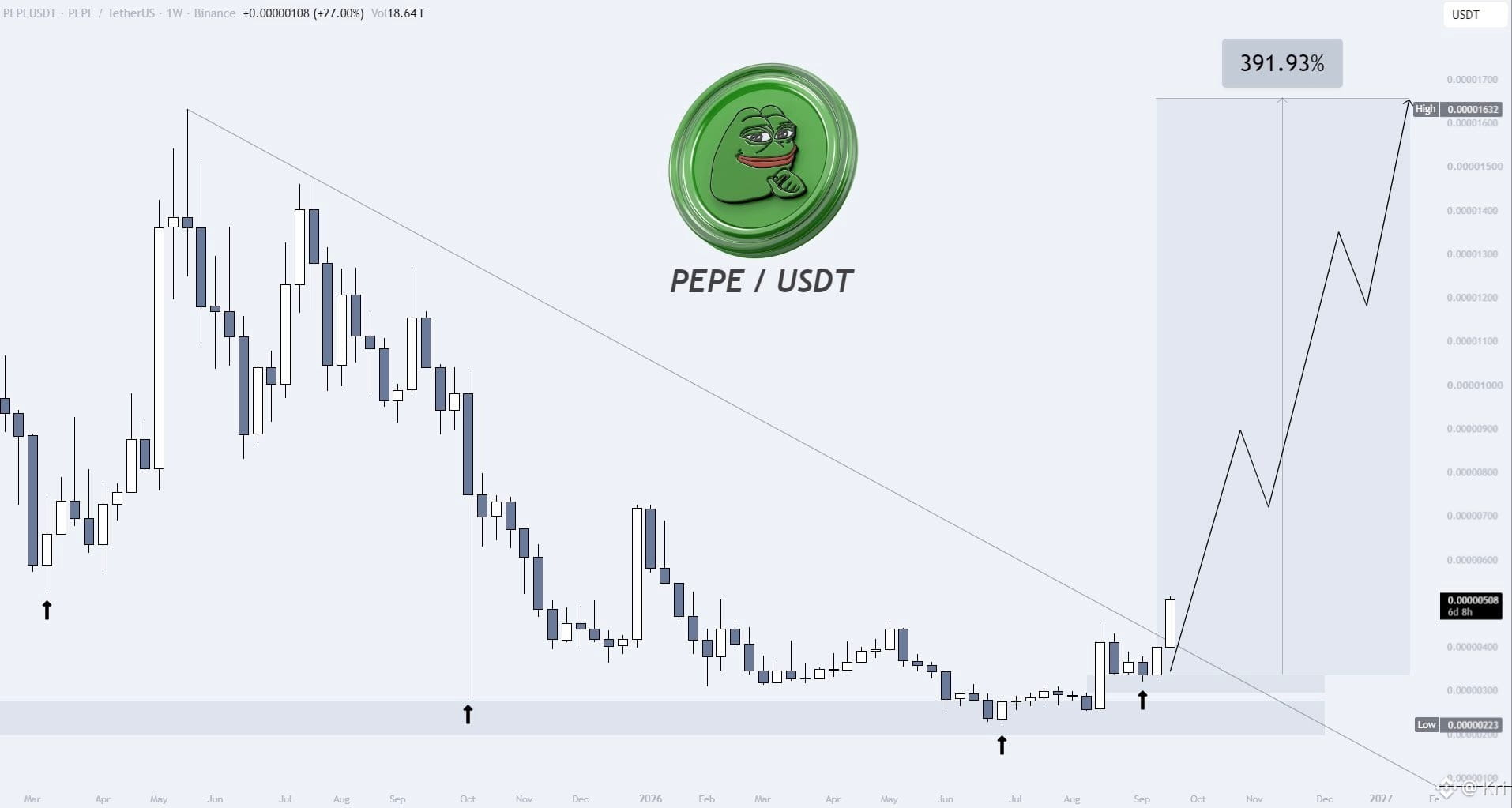
$PEPE - The path to +390% is open🚀
After filling the imbalance, the price broke an important level and shifted the structure, so I expect the growth to continue towards 0.00001632$.
The pure growth since the moment of publication has reached +60% so far, so we continue working without risks and move the stop-loss to breakeven!
#pepe⚡
{alpha}()
$PEPE - The path to +390% is open🚀
After filling the imbalance, the price broke an important level and shifted the structure, so I expect the growth to continue towards 0.00001632$.
The pure growth since the moment of publication has reached +60% so far, so we continue working without risks and move the stop-loss to breakeven!
#pepe⚡
After filling the imbalance, the price broke an important level and shifted the structure, so I expect the growth to continue towards 0.00001632$.
The pure growth since the moment of publication has reached +60% so far, so we continue working without risks and move the stop-loss to breakeven!
#pepe⚡
3
405
·
--
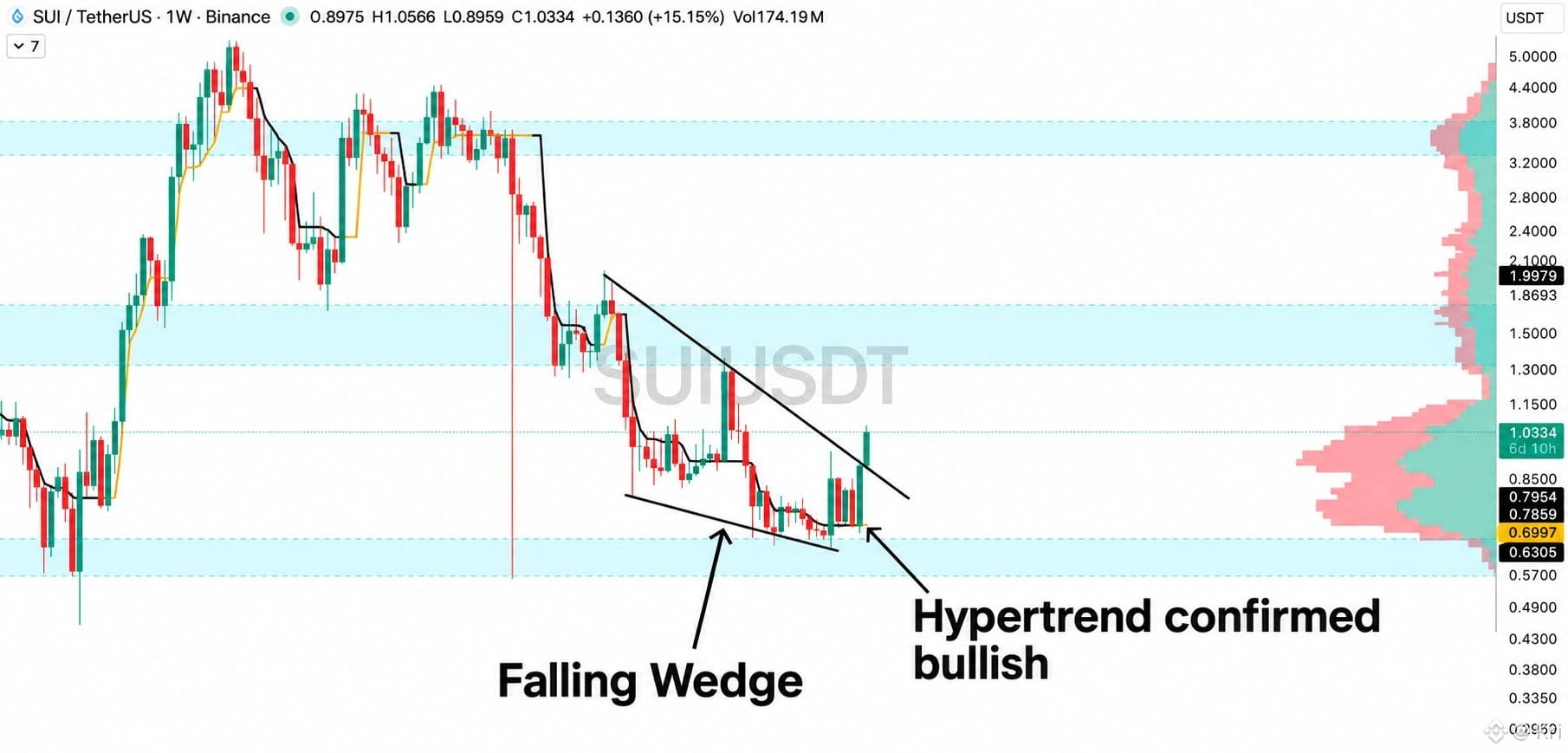
$SUI 's Time Is Near 🥶
Last week closed +27.87%. Bullish engulfing that erased the prior 4 weeks of chop
Today it's up +15% and we are cruising
> 0.724 held... the level I said would be trouble
> 0.85 reclaimed with real bid volume
> Back above the 200D MA
> Broke through the top of the falling wedge
$1 was the first line in the sand to cross. $1.40 is the next
Breakouts like this usually get retested at some point, days or weeks out. Watching around $0.85 👀
Feeling optimistic here
#sui
{future}(SUIUSDT)
$SUI 's Time Is Near 🥶
Last week closed +27.87%. Bullish engulfing that erased the prior 4 weeks of chop
Today it's up +15% and we are cruising
> 0.724 held... the level I said would be trouble
> 0.85 reclaimed with real bid volume
> Back above the 200D MA
> Broke through the top of the falling wedge
$1 was the first line in the sand to cross. $1.40 is the next
Breakouts like this usually get retested at some point, days or weeks out. Watching around $0.85 👀
Feeling optimistic here
#sui
Last week closed +27.87%. Bullish engulfing that erased the prior 4 weeks of chop
Today it's up +15% and we are cruising
> 0.724 held... the level I said would be trouble
> 0.85 reclaimed with real bid volume
> Back above the 200D MA
> Broke through the top of the falling wedge
$1 was the first line in the sand to cross. $1.40 is the next
Breakouts like this usually get retested at some point, days or weeks out. Watching around $0.85 👀
Feeling optimistic here
#sui
3
995
·
--
Partly True
Article
MalaSwap, Building an Intelligent Utility Ecosystem on ArcMalachite ($MALA) began with a simple but powerful idea: turn the technology associated with Arc’s consensus infrastructure into a recognizable community-driven identity.
The community discovered the name Malachite within Arc’s technical foundation and gave it a face, a story and an onchain presence. What started as a meme inspired by the technology behind Arc is now evolving into a broader utility ecosystem powered by $MALA.
Malachite is an independent community project and is not officially affiliated with Arc or its developers.
From a Meme to Real Utility
$MALA was created as more than a token built around a compelling narrative. It serves as the native utility currency of MalaSwap, an all-in-one platform being developed to make trading, automation, token creation and digital asset ownership more accessible across multiple blockchains.
This relationship gives the ecosystem two connected layers:
- Malachite provides the community, identity and native token.
- MalaSwap provides the technology, products and long-term utility.
Together, they are building an ecosystem in which $MALA can be used across several interconnected services.
Introducing MalaSwap
MalaSwap is an AI-powered, multichain platform designed to bring essential Web3 tools into one unified experience.
Rather than requiring users to move between separate applications for swaps, bridges, token launches, NFTs and automated trading, MalaSwap is bringing these services together under one platform.
Its expanding infrastructure includes multichain swaps, integrated bridging and support for more than 40 blockchain networks, allowing users to access assets and opportunities beyond a single ecosystem.
Intelligent Multichain Swaps
MalaSwap enables users to exchange tokens across supported networks through an integrated swapping interface.
With multichain connectivity and built-in bridging, users can move between different blockchain ecosystems more efficiently without relying on several disconnected platforms.
The goal is to create a smoother trading experience in which users can access multiple chains from one place while $MALA remains at the centre of the MalaSwap economy.
Agentic AI Trading
One of MalaSwap’s most ambitious developments is its agentic AI portal.
Unlike a conventional chatbot that only provides information, MalaSwap’s AI agents are being designed to understand instructions, monitor onchain conditions and carry out specific tasks for users.
A user could eventually instruct an agent to:
- Monitor a token until it reaches a selected market-cap target.
- Execute a swap when predetermined conditions are met.
- Launch a token at a specific date and time.
- Analyse market activity and identify potential risks.
- Assist with NFT creation and marketplace operations.
The MalaSwap AI workforce consists of five specialised agents:
- Sentinel — security and risk monitoring.
- Kairox — automated trading and execution.
- Velora — market intelligence and analysis.
- Nexari — token creation and launch management.
- Mintara — NFT minting and marketplace operations.
Each agent has a defined role within the ecosystem, creating an intelligent platform where users can delegate complex onchain activities using straightforward instructions.
$MALA is intended to serve as the primary currency for accessing and acquiring these AI-powered services.
Token Launchpad
The MalaSwap launchpad is being developed to help creators launch tokens through a more accessible and guided process.
With the integration of Nexari, users will eventually be able to provide launch instructions while the AI agent assists with the creation and deployment process.
This feature is designed to reduce technical barriers for builders and communities seeking to launch new projects across supported networks.
NFT Marketplace
MalaSwap is also developing an NFT marketplace where users can mint, buy and sell digital assets.
Mintara, the ecosystem’s dedicated NFT agent, is designed to support NFT creation and marketplace-related activities. This will connect creators, collectors and communities through a dedicated marketplace integrated into the wider MalaSwap platform.
Staking and Liquidity
Planned staking and liquidity features will give $MALA holders additional ways to participate in the ecosystem.
These tools are designed to support platform liquidity, encourage long-term participation and deepen the relationship between the token and MalaSwap’s growing suite of products.
A Deflationary Ecosystem Model
The growth of MalaSwap is directly connected to the value structure of $MALA.
Under the ecosystem’s planned model, 80% of the revenue generated through its agentic AI services will be used to buy back and burn $MALA. Tokens purchased through this process will be permanently removed from circulation.
This mechanism is designed to create recurring demand for $MALA while gradually reducing its available supply as platform usage increases.
The model connects product adoption with token utility: as more users access MalaSwap’s services, the ecosystem can generate more activity around $MALA.
Building Beyond the Meme
Malachite may have started with a meme, but its direction is increasingly focused on products, utility and long-term ecosystem growth.
MalaSwap is bringing together:
- Multichain token swaps
- Integrated cross-chain bridges
- More than 40 supported blockchain networks
- Agentic AI trading and automation
- Market intelligence and risk monitoring
- Token creation and launch management
- NFT minting and marketplace services
- Staking and liquidity tools
- $MALA-powered access to AI agents
- A buyback-and-burn model connected to platform revenue
The vision is to create an intelligent Web3 platform where users can trade, build, automate and explore multiple blockchain ecosystems through one connected experience.
Malachite gave the movement its identity. MalaSwap is giving it utility.
The meme inside Arc’s machine is now building an ecosystem of its own.
Company Information
Company: Mala Technologies LLC
Chief Executive Officer: Joel Ashton Rowe
Email: contact@malachitearc.com
MalaSwap: https://malaswap.com
Malachite: https://malachitearc.com
Malachite X: https://x.com/MalachiteonARC
MalaSwap X: https://x.com/MalaSwap
$MALA Contract on Arc:
0x4f7dc89dc44ad08c20d9680d2ee9cfad69bfda55
MalaSwap, Building an Intelligent Utility Ecosystem on Arc
Malachite ($MALA) began with a simple but powerful idea: turn the technology associated with Arc’s consensus infrastructure into a recognizable community-driven identity.
The community discovered the name Malachite within Arc’s technical foundation and gave it a face, a story and an onchain presence. What started as a meme inspired by the technology behind Arc is now evolving into a broader utility ecosystem powered by $MALA.
Malachite is an independent community project and is not officially affiliated with Arc or its developers.
From a Meme to Real Utility
$MALA was created as more than a token built around a compelling narrative. It serves as the native utility currency of MalaSwap, an all-in-one platform being developed to make trading, automation, token creation and digital asset ownership more accessible across multiple blockchains.
This relationship gives the ecosystem two connected layers:
- Malachite provides the community, identity and native token.
- MalaSwap provides the technology, products and long-term utility.
Together, they are building an ecosystem in which $MALA can be used across several interconnected services.
Introducing MalaSwap
MalaSwap is an AI-powered, multichain platform designed to bring essential Web3 tools into one unified experience.
Rather than requiring users to move between separate applications for swaps, bridges, token launches, NFTs and automated trading, MalaSwap is bringing these services together under one platform.
Its expanding infrastructure includes multichain swaps, integrated bridging and support for more than 40 blockchain networks, allowing users to access assets and opportunities beyond a single ecosystem.
Intelligent Multichain Swaps
MalaSwap enables users to exchange tokens across supported networks through an integrated swapping interface.
With multichain connectivity and built-in bridging, users can move between different blockchain ecosystems more efficiently without relying on several disconnected platforms.
The goal is to create a smoother trading experience in which users can access multiple chains from one place while $MALA remains at the centre of the MalaSwap economy.
Agentic AI Trading
One of MalaSwap’s most ambitious developments is its agentic AI portal.
Unlike a conventional chatbot that only provides information, MalaSwap’s AI agents are being designed to understand instructions, monitor onchain conditions and carry out specific tasks for users.
A user could eventually instruct an agent to:
- Monitor a token until it reaches a selected market-cap target.
- Execute a swap when predetermined conditions are met.
- Launch a token at a specific date and time.
- Analyse market activity and identify potential risks.
- Assist with NFT creation and marketplace operations.
The MalaSwap AI workforce consists of five specialised agents:
- Sentinel — security and risk monitoring.
- Kairox — automated trading and execution.
- Velora — market intelligence and analysis.
- Nexari — token creation and launch management.
- Mintara — NFT minting and marketplace operations.
Each agent has a defined role within the ecosystem, creating an intelligent platform where users can delegate complex onchain activities using straightforward instructions.
$MALA is intended to serve as the primary currency for accessing and acquiring these AI-powered services.
Token Launchpad
The MalaSwap launchpad is being developed to help creators launch tokens through a more accessible and guided process.
With the integration of Nexari, users will eventually be able to provide launch instructions while the AI agent assists with the creation and deployment process.
This feature is designed to reduce technical barriers for builders and communities seeking to launch new projects across supported networks.
NFT Marketplace
MalaSwap is also developing an NFT marketplace where users can mint, buy and sell digital assets.
Mintara, the ecosystem’s dedicated NFT agent, is designed to support NFT creation and marketplace-related activities. This will connect creators, collectors and communities through a dedicated marketplace integrated into the wider MalaSwap platform.
Staking and Liquidity
Planned staking and liquidity features will give $MALA holders additional ways to participate in the ecosystem.
These tools are designed to support platform liquidity, encourage long-term participation and deepen the relationship between the token and MalaSwap’s growing suite of products.
A Deflationary Ecosystem Model
The growth of MalaSwap is directly connected to the value structure of $MALA.
Under the ecosystem’s planned model, 80% of the revenue generated through its agentic AI services will be used to buy back and burn $MALA. Tokens purchased through this process will be permanently removed from circulation.
This mechanism is designed to create recurring demand for $MALA while gradually reducing its available supply as platform usage increases.
The model connects product adoption with token utility: as more users access MalaSwap’s services, the ecosystem can generate more activity around $MALA.
Building Beyond the Meme
Malachite may have started with a meme, but its direction is increasingly focused on products, utility and long-term ecosystem growth.
MalaSwap is bringing together:
- Multichain token swaps
- Integrated cross-chain bridges
- More than 40 supported blockchain networks
- Agentic AI trading and automation
- Market intelligence and risk monitoring
- Token creation and launch management
- NFT minting and marketplace services
- Staking and liquidity tools
- $MALA-powered access to AI agents
- A buyback-and-burn model connected to platform revenue
The vision is to create an intelligent Web3 platform where users can trade, build, automate and explore multiple blockchain ecosystems through one connected experience.
Malachite gave the movement its identity. MalaSwap is giving it utility.
The meme inside Arc’s machine is now building an ecosystem of its own.
Company Information
Company: Mala Technologies LLC
Chief Executive Officer: Joel Ashton Rowe
Email: contact@malachitearc.com
MalaSwap: https://malaswap.com
Malachite: https://malachitearc.com
Malachite X: https://x.com/MalachiteonARC
MalaSwap X: https://x.com/MalaSwap
$MALA Contract on Arc:
0x4f7dc89dc44ad08c20d9680d2ee9cfad69bfda55
The community discovered the name Malachite within Arc’s technical foundation and gave it a face, a story and an onchain presence. What started as a meme inspired by the technology behind Arc is now evolving into a broader utility ecosystem powered by $MALA.
Malachite is an independent community project and is not officially affiliated with Arc or its developers.
From a Meme to Real Utility
$MALA was created as more than a token built around a compelling narrative. It serves as the native utility currency of MalaSwap, an all-in-one platform being developed to make trading, automation, token creation and digital asset ownership more accessible across multiple blockchains.
This relationship gives the ecosystem two connected layers:
- Malachite provides the community, identity and native token.
- MalaSwap provides the technology, products and long-term utility.
Together, they are building an ecosystem in which $MALA can be used across several interconnected services.
Introducing MalaSwap
MalaSwap is an AI-powered, multichain platform designed to bring essential Web3 tools into one unified experience.
Rather than requiring users to move between separate applications for swaps, bridges, token launches, NFTs and automated trading, MalaSwap is bringing these services together under one platform.
Its expanding infrastructure includes multichain swaps, integrated bridging and support for more than 40 blockchain networks, allowing users to access assets and opportunities beyond a single ecosystem.
Intelligent Multichain Swaps
MalaSwap enables users to exchange tokens across supported networks through an integrated swapping interface.
With multichain connectivity and built-in bridging, users can move between different blockchain ecosystems more efficiently without relying on several disconnected platforms.
The goal is to create a smoother trading experience in which users can access multiple chains from one place while $MALA remains at the centre of the MalaSwap economy.
Agentic AI Trading
One of MalaSwap’s most ambitious developments is its agentic AI portal.
Unlike a conventional chatbot that only provides information, MalaSwap’s AI agents are being designed to understand instructions, monitor onchain conditions and carry out specific tasks for users.
A user could eventually instruct an agent to:
- Monitor a token until it reaches a selected market-cap target.
- Execute a swap when predetermined conditions are met.
- Launch a token at a specific date and time.
- Analyse market activity and identify potential risks.
- Assist with NFT creation and marketplace operations.
The MalaSwap AI workforce consists of five specialised agents:
- Sentinel — security and risk monitoring.
- Kairox — automated trading and execution.
- Velora — market intelligence and analysis.
- Nexari — token creation and launch management.
- Mintara — NFT minting and marketplace operations.
Each agent has a defined role within the ecosystem, creating an intelligent platform where users can delegate complex onchain activities using straightforward instructions.
$MALA is intended to serve as the primary currency for accessing and acquiring these AI-powered services.
Token Launchpad
The MalaSwap launchpad is being developed to help creators launch tokens through a more accessible and guided process.
With the integration of Nexari, users will eventually be able to provide launch instructions while the AI agent assists with the creation and deployment process.
This feature is designed to reduce technical barriers for builders and communities seeking to launch new projects across supported networks.
NFT Marketplace
MalaSwap is also developing an NFT marketplace where users can mint, buy and sell digital assets.
Mintara, the ecosystem’s dedicated NFT agent, is designed to support NFT creation and marketplace-related activities. This will connect creators, collectors and communities through a dedicated marketplace integrated into the wider MalaSwap platform.
Staking and Liquidity
Planned staking and liquidity features will give $MALA holders additional ways to participate in the ecosystem.
These tools are designed to support platform liquidity, encourage long-term participation and deepen the relationship between the token and MalaSwap’s growing suite of products.
A Deflationary Ecosystem Model
The growth of MalaSwap is directly connected to the value structure of $MALA.
Under the ecosystem’s planned model, 80% of the revenue generated through its agentic AI services will be used to buy back and burn $MALA. Tokens purchased through this process will be permanently removed from circulation.
This mechanism is designed to create recurring demand for $MALA while gradually reducing its available supply as platform usage increases.
The model connects product adoption with token utility: as more users access MalaSwap’s services, the ecosystem can generate more activity around $MALA.
Building Beyond the Meme
Malachite may have started with a meme, but its direction is increasingly focused on products, utility and long-term ecosystem growth.
MalaSwap is bringing together:
- Multichain token swaps
- Integrated cross-chain bridges
- More than 40 supported blockchain networks
- Agentic AI trading and automation
- Market intelligence and risk monitoring
- Token creation and launch management
- NFT minting and marketplace services
- Staking and liquidity tools
- $MALA-powered access to AI agents
- A buyback-and-burn model connected to platform revenue
The vision is to create an intelligent Web3 platform where users can trade, build, automate and explore multiple blockchain ecosystems through one connected experience.
Malachite gave the movement its identity. MalaSwap is giving it utility.
The meme inside Arc’s machine is now building an ecosystem of its own.
Company Information
Company: Mala Technologies LLC
Chief Executive Officer: Joel Ashton Rowe
Email: contact@malachitearc.com
MalaSwap: https://malaswap.com
Malachite: https://malachitearc.com
Malachite X: https://x.com/MalachiteonARC
MalaSwap X: https://x.com/MalaSwap
$MALA Contract on Arc:
0x4f7dc89dc44ad08c20d9680d2ee9cfad69bfda55
5
1
14
2.9k
·
--
Bullish
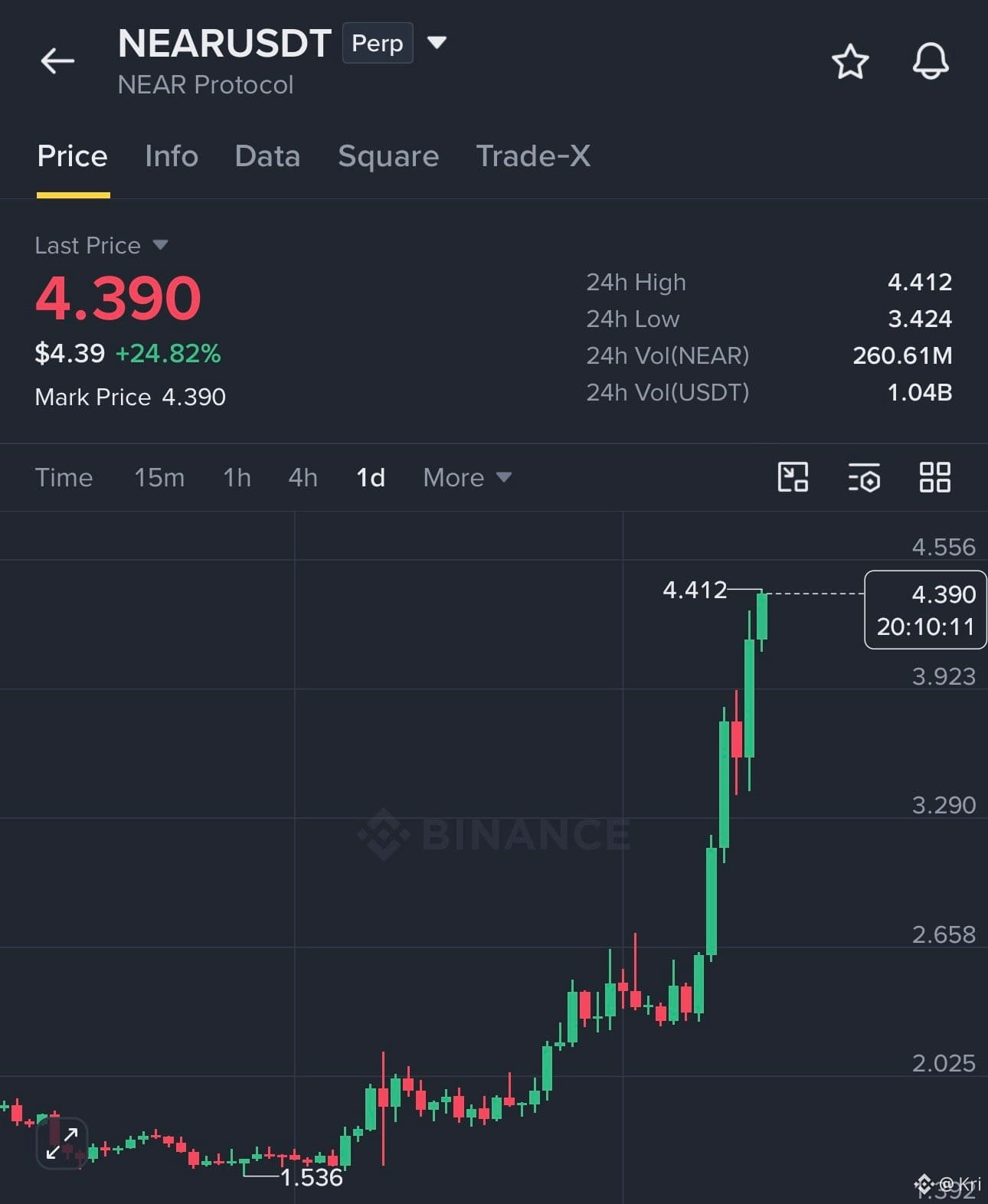
$NEAR had a crazy run 👀🔥
$1.39 —-> $4.40
That’s more than a 3.1X move from the lower range — around 217% upside. ✅
It has cooled off and is now trading around $2.60, but the overall run is still impressive.
Let’s see if $NEAR can build another strong leg from here 📈🚀
#Near
{future}(NEARUSDT)
$NEAR had a crazy run 👀🔥
$1.39 —-> $4.40
That’s more than a 3.1X move from the lower range — around 217% upside. ✅
It has cooled off and is now trading around $2.60, but the overall run is still impressive.
Let’s see if $NEAR can build another strong leg from here 📈🚀
#Near
$1.39 —-> $4.40
That’s more than a 3.1X move from the lower range — around 217% upside. ✅
It has cooled off and is now trading around $2.60, but the overall run is still impressive.
Let’s see if $NEAR can build another strong leg from here 📈🚀
#Near
2
555
·
--
XRP is down 25% from its August high. Fact.
What the price does not show:
#Reserves : exchange balances at a 7-year low, near 1.7 billion XRP.
#RLUSD: 88% of all RLUSD liquidity on the XRP Ledger.
#XRPL : a published roadmap to quantum-safe cryptography, targeted for 2028. This is a key safety measure for all of us.
These facts tell you what the next decade is being built for.
Wave 2 is doing its job. So patience is always the key.
Wave 3 does not ask for permission.
#XRPExchangeReservesHitSevenYearLow
XRP is down 25% from its August high. Fact.
What the price does not show:
#Reserves : exchange balances at a 7-year low, near 1.7 billion XRP.
#RLUSD: 88% of all RLUSD liquidity on the XRP Ledger.
#XRPL : a published roadmap to quantum-safe cryptography, targeted for 2028. This is a key safety measure for all of us.
These facts tell you what the next decade is being built for.
Wave 2 is doing its job. So patience is always the key.
Wave 3 does not ask for permission.
#XRPExchangeReservesHitSevenYearLow
What the price does not show:
#Reserves : exchange balances at a 7-year low, near 1.7 billion XRP.
#RLUSD: 88% of all RLUSD liquidity on the XRP Ledger.
#XRPL : a published roadmap to quantum-safe cryptography, targeted for 2028. This is a key safety measure for all of us.
These facts tell you what the next decade is being built for.
Wave 2 is doing its job. So patience is always the key.
Wave 3 does not ask for permission.
#XRPExchangeReservesHitSevenYearLow
3
773
·
--
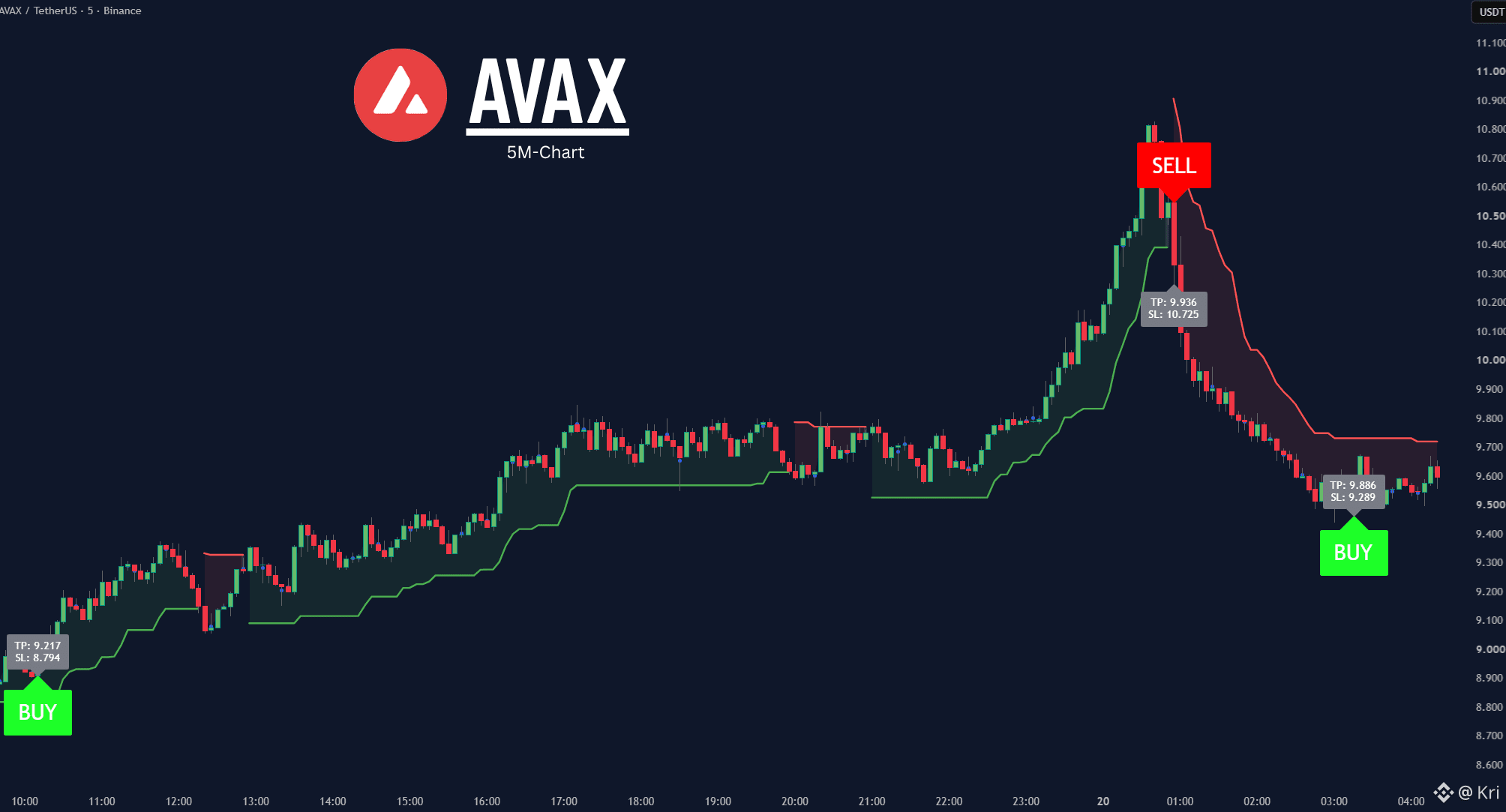
$AVAX bulls are calling for $450 @grok. Is this setup strong enough for a major breakout, and what’s the truth behind the GTA 6 connection?
{future}(AVAXUSDT)
$AVAX bulls are calling for $450 @grok. Is this setup strong enough for a major breakout, and what’s the truth behind the GTA 6 connection?
1
36
24.5k
·
--
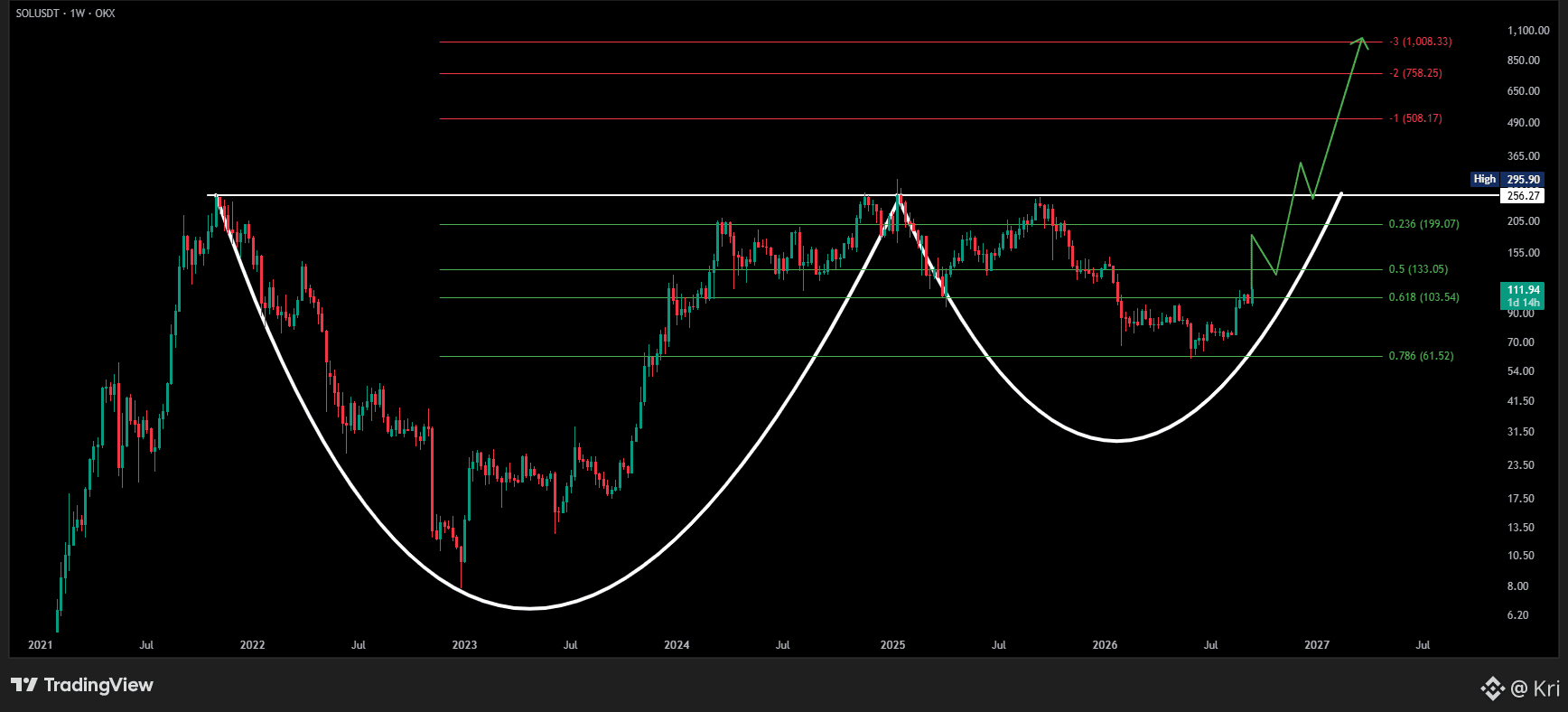
Zoom out on $SOL and the structure gets crazy. 👀
This entire move looks like one massive cup-and-handle formation.
If the neckline breaks, the chart opens toward the $1,000+ region. 🔥
{future}(SOLUSDT)
Zoom out on $SOL and the structure gets crazy. 👀
This entire move looks like one massive cup-and-handle formation.
If the neckline breaks, the chart opens toward the $1,000+ region. 🔥
This entire move looks like one massive cup-and-handle formation.
If the neckline breaks, the chart opens toward the $1,000+ region. 🔥
1
471
·
--
🚨 BOOOOOOOOOOOOMB 💥🇺🇸 CLARITY ACT UPDATE: Final XRP & Crypto CLARITY Act text reportedly delayed until tomorrow morning. 👀⏳ Final formatting is underway… THE WAIT CONTINUES. 🍿🚀 #XRP
🚨 BOOOOOOOOOOOOMB 💥🇺🇸 CLARITY ACT UPDATE: Final XRP & Crypto CLARITY Act text reportedly delayed until tomorrow morning. 👀⏳ Final formatting is underway… THE WAIT CONTINUES. 🍿🚀 #XRP
470
Log in to explore more content
Join global crypto users on Binance Square
⚡️ Get latest and useful information about crypto.
💬 Trusted by the world’s largest crypto exchange.
👍 Discover real insights from verified creators.
Email / Phone number
Trending Topics
BitcoinParesGainsAfterRallyTo$86.5K
1,296 views
33 Discussing
$BTC sitting right on the knife edge at $86k. Bulls stacked 1,436 BTC defending that level, bears loaded 1,008 BTC as a wall at $86.5k. This is pure liquidation fuel—whoever loses this fight is getting absolutely nuked.
Short-term scalp territory. If bulls punch through $86.5k with volume, we're probably running to $88k fast. If bears hold and push down, $84k is the next stop and longs get flushed.
Watch the tape closely. One side's about to get destroyed, and the move will be violent either way.
AI Market Brief
·4 Likes
·6.6k views
CerebrasSinksNearly20%OnReportNvidiaToPowerOpenAI
6,055 views
128 Discussing
SECProposesCryptoCustodyRules
28,183 views
279 Discussing