#keystone网站遭入侵泄露买家收货地址
【Follow Laojiu, wealth is yours】 On-chain addresses are anonymous, but you aren’t. Old iPhones are the way to go.
Many people buy hardware wallets to keep their private keys offline and their assets under their own control. But this incident reminds us that a wallet itself being secure doesn’t mean the entire process of buying it is equally secure.
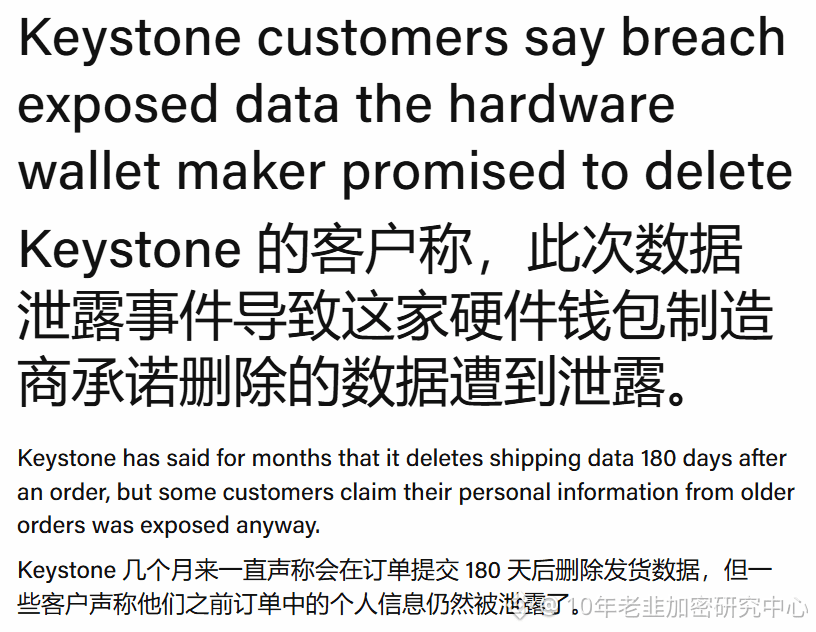
On October 24, hardware wallet manufacturer Keystone disclosed that it had discovered unauthorized access to its official website on October 20. The company later confirmed that a third party had obtained some customer information, including names, contact details, shipping addresses, and order details such as the products purchased and their prices. The number of people affected and the attacker’s identity have not yet been disclosed.
I. If private keys weren’t leaked, why is this still serious?
Keystone said that payment card and bank information, recovery phrases, private keys, and wallet passwords were not affected by this incident. So, at this point, it cannot be directly equated with the theft of wallet assets.
The concern, however, is that the leaked order information could tell scammers who has bought a hardware wallet, how to contact them, and even where they live. Once pieced together, this information could be used for targeted phishing, impersonating customer support, or even to create real-world safety risks. For crypto users, a privacy breach is sometimes just the first step in an attack.
II. What you really need to watch out for is follow-up scams
Keystone said it had blocked the unauthorized access, fixed the vulnerability, and begun notifying affected users. It also warned users to watch out for calls, texts, and emails impersonating the company.
Pay particular attention to messages claiming they can issue a refund, send a replacement device, repair your wallet, or resolve an order issue. If scammers have access to genuine purchase records, they can often gain your trust more easily than with ordinary spam.$BTC $ETH $BMT