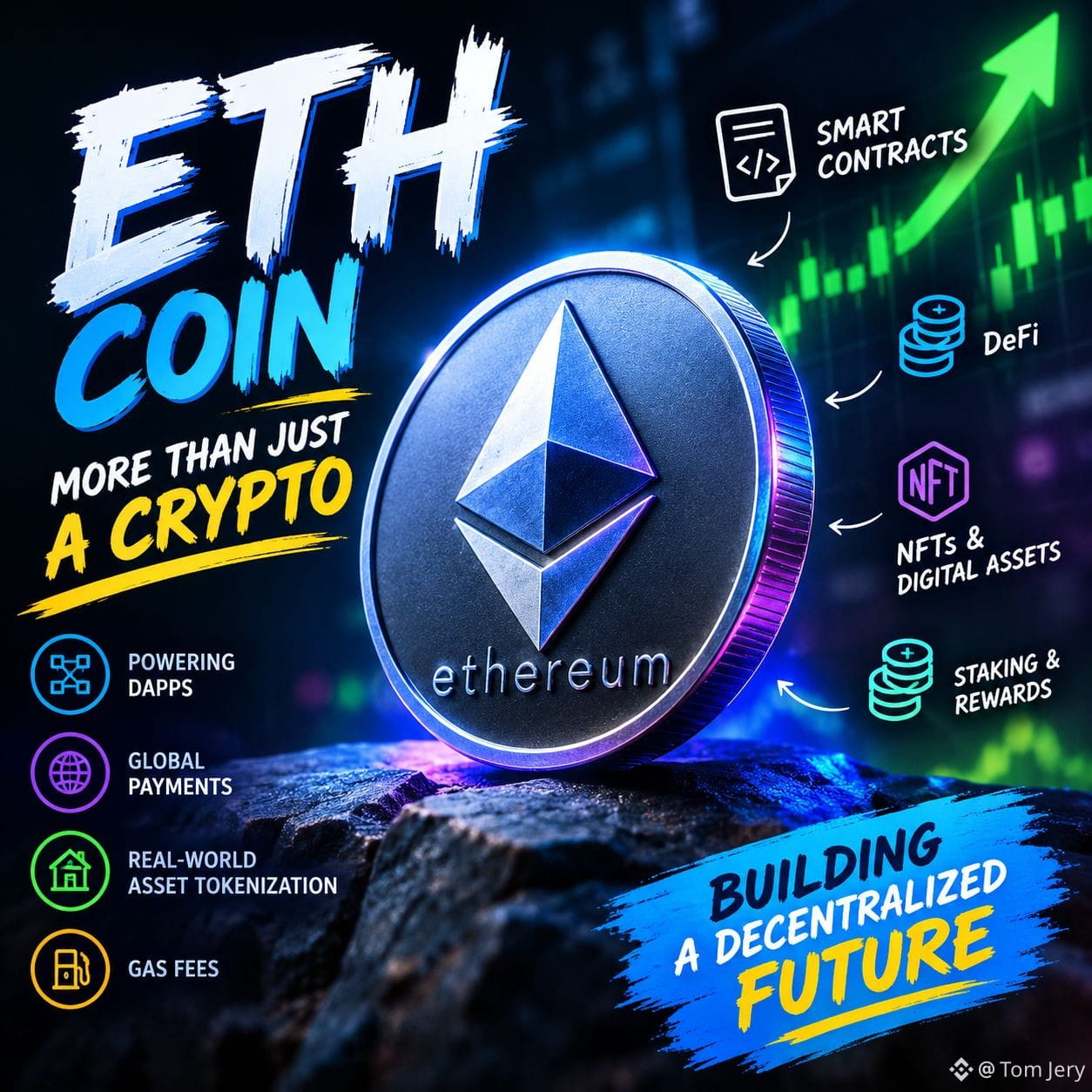
Smart contracts: $ETH powers applications that run automatically without banks or intermediaries.
DeFi: Used for lending, borrowing, decentralized exchanges, and staking.
Stablecoins: A large amount of stablecoin activity runs on Ethereum and its Layer-2 networks.
NFTs & digital assets: Ethereum is widely used for issuing and transferring tokenized assets.
Gas fees: ETH is required to pay transaction fees on Ethereum.
Staking: ETH can be locked to help secure the network, earning staking rewards.
Tokenization: Real-world assets such as funds, bonds, and other financial instruments can be represented as Ethereum-based tokens.
Investment view: ETH has genuine utility because the network needs ETH for transaction fees and security. But utility ≠ guaranteed price appreciation. ETH's price also depends heavily on network activity, competition from other chains, Ethereum's Layer-2 ecosystem, regulation, and overall crypto-market liquidity.
DeFi: Used for lending, borrowing, decentralized exchanges, and staking.
Stablecoins: A large amount of stablecoin activity runs on Ethereum and its Layer-2 networks.
NFTs & digital assets: Ethereum is widely used for issuing and transferring tokenized assets.
Gas fees: ETH is required to pay transaction fees on Ethereum.
Staking: ETH can be locked to help secure the network, earning staking rewards.
Tokenization: Real-world assets such as funds, bonds, and other financial instruments can be represented as Ethereum-based tokens.
Investment view: ETH has genuine utility because the network needs ETH for transaction fees and security. But utility ≠ guaranteed price appreciation. ETH's price also depends heavily on network activity, competition from other chains, Ethereum's Layer-2 ecosystem, regulation, and overall crypto-market liquidity.