

乘风Sunshine
525 Posts

乘风Sunshine
Report
Block User
返佣码:CFCF888 |X推特@KeShiqing57753|专注研究大饼BTC |星河社区联合创始人
Frequent Trader
1.7 Years
411 Following
29.4K+ Followers
12.6K+ Liked
Posts
All
Quotes
Videos
PINNED
·
--
The essence of trading is simply waiting for the flowers to bloom. When you’ve watched the order book and the candlestick charts long enough, you know where things will rise and where they’ll fall—everyone has that figured out. What’s hard is that most people just want the flowers to open immediately, to enter the market immediately, without the patience to wait for the season when they bloom. Their money either comes with a high price tag or ongoing costs, or it’s just waiting to pay rent and buy meals. So they can’t wait for the blooming season; they end up becoming fertilizer for the flowers too soon—turning into liquidity in the market itself and losing all their chips.
The essence of trading is simply waiting for the flowers to bloom. When you’ve watched the order book and the candlestick charts long enough, you know where things will rise and where they’ll fall—everyone has that figured out. What’s hard is that most people just want the flowers to open immediately, to enter the market immediately, without the patience to wait for the season when they bloom. Their money either comes with a high price tag or ongoing costs, or it’s just waiting to pay rent and buy meals. So they can’t wait for the blooming season; they end up becoming fertilizer for the flowers too soon—turning into liquidity in the market itself and losing all their chips.

1.3k
30
78
2k
PINNED
·
--

Article
What exactly is the “Star River Community”—what value can it provide, and why should you join the Star River Community?In the future, a Binance community with real vitality won’t rely only on events, rewards, and traffic.
Because everyone has seen too much of these.
Today a chat room does an airdrop, tomorrow there’s a task incentive, the day after that a so-called “big shot sharing.” In the short term, of course, it can gather people.
But why do people stay?
I’m increasingly starting to think that:
A community that users truly choose over the long term is never about how much it gives you. It’s about what it continually makes you believe in.
Joining isn’t just joining a Binance community anymore.
What you join is the story that’s continuously unfolding behind this community.
What exactly is the “Star River Community”—what value can it provide, and why should you join the Star River Community?
In the future, a Binance community with real vitality won’t rely only on events, rewards, and traffic.
Because everyone has seen too much of these.
Today a chat room does an airdrop, tomorrow there’s a task incentive, the day after that a so-called “big shot sharing.” In the short term, of course, it can gather people.
But why do people stay?
I’m increasingly starting to think that:
A community that users truly choose over the long term is never about how much it gives you. It’s about what it continually makes you believe in.
Joining isn’t just joining a Binance community anymore.
What you join is the story that’s continuously unfolding behind this community.
Because everyone has seen too much of these.
Today a chat room does an airdrop, tomorrow there’s a task incentive, the day after that a so-called “big shot sharing.” In the short term, of course, it can gather people.
But why do people stay?
I’m increasingly starting to think that:
A community that users truly choose over the long term is never about how much it gives you. It’s about what it continually makes you believe in.
Joining isn’t just joining a Binance community anymore.
What you join is the story that’s continuously unfolding behind this community.
295
17
40
2.6k
·
--

Article
A truly great community is never held together by money aloneMake it so that a group of people are willing to stay in a community long-term— even when the market is at its most wild and chaotic— and are still willing to look out for one another.
A truly high-level community is never built on big rewards, nor on airdrops, red envelopes, or so-called “benefits.”
Money can bring in traffic, but it can’t buy a sense of belonging.
Today you give 100U; tomorrow others can give 200U.
If you give one a whitelist, others can offer bigger limits.
If you offer a higher split, others can offer higher returns.
As long as the relationship between a community and its members remains at the level of self-interest, that relationship will never withstand market fluctuations.
A truly great community is never held together by money alone
Make it so that a group of people are willing to stay in a community long-term— even when the market is at its most wild and chaotic— and are still willing to look out for one another.
A truly high-level community is never built on big rewards, nor on airdrops, red envelopes, or so-called “benefits.”
Money can bring in traffic, but it can’t buy a sense of belonging.
Today you give 100U; tomorrow others can give 200U.
If you give one a whitelist, others can offer bigger limits.
If you offer a higher split, others can offer higher returns.
As long as the relationship between a community and its members remains at the level of self-interest, that relationship will never withstand market fluctuations.
A truly high-level community is never built on big rewards, nor on airdrops, red envelopes, or so-called “benefits.”
Money can bring in traffic, but it can’t buy a sense of belonging.
Today you give 100U; tomorrow others can give 200U.
If you give one a whitelist, others can offer bigger limits.
If you offer a higher split, others can offer higher returns.
As long as the relationship between a community and its members remains at the level of self-interest, that relationship will never withstand market fluctuations.
208


·
--
666
666


大仁Jaron
·
--
October rate-hike expectations cool further down; Fed vice chair Jefferson: assessing next steps may require more time
Federal Reserve Vice Chair Jefferson said Thursday: “Any future policy adjustments should be decided through careful review of data trends, an evolving outlook, and a balanced assessment of risks. My colleagues and I believe judgment may take more time.” This statement follows the view of Williamms, the “third in command” on Tuesday, that there is no rush to raise rates. After Jefferson’s remarks, market expectations for a rate hike in October fell further from 35% before his speech to 24%.
The Federal Reserve vice chair Philip Jefferson said that more time may be needed before policymakers can determine whether further rate hikes are necessary to curb inflation.
The Federal Reserve vice chair Philip Jefferson said that more time may be needed before policymakers can determine whether further rate hikes are necessary to curb inflation.

1
1.1k
·
--
666
666

宝贝屎壳郎-Lucky
·
--
Here there are 🈶🧧🧧🧧—let’s all come together and test our speed!
Thank you to all of my friends for your support, likes, and shares.
Thank you to all of my friends for your support, likes, and shares.
4
2k
·
--
666
666

路人1688luren
·
--
$USD1 #韩国拟将股票债券纳入代币化证券
May our motherland prosper and be prosperous; may the Chinese nation’s heritage endure for generations. Happy National Day to everyone……
May our motherland prosper and be prosperous; may the Chinese nation’s heritage endure for generations. Happy National Day to everyone……


1
457
·
--

Article
See translation
在币安广场做直播,怎么讲话才会有人气同样一个项目,
有人发10条没人看,
有人一句话就能让几百个人讨论。
为什么?
因为在币圈,表达本身就是流量,也是资源。
但真正会说话,不是能说。
而是懂得通过说话完成价值交换。
我把它总结成5句话:
1️⃣ 少说丧气话,先管好你的语言
“暴跌、归零、被割、凉了……”
这些词说多了,你会慢慢用情绪理解市场。
同样是下跌,
可以叫“崩盘”,也可以叫“回调”,还可以叫“重新定价”。
语言会塑造认知。
所以第一步:
先把话说准,再把话说好。
2️⃣ 别急着输出,先学会接话
币圈很多人最大的误区:
以为会说话,就是疯狂输出。
其实真正会社交的人,都很会“接”。
别人说:
“最近交易太难了。”
别只回:
“确实。”
可以问:
“是方向难判断,还是节奏难抓?”
别人愿意继续说,
你们的关系才有机会继续。
记住三个字:
接情绪、接细节、接延展。
3️⃣ 开口之前,先猜他想要什么
别人问:
“这个项目什么时候TGE?”
他要的是信息。
别人说:
“我又被套了,烦死了。”
他要的可能是情绪出口。
别人说:
“BTC这里肯定要跌。”
他可能是在寻找认同。
别人问:
“我现在仓位太重怎么办?”
他需要的是解决方案。
所以高手不是先说话,
而是先判断:
他到底想从我这里得到什么?
4️⃣ 对方要什么,就给什么
要信息:
直接给答案。
要情绪:
先共情,别急着讲道理。
要认同:
先认可,再表达不同观点。
要解决问题:
少废话,直接给方案。
很多人沟通失败,
不是因为不会说,
而是因为:
给错了东西。
5️⃣ 别只满足表面需求,要满足潜意识
这是最高阶的一层。
一个人问:
“BTC到底涨还是跌?”
表面是在要答案,
潜意识可能是在要安全感。
一个人天天晒收益,
表面是在分享,
潜意识可能是在要认可。
所以为什么有趣的人更容易留住粉丝?
因为大家来币圈,
不只是为了信息。
还为了:
开心、认可、共鸣、参与感。
真正厉害的KOL,
不是让别人觉得:
“他懂很多。”
而是让别人觉得:
“跟他待在一起,我感觉很好。”
最后总结:
会说话,不是油嘴滑舌。
而是5个动作:
① 净化语言
② 学会接话
③ 洞察目的
④ 精准响应
⑤ 服务潜意识
技术让你看懂机会,
表达让别人听懂你,
而真正高级的表达,
会让别人愿意长期跟你连接。
在币圈,
会说话,本身就是一种生产力。
在币安广场做直播,怎么讲话才会有人气
同样一个项目,
有人发10条没人看,
有人一句话就能让几百个人讨论。
为什么?
因为在币圈,表达本身就是流量,也是资源。
但真正会说话,不是能说。
而是懂得通过说话完成价值交换。
我把它总结成5句话:
1️⃣ 少说丧气话,先管好你的语言
“暴跌、归零、被割、凉了……”
这些词说多了,你会慢慢用情绪理解市场。
同样是下跌,
可以叫“崩盘”,也可以叫“回调”,还可以叫“重新定价”。
语言会塑造认知。
所以第一步:
先把话说准,再把话说好。
2️⃣ 别急着输出,先学会接话
币圈很多人最大的误区:
以为会说话,就是疯狂输出。
其实真正会社交的人,都很会“接”。
别人说:
“最近交易太难了。”
别只回:
“确实。”
可以问:
“是方向难判断,还是节奏难抓?”
别人愿意继续说,
你们的关系才有机会继续。
记住三个字:
接情绪、接细节、接延展。
3️⃣ 开口之前,先猜他想要什么
别人问:
“这个项目什么时候TGE?”
他要的是信息。
别人说:
“我又被套了,烦死了。”
他要的可能是情绪出口。
别人说:
“BTC这里肯定要跌。”
他可能是在寻找认同。
别人问:
“我现在仓位太重怎么办?”
他需要的是解决方案。
所以高手不是先说话,
而是先判断:
他到底想从我这里得到什么?
4️⃣ 对方要什么,就给什么
要信息:
直接给答案。
要情绪:
先共情,别急着讲道理。
要认同:
先认可,再表达不同观点。
要解决问题:
少废话,直接给方案。
很多人沟通失败,
不是因为不会说,
而是因为:
给错了东西。
5️⃣ 别只满足表面需求,要满足潜意识
这是最高阶的一层。
一个人问:
“BTC到底涨还是跌?”
表面是在要答案,
潜意识可能是在要安全感。
一个人天天晒收益,
表面是在分享,
潜意识可能是在要认可。
所以为什么有趣的人更容易留住粉丝?
因为大家来币圈,
不只是为了信息。
还为了:
开心、认可、共鸣、参与感。
真正厉害的KOL,
不是让别人觉得:
“他懂很多。”
而是让别人觉得:
“跟他待在一起,我感觉很好。”
最后总结:
会说话,不是油嘴滑舌。
而是5个动作:
① 净化语言
② 学会接话
③ 洞察目的
④ 精准响应
⑤ 服务潜意识
技术让你看懂机会,
表达让别人听懂你,
而真正高级的表达,
会让别人愿意长期跟你连接。
在币圈,
会说话,本身就是一种生产力。
有人发10条没人看,
有人一句话就能让几百个人讨论。
为什么?
因为在币圈,表达本身就是流量,也是资源。
但真正会说话,不是能说。
而是懂得通过说话完成价值交换。
我把它总结成5句话:
1️⃣ 少说丧气话,先管好你的语言
“暴跌、归零、被割、凉了……”
这些词说多了,你会慢慢用情绪理解市场。
同样是下跌,
可以叫“崩盘”,也可以叫“回调”,还可以叫“重新定价”。
语言会塑造认知。
所以第一步:
先把话说准,再把话说好。
2️⃣ 别急着输出,先学会接话
币圈很多人最大的误区:
以为会说话,就是疯狂输出。
其实真正会社交的人,都很会“接”。
别人说:
“最近交易太难了。”
别只回:
“确实。”
可以问:
“是方向难判断,还是节奏难抓?”
别人愿意继续说,
你们的关系才有机会继续。
记住三个字:
接情绪、接细节、接延展。
3️⃣ 开口之前,先猜他想要什么
别人问:
“这个项目什么时候TGE?”
他要的是信息。
别人说:
“我又被套了,烦死了。”
他要的可能是情绪出口。
别人说:
“BTC这里肯定要跌。”
他可能是在寻找认同。
别人问:
“我现在仓位太重怎么办?”
他需要的是解决方案。
所以高手不是先说话,
而是先判断:
他到底想从我这里得到什么?
4️⃣ 对方要什么,就给什么
要信息:
直接给答案。
要情绪:
先共情,别急着讲道理。
要认同:
先认可,再表达不同观点。
要解决问题:
少废话,直接给方案。
很多人沟通失败,
不是因为不会说,
而是因为:
给错了东西。
5️⃣ 别只满足表面需求,要满足潜意识
这是最高阶的一层。
一个人问:
“BTC到底涨还是跌?”
表面是在要答案,
潜意识可能是在要安全感。
一个人天天晒收益,
表面是在分享,
潜意识可能是在要认可。
所以为什么有趣的人更容易留住粉丝?
因为大家来币圈,
不只是为了信息。
还为了:
开心、认可、共鸣、参与感。
真正厉害的KOL,
不是让别人觉得:
“他懂很多。”
而是让别人觉得:
“跟他待在一起,我感觉很好。”
最后总结:
会说话,不是油嘴滑舌。
而是5个动作:
① 净化语言
② 学会接话
③ 洞察目的
④ 精准响应
⑤ 服务潜意识
技术让你看懂机会,
表达让别人听懂你,
而真正高级的表达,
会让别人愿意长期跟你连接。
在币圈,
会说话,本身就是一种生产力。
1
1
1
793
·
--
Yesterday’s Crypto Market News Roundup
1.BTC fluctuates, ETH edges higher
Yesterday, BTC traded in a narrow range of $83.5K–$84.6K, failing to hold above $85K; ETH remained near $2,680–$2,720.
2.Citi raises BTC and ETH target prices
According to Reuters, Citi raised its 12-month BTC target price from $82K to $113K, and its ETH target from $2,240 to $3,028. It expects approximately $5 billion in inflows into crypto investment products.
3.US Bitcoin ETFs end nine straight days of inflows
On September 30, US spot Bitcoin ETFs recorded a net outflow of $149 million, ending nine consecutive trading days of net inflows. Ethereum ETFs saw a net outflow of about $59.6 million, marking two consecutive days of outflows.
4.Stripe-affiliated stablecoin OUSD launches
OUSD, issued by Stripe’s Bridge, launched on September 30. It supports networks including Ethereum, Solana, and Base. Coinbase, Kraken, and Uniswap have enabled trading.
5.Bitget and MetaMask disclose security incidents in succession
Bitget is currently restoring withdrawals in stages. Other tokens and fiat/P2P business are planned to resume on October 2. MetaMask, meanwhile, said some underlying infrastructure experienced a security issue and that no user funds appear to be at risk at present.
Yesterday’s Crypto Market News Roundup
1.BTC fluctuates, ETH edges higher
Yesterday, BTC traded in a narrow range of $83.5K–$84.6K, failing to hold above $85K; ETH remained near $2,680–$2,720.
2.Citi raises BTC and ETH target prices
According to Reuters, Citi raised its 12-month BTC target price from $82K to $113K, and its ETH target from $2,240 to $3,028. It expects approximately $5 billion in inflows into crypto investment products.
3.US Bitcoin ETFs end nine straight days of inflows
On September 30, US spot Bitcoin ETFs recorded a net outflow of $149 million, ending nine consecutive trading days of net inflows. Ethereum ETFs saw a net outflow of about $59.6 million, marking two consecutive days of outflows.
4.Stripe-affiliated stablecoin OUSD launches
OUSD, issued by Stripe’s Bridge, launched on September 30. It supports networks including Ethereum, Solana, and Base. Coinbase, Kraken, and Uniswap have enabled trading.
5.Bitget and MetaMask disclose security incidents in succession
Bitget is currently restoring withdrawals in stages. Other tokens and fiat/P2P business are planned to resume on October 2. MetaMask, meanwhile, said some underlying infrastructure experienced a security issue and that no user funds appear to be at risk at present.
1.BTC fluctuates, ETH edges higher
Yesterday, BTC traded in a narrow range of $83.5K–$84.6K, failing to hold above $85K; ETH remained near $2,680–$2,720.
2.Citi raises BTC and ETH target prices
According to Reuters, Citi raised its 12-month BTC target price from $82K to $113K, and its ETH target from $2,240 to $3,028. It expects approximately $5 billion in inflows into crypto investment products.
3.US Bitcoin ETFs end nine straight days of inflows
On September 30, US spot Bitcoin ETFs recorded a net outflow of $149 million, ending nine consecutive trading days of net inflows. Ethereum ETFs saw a net outflow of about $59.6 million, marking two consecutive days of outflows.
4.Stripe-affiliated stablecoin OUSD launches
OUSD, issued by Stripe’s Bridge, launched on September 30. It supports networks including Ethereum, Solana, and Base. Coinbase, Kraken, and Uniswap have enabled trading.
5.Bitget and MetaMask disclose security incidents in succession
Bitget is currently restoring withdrawals in stages. Other tokens and fiat/P2P business are planned to resume on October 2. MetaMask, meanwhile, said some underlying infrastructure experienced a security issue and that no user funds appear to be at risk at present.
3
618
·
--
Yesterday’s Crypto Market News Roundup
1. BTC surged and then retreated, with PCE data briefly boosting sentiment. On September 30, U.S. PCE inflation year over year came in at 3.4%, below the expected 3.7%, while core PCE was 3.0% YoY. BTC briefly broke through $85,600, then fell back to around $83,500. Market expectations for an October rate hike clearly cooled.
2. European regulators seek stronger crypto enforcement powers. The European Securities and Markets Authority (ESMA) has recommended granting regulators stronger enforcement capabilities over crypto assets, including requiring crypto firms to freeze relevant assets when regulators have reasonable grounds to suspect the assets are connected to criminal activity.
3. The UK officially opens a window for applying for crypto regulatory licenses. The UK Financial Conduct Authority (FCA) will accept authorization applications from crypto businesses starting September 30, with the application window running until February 28, 2027. The new crypto-asset regulatory framework is expected to be formally implemented on October 25, 2027.
4. Base completes the Cobalt upgrade, further expanding on-chain capabilities. Base mainnet received the Cobalt upgrade on September 30, adding conditional trading and B20 asset-related functions, further strengthening its ability as an Ethereum L2 for applications and asset issuance.
5. Institutional capital keeps betting on “AI + Crypto.” Multicoin Capital announced that its hedge fund and venture fund portfolio investments in Grass, positioning it as a “data read layer” for machine intelligence. Previously, Grass connected large user network resources through the DePIN model, providing infrastructure for AI training and real-time data retrieval.
Yesterday’s Crypto Market News Roundup
1. BTC surged and then retreated, with PCE data briefly boosting sentiment. On September 30, U.S. PCE inflation year over year came in at 3.4%, below the expected 3.7%, while core PCE was 3.0% YoY. BTC briefly broke through $85,600, then fell back to around $83,500. Market expectations for an October rate hike clearly cooled.
2. European regulators seek stronger crypto enforcement powers. The European Securities and Markets Authority (ESMA) has recommended granting regulators stronger enforcement capabilities over crypto assets, including requiring crypto firms to freeze relevant assets when regulators have reasonable grounds to suspect the assets are connected to criminal activity.
3. The UK officially opens a window for applying for crypto regulatory licenses. The UK Financial Conduct Authority (FCA) will accept authorization applications from crypto businesses starting September 30, with the application window running until February 28, 2027. The new crypto-asset regulatory framework is expected to be formally implemented on October 25, 2027.
4. Base completes the Cobalt upgrade, further expanding on-chain capabilities. Base mainnet received the Cobalt upgrade on September 30, adding conditional trading and B20 asset-related functions, further strengthening its ability as an Ethereum L2 for applications and asset issuance.
5. Institutional capital keeps betting on “AI + Crypto.” Multicoin Capital announced that its hedge fund and venture fund portfolio investments in Grass, positioning it as a “data read layer” for machine intelligence. Previously, Grass connected large user network resources through the DePIN model, providing infrastructure for AI training and real-time data retrieval.
1. BTC surged and then retreated, with PCE data briefly boosting sentiment. On September 30, U.S. PCE inflation year over year came in at 3.4%, below the expected 3.7%, while core PCE was 3.0% YoY. BTC briefly broke through $85,600, then fell back to around $83,500. Market expectations for an October rate hike clearly cooled.
2. European regulators seek stronger crypto enforcement powers. The European Securities and Markets Authority (ESMA) has recommended granting regulators stronger enforcement capabilities over crypto assets, including requiring crypto firms to freeze relevant assets when regulators have reasonable grounds to suspect the assets are connected to criminal activity.
3. The UK officially opens a window for applying for crypto regulatory licenses. The UK Financial Conduct Authority (FCA) will accept authorization applications from crypto businesses starting September 30, with the application window running until February 28, 2027. The new crypto-asset regulatory framework is expected to be formally implemented on October 25, 2027.
4. Base completes the Cobalt upgrade, further expanding on-chain capabilities. Base mainnet received the Cobalt upgrade on September 30, adding conditional trading and B20 asset-related functions, further strengthening its ability as an Ethereum L2 for applications and asset issuance.
5. Institutional capital keeps betting on “AI + Crypto.” Multicoin Capital announced that its hedge fund and venture fund portfolio investments in Grass, positioning it as a “data read layer” for machine intelligence. Previously, Grass connected large user network resources through the DePIN model, providing infrastructure for AI training and real-time data retrieval.
497
·
--

Article
AI Evolution: From “Understanding an Image” to “Understanding the Whole World”I. Phase 1: Make machines “see” — the Rules era → the Perception era
The story of AI actually began long ago.
The Dartmouth Conference in 1956 is often regarded as an important starting point for modern AI as an independent research field. At that time, AI relied more on manually crafted rules, with the goal of directly writing human logic into machines.
The core problem of this era is:
“Can I tell the machine what it should do?”
For example:
If A, then B;
If you see a certain feature, then judge it as a certain object;
If certain conditions are met, then perform a certain action.
AI Evolution: From “Understanding an Image” to “Understanding the Whole World”
I. Phase 1: Make machines “see” — the Rules era → the Perception era
The story of AI actually began long ago.
The Dartmouth Conference in 1956 is often regarded as an important starting point for modern AI as an independent research field. At that time, AI relied more on manually crafted rules, with the goal of directly writing human logic into machines.
The core problem of this era is:
“Can I tell the machine what it should do?”
For example:
If A, then B;
If you see a certain feature, then judge it as a certain object;
If certain conditions are met, then perform a certain action.
The story of AI actually began long ago.
The Dartmouth Conference in 1956 is often regarded as an important starting point for modern AI as an independent research field. At that time, AI relied more on manually crafted rules, with the goal of directly writing human logic into machines.
The core problem of this era is:
“Can I tell the machine what it should do?”
For example:
If A, then B;
If you see a certain feature, then judge it as a certain object;
If certain conditions are met, then perform a certain action.
1
2.9k
·
--

Article
Binance Dual-Currency Investment: Don’t Be Fooled by High APRWhen many people see Binance dual-currency investment for the first time, their first reaction is:
“APR 50%, 80%—isn’t this just earning money while you lie down?”
Wrong.
The easiest place for dual-currency investment to be misunderstood is that it looks like a financial product, but in reality it’s more like a trade agreed on in advance.
Its core has only two things:
Buy Low: buy at a low price.
Sell High: sell at a high price.
First, the most important thing: why isn’t dual-currency investment a guaranteed way to make money?
For example, BTC is currently 100,000.
You choose Sell High, and set the Target Price to 110,000.
After 7 days, BTC rises to above 110,000, and you settle at 110,000.
Here’s the question:
Binance Dual-Currency Investment: Don’t Be Fooled by High APR
When many people see Binance dual-currency investment for the first time, their first reaction is:
“APR 50%, 80%—isn’t this just earning money while you lie down?”
Wrong.
The easiest place for dual-currency investment to be misunderstood is that it looks like a financial product, but in reality it’s more like a trade agreed on in advance.
Its core has only two things:
Buy Low: buy at a low price.
Sell High: sell at a high price.
First, the most important thing: why isn’t dual-currency investment a guaranteed way to make money?
For example, BTC is currently 100,000.
You choose Sell High, and set the Target Price to 110,000.
After 7 days, BTC rises to above 110,000, and you settle at 110,000.
Here’s the question:
“APR 50%, 80%—isn’t this just earning money while you lie down?”
Wrong.
The easiest place for dual-currency investment to be misunderstood is that it looks like a financial product, but in reality it’s more like a trade agreed on in advance.
Its core has only two things:
Buy Low: buy at a low price.
Sell High: sell at a high price.
First, the most important thing: why isn’t dual-currency investment a guaranteed way to make money?
For example, BTC is currently 100,000.
You choose Sell High, and set the Target Price to 110,000.
After 7 days, BTC rises to above 110,000, and you settle at 110,000.
Here’s the question:
1
6
1.4k
·
--

Article
After one person survives the biggest crisis in the crypto world, what do they truly see?People who just entered the crypto space want to make quick money.
People who make money want to prove themselves.
Those who have lost huge amounts of money begin to study the market.
Those who have truly made it through several cycles of bull and bear markets eventually begin to study themselves.
First, see: no one will be responsible for your account.
KOLs won’t liquidate for you, project teams won’t lose money for you, and friends won’t take responsibility for the consequences of your choices.
The market only provides volatility.
You are responsible for your own money.
So true maturity isn’t getting to know more big shots, but needing others less and less to tell you what to buy.
Second, see: the biggest enemy is often not the bear market, but the version of yourself in a bull market.
After one person survives the biggest crisis in the crypto world, what do they truly see?
People who just entered the crypto space want to make quick money.
People who make money want to prove themselves.
Those who have lost huge amounts of money begin to study the market.
Those who have truly made it through several cycles of bull and bear markets eventually begin to study themselves.
First, see: no one will be responsible for your account.
KOLs won’t liquidate for you, project teams won’t lose money for you, and friends won’t take responsibility for the consequences of your choices.
The market only provides volatility.
You are responsible for your own money.
So true maturity isn’t getting to know more big shots, but needing others less and less to tell you what to buy.
Second, see: the biggest enemy is often not the bear market, but the version of yourself in a bull market.
People who make money want to prove themselves.
Those who have lost huge amounts of money begin to study the market.
Those who have truly made it through several cycles of bull and bear markets eventually begin to study themselves.
First, see: no one will be responsible for your account.
KOLs won’t liquidate for you, project teams won’t lose money for you, and friends won’t take responsibility for the consequences of your choices.
The market only provides volatility.
You are responsible for your own money.
So true maturity isn’t getting to know more big shots, but needing others less and less to tell you what to buy.
Second, see: the biggest enemy is often not the bear market, but the version of yourself in a bull market.
2
1.1k
·
--
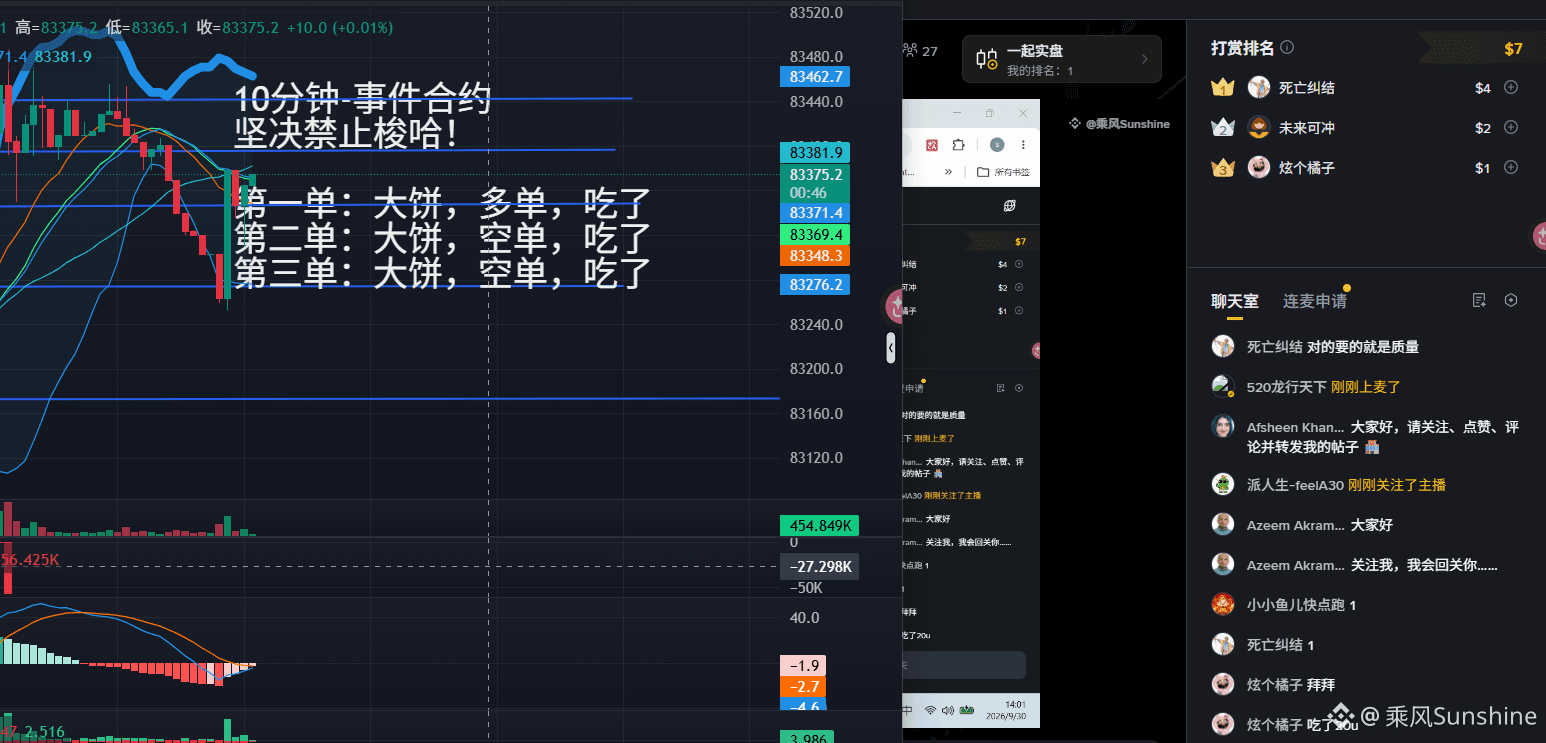
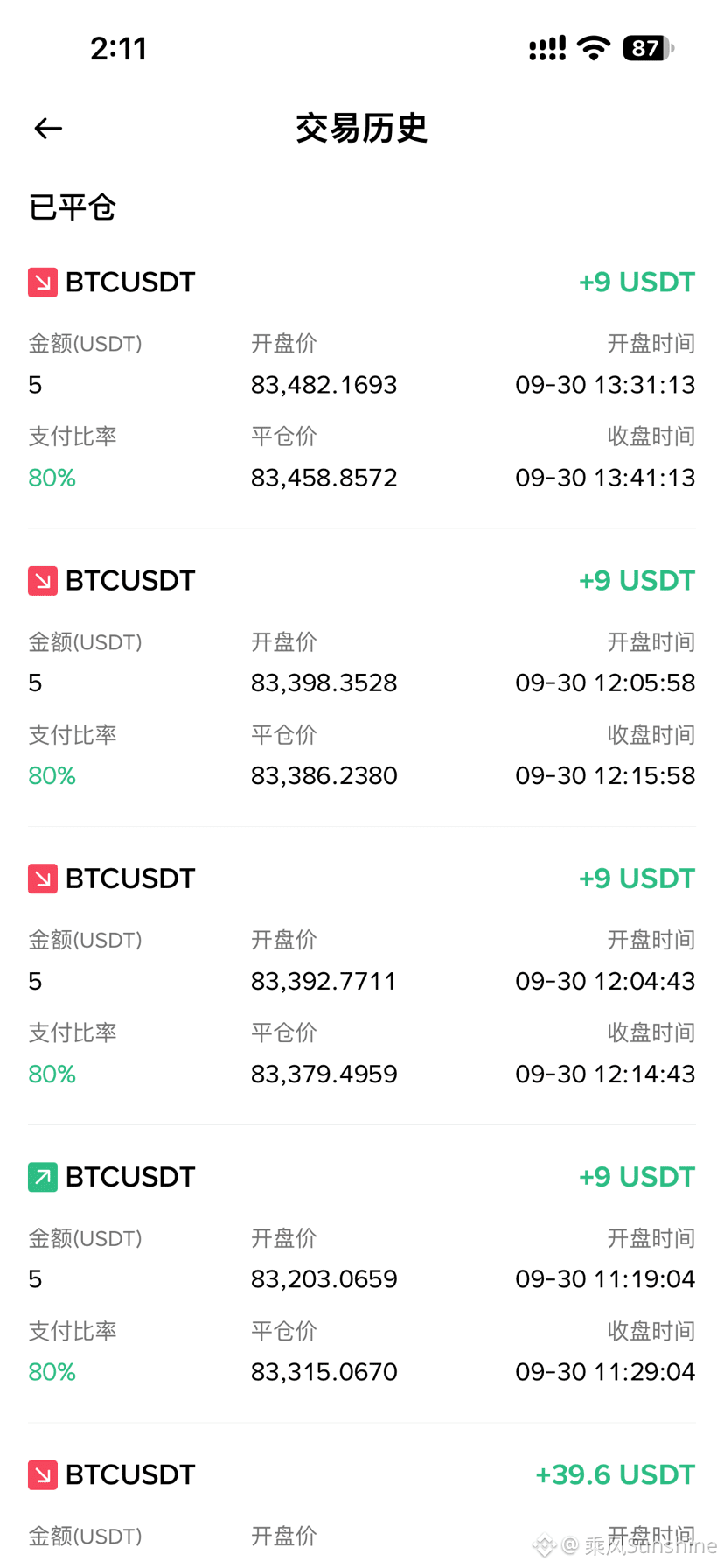
Yesterday resumed live streaming (calling 6 orders to eat 6 orders). Today is the second day. Today we called 3 orders to eat 3 orders, and we still have a 100% win rate.
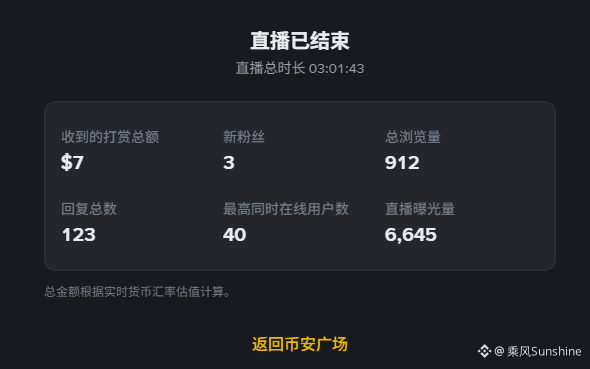
Every day, we stream live from 11:00 AM to 2:00 PM. New and returning friends are welcome to join the live room.
(P.S. Slowly get back into shape, take care of your body, and only call trades at better positions—proceed steadily. Event contract isn’t my current main focus, but taking a look at the chart and trading orders is still not a problem.)
Yesterday resumed live streaming (calling 6 orders to eat 6 orders). Today is the second day. Today we called 3 orders to eat 3 orders, and we still have a 100% win rate.
Every day, we stream live from 11:00 AM to 2:00 PM. New and returning friends are welcome to join the live room.
(P.S. Slowly get back into shape, take care of your body, and only call trades at better positions—proceed steadily. Event contract isn’t my current main focus, but taking a look at the chart and trading orders is still not a problem.)
Every day, we stream live from 11:00 AM to 2:00 PM. New and returning friends are welcome to join the live room.
(P.S. Slowly get back into shape, take care of your body, and only call trades at better positions—proceed steadily. Event contract isn’t my current main focus, but taking a look at the chart and trading orders is still not a problem.)
3.9k
35
205
3.9k
·
--
Crypto Market News Snapshot: Yesterday
1. BTC fluctuated and rebounded, with the market still caught in a tug-of-war within a key range. On September 29, Bitcoin briefly rose to about $84,554, but then resumed trading around the $83,000 area. Ethereum’s overall performance remained relatively steady, with the market still influenced by rising U.S. Treasury yields and inflation expectations.
2. U.S. crypto ETF inflows continued, but the pace clearly cooled. On Monday, total net inflows into U.S. spot ETFs for BTC, ETH, SOL, and XRP were about $64.8 million, including roughly $31.07 million for BTC and about $17.10 million for ETH. The BTC ETF has recorded net inflows for eight consecutive trading days.
3. Bitwise launched the first U.S. spot NEAR ETF and added a staking-rewards mechanism. The Block reported that the product went live on September 29, further showing that the U.S. crypto ETF market is expanding from BTC and ETH to more mainstream public-chain assets.
4. Blockchain.com is preparing to move forward with an IPO, targeting $500 million in fundraising. The crypto financial services company has filed a confidential listing application with the U.S. SEC, targeting a valuation of up to about $6 billion, indicating that traditional capital-market channels for leading players in the crypto industry are still opening up.
5. Stolen funds from Bitget continued to trigger on-chain freezing and a “no authorization” controversy. NEAR Intents said it intercepted attempts to exchange funds totaling more than $38.8 million related to a Bitget security incident, including about $50.3 million that was actually frozen. The incident has once again sparked industry discussion about anti-money-laundering boundaries for cross-chain protocols and “permissionless” limits.
Crypto Market News Snapshot: Yesterday
1. BTC fluctuated and rebounded, with the market still caught in a tug-of-war within a key range. On September 29, Bitcoin briefly rose to about $84,554, but then resumed trading around the $83,000 area. Ethereum’s overall performance remained relatively steady, with the market still influenced by rising U.S. Treasury yields and inflation expectations.
2. U.S. crypto ETF inflows continued, but the pace clearly cooled. On Monday, total net inflows into U.S. spot ETFs for BTC, ETH, SOL, and XRP were about $64.8 million, including roughly $31.07 million for BTC and about $17.10 million for ETH. The BTC ETF has recorded net inflows for eight consecutive trading days.
3. Bitwise launched the first U.S. spot NEAR ETF and added a staking-rewards mechanism. The Block reported that the product went live on September 29, further showing that the U.S. crypto ETF market is expanding from BTC and ETH to more mainstream public-chain assets.
4. Blockchain.com is preparing to move forward with an IPO, targeting $500 million in fundraising. The crypto financial services company has filed a confidential listing application with the U.S. SEC, targeting a valuation of up to about $6 billion, indicating that traditional capital-market channels for leading players in the crypto industry are still opening up.
5. Stolen funds from Bitget continued to trigger on-chain freezing and a “no authorization” controversy. NEAR Intents said it intercepted attempts to exchange funds totaling more than $38.8 million related to a Bitget security incident, including about $50.3 million that was actually frozen. The incident has once again sparked industry discussion about anti-money-laundering boundaries for cross-chain protocols and “permissionless” limits.
1. BTC fluctuated and rebounded, with the market still caught in a tug-of-war within a key range. On September 29, Bitcoin briefly rose to about $84,554, but then resumed trading around the $83,000 area. Ethereum’s overall performance remained relatively steady, with the market still influenced by rising U.S. Treasury yields and inflation expectations.
2. U.S. crypto ETF inflows continued, but the pace clearly cooled. On Monday, total net inflows into U.S. spot ETFs for BTC, ETH, SOL, and XRP were about $64.8 million, including roughly $31.07 million for BTC and about $17.10 million for ETH. The BTC ETF has recorded net inflows for eight consecutive trading days.
3. Bitwise launched the first U.S. spot NEAR ETF and added a staking-rewards mechanism. The Block reported that the product went live on September 29, further showing that the U.S. crypto ETF market is expanding from BTC and ETH to more mainstream public-chain assets.
4. Blockchain.com is preparing to move forward with an IPO, targeting $500 million in fundraising. The crypto financial services company has filed a confidential listing application with the U.S. SEC, targeting a valuation of up to about $6 billion, indicating that traditional capital-market channels for leading players in the crypto industry are still opening up.
5. Stolen funds from Bitget continued to trigger on-chain freezing and a “no authorization” controversy. NEAR Intents said it intercepted attempts to exchange funds totaling more than $38.8 million related to a Bitget security incident, including about $50.3 million that was actually frozen. The incident has once again sparked industry discussion about anti-money-laundering boundaries for cross-chain protocols and “permissionless” limits.
500
·
--
Finally, I’ve set the livestream schedule. From now on, we’ll livestream every day from 11:00 AM to 2:00 PM. I noticed that recently I’ve basically been sleeping until around 9 or 10 before waking up. So starting at 11 AM is just perfect. In the livestream, we’ll just chat, work on building the Binance Square, and if there’s market movement, we’ll place some perpetual positions. If we see a good entry point, we’ll also trade some event contracts (today I called out 6 deals in three hours—everything was filled, and I had a 100% win rate). Welcome both new and old friends to come to my livestream at 11 AM.
Finally, I’ve set the livestream schedule. From now on, we’ll livestream every day from 11:00 AM to 2:00 PM. I noticed that recently I’ve basically been sleeping until around 9 or 10 before waking up. So starting at 11 AM is just perfect. In the livestream, we’ll just chat, work on building the Binance Square, and if there’s market movement, we’ll place some perpetual positions. If we see a good entry point, we’ll also trade some event contracts (today I called out 6 deals in three hours—everything was filled, and I had a 100% win rate). Welcome both new and old friends to come to my livestream at 11 AM.


2.2k
32
139
2.2k
·
--
📰 Crypto News Roundup for Yesterday
1️⃣ BTC Falls Back to Around $83,000
BTC fell by about 2% yesterday, retreating from recent highs; meanwhile, in the past 24 hours, the total amount liquidated in the crypto market exceeded $500 million. The market is again focusing on rising oil prices and the global interest-rate environment.
2️⃣ Strategy Buys 1,665 More BTC
Last week, Strategy added 1,665 BTC at about $143 million, with an average price of roughly $85,681; the company continues its long-term accumulation strategy.
3️⃣ Bitget Begins Resuming Withdrawals
After a hot-wallet security incident involving approximately $387.5 million earlier, Bitget began restoring withdrawals in phases yesterday. BTC withdrawals were resumed first, followed by ETH, USDT, and others; full resumption is expected by October 2. Bitget stated that its user protection fund will cover the related losses.
4️⃣ Chainlink Launches CCIP 2.0
Chainlink released CCIP 2.0, introducing a configurable cross-chain verification mechanism and supporting features such as KYC, AML, sanctions screening, and configurable finality—clearly targeting institutional and compliance use cases.
5️⃣ Citi and Coinbase Expand Stablecoin Payment Partnership
Citi and Coinbase have partnered so that Citi’s institutional clients can receive customer payments via stablecoins. Coinbase provides the underlying blockchain and stablecoin payment infrastructure, while Citi handles fiat settlement. Traditional banks are further integrating stablecoins into the payments system.
📰 Crypto News Roundup for Yesterday
1️⃣ BTC Falls Back to Around $83,000
BTC fell by about 2% yesterday, retreating from recent highs; meanwhile, in the past 24 hours, the total amount liquidated in the crypto market exceeded $500 million. The market is again focusing on rising oil prices and the global interest-rate environment.
2️⃣ Strategy Buys 1,665 More BTC
Last week, Strategy added 1,665 BTC at about $143 million, with an average price of roughly $85,681; the company continues its long-term accumulation strategy.
3️⃣ Bitget Begins Resuming Withdrawals
After a hot-wallet security incident involving approximately $387.5 million earlier, Bitget began restoring withdrawals in phases yesterday. BTC withdrawals were resumed first, followed by ETH, USDT, and others; full resumption is expected by October 2. Bitget stated that its user protection fund will cover the related losses.
4️⃣ Chainlink Launches CCIP 2.0
Chainlink released CCIP 2.0, introducing a configurable cross-chain verification mechanism and supporting features such as KYC, AML, sanctions screening, and configurable finality—clearly targeting institutional and compliance use cases.
5️⃣ Citi and Coinbase Expand Stablecoin Payment Partnership
Citi and Coinbase have partnered so that Citi’s institutional clients can receive customer payments via stablecoins. Coinbase provides the underlying blockchain and stablecoin payment infrastructure, while Citi handles fiat settlement. Traditional banks are further integrating stablecoins into the payments system.
1️⃣ BTC Falls Back to Around $83,000
BTC fell by about 2% yesterday, retreating from recent highs; meanwhile, in the past 24 hours, the total amount liquidated in the crypto market exceeded $500 million. The market is again focusing on rising oil prices and the global interest-rate environment.
2️⃣ Strategy Buys 1,665 More BTC
Last week, Strategy added 1,665 BTC at about $143 million, with an average price of roughly $85,681; the company continues its long-term accumulation strategy.
3️⃣ Bitget Begins Resuming Withdrawals
After a hot-wallet security incident involving approximately $387.5 million earlier, Bitget began restoring withdrawals in phases yesterday. BTC withdrawals were resumed first, followed by ETH, USDT, and others; full resumption is expected by October 2. Bitget stated that its user protection fund will cover the related losses.
4️⃣ Chainlink Launches CCIP 2.0
Chainlink released CCIP 2.0, introducing a configurable cross-chain verification mechanism and supporting features such as KYC, AML, sanctions screening, and configurable finality—clearly targeting institutional and compliance use cases.
5️⃣ Citi and Coinbase Expand Stablecoin Payment Partnership
Citi and Coinbase have partnered so that Citi’s institutional clients can receive customer payments via stablecoins. Coinbase provides the underlying blockchain and stablecoin payment infrastructure, while Citi handles fiat settlement. Traditional banks are further integrating stablecoins into the payments system.
1
884
·
--
2
5
1.9k
·
--
Crypto News Roundup Last Week
1️⃣ BTC rebounds strongly, reclaiming $85,000
At the start of last week, BTC bounced back quickly, breaking above $87,000 at one point, while the Nasdaq also rose noticeably, signaling a recovery in market risk appetite. BTC then pulled back and traded in a range around $83,000–$85,000.
2️⃣ Bitcoin ETFs see weekly inflows hitting a nearly one-year high
US spot Bitcoin ETF net inflows last week were about $2.4 billion, the largest single-week inflow since October 2025, and helped turn cumulative 2026 capital flows back to net inflows. In the same period, ETH ETFs saw inflows of about $690 million, and Solana ETFs also reached roughly $188 million in weekly inflows.
3️⃣ Bitget suffers a security incident of about $352 million
Bitget disclosed that some hot/warm wallets were subject to unauthorized transfers, affecting assets of approximately $351.6 million. Bitget said its cold wallets are secure, and user funds are covered by a user protection fund. Circle and Tether later froze some USDC/USDT related to the incident.
4️⃣ CoinMarketCap acquires CoinGlass
CoinMarketCap announced the completion of its acquisition of CoinGlass. It will bring derivatives data—including open interest, funding rates, liquidations, options, and more—into a broader data service ecosystem. CoinGlass will continue operating independently, and its website, API, and pricing system will not change for now.
5️⃣ The U.S. further advances tokenization of U.S. stocks
Last week, the SEC introduced a temporary “innovative exemption” for tokenized U.S. stock trading, allowing qualifying platforms to conduct tokenized stock trades under specific frameworks. Meanwhile, the NYSE and Blockchain.com explored tokenized U.S. stock and ETF trading. RWA/Tokenized Stocks continue to be an important bridge between traditional finance and Crypto.
6️⃣ Stablecoin regulatory framework continues to advance
U.S. regulators began推进 GENIUS Act-related stablecoin rules, including regulatory frameworks for reserves, capital, and other areas. At the same time, stablecoins continue expanding into payments, lending, and on-chain financial infrastructure.
Crypto News Roundup Last Week
1️⃣ BTC rebounds strongly, reclaiming $85,000
At the start of last week, BTC bounced back quickly, breaking above $87,000 at one point, while the Nasdaq also rose noticeably, signaling a recovery in market risk appetite. BTC then pulled back and traded in a range around $83,000–$85,000.
2️⃣ Bitcoin ETFs see weekly inflows hitting a nearly one-year high
US spot Bitcoin ETF net inflows last week were about $2.4 billion, the largest single-week inflow since October 2025, and helped turn cumulative 2026 capital flows back to net inflows. In the same period, ETH ETFs saw inflows of about $690 million, and Solana ETFs also reached roughly $188 million in weekly inflows.
3️⃣ Bitget suffers a security incident of about $352 million
Bitget disclosed that some hot/warm wallets were subject to unauthorized transfers, affecting assets of approximately $351.6 million. Bitget said its cold wallets are secure, and user funds are covered by a user protection fund. Circle and Tether later froze some USDC/USDT related to the incident.
4️⃣ CoinMarketCap acquires CoinGlass
CoinMarketCap announced the completion of its acquisition of CoinGlass. It will bring derivatives data—including open interest, funding rates, liquidations, options, and more—into a broader data service ecosystem. CoinGlass will continue operating independently, and its website, API, and pricing system will not change for now.
5️⃣ The U.S. further advances tokenization of U.S. stocks
Last week, the SEC introduced a temporary “innovative exemption” for tokenized U.S. stock trading, allowing qualifying platforms to conduct tokenized stock trades under specific frameworks. Meanwhile, the NYSE and Blockchain.com explored tokenized U.S. stock and ETF trading. RWA/Tokenized Stocks continue to be an important bridge between traditional finance and Crypto.
6️⃣ Stablecoin regulatory framework continues to advance
U.S. regulators began推进 GENIUS Act-related stablecoin rules, including regulatory frameworks for reserves, capital, and other areas. At the same time, stablecoins continue expanding into payments, lending, and on-chain financial infrastructure.
1️⃣ BTC rebounds strongly, reclaiming $85,000
At the start of last week, BTC bounced back quickly, breaking above $87,000 at one point, while the Nasdaq also rose noticeably, signaling a recovery in market risk appetite. BTC then pulled back and traded in a range around $83,000–$85,000.
2️⃣ Bitcoin ETFs see weekly inflows hitting a nearly one-year high
US spot Bitcoin ETF net inflows last week were about $2.4 billion, the largest single-week inflow since October 2025, and helped turn cumulative 2026 capital flows back to net inflows. In the same period, ETH ETFs saw inflows of about $690 million, and Solana ETFs also reached roughly $188 million in weekly inflows.
3️⃣ Bitget suffers a security incident of about $352 million
Bitget disclosed that some hot/warm wallets were subject to unauthorized transfers, affecting assets of approximately $351.6 million. Bitget said its cold wallets are secure, and user funds are covered by a user protection fund. Circle and Tether later froze some USDC/USDT related to the incident.
4️⃣ CoinMarketCap acquires CoinGlass
CoinMarketCap announced the completion of its acquisition of CoinGlass. It will bring derivatives data—including open interest, funding rates, liquidations, options, and more—into a broader data service ecosystem. CoinGlass will continue operating independently, and its website, API, and pricing system will not change for now.
5️⃣ The U.S. further advances tokenization of U.S. stocks
Last week, the SEC introduced a temporary “innovative exemption” for tokenized U.S. stock trading, allowing qualifying platforms to conduct tokenized stock trades under specific frameworks. Meanwhile, the NYSE and Blockchain.com explored tokenized U.S. stock and ETF trading. RWA/Tokenized Stocks continue to be an important bridge between traditional finance and Crypto.
6️⃣ Stablecoin regulatory framework continues to advance
U.S. regulators began推进 GENIUS Act-related stablecoin rules, including regulatory frameworks for reserves, capital, and other areas. At the same time, stablecoins continue expanding into payments, lending, and on-chain financial infrastructure.
1.3k
·
--
At this level, I actually don’t really feel like chasing BTC.
Looking at the Binance order book, BTC is currently hovering around $84,600. There’s fairly clear resistance in the $85,000–$86,000 area above it.
My view is:
There’s still a further pullback to come.
If it later breaks below $83,000,
I’ll pay close attention to the $81,000–$82,000 zone.
Especially around $81,000.
If there’s a clear reversal signal here—stopping the downside, shrinking volume, and then reclaiming the key levels—then I would start considering a medium-to-long-term position.
Why?
Because the market structure hasn’t turned fully bearish.
The daily structure is still there.
It’s just that after a short-term run up,
we need a decent correction to digest the overhead pressure.
So my thinking is very simple:
Don’t chase if it’s above $85,000.
Break below $83,000 and watch for a pullback.
Look for opportunities around $81,000.
If it really gives me a chance near $81,000,
I’ll take a serious look.
Not because I can predict the bottom,
but because:
Comfortable medium-to-long-term entries are often not bought when the market is most excited—
but rather waited for when people start to doubt.
Of course, $81,000 isn’t “guaranteed” to be reached.
If BTC instead reclaims above $86,000 with renewed volume,
then this pullback logic needs to be reassessed.
Trading isn’t about guessing the bottom.
It’s about making a plan in advance and waiting for the market to give you the answer.
#BTC .
At this level, I actually don’t really feel like chasing BTC.
Looking at the Binance order book, BTC is currently hovering around $84,600. There’s fairly clear resistance in the $85,000–$86,000 area above it.
My view is:
There’s still a further pullback to come.
If it later breaks below $83,000,
I’ll pay close attention to the $81,000–$82,000 zone.
Especially around $81,000.
If there’s a clear reversal signal here—stopping the downside, shrinking volume, and then reclaiming the key levels—then I would start considering a medium-to-long-term position.
Why?
Because the market structure hasn’t turned fully bearish.
The daily structure is still there.
It’s just that after a short-term run up,
we need a decent correction to digest the overhead pressure.
So my thinking is very simple:
Don’t chase if it’s above $85,000.
Break below $83,000 and watch for a pullback.
Look for opportunities around $81,000.
If it really gives me a chance near $81,000,
I’ll take a serious look.
Not because I can predict the bottom,
but because:
Comfortable medium-to-long-term entries are often not bought when the market is most excited—
but rather waited for when people start to doubt.
Of course, $81,000 isn’t “guaranteed” to be reached.
If BTC instead reclaims above $86,000 with renewed volume,
then this pullback logic needs to be reassessed.
Trading isn’t about guessing the bottom.
It’s about making a plan in advance and waiting for the market to give you the answer.
#BTC .
Looking at the Binance order book, BTC is currently hovering around $84,600. There’s fairly clear resistance in the $85,000–$86,000 area above it.
My view is:
There’s still a further pullback to come.
If it later breaks below $83,000,
I’ll pay close attention to the $81,000–$82,000 zone.
Especially around $81,000.
If there’s a clear reversal signal here—stopping the downside, shrinking volume, and then reclaiming the key levels—then I would start considering a medium-to-long-term position.
Why?
Because the market structure hasn’t turned fully bearish.
The daily structure is still there.
It’s just that after a short-term run up,
we need a decent correction to digest the overhead pressure.
So my thinking is very simple:
Don’t chase if it’s above $85,000.
Break below $83,000 and watch for a pullback.
Look for opportunities around $81,000.
If it really gives me a chance near $81,000,
I’ll take a serious look.
Not because I can predict the bottom,
but because:
Comfortable medium-to-long-term entries are often not bought when the market is most excited—
but rather waited for when people start to doubt.
Of course, $81,000 isn’t “guaranteed” to be reached.
If BTC instead reclaims above $86,000 with renewed volume,
then this pullback logic needs to be reassessed.
Trading isn’t about guessing the bottom.
It’s about making a plan in advance and waiting for the market to give you the answer.
#BTC .
1
1.9k
Log in to explore more content
Join global crypto users on Binance Square
⚡️ Get latest and useful information about crypto.
💬 Trusted by the world’s largest crypto exchange.
👍 Discover real insights from verified creators.
Email / Phone number