

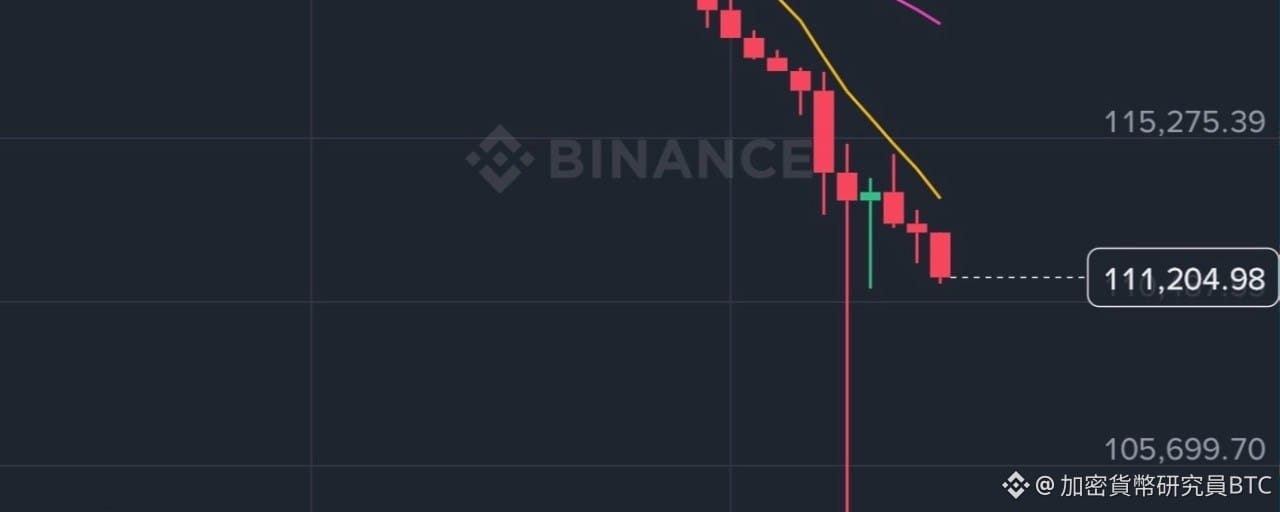

On October 11, 2025, the cryptocurrency market experienced a leverage liquidation storm significant enough to go down in history.
The trigger for the event came from escalating U.S.-China trade tensions. After President Trump announced threats to impose an additional 100% tariff on Chinese goods, global risk assets were quickly sold off. With the crypto market already in a high-leverage, high open-interest state, it set off a chain reaction.
Bitcoin rapidly plunged from above $120,000 to nearly $105,000, while declines in ETH, SOL, and a large number of altcoins were even more severe. In just 24 hours, more than $19 billion in leveraged positions across the entire market were forcibly liquidated, affecting over 1.6 million trading accounts. This became the largest single-day liquidation event recorded in the crypto market at the time.
What’s truly terrifying isn’t just the price drop, but the death spiral formed by “high leverage → forced liquidation → falling liquidity → prices continue to drop → more liquidations.” When market makers reduce liquidity, what would normally be a normal correction is quickly magnified into a flash crash.
Binance later said that its core matching and liquidation systems were not completely interrupted, but it acknowledged that some assets’ transfers were affected, and that price indexes for assets such as USDe, WBETH, and BNSOL showed anomalies during extreme market conditions. Binance also compensated some affected users. As for whether Binance itself amplified this liquidation event, the market still has differing views to this day.
What the 10/11 leaves traders with might not be that “black swans can’t be predicted,” but rather:
The truly dangerous part is never just misjudging the direction; it’s leaving no room for survival in extreme market conditions in a highly leveraged market.