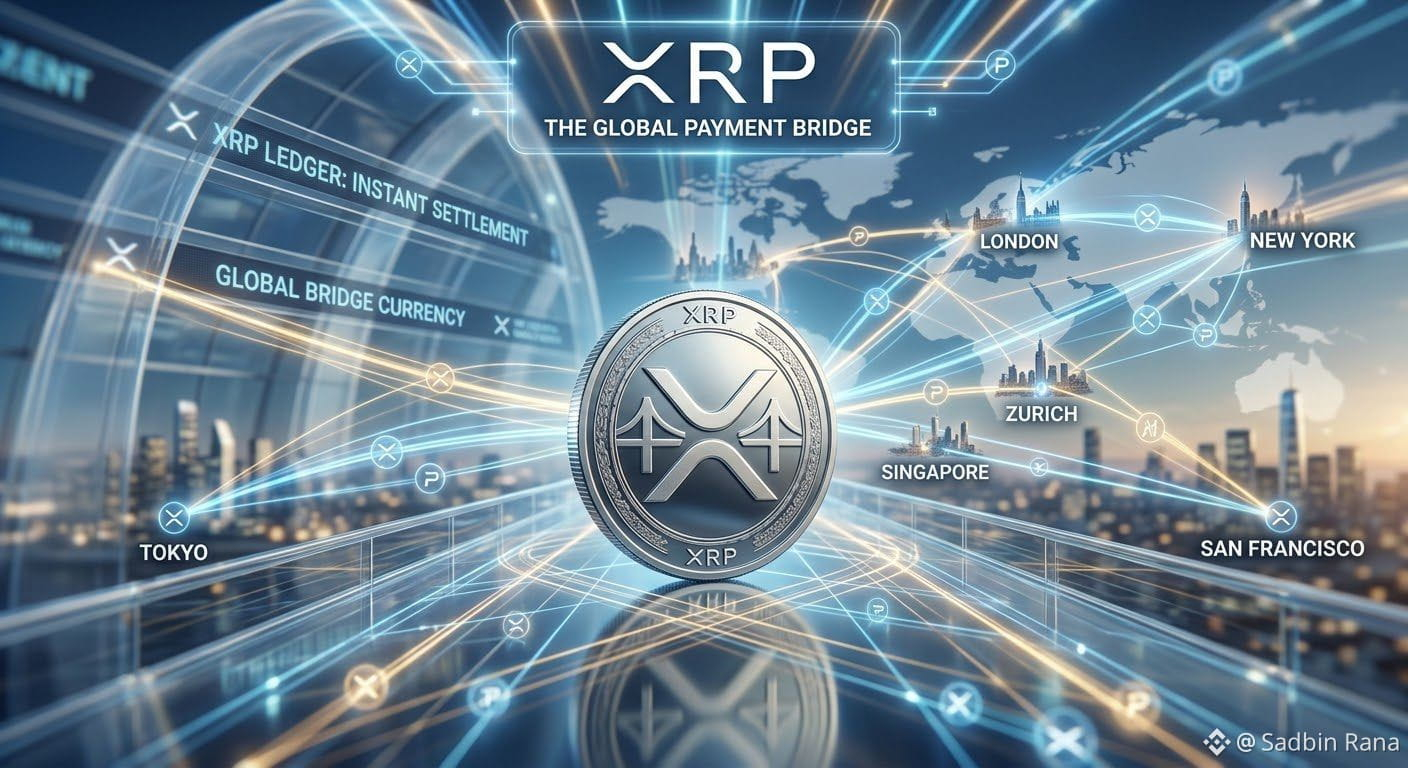
XRP is a prominent cryptocurrency and native digital asset of the XRP Ledger (XRPL), an open-source, permissionless, and decentralized blockchain technology. Launched in 2012 by Chris Larsen, Jed McCaleb, and Arthur Britto, XRP was specifically engineered to solve a critical inefficiency in global finance: the slow, costly, and complex nature of cross-border payments.
While often associated with the company Ripple, which uses XRP in its payment solutions, the two are distinct; XRP is an independent digital asset, and the XRPL operates without central control. Its primary use case is to serve as a bridge currency, allowing financial institutions to facilitate near-instant fiat currency exchange across borders without the need for traditional pre-funded "nostro" accounts.
The consensus mechanism used by the XRPL relies on a unique network of "validators" who agree on the order and outcome of XRP transactions every few seconds. This is fundamentally different from Bitcoin's model, optimizing for transaction speed and extreme cost-efficiency rather than censorship resistance through maximal decentralization. All 100 billion XRP tokens that will ever exist were pre-mined at its inception, with a significant portion held in a programmatic escrow to provide supply predictability. This structural design has positioned XRP as a leading enterprise-focused digital asset, aiming to revolutionize the foundational rails of global value transfer.
While often associated with the company Ripple, which uses XRP in its payment solutions, the two are distinct; XRP is an independent digital asset, and the XRPL operates without central control. Its primary use case is to serve as a bridge currency, allowing financial institutions to facilitate near-instant fiat currency exchange across borders without the need for traditional pre-funded "nostro" accounts.
The consensus mechanism used by the XRPL relies on a unique network of "validators" who agree on the order and outcome of XRP transactions every few seconds. This is fundamentally different from Bitcoin's model, optimizing for transaction speed and extreme cost-efficiency rather than censorship resistance through maximal decentralization. All 100 billion XRP tokens that will ever exist were pre-mined at its inception, with a significant portion held in a programmatic escrow to provide supply predictability. This structural design has positioned XRP as a leading enterprise-focused digital asset, aiming to revolutionize the foundational rails of global value transfer.