
Muzamil Abbas⁷⁵ 穆扎米尔_阿巴斯
10k Posts
Muzamil Abbas⁷⁵ 穆扎米尔_阿巴斯
X ACC @Muzamil39825275 // BINANCE SQUARE CREATOR // CRYPTO TRADER // BITCOIN ENTHUSIAST // CALM MIND BIG DREAMS // BUILDING A FUTURE NOT CHASING ATTENTION✨
847 Following
15.9K+ Followers
23.6K+ Liked
Posts
All
Quotes
Videos
Live
PINNED
🎁 50 $TRUMP COIN GIVEAWAY 🎁
Want to win TRUMP?
✅ Follow me
❤️ Like this post
🔁 Repost this post
💬 Comment “1” to claim
Good luck everyone 🔥
50 $TRUMP — Let’s go 🎁
#FOLLOW_ME_FOR_NEXT_GIFT #TrumpCryptoSupport
Want to win TRUMP?
✅ Follow me
❤️ Like this post
🔁 Repost this post
💬 Comment “1” to claim
Good luck everyone 🔥
50 $TRUMP — Let’s go 🎁
#FOLLOW_ME_FOR_NEXT_GIFT #TrumpCryptoSupport

go
Aria Daisy 阿莉娅_黛西
·
--
BullishA beautiful night, a peaceful view, and a moment worth remembering. ✨🌃
Keep building, keep believing, and let your journey speak for itself. 🚀
#Binance #night
$TUT $TRUMP
Keep building, keep believing, and let your journey speak for itself. 🚀
#Binance #night
$TUT $TRUMP

go

白鲨观点合约账户
·
--
At lunchtime, I chatted with friends again about cutting losses. He said that recently, because he didn’t cut losses, a trade got stuck at 20%, and now it’s “frozen” altogether.
When I first got into the profession, I was like that too. I thought cutting losses really meant admitting defeat. As long as you don’t sell, there’s still hope the price will turn around and rise again. But what happens instead? Usually, a small loss drags on and turns into a big loss, then the big loss turns into a deep trap, and in the end people stop even looking. They give that behavior a name: “value investing.”
Later, after suffering losses many times, I finally understood: cutting losses isn’t surrender—it’s to keep yourself alive.
Think about it: if you make ten trades, even if you’re wrong five times and right five times, as long as every time you’re wrong you lose a little, and every time you’re right you gain a lot, the overall result can still be profitable. But if you don’t cut losses, just one wrong trade can wipe out everything you achieved in the previous nine.
In trading, survival matters more than anything.
Many people like to see how many times others can make money, and think that’s what it means to be good. But that’s not the case. The truly great ones are the people who have still been here after ten years, eight years. They may not make money as fast as that, and it’s very rare for anyone to have a “life-changing overnight” legend—but they move steadily and go far.
Fast and steady—forever—comes down to a choice.
Choose fast, and you might shine brilliantly for a moment;
Choose steady, and you can reach the end.
$BTC #BinanceSquare #BTC #交易心得分享
When I first got into the profession, I was like that too. I thought cutting losses really meant admitting defeat. As long as you don’t sell, there’s still hope the price will turn around and rise again. But what happens instead? Usually, a small loss drags on and turns into a big loss, then the big loss turns into a deep trap, and in the end people stop even looking. They give that behavior a name: “value investing.”
Later, after suffering losses many times, I finally understood: cutting losses isn’t surrender—it’s to keep yourself alive.
Think about it: if you make ten trades, even if you’re wrong five times and right five times, as long as every time you’re wrong you lose a little, and every time you’re right you gain a lot, the overall result can still be profitable. But if you don’t cut losses, just one wrong trade can wipe out everything you achieved in the previous nine.
In trading, survival matters more than anything.
Many people like to see how many times others can make money, and think that’s what it means to be good. But that’s not the case. The truly great ones are the people who have still been here after ten years, eight years. They may not make money as fast as that, and it’s very rare for anyone to have a “life-changing overnight” legend—but they move steadily and go far.
Fast and steady—forever—comes down to a choice.
Choose fast, and you might shine brilliantly for a moment;
Choose steady, and you can reach the end.
$BTC #BinanceSquare #BTC #交易心得分享

go


Syco 疯子
·
--
✨ GOOD EVENING TO YOU ALL✨
I hope you had a beautiful sunny day.
I wish you a sweet evening anda cosmic night.
Kindly ✨
Syco🌹
$BNB
I hope you had a beautiful sunny day.
I wish you a sweet evening anda cosmic night.
Kindly ✨
Syco🌹
$BNB

go

Ahli Hidaya ya rabi ma he q
·
--
Bullish🚨 MACRO ALERT: September Fed Rate Hike Odds Spike to 66.1% After Warsh’s Jackson Hole Speech! But Wall Street Giants Disagree...
Market sentiment has flipped aggressively following Federal Reserve Chair Kevin Warsh’s hawkish keynote address at the Jackson Hole economic symposium.
Here is everything you need to know about what’s happening and what it means for the markets:
📊 The Breakdown
The Fed’s Stance: Warsh delivered a strong message, making it clear that policymakers "have work to do" if underlying inflation doesn't track back toward the 2% target convincingly. He noted that financial conditions aren't restrictive enough given sticky price pressures.
The Market Reaction: Following the speech, CME FedWatch data showed the probability of a September rate hike skyrocketed to 66.1% (surging significantly from prior levels). Short-term Treasury yields and the US Dollar index rallied sharply in response.
The Wall Street Pushback: Despite the market panic and surging odds, major banking institutions like Citi and JPMorgan are pushing back. They argue that actual incoming economic data doesn’t support an emergency or surprise hike just yet, creating a massive divergence between traders and institutional analysts.
📉 What This Means for Crypto & Risk Assets
Volatility Warning: Rising rate hike expectations typically put short-term downward pressure on risk-on assets, equities, and crypto as liquidity fears creep back in.
The Data is Key: All eyes are now locked on the upcoming macro data prints dropping just days before the FOMC meeting. If the numbers come in hot, the Fed might actually pull the trigger; if they cool, the current panic pricing could reverse quickly.
Are you positioning your portfolio for a hawkish surprise, or buying the dip? Let’s discuss in the comments below! 👇
#Macroeconomics #Fed #Crypto #Investing #BinanceSquare #RateHike$BTC $ETH $USDC
#DYOR🟢
Market sentiment has flipped aggressively following Federal Reserve Chair Kevin Warsh’s hawkish keynote address at the Jackson Hole economic symposium.
Here is everything you need to know about what’s happening and what it means for the markets:
📊 The Breakdown
The Fed’s Stance: Warsh delivered a strong message, making it clear that policymakers "have work to do" if underlying inflation doesn't track back toward the 2% target convincingly. He noted that financial conditions aren't restrictive enough given sticky price pressures.
The Market Reaction: Following the speech, CME FedWatch data showed the probability of a September rate hike skyrocketed to 66.1% (surging significantly from prior levels). Short-term Treasury yields and the US Dollar index rallied sharply in response.
The Wall Street Pushback: Despite the market panic and surging odds, major banking institutions like Citi and JPMorgan are pushing back. They argue that actual incoming economic data doesn’t support an emergency or surprise hike just yet, creating a massive divergence between traders and institutional analysts.
📉 What This Means for Crypto & Risk Assets
Volatility Warning: Rising rate hike expectations typically put short-term downward pressure on risk-on assets, equities, and crypto as liquidity fears creep back in.
The Data is Key: All eyes are now locked on the upcoming macro data prints dropping just days before the FOMC meeting. If the numbers come in hot, the Fed might actually pull the trigger; if they cool, the current panic pricing could reverse quickly.
Are you positioning your portfolio for a hawkish surprise, or buying the dip? Let’s discuss in the comments below! 👇
#Macroeconomics #Fed #Crypto #Investing #BinanceSquare #RateHike$BTC $ETH $USDC
#DYOR🟢
@Aeri 艾瑞 $NVDAB

Aeri 艾瑞
·
--
THE ONE WHO DIDN’T CLAP
By sunrise, the video had spread everywhere.
Millions of views.
Thousands of comments.
Everyone wanted to know who the girl in the Silvia was.
Nobody got an answer.
Then someone posted eleven seconds of another driver.
No caption.
No explanation.
Just a black car tearing through a rain-soaked mountain road.
One corner.
One transition.
Perfect.
The video ended.
The comments called him Ghost.
No face.
No name.
No history anyone could verify.
Just a reputation.
He had been running the underground circuit for years.
Never lost a wet-road run.
Never crashed.
Never celebrated.
And apparently...
Never clapped for anyone.
Three nights later, the Silvia returned to the circuit.
The crowd was bigger this time.
Phones were already raised.
But across the lot, one person wasn't watching the crowd.
He was watching the Silvia.
Black helmet.
Dark jacket.
Standing beside a car with its headlights off.
The driver slowly walked over.
He stopped beside the window.
Looked at the scratched bodywork.
The mismatched wheels.
The handmade repairs.
Then looked inside.
"You built it yourself?"
A pause.
"Mostly."
He nodded.
"That's why."
The window lowered.
"Why what?"
He looked toward the road.
"You drive like you're trying to prove something."
Silence.
Then:
"And you?"
He turned back.
"I drive like I've already proven it."
He walked away.
No challenge.
No race.
Nothing.
Just before midnight, an engine started somewhere beyond the warehouses.
Then another.
The black car rolled toward the exit.
The Silvia followed.
The road ahead disappeared into darkness.
One corner waited beyond the rain.
And somewhere ahead...
Someone was finally waiting for a driver worth chasing.
#Aeri
#MooDCirCuiT
$USELESS
$SOL
$BEAT
By sunrise, the video had spread everywhere.
Millions of views.
Thousands of comments.
Everyone wanted to know who the girl in the Silvia was.
Nobody got an answer.
Then someone posted eleven seconds of another driver.
No caption.
No explanation.
Just a black car tearing through a rain-soaked mountain road.
One corner.
One transition.
Perfect.
The video ended.
The comments called him Ghost.
No face.
No name.
No history anyone could verify.
Just a reputation.
He had been running the underground circuit for years.
Never lost a wet-road run.
Never crashed.
Never celebrated.
And apparently...
Never clapped for anyone.
Three nights later, the Silvia returned to the circuit.
The crowd was bigger this time.
Phones were already raised.
But across the lot, one person wasn't watching the crowd.
He was watching the Silvia.
Black helmet.
Dark jacket.
Standing beside a car with its headlights off.
The driver slowly walked over.
He stopped beside the window.
Looked at the scratched bodywork.
The mismatched wheels.
The handmade repairs.
Then looked inside.
"You built it yourself?"
A pause.
"Mostly."
He nodded.
"That's why."
The window lowered.
"Why what?"
He looked toward the road.
"You drive like you're trying to prove something."
Silence.
Then:
"And you?"
He turned back.
"I drive like I've already proven it."
He walked away.
No challenge.
No race.
Nothing.
Just before midnight, an engine started somewhere beyond the warehouses.
Then another.
The black car rolled toward the exit.
The Silvia followed.
The road ahead disappeared into darkness.
One corner waited beyond the rain.
And somewhere ahead...
Someone was finally waiting for a driver worth chasing.
#Aeri
#MooDCirCuiT
$USELESS
$SOL
$BEAT
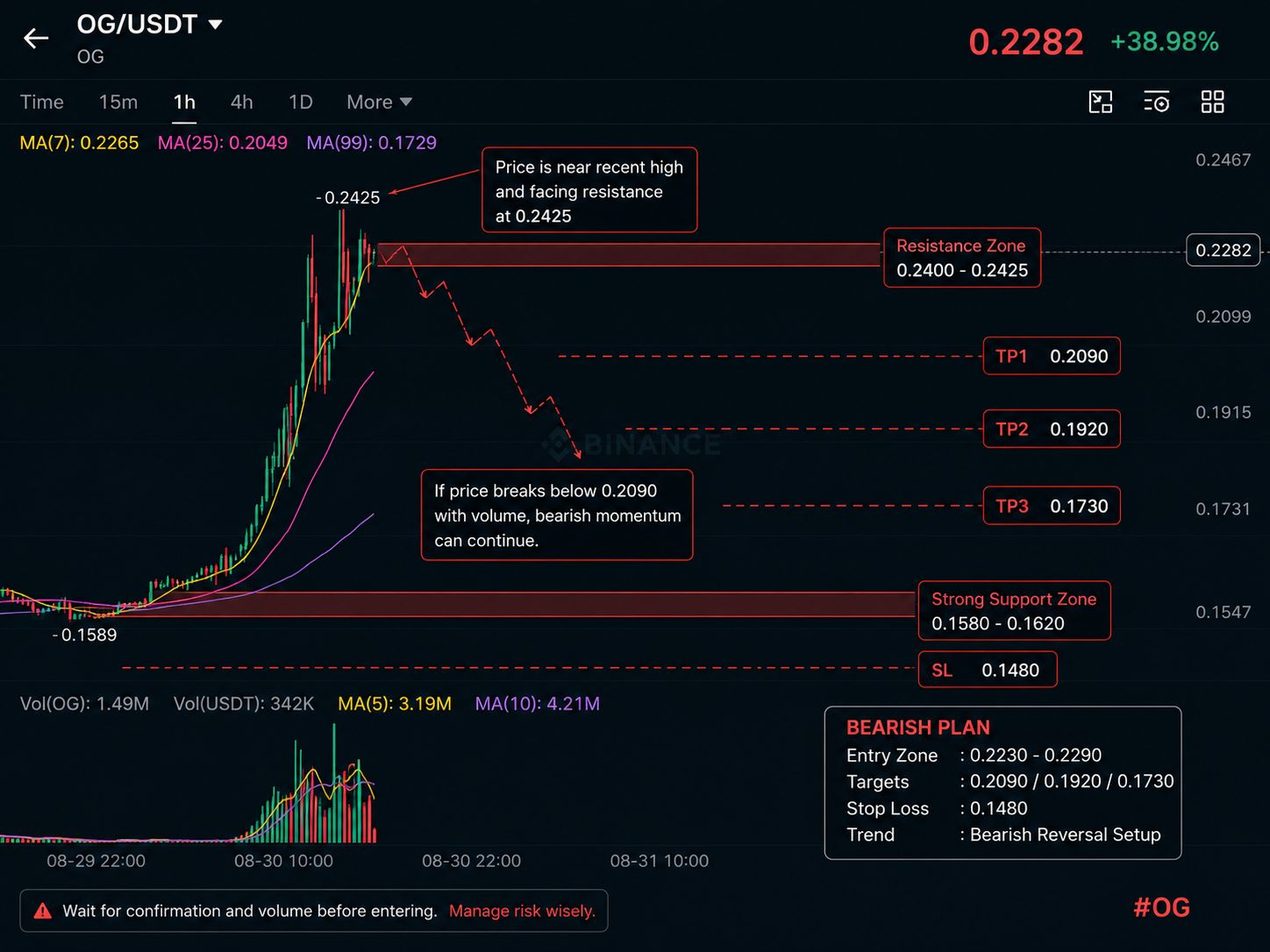
🔻 $0G Bearish Signal
Entry: $0.223–$0.229
🎯 TP1: $0.209
🎯 TP2: $0.192
🎯 TP3: $0.173
🛑 SL: $0.2425
$SKYAI $LAB #beraish
Entry: $0.223–$0.229
🎯 TP1: $0.209
🎯 TP2: $0.192
🎯 TP3: $0.173
🛑 SL: $0.2425
$SKYAI $LAB #beraish
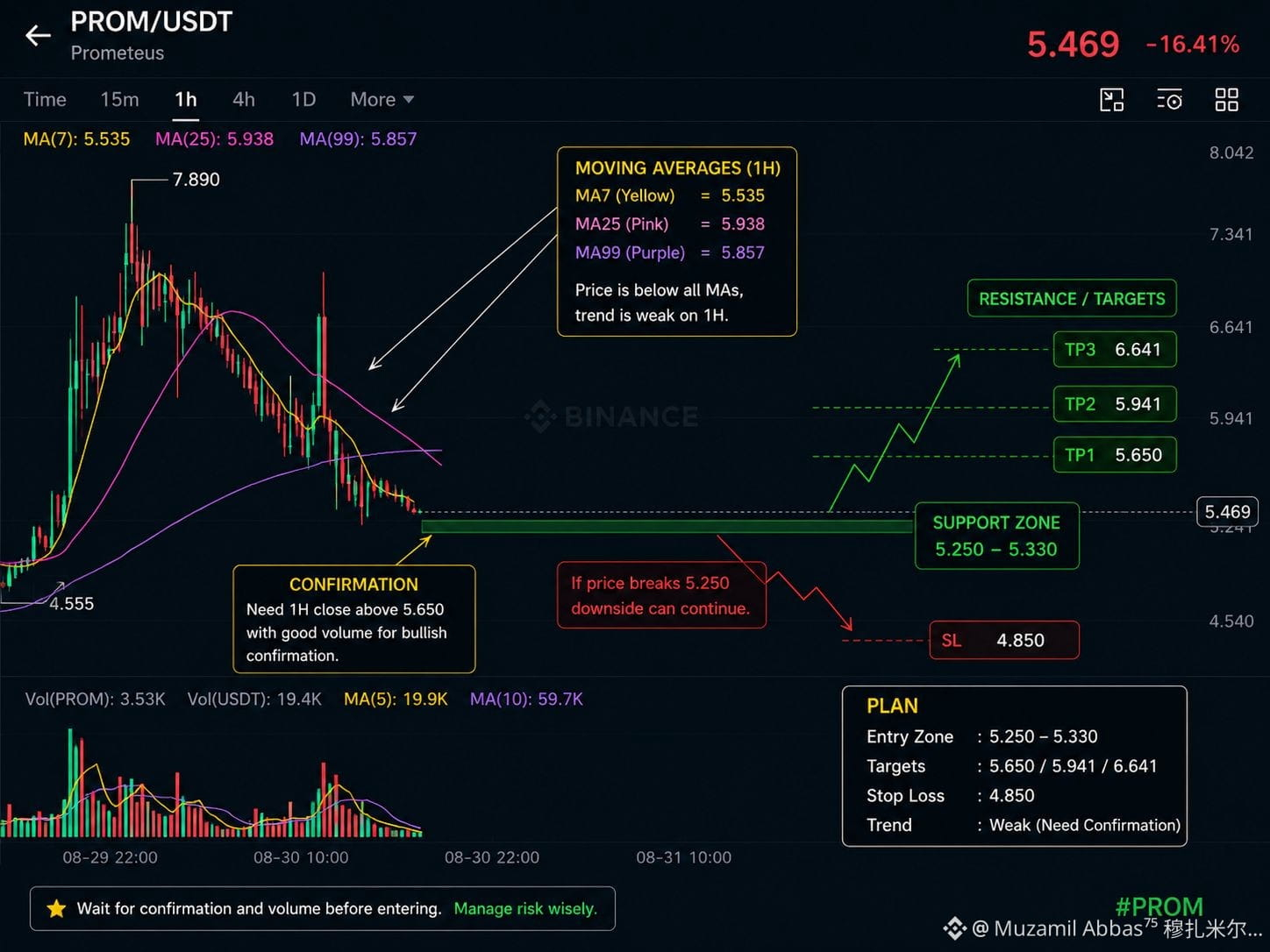
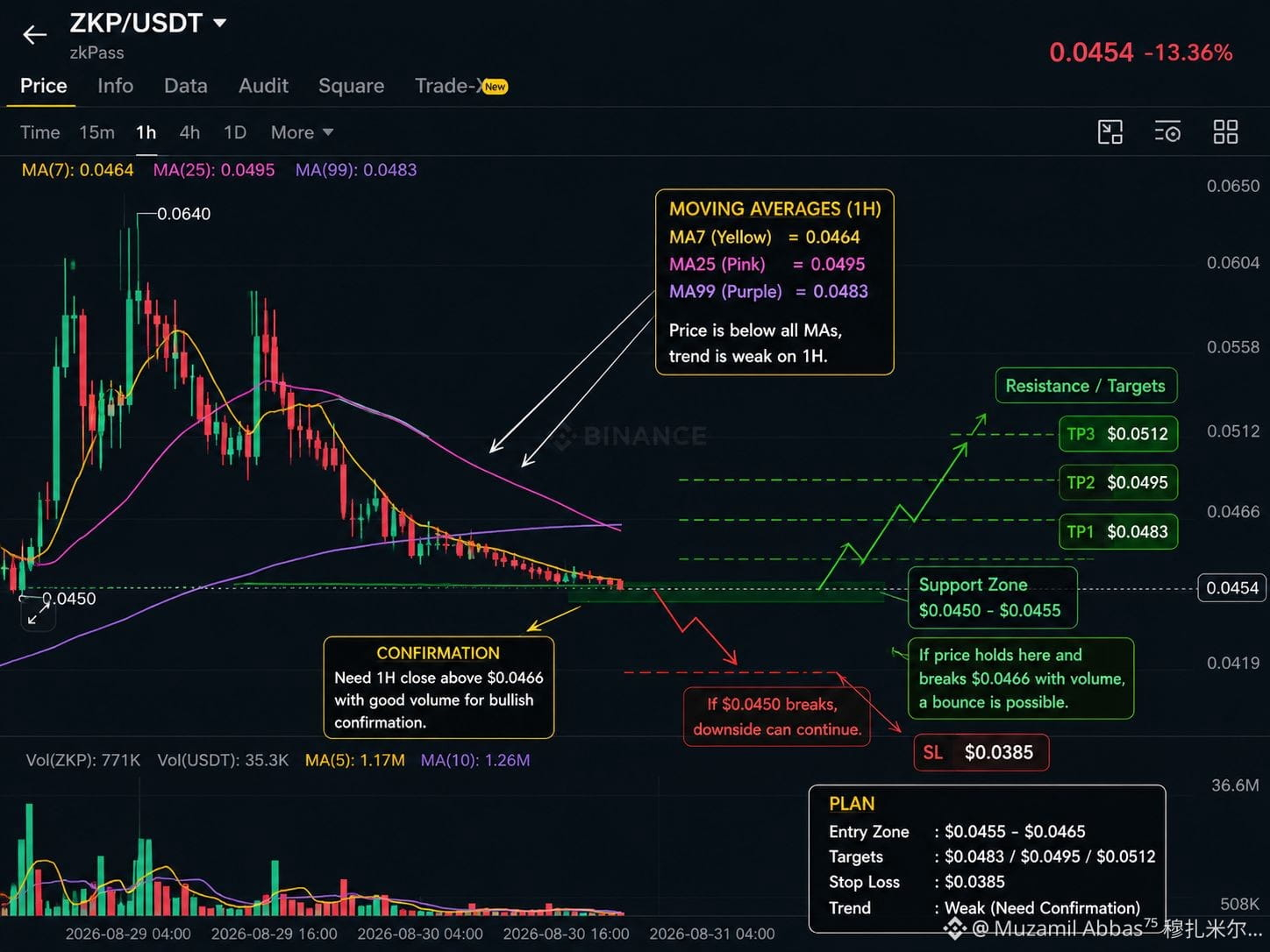
$PROM Bullish Signal
Entry: $5.25–$5.33
🎯 TP1: $5.65
🎯 TP2: $5.94
🎯 TP3: $6.64
🛑 SL: $4.85
Wait for confirmation + volume before entry. DYOR 📈
$GWEI $SKR
Entry: $5.25–$5.33
🎯 TP1: $5.65
🎯 TP2: $5.94
🎯 TP3: $6.64
🛑 SL: $4.85
Wait for confirmation + volume before entry. DYOR 📈
$GWEI $SKR
🎉 15K Followers Celebration Giveaway! 🎉
Alhamdulillah, we have reached 15K followers on Binance Square Thank you all for your support and trust. To celebrate this milestone, I'm giving away SOL Coin to lucky winners. 🔥
✅ Like this post
✅ Repost this post
✅ Comment 1
✅ Claim 🎁
The more support you show, the bigger the future giveaways can become.
Good luck everyone
#BinanceSquare #SOL #Giveaway #15KMilestone #ThankYou
Alhamdulillah, we have reached 15K followers on Binance Square Thank you all for your support and trust. To celebrate this milestone, I'm giving away SOL Coin to lucky winners. 🔥
✅ Like this post
✅ Repost this post
✅ Comment 1
✅ Claim 🎁
The more support you show, the bigger the future giveaways can become.
Good luck everyone
#BinanceSquare #SOL #Giveaway #15KMilestone #ThankYou

🎁 $SHIB GIVEAWAY WORTH $100 🎁
I’m giving away SHIB Gift Boxes to 3,000 lucky people! 🐕🔥
To participate:
❤️ Like this post ✅
🔁 Repost this post ✅
💬 Comment “1” below ✅
🎁 Claim your Gift Box ✅
Good luck everyone🚀✨
#SHIB #Giveaway #Binance #CryptoGiveaway
I’m giving away SHIB Gift Boxes to 3,000 lucky people! 🐕🔥
To participate:
❤️ Like this post ✅
🔁 Repost this post ✅
💬 Comment “1” below ✅
🎁 Claim your Gift Box ✅
Good luck everyone🚀✨
#SHIB #Giveaway #Binance #CryptoGiveaway

30D trade $DUSK 3.3K USDT
#dusk $DUSK @Dusk
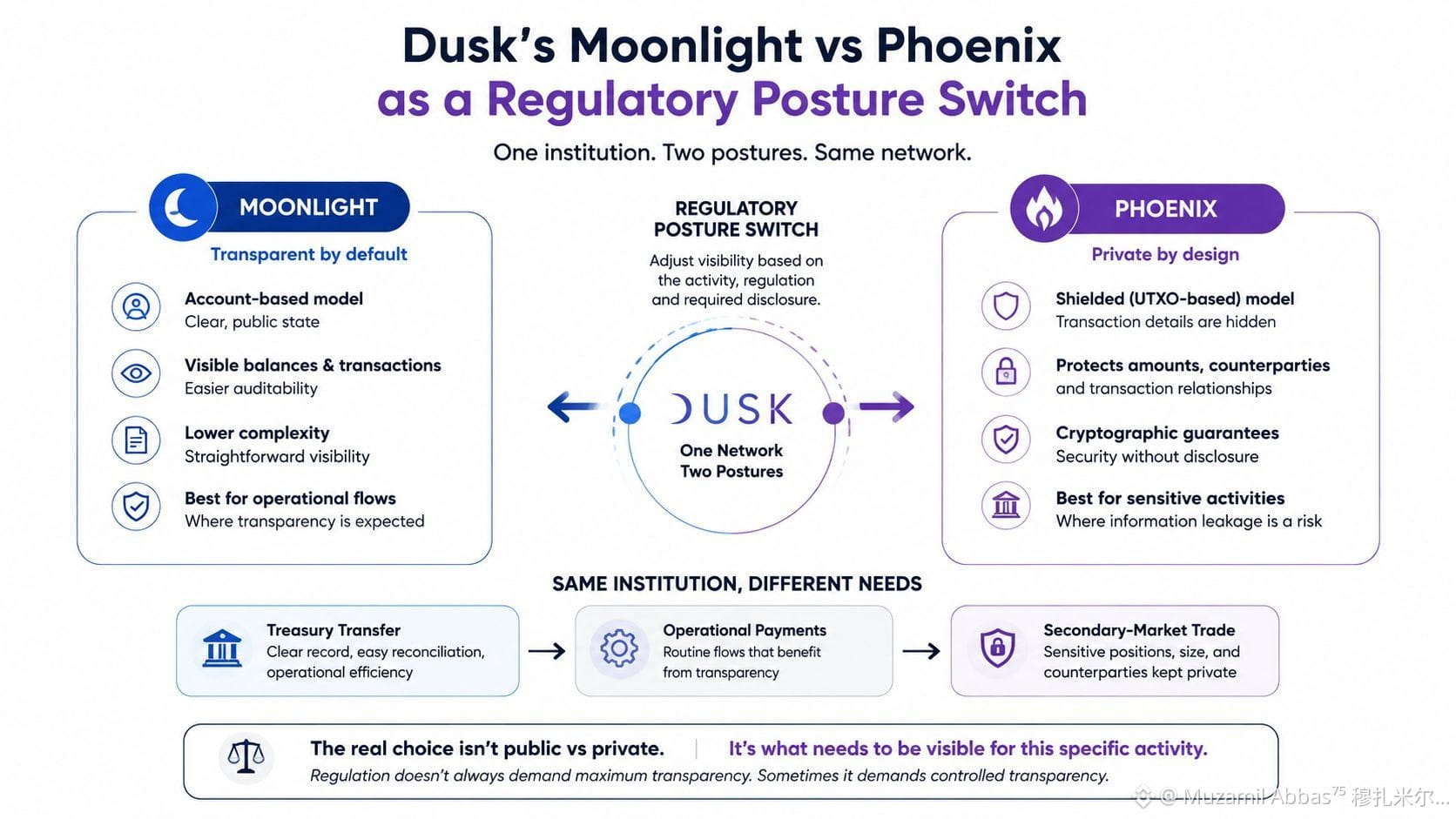
One thing I find interesting about @DuskNetwork is that Moonlight and Phoenix don’t have to be viewed as competing privacy models.
For the same institution, they could represent different regulatory postures.
A treasury transfer or operational payment might benefit from Moonlight’s account-based, transparent structure. There’s a clear record and less complexity around visibility.
But imagine that institution entering a sensitive secondary-market trade. Broadcasting the amount, counterparties or transaction relationships could reveal information that doesn’t need to be public.
That’s where Phoenix becomes more interesting.
Its shielded model can keep transaction details private while still supporting the cryptographic guarantees needed by the network.
So the real choice isn’t simply public vs private.
It’s more like:
What needs to be visible for this specific activity?
I think that’s a much more realistic institutional use of privacy.
Regulation doesn’t always demand maximum transparency.
Sometimes it demands controlled transparency.
And Dusk’s architecture seems designed around that distinction.
One thing I find interesting about @DuskNetwork is that Moonlight and Phoenix don’t have to be viewed as competing privacy models.
For the same institution, they could represent different regulatory postures.
A treasury transfer or operational payment might benefit from Moonlight’s account-based, transparent structure. There’s a clear record and less complexity around visibility.
But imagine that institution entering a sensitive secondary-market trade. Broadcasting the amount, counterparties or transaction relationships could reveal information that doesn’t need to be public.
That’s where Phoenix becomes more interesting.
Its shielded model can keep transaction details private while still supporting the cryptographic guarantees needed by the network.
So the real choice isn’t simply public vs private.
It’s more like:
What needs to be visible for this specific activity?
I think that’s a much more realistic institutional use of privacy.
Regulation doesn’t always demand maximum transparency.
Sometimes it demands controlled transparency.
And Dusk’s architecture seems designed around that distinction.
30D trade $DUSK 3.3K USDT
#dusk $DUSK @Dusk
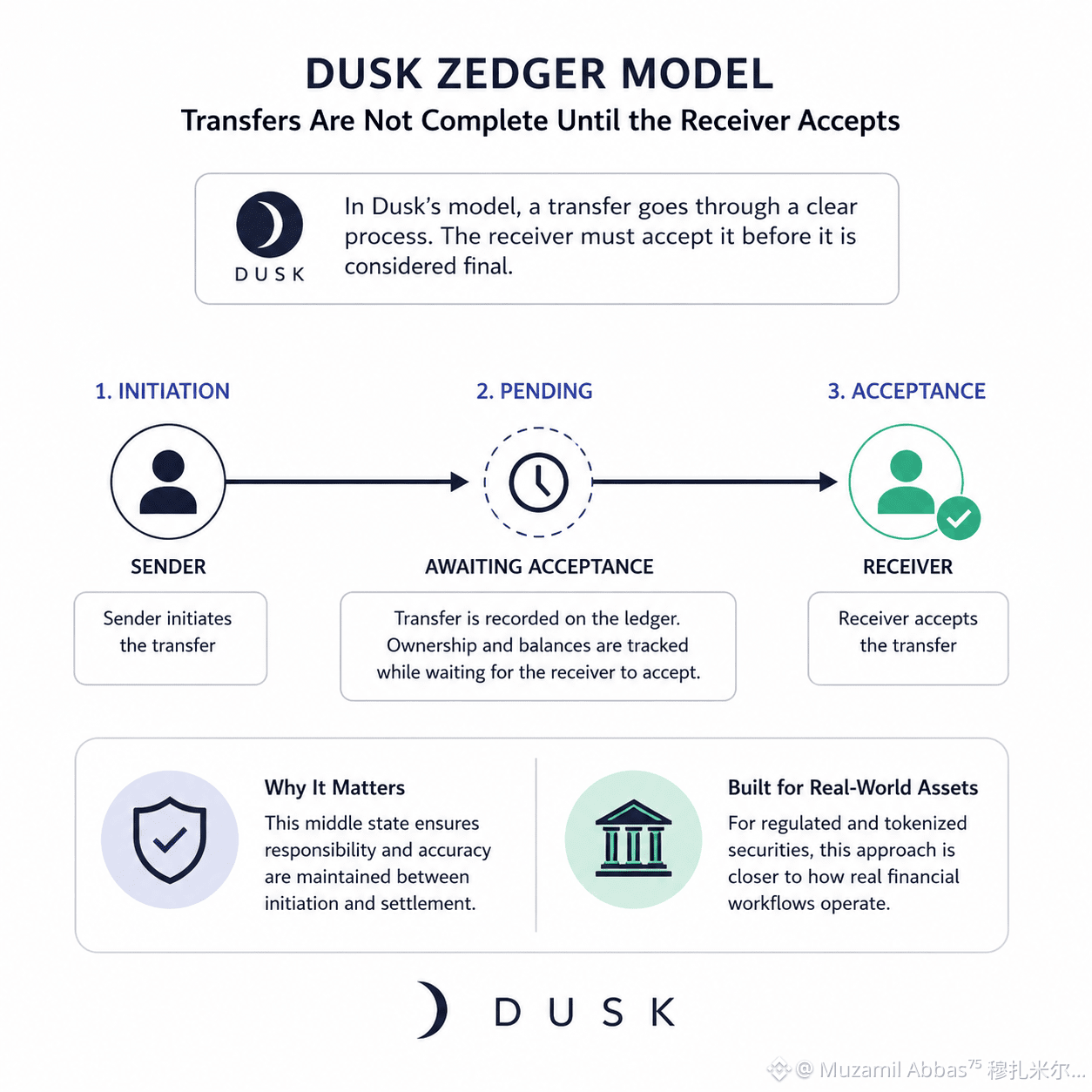
I was reading through Dusk’s approach to security tokenization and one detail kept pulling my attention. Most blockchain transfers feel instant from the outside. Assets move, balances change, and the transaction is considered finished. But regulated assets do not always work that way.
In Dusk’s Zedger model, a transfer is not automatically complete the moment it is sent. The receiver must explicitly accept it first. Until that happens, the transferred amount still needs to be accounted for correctly. That sounds like a small design choice, but it solves a surprisingly difficult problem.
I started thinking about situations where one side of a transaction is ready before the other. Maybe the sender has already initiated the transfer, but the receiver has not approved it yet. Traditional crypto systems usually focus on moving value as fast as possible. Dusk seems more focused on tracking responsibility during the period between initiation and settlement.
What I find interesting is that this middle state is treated as part of the process rather than an exception. The system keeps track of ownership and balances while waiting for the final approval step.
For tokenized securities and regulated assets, that feels much closer to how real financial workflows actually operate. The question is whether more blockchain systems will eventually need similar settlement logic as tokenization grows.
I was reading through Dusk’s approach to security tokenization and one detail kept pulling my attention. Most blockchain transfers feel instant from the outside. Assets move, balances change, and the transaction is considered finished. But regulated assets do not always work that way.
In Dusk’s Zedger model, a transfer is not automatically complete the moment it is sent. The receiver must explicitly accept it first. Until that happens, the transferred amount still needs to be accounted for correctly. That sounds like a small design choice, but it solves a surprisingly difficult problem.
I started thinking about situations where one side of a transaction is ready before the other. Maybe the sender has already initiated the transfer, but the receiver has not approved it yet. Traditional crypto systems usually focus on moving value as fast as possible. Dusk seems more focused on tracking responsibility during the period between initiation and settlement.
What I find interesting is that this middle state is treated as part of the process rather than an exception. The system keeps track of ownership and balances while waiting for the final approval step.
For tokenized securities and regulated assets, that feels much closer to how real financial workflows actually operate. The question is whether more blockchain systems will eventually need similar settlement logic as tokenization grows.
#dusk $DUSK @Dusk
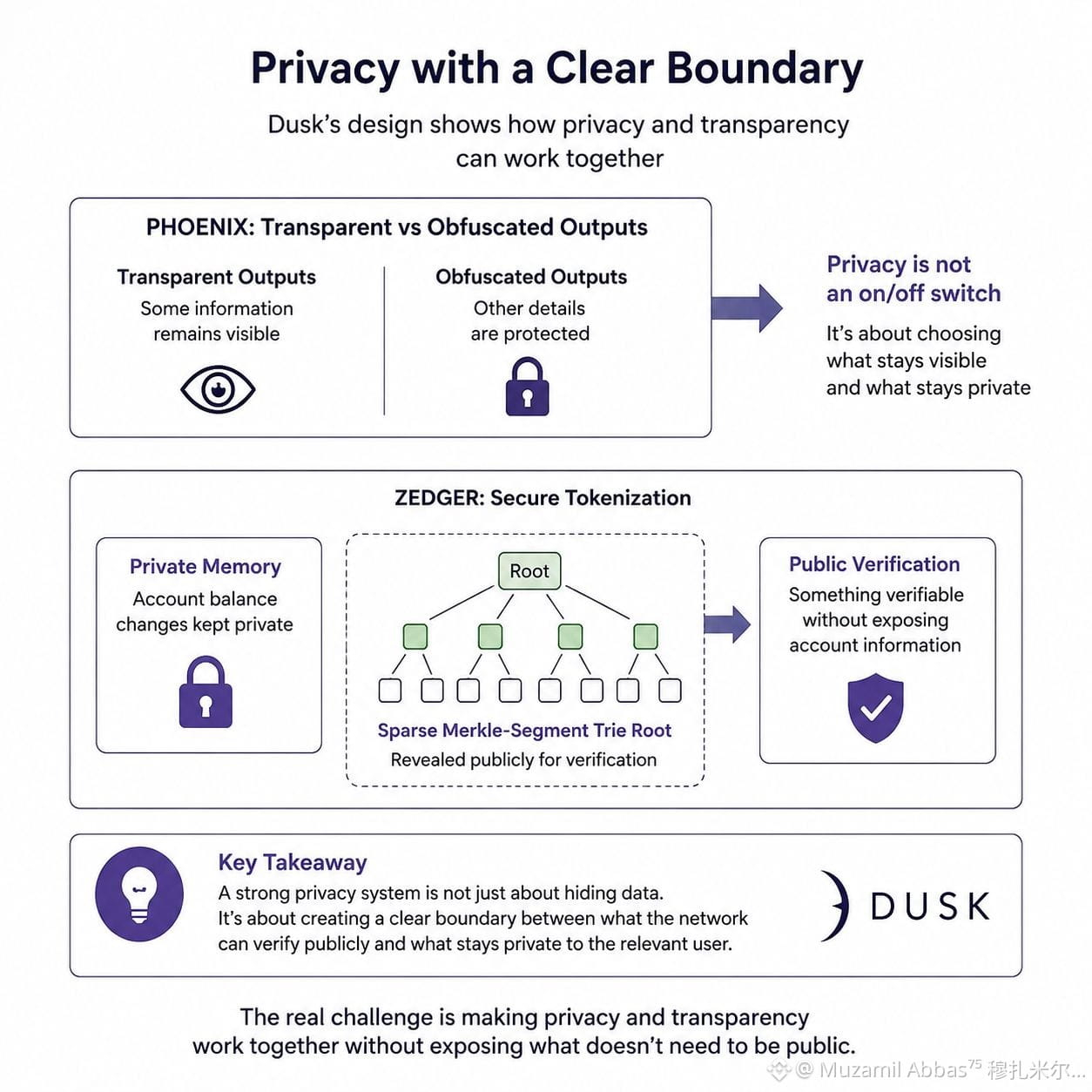
i think privacy becomes much more useful when you can clearly understand what is actually being hidden.
That is one reason Dusk’s design stands out to me. In Phoenix the whitepaper separates outputs into transparent and obfuscated types. So privacy is not treated as a simple switch where everything disappears. Some information can remain visible, while other details are protected.
Zedger takes this idea further for security tokenization. Account balance changes can be kept in private memory, while a Sparse Merkle Segment Trie root is revealed publicly. That gives the system something verifiable without exposing the underlying account information itself.
To me, that distinction is important. A privacy system is not only about hiding data. It also needs a clear boundary between what the network can verify publicly and what stays private to the relevant user.
That is where Dusk’s approach gets interesting. Privacy and transparency are not necessarily opposites. The real question is whether the protocol can make both work together without exposing information that does not need to be public.
i think privacy becomes much more useful when you can clearly understand what is actually being hidden.
That is one reason Dusk’s design stands out to me. In Phoenix the whitepaper separates outputs into transparent and obfuscated types. So privacy is not treated as a simple switch where everything disappears. Some information can remain visible, while other details are protected.
Zedger takes this idea further for security tokenization. Account balance changes can be kept in private memory, while a Sparse Merkle Segment Trie root is revealed publicly. That gives the system something verifiable without exposing the underlying account information itself.
To me, that distinction is important. A privacy system is not only about hiding data. It also needs a clear boundary between what the network can verify publicly and what stays private to the relevant user.
That is where Dusk’s approach gets interesting. Privacy and transparency are not necessarily opposites. The real question is whether the protocol can make both work together without exposing information that does not need to be public.
30D trade $DUSK 2.8K USDT
#dusk $DUSK @Dusk
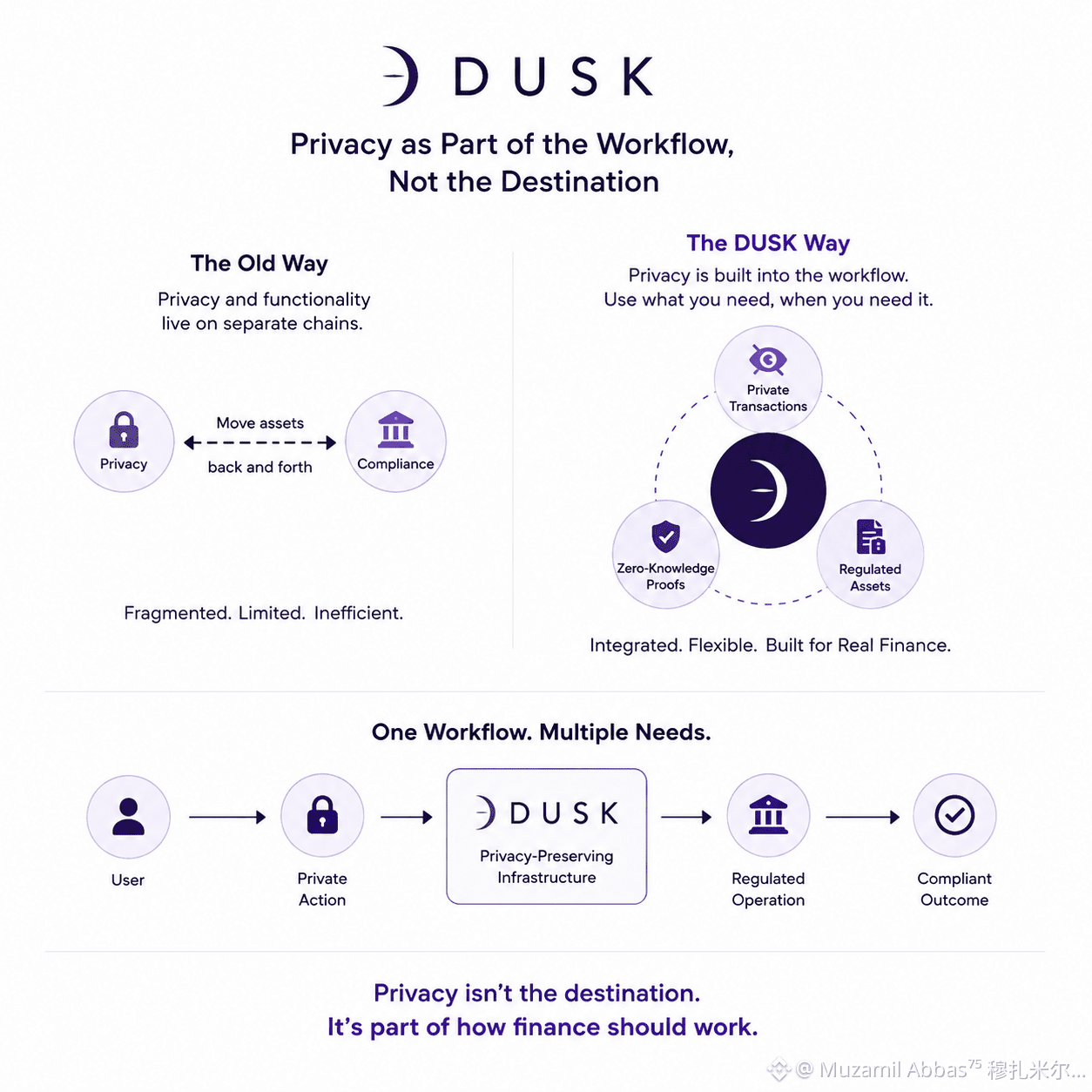
I was thinking about how most crypto discussions still treat privacy as something that belongs to a specific chain. If you want privacy, you move assets there. If you need compliance or other functionality, you move somewhere else. That separation has always felt a bit limiting to me.
What caught my attention with DUSK is the idea that privacy can become part of the workflow itself rather than the destination. The network was designed around confidential transactions, zero-knowledge proofs, and structures that can support regulated assets without exposing every detail publicly. Instead of forcing users to choose between transparency and privacy, the goal seems to be making both exist within the same environment depending on what the situation requires.
That feels more practical than the usual debate of private chain versus public chain. Real financial activity is rarely one-dimensional. Different participants need different levels of visibility, and a system that can adapt to that may be more useful than one built around a single rule for everyone.
The question is whether the market will eventually value privacy as infrastructure rather than a niche feature attached to a particular blockchain.
I was thinking about how most crypto discussions still treat privacy as something that belongs to a specific chain. If you want privacy, you move assets there. If you need compliance or other functionality, you move somewhere else. That separation has always felt a bit limiting to me.
What caught my attention with DUSK is the idea that privacy can become part of the workflow itself rather than the destination. The network was designed around confidential transactions, zero-knowledge proofs, and structures that can support regulated assets without exposing every detail publicly. Instead of forcing users to choose between transparency and privacy, the goal seems to be making both exist within the same environment depending on what the situation requires.
That feels more practical than the usual debate of private chain versus public chain. Real financial activity is rarely one-dimensional. Different participants need different levels of visibility, and a system that can adapt to that may be more useful than one built around a single rule for everyone.
The question is whether the market will eventually value privacy as infrastructure rather than a niche feature attached to a particular blockchain.
30D trade $DUSK 2.8K USDT
#dusk $DUSK @Dusk
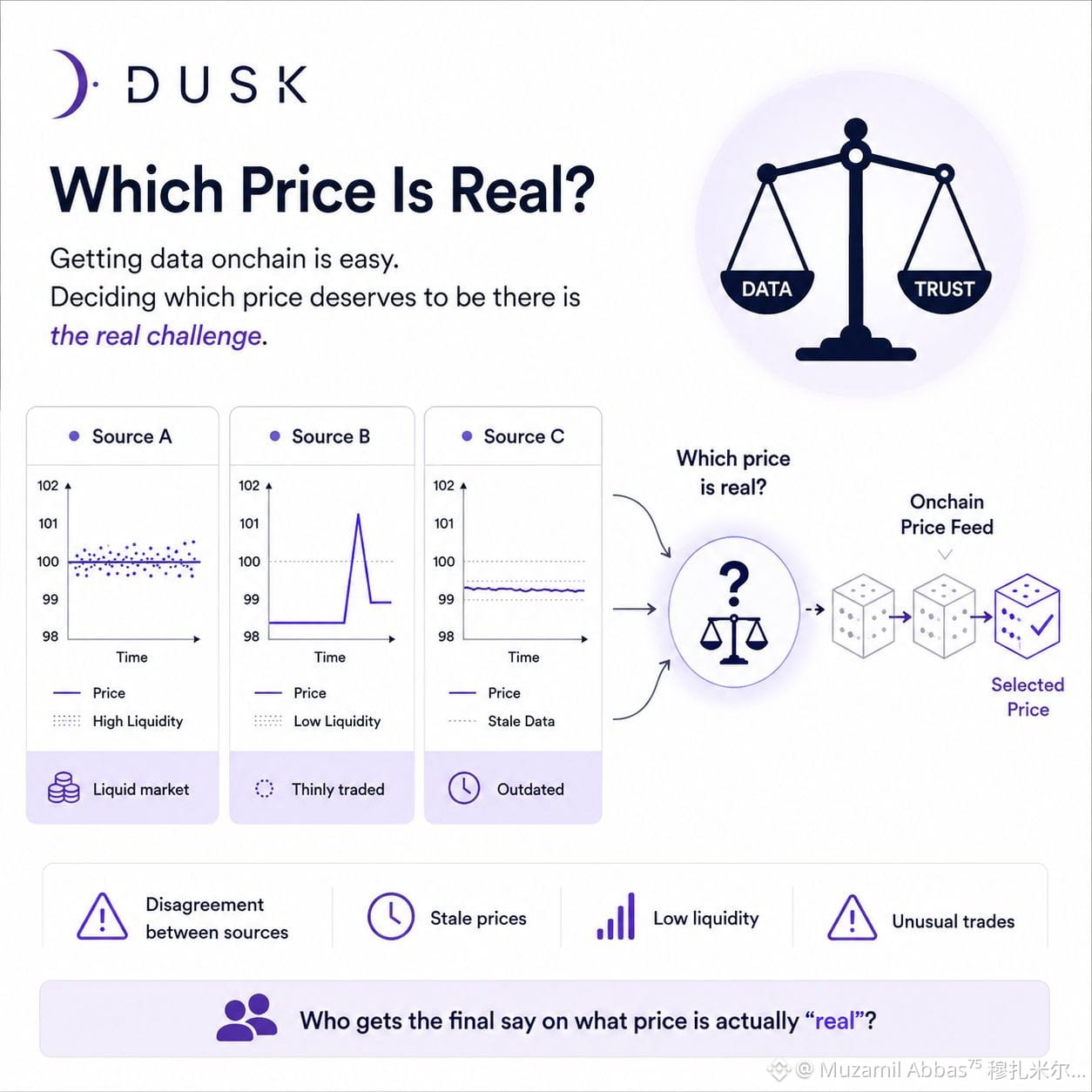
I’ve been thinking more about Dusk’s approach to putting market data onchain and one thing keeps bothering me
Getting a price onto a blockchain is one problem
Deciding which price deserves to be there is another
For a liquid asset several active markets can give you a reasonable reference because there is enough trading activity to compare
But a thinly traded security is different
One small trade can move the quoted price while the last traded price might not represent what someone could actually sell the asset for
If that number becomes part of an onchain workflow the data source suddenly matters almost as much as the infrastructure carrying it
That makes me look at Dusk’s role differently
The interesting question for me isn’t simply whether price data can be brought onchain
It’s how the system handles disagreement between sources stale prices low liquidity or unusual trades
There has to be some way to judge data quality rather than simply record whatever arrives first
I’d want to see how this works in practice across less liquid regulated assets especially when different sources produce slightly different valuations
Because at that point the real question becomes simple
Who gets the final say on what price is actually “real”?
I’ve been thinking more about Dusk’s approach to putting market data onchain and one thing keeps bothering me
Getting a price onto a blockchain is one problem
Deciding which price deserves to be there is another
For a liquid asset several active markets can give you a reasonable reference because there is enough trading activity to compare
But a thinly traded security is different
One small trade can move the quoted price while the last traded price might not represent what someone could actually sell the asset for
If that number becomes part of an onchain workflow the data source suddenly matters almost as much as the infrastructure carrying it
That makes me look at Dusk’s role differently
The interesting question for me isn’t simply whether price data can be brought onchain
It’s how the system handles disagreement between sources stale prices low liquidity or unusual trades
There has to be some way to judge data quality rather than simply record whatever arrives first
I’d want to see how this works in practice across less liquid regulated assets especially when different sources produce slightly different valuations
Because at that point the real question becomes simple
Who gets the final say on what price is actually “real”?
30D trade $DUSK 2.8K USDT
#dusk $DUSK @Dusk
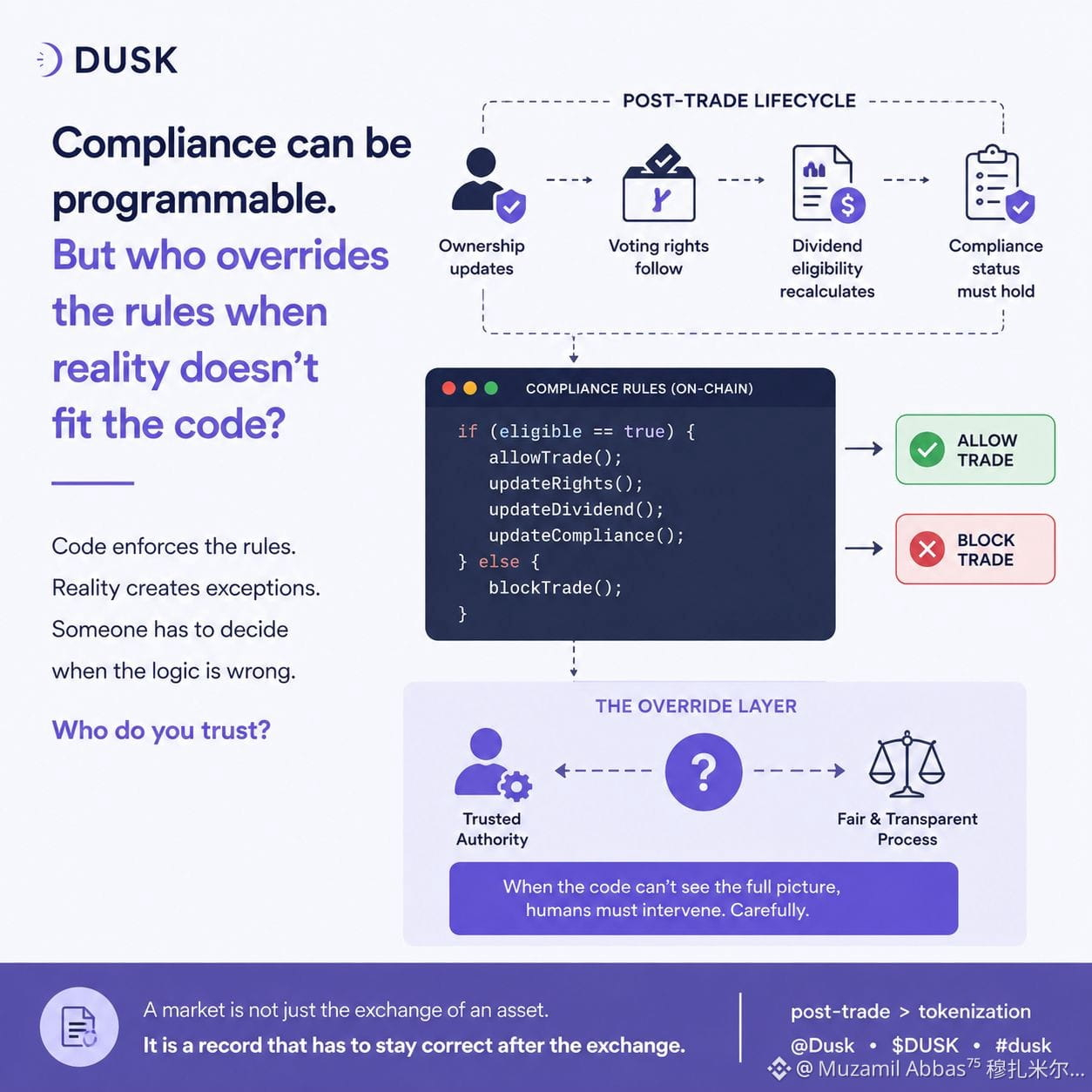
I’ve been thinking about Dusk’s post-trade design a bit differently after reading through the lifecycle material. I used to think programmable compliance was mostly about making sure a trade is allowed before it happens. But the harder question seems to start after the trade, when ownership, voting rights, dividend eligibility, and compliance status all have to stay correct.
That makes the idea of compliance becoming programmable pretty useful, but also slightly uncomfortable. Code can enforce a rule consistently. It can’t automatically know what to do when the real-world situation behind that rule changes or doesn’t fit the assumptions it was built around. If a holder’s eligibility changes, or some regulatory condition needs an exception, there has to be a mechanism for handling that state rather than simply trusting the original logic.
That’s where I think Dusk gets more interesting than just tokenizing an asset. The token itself is almost the easy layer. The harder problem is keeping the record accurate as trades keep happening. But I’m still left wondering about the override layer. Who is actually trusted to intervene when the coded rules produce the wrong result, and how do you prevent that authority from becoming the weakest point in an otherwise programmable system?
I’ve been thinking about Dusk’s post-trade design a bit differently after reading through the lifecycle material. I used to think programmable compliance was mostly about making sure a trade is allowed before it happens. But the harder question seems to start after the trade, when ownership, voting rights, dividend eligibility, and compliance status all have to stay correct.
That makes the idea of compliance becoming programmable pretty useful, but also slightly uncomfortable. Code can enforce a rule consistently. It can’t automatically know what to do when the real-world situation behind that rule changes or doesn’t fit the assumptions it was built around. If a holder’s eligibility changes, or some regulatory condition needs an exception, there has to be a mechanism for handling that state rather than simply trusting the original logic.
That’s where I think Dusk gets more interesting than just tokenizing an asset. The token itself is almost the easy layer. The harder problem is keeping the record accurate as trades keep happening. But I’m still left wondering about the override layer. Who is actually trusted to intervene when the coded rules produce the wrong result, and how do you prevent that authority from becoming the weakest point in an otherwise programmable system?
#TermMax
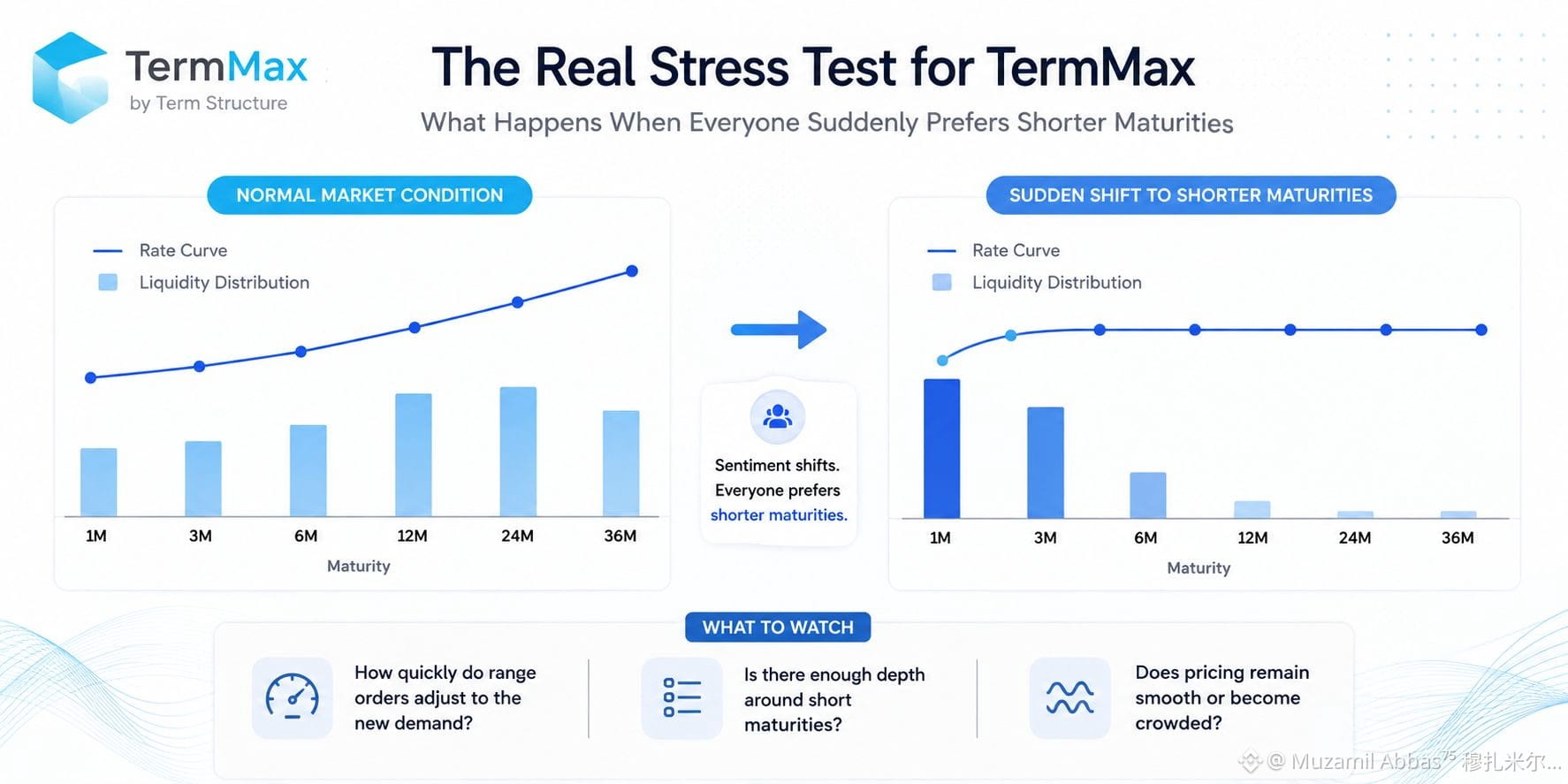
I’ve been thinking about TermMax’s maturity structure a bit differently lately. At first, I mostly saw fixed terms as a way to make borrowing costs easier to understand. But then I started wondering what happens when market sentiment changes quickly and suddenly everyone wants shorter maturities.
That seems like a more useful stress test than simply asking whether fixed-term markets work during normal conditions. If borrowers become uncomfortable locking capital for longer, demand could move toward shorter terms at the same time. Lenders might react too, especially if they start expecting better rates elsewhere. The pricing curve then has to adjust, and that is where I’m more curious about TermMax.
The range-order design makes this interesting because liquidity isn’t necessarily offered at one single maturity or rate. A market maker can express different terms across a range, but that doesn’t automatically mean liquidity will remain attractive when preferences shift abruptly. There is still a dependency on how quickly participants update their orders and how much depth exists around the maturities people suddenly prefer.
That’s the part I want to watch. Not just whether TermMax has liquidity, but how that liquidity behaves when users collectively change their time preference. Does the market reprice smoothly, or do the shorter maturities become crowded while longer ones are left behind?
#termmax @TermMax
I’ve been thinking about TermMax’s maturity structure a bit differently lately. At first, I mostly saw fixed terms as a way to make borrowing costs easier to understand. But then I started wondering what happens when market sentiment changes quickly and suddenly everyone wants shorter maturities.
That seems like a more useful stress test than simply asking whether fixed-term markets work during normal conditions. If borrowers become uncomfortable locking capital for longer, demand could move toward shorter terms at the same time. Lenders might react too, especially if they start expecting better rates elsewhere. The pricing curve then has to adjust, and that is where I’m more curious about TermMax.
The range-order design makes this interesting because liquidity isn’t necessarily offered at one single maturity or rate. A market maker can express different terms across a range, but that doesn’t automatically mean liquidity will remain attractive when preferences shift abruptly. There is still a dependency on how quickly participants update their orders and how much depth exists around the maturities people suddenly prefer.
That’s the part I want to watch. Not just whether TermMax has liquidity, but how that liquidity behaves when users collectively change their time preference. Does the market reprice smoothly, or do the shorter maturities become crowded while longer ones are left behind?
#termmax @TermMax
#TermMax
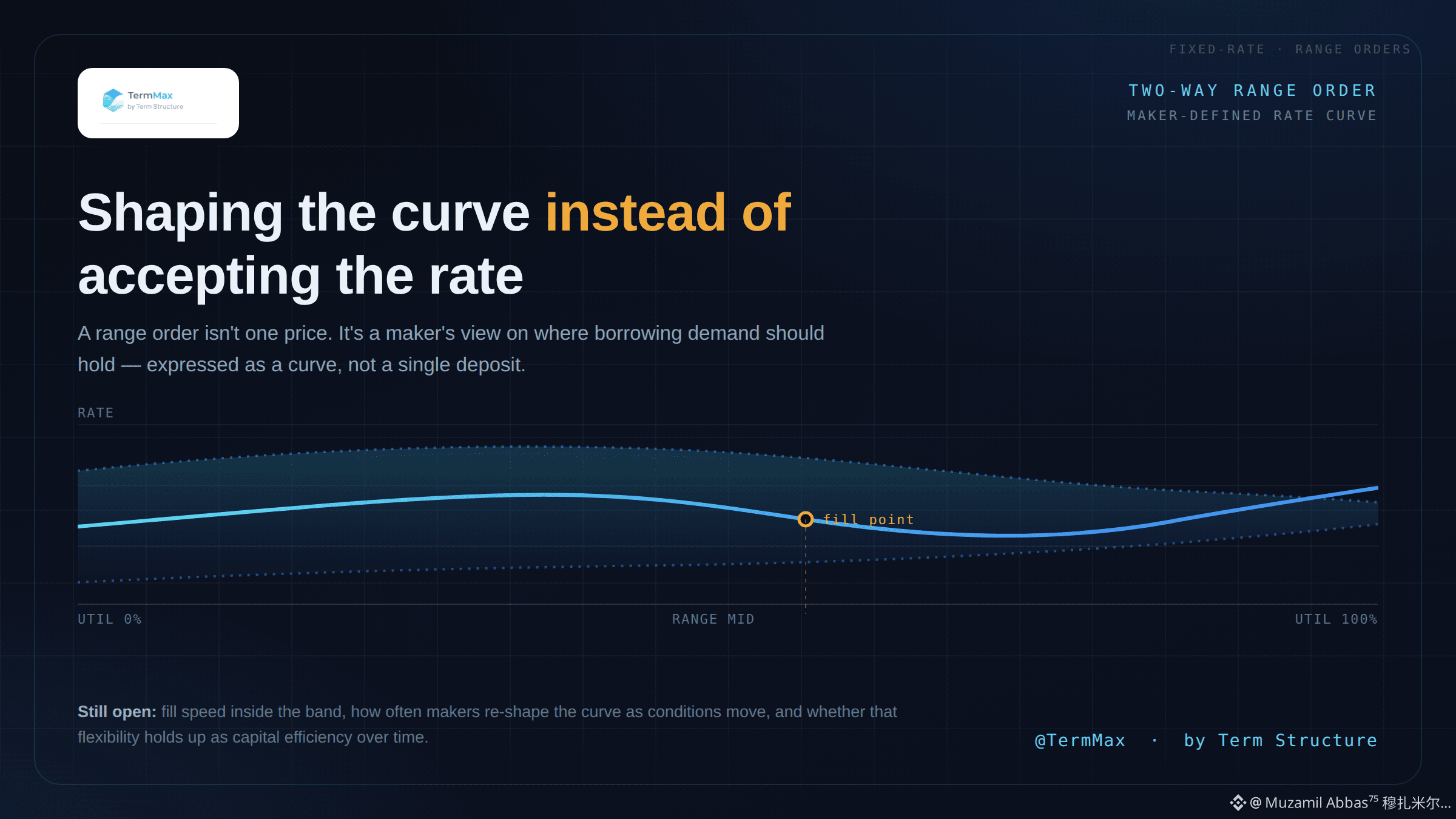
I’ve been looking at TermMax’s range orders differently lately. At first, I treated them as another way for market makers to place liquidity and earn from lending. But the more I think about the pricing curve, the more it looks like a way to express a rate view.
A market maker does not have to offer liquidity at one point. With a range order, they can define how terms change across a range, meaning their liquidity can reflect where they are comfortable participating. If I think borrowing demand will stay strong only up to a certain rate, I can shape my curve around that assumption instead of accepting whatever rate appears.
The Two-Way Range Order makes this more interesting because borrowing and lending curves can sit inside the same order. That makes liquidity provision feel closer to positioning around rates, rather than simply depositing capital and waiting.
Still, I’m curious about execution quality. A curve on paper means little if market activity stays outside it, or if changing conditions make the rate view stale. I’d want to watch how quickly these ranges fill, how often makers adjust them, and whether the flexibility translates into better capital efficiency over time.
#termmax @TermMax
I’ve been looking at TermMax’s range orders differently lately. At first, I treated them as another way for market makers to place liquidity and earn from lending. But the more I think about the pricing curve, the more it looks like a way to express a rate view.
A market maker does not have to offer liquidity at one point. With a range order, they can define how terms change across a range, meaning their liquidity can reflect where they are comfortable participating. If I think borrowing demand will stay strong only up to a certain rate, I can shape my curve around that assumption instead of accepting whatever rate appears.
The Two-Way Range Order makes this more interesting because borrowing and lending curves can sit inside the same order. That makes liquidity provision feel closer to positioning around rates, rather than simply depositing capital and waiting.
Still, I’m curious about execution quality. A curve on paper means little if market activity stays outside it, or if changing conditions make the rate view stale. I’d want to watch how quickly these ranges fill, how often makers adjust them, and whether the flexibility translates into better capital efficiency over time.
#termmax @TermMax
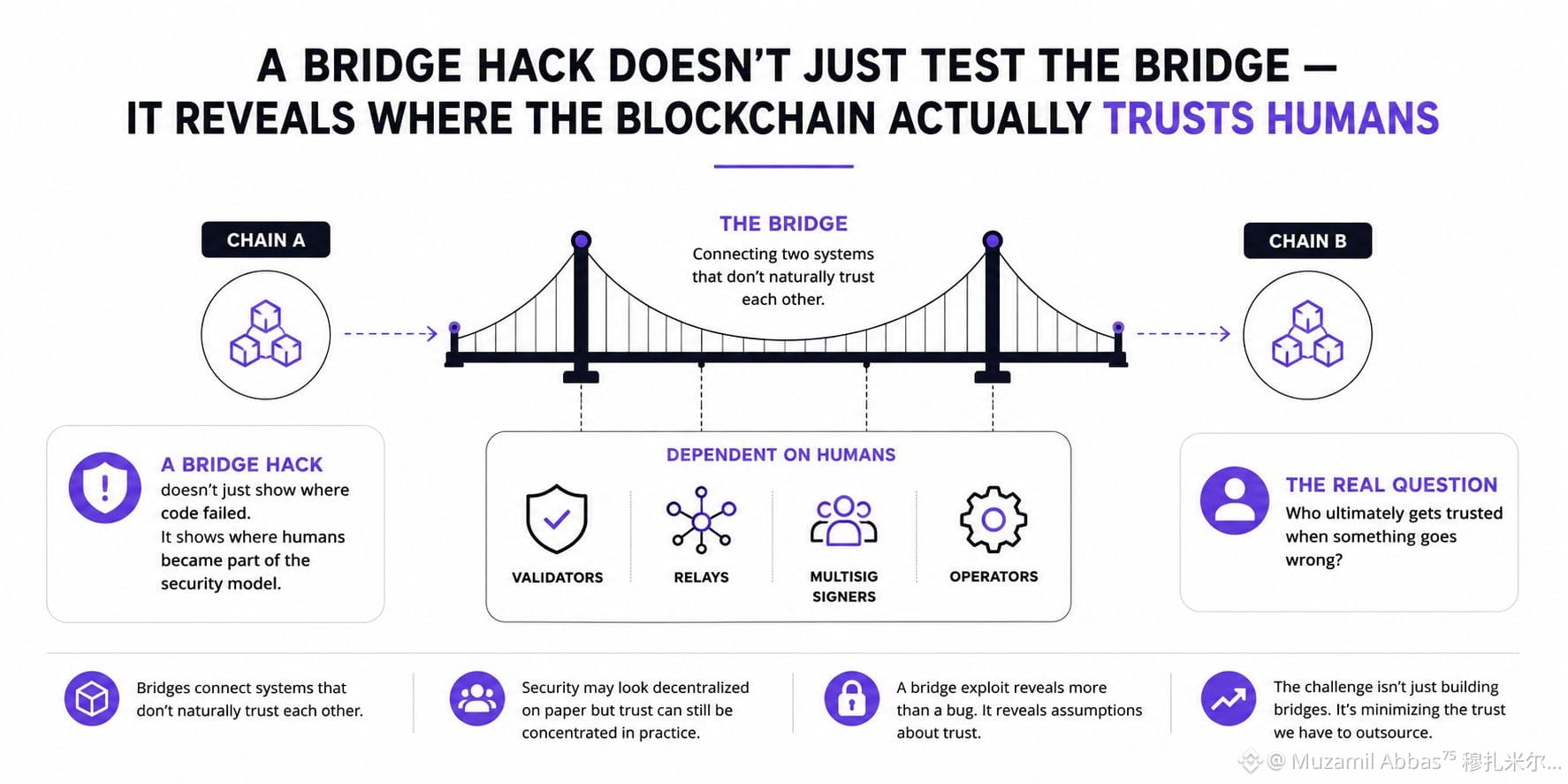
I was reading through a few old bridge exploit reports this week and ended up thinking about something that feels a bit uncomfortable. When a bridge gets hacked, people usually talk about the smart contract, the validator set, or the amount that was stolen. But after looking at enough cases, it seems like the bridge is often exposing something bigger than a bug in the bridge itself.
A bridge sits between systems that don't naturally trust each other. Because of that, it usually depends on some group of validators, relayers multisig signers, or operators to verify what happened on another chain. On paper that can look decentralized enough. In practice, a surprising amount of trust can still end up concentrated in a handful of people or operational processes.
That is the part I keep coming back to. A bridge hack doesn't only show where code failed. Sometimes it shows where humans became part of the security model, even if users assumed everything was being enforced by the chain itself. The blockchain may be decentralized, but the path connecting it to another network can introduce very different assumptions.
I'm not saying every bridge design has the same weaknesses. Some are clearly improving. Still, whenever I evaluate a cross-chain system now, I spend less time asking how assets move and more time asking who ultimately gets trusted when something goes wrong. Are we getting better at reducing that dependency, or are we mostly hiding it behind more complex infrastructure?
#dusk $DUSK @Dusk
A bridge sits between systems that don't naturally trust each other. Because of that, it usually depends on some group of validators, relayers multisig signers, or operators to verify what happened on another chain. On paper that can look decentralized enough. In practice, a surprising amount of trust can still end up concentrated in a handful of people or operational processes.
That is the part I keep coming back to. A bridge hack doesn't only show where code failed. Sometimes it shows where humans became part of the security model, even if users assumed everything was being enforced by the chain itself. The blockchain may be decentralized, but the path connecting it to another network can introduce very different assumptions.
I'm not saying every bridge design has the same weaknesses. Some are clearly improving. Still, whenever I evaluate a cross-chain system now, I spend less time asking how assets move and more time asking who ultimately gets trusted when something goes wrong. Are we getting better at reducing that dependency, or are we mostly hiding it behind more complex infrastructure?
#dusk $DUSK @Dusk
Log in to explore more content