

春风啊你可否慢点
18 Posts

春风啊你可否慢点
Report
Block User
一个炒币十年的中年人
44 Following
1.2K+ Followers
247 Liked
Posts
·
--
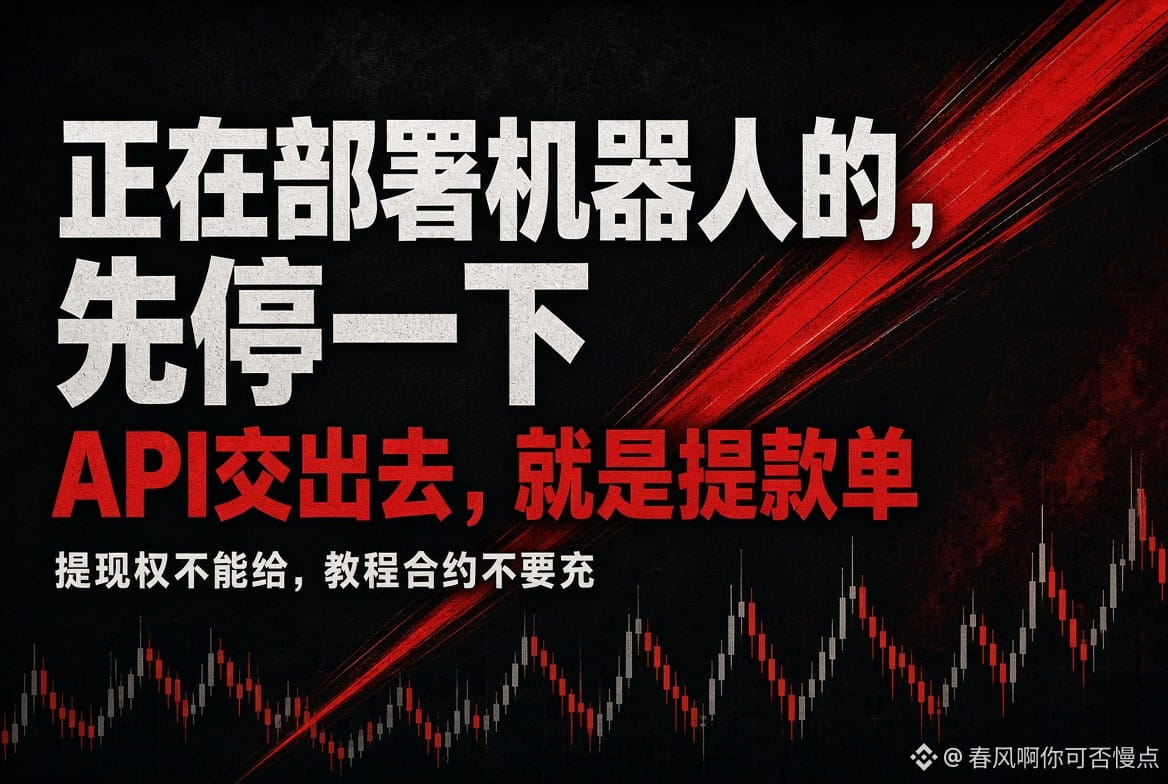
If you’re learning how to deploy robots and authorize APIs, pause for a moment. The easiest way for something to go wrong is the step you think you’re “just learning.”
A real robot is a tool that places orders for you. Fake ones are mixed into tutorials, groups, and one-click deployment. Once you follow the steps all the way through, the money is already no longer sitting somewhere you can transfer out by yourself.
From February to August 2026, nine YouTube videos were disguised as arbitrage-robots built with Claude. 224 people followed the deployment instructions, topped up their own money, then pressed “start” or “withdraw” from the video. 274.6 ETH—about $520,000—was transferred out. There weren’t even phishing links. Wallets often wouldn’t alert you. You think you’re compiling; what you’re actually approving is a transfer.
API is another door. Permissions can be broken down into read-only, trading, and withdrawals. If they want everything enabled—or if they make you authorize inside a page that looks like a back office—that’s not “a robot.”
Trading permissions can punch right through you. They use your account to open high leverage, or they get you to accept their goods. Once withdrawal permission is turned on, the coins can go straight to their address. Read-only looks the safest—yet they can still see how much money you have and where your costs are. The next day, someone shows up for a one-on-one.
If you paste the key into Telegram, it’s like handing your password to customer support. They’ll say the back office can’t see it—don’t believe that. Anything that can place orders for you can place orders for them.
There’s another version that doesn’t steal keys; it only gives you a back office. Daily earnings go up, and small amounts can be withdrawn—that’s the bait. If you try to withdraw a large amount, they’ll ask you to pay “unfreeze funds,” “taxes,” or “verification deposits,” then make you send another payment to a new address. That last payment is the real profit. In September 2026, the U.S. SEC warned about these fake AI trading robots; the related entities combined exceeded $15 million. The entry point is the group—plus the guarantee of returns.
If you’re already using it, do three things first.
Go to the exchange and delete that API key. Confirm withdrawal permission is turned off. Move funds to your own new address—don’t leave them in the tutorial contract.
If the group keeps pushing you to authorize before you can see earnings, stop. You don’t need to see the earnings. If you haven’t deployed yet, remember just this: a robot can be missing, but withdrawal permission cannot be given. If the tutorial makes you fund a contract and then press start, shut it off.
If you’re already deploying or have already authorized, don’t send your keys.
Follow me to learn more.
#quantitativeTradingRobots #APIauthorization #tradingScam #cryptoAvoidPitfalls #AITrading #BTC走势分析 #uni #NEAR🚀🚀🚀
If you’re learning how to deploy robots and authorize APIs, pause for a moment. The easiest way for something to go wrong is the step you think you’re “just learning.”
A real robot is a tool that places orders for you. Fake ones are mixed into tutorials, groups, and one-click deployment. Once you follow the steps all the way through, the money is already no longer sitting somewhere you can transfer out by yourself.
From February to August 2026, nine YouTube videos were disguised as arbitrage-robots built with Claude. 224 people followed the deployment instructions, topped up their own money, then pressed “start” or “withdraw” from the video. 274.6 ETH—about $520,000—was transferred out. There weren’t even phishing links. Wallets often wouldn’t alert you. You think you’re compiling; what you’re actually approving is a transfer.
API is another door. Permissions can be broken down into read-only, trading, and withdrawals. If they want everything enabled—or if they make you authorize inside a page that looks like a back office—that’s not “a robot.”
Trading permissions can punch right through you. They use your account to open high leverage, or they get you to accept their goods. Once withdrawal permission is turned on, the coins can go straight to their address. Read-only looks the safest—yet they can still see how much money you have and where your costs are. The next day, someone shows up for a one-on-one.
If you paste the key into Telegram, it’s like handing your password to customer support. They’ll say the back office can’t see it—don’t believe that. Anything that can place orders for you can place orders for them.
There’s another version that doesn’t steal keys; it only gives you a back office. Daily earnings go up, and small amounts can be withdrawn—that’s the bait. If you try to withdraw a large amount, they’ll ask you to pay “unfreeze funds,” “taxes,” or “verification deposits,” then make you send another payment to a new address. That last payment is the real profit. In September 2026, the U.S. SEC warned about these fake AI trading robots; the related entities combined exceeded $15 million. The entry point is the group—plus the guarantee of returns.
If you’re already using it, do three things first.
Go to the exchange and delete that API key. Confirm withdrawal permission is turned off. Move funds to your own new address—don’t leave them in the tutorial contract.
If the group keeps pushing you to authorize before you can see earnings, stop. You don’t need to see the earnings. If you haven’t deployed yet, remember just this: a robot can be missing, but withdrawal permission cannot be given. If the tutorial makes you fund a contract and then press start, shut it off.
If you’re already deploying or have already authorized, don’t send your keys.
Follow me to learn more.
#quantitativeTradingRobots #APIauthorization #tradingScam #cryptoAvoidPitfalls #AITrading #BTC走势分析 #uni #NEAR🚀🚀🚀
A real robot is a tool that places orders for you. Fake ones are mixed into tutorials, groups, and one-click deployment. Once you follow the steps all the way through, the money is already no longer sitting somewhere you can transfer out by yourself.
From February to August 2026, nine YouTube videos were disguised as arbitrage-robots built with Claude. 224 people followed the deployment instructions, topped up their own money, then pressed “start” or “withdraw” from the video. 274.6 ETH—about $520,000—was transferred out. There weren’t even phishing links. Wallets often wouldn’t alert you. You think you’re compiling; what you’re actually approving is a transfer.
API is another door. Permissions can be broken down into read-only, trading, and withdrawals. If they want everything enabled—or if they make you authorize inside a page that looks like a back office—that’s not “a robot.”
Trading permissions can punch right through you. They use your account to open high leverage, or they get you to accept their goods. Once withdrawal permission is turned on, the coins can go straight to their address. Read-only looks the safest—yet they can still see how much money you have and where your costs are. The next day, someone shows up for a one-on-one.
If you paste the key into Telegram, it’s like handing your password to customer support. They’ll say the back office can’t see it—don’t believe that. Anything that can place orders for you can place orders for them.
There’s another version that doesn’t steal keys; it only gives you a back office. Daily earnings go up, and small amounts can be withdrawn—that’s the bait. If you try to withdraw a large amount, they’ll ask you to pay “unfreeze funds,” “taxes,” or “verification deposits,” then make you send another payment to a new address. That last payment is the real profit. In September 2026, the U.S. SEC warned about these fake AI trading robots; the related entities combined exceeded $15 million. The entry point is the group—plus the guarantee of returns.
If you’re already using it, do three things first.
Go to the exchange and delete that API key. Confirm withdrawal permission is turned off. Move funds to your own new address—don’t leave them in the tutorial contract.
If the group keeps pushing you to authorize before you can see earnings, stop. You don’t need to see the earnings. If you haven’t deployed yet, remember just this: a robot can be missing, but withdrawal permission cannot be given. If the tutorial makes you fund a contract and then press start, shut it off.
If you’re already deploying or have already authorized, don’t send your keys.
Follow me to learn more.
#quantitativeTradingRobots #APIauthorization #tradingScam #cryptoAvoidPitfalls #AITrading #BTC走势分析 #uni #NEAR🚀🚀🚀
2
878
·
--
Article
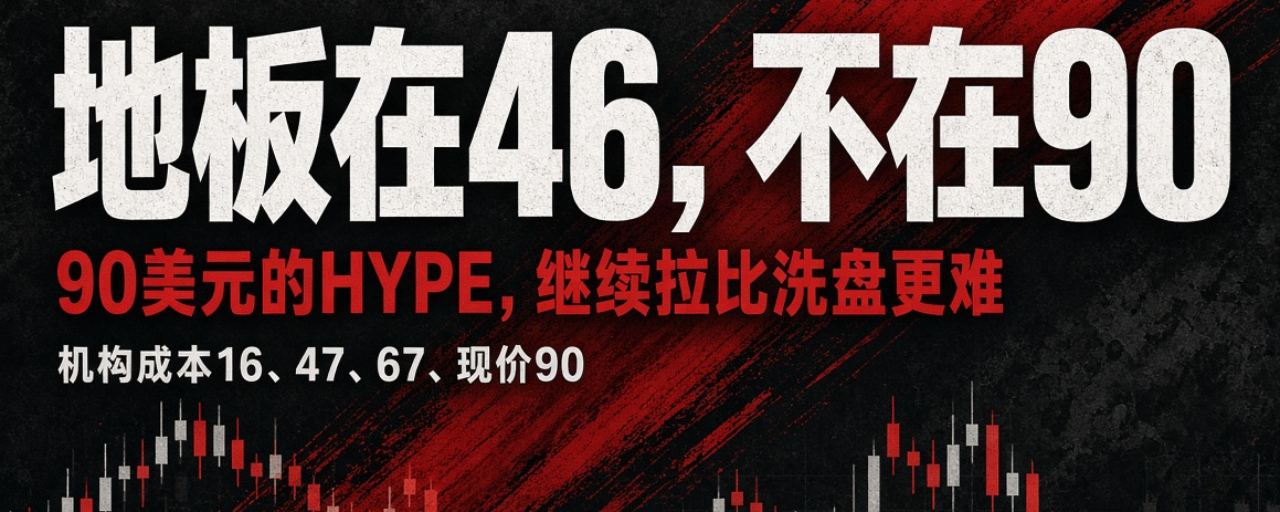
Shorting from this position carries low riskWith HYPE at $90, the pressure to keep pushing higher is greater than the pressure from shaking out. Institutional buying doesn’t mean they’re obligated to lift the carriage for you.
On October 2, it was still around $90. In September, it just touched the $96 area—up about 88% over two months. The circulating market cap is about $20 billion, and the fully diluted market cap about $90 billion. Circulating supply is only a little over 200 million, while the total supply is 1 billion. You see the price being supported by 22% of the chips.
Many people treat institutions like the floor. Once the cost pairs, the floor is far down.
Hyperliquid Strategies on Nasdaq holds about 35.1 million tokens, worth about $3.2 billion. The estimated average cost basis is $46.7, with an unrealized gain of about $1.6 billion. In the past week alone, it bought another 1.44 million tokens at an average transaction price of about $93.7. The company’s own market value is about $2.8 billion; the value of its holdings is $3.2 billion, discounted to 0.86. The custodian company is already discounted, which shows the market is unwilling to pay a premium based on the token’s value. The $93.7 purchase is a high-level takeover, not a bottom-building entry.
Shorting from this position carries low risk
With HYPE at $90, the pressure to keep pushing higher is greater than the pressure from shaking out. Institutional buying doesn’t mean they’re obligated to lift the carriage for you.
On October 2, it was still around $90. In September, it just touched the $96 area—up about 88% over two months. The circulating market cap is about $20 billion, and the fully diluted market cap about $90 billion. Circulating supply is only a little over 200 million, while the total supply is 1 billion. You see the price being supported by 22% of the chips.
Many people treat institutions like the floor. Once the cost pairs, the floor is far down.
Hyperliquid Strategies on Nasdaq holds about 35.1 million tokens, worth about $3.2 billion. The estimated average cost basis is $46.7, with an unrealized gain of about $1.6 billion. In the past week alone, it bought another 1.44 million tokens at an average transaction price of about $93.7. The company’s own market value is about $2.8 billion; the value of its holdings is $3.2 billion, discounted to 0.86. The custodian company is already discounted, which shows the market is unwilling to pay a premium based on the token’s value. The $93.7 purchase is a high-level takeover, not a bottom-building entry.
On October 2, it was still around $90. In September, it just touched the $96 area—up about 88% over two months. The circulating market cap is about $20 billion, and the fully diluted market cap about $90 billion. Circulating supply is only a little over 200 million, while the total supply is 1 billion. You see the price being supported by 22% of the chips.
Many people treat institutions like the floor. Once the cost pairs, the floor is far down.
Hyperliquid Strategies on Nasdaq holds about 35.1 million tokens, worth about $3.2 billion. The estimated average cost basis is $46.7, with an unrealized gain of about $1.6 billion. In the past week alone, it bought another 1.44 million tokens at an average transaction price of about $93.7. The company’s own market value is about $2.8 billion; the value of its holdings is $3.2 billion, discounted to 0.86. The custodian company is already discounted, which shows the market is unwilling to pay a premium based on the token’s value. The $93.7 purchase is a high-level takeover, not a bottom-building entry.
2
161
·
--

Article
Even if you got it right, you still get buried.Even if you buy the right thing, it can still kill you.
I shorted RIVER around the 50 mark. It went up to over 80. The price didn’t kill me; first the fees drained my margin. When I got out, the direction was still correct. Later it dropped to 1.2. The high point on January 26 was around 87, and by October 2 it had fallen by 98% or more. The price won, and my account was gone.
This isn’t a matter of one coin on Binance. Centralized exchanges and on-chain exchanges are all using this same setup.
The spot market is shallow and the liquidity is concentrated; the futures market is deeper than the spot. If you watch it, you think it either pumps or dumps. Out of a hundred, only a few can really get pulled away. And even when it does, it still leaves you with less money you can take out.
Even if you got it right, you still get buried.
Even if you buy the right thing, it can still kill you.
I shorted RIVER around the 50 mark. It went up to over 80. The price didn’t kill me; first the fees drained my margin. When I got out, the direction was still correct. Later it dropped to 1.2. The high point on January 26 was around 87, and by October 2 it had fallen by 98% or more. The price won, and my account was gone.
This isn’t a matter of one coin on Binance. Centralized exchanges and on-chain exchanges are all using this same setup.
The spot market is shallow and the liquidity is concentrated; the futures market is deeper than the spot. If you watch it, you think it either pumps or dumps. Out of a hundred, only a few can really get pulled away. And even when it does, it still leaves you with less money you can take out.
I shorted RIVER around the 50 mark. It went up to over 80. The price didn’t kill me; first the fees drained my margin. When I got out, the direction was still correct. Later it dropped to 1.2. The high point on January 26 was around 87, and by October 2 it had fallen by 98% or more. The price won, and my account was gone.
This isn’t a matter of one coin on Binance. Centralized exchanges and on-chain exchanges are all using this same setup.
The spot market is shallow and the liquidity is concentrated; the futures market is deeper than the spot. If you watch it, you think it either pumps or dumps. Out of a hundred, only a few can really get pulled away. And even when it does, it still leaves you with less money you can take out.
1
745
·
--
Partly True
Article
One of the most worth-buying coins right now#比特币升至8.5万美元附近 #NEAR跌至约4.70美元较日高跌逾14% #以太坊三季度涨70.9% #美财政部允许各州提前提交稳定币认证 #pons引爆牛市
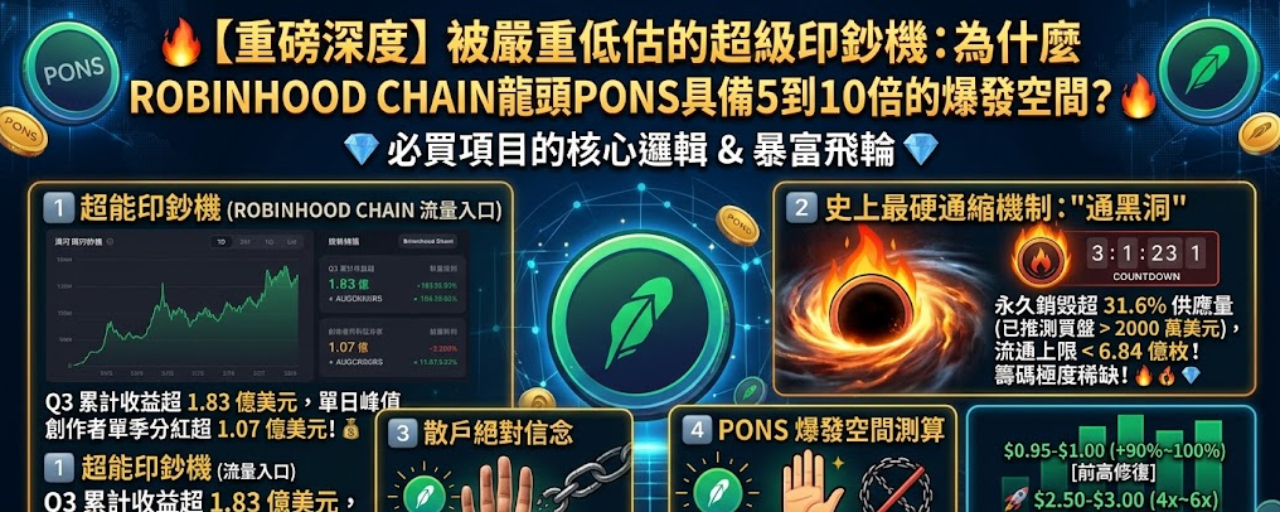
🔥【Major In-Depth】A severely underestimated super money-printing machine: Why does leading Robinhood Chain project PONS have 5 to 10 times the upside explosive potential?
In the crypto market, the only iron rule for judging whether a protocol has 100x potential is whether it possesses the strongest profit-generating flywheel and monopoly-level trading.
As Robinhood Chain’s absolute bottom-layer traffic gateway and a top-tier token issuance leader, PONS is replicating—and surpassing—the meteoric wealth-building trend of pump.fun on Solana. Right now, the token price is building deep support and accumulating momentum in the $0.50 - $0.55 range. Combined with its unparalleled tokenomics and buyback mechanism backed by real money, a massive opportunity for the next main wave breakout is taking shape here.
One of the most worth-buying coins right now
#比特币升至8.5万美元附近 #NEAR跌至约4.70美元较日高跌逾14% #以太坊三季度涨70.9% #美财政部允许各州提前提交稳定币认证 #pons引爆牛市
🔥【Major In-Depth】A severely underestimated super money-printing machine: Why does leading Robinhood Chain project PONS have 5 to 10 times the upside explosive potential?
In the crypto market, the only iron rule for judging whether a protocol has 100x potential is whether it possesses the strongest profit-generating flywheel and monopoly-level trading.
As Robinhood Chain’s absolute bottom-layer traffic gateway and a top-tier token issuance leader, PONS is replicating—and surpassing—the meteoric wealth-building trend of pump.fun on Solana. Right now, the token price is building deep support and accumulating momentum in the $0.50 - $0.55 range. Combined with its unparalleled tokenomics and buyback mechanism backed by real money, a massive opportunity for the next main wave breakout is taking shape here.
🔥【Major In-Depth】A severely underestimated super money-printing machine: Why does leading Robinhood Chain project PONS have 5 to 10 times the upside explosive potential?
In the crypto market, the only iron rule for judging whether a protocol has 100x potential is whether it possesses the strongest profit-generating flywheel and monopoly-level trading.
As Robinhood Chain’s absolute bottom-layer traffic gateway and a top-tier token issuance leader, PONS is replicating—and surpassing—the meteoric wealth-building trend of pump.fun on Solana. Right now, the token price is building deep support and accumulating momentum in the $0.50 - $0.55 range. Combined with its unparalleled tokenomics and buyback mechanism backed by real money, a massive opportunity for the next main wave breakout is taking shape here.
1
1
1.1k
·
--
Bearish
Most trading in the market is actually driven by hormones and intuition. Many people gamble their luck into huge paper gains, but in the end it’s always the same outcome—very few are truly able to withdraw money and exit safely.
The strict demands of the contract market mean that a trader’s survival cycle is often inversely proportional to their order frequency. This line is harsh, but it’s an iron rule hammered out with real gold and silver. Someone who trades ten times within a month is unlikely to last more than a month doing only two or three trades. High-frequency trading amplifies not only your risk exposure, but also the emotional tug-of-war, driving your tolerance to the breaking point. The so-called “excellent opportunities” we see—once you peel off the packaging—are often tainted by FOMO (fear of missing out).
#永续 #山寨 #hype #隐私AI代币空头行情 People attribute failure to “not enough capital” or “not controlling leverage properly,” but that’s only half the truth. The selection of the underlying asset is the real bottom line that determines life or death.
I’ve seen memes born from obvious large capital exiting positions—leverage kept extremely low, thinking the cushion was thick enough to stay safe. What happened? Sure, some people did capture profits, but many large players were directly buried by liquidity. The reason is this: in pools where the chips are highly concentrated and the order book is extremely shallow, if you’re not positioned within the core interest circle, then all your technical analysis and on-chain tracking are meaningless. In such generally deep pools, big capital isn’t a hunter—it’s simply a “moving target” that enters and provides liquidity.
In the absence of absolute information advantages, the real top-tier risk control is to restrain your urge to trade and watch more, act less.
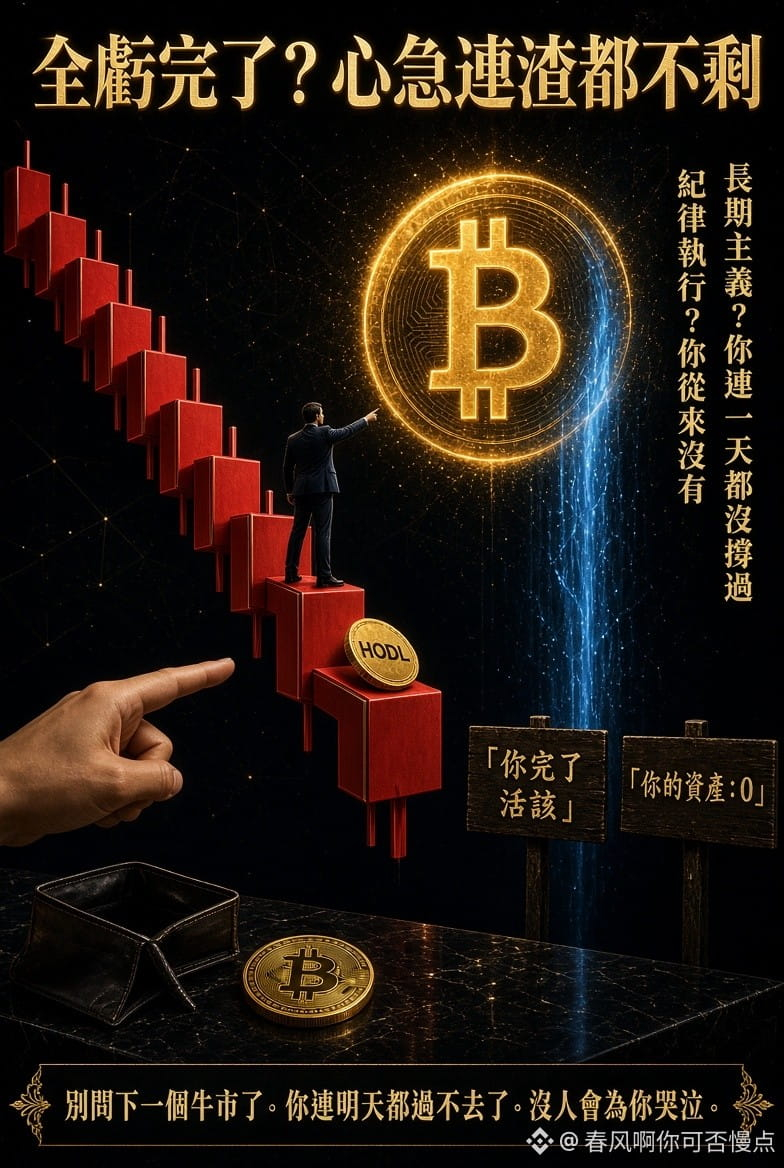
In this circle, losing a million might take just one night, but earning back a million requires a deep cycle and extremely strong discipline. Profits and losses come from the same root—so rather than betting on extreme moves that can double in one night but could send you off the trading table at any moment, make “staying alive” the only criterion for trading.
Trading has never been about who can explode harder in one night. It’s about who can hold their line. The biggest bonus is always getting to the next bull market alive.
Most trading in the market is actually driven by hormones and intuition. Many people gamble their luck into huge paper gains, but in the end it’s always the same outcome—very few are truly able to withdraw money and exit safely.
The strict demands of the contract market mean that a trader’s survival cycle is often inversely proportional to their order frequency. This line is harsh, but it’s an iron rule hammered out with real gold and silver. Someone who trades ten times within a month is unlikely to last more than a month doing only two or three trades. High-frequency trading amplifies not only your risk exposure, but also the emotional tug-of-war, driving your tolerance to the breaking point. The so-called “excellent opportunities” we see—once you peel off the packaging—are often tainted by FOMO (fear of missing out).
#永续 #山寨 #hype #隐私AI代币空头行情 People attribute failure to “not enough capital” or “not controlling leverage properly,” but that’s only half the truth. The selection of the underlying asset is the real bottom line that determines life or death.
I’ve seen memes born from obvious large capital exiting positions—leverage kept extremely low, thinking the cushion was thick enough to stay safe. What happened? Sure, some people did capture profits, but many large players were directly buried by liquidity. The reason is this: in pools where the chips are highly concentrated and the order book is extremely shallow, if you’re not positioned within the core interest circle, then all your technical analysis and on-chain tracking are meaningless. In such generally deep pools, big capital isn’t a hunter—it’s simply a “moving target” that enters and provides liquidity.
In the absence of absolute information advantages, the real top-tier risk control is to restrain your urge to trade and watch more, act less.
In this circle, losing a million might take just one night, but earning back a million requires a deep cycle and extremely strong discipline. Profits and losses come from the same root—so rather than betting on extreme moves that can double in one night but could send you off the trading table at any moment, make “staying alive” the only criterion for trading.
Trading has never been about who can explode harder in one night. It’s about who can hold their line. The biggest bonus is always getting to the next bull market alive.
The strict demands of the contract market mean that a trader’s survival cycle is often inversely proportional to their order frequency. This line is harsh, but it’s an iron rule hammered out with real gold and silver. Someone who trades ten times within a month is unlikely to last more than a month doing only two or three trades. High-frequency trading amplifies not only your risk exposure, but also the emotional tug-of-war, driving your tolerance to the breaking point. The so-called “excellent opportunities” we see—once you peel off the packaging—are often tainted by FOMO (fear of missing out).
#永续 #山寨 #hype #隐私AI代币空头行情 People attribute failure to “not enough capital” or “not controlling leverage properly,” but that’s only half the truth. The selection of the underlying asset is the real bottom line that determines life or death.
I’ve seen memes born from obvious large capital exiting positions—leverage kept extremely low, thinking the cushion was thick enough to stay safe. What happened? Sure, some people did capture profits, but many large players were directly buried by liquidity. The reason is this: in pools where the chips are highly concentrated and the order book is extremely shallow, if you’re not positioned within the core interest circle, then all your technical analysis and on-chain tracking are meaningless. In such generally deep pools, big capital isn’t a hunter—it’s simply a “moving target” that enters and provides liquidity.
In the absence of absolute information advantages, the real top-tier risk control is to restrain your urge to trade and watch more, act less.
In this circle, losing a million might take just one night, but earning back a million requires a deep cycle and extremely strong discipline. Profits and losses come from the same root—so rather than betting on extreme moves that can double in one night but could send you off the trading table at any moment, make “staying alive” the only criterion for trading.
Trading has never been about who can explode harder in one night. It’s about who can hold their line. The biggest bonus is always getting to the next bull market alive.
1
294
·
--
Bearish
High-frequency trading—many people actually can’t even beat the spot market; a slower pace is the best choice. Go ahead and short it boldly. #hype
{future}(HYPEUSDT)
High-frequency trading—many people actually can’t even beat the spot market; a slower pace is the best choice. Go ahead and short it boldly. #hype
1
1
155
Log in to explore more content
Join global crypto users on Binance Square
⚡️ Get latest and useful information about crypto.
💬 Trusted by the world’s largest crypto exchange.
👍 Discover real insights from verified creators.
Email / Phone number