
Sleepy
72 Posts

Sleepy
 Square Verified
Report
Block User
Editor-in-Chief
https://beating.news
Covering AI, youth culture, and how emerging tech is changing the way young people live.
3 Following
147 Followers
412 Liked
Posts
·
--
Tonight, BTC fell below 78,000. In fact, there isn’t much of a complicated story.
The US August PPI came in hotter than expected. The market immediately re-priced the odds of a “rate hike in September” higher, and leveraged longs were hit first.
In August, PPI month-on-month had to be +0.4%, matching expectations; year-on-year was +5.4%, above the 5.3% forecast, and also clearly higher than July’s 4.8%. Core PPI was +0.2% month-on-month and +4.6% year-on-year. The most striking part was energy: it rose 4.2% in the month, including diesel jumping 24.1%.
After the data was released, BTC briefly slid to around $77,300, with an intraday drop of about 2.7%. CoinGlass data shows total liquidations over the past 24 hours of roughly $409 million, including $329 million in long liquidations and only about $81 million in short liquidations.
On the CME FedWatch, the probability of a 25bp September rate hike jumped from around the 60% range to about 74%. The probability of at least one more hike before October is also up to around 80%. The 10-year US Treasury yield at one point approached 4.91%.
So what the market is really trading tonight is very straightforward: if inflation hasn’t cooled, the Fed still has room to tighten further. When BTC breaks below 78,000, it’s just the fastest feedback from the rate repricing.
Next, Friday’s CPI will be even more critical. PPI already scared the market once. If CPI stays on the hot side, holding above $80,000 will become increasingly difficult. If CPI clearly cools, then tonight’s rate-hike repricing has a chance to unwind.
For BTC over the next two days, you can put on-hchain data on the back burner. First look at US Treasuries, then FedWatch, and finally the coin price—the sequence will be much clearer.
Tonight, BTC fell below 78,000. In fact, there isn’t much of a complicated story.
The US August PPI came in hotter than expected. The market immediately re-priced the odds of a “rate hike in September” higher, and leveraged longs were hit first.
In August, PPI month-on-month had to be +0.4%, matching expectations; year-on-year was +5.4%, above the 5.3% forecast, and also clearly higher than July’s 4.8%. Core PPI was +0.2% month-on-month and +4.6% year-on-year. The most striking part was energy: it rose 4.2% in the month, including diesel jumping 24.1%.
After the data was released, BTC briefly slid to around $77,300, with an intraday drop of about 2.7%. CoinGlass data shows total liquidations over the past 24 hours of roughly $409 million, including $329 million in long liquidations and only about $81 million in short liquidations.
On the CME FedWatch, the probability of a 25bp September rate hike jumped from around the 60% range to about 74%. The probability of at least one more hike before October is also up to around 80%. The 10-year US Treasury yield at one point approached 4.91%.
So what the market is really trading tonight is very straightforward: if inflation hasn’t cooled, the Fed still has room to tighten further. When BTC breaks below 78,000, it’s just the fastest feedback from the rate repricing.
Next, Friday’s CPI will be even more critical. PPI already scared the market once. If CPI stays on the hot side, holding above $80,000 will become increasingly difficult. If CPI clearly cools, then tonight’s rate-hike repricing has a chance to unwind.
For BTC over the next two days, you can put on-hchain data on the back burner. First look at US Treasuries, then FedWatch, and finally the coin price—the sequence will be much clearer.
The US August PPI came in hotter than expected. The market immediately re-priced the odds of a “rate hike in September” higher, and leveraged longs were hit first.
In August, PPI month-on-month had to be +0.4%, matching expectations; year-on-year was +5.4%, above the 5.3% forecast, and also clearly higher than July’s 4.8%. Core PPI was +0.2% month-on-month and +4.6% year-on-year. The most striking part was energy: it rose 4.2% in the month, including diesel jumping 24.1%.
After the data was released, BTC briefly slid to around $77,300, with an intraday drop of about 2.7%. CoinGlass data shows total liquidations over the past 24 hours of roughly $409 million, including $329 million in long liquidations and only about $81 million in short liquidations.
On the CME FedWatch, the probability of a 25bp September rate hike jumped from around the 60% range to about 74%. The probability of at least one more hike before October is also up to around 80%. The 10-year US Treasury yield at one point approached 4.91%.
So what the market is really trading tonight is very straightforward: if inflation hasn’t cooled, the Fed still has room to tighten further. When BTC breaks below 78,000, it’s just the fastest feedback from the rate repricing.
Next, Friday’s CPI will be even more critical. PPI already scared the market once. If CPI stays on the hot side, holding above $80,000 will become increasingly difficult. If CPI clearly cools, then tonight’s rate-hike repricing has a chance to unwind.
For BTC over the next two days, you can put on-hchain data on the back burner. First look at US Treasuries, then FedWatch, and finally the coin price—the sequence will be much clearer.
144
·
--
BTC dropped below 78k tonight—there isn’t really a complicated story behind it.U.S. August PPI came in hotter than expected. The market immediately re-priced the idea of “continuing rate hikes in September,” lifting it further. Leveraged long positions were hit first.
August PPI rose 0.4% month-over-month, in line with expectations; up 5.4% year-over-year, above the 5.3% forecast and also clearly higher than July’s 4.8%. Core PPI was +0.2% month-over-month and +4.6% year-over-year. The most striking figure was energy: up 4.2% for the month, with diesel jumping 24.1%.
After the data came out, BTC briefly slid to around $77.3k. The intraday drop was about 2.7%. According to CoinGlass, the total liquidations over the past 24 hours were about $409 million—$329 million for longs and only about $81 million for shorts.
BTC dropped below 78k tonight—there isn’t really a complicated story behind it.
U.S. August PPI came in hotter than expected. The market immediately re-priced the idea of “continuing rate hikes in September,” lifting it further. Leveraged long positions were hit first.
August PPI rose 0.4% month-over-month, in line with expectations; up 5.4% year-over-year, above the 5.3% forecast and also clearly higher than July’s 4.8%. Core PPI was +0.2% month-over-month and +4.6% year-over-year. The most striking figure was energy: up 4.2% for the month, with diesel jumping 24.1%.
After the data came out, BTC briefly slid to around $77.3k. The intraday drop was about 2.7%. According to CoinGlass, the total liquidations over the past 24 hours were about $409 million—$329 million for longs and only about $81 million for shorts.
August PPI rose 0.4% month-over-month, in line with expectations; up 5.4% year-over-year, above the 5.3% forecast and also clearly higher than July’s 4.8%. Core PPI was +0.2% month-over-month and +4.6% year-over-year. The most striking figure was energy: up 4.2% for the month, with diesel jumping 24.1%.
After the data came out, BTC briefly slid to around $77.3k. The intraday drop was about 2.7%. According to CoinGlass, the total liquidations over the past 24 hours were about $409 million—$329 million for longs and only about $81 million for shorts.
197
·
--
Verified
An XRP ETF has already started being tucked into Wall Street’s most routine basket of short-term financing collateral.
In the documents filed on September 8 by the Schwab Prime Advantage Money Fund, you can find a total of eight XRP ETF collateral entries, coming from Grayscale, Canary, Franklin, and Bitwise.
In total, it’s about $11.39 million; two of the Canary entries have exactly the same quantity and valuation and correspond to two different JPMorgan repos. Even if you conservatively remove one potential double count, it’s still about $8.32 million.
This also isn’t the Schwab money fund actively buying those XRP ETFs.
The transaction structure is more like this: Schwab’s money fund lends cash short-term to JPMorgan Securities and BofA Securities. In return, they put a large basket of securities up as collateral—among which are XRP ETFs. This involves five repos, with a total size of nearly $3.99 billion: JPMorgan accounts for four, and BofA for one.
So the really interesting changes happen in the background.
Buying an XRP ETF means someone is willing to bet on XRP; using an XRP ETF as repo collateral means it has begun to be treated by the traders’ financing desks as “inventory” that can be turned over.
And the change has happened surprisingly fast.
Using a more conservative interpretation, the XRP ETF collateral in the Schwab filings rose from about $407,000 in May to about $8.32 million in August—roughly 20x over three months. August is also the first time that the four major U.S. spot XRP ETFs—Grayscale, Canary, Franklin, and Bitwise—appear simultaneously in this kind of collateral basket.
The ETF brings crypto into securities accounts, and the repo then routes these ETFs into Wall Street’s financing channels.
For XRP, these millions of dollars by themselves aren’t that big. The truly new thing is that it’s starting to become an asset that can be used to “borrow money.”
An XRP ETF has already started being tucked into Wall Street’s most routine basket of short-term financing collateral.
In the documents filed on September 8 by the Schwab Prime Advantage Money Fund, you can find a total of eight XRP ETF collateral entries, coming from Grayscale, Canary, Franklin, and Bitwise.
In total, it’s about $11.39 million; two of the Canary entries have exactly the same quantity and valuation and correspond to two different JPMorgan repos. Even if you conservatively remove one potential double count, it’s still about $8.32 million.
This also isn’t the Schwab money fund actively buying those XRP ETFs.
The transaction structure is more like this: Schwab’s money fund lends cash short-term to JPMorgan Securities and BofA Securities. In return, they put a large basket of securities up as collateral—among which are XRP ETFs. This involves five repos, with a total size of nearly $3.99 billion: JPMorgan accounts for four, and BofA for one.
So the really interesting changes happen in the background.
Buying an XRP ETF means someone is willing to bet on XRP; using an XRP ETF as repo collateral means it has begun to be treated by the traders’ financing desks as “inventory” that can be turned over.
And the change has happened surprisingly fast.
Using a more conservative interpretation, the XRP ETF collateral in the Schwab filings rose from about $407,000 in May to about $8.32 million in August—roughly 20x over three months. August is also the first time that the four major U.S. spot XRP ETFs—Grayscale, Canary, Franklin, and Bitwise—appear simultaneously in this kind of collateral basket.
The ETF brings crypto into securities accounts, and the repo then routes these ETFs into Wall Street’s financing channels.
For XRP, these millions of dollars by themselves aren’t that big. The truly new thing is that it’s starting to become an asset that can be used to “borrow money.”
In the documents filed on September 8 by the Schwab Prime Advantage Money Fund, you can find a total of eight XRP ETF collateral entries, coming from Grayscale, Canary, Franklin, and Bitwise.
In total, it’s about $11.39 million; two of the Canary entries have exactly the same quantity and valuation and correspond to two different JPMorgan repos. Even if you conservatively remove one potential double count, it’s still about $8.32 million.
This also isn’t the Schwab money fund actively buying those XRP ETFs.
The transaction structure is more like this: Schwab’s money fund lends cash short-term to JPMorgan Securities and BofA Securities. In return, they put a large basket of securities up as collateral—among which are XRP ETFs. This involves five repos, with a total size of nearly $3.99 billion: JPMorgan accounts for four, and BofA for one.
So the really interesting changes happen in the background.
Buying an XRP ETF means someone is willing to bet on XRP; using an XRP ETF as repo collateral means it has begun to be treated by the traders’ financing desks as “inventory” that can be turned over.
And the change has happened surprisingly fast.
Using a more conservative interpretation, the XRP ETF collateral in the Schwab filings rose from about $407,000 in May to about $8.32 million in August—roughly 20x over three months. August is also the first time that the four major U.S. spot XRP ETFs—Grayscale, Canary, Franklin, and Bitwise—appear simultaneously in this kind of collateral basket.
The ETF brings crypto into securities accounts, and the repo then routes these ETFs into Wall Street’s financing channels.
For XRP, these millions of dollars by themselves aren’t that big. The truly new thing is that it’s starting to become an asset that can be used to “borrow money.”
1
831
·
--
The macro shock most likely to be underestimated by the crypto world may happen in Tokyo.
The Bank of Japan’s September rate hike is now close to being a foregone conclusion. In Reuters’ latest survey, 66 of 68 economists believe that on September 18, the BOJ will raise the rate from 1% to 1.25%—a staggering 97%. A month ago, that figure was only 57%. Even more aggressive: more than one-third of respondents are betting that this year’s increases will continue to 1.5% in October or December.
The real trouble this creates for the crypto market is that the Japanese yen has long been one of the cheapest sources of global leveraged funding.
The classic trade used to be: borrow low-interest yen, convert into dollars, then buy U.S. Treasuries, equities, credit bonds, and all kinds of high-yield risk assets. Now that the BOJ is hiking rates while the yen is appreciating, this trade gets hit from both sides: funding costs rise, and the yen the borrower still owes becomes more expensive.
A Reuters-provided proxy figure is rather dramatic: in March this year, the cross-border yen borrowing scale reportedly reached as high as 360 trillion yen—about $2.34 trillion. Nobody knows how much of that ultimately flowed into stocks and Crypto, but as soon as even a portion of the leverage begins to unwind in the opposite direction, the market will sell the assets with the best liquidity and the highest leverage. That global risk-off episode after the BOJ’s unexpected hike in 2024 already played out once.
And this time, Japan’s own domestic funds also have reasons to start “going home.” Japan’s 10-year government bond yield has already touched 3%, the first time since 1996. Fitch is also reminding investors that as Japan’s domestic yields become increasingly attractive, institutions such as Japanese banks and insurers may reduce overseas allocations and keep more money at home.
What’s even more troublesome is that the U.S. is not easing liquidity either. Currently, market pricing for next week’s Fed rate hike is at roughly 60%.
So on September 18, what’s really worth watching is not only whether the BOJ hikes by those 25bp.
The market is repricing something bigger: the cheap yen leverage—used for more than a decade and assumed to be endlessly refinanced—is gradually closing the door.
Markets like Crypto, with 24/7 trading and typically high leverage, often feel this liquidity contraction first.
The macro shock most likely to be underestimated by the crypto world may happen in Tokyo.
The Bank of Japan’s September rate hike is now close to being a foregone conclusion. In Reuters’ latest survey, 66 of 68 economists believe that on September 18, the BOJ will raise the rate from 1% to 1.25%—a staggering 97%. A month ago, that figure was only 57%. Even more aggressive: more than one-third of respondents are betting that this year’s increases will continue to 1.5% in October or December.
The real trouble this creates for the crypto market is that the Japanese yen has long been one of the cheapest sources of global leveraged funding.
The classic trade used to be: borrow low-interest yen, convert into dollars, then buy U.S. Treasuries, equities, credit bonds, and all kinds of high-yield risk assets. Now that the BOJ is hiking rates while the yen is appreciating, this trade gets hit from both sides: funding costs rise, and the yen the borrower still owes becomes more expensive.
A Reuters-provided proxy figure is rather dramatic: in March this year, the cross-border yen borrowing scale reportedly reached as high as 360 trillion yen—about $2.34 trillion. Nobody knows how much of that ultimately flowed into stocks and Crypto, but as soon as even a portion of the leverage begins to unwind in the opposite direction, the market will sell the assets with the best liquidity and the highest leverage. That global risk-off episode after the BOJ’s unexpected hike in 2024 already played out once.
And this time, Japan’s own domestic funds also have reasons to start “going home.” Japan’s 10-year government bond yield has already touched 3%, the first time since 1996. Fitch is also reminding investors that as Japan’s domestic yields become increasingly attractive, institutions such as Japanese banks and insurers may reduce overseas allocations and keep more money at home.
What’s even more troublesome is that the U.S. is not easing liquidity either. Currently, market pricing for next week’s Fed rate hike is at roughly 60%.
So on September 18, what’s really worth watching is not only whether the BOJ hikes by those 25bp.
The market is repricing something bigger: the cheap yen leverage—used for more than a decade and assumed to be endlessly refinanced—is gradually closing the door.
Markets like Crypto, with 24/7 trading and typically high leverage, often feel this liquidity contraction first.
The Bank of Japan’s September rate hike is now close to being a foregone conclusion. In Reuters’ latest survey, 66 of 68 economists believe that on September 18, the BOJ will raise the rate from 1% to 1.25%—a staggering 97%. A month ago, that figure was only 57%. Even more aggressive: more than one-third of respondents are betting that this year’s increases will continue to 1.5% in October or December.
The real trouble this creates for the crypto market is that the Japanese yen has long been one of the cheapest sources of global leveraged funding.
The classic trade used to be: borrow low-interest yen, convert into dollars, then buy U.S. Treasuries, equities, credit bonds, and all kinds of high-yield risk assets. Now that the BOJ is hiking rates while the yen is appreciating, this trade gets hit from both sides: funding costs rise, and the yen the borrower still owes becomes more expensive.
A Reuters-provided proxy figure is rather dramatic: in March this year, the cross-border yen borrowing scale reportedly reached as high as 360 trillion yen—about $2.34 trillion. Nobody knows how much of that ultimately flowed into stocks and Crypto, but as soon as even a portion of the leverage begins to unwind in the opposite direction, the market will sell the assets with the best liquidity and the highest leverage. That global risk-off episode after the BOJ’s unexpected hike in 2024 already played out once.
And this time, Japan’s own domestic funds also have reasons to start “going home.” Japan’s 10-year government bond yield has already touched 3%, the first time since 1996. Fitch is also reminding investors that as Japan’s domestic yields become increasingly attractive, institutions such as Japanese banks and insurers may reduce overseas allocations and keep more money at home.
What’s even more troublesome is that the U.S. is not easing liquidity either. Currently, market pricing for next week’s Fed rate hike is at roughly 60%.
So on September 18, what’s really worth watching is not only whether the BOJ hikes by those 25bp.
The market is repricing something bigger: the cheap yen leverage—used for more than a decade and assumed to be endlessly refinanced—is gradually closing the door.
Markets like Crypto, with 24/7 trading and typically high leverage, often feel this liquidity contraction first.
1
1
714
·
--
Anthropic hasn’t even gone public yet, but the crypto market has already pushed it to a $2.1 trillion valuation—and 20x leverage is already in place.
Binance listed ANTHROPICUSDT Pre-IPO perpetuals in June this year. The contract price is now around $2,130, implying a valuation for Anthropic of $2.13 trillion.
Binance itself is very clear: the figure of 1 billion shares is an estimate, and the contract does not represent stock ownership. If, when Anthropic truly goes public, the actual share capital and the assumptions differ too much, Binance will readjust the contract.
But evidently, the market has already treated this number like a trading quote.
There’s also an interesting contrast here.
These contracts appear to have priced in over $200 billion for Anthropic, but the actual money parked in the order book is far from that amount. Binance’s open interest is currently about $26 million, and Bitget’s is about $23 million. A position of a few tens of millions of dollars can still print a company “$2.1 trillion valuation” on the screen.
On the other side, there are even wilder plays. PreStocks directly issues an ANTHROPIC Token, claiming that it provides users with an economic exposure to Anthropic through an SPV. The implied valuation it has recently put forward is also around $1.59 trillion. Pre-IPO perpetuals for OpenAI have likewise already been traded up to about $1.58 trillion.
Anthropic’s stance on this kind of SPV route is actually quite harsh.
The official position is explicit: they do not allow an SPV to acquire Anthropic shares. Any transfer of shares without board approval is an invalid transaction. Offering the public exposure to Anthropic through methods such as SPVs, forward contracts, tokenized securities, and the like may ultimately have “no value.”
So now you get a very crypto-style scene:
Wall Street is still waiting for Anthropic’s official stock, while Crypto has already built perpetuals, SPVs, tokens, and 20x leverage around a stock that hasn’t even been issued yet.
Whether Anthropic is worth $1 trillion, $1.5 trillion, or $2 trillion—only the IPO will give an answer that can actually be settled with real money.
Anthropic hasn’t even gone public yet, but the crypto market has already pushed it to a $2.1 trillion valuation—and 20x leverage is already in place.
Binance listed ANTHROPICUSDT Pre-IPO perpetuals in June this year. The contract price is now around $2,130, implying a valuation for Anthropic of $2.13 trillion.
Binance itself is very clear: the figure of 1 billion shares is an estimate, and the contract does not represent stock ownership. If, when Anthropic truly goes public, the actual share capital and the assumptions differ too much, Binance will readjust the contract.
But evidently, the market has already treated this number like a trading quote.
There’s also an interesting contrast here.
These contracts appear to have priced in over $200 billion for Anthropic, but the actual money parked in the order book is far from that amount. Binance’s open interest is currently about $26 million, and Bitget’s is about $23 million. A position of a few tens of millions of dollars can still print a company “$2.1 trillion valuation” on the screen.
On the other side, there are even wilder plays. PreStocks directly issues an ANTHROPIC Token, claiming that it provides users with an economic exposure to Anthropic through an SPV. The implied valuation it has recently put forward is also around $1.59 trillion. Pre-IPO perpetuals for OpenAI have likewise already been traded up to about $1.58 trillion.
Anthropic’s stance on this kind of SPV route is actually quite harsh.
The official position is explicit: they do not allow an SPV to acquire Anthropic shares. Any transfer of shares without board approval is an invalid transaction. Offering the public exposure to Anthropic through methods such as SPVs, forward contracts, tokenized securities, and the like may ultimately have “no value.”
So now you get a very crypto-style scene:
Wall Street is still waiting for Anthropic’s official stock, while Crypto has already built perpetuals, SPVs, tokens, and 20x leverage around a stock that hasn’t even been issued yet.
Whether Anthropic is worth $1 trillion, $1.5 trillion, or $2 trillion—only the IPO will give an answer that can actually be settled with real money.
Binance listed ANTHROPICUSDT Pre-IPO perpetuals in June this year. The contract price is now around $2,130, implying a valuation for Anthropic of $2.13 trillion.
Binance itself is very clear: the figure of 1 billion shares is an estimate, and the contract does not represent stock ownership. If, when Anthropic truly goes public, the actual share capital and the assumptions differ too much, Binance will readjust the contract.
But evidently, the market has already treated this number like a trading quote.
There’s also an interesting contrast here.
These contracts appear to have priced in over $200 billion for Anthropic, but the actual money parked in the order book is far from that amount. Binance’s open interest is currently about $26 million, and Bitget’s is about $23 million. A position of a few tens of millions of dollars can still print a company “$2.1 trillion valuation” on the screen.
On the other side, there are even wilder plays. PreStocks directly issues an ANTHROPIC Token, claiming that it provides users with an economic exposure to Anthropic through an SPV. The implied valuation it has recently put forward is also around $1.59 trillion. Pre-IPO perpetuals for OpenAI have likewise already been traded up to about $1.58 trillion.
Anthropic’s stance on this kind of SPV route is actually quite harsh.
The official position is explicit: they do not allow an SPV to acquire Anthropic shares. Any transfer of shares without board approval is an invalid transaction. Offering the public exposure to Anthropic through methods such as SPVs, forward contracts, tokenized securities, and the like may ultimately have “no value.”
So now you get a very crypto-style scene:
Wall Street is still waiting for Anthropic’s official stock, while Crypto has already built perpetuals, SPVs, tokens, and 20x leverage around a stock that hasn’t even been issued yet.
Whether Anthropic is worth $1 trillion, $1.5 trillion, or $2 trillion—only the IPO will give an answer that can actually be settled with real money.
83
·
--
There’s a HYPE giant whale that has been buying continuously for 8 months and is still adding to its position.
Lookonchain monitoring shows that address 0x8e48 purchased another 116,427 HYPE about 6 hours ago, worth approximately $9.91 million.
Over the past 8 months, this address has been buying HYPE through Galaxy Digital, and currently holds a total of about 1.89 million HYPE—worth roughly $159 million at today’s prices.
What’s even more notable is that all 1.89 million HYPE have been staked.
In other words, this isn’t a one-off large transaction that just appeared; it’s a whale that has been accumulating for the better part of half a year. The latest purchase close to $10 million is just one more step in a series of actions.
It’s also important to distinguish this: this is a whale address that buys coins via Galaxy Digital, not Galaxy Digital itself holding $159 million worth of HYPE.
HYPE is still around $84. This whale hasn’t sold down—instead, it keeps buying and then staking. Whether it will continue adding to its position remains to be seen, and you can keep an eye on this address.
{future}(HYPEUSDT)
There’s a HYPE giant whale that has been buying continuously for 8 months and is still adding to its position.
Lookonchain monitoring shows that address 0x8e48 purchased another 116,427 HYPE about 6 hours ago, worth approximately $9.91 million.
Over the past 8 months, this address has been buying HYPE through Galaxy Digital, and currently holds a total of about 1.89 million HYPE—worth roughly $159 million at today’s prices.
What’s even more notable is that all 1.89 million HYPE have been staked.
In other words, this isn’t a one-off large transaction that just appeared; it’s a whale that has been accumulating for the better part of half a year. The latest purchase close to $10 million is just one more step in a series of actions.
It’s also important to distinguish this: this is a whale address that buys coins via Galaxy Digital, not Galaxy Digital itself holding $159 million worth of HYPE.
HYPE is still around $84. This whale hasn’t sold down—instead, it keeps buying and then staking. Whether it will continue adding to its position remains to be seen, and you can keep an eye on this address.
Lookonchain monitoring shows that address 0x8e48 purchased another 116,427 HYPE about 6 hours ago, worth approximately $9.91 million.
Over the past 8 months, this address has been buying HYPE through Galaxy Digital, and currently holds a total of about 1.89 million HYPE—worth roughly $159 million at today’s prices.
What’s even more notable is that all 1.89 million HYPE have been staked.
In other words, this isn’t a one-off large transaction that just appeared; it’s a whale that has been accumulating for the better part of half a year. The latest purchase close to $10 million is just one more step in a series of actions.
It’s also important to distinguish this: this is a whale address that buys coins via Galaxy Digital, not Galaxy Digital itself holding $159 million worth of HYPE.
HYPE is still around $84. This whale hasn’t sold down—instead, it keeps buying and then staking. Whether it will continue adding to its position remains to be seen, and you can keep an eye on this address.
2
3
2.2k
·
--
Tokenized stocks are now showing an unusually sharp split:
bStocks make up only 26% of the total market TVL, yet they account for 88% of on-chain trading volume.
In CoinMarketCap’s latest data, as of last week, global tokenized stock TVL has already reached $2.55 billion, with more than 1 million holders. Weekly on-chain trading volume is about $1.7 billion, and active traders number 235,000.
bStocks:
TVL share 26%
Trading volume share 88%
xStocks:
TVL share 32%
Trading volume share 10%
Ondo:
TVL share 42%
Trading volume share only 2%
That means Ondo is holding the most capital today, but the vast majority of people who actually trade tokenized stocks at high frequency are concentrated in bStocks.
This also has to do with the product shape of bStocks. It’s a tokenized securities product launched by Binance only in June this year. It places stocks like NVIDIA, Tesla, Circle, and Micron directly into the area where users normally trade Crypto, supports 24/7 trading, and also lets users self-custody on BNB Chain.
In just three months, tokenized stocks have already evolved from simply putting a U.S. stock “credential” on-chain, and are beginning to show different usage patterns.
Tokenized stocks are now showing an unusually sharp split:
bStocks make up only 26% of the total market TVL, yet they account for 88% of on-chain trading volume.
In CoinMarketCap’s latest data, as of last week, global tokenized stock TVL has already reached $2.55 billion, with more than 1 million holders. Weekly on-chain trading volume is about $1.7 billion, and active traders number 235,000.
bStocks:
TVL share 26%
Trading volume share 88%
xStocks:
TVL share 32%
Trading volume share 10%
Ondo:
TVL share 42%
Trading volume share only 2%
That means Ondo is holding the most capital today, but the vast majority of people who actually trade tokenized stocks at high frequency are concentrated in bStocks.
This also has to do with the product shape of bStocks. It’s a tokenized securities product launched by Binance only in June this year. It places stocks like NVIDIA, Tesla, Circle, and Micron directly into the area where users normally trade Crypto, supports 24/7 trading, and also lets users self-custody on BNB Chain.
In just three months, tokenized stocks have already evolved from simply putting a U.S. stock “credential” on-chain, and are beginning to show different usage patterns.
bStocks make up only 26% of the total market TVL, yet they account for 88% of on-chain trading volume.
In CoinMarketCap’s latest data, as of last week, global tokenized stock TVL has already reached $2.55 billion, with more than 1 million holders. Weekly on-chain trading volume is about $1.7 billion, and active traders number 235,000.
bStocks:
TVL share 26%
Trading volume share 88%
xStocks:
TVL share 32%
Trading volume share 10%
Ondo:
TVL share 42%
Trading volume share only 2%
That means Ondo is holding the most capital today, but the vast majority of people who actually trade tokenized stocks at high frequency are concentrated in bStocks.
This also has to do with the product shape of bStocks. It’s a tokenized securities product launched by Binance only in June this year. It places stocks like NVIDIA, Tesla, Circle, and Micron directly into the area where users normally trade Crypto, supports 24/7 trading, and also lets users self-custody on BNB Chain.
In just three months, tokenized stocks have already evolved from simply putting a U.S. stock “credential” on-chain, and are beginning to show different usage patterns.
537
·
--
The Robinhood Chain Meme craze is clearly starting to cool off this round.
On September 4, it just set a historical record: a single-day fee of $6.04 million, with actual chain revenue of about $5.44 million. But by this morning’s DefiLlama snapshot, in the past 24 hours, revenue had at one point fallen to just $0.949 million—down more than 80% in just a few days.
This revenue surge was largely propped up by Memes in the first place.
Over the past two weeks, Pons has become the biggest traffic engine on the Robinhood Chain. On September 3 alone, Pons collected nearly $6 million in fees; on September 2, the platform issued nearly 25,000 new coins in a single day. GMGN also captured a large share of Robinhood Chain’s Meme trading volume.
As a result, Robinhood Chain saw an extremely exaggerated run: weekly DEX trading volume reached as high as $12.4 billion, chain revenue surged into the top tier of the industry, and even briefly surpassed Ethereum and Solana.
But now trading is still active—the money-making efficiency has already dropped. When revenue fell below $1 million this morning, DEX trading volume in the past 24 hours was still $1.796 billion, and chain revenue in the past 7 days was still $18.34 million.
And funds have continued to flow out. On September 5, the single-day net outflow was about $21.07 million; then over the subsequent weekend, net outflow was about $18.04 million. Earlier figures showed that cumulative net outflow for the entire previous week reached as much as $306 million.
So what Robinhood Chain truly needs to watch next is how long this Meme hype can hold.
Especially after September 29, when the 90-day Gas subsidy for the Robinhood Wallet expires. For now, many users don’t actually have to pay Gas themselves. Once that day arrives and users begin genuinely paying, on-chain transaction volume and revenue will enter the next round of stress testing.
The Robinhood Chain Meme craze is clearly starting to cool off this round.
On September 4, it just set a historical record: a single-day fee of $6.04 million, with actual chain revenue of about $5.44 million. But by this morning’s DefiLlama snapshot, in the past 24 hours, revenue had at one point fallen to just $0.949 million—down more than 80% in just a few days.
This revenue surge was largely propped up by Memes in the first place.
Over the past two weeks, Pons has become the biggest traffic engine on the Robinhood Chain. On September 3 alone, Pons collected nearly $6 million in fees; on September 2, the platform issued nearly 25,000 new coins in a single day. GMGN also captured a large share of Robinhood Chain’s Meme trading volume.
As a result, Robinhood Chain saw an extremely exaggerated run: weekly DEX trading volume reached as high as $12.4 billion, chain revenue surged into the top tier of the industry, and even briefly surpassed Ethereum and Solana.
But now trading is still active—the money-making efficiency has already dropped. When revenue fell below $1 million this morning, DEX trading volume in the past 24 hours was still $1.796 billion, and chain revenue in the past 7 days was still $18.34 million.
And funds have continued to flow out. On September 5, the single-day net outflow was about $21.07 million; then over the subsequent weekend, net outflow was about $18.04 million. Earlier figures showed that cumulative net outflow for the entire previous week reached as much as $306 million.
So what Robinhood Chain truly needs to watch next is how long this Meme hype can hold.
Especially after September 29, when the 90-day Gas subsidy for the Robinhood Wallet expires. For now, many users don’t actually have to pay Gas themselves. Once that day arrives and users begin genuinely paying, on-chain transaction volume and revenue will enter the next round of stress testing.
On September 4, it just set a historical record: a single-day fee of $6.04 million, with actual chain revenue of about $5.44 million. But by this morning’s DefiLlama snapshot, in the past 24 hours, revenue had at one point fallen to just $0.949 million—down more than 80% in just a few days.
This revenue surge was largely propped up by Memes in the first place.
Over the past two weeks, Pons has become the biggest traffic engine on the Robinhood Chain. On September 3 alone, Pons collected nearly $6 million in fees; on September 2, the platform issued nearly 25,000 new coins in a single day. GMGN also captured a large share of Robinhood Chain’s Meme trading volume.
As a result, Robinhood Chain saw an extremely exaggerated run: weekly DEX trading volume reached as high as $12.4 billion, chain revenue surged into the top tier of the industry, and even briefly surpassed Ethereum and Solana.
But now trading is still active—the money-making efficiency has already dropped. When revenue fell below $1 million this morning, DEX trading volume in the past 24 hours was still $1.796 billion, and chain revenue in the past 7 days was still $18.34 million.
And funds have continued to flow out. On September 5, the single-day net outflow was about $21.07 million; then over the subsequent weekend, net outflow was about $18.04 million. Earlier figures showed that cumulative net outflow for the entire previous week reached as much as $306 million.
So what Robinhood Chain truly needs to watch next is how long this Meme hype can hold.
Especially after September 29, when the 90-day Gas subsidy for the Robinhood Wallet expires. For now, many users don’t actually have to pay Gas themselves. Once that day arrives and users begin genuinely paying, on-chain transaction volume and revenue will enter the next round of stress testing.
2
2
2.1k
·
--
Article
The legendary man worth $1.5 billion from last year’s AI talent war has left again.Last year, in the AI talent war, the legendary man rumored to be worth $1.5 billion has left again.
Andrew Tulloch has already confirmed his departure from Meta. Online, people are now saying his next stop is Anthropic, but what I found so far is that, as of now, there hasn’t been reliable first-hand confirmation. (The Wall Street Journal) The information it obtained is that when Tulloch informed Meta colleagues of his resignation on Wednesday, he did not reveal where he would go next. Semafor only confirmed the departure as well.
This person’s resume really explains why a single engineer job-hopping news story would draw the attention of all of Silicon Valley.
The legendary man worth $1.5 billion from last year’s AI talent war has left again.
Last year, in the AI talent war, the legendary man rumored to be worth $1.5 billion has left again.
Andrew Tulloch has already confirmed his departure from Meta. Online, people are now saying his next stop is Anthropic, but what I found so far is that, as of now, there hasn’t been reliable first-hand confirmation. (The Wall Street Journal) The information it obtained is that when Tulloch informed Meta colleagues of his resignation on Wednesday, he did not reveal where he would go next. Semafor only confirmed the departure as well.
This person’s resume really explains why a single engineer job-hopping news story would draw the attention of all of Silicon Valley.
Andrew Tulloch has already confirmed his departure from Meta. Online, people are now saying his next stop is Anthropic, but what I found so far is that, as of now, there hasn’t been reliable first-hand confirmation. (The Wall Street Journal) The information it obtained is that when Tulloch informed Meta colleagues of his resignation on Wednesday, he did not reveal where he would go next. Semafor only confirmed the departure as well.
This person’s resume really explains why a single engineer job-hopping news story would draw the attention of all of Silicon Valley.
99
·
--
Verified
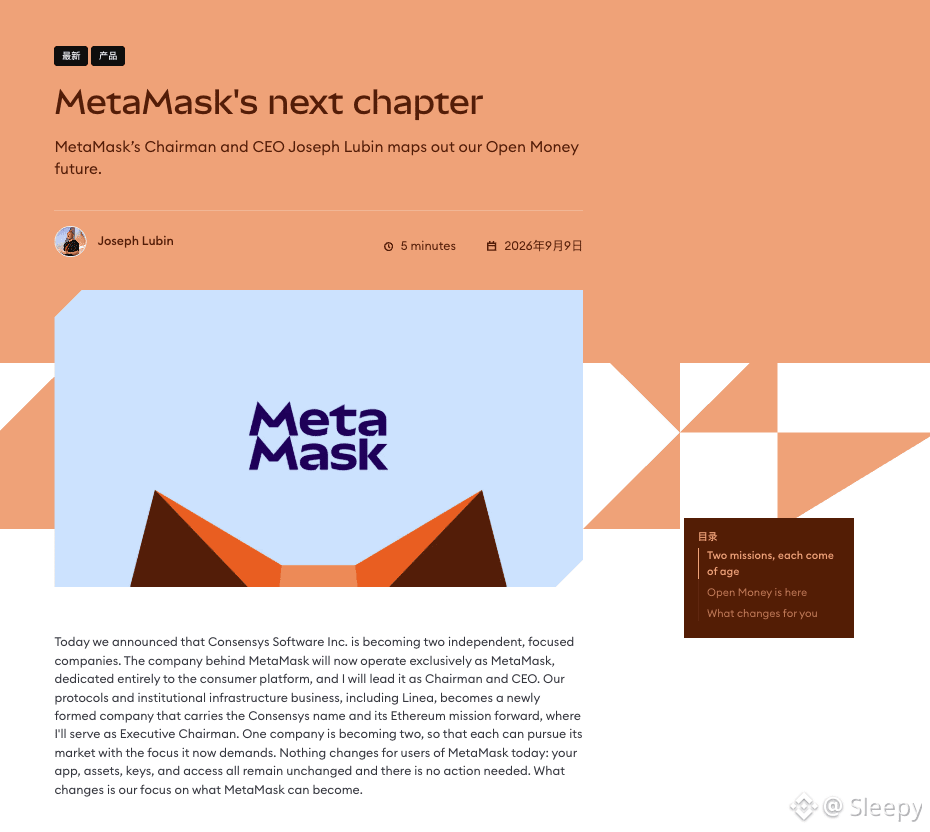
MetaMask—this little fox—really has flown solo out of Consensys.
Joe Lubin announced yesterday that Consensys Software Inc. is being split into two.
What’s interesting is that the original Consensys Software Inc. won’t disappear; it will be renamed MetaMask and, going forward, focus exclusively on consumer business. Joe Lubin himself will serve as Chairman and CEO of MetaMask.
Linea, Besu, Teku, and other protocol and enterprise-grade infrastructure businesses will be placed into a newly formed company. That company will continue to use the name Consensys, with Mike Kriak as CEO and Lubin as Executive Chairman.
The two companies are now operating independently, and the legal separation is expected to be completed by the end of 2026. For ordinary users, there’s no impact: assets, private keys, accounts, and access methods in MetaMask will not change.
Why split now?
Lubin told Fortune that the value accumulated by MetaMask’s consumer business is growing faster than Consensys’s other lines of business.
And MetaMask also truly isn’t content anymore to be “just a wallet.” The official figures say it has already surpassed 100 million downloads, covering about 190 countries. Recently, it’s been expanding further into Money Accounts, payments, yield, trading, and even traditional financial assets—its goals are increasingly looking like a complete on-chain financial account.
Which brings us to the question you can’t get around:
Is the fox getting ready for an IPO?
Consensys had been preparing for a U.S. IPO anyway. Reports say it even approached JPMorgan and Goldman Sachs, but later pushed the plans back due to the market environment. Now, suddenly, fully separating the consumer business from enterprise infrastructure makes it hard not to think about the capital markets.
That said, there’s currently no official confirmation. Lubin refused to disclose any new IPO timeline, and Consensys hasn’t said whether it will be MetaMask or the new Consensys that goes public.
So the only thing we can be sure of right now is this: if, in the future, you do see MetaMask Inc. ring the opening bell, this split was probably its most important preparatory step.
MetaMask—this little fox—really has flown solo out of Consensys.
Joe Lubin announced yesterday that Consensys Software Inc. is being split into two.
What’s interesting is that the original Consensys Software Inc. won’t disappear; it will be renamed MetaMask and, going forward, focus exclusively on consumer business. Joe Lubin himself will serve as Chairman and CEO of MetaMask.
Linea, Besu, Teku, and other protocol and enterprise-grade infrastructure businesses will be placed into a newly formed company. That company will continue to use the name Consensys, with Mike Kriak as CEO and Lubin as Executive Chairman.
The two companies are now operating independently, and the legal separation is expected to be completed by the end of 2026. For ordinary users, there’s no impact: assets, private keys, accounts, and access methods in MetaMask will not change.
Why split now?
Lubin told Fortune that the value accumulated by MetaMask’s consumer business is growing faster than Consensys’s other lines of business.
And MetaMask also truly isn’t content anymore to be “just a wallet.” The official figures say it has already surpassed 100 million downloads, covering about 190 countries. Recently, it’s been expanding further into Money Accounts, payments, yield, trading, and even traditional financial assets—its goals are increasingly looking like a complete on-chain financial account.
Which brings us to the question you can’t get around:
Is the fox getting ready for an IPO?
Consensys had been preparing for a U.S. IPO anyway. Reports say it even approached JPMorgan and Goldman Sachs, but later pushed the plans back due to the market environment. Now, suddenly, fully separating the consumer business from enterprise infrastructure makes it hard not to think about the capital markets.
That said, there’s currently no official confirmation. Lubin refused to disclose any new IPO timeline, and Consensys hasn’t said whether it will be MetaMask or the new Consensys that goes public.
So the only thing we can be sure of right now is this: if, in the future, you do see MetaMask Inc. ring the opening bell, this split was probably its most important preparatory step.
Joe Lubin announced yesterday that Consensys Software Inc. is being split into two.
What’s interesting is that the original Consensys Software Inc. won’t disappear; it will be renamed MetaMask and, going forward, focus exclusively on consumer business. Joe Lubin himself will serve as Chairman and CEO of MetaMask.
Linea, Besu, Teku, and other protocol and enterprise-grade infrastructure businesses will be placed into a newly formed company. That company will continue to use the name Consensys, with Mike Kriak as CEO and Lubin as Executive Chairman.
The two companies are now operating independently, and the legal separation is expected to be completed by the end of 2026. For ordinary users, there’s no impact: assets, private keys, accounts, and access methods in MetaMask will not change.
Why split now?
Lubin told Fortune that the value accumulated by MetaMask’s consumer business is growing faster than Consensys’s other lines of business.
And MetaMask also truly isn’t content anymore to be “just a wallet.” The official figures say it has already surpassed 100 million downloads, covering about 190 countries. Recently, it’s been expanding further into Money Accounts, payments, yield, trading, and even traditional financial assets—its goals are increasingly looking like a complete on-chain financial account.
Which brings us to the question you can’t get around:
Is the fox getting ready for an IPO?
Consensys had been preparing for a U.S. IPO anyway. Reports say it even approached JPMorgan and Goldman Sachs, but later pushed the plans back due to the market environment. Now, suddenly, fully separating the consumer business from enterprise infrastructure makes it hard not to think about the capital markets.
That said, there’s currently no official confirmation. Lubin refused to disclose any new IPO timeline, and Consensys hasn’t said whether it will be MetaMask or the new Consensys that goes public.
So the only thing we can be sure of right now is this: if, in the future, you do see MetaMask Inc. ring the opening bell, this split was probably its most important preparatory step.
2
1.5k
·
--
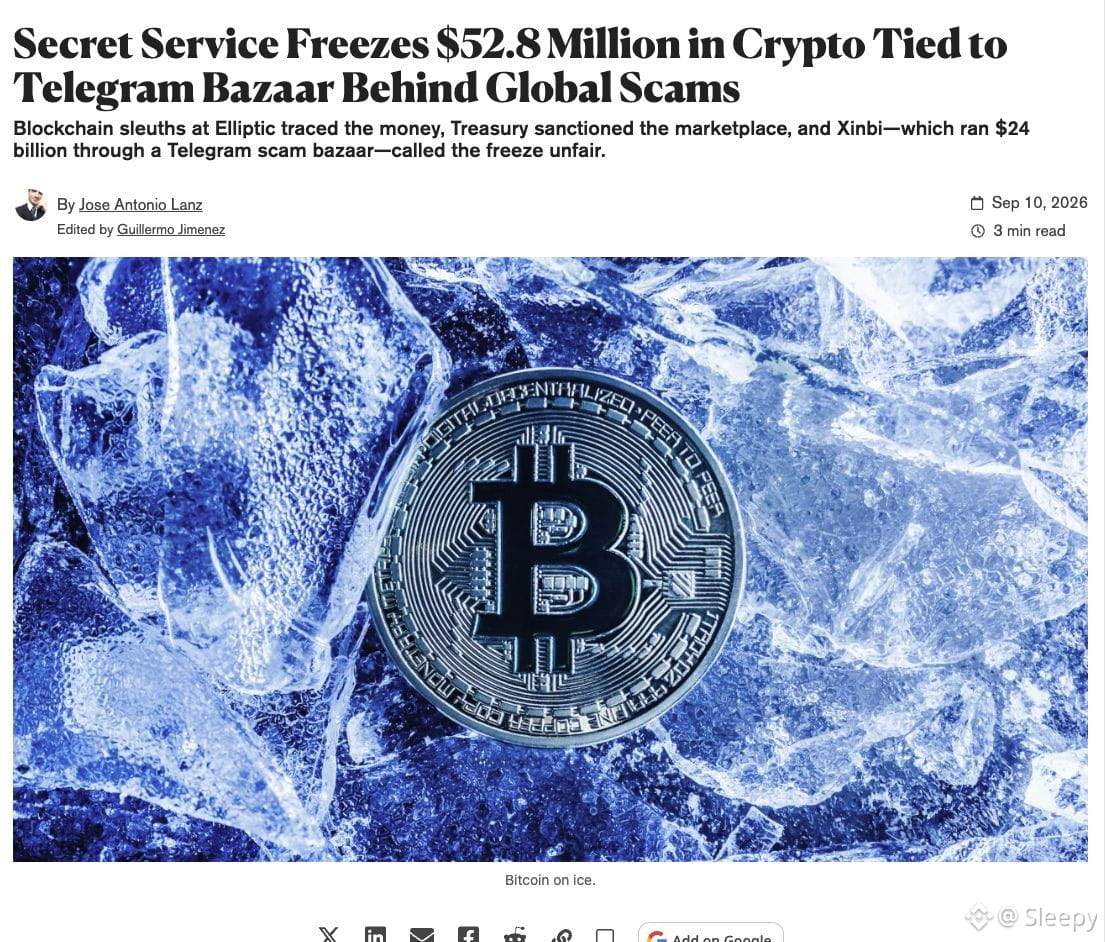
This latest action by the United States against Xinbi Guarantee has basically targeted this Chinese-language scam service market across both the blockchain layer and real-world entities.
The U.S. Secret Service, together with Elliptic, traced funds related to Xinbi and froze or restricted approximately $52.8 million in crypto assets. Among them, two Xinbi collection wallets, totaling about $12 million, have been formally seized, and another 47 wallets associated with the Xinbi money-laundering network and merchants have been restricted.
In its announcement, the DOJ also specifically noted that Tether provided assistance for this operation.
Meanwhile, the U.S. Treasury’s OFAC listed Xinbi as a “Significant Transnational Criminal Organization” and, along with it, sanctioned companies such as SafeW Technology and Anwen Technology that provide encrypted communications and wallet services.
Xinbi Guarantee itself is a gray-to-black market on Telegram catering to Chinese users. Elliptic estimates that since 2022 it has processed at least $24 billion in transactions. On the platform, users can find services such as money laundering, scam website setup, and the buying and selling of personal data. It is also one of the key infrastructures commonly used by scam compounds in Southeast Asia.
After some USDT was frozen, Xinbi also tried to adjust its fund routes. On-chain data shows that it swapped roughly $2.8 million worth of USDT for USDD in an attempt to bypass Tether’s address-freezing mechanism.
So the course of this operation is clear: first identify and lock up funds through on-chain tracking, then freeze USDT in coordination with Tether, while OFAC also places Xinbi and its related service providers on the sanctions list.
For a gray-and-black market that heavily relies on stablecoin settlement, once the money flow is locked up, the platform itself will quickly lose the space to operate.
This latest action by the United States against Xinbi Guarantee has basically targeted this Chinese-language scam service market across both the blockchain layer and real-world entities.
The U.S. Secret Service, together with Elliptic, traced funds related to Xinbi and froze or restricted approximately $52.8 million in crypto assets. Among them, two Xinbi collection wallets, totaling about $12 million, have been formally seized, and another 47 wallets associated with the Xinbi money-laundering network and merchants have been restricted.
In its announcement, the DOJ also specifically noted that Tether provided assistance for this operation.
Meanwhile, the U.S. Treasury’s OFAC listed Xinbi as a “Significant Transnational Criminal Organization” and, along with it, sanctioned companies such as SafeW Technology and Anwen Technology that provide encrypted communications and wallet services.
Xinbi Guarantee itself is a gray-to-black market on Telegram catering to Chinese users. Elliptic estimates that since 2022 it has processed at least $24 billion in transactions. On the platform, users can find services such as money laundering, scam website setup, and the buying and selling of personal data. It is also one of the key infrastructures commonly used by scam compounds in Southeast Asia.
After some USDT was frozen, Xinbi also tried to adjust its fund routes. On-chain data shows that it swapped roughly $2.8 million worth of USDT for USDD in an attempt to bypass Tether’s address-freezing mechanism.
So the course of this operation is clear: first identify and lock up funds through on-chain tracking, then freeze USDT in coordination with Tether, while OFAC also places Xinbi and its related service providers on the sanctions list.
For a gray-and-black market that heavily relies on stablecoin settlement, once the money flow is locked up, the platform itself will quickly lose the space to operate.
The U.S. Secret Service, together with Elliptic, traced funds related to Xinbi and froze or restricted approximately $52.8 million in crypto assets. Among them, two Xinbi collection wallets, totaling about $12 million, have been formally seized, and another 47 wallets associated with the Xinbi money-laundering network and merchants have been restricted.
In its announcement, the DOJ also specifically noted that Tether provided assistance for this operation.
Meanwhile, the U.S. Treasury’s OFAC listed Xinbi as a “Significant Transnational Criminal Organization” and, along with it, sanctioned companies such as SafeW Technology and Anwen Technology that provide encrypted communications and wallet services.
Xinbi Guarantee itself is a gray-to-black market on Telegram catering to Chinese users. Elliptic estimates that since 2022 it has processed at least $24 billion in transactions. On the platform, users can find services such as money laundering, scam website setup, and the buying and selling of personal data. It is also one of the key infrastructures commonly used by scam compounds in Southeast Asia.
After some USDT was frozen, Xinbi also tried to adjust its fund routes. On-chain data shows that it swapped roughly $2.8 million worth of USDT for USDD in an attempt to bypass Tether’s address-freezing mechanism.
So the course of this operation is clear: first identify and lock up funds through on-chain tracking, then freeze USDT in coordination with Tether, while OFAC also places Xinbi and its related service providers on the sanctions list.
For a gray-and-black market that heavily relies on stablecoin settlement, once the money flow is locked up, the platform itself will quickly lose the space to operate.
913
·
--
Last night’s U.S. Treasury market saw a rather interesting scene: the U.S. Treasury was preparing to step in to buy Treasuries, yet bond prices kept falling, with the 10-year yield surging straight to 4.85%.
The reason is simple—Wall Street thinks $6 billion is too little.
The Treasury announced that on September 10 it would repurchase up to $6 billion in 10- to 20-year Treasuries. That amount is already three times the previous $2 billion cap for operations in the same maturity range. And just in August, the Treasury said that going forward, long-end buybacks would be increased to at least $4 billion per operation.
But the market had already had its appetite whetted. Some traders expected this time could reach $8 billion or even $10 billion. In the end, it was capped at $6 billion. After the news broke, the 10-year yield actually jumped even higher, topping out at 4.8528%, the highest level since November 2023; the 30-year yield also moved back above 5.3%.
BTC followed suit and gave back its gains, falling at one point from around $79,742 during the day to near $78,500.
These $6 billion have not yet been actually purchased. What has been released so far is the buyback ceiling; the formal operation will take place in the early hours of September 11 Beijing time. What was being traded in the market last night was the Treasury’s stance and力度 (the strength) of its action.
And this is not QE either. The Treasury’s focus is on buying back older, less liquid long-dated government bonds, with the goal of improving liquidity in the Treasury market.
So I think the real thing worth watching is that the U.S. Treasury market is already so tight that when the Treasury expands the long-end buyback size by threefold, the market still deems it insufficient.
Oil prices have broken back above $100, inflation expectations are rising, and the 10-year yield is hovering near 4.85%. In this kind of environment, BTC’s rate sensitivity has once again been exposed: once long-end yields rise, the gains painstakingly built earlier can quickly be wiped out.
{future}(BTCUSDT)
{spot}(BTCUSDT)
Last night’s U.S. Treasury market saw a rather interesting scene: the U.S. Treasury was preparing to step in to buy Treasuries, yet bond prices kept falling, with the 10-year yield surging straight to 4.85%.
The reason is simple—Wall Street thinks $6 billion is too little.
The Treasury announced that on September 10 it would repurchase up to $6 billion in 10- to 20-year Treasuries. That amount is already three times the previous $2 billion cap for operations in the same maturity range. And just in August, the Treasury said that going forward, long-end buybacks would be increased to at least $4 billion per operation.
But the market had already had its appetite whetted. Some traders expected this time could reach $8 billion or even $10 billion. In the end, it was capped at $6 billion. After the news broke, the 10-year yield actually jumped even higher, topping out at 4.8528%, the highest level since November 2023; the 30-year yield also moved back above 5.3%.
BTC followed suit and gave back its gains, falling at one point from around $79,742 during the day to near $78,500.
These $6 billion have not yet been actually purchased. What has been released so far is the buyback ceiling; the formal operation will take place in the early hours of September 11 Beijing time. What was being traded in the market last night was the Treasury’s stance and力度 (the strength) of its action.
And this is not QE either. The Treasury’s focus is on buying back older, less liquid long-dated government bonds, with the goal of improving liquidity in the Treasury market.
So I think the real thing worth watching is that the U.S. Treasury market is already so tight that when the Treasury expands the long-end buyback size by threefold, the market still deems it insufficient.
Oil prices have broken back above $100, inflation expectations are rising, and the 10-year yield is hovering near 4.85%. In this kind of environment, BTC’s rate sensitivity has once again been exposed: once long-end yields rise, the gains painstakingly built earlier can quickly be wiped out.
The reason is simple—Wall Street thinks $6 billion is too little.
The Treasury announced that on September 10 it would repurchase up to $6 billion in 10- to 20-year Treasuries. That amount is already three times the previous $2 billion cap for operations in the same maturity range. And just in August, the Treasury said that going forward, long-end buybacks would be increased to at least $4 billion per operation.
But the market had already had its appetite whetted. Some traders expected this time could reach $8 billion or even $10 billion. In the end, it was capped at $6 billion. After the news broke, the 10-year yield actually jumped even higher, topping out at 4.8528%, the highest level since November 2023; the 30-year yield also moved back above 5.3%.
BTC followed suit and gave back its gains, falling at one point from around $79,742 during the day to near $78,500.
These $6 billion have not yet been actually purchased. What has been released so far is the buyback ceiling; the formal operation will take place in the early hours of September 11 Beijing time. What was being traded in the market last night was the Treasury’s stance and力度 (the strength) of its action.
And this is not QE either. The Treasury’s focus is on buying back older, less liquid long-dated government bonds, with the goal of improving liquidity in the Treasury market.
So I think the real thing worth watching is that the U.S. Treasury market is already so tight that when the Treasury expands the long-end buyback size by threefold, the market still deems it insufficient.
Oil prices have broken back above $100, inflation expectations are rising, and the 10-year yield is hovering near 4.85%. In this kind of environment, BTC’s rate sensitivity has once again been exposed: once long-end yields rise, the gains painstakingly built earlier can quickly be wiped out.
902
·
--
ZEC is now starting to move out of its own independent trading pattern.
This morning, Bitcoin briefly fell below $78,000. Over the past 24 hours, the total market capitalization of the entire market dropped by about 1.1%, BNB fell more than 4%, and SOL is also down. But ZEC moved the other way: it surged to $1,293.92 at one point, just a step away from the $1,300 mark. It is still hovering around $1,240, up about 5% over the past 24 hours.
If you extend the time frame, the move looks even more dramatic: ZEC is up 51.2% over 7 days and up 146.8% over 30 days. Its market cap has reached about $21 billion, putting it back into the top ten of cryptocurrencies.
What’s most worth watching for ZEC now isn’t the narrative of “privacy coins are getting hyped again,” but rather that it has started to show a strong relative strength. When BTC is being pressured by oil prices, interest-rate expectations, and macro risks, capital is still continuing to flow into ZEC.
The hardest support behind this remains ZCSH. According to Grayscale’s official data, as of September 8, the AUM of this Zcash ETF has reached $533 million, holding about 465,450 ZEC. On the same day, DCG also acquired 85,705 ZEC via physical delivery, exchanging them into approximately $100 million worth of ETF shares.
{spot}(ZECUSDT)
ZEC is now starting to move out of its own independent trading pattern.
This morning, Bitcoin briefly fell below $78,000. Over the past 24 hours, the total market capitalization of the entire market dropped by about 1.1%, BNB fell more than 4%, and SOL is also down. But ZEC moved the other way: it surged to $1,293.92 at one point, just a step away from the $1,300 mark. It is still hovering around $1,240, up about 5% over the past 24 hours.
If you extend the time frame, the move looks even more dramatic: ZEC is up 51.2% over 7 days and up 146.8% over 30 days. Its market cap has reached about $21 billion, putting it back into the top ten of cryptocurrencies.
What’s most worth watching for ZEC now isn’t the narrative of “privacy coins are getting hyped again,” but rather that it has started to show a strong relative strength. When BTC is being pressured by oil prices, interest-rate expectations, and macro risks, capital is still continuing to flow into ZEC.
The hardest support behind this remains ZCSH. According to Grayscale’s official data, as of September 8, the AUM of this Zcash ETF has reached $533 million, holding about 465,450 ZEC. On the same day, DCG also acquired 85,705 ZEC via physical delivery, exchanging them into approximately $100 million worth of ETF shares.
This morning, Bitcoin briefly fell below $78,000. Over the past 24 hours, the total market capitalization of the entire market dropped by about 1.1%, BNB fell more than 4%, and SOL is also down. But ZEC moved the other way: it surged to $1,293.92 at one point, just a step away from the $1,300 mark. It is still hovering around $1,240, up about 5% over the past 24 hours.
If you extend the time frame, the move looks even more dramatic: ZEC is up 51.2% over 7 days and up 146.8% over 30 days. Its market cap has reached about $21 billion, putting it back into the top ten of cryptocurrencies.
What’s most worth watching for ZEC now isn’t the narrative of “privacy coins are getting hyped again,” but rather that it has started to show a strong relative strength. When BTC is being pressured by oil prices, interest-rate expectations, and macro risks, capital is still continuing to flow into ZEC.
The hardest support behind this remains ZCSH. According to Grayscale’s official data, as of September 8, the AUM of this Zcash ETF has reached $533 million, holding about 465,450 ZEC. On the same day, DCG also acquired 85,705 ZEC via physical delivery, exchanging them into approximately $100 million worth of ETF shares.
2
2.4k
·
--
Article
Harvey’s $550 million round and a $15.5 billion valuation are just the surface. The bigger signal is that a vertical AI application has already started to consume models upstream.This round of $550 million for Harvey, with a $15.5 billion valuation, is only the surface. The bigger signal is that a vertical AI application is already starting to consume models upstream.
Today, Harvey officially announced a new round of funding, co-led by Diffusion and Lightspeed, with a valuation of $15.5 billion. The company’s total funding has already surpassed $1.5 billion.
Its current core business base is already astonishing.
ARR exceeds $400 million, with over 3,000 customers; in March this year, the customer count was only about 1,300. In the U.S. Am Law 100, 80% are already using Harvey, and it has secured 5 companies in Fortune 10.
Harvey’s $550 million round and a $15.5 billion valuation are just the surface. The bigger signal is that a vertical AI application has already started to consume models upstream.
This round of $550 million for Harvey, with a $15.5 billion valuation, is only the surface. The bigger signal is that a vertical AI application is already starting to consume models upstream.
Today, Harvey officially announced a new round of funding, co-led by Diffusion and Lightspeed, with a valuation of $15.5 billion. The company’s total funding has already surpassed $1.5 billion.
Its current core business base is already astonishing.
ARR exceeds $400 million, with over 3,000 customers; in March this year, the customer count was only about 1,300. In the U.S. Am Law 100, 80% are already using Harvey, and it has secured 5 companies in Fortune 10.
Today, Harvey officially announced a new round of funding, co-led by Diffusion and Lightspeed, with a valuation of $15.5 billion. The company’s total funding has already surpassed $1.5 billion.
Its current core business base is already astonishing.
ARR exceeds $400 million, with over 3,000 customers; in March this year, the customer count was only about 1,300. In the U.S. Am Law 100, 80% are already using Harvey, and it has secured 5 companies in Fortune 10.
380
·
--

Article
Regarding the story of how Anthropic destroyed training data for Claude, The New Yorker has dug up some even more interesting details.Regarding the story of how Anthropic destroyed training data for Claude, (The New Yorker) dug up some even more interesting details.
At the beginning of this year, some used-book sellers in the U.S. noticed that the orders suddenly became very strange.
A Brooklyn bookseller used to sell fewer than 10 books on Alibris in an entire year, but suddenly started receiving orders for a dozen or so books at a time—and they would only pick obscure titles. On average, each book could sell for $75–$80.
The buyers weren’t behaving like normal people either. The orders came from strange LLCs like the Green Parrot Project and the Red Sparrow Project.
One bookseller was so curious that he slipped a GPS tracking card into books that had already been sold.
Regarding the story of how Anthropic destroyed training data for Claude, The New Yorker has dug up some even more interesting details.
Regarding the story of how Anthropic destroyed training data for Claude, (The New Yorker) dug up some even more interesting details.
At the beginning of this year, some used-book sellers in the U.S. noticed that the orders suddenly became very strange.
A Brooklyn bookseller used to sell fewer than 10 books on Alibris in an entire year, but suddenly started receiving orders for a dozen or so books at a time—and they would only pick obscure titles. On average, each book could sell for $75–$80.
The buyers weren’t behaving like normal people either. The orders came from strange LLCs like the Green Parrot Project and the Red Sparrow Project.
One bookseller was so curious that he slipped a GPS tracking card into books that had already been sold.
At the beginning of this year, some used-book sellers in the U.S. noticed that the orders suddenly became very strange.
A Brooklyn bookseller used to sell fewer than 10 books on Alibris in an entire year, but suddenly started receiving orders for a dozen or so books at a time—and they would only pick obscure titles. On average, each book could sell for $75–$80.
The buyers weren’t behaving like normal people either. The orders came from strange LLCs like the Green Parrot Project and the Red Sparrow Project.
One bookseller was so curious that he slipped a GPS tracking card into books that had already been sold.
1
905
·
--
Article
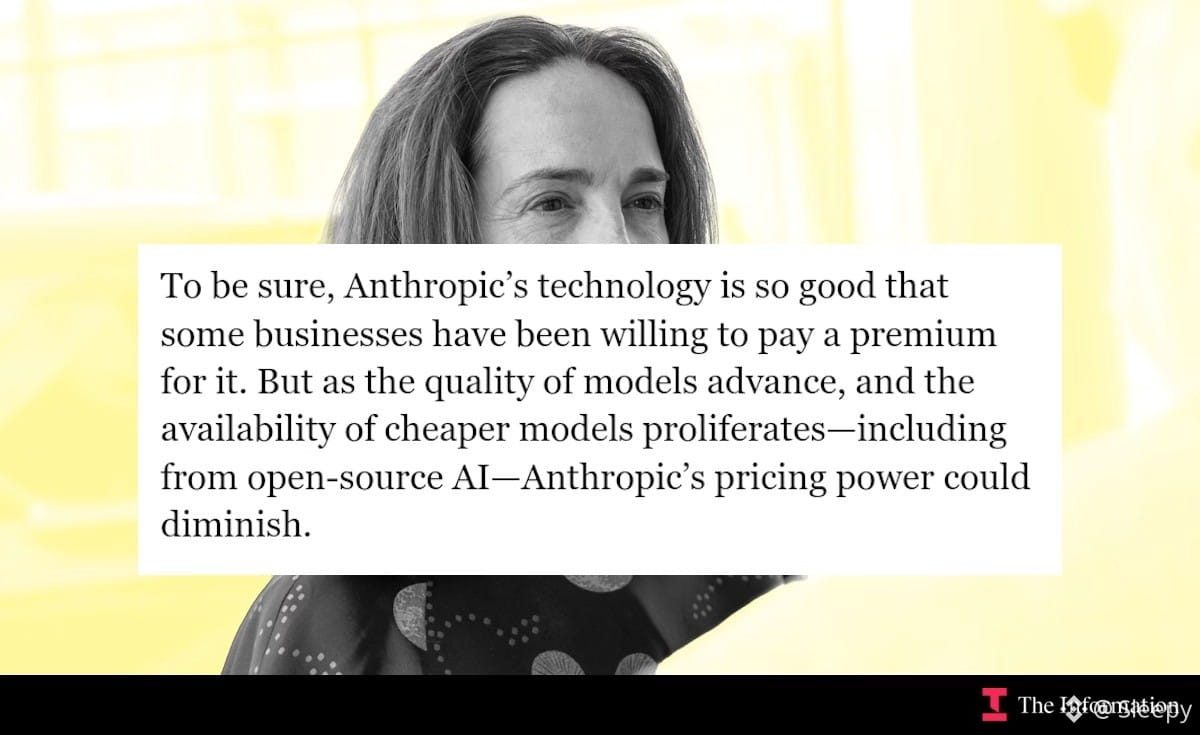
What Anthropic is most afraid of right now may be the stage where AI models move into “the cheaper you are, the more volume you get.”What Anthropic is most afraid of right now may be the stage where AI models move into “the cheaper you are, the more volume you get.”
If you lose a benchmark you can still catch up, but once pricing power loosens, the valuation logic behind a $2 trillion IPO has to be rewritten.
The Information specifically wrote an article today, titled (Why Price Cuts May Rattle Anthropic's IPO Pitch).
The trigger was that OpenAI CFO Sarah Friar recently revealed at Goldman’s Communacopia conference that after GPT 5.6 Luna cut prices, usage jumped 10x directly; on OpenRouter it captured the highest market share, and the added usage was enough to offset the price cut.
What Anthropic is most afraid of right now may be the stage where AI models move into “the cheaper you are, the more volume you get.”
What Anthropic is most afraid of right now may be the stage where AI models move into “the cheaper you are, the more volume you get.”
If you lose a benchmark you can still catch up, but once pricing power loosens, the valuation logic behind a $2 trillion IPO has to be rewritten.
The Information specifically wrote an article today, titled (Why Price Cuts May Rattle Anthropic's IPO Pitch).
The trigger was that OpenAI CFO Sarah Friar recently revealed at Goldman’s Communacopia conference that after GPT 5.6 Luna cut prices, usage jumped 10x directly; on OpenRouter it captured the highest market share, and the added usage was enough to offset the price cut.
If you lose a benchmark you can still catch up, but once pricing power loosens, the valuation logic behind a $2 trillion IPO has to be rewritten.
The Information specifically wrote an article today, titled (Why Price Cuts May Rattle Anthropic's IPO Pitch).
The trigger was that OpenAI CFO Sarah Friar recently revealed at Goldman’s Communacopia conference that after GPT 5.6 Luna cut prices, usage jumped 10x directly; on OpenRouter it captured the highest market share, and the added usage was enough to offset the price cut.
1
132
·
--
Article
For the next battle in weight-loss drugs, some people are no longer planning to manage your appetite—they’re going straight after fat.For the next battle in weight-loss drugs, some people are no longer planning to manage your appetite—they’re going straight after fat.
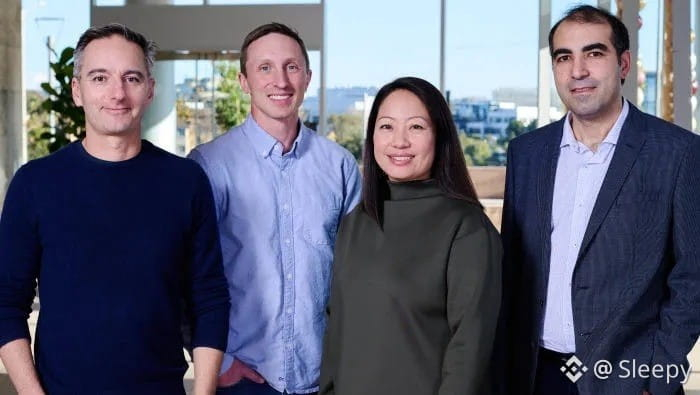
Moonwalk Biosciences has just raised $70 million in a B round to develop an RNAi weight-loss drug targeting fat tissue. Alpha Wave and YK Bioventures led the round, with Eli Lilly, Gao Rong, ARCH, Khosla, and others also participating.
This company has a rather impressive background. When it was newly launched in 2024, it was co-founded by Alex Aravanis, former Illumina CTO and co-founder of Grail, along with people including Feng Zhang, raising $57 million to pursue apparent genome editing.
Two years later, Moonwalk found a faster path to clinical progress: siRNA.
For the next battle in weight-loss drugs, some people are no longer planning to manage your appetite—they’re going straight after fat.
For the next battle in weight-loss drugs, some people are no longer planning to manage your appetite—they’re going straight after fat.
Moonwalk Biosciences has just raised $70 million in a B round to develop an RNAi weight-loss drug targeting fat tissue. Alpha Wave and YK Bioventures led the round, with Eli Lilly, Gao Rong, ARCH, Khosla, and others also participating.
This company has a rather impressive background. When it was newly launched in 2024, it was co-founded by Alex Aravanis, former Illumina CTO and co-founder of Grail, along with people including Feng Zhang, raising $57 million to pursue apparent genome editing.
Two years later, Moonwalk found a faster path to clinical progress: siRNA.
Moonwalk Biosciences has just raised $70 million in a B round to develop an RNAi weight-loss drug targeting fat tissue. Alpha Wave and YK Bioventures led the round, with Eli Lilly, Gao Rong, ARCH, Khosla, and others also participating.
This company has a rather impressive background. When it was newly launched in 2024, it was co-founded by Alex Aravanis, former Illumina CTO and co-founder of Grail, along with people including Feng Zhang, raising $57 million to pursue apparent genome editing.
Two years later, Moonwalk found a faster path to clinical progress: siRNA.
2
683
·
--
Article
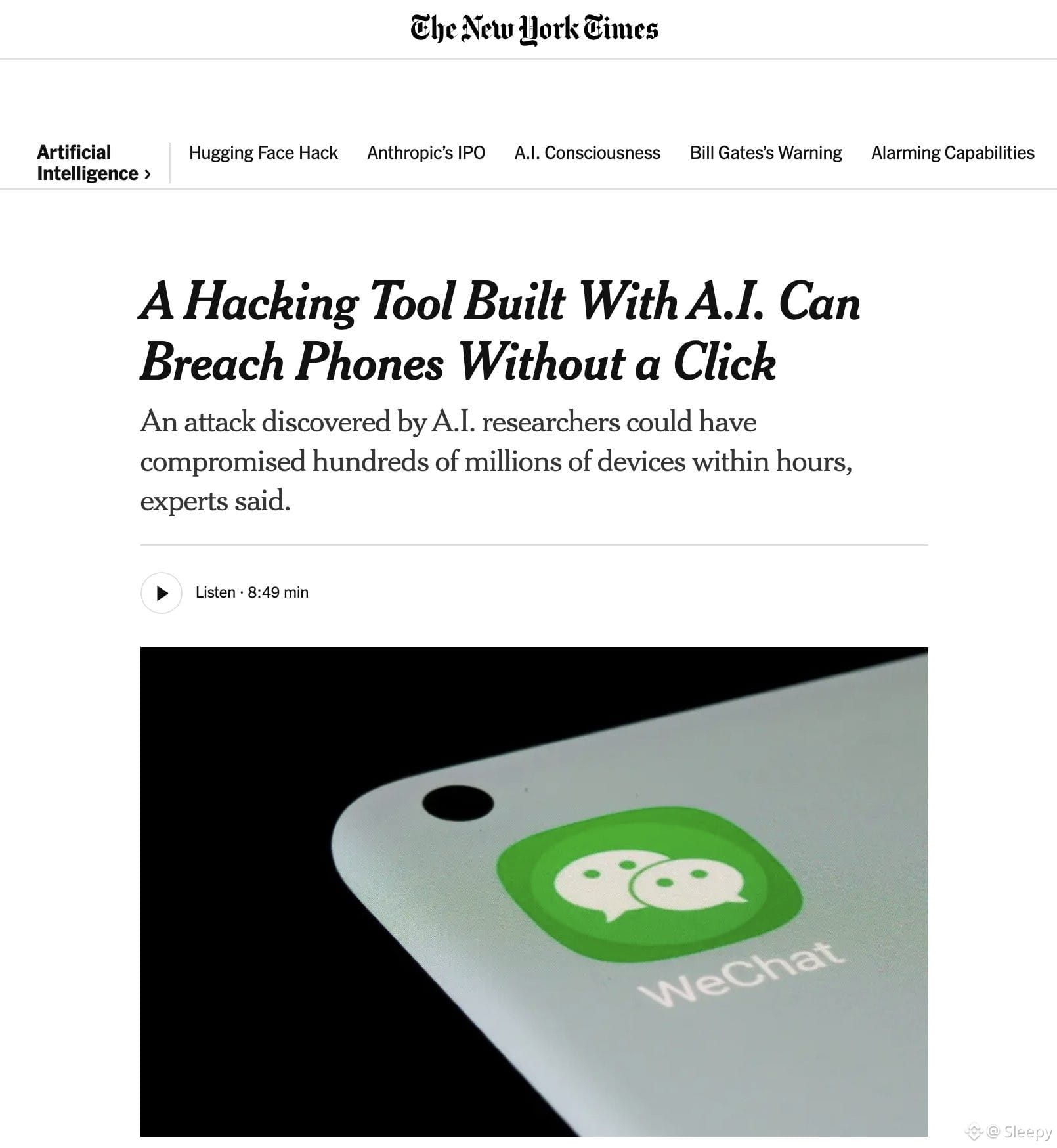
Yesterday, a security company, Calif, released a scary demo called WeWorm。Yesterday, a security company, Calif, released a scary demo called WeWorm.
They found a memory corruption vulnerability in the WeChat VoIP call stack, and ultimately built a zero-click worm attack chain capable of spreading across both iOS and Android.
The attack method is even a bit beyond the average person’s understanding of “getting infected with a virus.”
A微信 friend who’s already been infected calls you. You don’t need to click any link, you don’t need to download any file, and you don’t even need to pick up the phone.
For a few seconds while the phone is ringing there, the attack can be completed: the WeChat account gets hacked. Then the infected account continues calling friends to infect the next phone.
Yesterday, a security company, Calif, released a scary demo called WeWorm。
Yesterday, a security company, Calif, released a scary demo called WeWorm.
They found a memory corruption vulnerability in the WeChat VoIP call stack, and ultimately built a zero-click worm attack chain capable of spreading across both iOS and Android.
The attack method is even a bit beyond the average person’s understanding of “getting infected with a virus.”
A微信 friend who’s already been infected calls you. You don’t need to click any link, you don’t need to download any file, and you don’t even need to pick up the phone.
For a few seconds while the phone is ringing there, the attack can be completed: the WeChat account gets hacked. Then the infected account continues calling friends to infect the next phone.
They found a memory corruption vulnerability in the WeChat VoIP call stack, and ultimately built a zero-click worm attack chain capable of spreading across both iOS and Android.
The attack method is even a bit beyond the average person’s understanding of “getting infected with a virus.”
A微信 friend who’s already been infected calls you. You don’t need to click any link, you don’t need to download any file, and you don’t even need to pick up the phone.
For a few seconds while the phone is ringing there, the attack can be completed: the WeChat account gets hacked. Then the infected account continues calling friends to infect the next phone.
505
·
--

Article
AI products from big tech companies are starting to look more and more alike.AI products from big tech companies are starting to look more and more alike.
Meta has just launched its personal assistant, Muse.
Always open, fast, can use your own browser, can connect to Gmail, Calendar, Outlook, Spotify, Plaid, Instagram, and Facebook. Even if the task isn’t finished, after you close the app, it can keep running.
If you’ve gotten this far, you probably already feel like you know it well.
OpenAI is working on it, Anthropic is working on it, Grok is working on it, Google is working on it—now Meta is here too. In the end, everyone is converging on the same kind of product format:
A long-running, always-online AI that plugs into all your apps, has browsing and computer operation capabilities, and then changes from “you ask and it answers” into it continuously working in the background.
AI products from big tech companies are starting to look more and more alike.
AI products from big tech companies are starting to look more and more alike.
Meta has just launched its personal assistant, Muse.
Always open, fast, can use your own browser, can connect to Gmail, Calendar, Outlook, Spotify, Plaid, Instagram, and Facebook. Even if the task isn’t finished, after you close the app, it can keep running.
If you’ve gotten this far, you probably already feel like you know it well.
OpenAI is working on it, Anthropic is working on it, Grok is working on it, Google is working on it—now Meta is here too. In the end, everyone is converging on the same kind of product format:
A long-running, always-online AI that plugs into all your apps, has browsing and computer operation capabilities, and then changes from “you ask and it answers” into it continuously working in the background.
Meta has just launched its personal assistant, Muse.
Always open, fast, can use your own browser, can connect to Gmail, Calendar, Outlook, Spotify, Plaid, Instagram, and Facebook. Even if the task isn’t finished, after you close the app, it can keep running.
If you’ve gotten this far, you probably already feel like you know it well.
OpenAI is working on it, Anthropic is working on it, Grok is working on it, Google is working on it—now Meta is here too. In the end, everyone is converging on the same kind of product format:
A long-running, always-online AI that plugs into all your apps, has browsing and computer operation capabilities, and then changes from “you ask and it answers” into it continuously working in the background.
45
·
--
Verified

Article
In this round of financing for Cognition, it already has the vibe of “half of Silicon Valley has gotten on board.”In this round of financing for Cognition, it already has the vibe of “half of Silicon Valley has gotten on board.”
When Scott Wu reposted the latest round of funding, he said that in this list, many of these people have admired one another for years, and now they finally have the chance to work together.
Then he added something that I found especially funny:
“And I’m also really glad that Devin is actually working well now—otherwise all of this would look really stupid.”
Indeed.
Cognition just announced that it has raised more than $2 billion, valuing it at $48 billion, with lead investors including a16z, Accel, Founders Fund, General Catalyst, and Avenir. And the list that comes after that is even more outrageous: Benchmark, Bessemer, Kleiner Perkins, Greylock, Lightspeed, Altimeter, Lux, 8VC, DST, T. Rowe Price… You could basically make a Silicon Valley VC all-star group photo out of it.
In this round of financing for Cognition, it already has the vibe of “half of Silicon Valley has gotten on board.”
In this round of financing for Cognition, it already has the vibe of “half of Silicon Valley has gotten on board.”
When Scott Wu reposted the latest round of funding, he said that in this list, many of these people have admired one another for years, and now they finally have the chance to work together.
Then he added something that I found especially funny:
“And I’m also really glad that Devin is actually working well now—otherwise all of this would look really stupid.”
Indeed.
Cognition just announced that it has raised more than $2 billion, valuing it at $48 billion, with lead investors including a16z, Accel, Founders Fund, General Catalyst, and Avenir. And the list that comes after that is even more outrageous: Benchmark, Bessemer, Kleiner Perkins, Greylock, Lightspeed, Altimeter, Lux, 8VC, DST, T. Rowe Price… You could basically make a Silicon Valley VC all-star group photo out of it.
When Scott Wu reposted the latest round of funding, he said that in this list, many of these people have admired one another for years, and now they finally have the chance to work together.
Then he added something that I found especially funny:
“And I’m also really glad that Devin is actually working well now—otherwise all of this would look really stupid.”
Indeed.
Cognition just announced that it has raised more than $2 billion, valuing it at $48 billion, with lead investors including a16z, Accel, Founders Fund, General Catalyst, and Avenir. And the list that comes after that is even more outrageous: Benchmark, Bessemer, Kleiner Perkins, Greylock, Lightspeed, Altimeter, Lux, 8VC, DST, T. Rowe Price… You could basically make a Silicon Valley VC all-star group photo out of it.
1
726
Log in to explore more content
Join global crypto users on Binance Square
⚡️ Get latest and useful information about crypto.
💬 Trusted by the world’s largest crypto exchange.
👍 Discover real insights from verified creators.
Email / Phone number
Trending Topics
USAugustPPIRisesLessThanExpected
29,985 views
619 Discussing
🚨 US AUG PPI: Rises LESS Than Expected! Bullish for Crypto? 🚀
PPI +0.4% MoM as expected, but CORE PPI only +0.2% vs +0.3% expected - cooling!
What it means:
• Wholesale inflation softer than feared
• Fed rate hike chance now 62% - but dovish signals coming
• Core PCE revisions expected downward - bullish
• BTC usually pumps on softer PPI
Fed meeting Sep 15-16 - Market now expects pause, not hike?
Is this the green light for Q4 rally?
#Bitcoin #PPI #Fed #CryptoNews #BTC#usaugustppiriseslessthanexpected
True News
·1 Likes
·1.3k views
SECApprovesNasdaqTexasCommodityTrustRule
19,183 views
473 Discussing
ECBRaisesRatesSecondTimeTo2.5%
16,077 views
350 Discussing