


$RLB is part of the Rollbit lottery, where users stake RLB tokens to participate in the draw and win casino profits. RLB does not have an ICO, but is distributed through airdrops.
In addition, users will destroy half of the 0.20% staking fee for each round of staking RLB, gradually reducing the supply and supporting the growth of RLB value. The other half of the staking fee is used in the staking pool (Rollbit's NFT project has been hatched).
RLB prizes come from 20% of the casino's daily profits, and as tokens gradually decrease, demand rises over time, putting pressure on RLB price growth. This ensures that RLB tokens have real applications and real value, as they represent a portion of the casino's profits.
$RLB is still extremely undervalued:
In the past 30 days, $RLB revenue ($41.5 million) is higher than: - Top 10 DEXs combined ($40.54 million) - Top 10 MMSs combined ($16.09 million) - Top 10 CDPs combined ($14.6 million) - Top 10 Perp DEXs combined ($6.78 million) $RLB generates more revs. Much better than the entire crypto vertical
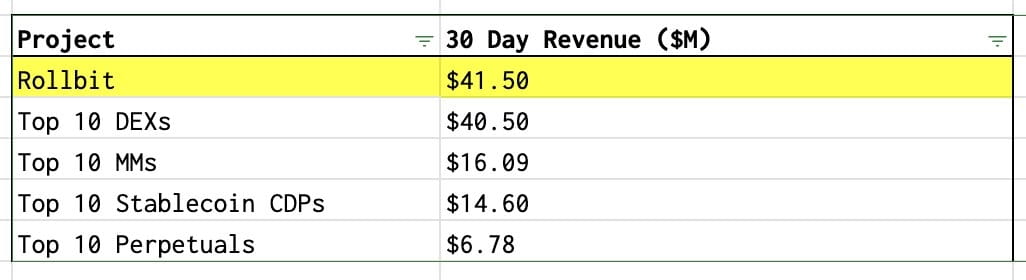
From the public data:
1. $RLB ranks first by profit and 67th by MC.
2. $RLB is deflationary or there is no issuance; many DeFi dApps have inflation.
3. $RLB has Web2/3 revenue sources and has not yet been listed on any CEX.
4. $RLB has the lowest P/E ratio among any medium or large project in cryptocurrency, and has huge room for growth!
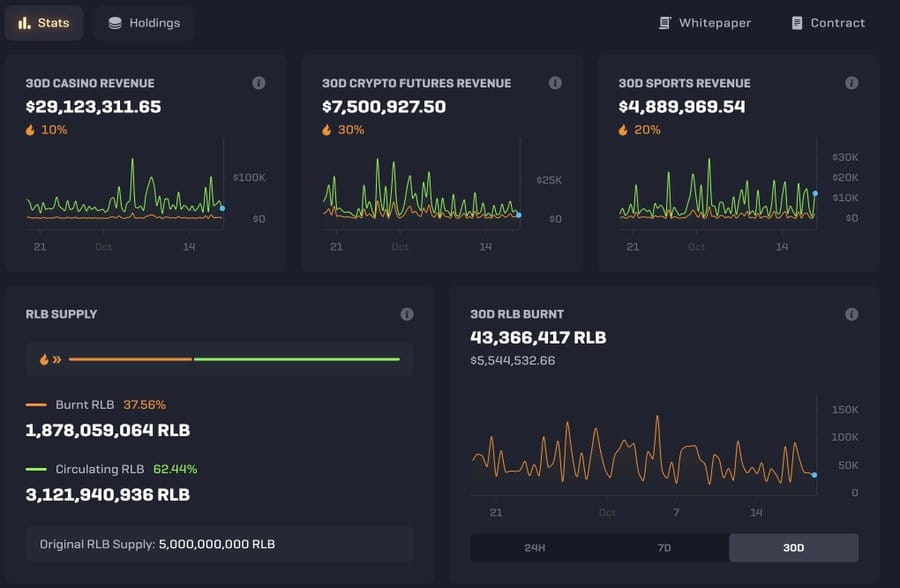
In terms of income and savings:
$RLB's RPM claims cannot be 100% verified. But net deposits in $ETH (excluding $SOL and $RLB) are roughly consistent with reported revenue. Revenue ≠ net deposits. Net deposits track money in/out, and $RLB's profit from that flow. High activity can increase revenue.
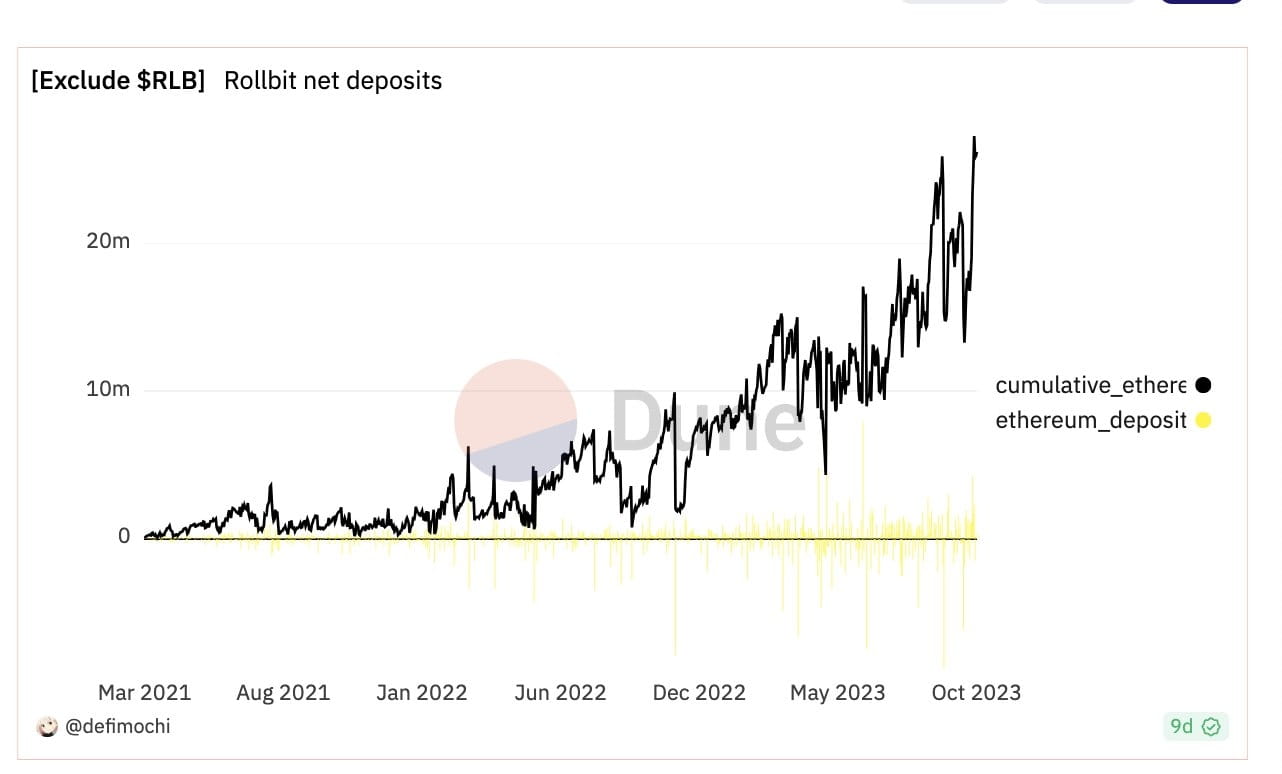
You can verify it on the chain yourself:
Do your own research to verify these numbers and draw your own conclusions. Lack of $RLB transparency is a risk. This is just my opinion, not financial advice. All DeFi income data (fees) are from DeFi Llama.