
#egld
egld
865,955 views
4,469 Discussing
Hot
Latest

·
--
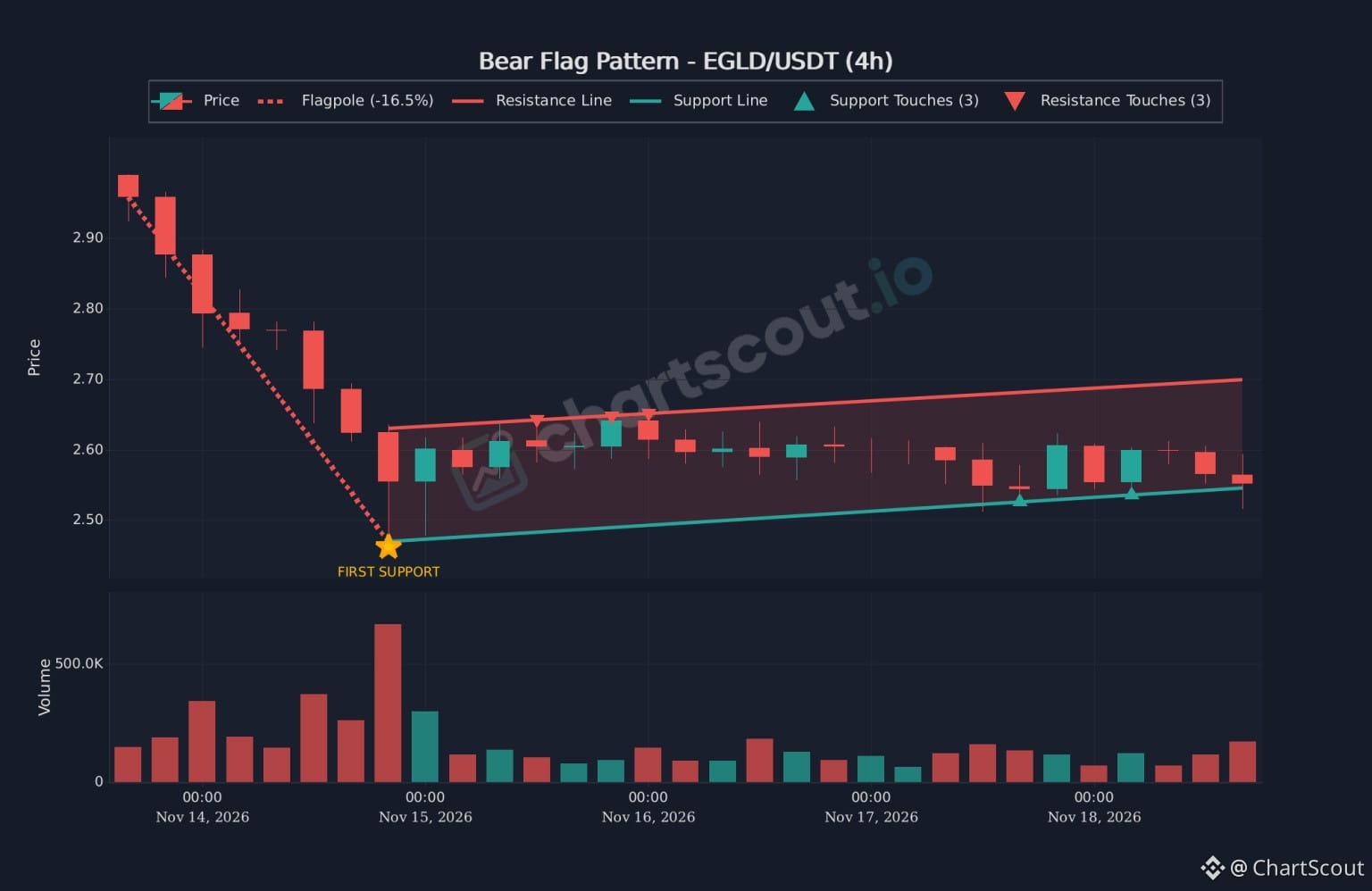
EGLD/USDT 4h: before and after the drop 🔍
Before: 2.99, with price falling hard.
After: a −16.5% flagpole, then 4–5 days of slow drift in a rising channel with 3 touches on each line.
Price is now at the lower line near 2.55. Volume was around 650K at the peak of the drop and has stayed far lower.
A bear flag only matters on a 4h close below the lower line. Until then it's a pattern to watch, not a signal.
Chart from ChartScout (free trial in our profile).
#EGLD #TechnicalAnalysis #EGLDUSDT #ChartScout
EGLD/USDT 4h: before and after the drop 🔍
Before: 2.99, with price falling hard.
After: a −16.5% flagpole, then 4–5 days of slow drift in a rising channel with 3 touches on each line.
Price is now at the lower line near 2.55. Volume was around 650K at the peak of the drop and has stayed far lower.
A bear flag only matters on a 4h close below the lower line. Until then it's a pattern to watch, not a signal.
Chart from ChartScout (free trial in our profile).
#EGLD #TechnicalAnalysis #EGLDUSDT #ChartScout
Before: 2.99, with price falling hard.
After: a −16.5% flagpole, then 4–5 days of slow drift in a rising channel with 3 touches on each line.
Price is now at the lower line near 2.55. Volume was around 650K at the peak of the drop and has stayed far lower.
A bear flag only matters on a 4h close below the lower line. Until then it's a pattern to watch, not a signal.
Chart from ChartScout (free trial in our profile).
#EGLD #TechnicalAnalysis #EGLDUSDT #ChartScout
168

With MultiversX’s chain outage, everyone is praising the fact that “no funds were lost.” What I care more about is the timeline.
The postmortem that MvX developer Andrei Marinica shared on X was very straightforward: on the morning of 11/17, an address deployed 23 contracts in a row on shard 0, targeting an unpatched bug in their own fork of Wasmer. The team believed the attacker wanted to run arbitrary code on validators’ machines, potentially reaching their private keys in the worst case, so they asked all validators to shut down—and the chain went down.
Put the dates side by side:
April 30: The fix had already been submitted upstream to Wasmer, but hadn’t made it into a formal release.
May 12: MvX received a report about this stack pointer bug. They couldn’t reproduce it at the time, and the first fix was still wrong, so it was never released.
November 17: Someone actually attacked. It was discovered at 10 a.m. (EEST), the fix was written by 11 a.m., and a new version was ready by 4 p.m.
The same patch took six months to deal with under normal circumstances, but was done in six hours under attack. This wasn’t a question of technical difficulty; it was a question of priority.
The attack surface this time was also different from what people are used to. It wasn’t someone exploiting faulty logic in a DeFi contract. Instead, the contract planted machine code disguised as a numeric constant in memory during compilation, directly attacking the node process. According to the postmortem, the payload was meant to install a hook in memory and impersonate the owner of some contract. The team doesn’t even know which contract was being targeted. Audit reports cover contracts; they can’t tell you how far behind upstream your underlying fork of the compiler is.
I’m not entirely convinced by claims like “decentralization held up.” What held things together was a single word from the core team getting validators to shut down in unison. An X user posted that Bithumb had also paused EGLD withdrawals. It was the right call to shut things down this time, but it shows who holds the switch when an emergency hits.
Also, for now, the claims that “no funds were lost and there’s no need to roll back” are only what I’ve seen the team say about itself. Hexens’ research says the affected component was the Singlepass compiler in Wasmer versions 2.1.0 through 6.x, which is widely used in blockchains. If you hold tokens on chains that use their own Wasm virtual machines, it’s worth checking who maintains their VM and how many versions behind upstream they are.
#EGLD #MultiversX
With MultiversX’s chain outage, everyone is praising the fact that “no funds were lost.” What I care more about is the timeline.
The postmortem that MvX developer Andrei Marinica shared on X was very straightforward: on the morning of 11/17, an address deployed 23 contracts in a row on shard 0, targeting an unpatched bug in their own fork of Wasmer. The team believed the attacker wanted to run arbitrary code on validators’ machines, potentially reaching their private keys in the worst case, so they asked all validators to shut down—and the chain went down.
Put the dates side by side:
April 30: The fix had already been submitted upstream to Wasmer, but hadn’t made it into a formal release.
May 12: MvX received a report about this stack pointer bug. They couldn’t reproduce it at the time, and the first fix was still wrong, so it was never released.
November 17: Someone actually attacked. It was discovered at 10 a.m. (EEST), the fix was written by 11 a.m., and a new version was ready by 4 p.m.
The same patch took six months to deal with under normal circumstances, but was done in six hours under attack. This wasn’t a question of technical difficulty; it was a question of priority.
The attack surface this time was also different from what people are used to. It wasn’t someone exploiting faulty logic in a DeFi contract. Instead, the contract planted machine code disguised as a numeric constant in memory during compilation, directly attacking the node process. According to the postmortem, the payload was meant to install a hook in memory and impersonate the owner of some contract. The team doesn’t even know which contract was being targeted. Audit reports cover contracts; they can’t tell you how far behind upstream your underlying fork of the compiler is.
I’m not entirely convinced by claims like “decentralization held up.” What held things together was a single word from the core team getting validators to shut down in unison. An X user posted that Bithumb had also paused EGLD withdrawals. It was the right call to shut things down this time, but it shows who holds the switch when an emergency hits.
Also, for now, the claims that “no funds were lost and there’s no need to roll back” are only what I’ve seen the team say about itself. Hexens’ research says the affected component was the Singlepass compiler in Wasmer versions 2.1.0 through 6.x, which is widely used in blockchains. If you hold tokens on chains that use their own Wasm virtual machines, it’s worth checking who maintains their VM and how many versions behind upstream they are.
#EGLD #MultiversX
The postmortem that MvX developer Andrei Marinica shared on X was very straightforward: on the morning of 11/17, an address deployed 23 contracts in a row on shard 0, targeting an unpatched bug in their own fork of Wasmer. The team believed the attacker wanted to run arbitrary code on validators’ machines, potentially reaching their private keys in the worst case, so they asked all validators to shut down—and the chain went down.
Put the dates side by side:
April 30: The fix had already been submitted upstream to Wasmer, but hadn’t made it into a formal release.
May 12: MvX received a report about this stack pointer bug. They couldn’t reproduce it at the time, and the first fix was still wrong, so it was never released.
November 17: Someone actually attacked. It was discovered at 10 a.m. (EEST), the fix was written by 11 a.m., and a new version was ready by 4 p.m.
The same patch took six months to deal with under normal circumstances, but was done in six hours under attack. This wasn’t a question of technical difficulty; it was a question of priority.
The attack surface this time was also different from what people are used to. It wasn’t someone exploiting faulty logic in a DeFi contract. Instead, the contract planted machine code disguised as a numeric constant in memory during compilation, directly attacking the node process. According to the postmortem, the payload was meant to install a hook in memory and impersonate the owner of some contract. The team doesn’t even know which contract was being targeted. Audit reports cover contracts; they can’t tell you how far behind upstream your underlying fork of the compiler is.
I’m not entirely convinced by claims like “decentralization held up.” What held things together was a single word from the core team getting validators to shut down in unison. An X user posted that Bithumb had also paused EGLD withdrawals. It was the right call to shut things down this time, but it shows who holds the switch when an emergency hits.
Also, for now, the claims that “no funds were lost and there’s no need to roll back” are only what I’ve seen the team say about itself. Hexens’ research says the affected component was the Singlepass compiler in Wasmer versions 2.1.0 through 6.x, which is widely used in blockchains. If you hold tokens on chains that use their own Wasm virtual machines, it’s worth checking who maintains their VM and how many versions behind upstream they are.
#EGLD #MultiversX
2

·
--
$EGLD #EGLD 🚀
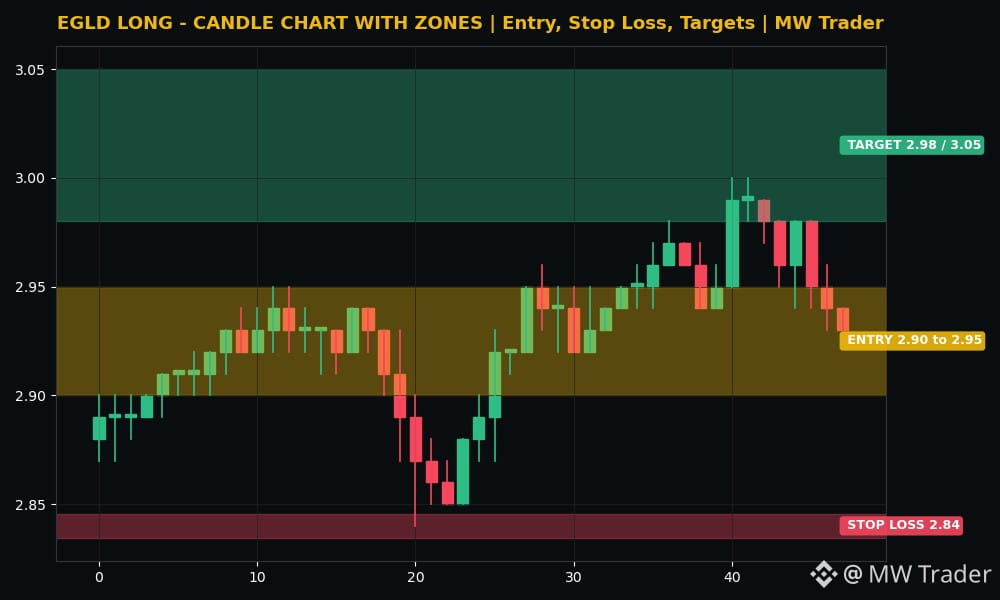
Direction: LONG
Entry zone: 2.90 to 2.95
Stop loss: 2.84
Target 1: 2.98
Target 2: 3.05
MultiversX is trading near 2.93 dollars, up 2.36 percent in 24 hours, inside a range of 2.84 to 3.00 dollars, and the recent closes show buyers holding the level steady, 2.96, then 2.98, then 2.95, then 2.94, then 2.93. 🟢 My reading is that EGLD is the steady climber in a red market, because it rose 2.36 percent while Bitcoin fell 4.10 percent in 24 hours, and five closes near 2.95 dollars show buyers stepping in at every dip. A long from the current zone, with a stop below 2.84, targets 2.98 first and then 3.05 if buyers break the range high. A drop below the stop kills the idea without debate.
Futures trading is risky. Trade small, use a stop loss, and do your own research. This is my reading, not a guaranteed signal.
Does EGLD break 2.98 first, or lose 2.84 first? 🤔
Follow for more trades.
#MultiversX #Crypto #FuturesTrading #TradingSignals
$EGLD #EGLD 🚀
Direction: LONG
Entry zone: 2.90 to 2.95
Stop loss: 2.84
Target 1: 2.98
Target 2: 3.05
MultiversX is trading near 2.93 dollars, up 2.36 percent in 24 hours, inside a range of 2.84 to 3.00 dollars, and the recent closes show buyers holding the level steady, 2.96, then 2.98, then 2.95, then 2.94, then 2.93. 🟢 My reading is that EGLD is the steady climber in a red market, because it rose 2.36 percent while Bitcoin fell 4.10 percent in 24 hours, and five closes near 2.95 dollars show buyers stepping in at every dip. A long from the current zone, with a stop below 2.84, targets 2.98 first and then 3.05 if buyers break the range high. A drop below the stop kills the idea without debate.
Futures trading is risky. Trade small, use a stop loss, and do your own research. This is my reading, not a guaranteed signal.
Does EGLD break 2.98 first, or lose 2.84 first? 🤔
Follow for more trades.
#MultiversX #Crypto #FuturesTrading #TradingSignals
Direction: LONG
Entry zone: 2.90 to 2.95
Stop loss: 2.84
Target 1: 2.98
Target 2: 3.05
MultiversX is trading near 2.93 dollars, up 2.36 percent in 24 hours, inside a range of 2.84 to 3.00 dollars, and the recent closes show buyers holding the level steady, 2.96, then 2.98, then 2.95, then 2.94, then 2.93. 🟢 My reading is that EGLD is the steady climber in a red market, because it rose 2.36 percent while Bitcoin fell 4.10 percent in 24 hours, and five closes near 2.95 dollars show buyers stepping in at every dip. A long from the current zone, with a stop below 2.84, targets 2.98 first and then 3.05 if buyers break the range high. A drop below the stop kills the idea without debate.
Futures trading is risky. Trade small, use a stop loss, and do your own research. This is my reading, not a guaranteed signal.
Does EGLD break 2.98 first, or lose 2.84 first? 🤔
Follow for more trades.
#MultiversX #Crypto #FuturesTrading #TradingSignals
7

$EGLD LONG
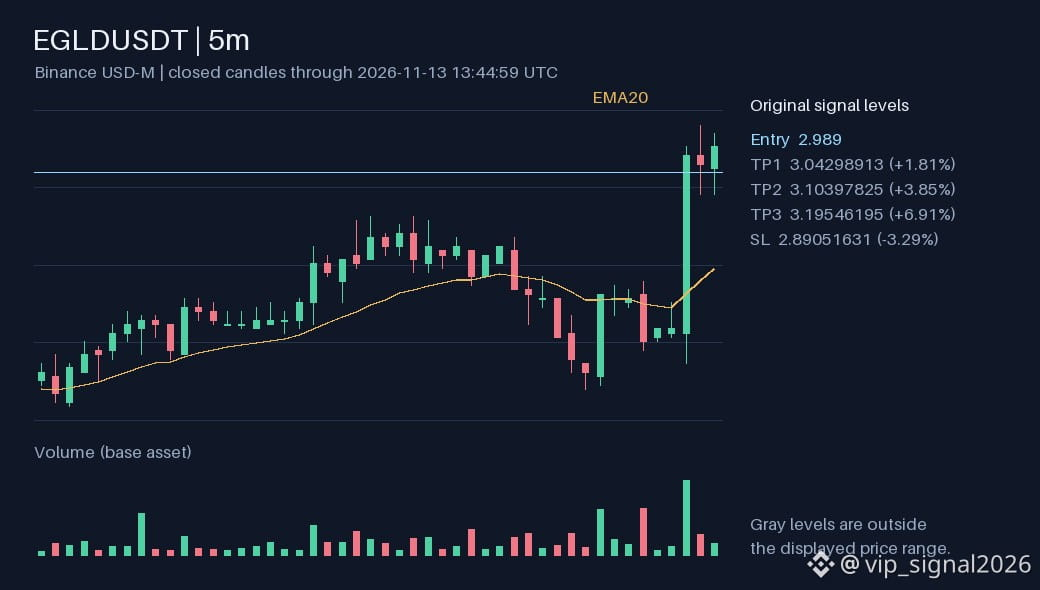
➡️Entry point: 2.989
💰Target 1: 3.04298913 (+1.81%)
💰Target 2: 3.10397825 (+3.85%)
💰Target 3: 3.19546195 (+6.91%)
⛔️Stop: 2.89051631 (-3.29%)
Momentum is testing the strength of the boundaries. Over 5m, the price is ≈0.1337%; over 15m, ≈1.4223%: both intervals are moving in the direction of LONG. The plan is conditional. The limit of this inference is where the surge fades.
⚠️ Trading involves risk. This material is not financial advice. You make the decision and are responsible for it. DYOR.
#EGLD #TechnicalAnalysis
$EGLD LONG
➡️Entry point: 2.989
💰Target 1: 3.04298913 (+1.81%)
💰Target 2: 3.10397825 (+3.85%)
💰Target 3: 3.19546195 (+6.91%)
⛔️Stop: 2.89051631 (-3.29%)
Momentum is testing the strength of the boundaries. Over 5m, the price is ≈0.1337%; over 15m, ≈1.4223%: both intervals are moving in the direction of LONG. The plan is conditional. The limit of this inference is where the surge fades.
⚠️ Trading involves risk. This material is not financial advice. You make the decision and are responsible for it. DYOR.
#EGLD #TechnicalAnalysis
➡️Entry point: 2.989
💰Target 1: 3.04298913 (+1.81%)
💰Target 2: 3.10397825 (+3.85%)
💰Target 3: 3.19546195 (+6.91%)
⛔️Stop: 2.89051631 (-3.29%)
Momentum is testing the strength of the boundaries. Over 5m, the price is ≈0.1337%; over 15m, ≈1.4223%: both intervals are moving in the direction of LONG. The plan is conditional. The limit of this inference is where the surge fades.
⚠️ Trading involves risk. This material is not financial advice. You make the decision and are responsible for it. DYOR.
#EGLD #TechnicalAnalysis
6

·
--
LONG $EGLD
Entry: $2.88-2.92
SL: $2.80
TP1: $3.01 | TP2: $3.06
Invalidation: 4H close below $2.80
EGLD is holding the $2.88 swing low after dipping to $2.85 this week, with RSI deeply oversold.
A bounce from support targets the recent $3.01-3.06 resistance zone.
Not financial advice. #EGLD #MultiversX #crypto
LONG $EGLD
Entry: $2.88-2.92
SL: $2.80
TP1: $3.01 | TP2: $3.06
Invalidation: 4H close below $2.80
EGLD is holding the $2.88 swing low after dipping to $2.85 this week, with RSI deeply oversold.
A bounce from support targets the recent $3.01-3.06 resistance zone.
Not financial advice. #EGLD #MultiversX #crypto
Entry: $2.88-2.92
SL: $2.80
TP1: $3.01 | TP2: $3.06
Invalidation: 4H close below $2.80
EGLD is holding the $2.88 swing low after dipping to $2.85 this week, with RSI deeply oversold.
A bounce from support targets the recent $3.01-3.06 resistance zone.
Not financial advice. #EGLD #MultiversX #crypto
91

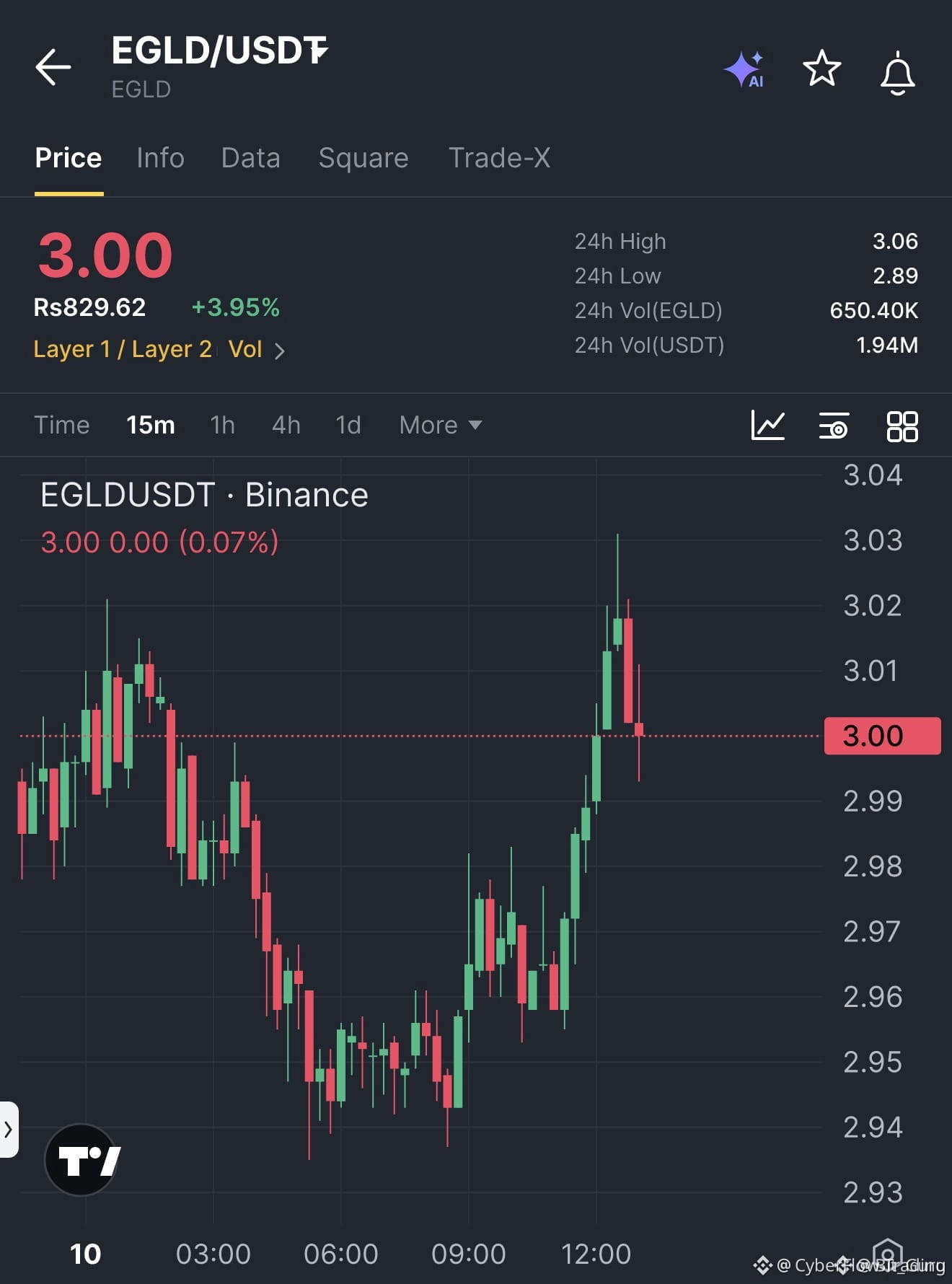
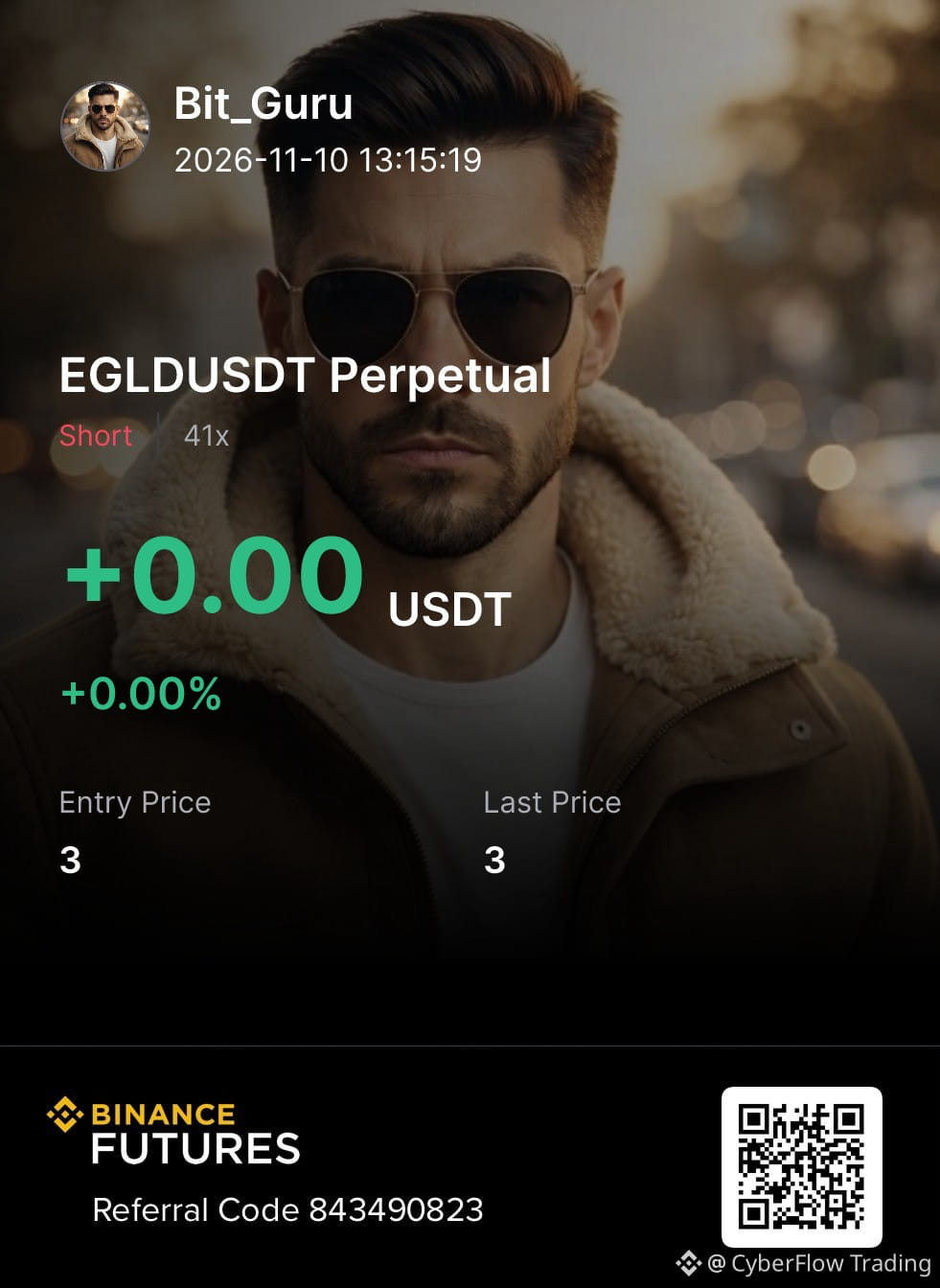
🔴 $EGLD BEARS STEP IN AS PREVIOUS CANDLE LOWS BREAK DOWN! 📉
Entry: 3 ⚡
Target: 2.868 🚀
Stop Loss: 3.033 ⚠️
Momentum is shifting as sellers fiercely crack the previous candle's low following a heavy upward push. 📉 This rejection opens a clean window for a tactical short setup right off the current handle. ⚡ Invalidation sits tightly just above resistance, keeping the risk profile razor-sharp while price drifts toward deeper liquidity pools. 🔍 Are you positioning for this downside continuation or waiting for a deeper flush? 👇
⚠️ Not financial advice. Always manage your risk. 🛡️
🏷️ #EGLD #ShortSetup #CryptoTrading #MarketPullback
🔴 📉
🔴 $EGLD BEARS STEP IN AS PREVIOUS CANDLE LOWS BREAK DOWN! 📉
Entry: 3 ⚡
Target: 2.868 🚀
Stop Loss: 3.033 ⚠️
Momentum is shifting as sellers fiercely crack the previous candle's low following a heavy upward push. 📉 This rejection opens a clean window for a tactical short setup right off the current handle. ⚡ Invalidation sits tightly just above resistance, keeping the risk profile razor-sharp while price drifts toward deeper liquidity pools. 🔍 Are you positioning for this downside continuation or waiting for a deeper flush? 👇
⚠️ Not financial advice. Always manage your risk. 🛡️
🏷️ #EGLD #ShortSetup #CryptoTrading #MarketPullback
🔴 📉
Entry: 3 ⚡
Target: 2.868 🚀
Stop Loss: 3.033 ⚠️
Momentum is shifting as sellers fiercely crack the previous candle's low following a heavy upward push. 📉 This rejection opens a clean window for a tactical short setup right off the current handle. ⚡ Invalidation sits tightly just above resistance, keeping the risk profile razor-sharp while price drifts toward deeper liquidity pools. 🔍 Are you positioning for this downside continuation or waiting for a deeper flush? 👇
⚠️ Not financial advice. Always manage your risk. 🛡️
🏷️ #EGLD #ShortSetup #CryptoTrading #MarketPullback
🔴 📉
11

·
--
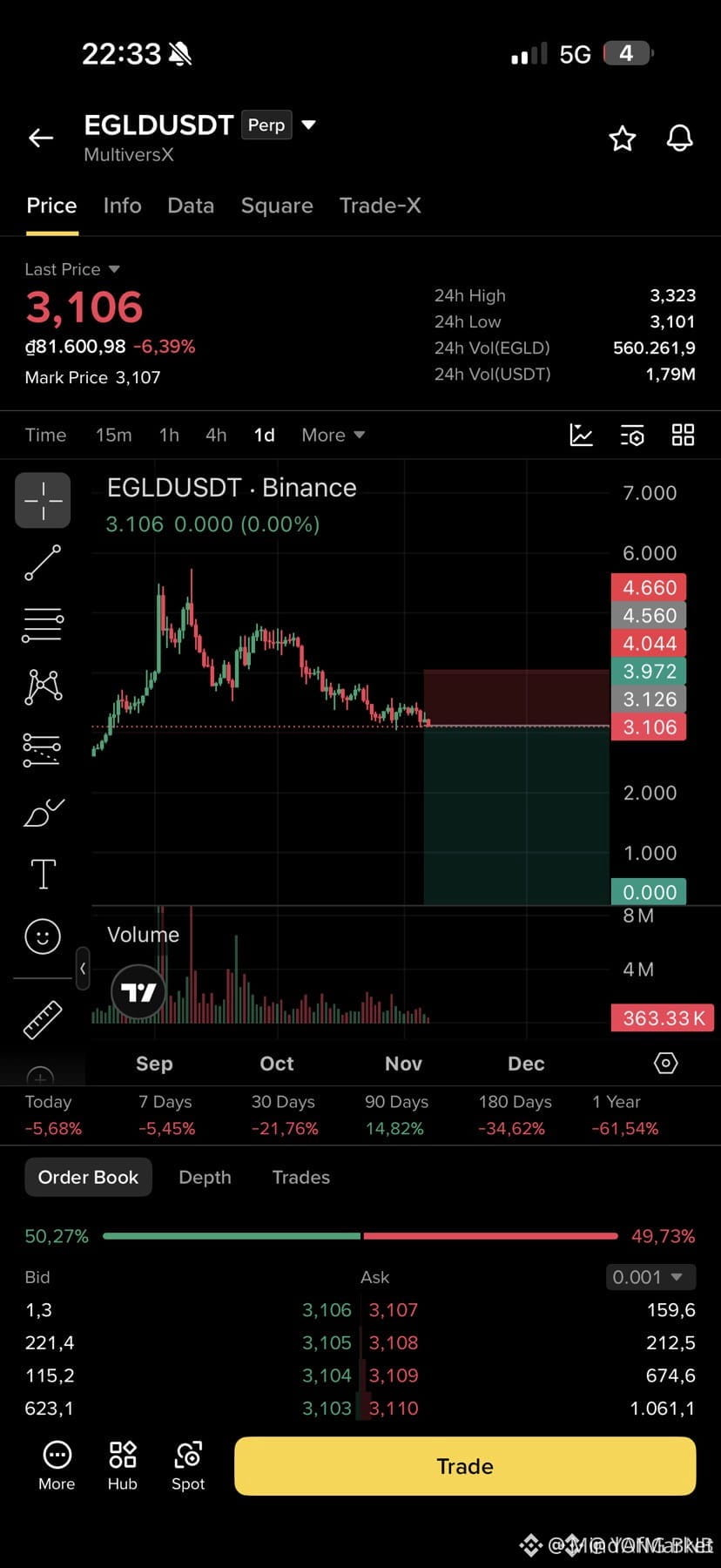
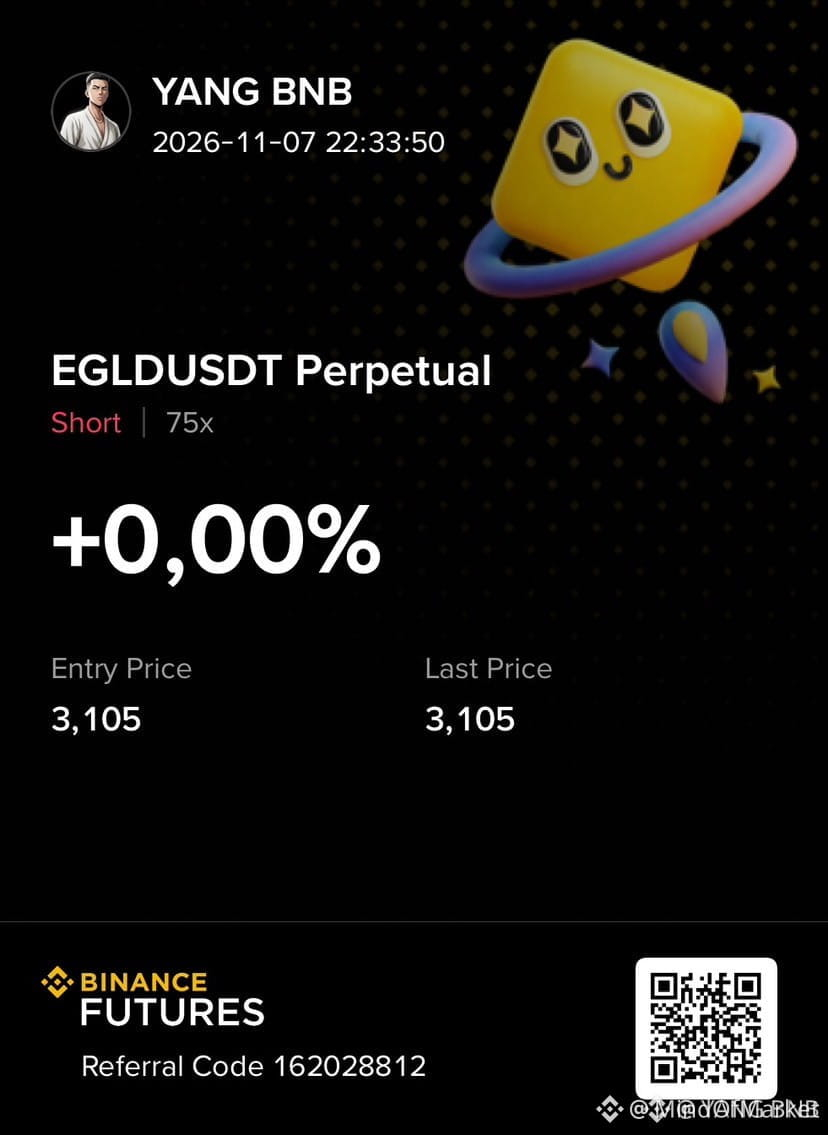
🚨 $EGLD FACING INTENSE DISTRIBUTION AS SMART MONEY TRAPS LATE BUYERS! 📉
Entry: 3.126 ⚡
Institutional order flow shows aggressive supply sitting right above the current range after a failed liquidity sweep of previous highs. Sellers are actively stepping in to defend this structural imbalance, leaving retail longs trapped against overhead resistance. 📊
Momentum indicators on the lower timeframes confirm fading buyer volume while delta metrics point to sustained distribution from institutional accounts. ⚡
💬 Are you positioning for this downside continuation or waiting for a deeper sweep? 👇
⚠️ Not financial advice. Always manage your risk. 🛡️
🏷️ #EGLD #ShortSetup #OrderFlow #MarketStructure
🦈 📉
🚨 $EGLD FACING INTENSE DISTRIBUTION AS SMART MONEY TRAPS LATE BUYERS! 📉
Entry: 3.126 ⚡
Institutional order flow shows aggressive supply sitting right above the current range after a failed liquidity sweep of previous highs. Sellers are actively stepping in to defend this structural imbalance, leaving retail longs trapped against overhead resistance. 📊
Momentum indicators on the lower timeframes confirm fading buyer volume while delta metrics point to sustained distribution from institutional accounts. ⚡
💬 Are you positioning for this downside continuation or waiting for a deeper sweep? 👇
⚠️ Not financial advice. Always manage your risk. 🛡️
🏷️ #EGLD #ShortSetup #OrderFlow #MarketStructure
🦈 📉
Entry: 3.126 ⚡
Institutional order flow shows aggressive supply sitting right above the current range after a failed liquidity sweep of previous highs. Sellers are actively stepping in to defend this structural imbalance, leaving retail longs trapped against overhead resistance. 📊
Momentum indicators on the lower timeframes confirm fading buyer volume while delta metrics point to sustained distribution from institutional accounts. ⚡
💬 Are you positioning for this downside continuation or waiting for a deeper sweep? 👇
⚠️ Not financial advice. Always manage your risk. 🛡️
🏷️ #EGLD #ShortSetup #OrderFlow #MarketStructure
🦈 📉
2

·
--
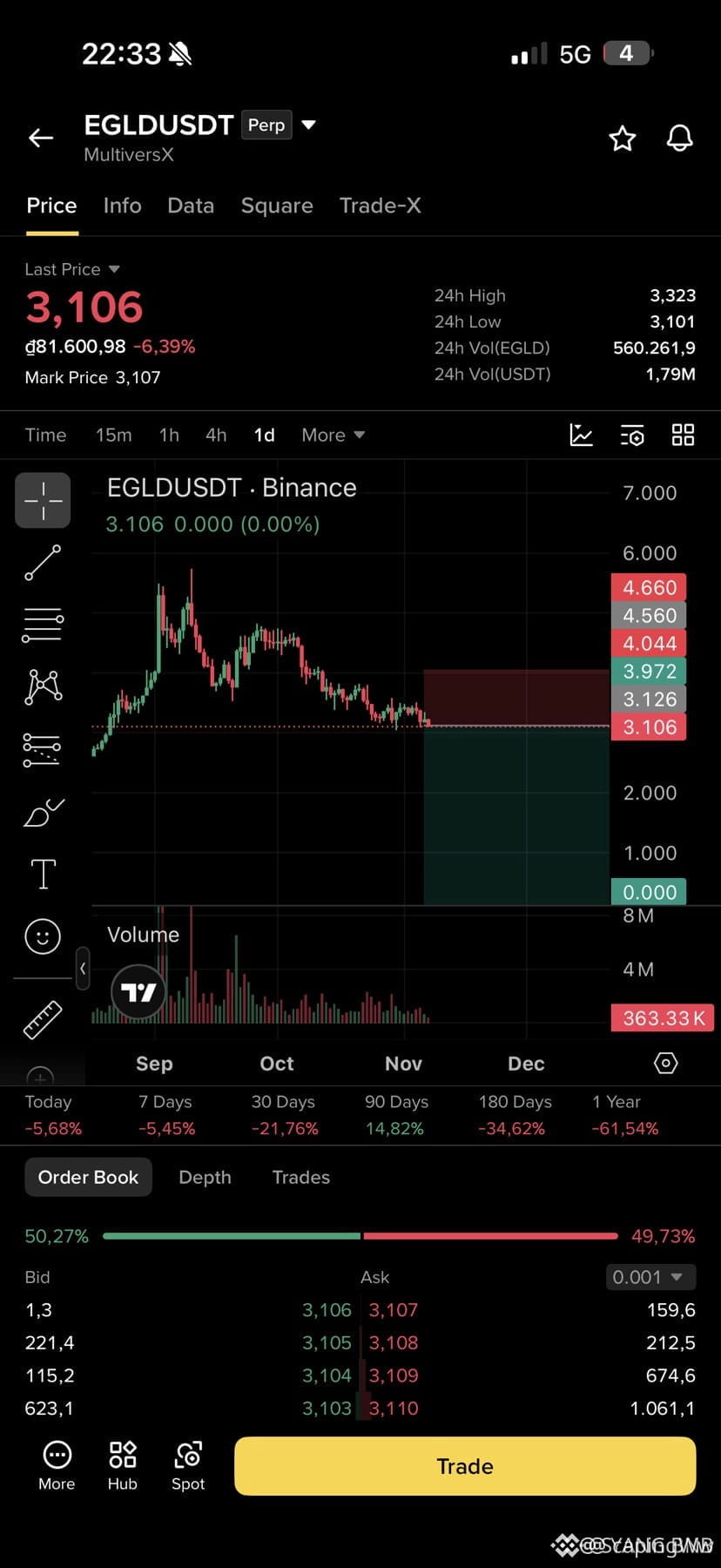
🔴 $EGLD LOSING CRITICAL GROUND AS BEARISH MOMENTUM ACCELERATES! 📉
Entry: 3.126 ⚡
Bears are stepping into the driver seat here as order flow shifts aggressively. Price action is breaking down past local structural support, leaving long positions trapped with nowhere to hide. 📊
Volume profiles show heavy distribution building up around these levels, confirming that smart money is aggressively defending the downside. 🌊 Expect volatility to expand as liquidity pools underneath get targeted by relentless sell pressure. ⚡
Are you riding this downside wave or waiting for a relief bounce before entering? 🤔
⚠️ Not financial advice. Always manage your risk. 🛡️
🏷️ #EGLD #ShortSetup #Bearish #Crypto
📉 🦈
🔴 $EGLD LOSING CRITICAL GROUND AS BEARISH MOMENTUM ACCELERATES! 📉
Entry: 3.126 ⚡
Bears are stepping into the driver seat here as order flow shifts aggressively. Price action is breaking down past local structural support, leaving long positions trapped with nowhere to hide. 📊
Volume profiles show heavy distribution building up around these levels, confirming that smart money is aggressively defending the downside. 🌊 Expect volatility to expand as liquidity pools underneath get targeted by relentless sell pressure. ⚡
Are you riding this downside wave or waiting for a relief bounce before entering? 🤔
⚠️ Not financial advice. Always manage your risk. 🛡️
🏷️ #EGLD #ShortSetup #Bearish #Crypto
📉 🦈
Entry: 3.126 ⚡
Bears are stepping into the driver seat here as order flow shifts aggressively. Price action is breaking down past local structural support, leaving long positions trapped with nowhere to hide. 📊
Volume profiles show heavy distribution building up around these levels, confirming that smart money is aggressively defending the downside. 🌊 Expect volatility to expand as liquidity pools underneath get targeted by relentless sell pressure. ⚡
Are you riding this downside wave or waiting for a relief bounce before entering? 🤔
⚠️ Not financial advice. Always manage your risk. 🛡️
🏷️ #EGLD #ShortSetup #Bearish #Crypto
📉 🦈
2

·
--
⚡ $EGLD PREPARES FOR MOMENTUM EXPANSION AFTER CLEAN ACCUMULATION SWEEP! 🟢
Entry: 3.421 - 3.428 ⚡
Target: 3.577 / 3.682 / 3.799 🚀
Stop Loss: 3.288 ⚠️
$EGLD is establishing a firm floor right above key local demand, absorbing seller exhaustion as buyers quietly stack bids. 📊 Volume compression inside this entry zone signals a volatility squeeze ready to resolve upward.
With order flow shifting net-positive and liquidity resting above the recent swing highs, the path of least resistance points toward our expansion targets. 💡 Defending the 3.288 invalidation level keeps this bullish structure pristine. 💬 Are you bidding this demand zone or waiting for the momentum trigger? 👇
⚠️ Not financial advice. Always manage your risk. 🛡️
🏷️ #EGLD #LongSetup #Breakout #Crypto
🔥 💎
⚡ $EGLD PREPARES FOR MOMENTUM EXPANSION AFTER CLEAN ACCUMULATION SWEEP! 🟢
Entry: 3.421 - 3.428 ⚡
Target: 3.577 / 3.682 / 3.799 🚀
Stop Loss: 3.288 ⚠️
$EGLD is establishing a firm floor right above key local demand, absorbing seller exhaustion as buyers quietly stack bids. 📊 Volume compression inside this entry zone signals a volatility squeeze ready to resolve upward.
With order flow shifting net-positive and liquidity resting above the recent swing highs, the path of least resistance points toward our expansion targets. 💡 Defending the 3.288 invalidation level keeps this bullish structure pristine. 💬 Are you bidding this demand zone or waiting for the momentum trigger? 👇
⚠️ Not financial advice. Always manage your risk. 🛡️
🏷️ #EGLD #LongSetup #Breakout #Crypto
🔥 💎
Entry: 3.421 - 3.428 ⚡
Target: 3.577 / 3.682 / 3.799 🚀
Stop Loss: 3.288 ⚠️
$EGLD is establishing a firm floor right above key local demand, absorbing seller exhaustion as buyers quietly stack bids. 📊 Volume compression inside this entry zone signals a volatility squeeze ready to resolve upward.
With order flow shifting net-positive and liquidity resting above the recent swing highs, the path of least resistance points toward our expansion targets. 💡 Defending the 3.288 invalidation level keeps this bullish structure pristine. 💬 Are you bidding this demand zone or waiting for the momentum trigger? 👇
⚠️ Not financial advice. Always manage your risk. 🛡️
🏷️ #EGLD #LongSetup #Breakout #Crypto
🔥 💎
9

📈 $EGLD RECLAIMING MOMENTUM AS BUYERS STEP IN FOR NEXT EXPANSION! 💥
Entry: $3.32 - $3.38 ⚡
Target: $3.48 - $3.72 🚀
Stop Loss: $3.22 ⚠️
Buyers are steadily absorbing selling volume across the demand floor at $3.32. 📊 Price action is carving out a clean higher-low structure as momentum metrics turn upward on the intraday chart. ⚡
💡 If bid volume keeps accelerating through resistance, a swift expansion toward the upper liquidity targets becomes high probability. We are watching similar rotation dynamics play out across altcoins like $ZEC and $PORTAL . 🔍
👇 Are you locking in positions at support or waiting for breakout confirmation?
⚠️ Not financial advice. Always manage your risk. 🛡️
🏷️ #EGLD #LongSetup #Crypto #Altcoins #Trading
🔥 💎
📈 $EGLD RECLAIMING MOMENTUM AS BUYERS STEP IN FOR NEXT EXPANSION! 💥
Entry: $3.32 - $3.38 ⚡
Target: $3.48 - $3.72 🚀
Stop Loss: $3.22 ⚠️
Buyers are steadily absorbing selling volume across the demand floor at $3.32. 📊 Price action is carving out a clean higher-low structure as momentum metrics turn upward on the intraday chart. ⚡
💡 If bid volume keeps accelerating through resistance, a swift expansion toward the upper liquidity targets becomes high probability. We are watching similar rotation dynamics play out across altcoins like $ZEC and $PORTAL . 🔍
👇 Are you locking in positions at support or waiting for breakout confirmation?
⚠️ Not financial advice. Always manage your risk. 🛡️
🏷️ #EGLD #LongSetup #Crypto #Altcoins #Trading
🔥 💎
Entry: $3.32 - $3.38 ⚡
Target: $3.48 - $3.72 🚀
Stop Loss: $3.22 ⚠️
Buyers are steadily absorbing selling volume across the demand floor at $3.32. 📊 Price action is carving out a clean higher-low structure as momentum metrics turn upward on the intraday chart. ⚡
💡 If bid volume keeps accelerating through resistance, a swift expansion toward the upper liquidity targets becomes high probability. We are watching similar rotation dynamics play out across altcoins like $ZEC and $PORTAL . 🔍
👇 Are you locking in positions at support or waiting for breakout confirmation?
⚠️ Not financial advice. Always manage your risk. 🛡️
🏷️ #EGLD #LongSetup #Crypto #Altcoins #Trading
🔥 💎
7
🔴 $EGLD RALLY HITS WALL AT $3.60 RESISTANCE AS SMART MONEY PREPARES SHORT PULLBACK! 📉
Entry: 3.42 - 3.52 🔥
Target: 3.32 - 3.05 🎯
Stop Loss: 3.62 🛑
After testing the major $3.60 supply zone, buyers are losing momentum as order flow dries up right at overhead resistance. 🦈 Smart money is eyeing this clean rejection closely, positioning for a downside rotation across altcoins while market leaders like $ZEC and $MORPHO watch for broader cues.
📌 Failure to hold upper bounds opens up fluid target runs down toward the deeper $3.05 liquidity pool. 💡 Protecting capital around overhead supply remains key before seller volume picks up pace. 💬 Are you fading this rejection into lower support or waiting for a deeper sweep? 👇
⚠️ Not financial advice. Always manage your risk. 🛡️
🏷️ #EGLD #ShortSetup #Crypto #ZEC #MORPHO
🎯 📉
🔴 $EGLD RALLY HITS WALL AT $3.60 RESISTANCE AS SMART MONEY PREPARES SHORT PULLBACK! 📉
Entry: 3.42 - 3.52 🔥
Target: 3.32 - 3.05 🎯
Stop Loss: 3.62 🛑
After testing the major $3.60 supply zone, buyers are losing momentum as order flow dries up right at overhead resistance. 🦈 Smart money is eyeing this clean rejection closely, positioning for a downside rotation across altcoins while market leaders like $ZEC and $MORPHO watch for broader cues.
📌 Failure to hold upper bounds opens up fluid target runs down toward the deeper $3.05 liquidity pool. 💡 Protecting capital around overhead supply remains key before seller volume picks up pace. 💬 Are you fading this rejection into lower support or waiting for a deeper sweep? 👇
⚠️ Not financial advice. Always manage your risk. 🛡️
🏷️ #EGLD #ShortSetup #Crypto #ZEC #MORPHO
🎯 📉
Entry: 3.42 - 3.52 🔥
Target: 3.32 - 3.05 🎯
Stop Loss: 3.62 🛑
After testing the major $3.60 supply zone, buyers are losing momentum as order flow dries up right at overhead resistance. 🦈 Smart money is eyeing this clean rejection closely, positioning for a downside rotation across altcoins while market leaders like $ZEC and $MORPHO watch for broader cues.
📌 Failure to hold upper bounds opens up fluid target runs down toward the deeper $3.05 liquidity pool. 💡 Protecting capital around overhead supply remains key before seller volume picks up pace. 💬 Are you fading this rejection into lower support or waiting for a deeper sweep? 👇
⚠️ Not financial advice. Always manage your risk. 🛡️
🏷️ #EGLD #ShortSetup #Crypto #ZEC #MORPHO
🎯 📉
6


·
--
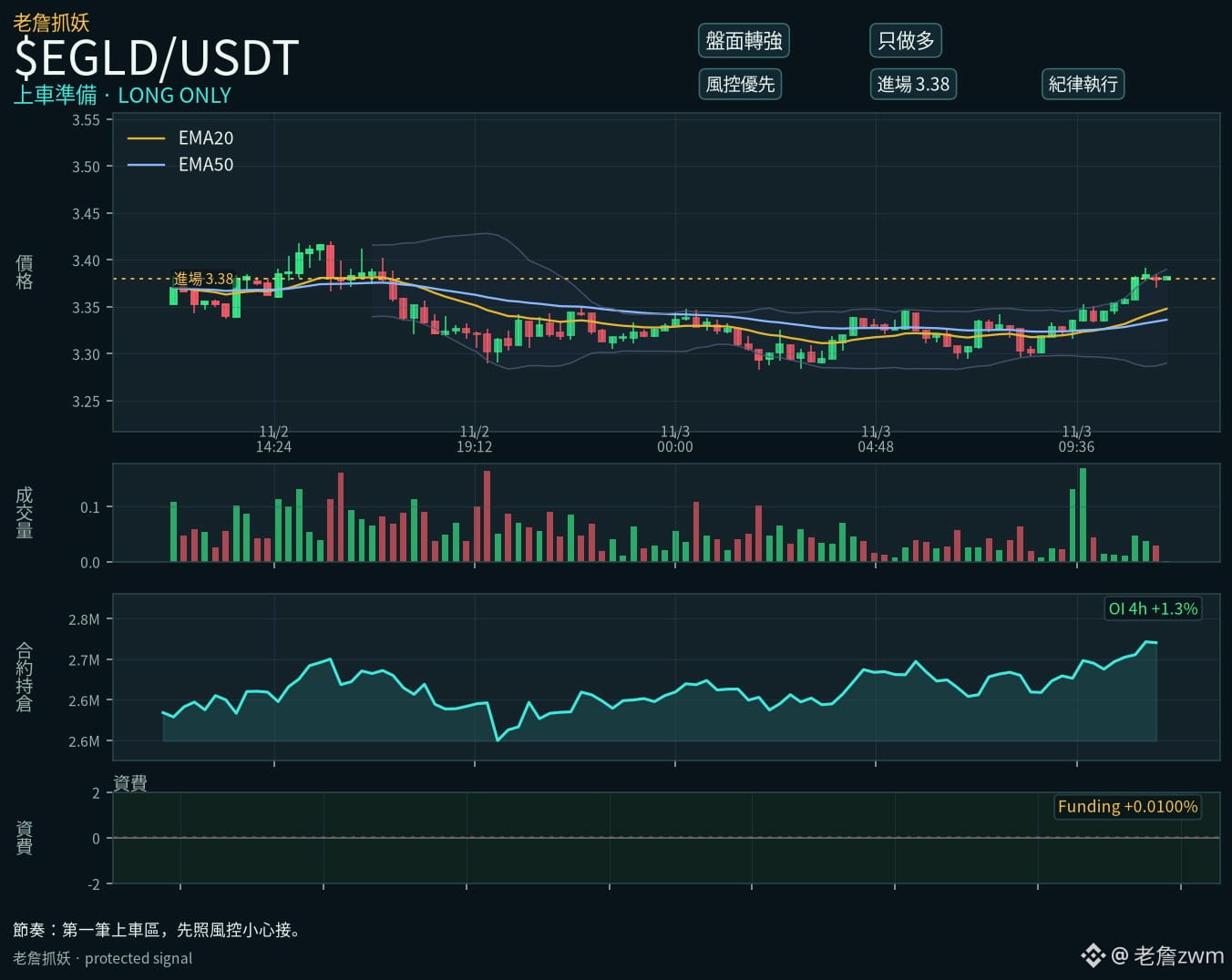
$EGLD: Starting from a low level, getting ready to ride. But the broader market is weak and could drag it down.
My approach: The broader market is weak, so I’m cutting my position in half. Stop-loss at 2.873, first target at 3.718; take 30% off the table when it gets there.
#EGLD #妖幣 #Perpetual Contract
Manage your position size and set a stop-loss
$EGLD : Starting from a low level, getting ready to ride. But the broader market is weak and could drag it down.
My approach: The broader market is weak, so I’m cutting my position in half. Stop-loss at 2.873, first target at 3.718; take 30% off the table when it gets there.
#EGLD #妖幣 #Perpetual Contract
Manage your position size and set a stop-loss
My approach: The broader market is weak, so I’m cutting my position in half. Stop-loss at 2.873, first target at 3.718; take 30% off the table when it gets there.
#EGLD #妖幣 #Perpetual Contract
Manage your position size and set a stop-loss
77

·
--
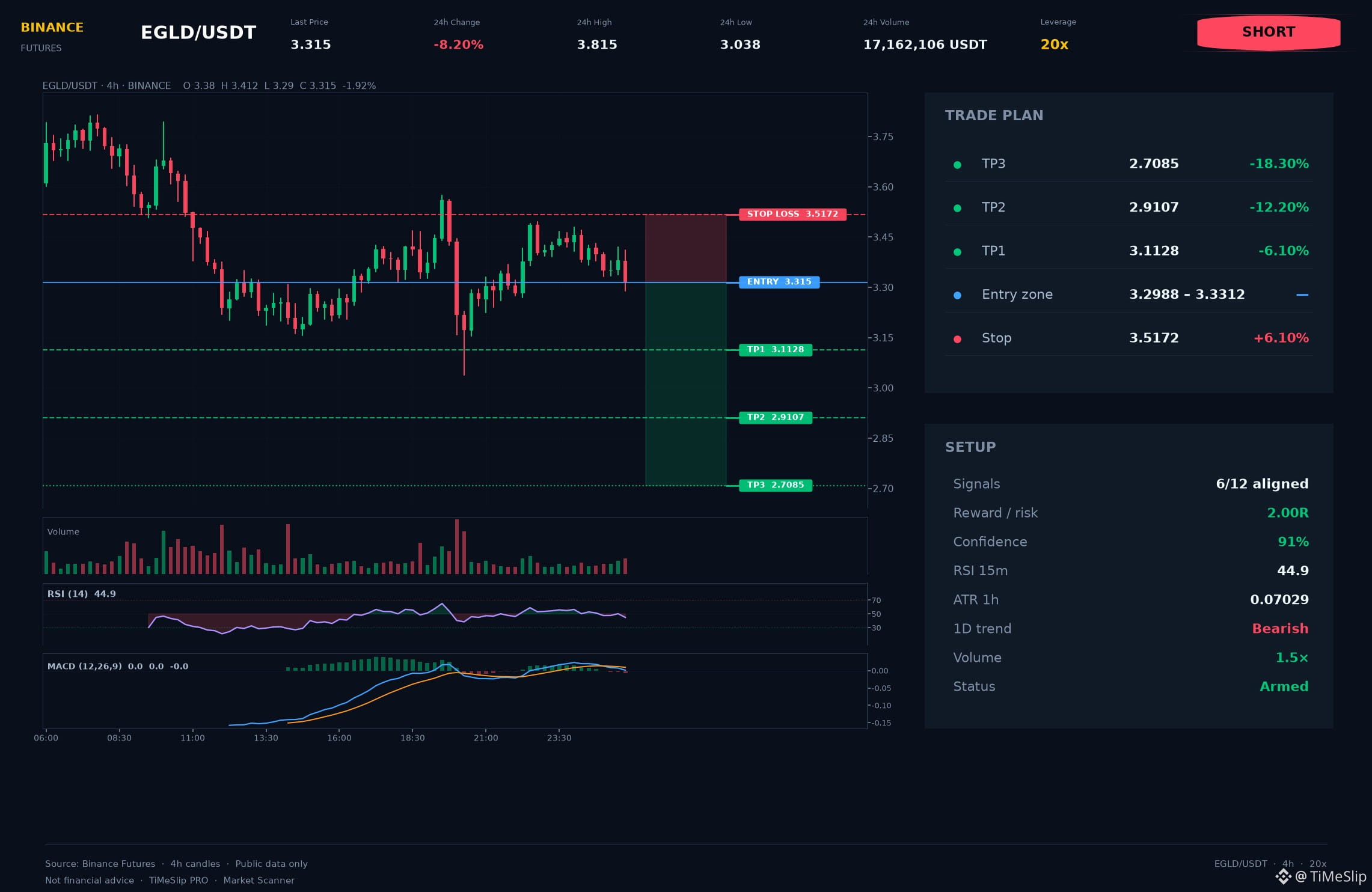
$EGLD 🔴 (SELL)
ENTRY: 3.3150
STOP: 3.5172
• TP1: 3.1128
• TP2: 2.9107
• TP3: 2.7085
💡 Tip: after reaching TP1, move the stop to break-even.
On EGLD (4h), I see a cautious short: retest confirmed; the price should remain below the level.
Volume slightly above normal (1.5×).
📚 Order Flow: order book imbalance +6.1%; aggressive buys 27.9%. Overall, the flow supports the signal direction.
Sellers broke through 3.3780 and left a confirmed retest. Risk management: 6.10%. Alignment: 8h, 12h, 1d, 20d, 1w, 1M. ATR(14): 0.07029.
Setup score: 91/100. A professional approach requires a firm stop-loss. ⚠️ High risk at stop (6.10%): reduce position size.
📲 Follow us for in-depth analysis and selected setups!
Crypto trading involves a high risk of losing capital. Always use protective stops.
#EGLD #EGLDNews $EGLD 👈 Tap to trade
$EGLD 🔴 (SELL)
ENTRY: 3.3150
STOP: 3.5172
• TP1: 3.1128
• TP2: 2.9107
• TP3: 2.7085
💡 Tip: after reaching TP1, move the stop to break-even.
On EGLD (4h), I see a cautious short: retest confirmed; the price should remain below the level.
Volume slightly above normal (1.5×).
📚 Order Flow: order book imbalance +6.1%; aggressive buys 27.9%. Overall, the flow supports the signal direction.
Sellers broke through 3.3780 and left a confirmed retest. Risk management: 6.10%. Alignment: 8h, 12h, 1d, 20d, 1w, 1M. ATR(14): 0.07029.
Setup score: 91/100. A professional approach requires a firm stop-loss. ⚠️ High risk at stop (6.10%): reduce position size.
📲 Follow us for in-depth analysis and selected setups!
Crypto trading involves a high risk of losing capital. Always use protective stops.
#EGLD #EGLDNews $EGLD 👈 Tap to trade
ENTRY: 3.3150
STOP: 3.5172
• TP1: 3.1128
• TP2: 2.9107
• TP3: 2.7085
💡 Tip: after reaching TP1, move the stop to break-even.
On EGLD (4h), I see a cautious short: retest confirmed; the price should remain below the level.
Volume slightly above normal (1.5×).
📚 Order Flow: order book imbalance +6.1%; aggressive buys 27.9%. Overall, the flow supports the signal direction.
Sellers broke through 3.3780 and left a confirmed retest. Risk management: 6.10%. Alignment: 8h, 12h, 1d, 20d, 1w, 1M. ATR(14): 0.07029.
Setup score: 91/100. A professional approach requires a firm stop-loss. ⚠️ High risk at stop (6.10%): reduce position size.
📲 Follow us for in-depth analysis and selected setups!
Crypto trading involves a high risk of losing capital. Always use protective stops.
#EGLD #EGLDNews $EGLD 👈 Tap to trade
30

·
--
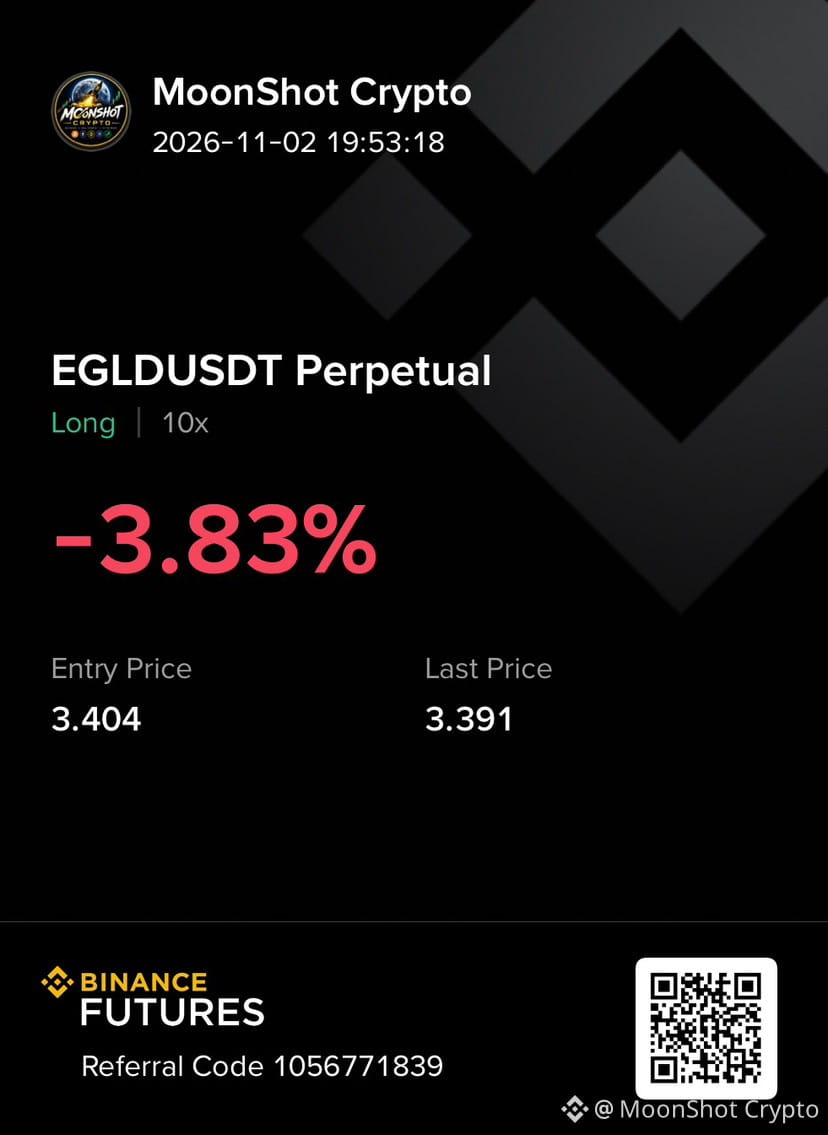
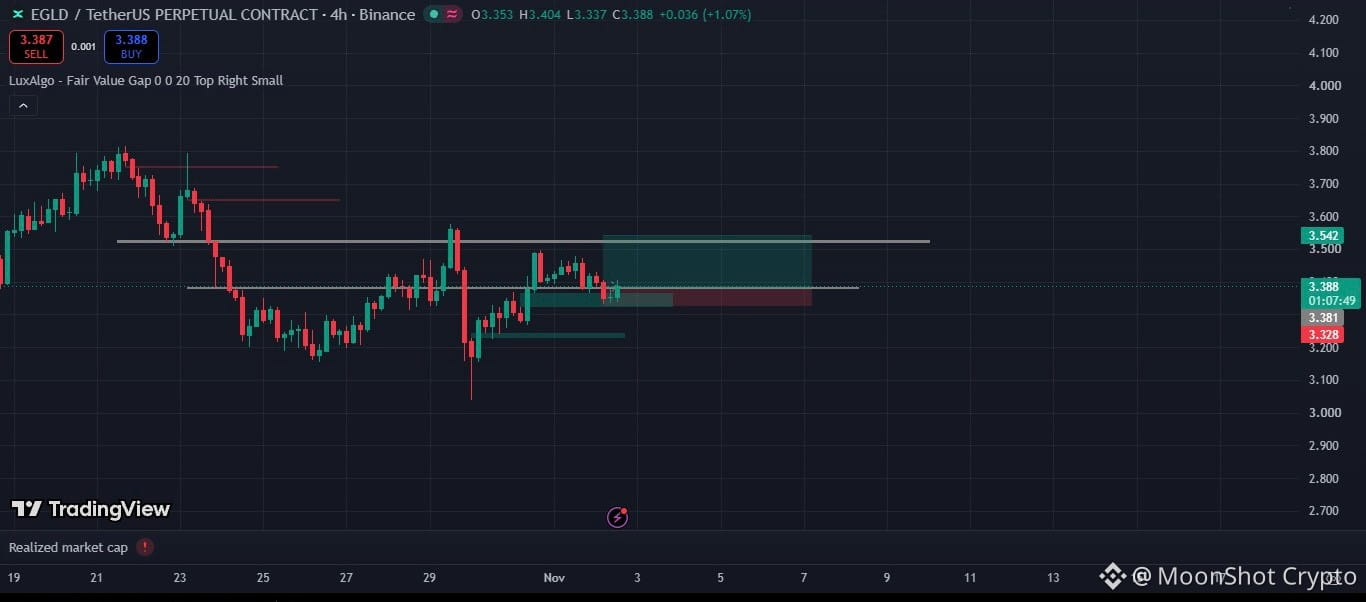
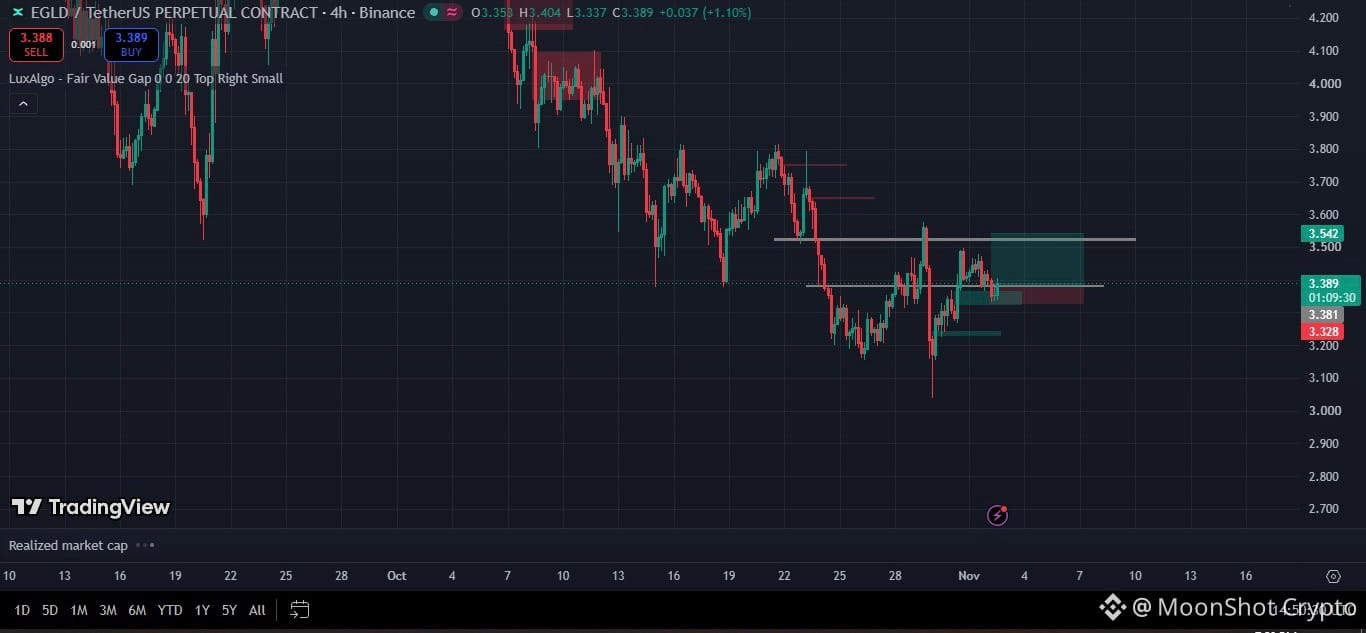
Bullish
$EGLD – LONG
Pair: $EGLD USDT
Direction: LONG 🟢
Timeframe: 4H
Entry Zone: 3.38 – 3.40
🎯 Take Profit Targets
- TP1: 3.42
- TP2: 3.48
- TP3: 3.54
🛑 Stop Loss: 3.328
Risk management is important. Wait for confirmation and avoid overleveraging.
#EGLD #EGLDUSDT #Binance #CryptoTrading #FuturesTrading
{future}(EGLDUSDT)
$EGLD – LONG
Pair: $EGLD USDT
Direction: LONG 🟢
Timeframe: 4H
Entry Zone: 3.38 – 3.40
🎯 Take Profit Targets
- TP1: 3.42
- TP2: 3.48
- TP3: 3.54
🛑 Stop Loss: 3.328
Risk management is important. Wait for confirmation and avoid overleveraging.
#EGLD #EGLDUSDT #Binance #CryptoTrading #FuturesTrading
Pair: $EGLD USDT
Direction: LONG 🟢
Timeframe: 4H
Entry Zone: 3.38 – 3.40
🎯 Take Profit Targets
- TP1: 3.42
- TP2: 3.48
- TP3: 3.54
🛑 Stop Loss: 3.328
Risk management is important. Wait for confirmation and avoid overleveraging.
#EGLD #EGLDUSDT #Binance #CryptoTrading #FuturesTrading
1
2
190
·
--
🔴 $EGLD HEAVY SELLER DISTRIBUTION SPOTTED AT RESISTANCE AS BUYERS FADE FAST! 📉
Entry: 3.40459 - 3.41141 ⚡
Target: 3.37954 - 3.33401 🎯
Stop Loss: 3.60300 ⚠️
Order flow is tilting heavily toward the bears as $EGLD struggles to absorb heavy ask walls around the 3.41 zone. 📊 Aggressive market sellers are pressing hard, turning faint bounces into high-probability re-entry windows for short setups.
With liquidity thinning out underneath, a clean drop through immediate support opens the door for swift momentum toward lower targets. 🔻 The invalidation line is sharp and clean, leaving sellers in complete control of this market structure. 💬 Are you riding this move down or looking for buyers to defend lower demand? 👇
⚠️ Not financial advice. Always manage your risk. 🛡️
🏷️ #EGLD #ShortSetup #Crypto #Bearish #Trading
🔻 🐻
🔴 $EGLD HEAVY SELLER DISTRIBUTION SPOTTED AT RESISTANCE AS BUYERS FADE FAST! 📉
Entry: 3.40459 - 3.41141 ⚡
Target: 3.37954 - 3.33401 🎯
Stop Loss: 3.60300 ⚠️
Order flow is tilting heavily toward the bears as $EGLD struggles to absorb heavy ask walls around the 3.41 zone. 📊 Aggressive market sellers are pressing hard, turning faint bounces into high-probability re-entry windows for short setups.
With liquidity thinning out underneath, a clean drop through immediate support opens the door for swift momentum toward lower targets. 🔻 The invalidation line is sharp and clean, leaving sellers in complete control of this market structure. 💬 Are you riding this move down or looking for buyers to defend lower demand? 👇
⚠️ Not financial advice. Always manage your risk. 🛡️
🏷️ #EGLD #ShortSetup #Crypto #Bearish #Trading
🔻 🐻
Entry: 3.40459 - 3.41141 ⚡
Target: 3.37954 - 3.33401 🎯
Stop Loss: 3.60300 ⚠️
Order flow is tilting heavily toward the bears as $EGLD struggles to absorb heavy ask walls around the 3.41 zone. 📊 Aggressive market sellers are pressing hard, turning faint bounces into high-probability re-entry windows for short setups.
With liquidity thinning out underneath, a clean drop through immediate support opens the door for swift momentum toward lower targets. 🔻 The invalidation line is sharp and clean, leaving sellers in complete control of this market structure. 💬 Are you riding this move down or looking for buyers to defend lower demand? 👇
⚠️ Not financial advice. Always manage your risk. 🛡️
🏷️ #EGLD #ShortSetup #Crypto #Bearish #Trading
🔻 🐻
29
⚡ $EGLD RECLAIMS THE 3.50 KEY ZONE AS BUYERS PREPARE FOR NEXT LEG UP! 📈
Entry: 3.54 - 3.57 ⚡
Target: 3.60 - 3.72 🚀
Stop Loss: 3.48 ⚠️
Bulls have successfully reclaimed the critical 3.50 handle, building a clean short-term market structure with steadily rising momentum. 📊 Order flow is actively absorbing sell-side liquidity just below local resistance.
A sustained push above 3.57 provides the clear green light to trigger expansion toward the 3.65 and 3.72 target zones. 💡 With seller exhaustion showing on lower timeframes, the path of least resistance tilts firmly to the upside.
💬 Are you taking the bid on this momentum reclaim or waiting for a deeper retest? 👇
⚠️ Not financial advice. Always manage your risk. 🛡️
🏷️ #EGLD #LongSetup #Breakout #Altcoins #Crypto
🔥 💎
⚡ $EGLD RECLAIMS THE 3.50 KEY ZONE AS BUYERS PREPARE FOR NEXT LEG UP! 📈
Entry: 3.54 - 3.57 ⚡
Target: 3.60 - 3.72 🚀
Stop Loss: 3.48 ⚠️
Bulls have successfully reclaimed the critical 3.50 handle, building a clean short-term market structure with steadily rising momentum. 📊 Order flow is actively absorbing sell-side liquidity just below local resistance.
A sustained push above 3.57 provides the clear green light to trigger expansion toward the 3.65 and 3.72 target zones. 💡 With seller exhaustion showing on lower timeframes, the path of least resistance tilts firmly to the upside.
💬 Are you taking the bid on this momentum reclaim or waiting for a deeper retest? 👇
⚠️ Not financial advice. Always manage your risk. 🛡️
🏷️ #EGLD #LongSetup #Breakout #Altcoins #Crypto
🔥 💎
Entry: 3.54 - 3.57 ⚡
Target: 3.60 - 3.72 🚀
Stop Loss: 3.48 ⚠️
Bulls have successfully reclaimed the critical 3.50 handle, building a clean short-term market structure with steadily rising momentum. 📊 Order flow is actively absorbing sell-side liquidity just below local resistance.
A sustained push above 3.57 provides the clear green light to trigger expansion toward the 3.65 and 3.72 target zones. 💡 With seller exhaustion showing on lower timeframes, the path of least resistance tilts firmly to the upside.
💬 Are you taking the bid on this momentum reclaim or waiting for a deeper retest? 👇
⚠️ Not financial advice. Always manage your risk. 🛡️
🏷️ #EGLD #LongSetup #Breakout #Altcoins #Crypto
🔥 💎
17
🚨 $EGLD SWEPT LIQUIDITY AT 3.6 AND IS READY TO PRINT A MASSIVE VERTICAL BREAKOUT! 💥
Entry: 3.68 - 3.78 ⚡
Target: 3.90 - 4.20 🚀
Stop Loss: 3.58 ⚠️
📌 $EGLD just executed a textbook liquidity sweep through the 3.6 - 3.7 zone and is now aggressively flexing above the 3.8 handle. ⚡ Market structure is shifting rapidly out of consolidation, mirroring the exact setup that sparked its last vertical leg up.
📊 As long as buyers defend 3.8, order flow points to thin overhead resistance and rapid acceleration toward upper targets. 💬 Are you locking in your bids on this reclaim or waiting for late confirmation? 👇
⚠️ Not financial advice. Always manage your risk. 🛡️
🏷️ #EGLD #LongSetup #Breakout #Crypto
🔥 ⚡
🚨 $EGLD SWEPT LIQUIDITY AT 3.6 AND IS READY TO PRINT A MASSIVE VERTICAL BREAKOUT! 💥
Entry: 3.68 - 3.78 ⚡
Target: 3.90 - 4.20 🚀
Stop Loss: 3.58 ⚠️
📌 $EGLD just executed a textbook liquidity sweep through the 3.6 - 3.7 zone and is now aggressively flexing above the 3.8 handle. ⚡ Market structure is shifting rapidly out of consolidation, mirroring the exact setup that sparked its last vertical leg up.
📊 As long as buyers defend 3.8, order flow points to thin overhead resistance and rapid acceleration toward upper targets. 💬 Are you locking in your bids on this reclaim or waiting for late confirmation? 👇
⚠️ Not financial advice. Always manage your risk. 🛡️
🏷️ #EGLD #LongSetup #Breakout #Crypto
🔥 ⚡
Entry: 3.68 - 3.78 ⚡
Target: 3.90 - 4.20 🚀
Stop Loss: 3.58 ⚠️
📌 $EGLD just executed a textbook liquidity sweep through the 3.6 - 3.7 zone and is now aggressively flexing above the 3.8 handle. ⚡ Market structure is shifting rapidly out of consolidation, mirroring the exact setup that sparked its last vertical leg up.
📊 As long as buyers defend 3.8, order flow points to thin overhead resistance and rapid acceleration toward upper targets. 💬 Are you locking in your bids on this reclaim or waiting for late confirmation? 👇
⚠️ Not financial advice. Always manage your risk. 🛡️
🏷️ #EGLD #LongSetup #Breakout #Crypto
🔥 ⚡
12
·
--
⚡ $EGLD PREPARES FOR AN EXPLOSIVE BREAKOUT AS BUYERS BID UP TOWARD RESISTANCE! 🎯
Entry: 3.78 - 3.83 ⚡
Target: 3.92, 4.00, 4.15 🚀
Stop Loss: 3.64 ⚠️
$EGLD is grinding right against session highs as aggressive bids keep absorbing overhead supply. A clear push through 3.84 opens up clean air for momentum traders to drive price straight into the 4.00 zone. 📊
Structure remains pristine with buyers establishing a firm floor and driving higher lows on each retest. 💡 If volume expands on the trigger level, the expansion toward upper targets could unfold fast. 💬 Are you positioning early inside the entry zone or waiting for 3.84 to flip into support? 👇
⚠️ Not financial advice. Always manage your risk. 🛡️
🏷️ #EGLD #LongSetup #Breakout #Crypto
🔥 ⚡
⚡ $EGLD PREPARES FOR AN EXPLOSIVE BREAKOUT AS BUYERS BID UP TOWARD RESISTANCE! 🎯
Entry: 3.78 - 3.83 ⚡
Target: 3.92, 4.00, 4.15 🚀
Stop Loss: 3.64 ⚠️
$EGLD is grinding right against session highs as aggressive bids keep absorbing overhead supply. A clear push through 3.84 opens up clean air for momentum traders to drive price straight into the 4.00 zone. 📊
Structure remains pristine with buyers establishing a firm floor and driving higher lows on each retest. 💡 If volume expands on the trigger level, the expansion toward upper targets could unfold fast. 💬 Are you positioning early inside the entry zone or waiting for 3.84 to flip into support? 👇
⚠️ Not financial advice. Always manage your risk. 🛡️
🏷️ #EGLD #LongSetup #Breakout #Crypto
🔥 ⚡
Entry: 3.78 - 3.83 ⚡
Target: 3.92, 4.00, 4.15 🚀
Stop Loss: 3.64 ⚠️
$EGLD is grinding right against session highs as aggressive bids keep absorbing overhead supply. A clear push through 3.84 opens up clean air for momentum traders to drive price straight into the 4.00 zone. 📊
Structure remains pristine with buyers establishing a firm floor and driving higher lows on each retest. 💡 If volume expands on the trigger level, the expansion toward upper targets could unfold fast. 💬 Are you positioning early inside the entry zone or waiting for 3.84 to flip into support? 👇
⚠️ Not financial advice. Always manage your risk. 🛡️
🏷️ #EGLD #LongSetup #Breakout #Crypto
🔥 ⚡
23
Log in to explore more content
Join global crypto users on Binance Square
⚡️ Get latest and useful information about crypto.
💬 Trusted by the world’s largest crypto exchange.
👍 Discover real insights from verified creators.
Email / Phone number
Trending Topics
1
#AnthropicToDebutAfter$83IPOPricing
15,333 views
188 Discussing
2
#BTCRemainsUnderPressureAfterHawkishFOMCMinutes
57,463 views
1,481 Discussing
3
#NvidiaBoardReportedlySplitOverHuang’sReturn
19,065 views
737 Discussing
4
#MASToUpgradeSGDTestnetToSGDigitalLedger
0 views
38 Discussing
5
#CanGTA6'sLaunchLiftTTWOShares?
10,661 views
577 Discussing
6
#AnthropicRecord$107BRaiseSetToTopSpaceXIPO
0 views
22 Discussing
7
#TetherMakesStrategicInvestmentInSCRYPT
0 views
9 Discussing
8
#CapitalGroupAdds1264500StrategyShares
0 views
151 Discussing
9
#FOMCMinutesHighlightAIDebtRisks
19,609 views
596 Discussing
10
#AntInternationalLaunchesWhaleProtocol
0 views
83 Discussing