

#cryptoadoption
cryptoadoption
13.5M views
16,818 Discussing
Bank of Montreal (BMO), Canada's third-largest bank, has acquired around $150 million in spot Bitcoin ETFs! 🔥📈 Of this investment, $139 million has been allocated to BlackRock's iShares Bitcoin ETF, while the remaining $11 million is spread across three other Bitcoin funds.This is a huge step forward for traditional financial institutions embracing the Bitcoin revolution! 🏦💎What do you think about this major institutional move? Let’s hear your thoughts! 👇
Hot
Latest

·
--
Tom Lee's latest line is getting a lot of attention on X: about 99% of finance still runs on legacy systems, and that is exactly why banks may be underestimating how fast crypto rails are growing.
I think he's half right. The "legacy blind spot" is real. When your whole stack settles in T+1 or T+2 and closes on weekends, 24/7 stablecoin settlement and tokenized assets look like a niche until suddenly they're not.
But the counterpoint matters too. Banks don't have to "lose" to crypto; many are simply plugging in. HSBC just rolled out its RedCoin HKD stablecoin to PayMe users in Hong Kong, on a permissioned system. That's adoption on the bank's terms, not a takeover.
So the real question for $ETH and the wider market isn't "banks vs crypto." It's whether that new activity lands on open public chains or stays in closed, bank-run networks. Only the first one clearly feeds onchain fees and demand.
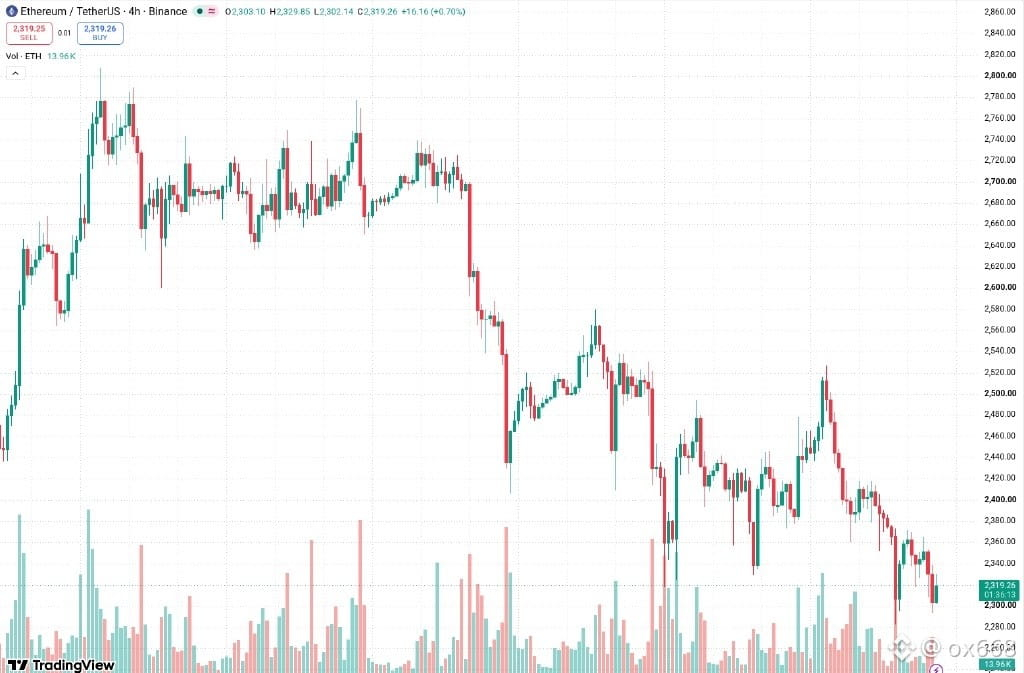
Price-wise, $ETH is trading near $2,320 today, down about 1.3% in 24h, after dipping to around $2,293. The narrative is long-term; the chart still needs to hold the low $2,300s in the short term.
#Ethereum #Stablecoins #Tokenization #TomLee #CryptoAdoption
Not financial advice.
Tom Lee's latest line is getting a lot of attention on X: about 99% of finance still runs on legacy systems, and that is exactly why banks may be underestimating how fast crypto rails are growing.
I think he's half right. The "legacy blind spot" is real. When your whole stack settles in T+1 or T+2 and closes on weekends, 24/7 stablecoin settlement and tokenized assets look like a niche until suddenly they're not.
But the counterpoint matters too. Banks don't have to "lose" to crypto; many are simply plugging in. HSBC just rolled out its RedCoin HKD stablecoin to PayMe users in Hong Kong, on a permissioned system. That's adoption on the bank's terms, not a takeover.
So the real question for $ETH and the wider market isn't "banks vs crypto." It's whether that new activity lands on open public chains or stays in closed, bank-run networks. Only the first one clearly feeds onchain fees and demand.
Price-wise, $ETH is trading near $2,320 today, down about 1.3% in 24h, after dipping to around $2,293. The narrative is long-term; the chart still needs to hold the low $2,300s in the short term.
#Ethereum #Stablecoins #Tokenization #TomLee #CryptoAdoption
Not financial advice.
I think he's half right. The "legacy blind spot" is real. When your whole stack settles in T+1 or T+2 and closes on weekends, 24/7 stablecoin settlement and tokenized assets look like a niche until suddenly they're not.
But the counterpoint matters too. Banks don't have to "lose" to crypto; many are simply plugging in. HSBC just rolled out its RedCoin HKD stablecoin to PayMe users in Hong Kong, on a permissioned system. That's adoption on the bank's terms, not a takeover.
So the real question for $ETH and the wider market isn't "banks vs crypto." It's whether that new activity lands on open public chains or stays in closed, bank-run networks. Only the first one clearly feeds onchain fees and demand.
Price-wise, $ETH is trading near $2,320 today, down about 1.3% in 24h, after dipping to around $2,293. The narrative is long-term; the chart still needs to hold the low $2,300s in the short term.
#Ethereum #Stablecoins #Tokenization #TomLee #CryptoAdoption
Not financial advice.
2

·
--
🚨 JPMorgan brings tokenized money funds MONY and JLTXX to Solana for qualified U.S. investors via the Morgan Money platform.
This institutional onboarding boosts SOL's utility and could drive sustained demand from traditional finance capital.
Market Implication: Increased real-world asset integration strengthens Solana's long-term narrative.
💡 What does this mean for SOL's adoption trajectory? #Solana #CryptoAdoption
$SOL #TradingSignal #CryptoAnalysis
🚨 JPMorgan brings tokenized money funds MONY and JLTXX to Solana for qualified U.S. investors via the Morgan Money platform.
This institutional onboarding boosts SOL's utility and could drive sustained demand from traditional finance capital.
Market Implication: Increased real-world asset integration strengthens Solana's long-term narrative.
💡 What does this mean for SOL's adoption trajectory? #Solana #CryptoAdoption
$SOL #TradingSignal #CryptoAnalysis
This institutional onboarding boosts SOL's utility and could drive sustained demand from traditional finance capital.
Market Implication: Increased real-world asset integration strengthens Solana's long-term narrative.
💡 What does this mean for SOL's adoption trajectory? #Solana #CryptoAdoption
$SOL #TradingSignal #CryptoAnalysis

50

🚨 3 CENTRAL BANKS JUST BET ON STABLECOINS! 🚨
This is MASSIVE for crypto!
Malaysia & Thailand's Central Banks have officially joined Singapore's BLOOM Initiative - led by MAS.
What is BLOOM?
Borderless Liquid Open Online Multi-currency
A public-private initiative to power cross-border payments using Regulated Stablecoins & Tokenized Deposits.
And look who else just joined 👇
Visa, Mastercard, Ripple, JPMorgan, Coinbase, Circle, World Bank Group, Standard Chartered & Stripe.
This isn't just another partnership. This is Asia's top central banks building the future of money ON stablecoins.
SWIFT is being challenged. Stablecoins are no longer the alternative - they are becoming THE SYSTEM.
Bullish on the future of payments. 🚀
Are you bullish on Stablecoins?
$USDT $USDC $XRP
#BLOOM #Stablecoin #MAS #BreakingNews #CryptoAdoption
🚨 3 CENTRAL BANKS JUST BET ON STABLECOINS! 🚨
This is MASSIVE for crypto!
Malaysia & Thailand's Central Banks have officially joined Singapore's BLOOM Initiative - led by MAS.
What is BLOOM?
Borderless Liquid Open Online Multi-currency
A public-private initiative to power cross-border payments using Regulated Stablecoins & Tokenized Deposits.
And look who else just joined 👇
Visa, Mastercard, Ripple, JPMorgan, Coinbase, Circle, World Bank Group, Standard Chartered & Stripe.
This isn't just another partnership. This is Asia's top central banks building the future of money ON stablecoins.
SWIFT is being challenged. Stablecoins are no longer the alternative - they are becoming THE SYSTEM.
Bullish on the future of payments. 🚀
Are you bullish on Stablecoins?
$USDT $USDC $XRP
#BLOOM #Stablecoin #MAS #BreakingNews #CryptoAdoption
This is MASSIVE for crypto!
Malaysia & Thailand's Central Banks have officially joined Singapore's BLOOM Initiative - led by MAS.
What is BLOOM?
Borderless Liquid Open Online Multi-currency
A public-private initiative to power cross-border payments using Regulated Stablecoins & Tokenized Deposits.
And look who else just joined 👇
Visa, Mastercard, Ripple, JPMorgan, Coinbase, Circle, World Bank Group, Standard Chartered & Stripe.
This isn't just another partnership. This is Asia's top central banks building the future of money ON stablecoins.
SWIFT is being challenged. Stablecoins are no longer the alternative - they are becoming THE SYSTEM.
Bullish on the future of payments. 🚀
Are you bullish on Stablecoins?
$USDT $USDC $XRP
#BLOOM #Stablecoin #MAS #BreakingNews #CryptoAdoption

3
163

A major traditional bank is bringing stablecoins closer to everyday payments. 👀
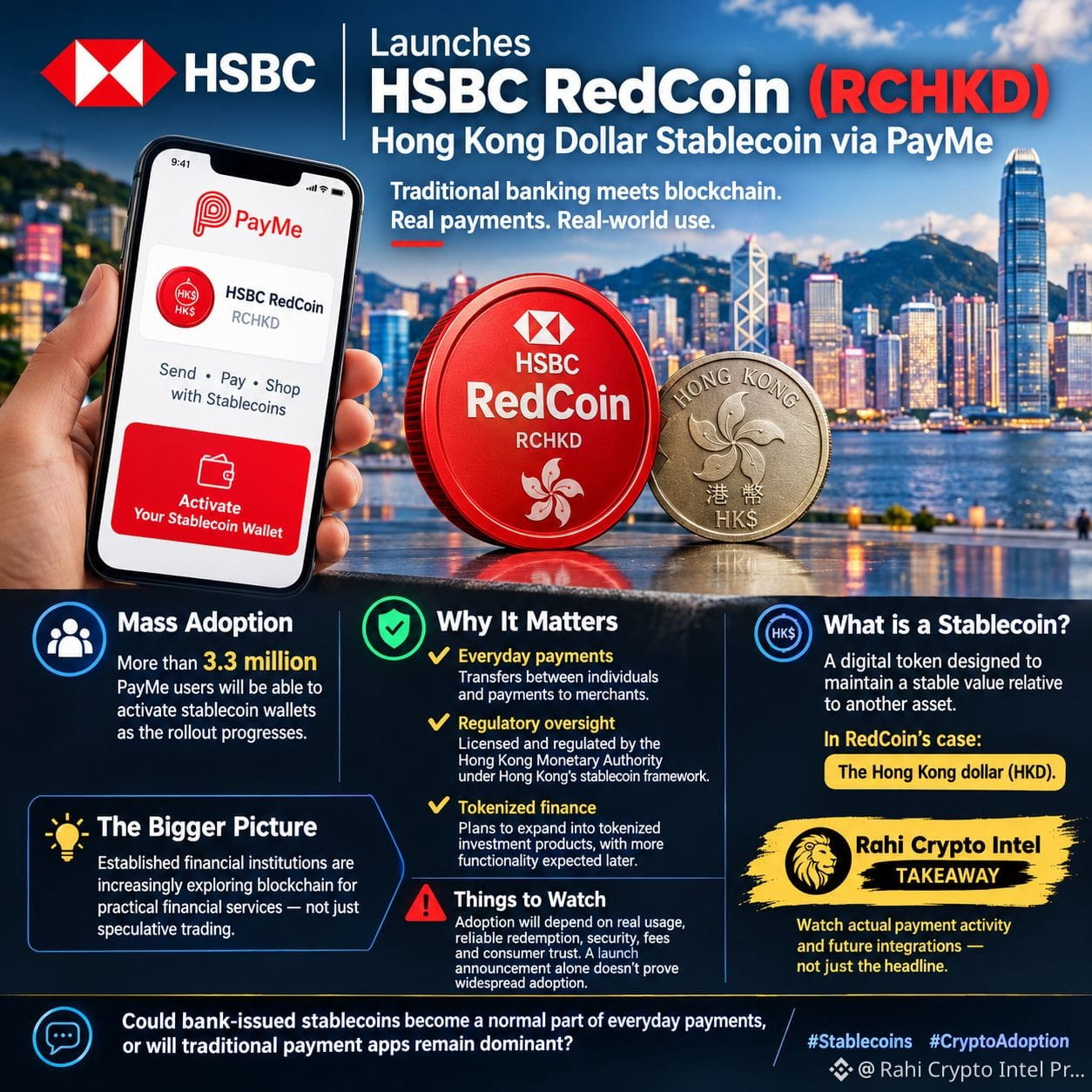
On October 23, HSBC announced the launch of HSBC RedCoin (RCHKD), its first Hong Kong dollar-denominated stablecoin, through its PayMe platform.
According to HSBC, more than 3.3 million PayMe users will be able to activate stablecoin wallets as the rollout progresses.
Here’s why this matters.
🔹 Everyday payments: RedCoin is designed for transfers between individuals and payments to merchants, rather than simply trading crypto.
🔹 Regulatory oversight: HSBC says the stablecoin is licensed and regulated by the Hong Kong Monetary Authority under Hong Kong’s stablecoin framework.
🔹 Tokenized finance: HSBC plans to expand its use cases to tokenized investment products, with additional functionality expected later.
But what exactly is a stablecoin?
It’s a digital token designed to maintain a stable value relative to another asset. In RedCoin’s case, that reference asset is the Hong Kong dollar.
The bigger picture is important: blockchain technology is increasingly being explored by established financial institutions for practical financial services, not just speculative trading.
Still, adoption will depend on real usage, reliable redemption, security, fees and consumer trust. A launch announcement alone does not prove widespread adoption.
Rahi Crypto Intel takeaway: Watch actual payment activity and future integrations—not just the headline.
Could bank-issued stablecoins become a normal part of everyday payments, or will traditional payment apps remain dominant?
#Stablecoins #CryptoAdoption
$ARK
{future}(ARKUSDT)
$AVA
{future}(AVAUSDT)
$PEPE
{spot}(PEPEUSDT)
A major traditional bank is bringing stablecoins closer to everyday payments. 👀
On October 23, HSBC announced the launch of HSBC RedCoin (RCHKD), its first Hong Kong dollar-denominated stablecoin, through its PayMe platform.
According to HSBC, more than 3.3 million PayMe users will be able to activate stablecoin wallets as the rollout progresses.
Here’s why this matters.
🔹 Everyday payments: RedCoin is designed for transfers between individuals and payments to merchants, rather than simply trading crypto.
🔹 Regulatory oversight: HSBC says the stablecoin is licensed and regulated by the Hong Kong Monetary Authority under Hong Kong’s stablecoin framework.
🔹 Tokenized finance: HSBC plans to expand its use cases to tokenized investment products, with additional functionality expected later.
But what exactly is a stablecoin?
It’s a digital token designed to maintain a stable value relative to another asset. In RedCoin’s case, that reference asset is the Hong Kong dollar.
The bigger picture is important: blockchain technology is increasingly being explored by established financial institutions for practical financial services, not just speculative trading.
Still, adoption will depend on real usage, reliable redemption, security, fees and consumer trust. A launch announcement alone does not prove widespread adoption.
Rahi Crypto Intel takeaway: Watch actual payment activity and future integrations—not just the headline.
Could bank-issued stablecoins become a normal part of everyday payments, or will traditional payment apps remain dominant?
#Stablecoins #CryptoAdoption
$ARK
$AVA
$PEPE
On October 23, HSBC announced the launch of HSBC RedCoin (RCHKD), its first Hong Kong dollar-denominated stablecoin, through its PayMe platform.
According to HSBC, more than 3.3 million PayMe users will be able to activate stablecoin wallets as the rollout progresses.
Here’s why this matters.
🔹 Everyday payments: RedCoin is designed for transfers between individuals and payments to merchants, rather than simply trading crypto.
🔹 Regulatory oversight: HSBC says the stablecoin is licensed and regulated by the Hong Kong Monetary Authority under Hong Kong’s stablecoin framework.
🔹 Tokenized finance: HSBC plans to expand its use cases to tokenized investment products, with additional functionality expected later.
But what exactly is a stablecoin?
It’s a digital token designed to maintain a stable value relative to another asset. In RedCoin’s case, that reference asset is the Hong Kong dollar.
The bigger picture is important: blockchain technology is increasingly being explored by established financial institutions for practical financial services, not just speculative trading.
Still, adoption will depend on real usage, reliable redemption, security, fees and consumer trust. A launch announcement alone does not prove widespread adoption.
Rahi Crypto Intel takeaway: Watch actual payment activity and future integrations—not just the headline.
Could bank-issued stablecoins become a normal part of everyday payments, or will traditional payment apps remain dominant?
#Stablecoins #CryptoAdoption
$ARK
$AVA
$PEPE
86

·
--
Bullish
#MalaysiaAndThailandJoinSingaporeStablecoinInitiati ve
🚨 MALAYSIA & THAILAND JOIN SINGAPORE’S STABLECOIN INITIATIVE!
A major step toward digital finance in Southeast Asia! 🇸🇬🇲🇾🇹🇭
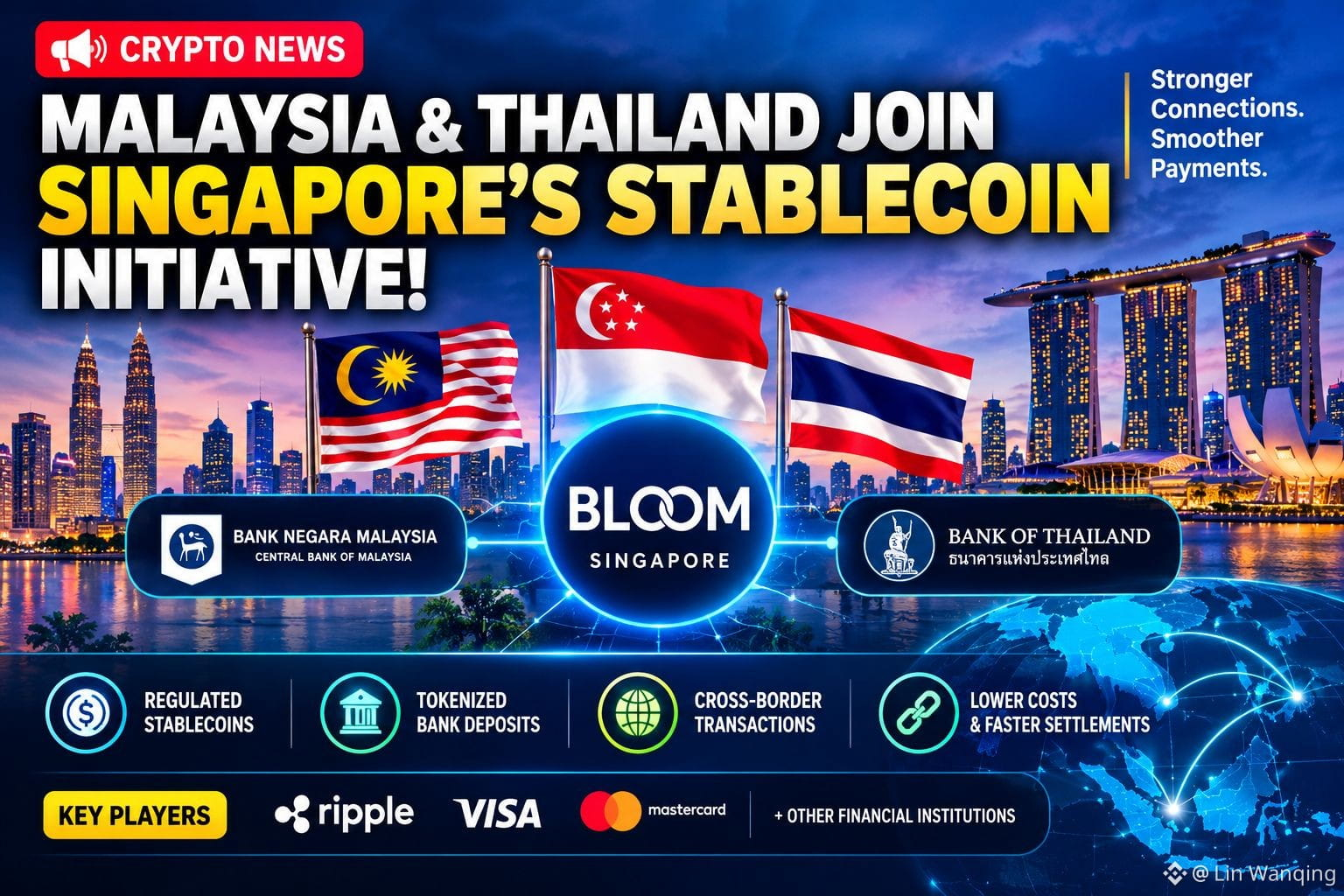
On October 23, 2026, Malaysia’s central bank and the Bank of Thailand joined Singapore’s BLOOM initiative as policymaker members. The collaboration aims to improve cross-border transactions using digital money, including regulated stablecoins and tokenized bank deposits.
📊 Why Does This Matter?
The initiative focuses on making digital payments more interoperable, reducing implementation costs, and improving settlement across financial institutions and countries. Major industry participants include Ripple, Visa, Mastercard, and other financial institutions. <Cite refs={["turn608786search0","turn608786search1"]}/>
📈 Potential Crypto Market Impact
Greater institutional cooperation could support the long-term adoption of stablecoins and blockchain-based payment infrastructure. Projects connected to cross-border settlement may attract increased attention, but participation in the initiative does not guarantee token demand or price appreciation.
⚠️ Trader’s Perspective: This is a meaningful development for real-world blockchain adoption, but the key indicators will be actual implementation, transaction volumes, and regulatory progress—not headlines alone.
💬 Can Southeast Asia become a major hub for regulated stablecoin payments?
#Ripple #CryptoAdoption #BinanceSquare
$AGT $SOPH $UNITREE
{future}(UNITREEUSDT)
{future}(SOPHUSDT)
{future}(AGTUSDT)
#MalaysiaAndThailandJoinSingaporeStablecoinInitiati ve
🚨 MALAYSIA & THAILAND JOIN SINGAPORE’S STABLECOIN INITIATIVE!
A major step toward digital finance in Southeast Asia! 🇸🇬🇲🇾🇹🇭
On October 23, 2026, Malaysia’s central bank and the Bank of Thailand joined Singapore’s BLOOM initiative as policymaker members. The collaboration aims to improve cross-border transactions using digital money, including regulated stablecoins and tokenized bank deposits.
📊 Why Does This Matter?
The initiative focuses on making digital payments more interoperable, reducing implementation costs, and improving settlement across financial institutions and countries. Major industry participants include Ripple, Visa, Mastercard, and other financial institutions. <Cite refs={["turn608786search0","turn608786search1"]}/>
📈 Potential Crypto Market Impact
Greater institutional cooperation could support the long-term adoption of stablecoins and blockchain-based payment infrastructure. Projects connected to cross-border settlement may attract increased attention, but participation in the initiative does not guarantee token demand or price appreciation.
⚠️ Trader’s Perspective: This is a meaningful development for real-world blockchain adoption, but the key indicators will be actual implementation, transaction volumes, and regulatory progress—not headlines alone.
💬 Can Southeast Asia become a major hub for regulated stablecoin payments?
#Ripple #CryptoAdoption #BinanceSquare
$AGT $SOPH $UNITREE
🚨 MALAYSIA & THAILAND JOIN SINGAPORE’S STABLECOIN INITIATIVE!
A major step toward digital finance in Southeast Asia! 🇸🇬🇲🇾🇹🇭
On October 23, 2026, Malaysia’s central bank and the Bank of Thailand joined Singapore’s BLOOM initiative as policymaker members. The collaboration aims to improve cross-border transactions using digital money, including regulated stablecoins and tokenized bank deposits.
📊 Why Does This Matter?
The initiative focuses on making digital payments more interoperable, reducing implementation costs, and improving settlement across financial institutions and countries. Major industry participants include Ripple, Visa, Mastercard, and other financial institutions. <Cite refs={["turn608786search0","turn608786search1"]}/>
📈 Potential Crypto Market Impact
Greater institutional cooperation could support the long-term adoption of stablecoins and blockchain-based payment infrastructure. Projects connected to cross-border settlement may attract increased attention, but participation in the initiative does not guarantee token demand or price appreciation.
⚠️ Trader’s Perspective: This is a meaningful development for real-world blockchain adoption, but the key indicators will be actual implementation, transaction volumes, and regulatory progress—not headlines alone.
💬 Can Southeast Asia become a major hub for regulated stablecoin payments?
#Ripple #CryptoAdoption #BinanceSquare
$AGT $SOPH $UNITREE
74

·
--
Verified
🚨 HSBC Brings Its Hong Kong Dollar-Backed Stablecoin to Millions of Users 🇭🇰
HSBC is taking another step toward mainstream digital payments by rolling out its Hong Kong dollar-backed stablecoin, RedCoin, to more than 3.3 million PayMe users, according to the South China Morning Post.
What caught my attention is the potential reach. When a major traditional bank brings stablecoin technology directly to an established payment platform, digital assets move beyond crypto trading and closer to everyday financial use.
The bigger question is whether people will actually adopt stablecoins for daily payments, transfers, and other financial activities.
If adoption grows, this could be another important signal that traditional banking and blockchain-based payments are moving closer together.
For me, the real story isn't just the launch of another stablecoin. It's the scale of distribution behind it. 👀
$AKE $MAGMA $PTB
#stablecoin #HSBC #HongKong #CryptoAdoption #blockchain
🚨 HSBC Brings Its Hong Kong Dollar-Backed Stablecoin to Millions of Users 🇭🇰
HSBC is taking another step toward mainstream digital payments by rolling out its Hong Kong dollar-backed stablecoin, RedCoin, to more than 3.3 million PayMe users, according to the South China Morning Post.
What caught my attention is the potential reach. When a major traditional bank brings stablecoin technology directly to an established payment platform, digital assets move beyond crypto trading and closer to everyday financial use.
The bigger question is whether people will actually adopt stablecoins for daily payments, transfers, and other financial activities.
If adoption grows, this could be another important signal that traditional banking and blockchain-based payments are moving closer together.
For me, the real story isn't just the launch of another stablecoin. It's the scale of distribution behind it. 👀
$AKE $MAGMA $PTB
#stablecoin #HSBC #HongKong #CryptoAdoption #blockchain
HSBC is taking another step toward mainstream digital payments by rolling out its Hong Kong dollar-backed stablecoin, RedCoin, to more than 3.3 million PayMe users, according to the South China Morning Post.
What caught my attention is the potential reach. When a major traditional bank brings stablecoin technology directly to an established payment platform, digital assets move beyond crypto trading and closer to everyday financial use.
The bigger question is whether people will actually adopt stablecoins for daily payments, transfers, and other financial activities.
If adoption grows, this could be another important signal that traditional banking and blockchain-based payments are moving closer together.
For me, the real story isn't just the launch of another stablecoin. It's the scale of distribution behind it. 👀
$AKE $MAGMA $PTB
#stablecoin #HSBC #HongKong #CryptoAdoption #blockchain


856

Russia flipped the script: the same central bank that proposed banning crypto in 2022 is now licensing its biggest banks as crypto exchanges.
The Bank of Russia's crypto exchange register hit 17 firms this week, with Sberbank and VTB — the country's two largest banks — holding both trading and custody licences. VTB plans to open crypto trading to retail through its VTB My Investments app in November; Sberbank targets December 1 and is already testing BTC, ETH and USDT trades inside its app.
The guardrails are tight: retail buyers get only the most liquid coins, capped at 300,000 rubles (~$3,800) a year per intermediary, and only after passing a test. Domestic crypto payments stay banned.
Why it matters: a sanctioned economy wiring crypto into its largest retail banks is a structural demand channel — regulated plumbing, not retail FOMO. From July 2027, all Russian crypto trading must flow through registered intermediaries.
No instant tape reaction — $BTC holds $81.7K, barely moved. Structure compounds in months, not hours. Not financial advice — DYOR.
If Russia's biggest banks are selling crypto by December, which major economy's banks move next?
$BTC #Bitcoin #Russia #CryptoAdoption #Regulation
Russia flipped the script: the same central bank that proposed banning crypto in 2022 is now licensing its biggest banks as crypto exchanges.
The Bank of Russia's crypto exchange register hit 17 firms this week, with Sberbank and VTB — the country's two largest banks — holding both trading and custody licences. VTB plans to open crypto trading to retail through its VTB My Investments app in November; Sberbank targets December 1 and is already testing BTC, ETH and USDT trades inside its app.
The guardrails are tight: retail buyers get only the most liquid coins, capped at 300,000 rubles (~$3,800) a year per intermediary, and only after passing a test. Domestic crypto payments stay banned.
Why it matters: a sanctioned economy wiring crypto into its largest retail banks is a structural demand channel — regulated plumbing, not retail FOMO. From July 2027, all Russian crypto trading must flow through registered intermediaries.
No instant tape reaction — $BTC holds $81.7K, barely moved. Structure compounds in months, not hours. Not financial advice — DYOR.
If Russia's biggest banks are selling crypto by December, which major economy's banks move next?
$BTC #Bitcoin #Russia #CryptoAdoption #Regulation
The Bank of Russia's crypto exchange register hit 17 firms this week, with Sberbank and VTB — the country's two largest banks — holding both trading and custody licences. VTB plans to open crypto trading to retail through its VTB My Investments app in November; Sberbank targets December 1 and is already testing BTC, ETH and USDT trades inside its app.
The guardrails are tight: retail buyers get only the most liquid coins, capped at 300,000 rubles (~$3,800) a year per intermediary, and only after passing a test. Domestic crypto payments stay banned.
Why it matters: a sanctioned economy wiring crypto into its largest retail banks is a structural demand channel — regulated plumbing, not retail FOMO. From July 2027, all Russian crypto trading must flow through registered intermediaries.
No instant tape reaction — $BTC holds $81.7K, barely moved. Structure compounds in months, not hours. Not financial advice — DYOR.
If Russia's biggest banks are selling crypto by December, which major economy's banks move next?
$BTC #Bitcoin #Russia #CryptoAdoption #Regulation
18

·
--
📺 BLOCK LAUNCHES «BITCOIN DOES»: THE FIRST MASS CAMPAIGN TO BRING BITCOIN TO THE GENERAL PUBLIC 💡⚡
The parent company of Cash App and Square is targeting 60 million people interested in using Bitcoin in their everyday lives.
🔍 CAMPAIGN HIGHLIGHTS:
🎯 Target audience: Focused on 60 million U.S. consumers curious about digital assets.
💡 Practical approach: Replaces technical jargon with solutions to inflation, a fixed supply, and the benefits of self-custody.
⚡ Interactive experience: Live event demonstrations featuring real payments over the Lightning Network.
Do you think these fintech-driven mass-adoption campaigns will speed up the everyday use of BTC as a means of payment?
💭👇 I’d love to hear your thoughts in the comments!
#CryptoNews #BinanceSquare #Block #CryptoAdoption #CryptoCommunity
$BTC
{spot}(BTCUSDT)
$ETH
{spot}(ETHUSDT)
$SOL
{spot}(SOLUSDT)
📺 BLOCK LAUNCHES «BITCOIN DOES»: THE FIRST MASS CAMPAIGN TO BRING BITCOIN TO THE GENERAL PUBLIC 💡⚡
The parent company of Cash App and Square is targeting 60 million people interested in using Bitcoin in their everyday lives.
🔍 CAMPAIGN HIGHLIGHTS:
🎯 Target audience: Focused on 60 million U.S. consumers curious about digital assets.
💡 Practical approach: Replaces technical jargon with solutions to inflation, a fixed supply, and the benefits of self-custody.
⚡ Interactive experience: Live event demonstrations featuring real payments over the Lightning Network.
Do you think these fintech-driven mass-adoption campaigns will speed up the everyday use of BTC as a means of payment?
💭👇 I’d love to hear your thoughts in the comments!
#CryptoNews #BinanceSquare #Block #CryptoAdoption #CryptoCommunity
$BTC
$ETH
$SOL
The parent company of Cash App and Square is targeting 60 million people interested in using Bitcoin in their everyday lives.
🔍 CAMPAIGN HIGHLIGHTS:
🎯 Target audience: Focused on 60 million U.S. consumers curious about digital assets.
💡 Practical approach: Replaces technical jargon with solutions to inflation, a fixed supply, and the benefits of self-custody.
⚡ Interactive experience: Live event demonstrations featuring real payments over the Lightning Network.
Do you think these fintech-driven mass-adoption campaigns will speed up the everyday use of BTC as a means of payment?
💭👇 I’d love to hear your thoughts in the comments!
#CryptoNews #BinanceSquare #Block #CryptoAdoption #CryptoCommunity
$BTC
$ETH
$SOL

1
120

·
--
Memecoins are proving to be crypto’s biggest onboarding engine! 🚀
Recent trends on Robinhood reveal that tokens like $DOGE and $SHIB are driving real on-chain adoption and bringing millions of new users into Web3. Beyond the hype, Dogecoin continues to expand its utility, showing that memecoins might just be the ultimate gateway to mainstream crypto usage.
Are memecoins the future of user adoption? 👇
#Dogecoin #Memecoins #CryptoAdoption
Memecoins are proving to be crypto’s biggest onboarding engine! 🚀
Recent trends on Robinhood reveal that tokens like $DOGE and $SHIB are driving real on-chain adoption and bringing millions of new users into Web3. Beyond the hype, Dogecoin continues to expand its utility, showing that memecoins might just be the ultimate gateway to mainstream crypto usage.
Are memecoins the future of user adoption? 👇
#Dogecoin #Memecoins #CryptoAdoption
Recent trends on Robinhood reveal that tokens like $DOGE and $SHIB are driving real on-chain adoption and bringing millions of new users into Web3. Beyond the hype, Dogecoin continues to expand its utility, showing that memecoins might just be the ultimate gateway to mainstream crypto usage.
Are memecoins the future of user adoption? 👇
#Dogecoin #Memecoins #CryptoAdoption
11

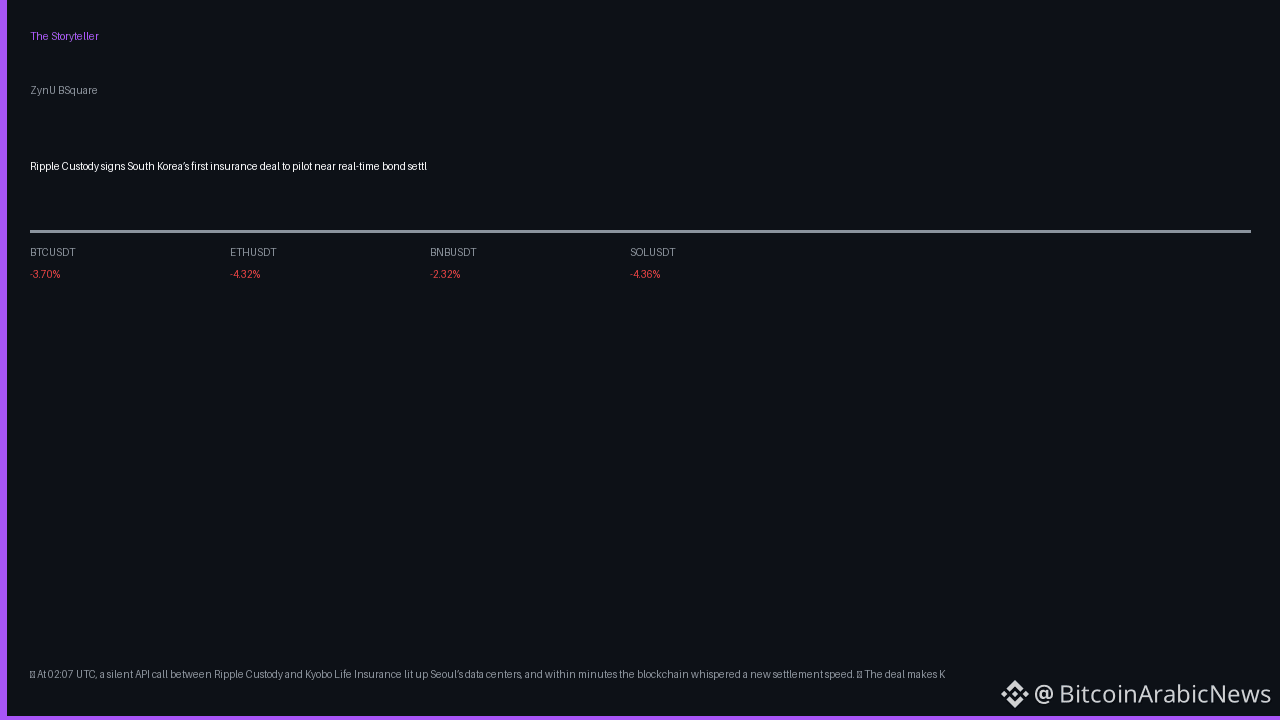
🔥 At 02:07 UTC, a silent API call between Ripple Custody and Kyobo Life Insurance lit up Seoul’s data centers, and within minutes the blockchain whispered a new settlement speed.
📊 The deal makes Kyobo, a Tier 1 insurer, the first Korean entity to settle government bonds on‑chain, compressing the classic T+2 lag to near‑real‑time and unlocking a $1.2 trillion market that has watched Bitcoin dip to $81,435 (‑3.7%) and ETH slide to $2,387 (‑4.3%) amid a Greed‑68 sentiment; futures open interest stays bullish with BTC OI at $7.78 B and funding +0.0062%, while smart‑money wallets are already eyeing tokenized debt as the next #Ripple play #Kyobo #BondSettlement #CryptoAdoption.
💡 The twist? The same bearish charts that scare retail traders are the exact catalyst for institutions to chase blockchain‑backed efficiency, turning today’s dip into tomorrow’s demand surge.
❓ Will this quiet Korean pilot force the whole crypto market to rewrite settlement rules before the next Fed move?
🔥 At 02:07 UTC, a silent API call between Ripple Custody and Kyobo Life Insurance lit up Seoul’s data centers, and within minutes the blockchain whispered a new settlement speed.
📊 The deal makes Kyobo, a Tier 1 insurer, the first Korean entity to settle government bonds on‑chain, compressing the classic T+2 lag to near‑real‑time and unlocking a $1.2 trillion market that has watched Bitcoin dip to $81,435 (‑3.7%) and ETH slide to $2,387 (‑4.3%) amid a Greed‑68 sentiment; futures open interest stays bullish with BTC OI at $7.78 B and funding +0.0062%, while smart‑money wallets are already eyeing tokenized debt as the next #Ripple play #Kyobo #BondSettlement #CryptoAdoption.
💡 The twist? The same bearish charts that scare retail traders are the exact catalyst for institutions to chase blockchain‑backed efficiency, turning today’s dip into tomorrow’s demand surge.
❓ Will this quiet Korean pilot force the whole crypto market to rewrite settlement rules before the next Fed move?
📊 The deal makes Kyobo, a Tier 1 insurer, the first Korean entity to settle government bonds on‑chain, compressing the classic T+2 lag to near‑real‑time and unlocking a $1.2 trillion market that has watched Bitcoin dip to $81,435 (‑3.7%) and ETH slide to $2,387 (‑4.3%) amid a Greed‑68 sentiment; futures open interest stays bullish with BTC OI at $7.78 B and funding +0.0062%, while smart‑money wallets are already eyeing tokenized debt as the next #Ripple play #Kyobo #BondSettlement #CryptoAdoption.
💡 The twist? The same bearish charts that scare retail traders are the exact catalyst for institutions to chase blockchain‑backed efficiency, turning today’s dip into tomorrow’s demand surge.
❓ Will this quiet Korean pilot force the whole crypto market to rewrite settlement rules before the next Fed move?
6

If you're still insisting self-custody is the only real way to hold Bitcoin, this mistake has already cost traders millions through lost keys and hacks.
Everyday investors keep watching their stacks disappear after one phishing attempt or a forgotten seed phrase. They miss simple entries and exits while the technical barrier keeps them on the sidelines.
Switzerland just moved on this. On October 20 FINMA approved a fund that holds actual $BTC and opened it to everyday investors rather than only qualified ones. Trading under BBIT on SIX is expected next month so people get genuine Bitcoin exposure without ever managing private keys.
FINMA even waived the usual diversification rules. Purists will argue this is just another paper claim, no different from certain $ETH products where you never control the asset. I see the other side more clearly. Most people are not going to become wallet experts, and this removes the single biggest reason they stay out or get wrecked.
This looks like a practical step toward wider $BTC access rather than another ideological purity test.
Is this the right trade-off for bringing Bitcoin to regular investors or a step away from what crypto was supposed to be?
#Bitcoin #FINMA #CryptoAdoption
If you're still insisting self-custody is the only real way to hold Bitcoin, this mistake has already cost traders millions through lost keys and hacks.
Everyday investors keep watching their stacks disappear after one phishing attempt or a forgotten seed phrase. They miss simple entries and exits while the technical barrier keeps them on the sidelines.
Switzerland just moved on this. On October 20 FINMA approved a fund that holds actual $BTC and opened it to everyday investors rather than only qualified ones. Trading under BBIT on SIX is expected next month so people get genuine Bitcoin exposure without ever managing private keys.
FINMA even waived the usual diversification rules. Purists will argue this is just another paper claim, no different from certain $ETH products where you never control the asset. I see the other side more clearly. Most people are not going to become wallet experts, and this removes the single biggest reason they stay out or get wrecked.
This looks like a practical step toward wider $BTC access rather than another ideological purity test.
Is this the right trade-off for bringing Bitcoin to regular investors or a step away from what crypto was supposed to be?
#Bitcoin #FINMA #CryptoAdoption
Everyday investors keep watching their stacks disappear after one phishing attempt or a forgotten seed phrase. They miss simple entries and exits while the technical barrier keeps them on the sidelines.
Switzerland just moved on this. On October 20 FINMA approved a fund that holds actual $BTC and opened it to everyday investors rather than only qualified ones. Trading under BBIT on SIX is expected next month so people get genuine Bitcoin exposure without ever managing private keys.
FINMA even waived the usual diversification rules. Purists will argue this is just another paper claim, no different from certain $ETH products where you never control the asset. I see the other side more clearly. Most people are not going to become wallet experts, and this removes the single biggest reason they stay out or get wrecked.
This looks like a practical step toward wider $BTC access rather than another ideological purity test.
Is this the right trade-off for bringing Bitcoin to regular investors or a step away from what crypto was supposed to be?
#Bitcoin #FINMA #CryptoAdoption

·
--
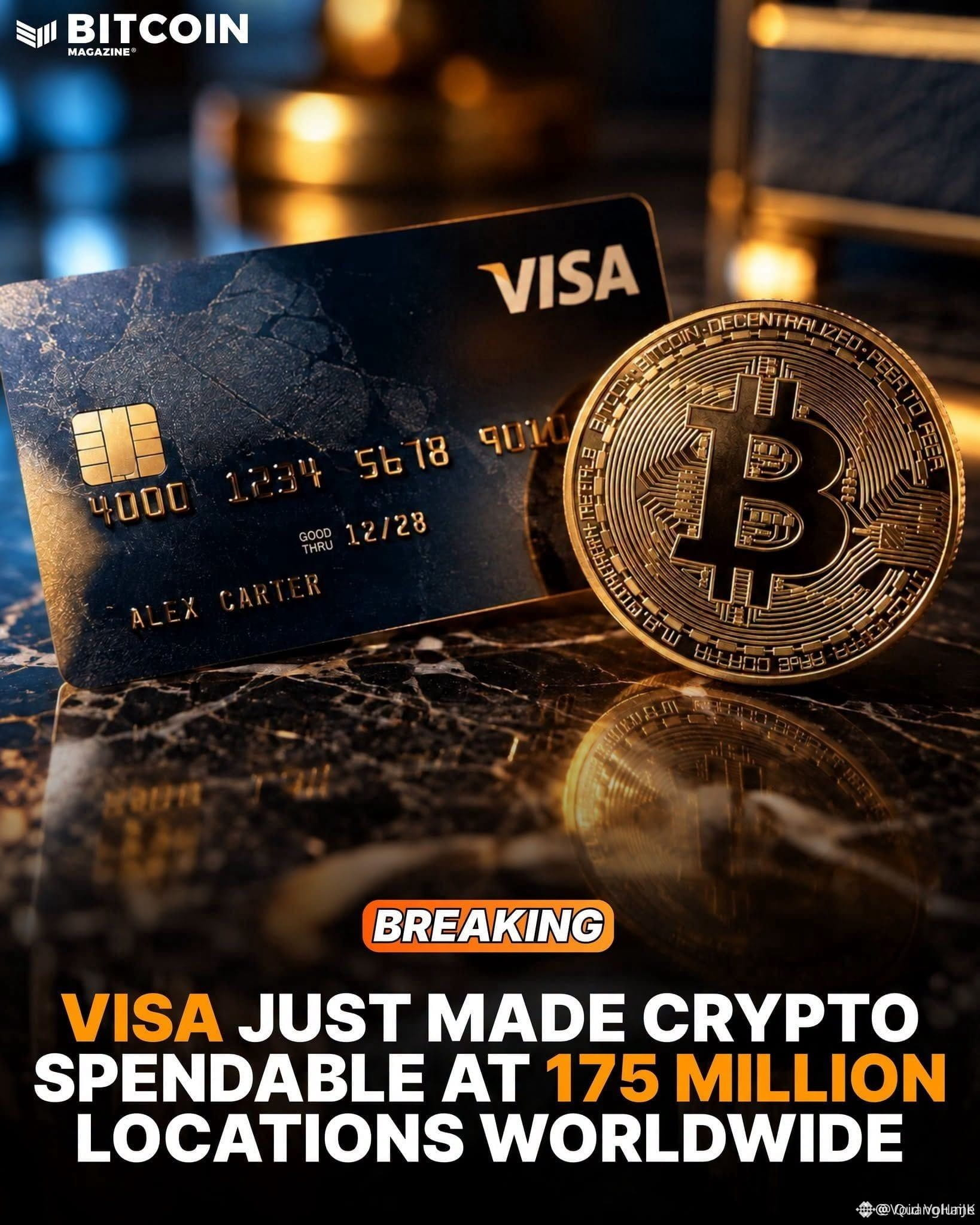
⚡ INSTITUTIONAL RAILS EXPAND AS $BTC DIRECT WALLET SETTLEMENT INTEGRATES WITH VISA 🦈
Behind the order books, structural adoption continues to quietly bridge macro liquidity into native balance sheets. 🏦 The invisible conversion rail bridges high-timeframe demand directly into point-of-sale volume, systematically absorbing float without forcing friction on everyday transactions.
From a market structure standpoint, reducing off-ramp friction serves as a permanent absorption mechanism across liquidity pools. 🔍 As traditional payments abstract fiat conversion on backend networks, structural accumulation gains a silent, recurring catalyst. 💬 Does frictionless spend utility accelerate institutional base building, or will holders preserve supply on-chain? 👇
⚠️ Not financial advice. Always manage your risk. 🛡️
🏷️ #BTC #Bitcoin #CryptoAdoption #MacroLiquidity
🎯 🦈
⚡ INSTITUTIONAL RAILS EXPAND AS $BTC DIRECT WALLET SETTLEMENT INTEGRATES WITH VISA 🦈
Behind the order books, structural adoption continues to quietly bridge macro liquidity into native balance sheets. 🏦 The invisible conversion rail bridges high-timeframe demand directly into point-of-sale volume, systematically absorbing float without forcing friction on everyday transactions.
From a market structure standpoint, reducing off-ramp friction serves as a permanent absorption mechanism across liquidity pools. 🔍 As traditional payments abstract fiat conversion on backend networks, structural accumulation gains a silent, recurring catalyst. 💬 Does frictionless spend utility accelerate institutional base building, or will holders preserve supply on-chain? 👇
⚠️ Not financial advice. Always manage your risk. 🛡️
🏷️ #BTC #Bitcoin #CryptoAdoption #MacroLiquidity
🎯 🦈
Behind the order books, structural adoption continues to quietly bridge macro liquidity into native balance sheets. 🏦 The invisible conversion rail bridges high-timeframe demand directly into point-of-sale volume, systematically absorbing float without forcing friction on everyday transactions.
From a market structure standpoint, reducing off-ramp friction serves as a permanent absorption mechanism across liquidity pools. 🔍 As traditional payments abstract fiat conversion on backend networks, structural accumulation gains a silent, recurring catalyst. 💬 Does frictionless spend utility accelerate institutional base building, or will holders preserve supply on-chain? 👇
⚠️ Not financial advice. Always manage your risk. 🛡️
🏷️ #BTC #Bitcoin #CryptoAdoption #MacroLiquidity
🎯 🦈
1

·
--
🏦 Traditional banks are making a powerful move into crypto! What’s the story?
A new step that boosts the adoption of digital currencies: financial technology company SoFi has announced the launch of a “tokenized deposits” product that lets users earn annual returns of up to 4.4% on cash set aside to buy digital currencies, while offering investor protection.
💡 Why does this matter? The introduction of these financial tools injects new, stable liquidity into the market and makes it easier for traditional investors to enter flexibly and quickly.
👇 What do you think? Do you believe integrating traditional banks with crypto services will accelerate the next rally?
#CryptoAdoption #BinanceSquare #CryptoNews #Write2Earn $BTC
{spot}(BTCUSDT)
$BNB
{spot}(BNBUSDT)
$USDC
{spot}(USDCUSDT)
🏦 Traditional banks are making a powerful move into crypto! What’s the story?
A new step that boosts the adoption of digital currencies: financial technology company SoFi has announced the launch of a “tokenized deposits” product that lets users earn annual returns of up to 4.4% on cash set aside to buy digital currencies, while offering investor protection.
💡 Why does this matter? The introduction of these financial tools injects new, stable liquidity into the market and makes it easier for traditional investors to enter flexibly and quickly.
👇 What do you think? Do you believe integrating traditional banks with crypto services will accelerate the next rally?
#CryptoAdoption #BinanceSquare #CryptoNews #Write2Earn $BTC
$BNB
$USDC
A new step that boosts the adoption of digital currencies: financial technology company SoFi has announced the launch of a “tokenized deposits” product that lets users earn annual returns of up to 4.4% on cash set aside to buy digital currencies, while offering investor protection.
💡 Why does this matter? The introduction of these financial tools injects new, stable liquidity into the market and makes it easier for traditional investors to enter flexibly and quickly.
👇 What do you think? Do you believe integrating traditional banks with crypto services will accelerate the next rally?
#CryptoAdoption #BinanceSquare #CryptoNews #Write2Earn $BTC
$BNB
$USDC
21
Visa just started using $USDC for live merchant payouts after keeping it in testing for months, something most traders still treat as background noise.
You've watched too many partnership headlines fizzle into nothing while your portfolio took the hit from chasing the next narrative instead of actual money movement.
This shift means Visa is prefunding real settlements with $USDC instead of waiting on bank wires that shut down on weekends. Traditional payouts can take days. On-chain they settle in minutes around the clock. I saw the same pattern in 2020 when institutions first started parking cash in stables during the last cycle. Everyone dismissed it as boring until volume started compounding. $ETH still carries most of that liquidity, and even a sliver of Visa's flow would dwarf typical DeFi activity we used to celebrate.
The fear of missing another hype wave is understandable. The hope that crypto finally becomes the plumbing instead of the casino is what actually compounds over cycles.
Where do you think this goes once more networks start treating $USDC as working capital rather than a parking lot?
#USDC #Stablecoins #CryptoAdoption
Visa just started using $USDC for live merchant payouts after keeping it in testing for months, something most traders still treat as background noise.
You've watched too many partnership headlines fizzle into nothing while your portfolio took the hit from chasing the next narrative instead of actual money movement.
This shift means Visa is prefunding real settlements with $USDC instead of waiting on bank wires that shut down on weekends. Traditional payouts can take days. On-chain they settle in minutes around the clock. I saw the same pattern in 2020 when institutions first started parking cash in stables during the last cycle. Everyone dismissed it as boring until volume started compounding. $ETH still carries most of that liquidity, and even a sliver of Visa's flow would dwarf typical DeFi activity we used to celebrate.
The fear of missing another hype wave is understandable. The hope that crypto finally becomes the plumbing instead of the casino is what actually compounds over cycles.
Where do you think this goes once more networks start treating $USDC as working capital rather than a parking lot?
#USDC #Stablecoins #CryptoAdoption
You've watched too many partnership headlines fizzle into nothing while your portfolio took the hit from chasing the next narrative instead of actual money movement.
This shift means Visa is prefunding real settlements with $USDC instead of waiting on bank wires that shut down on weekends. Traditional payouts can take days. On-chain they settle in minutes around the clock. I saw the same pattern in 2020 when institutions first started parking cash in stables during the last cycle. Everyone dismissed it as boring until volume started compounding. $ETH still carries most of that liquidity, and even a sliver of Visa's flow would dwarf typical DeFi activity we used to celebrate.
The fear of missing another hype wave is understandable. The hope that crypto finally becomes the plumbing instead of the casino is what actually compounds over cycles.
Where do you think this goes once more networks start treating $USDC as working capital rather than a parking lot?
#USDC #Stablecoins #CryptoAdoption
1

#Mesh #bitcoin #CryptoAdoption
Visa and Mesh just partnered (announced Oct 19). Users will be able to spend crypto and stablecoin balances straight from their wallets at merchants on Visa's network, with no separate card. Visa's network covers more than 175 million merchant locations in over 200 countries and territories. Mesh handles the conversion, and merchants keep receiving payments through Visa's normal system. The catch is that no launch date or participating platforms have been announced yet. BTC is steady around $82K. (visa mesh partner crypto spending 175m merchant locations +3)
Caption this →
Spending crypto just got a lot less awkward
Visa and Mesh are teaming up so you can pay with crypto or stablecoins at 175M+ merchants, with no separate crypto card and no cashing out first. The shop still just gets paid the normal way.
The catch: no launch date or wallet list yet. Big headline, real rollout still to come.
#Mesh #bitcoin #CryptoAdoption
Visa and Mesh just partnered (announced Oct 19). Users will be able to spend crypto and stablecoin balances straight from their wallets at merchants on Visa's network, with no separate card. Visa's network covers more than 175 million merchant locations in over 200 countries and territories. Mesh handles the conversion, and merchants keep receiving payments through Visa's normal system. The catch is that no launch date or participating platforms have been announced yet. BTC is steady around $82K. (visa mesh partner crypto spending 175m merchant locations +3)
Caption this →
Spending crypto just got a lot less awkward
Visa and Mesh are teaming up so you can pay with crypto or stablecoins at 175M+ merchants, with no separate crypto card and no cashing out first. The shop still just gets paid the normal way.
The catch: no launch date or wallet list yet. Big headline, real rollout still to come.
Visa and Mesh just partnered (announced Oct 19). Users will be able to spend crypto and stablecoin balances straight from their wallets at merchants on Visa's network, with no separate card. Visa's network covers more than 175 million merchant locations in over 200 countries and territories. Mesh handles the conversion, and merchants keep receiving payments through Visa's normal system. The catch is that no launch date or participating platforms have been announced yet. BTC is steady around $82K. (visa mesh partner crypto spending 175m merchant locations +3)
Caption this →
Spending crypto just got a lot less awkward
Visa and Mesh are teaming up so you can pay with crypto or stablecoins at 175M+ merchants, with no separate crypto card and no cashing out first. The shop still just gets paid the normal way.
The catch: no launch date or wallet list yet. Big headline, real rollout still to come.
83
·
--
🇨🇭 Switzerland Just Took Another Big Step Toward Bitcoin Adoption.
What caught my attention is not just the approval of a new Bitcoin ETF, but the fact that FINMA has allowed a Swiss-law retail ETF to invest directly in Bitcoin while exempting it from the usual diversification rules.
To me, this signals something important: as the crypto market matures, traditional financial products are finding new ways to accommodate Bitcoin rather than avoid it.
But I’m not calling this an immediate bullish catalyst. The issuer, management fees, and actual trading date have not yet been announced, and custody safeguards still matter.
The real question is whether this move will make Bitcoin more accessible to everyday investors and encourage other financial markets to follow Switzerland’s lead.
Bitcoin adoption is not just about price anymore. It’s also about how traditional finance is changing around it. 👀
What do you think? Could Switzerland’s move encourage more countries to open their doors to Bitcoin investment products?
$JCT $ARIA
#Bitcoin #BTC #CryptoNews #BitcoinETFs #CryptoAdoption
🇨🇭 Switzerland Just Took Another Big Step Toward Bitcoin Adoption.
What caught my attention is not just the approval of a new Bitcoin ETF, but the fact that FINMA has allowed a Swiss-law retail ETF to invest directly in Bitcoin while exempting it from the usual diversification rules.
To me, this signals something important: as the crypto market matures, traditional financial products are finding new ways to accommodate Bitcoin rather than avoid it.
But I’m not calling this an immediate bullish catalyst. The issuer, management fees, and actual trading date have not yet been announced, and custody safeguards still matter.
The real question is whether this move will make Bitcoin more accessible to everyday investors and encourage other financial markets to follow Switzerland’s lead.
Bitcoin adoption is not just about price anymore. It’s also about how traditional finance is changing around it. 👀
What do you think? Could Switzerland’s move encourage more countries to open their doors to Bitcoin investment products?
$JCT $ARIA
#Bitcoin #BTC #CryptoNews #BitcoinETFs #CryptoAdoption
What caught my attention is not just the approval of a new Bitcoin ETF, but the fact that FINMA has allowed a Swiss-law retail ETF to invest directly in Bitcoin while exempting it from the usual diversification rules.
To me, this signals something important: as the crypto market matures, traditional financial products are finding new ways to accommodate Bitcoin rather than avoid it.
But I’m not calling this an immediate bullish catalyst. The issuer, management fees, and actual trading date have not yet been announced, and custody safeguards still matter.
The real question is whether this move will make Bitcoin more accessible to everyday investors and encourage other financial markets to follow Switzerland’s lead.
Bitcoin adoption is not just about price anymore. It’s also about how traditional finance is changing around it. 👀
What do you think? Could Switzerland’s move encourage more countries to open their doors to Bitcoin investment products?
$JCT $ARIA
#Bitcoin #BTC #CryptoNews #BitcoinETFs #CryptoAdoption

109

JUST IN: 🇮🇷🇺🇸 Iran's Currency CollapsesUS Treasury: Iran's rial hits record low - 2.5 Million per $1
Oil exports crashed from 1.7M to 260k barrels/day. Iran cut off from US dollar system.
On the ground: Panic buying, long fuel lines, and reports of people paying premium for $USDT.
When currencies fail, people choose crypto. We saw it in Lebanon, Venezuela, Turkey - now Iran.
Decentralization is not a narrative, it's survival.
#BTC $USDT #CryptoAdoption #EarningsSeason #SkyAISellsAllSOLAndLaunchesCashTenderOffer
JUST IN: 🇮🇷🇺🇸 Iran's Currency Collapses
US Treasury: Iran's rial hits record low - 2.5 Million per $1
Oil exports crashed from 1.7M to 260k barrels/day. Iran cut off from US dollar system.
On the ground: Panic buying, long fuel lines, and reports of people paying premium for $USDT.
When currencies fail, people choose crypto. We saw it in Lebanon, Venezuela, Turkey - now Iran.
Decentralization is not a narrative, it's survival.
#BTC $USDT #CryptoAdoption #EarningsSeason #SkyAISellsAllSOLAndLaunchesCashTenderOffer
Oil exports crashed from 1.7M to 260k barrels/day. Iran cut off from US dollar system.
On the ground: Panic buying, long fuel lines, and reports of people paying premium for $USDT.
When currencies fail, people choose crypto. We saw it in Lebanon, Venezuela, Turkey - now Iran.
Decentralization is not a narrative, it's survival.
#BTC $USDT #CryptoAdoption #EarningsSeason #SkyAISellsAllSOLAndLaunchesCashTenderOffer
15
🔥 Tokenizing U.S. equities isn’t a side project; it’s the next frontier for crypto capital.
📈 The DTCC just announced its tokenization working group and added Ondo alongside BlackRock, Goldman, JPMorgan and Circle – a clear signal that #Tokenization and #OnChain infrastructure are moving from theory to regulation.
🌍 When the world’s biggest custodians start building on-chain bridges for $30 trillion of equities and Treasuries, the crypto market steps into the “institutional liquidity” phase of the cycle, amplifying the current #InstitutionalMoney #CryptoAdoption narrative.
💡 Practical move: watch the bullish funding (+0.0070%) and robust open interest ($7.83 B) on BTC futures as a proxy for institutional appetite, and consider allocating a slice of your portfolio to platforms like BNB ($733, RSI 56.9, MACD bullish) that already host tokenized assets.
❓ How will you position yourself as traditional finance slides onto the blockchain – double‑down on crypto exposure, diversify into tokenized equities, or wait for the next regulatory green light?
🔥 Tokenizing U.S. equities isn’t a side project; it’s the next frontier for crypto capital.
📈 The DTCC just announced its tokenization working group and added Ondo alongside BlackRock, Goldman, JPMorgan and Circle – a clear signal that #Tokenization and #OnChain infrastructure are moving from theory to regulation.
🌍 When the world’s biggest custodians start building on-chain bridges for $30 trillion of equities and Treasuries, the crypto market steps into the “institutional liquidity” phase of the cycle, amplifying the current #InstitutionalMoney #CryptoAdoption narrative.
💡 Practical move: watch the bullish funding (+0.0070%) and robust open interest ($7.83 B) on BTC futures as a proxy for institutional appetite, and consider allocating a slice of your portfolio to platforms like BNB ($733, RSI 56.9, MACD bullish) that already host tokenized assets.
❓ How will you position yourself as traditional finance slides onto the blockchain – double‑down on crypto exposure, diversify into tokenized equities, or wait for the next regulatory green light?
📈 The DTCC just announced its tokenization working group and added Ondo alongside BlackRock, Goldman, JPMorgan and Circle – a clear signal that #Tokenization and #OnChain infrastructure are moving from theory to regulation.
🌍 When the world’s biggest custodians start building on-chain bridges for $30 trillion of equities and Treasuries, the crypto market steps into the “institutional liquidity” phase of the cycle, amplifying the current #InstitutionalMoney #CryptoAdoption narrative.
💡 Practical move: watch the bullish funding (+0.0070%) and robust open interest ($7.83 B) on BTC futures as a proxy for institutional appetite, and consider allocating a slice of your portfolio to platforms like BNB ($733, RSI 56.9, MACD bullish) that already host tokenized assets.
❓ How will you position yourself as traditional finance slides onto the blockchain – double‑down on crypto exposure, diversify into tokenized equities, or wait for the next regulatory green light?
3

·
--
German Sparkassen are launching crypto trading for customers, offering five major tokens. This is one of Europe’s largest banking networks, so millions of people will gain access to crypto without using exchanges. The bank will clarify exactly which tokens will be included, but betting on $BTC and $ETH seems logical. For the market, this means long-term demand, not a short-lived impulse.
Is crypto banking good news for prices, or just a convenience for retail investors? 👇
#Sparkassen #CryptoAdoption #Europe
German Sparkassen are launching crypto trading for customers, offering five major tokens. This is one of Europe’s largest banking networks, so millions of people will gain access to crypto without using exchanges. The bank will clarify exactly which tokens will be included, but betting on $BTC and $ETH seems logical. For the market, this means long-term demand, not a short-lived impulse.
Is crypto banking good news for prices, or just a convenience for retail investors? 👇
#Sparkassen #CryptoAdoption #Europe
Is crypto banking good news for prices, or just a convenience for retail investors? 👇
#Sparkassen #CryptoAdoption #Europe
26

·
--
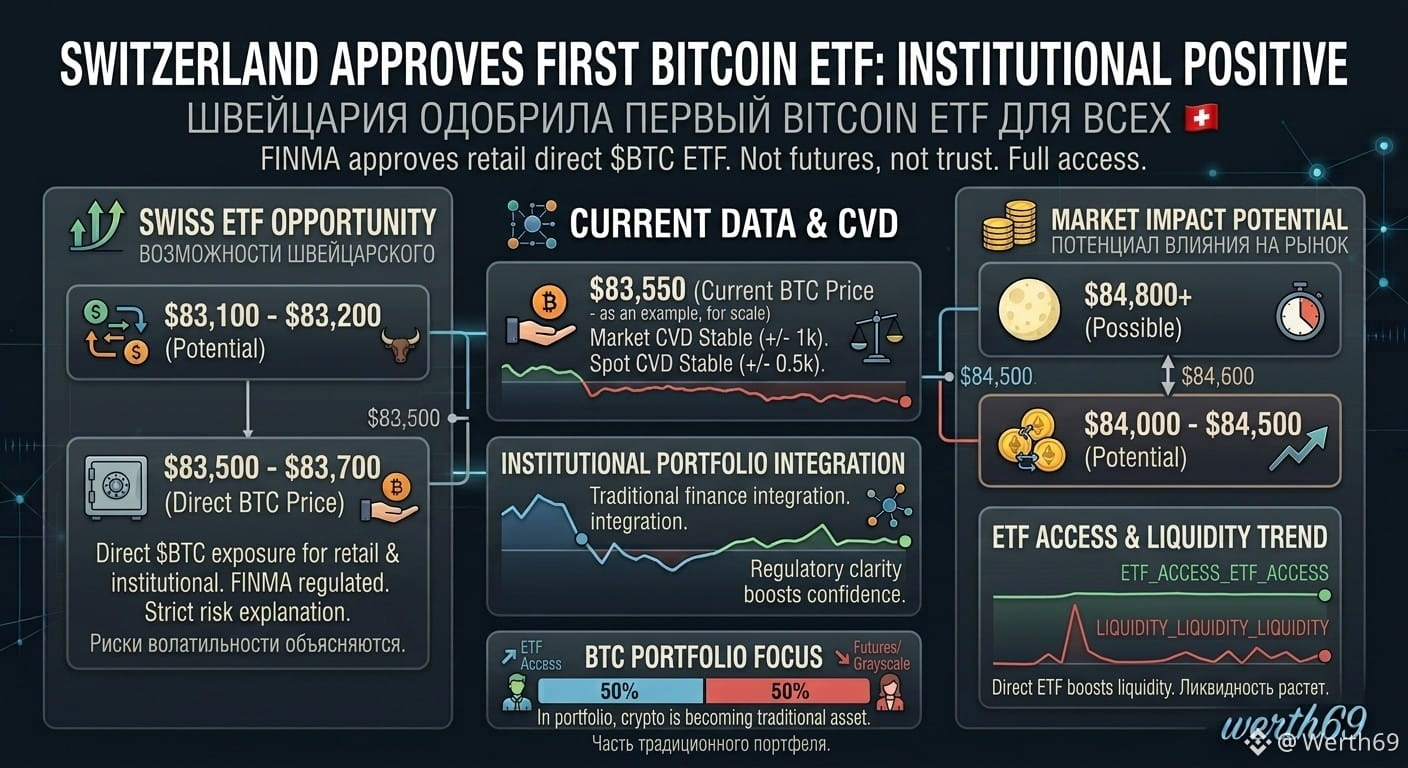
Switzerland and ETFs (Institutional bullishness😁😁😁😁😁)
Switzerland approves its first Bitcoin ETF
Swiss regulator FINMA has officially approved the first retail fund that invests directly in $BTC. It’s not a futures ETF or a trust—it’s a full-fledged exchange-traded fund available to the general public.
Why this matters:
Switzerland is one of the world’s most conservative financial centers. Approving an ETF here means Bitcoin has passed scrutiny even from the strictest regulators. FINMA specifically emphasized that investors need to be informed about volatility risks, but the launch itself already says a lot.
For the market, this is another step toward crypto becoming part of a traditional investment portfolio. Whereas institutions previously gained exposure through Grayscale or futures, they now have direct access through a regulated ETF.
#bitcoin #etf #CryptoAdoption
$BTC
{future}(BTCUSDT)
Switzerland and ETFs (Institutional bullishness😁😁😁😁😁)
Switzerland approves its first Bitcoin ETF
Swiss regulator FINMA has officially approved the first retail fund that invests directly in $BTC . It’s not a futures ETF or a trust—it’s a full-fledged exchange-traded fund available to the general public.
Why this matters:
Switzerland is one of the world’s most conservative financial centers. Approving an ETF here means Bitcoin has passed scrutiny even from the strictest regulators. FINMA specifically emphasized that investors need to be informed about volatility risks, but the launch itself already says a lot.
For the market, this is another step toward crypto becoming part of a traditional investment portfolio. Whereas institutions previously gained exposure through Grayscale or futures, they now have direct access through a regulated ETF.
#bitcoin #etf #CryptoAdoption
$BTC
Switzerland approves its first Bitcoin ETF
Swiss regulator FINMA has officially approved the first retail fund that invests directly in $BTC . It’s not a futures ETF or a trust—it’s a full-fledged exchange-traded fund available to the general public.
Why this matters:
Switzerland is one of the world’s most conservative financial centers. Approving an ETF here means Bitcoin has passed scrutiny even from the strictest regulators. FINMA specifically emphasized that investors need to be informed about volatility risks, but the launch itself already says a lot.
For the market, this is another step toward crypto becoming part of a traditional investment portfolio. Whereas institutions previously gained exposure through Grayscale or futures, they now have direct access through a regulated ETF.
#bitcoin #etf #CryptoAdoption
$BTC
89
Log in to explore more content
Join global crypto users on Binance Square
⚡️ Get latest and useful information about crypto.
💬 Trusted by the world’s largest crypto exchange.
👍 Discover real insights from verified creators.
Email / Phone number
Trending Topics
1
#BinancePick
2.5M views
136,994 Discussing
2
#EarningsSeason
4.9M views
23,808 Discussing
3
#ElectrumWalletBugLetRogueServersStealFunds
1,292 views
101 Discussing
4
#ArgentineCourtDismissesLIBRACaseAgainstMilei
8,648 views
200 Discussing
5
#SKHynixReportedlyPlansSpecialDividendFromKioxiaStakeSale
2,072 views
31 Discussing
6
#KeystoneWebsiteBreachExposesBuyersShippingAddresses
1,051 views
23 Discussing
7
#USQ3GDPAndSeptemberPCEDueNextWeek
80,510 views
1,014 Discussing
8
#SouthKoreaDelaysCryptoIncomeTax
149,384 views
1,067 Discussing
9
#ElectrumFixesHighRiskExploitInVersionsBefore4.8.3
66,085 views
764 Discussing
10
#SouthKoreaPlansToRegulateStablecoinsUnderFXLaw
64,034 views
681 Discussing