
#flux
flux
758,049 views
2,522 Discussing
Hot
Latest

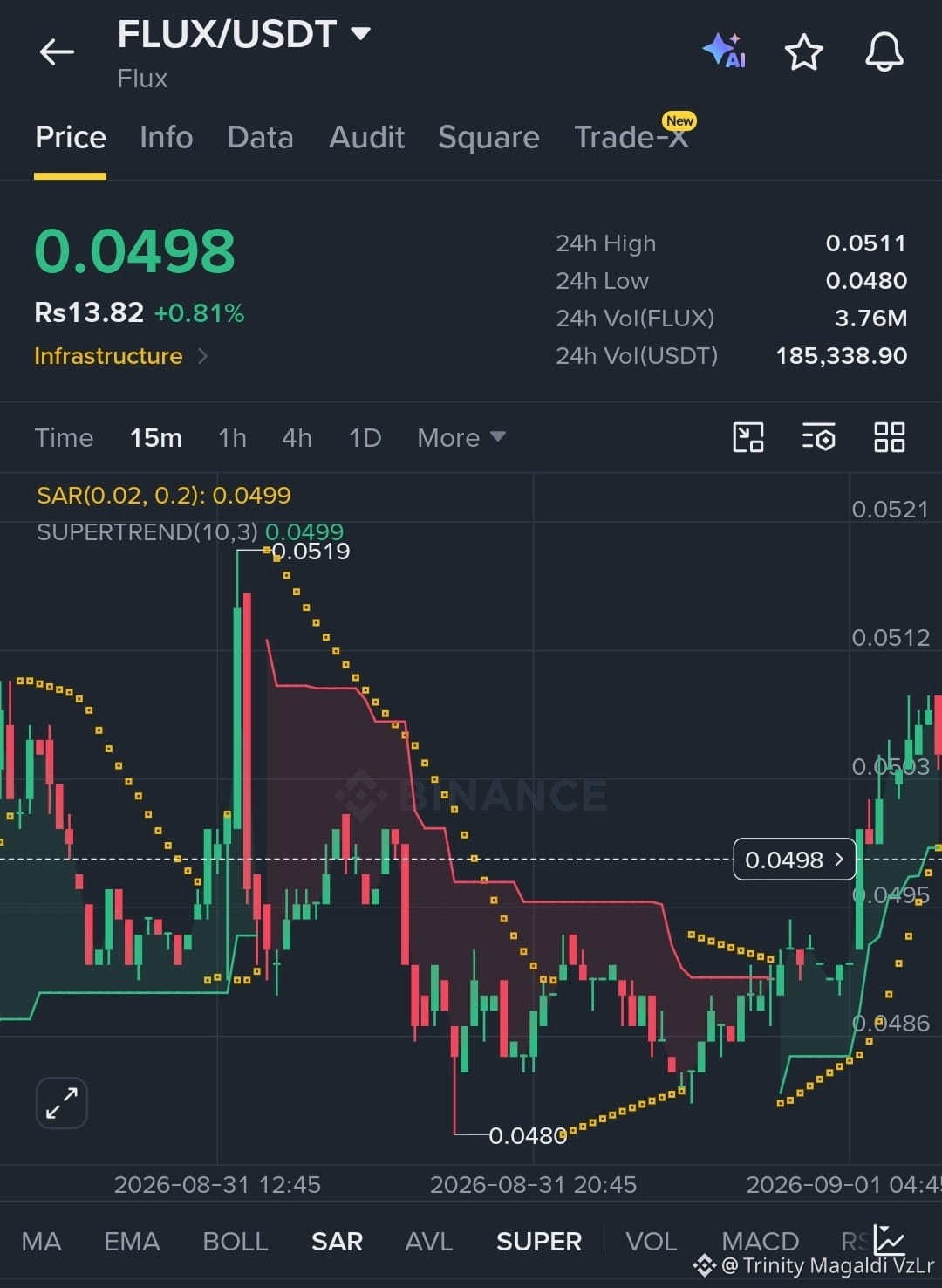

Attention Family This Local Base On $FLUX Looks Interesting…!!
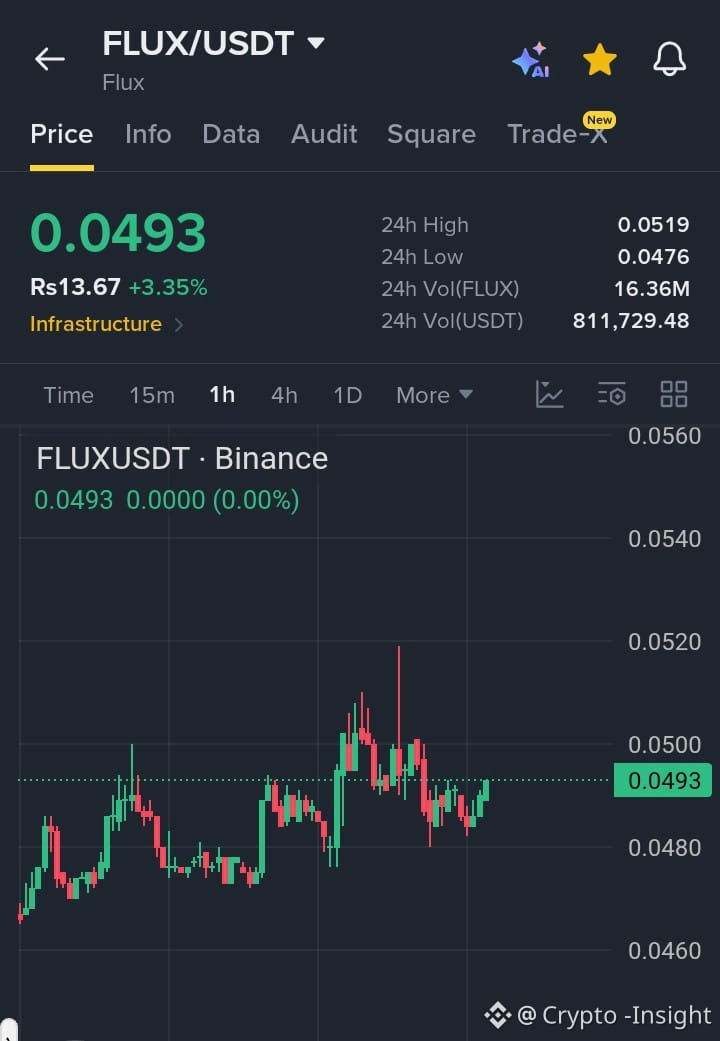
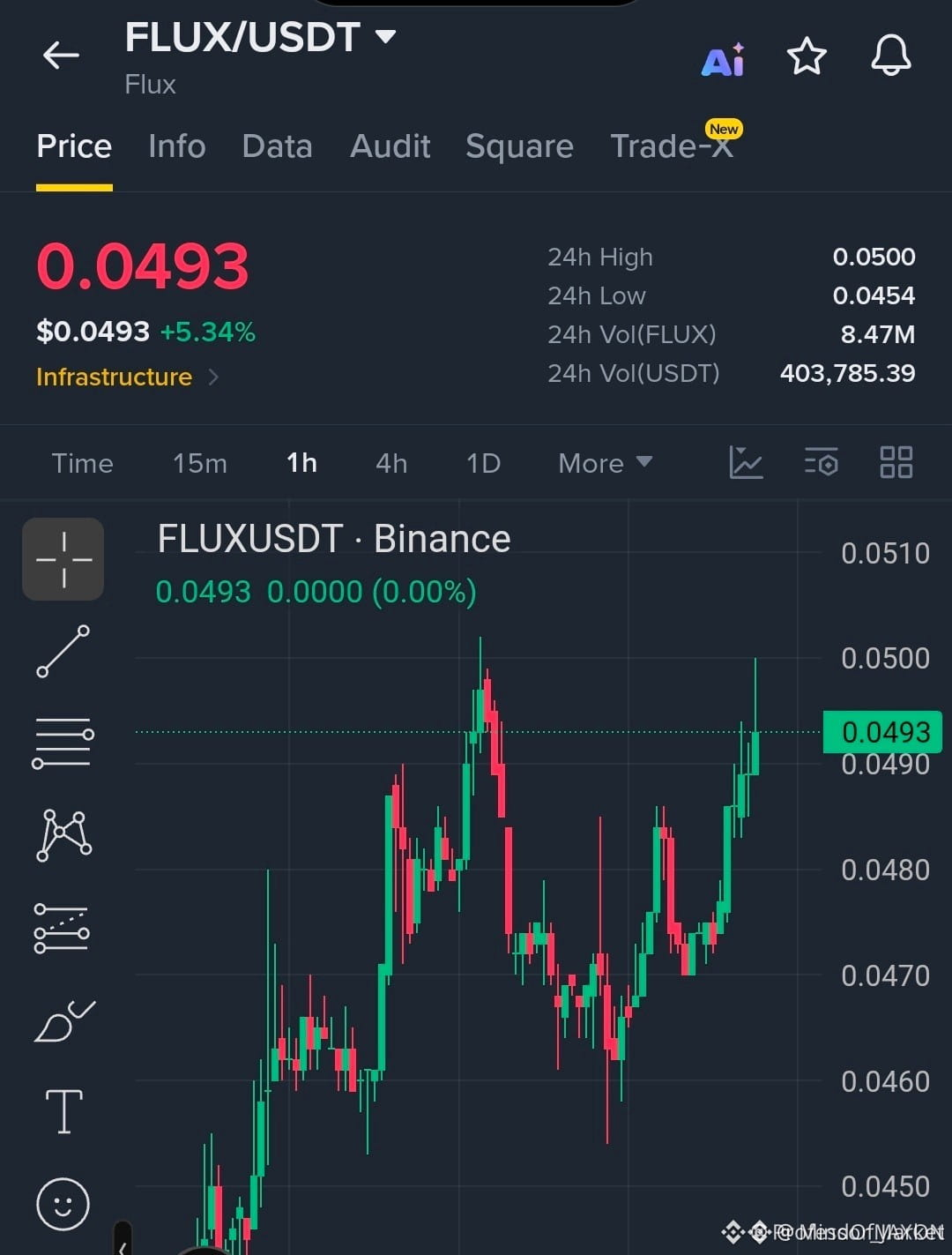
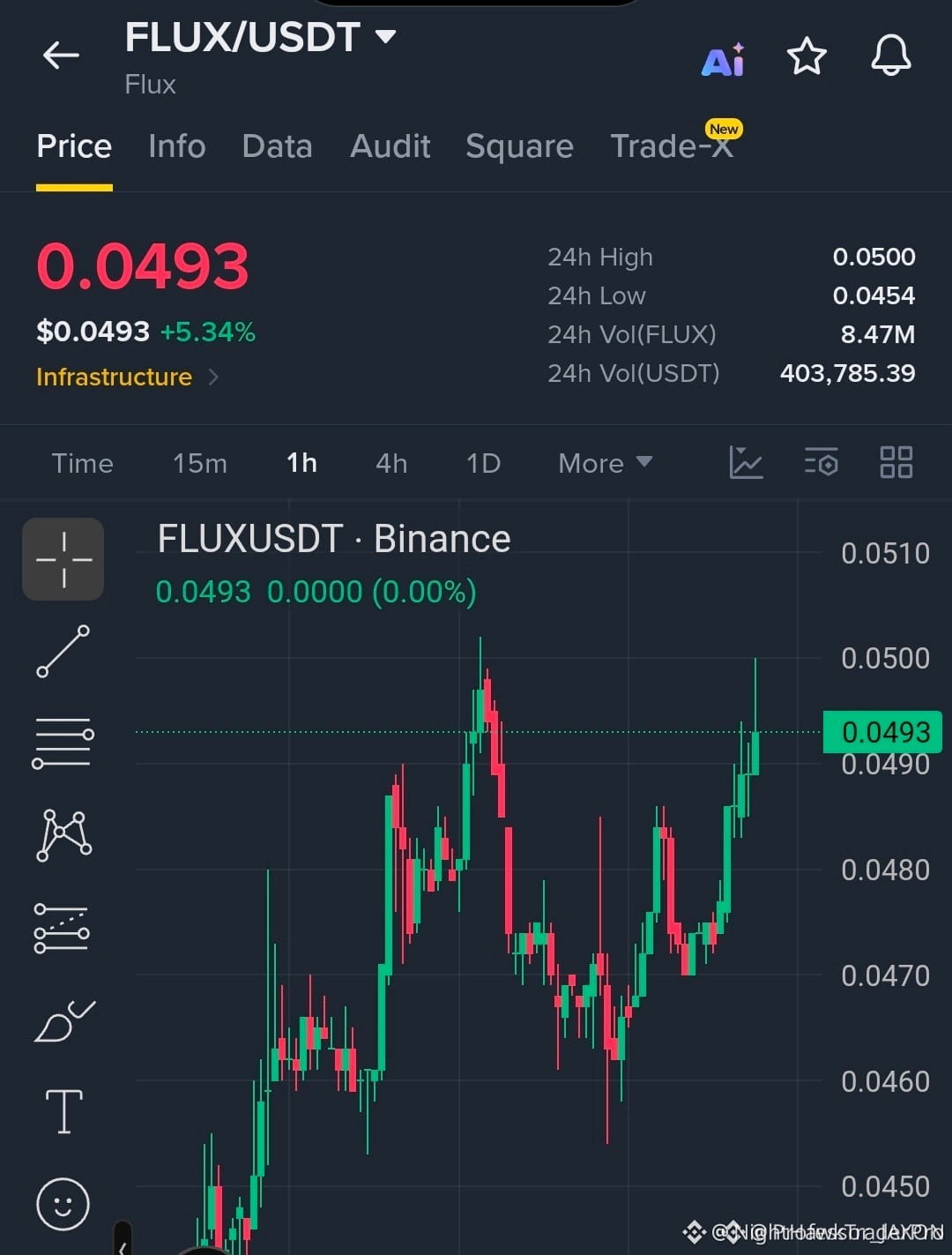
#FLUX is consolidating nicely on the 1h timeframe as it trades near 0.0493 after holding firmly above key support at 0.0476 buyers are gradually gaining momentum to push price back toward recent local highs after a temporary pullback if this bullish structure continues to build strength the next targets on the horizon are 0.0519 and 0.0540
$TUT
$BTR
#FLUX is consolidating nicely on the 1h timeframe as it trades near 0.0493 after holding firmly above key support at 0.0476 buyers are gradually gaining momentum to push price back toward recent local highs after a temporary pullback if this bullish structure continues to build strength the next targets on the horizon are 0.0519 and 0.0540
$TUT
$BTR

💥 $FLUX COMPRESSING AT KEY DEMAND FOR A HIGH-CONVICTION MOMENTUM CONTINUATION! 🚀
Entry: 0.05088 - 0.05099 ⚡
Target: 0.05150 - 0.05240 🚀
Stop Loss: 0.04710 ⚠️
Smart money is quietly building positioning right inside this tight accumulation pocket while seller volume visibly dries up. 📊 Order flow indicates heavy bid absorption around the pivot, setting the stage for an immediate liquidity release toward overhead supply.
With the structural floor firmly defined, this setup offers a clean risk-to-reward ratio before momentum shifts into high gear. ⚡ 💡
💬 Are you stepping into this demand pocket early or waiting for the high-volume breakout sweep? 👇
⚠️ Not financial advice. Always manage your risk. 🛡️
🏷️ #FLUX #LongSetup #Crypto #Altcoins #Breakout
⚡ 🎯
Entry: 0.05088 - 0.05099 ⚡
Target: 0.05150 - 0.05240 🚀
Stop Loss: 0.04710 ⚠️
Smart money is quietly building positioning right inside this tight accumulation pocket while seller volume visibly dries up. 📊 Order flow indicates heavy bid absorption around the pivot, setting the stage for an immediate liquidity release toward overhead supply.
With the structural floor firmly defined, this setup offers a clean risk-to-reward ratio before momentum shifts into high gear. ⚡ 💡
💬 Are you stepping into this demand pocket early or waiting for the high-volume breakout sweep? 👇
⚠️ Not financial advice. Always manage your risk. 🛡️
🏷️ #FLUX #LongSetup #Crypto #Altcoins #Breakout
⚡ 🎯

🚨 $FLUX PRINTS TEXTBOOK SMART MONEY ACCUMULATION INSIDE LOCAL DEMAND BLOCK! 🦈
Entry: 0.05088906 - 0.05099094 ⚡
Target: 0.05149971 - 0.05239526 🚀
Stop Loss: 0.04710000 ⚠️
📌 Institutional order flow on $FLUX shows clear signs of buy-side absorption right at the low-timeframe demand cluster. 🌊 Smart money is systematically defending this level after sweeping sell-side liquidity, setting up a clean structural expansion toward upper inefficiency gaps.
💡 With high-conviction structural alignment, price action favors a swift reclaim of upper liquidity targets. 💬 Are you following the institutional footprint here or waiting for high-volume confirmation above resistance? 👇
⚠️ Not financial advice. Always manage your risk. 🛡️
🏷️ #FLUX #LongSetup #Crypto #Trading #PriceAction
🎯 🦈
Entry: 0.05088906 - 0.05099094 ⚡
Target: 0.05149971 - 0.05239526 🚀
Stop Loss: 0.04710000 ⚠️
📌 Institutional order flow on $FLUX shows clear signs of buy-side absorption right at the low-timeframe demand cluster. 🌊 Smart money is systematically defending this level after sweeping sell-side liquidity, setting up a clean structural expansion toward upper inefficiency gaps.
💡 With high-conviction structural alignment, price action favors a swift reclaim of upper liquidity targets. 💬 Are you following the institutional footprint here or waiting for high-volume confirmation above resistance? 👇
⚠️ Not financial advice. Always manage your risk. 🛡️
🏷️ #FLUX #LongSetup #Crypto #Trading #PriceAction
🎯 🦈

MACRO NOISE CREATING BIG VOLATILITY ACROSS $FLUX AND ALTS 🚀
Headline news is shaking up macro order books. Sharp liquidity sweeps are slamming altcoins like $FLUX , $BREV , and $DOLO . Smart money is using this shock to wipe out weak retail leverage and fill overhead fair value gaps.
Order flow is absorbing the shock. Key structural support blocks are holding the line against capitulation. I'm watching deep demand pools for buyers to step in so we can catch the move when it's time to rip higher. 🔥
How are you managing your trade parameters and leverage during this macro volatility shock?
Not financial advice. Always manage your risk.
#FLUX #MacroVolatility #MarketStructure #Crypto #SmartMoney
Trade the move, not the noise.
Headline news is shaking up macro order books. Sharp liquidity sweeps are slamming altcoins like $FLUX , $BREV , and $DOLO . Smart money is using this shock to wipe out weak retail leverage and fill overhead fair value gaps.
Order flow is absorbing the shock. Key structural support blocks are holding the line against capitulation. I'm watching deep demand pools for buyers to step in so we can catch the move when it's time to rip higher. 🔥
How are you managing your trade parameters and leverage during this macro volatility shock?
Not financial advice. Always manage your risk.
#FLUX #MacroVolatility #MarketStructure #Crypto #SmartMoney
Trade the move, not the noise.

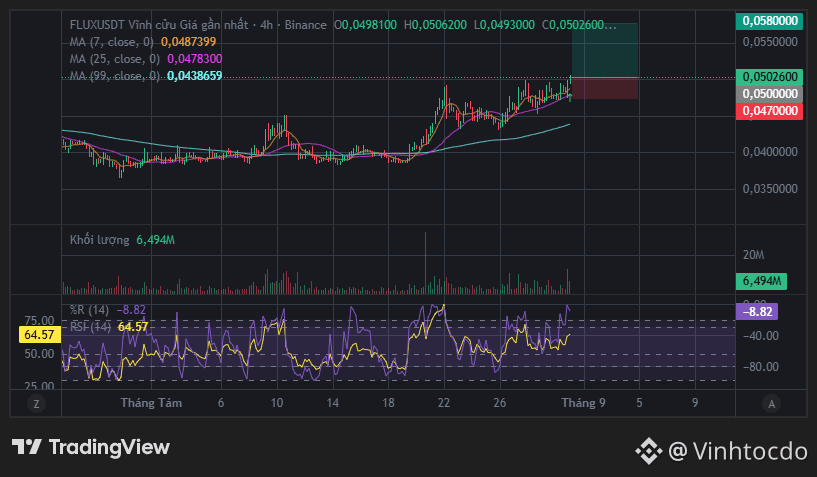
🚀 Is #flux getting ready to pump or just teasing us? Let’s check the chart! $FLUX
Our favorite coin $FLUX is currently chilling at $0.05026 with a solid 24h volume of 6.494M!
Here is the quick breakdown:
📊 MA Gang: MA-7 ($0.0487) and MA-25 ($0.0478) are healthily cruising above the long-term MA-99 ($0.0438). Bullish structure is active!
🔥 RSI (14): At 64.57 – hot, but still has plenty of room to run before overheating.
⚡ Williams %R: Sitting at -8.82 (Overbought territory). The bulls are clearly driving this car!
🔮 Prediction: The chart setup looks ready for an upward continuation! If you're riding this wave, here is the plan:
🎯 TP (Take Profit): $0.058
🛑 SL (Stop Loss): $0.047
⚠️ Not financial advice. Do your own research!
💸 Use code VINHTOCDO or link below to get maximum fee discounts on Binance:
👉 https://www.binance.com/register?ref=VINHTOCDO
#VINHTOCDO #TechnicalAnalysis #Bullish #YenFallsDespite$97BJapanSupport
Our favorite coin $FLUX is currently chilling at $0.05026 with a solid 24h volume of 6.494M!
Here is the quick breakdown:
📊 MA Gang: MA-7 ($0.0487) and MA-25 ($0.0478) are healthily cruising above the long-term MA-99 ($0.0438). Bullish structure is active!
🔥 RSI (14): At 64.57 – hot, but still has plenty of room to run before overheating.
⚡ Williams %R: Sitting at -8.82 (Overbought territory). The bulls are clearly driving this car!
🔮 Prediction: The chart setup looks ready for an upward continuation! If you're riding this wave, here is the plan:
🎯 TP (Take Profit): $0.058
🛑 SL (Stop Loss): $0.047
⚠️ Not financial advice. Do your own research!
💸 Use code VINHTOCDO or link below to get maximum fee discounts on Binance:
👉 https://www.binance.com/register?ref=VINHTOCDO
#VINHTOCDO #TechnicalAnalysis #Bullish #YenFallsDespite$97BJapanSupport
Crucial Breakout Level Approaching For $FLUX Check This Out…!!
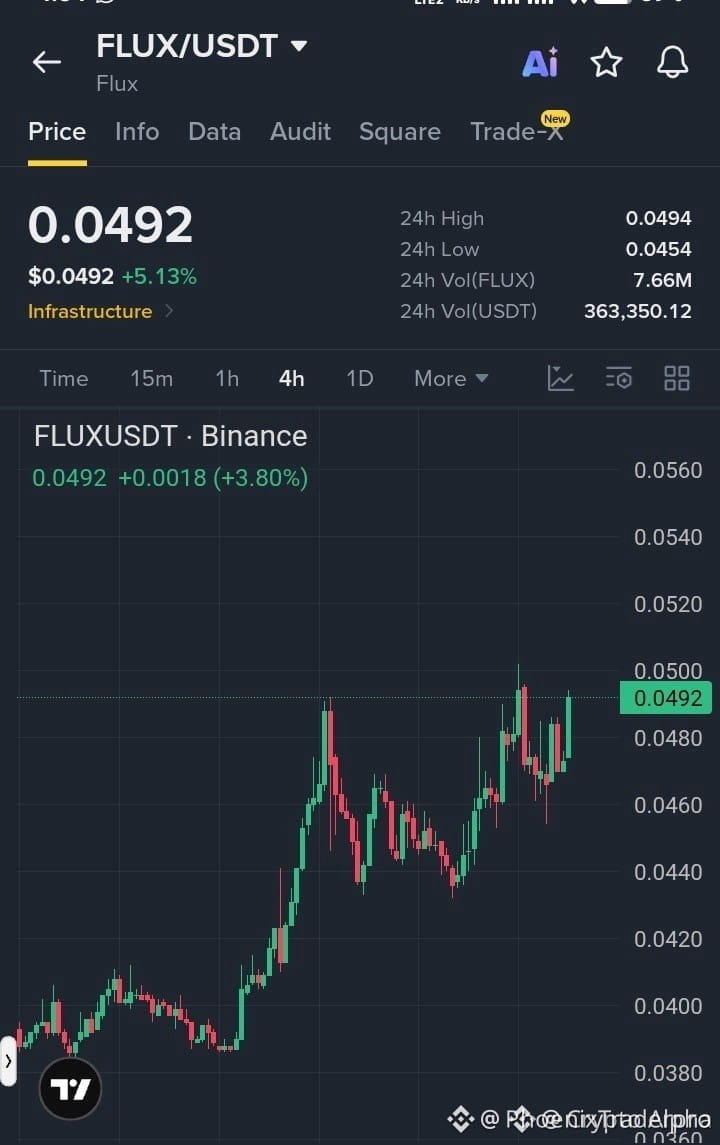
#FLUX is showing steady bullish strength as buyers consistently defend higher lows and push price right up against the major 0.05000 resistance zone The overall structure remains bullish with strong upward momentum pushing towards a breakout level If the price cleanly breaks above 0.05000 the potential upside targets are 0.05250 and 0.05500 while 0.04710 serves as the primary support zone holding this pattern intact$BTR
#FLUX is showing steady bullish strength as buyers consistently defend higher lows and push price right up against the major 0.05000 resistance zone The overall structure remains bullish with strong upward momentum pushing towards a breakout level If the price cleanly breaks above 0.05000 the potential upside targets are 0.05250 and 0.05500 while 0.04710 serves as the primary support zone holding this pattern intact$BTR
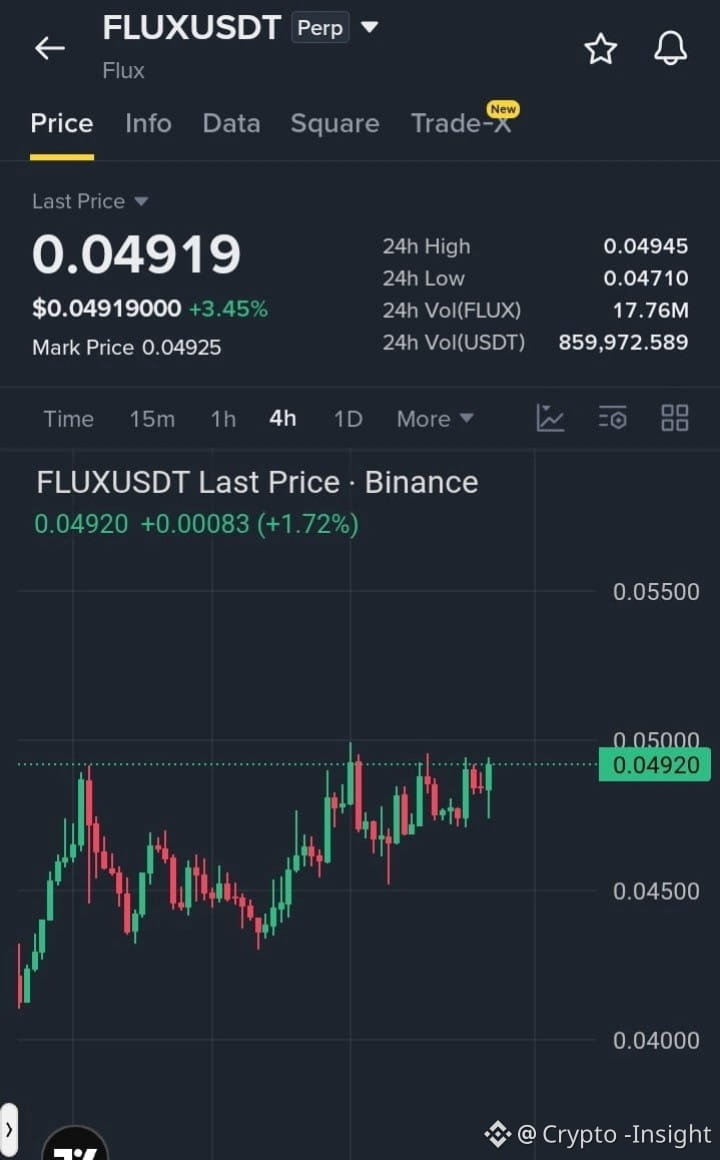

⚡ $FLUX COMPRESSES BELOW RESISTANCE AS SMART MONEY BUYS THE HIGHER LOWS 🎯
Entry: 0.0488 - 0.0492 ⚡
Target: 0.0505 🚀
Stop Loss: 0.0478 ⚠️
Institutional order flow on $FLUX shows persistent absorption directly beneath the $0.0495 supply wall. 📊 Price action continues painting a series of crisp higher lows on the 4H timeframe, signaling that sell-side liquidity is eroding rapidly.
🔍 A decisive 4H close above $0.0495 clears the path toward upper liquidity pools up to $0.0505, while $0.0480 remains the key structural floor protecting the bullish thesis. 💡 Analysts are also tracking structural setups across $BTR and $TUT for aligned momentum. 💭 Are you positioning inside this entry demand block or waiting for a confirmed resistance breakout? 👇
⚠️ Not financial advice. Always manage your risk. 🛡️
🏷️ #FLUX #BTR #TUT #Crypto #Breakout
🎯 🦈
Entry: 0.0488 - 0.0492 ⚡
Target: 0.0505 🚀
Stop Loss: 0.0478 ⚠️
Institutional order flow on $FLUX shows persistent absorption directly beneath the $0.0495 supply wall. 📊 Price action continues painting a series of crisp higher lows on the 4H timeframe, signaling that sell-side liquidity is eroding rapidly.
🔍 A decisive 4H close above $0.0495 clears the path toward upper liquidity pools up to $0.0505, while $0.0480 remains the key structural floor protecting the bullish thesis. 💡 Analysts are also tracking structural setups across $BTR and $TUT for aligned momentum. 💭 Are you positioning inside this entry demand block or waiting for a confirmed resistance breakout? 👇
⚠️ Not financial advice. Always manage your risk. 🛡️
🏷️ #FLUX #BTR #TUT #Crypto #Breakout
🎯 🦈
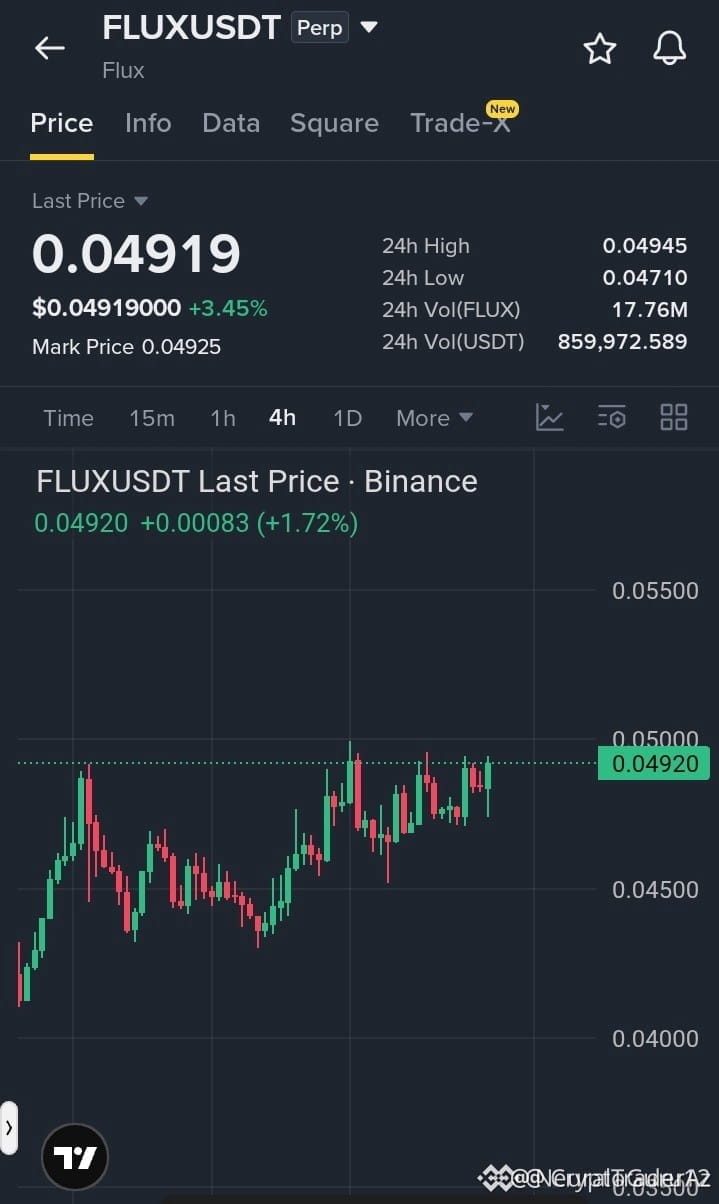
⚡ $FLUX BUYERS DRIVING HIGHER LOWS INTO KEY 0.0495 RESISTANCE! 💥
Entry: 0.0488 - 0.0492 ⚡
Target: 0.0496 / 0.0500 / 0.0505 🚀
Stop Loss: 0.0478 ⚠️
Bulls are relentlessly grinding price higher on the 4H chart, hammering against the supply zone at 0.0495 while building a tight staircase of higher lows. 📊 The pressure building beneath this level suggests order flow is shifting heavily toward aggressive buyers.
A crisp 4H candle acceptance above 0.0495 paves the way for momentum to unleash toward our upper targets, while 0.0480 serves as the line in the sand protecting the structure. 🔍 Sharp traders are watching this compression squeeze closely before the next leg unfolds. 💬 Are you front-running this breakout attempt or waiting for confirmation above resistance? 👇
⚠️ Not financial advice. Always manage your risk. 🛡️
🏷️ #FLUX #LongSetup #Breakout #Crypto
🔥 💎
Entry: 0.0488 - 0.0492 ⚡
Target: 0.0496 / 0.0500 / 0.0505 🚀
Stop Loss: 0.0478 ⚠️
Bulls are relentlessly grinding price higher on the 4H chart, hammering against the supply zone at 0.0495 while building a tight staircase of higher lows. 📊 The pressure building beneath this level suggests order flow is shifting heavily toward aggressive buyers.
A crisp 4H candle acceptance above 0.0495 paves the way for momentum to unleash toward our upper targets, while 0.0480 serves as the line in the sand protecting the structure. 🔍 Sharp traders are watching this compression squeeze closely before the next leg unfolds. 💬 Are you front-running this breakout attempt or waiting for confirmation above resistance? 👇
⚠️ Not financial advice. Always manage your risk. 🛡️
🏷️ #FLUX #LongSetup #Breakout #Crypto
🔥 💎
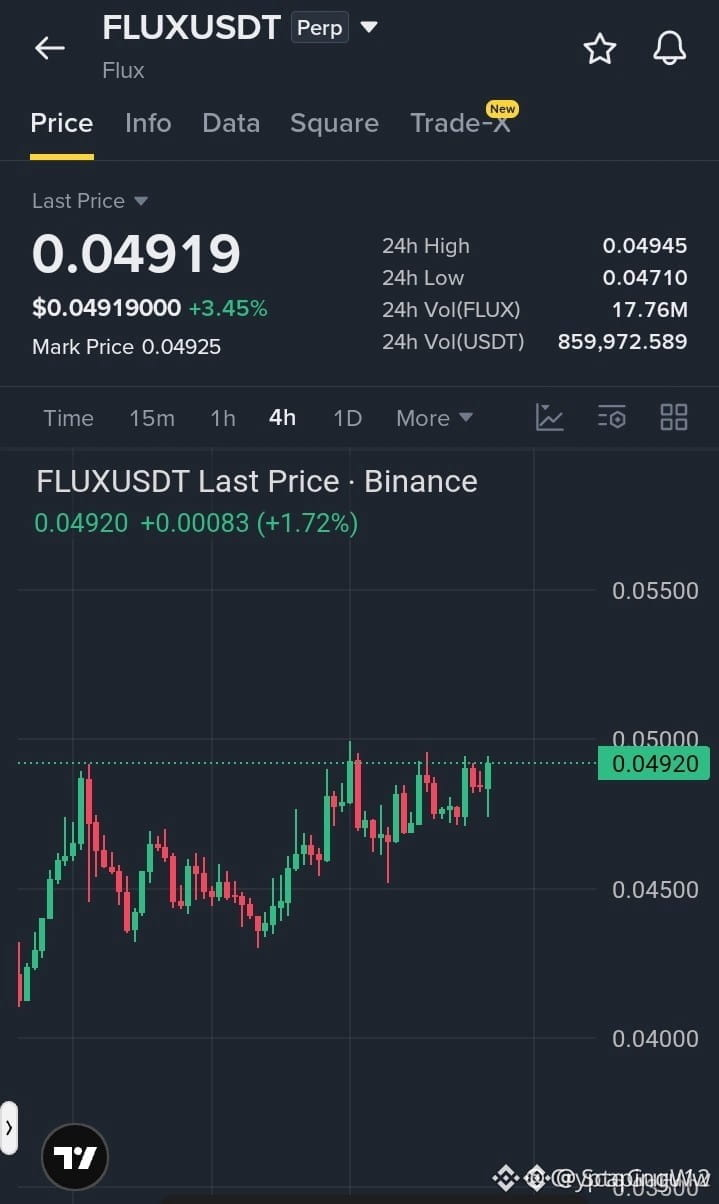
🚨 $FLUX PRINTS TEXTBOOK DEMAND RECLAIM AS INSTITUTIONAL LIQUIDITY SWEEP COMPLETES! 🟢
Entry: 0.04918 - 0.04928 ⚡
Target: 0.04972 - 0.05050 🚀
Stop Loss: 0.04710 ⚠️
Smart money has completed its sell-side liquidity hunt, absorbing structural pressure directly inside the 0.04918 demand imbalance. 🦈 Institutional order flow shows clean accumulation with an inefficiency fill setting up the next upside expansion.
📌 With structural support holding firm above 0.04710, the path of least resistance favors a swift reclaim of local highs toward the 0.05050 liquidity pool. 📊 Risk parameters remain exceptionally crisp as market structure shifts into bullish alignment. 💬 Are you following the institutional footprint here or waiting for a breakout confirmation? 👇
⚠️ Not financial advice. Always manage your risk. 🛡️
🏷️ #FLUX #LongSetup #Crypto #Altcoins #SmartMoney
🔥 💎
Entry: 0.04918 - 0.04928 ⚡
Target: 0.04972 - 0.05050 🚀
Stop Loss: 0.04710 ⚠️
Smart money has completed its sell-side liquidity hunt, absorbing structural pressure directly inside the 0.04918 demand imbalance. 🦈 Institutional order flow shows clean accumulation with an inefficiency fill setting up the next upside expansion.
📌 With structural support holding firm above 0.04710, the path of least resistance favors a swift reclaim of local highs toward the 0.05050 liquidity pool. 📊 Risk parameters remain exceptionally crisp as market structure shifts into bullish alignment. 💬 Are you following the institutional footprint here or waiting for a breakout confirmation? 👇
⚠️ Not financial advice. Always manage your risk. 🛡️
🏷️ #FLUX #LongSetup #Crypto #Altcoins #SmartMoney
🔥 💎

🟢 $FLUX IS BUILDING ACCUMULATION PRESSURE FOR AN EXPLOSIVE BREAKOUT MOVE! 💥
Entry: 0.04918 - 0.04928 ⚡
Target: 0.04972 - 0.05050 🚀
Stop Loss: 0.04710 ⚠️
Buyers are quietly absorbing every dip around the 0.04918 zone, establishing a tight accumulation base right on structural demand. 📊 Order flow indicates smart money taking control as sell volume rapidly fades out.
With downside pressure exhausted, a swift reclaim of local highs opens up a clear path toward the upper targets. 💡 Risk is tightly defined below the key pivot, giving this setup exceptional trade asymmetry. 💬 Are you stepping into this bid zone or waiting for the breakout move? 👇
⚠️ Not financial advice. Always manage your risk. 🛡️
🏷️ #FLUX #LongSetup #Altcoins #Crypto
🔥 💎
Entry: 0.04918 - 0.04928 ⚡
Target: 0.04972 - 0.05050 🚀
Stop Loss: 0.04710 ⚠️
Buyers are quietly absorbing every dip around the 0.04918 zone, establishing a tight accumulation base right on structural demand. 📊 Order flow indicates smart money taking control as sell volume rapidly fades out.
With downside pressure exhausted, a swift reclaim of local highs opens up a clear path toward the upper targets. 💡 Risk is tightly defined below the key pivot, giving this setup exceptional trade asymmetry. 💬 Are you stepping into this bid zone or waiting for the breakout move? 👇
⚠️ Not financial advice. Always manage your risk. 🛡️
🏷️ #FLUX #LongSetup #Altcoins #Crypto
🔥 💎

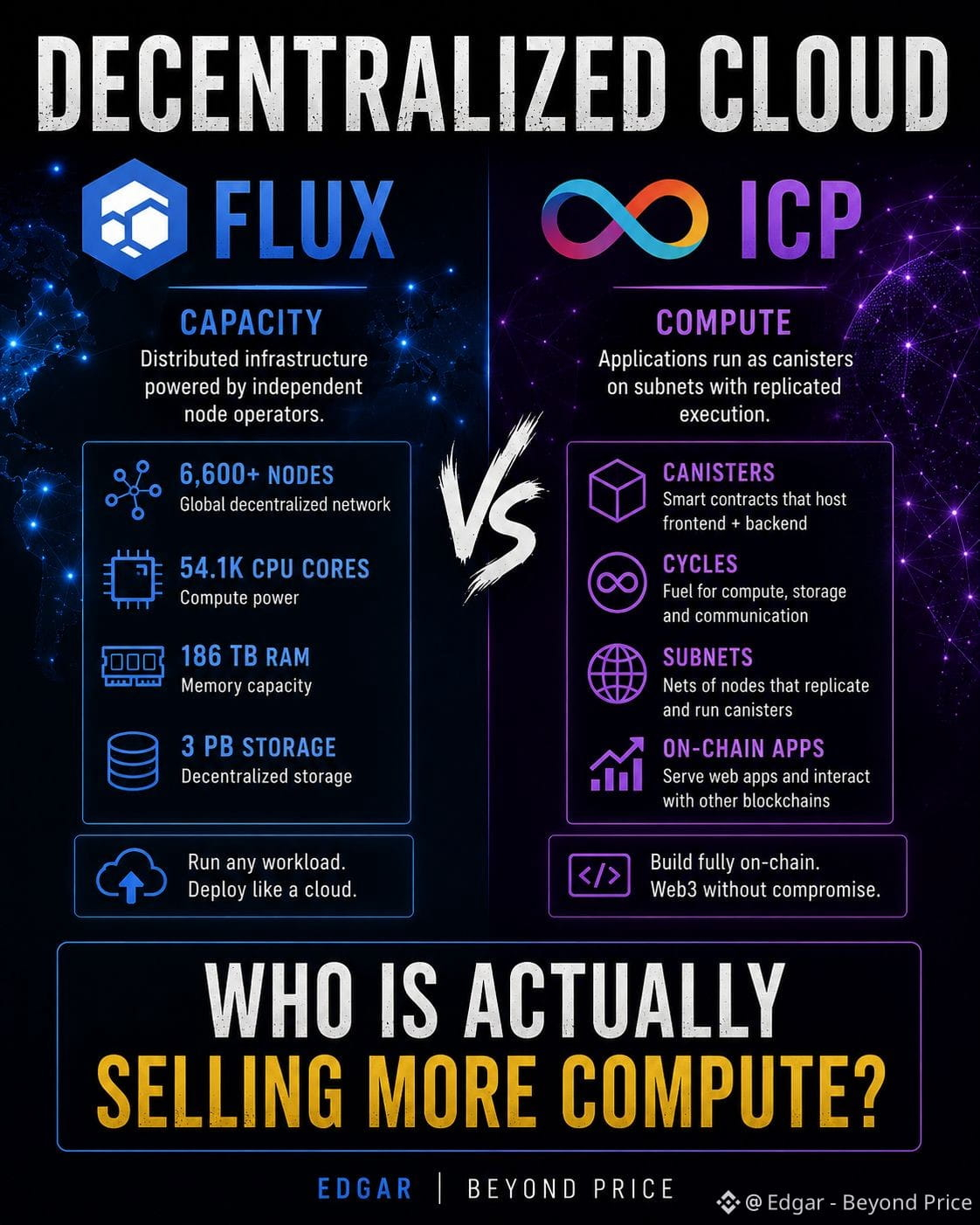
☁️ #flux vs #icp
I've been researching decentralized infrastructure for a while, and these two projects tackle a similar problem in very different ways.
FLUX
🖥️ Thousands of independent servers/nodes
🌎 Globally distributed infrastructure
💾 CPU, RAM, and storage provided by operators
🐳 More conceptually similar to a decentralized cloud where you deploy workloads
Internet Computer
🧠 Applications running as canisters
⛓️ Computation replicated across nodes within each subnet
🔥 Applications consume cycles to pay for compute, storage, and communication
🌐 The blockchain can directly serve applications and communicate with other networks
But for me, the truly interesting difference isn't in the technology.
It's in how you measure its real demand.
With Flux I want to know:
What percentage of all that available capacity is actually being used and paid for?
With ICP I can look at things like cycle burn, compute load, canisters, and network activity.
And that leads me to a question:
If they had to evaluate which of these two infrastructures is achieving greater REAL adoption, what metrics would they compare?
Not which has better pricing.
Not which has a better narrative.
Which is selling more useful computation.
$FLUX $ICP
Beyond Price.
I've been researching decentralized infrastructure for a while, and these two projects tackle a similar problem in very different ways.
FLUX
🖥️ Thousands of independent servers/nodes
🌎 Globally distributed infrastructure
💾 CPU, RAM, and storage provided by operators
🐳 More conceptually similar to a decentralized cloud where you deploy workloads
Internet Computer
🧠 Applications running as canisters
⛓️ Computation replicated across nodes within each subnet
🔥 Applications consume cycles to pay for compute, storage, and communication
🌐 The blockchain can directly serve applications and communicate with other networks
But for me, the truly interesting difference isn't in the technology.
It's in how you measure its real demand.
With Flux I want to know:
What percentage of all that available capacity is actually being used and paid for?
With ICP I can look at things like cycle burn, compute load, canisters, and network activity.
And that leads me to a question:
If they had to evaluate which of these two infrastructures is achieving greater REAL adoption, what metrics would they compare?
Not which has better pricing.
Not which has a better narrative.
Which is selling more useful computation.
$FLUX $ICP
Beyond Price.

$FLUX LONG
Buyers are attempting to intercept control and develop upward momentum directly from the current positions. If this impulse continues, the asset may gradually move toward the marked targets.
🔹Entry zone: 0.04989
💰Target 1: 0.0506801 (+1.58%)
💰Target 2: 0.0516802 (+3.59%)
💰Target 3: 0.05318034 (+6.60%)
❌Stop-loss: 0.04817985 (-3.43%)
⚠️ This is not financial advice. Trade at your own risk. DYOR.
#FLUX #BTWUSDT #BANKUSDT 📈
$FLUX
Buyers are attempting to intercept control and develop upward momentum directly from the current positions. If this impulse continues, the asset may gradually move toward the marked targets.
🔹Entry zone: 0.04989
💰Target 1: 0.0506801 (+1.58%)
💰Target 2: 0.0516802 (+3.59%)
💰Target 3: 0.05318034 (+6.60%)
❌Stop-loss: 0.04817985 (-3.43%)
⚠️ This is not financial advice. Trade at your own risk. DYOR.
#FLUX #BTWUSDT #BANKUSDT 📈
$FLUX
🚨 $FLUX RECLAIMS CRITICAL 0.050 STRUCTURE AS BULLS TARGET THE 0.057 LIQUIDITY POOL! ⚡
Entry: 0.0488 - 0.0500 ⚡
Target: 0.0570 🚀
Stop Loss: 0.0465 ⚠️
📌 Smart money has officially cleared the heavy supply overhead at 0.0500, converting prior resistance into a high-confluence demand block between 0.0488 and 0.0490. 🔍 Order flow shows aggressive seller absorption, opening a direct pathway toward the buy-side liquidity targeted near 0.0570.
💡 As long as structural invalidation at 0.0465 remains untouched, buyers maintain full control over market direction. 💬 Are you bidding this order block retest or waiting for higher timeframe confirmation? 👇
⚠️ Not financial advice. Always manage your risk. 🛡️
🏷️ #FLUX #LongSetup #Crypto #Breakout #Altcoins
🔥 💎
Entry: 0.0488 - 0.0500 ⚡
Target: 0.0570 🚀
Stop Loss: 0.0465 ⚠️
📌 Smart money has officially cleared the heavy supply overhead at 0.0500, converting prior resistance into a high-confluence demand block between 0.0488 and 0.0490. 🔍 Order flow shows aggressive seller absorption, opening a direct pathway toward the buy-side liquidity targeted near 0.0570.
💡 As long as structural invalidation at 0.0465 remains untouched, buyers maintain full control over market direction. 💬 Are you bidding this order block retest or waiting for higher timeframe confirmation? 👇
⚠️ Not financial advice. Always manage your risk. 🛡️
🏷️ #FLUX #LongSetup #Crypto #Breakout #Altcoins
🔥 💎
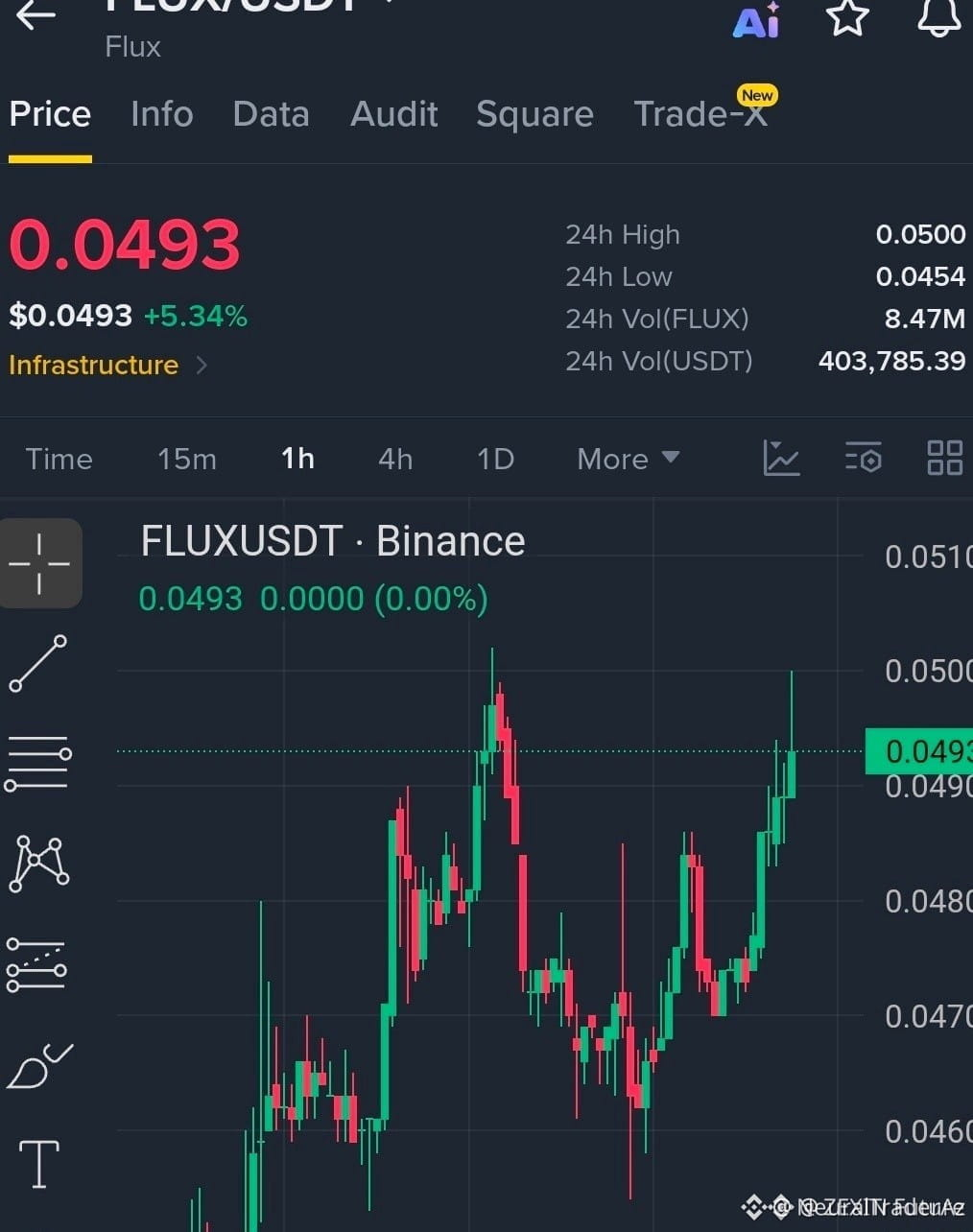

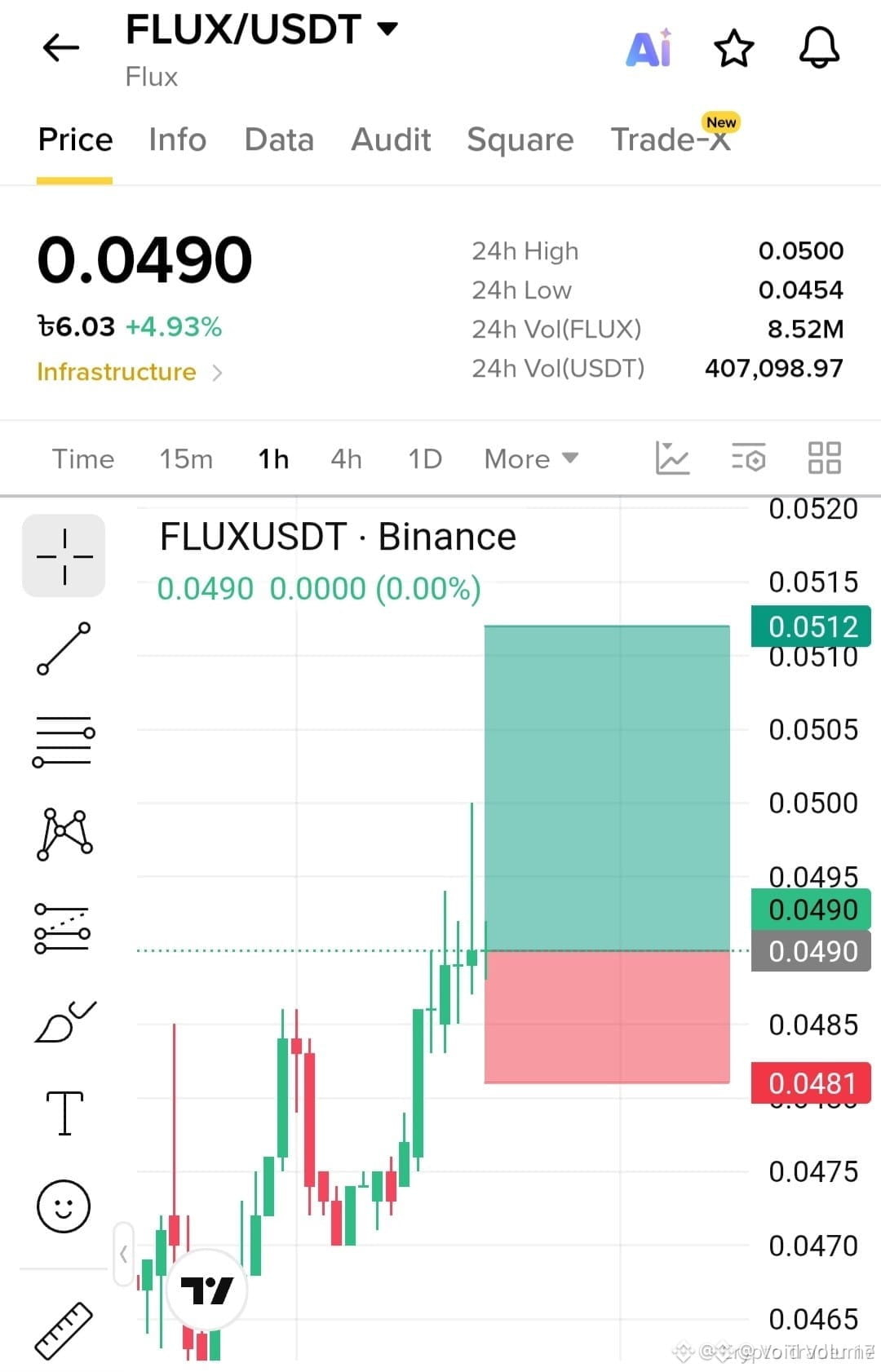
🚨 $FLUX RECLAIMS CRITICAL DEMAND AFTER EXPANSION FROM THE 0.0465 LIQUIDITY POOL! 💥
Entry: 0.0489 - 0.0490 ⚡
Target: 0.0496 - 0.0512 🚀
Stop Loss: 0.0481 ⚠️
Institutional buyers stepped in heavily at the $0.0465 level, sparking a clean structural expansion directly into the $0.0490 accumulation block. 📌 This sharp displacement signals smart money defense of key market structure. 📊
Price is now consolidating above local demand, paving an efficient path toward higher liquidity targets up to $0.0512. 🔍 Risk remains strictly defined beneath the immediate structural pivot at $0.0481. 🤔 Are you front-running the next expansion leg or waiting for target confirmation? 👇
⚠️ Not financial advice. Always manage your risk. 🛡️
🏷️ #FLUX #LongSetup #SmartMoney #Crypto #Trading
🎯 🦈
Entry: 0.0489 - 0.0490 ⚡
Target: 0.0496 - 0.0512 🚀
Stop Loss: 0.0481 ⚠️
Institutional buyers stepped in heavily at the $0.0465 level, sparking a clean structural expansion directly into the $0.0490 accumulation block. 📌 This sharp displacement signals smart money defense of key market structure. 📊
Price is now consolidating above local demand, paving an efficient path toward higher liquidity targets up to $0.0512. 🔍 Risk remains strictly defined beneath the immediate structural pivot at $0.0481. 🤔 Are you front-running the next expansion leg or waiting for target confirmation? 👇
⚠️ Not financial advice. Always manage your risk. 🛡️
🏷️ #FLUX #LongSetup #SmartMoney #Crypto #Trading
🎯 🦈

FLUX longs took a $4.8699K hit near $0.04763.
The downside liquidity sweep is worth watching.
$FLUX
🔴 LIQUIDITY ZONE HIT 🔴
Long liquidation spotted 🧨
$4.8699K cleared at $0.04763
Downside liquidity swept — watch reaction 👀
🎯 TP Targets:
TP1: ~$0.04715
TP2: ~$0.04668
TP3: ~$0.04620
#flux
The downside liquidity sweep is worth watching.
$FLUX
🔴 LIQUIDITY ZONE HIT 🔴
Long liquidation spotted 🧨
$4.8699K cleared at $0.04763
Downside liquidity swept — watch reaction 👀
🎯 TP Targets:
TP1: ~$0.04715
TP2: ~$0.04668
TP3: ~$0.04620
#flux

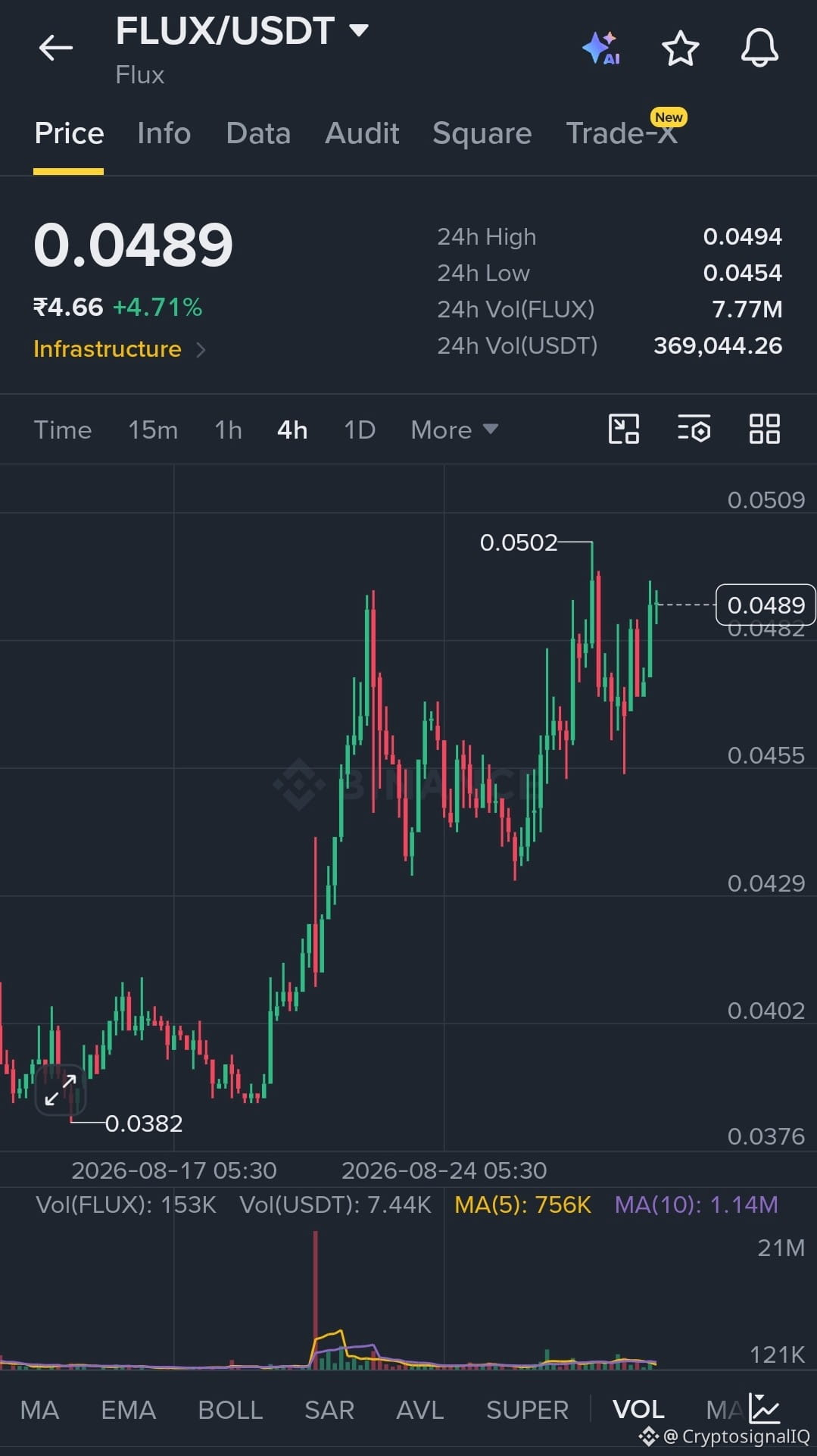
$FLUX — Steady Climber Off a Higher-Low Base Trading at 0.0489, up +4.71%, this has been one long uptrend since 0.0382 — a strong initial breakout, a healthy pullback to 0.0429 that held above the prior base, and now a fresh push back toward the recent high at 0.0502. What stands out is how orderly the chop between 0.043–0.045 was before this latest leg, more consolidation than distribution.
LONG SETUP
Entry: 0.0468 – 0.0485
🎯 TP1: 0.0494
🎯 TP2: 0.0509
🎯 TP3: 0.0530
🛑 SL: 0.0429
🔥 0.0429 marks the low of the last real consolidation, so losing it would break the whole uptrend structure. A volume-backed close above 0.0502 is what would confirm this is heading into genuinely new territory rather than just retesting the recent top.
Trade #flux here
$BTR
$DEXE
LONG SETUP
Entry: 0.0468 – 0.0485
🎯 TP1: 0.0494
🎯 TP2: 0.0509
🎯 TP3: 0.0530
🛑 SL: 0.0429
🔥 0.0429 marks the low of the last real consolidation, so losing it would break the whole uptrend structure. A volume-backed close above 0.0502 is what would confirm this is heading into genuinely new territory rather than just retesting the recent top.
Trade #flux here
$BTR
$DEXE

🚨 $FLUX RECLAIMS CRITICAL SUPPLY ZONE AS BUYERS TARGET EXPLOSIVE BREAKOUT ABOVE 0.0500! 💥
Entry: 0.0488 - 0.0500 ⚡
Target: 0.0520 - 0.0570 🚀
Stop Loss: 0.0465 ⚠️
📌 Smart money successfully defended the 0.0454 structural low, shifting local market structure back into buyer control. As long as price holds above the 0.0480–0.0490 order block, we are tracking institutional expansion toward higher liquidity pools.
💡 A clean close above the key 0.0500 barrier acts as the primary trigger to clear overhead inefficiency. 📊 With momentum building on lower timeframes, the path of least resistance points toward expansion targets up to 0.0570.
💬 Are you riding this structural reclaim or waiting for a confirmed breakout close above 0.0500? 👇
⚠️ Not financial advice. Always manage your risk. 🛡️
🏷️ #FLUX #Altcoins #Breakout #Crypto
🎯 🦈
Entry: 0.0488 - 0.0500 ⚡
Target: 0.0520 - 0.0570 🚀
Stop Loss: 0.0465 ⚠️
📌 Smart money successfully defended the 0.0454 structural low, shifting local market structure back into buyer control. As long as price holds above the 0.0480–0.0490 order block, we are tracking institutional expansion toward higher liquidity pools.
💡 A clean close above the key 0.0500 barrier acts as the primary trigger to clear overhead inefficiency. 📊 With momentum building on lower timeframes, the path of least resistance points toward expansion targets up to 0.0570.
💬 Are you riding this structural reclaim or waiting for a confirmed breakout close above 0.0500? 👇
⚠️ Not financial advice. Always manage your risk. 🛡️
🏷️ #FLUX #Altcoins #Breakout #Crypto
🎯 🦈

⚡ $FLUX PREPARES FOR AN EXPLOSIVE BREAKOUT AFTER RECLAIMING THE $0.050 LEVEL! 💥
Entry: 0.0488 – 0.0500 ⚡
Target: 0.0520 – 0.0570 🚀
Stop Loss: 0.0465 ⚠️
Bulls have successfully defended the 0.0454 low, building consistent momentum as $FLUX presses directly against the critical 0.0500 resistance wall. 📊 Holding the 0.0480–0.0490 support zone gives buyers the exact structural cushion needed to absorb overhead supply before expanding upward.
💡 A decisive flip of 0.0500 clears the runway for acceleration toward the 0.0520 and 0.0570 targets. 🔍 Momentum indicators remain firmly in favor of buyers as long as local support holds. 💬 Are you bidding inside this demand zone or waiting for the breakout candle to close above resistance? 👇
⚠️ Not financial advice. Always manage your risk. 🛡️
🏷️ #FLUX #LongSetup #Breakout #Crypto #Altcoins
🔥 💎
Entry: 0.0488 – 0.0500 ⚡
Target: 0.0520 – 0.0570 🚀
Stop Loss: 0.0465 ⚠️
Bulls have successfully defended the 0.0454 low, building consistent momentum as $FLUX presses directly against the critical 0.0500 resistance wall. 📊 Holding the 0.0480–0.0490 support zone gives buyers the exact structural cushion needed to absorb overhead supply before expanding upward.
💡 A decisive flip of 0.0500 clears the runway for acceleration toward the 0.0520 and 0.0570 targets. 🔍 Momentum indicators remain firmly in favor of buyers as long as local support holds. 💬 Are you bidding inside this demand zone or waiting for the breakout candle to close above resistance? 👇
⚠️ Not financial advice. Always manage your risk. 🛡️
🏷️ #FLUX #LongSetup #Breakout #Crypto #Altcoins
🔥 💎

⚡ $FLUX PREPARES TO EXPLODE FROM CRITICAL ACCUMULATION ZONE! 🚀
Entry: 0.04800 - 0.04920 ⚡
Target: 0.05100 / 0.05300 / 0.05500 🚀
Stop Loss: 0.04600 ⚠️
📌 Buyers are stepping in heavy as $FLUX defense forces protect the 0.04800 demand pocket. Order flow indicates smart money absorbing selling pressure while order book depth builds for an upside expansion. 📊
⚡ A clean flip of this structural base clears the runway toward 0.05500 with exceptional asymmetric risk. Keep your eyes on momentum across $BANK and $HEMI as capital begins rotating back into high-beta setups. 💡
🤔 Are you front-running this breakout zone or waiting for confirmation above resistance? 👇
⚠️ Not financial advice. Always manage your risk. 🛡️
🏷️ #FLUX #LongSetup #Breakout #Altcoins #Crypto
🔥 ⚡
Entry: 0.04800 - 0.04920 ⚡
Target: 0.05100 / 0.05300 / 0.05500 🚀
Stop Loss: 0.04600 ⚠️
📌 Buyers are stepping in heavy as $FLUX defense forces protect the 0.04800 demand pocket. Order flow indicates smart money absorbing selling pressure while order book depth builds for an upside expansion. 📊
⚡ A clean flip of this structural base clears the runway toward 0.05500 with exceptional asymmetric risk. Keep your eyes on momentum across $BANK and $HEMI as capital begins rotating back into high-beta setups. 💡
🤔 Are you front-running this breakout zone or waiting for confirmation above resistance? 👇
⚠️ Not financial advice. Always manage your risk. 🛡️
🏷️ #FLUX #LongSetup #Breakout #Altcoins #Crypto
🔥 ⚡
Log in to explore more content