
SatsNote
2k Posts

SatsNote
Report
Block User
High-Frequency Trader
3 Years
691 Following
125 Followers
416 Liked
Posts
All
Videos
·
--
#SwitzerlandApproves57JurisdictionsForCryptoDataExchange
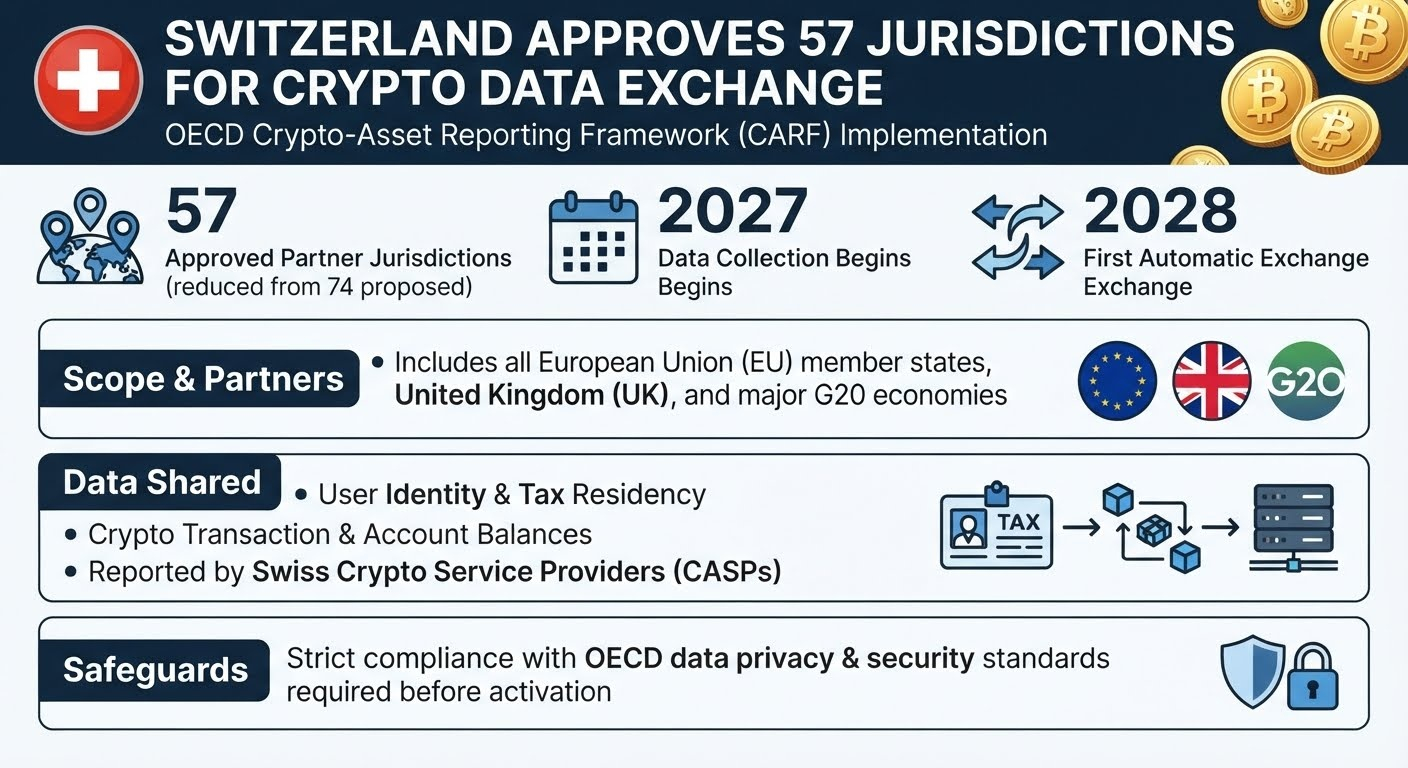
The Swiss Federal Council has approved the automatic sharing of crypto-asset data with 57 countries and territories to increase tax transparency. 🇨🇭🤝🪙
Here’s a summary of the development:
What Happened? 🏛️ The Swiss government approved 57 partner jurisdictions for international cryptocurrency tax information sharing under the OECD’s Crypto-Asset Reporting Framework (CARF).Who’s Included? 🌍 The approved list includes all European Union (EU) countries 🇪🇺, the United Kingdom 🇬🇧, and various G20 economies. (The previously proposed list of 74 countries was reduced to 57.)What’s the Timeline? 📅 Crypto service providers are expected to start collecting user data in 2027, with the first automatic data sharing between countries planned for 2028.What Information Will Be Shared? 🔍 Crypto platforms in Switzerland will report the identity, tax residence, and crypto transaction data of customers who are tax residents in approved countries to their own tax authorities, which will then transfer this information to the relevant countries.What Are the Conditions? 🛡️ Data sharing will not begin directly with every country; Switzerland will verify that the partner country meets OECD standards for data security and privacy.
In short, Switzerland—known for banking secrecy—is now extending the automatic exchange of information used for traditional bank accounts to crypto-assets as well, tightening tax oversight on a global scale. 💼🔒
$KSTR $PONS $KAVA
{future}(KAVAUSDT)
{future}(PONSUSDT)
{future}(KSTRUSDT)
#SwitzerlandApproves57JurisdictionsForCryptoDataExchange
The Swiss Federal Council has approved the automatic sharing of crypto-asset data with 57 countries and territories to increase tax transparency. 🇨🇭🤝🪙
Here’s a summary of the development:
What Happened? 🏛️ The Swiss government approved 57 partner jurisdictions for international cryptocurrency tax information sharing under the OECD’s Crypto-Asset Reporting Framework (CARF).Who’s Included? 🌍 The approved list includes all European Union (EU) countries 🇪🇺, the United Kingdom 🇬🇧, and various G20 economies. (The previously proposed list of 74 countries was reduced to 57.)What’s the Timeline? 📅 Crypto service providers are expected to start collecting user data in 2027, with the first automatic data sharing between countries planned for 2028.What Information Will Be Shared? 🔍 Crypto platforms in Switzerland will report the identity, tax residence, and crypto transaction data of customers who are tax residents in approved countries to their own tax authorities, which will then transfer this information to the relevant countries.What Are the Conditions? 🛡️ Data sharing will not begin directly with every country; Switzerland will verify that the partner country meets OECD standards for data security and privacy.
In short, Switzerland—known for banking secrecy—is now extending the automatic exchange of information used for traditional bank accounts to crypto-assets as well, tightening tax oversight on a global scale. 💼🔒
$KSTR $PONS $KAVA
394
·
--
Verified
#ethereumglamsterdamkeepsstoragefeechange
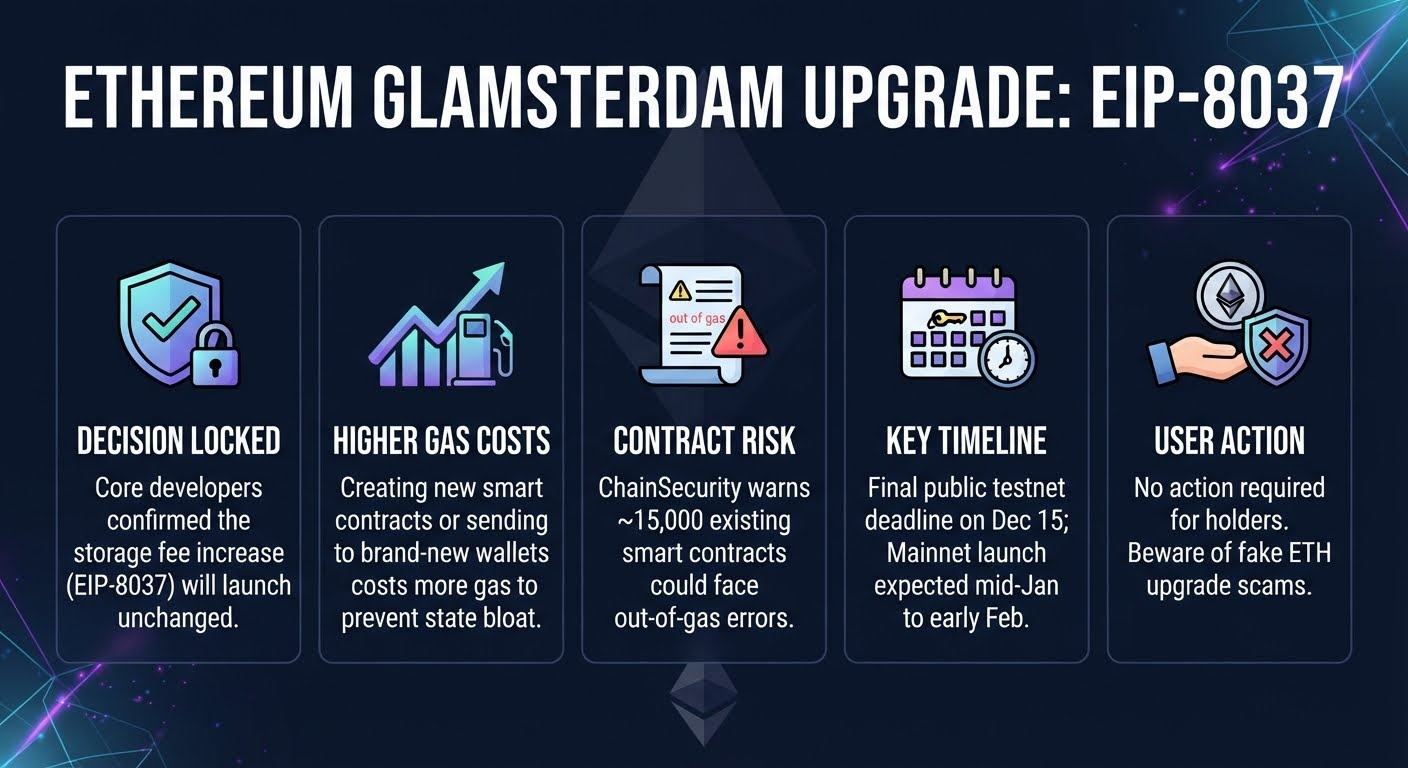
Ethereum core developers have decided to implement the controversial storage fee increase (EIP-8037) unchanged in the upcoming Glamsterdam update
🚀 Decision Made: The Ethereum team has agreed to keep the rule that increases the cost of permanent data storage on the network, with no technical changes.💰 Why Is This Happening? The aim is to prevent the blockchain database from growing uncontrollably and to keep the network more scalable in the long term.📈 Costs Are Rising: The gas cost of operations that create permanent data, such as creating a new smart contract or transferring funds to a new wallet that has never been used before, will rise significantly. (There is no change to standard transfers to existing wallets.)⚠️ Risk Warning: According to analyses by security firm ChainSecurity, around 15,000 existing smart contracts written for the old gas calculations could run out of gas mid-transaction and fail.⏳ Critical Timeline: Project teams have until the final public test on December 15 to fix serious bugs. The mainnet transition is expected to take place no earlier than mid-January or early February.🛡️ What Should Users Do? You don’t need to take any action or convert your existing ETH in your wallet. Be wary of scammers telling you to “update your ETH.”
$ETH $ZEC $HK1888
{future}(HK1888USDT)
{future}(ZECUSDT)
{future}(ETHUSDT)
#ethereumglamsterdamkeepsstoragefeechange
Ethereum core developers have decided to implement the controversial storage fee increase (EIP-8037) unchanged in the upcoming Glamsterdam update
🚀 Decision Made: The Ethereum team has agreed to keep the rule that increases the cost of permanent data storage on the network, with no technical changes.💰 Why Is This Happening? The aim is to prevent the blockchain database from growing uncontrollably and to keep the network more scalable in the long term.📈 Costs Are Rising: The gas cost of operations that create permanent data, such as creating a new smart contract or transferring funds to a new wallet that has never been used before, will rise significantly. (There is no change to standard transfers to existing wallets.)⚠️ Risk Warning: According to analyses by security firm ChainSecurity, around 15,000 existing smart contracts written for the old gas calculations could run out of gas mid-transaction and fail.⏳ Critical Timeline: Project teams have until the final public test on December 15 to fix serious bugs. The mainnet transition is expected to take place no earlier than mid-January or early February.🛡️ What Should Users Do? You don’t need to take any action or convert your existing ETH in your wallet. Be wary of scammers telling you to “update your ETH.”
$ETH $ZEC $HK1888
455
·
--
#corepcebeatliftsfedhikeodds
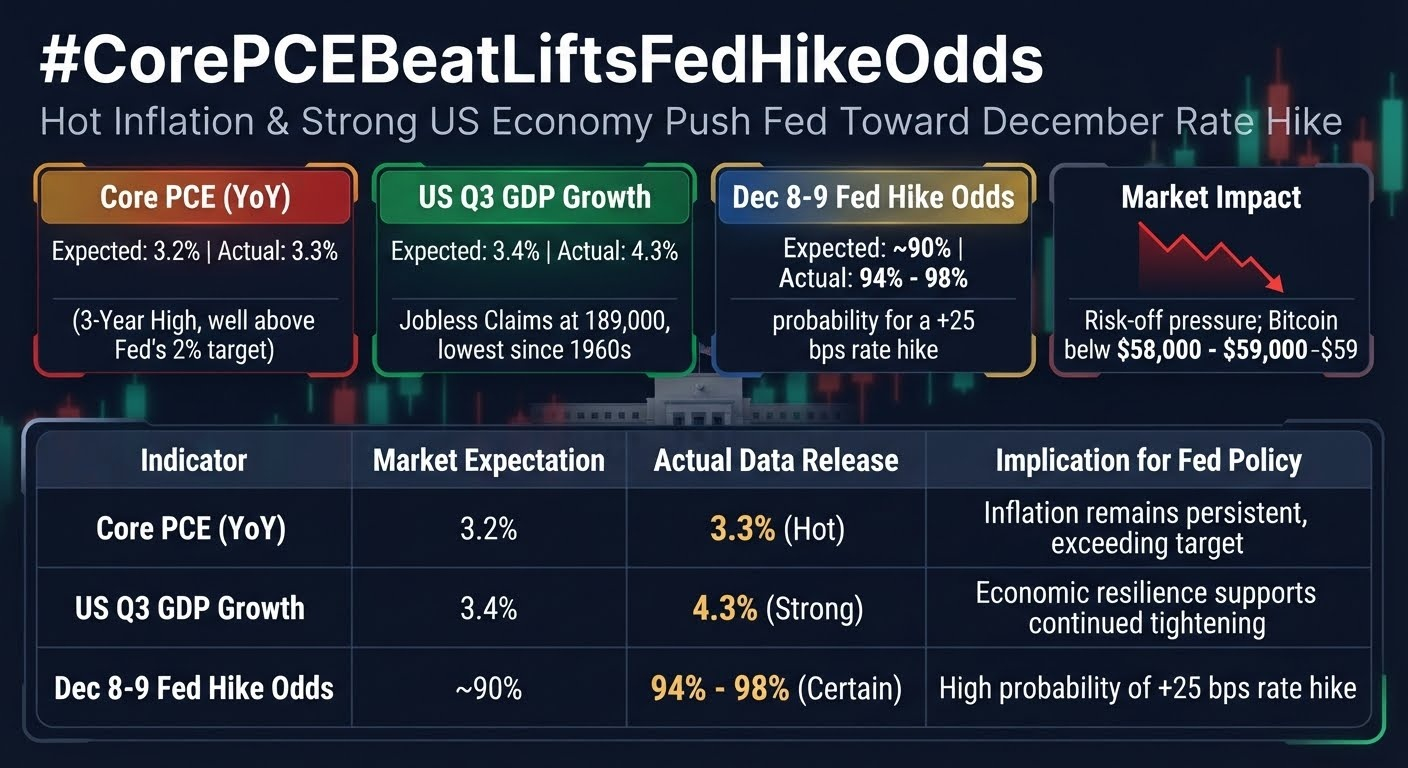
It means, “Prices still aren’t falling, while the U.S. economy is still going full steam ahead. That’s why the Fed will raise interest rates a little more to hit the brakes.”
Here’s the story behind this development and its impact on the markets:
Inflation Remains Stubborn 🌡️: October’s Core PCE, the Fed’s most trusted measure of inflation, was expected to come in at 3.2% but came in at 3.3%. This is the highest level in three years and well above the Fed’s 2% target.Economy Isn’t Cooling 💪: The U.S. economy grew by 4.3% in the third quarter, far exceeding expectations. Jobless claims also came in at 189,000, the lowest level since the 1960s. In other words, price pressures persist because the economy isn’t cooling.Fed Gets a Clear Path 🏦: With both inflation high and the economy strong, the Fed has no excuse not to raise interest rates. Markets see a 94%–98% chance of a 25-basis-point rate hike at the December 8–9 meeting.Crypto and Stocks Under Pressure 📉: Higher rates mean less cheap money in the market and a flight from risky assets. Selling pressure increased on this news, and Bitcoin fell below the $58,000–$59,000 range.
Indicator 📊Market Expectations 🎯Reported Data 🚨Market Takeaway 💬Core PCE (Year-over-Year)3.2%3.3%Inflation exceeded expectations; the threat persists.Third-Quarter Growth3.4%4.3%The economy is very strong and can withstand a rate hike.Fed Rate Hike Probability~90%94%–98%A 25-basis-point hike in December is all but certain.
$JCT $PORTAL $ZEC
{future}(ZECUSDT)
{future}(PORTALUSDT)
{future}(JCTUSDT)
#corepcebeatliftsfedhikeodds
It means, “Prices still aren’t falling, while the U.S. economy is still going full steam ahead. That’s why the Fed will raise interest rates a little more to hit the brakes.”
Here’s the story behind this development and its impact on the markets:
Inflation Remains Stubborn 🌡️: October’s Core PCE, the Fed’s most trusted measure of inflation, was expected to come in at 3.2% but came in at 3.3%. This is the highest level in three years and well above the Fed’s 2% target.Economy Isn’t Cooling 💪: The U.S. economy grew by 4.3% in the third quarter, far exceeding expectations. Jobless claims also came in at 189,000, the lowest level since the 1960s. In other words, price pressures persist because the economy isn’t cooling.Fed Gets a Clear Path 🏦: With both inflation high and the economy strong, the Fed has no excuse not to raise interest rates. Markets see a 94%–98% chance of a 25-basis-point rate hike at the December 8–9 meeting.Crypto and Stocks Under Pressure 📉: Higher rates mean less cheap money in the market and a flight from risky assets. Selling pressure increased on this news, and Bitcoin fell below the $58,000–$59,000 range.
Indicator 📊Market Expectations 🎯Reported Data 🚨Market Takeaway 💬Core PCE (Year-over-Year)3.2%3.3%Inflation exceeded expectations; the threat persists.Third-Quarter Growth3.4%4.3%The economy is very strong and can withstand a rate hike.Fed Rate Hike Probability~90%94%–98%A 25-basis-point hike in December is all but certain.
$JCT $PORTAL $ZEC
2.8k
·
--
#BitcoinTops$60000
Bitcoin (BTC) crossed the psychological $60,000 threshold, signaling a critical recovery.
📊 Current Data (November 27, 2026)
Price (USD / TRY): $61,430–$61,710 / ~3,130,299 TRY
Market Cap: $1.24 trillion
Circulating Supply: 20,117,925 BTC (96% of maximum supply)
All-Time High (ATH): $126,198 (October 6, 2025) — 51% below the peak.
🕰️ Key Turning Points Around the $60,000 Threshold
Period | Development | Key Factor
March 2021 | Crossed $60,000 for the first time | Institutional buying (Tesla)
November 2021 | Rose above $68,500 | Futures ETF approvals
2022–2023 | Fell to the $16,600 range | Global interest rate hikes and the FTX crisis
2024–2025 | Rose to a peak of $126,198 | U.S. spot ETF inflows and the Halving
November 2026 | Rebounded from a low of $57,800 to above $61,600 | Dip buying after a 50% correction
💡 Brief Risk Note
Crypto assets are highly volatile. Rather than making a large purchase all at once, using a dollar-cost averaging (DCA) strategy and holding Bitcoin in a portfolio diversified across other investment assets can help balance risk.
$BTC $BTCS.US $BTCT.US
{stock_us}(BTCT.US)
{stock_us}(BTCS.US)
{future}(BTCUSDT)
#BitcoinTops$60000
Bitcoin (BTC) crossed the psychological $60,000 threshold, signaling a critical recovery.
📊 Current Data (November 27, 2026)
Price (USD / TRY): $61,430–$61,710 / ~3,130,299 TRY
Market Cap: $1.24 trillion
Circulating Supply: 20,117,925 BTC (96% of maximum supply)
All-Time High (ATH): $126,198 (October 6, 2025) — 51% below the peak.
🕰️ Key Turning Points Around the $60,000 Threshold
Period | Development | Key Factor
March 2021 | Crossed $60,000 for the first time | Institutional buying (Tesla)
November 2021 | Rose above $68,500 | Futures ETF approvals
2022–2023 | Fell to the $16,600 range | Global interest rate hikes and the FTX crisis
2024–2025 | Rose to a peak of $126,198 | U.S. spot ETF inflows and the Halving
November 2026 | Rebounded from a low of $57,800 to above $61,600 | Dip buying after a 50% correction
💡 Brief Risk Note
Crypto assets are highly volatile. Rather than making a large purchase all at once, using a dollar-cost averaging (DCA) strategy and holding Bitcoin in a portfolio diversified across other investment assets can help balance risk.
$BTC $BTCS.US $BTCT.US
13
·
--
Verified
#xrpledgervaultgets29votes
The XRP Ledger's (XRPL) Single-Asset Vault (XLS-65) amendment has received approval from 29 of 35 validators, surpassing the 80% threshold required for activation. 🚀
This marks the crossing of one of the most critical milestones on the path to introducing native lending and liquidity pool infrastructure on the XRPL network. ✨
📊 Current Status and Activation Timeline
Feature / AmendmentCurrent Vote StatusRequired ThresholdExpected StatusSingle-Asset Vault (SingleAssetVault)29 / 35 (82.86%) ✅> 80% (29 votes)Expected to activate on December 9, 2026, if support is maintained for 2 weeks. 🗓️Lending Protocol (LendingProtocol)28 / 35 (80.00%) ⏳> 80% (29 votes)Needs 1 more vote to start the 2-week countdown. 🎯
⚙️ How Does the System Work, and What Does It Offer?
💧 Liquidity Pools and Share Tokens: Users will be able to deposit their XRP or stablecoins into these vaults and receive tokens representing their share of the pool.🔐 Access Control: Vault owners can keep pools open to everyone or create private vaults that only investors with approved credentials can access.🤝 Lending Mechanism: Brokers will be able to lend the funds accumulated in vaults to borrowers, such as payment companies, as fixed-term loans. In this model, borrowers are not required to provide on-chain collateral; investor protection relies on the brokers' credit assessments and the capital they commit to cover initial losses.🪜 Phased Rollout: Since the lending protocol (XLS-66) has only 28 votes so far, lending cannot begin immediately even if the vault feature activates on December 9; initially, vaults will only be able to accept deposits and issue share tokens.
$XRP $ZEC $GIGADEV
{future}(GIGADEVUSDT)
{future}(ZECUSDT)
{future}(XRPUSDT)
#xrpledgervaultgets29votes
The XRP Ledger's (XRPL) Single-Asset Vault (XLS-65) amendment has received approval from 29 of 35 validators, surpassing the 80% threshold required for activation. 🚀
This marks the crossing of one of the most critical milestones on the path to introducing native lending and liquidity pool infrastructure on the XRPL network. ✨
📊 Current Status and Activation Timeline
Feature / AmendmentCurrent Vote StatusRequired ThresholdExpected StatusSingle-Asset Vault (SingleAssetVault)29 / 35 (82.86%) ✅> 80% (29 votes)Expected to activate on December 9, 2026, if support is maintained for 2 weeks. 🗓️Lending Protocol (LendingProtocol)28 / 35 (80.00%) ⏳> 80% (29 votes)Needs 1 more vote to start the 2-week countdown. 🎯
⚙️ How Does the System Work, and What Does It Offer?
💧 Liquidity Pools and Share Tokens: Users will be able to deposit their XRP or stablecoins into these vaults and receive tokens representing their share of the pool.🔐 Access Control: Vault owners can keep pools open to everyone or create private vaults that only investors with approved credentials can access.🤝 Lending Mechanism: Brokers will be able to lend the funds accumulated in vaults to borrowers, such as payment companies, as fixed-term loans. In this model, borrowers are not required to provide on-chain collateral; investor protection relies on the brokers' credit assessments and the capital they commit to cover initial losses.🪜 Phased Rollout: Since the lending protocol (XLS-66) has only 28 votes so far, lending cannot begin immediately even if the vault feature activates on December 9; initially, vaults will only be able to accept deposits and issue share tokens.
$XRP $ZEC $GIGADEV
498
·
--
#ASEANPlus3ToFormCrossBorderPaymentsCryptoWorkingGroup
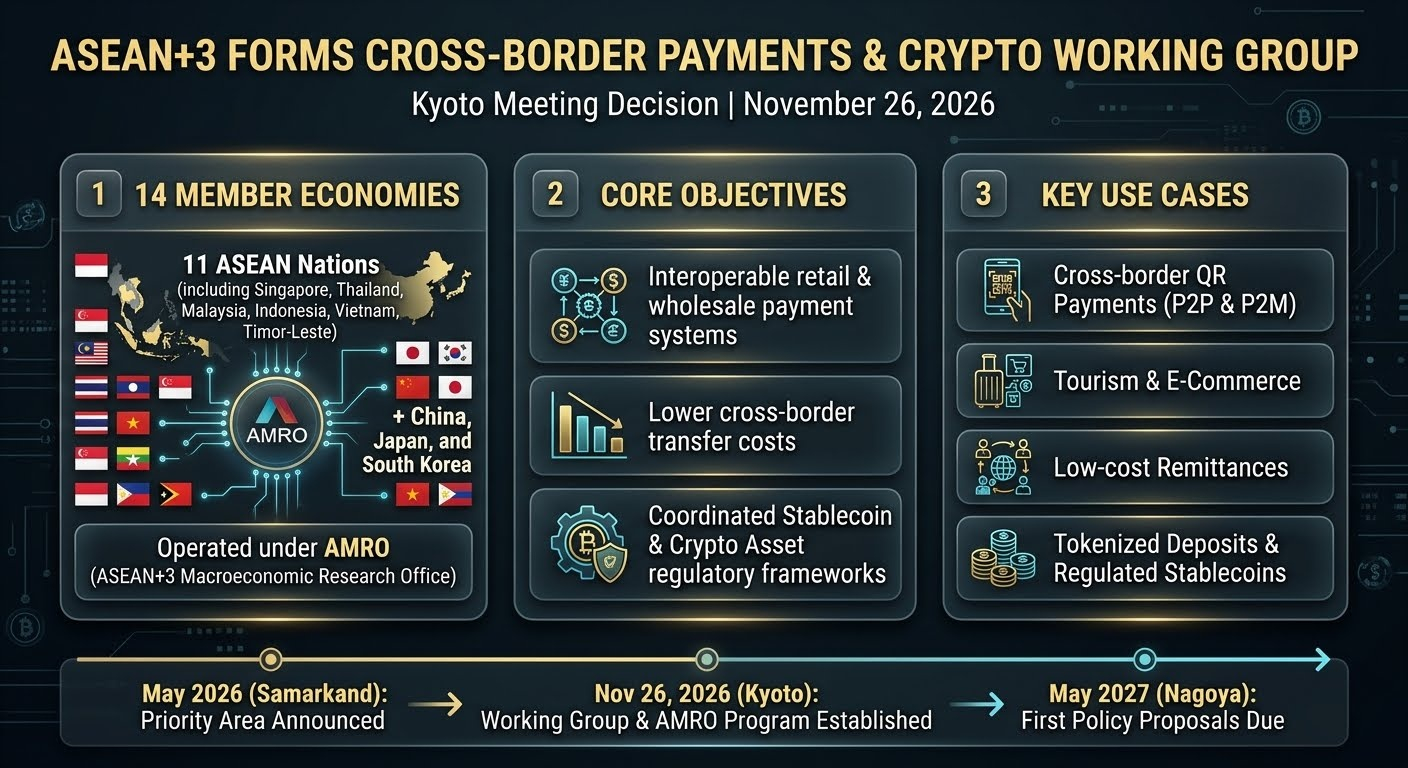
The ASEAN+3 bloc, comprising China, Japan, South Korea, and 11 ASEAN countries, has decided to establish a special working group to integrate cross-border digital payments and coordinate stablecoin/crypto regulations.
Key details of the decision made in Kyoto, Japan, on November 26, 2026:
Participants & Governance: 🤝 The process, involving 14 economies (11 ASEAN countries + China, Japan, and South Korea), will be conducted under the ASEAN+3 Macroeconomic Research Office (AMRO).Core Objective: 🎯 To reduce money transfer costs by integrating retail and corporate payment networks, and to establish a common legal framework for stablecoin and digital asset regulations.Focus Areas: 📲 Cross-border QR code payments, tourism/e-commerce spending, low-commission worker remittances, and tokenized deposits.Timeline: 🗓️ The group established in Kyoto will present its first concrete policy recommendations at the Finance Ministers and Central Bank Governors' meeting to be held in Nagoya, Japan, in May 2027.
$STBL $FLNC $OPG
{future}(OPGUSDT)
{future}(FLNCUSDT)
{future}(STBLUSDT)
#ASEANPlus3ToFormCrossBorderPaymentsCryptoWorkingGroup
The ASEAN+3 bloc, comprising China, Japan, South Korea, and 11 ASEAN countries, has decided to establish a special working group to integrate cross-border digital payments and coordinate stablecoin/crypto regulations.
Key details of the decision made in Kyoto, Japan, on November 26, 2026:
Participants & Governance: 🤝 The process, involving 14 economies (11 ASEAN countries + China, Japan, and South Korea), will be conducted under the ASEAN+3 Macroeconomic Research Office (AMRO).Core Objective: 🎯 To reduce money transfer costs by integrating retail and corporate payment networks, and to establish a common legal framework for stablecoin and digital asset regulations.Focus Areas: 📲 Cross-border QR code payments, tourism/e-commerce spending, low-commission worker remittances, and tokenized deposits.Timeline: 🗓️ The group established in Kyoto will present its first concrete policy recommendations at the Finance Ministers and Central Bank Governors' meeting to be held in Nagoya, Japan, in May 2027.
$STBL $FLNC $OPG
272
·
--
Verified
#tudorinvestmentraisesibitholdings98%
In the third quarter (Q3) of 2026, BlackRock’s spot Bitcoin ETF, IBIT, increased its holdings by 98%, nearly doubling them.
According to the key figures and details in the official 13F filing submitted to the U.S. Securities and Exchange Commission (SEC):
📊 Q2 vs. Q3 2026 Comparison
Metric | End of Q2 (June 30, 2026) | End of Q3 (September 30, 2026) | Change
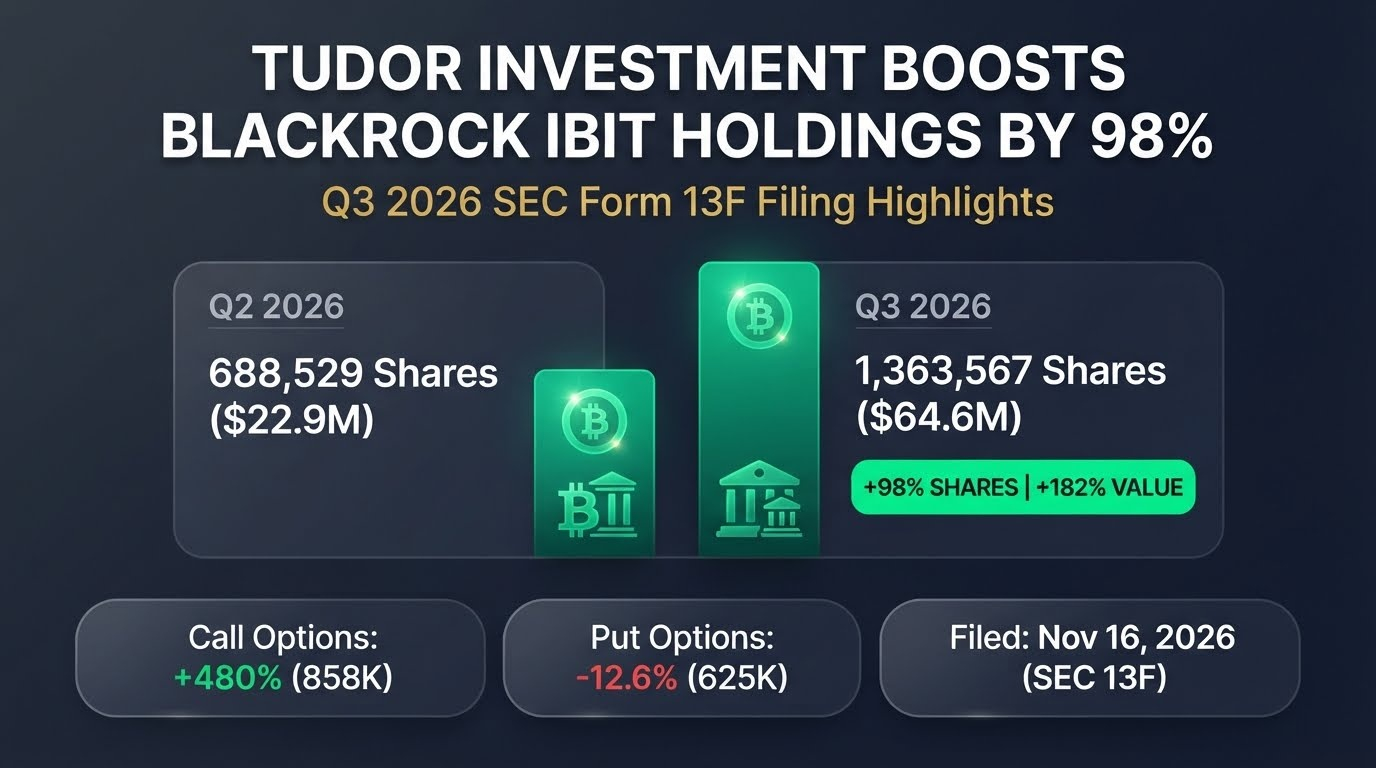
IBIT shares | 688,529 shares | 1,363,567 shares | +675,038 shares (98% increase)
Position value | $22.9 million | $64.6 million | +$41.7 million (182% increase)
Call options | Equivalent to 148,000 shares | Equivalent to 858,000 shares | +710,000 shares
Put options | Equivalent to 715,000 shares | Equivalent to 625,000 shares | -90,000 shares
🔍 Key Details
The Value Increase Outpaced the Increase in Shares: While the number of shares rose by 98%, the 182% jump in the total position value was driven by both new purchases and the rise in Bitcoin’s price during the third quarter.
Bullish Outlook in Options: The fund did more than simply buy ETF shares directly; it significantly increased its call options, which reflect an upward outlook, while reducing its put options, which provide downside protection.
The Bigger Picture: Although this $64.6 million position appears notable, it represents less than 1% of the company’s approximately $23 billion total portfolio. It also remains well below the peak of 8 million shares (approximately $427 million) at the end of 2024.
Timing Note: These figures, disclosed on November 16, reflect the position as of September 30, 2026; they do not include any potential transactions made during the market fluctuations in November.
$IBIT $HAEDAL $ZHIPU
{future}(ZHIPUUSDT)
{future}(HAEDALUSDT)
{future}(IBITUSDT)
#tudorinvestmentraisesibitholdings98%
In the third quarter (Q3) of 2026, BlackRock’s spot Bitcoin ETF, IBIT, increased its holdings by 98%, nearly doubling them.
According to the key figures and details in the official 13F filing submitted to the U.S. Securities and Exchange Commission (SEC):
📊 Q2 vs. Q3 2026 Comparison
Metric | End of Q2 (June 30, 2026) | End of Q3 (September 30, 2026) | Change
IBIT shares | 688,529 shares | 1,363,567 shares | +675,038 shares (98% increase)
Position value | $22.9 million | $64.6 million | +$41.7 million (182% increase)
Call options | Equivalent to 148,000 shares | Equivalent to 858,000 shares | +710,000 shares
Put options | Equivalent to 715,000 shares | Equivalent to 625,000 shares | -90,000 shares
🔍 Key Details
The Value Increase Outpaced the Increase in Shares: While the number of shares rose by 98%, the 182% jump in the total position value was driven by both new purchases and the rise in Bitcoin’s price during the third quarter.
Bullish Outlook in Options: The fund did more than simply buy ETF shares directly; it significantly increased its call options, which reflect an upward outlook, while reducing its put options, which provide downside protection.
The Bigger Picture: Although this $64.6 million position appears notable, it represents less than 1% of the company’s approximately $23 billion total portfolio. It also remains well below the peak of 8 million shares (approximately $427 million) at the end of 2024.
Timing Note: These figures, disclosed on November 16, reflect the position as of September 30, 2026; they do not include any potential transactions made during the market fluctuations in November.
$IBIT $HAEDAL $ZHIPU
BLKUS+1.92%
IBIT+0.75%
39
·
--
Verified
#nasdaq100fivedayavgintradayvolatilityhits3.8%
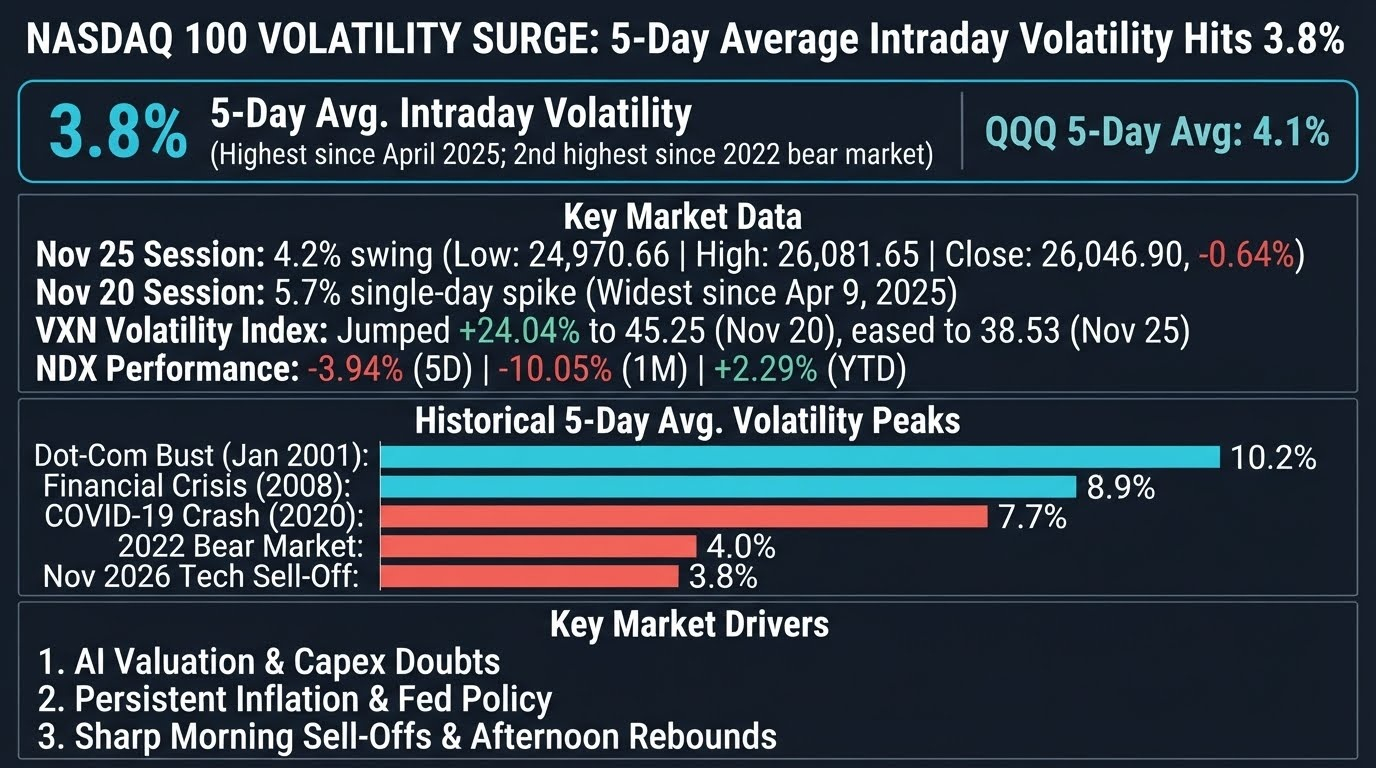
🚨 The Nasdaq 100 Index (^NDX) five-day average intraday volatility hit 3.8% in late November 2026—its highest level since April 2025 and the second-highest reading since the 2022 bear market. 📉
📊 Key Market Data
📈 5-Day Avg. Intraday Range: 3.8% (Invesco QQQ Trust reached 4.1%).🎢 Nov 25 Session: Swung 4.2% between 24,970.66 and 26,081.65, closing at 26,046.90 (-0.64%).💥 Nov 20 Session: Intraday volatility spiked to 5.7%, its widest single-day swing since April 9, 2025.😱 Volatility Index (VXN): Surged 24.04% to 45.25 on Nov 20 before cooling to 38.53 on Nov 25.🔻 Index Performance: Down 3.94% (5-day) and 10.05% (1-month), holding onto a 2.29% YTD gain.
🕰️ Historical Peaks (5-Day Avg. Volatility)
EventPeak💻 Dot-Com Bust (2001)10.2%🏦 Financial Crisis (2008)8.9%🦠 COVID-19 Crash (2020)7.7%🐻 2022 Bear Market4.0%⚡ Current Sell-Off (Nov 2026)3.8%
🔍 Main Drivers
🤖 AI Spending Doubts: Rotation out of mega-cap AI stocks over return-on-investment concerns.🏛️ Fed & Inflation: Sticky inflation fueling fears of tighter-for-longer interest rates.🔄 Sharp Rebounds: Heavy morning sell-offs met by aggressive afternoon dip-buying.
$BCH $BULLA $ONE
{future}(ONEUSDT)
{future}(BULLAUSDT)
{future}(BCHUSDT)
#nasdaq100fivedayavgintradayvolatilityhits3.8%
🚨 The Nasdaq 100 Index (^NDX) five-day average intraday volatility hit 3.8% in late November 2026—its highest level since April 2025 and the second-highest reading since the 2022 bear market. 📉
📊 Key Market Data
📈 5-Day Avg. Intraday Range: 3.8% (Invesco QQQ Trust reached 4.1%).🎢 Nov 25 Session: Swung 4.2% between 24,970.66 and 26,081.65, closing at 26,046.90 (-0.64%).💥 Nov 20 Session: Intraday volatility spiked to 5.7%, its widest single-day swing since April 9, 2025.😱 Volatility Index (VXN): Surged 24.04% to 45.25 on Nov 20 before cooling to 38.53 on Nov 25.🔻 Index Performance: Down 3.94% (5-day) and 10.05% (1-month), holding onto a 2.29% YTD gain.
🕰️ Historical Peaks (5-Day Avg. Volatility)
EventPeak💻 Dot-Com Bust (2001)10.2%🏦 Financial Crisis (2008)8.9%🦠 COVID-19 Crash (2020)7.7%🐻 2022 Bear Market4.0%⚡ Current Sell-Off (Nov 2026)3.8%
🔍 Main Drivers
🤖 AI Spending Doubts: Rotation out of mega-cap AI stocks over return-on-investment concerns.🏛️ Fed & Inflation: Sticky inflation fueling fears of tighter-for-longer interest rates.🔄 Sharp Rebounds: Heavy morning sell-offs met by aggressive afternoon dip-buying.
$BCH $BULLA $ONE
633
·
--
Verified
#币安区块链周进化由你
2026 Binance Blockchain Week kicks off in Bangkok, as global giants explore the industry’s “evolution” 🚀
📍 BANGKOK — Binance Blockchain Week 2026 will take place November 28–29 at the Queen Sirikit National Convention Center (QSNCC) in Bangkok 📅. The event’s theme is “Evolve” 🌱, and Binance Square has launched the global interactive hashtag #BinanceBlockchainWeekEvolveWithYou 💬, which has already garnered over 900,000 views 🔥.
🏛️ Financial giants and regulators from four countries come together
Executives from BlackRock, Nasdaq, Visa, and Tether will take the stage 🎤 for discussions with regulatory leaders from Kazakhstan, Bhutan, Ghana, and Thailand 🌐. Binance co-CEO Richard Teng and co-founder He Yi will also deliver keynote speeches 📢, exploring the path to compliance and innovation on the journey toward “three billion users” 🛡️.
💡 A focus on three key trends
🏦 Real-world assets (RWA): Enabling traditional capital markets to operate efficiently around the clock ⚡. 💳 Stablecoins and cross-border payments: Reshaping payment infrastructure in global and emerging markets 🌍. 🤖 AI and decentralized computing power: Examining the deep integration of artificial intelligence and blockchain 🧠.
🗣️ Community engagement: “Evolve With You”
Binance Square has also launched the #BinanceBlockchainWeekEvolveWithYou campaign 🎉, inviting users online and in person to share their industry insights and win exclusive rewards 🎁. This year’s event marks the crypto industry’s broad shift toward a more pragmatic new phase focused on infrastructure, compliance, and real-world adoption 📈.
$BULLA $JCT
{future}(JCTUSDT)
$BNB #BinanceSquare
{future}(BNBUSDT)
{future}(BULLAUSDT)
#币安区块链周进化由你
2026 Binance Blockchain Week kicks off in Bangkok, as global giants explore the industry’s “evolution” 🚀
📍 BANGKOK — Binance Blockchain Week 2026 will take place November 28–29 at the Queen Sirikit National Convention Center (QSNCC) in Bangkok 📅. The event’s theme is “Evolve” 🌱, and Binance Square has launched the global interactive hashtag #BinanceBlockchainWeekEvolveWithYou 💬, which has already garnered over 900,000 views 🔥.
🏛️ Financial giants and regulators from four countries come together
Executives from BlackRock, Nasdaq, Visa, and Tether will take the stage 🎤 for discussions with regulatory leaders from Kazakhstan, Bhutan, Ghana, and Thailand 🌐. Binance co-CEO Richard Teng and co-founder He Yi will also deliver keynote speeches 📢, exploring the path to compliance and innovation on the journey toward “three billion users” 🛡️.
💡 A focus on three key trends
🏦 Real-world assets (RWA): Enabling traditional capital markets to operate efficiently around the clock ⚡. 💳 Stablecoins and cross-border payments: Reshaping payment infrastructure in global and emerging markets 🌍. 🤖 AI and decentralized computing power: Examining the deep integration of artificial intelligence and blockchain 🧠.
🗣️ Community engagement: “Evolve With You”
Binance Square has also launched the #BinanceBlockchainWeekEvolveWithYou campaign 🎉, inviting users online and in person to share their industry insights and win exclusive rewards 🎁. This year’s event marks the crypto industry’s broad shift toward a more pragmatic new phase focused on infrastructure, compliance, and real-world adoption 📈.
$BULLA $JCT
$BNB #BinanceSquare

1
81
·
--
Verified
#StellarAdds$80.4MTokenizedFundsInOneDay
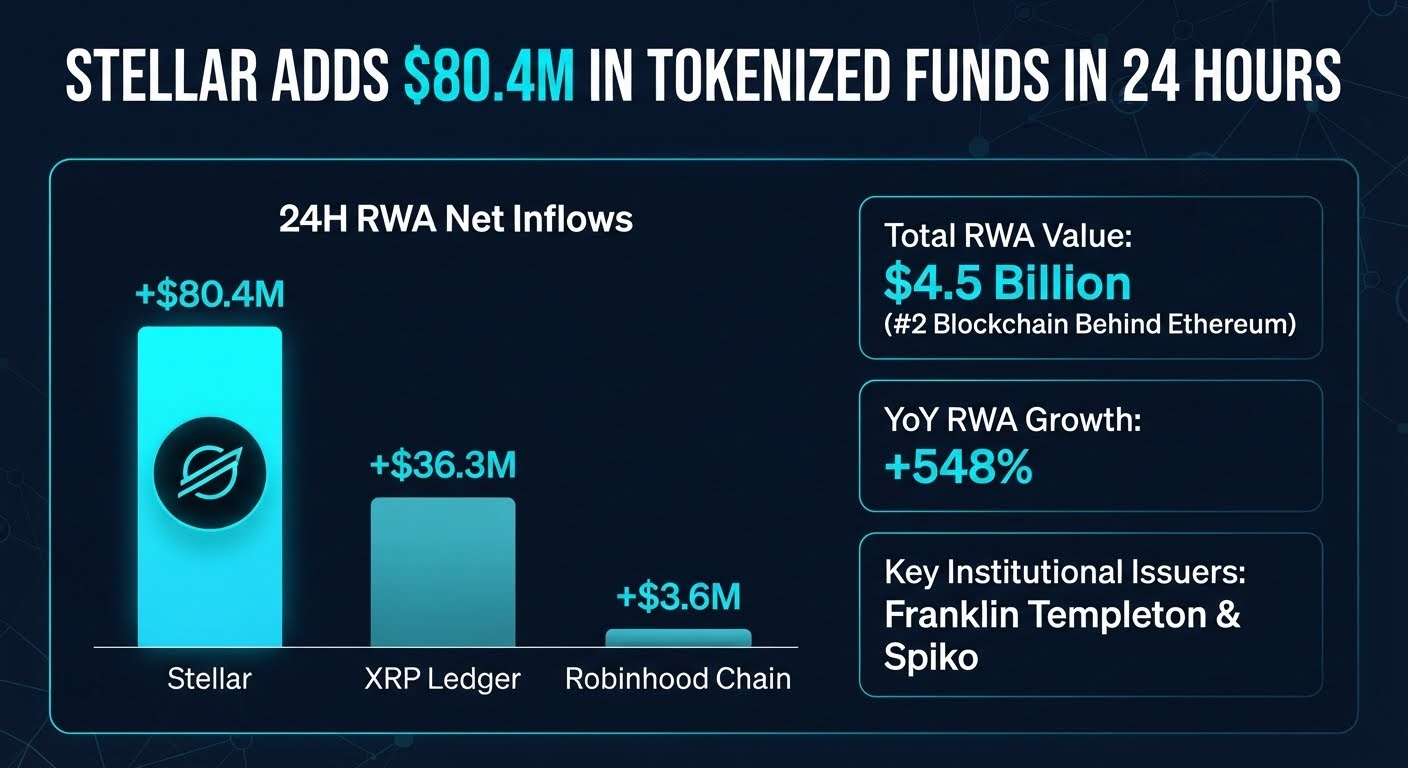
The Stellar (XLM) network outpaced its rivals in daily growth, adding exactly $80.4 million in tokenized fund (RWA) value over the past 24 hours.
🚀 Record Daily Inflow:
Stellar (+$80.4 million): This massive one-day increase demonstrates the network’s appeal in the world of institutional finance.
Outpacing the Competition: Over the same 24-hour period, XRP Ledger recorded an increase of $36.3 million, while Robinhood Chain added just $3.6 million. Stellar managed to double the growth of its closest rival, XRP.
🏦 The Giants Behind the Growth:
Behind this rise are regulated money market funds issued on the network by traditional finance giants such as Franklin Templeton and Spiko. Investors are actively choosing Stellar for its low transaction fees and fast settlement infrastructure.
📈 The Bigger Picture and Annual Growth:
The total value of tokenized real-world assets (RWA) on the Stellar network grew by a striking 548% year over year, reaching around $4.5 billion. With this volume, Stellar has solidified its position as the world’s second-largest blockchain by tokenized fund value, behind Ethereum.
💡 Important Note:
This $80.4 million inflow does not represent direct purchases of the XLM token, but rather an increase in the value of financial instruments (funds) issued on the Stellar network. However, this directly supports network usage and the ecosystem’s long-term value.
$XLM $XRP $ME
{future}(MEUSDT)
{future}(XRPUSDT)
{future}(XLMUSDT)
#StellarAdds$80.4MTokenizedFundsInOneDay
The Stellar (XLM) network outpaced its rivals in daily growth, adding exactly $80.4 million in tokenized fund (RWA) value over the past 24 hours.
🚀 Record Daily Inflow:
Stellar (+$80.4 million): This massive one-day increase demonstrates the network’s appeal in the world of institutional finance.
Outpacing the Competition: Over the same 24-hour period, XRP Ledger recorded an increase of $36.3 million, while Robinhood Chain added just $3.6 million. Stellar managed to double the growth of its closest rival, XRP.
🏦 The Giants Behind the Growth:
Behind this rise are regulated money market funds issued on the network by traditional finance giants such as Franklin Templeton and Spiko. Investors are actively choosing Stellar for its low transaction fees and fast settlement infrastructure.
📈 The Bigger Picture and Annual Growth:
The total value of tokenized real-world assets (RWA) on the Stellar network grew by a striking 548% year over year, reaching around $4.5 billion. With this volume, Stellar has solidified its position as the world’s second-largest blockchain by tokenized fund value, behind Ethereum.
💡 Important Note:
This $80.4 million inflow does not represent direct purchases of the XLM token, but rather an increase in the value of financial instruments (funds) issued on the Stellar network. However, this directly supports network usage and the ecosystem’s long-term value.
$XLM $XRP $ME
291
·
--
Verified
#TetherGoldFaces$2.55BUnrealizedLoss
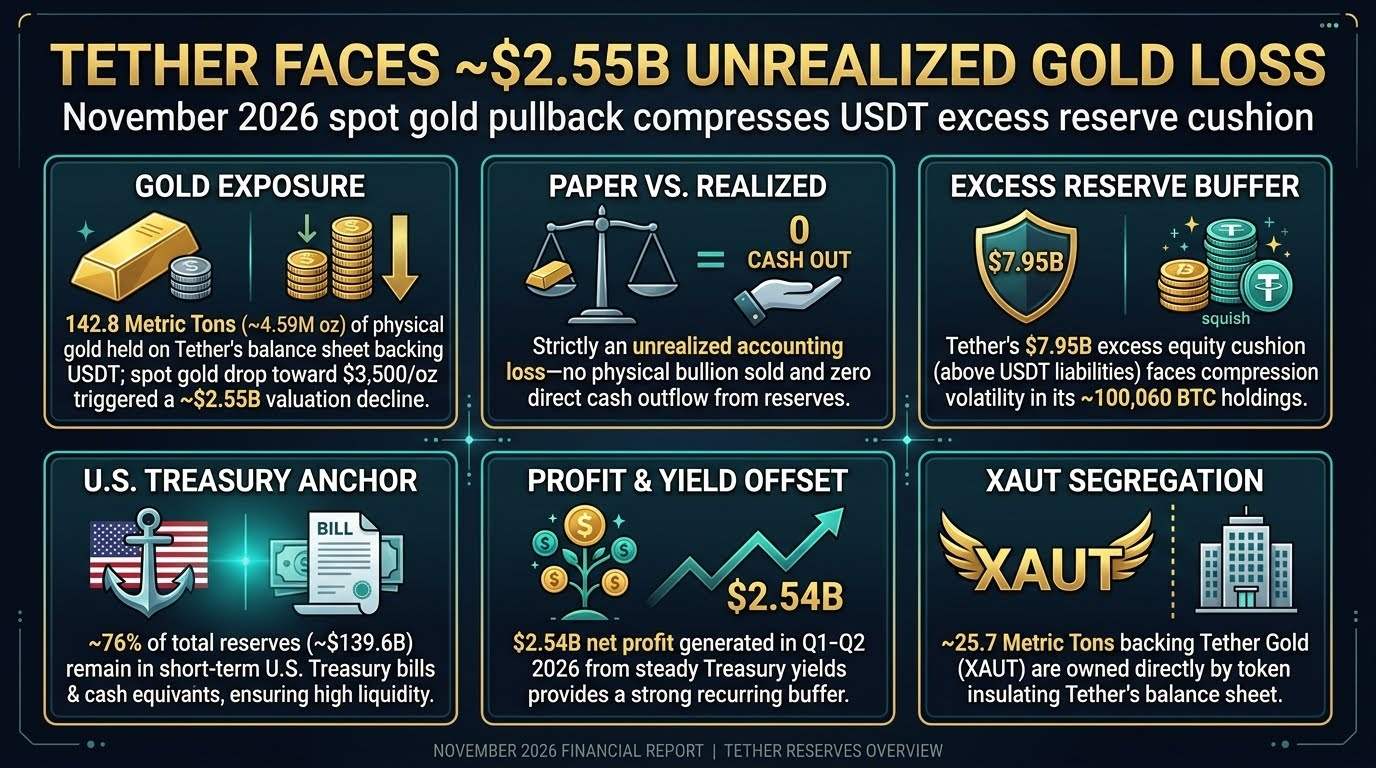
The sharp drop in gold prices in November 2026 caused an approximately $2.55 billion unrealized (on-paper) loss on the 142.8 tonnes of physical gold held in Tether’s USDT reserves.
🚨 What’s Happening?
Massive Gold Reserve Melting Away 🪙: Tether holds approximately 142.8 metric tons (4.59 million ounces) of physical gold on its own balance sheet to back its USDT reserves. When gold fell to around $3,500 per ounce in November, this position lost approximately $2.55 billion in value. On-Paper Loss 📉: For now, this loss is an “unrealized loss”—that is, since Tether has not sold its physical gold, there has been no direct cash outflow. Reserve Cushion Shrinking 🛡️: Tether’s $7.95 billion excess reserve cushion above its liabilities came under significant on-paper pressure due to declines in the prices of both gold and Bitcoin (approximately 100,060 BTC).
📊 Strengths That Remain on the Balance Sheet
U.S. Treasury Securities 💵: Approximately 76% of the company’s reserves (around $139.6 billion) consists of short-term U.S. Treasury securities and highly liquid cash equivalents. Strong Interest Income 📈: Thanks to regular interest income from its securities (a total profit of $2.54 billion in the first two quarters of 2026), Tether has the cash flow to absorb this volatility. The XAUT Difference ⚖️: The approximately 25.7 tonnes of gold backing Tether’s gold-backed token XAUT belong directly to token holders, so price declines affect investors’ balances, not the company’s.
$PAXG $XAUT $XAU
{future}(XAUUSDT)
{future}(XAUTUSDT)
{future}(PAXGUSDT)
#TetherGoldFaces$2.55BUnrealizedLoss
The sharp drop in gold prices in November 2026 caused an approximately $2.55 billion unrealized (on-paper) loss on the 142.8 tonnes of physical gold held in Tether’s USDT reserves.
🚨 What’s Happening?
Massive Gold Reserve Melting Away 🪙: Tether holds approximately 142.8 metric tons (4.59 million ounces) of physical gold on its own balance sheet to back its USDT reserves. When gold fell to around $3,500 per ounce in November, this position lost approximately $2.55 billion in value. On-Paper Loss 📉: For now, this loss is an “unrealized loss”—that is, since Tether has not sold its physical gold, there has been no direct cash outflow. Reserve Cushion Shrinking 🛡️: Tether’s $7.95 billion excess reserve cushion above its liabilities came under significant on-paper pressure due to declines in the prices of both gold and Bitcoin (approximately 100,060 BTC).
📊 Strengths That Remain on the Balance Sheet
U.S. Treasury Securities 💵: Approximately 76% of the company’s reserves (around $139.6 billion) consists of short-term U.S. Treasury securities and highly liquid cash equivalents. Strong Interest Income 📈: Thanks to regular interest income from its securities (a total profit of $2.54 billion in the first two quarters of 2026), Tether has the cash flow to absorb this volatility. The XAUT Difference ⚖️: The approximately 25.7 tonnes of gold backing Tether’s gold-backed token XAUT belong directly to token holders, so price declines affect investors’ balances, not the company’s.
$PAXG $XAUT $XAU
148
·
--
#koreafscseekspowertosuspendcryptolistings
🚨 What’s Happening?
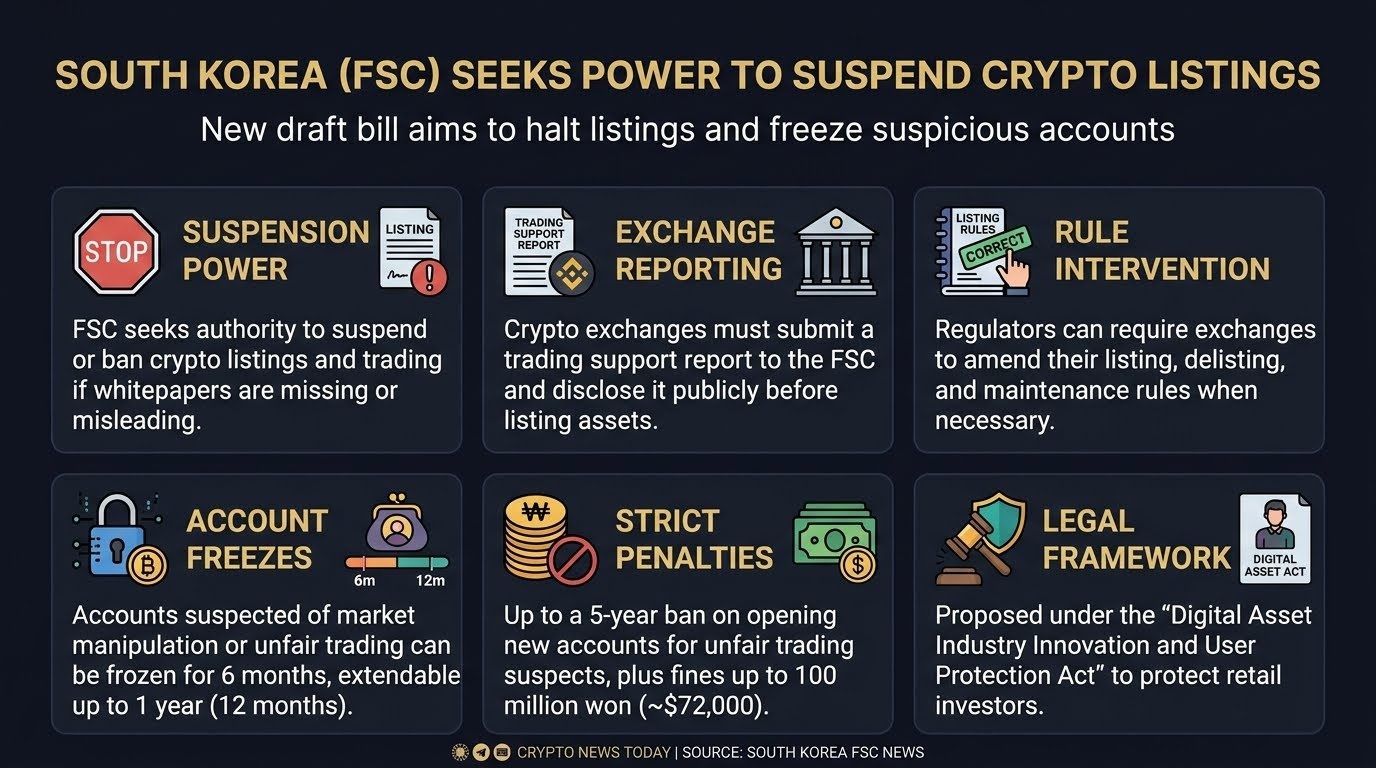
New Draft Law 📜: Under the draft “Digital Asset Industry Innovation and User Protection Act,” the FSC is seeking the authority to suspend the listing and trading of cryptocurrencies that lack a whitepaper or contain false or misleading information.
Advance Notice Requirement for Exchanges 🏢: Crypto exchanges will continue reviewing assets, but before listing them, they will have to submit a “trading support report” to the FSC and make it public. The regulator must be notified immediately of any significant changes after listing.
Authority to Intervene in Rules ⚖️: Where it deems necessary, the FSC will be able to require exchanges to change their rules on listing, delisting, and maintaining listings.
🛡️ Other Key Measures in the Draft
Account Freezes 🧊: Accounts suspected of market manipulation or unfair trading can initially be frozen for up to six months, with the period extendable once, for a total of up to one year (12 months).
Severe Penalties 💸: Those suspected of unfair trading may be banned from opening new accounts for up to five years, while fines of up to 100 million won (approximately $72,000) are proposed for false or incomplete disclosures.
$BTC $SOL $XAUT
{future}(XAUTUSDT)
{future}(SOLUSDT)
{future}(BTCUSDT)
#koreafscseekspowertosuspendcryptolistings
🚨 What’s Happening?
New Draft Law 📜: Under the draft “Digital Asset Industry Innovation and User Protection Act,” the FSC is seeking the authority to suspend the listing and trading of cryptocurrencies that lack a whitepaper or contain false or misleading information.
Advance Notice Requirement for Exchanges 🏢: Crypto exchanges will continue reviewing assets, but before listing them, they will have to submit a “trading support report” to the FSC and make it public. The regulator must be notified immediately of any significant changes after listing.
Authority to Intervene in Rules ⚖️: Where it deems necessary, the FSC will be able to require exchanges to change their rules on listing, delisting, and maintaining listings.
🛡️ Other Key Measures in the Draft
Account Freezes 🧊: Accounts suspected of market manipulation or unfair trading can initially be frozen for up to six months, with the period extendable once, for a total of up to one year (12 months).
Severe Penalties 💸: Those suspected of unfair trading may be banned from opening new accounts for up to five years, while fines of up to 100 million won (approximately $72,000) are proposed for false or incomplete disclosures.
$BTC $SOL $XAUT
576
·
--
#ukfcareportedlyplansdefiauthorizationrules
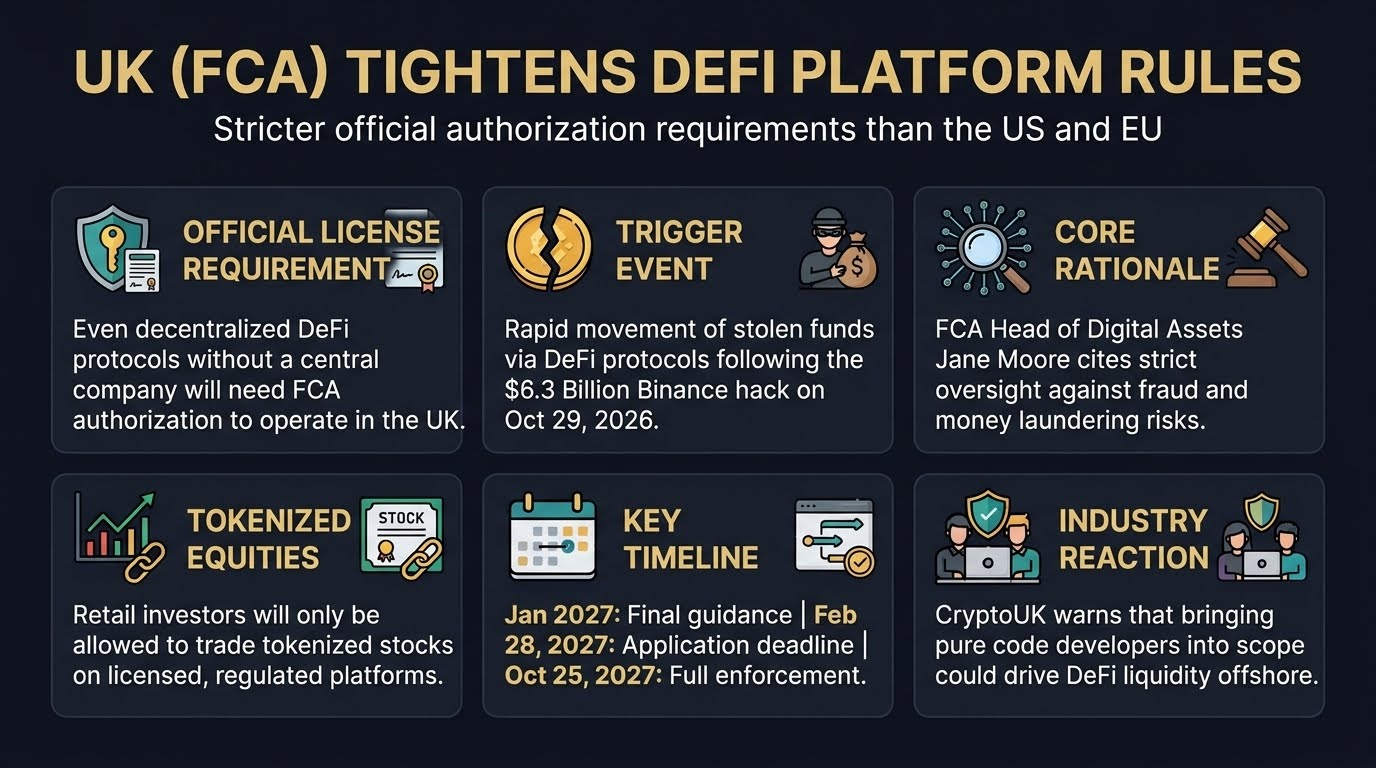
The UK Financial Conduct Authority (FCA) is preparing to impose a stricter official licensing requirement on decentralized finance (DeFi) platforms than even the US and EU.
🚨 Key Highlights
Official Licensing Requirement 📜: The FCA will require even DeFi protocols without a specific company at their core to obtain official authorization to provide services in the UK. Impact of the Binance Attack 💥: Behind this strict move is the rapid movement of funds stolen in the $6.3 billion Binance attack on October 29, 2026, through DeFi protocols. Consumer Protection 🛡️: Jane Moore, the FCA’s Head of Digital Assets, said that due to the risks of fraud and money laundering, they are choosing strict oversight over open access. Restrictions on Tokenized Shares 📈: Retail investors will only be able to trade tokenized shares on licensed platforms.
📅 Key Dates
January 2027 📢: Publication of the final DeFi guidance. February 28, 2027 ⏳: Deadline for authorization applications. October 25, 2027 🚀: The new regulations come fully into force.
🌍 Market Reaction
Liquidity Risk ⚖️: Industry representatives (CryptoUK) warn that including even developers who only write code could drive DeFi liquidity overseas.
$BULLA $2Z $XAU
{future}(XAUUSDT)
{future}(2ZUSDT)
{future}(BULLAUSDT)
#ukfcareportedlyplansdefiauthorizationrules
The UK Financial Conduct Authority (FCA) is preparing to impose a stricter official licensing requirement on decentralized finance (DeFi) platforms than even the US and EU.
🚨 Key Highlights
Official Licensing Requirement 📜: The FCA will require even DeFi protocols without a specific company at their core to obtain official authorization to provide services in the UK. Impact of the Binance Attack 💥: Behind this strict move is the rapid movement of funds stolen in the $6.3 billion Binance attack on October 29, 2026, through DeFi protocols. Consumer Protection 🛡️: Jane Moore, the FCA’s Head of Digital Assets, said that due to the risks of fraud and money laundering, they are choosing strict oversight over open access. Restrictions on Tokenized Shares 📈: Retail investors will only be able to trade tokenized shares on licensed platforms.
📅 Key Dates
January 2027 📢: Publication of the final DeFi guidance. February 28, 2027 ⏳: Deadline for authorization applications. October 25, 2027 🚀: The new regulations come fully into force.
🌍 Market Reaction
Liquidity Risk ⚖️: Industry representatives (CryptoUK) warn that including even developers who only write code could drive DeFi liquidity overseas.
$BULLA $2Z $XAU
1.9k
·
--
#zcashdevelopersurgezecmovetoironwood
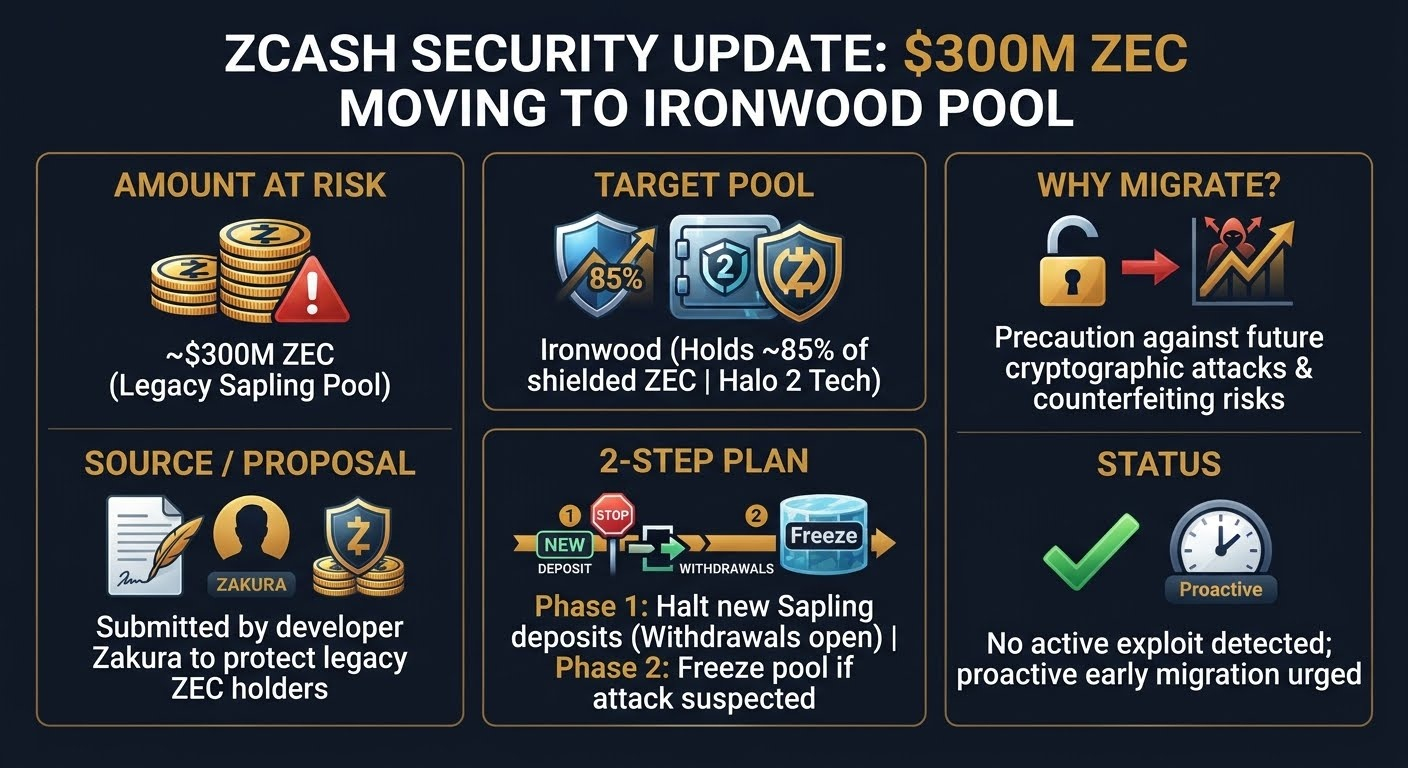
Zcash (ZEC) developers are urging users to move approximately $300 million (400,000 ZEC) in assets from the old Sapling pool to the next-generation Ironwood pool, ahead of potential security vulnerabilities in the future.
🚨 What’s happening?
Urgent call to migrate: The Zakura team, led by Sean Bowe and Dev Ojha, announced that Sapling, the old privacy pool launched in 2018, should now be retired. $300 million at risk: Approximately 400,000 ZEC remain in the Sapling pool, and developers want these funds moved to the new pool.
🛡️ Why migrate?
Cryptographic threat: Sapling relies on an older encryption method that could be broken by AI-powered mathematical advances or future quantum breakthroughs. Counterfeit coin risk: This vulnerability could eventually allow attackers to mint ZEC without backing. There is no active attack at present, but precautions are being taken early.
🌲 Why Ironwood?
Next-generation protection: Launched in July 2026 and home to 85% of shielded ZEC, Ironwood completely eliminates this mathematical vulnerability with Halo 2 technology.
🔄 The process and what you need to do
Deposits will be disabled: Under the proposed update, new ZEC deposits into the Sapling pool will be stopped, but withdrawals will remain available so assets can be moved. Move your balance: Update your wallet, and if your funds are at an old Sapling (zs1...) address, transfer them from within your wallet to your new Unified / Ironwood address.
$ZEC $INIT $SSV
{future}(SSVUSDT)
{future}(INITUSDT)
{future}(ZECUSDT)
#zcashdevelopersurgezecmovetoironwood
Zcash (ZEC) developers are urging users to move approximately $300 million (400,000 ZEC) in assets from the old Sapling pool to the next-generation Ironwood pool, ahead of potential security vulnerabilities in the future.
🚨 What’s happening?
Urgent call to migrate: The Zakura team, led by Sean Bowe and Dev Ojha, announced that Sapling, the old privacy pool launched in 2018, should now be retired. $300 million at risk: Approximately 400,000 ZEC remain in the Sapling pool, and developers want these funds moved to the new pool.
🛡️ Why migrate?
Cryptographic threat: Sapling relies on an older encryption method that could be broken by AI-powered mathematical advances or future quantum breakthroughs. Counterfeit coin risk: This vulnerability could eventually allow attackers to mint ZEC without backing. There is no active attack at present, but precautions are being taken early.
🌲 Why Ironwood?
Next-generation protection: Launched in July 2026 and home to 85% of shielded ZEC, Ironwood completely eliminates this mathematical vulnerability with Halo 2 technology.
🔄 The process and what you need to do
Deposits will be disabled: Under the proposed update, new ZEC deposits into the Sapling pool will be stopped, but withdrawals will remain available so assets can be moved. Move your balance: Update your wallet, and if your funds are at an old Sapling (zs1...) address, transfer them from within your wallet to your new Unified / Ironwood address.
$ZEC $INIT $SSV
1
553
·
--
Verified
#tetherinvestsinargentinaslemon
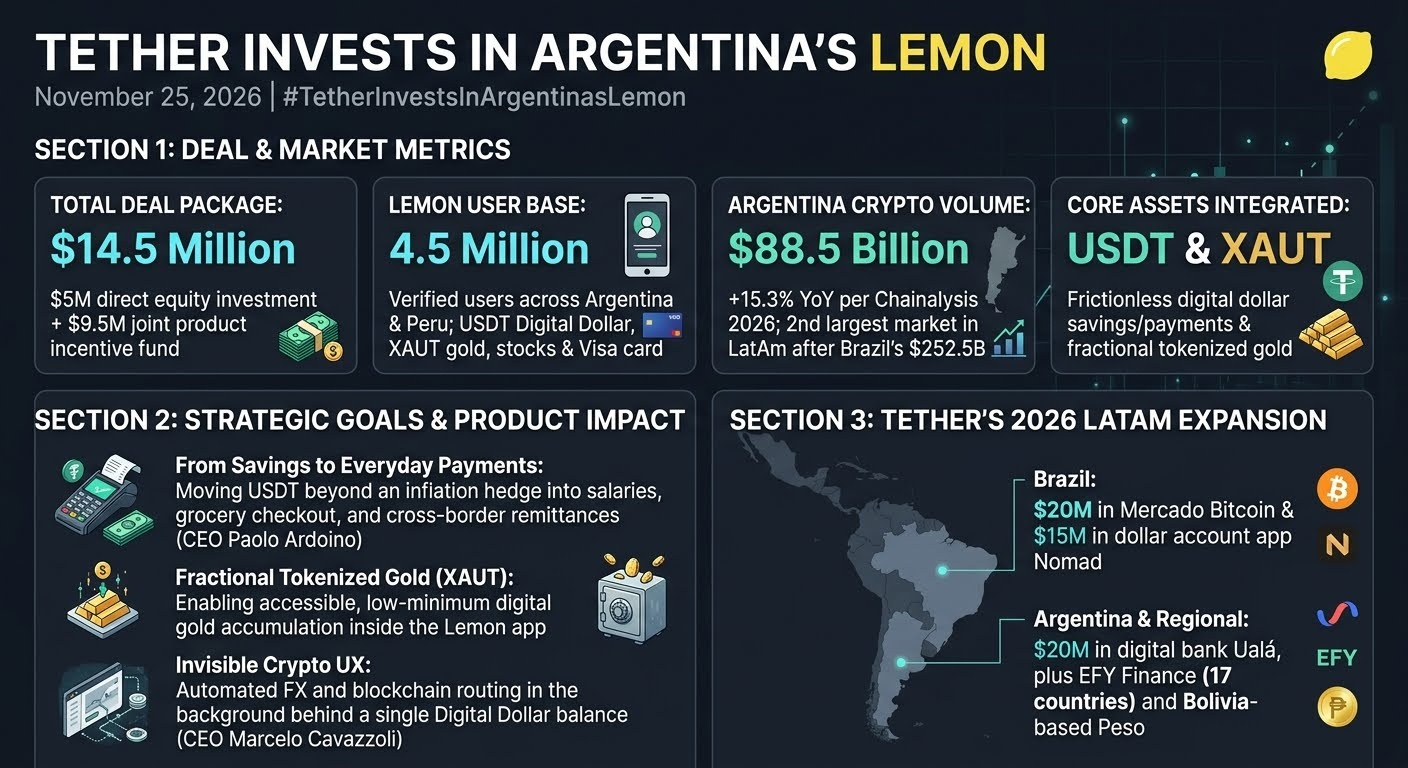
Tether has made a $14.5 million strategic investment in Argentina-based digital asset fintech company Lemon, aiming to bring the use of USDT and gold-backed XAU₮ to everyday payments across Latin America. 🍋💵📊 The Deal and the Argentine Market in Numbers
IndicatorData / FigureKey Detail💰 Total Package$14.5 Million$5 million direct equity investment, plus a $9.5 million incentive fund for co-developed products.📱 Lemon Users4.5 Million (Verified)Offers USDT-based Digital Dollars, XAU₮ digital gold, stocks, and a prepaid Visa card in a single app.🇦🇷 Argentina's Crypto Volume$88.5 Billion (+15.3% year over year)According to Chainalysis's 2026 report, Latin America's second-largest market after Brazil ($252.5B).
🚀 What Will This Investment Change?
💳 From Savings to Everyday Payments: Tether CEO Paolo Ardoino emphasizes that in Argentina and Latin America, USDT is no longer just a hedge against inflation; it's actively used to receive salaries, shop for groceries, and make cross-border transfers.🪙 Fractional Digital Gold (XAU₮): Users will be able to accumulate and manage small amounts of tokenized gold (XAU₮) through the app without needing a large initial investment.🔄 Automatic Conversion in the Background: Lemon CEO Marcelo Cavazzoli says that currency conversions and blockchain network transactions are handled automatically in the background, allowing users to carry out all their financial transactions with a single "Digital Dollar" balance.
🌎 Tether's Latin America Push Is Growing
Throughout 2026, Tether is making aggressive investments in fintech companies and payment networks across the region to build its own distribution channel:
Brazil: Investments in Mercado Bitcoin ($20 million) and dollar account app Nomad ($15 million).🇦🇷 Argentina & the Region: Digital bank Ualá ($20 million), EFY Finance (business payments in 17 countries), and Bolivia-based Peso.
$XAUT $TRUMP $PAXG
{future}(TRUMPUSDT)
{future}(XAUTUSDT)
#tetherinvestsinargentinaslemon
Tether has made a $14.5 million strategic investment in Argentina-based digital asset fintech company Lemon, aiming to bring the use of USDT and gold-backed XAU₮ to everyday payments across Latin America. 🍋💵📊 The Deal and the Argentine Market in Numbers
IndicatorData / FigureKey Detail💰 Total Package$14.5 Million$5 million direct equity investment, plus a $9.5 million incentive fund for co-developed products.📱 Lemon Users4.5 Million (Verified)Offers USDT-based Digital Dollars, XAU₮ digital gold, stocks, and a prepaid Visa card in a single app.🇦🇷 Argentina's Crypto Volume$88.5 Billion (+15.3% year over year)According to Chainalysis's 2026 report, Latin America's second-largest market after Brazil ($252.5B).
🚀 What Will This Investment Change?
💳 From Savings to Everyday Payments: Tether CEO Paolo Ardoino emphasizes that in Argentina and Latin America, USDT is no longer just a hedge against inflation; it's actively used to receive salaries, shop for groceries, and make cross-border transfers.🪙 Fractional Digital Gold (XAU₮): Users will be able to accumulate and manage small amounts of tokenized gold (XAU₮) through the app without needing a large initial investment.🔄 Automatic Conversion in the Background: Lemon CEO Marcelo Cavazzoli says that currency conversions and blockchain network transactions are handled automatically in the background, allowing users to carry out all their financial transactions with a single "Digital Dollar" balance.
🌎 Tether's Latin America Push Is Growing
Throughout 2026, Tether is making aggressive investments in fintech companies and payment networks across the region to build its own distribution channel:
Brazil: Investments in Mercado Bitcoin ($20 million) and dollar account app Nomad ($15 million).🇦🇷 Argentina & the Region: Digital bank Ualá ($20 million), EFY Finance (business payments in 17 countries), and Bolivia-based Peso.
$XAUT $TRUMP $PAXG
3.1k
·
--
#BitcoinETFsPostRecord$4.94BNovemberOutflows
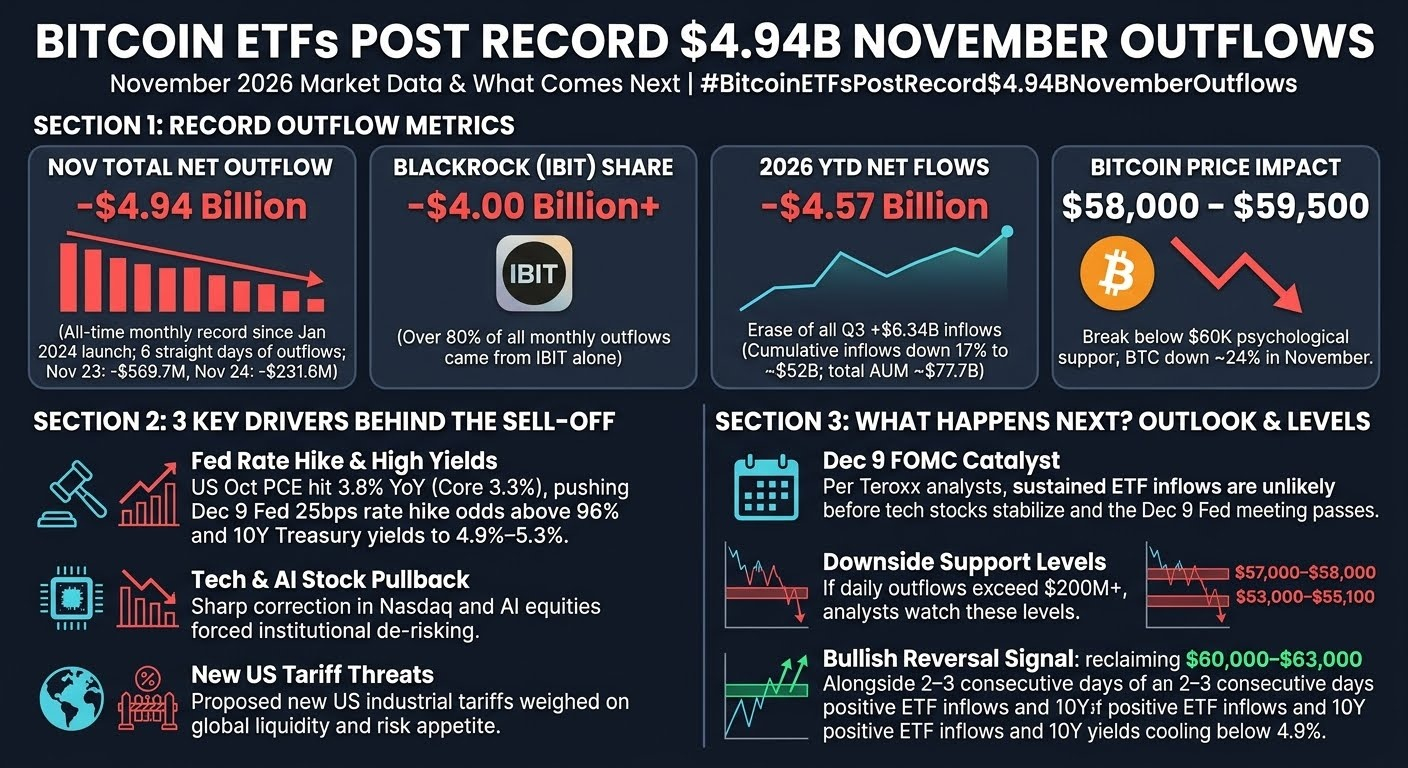
U.S. spot Bitcoin ETFs experienced their largest monthly capital outflow since their launch in January 2024, with net outflows of $4.94 billion in November 2026; what happens next depends on the Fed's December 9 decision and bond yields stabilizing. 📉🏦
📊 Record Outflows in Numbers
IndicatorData / FigureKey Detail📉 November Total Outflow-$4.94 BillionAll-time record since January 2024 (outflows for 6 consecutive trading days). 🚨🏦 BlackRock (IBIT)-$4.00 Billion+More than 80% of total outflows came from IBIT alone. 💼📊 2026 Year-to-Date Net Flows-$4.57 BillionQ3 inflows of +$6.34B were completely wiped out, and annual flows turned negative. 🔄🪙 Bitcoin Price Impact$58,000 – $59,500The $60,000 psychological support level was broken; BTC fell ~24% on a monthly basis. 🔻
🚨 Why Are Outflows Happening?
🔥 Pressure from Fed Rate Hikes: With October PCE inflation rising to 3.8%, the probability of a rate hike at the December 9 Fed meeting exceeded 96%; bond yields approaching the 5% range put pressure on Bitcoin. 📈🤖 AI and Tariff Sell-Offs: A sharp correction in tech/AI stocks and new U.S. tariff threats prompted institutional investors to reduce risk. 💻🚢
🔮 What Happens Next?
⏳ December 9 Threshold: According to Teroxx analysts, a sustained return of money to ETFs is unlikely until tech stocks stabilize and the December 9 FOMC meeting is behind us. 🗓️📉 Key Levels: If daily outflows of $200M+ continue, support at $57,000–$58,000 and then $53,000–$55,100 could come into play. For a recovery, BTC must climb back above $60,000 and ETFs must see a 2–3-day streak of positive inflows. 🎯🏛️ Medium Term: Once U.S. 10-year Treasury yields fall below 4.9%, a rapid return of capital is expected, thanks to the deepened institutional ETF infrastructure. 🚀
$BTC $BTCS.US $INX
{future}(INXUSDT)
{stock_us}(BTCS.US)
{future}(BTCUSDT)
#BitcoinETFsPostRecord$4.94BNovemberOutflows
U.S. spot Bitcoin ETFs experienced their largest monthly capital outflow since their launch in January 2024, with net outflows of $4.94 billion in November 2026; what happens next depends on the Fed's December 9 decision and bond yields stabilizing. 📉🏦
📊 Record Outflows in Numbers
IndicatorData / FigureKey Detail📉 November Total Outflow-$4.94 BillionAll-time record since January 2024 (outflows for 6 consecutive trading days). 🚨🏦 BlackRock (IBIT)-$4.00 Billion+More than 80% of total outflows came from IBIT alone. 💼📊 2026 Year-to-Date Net Flows-$4.57 BillionQ3 inflows of +$6.34B were completely wiped out, and annual flows turned negative. 🔄🪙 Bitcoin Price Impact$58,000 – $59,500The $60,000 psychological support level was broken; BTC fell ~24% on a monthly basis. 🔻
🚨 Why Are Outflows Happening?
🔥 Pressure from Fed Rate Hikes: With October PCE inflation rising to 3.8%, the probability of a rate hike at the December 9 Fed meeting exceeded 96%; bond yields approaching the 5% range put pressure on Bitcoin. 📈🤖 AI and Tariff Sell-Offs: A sharp correction in tech/AI stocks and new U.S. tariff threats prompted institutional investors to reduce risk. 💻🚢
🔮 What Happens Next?
⏳ December 9 Threshold: According to Teroxx analysts, a sustained return of money to ETFs is unlikely until tech stocks stabilize and the December 9 FOMC meeting is behind us. 🗓️📉 Key Levels: If daily outflows of $200M+ continue, support at $57,000–$58,000 and then $53,000–$55,100 could come into play. For a recovery, BTC must climb back above $60,000 and ETFs must see a 2–3-day streak of positive inflows. 🎯🏛️ Medium Term: Once U.S. 10-year Treasury yields fall below 4.9%, a rapid return of capital is expected, thanks to the deepened institutional ETF infrastructure. 🚀
$BTC $BTCS.US $INX
68
·
--
#usoctoberpcepriceindexat0.3%mom
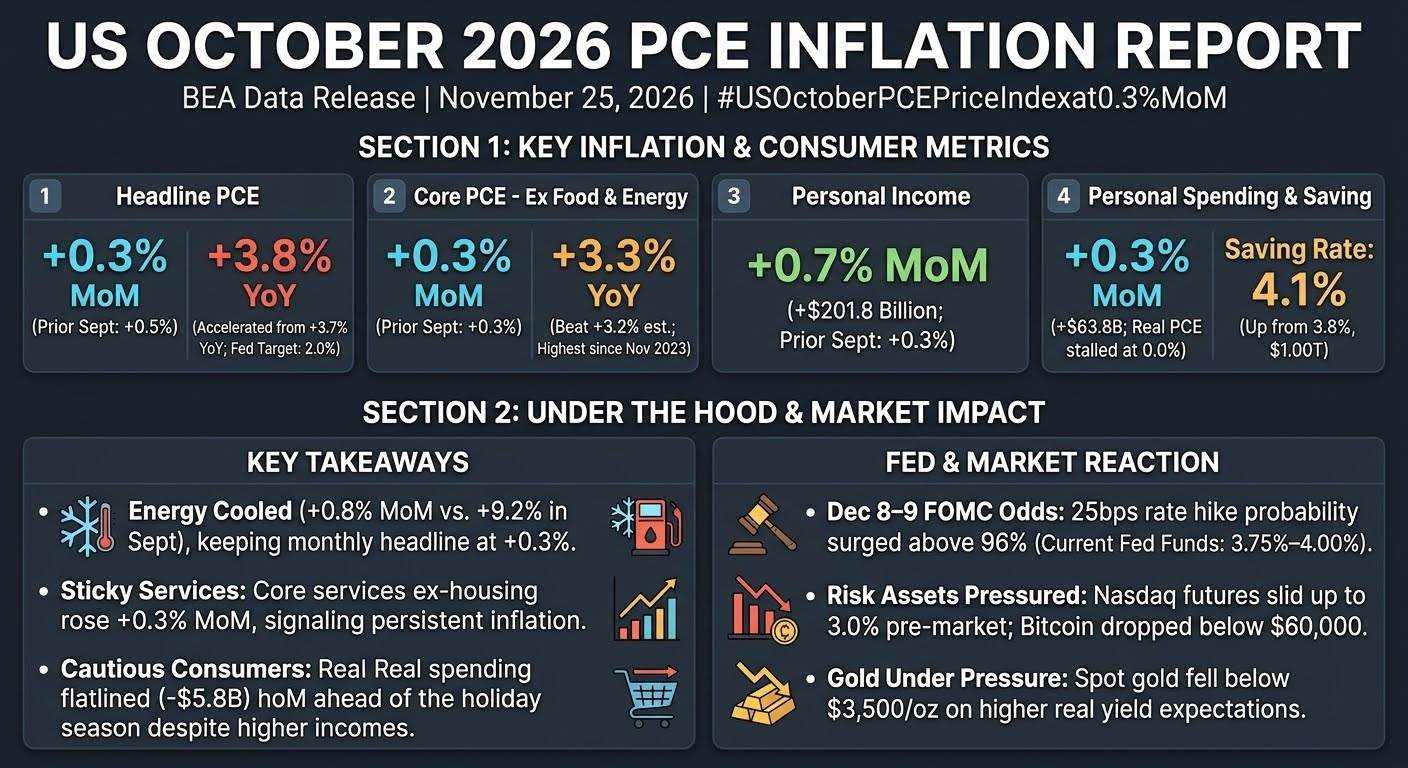
The U.S. Personal Consumption Expenditures (PCE) price index rose 0.3% month over month in October 2026, in line with expectations, while headline inflation climbed to 3.8% year over year and core inflation to 3.3%, strengthening the likelihood of a Fed rate hike in December. 📊🔥
📈 October 2026 U.S. PCE Summary
IndicatorOctober 2026 (Monthly)October 2026 (Annual)Key Note🏷️ Headline PCE+0.3% (September: +0.5%)+3.8%Accelerated from 3.7% year over year (Fed target: 2%).🎯 Core PCE (Excluding Food & Energy)+0.3% (September: +0.3%)+3.3%Expectations were 3.2%; the highest level since November 2023.💵 Personal Income+0.7% (+$201.8 Billion)—Wage gains and one-time Medicare payments contributed.🛒 Personal Spending & Savings+0.3% (Real: 0.0%)—Real spending stalled; the savings rate rose to 4.1%.
🔍 Reading Between the Lines
⛽ Energy Slowed, Services Remained Sticky: Energy prices, which surged 9.2% in September, slowed to +0.8% in October, tempering the monthly figure. However, services inflation excluding housing and energy continued to rise by +0.3% monthly, showing that price pressures remain persistent.🛍️ Consumers Put on the Brakes: Despite a 0.7% increase in income, inflation-adjusted real spending was unchanged, suggesting households are cutting back ahead of the holiday season because of high prices.
🏦 Impact on the Fed and Markets
📈 December Rate Hike Expectations: Core PCE reaching a 3-year high (3.3%) pushed the probability of a 25-basis-point rate hike at the December 8–9 Fed meeting above 96%.📉 Asset Prices Under Pressure: Expectations of tighter monetary policy weighed on technology stocks (Nasdaq), while Bitcoin fell below the $60,000 mark and gold was pressured below $3,500 per ounce.
$BNB $ETH $SSV
{future}(SSVUSDT)
{future}(ETHUSDT)
{future}(BNBUSDT)
#usoctoberpcepriceindexat0.3%mom
The U.S. Personal Consumption Expenditures (PCE) price index rose 0.3% month over month in October 2026, in line with expectations, while headline inflation climbed to 3.8% year over year and core inflation to 3.3%, strengthening the likelihood of a Fed rate hike in December. 📊🔥
📈 October 2026 U.S. PCE Summary
IndicatorOctober 2026 (Monthly)October 2026 (Annual)Key Note🏷️ Headline PCE+0.3% (September: +0.5%)+3.8%Accelerated from 3.7% year over year (Fed target: 2%).🎯 Core PCE (Excluding Food & Energy)+0.3% (September: +0.3%)+3.3%Expectations were 3.2%; the highest level since November 2023.💵 Personal Income+0.7% (+$201.8 Billion)—Wage gains and one-time Medicare payments contributed.🛒 Personal Spending & Savings+0.3% (Real: 0.0%)—Real spending stalled; the savings rate rose to 4.1%.
🔍 Reading Between the Lines
⛽ Energy Slowed, Services Remained Sticky: Energy prices, which surged 9.2% in September, slowed to +0.8% in October, tempering the monthly figure. However, services inflation excluding housing and energy continued to rise by +0.3% monthly, showing that price pressures remain persistent.🛍️ Consumers Put on the Brakes: Despite a 0.7% increase in income, inflation-adjusted real spending was unchanged, suggesting households are cutting back ahead of the holiday season because of high prices.
🏦 Impact on the Fed and Markets
📈 December Rate Hike Expectations: Core PCE reaching a 3-year high (3.3%) pushed the probability of a 25-basis-point rate hike at the December 8–9 Fed meeting above 96%.📉 Asset Prices Under Pressure: Expectations of tighter monetary policy weighed on technology stocks (Nasdaq), while Bitcoin fell below the $60,000 mark and gold was pressured below $3,500 per ounce.
$BNB $ETH $SSV
977
·
--
#nasdaqfuturesslidemorethan3%
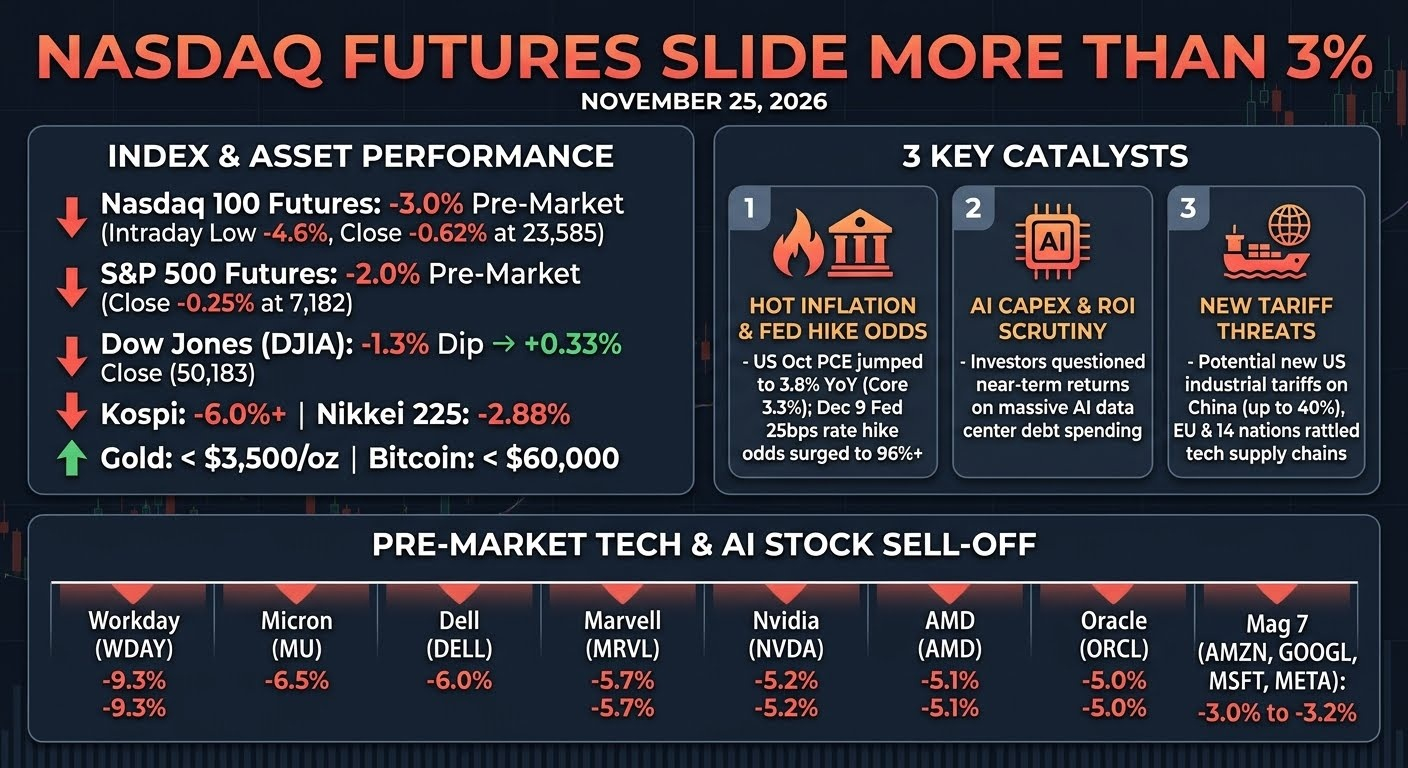
On November 25, 2026, Nasdaq 100 futures plunged by as much as 3% in premarket trading, triggering a fresh wave of selling in technology and artificial intelligence stocks. 📉🔥
📊 Index Performance (November 25, 2026)
Index | Premarket / Intraday Low | Close / Latest
Nasdaq 100 Futures 📉 | -3.0% (Spot low: -4.6%) | -0.62% (23,585.80)
S&P 500 Futures 📊 | -2.0% (Spot low: -3.2%) | -0.25% (7,182.78)
Dow Jones (DJIA) 🏛️ | -1.3% (-609 points) | +0.33% (50,182.95)
🚨 3 Key Reasons Behind the Decline
🔥 Hot Inflation and Fed Pressure: US PCE inflation rose to 3.8% year over year in October (core: 3.3%). 📈 The probability of a 25-basis-point rate hike at the Fed's December 9 meeting rose to over 96%. 🏦🤖 AI Spending Concerns: Questions about the short-term profitability of massive data center investments triggered sharp selloffs in chip and tech giants: Nvidia (-5.2%), Micron (-6.5%), AMD (-5.1%), Workday (-9.3%), and Dell (-6.0%). 💻🚢 New Tariff Threat: Reports that the Trump administration could announce new industrial tariffs targeting China (up to 40% if negotiations collapse), the EU, and 14 countries rattled the technology supply chain. 🌐⚠️
🌍 Global and Crypto Impact
🌏 Asia & Commodities: South Korea's Kospi fell more than 6%, while Japan's Nikkei dropped 2.88%; amid rate pressures, spot gold fell below $3,500. 🪙 Crypto: As risk appetite weakened, Bitcoin fell below the psychological $60,000 threshold. 📉⏰ Calendar: US stock markets are closed on November 26 (today), and will close early at 9:00 PM Turkey time on Friday, November 27. 🦃
$MMT $BULLA $EVAA
{future}(EVAAUSDT)
{future}(BULLAUSDT)
{future}(MMTUSDT)
#nasdaqfuturesslidemorethan3%
On November 25, 2026, Nasdaq 100 futures plunged by as much as 3% in premarket trading, triggering a fresh wave of selling in technology and artificial intelligence stocks. 📉🔥
📊 Index Performance (November 25, 2026)
Index | Premarket / Intraday Low | Close / Latest
Nasdaq 100 Futures 📉 | -3.0% (Spot low: -4.6%) | -0.62% (23,585.80)
S&P 500 Futures 📊 | -2.0% (Spot low: -3.2%) | -0.25% (7,182.78)
Dow Jones (DJIA) 🏛️ | -1.3% (-609 points) | +0.33% (50,182.95)
🚨 3 Key Reasons Behind the Decline
🔥 Hot Inflation and Fed Pressure: US PCE inflation rose to 3.8% year over year in October (core: 3.3%). 📈 The probability of a 25-basis-point rate hike at the Fed's December 9 meeting rose to over 96%. 🏦🤖 AI Spending Concerns: Questions about the short-term profitability of massive data center investments triggered sharp selloffs in chip and tech giants: Nvidia (-5.2%), Micron (-6.5%), AMD (-5.1%), Workday (-9.3%), and Dell (-6.0%). 💻🚢 New Tariff Threat: Reports that the Trump administration could announce new industrial tariffs targeting China (up to 40% if negotiations collapse), the EU, and 14 countries rattled the technology supply chain. 🌐⚠️
🌍 Global and Crypto Impact
🌏 Asia & Commodities: South Korea's Kospi fell more than 6%, while Japan's Nikkei dropped 2.88%; amid rate pressures, spot gold fell below $3,500. 🪙 Crypto: As risk appetite weakened, Bitcoin fell below the psychological $60,000 threshold. 📉⏰ Calendar: US stock markets are closed on November 26 (today), and will close early at 9:00 PM Turkey time on Friday, November 27. 🦃
$MMT $BULLA $EVAA
1.1k
·
--
#couldspacex’sorbitaldatacentersboostaichipdemand?
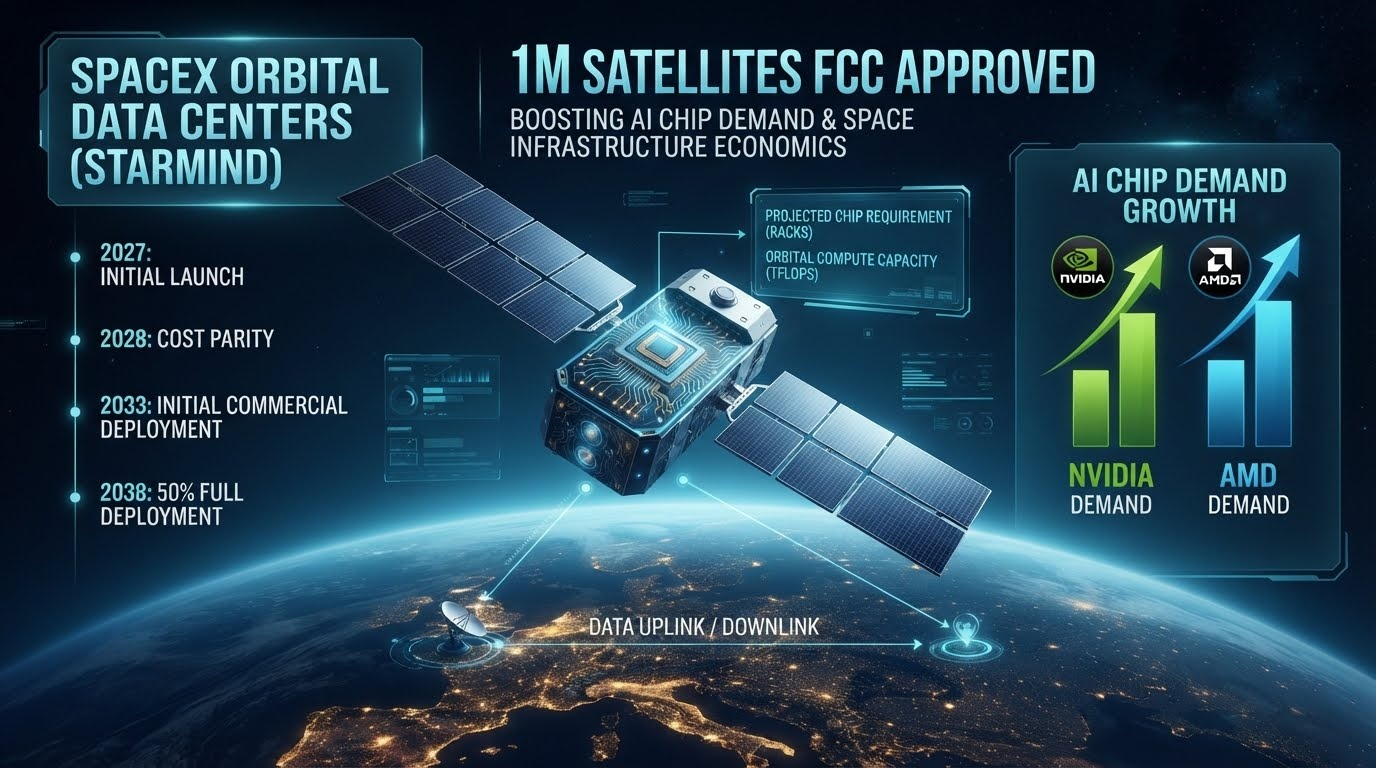
SpaceX's orbital data center project (Starmind) could create a massive new growth channel for AI chip demand in the long term, but its impact will remain limited in the short term due to financial and technical hurdles. 🛰️💻
🚀 Impact on Chip Demand and Timeline
🎮 Nvidia and AMD: 👩💼 Cathie Wood (ARK Invest) predicts the project will create huge additional demand for Nvidia and AMD chips. 📈 SpaceX also plans to build its own chip factory, called TeraFab, in Texas. 🏭📅 Key Dates: The first launches will begin in late 2027. 🚀 According to ARK Invest, costs will reach parity with data centers around the world in 2028; under the FCC license, 100,000 satellites will be active by 2035 and 500,000 by 2038. 🌍
⚠️ 3 Major Hurdles Ahead
🏦 Banks' "Collateral" Hurdle: 📰 According to The Wall Street Journal, banks that lent SpaceX $40–43 billion to purchase chips oppose sending the chips into space because they cannot repossess them. 🚫🌡️ Cooling and Radiation: Dissipating heat in direct sunlight and protecting chips in space require substantial engineering costs. ☀️❄️🚀 The Licensing Reality: Companies obtain licenses for far more satellites than they plan to deploy, to allow for flexibility (for example, Starlink has licenses for 42,000 satellites but only about 11,000). 📡
💡 Summary
⚡ Short Term: It provides strong narrative support for chip stocks and AI projects, but a massive direct revenue contribution to financial statements is not expected before late 2027. 📊
🌟 Long Term: It creates a new 10–15-year growth thesis that could ease concerns about AI chip demand reaching saturation. 🔭
$NVDA $AMD $SPCX
{future}(SPCXUSDT)
{future}(AMDUSDT)
{future}(NVDAUSDT)
#couldspacex’sorbitaldatacentersboostaichipdemand?
SpaceX's orbital data center project (Starmind) could create a massive new growth channel for AI chip demand in the long term, but its impact will remain limited in the short term due to financial and technical hurdles. 🛰️💻
🚀 Impact on Chip Demand and Timeline
🎮 Nvidia and AMD: 👩💼 Cathie Wood (ARK Invest) predicts the project will create huge additional demand for Nvidia and AMD chips. 📈 SpaceX also plans to build its own chip factory, called TeraFab, in Texas. 🏭📅 Key Dates: The first launches will begin in late 2027. 🚀 According to ARK Invest, costs will reach parity with data centers around the world in 2028; under the FCC license, 100,000 satellites will be active by 2035 and 500,000 by 2038. 🌍
⚠️ 3 Major Hurdles Ahead
🏦 Banks' "Collateral" Hurdle: 📰 According to The Wall Street Journal, banks that lent SpaceX $40–43 billion to purchase chips oppose sending the chips into space because they cannot repossess them. 🚫🌡️ Cooling and Radiation: Dissipating heat in direct sunlight and protecting chips in space require substantial engineering costs. ☀️❄️🚀 The Licensing Reality: Companies obtain licenses for far more satellites than they plan to deploy, to allow for flexibility (for example, Starlink has licenses for 42,000 satellites but only about 11,000). 📡
💡 Summary
⚡ Short Term: It provides strong narrative support for chip stocks and AI projects, but a massive direct revenue contribution to financial statements is not expected before late 2027. 📊
🌟 Long Term: It creates a new 10–15-year growth thesis that could ease concerns about AI chip demand reaching saturation. 🔭
$NVDA $AMD $SPCX
354
·
--
#canmarketsreboundafterthanksgiving?
Markets may see a short-term relief rally after Thanksgiving; however, macroeconomic headwinds need to be overcome for a sustained rise. 📈🤔
1. Current Situation 🎢📉
In recent days, sharp sell-offs in chip and technology stocks (Nvidia, Micron), tariff news, and higher-than-expected inflation data (3.3%) have shaken the markets.
Pre-Holiday Rebound 🔄: On the last trading day, indexes recovered from sharp intraday declines and closed higher. Dip-Buying Expectations 🦈: Famous investors like Michael Burry closing their short positions and starting to buy strengthened expectations of an “oversold” bounce.
2. Historical Statistics 📅📊
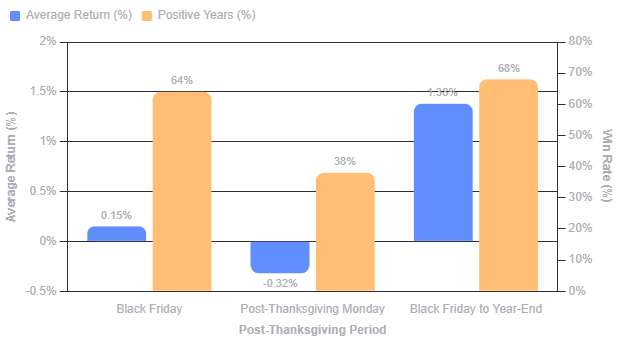
According to IG Bank data for the past 50 years, the post-holiday period looks like this:
Trading DayDate (2026)Average ReturnProbability of RiseOutlookBlack Friday (Half Day) 🛍️November 27+0.15%64%Low-volume positive trading 🟢Post-Holiday Monday 😴November 30-0.32%38%Profit-taking and weakness 🔴Black Friday - Year-End 🎄Nov 27 - Dec 31+1.38%68%Data-dependent rally 🎅
3. 3 Conditions for a Sustained Recovery 🔑⚖️
According to Bank of America analyses, the following are needed for the rebound to last:
Bond Yields 🏦: U.S. 10-year Treasury yields (4.84%) need to fall below 4.50%. Oil Prices 🛢️: Crude oil (~$84) needs to drop below $70. Fed and Inflation 🦅: Data ahead of the December meeting needs to ease pressure for higher interest rates.
Summary 🎯💡
In the short term, relief rallies are quite likely due to oversold conditions. However, with inflation high and the Fed maintaining its tight stance, the safest approach is to act cautiously and gradually, given the risk that these rallies may be temporary. ⚠️
$ZEC $MOVE $MANTRA
{future}(MANTRAUSDT)
{future}(MOVEUSDT)
{future}(ZECUSDT)
#canmarketsreboundafterthanksgiving?
Markets may see a short-term relief rally after Thanksgiving; however, macroeconomic headwinds need to be overcome for a sustained rise. 📈🤔
1. Current Situation 🎢📉
In recent days, sharp sell-offs in chip and technology stocks (Nvidia, Micron), tariff news, and higher-than-expected inflation data (3.3%) have shaken the markets.
Pre-Holiday Rebound 🔄: On the last trading day, indexes recovered from sharp intraday declines and closed higher. Dip-Buying Expectations 🦈: Famous investors like Michael Burry closing their short positions and starting to buy strengthened expectations of an “oversold” bounce.
2. Historical Statistics 📅📊
According to IG Bank data for the past 50 years, the post-holiday period looks like this:
Trading DayDate (2026)Average ReturnProbability of RiseOutlookBlack Friday (Half Day) 🛍️November 27+0.15%64%Low-volume positive trading 🟢Post-Holiday Monday 😴November 30-0.32%38%Profit-taking and weakness 🔴Black Friday - Year-End 🎄Nov 27 - Dec 31+1.38%68%Data-dependent rally 🎅
3. 3 Conditions for a Sustained Recovery 🔑⚖️
According to Bank of America analyses, the following are needed for the rebound to last:
Bond Yields 🏦: U.S. 10-year Treasury yields (4.84%) need to fall below 4.50%. Oil Prices 🛢️: Crude oil (~$84) needs to drop below $70. Fed and Inflation 🦅: Data ahead of the December meeting needs to ease pressure for higher interest rates.
Summary 🎯💡
In the short term, relief rallies are quite likely due to oversold conditions. However, with inflation high and the Fed maintaining its tight stance, the safest approach is to act cautiously and gradually, given the risk that these rallies may be temporary. ⚠️
$ZEC $MOVE $MANTRA
1.6k
Log in to explore more content
Join global crypto users on Binance Square
⚡️ Get latest and useful information about crypto.
💬 Trusted by the world’s largest crypto exchange.
👍 Discover real insights from verified creators.
Email / Phone number