
David_John
16.8k Posts

David_John
 Square Verified+
Risk It all & Make It Worth It. Chasing Goals Not people • X • @David_John_555
89 Following
43.9K+ Followers
72.2K+ Liked
Posts
All
Videos
Live
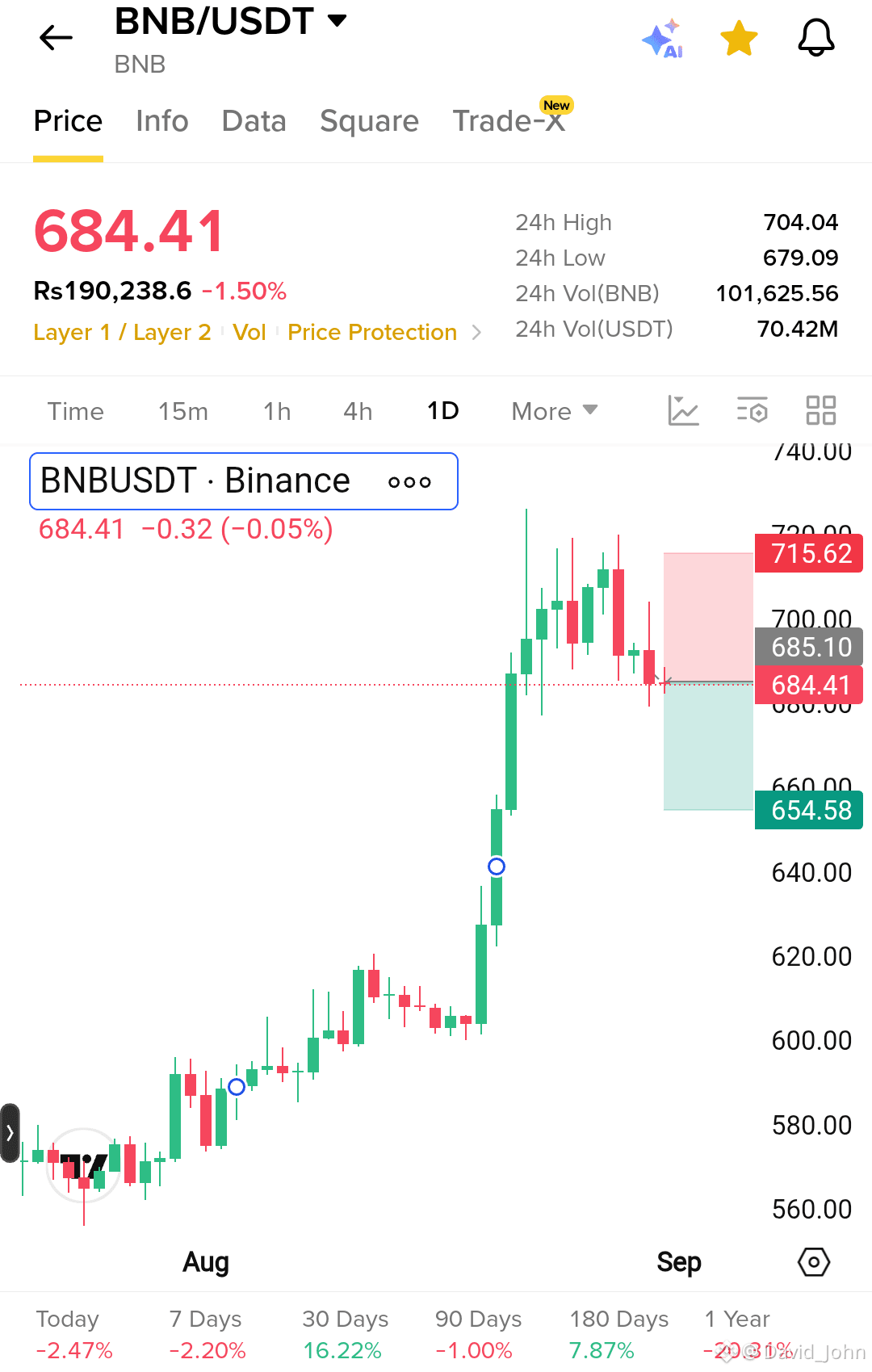
$BNB is flashing a 🔥 SHORT setup!
Entry: $684.41
🎯 TP1: $670
🎯 TP2: $660
🎯 TP3: $654.58
🛑 SL: $715.62
Resistance: $700–$715.62
Support/Target: $654.58
Momentum is fading after rejection near $715 — a clean breakdown below $680 could accelerate the drop. ⚡📉
Entry: $684.41
🎯 TP1: $670
🎯 TP2: $660
🎯 TP3: $654.58
🛑 SL: $715.62
Resistance: $700–$715.62
Support/Target: $654.58
Momentum is fading after rejection near $715 — a clean breakdown below $680 could accelerate the drop. ⚡📉
Partly True
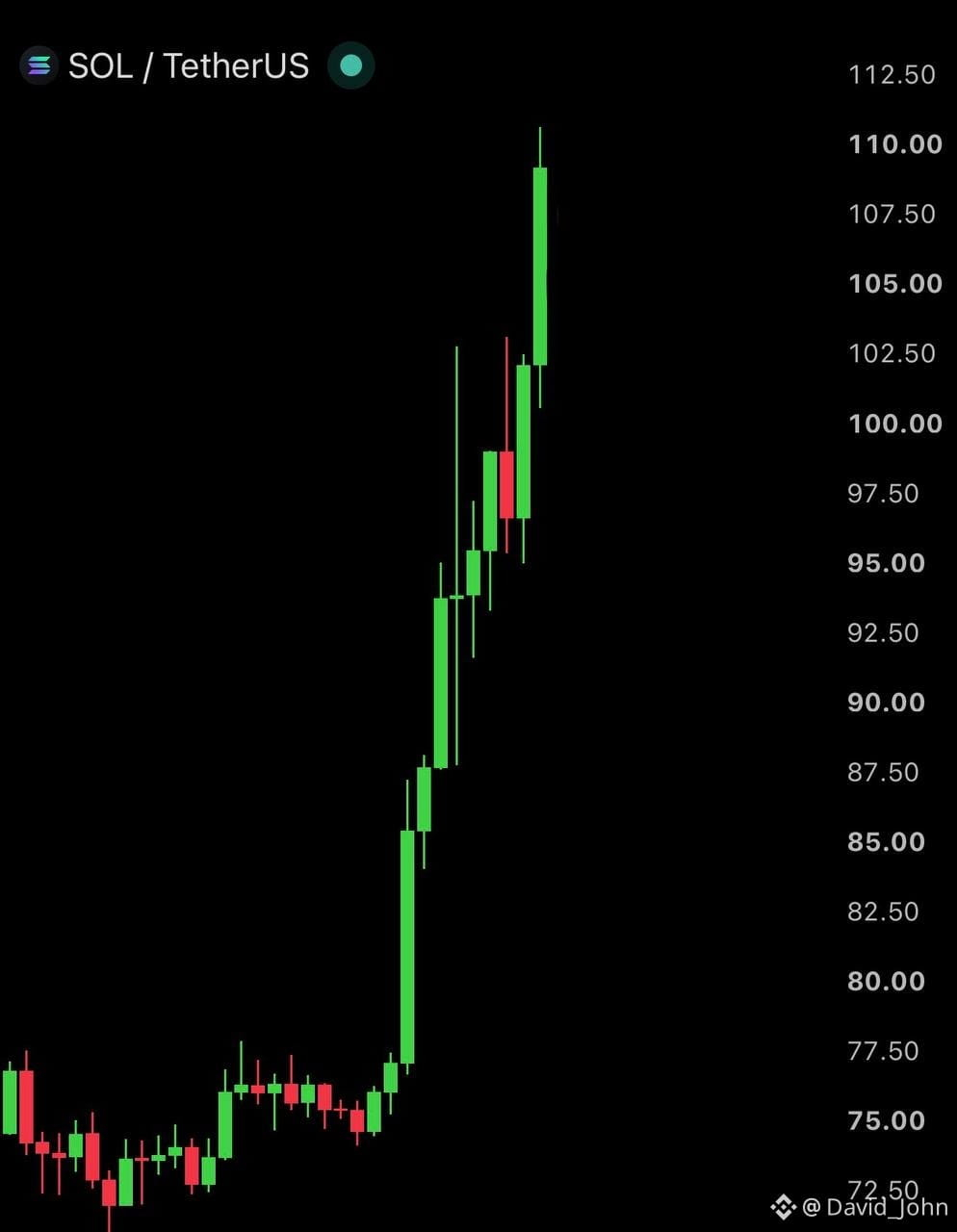
🚨 MASSIVE $SOL ACCUMULATION — INSTITUTIONS ARE BACK
$153 MILLION of Solana ($SOL ) exposure was reportedly scooped up through ETFs this week.
That’s not just another inflow.
It’s the largest weekly ETF purchase since October 2025. 📈
And the timing matters.
After months of volatility, institutional capital is once again showing a willingness to increase exposure to SOL — potentially signaling that larger players are positioning ahead of the next major market move.
💰 $153M bought this week
📊 Largest weekly inflow since Oct. 2025
🔥 Institutional demand accelerating
⚡ SOL remains one of the market’s key high-beta assets
The bigger question now isn’t whether institutions are buying.
It’s:
HOW MUCH MORE ARE THEY WILLING TO ACCUMULATE?
If this demand continues while exchange supply tightens and broader market liquidity improves, SOL could be setting up for a much larger repricing.
The ETF flow is sending a message:
Smart money may be positioning before the crowd.
Watch $SOL closely. The next major breakout could have institutional fuel behind it. 🚀
$153 MILLION of Solana ($SOL ) exposure was reportedly scooped up through ETFs this week.
That’s not just another inflow.
It’s the largest weekly ETF purchase since October 2025. 📈
And the timing matters.
After months of volatility, institutional capital is once again showing a willingness to increase exposure to SOL — potentially signaling that larger players are positioning ahead of the next major market move.
💰 $153M bought this week
📊 Largest weekly inflow since Oct. 2025
🔥 Institutional demand accelerating
⚡ SOL remains one of the market’s key high-beta assets
The bigger question now isn’t whether institutions are buying.
It’s:
HOW MUCH MORE ARE THEY WILLING TO ACCUMULATE?
If this demand continues while exchange supply tightens and broader market liquidity improves, SOL could be setting up for a much larger repricing.
The ETF flow is sending a message:
Smart money may be positioning before the crowd.
Watch $SOL closely. The next major breakout could have institutional fuel behind it. 🚀

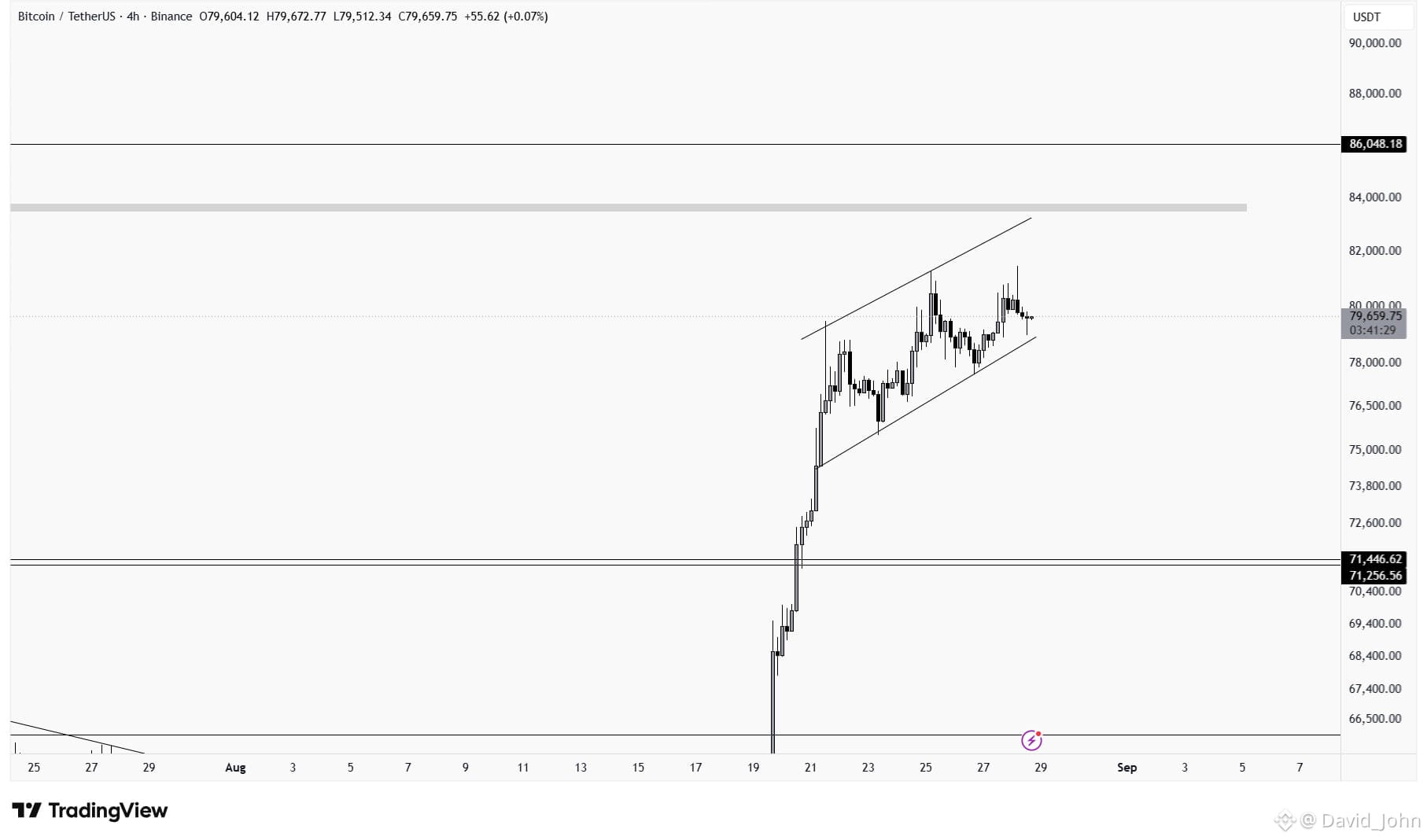
$BTC — $79.66K IS THE BATTLE ZONE. 🔥 THE NEXT BREAK COULD BE BIG.
Bitcoin is consolidating inside a clear ascending channel on the 4H chart after its sharp recovery from the $71.3K–$71.45K support zone.
Current: $79,659.75
4H High: $79,672.77
4H Low: $79,512.34
Price is holding the channel structure, but BTC is now pressing into the $80K area, where the next directional move could be decided.
Key levels 👇
Resistance: $80K → $81K → $83.4K
Major breakout target: $86,048
Support: $78K → $76.5K → $74.5K
Major invalidation zone: $71.25K–$71.45K
🔥 Bullish scenario: A clean 4H breakout above $81K could push BTC toward the upper channel near $83.4K, with a breakout opening the door toward $86K.
⚠️ Bearish scenario: Rejection around $80K–$81K followed by a break below the rising channel could trigger a deeper pullback toward $76.5K–$74.5K.
The structure is still bullish while the channel holds. $81K is the trigger. $83.4K is the test. $86K is the bigger prize. 🚀
Bitcoin is consolidating inside a clear ascending channel on the 4H chart after its sharp recovery from the $71.3K–$71.45K support zone.
Current: $79,659.75
4H High: $79,672.77
4H Low: $79,512.34
Price is holding the channel structure, but BTC is now pressing into the $80K area, where the next directional move could be decided.
Key levels 👇
Resistance: $80K → $81K → $83.4K
Major breakout target: $86,048
Support: $78K → $76.5K → $74.5K
Major invalidation zone: $71.25K–$71.45K
🔥 Bullish scenario: A clean 4H breakout above $81K could push BTC toward the upper channel near $83.4K, with a breakout opening the door toward $86K.
⚠️ Bearish scenario: Rejection around $80K–$81K followed by a break below the rising channel could trigger a deeper pullback toward $76.5K–$74.5K.
The structure is still bullish while the channel holds. $81K is the trigger. $83.4K is the test. $86K is the bigger prize. 🚀
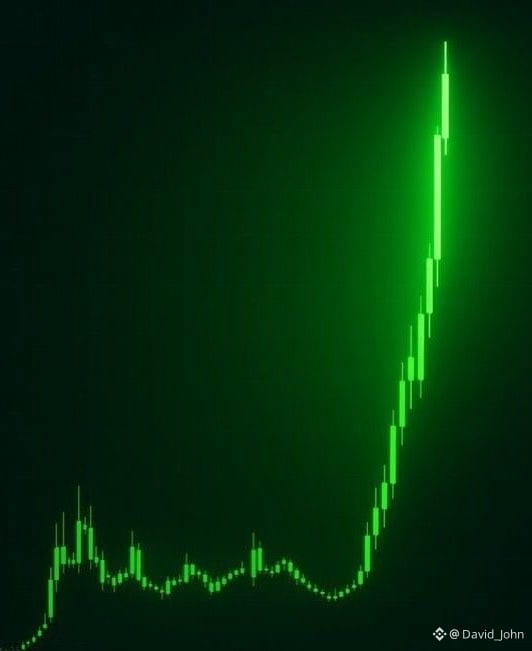
🔥 WALL STREET IS BACK FOR BITCOIN.
In just 5 trading days, U.S. Spot Bitcoin ETFs pulled in nearly $1.92 BILLION — their strongest weekly inflow in roughly 10 months.
And the buying didn’t stop there. ETF inflows continued afterward, pushing the streak even higher.
This isn’t just retail FOMO.
Institutional money is aggressively positioning. 🐋
The real question now:
What does Wall Street see coming that the rest of the market hasn’t priced in yet? 👀
In just 5 trading days, U.S. Spot Bitcoin ETFs pulled in nearly $1.92 BILLION — their strongest weekly inflow in roughly 10 months.
And the buying didn’t stop there. ETF inflows continued afterward, pushing the streak even higher.
This isn’t just retail FOMO.
Institutional money is aggressively positioning. 🐋
The real question now:
What does Wall Street see coming that the rest of the market hasn’t priced in yet? 👀

Verified
🇺🇸 BIG MOVE FROM THE U.S. TREASURY! 💥
The U.S. Treasury is ramping up its bond-buyback program to at least $4 BILLION per operation — double the previous $2B limit.
🎯 Target: 10–20Y and 20–30Y Treasury bonds
📅 Starts: September 9, 2026
⏳ Runs through: November 4, 2026
The goal? Boost liquidity and ease pressure in the long-term bond market after Treasury yields surged to multi-year highs.
And here’s the interesting part 👀
Treasury Secretary Scott Bessent has suggested buybacks could go beyond $4B.
Markets are watching closely.
Liquidity → Yields → Risk assets → CRYPTO? 🚀
This could get VERY interesting.
The U.S. Treasury is ramping up its bond-buyback program to at least $4 BILLION per operation — double the previous $2B limit.
🎯 Target: 10–20Y and 20–30Y Treasury bonds
📅 Starts: September 9, 2026
⏳ Runs through: November 4, 2026
The goal? Boost liquidity and ease pressure in the long-term bond market after Treasury yields surged to multi-year highs.
And here’s the interesting part 👀
Treasury Secretary Scott Bessent has suggested buybacks could go beyond $4B.
Markets are watching closely.
Liquidity → Yields → Risk assets → CRYPTO? 🚀
This could get VERY interesting.


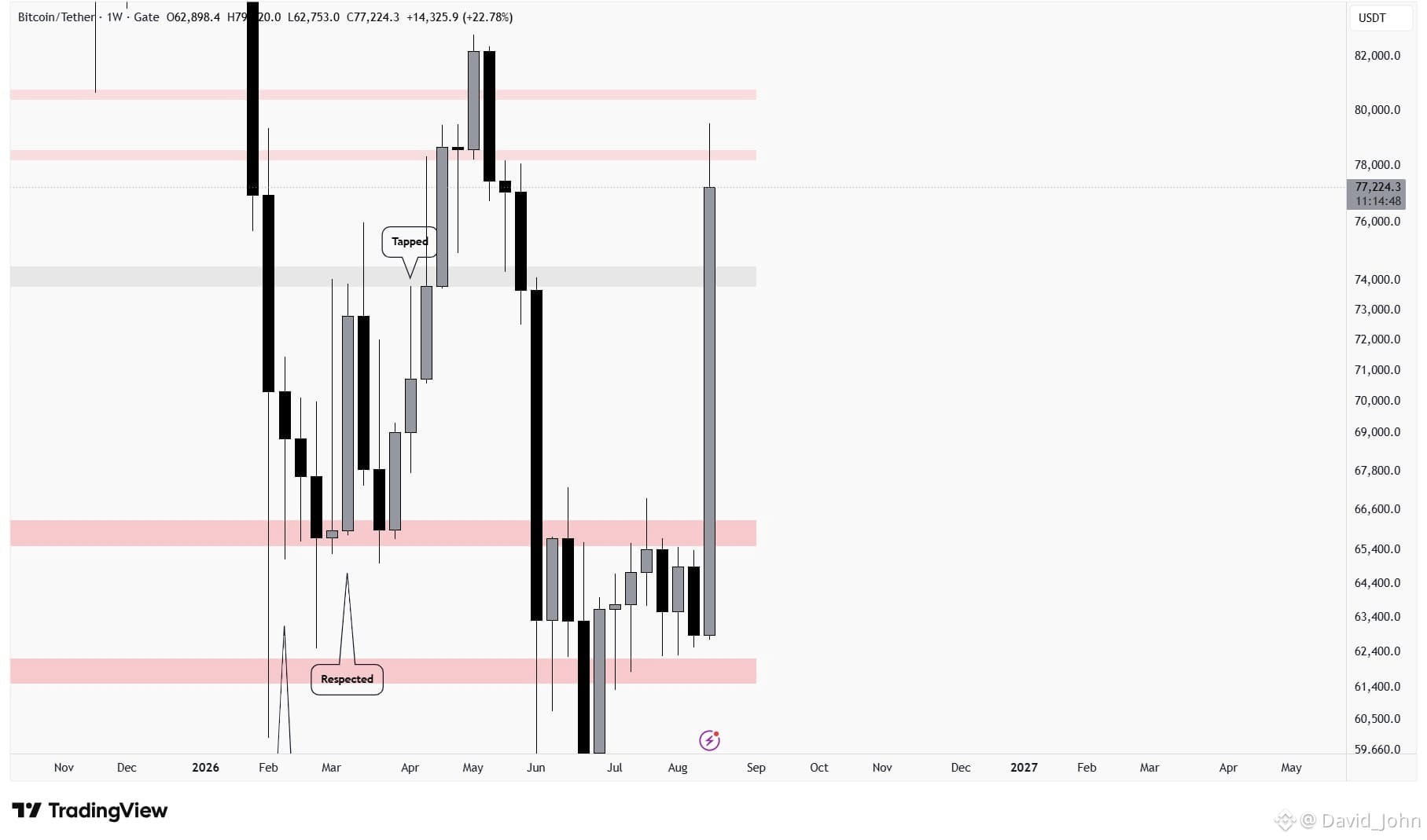
$BTC just woke up. 🚀
A massive +22.78% weekly candle just reclaimed the ~$74K zone that was previously TAPPED. Now BTC is pressing into $77.2K, with $78.5K–$79K and $80.5K–$81K as the next major resistance zones.
If $74K holds as support, this breakout can accelerate fast. 🔥
Lose $74K, and I’d watch $65.5K–$66.5K next.
The structure has shifted. 👀
A massive +22.78% weekly candle just reclaimed the ~$74K zone that was previously TAPPED. Now BTC is pressing into $77.2K, with $78.5K–$79K and $80.5K–$81K as the next major resistance zones.
If $74K holds as support, this breakout can accelerate fast. 🔥
Lose $74K, and I’d watch $65.5K–$66.5K next.
The structure has shifted. 👀
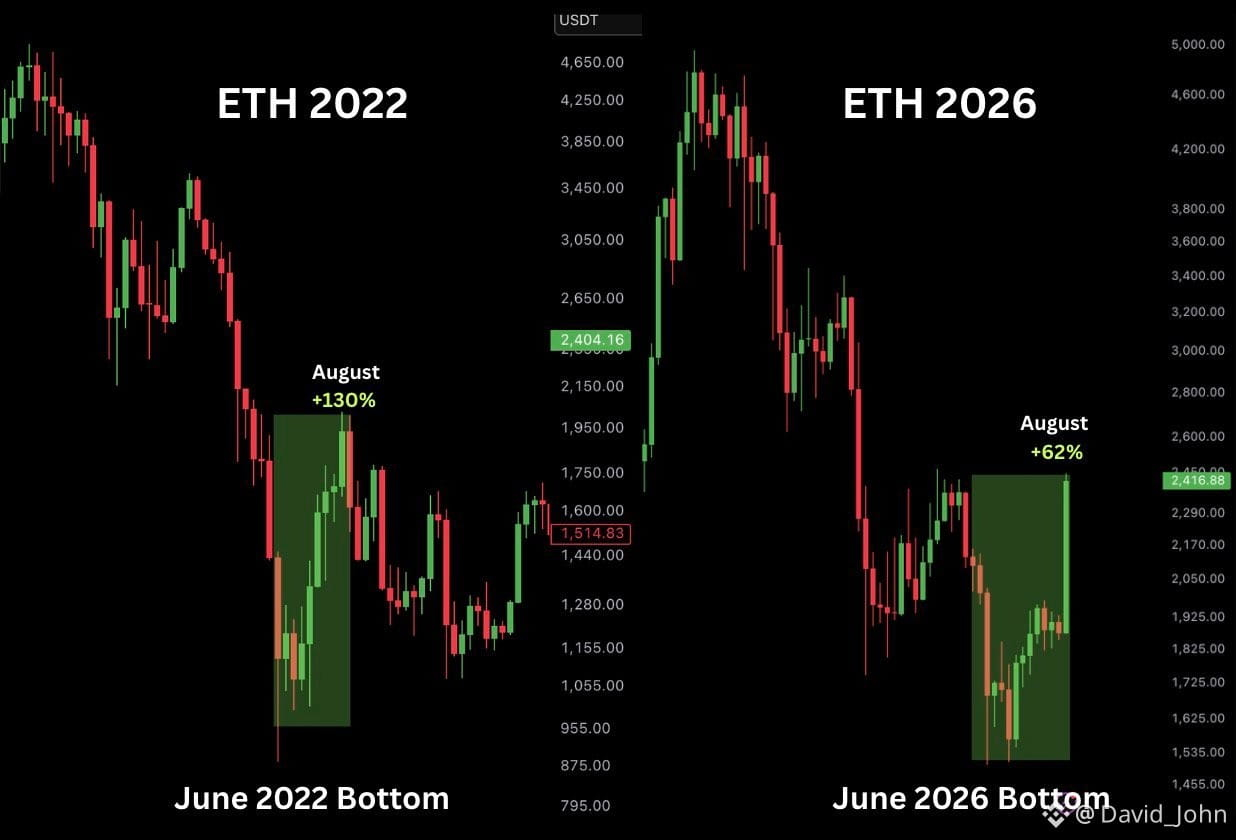
$ETH did a +130% summer pump in 2022. 🚀
History doesn’t always repeat—but it can rhyme.
If ETH pulls another move like that, $3,000+ could be back on the table. 👀🔥
Watch this one closely. 📈
History doesn’t always repeat—but it can rhyme.
If ETH pulls another move like that, $3,000+ could be back on the table. 👀🔥
Watch this one closely. 📈
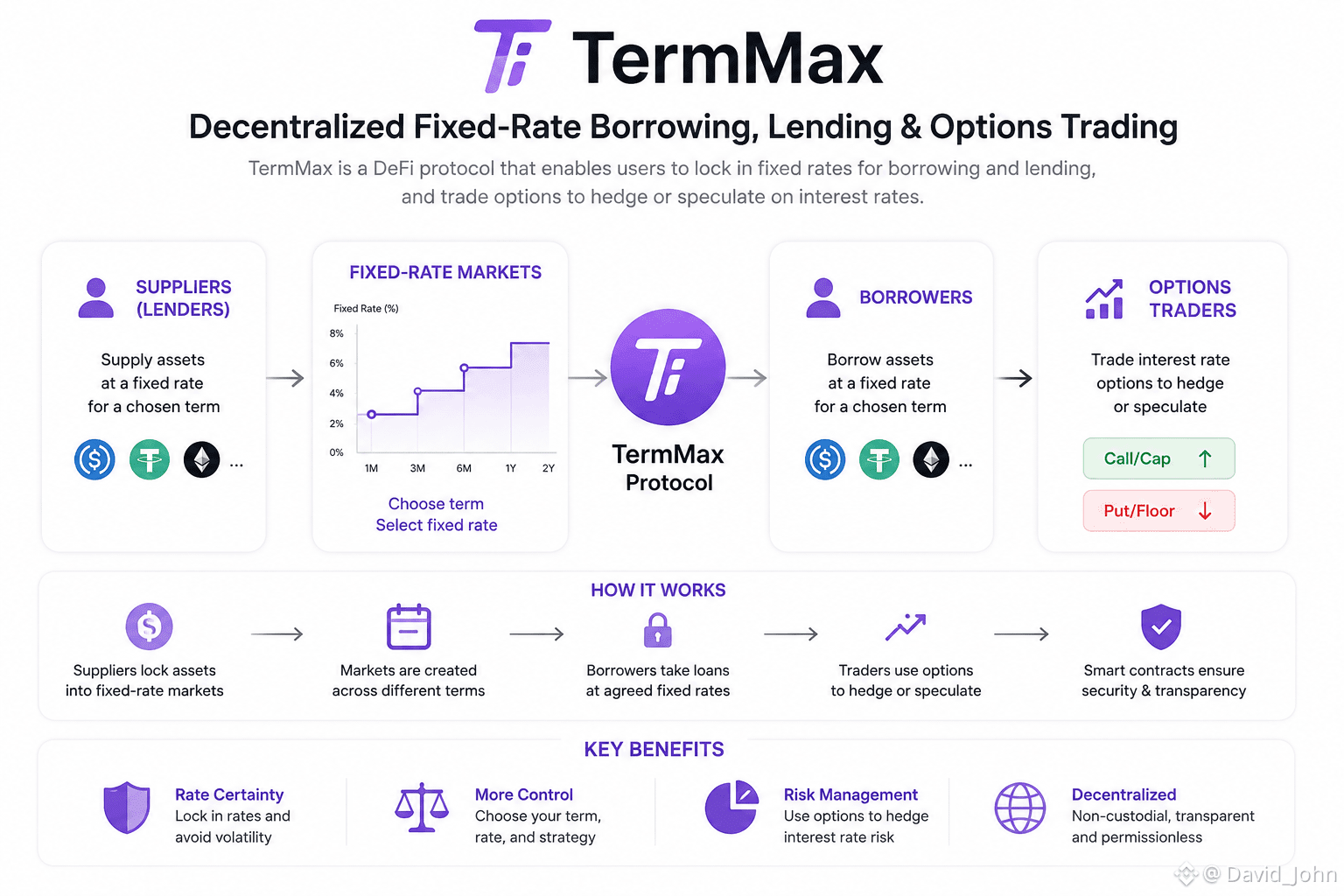
I’ve been following TermMax more closely lately, and the part that caught my attention isn’t the upcoming $TMX launch. It’s how quickly the actual product is expanding.
Since May, TermMax has shipped App V2, added limit orders across markets, expanded to HyperEVM, brought bStocks to BNB Chain, and pushed TermPrime into Canton with a live validator. The project also says its RLUSD vault passed $20M in two days and that TermMax is now above $90M TVL across 10 EVM chains.
That makes me see TermMax differently.
The interesting thing here is not simply “fixed-rate DeFi.” TermMax is trying to build a market where the term and borrowing cost are explicit, rather than leaving users exposed to constantly moving lending rates.
That matters because predictable financing is something DeFi still handles surprisingly poorly.
If TermMax gets this right, the bigger opportunity may be becoming a piece of financial infrastructure underneath other protocols, assets and institutions—not competing with every lending market directly.
But scale will test the model differently from a testnet. Fixed rates are useful when liquidity is deep and risk is priced correctly. They become much harder when markets move violently.
#TermMax @TermMax
Since May, TermMax has shipped App V2, added limit orders across markets, expanded to HyperEVM, brought bStocks to BNB Chain, and pushed TermPrime into Canton with a live validator. The project also says its RLUSD vault passed $20M in two days and that TermMax is now above $90M TVL across 10 EVM chains.
That makes me see TermMax differently.
The interesting thing here is not simply “fixed-rate DeFi.” TermMax is trying to build a market where the term and borrowing cost are explicit, rather than leaving users exposed to constantly moving lending rates.
That matters because predictable financing is something DeFi still handles surprisingly poorly.
If TermMax gets this right, the bigger opportunity may be becoming a piece of financial infrastructure underneath other protocols, assets and institutions—not competing with every lending market directly.
But scale will test the model differently from a testnet. Fixed rates are useful when liquidity is deep and risk is priced correctly. They become much harder when markets move violently.
#TermMax @TermMax
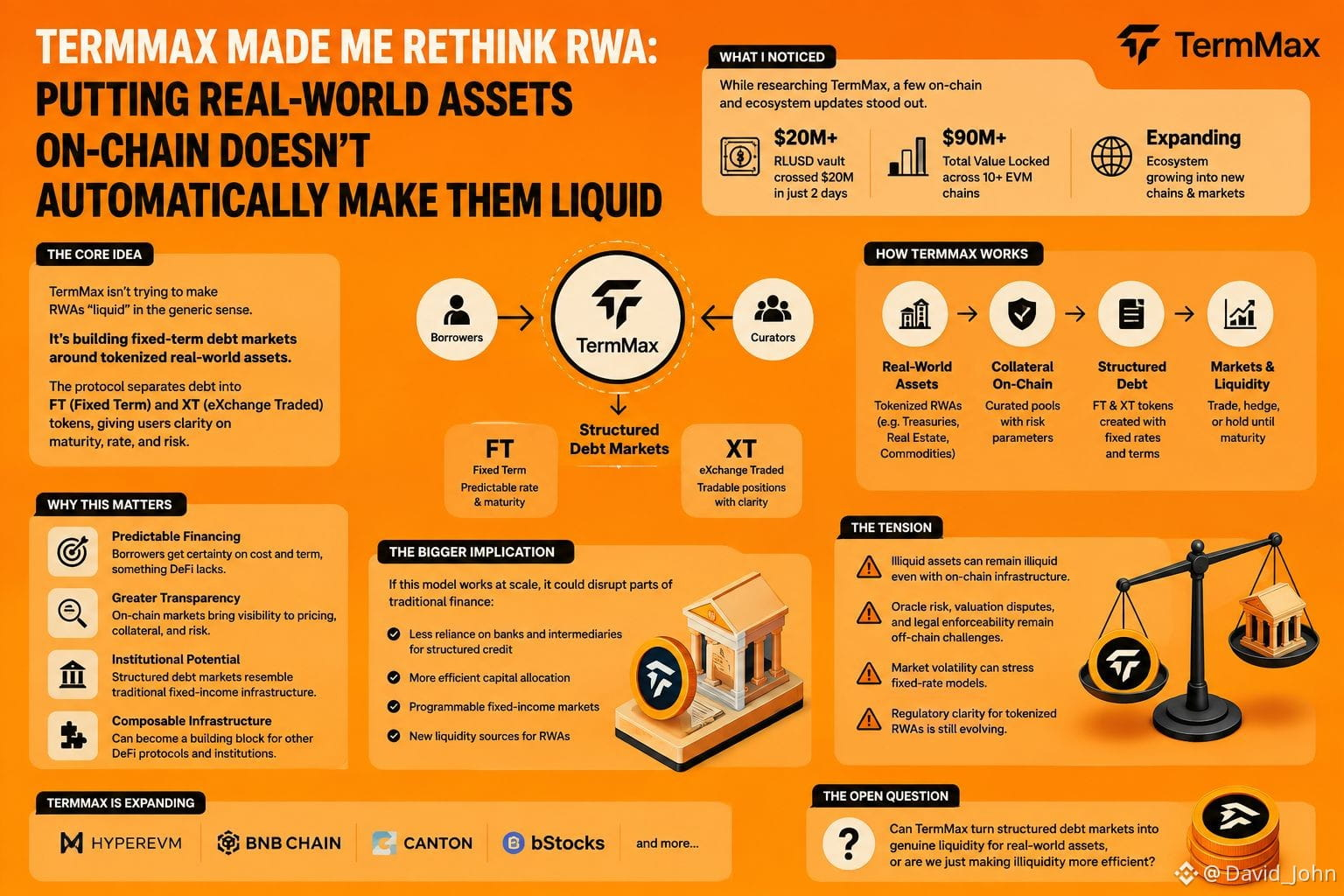
TermMax caught my attention while I was looking through how the project is evolving beyond the usual DeFi lending model.
What stood out to me is the focus on fixed-term markets rather than simply giving users another place to borrow at a floating rate.
That sounds like a small difference, but I think it matters.
Crypto has built plenty of money markets. What it still lacks is a mature, on-chain way to express something closer to traditional fixed income: a defined maturity, a known borrowing cost, collateral behind the position, and eventually a market where that exposure can be priced and traded.
That’s where TermMax gets interesting to me.
If the infrastructure becomes deep enough, the bigger opportunity may not be retail lending at all. It could be the financial plumbing underneath tokenized assets and institutional credit.
And that creates a much harder problem.
Institutions don’t just need fixed rates. They need liquidity, reliable pricing, risk controls, legal clarity, and confidence that they can exit a position when markets become stressed.
So I’m not convinced yet that TermMax is building an institutional fixed-income market. The technology is only one part of that equation.
The real test is whether enough serious capital eventually chooses to use the market.
That’s the part I’ll be watching.
#TermMax @TermMax
What stood out to me is the focus on fixed-term markets rather than simply giving users another place to borrow at a floating rate.
That sounds like a small difference, but I think it matters.
Crypto has built plenty of money markets. What it still lacks is a mature, on-chain way to express something closer to traditional fixed income: a defined maturity, a known borrowing cost, collateral behind the position, and eventually a market where that exposure can be priced and traded.
That’s where TermMax gets interesting to me.
If the infrastructure becomes deep enough, the bigger opportunity may not be retail lending at all. It could be the financial plumbing underneath tokenized assets and institutional credit.
And that creates a much harder problem.
Institutions don’t just need fixed rates. They need liquidity, reliable pricing, risk controls, legal clarity, and confidence that they can exit a position when markets become stressed.
So I’m not convinced yet that TermMax is building an institutional fixed-income market. The technology is only one part of that equation.
The real test is whether enough serious capital eventually chooses to use the market.
That’s the part I’ll be watching.
#TermMax @TermMax
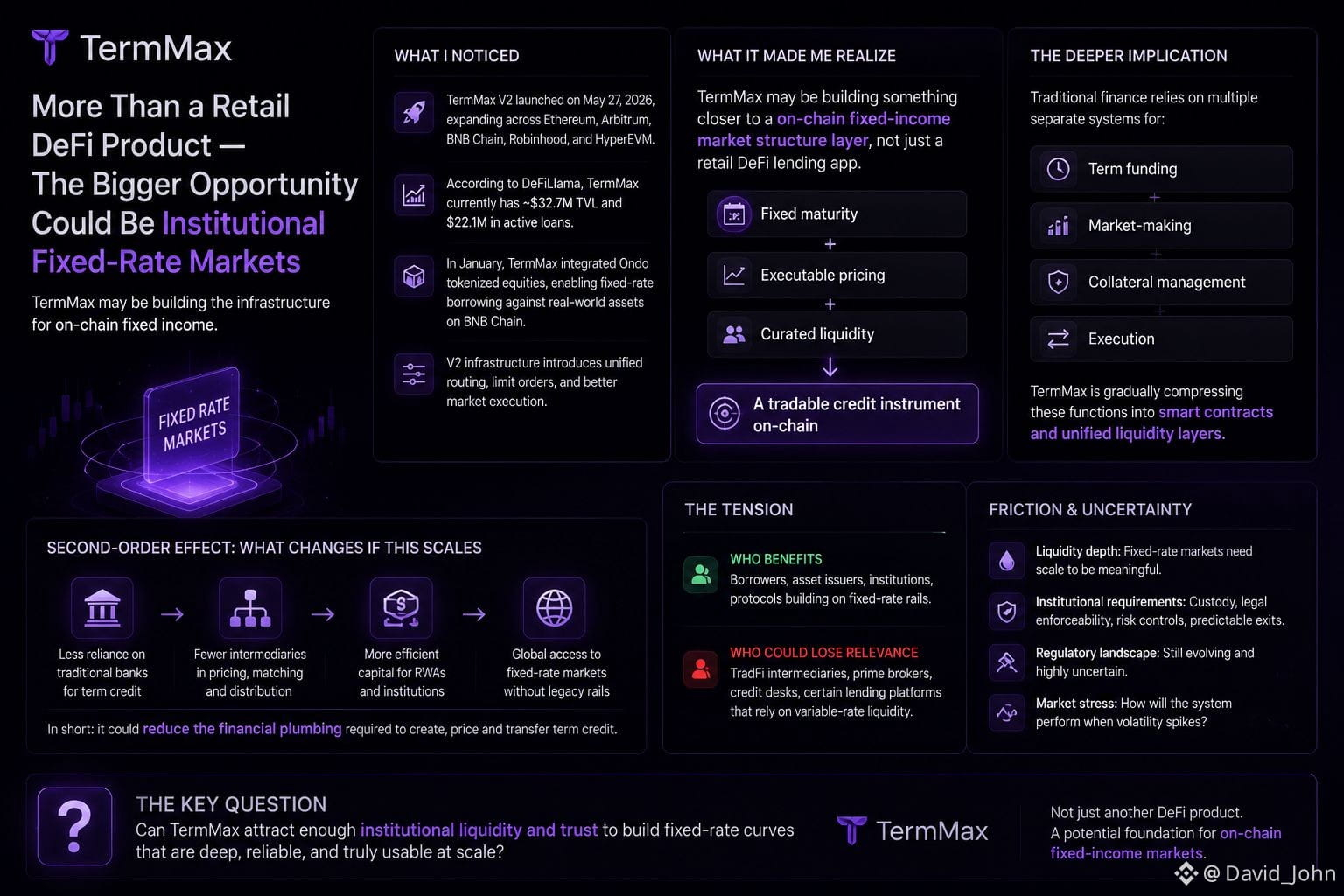
I’ve been digging into TermMax lately, and what caught my attention is how focused the project is on solving a very specific DeFi problem: making borrowing and lending rates predictable instead of leaving everything exposed to floating rates.
What I find interesting is the combination. TermMax isn’t stopping at fixed-rate lending; it is building around fixed-term markets, leverage, and options so users can manage both the cost of capital and the risk around it.
That sounds simple, but it changes how I think about the project.
Most DeFi money markets are built around liquidity that can move at any moment. TermMax is trying to introduce more structure around time and maturity. In a way, it is bringing a piece of traditional fixed-income thinking onto public blockchains, but without assuming the same institutional infrastructure exists underneath.
If the model works, users could have more predictable ways to borrow, lend, hedge rates, and express views on yield without constantly refinancing positions.
The difficult part is liquidity. Fixed-rate markets are only useful when there is enough activity on both sides to make those rates meaningful.
So I’m less interested in asking whether TermMax has a good product today, and more interested in whether it can build a genuinely liquid on-chain term market.
#TermMax @TermMax
What I find interesting is the combination. TermMax isn’t stopping at fixed-rate lending; it is building around fixed-term markets, leverage, and options so users can manage both the cost of capital and the risk around it.
That sounds simple, but it changes how I think about the project.
Most DeFi money markets are built around liquidity that can move at any moment. TermMax is trying to introduce more structure around time and maturity. In a way, it is bringing a piece of traditional fixed-income thinking onto public blockchains, but without assuming the same institutional infrastructure exists underneath.
If the model works, users could have more predictable ways to borrow, lend, hedge rates, and express views on yield without constantly refinancing positions.
The difficult part is liquidity. Fixed-rate markets are only useful when there is enough activity on both sides to make those rates meaningful.
So I’m less interested in asking whether TermMax has a good product today, and more interested in whether it can build a genuinely liquid on-chain term market.
#TermMax @TermMax
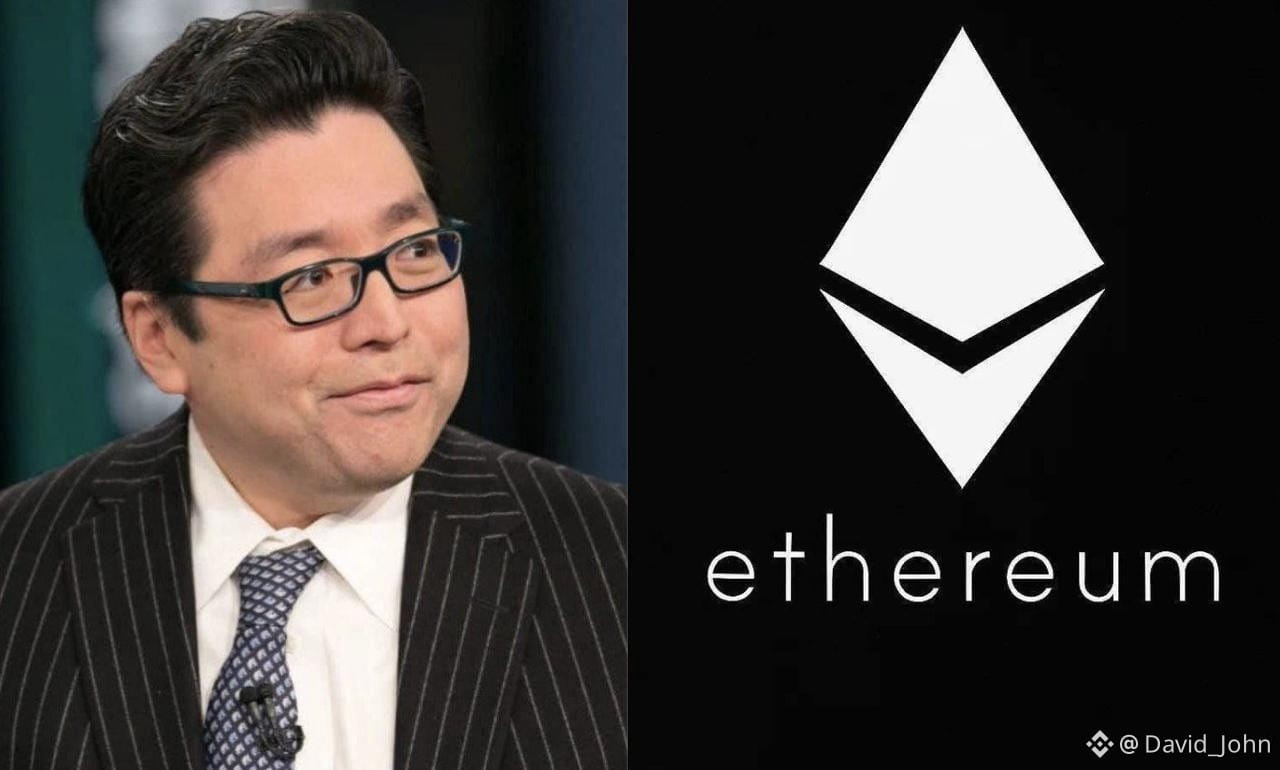
🚨 BREAKING: Tom Lee’s BitMine just scooped up another $18.9M worth of $ETH last week! 🔥
That pushes its total Ethereum holdings to a staggering $11.04 BILLION. 💎
Big money keeps stacking $ETH. 👀📈
That pushes its total Ethereum holdings to a staggering $11.04 BILLION. 💎
Big money keeps stacking $ETH. 👀📈
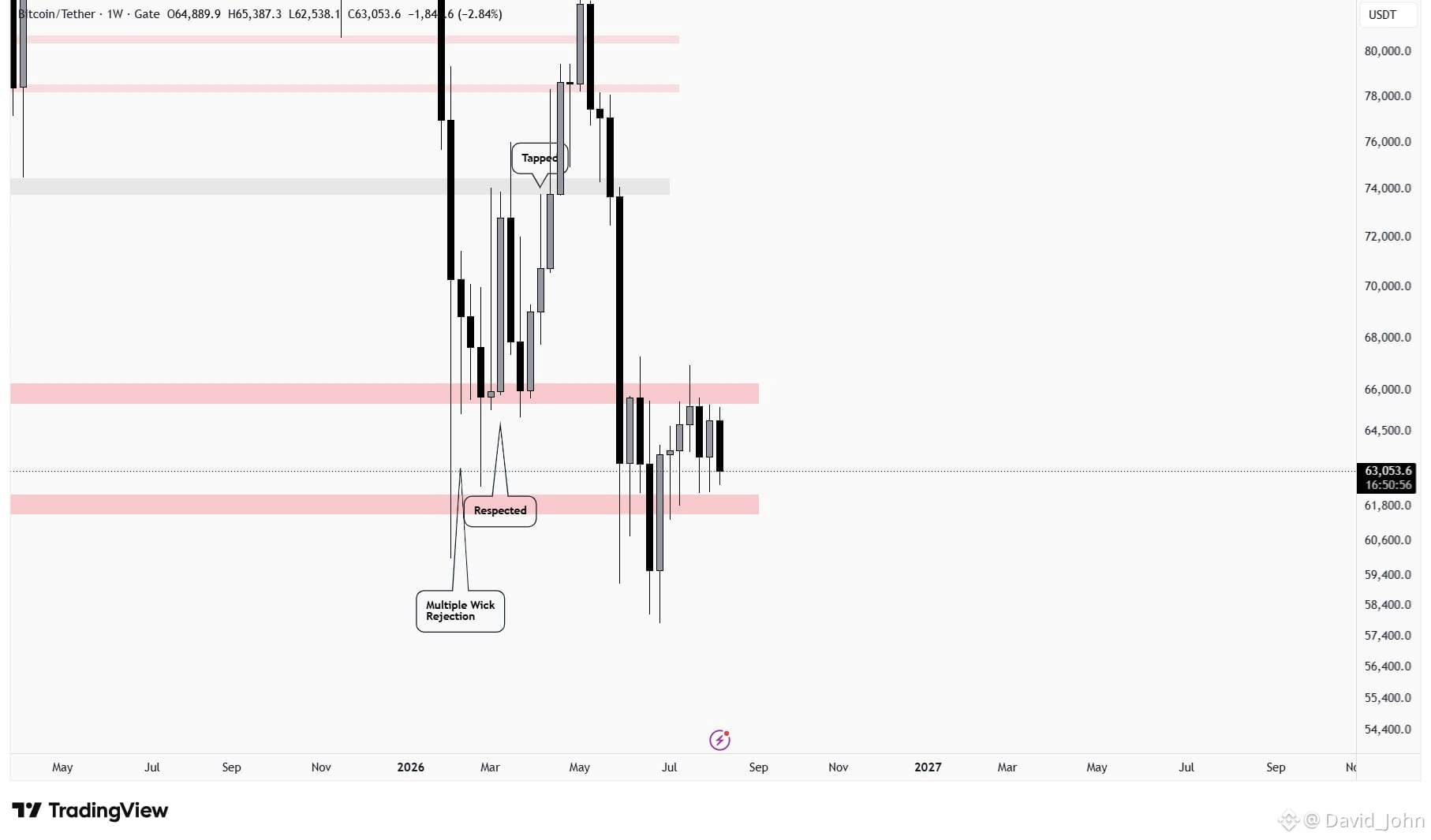
$BTC is sitting on support, but the chart still isn’t giving a clean directional signal.
The weekly close landed near the key support zone, while price continues to struggle beneath major resistance. If this structure holds, another slow, choppy week is likely—but the risk remains tilted to the downside.
⚠️ A breakdown could accelerate the downtrend.
📉 Until BTC reclaims resistance, caution stays the name of the game.
The next move may be quiet… until it isn’t.
The weekly close landed near the key support zone, while price continues to struggle beneath major resistance. If this structure holds, another slow, choppy week is likely—but the risk remains tilted to the downside.
⚠️ A breakdown could accelerate the downtrend.
📉 Until BTC reclaims resistance, caution stays the name of the game.
The next move may be quiet… until it isn’t.
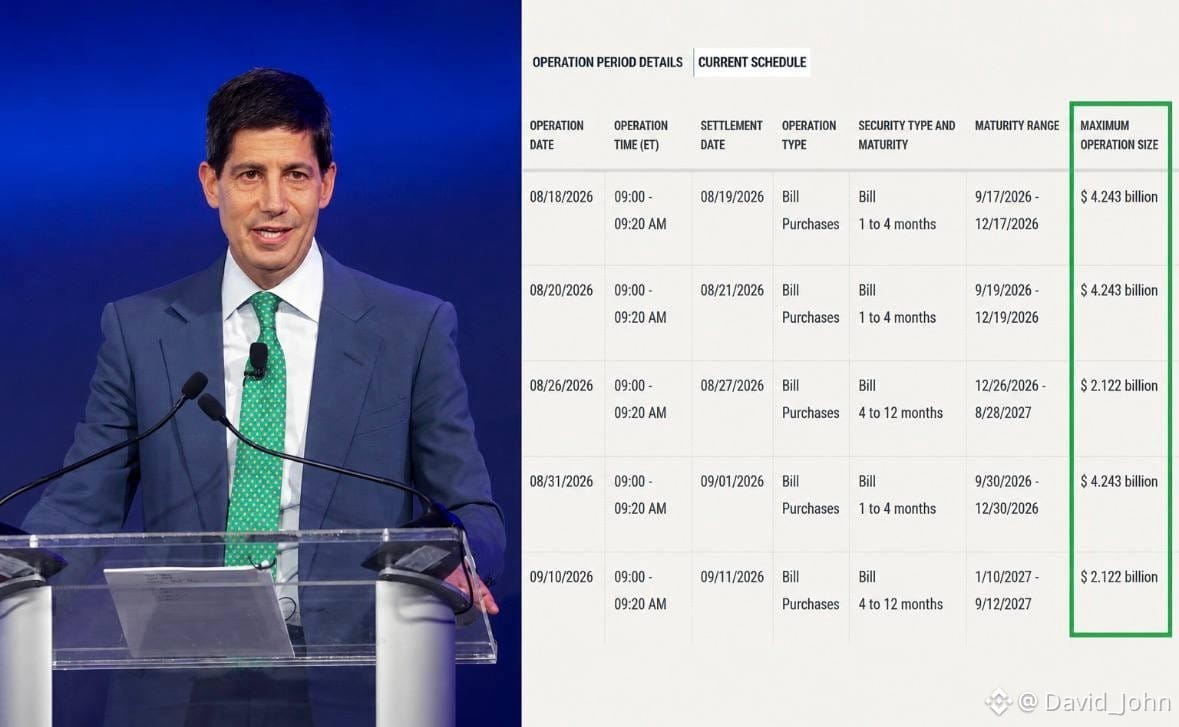
HUGE LIQUIDITY ALERT
🇺🇸 The Fed is reportedly set to inject $16.97B into the market starting next week.
Liquidity is expected to flow for 3 consecutive weeks, potentially creating a stronger environment for risk assets and crypto.
More liquidity = more fuel for the market.
Crypto traders, stay ready.
🇺🇸 The Fed is reportedly set to inject $16.97B into the market starting next week.
Liquidity is expected to flow for 3 consecutive weeks, potentially creating a stronger environment for risk assets and crypto.
More liquidity = more fuel for the market.
Crypto traders, stay ready.
CRYPTO MARKET: A WEEK OF PAIN
Crypto just got hit hard:
- $85B erased from total market cap
- BTC crashed to a 31-day low near $62,500
- BTC ETFs recorded $389M in outflows, the worst in 6 weeks
- Strategy sold another $108M worth of BTC
- Altcoin market cap posted its lowest weekly close in nearly 3 years
- SEC suddenly cancelled its scheduled crypto regulation meeting
Liquidity is drying up, confidence is fading, and sellers are firmly in control.
This was a brutal week for Crypto. Stay sharp.
Crypto just got hit hard:
- $85B erased from total market cap
- BTC crashed to a 31-day low near $62,500
- BTC ETFs recorded $389M in outflows, the worst in 6 weeks
- Strategy sold another $108M worth of BTC
- Altcoin market cap posted its lowest weekly close in nearly 3 years
- SEC suddenly cancelled its scheduled crypto regulation meeting
Liquidity is drying up, confidence is fading, and sellers are firmly in control.
This was a brutal week for Crypto. Stay sharp.

$BTC WEEKLY UPDATE:
Bitcoin just got rejected hard from weekly resistance and dropped straight back into weekly support.
The range is still fully in play, and unless BTC breaks one of these key zones with conviction, sideways price action could continue into next week.
With no major high-impact catalysts expected this month, breakout momentum may stay limited.
For now, patience wins. Let the market reveal the next move.
Let’s go $BTC
Bitcoin just got rejected hard from weekly resistance and dropped straight back into weekly support.
The range is still fully in play, and unless BTC breaks one of these key zones with conviction, sideways price action could continue into next week.
With no major high-impact catalysts expected this month, breakout momentum may stay limited.
For now, patience wins. Let the market reveal the next move.
Let’s go $BTC
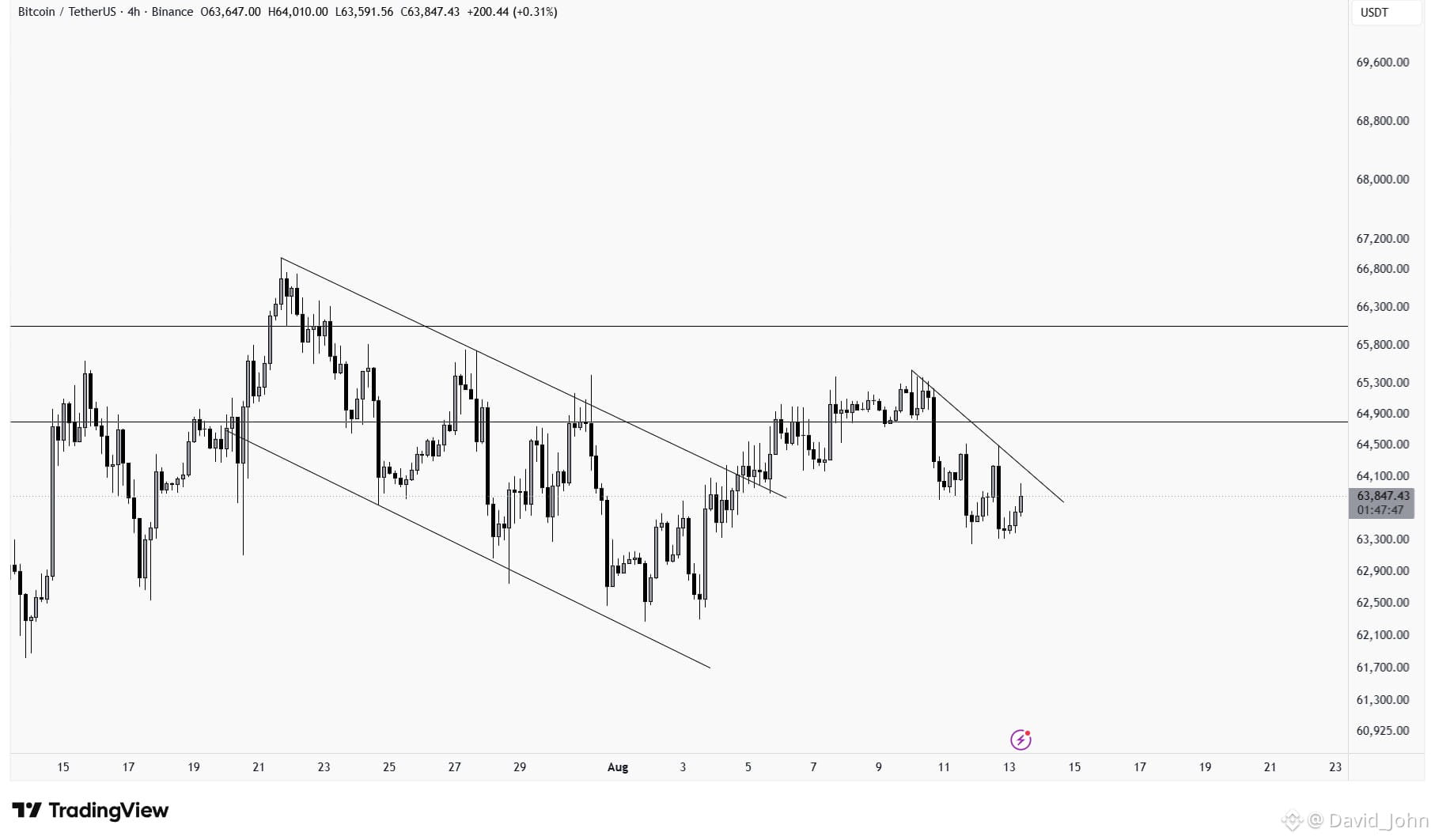
$BTC is coiling for its next major move.
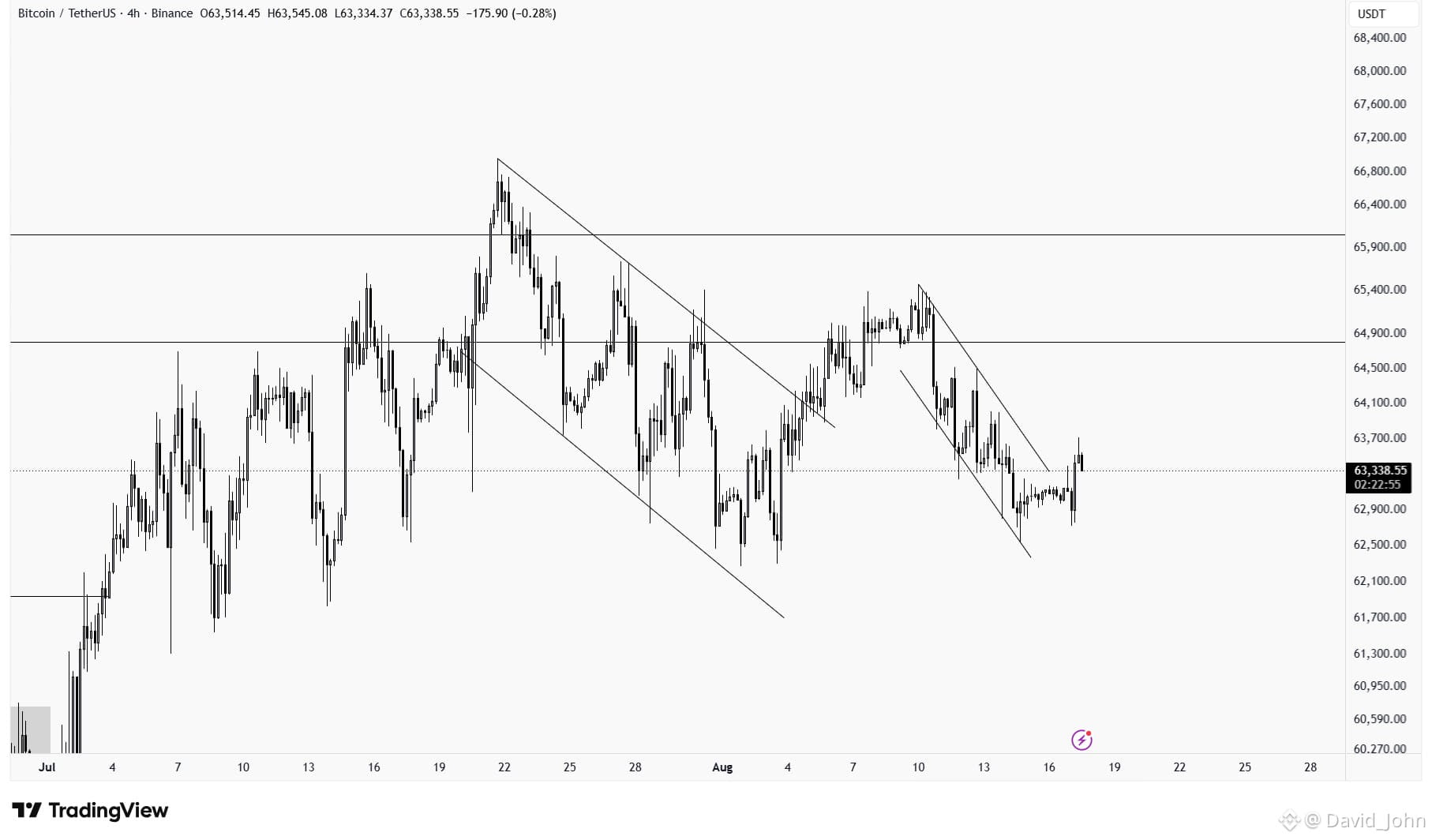
Price is trapped near $63.8K, with the 4H descending trendline still applying pressure.
Key resistance: $64.8K
Breakout targets: $65.3K – $66.3K
Key support: $63.3K
Breakdown zone: $62.9K – $62.5K
Right now, neither bulls nor bears have full control. The compression is getting tighter — avoid chasing noise and wait for the clean break.
The next decisive move could come fast.
Let’s go $BTC
Price is trapped near $63.8K, with the 4H descending trendline still applying pressure.
Key resistance: $64.8K
Breakout targets: $65.3K – $66.3K
Key support: $63.3K
Breakdown zone: $62.9K – $62.5K
Right now, neither bulls nor bears have full control. The compression is getting tighter — avoid chasing noise and wait for the clean break.
The next decisive move could come fast.
Let’s go $BTC
🚨 BIG BTC MOVE: BlackRock has added another $50.2 MILLION worth of $BTC to its ETF exposure. 🟠
🏦 Institutional accumulation is getting harder to ignore.
📈 Fresh capital is stepping in, and Bitcoin could be setting up for another explosive move.
🔥 Smart money is loading.
Let’s go $BTC 🚀
🏦 Institutional accumulation is getting harder to ignore.
📈 Fresh capital is stepping in, and Bitcoin could be setting up for another explosive move.
🔥 Smart money is loading.
Let’s go $BTC 🚀


🚨 BREAKING: 🇺🇸 BlackRock’s Bitcoin ETF just bought approximately $50.2 MILLION worth of $BTC .
💰 Institutional money is flowing back into Bitcoin.
🔥 When giants start accumulating, the market watches closely.
📈 Big capital is positioning for what could be the next major BTC move.
🚀 Let’s go $BTC
💰 Institutional money is flowing back into Bitcoin.
🔥 When giants start accumulating, the market watches closely.
📈 Big capital is positioning for what could be the next major BTC move.
🚀 Let’s go $BTC


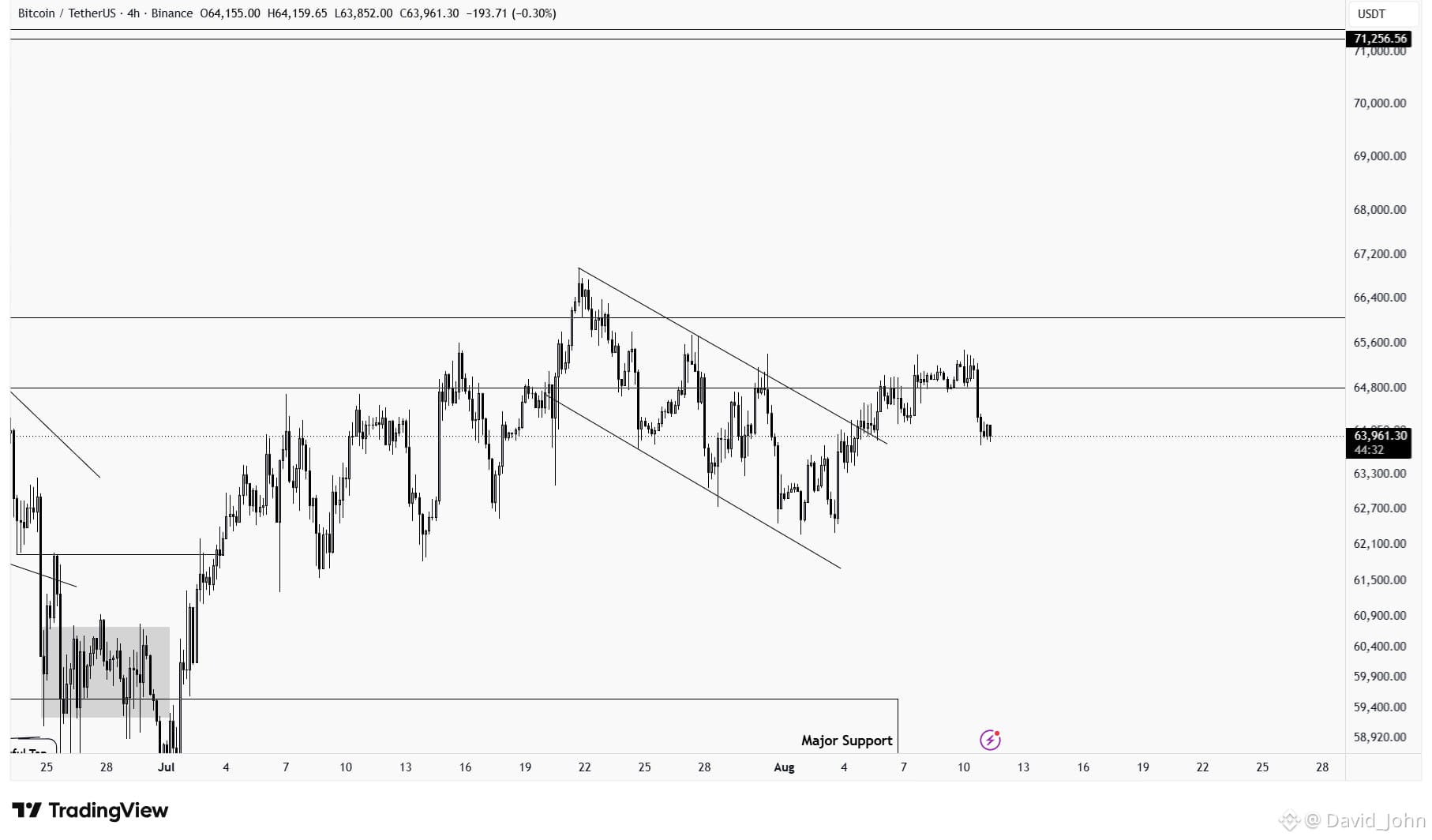
$BTC is losing short-term momentum after yesterday’s sharp NY Open rejection.
Price remains trapped in a messy sideways structure, but the LTF has now flipped bearish. The rejection from the $64,800 area pushed BTC back toward $63,960, keeping sellers in control for now.
Key resistance:
$64,800
$66,100–$66,400
Downside levels:
$63,300
$62,700
$61,500
Major support sits around $59,400.
Until BTC reclaims $64,800 with strength, another short-term liquidity sweep lower remains possible. The market is still unclear, so patience matters more than forcing a position.
$BTC could be preparing for one more shakeout before the next decisive move.
Let’s go $BTC
Price remains trapped in a messy sideways structure, but the LTF has now flipped bearish. The rejection from the $64,800 area pushed BTC back toward $63,960, keeping sellers in control for now.
Key resistance:
$64,800
$66,100–$66,400
Downside levels:
$63,300
$62,700
$61,500
Major support sits around $59,400.
Until BTC reclaims $64,800 with strength, another short-term liquidity sweep lower remains possible. The market is still unclear, so patience matters more than forcing a position.
$BTC could be preparing for one more shakeout before the next decisive move.
Let’s go $BTC
🚨 BREAKING: Tom Lee’s BitMine added another $14.2M worth of $ETH last week. 🔥
Their Ethereum holdings have now climbed to around $11.14 BILLION, representing roughly 4.8% of ETH’s total supply. 🐋
That is serious accumulation.
💰 Fresh buying continues
📈 Institutional conviction is growing
🔒 A massive chunk of ETH supply is being held
⚡ Supply pressure could become a major market factor
When a player this big keeps stacking, the market pays attention.
$ETH is getting harder to ignore. 🚀
Their Ethereum holdings have now climbed to around $11.14 BILLION, representing roughly 4.8% of ETH’s total supply. 🐋
That is serious accumulation.
💰 Fresh buying continues
📈 Institutional conviction is growing
🔒 A massive chunk of ETH supply is being held
⚡ Supply pressure could become a major market factor
When a player this big keeps stacking, the market pays attention.
$ETH is getting harder to ignore. 🚀

Log in to explore more content