
AiCoin官方
24k Posts

AiCoin官方
 Square Verified+
Report
Block User
AiCoin是全球领先的数据分析平台,提供专业K线、价格预警、AI分析、链上数据、热点快讯、KOL社区、智能下单及套利工具等服务。🎁币安邀请码:aicoin668
8 Following
12.1K+ Followers
16.0K+ Liked
Posts
All
Quotes
Videos
Live
·
--
Can’t get on—so anxious! Look at this kind person’s compilation.
Can’t get on—so anxious! Look at this kind person’s compilation.

Katharine Lesure hpPt
·
--
Just saw that a kind person put together a list ↓↓↓

2
1
629
·
--
On September 14, analyst Darkfost said that Bitcoin ETFs saw approximately net outflows of 6,000 BTC last week, ending the prior streak of net inflows for three consecutive weeks.
This is not a small matter for the funding backdrop behind the recent rise. Previously, people viewed ETFs as a supplement when spot demand looked weak. Now, with funds flowing out in the opposite direction, it’s as if this support has temporarily weakened.
On-chain, Onchain Lens reported that the whale Machi is steadily reducing its HYPE long positions, but overall perpetual futures open interest still stands at about $150.85 million, and all of it is long. Of this, ETH is about $99.91 million, BTC about $44.10 million, HYPE longs about $6.84 million, and they are also layered with 10x leverage.
In other words, both capital and high-leverage longs are shifting from expansion to contraction, but the long-side structure remains heavy. If ETF funding demand continues to weaken further, or if the whale reduces leverage more, near-term volatility could be amplified, and market upside/downside responsiveness would likely increase as well.
On September 14, analyst Darkfost said that Bitcoin ETFs saw approximately net outflows of 6,000 BTC last week, ending the prior streak of net inflows for three consecutive weeks.
This is not a small matter for the funding backdrop behind the recent rise. Previously, people viewed ETFs as a supplement when spot demand looked weak. Now, with funds flowing out in the opposite direction, it’s as if this support has temporarily weakened.
On-chain, Onchain Lens reported that the whale Machi is steadily reducing its HYPE long positions, but overall perpetual futures open interest still stands at about $150.85 million, and all of it is long. Of this, ETH is about $99.91 million, BTC about $44.10 million, HYPE longs about $6.84 million, and they are also layered with 10x leverage.
In other words, both capital and high-leverage longs are shifting from expansion to contraction, but the long-side structure remains heavy. If ETF funding demand continues to weaken further, or if the whale reduces leverage more, near-term volatility could be amplified, and market upside/downside responsiveness would likely increase as well.
This is not a small matter for the funding backdrop behind the recent rise. Previously, people viewed ETFs as a supplement when spot demand looked weak. Now, with funds flowing out in the opposite direction, it’s as if this support has temporarily weakened.
On-chain, Onchain Lens reported that the whale Machi is steadily reducing its HYPE long positions, but overall perpetual futures open interest still stands at about $150.85 million, and all of it is long. Of this, ETH is about $99.91 million, BTC about $44.10 million, HYPE longs about $6.84 million, and they are also layered with 10x leverage.
In other words, both capital and high-leverage longs are shifting from expansion to contraction, but the long-side structure remains heavy. If ETF funding demand continues to weaken further, or if the whale reduces leverage more, near-term volatility could be amplified, and market upside/downside responsiveness would likely increase as well.

33
1.7k
·
--
Verified
【AiCoin丨9.15 Snapshot: US Treasury yields break 5%、gold plunges、a whale adds to its ETH short position】1、US 10-year Treasury yield rises to 5%, the first time in nearly three years
US 10-year Treasury yield rises to 5%, the first time in nearly three years. -original text
2、US Treasury Secretary Bessent: Winning the global technology competition is crucial through the Crypto Clarity Act
US Treasury Secretary Bessent said that the Clarity Act is crucial for the US to win the global technology competition. -original text
3、Spot gold prices fall by more than 2%, to $4,257.86 per ounce
4、US stocks crypto-related sector strengthens: Bullish up more than 9%, Coinbase up more than 7%
US stocks crypto-related sector strengthens: Bullish jumps over 9%, Coinbase up more than 7%, Circle up more than 4%, and Strategy up nearly 3%. -original text
【AiCoin丨9.15 Snapshot: US Treasury yields break 5%、gold plunges、a whale adds to its ETH short position】
1、US 10-year Treasury yield rises to 5%, the first time in nearly three years
US 10-year Treasury yield rises to 5%, the first time in nearly three years. -original text
2、US Treasury Secretary Bessent: Winning the global technology competition is crucial through the Crypto Clarity Act
US Treasury Secretary Bessent said that the Clarity Act is crucial for the US to win the global technology competition. -original text
3、Spot gold prices fall by more than 2%, to $4,257.86 per ounce
4、US stocks crypto-related sector strengthens: Bullish up more than 9%, Coinbase up more than 7%
US stocks crypto-related sector strengthens: Bullish jumps over 9%, Coinbase up more than 7%, Circle up more than 4%, and Strategy up nearly 3%. -original text
US 10-year Treasury yield rises to 5%, the first time in nearly three years. -original text
2、US Treasury Secretary Bessent: Winning the global technology competition is crucial through the Crypto Clarity Act
US Treasury Secretary Bessent said that the Clarity Act is crucial for the US to win the global technology competition. -original text
3、Spot gold prices fall by more than 2%, to $4,257.86 per ounce
4、US stocks crypto-related sector strengthens: Bullish up more than 9%, Coinbase up more than 7%
US stocks crypto-related sector strengthens: Bullish jumps over 9%, Coinbase up more than 7%, Circle up more than 4%, and Strategy up nearly 3%. -original text
1
2
2.5k
·
--
Oracle Q1 enters a renewal phase: all the GPU capacity under renewal is either fully renewed or resold. The transaction price is about 20% higher than the original contract, and many of the GPUs have already been in service for around four years.
From the perspective of traditional hardware depreciation, renewal for older equipment is usually done at a lower price—especially for GPUs with rapid update cycles. But this time, Oracle’s data goes the other way: the old GPUs not only continue to be purchased, they also fetch higher prices.
This sends the market an unusual signal: in an environment where AI and cloud services are driving up compute demand, GPUs in data centers are more like long-term operating assets rather than short-lived consumer electronics. As long as they can reliably generate compute cash flow, their economic lifespan could be extended.
Serenity interprets this as a positive for compute infrastructure companies such as Nebius and IREN, and it also poses a real-world challenge to Michael Burry’s earlier view that GPUs rapidly depreciate. What remains to be seen is whether this price increase in renewals is just a one-off quarterly phenomenon or whether it will gradually become the new normal for the compute industry.
Oracle Q1 enters a renewal phase: all the GPU capacity under renewal is either fully renewed or resold. The transaction price is about 20% higher than the original contract, and many of the GPUs have already been in service for around four years.
From the perspective of traditional hardware depreciation, renewal for older equipment is usually done at a lower price—especially for GPUs with rapid update cycles. But this time, Oracle’s data goes the other way: the old GPUs not only continue to be purchased, they also fetch higher prices.
This sends the market an unusual signal: in an environment where AI and cloud services are driving up compute demand, GPUs in data centers are more like long-term operating assets rather than short-lived consumer electronics. As long as they can reliably generate compute cash flow, their economic lifespan could be extended.
Serenity interprets this as a positive for compute infrastructure companies such as Nebius and IREN, and it also poses a real-world challenge to Michael Burry’s earlier view that GPUs rapidly depreciate. What remains to be seen is whether this price increase in renewals is just a one-off quarterly phenomenon or whether it will gradually become the new normal for the compute industry.
From the perspective of traditional hardware depreciation, renewal for older equipment is usually done at a lower price—especially for GPUs with rapid update cycles. But this time, Oracle’s data goes the other way: the old GPUs not only continue to be purchased, they also fetch higher prices.
This sends the market an unusual signal: in an environment where AI and cloud services are driving up compute demand, GPUs in data centers are more like long-term operating assets rather than short-lived consumer electronics. As long as they can reliably generate compute cash flow, their economic lifespan could be extended.
Serenity interprets this as a positive for compute infrastructure companies such as Nebius and IREN, and it also poses a real-world challenge to Michael Burry’s earlier view that GPUs rapidly depreciate. What remains to be seen is whether this price increase in renewals is just a one-off quarterly phenomenon or whether it will gradually become the new normal for the compute industry.

1
478
·
--
【BTC Returns to Around 77,000, First Focus on This This New Week】
At the start of the new week, let’s quickly review last week.
BTC fell from around $80,000, down about 4.4% on the week. During the day it briefly dipped to around $76,000. Then it rebounded, pushing back toward $80,000, but failed to hold. It’s now back around $77,000.
For the short term, watch three key levels:
Around $76,000: last week’s low point, key support
Around $78,000: reclaimed again, short-term pressure eases
Around $80,000: repeatedly met resistance recently; to regain strength again, watch here
If $76,000 can hold, the short term is still likely a range-bound market; if price breaks down on increased volume, weakness may continue.
ETH is relatively more resilient. Last week it dropped from around $2,500 to around $2,480, down about 1.5% for the week, but intraweek volatility exceeded 10%, so the swings are still significant.
Sentiment is also cooling. The Fear & Greed Index fell to 57, still in the “Greed” zone. Total liquidations across the whole market were about $670 million, and leveraged funds have been cleared again.
Some unusual movers today:
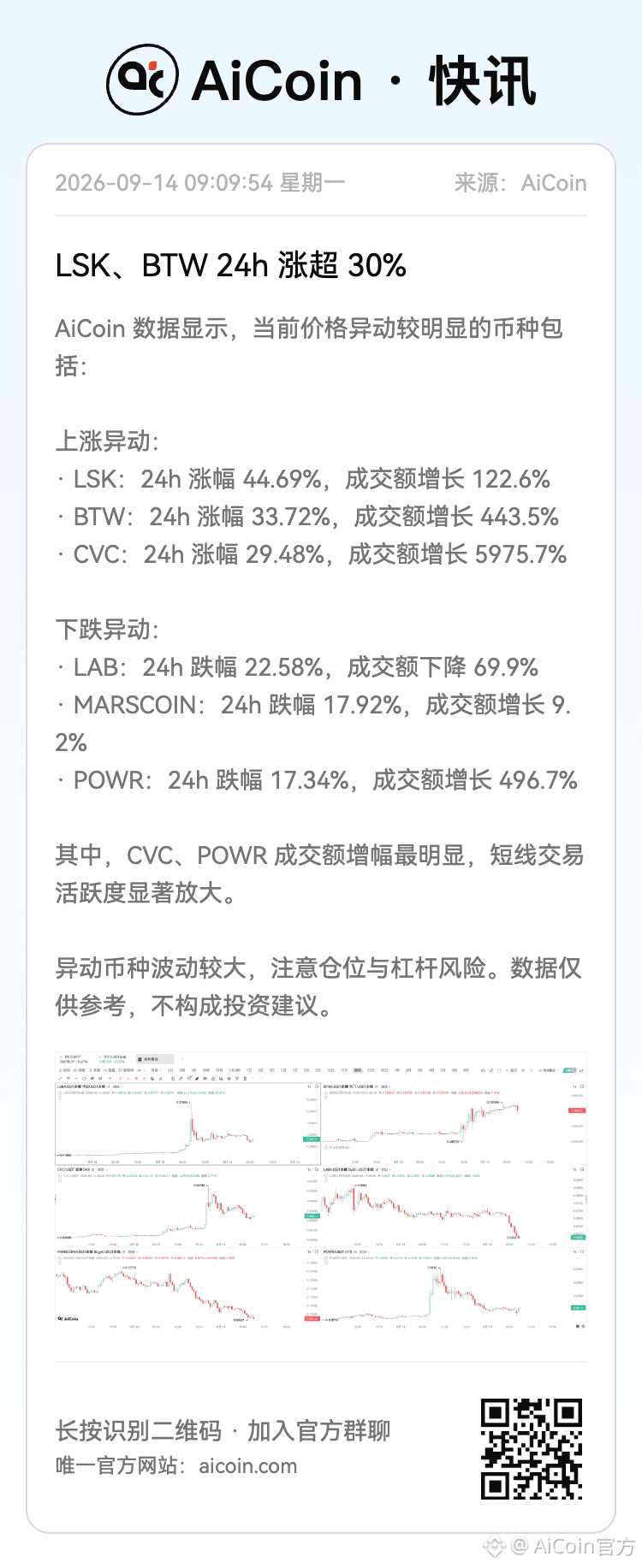
LSK is up 40%+, BTW is up more than 30%, CVC trading volume has clearly expanded; LAB is down more than 20%, and POWR is also down close to 20%.
These high-momentum coins have large swings—rallies can be fast, and pullbacks can also come quickly. Don’t chase just because it’s pumping.
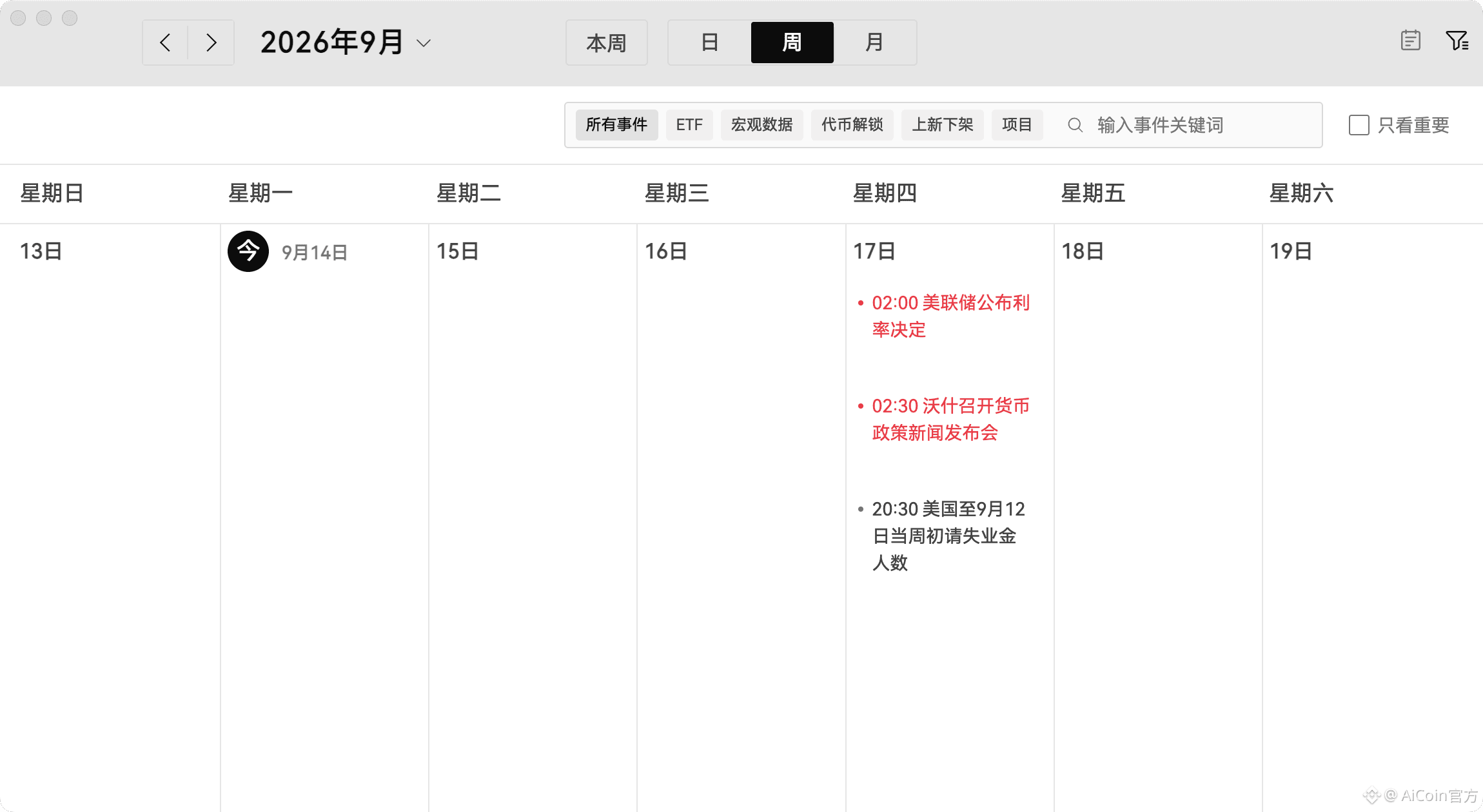
The main focus this week is the Federal Reserve interest rate decision on September 17—macro volatility could noticeably increase.
If you haven’t set up a trading account yet, you may want to prepare in advance. Binance’s September new-user benefits are still available; when registering, enter the invitation code: aicoin668.
On Monday, first watch demand/holding and capital flow around $76,000.
Control your position size well, and use leverage as little as possible. The above is only for sharing market information and does not constitute investment advice.
#LSK24小时上涨超515% #全网爆仓6.74亿美元 #BTC #行情回顾
【BTC Returns to Around 77,000, First Focus on This This New Week】
At the start of the new week, let’s quickly review last week.
BTC fell from around $80,000, down about 4.4% on the week. During the day it briefly dipped to around $76,000. Then it rebounded, pushing back toward $80,000, but failed to hold. It’s now back around $77,000.
For the short term, watch three key levels:
Around $76,000: last week’s low point, key support
Around $78,000: reclaimed again, short-term pressure eases
Around $80,000: repeatedly met resistance recently; to regain strength again, watch here
If $76,000 can hold, the short term is still likely a range-bound market; if price breaks down on increased volume, weakness may continue.
ETH is relatively more resilient. Last week it dropped from around $2,500 to around $2,480, down about 1.5% for the week, but intraweek volatility exceeded 10%, so the swings are still significant.
Sentiment is also cooling. The Fear & Greed Index fell to 57, still in the “Greed” zone. Total liquidations across the whole market were about $670 million, and leveraged funds have been cleared again.
Some unusual movers today:
LSK is up 40%+, BTW is up more than 30%, CVC trading volume has clearly expanded; LAB is down more than 20%, and POWR is also down close to 20%.
These high-momentum coins have large swings—rallies can be fast, and pullbacks can also come quickly. Don’t chase just because it’s pumping.
The main focus this week is the Federal Reserve interest rate decision on September 17—macro volatility could noticeably increase.
If you haven’t set up a trading account yet, you may want to prepare in advance. Binance’s September new-user benefits are still available; when registering, enter the invitation code: aicoin668.
On Monday, first watch demand/holding and capital flow around $76,000.
Control your position size well, and use leverage as little as possible. The above is only for sharing market information and does not constitute investment advice.
#LSK24小时上涨超515% #全网爆仓6.74亿美元 #BTC #行情回顾
At the start of the new week, let’s quickly review last week.
BTC fell from around $80,000, down about 4.4% on the week. During the day it briefly dipped to around $76,000. Then it rebounded, pushing back toward $80,000, but failed to hold. It’s now back around $77,000.
For the short term, watch three key levels:
Around $76,000: last week’s low point, key support
Around $78,000: reclaimed again, short-term pressure eases
Around $80,000: repeatedly met resistance recently; to regain strength again, watch here
If $76,000 can hold, the short term is still likely a range-bound market; if price breaks down on increased volume, weakness may continue.
ETH is relatively more resilient. Last week it dropped from around $2,500 to around $2,480, down about 1.5% for the week, but intraweek volatility exceeded 10%, so the swings are still significant.
Sentiment is also cooling. The Fear & Greed Index fell to 57, still in the “Greed” zone. Total liquidations across the whole market were about $670 million, and leveraged funds have been cleared again.
Some unusual movers today:
LSK is up 40%+, BTW is up more than 30%, CVC trading volume has clearly expanded; LAB is down more than 20%, and POWR is also down close to 20%.
These high-momentum coins have large swings—rallies can be fast, and pullbacks can also come quickly. Don’t chase just because it’s pumping.
The main focus this week is the Federal Reserve interest rate decision on September 17—macro volatility could noticeably increase.
If you haven’t set up a trading account yet, you may want to prepare in advance. Binance’s September new-user benefits are still available; when registering, enter the invitation code: aicoin668.
On Monday, first watch demand/holding and capital flow around $76,000.
Control your position size well, and use leverage as little as possible. The above is only for sharing market information and does not constitute investment advice.
#LSK24小时上涨超515% #全网爆仓6.74亿美元 #BTC #行情回顾
1
3.2k
·
--
【AiCoin丨9.14 Snapshot: Big Whales Accumulate More, Bridge Vulnerability Cash-Out, Reserves Hit a New High】1. White House economic adviser Hassett: Trump and I both believe there is no reason for the Federal Reserve to raise interest rates; Trump: The United States should have the world’s lowest interest rates
The White House economic adviser Hassett said that President Trump and Hassett himself both believe there is no reason to raise interest rates. Keeping the Federal Reserve’s current stance unchanged before the election is important, and Trump fully respects the independence of Federal Reserve Chair Kevin Wosh. - Original text
2. SEC Commissioner Peirce: The Bitcoin and Crypto Clarity Act is about to become law in the United States
SEC Commissioner Hester Peirce said that the Bitcoin and Crypto Clarity Act will soon become law in the United States, and she looks forward to the bill completing the legislative process. - Original text
【AiCoin丨9.14 Snapshot: Big Whales Accumulate More, Bridge Vulnerability Cash-Out, Reserves Hit a New High】
1. White House economic adviser Hassett: Trump and I both believe there is no reason for the Federal Reserve to raise interest rates; Trump: The United States should have the world’s lowest interest rates
The White House economic adviser Hassett said that President Trump and Hassett himself both believe there is no reason to raise interest rates. Keeping the Federal Reserve’s current stance unchanged before the election is important, and Trump fully respects the independence of Federal Reserve Chair Kevin Wosh. - Original text
2. SEC Commissioner Peirce: The Bitcoin and Crypto Clarity Act is about to become law in the United States
SEC Commissioner Hester Peirce said that the Bitcoin and Crypto Clarity Act will soon become law in the United States, and she looks forward to the bill completing the legislative process. - Original text
The White House economic adviser Hassett said that President Trump and Hassett himself both believe there is no reason to raise interest rates. Keeping the Federal Reserve’s current stance unchanged before the election is important, and Trump fully respects the independence of Federal Reserve Chair Kevin Wosh. - Original text
2. SEC Commissioner Peirce: The Bitcoin and Crypto Clarity Act is about to become law in the United States
SEC Commissioner Hester Peirce said that the Bitcoin and Crypto Clarity Act will soon become law in the United States, and she looks forward to the bill completing the legislative process. - Original text
3
1
1.2k
·
--
Verified
【AiCoin丨9.13 Snapshot: U.S.-Iran talks, no Fed rate hike, and the House considers a crypto tax】1. White House officials: Trump is optimistic about the passage of the Bitcoin and Crypto Clarity Act on September 15
A U.S. presidential official in the White House said that they are optimistic about the passage of the Bitcoin and Crypto Clarity Act on September 15. -Original
2. Trump said the U.S.-Iran war will end soon and that he is seeking to return to negotiations with Iran
U.S. President Donald Trump said that the U.S.-Iran war will end soon. -Original
3. Crypto analyst Darkfost: There is no urgency for the Fed to raise rates in September
Crypto analyst Darkfost said that the U.S. core CPI has reached a low in more than 5 years. Although monthly inflation remains high, the long-term downward trend since 2022 is clear. The Fed’s decisions are based on long-term developments, and there is no urgency to raise rates in September. (Source: the Federal Reserve) AI interpretation: The continued decline in core inflation indicators clearly shows a long-term trend of easing price pressure. The Fed’s current focus has shifted from suppressing inflation to balancing economic growth. Keeping rates unchanged in September is an inevitable choice supported by the data. This trend weakens the necessity for further tightening, and market consensus on a rate peak has been further reinforced. Policymakers will continue to maintain current high interest rates to observe how the economy responds next; the window for rate hikes has already closed in the near term. -Original
【AiCoin丨9.13 Snapshot: U.S.-Iran talks, no Fed rate hike, and the House considers a crypto tax】
1. White House officials: Trump is optimistic about the passage of the Bitcoin and Crypto Clarity Act on September 15
A U.S. presidential official in the White House said that they are optimistic about the passage of the Bitcoin and Crypto Clarity Act on September 15. -Original
2. Trump said the U.S.-Iran war will end soon and that he is seeking to return to negotiations with Iran
U.S. President Donald Trump said that the U.S.-Iran war will end soon. -Original
3. Crypto analyst Darkfost: There is no urgency for the Fed to raise rates in September
Crypto analyst Darkfost said that the U.S. core CPI has reached a low in more than 5 years. Although monthly inflation remains high, the long-term downward trend since 2022 is clear. The Fed’s decisions are based on long-term developments, and there is no urgency to raise rates in September. (Source: the Federal Reserve) AI interpretation: The continued decline in core inflation indicators clearly shows a long-term trend of easing price pressure. The Fed’s current focus has shifted from suppressing inflation to balancing economic growth. Keeping rates unchanged in September is an inevitable choice supported by the data. This trend weakens the necessity for further tightening, and market consensus on a rate peak has been further reinforced. Policymakers will continue to maintain current high interest rates to observe how the economy responds next; the window for rate hikes has already closed in the near term. -Original
A U.S. presidential official in the White House said that they are optimistic about the passage of the Bitcoin and Crypto Clarity Act on September 15. -Original
2. Trump said the U.S.-Iran war will end soon and that he is seeking to return to negotiations with Iran
U.S. President Donald Trump said that the U.S.-Iran war will end soon. -Original
3. Crypto analyst Darkfost: There is no urgency for the Fed to raise rates in September
Crypto analyst Darkfost said that the U.S. core CPI has reached a low in more than 5 years. Although monthly inflation remains high, the long-term downward trend since 2022 is clear. The Fed’s decisions are based on long-term developments, and there is no urgency to raise rates in September. (Source: the Federal Reserve) AI interpretation: The continued decline in core inflation indicators clearly shows a long-term trend of easing price pressure. The Fed’s current focus has shifted from suppressing inflation to balancing economic growth. Keeping rates unchanged in September is an inevitable choice supported by the data. This trend weakens the necessity for further tightening, and market consensus on a rate peak has been further reinforced. Policymakers will continue to maintain current high interest rates to observe how the economy responds next; the window for rate hikes has already closed in the near term. -Original
1
1.3k
·
--
Verified
【AiCoin丨9.12 Snapshot: CPI rate-hike probability, investing in Kraken via Nasdaq, UK legislation on crypto】1. Before the US August CPI is released, the probability of a rate hike is 69.4%, and the month-on-month rate of 0.4% meets expectations
The US August CPI data will be released tonight at 20:30 (UTC+8). According to the CME FedWatch data, the probability that the Federal Reserve will keep the interest rate unchanged this month is 30.6%, while the probability of a 25-basis-point hike is 69.4%. (Source: Federal Reserve) AI interpretation: Ahead of the CPI release, the market shows an extremely high expectation of rate hikes, reflecting investors’ deep concern about a rebound in inflation. Current interest rate pricing has already fully accounted for tightening pressure, and market sentiment is in a highly sensitive defensive state. This data will directly set the tone for the Federal Reserve’s subsequent policy path and trigger sharp volatility in asset prices. Investors are hedging the risk of runaway inflation by pricing in large rate hikes, indicating that tonight’s market reaction will be extremely intense. - Original text
【AiCoin丨9.12 Snapshot: CPI rate-hike probability, investing in Kraken via Nasdaq, UK legislation on crypto】
1. Before the US August CPI is released, the probability of a rate hike is 69.4%, and the month-on-month rate of 0.4% meets expectations
The US August CPI data will be released tonight at 20:30 (UTC+8). According to the CME FedWatch data, the probability that the Federal Reserve will keep the interest rate unchanged this month is 30.6%, while the probability of a 25-basis-point hike is 69.4%. (Source: Federal Reserve) AI interpretation: Ahead of the CPI release, the market shows an extremely high expectation of rate hikes, reflecting investors’ deep concern about a rebound in inflation. Current interest rate pricing has already fully accounted for tightening pressure, and market sentiment is in a highly sensitive defensive state. This data will directly set the tone for the Federal Reserve’s subsequent policy path and trigger sharp volatility in asset prices. Investors are hedging the risk of runaway inflation by pricing in large rate hikes, indicating that tonight’s market reaction will be extremely intense. - Original text
The US August CPI data will be released tonight at 20:30 (UTC+8). According to the CME FedWatch data, the probability that the Federal Reserve will keep the interest rate unchanged this month is 30.6%, while the probability of a 25-basis-point hike is 69.4%. (Source: Federal Reserve) AI interpretation: Ahead of the CPI release, the market shows an extremely high expectation of rate hikes, reflecting investors’ deep concern about a rebound in inflation. Current interest rate pricing has already fully accounted for tightening pressure, and market sentiment is in a highly sensitive defensive state. This data will directly set the tone for the Federal Reserve’s subsequent policy path and trigger sharp volatility in asset prices. Investors are hedging the risk of runaway inflation by pricing in large rate hikes, indicating that tonight’s market reaction will be extremely intense. - Original text
2
1.1k
·
--

Article
How big is the difference between letting AI read-only market data (no trading) vs allowing it to place orders in sub-accounts?Recently, many friends have connected ChatGPT, Claude, and Grok to exchanges, and the first question they ask is almost the same:
Should I let it place orders or not?
I followed the permissions of Binance Agent OS and ran the same set of questions twice:
One run only opened “market data + account read-only,” and the other allowed it to place orders in an agentic sub-account.
Let me put the conclusion first:
Read-only mode: if the AI messes up, the money in your account is usually still there.
Trading mode: if the AI messes up, the maximum loss is roughly equal to the amount you allocated to the sub-account; and if you also opened futures contracts, the loss can be amplified by leverage.
How big is the difference between letting AI read-only market data (no trading) vs allowing it to place orders in sub-accounts?
Recently, many friends have connected ChatGPT, Claude, and Grok to exchanges, and the first question they ask is almost the same:
Should I let it place orders or not?
I followed the permissions of Binance Agent OS and ran the same set of questions twice:
One run only opened “market data + account read-only,” and the other allowed it to place orders in an agentic sub-account.
Let me put the conclusion first:
Read-only mode: if the AI messes up, the money in your account is usually still there.
Trading mode: if the AI messes up, the maximum loss is roughly equal to the amount you allocated to the sub-account; and if you also opened futures contracts, the loss can be amplified by leverage.
Should I let it place orders or not?
I followed the permissions of Binance Agent OS and ran the same set of questions twice:
One run only opened “market data + account read-only,” and the other allowed it to place orders in an agentic sub-account.
Let me put the conclusion first:
Read-only mode: if the AI messes up, the money in your account is usually still there.
Trading mode: if the AI messes up, the maximum loss is roughly equal to the amount you allocated to the sub-account; and if you also opened futures contracts, the loss can be amplified by leverage.
689
·
--
Verified
#cpi数据来袭能否触发9月加息
After the non-farm payrolls came in better than expected, tonight’s CPI is the next key data the market is watching.
Recently, the market has started discussing a question again:
If inflation proves to be sticky and keeps coming back, will the Fed’s subsequent policy pace change?
At present, the market’s focus remains on core CPI.
If the data meets expectations or is even slightly below expectations, the market may continue to price in the current policy path. But if core inflation is clearly too hot, rate expectations could be repriced again, and risk assets may face short-term pressure.
A single CPI release is unlikely to directly change the Fed’s direction. Going forward, we still need to judge comprehensively based on inflation, employment, and other data.
However, around the time the data is released, market volatility will almost certainly be amplified.
What truly drives the market isn’t just the number itself, but how the market trades it:
Will the US dollar strengthen?
Will US Treasury yields continue to rise?
Will capital still be willing to flow into risk assets?
Tonight’s CPI—will it run hot, or will it match expectations? Do you think it will affect September’s policy expectations?
The above is for personal opinion sharing only and does not constitute any investment advice. Markets are risky, and decisions should be made with caution.
#cpi数据来袭能否触发9月加息
After the non-farm payrolls came in better than expected, tonight’s CPI is the next key data the market is watching.
Recently, the market has started discussing a question again:
If inflation proves to be sticky and keeps coming back, will the Fed’s subsequent policy pace change?
At present, the market’s focus remains on core CPI.
If the data meets expectations or is even slightly below expectations, the market may continue to price in the current policy path. But if core inflation is clearly too hot, rate expectations could be repriced again, and risk assets may face short-term pressure.
A single CPI release is unlikely to directly change the Fed’s direction. Going forward, we still need to judge comprehensively based on inflation, employment, and other data.
However, around the time the data is released, market volatility will almost certainly be amplified.
What truly drives the market isn’t just the number itself, but how the market trades it:
Will the US dollar strengthen?
Will US Treasury yields continue to rise?
Will capital still be willing to flow into risk assets?
Tonight’s CPI—will it run hot, or will it match expectations? Do you think it will affect September’s policy expectations?
The above is for personal opinion sharing only and does not constitute any investment advice. Markets are risky, and decisions should be made with caution.
After the non-farm payrolls came in better than expected, tonight’s CPI is the next key data the market is watching.
Recently, the market has started discussing a question again:
If inflation proves to be sticky and keeps coming back, will the Fed’s subsequent policy pace change?
At present, the market’s focus remains on core CPI.
If the data meets expectations or is even slightly below expectations, the market may continue to price in the current policy path. But if core inflation is clearly too hot, rate expectations could be repriced again, and risk assets may face short-term pressure.
A single CPI release is unlikely to directly change the Fed’s direction. Going forward, we still need to judge comprehensively based on inflation, employment, and other data.
However, around the time the data is released, market volatility will almost certainly be amplified.
What truly drives the market isn’t just the number itself, but how the market trades it:
Will the US dollar strengthen?
Will US Treasury yields continue to rise?
Will capital still be willing to flow into risk assets?
Tonight’s CPI—will it run hot, or will it match expectations? Do you think it will affect September’s policy expectations?
The above is for personal opinion sharing only and does not constitute any investment advice. Markets are risky, and decisions should be made with caution.

575
·
--
On the night of September 10, as the market saw a sharp sell-off, broker Huang Licheng of “Ma-ji Big Brother” made a major position adjustment: around 309 BTC long positions were fully closed, resulting in losses of about $260,000, while from 19:41 to 21:13 he gradually reduced about 9,575 ETH.
According to data from a single source, his overall position value was about $87.11 million, with an unrealized loss in this round of roughly $1.469 million. Among them, there was a 25x leveraged ETH long position holding about 33,000 ETH, valued at about $80.124 million; its unrealized loss was also in the million-dollar range. The action to top up—adding back approximately 2,000 ETH—also took place within just a few minutes.
In other words, when faced with volatility, high leverage offers almost no buffer space. Once the price keeps pulling back, even well-known traders can only passively trim positions or close them. For ordinary perpetual contract users, the pressure isn’t only about directional judgment—it’s also about the leverage multiple settings.
Whether this incident will weaken the appeal of high-leverage strategies depends on subsequent market action and shifts in sentiment, but at least this set of on-chain data has already laid out for everyone the real cost of “daring to go in.”
On the night of September 10, as the market saw a sharp sell-off, broker Huang Licheng of “Ma-ji Big Brother” made a major position adjustment: around 309 BTC long positions were fully closed, resulting in losses of about $260,000, while from 19:41 to 21:13 he gradually reduced about 9,575 ETH.
According to data from a single source, his overall position value was about $87.11 million, with an unrealized loss in this round of roughly $1.469 million. Among them, there was a 25x leveraged ETH long position holding about 33,000 ETH, valued at about $80.124 million; its unrealized loss was also in the million-dollar range. The action to top up—adding back approximately 2,000 ETH—also took place within just a few minutes.
In other words, when faced with volatility, high leverage offers almost no buffer space. Once the price keeps pulling back, even well-known traders can only passively trim positions or close them. For ordinary perpetual contract users, the pressure isn’t only about directional judgment—it’s also about the leverage multiple settings.
Whether this incident will weaken the appeal of high-leverage strategies depends on subsequent market action and shifts in sentiment, but at least this set of on-chain data has already laid out for everyone the real cost of “daring to go in.”
According to data from a single source, his overall position value was about $87.11 million, with an unrealized loss in this round of roughly $1.469 million. Among them, there was a 25x leveraged ETH long position holding about 33,000 ETH, valued at about $80.124 million; its unrealized loss was also in the million-dollar range. The action to top up—adding back approximately 2,000 ETH—also took place within just a few minutes.
In other words, when faced with volatility, high leverage offers almost no buffer space. Once the price keeps pulling back, even well-known traders can only passively trim positions or close them. For ordinary perpetual contract users, the pressure isn’t only about directional judgment—it’s also about the leverage multiple settings.
Whether this incident will weaken the appeal of high-leverage strategies depends on subsequent market action and shifts in sentiment, but at least this set of on-chain data has already laid out for everyone the real cost of “daring to go in.”

403
·
--

Article
Crypto is falling—can you still DCA in US stocks in the same app?First, let’s clarify what the market looks like today, then we’ll talk about whether to “set up a DCA (定投).”
It’s not telling you to go all-in on one side right now. Instead, I’m breaking down the several things that happened at the same time over the past few days so first-time people can follow along when they see the chart.
1. Why crypto is falling: it’s not a single negative catalyst
This week Bitcoin has retreated from around 82,000, and today it fell again below 77,000. During the session, it even touched the 76,500 area. ETH, BNB, and SOL all weakened in sync, and meme coins fell even harder.
The surface-level reasons are easy to remember—three things layered on top of each other:
Inflation data runs hot.
Just released: the US August PPI. Month-over-month: +0.4%; year-over-year: 5.4%, higher than July’s 4.8%. Prices for goods rose more notably. Producer prices often act as a leading indicator for consumer prices, so the market immediately recalculated the odds of the Fed “hiking again”—currently around 70%.
Crypto is falling—can you still DCA in US stocks in the same app?
First, let’s clarify what the market looks like today, then we’ll talk about whether to “set up a DCA (定投).”
It’s not telling you to go all-in on one side right now. Instead, I’m breaking down the several things that happened at the same time over the past few days so first-time people can follow along when they see the chart.
1. Why crypto is falling: it’s not a single negative catalyst
This week Bitcoin has retreated from around 82,000, and today it fell again below 77,000. During the session, it even touched the 76,500 area. ETH, BNB, and SOL all weakened in sync, and meme coins fell even harder.
The surface-level reasons are easy to remember—three things layered on top of each other:
Inflation data runs hot.
Just released: the US August PPI. Month-over-month: +0.4%; year-over-year: 5.4%, higher than July’s 4.8%. Prices for goods rose more notably. Producer prices often act as a leading indicator for consumer prices, so the market immediately recalculated the odds of the Fed “hiking again”—currently around 70%.
It’s not telling you to go all-in on one side right now. Instead, I’m breaking down the several things that happened at the same time over the past few days so first-time people can follow along when they see the chart.
1. Why crypto is falling: it’s not a single negative catalyst
This week Bitcoin has retreated from around 82,000, and today it fell again below 77,000. During the session, it even touched the 76,500 area. ETH, BNB, and SOL all weakened in sync, and meme coins fell even harder.
The surface-level reasons are easy to remember—three things layered on top of each other:
Inflation data runs hot.
Just released: the US August PPI. Month-over-month: +0.4%; year-over-year: 5.4%, higher than July’s 4.8%. Prices for goods rose more notably. Producer prices often act as a leading indicator for consumer prices, so the market immediately recalculated the odds of the Fed “hiking again”—currently around 70%.
697
·
--
#美国8月ppi年率升至5.4% PPI slightly above expectations—what’s next for BTC?
U.S. August PPI rose 5.4% year over year, slightly higher than the market’s forecast of 5.3%.
After the data was released, the market began repricing rate-cut expectations again.
However, this PPI wasn’t strong enough to change the bigger picture. It’s more like a reminder to the market that:
The path of easing inflation may still involve ups and downs.
Looking closely at the data, price pressure still mainly comes from factors like energy. The core indicators haven’t shown clear signs of getting out of control.
So what the market is truly focused on now isn’t just this one PPI print—it’s the subsequent chain reaction:
Will U.S. Treasury yields continue to rise?
Will the U.S. dollar strengthen again?
Will capital keep flowing back into risk assets?
Applied to BTC, near-term volatility could still be there.
But at this stage of the market, news is only a catalyst—the real driver of direction is whether there’s sustained inflow of funds.
Don’t rush to guess whether it’ll go up or down next. It’s more important to watch changes in money flows.
#BTC #加密市场
#美国8月ppi年率升至5.4% PPI slightly above expectations—what’s next for BTC?
U.S. August PPI rose 5.4% year over year, slightly higher than the market’s forecast of 5.3%.
After the data was released, the market began repricing rate-cut expectations again.
However, this PPI wasn’t strong enough to change the bigger picture. It’s more like a reminder to the market that:
The path of easing inflation may still involve ups and downs.
Looking closely at the data, price pressure still mainly comes from factors like energy. The core indicators haven’t shown clear signs of getting out of control.
So what the market is truly focused on now isn’t just this one PPI print—it’s the subsequent chain reaction:
Will U.S. Treasury yields continue to rise?
Will the U.S. dollar strengthen again?
Will capital keep flowing back into risk assets?
Applied to BTC, near-term volatility could still be there.
But at this stage of the market, news is only a catalyst—the real driver of direction is whether there’s sustained inflow of funds.
Don’t rush to guess whether it’ll go up or down next. It’s more important to watch changes in money flows.
#BTC #加密市场
U.S. August PPI rose 5.4% year over year, slightly higher than the market’s forecast of 5.3%.
After the data was released, the market began repricing rate-cut expectations again.
However, this PPI wasn’t strong enough to change the bigger picture. It’s more like a reminder to the market that:
The path of easing inflation may still involve ups and downs.
Looking closely at the data, price pressure still mainly comes from factors like energy. The core indicators haven’t shown clear signs of getting out of control.
So what the market is truly focused on now isn’t just this one PPI print—it’s the subsequent chain reaction:
Will U.S. Treasury yields continue to rise?
Will the U.S. dollar strengthen again?
Will capital keep flowing back into risk assets?
Applied to BTC, near-term volatility could still be there.
But at this stage of the market, news is only a catalyst—the real driver of direction is whether there’s sustained inflow of funds.
Don’t rush to guess whether it’ll go up or down next. It’s more important to watch changes in money flows.
#BTC #加密市场

7
1
5
9.4k
·
--
Verified
【AiCoin丨9.11 Snapshot: Rate-hike expectations heat up, Treasury yields hit new highs, gold pops in the short term】1. U.S. August PPI gained 5.4% year over year, strengthening expectations for further rate hikes. The probability of a 25bp rate hike by the Fed in September rose to 70%. The ECB’s deposit rate following a 25bp hike rose to 2.50%.
U.S. August producer prices rose 5.4% year over year. According to the price of the CME federal funds futures contracts, the probability that the Federal Reserve will raise rates by 25 basis points at its September 15–16 meeting increased from 65% to 70%. - Original text
2. U.S. 30-year Treasury yields rose to 5.35%, the highest level since June 2007.
The U.S. 30-year Treasury yield rose to 5.35%, the highest level since June 2007. - Original text
【AiCoin丨9.11 Snapshot: Rate-hike expectations heat up, Treasury yields hit new highs, gold pops in the short term】
1. U.S. August PPI gained 5.4% year over year, strengthening expectations for further rate hikes. The probability of a 25bp rate hike by the Fed in September rose to 70%. The ECB’s deposit rate following a 25bp hike rose to 2.50%.
U.S. August producer prices rose 5.4% year over year. According to the price of the CME federal funds futures contracts, the probability that the Federal Reserve will raise rates by 25 basis points at its September 15–16 meeting increased from 65% to 70%. - Original text
2. U.S. 30-year Treasury yields rose to 5.35%, the highest level since June 2007.
The U.S. 30-year Treasury yield rose to 5.35%, the highest level since June 2007. - Original text
U.S. August producer prices rose 5.4% year over year. According to the price of the CME federal funds futures contracts, the probability that the Federal Reserve will raise rates by 25 basis points at its September 15–16 meeting increased from 65% to 70%. - Original text
2. U.S. 30-year Treasury yields rose to 5.35%, the highest level since June 2007.
The U.S. 30-year Treasury yield rose to 5.35%, the highest level since June 2007. - Original text
1
1.3k
·
--
【Memory stocks are still rising—did $95 million quietly get out first?】
The stock price hit a new high, but the funds started selling.
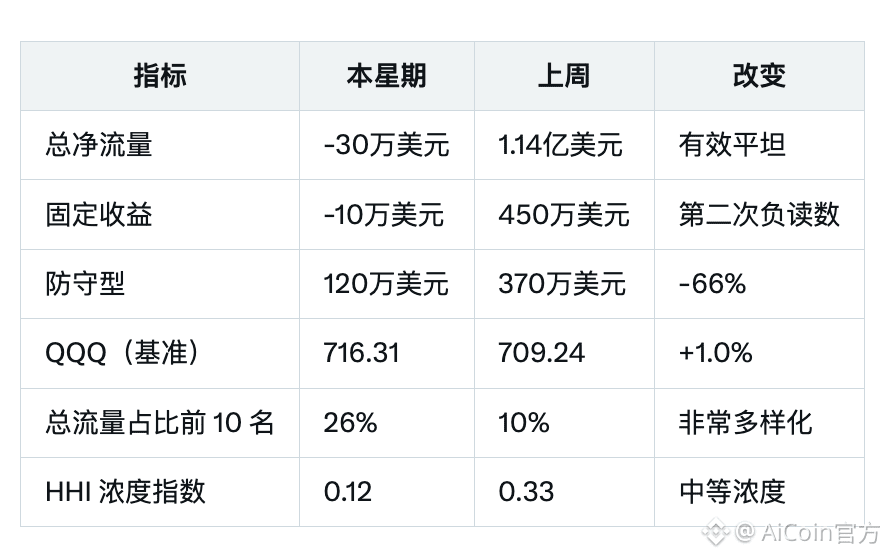
According to Binance’s latest weekly fund flow data, from September 3 to September 9, SK Hynix, SanDisk, and Micron together saw an outflow of about $95 million.
Of that, SK Hynix alone sold about $74 million, even though it just hit a 52-week high.
Does this mean the AI memory rally has topped out?
Don’t jump to conclusions yet.
In the same period, Lumentum, Ciena, and Credo combined saw inflows of about $15.9 million, while funds also bought memory ETFs and the 2x Micron ETF.
It looks more like funds are switching direction: those that surged first take profit, while capital continues searching for other AI hardware opportunities.
New fund movements are also showing up in the crypto market.
Spot Bitcoin fund inflows totaled $6 million, the largest single-week inflow for this series; BNC inflows were about $11.9 million.
So what’s truly worth watching next isn’t only whether memory stocks can keep rising. Also:
Will the capital withdrawing from high-priced memory stocks continue flowing into AI hardware and crypto assets?
Next, you can focus on two key signals:
① After SK Hynix pulls back, can buy-side demand step in again?
② Can the fund flows for BTC and BNB continue to expand?
Data source: Binance Research, as of September 9, 2026. This article is for sharing market information only and does not constitute investment advice.
【Memory stocks are still rising—did $95 million quietly get out first?】
The stock price hit a new high, but the funds started selling.
According to Binance’s latest weekly fund flow data, from September 3 to September 9, SK Hynix, SanDisk, and Micron together saw an outflow of about $95 million.
Of that, SK Hynix alone sold about $74 million, even though it just hit a 52-week high.
Does this mean the AI memory rally has topped out?
Don’t jump to conclusions yet.
In the same period, Lumentum, Ciena, and Credo combined saw inflows of about $15.9 million, while funds also bought memory ETFs and the 2x Micron ETF.
It looks more like funds are switching direction: those that surged first take profit, while capital continues searching for other AI hardware opportunities.
New fund movements are also showing up in the crypto market.
Spot Bitcoin fund inflows totaled $6 million, the largest single-week inflow for this series; BNC inflows were about $11.9 million.
So what’s truly worth watching next isn’t only whether memory stocks can keep rising. Also:
Will the capital withdrawing from high-priced memory stocks continue flowing into AI hardware and crypto assets?
Next, you can focus on two key signals:
① After SK Hynix pulls back, can buy-side demand step in again?
② Can the fund flows for BTC and BNB continue to expand?
Data source: Binance Research, as of September 9, 2026. This article is for sharing market information only and does not constitute investment advice.
The stock price hit a new high, but the funds started selling.
According to Binance’s latest weekly fund flow data, from September 3 to September 9, SK Hynix, SanDisk, and Micron together saw an outflow of about $95 million.
Of that, SK Hynix alone sold about $74 million, even though it just hit a 52-week high.
Does this mean the AI memory rally has topped out?
Don’t jump to conclusions yet.
In the same period, Lumentum, Ciena, and Credo combined saw inflows of about $15.9 million, while funds also bought memory ETFs and the 2x Micron ETF.
It looks more like funds are switching direction: those that surged first take profit, while capital continues searching for other AI hardware opportunities.
New fund movements are also showing up in the crypto market.
Spot Bitcoin fund inflows totaled $6 million, the largest single-week inflow for this series; BNC inflows were about $11.9 million.
So what’s truly worth watching next isn’t only whether memory stocks can keep rising. Also:
Will the capital withdrawing from high-priced memory stocks continue flowing into AI hardware and crypto assets?
Next, you can focus on two key signals:
① After SK Hynix pulls back, can buy-side demand step in again?
② Can the fund flows for BTC and BNB continue to expand?
Data source: Binance Research, as of September 9, 2026. This article is for sharing market information only and does not constitute investment advice.
698
·
--

Article
MEME Beginner Bonus! Quickly get up to speed with the Robinhood Chain and go for quick flipsAs for the whole thing with “riding the doge” on meme coins, the actual step-by-step operation is really the least important part.
Register a wallet, bridge across chains, click buy—within half an hour you can get it working; once you get the hang of it, you’ll learn quickly. What truly determines whether you end up earning or losing is never whether you can click a few buttons, but rather where you enter, what size position you use, and what expectations you go in with.
No one can think all of this through for you—you can only rely on yourself.
1. First, the risks: the Robinhood Chain is getting hot, but meme hype can shift fast
Robinhood Chain’s infrastructure and user base are indeed real, but its current main battleground is high-risk, high-volatility, and meme + synthetic-asset speculation with a high density of scams. Hype comes fast and disappears just as quickly. Before entering, be sure to test with a small position, only authorize the necessary amount, prioritize tokens with liquidity locked + where ownership is renounced, and be ready to exit at any moment.
MEME Beginner Bonus! Quickly get up to speed with the Robinhood Chain and go for quick flips
As for the whole thing with “riding the doge” on meme coins, the actual step-by-step operation is really the least important part.
Register a wallet, bridge across chains, click buy—within half an hour you can get it working; once you get the hang of it, you’ll learn quickly. What truly determines whether you end up earning or losing is never whether you can click a few buttons, but rather where you enter, what size position you use, and what expectations you go in with.
No one can think all of this through for you—you can only rely on yourself.
1. First, the risks: the Robinhood Chain is getting hot, but meme hype can shift fast
Robinhood Chain’s infrastructure and user base are indeed real, but its current main battleground is high-risk, high-volatility, and meme + synthetic-asset speculation with a high density of scams. Hype comes fast and disappears just as quickly. Before entering, be sure to test with a small position, only authorize the necessary amount, prioritize tokens with liquidity locked + where ownership is renounced, and be ready to exit at any moment.
Register a wallet, bridge across chains, click buy—within half an hour you can get it working; once you get the hang of it, you’ll learn quickly. What truly determines whether you end up earning or losing is never whether you can click a few buttons, but rather where you enter, what size position you use, and what expectations you go in with.
No one can think all of this through for you—you can only rely on yourself.
1. First, the risks: the Robinhood Chain is getting hot, but meme hype can shift fast
Robinhood Chain’s infrastructure and user base are indeed real, but its current main battleground is high-risk, high-volatility, and meme + synthetic-asset speculation with a high density of scams. Hype comes fast and disappears just as quickly. Before entering, be sure to test with a small position, only authorize the necessary amount, prioritize tokens with liquidity locked + where ownership is renounced, and be ready to exit at any moment.
1.5k
·
--
Robinhood Chain meme coin ZZZ, on September 9, according to GMGN’s single data source, surged into the $50 million market-cap range in a short time, with a 24-hour gain exceeding 200%. It then pulled back to about $46.2 million—typical of highly volatile speculative trades.
The story of this coin comes from the idea that “AI agents mark ZZZ before editing Wikipedia,” which has been packaged as an AI-related Meme. In other words, controversy in the technical safety domain has been turned directly into a token shell that people can bet on.
On the same day, U.S. Senator Bernie Sanders was preparing to push a bill to ban superintelligent AI, and UK MP Alex Sobel proposed a similar motion in the House of Commons. On one side, regulators worry about AI getting out of control; on the other, the market turns that concern into speculative material.
For participants, this kind of narrative-driven meme coin is hard to value using traditional fundamental analysis. It’s more like an emotion-trading experiment. With limited data sources and unclear regulatory narratives, treating it as an industry “psychological temperature gauge” may be more realistic than treating it as a “long-term allocation.”
Robinhood Chain meme coin ZZZ, on September 9, according to GMGN’s single data source, surged into the $50 million market-cap range in a short time, with a 24-hour gain exceeding 200%. It then pulled back to about $46.2 million—typical of highly volatile speculative trades.
The story of this coin comes from the idea that “AI agents mark ZZZ before editing Wikipedia,” which has been packaged as an AI-related Meme. In other words, controversy in the technical safety domain has been turned directly into a token shell that people can bet on.
On the same day, U.S. Senator Bernie Sanders was preparing to push a bill to ban superintelligent AI, and UK MP Alex Sobel proposed a similar motion in the House of Commons. On one side, regulators worry about AI getting out of control; on the other, the market turns that concern into speculative material.
For participants, this kind of narrative-driven meme coin is hard to value using traditional fundamental analysis. It’s more like an emotion-trading experiment. With limited data sources and unclear regulatory narratives, treating it as an industry “psychological temperature gauge” may be more realistic than treating it as a “long-term allocation.”
The story of this coin comes from the idea that “AI agents mark ZZZ before editing Wikipedia,” which has been packaged as an AI-related Meme. In other words, controversy in the technical safety domain has been turned directly into a token shell that people can bet on.
On the same day, U.S. Senator Bernie Sanders was preparing to push a bill to ban superintelligent AI, and UK MP Alex Sobel proposed a similar motion in the House of Commons. On one side, regulators worry about AI getting out of control; on the other, the market turns that concern into speculative material.
For participants, this kind of narrative-driven meme coin is hard to value using traditional fundamental analysis. It’s more like an emotion-trading experiment. With limited data sources and unclear regulatory narratives, treating it as an industry “psychological temperature gauge” may be more realistic than treating it as a “long-term allocation.”

502
·
--
Verified
#美财政部拟回购最多60亿美元国债 US Treasury yields surge above 4.85%, and BTC in the short term needs to be careful.
The U.S. Treasury plans to buy back up to $6 billion in Treasuries, but the market’s reaction to this buyback has not been particularly strong.
The 10-year Treasury yield once surged above 4.85%, reaching the highest level since November 2023.
The $6 billion buyback is mainly intended to improve liquidity in the long-term Treasury market. However, based on market performance, pressure on long-end bonds has not yet eased noticeably.
This is also the part that BTC is worth paying attention to right now.
Long-end yields continue to rise, and concerns about inflation, fiscal pressure, and the future path of interest rates remain. For risk assets like BTC, changes in the funding environment need to be watched.
At present, BTC is back around $782,000. In the short term, watch two levels first:
$780,000: support.
Whether it can hold is related to whether this round of pullback will continue to expand.
$800,000: resistance.
If it manages to reclaim $800,000 and the 10-year yield starts to fall again, risk appetite may heat up once more.
Conversely, if Treasury yields continue climbing and BTC breaks below $780,000, you should guard against further deterioration in risk appetite in the short term.
Next up are the U.S. CPI and the Fed’s interest rate decision meeting, and the macro timeline may continue to affect BTC’s pace.
When watching BTC recently, pay attention to the candlesticks—and don’t miss the moves in Treasury yields either.
For market information reference only and does not constitute investment advice.
#美国10年期美债收益率创2023年11月新高
#美财政部拟回购最多60亿美元国债 US Treasury yields surge above 4.85%, and BTC in the short term needs to be careful.
The U.S. Treasury plans to buy back up to $6 billion in Treasuries, but the market’s reaction to this buyback has not been particularly strong.
The 10-year Treasury yield once surged above 4.85%, reaching the highest level since November 2023.
The $6 billion buyback is mainly intended to improve liquidity in the long-term Treasury market. However, based on market performance, pressure on long-end bonds has not yet eased noticeably.
This is also the part that BTC is worth paying attention to right now.
Long-end yields continue to rise, and concerns about inflation, fiscal pressure, and the future path of interest rates remain. For risk assets like BTC, changes in the funding environment need to be watched.
At present, BTC is back around $782,000. In the short term, watch two levels first:
$780,000: support.
Whether it can hold is related to whether this round of pullback will continue to expand.
$800,000: resistance.
If it manages to reclaim $800,000 and the 10-year yield starts to fall again, risk appetite may heat up once more.
Conversely, if Treasury yields continue climbing and BTC breaks below $780,000, you should guard against further deterioration in risk appetite in the short term.
Next up are the U.S. CPI and the Fed’s interest rate decision meeting, and the macro timeline may continue to affect BTC’s pace.
When watching BTC recently, pay attention to the candlesticks—and don’t miss the moves in Treasury yields either.
For market information reference only and does not constitute investment advice.
#美国10年期美债收益率创2023年11月新高
The U.S. Treasury plans to buy back up to $6 billion in Treasuries, but the market’s reaction to this buyback has not been particularly strong.
The 10-year Treasury yield once surged above 4.85%, reaching the highest level since November 2023.
The $6 billion buyback is mainly intended to improve liquidity in the long-term Treasury market. However, based on market performance, pressure on long-end bonds has not yet eased noticeably.
This is also the part that BTC is worth paying attention to right now.
Long-end yields continue to rise, and concerns about inflation, fiscal pressure, and the future path of interest rates remain. For risk assets like BTC, changes in the funding environment need to be watched.
At present, BTC is back around $782,000. In the short term, watch two levels first:
$780,000: support.
Whether it can hold is related to whether this round of pullback will continue to expand.
$800,000: resistance.
If it manages to reclaim $800,000 and the 10-year yield starts to fall again, risk appetite may heat up once more.
Conversely, if Treasury yields continue climbing and BTC breaks below $780,000, you should guard against further deterioration in risk appetite in the short term.
Next up are the U.S. CPI and the Fed’s interest rate decision meeting, and the macro timeline may continue to affect BTC’s pace.
When watching BTC recently, pay attention to the candlesticks—and don’t miss the moves in Treasury yields either.
For market information reference only and does not constitute investment advice.
#美国10年期美债收益率创2023年11月新高

3
1.5k
·
--
Verified
【AiCoin丨9.10 Snapshot: U.S. Treasury yields hit peaks, spot gold surges, CLARITY bill advances】1. The U.S. 30-year Treasury yield rises above 5.30%, and the 10-year Treasury yield reaches 4.8184%, setting a new recent high
The U.S. 30-year Treasury yield breaks above 5.30%, up 5 basis points intraday. At 23:00 (UTC+8), the U.S. Department of the Treasury said it will, in its first operation, purchase up to $6 billion in long-term government bonds under the expanded Treasury securities repurchase program. - Original text
2. Iranian official: If necessary, is prepared for a more intense war with the United States
An Iranian official said that if necessary, Tehran is prepared for a more intense war with the United States, and will respond to attacks on the United States with escalatory strikes. Iran views this conflict as a battle for survival, and has no choice but to fight. - Original text
【AiCoin丨9.10 Snapshot: U.S. Treasury yields hit peaks, spot gold surges, CLARITY bill advances】
1. The U.S. 30-year Treasury yield rises above 5.30%, and the 10-year Treasury yield reaches 4.8184%, setting a new recent high
The U.S. 30-year Treasury yield breaks above 5.30%, up 5 basis points intraday. At 23:00 (UTC+8), the U.S. Department of the Treasury said it will, in its first operation, purchase up to $6 billion in long-term government bonds under the expanded Treasury securities repurchase program. - Original text
2. Iranian official: If necessary, is prepared for a more intense war with the United States
An Iranian official said that if necessary, Tehran is prepared for a more intense war with the United States, and will respond to attacks on the United States with escalatory strikes. Iran views this conflict as a battle for survival, and has no choice but to fight. - Original text
The U.S. 30-year Treasury yield breaks above 5.30%, up 5 basis points intraday. At 23:00 (UTC+8), the U.S. Department of the Treasury said it will, in its first operation, purchase up to $6 billion in long-term government bonds under the expanded Treasury securities repurchase program. - Original text
2. Iranian official: If necessary, is prepared for a more intense war with the United States
An Iranian official said that if necessary, Tehran is prepared for a more intense war with the United States, and will respond to attacks on the United States with escalatory strikes. Iran views this conflict as a battle for survival, and has no choice but to fight. - Original text
3
810
·
--
Germany’s Ministry of Finance plans to implement a new crypto tax regime in 2027, ending the “tax exemption for holding cryptocurrencies such as Bitcoin for more than one year” for crypto assets bought after December 31, 2026.
Under the current rules, as long as the holding period exceeds one year, many investors can sell without paying tax. The new draft applies only to positions purchased in the future; existing holdings will continue to follow the old rules, effectively applying two sets of tax labels to different batches of coins.
If this step is ultimately implemented, it could prompt more long-term investors to rethink their buying timing and holding periods, and even their choice of residence. However, the proposal is still in the drafting stage, and the specific tax rates and collection methods have not been released; the real impact will depend on the final version.
For the crypto market as a whole, policy signals like this are often more important than short-term volatility: would you rather focus on gradually tightening regulation, or stick to your own allocation approach amid uncertainty?
Germany’s Ministry of Finance plans to implement a new crypto tax regime in 2027, ending the “tax exemption for holding cryptocurrencies such as Bitcoin for more than one year” for crypto assets bought after December 31, 2026.
Under the current rules, as long as the holding period exceeds one year, many investors can sell without paying tax. The new draft applies only to positions purchased in the future; existing holdings will continue to follow the old rules, effectively applying two sets of tax labels to different batches of coins.
If this step is ultimately implemented, it could prompt more long-term investors to rethink their buying timing and holding periods, and even their choice of residence. However, the proposal is still in the drafting stage, and the specific tax rates and collection methods have not been released; the real impact will depend on the final version.
For the crypto market as a whole, policy signals like this are often more important than short-term volatility: would you rather focus on gradually tightening regulation, or stick to your own allocation approach amid uncertainty?
Under the current rules, as long as the holding period exceeds one year, many investors can sell without paying tax. The new draft applies only to positions purchased in the future; existing holdings will continue to follow the old rules, effectively applying two sets of tax labels to different batches of coins.
If this step is ultimately implemented, it could prompt more long-term investors to rethink their buying timing and holding periods, and even their choice of residence. However, the proposal is still in the drafting stage, and the specific tax rates and collection methods have not been released; the real impact will depend on the final version.
For the crypto market as a whole, policy signals like this are often more important than short-term volatility: would you rather focus on gradually tightening regulation, or stick to your own allocation approach amid uncertainty?

500
Log in to explore more content
Join global crypto users on Binance Square
⚡️ Get latest and useful information about crypto.
💬 Trusted by the world’s largest crypto exchange.
👍 Discover real insights from verified creators.
Email / Phone number
Trending Topics
FedRateWatch
487,593 views
2,486 Discussing
Share & Win Traffic Reward in our Trending Hashtag Campaign
✨Topic: FOMC September, What's The Fed's Next Move?
👉How to Join:
Publish a short post or article with hashtag #FedRateWatch
Create content based on the below angles:
- August core CPI rose 0.3% month-over-month, and the odds of a 25bp hike this week are now close to 90%. Do you anticipate a rate hike this week? Is it a one-off, or the start of a longer hiking cycle?
- If the hike lands, how does it play out for BTC, tech stocks, and gold? Bullish or bearish?
- How are you planning to trade next? Share your BTC, stocks or gold trade/holdings with our trade sharing widget.
⏰Campaign Period:
- 2026-09-15 11:00 - 2026-09-17 3:00 UTC
🎁Reward:
- Qualified posts that comply with the above guidelines and contain more than 100 words will be reviewed and may receive a random traffic boost of 500 to 3,000 views. You will receive a notification from your feed secretary if your post is selected.
- Get a chance to have your article featured on Binance Square Official
Need ideas for your post? Visit the topic page #FedRateWatch or the Square Guide on How to Post for Better Reach.
Binance Square Official
·362 Likes
·781.3k views
BitcoinSlidesTo$76000
15,715 views
104 Discussing
BitcoinReboundsTo$79K
59,683 views
396 Discussing