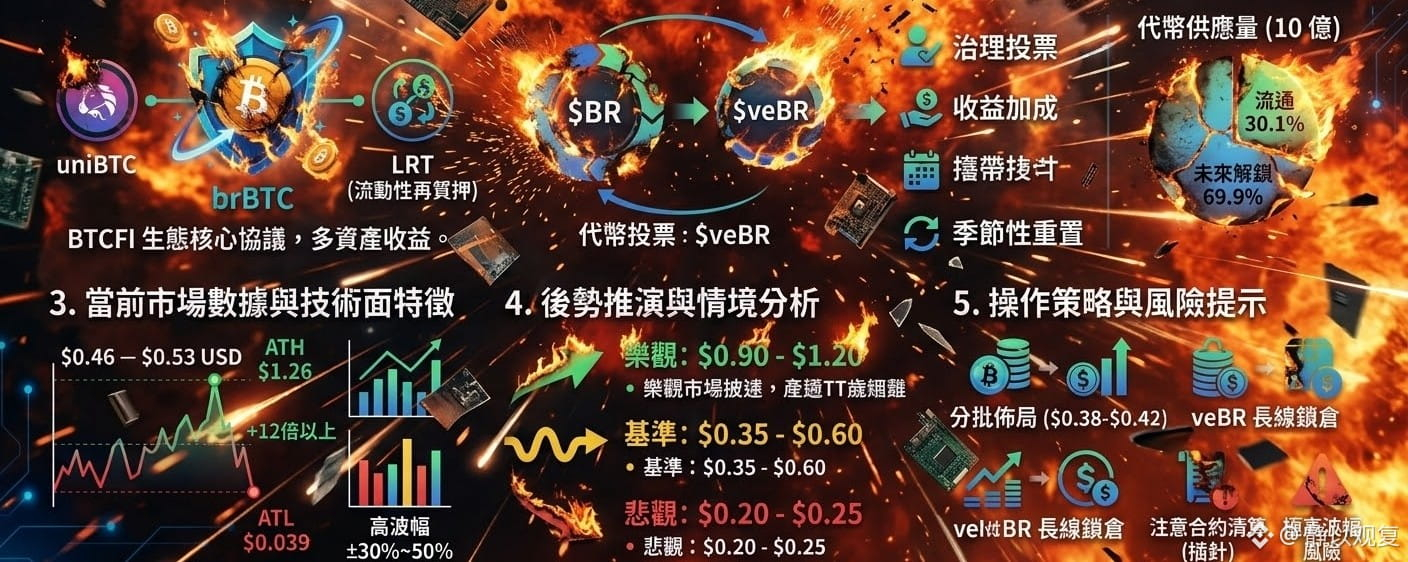
If you want a boost to your returns, you first have to give up the right to sell. The strongest part of $BR’s veBR model isn’t some vague talk about governance—it’s getting token holders to voluntarily lock up their spot tokens and turn them into voting power.
To gain the right to decide how liquidity pool rewards are distributed, you have to lock up your tokens. The more people lock them up, the fewer spot tokens remain in circulation on the market. More importantly, yield-bearing assets uniBTC and brBTC are already running underneath, integrated with cross-chain pools spanning over 19 chains.
While cross-chain yield farming expands the ecosystem, the mechanism also takes selling pressure off the market. As long as rewards are still up for grabs, who would casually dump tokens that earn a boost and come with voting rights?
#BR
👇
To gain the right to decide how liquidity pool rewards are distributed, you have to lock up your tokens. The more people lock them up, the fewer spot tokens remain in circulation on the market. More importantly, yield-bearing assets uniBTC and brBTC are already running underneath, integrated with cross-chain pools spanning over 19 chains.
While cross-chain yield farming expands the ecosystem, the mechanism also takes selling pressure off the market. As long as rewards are still up for grabs, who would casually dump tokens that earn a boost and come with voting rights?
#BR
👇