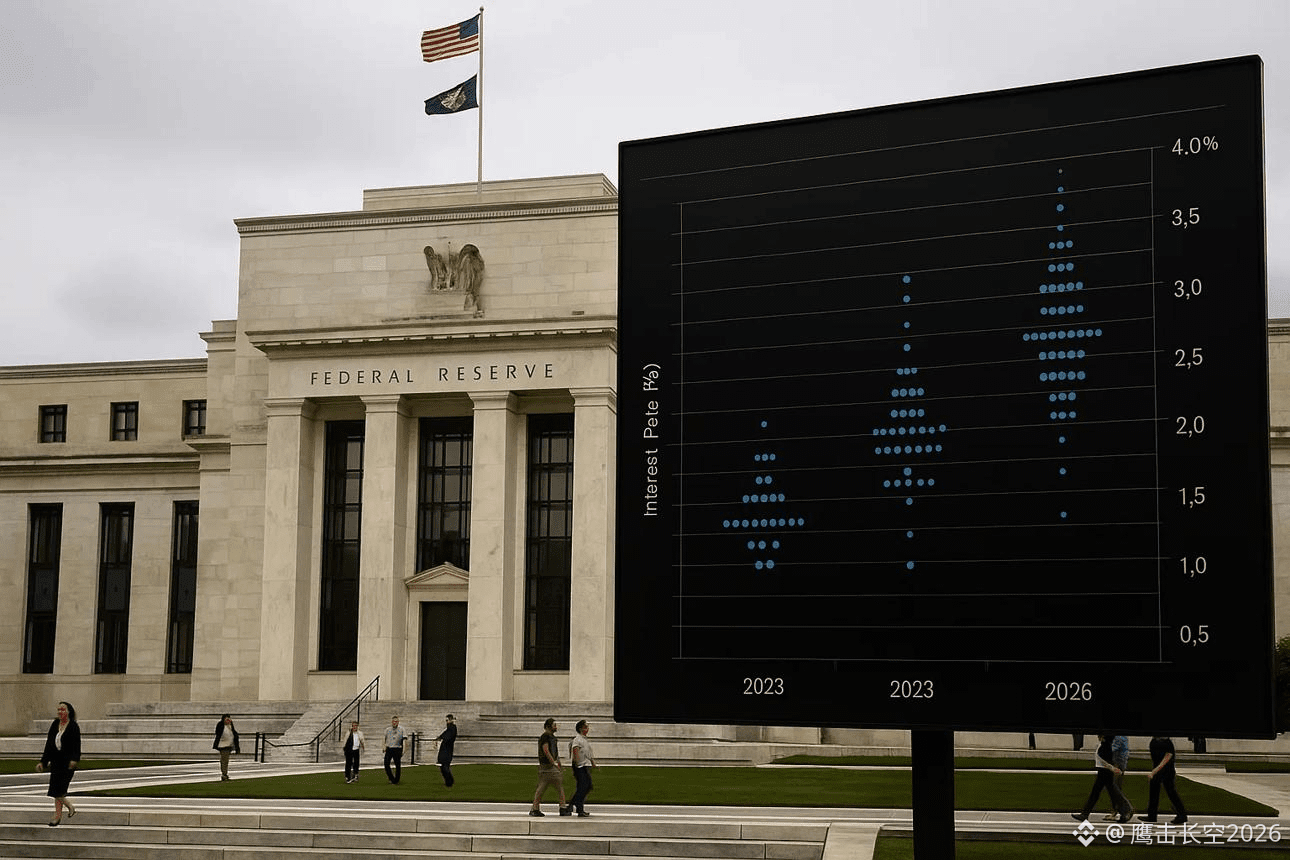
The Federal Reserve raised interest rates by 25 basis points for the first time in three years, bringing the rate to 3.75%—4%. I don’t think the market impact of this can be understood simply as “since rates are raised, Bitcoin must fall.”
The real transmission chain is: policy rates rise → the cost of USD funding increases → U.S. Treasury yields face upward pressure → market liquidity tightens → valuations of risk assets get compressed → capital reallocates toward the U.S. dollar and lower-risk assets.
For the crypto market, the most direct pressure comes from valuations and liquidity. Especially for high-volatility assets like Bitcoin and Ethereum, once the U.S. dollar and real interest rates keep strengthening, the valuations investors are willing to assign to risk assets will decline.
But there’s a key point here: what markets trade is never the rate hike itself, but the expectation gap. If the 25-basis-point move has already been priced in, then what truly affects subsequent price action is the Fed’s signaling about the future policy path. If it’s more hawkish and liquidity continues to be tightened, the impact will be negative; if the wording isn’t as hawkish as the market expected, there could be a “bearish news becomes a non-event” outcome.
So don’t just focus on the two words “rate hike.” What really matters is whether the U.S. dollar, Treasury yields, and the flow of capital into and out of risk assets are generating a synchronized move.$BTC $ETH #美联储加息25基点美股收跌
The real transmission chain is: policy rates rise → the cost of USD funding increases → U.S. Treasury yields face upward pressure → market liquidity tightens → valuations of risk assets get compressed → capital reallocates toward the U.S. dollar and lower-risk assets.
For the crypto market, the most direct pressure comes from valuations and liquidity. Especially for high-volatility assets like Bitcoin and Ethereum, once the U.S. dollar and real interest rates keep strengthening, the valuations investors are willing to assign to risk assets will decline.
But there’s a key point here: what markets trade is never the rate hike itself, but the expectation gap. If the 25-basis-point move has already been priced in, then what truly affects subsequent price action is the Fed’s signaling about the future policy path. If it’s more hawkish and liquidity continues to be tightened, the impact will be negative; if the wording isn’t as hawkish as the market expected, there could be a “bearish news becomes a non-event” outcome.
So don’t just focus on the two words “rate hike.” What really matters is whether the U.S. dollar, Treasury yields, and the flow of capital into and out of risk assets are generating a synchronized move.$BTC $ETH #美联储加息25基点美股收跌