
楠楠nannan势不可挡
2.7k Posts

楠楠nannan势不可挡
Predict 亚太地区推广大使 | BNB持有者 | 币安广场建设者 | 预测市场PREDICT
1.7K+ Following
26.7K+ Followers
19.1K+ Liked
Posts
All
Quotes
Live
PINNED
🧧🧧🧧🧧🧧🧧
The afternoon breeze feels lovely—it's okay to let life move a little slower. No need to rush.$币安人生
The afternoon breeze feels lovely—it's okay to let life move a little slower. No need to rush.$币安人生

PINNED
🧧🧧🧧🧧🧧🧧
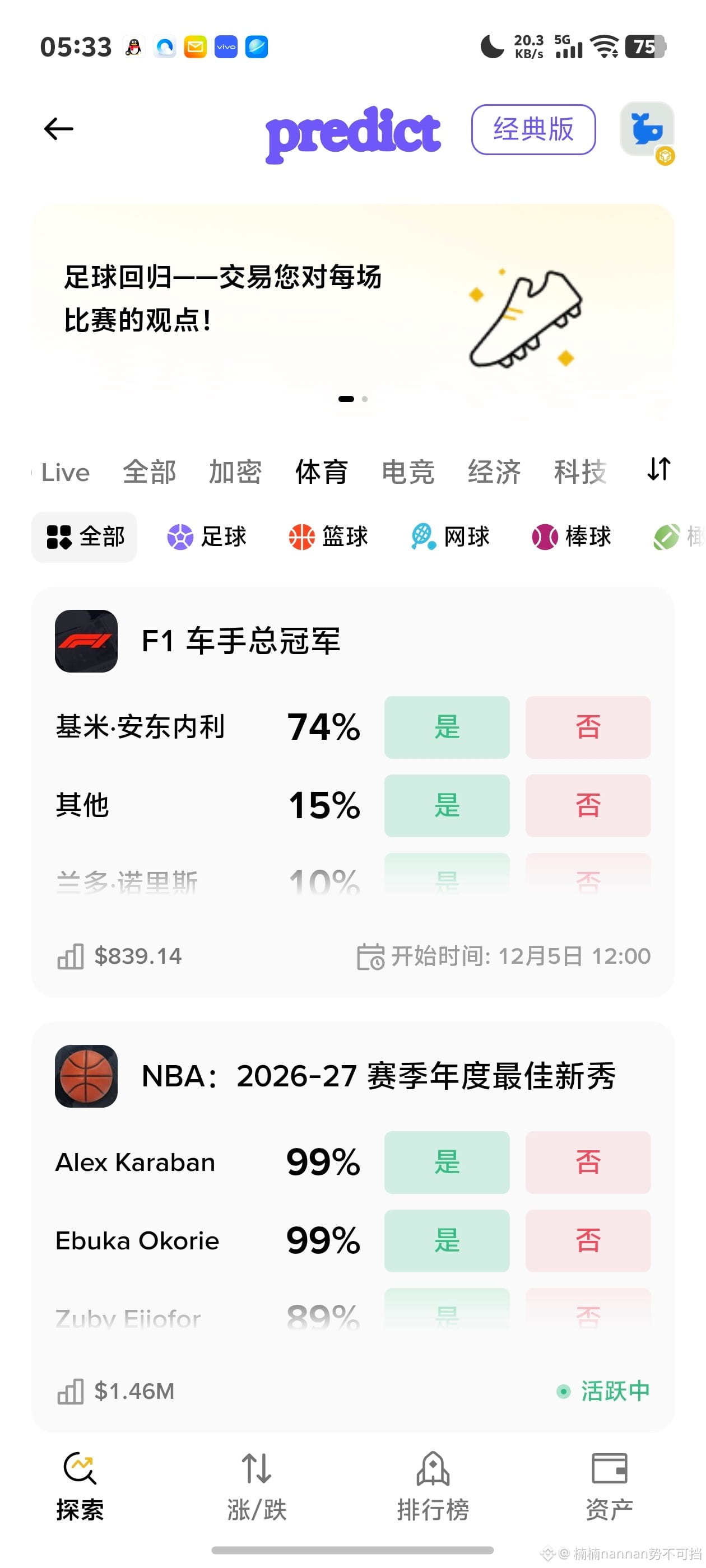
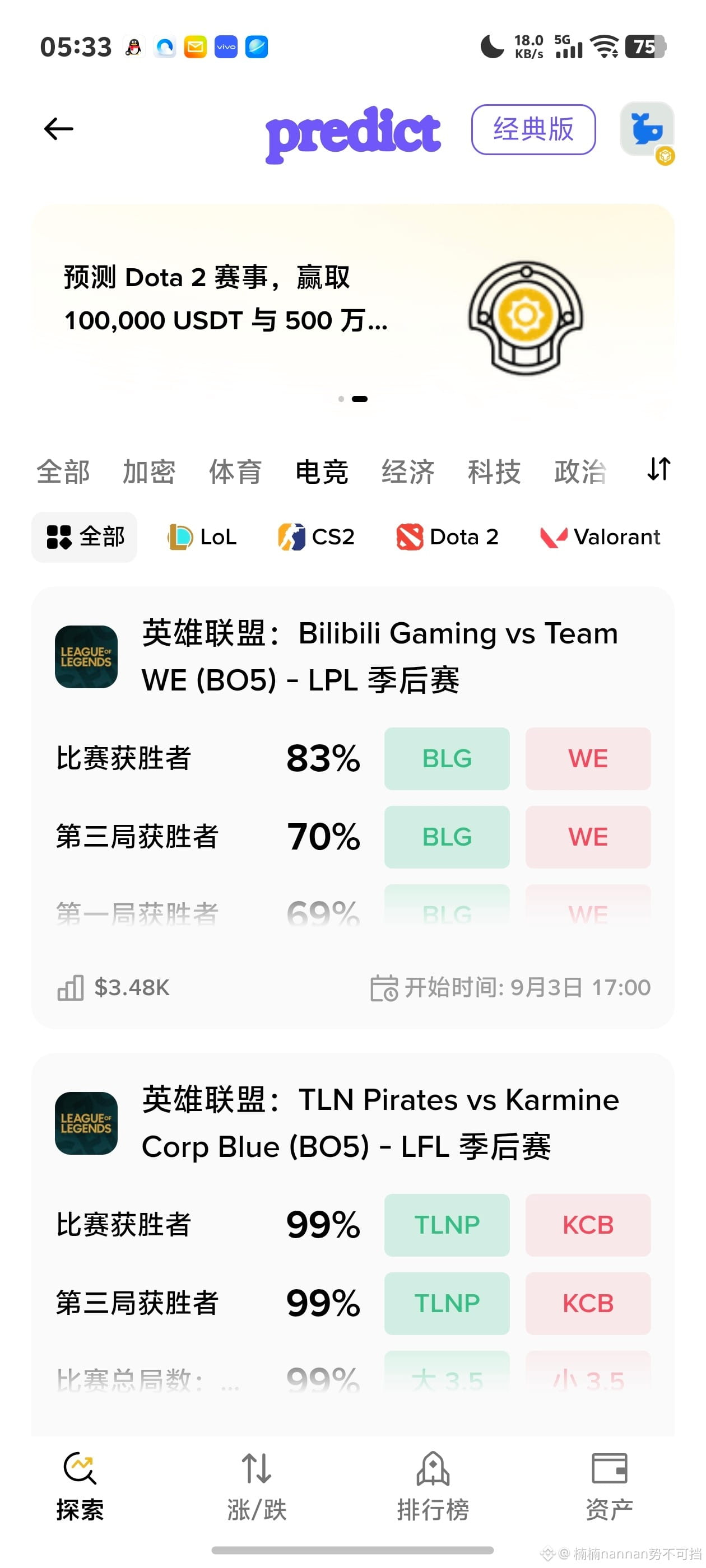
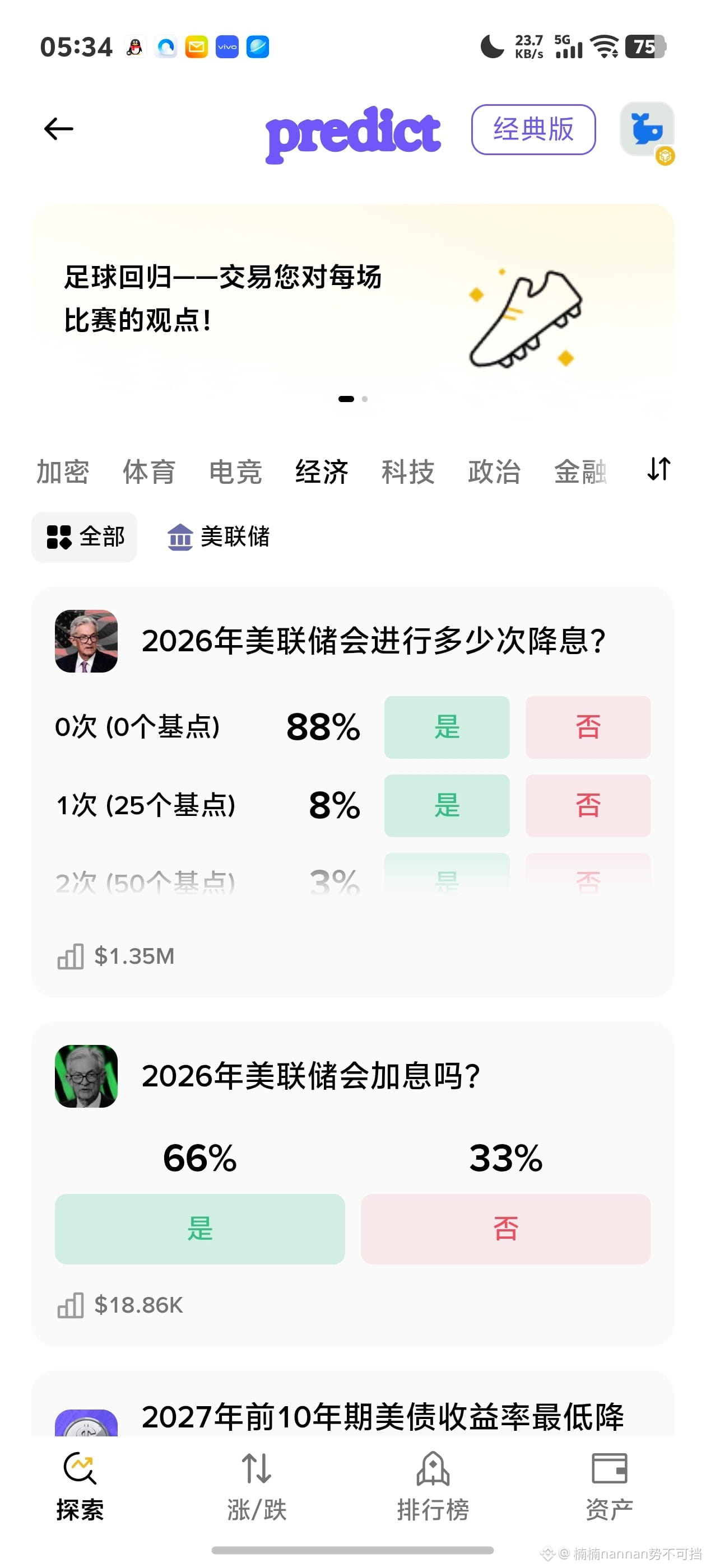
If you’re very accurate in your forecasts of the Federal Reserve and more,
you can come to predict the market ☞ predict for fun.
Open the Binance Wallet App—you can use it directly!
First there was Bingbing, then the Four.mm platform; now there is predict$币安人生
If you’re very accurate in your forecasts of the Federal Reserve and more,
you can come to predict the market ☞ predict for fun.
Open the Binance Wallet App—you can use it directly!
First there was Bingbing, then the Four.mm platform; now there is predict$币安人生


@静静Amily
is speaking[LIVE] 🎙️ 👍 Bitcoin BTC bull run—when it dips, drink up. Remember to catch it! How do you operate with bull contracts?
3.2k listens
@楠楠nannan势不可挡 $SPCX.US
楠楠nannan势不可挡
·
--
🧧🧧🧧🧧🧧🧧
The afternoon breeze feels lovely—it's okay to let life move a little slower. No need to rush.$币安人生
The afternoon breeze feels lovely—it's okay to let life move a little slower. No need to rush.$币安人生

SPCXUS-0.40%
@楠楠nannan势不可挡 $OPENAI
楠楠nannan势不可挡
·
--
🧧🧧🧧🧧🧧🧧
The afternoon breeze feels lovely—it's okay to let life move a little slower. No need to rush.$币安人生
The afternoon breeze feels lovely—it's okay to let life move a little slower. No need to rush.$币安人生
Live

@Hawk自由哥
is speaking[LIVE] 🎙️ Crypto market trends discussion; Q&A for newcomers ✅ Co-build the Binance Plaza 🦅 Spread the ideals of freedom! Maintain ecological balance!
8.9k listens


橙子Joyce
·
--
SpaceX heads toward extreme vertical integration: Why Elon Musk is building his own power supply for AI
SpaceX builds rockets by gaining deeper control over the manufacturing process than traditional aerospace companies.
Elon Musk is applying the same strategy to the biggest physical bottleneck in artificial intelligence: electricity. SpaceX is developing its own gas-turbine component manufacturing capabilities in Texas to bypass a power equipment supply chain that has been tight for years.
SpaceX is laying the groundwork in Bastrop, Texas, for a foundry to produce blades and guide vanes used in large gas turbines. SpaceX has been hiring engineers for this plant, with roles involving materials, automation, tooling, and the construction of new production lines.
Elon Musk is applying the same strategy to the biggest physical bottleneck in artificial intelligence: electricity. SpaceX is developing its own gas-turbine component manufacturing capabilities in Texas to bypass a power equipment supply chain that has been tight for years.
SpaceX is laying the groundwork in Bastrop, Texas, for a foundry to produce blades and guide vanes used in large gas turbines. SpaceX has been hiring engineers for this plant, with roles involving materials, automation, tooling, and the construction of new production lines.

英鸿³³₇
·
--
[Replay] 🎙️ Binance is becoming more and more prosperous, and there are also more traditional finance professionals joining the crowd—let’s DCA into BNB together
02 h 19 m 35 s · 7.7k listens
🧧

R A O_加密
·
--
Life can be heavy sometimes. 🌿
When you’re tired, don’t call it the end—give your soul some peace.
And remember, taking care of yourself is not selfish. 🤍
When you’re tired, don’t call it the end—give your soul some peace.
And remember, taking care of yourself is not selfish. 🤍

@楠楠nannan势不可挡 $BTR
楠楠nannan势不可挡
·
--
🧧🧧🧧🧧🧧🧧
The afternoon breeze feels lovely—it's okay to let life move a little slower. No need to rush.$币安人生
The afternoon breeze feels lovely—it's okay to let life move a little slower. No need to rush.$币安人生
🧧
Cryptology_7
·
--
“Think beyond the candles.” 💙
Decode the market with patience.
Trust your strategy through volatility.
Control emotions protect your capital. 🎀
KEEP LEARNING
KEEP GROWING
KEEP W I N N I N G ✨
$SKR
#CryptoPatience #Cryptology_7
Decode the market with patience.
Trust your strategy through volatility.
Control emotions protect your capital. 🎀
KEEP LEARNING
KEEP GROWING
KEEP W I N N I N G ✨
$SKR
#CryptoPatience #Cryptology_7

🧧

Leo - F0
·
--
Bullish🧧🧧🔥GOOD MORNING FROM DUBAİ, FAMİLY. I'VE PREPARED A SPECIAL GİFT FOR YOU.🔥🧧🧧
"Keep your entry quiet while the numbers soar. Chasing the freedom on a private shore." #Dubái 🏝️🍹
$BTC 🔥🔥🧧🧧
$BNB $ETH #xrp #TRUMP
#1688家族family 💚 @周周1688
@Hawk自由哥 #doge
"Keep your entry quiet while the numbers soar. Chasing the freedom on a private shore." #Dubái 🏝️🍹
$BTC 🔥🔥🧧🧧
$BNB $ETH #xrp #TRUMP
#1688家族family 💚 @周周1688
@Hawk自由哥 #doge

🧧

Ahli Hidaya ya rabi ma he q
·
--
Bullish🚀 G20 Officially Recognizes Digital Assets' Role in Economic Growth! 🌍🔥
Massive macro shift unfolding for the crypto space! Finance chiefs and central bank governors from the G20 have formally acknowledged that digital assets possess the true potential to drive global economic growth.
Key highlights from the latest G20 statement:
🔹 Clear Regulatory Pathways: Pledging to build clear, standardized frameworks to support responsible innovation while reducing policy uncertainty.
🔹 Cross-Border Payments Upgrade: Major push to overhaul global payment systems—focusing on extended operating hours for banks, faster settlements, and adopting messaging standards like ISO 20022.
🔹 Mainstream Integration: Shifting from resistance to integration, paving the way for wider institutional participation and global stablecoin frameworks.
The barrier between traditional finance and crypto is officially getting thinner. Clearer rules mean reduced friction and a healthier path forward for adoption.
What are your thoughts on this? Drop them below! 👇
#G20 #CryptoRegulation #BinanceSquare #DigitalAssets #MacroEconomy #CryptoNews$BTC $ETH $USDC
#dyor
Massive macro shift unfolding for the crypto space! Finance chiefs and central bank governors from the G20 have formally acknowledged that digital assets possess the true potential to drive global economic growth.
Key highlights from the latest G20 statement:
🔹 Clear Regulatory Pathways: Pledging to build clear, standardized frameworks to support responsible innovation while reducing policy uncertainty.
🔹 Cross-Border Payments Upgrade: Major push to overhaul global payment systems—focusing on extended operating hours for banks, faster settlements, and adopting messaging standards like ISO 20022.
🔹 Mainstream Integration: Shifting from resistance to integration, paving the way for wider institutional participation and global stablecoin frameworks.
The barrier between traditional finance and crypto is officially getting thinner. Clearer rules mean reduced friction and a healthier path forward for adoption.
What are your thoughts on this? Drop them below! 👇
#G20 #CryptoRegulation #BinanceSquare #DigitalAssets #MacroEconomy #CryptoNews$BTC $ETH $USDC
#dyor

Live

Elena神话MUA
·
--
[Replay] 🎙️ Mythology MUA airdrop continues—everyone is welcome to come claim it
04 h 19 m 39 s · 3.7k listens
@楠楠nannan势不可挡 $CLO
楠楠nannan势不可挡
·
--
🧧🧧🧧🧧🧧🧧
The afternoon breeze feels lovely—it's okay to let life move a little slower. No need to rush.$币安人生
The afternoon breeze feels lovely—it's okay to let life move a little slower. No need to rush.$币安人生
@楠楠nannan势不可挡 $MAGMA
楠楠nannan势不可挡
·
--
🧧🧧🧧🧧🧧🧧
The afternoon breeze feels lovely—it's okay to let life move a little slower. No need to rush.$币安人生
The afternoon breeze feels lovely—it's okay to let life move a little slower. No need to rush.$币安人生
🧧

白鲨观点
·
--
This morning I checked the market: BTC broke below 77,000, and liquidations across the whole network are almost 240 million yuan—about 80% of them are long positions. Then look at the ETF data: BlackRock’s IBIT bought another 1,400+ BTC, net inflow of over $100 million.
Prices are falling, while institutions are buying. Every time this kind of divergence shows up, the comments section splits into two camps:
One side says, “Institutions are coming in—quick, buy the dip.” The other side says, “Institutions are buying ETF shares, not pulling the spot price directly. Don’t get fooled.”
Both sides have points, but neither quite gets to the core.
What’s really worth thinking about is: why is the market dropping like this, yet institutions keep moving money in?
The answer may not be inside the crypto market, but outside it. Over the past few days, global bond markets have been selling off. U.S. Treasury yields have surged to 4.8%, and Japanese government bond yields hit their highest level in 96 years. The cost of capital for traditional finance is getting more expensive—the money is no longer cheap.
That sounds bearish—higher funding costs mean risk assets will face pressure. And yes, in the short term, it really is pressure. But think about it from another angle: when the operating costs of the traditional financial system keep rising, capital will look for places with lower friction and higher efficiency.
Why have stablecoins been so hot lately? Because 21 banks joined forces to launch their own stablecoin. It’s not because they suddenly believe in decentralization—it’s because they’ve realized that the cost of on-chain settlement is far cheaper than traditional clearing systems.
So the situation right now is rather delicate: short-term macro factors are weighing on prices, while long-term structural capital is positioning. What you see is the candlestick chart falling; what you can’t see is the underlying infrastructure changing.
As for what to do in the short term? Honestly, it’s normal for the 77,000 level to wobble up and down. Geopolitical conflicts plus rate-hike expectations are dual headwinds—of course it wouldn’t drop only a little. But if you think the bull market is over just because it’s down for two days, or if you want to go all-in to catch the dip because it’s dropping, that might be a bit too impatient.
The market is never black and white. It’s more like a balance scale being repriced: one side is macro pressure, the other is structural opportunity. Which side you stand on determines what you do next.
One last thing: for today’s行情, don’t place random orders. First figure out whether you’re making a short-term trade or building a long-term trend. If you mix the two, you’ll get hit from both ends.
$BTC $ETH #行情分析📈 #币圈思考
Prices are falling, while institutions are buying. Every time this kind of divergence shows up, the comments section splits into two camps:
One side says, “Institutions are coming in—quick, buy the dip.” The other side says, “Institutions are buying ETF shares, not pulling the spot price directly. Don’t get fooled.”
Both sides have points, but neither quite gets to the core.
What’s really worth thinking about is: why is the market dropping like this, yet institutions keep moving money in?
The answer may not be inside the crypto market, but outside it. Over the past few days, global bond markets have been selling off. U.S. Treasury yields have surged to 4.8%, and Japanese government bond yields hit their highest level in 96 years. The cost of capital for traditional finance is getting more expensive—the money is no longer cheap.
That sounds bearish—higher funding costs mean risk assets will face pressure. And yes, in the short term, it really is pressure. But think about it from another angle: when the operating costs of the traditional financial system keep rising, capital will look for places with lower friction and higher efficiency.
Why have stablecoins been so hot lately? Because 21 banks joined forces to launch their own stablecoin. It’s not because they suddenly believe in decentralization—it’s because they’ve realized that the cost of on-chain settlement is far cheaper than traditional clearing systems.
So the situation right now is rather delicate: short-term macro factors are weighing on prices, while long-term structural capital is positioning. What you see is the candlestick chart falling; what you can’t see is the underlying infrastructure changing.
As for what to do in the short term? Honestly, it’s normal for the 77,000 level to wobble up and down. Geopolitical conflicts plus rate-hike expectations are dual headwinds—of course it wouldn’t drop only a little. But if you think the bull market is over just because it’s down for two days, or if you want to go all-in to catch the dip because it’s dropping, that might be a bit too impatient.
The market is never black and white. It’s more like a balance scale being repriced: one side is macro pressure, the other is structural opportunity. Which side you stand on determines what you do next.
One last thing: for today’s行情, don’t place random orders. First figure out whether you’re making a short-term trade or building a long-term trend. If you mix the two, you’ll get hit from both ends.
$BTC $ETH #行情分析📈 #币圈思考

🧧

Lily雪莉呀
·
--
Someone once said that the wind on the mountaintop never fights the dust of the valley floor. So spiritual altitude determines the radius of one’s tolerance.
When a person is strong enough to achieve self-satisfaction, another person’s provocation turns into nothing more than mosquito bites.
When a person is strong enough to achieve self-satisfaction, another person’s provocation turns into nothing more than mosquito bites.

Log in to explore more content