
小恐龙说趋势
211 Posts
 LIVE
LIVE小恐龙说趋势
6 年市场经验,公众号.比特芒果,记录市场的真实逻辑,研究下一步会去哪
12 Following
1.8K+ Followers
1.3K+ Liked
Posts
All
Live
The Federal Reserve ran an experiment to show ordinary people Bitcoin’s returns over the past year—and as a result, the probability that they would buy surged by 23%.
So tell me, is there any ad that’s more hard-hitting than that?
Many people think new “greens” are lured in by news hype. In reality, they’re pulled in by historical returns.
When the market rises, people around them make money, and wallets start itching—human nature never changes.
What’s brilliant about this experiment is that it proves returns themselves are the best customer-acquisition channel.
No ads. No manufactured narratives. Just put the price increase in front of them—curiosity comes on its own.
There’s another detail in the experiment worth savoring: people who saw the returns weren’t just more eager to buy; their concerns about risk dropped noticeably too.
In plain terms, the “making-money” effect persuades you on its own. No one can convince you with a thousand words better than seeing the numbers on your account rise once.
This round of BTC—within a week—put in one of the best performances of the past three years. It’s basically the whole market looping an ad for returns.
New money comes in, long-time players add to their positions, and once emotions get ignited, it’s hard to put the fire out.
So don’t underestimate any decent-looking market move.
It’s not just numbers moving—it’s the entire market recruiting people.
Long-time players profit from the knowledge gap; new players pay tuition. That’s the complete loop of a bull market.
How far the trend can run depends on how many people this “ad effect” can draw in.
But then again, the experiment also serves as a reminder: people who chase returns run away fast too.
Those who understand eat the trend; those who follow the crowd eat the volatility. The difference is in cognition.
Trends will cycle; understanding compounds. That—right there—is the most valuable thing.
Every day, I’ll guide you to watch BTC hotspots—not just what happened in the news, but also the logic and opportunities behind it 👀🚀
Click the link below to follow me👇🏻加入小恐龙粉丝群
#Bitcoin #FederalReserve #CryptoMarket
So tell me, is there any ad that’s more hard-hitting than that?
Many people think new “greens” are lured in by news hype. In reality, they’re pulled in by historical returns.
When the market rises, people around them make money, and wallets start itching—human nature never changes.
What’s brilliant about this experiment is that it proves returns themselves are the best customer-acquisition channel.
No ads. No manufactured narratives. Just put the price increase in front of them—curiosity comes on its own.
There’s another detail in the experiment worth savoring: people who saw the returns weren’t just more eager to buy; their concerns about risk dropped noticeably too.
In plain terms, the “making-money” effect persuades you on its own. No one can convince you with a thousand words better than seeing the numbers on your account rise once.
This round of BTC—within a week—put in one of the best performances of the past three years. It’s basically the whole market looping an ad for returns.
New money comes in, long-time players add to their positions, and once emotions get ignited, it’s hard to put the fire out.
So don’t underestimate any decent-looking market move.
It’s not just numbers moving—it’s the entire market recruiting people.
Long-time players profit from the knowledge gap; new players pay tuition. That’s the complete loop of a bull market.
How far the trend can run depends on how many people this “ad effect” can draw in.
But then again, the experiment also serves as a reminder: people who chase returns run away fast too.
Those who understand eat the trend; those who follow the crowd eat the volatility. The difference is in cognition.
Trends will cycle; understanding compounds. That—right there—is the most valuable thing.
Every day, I’ll guide you to watch BTC hotspots—not just what happened in the news, but also the logic and opportunities behind it 👀🚀
Click the link below to follow me👇🏻加入小恐龙粉丝群
#Bitcoin #FederalReserve #CryptoMarket

Gemini and Apex officially announce a partnership: prediction markets are now moving into a compliant futures channel
From now on, to participate in crypto event contracts, you can do so through Apex’s futures broker—Gemini remains the only venue regulated by the CFTC
Who is Apex? A longtime U.S. clearing institution, a veteran settlement player on Wall Street
If they can bring event contracts into a clearing network at this level, it shows that, in institutional eyes, prediction markets are already qualified
Previously, these contracts were just for self-entertainment within small on-chain circles. Now they’re directly connected to traditional financial channels
The barrier to entry has lowered, capital volumes have come up, and liquidity will naturally get thicker—so there will be more ways to play
In the past two years, prediction markets have already been the most wild dark horse in the crypto world. During the World Cup, on-chain trading volume surged to over $20 billion
Now even compliant clearing exchanges are stepping in to grab territory—this industry’s ceiling is clearly rising right before our eyes
For us, this means another window to observe market sentiment
The price of an event contract is a vote in real gold and silver—more honest than any analyst’s talk
Elections, interest rates, coin prices—anything can be used to launch a market. In the price, you see nothing but real attitudes
As the on-chain world moves closer to traditional finance, it will only accelerate
Understand it early, adapt early. In the future, the market won’t be determined by a single exchange—this is a race among the entire infrastructure
Those who understand it are already laying plans
The moment the wind starts to blow—don’t wait until everyone else is already on the train to ask what this is. By then, you’ll only be chasing after someone else’s back
Every day, I’ll take you to watch the key hotspots in prediction markets—not only what happens in the news, but also the logic and opportunities behind it 👀🚀
Click the link below to follow me👇🏻加入小恐龙粉丝群
#PredictionMarkets #Gemini #CryptoCompliance
From now on, to participate in crypto event contracts, you can do so through Apex’s futures broker—Gemini remains the only venue regulated by the CFTC
Who is Apex? A longtime U.S. clearing institution, a veteran settlement player on Wall Street
If they can bring event contracts into a clearing network at this level, it shows that, in institutional eyes, prediction markets are already qualified
Previously, these contracts were just for self-entertainment within small on-chain circles. Now they’re directly connected to traditional financial channels
The barrier to entry has lowered, capital volumes have come up, and liquidity will naturally get thicker—so there will be more ways to play
In the past two years, prediction markets have already been the most wild dark horse in the crypto world. During the World Cup, on-chain trading volume surged to over $20 billion
Now even compliant clearing exchanges are stepping in to grab territory—this industry’s ceiling is clearly rising right before our eyes
For us, this means another window to observe market sentiment
The price of an event contract is a vote in real gold and silver—more honest than any analyst’s talk
Elections, interest rates, coin prices—anything can be used to launch a market. In the price, you see nothing but real attitudes
As the on-chain world moves closer to traditional finance, it will only accelerate
Understand it early, adapt early. In the future, the market won’t be determined by a single exchange—this is a race among the entire infrastructure
Those who understand it are already laying plans
The moment the wind starts to blow—don’t wait until everyone else is already on the train to ask what this is. By then, you’ll only be chasing after someone else’s back
Every day, I’ll take you to watch the key hotspots in prediction markets—not only what happens in the news, but also the logic and opportunities behind it 👀🚀
Click the link below to follow me👇🏻加入小恐龙粉丝群
#PredictionMarkets #Gemini #CryptoCompliance

Ethereum lending protocol Term Finance was stolen of $8.5 million
The attack was pretty sneaky: there were too few staked voting tokens. The hacker simply bought tickets to win governance power and emptied the treasury.
The team reacted quickly too, permanently shutting down Meta Vaults—but the money was already gone.
This round of victims again was a group of retail users who put their assets in to earn interest.
This kind of vulnerability is even more disgusting than a contract code bug. It attacks a soft spot in the governance mechanism.
When voting power is so cheap it can be bought through, it shows decentralization also has blind spots.
In DeFi, never stake your entire net worth in a single protocol. Diversify—that’s the life-saving key.
Every day I’ll keep you updated on DeFi hotspots—not just what happened in the news, but also the logic and opportunities behind it 👀🚀
Click the link below to follow me 👇🏻加入小恐龙粉丝群
#DeFi #Ethereum #Security
The attack was pretty sneaky: there were too few staked voting tokens. The hacker simply bought tickets to win governance power and emptied the treasury.
The team reacted quickly too, permanently shutting down Meta Vaults—but the money was already gone.
This round of victims again was a group of retail users who put their assets in to earn interest.
This kind of vulnerability is even more disgusting than a contract code bug. It attacks a soft spot in the governance mechanism.
When voting power is so cheap it can be bought through, it shows decentralization also has blind spots.
In DeFi, never stake your entire net worth in a single protocol. Diversify—that’s the life-saving key.
Every day I’ll keep you updated on DeFi hotspots—not just what happened in the news, but also the logic and opportunities behind it 👀🚀
Click the link below to follow me 👇🏻加入小恐龙粉丝群
#DeFi #Ethereum #Security

Bridgewater big boss Ray Dalio has spoken: You need to hold a bit of Bitcoin
The reason is simple: the U.S. debt is about to blow up. He’s been talking about the debt cycle for decades—this time it might really hit the critical point.
The recent turmoil in the Treasury market just happens to match his script.
Dalio’s exact words: Bitcoin is insurance, not a speculative product. You don’t need a heavy position, but you must have some.
Some people think the big boss is calling for a trade—does he want to run? Actually, he’s calling for gold as well; it’s a hedging mindset.
When a debt crisis really comes, having all your money in U.S. dollars is the worst situation.
Allocate a bit of hard assets—you can sleep more soundly.
Every day, I’ll take you through macro headlines—not just what happens in the news, but help you understand the underlying logic and opportunities 👀🚀
Click the link below to follow me👇🏻加入小恐龙粉丝群
#Bitcoin #RayDalio #Macro
The reason is simple: the U.S. debt is about to blow up. He’s been talking about the debt cycle for decades—this time it might really hit the critical point.
The recent turmoil in the Treasury market just happens to match his script.
Dalio’s exact words: Bitcoin is insurance, not a speculative product. You don’t need a heavy position, but you must have some.
Some people think the big boss is calling for a trade—does he want to run? Actually, he’s calling for gold as well; it’s a hedging mindset.
When a debt crisis really comes, having all your money in U.S. dollars is the worst situation.
Allocate a bit of hard assets—you can sleep more soundly.
Every day, I’ll take you through macro headlines—not just what happens in the news, but help you understand the underlying logic and opportunities 👀🚀
Click the link below to follow me👇🏻加入小恐龙粉丝群
#Bitcoin #RayDalio #Macro

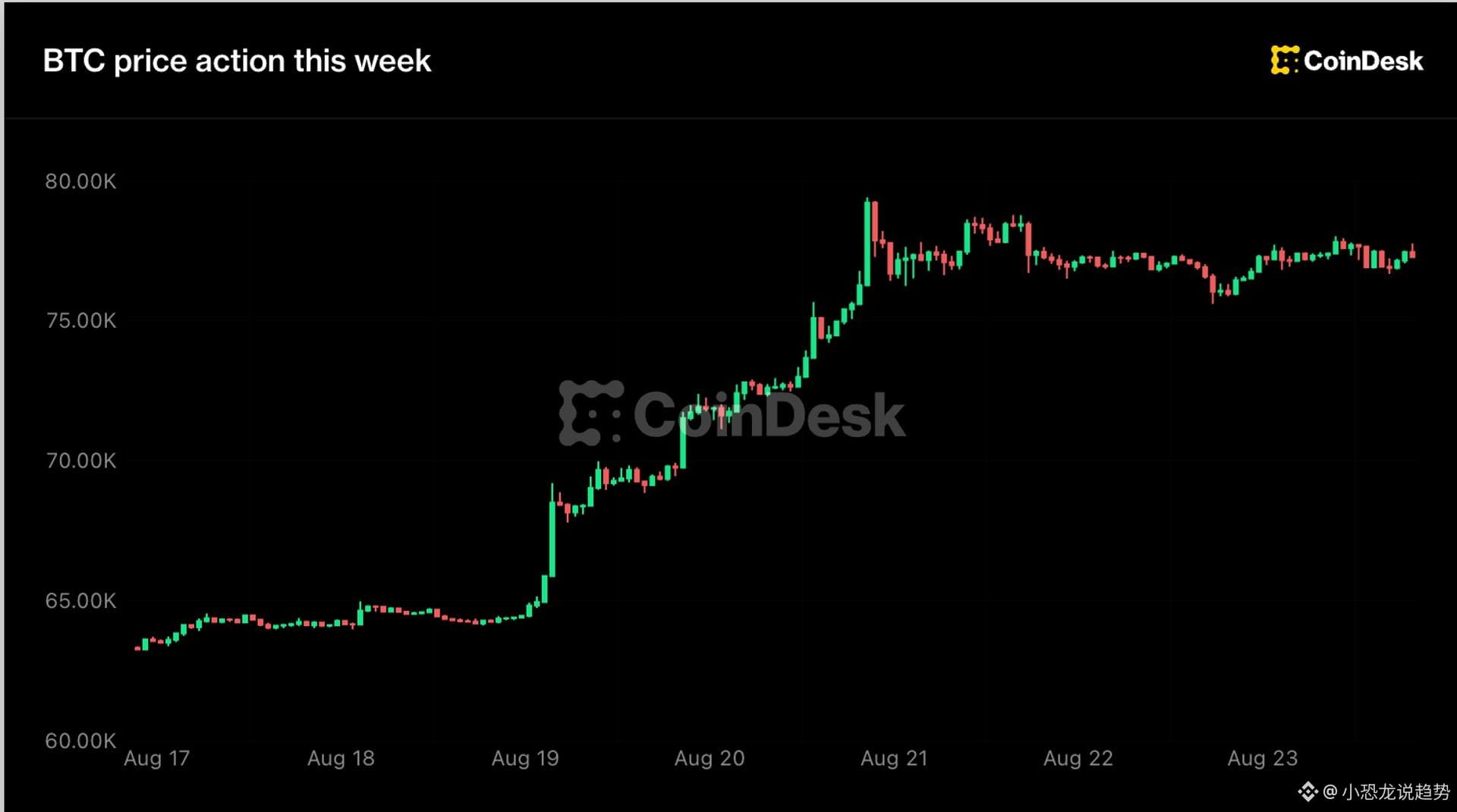
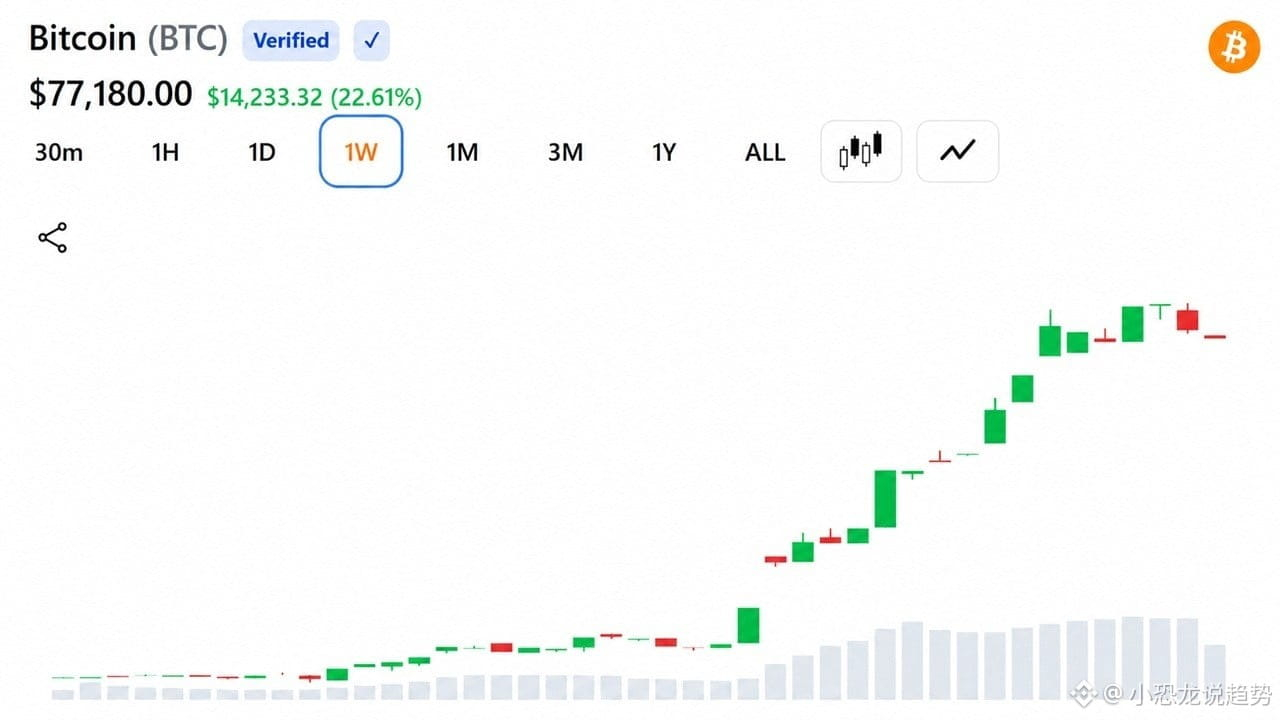
Bitcoin this week directly delivered the second-best run of the year—up 22% in a single week.
The 77,000 level is being held tightly; XRP and ZEC pushed to new highs, then took a breather as the broader market stays steady.
The real driver is fund flows. The Ministry of Finance’s buyback actions have pinned U.S. Treasury yields down. ETF inflows are continuing, the U.S. dollar is weakening—three things coming together make it hard for BTC not to rise.
When it’s going up, don’t get carried away. First, see whether this move is actually backed by fundamentals.
Wall Street money is moving in while retail investors are still watching from the sidelines—this kind of structure is actually pretty healthy.
If there’s a pullback, it might even be the entry opportunity. Don’t scare yourself.
Every day, I’ll guide you through BTC hot topics—not just what news happened, but also the logic and opportunities behind it 👀🚀
Click the link below to follow me 👇🏻加入小恐龙粉丝群
#BTC #Bitcoin #CryptoMarket
The 77,000 level is being held tightly; XRP and ZEC pushed to new highs, then took a breather as the broader market stays steady.
The real driver is fund flows. The Ministry of Finance’s buyback actions have pinned U.S. Treasury yields down. ETF inflows are continuing, the U.S. dollar is weakening—three things coming together make it hard for BTC not to rise.
When it’s going up, don’t get carried away. First, see whether this move is actually backed by fundamentals.
Wall Street money is moving in while retail investors are still watching from the sidelines—this kind of structure is actually pretty healthy.
If there’s a pullback, it might even be the entry opportunity. Don’t scare yourself.
Every day, I’ll guide you through BTC hot topics—not just what news happened, but also the logic and opportunities behind it 👀🚀
Click the link below to follow me 👇🏻加入小恐龙粉丝群
#BTC #Bitcoin #CryptoMarket
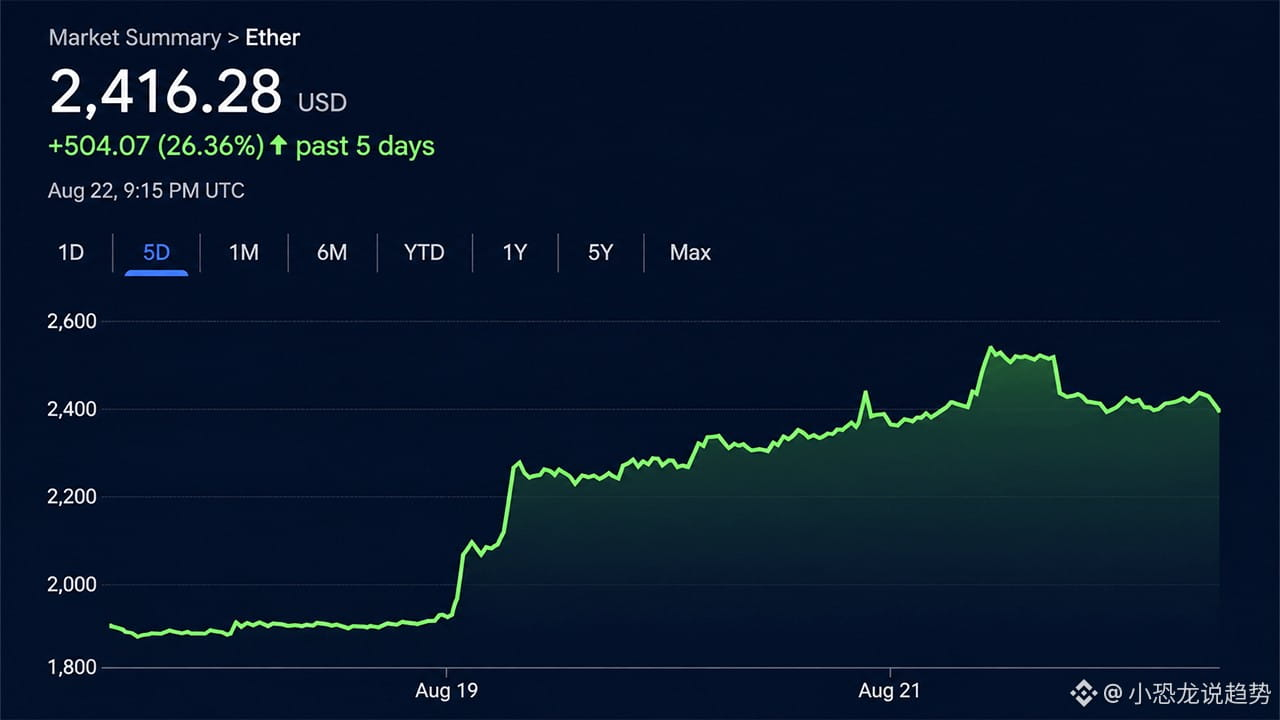
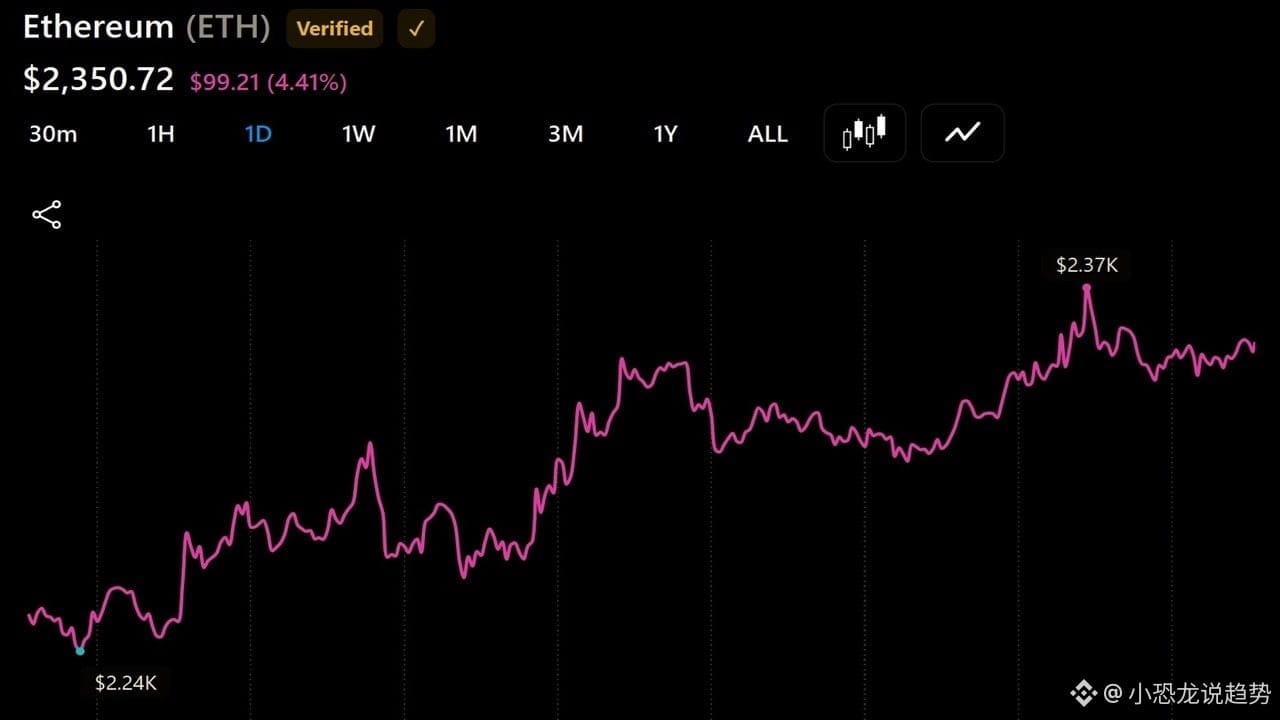
ETH rallies 30% in a week—leaving Bitcoin in the dust. In seven days ETH is up 29.8%, while Bitcoin is only up 22.9%. On Saturday it surged straight to $2,546. A week ago it was still hovering around $1,800, playing dead. This comeback has been executed beautifully.
The trigger is just three words: “out of stock.” The data speaks for itself. On exchanges, the amount of ETH is down 15% from early June, falling from 7.7 million coins to 6.54 million. In addition, 42 million coins are locked in staking, accounting for one-third of the total supply—so the amount of sellable ETH available at any moment is getting smaller. When buyers push hard, the price feels like it’s taking off on a rocket.
Liquidity also cooperates. Ethereum spot ETFs saw net inflows of $697 million over the week. Just from the 19th to the 21st—three days—they pulled in $189 million, $221 million, and $185 million respectively. This is the strongest wave since last October. BlackRock led the buying, and the Wall Street demand is far more aggressive than retail.
The worst off are the derivatives traders. In the past 24 hours, the entire market liquidated positions totaling $1.21 billion, with ETH accounting for $265 million. More than 230,000 traders were forced out. Shorts were blown up, and the long positions that chased higher got flushed too. Both sides took hits—this is the cost of leverage.
My take: this ETH move is different from Bitcoin’s. It has staking locks, continuous ETF buying, and an ecosystem narrative. For the short term, a pullback to around 2400 is fine—as long as it doesn’t break. The trend is still there. But remember: after a +30% rally, chasing is always the most uncomfortable position. If you want to get on board, wait for a pullback—don’t follow the crowd. Also, this wave has pushed ETH’s market-cap share back to 11%, keeping it firmly in second place.
Interaction: Do you think ETH can hold steady above $2,500? Drop your scenario in the comments.
Click the avatar to watch the livestream.
Every day, I’ll help you track Ethereum highlights—not just what’s happening in the news, but also the logic and opportunities behind it 👉🦖
#以太坊 #ETH
The trigger is just three words: “out of stock.” The data speaks for itself. On exchanges, the amount of ETH is down 15% from early June, falling from 7.7 million coins to 6.54 million. In addition, 42 million coins are locked in staking, accounting for one-third of the total supply—so the amount of sellable ETH available at any moment is getting smaller. When buyers push hard, the price feels like it’s taking off on a rocket.
Liquidity also cooperates. Ethereum spot ETFs saw net inflows of $697 million over the week. Just from the 19th to the 21st—three days—they pulled in $189 million, $221 million, and $185 million respectively. This is the strongest wave since last October. BlackRock led the buying, and the Wall Street demand is far more aggressive than retail.
The worst off are the derivatives traders. In the past 24 hours, the entire market liquidated positions totaling $1.21 billion, with ETH accounting for $265 million. More than 230,000 traders were forced out. Shorts were blown up, and the long positions that chased higher got flushed too. Both sides took hits—this is the cost of leverage.
My take: this ETH move is different from Bitcoin’s. It has staking locks, continuous ETF buying, and an ecosystem narrative. For the short term, a pullback to around 2400 is fine—as long as it doesn’t break. The trend is still there. But remember: after a +30% rally, chasing is always the most uncomfortable position. If you want to get on board, wait for a pullback—don’t follow the crowd. Also, this wave has pushed ETH’s market-cap share back to 11%, keeping it firmly in second place.
Interaction: Do you think ETH can hold steady above $2,500? Drop your scenario in the comments.
Click the avatar to watch the livestream.
Every day, I’ll help you track Ethereum highlights—not just what’s happening in the news, but also the logic and opportunities behind it 👉🦖
#以太坊 #ETH
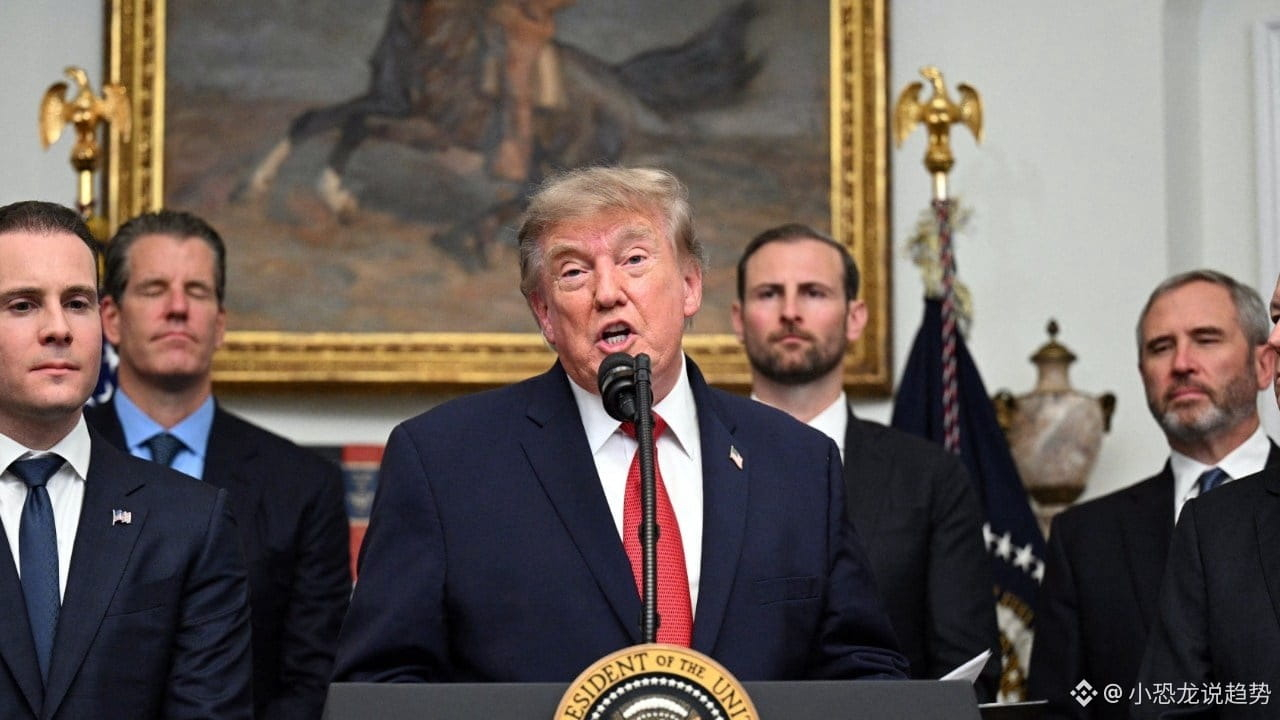
The White House meeting is over, and crypto market regulation is about to be implemented. This isn’t something I said—it was stated directly by Ripple’s CEO. Last week, he went into the White House and met with Trump, along with regulatory agencies and Wall Street bigwigs. After the meeting, he said, “The big direction has never been this clear.”
He also threw out a data point: In the U.S., 67 million people hold crypto assets—about 1 in every 4 adults. Once that number comes out, who still dares to say crypto is niche? Politicians might not say it out loud, but in their hearts they’re all calculating votes.
On August 20, the CFTC launched its first Innovation Advisory Committee, with everyone showing up—Nasdaq, CME, the NYSE, and clearing houses included. Crypto and traditional finance sat at the same table. Ripple’s CEO said everyone agreed: the rules written for the old era don’t fit the industry today. This single line carries a lot of information—it also suggests Wall Street is pushing to get the rules set quickly.
He said he started writing open letters to Congress back in 2019, calling for this for seven years. Now he’s finally seeing some light. But don’t get too excited yet— the CLARITY Act is still stuck in the Senate. There are still a bunch of objections on the Democratic side. When it comes to voting—whether it will pass or not—everything is still a question mark.
My take: regulation rolling out is a long-term positive for the industry. Where there are rules, there’s room for big money to move in. But as for Washington’s efficiency—we all understand. Today they say it’s almost here; tomorrow it might be delayed again. So you can stay optimistic about the news, but don’t get too carried away when it comes to trading and positioning.
One more reminder: regulatory tailwinds are the easiest thing to turn into emotion-driven spikes. Before implementation, every round of “signals” can get market participants trading the hype. Make sure you get the timing right—don’t be the last one in line to take the baton.
Question: Do you think this Congress will pass the CLARITY Act? Leave your judgment in the comments.
Click the avatar to watch the live stream.
Every day, I’ll take you to follow key crypto regulation developments— not just what happens in the news, but also the logic and opportunities behind it 👉🦖
#加密监管 #CLARITY
He also threw out a data point: In the U.S., 67 million people hold crypto assets—about 1 in every 4 adults. Once that number comes out, who still dares to say crypto is niche? Politicians might not say it out loud, but in their hearts they’re all calculating votes.
On August 20, the CFTC launched its first Innovation Advisory Committee, with everyone showing up—Nasdaq, CME, the NYSE, and clearing houses included. Crypto and traditional finance sat at the same table. Ripple’s CEO said everyone agreed: the rules written for the old era don’t fit the industry today. This single line carries a lot of information—it also suggests Wall Street is pushing to get the rules set quickly.
He said he started writing open letters to Congress back in 2019, calling for this for seven years. Now he’s finally seeing some light. But don’t get too excited yet— the CLARITY Act is still stuck in the Senate. There are still a bunch of objections on the Democratic side. When it comes to voting—whether it will pass or not—everything is still a question mark.
My take: regulation rolling out is a long-term positive for the industry. Where there are rules, there’s room for big money to move in. But as for Washington’s efficiency—we all understand. Today they say it’s almost here; tomorrow it might be delayed again. So you can stay optimistic about the news, but don’t get too carried away when it comes to trading and positioning.
One more reminder: regulatory tailwinds are the easiest thing to turn into emotion-driven spikes. Before implementation, every round of “signals” can get market participants trading the hype. Make sure you get the timing right—don’t be the last one in line to take the baton.
Question: Do you think this Congress will pass the CLARITY Act? Leave your judgment in the comments.
Click the avatar to watch the live stream.
Every day, I’ll take you to follow key crypto regulation developments— not just what happens in the news, but also the logic and opportunities behind it 👉🦖
#加密监管 #CLARITY
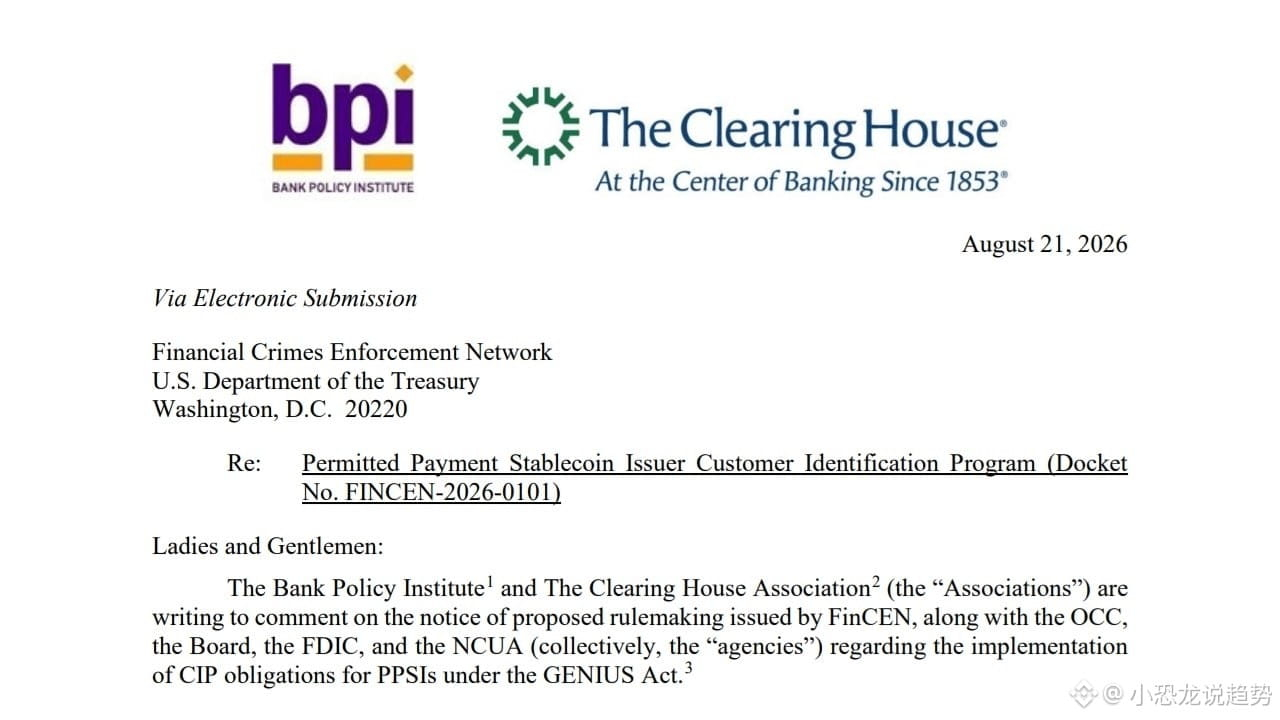
Big Banks Team Up to Pressure: Identity Checks for the Secondary Market of Stablecoins Are Coming
Major Wall Street banks have spoken out collectively, demanding that identity verification also be carried out for stablecoin trading in the secondary market. As soon as the news broke, the guys who used to anonymously trade stablecoins all started to feel a tight pinch in their chests.
Let’s first clarify what’s happening. Several major banks have jointly提出要求, saying that for stablecoins, even secondary trades on exchanges and in over-the-counter markets must implement KYC identity verification. It can’t be that they only vet the issuance stage; when people pass them around and buy or sell them directly, it shouldn’t be wide open. Their stated reason is to prevent illegal fund flows and terrorist financing—and to close regulatory blind spots that allow money to move without oversight.
In plain terms: in the past, stablecoins were checked strictly at the issuance end, but after redemption they were traded around in the market, and basically no one managed it. Banks see this as a loophole and want the entire chain to be实名.
The impact isn’t small. Stablecoins are, after all, a hard currency in the crypto world. Massive trading volumes happen every day, and many people are used to treating them like cash. Suddenly requiring identity checks for every transfer adds an extra step to operations.
My view has two layers. First, from the long-term perspective of the industry, this might not be a bad thing. Clearer regulation means institutional capital will dare to enter the market at scale. If banks are willing to put in effort to standardize this market, it shows that stablecoins have become important enough that they can’t ignore them. Second, from the privacy perspective, I’ll admit it’s pretty painful. The foundation of standing in the crypto world is permissionless access. Now it’s gradually moving toward traditional finance, and it’s normal that old players aren’t used to it.
But the bigger trend can’t be stopped. Stablecoins are becoming a global payment infrastructure. The more important something is, the stricter the regulation tends to be—this is the necessary path for every mature industry. Paper money didn’t escape mandatory identification rules back then either. How could digital dollars?
The smart approach isn’t confrontation, but adaptation in advance. If it needs to be identified, then do it. If it needs to be reported, then report it. Truly valuable assets have never been afraid of being seen. It’s the money that can’t stand the light that will panic.
Let’s talk in the comments: stablecoins being fully实名—do you support it or oppose it? Do you think this will be a prelude to mainstreaming across the industry?
Click the avatar to watch the live stream
Every day, I’ll help you track stablecoin hot topics—not just what’s happening in the news, but also the logic and opportunities behind it 👉🦖
#稳定币 #监管
Major Wall Street banks have spoken out collectively, demanding that identity verification also be carried out for stablecoin trading in the secondary market. As soon as the news broke, the guys who used to anonymously trade stablecoins all started to feel a tight pinch in their chests.
Let’s first clarify what’s happening. Several major banks have jointly提出要求, saying that for stablecoins, even secondary trades on exchanges and in over-the-counter markets must implement KYC identity verification. It can’t be that they only vet the issuance stage; when people pass them around and buy or sell them directly, it shouldn’t be wide open. Their stated reason is to prevent illegal fund flows and terrorist financing—and to close regulatory blind spots that allow money to move without oversight.
In plain terms: in the past, stablecoins were checked strictly at the issuance end, but after redemption they were traded around in the market, and basically no one managed it. Banks see this as a loophole and want the entire chain to be实名.
The impact isn’t small. Stablecoins are, after all, a hard currency in the crypto world. Massive trading volumes happen every day, and many people are used to treating them like cash. Suddenly requiring identity checks for every transfer adds an extra step to operations.
My view has two layers. First, from the long-term perspective of the industry, this might not be a bad thing. Clearer regulation means institutional capital will dare to enter the market at scale. If banks are willing to put in effort to standardize this market, it shows that stablecoins have become important enough that they can’t ignore them. Second, from the privacy perspective, I’ll admit it’s pretty painful. The foundation of standing in the crypto world is permissionless access. Now it’s gradually moving toward traditional finance, and it’s normal that old players aren’t used to it.
But the bigger trend can’t be stopped. Stablecoins are becoming a global payment infrastructure. The more important something is, the stricter the regulation tends to be—this is the necessary path for every mature industry. Paper money didn’t escape mandatory identification rules back then either. How could digital dollars?
The smart approach isn’t confrontation, but adaptation in advance. If it needs to be identified, then do it. If it needs to be reported, then report it. Truly valuable assets have never been afraid of being seen. It’s the money that can’t stand the light that will panic.
Let’s talk in the comments: stablecoins being fully实名—do you support it or oppose it? Do you think this will be a prelude to mainstreaming across the industry?
Click the avatar to watch the live stream
Every day, I’ll help you track stablecoin hot topics—not just what’s happening in the news, but also the logic and opportunities behind it 👉🦖
#稳定币 #监管
Clarity Act in Jeopardy: the CFTC Chair rolls up his sleeves and takes matters into his own hands
Over in the Senate, the Clarity Act is still hanging in midair. Chances are it won’t get passed this week either. But the CFTC chair has already spoken ahead of time and issued strict instructions to his staff—preparing to bypass Congress and move ahead with drafting crypto regulatory rules himself.
This is a smart play. While Congress stalls and bickers, regulators can’t just sit back and do nothing. If legislation can’t move forward, then use existing authority to put rules in place first—so the crypto industry doesn’t keep living in a gray area.
The CFTC’s plan is clear: if things drag on, industry chaos will only grow. Rather than waiting to argue with Congress, it’s better to get what it can regulate under control first. Exchanges, derivatives, clearing—these have long been the CFTC’s turf. Make the rules take effect now, and then fill in the rest with legislation later.
For the industry, this is actually a good thing. Rules are better than no rules. What regulators fear most isn’t strict regulation—it’s uncertainty. Once the rules are finalized, compliance costs become predictable, and only then will big capital dare to enter.
But there’s also risk. If regulators move ahead too quickly, they may end up clashing with what Congress legislates. If the standards end up inconsistent, exchanges would have to comply with two sets of rules at once—costs would jump immediately.
So the likely script now is: Congress can’t be relied on. The administrative agencies will have to step in. The path for crypto regulation will most likely involve a transition period where rules are set while laws are gradually added later.
Do you think regulators moving ahead early is good news or bad news for coin prices? Let’s discuss in the comments.
Click the avatar to watch the live stream
Every day, I’ll guide you to follow regulatory hotspots—not just what happens in the news, but also how to understand the underlying logic and opportunities 👉🦖
#监管 #Clarity
Over in the Senate, the Clarity Act is still hanging in midair. Chances are it won’t get passed this week either. But the CFTC chair has already spoken ahead of time and issued strict instructions to his staff—preparing to bypass Congress and move ahead with drafting crypto regulatory rules himself.
This is a smart play. While Congress stalls and bickers, regulators can’t just sit back and do nothing. If legislation can’t move forward, then use existing authority to put rules in place first—so the crypto industry doesn’t keep living in a gray area.
The CFTC’s plan is clear: if things drag on, industry chaos will only grow. Rather than waiting to argue with Congress, it’s better to get what it can regulate under control first. Exchanges, derivatives, clearing—these have long been the CFTC’s turf. Make the rules take effect now, and then fill in the rest with legislation later.
For the industry, this is actually a good thing. Rules are better than no rules. What regulators fear most isn’t strict regulation—it’s uncertainty. Once the rules are finalized, compliance costs become predictable, and only then will big capital dare to enter.
But there’s also risk. If regulators move ahead too quickly, they may end up clashing with what Congress legislates. If the standards end up inconsistent, exchanges would have to comply with two sets of rules at once—costs would jump immediately.
So the likely script now is: Congress can’t be relied on. The administrative agencies will have to step in. The path for crypto regulation will most likely involve a transition period where rules are set while laws are gradually added later.
Do you think regulators moving ahead early is good news or bad news for coin prices? Let’s discuss in the comments.
Click the avatar to watch the live stream
Every day, I’ll guide you to follow regulatory hotspots—not just what happens in the news, but also how to understand the underlying logic and opportunities 👉🦖
#监管 #Clarity

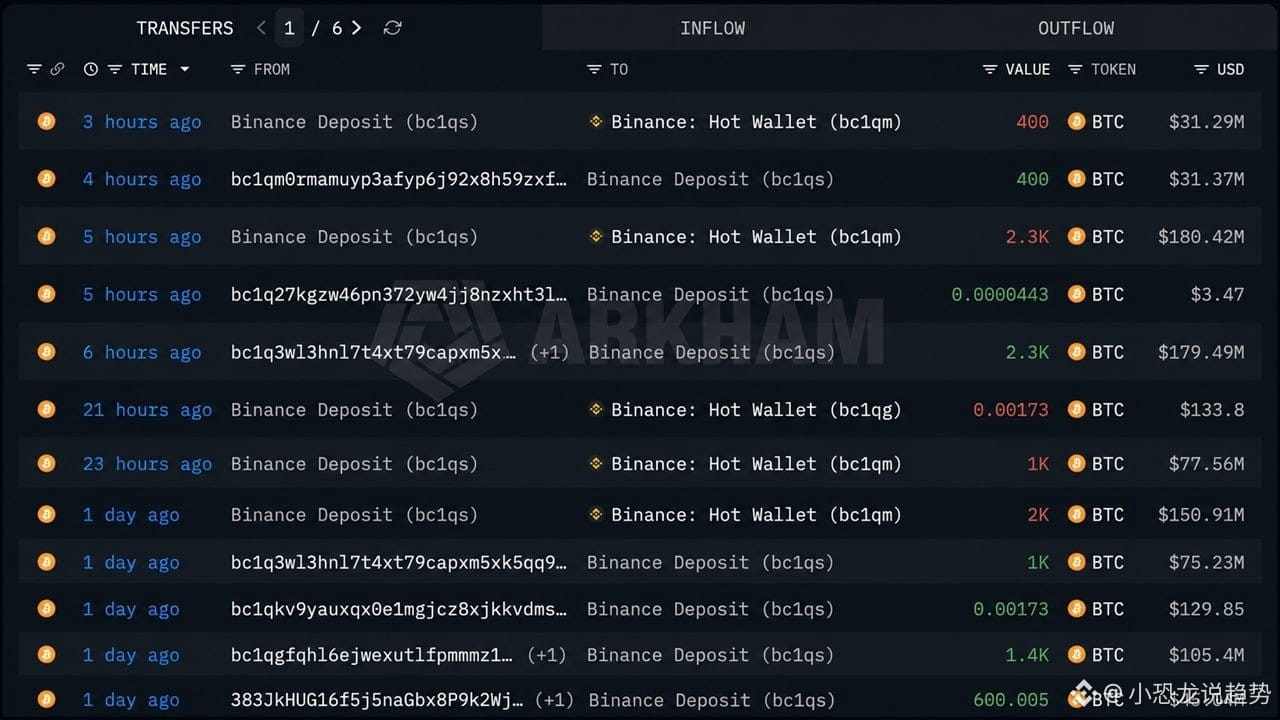
A mysterious whale sold $576 million worth of Bitcoin in one go
Bitcoin has just pushed close to $80,000, and a mysterious whale suddenly shows up to unload—$576 million—hitting the market all at once. On-chain data is crystal clear: the wallet address is of unknown origin, with its identity still a mystery.
This move is timed so precisely—right at the key level where Bitcoin is breaking toward $80,000. If the whale is selling at this spot, it’s either taking profits or sensing strong resistance above and choosing to get out first.
What does $576 million mean? It’s equivalent to several days’ worth of net ETF inflows. “One whale falls, and all things prosper”—meanwhile, retail investors are still shouting about $80,000, but the whale has already cashed out and slipped away.
But don’t panic yet. A whale unloading doesn’t mean the bull market is over. In past breakout attempts, big players have often gotten off early. The key is how strong the “buyer at the other end” is. As long as ETF inflows keep coming and new funds can absorb the selling pressure, the dump is just a paper tiger.
There’s another on-chain detail worth watching: this whale’s distribution method is very covert—transferring funds in batches and routing them through different addresses. It clearly looks like professional team execution, not a panicked retail-style liquidation. An organized sell-off actually suggests they’re being rational, not bearish—just locking in gains.
So the situation now is this: the bulls want to hold the line at $80,000, while the whale wants to cut its position. Who wins? Watch the trading volume and ETF data over the next 24 hours.
Which side are you on? $80,000: whale on the run, or retail taking over? Chat in the comments.
Click the avatar to watch the live stream.
Every day, I’ll bring you to follow Bitcoin hotspots—showing you not only what happened in the news, but also the logic and opportunities behind it 👉🦖
#比特币 #giant whale
Bitcoin has just pushed close to $80,000, and a mysterious whale suddenly shows up to unload—$576 million—hitting the market all at once. On-chain data is crystal clear: the wallet address is of unknown origin, with its identity still a mystery.
This move is timed so precisely—right at the key level where Bitcoin is breaking toward $80,000. If the whale is selling at this spot, it’s either taking profits or sensing strong resistance above and choosing to get out first.
What does $576 million mean? It’s equivalent to several days’ worth of net ETF inflows. “One whale falls, and all things prosper”—meanwhile, retail investors are still shouting about $80,000, but the whale has already cashed out and slipped away.
But don’t panic yet. A whale unloading doesn’t mean the bull market is over. In past breakout attempts, big players have often gotten off early. The key is how strong the “buyer at the other end” is. As long as ETF inflows keep coming and new funds can absorb the selling pressure, the dump is just a paper tiger.
There’s another on-chain detail worth watching: this whale’s distribution method is very covert—transferring funds in batches and routing them through different addresses. It clearly looks like professional team execution, not a panicked retail-style liquidation. An organized sell-off actually suggests they’re being rational, not bearish—just locking in gains.
So the situation now is this: the bulls want to hold the line at $80,000, while the whale wants to cut its position. Who wins? Watch the trading volume and ETF data over the next 24 hours.
Which side are you on? $80,000: whale on the run, or retail taking over? Chat in the comments.
Click the avatar to watch the live stream.
Every day, I’ll bring you to follow Bitcoin hotspots—showing you not only what happened in the news, but also the logic and opportunities behind it 👉🦖
#比特币 #giant whale
Game Platform Hacked: Bridge Shut Down and Directly “Welded”
Last night, The Sandbox suddenly stopped its bridge connections for Base and BNB Chain. The reason: it was hit by an attack. The official said the impact would not reach even 0.01% of the total supply. But in order to isolate the tokens, they cut it off first—also reminding users not to trade SAND across the two chains.
Bridging and cross-chain—doesn’t this script feel familiar? Every time something goes wrong, the bridge is the first to suffer. This time, even the game platform’s bridge couldn’t escape.
The official wording is also very standard: first say the impact is small, then urge everyone not to panic. But the real issue is that once the bridge is down, part of the assets a user has on-chain becomes effectively locked—can’t be withdrawn. That’s what really hurts.
0.01% doesn’t sound like much, but if an attacker succeeds just once, the method can be replicated. The last time a cross-chain bridge was stolen from, it also started with a small gap. So don’t say the official response is too extreme. Cutting the bridge to save lives is better than letting hackers empty everything.
This also serves as a reminder for everyone who plays on-chain games: your assets are, in essence, stored in someone else’s contract. If the project team makes a single decision, your tokens can’t move. These are not “your keys, your coins”—this is the project’s contract. Your coins are locked by the project’s contract.
“Game + On-chain + Assets”—put these three together and the risk factor goes straight up. If you’re going to play, stick to the top-tier projects. No matter how sweet the promises from small projects sound, don’t stake your whole fortune on them.
When do you think bridge attacks can be fully cured? Chat in the comments.
Click the avatar to watch the livestream
Every day, I’ll help you track security hotspots—not just news about what happened, but also how to understand the logic and opportunities behind it 👉🦖
#Sandbox #安全
Last night, The Sandbox suddenly stopped its bridge connections for Base and BNB Chain. The reason: it was hit by an attack. The official said the impact would not reach even 0.01% of the total supply. But in order to isolate the tokens, they cut it off first—also reminding users not to trade SAND across the two chains.
Bridging and cross-chain—doesn’t this script feel familiar? Every time something goes wrong, the bridge is the first to suffer. This time, even the game platform’s bridge couldn’t escape.
The official wording is also very standard: first say the impact is small, then urge everyone not to panic. But the real issue is that once the bridge is down, part of the assets a user has on-chain becomes effectively locked—can’t be withdrawn. That’s what really hurts.
0.01% doesn’t sound like much, but if an attacker succeeds just once, the method can be replicated. The last time a cross-chain bridge was stolen from, it also started with a small gap. So don’t say the official response is too extreme. Cutting the bridge to save lives is better than letting hackers empty everything.
This also serves as a reminder for everyone who plays on-chain games: your assets are, in essence, stored in someone else’s contract. If the project team makes a single decision, your tokens can’t move. These are not “your keys, your coins”—this is the project’s contract. Your coins are locked by the project’s contract.
“Game + On-chain + Assets”—put these three together and the risk factor goes straight up. If you’re going to play, stick to the top-tier projects. No matter how sweet the promises from small projects sound, don’t stake your whole fortune on them.
When do you think bridge attacks can be fully cured? Chat in the comments.
Click the avatar to watch the livestream
Every day, I’ll help you track security hotspots—not just news about what happened, but also how to understand the logic and opportunities behind it 👉🦖
#Sandbox #安全

ZEC soars 47% in one day—privacy coin sector completely goes wild
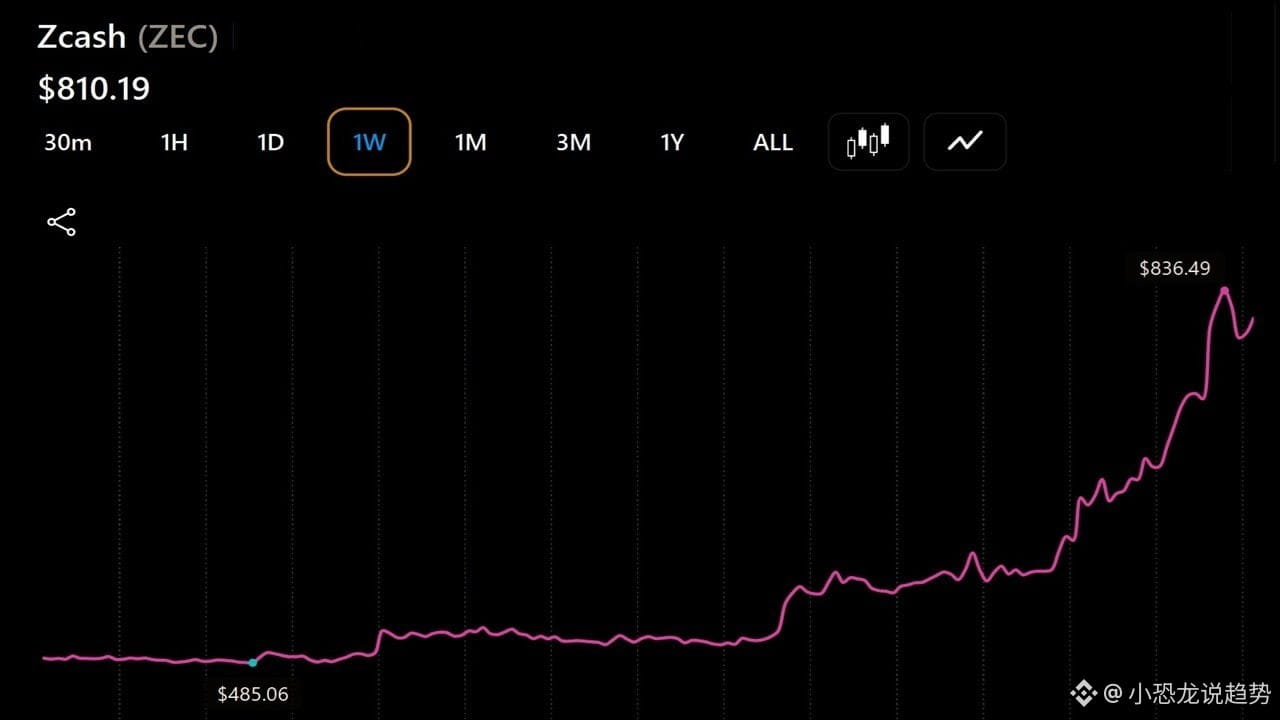
August 22 — Privacy coin Zcash jumps 47% in a single day, once surging to $836. Even as it pulls back, it stays around $810, becoming the best performer of the entire session.
Bitcoin Cash (BCH) follows up, rising 31% to break above $299. Cardano (ADA) is up 19%, Dogecoin (DOGE) up 17.7%, Stellar (XLM) up 16%, Chainlink (LINK) up 13%, and even “HYPE” joins the party, surging 12%.
This run isn’t a positive catalyst for a single project—it’s a broad rally. The whole market is green. It feels more like a liquidity injection than anything like project-specific news.
Why is ZEC so strong? The key driving force is Grayscale. Grayscale has applied to convert its Zcash trust into a spot ETF. If approved, this would become the first U.S. privacy-coin ETF. The upside imagination is unlimited.
This narrative has been brewing since early August. Back then, ZEC surged to $686, then hit a wave of coordinated selling—an estimated $28 million in daily liquidations, washing out the market—before continuing higher.
Now ZEC’s market cap is nearing $10.8 billion. A year ago it drew little attention. Now it’s become the best-looking coin in the crypto market. All I can say is: when you tell a good story, people are willing to buy.
Ethereum is also up this week by 18%, once breaking above $2,250. Overall, the main theme of this altcoin-led rally comes down to two things: the Treasury’s share-buyback “water release,” plus the market’s expectations for regulatory clarity under the Clarity bill.
But don’t get too excited. Analysts warn that this kind of broad-based rally is often accompanied by high leverage— the faster it rises, the scarier the pullback can be afterward. Leverage is a double-edged sword: it magnifies not only returns, but also risk.
The good news is that trading volume is rising in sync, suggesting this rally has real buy-side support—not a false breakout caused by weekend liquidity drying up.
Privacy-coin ETFs with looser U.S. regulation, easier liquidity, and three lines stacking together—you decide which side you’re on.
Chat in the comments: Is this ZEC move about value discovery or emotional/speculative trading? I’ll say it first—I choose to watch and join the conversation, but I’m quietly paying attention.
Click the avatar to watch the live stream.
Every day, I’ll help you track ZEC hotspots—not just what’s happening in the news, but also the logic and opportunities behind it 👉🦖
#ZEC #privacy coin
August 22 — Privacy coin Zcash jumps 47% in a single day, once surging to $836. Even as it pulls back, it stays around $810, becoming the best performer of the entire session.
Bitcoin Cash (BCH) follows up, rising 31% to break above $299. Cardano (ADA) is up 19%, Dogecoin (DOGE) up 17.7%, Stellar (XLM) up 16%, Chainlink (LINK) up 13%, and even “HYPE” joins the party, surging 12%.
This run isn’t a positive catalyst for a single project—it’s a broad rally. The whole market is green. It feels more like a liquidity injection than anything like project-specific news.
Why is ZEC so strong? The key driving force is Grayscale. Grayscale has applied to convert its Zcash trust into a spot ETF. If approved, this would become the first U.S. privacy-coin ETF. The upside imagination is unlimited.
This narrative has been brewing since early August. Back then, ZEC surged to $686, then hit a wave of coordinated selling—an estimated $28 million in daily liquidations, washing out the market—before continuing higher.
Now ZEC’s market cap is nearing $10.8 billion. A year ago it drew little attention. Now it’s become the best-looking coin in the crypto market. All I can say is: when you tell a good story, people are willing to buy.
Ethereum is also up this week by 18%, once breaking above $2,250. Overall, the main theme of this altcoin-led rally comes down to two things: the Treasury’s share-buyback “water release,” plus the market’s expectations for regulatory clarity under the Clarity bill.
But don’t get too excited. Analysts warn that this kind of broad-based rally is often accompanied by high leverage— the faster it rises, the scarier the pullback can be afterward. Leverage is a double-edged sword: it magnifies not only returns, but also risk.
The good news is that trading volume is rising in sync, suggesting this rally has real buy-side support—not a false breakout caused by weekend liquidity drying up.
Privacy-coin ETFs with looser U.S. regulation, easier liquidity, and three lines stacking together—you decide which side you’re on.
Chat in the comments: Is this ZEC move about value discovery or emotional/speculative trading? I’ll say it first—I choose to watch and join the conversation, but I’m quietly paying attention.
Click the avatar to watch the live stream.
Every day, I’ll help you track ZEC hotspots—not just what’s happening in the news, but also the logic and opportunities behind it 👉🦖
#ZEC #privacy coin
Bitcoin surges by $10,000 in a week—$3 billion worth of shorts liquidated
Over the past seven days, Bitcoin jumped straight from around 67,000 to above 77,000, gaining $10,000 in a single week. Intraday, it even briefly touched 79,500, setting a new high since May.
The trigger was the U.S. Department of the Treasury pulling out a big move: it raised the cap on the long-term Treasury securities buyback/repo program from $2 billion to $4 billion—effectively injecting more liquidity into the market. The yield on the 10-year U.S. Treasury note promptly fell by 6 basis points, while the 30-year fell by 9 basis points.
With more money in the system, a scarce asset like Bitcoin was the first to rush in. Bernstein analyst directly pointed out that the strongest catalyst for this breakout rally was the Treasury’s repo program for long-dated bonds.
Amid the surge, shorts became the biggest victims. In 24 hours, the entire market saw roughly $3 billion in liquidations. About 172,000 short sellers were forced to close positions. This was the most brutal short squeeze since 2021—directly breaking the record set on Oct. 24 last year of 2.47 billion.
At one point, Bitcoin surged by 11% in a single day. The more shorts got squeezed, the higher the price climbed; the higher the price climbed, the more shorts got squeezed—a classic short-squeeze spiral.
And this rally also got a policy assist. Within the same time window, Trump publicly urged Congress to advance the Clarity Act, and he held a meeting at the White House with CEOs of major firms such as Coinbase and Robinhood. Although no specific policy was announced, the stance was made very clear.
Now, the entire market’s focus is on the $80,000 level. There’s only one step left to full recovery—break through it, and Bitcoin would stand above $80,000 for the first time since May.
With looser liquidity and improving regulation, two engines are firing at the same time. This run is driven purely by a macro narrative.
The question is: will you push through the $80,000 level?
Drop a comment in the comment section—are we breaking above $80,000 and opening up new room, or is it another round of a high and then a pullback? Anyway, I’m ready for the drama.
Click the profile picture to watch the live stream.
Every day, I’ll bring you news on Bitcoin hotspots—not just what happened, but also the logic and opportunities behind it 👉🦖
#比特币 #BTC
Over the past seven days, Bitcoin jumped straight from around 67,000 to above 77,000, gaining $10,000 in a single week. Intraday, it even briefly touched 79,500, setting a new high since May.
The trigger was the U.S. Department of the Treasury pulling out a big move: it raised the cap on the long-term Treasury securities buyback/repo program from $2 billion to $4 billion—effectively injecting more liquidity into the market. The yield on the 10-year U.S. Treasury note promptly fell by 6 basis points, while the 30-year fell by 9 basis points.
With more money in the system, a scarce asset like Bitcoin was the first to rush in. Bernstein analyst directly pointed out that the strongest catalyst for this breakout rally was the Treasury’s repo program for long-dated bonds.
Amid the surge, shorts became the biggest victims. In 24 hours, the entire market saw roughly $3 billion in liquidations. About 172,000 short sellers were forced to close positions. This was the most brutal short squeeze since 2021—directly breaking the record set on Oct. 24 last year of 2.47 billion.
At one point, Bitcoin surged by 11% in a single day. The more shorts got squeezed, the higher the price climbed; the higher the price climbed, the more shorts got squeezed—a classic short-squeeze spiral.
And this rally also got a policy assist. Within the same time window, Trump publicly urged Congress to advance the Clarity Act, and he held a meeting at the White House with CEOs of major firms such as Coinbase and Robinhood. Although no specific policy was announced, the stance was made very clear.
Now, the entire market’s focus is on the $80,000 level. There’s only one step left to full recovery—break through it, and Bitcoin would stand above $80,000 for the first time since May.
With looser liquidity and improving regulation, two engines are firing at the same time. This run is driven purely by a macro narrative.
The question is: will you push through the $80,000 level?
Drop a comment in the comment section—are we breaking above $80,000 and opening up new room, or is it another round of a high and then a pullback? Anyway, I’m ready for the drama.
Click the profile picture to watch the live stream.
Every day, I’ll bring you news on Bitcoin hotspots—not just what happened, but also the logic and opportunities behind it 👉🦖
#比特币 #BTC
Wall Street goes on a five-day buying spree, snapping up $1.92 billion in Bitcoin ETFs—pure chaos
Friday closed entirely green again. Bitcoin ETFs saw net inflows of $307 million, completing five consecutive trading days of net inflows. In total over five days, that’s $1.92 billion. The pace is a little frightening.
BlackRock’s IBIT alone contributed $239 million, accounting for 77% of that day’s inflows. Fidelity’s FBTC followed with $30.19 million. Grayscale’s Bitcoin Mini Trust brought in $13.62 million. Bitwise’s BITB: $9.21 million. Even Morgan Stanley’s MSBT is buying.
The key point: zero outflows. All seven Bitcoin ETFs posted net inflows—no redemptions at all. This is a picture that would have been unthinkable last month.
Ethereum ETFs are also on a five-day winning streak. On Friday they pulled in another $185 million, bringing the weekly total to $697 million. BlackRock’s ETHA dominates with 82%, and that comes to 1.5083 million shares—wait, that’s $150.83 million.
XRP and SOL ETFs also aren’t idle. XRP attracted $18.38 million, and SOL added $10.07 million. With both of them getting swept up by institutions, it shows this isn’t a single-asset move. The whole sector is being repriced.
Total assets in Bitcoin ETFs have already hit $96.07 billion. Just one step away from the $100 billion threshold. Daily trading volume is $6.37 billion. This doesn’t look like a bear market at all.
A month ago, BTC was still sitting around 63,000. Everyone kept saying ETFs were the bag-holder. Now they’ve gone on a frenzy for $192 million over five days—boom, slap in the face. Institutions aren’t not buying; they’re waiting for discounts.
Behind this buying wave is a liquidity logic: the U.S. Treasury doubled the limit on long-term Treasury buybacks to $4 billion. There’s more money in the market now. Bitcoin, as a hedging tool, gets to take the first bite.
Now the only suspense is whether the $100 billion mark can be taken in one go. At this inflow pace, the jump from $96 to $100 billion could take just three or four days.
Have you been following this wave, or are you still watching from the sidelines?
Chat in the comments—how many more days do you think ETF inflows can last? My guess: at least five days. Don’t ask me why—just ask why: Wall Street is voting with real money.
Click the profile icon to watch the live stream.
Every day, I’ll help you track ETF funding hotspots—more than just news—so you can understand the logic and opportunities behind it 👉🦖
#比特币 #ETF
Friday closed entirely green again. Bitcoin ETFs saw net inflows of $307 million, completing five consecutive trading days of net inflows. In total over five days, that’s $1.92 billion. The pace is a little frightening.
BlackRock’s IBIT alone contributed $239 million, accounting for 77% of that day’s inflows. Fidelity’s FBTC followed with $30.19 million. Grayscale’s Bitcoin Mini Trust brought in $13.62 million. Bitwise’s BITB: $9.21 million. Even Morgan Stanley’s MSBT is buying.
The key point: zero outflows. All seven Bitcoin ETFs posted net inflows—no redemptions at all. This is a picture that would have been unthinkable last month.
Ethereum ETFs are also on a five-day winning streak. On Friday they pulled in another $185 million, bringing the weekly total to $697 million. BlackRock’s ETHA dominates with 82%, and that comes to 1.5083 million shares—wait, that’s $150.83 million.
XRP and SOL ETFs also aren’t idle. XRP attracted $18.38 million, and SOL added $10.07 million. With both of them getting swept up by institutions, it shows this isn’t a single-asset move. The whole sector is being repriced.
Total assets in Bitcoin ETFs have already hit $96.07 billion. Just one step away from the $100 billion threshold. Daily trading volume is $6.37 billion. This doesn’t look like a bear market at all.
A month ago, BTC was still sitting around 63,000. Everyone kept saying ETFs were the bag-holder. Now they’ve gone on a frenzy for $192 million over five days—boom, slap in the face. Institutions aren’t not buying; they’re waiting for discounts.
Behind this buying wave is a liquidity logic: the U.S. Treasury doubled the limit on long-term Treasury buybacks to $4 billion. There’s more money in the market now. Bitcoin, as a hedging tool, gets to take the first bite.
Now the only suspense is whether the $100 billion mark can be taken in one go. At this inflow pace, the jump from $96 to $100 billion could take just three or four days.
Have you been following this wave, or are you still watching from the sidelines?
Chat in the comments—how many more days do you think ETF inflows can last? My guess: at least five days. Don’t ask me why—just ask why: Wall Street is voting with real money.
Click the profile icon to watch the live stream.
Every day, I’ll help you track ETF funding hotspots—more than just news—so you can understand the logic and opportunities behind it 👉🦖
#比特币 #ETF

Two ETH whale ‘runaways’ slip out on the same day, $63 million dumped into the market
On August 21, on-chain tracking tools kept triggering back-to-back alerts. A well-known whale, 7 Siblings, and a mysterious wallet together dumped a total of $63 million worth of ETH and staked ETH within a few hours.
First, the main character: 7 Siblings directly sold 14,000 ETH, cashing out $32.85 million at an average price of $2,346.
This guy has long been an on-chain veteran—since 2024, analysts have been monitoring him. His style is very consistent: he buys the dip when the market drops, then makes large-scale exits when prices rise. At the peak, he allegedly held around 1.15 million ETH worth about $2.8 billion—definitely an ETH billionaire.
Back in August 2025, he even made the news for transferring $47 million to a new wallet and selling it all within minutes. This time the playbook is identical—pure routine, not panic.
The second wallet, 0xFD10, sold 11,252 stETH plus 1,824 ETH, receiving $30.78 million USDT in return. This wallet hasn’t previously been tracked in detail, and its motivation remains a mystery.
ETH is still hovering around 2,350, up from about 2,286 a few hours ago. That suggests the market managed to withstand these two major sell-offs—there wasn’t a free fall.
Even more interesting is the group behavior behind this. Earlier this month, a whale cut losses after staking for three years, taking a single loss of $19 million. In May, another wallet sold 55,000 ETH plus 9,442 wstETH in one go, cashing out $136 million.
Long-term holders and swing traders are both trimming positions as rebounds and price stabilization present opportunities. These people say they believe in the project—but their actions are very honest.
But look at what 7 Siblings did: buy when it drops, sell when it rises. They’re treating ETH like an ATM—using it with full clarity.
For retail investors, a whale unloading isn’t necessarily the end of the world. In the past, these wallets often sell off and then buy back again. What really matters is the 2,300 level: if it breaks down, the 2,000 handle is already beckoning. If it holds, then today’s two moves are just routine profit-taking.
Do you think this is locking in gains—or a signal before more selling? Tell us your thoughts in the comments.
Click the avatar to watch the live stream
Every day I’ll take you to follow Ethereum highlights—seeing not only what happens, but also understanding the logic and opportunities behind it 👉🦖
#以太坊 #ETH
On August 21, on-chain tracking tools kept triggering back-to-back alerts. A well-known whale, 7 Siblings, and a mysterious wallet together dumped a total of $63 million worth of ETH and staked ETH within a few hours.
First, the main character: 7 Siblings directly sold 14,000 ETH, cashing out $32.85 million at an average price of $2,346.
This guy has long been an on-chain veteran—since 2024, analysts have been monitoring him. His style is very consistent: he buys the dip when the market drops, then makes large-scale exits when prices rise. At the peak, he allegedly held around 1.15 million ETH worth about $2.8 billion—definitely an ETH billionaire.
Back in August 2025, he even made the news for transferring $47 million to a new wallet and selling it all within minutes. This time the playbook is identical—pure routine, not panic.
The second wallet, 0xFD10, sold 11,252 stETH plus 1,824 ETH, receiving $30.78 million USDT in return. This wallet hasn’t previously been tracked in detail, and its motivation remains a mystery.
ETH is still hovering around 2,350, up from about 2,286 a few hours ago. That suggests the market managed to withstand these two major sell-offs—there wasn’t a free fall.
Even more interesting is the group behavior behind this. Earlier this month, a whale cut losses after staking for three years, taking a single loss of $19 million. In May, another wallet sold 55,000 ETH plus 9,442 wstETH in one go, cashing out $136 million.
Long-term holders and swing traders are both trimming positions as rebounds and price stabilization present opportunities. These people say they believe in the project—but their actions are very honest.
But look at what 7 Siblings did: buy when it drops, sell when it rises. They’re treating ETH like an ATM—using it with full clarity.
For retail investors, a whale unloading isn’t necessarily the end of the world. In the past, these wallets often sell off and then buy back again. What really matters is the 2,300 level: if it breaks down, the 2,000 handle is already beckoning. If it holds, then today’s two moves are just routine profit-taking.
Do you think this is locking in gains—or a signal before more selling? Tell us your thoughts in the comments.
Click the avatar to watch the live stream
Every day I’ll take you to follow Ethereum highlights—seeing not only what happens, but also understanding the logic and opportunities behind it 👉🦖
#以太坊 #ETH
Coinbase CEO Makes a Statement: Crypto Regulation Can’t Be Dodged This Time
Brian Armstrong steps out to steady the market, saying regulatory clarity will come no matter what. Two paths—pick one.
First: On September 15, the Senate will take a procedural vote on the CLARITY bill. Sixty votes are needed to move it forward. The Republicans hold 53 seats—so they must bring at least seven Democratic lawmakers aboard.
Second: If the bill doesn’t make it, on September 16 the CFTC and the SEC will directly issue new rules themselves. The regulators simply don’t want to wait for Congress anymore.
If the bill doesn’t reach 60 votes, it’s not the same as a death sentence—but getting it through this year is basically out of the question. Democrats want stricter ethics provisions and rules for reviewing capital-flow direction. Republicans want certainty. Tug-of-war on both sides has been going on for days, not weeks.
CFTC Chair Selig is already having his team build a crypto-asset market registration category—similar to the existing framework for designated contract markets. Even without new legislation, it can be used. Since January, the SEC and CFTC have been working on Project Crypto. In March, they jointly released an interpretive framework that split digital assets into five categories.
In short: if Congress won’t do the work, regulators will just handle it themselves. In any case, they decide the licensing and the rules.
Armstrong also tossed out a bigger prediction, saying that by 2030 Bitcoin could reach $300,000 to $400,000. The logic is pretty straightforward: institutions adopt as prices rise; supply is fixed; and regulatory clarity keeps increasing.
This guy is a typical hype-driven CEO—calling for regulation to land while quadrupling his coin-price target. But you know what? His thinking is actually right. What the crypto industry has been missing isn’t technology—it’s certainty. Only when rules are implemented will capital be willing to move in at scale.
The question is: do you think those 60 votes can be assembled on September 15? If they can’t be, will the September 16 regulatory rules be a positive or a negative? Hard to say. Sometimes when rules finally land, it’s actually “bad news is gone.”
In the comments, let’s discuss: are you on the side of the Senate, or on the side of the CFTC?
Click the profile icon to watch the livestream.
Every day, I’ll bring you insights into regulatory policy hot topics—not just what happens in the news, but also the logic and opportunities behind it 👉🦖
#比特币 #regulation
Brian Armstrong steps out to steady the market, saying regulatory clarity will come no matter what. Two paths—pick one.
First: On September 15, the Senate will take a procedural vote on the CLARITY bill. Sixty votes are needed to move it forward. The Republicans hold 53 seats—so they must bring at least seven Democratic lawmakers aboard.
Second: If the bill doesn’t make it, on September 16 the CFTC and the SEC will directly issue new rules themselves. The regulators simply don’t want to wait for Congress anymore.
If the bill doesn’t reach 60 votes, it’s not the same as a death sentence—but getting it through this year is basically out of the question. Democrats want stricter ethics provisions and rules for reviewing capital-flow direction. Republicans want certainty. Tug-of-war on both sides has been going on for days, not weeks.
CFTC Chair Selig is already having his team build a crypto-asset market registration category—similar to the existing framework for designated contract markets. Even without new legislation, it can be used. Since January, the SEC and CFTC have been working on Project Crypto. In March, they jointly released an interpretive framework that split digital assets into five categories.
In short: if Congress won’t do the work, regulators will just handle it themselves. In any case, they decide the licensing and the rules.
Armstrong also tossed out a bigger prediction, saying that by 2030 Bitcoin could reach $300,000 to $400,000. The logic is pretty straightforward: institutions adopt as prices rise; supply is fixed; and regulatory clarity keeps increasing.
This guy is a typical hype-driven CEO—calling for regulation to land while quadrupling his coin-price target. But you know what? His thinking is actually right. What the crypto industry has been missing isn’t technology—it’s certainty. Only when rules are implemented will capital be willing to move in at scale.
The question is: do you think those 60 votes can be assembled on September 15? If they can’t be, will the September 16 regulatory rules be a positive or a negative? Hard to say. Sometimes when rules finally land, it’s actually “bad news is gone.”
In the comments, let’s discuss: are you on the side of the Senate, or on the side of the CFTC?
Click the profile icon to watch the livestream.
Every day, I’ll bring you insights into regulatory policy hot topics—not just what happens in the news, but also the logic and opportunities behind it 👉🦖
#比特币 #regulation

Bitcoin ETF wows with a one-day net inflow of $827 million—institutions are back
Thursday’s data absolutely blew the roof off: Bitcoin ETFs saw a net inflow of $606 million. Ethereum ETFs pulled in another $221 million. Combined, that’s $827 million—marking the strongest single day of the week.
BlackRock’s IBIT alone gobbled up $503 million, accounting for 82% of that day’s inflows. Fidelity’s FBTC followed with $64.74 million. Bitwise’s BITB added $26.39 million. Even ETFs for SOL, XRP, and HYPE rode the wave—everything was in the green across the board.
Total assets in Bitcoin ETFs have already climbed to $90.16 billion. Daily trading volume hit $5.41 billion. This doesn’t look anything like a bear market.
What’s even more interesting is this: a few days ago, when the coin price was stuck around 63,000, lots of people were saying institutions had fled—“nobody wants the ETFs.” Now the price is back to 77,000, and the money has all come back too—on time, like an alarm clock.
Institutions never really “run.” They just go silent when prices drop, and swipe their cards when prices rise.
From 63,000 to 77,000 in just two days—that’s up 20%. The reason is simple: ETF capital has been buying relentlessly. Retail investors are still debating whether to chase the rally, but institutions have already swept up the discounted shares.
They said ETFs are just a “bag-holder” tool—turns out they’re more like a money-printing machine, dumping real cash into it every day.
BlackRock’s 82% share is also wild—it's like the entire market is watching its every move. The moment it stops, the market will need to catch its breath. This concentration can be dressed up as “consensus,” or—more bluntly—as a “single point of failure.”
The question now is straightforward: how long can these inflows last? Since August began, total net ETF inflows are already close to $2 billion. At this pace, breaking $100 billion in total assets before year-end doesn’t sound like a dream.
Are you waiting for a pullback—or have you already boarded the train?
Drop your thoughts in the comments: how many more days do you think this ETF buying wave can hold up? Anyway, I’m getting my little folding chair ready to watch the show.
Click the profile picture to watch the live stream
Every day, I’ll bring you the ETF money-flow hotspots—not just what’s happening in the news, but also the logic and opportunities behind it 👉🦖
#比特币 #ETF
Thursday’s data absolutely blew the roof off: Bitcoin ETFs saw a net inflow of $606 million. Ethereum ETFs pulled in another $221 million. Combined, that’s $827 million—marking the strongest single day of the week.
BlackRock’s IBIT alone gobbled up $503 million, accounting for 82% of that day’s inflows. Fidelity’s FBTC followed with $64.74 million. Bitwise’s BITB added $26.39 million. Even ETFs for SOL, XRP, and HYPE rode the wave—everything was in the green across the board.
Total assets in Bitcoin ETFs have already climbed to $90.16 billion. Daily trading volume hit $5.41 billion. This doesn’t look anything like a bear market.
What’s even more interesting is this: a few days ago, when the coin price was stuck around 63,000, lots of people were saying institutions had fled—“nobody wants the ETFs.” Now the price is back to 77,000, and the money has all come back too—on time, like an alarm clock.
Institutions never really “run.” They just go silent when prices drop, and swipe their cards when prices rise.
From 63,000 to 77,000 in just two days—that’s up 20%. The reason is simple: ETF capital has been buying relentlessly. Retail investors are still debating whether to chase the rally, but institutions have already swept up the discounted shares.
They said ETFs are just a “bag-holder” tool—turns out they’re more like a money-printing machine, dumping real cash into it every day.
BlackRock’s 82% share is also wild—it's like the entire market is watching its every move. The moment it stops, the market will need to catch its breath. This concentration can be dressed up as “consensus,” or—more bluntly—as a “single point of failure.”
The question now is straightforward: how long can these inflows last? Since August began, total net ETF inflows are already close to $2 billion. At this pace, breaking $100 billion in total assets before year-end doesn’t sound like a dream.
Are you waiting for a pullback—or have you already boarded the train?
Drop your thoughts in the comments: how many more days do you think this ETF buying wave can hold up? Anyway, I’m getting my little folding chair ready to watch the show.
Click the profile picture to watch the live stream
Every day, I’ll bring you the ETF money-flow hotspots—not just what’s happening in the news, but also the logic and opportunities behind it 👉🦖
#比特币 #ETF

Short positions wiped out over two days amounting to $3.8 billion; Bitcoin surges past $79,000
On Friday’s early session, Bitcoin broke through $79,000. From August 17, it has gained more than $15,000 in five days. The weekly increase directly set the strongest record since 2023. Short sellers became the fuel for this rally.
In just two days, about $3.8 billion was liquidated. Thursday’s single-day liquidations hit a new high since 2021. On Friday, another $1.2 billion was erased. The more prices fell, the more stubborn the shorts were—this time, the market pinned them down and rubbed their faces in it. Bottom-buyers are laughing out loud, while the people who went short are crying out of the bathroom.
Institutional money is also piling on. BTC spot ETF saw net inflows of over $600 million in a single day, and ETH also recorded more than $200 million. In two days combined, the total nearly hit $800 million. This surge isn’t retail hype—it’s institutional buy orders backed by real money.
The most satisfying part has to be Strategy: Bitcoin’s paper profit returned to $1.4 billion. The stock rose 10% pre-market, touching $120 and setting a two-month high. The frustration of having sold coins after cutting losses earlier is now being fully made up by the market.
Global crypto total market cap surged to $2.65 trillion, with Bitcoin alone accounting for $1.55 trillion. Against the shadow of U.S. Treasuries nearing $40 trillion, the narrative of hard assets is standing back up. Capital is voting with its feet on which side to stand.
The harshest thing about this rally isn’t the magnitude of the rise—it’s the direction. Liquidation-style gains are never a one-way signal. Once the short fuel burns out, the relay baton for chasing highs lands in your hands. Think clearly about which side you’re on, and then decide whether to get on the train. Position management is always more valuable than trying to predict exact price points.
Do you think this rally is a reboot of the bull market, or just the final bout of madness? Let’s talk in the comments about what you think.
Click the avatar to watch the live stream.
Every day, I’ll guide you to follow Bitcoin hotspots—more than just watching what happens in the news; I’ll help you understand the logic and opportunities behind it 👉🦖
#比特币 #BTC
On Friday’s early session, Bitcoin broke through $79,000. From August 17, it has gained more than $15,000 in five days. The weekly increase directly set the strongest record since 2023. Short sellers became the fuel for this rally.
In just two days, about $3.8 billion was liquidated. Thursday’s single-day liquidations hit a new high since 2021. On Friday, another $1.2 billion was erased. The more prices fell, the more stubborn the shorts were—this time, the market pinned them down and rubbed their faces in it. Bottom-buyers are laughing out loud, while the people who went short are crying out of the bathroom.
Institutional money is also piling on. BTC spot ETF saw net inflows of over $600 million in a single day, and ETH also recorded more than $200 million. In two days combined, the total nearly hit $800 million. This surge isn’t retail hype—it’s institutional buy orders backed by real money.
The most satisfying part has to be Strategy: Bitcoin’s paper profit returned to $1.4 billion. The stock rose 10% pre-market, touching $120 and setting a two-month high. The frustration of having sold coins after cutting losses earlier is now being fully made up by the market.
Global crypto total market cap surged to $2.65 trillion, with Bitcoin alone accounting for $1.55 trillion. Against the shadow of U.S. Treasuries nearing $40 trillion, the narrative of hard assets is standing back up. Capital is voting with its feet on which side to stand.
The harshest thing about this rally isn’t the magnitude of the rise—it’s the direction. Liquidation-style gains are never a one-way signal. Once the short fuel burns out, the relay baton for chasing highs lands in your hands. Think clearly about which side you’re on, and then decide whether to get on the train. Position management is always more valuable than trying to predict exact price points.
Do you think this rally is a reboot of the bull market, or just the final bout of madness? Let’s talk in the comments about what you think.
Click the avatar to watch the live stream.
Every day, I’ll guide you to follow Bitcoin hotspots—more than just watching what happens in the news; I’ll help you understand the logic and opportunities behind it 👉🦖
#比特币 #BTC

Bitcoin surges to nearly 79,000; institutions say 100,000 is just the starting point 🦖
Hold up—don’t rush to screenshot.
The story isn’t that simple.
Join my chat room 加入聊天室 to learn the latest trading plan.
Today, VanEck’s research director reiterated on TV:
By 2027, he’ll see 100,000; by 2029, he’ll see 500,000—nothing changed, not a single word.
Bitcoin is equally firm: it broke through the key psychological level of 75,000 and directly tapped around 79,000.
All that’s left is that last breath away from a new all-time high.
He said he’d already called for 100,000 back in April—at the time, the coin price was only 68,000.
Now, institutional funds keep flowing in, and the policy environment is once again friendly.
Wall Street’s nerve really is getting bigger.
Even Bernstein expects 150,000 by year-end, pushing the cycle peak to 200,000 in 2027.
But here’s the funny part: in the same VanEck, their August 18 on-chain report shows that out of 12 signals, 8 are flashing “capitulation” alarms.
Long-term holders dumped 356,000 coins in 30 days; their supply share dropped below 60%, hitting a new multi-month low.
They’re shouting “100,000,” while the data says everyone’s running.
That contradiction is so intense it’s like losing weight while ordering milk tea.
Even more painful is the historical pattern:
Every time these capitulation signals cluster and light up, the returns over the next 90 or 180 days are actually lower than average.
It suggests the signal can measure pressure—but it can’t pinpoint the exact bottom-catching timing.
If you try to use it to “read the future,” it can only give you… a very lonely fortune.
As for the confidence behind 500,000?
It all hinges on the Bitcoin Act.
That is: the U.S. Treasury plans to accumulate 1,000,000 Bitcoins by 2029, accounting for nearly 5% of the total supply.
The government buys coins—turning them into reserve assets. More countries follow and buy too, creating a self-reinforcing demand loop.
The logic is wonderfully closed and sexy—but the bill is still only on paper.
It’s like hanging the target on a check that hasn’t been signed.
Whether the check can actually be cashed—that’s the real question.
So here’s the question:
Do you believe the institutions’ “100,000,” or the on-chain data’s capitulation signals?
Chat in the comments—don’t just stare at screenshots.
Click the profile to watch the livestream.
Every day I’ll bring you to track Bitcoin hotspots—not only what’s happening, but also helping you understand the logic and opportunities behind it 👉🦖
#比特币 #VanEck
Hold up—don’t rush to screenshot.
The story isn’t that simple.
Join my chat room 加入聊天室 to learn the latest trading plan.
Today, VanEck’s research director reiterated on TV:
By 2027, he’ll see 100,000; by 2029, he’ll see 500,000—nothing changed, not a single word.
Bitcoin is equally firm: it broke through the key psychological level of 75,000 and directly tapped around 79,000.
All that’s left is that last breath away from a new all-time high.
He said he’d already called for 100,000 back in April—at the time, the coin price was only 68,000.
Now, institutional funds keep flowing in, and the policy environment is once again friendly.
Wall Street’s nerve really is getting bigger.
Even Bernstein expects 150,000 by year-end, pushing the cycle peak to 200,000 in 2027.
But here’s the funny part: in the same VanEck, their August 18 on-chain report shows that out of 12 signals, 8 are flashing “capitulation” alarms.
Long-term holders dumped 356,000 coins in 30 days; their supply share dropped below 60%, hitting a new multi-month low.
They’re shouting “100,000,” while the data says everyone’s running.
That contradiction is so intense it’s like losing weight while ordering milk tea.
Even more painful is the historical pattern:
Every time these capitulation signals cluster and light up, the returns over the next 90 or 180 days are actually lower than average.
It suggests the signal can measure pressure—but it can’t pinpoint the exact bottom-catching timing.
If you try to use it to “read the future,” it can only give you… a very lonely fortune.
As for the confidence behind 500,000?
It all hinges on the Bitcoin Act.
That is: the U.S. Treasury plans to accumulate 1,000,000 Bitcoins by 2029, accounting for nearly 5% of the total supply.
The government buys coins—turning them into reserve assets. More countries follow and buy too, creating a self-reinforcing demand loop.
The logic is wonderfully closed and sexy—but the bill is still only on paper.
It’s like hanging the target on a check that hasn’t been signed.
Whether the check can actually be cashed—that’s the real question.
So here’s the question:
Do you believe the institutions’ “100,000,” or the on-chain data’s capitulation signals?
Chat in the comments—don’t just stare at screenshots.
Click the profile to watch the livestream.
Every day I’ll bring you to track Bitcoin hotspots—not only what’s happening, but also helping you understand the logic and opportunities behind it 👉🦖
#比特币 #VanEck
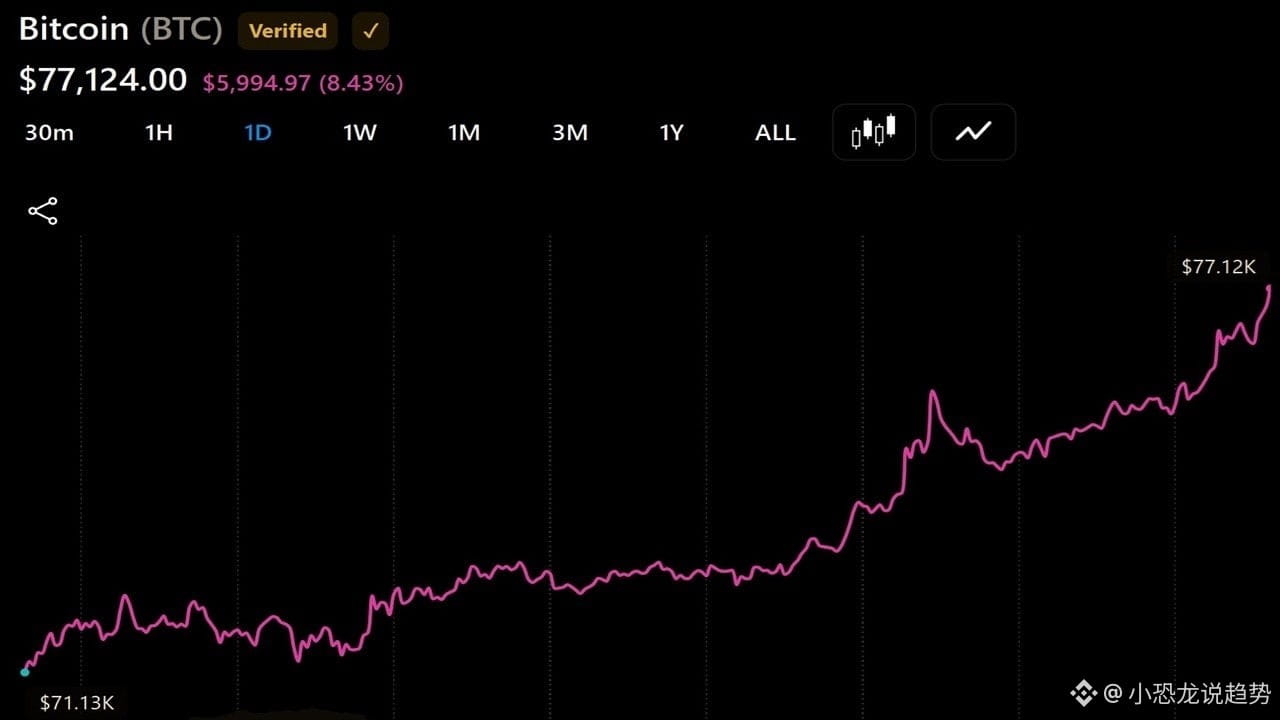
Log in to explore more content