
Lisa丽萨
1.4k Posts

Lisa丽萨
 Square Verified+
👉X Hawk_xxs 最早建设广场的博主,经历多次牛熊,非常看好web3的未来,正在web3赛道上努力着,期待更多志同道合者一起同行🤝
High-Frequency Trader
8.7 Years
2.5K+ Following
70.3K+ Followers
69.8K+ Liked
Posts
All
Quotes
Videos
Live
Initially, geeks and longtime players who paid attention to Dusk were largely drawn to its custom-built foundation stack—built on Rust, the Rusk runtime, the native ZK virtual machine Piecrust, and the Phoenix trading model. The original intent behind this self-developed system was very pure: to use a native zero-knowledge proving environment that supports confidential smart contracts and selective disclosure from the virtual machine layer all the way down.
But reality has taught a hard lesson to every blockchain that tries to “reinvent the wheel”: without the developer base of the Ethereum ecosystem, even the most elegant custom architecture becomes an isolated island.
That’s why we’ve seen a major shift in Dusk’s architecture—from a monolithic L1 to today’s three-layer modular design: the underlying consensus and settlement layer (DuskDS), the privacy layer (DuskVM/Piecrust), and the newly launched testnet and aggressively promoted DuskEVM. The official logic is tempting: let developers deploy seamlessly using familiar Solidity and Hardhat, while inheriting the underlying compliance and privacy capabilities.
But this is exactly what gives rise to an extremely glaring engineering paradox:
EVM, by nature, is a fully transparent global state machine, while the core of ZK privacy is state concealment.
Attaching a standard EVM to the settlement layer may quickly attract external developers; however, if developers get lazy and continue writing those standard transparent Solidity contracts on DuskEVM, will the Piecrust and native ZK privacy layer that took Dusk years to refine end up becoming mere “showroom props,” effectively sidelined?
More realistically, there’s the complexity of cross-layer state synchronization. When a compliant asset is settled on DuskDS, circulates on DuskEVM, and also attempts to invoke DuskVM’s zero-knowledge proofs, how much hidden cost—in execution latency and cross-layer security—will the inter-layer state commitments and pre-verifier mechanisms ultimately demand?
In the evolution history of crypto infrastructure, we’ve seen too many public chains blindly “fully embrace EVM” out of ecosystem anxiety, only to smooth away their technical distinctiveness and end up as just another mediocre Ethereum sidechain. Dusk’s three-layer modular architecture is undeniably ambitious, trying to balance “Ethereum developer habits” with “native compliance and privacy.” But in real-world implementation, will this intricate jigsaw ultimately unlock the power of compliant finance—or will it dilute the original purity through engineering compromises?
#dusk $DUSK @Dusk
But reality has taught a hard lesson to every blockchain that tries to “reinvent the wheel”: without the developer base of the Ethereum ecosystem, even the most elegant custom architecture becomes an isolated island.
That’s why we’ve seen a major shift in Dusk’s architecture—from a monolithic L1 to today’s three-layer modular design: the underlying consensus and settlement layer (DuskDS), the privacy layer (DuskVM/Piecrust), and the newly launched testnet and aggressively promoted DuskEVM. The official logic is tempting: let developers deploy seamlessly using familiar Solidity and Hardhat, while inheriting the underlying compliance and privacy capabilities.
But this is exactly what gives rise to an extremely glaring engineering paradox:
EVM, by nature, is a fully transparent global state machine, while the core of ZK privacy is state concealment.
Attaching a standard EVM to the settlement layer may quickly attract external developers; however, if developers get lazy and continue writing those standard transparent Solidity contracts on DuskEVM, will the Piecrust and native ZK privacy layer that took Dusk years to refine end up becoming mere “showroom props,” effectively sidelined?
More realistically, there’s the complexity of cross-layer state synchronization. When a compliant asset is settled on DuskDS, circulates on DuskEVM, and also attempts to invoke DuskVM’s zero-knowledge proofs, how much hidden cost—in execution latency and cross-layer security—will the inter-layer state commitments and pre-verifier mechanisms ultimately demand?
In the evolution history of crypto infrastructure, we’ve seen too many public chains blindly “fully embrace EVM” out of ecosystem anxiety, only to smooth away their technical distinctiveness and end up as just another mediocre Ethereum sidechain. Dusk’s three-layer modular architecture is undeniably ambitious, trying to balance “Ethereum developer habits” with “native compliance and privacy.” But in real-world implementation, will this intricate jigsaw ultimately unlock the power of compliant finance—or will it dilute the original purity through engineering compromises?
#dusk $DUSK @Dusk
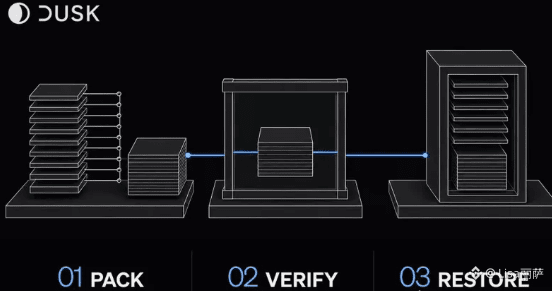
I directly grabbed the node interface to check the real transaction hashes, without paying attention to that pretty picture of a secondary-market daily K-line.
Once you peel off the filters of those “compliant RWA giants” from the promo, the data in front of you is actually quite stark. In the latest few epochs of the blockchain, most of the bundled transactions are still basic heartbeat activity and only a tiny handful of token transfers. As for the NPEX asset interaction flows that the legends claim are meant to handle massive volumes of traditional capital—on-chain, they barely even kick up a ripple.
To be objective, Dusk’s underlying cryptographic implementation really did put in serious effort. With the Piecrust virtual machine paired with zero-knowledge proofs, the protocol-level design resolves the contradiction of “needing to present audit keys to regulators while hiding position details from the public.” This kind of engineering is extremely difficult. Across the entire RWA track, the number of teams that can compile off-chain compliance logic directly into zero-knowledge circuits is tiny—enough to prove that the technical foundation isn’t just an empty castle in the air.
But the fact that the foundation can run does not mean the commercial loop has truly started.
That’s exactly the most knotty contradiction I see: institutional business is fundamentally averse to latency and desperately hungry for depth. A ZK transaction carrying compliance assertions—where the client spends time generating proofs and verifying them on-chain—may be acceptable for low-frequency private equity transfers, but if you try to cram it into DuskPay’s commercial payment scenarios, those millisecond-level performance frictions will be magnified endlessly. More dangerously, there’s the liquidity gap. If the on-chain minting of EURQ stays stuck at low levels, and there isn’t sufficient counterparty depth, the risk-control systems of licensed institutions won’t even approve order-book testing. In the end, you get a dead cycle: “no depth, so we don’t come; nobody comes, so there’s even less depth.”
To judge whether this machine is genuinely running or spinning idly, don’t look at how many cooperation intentions have accumulated in the official weekly reports—lock onto two hard metrics: first, after excluding market-maker back-and-forth trades, the number of zero-knowledge proof generations triggered daily by real business; second, the amount of EURQ net inflow and accumulation that has settled in the on-chain smart contracts on the NPEX chain.
Right now, Dusk is like building a dazzling five-star hotel in the middle of the desert: the plumbing is connected, and all the security and compliance licenses are in place. But the asphalt road in front—the one that could actually bring guests over—hasn’t really been opened to traffic yet.
So what do you think is the test? #dusk $DUSK @Dusk $SOL
Once you peel off the filters of those “compliant RWA giants” from the promo, the data in front of you is actually quite stark. In the latest few epochs of the blockchain, most of the bundled transactions are still basic heartbeat activity and only a tiny handful of token transfers. As for the NPEX asset interaction flows that the legends claim are meant to handle massive volumes of traditional capital—on-chain, they barely even kick up a ripple.
To be objective, Dusk’s underlying cryptographic implementation really did put in serious effort. With the Piecrust virtual machine paired with zero-knowledge proofs, the protocol-level design resolves the contradiction of “needing to present audit keys to regulators while hiding position details from the public.” This kind of engineering is extremely difficult. Across the entire RWA track, the number of teams that can compile off-chain compliance logic directly into zero-knowledge circuits is tiny—enough to prove that the technical foundation isn’t just an empty castle in the air.
But the fact that the foundation can run does not mean the commercial loop has truly started.
That’s exactly the most knotty contradiction I see: institutional business is fundamentally averse to latency and desperately hungry for depth. A ZK transaction carrying compliance assertions—where the client spends time generating proofs and verifying them on-chain—may be acceptable for low-frequency private equity transfers, but if you try to cram it into DuskPay’s commercial payment scenarios, those millisecond-level performance frictions will be magnified endlessly. More dangerously, there’s the liquidity gap. If the on-chain minting of EURQ stays stuck at low levels, and there isn’t sufficient counterparty depth, the risk-control systems of licensed institutions won’t even approve order-book testing. In the end, you get a dead cycle: “no depth, so we don’t come; nobody comes, so there’s even less depth.”
To judge whether this machine is genuinely running or spinning idly, don’t look at how many cooperation intentions have accumulated in the official weekly reports—lock onto two hard metrics: first, after excluding market-maker back-and-forth trades, the number of zero-knowledge proof generations triggered daily by real business; second, the amount of EURQ net inflow and accumulation that has settled in the on-chain smart contracts on the NPEX chain.
Right now, Dusk is like building a dazzling five-star hotel in the middle of the desert: the plumbing is connected, and all the security and compliance licenses are in place. But the asphalt road in front—the one that could actually bring guests over—hasn’t really been opened to traffic yet.
So what do you think is the test? #dusk $DUSK @Dusk $SOL
链上每日由商业调用产生的 ZK 证明交易笔数放量
0%
NPEX 官方宣布首批数千万欧元存量传统资产完成链上迁移
100%
EURQ 链上总铸造量与去中心化做市深度出现数量级增长
0%
更多欧盟持牌实体公开接入 DuskPay 并产生高频流水
0%
1 votes • Voting closed
ZEC Hits a New High in Eight Years! Privacy Coins Get Picked Up by Big Institutions Out of Nowhere
Honestly, the one I least expected to come roaring back this year is $ZEC.
For a long time, many people have already written off the privacy coin sector as dead. But once Grayscale pushed forward the ETF, the market immediately showed its colors: during the day, $ZEC topped at just over $850—levels like an eight-year high. It has since pulled back to around $795, and the market cap is already in the $13.4 billion range. In the past 24 hours the chart is still green, but if you chased at $850, you’re already watching those gains unwind.
Let me tell you—this isn’t just a simple “old coin revival.” If institutions genuinely turn privacy assets into a product, the narrative shifts from a “niche geek toy” to a “scarce asset within regulated channels.” But don’t get too comfortable: from ETF application to approval and launch, there are plenty of traps in between. And after a sharp surge like this, the favorite thing to do is to scoop up the emotional buying pressure all at once.
Sure, follow the narrative—but you need to be restrained when chasing. The $850 area proves that someone is willing to carry the torch. But the $770–$800 zone is more like a place where normal people would talk. Keep your position smaller, and don’t treat the words “privacy” as synonymous with guaranteed profit.
Do you think this move can usher in a new cycle, or is it just a one-day fling?
Honestly, the one I least expected to come roaring back this year is $ZEC.
For a long time, many people have already written off the privacy coin sector as dead. But once Grayscale pushed forward the ETF, the market immediately showed its colors: during the day, $ZEC topped at just over $850—levels like an eight-year high. It has since pulled back to around $795, and the market cap is already in the $13.4 billion range. In the past 24 hours the chart is still green, but if you chased at $850, you’re already watching those gains unwind.
Let me tell you—this isn’t just a simple “old coin revival.” If institutions genuinely turn privacy assets into a product, the narrative shifts from a “niche geek toy” to a “scarce asset within regulated channels.” But don’t get too comfortable: from ETF application to approval and launch, there are plenty of traps in between. And after a sharp surge like this, the favorite thing to do is to scoop up the emotional buying pressure all at once.
Sure, follow the narrative—but you need to be restrained when chasing. The $850 area proves that someone is willing to carry the torch. But the $770–$800 zone is more like a place where normal people would talk. Keep your position smaller, and don’t treat the words “privacy” as synonymous with guaranteed profit.
Do you think this move can usher in a new cycle, or is it just a one-day fling?
Running zero-knowledge proofs on-chain (whether it’s PLONK or later optimized versions) was never a free lunch. For clients, generating proofs consumes computational power; for nodes, verifying proofs consumes extremely precious block execution time. When Dusk shifts the narrative focus from a mere “privacy chain” to a “European-compliant asset settlement layer,” an unavoidable token-economics loophole comes to light:
According to Dusk’s economic model, the network subsidizes Provisioner nodes through declining inflation over 36 years. In the early days of the mainnet—or during periods when the market is hot—everyone gets by on the inflationary gains from block rewards (newly issued tokens). But inflation can only buy short-term network security; it cannot buy long-term economic sustainability.
When staking rewards depend mainly on token inflation rather than on fees generated by real asset transactions, the system’s fragility becomes increasingly amplified over time:
On one hand, traditional regulated institutions (such as the long-promoted NPEX) are extremely sensitive to transaction costs and settlement certainty. They can’t keep paying a premium indefinitely for the expensive on-chain ZK verification overhead.
If, in order to cater to institutions, Gas fees are pushed too low, then once future inflation is halved as planned, nodes will not be able to cover the hardware and bandwidth costs of running high-performance verification nodes—simply relying on thin on-chain settlement fees. Decentralized consensus would immediately face pressure as nodes begin to leave.
More intriguingly, consider the recently introduced Hyperstaking (staking abstraction). On the surface, it lowers staking barriers for ordinary users and increases the token staking ratio. But from a fundamentals perspective, isn’t this also a piece of financial engineering that locks up liquidity with liquid staking in a situation where real on-chain transaction volume has failed to take off for a long time—thereby artificially delaying sell pressure?
No matter how elegant the cryptography code is, it ultimately must face the clearing of assets and liabilities. Markets can tolerate a new network being “funded” by inflation during its testing phase—but they can never support indefinitely a “compliance story” that has no real settlement revenue.
The metric for valuing a settlement chain has never been how many tokens nodes have locked. It’s what percentage of node revenue comes from genuine settlement fees paid by regulated institutions.
#dusk $DUSK @Dusk $AAPL.US
According to Dusk’s economic model, the network subsidizes Provisioner nodes through declining inflation over 36 years. In the early days of the mainnet—or during periods when the market is hot—everyone gets by on the inflationary gains from block rewards (newly issued tokens). But inflation can only buy short-term network security; it cannot buy long-term economic sustainability.
When staking rewards depend mainly on token inflation rather than on fees generated by real asset transactions, the system’s fragility becomes increasingly amplified over time:
On one hand, traditional regulated institutions (such as the long-promoted NPEX) are extremely sensitive to transaction costs and settlement certainty. They can’t keep paying a premium indefinitely for the expensive on-chain ZK verification overhead.
If, in order to cater to institutions, Gas fees are pushed too low, then once future inflation is halved as planned, nodes will not be able to cover the hardware and bandwidth costs of running high-performance verification nodes—simply relying on thin on-chain settlement fees. Decentralized consensus would immediately face pressure as nodes begin to leave.
More intriguingly, consider the recently introduced Hyperstaking (staking abstraction). On the surface, it lowers staking barriers for ordinary users and increases the token staking ratio. But from a fundamentals perspective, isn’t this also a piece of financial engineering that locks up liquidity with liquid staking in a situation where real on-chain transaction volume has failed to take off for a long time—thereby artificially delaying sell pressure?
No matter how elegant the cryptography code is, it ultimately must face the clearing of assets and liabilities. Markets can tolerate a new network being “funded” by inflation during its testing phase—but they can never support indefinitely a “compliance story” that has no real settlement revenue.
The metric for valuing a settlement chain has never been how many tokens nodes have locked. It’s what percentage of node revenue comes from genuine settlement fees paid by regulated institutions.
#dusk $DUSK @Dusk $AAPL.US
I pulled up the logs from the node machines and glanced through them, and then quietly pulled back my order—again—where I had opened a long position. This batch of spot holdings really is still locked in the validation nodes, eating the block subsidies. But today I don’t want to blow up some grand narrative about “Europe-first compliant chains.” I just want to tally a concrete, real-world ledger. A few days ago I used their contract development kit to run an asset simulation of flow-through. Honestly, the code is truly beautiful—an immaculate Rust architecture, and their zero-knowledge proof protocol (XSC) hides compliance checks and privacy state so tightly it’s water‑tight. But once you try to push the whole thing into a real operational environment, that familiar feeling of sluggish congestion hits immediately.
Running a local proof with multi-party audit constraints instantly pegs the CPU. When you’re used to sprinting on Ethereum Layer 2 or Solana—second-level confirmations and that instant “point-and-shoot” thrill—switching to a ZK compliance chain that heavily depends on client-side local compute, waiting those few seconds for an effective proof to be produced will make market makers lose their pants in high-frequency trading.
What’s even worse is the liquidity reality discount.
There’s plenty of real money chasing RWA. Over there, those protocols that simply wrap government bonds on EVM—no matter how slapdash their architecture—once they can plug into a lending pool and a DEX, big capital dares to enter and skim APY. Dusk insists on building its own wheel from the ground up—constructing an independent Piecrust virtual machine—and going toe-to-toe with putting traditional securities exchange trading on-chain. Once this foundation is laid, it’s definitely rock-solid. But until institutions have actually completed license compliance with real money and moved large-scale real assets on-chain, most of the chain’s Gas consumption is basically just self-entertainment by the staking nodes like us.
You want his node subsidies annualized; the main thing you want is your liquidity locked up. With today’s low-threshold staking, a huge amount of floating float gets locked into paper wealth. But if the chain can’t consistently run through high-frequency settlement frictions, then when the first large half-down events and lock-up periods arrive, what happens to the order book without real buy-side demand to take over? Even old timers know the answer.
The technology is top-tier, but trading never rewards pure idealism.
In this cycle, what is everyone’s biggest concern—the deadliest weakness of this kind of bottom-layer heavy technical project? #dusk $DUSK @Dusk #比特币创2023年3月来最佳周表现
Running a local proof with multi-party audit constraints instantly pegs the CPU. When you’re used to sprinting on Ethereum Layer 2 or Solana—second-level confirmations and that instant “point-and-shoot” thrill—switching to a ZK compliance chain that heavily depends on client-side local compute, waiting those few seconds for an effective proof to be produced will make market makers lose their pants in high-frequency trading.
What’s even worse is the liquidity reality discount.
There’s plenty of real money chasing RWA. Over there, those protocols that simply wrap government bonds on EVM—no matter how slapdash their architecture—once they can plug into a lending pool and a DEX, big capital dares to enter and skim APY. Dusk insists on building its own wheel from the ground up—constructing an independent Piecrust virtual machine—and going toe-to-toe with putting traditional securities exchange trading on-chain. Once this foundation is laid, it’s definitely rock-solid. But until institutions have actually completed license compliance with real money and moved large-scale real assets on-chain, most of the chain’s Gas consumption is basically just self-entertainment by the staking nodes like us.
You want his node subsidies annualized; the main thing you want is your liquidity locked up. With today’s low-threshold staking, a huge amount of floating float gets locked into paper wealth. But if the chain can’t consistently run through high-frequency settlement frictions, then when the first large half-down events and lock-up periods arrive, what happens to the order book without real buy-side demand to take over? Even old timers know the answer.
The technology is top-tier, but trading never rewards pure idealism.
In this cycle, what is everyone’s biggest concern—the deadliest weakness of this kind of bottom-layer heavy technical project? #dusk $DUSK @Dusk #比特币创2023年3月来最佳周表现
机构合规落地太慢,真空期被 EVM 生态吸干流动性
0%
本地 ZK 证明计算开销大,高并发下交互体验拉跨
50%
节点全靠代币通胀自嗨,缺乏真实 Gas 消耗支撑
50%
逻辑虽硬但叙事不吸金,容易陷入漫长的阴跌折磨
0%
2 votes • Voting closed
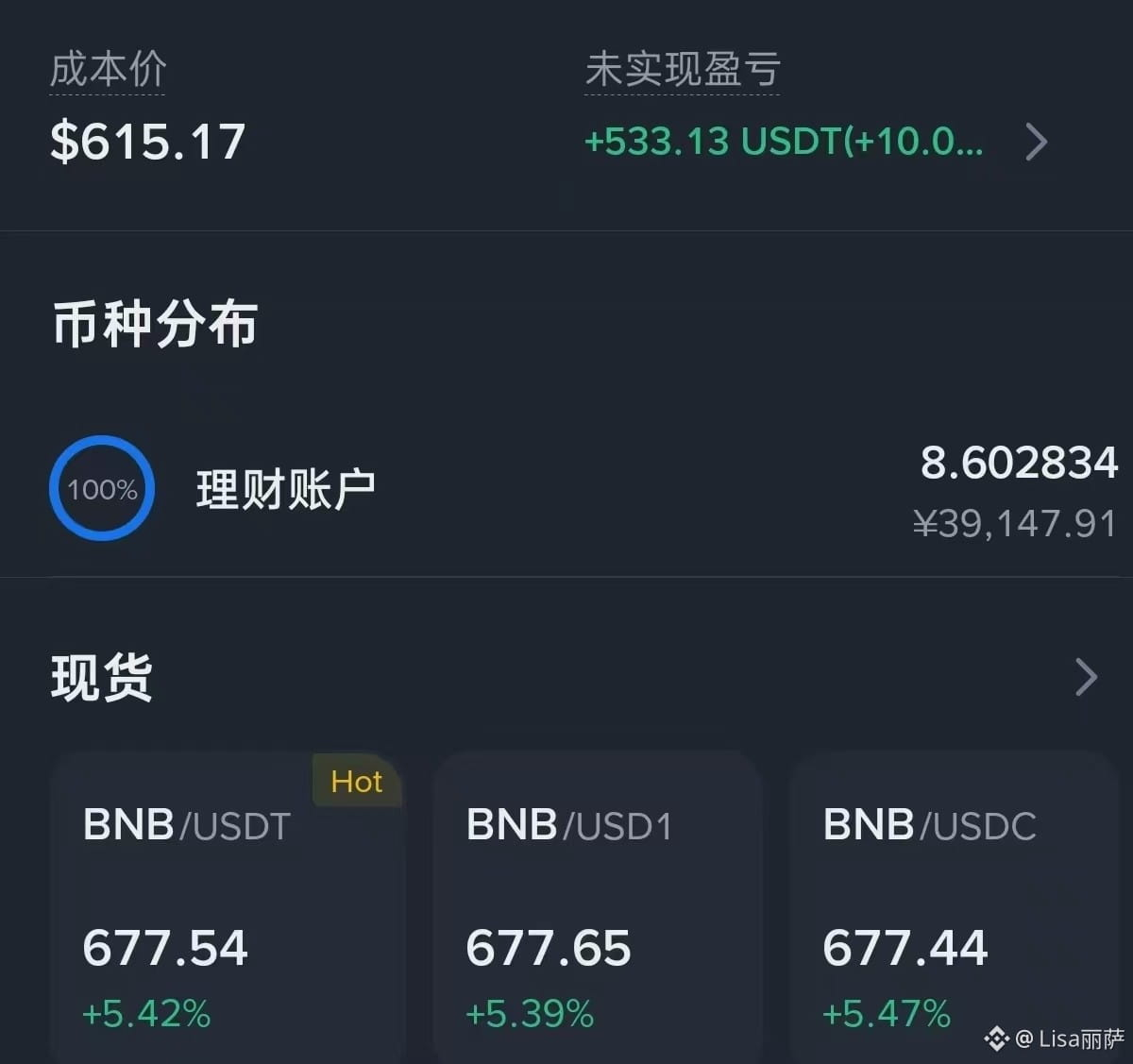
This time, it’s the cow that’s coming—everyone, work hard and shout, you’ll really call the cow over 🤑BNB🐮🐮🐮
TermMax’s “one-click looping leverage” and fixed maturity underlying assets collide with a deeper structural contradiction: there’s a natural conflict of interest between maximizing capital efficiency for leverage arbitragers and the liquidity providers’ (LPs’) capacity to bear impermanent loss (IL).
Many players who go to TermMax value how it combines yield-bearing assets like Pendle PT with one-click fixed-rate leverage. According to the whitepaper’s math, borrowers can borrow assets at a very low fixed cost, repeatedly re-stake and lever up the exposure, capture the full fixed spread, and squeeze the capital utilization ratio to the limit. This set of static APY calculations in a bull market is indeed enticing—but the question is: who is actually paying for that extra yield?
The answer is the LPs who provide liquidity to the customized AMM.
To achieve precise pricing for a specific term, TermMax narrows the AMM curve into a very extreme range. As long as the market stays stable, LPs can reliably earn the market-making fees. But once the underlying asset’s actual yield rate swings violently, or if the collateral faces a discount (trades below par), the price rapidly breaks through the preset range. At that point, the LP is forced to passively absorb “low-quality assets” on one side, or is compelled to take on amplified impermanent loss.
Looking back at prior projects that emphasized high-leverage looping borrow/lend, such as certain lending forks that expanded aggressively in the past, their ultimate failure was often not because the liquidation logic wasn’t written properly, but because during high-volatility periods the LP found that the small amount of fees earned could not cover the risk of one-sided inventory value depreciation. Then large capital quickly withdrew from the pool. Once the market-making base inventory is pulled, the leveraged users’ looped loans get effectively frozen in the pool due to liquidity depth drying up; to close positions, they have to bear huge friction costs themselves.
TermMax claims it will reduce LPs’ management burden through automated market making and a Curator Vault. That is an improvement on the product-experience side. But there is no free lunch in financial engineering. Packaging complex strategies into one-click operations often just disguises liquidation risk as an implicit loss for LPs.
This approach of building aggressive leverage on narrow-range AMM market making works smoothly in calm conditions, but when a major market-wide panic hits, the game between the market-making side and the leveraged side can easily devolve into a race to front-run. $AAPLB #termmax @TermMax
Many players who go to TermMax value how it combines yield-bearing assets like Pendle PT with one-click fixed-rate leverage. According to the whitepaper’s math, borrowers can borrow assets at a very low fixed cost, repeatedly re-stake and lever up the exposure, capture the full fixed spread, and squeeze the capital utilization ratio to the limit. This set of static APY calculations in a bull market is indeed enticing—but the question is: who is actually paying for that extra yield?
The answer is the LPs who provide liquidity to the customized AMM.
To achieve precise pricing for a specific term, TermMax narrows the AMM curve into a very extreme range. As long as the market stays stable, LPs can reliably earn the market-making fees. But once the underlying asset’s actual yield rate swings violently, or if the collateral faces a discount (trades below par), the price rapidly breaks through the preset range. At that point, the LP is forced to passively absorb “low-quality assets” on one side, or is compelled to take on amplified impermanent loss.
Looking back at prior projects that emphasized high-leverage looping borrow/lend, such as certain lending forks that expanded aggressively in the past, their ultimate failure was often not because the liquidation logic wasn’t written properly, but because during high-volatility periods the LP found that the small amount of fees earned could not cover the risk of one-sided inventory value depreciation. Then large capital quickly withdrew from the pool. Once the market-making base inventory is pulled, the leveraged users’ looped loans get effectively frozen in the pool due to liquidity depth drying up; to close positions, they have to bear huge friction costs themselves.
TermMax claims it will reduce LPs’ management burden through automated market making and a Curator Vault. That is an improvement on the product-experience side. But there is no free lunch in financial engineering. Packaging complex strategies into one-click operations often just disguises liquidation risk as an implicit loss for LPs.
This approach of building aggressive leverage on narrow-range AMM market making works smoothly in calm conditions, but when a major market-wide panic hits, the game between the market-making side and the leveraged side can easily devolve into a race to front-run. $AAPLB #termmax @TermMax

In the past couple of days, many people have been asking the same question: Bitcoin has already broken through $75,000—so why does ETH still feel like it’s “not猛 enough”?
Latest market data shows BTC is up about 6.6% over the past 24 hours, while ETH is up about 3.4%, with the price hovering around $2,350. ETH is of course rising too, but compared with BTC, it’s clearly lagging.
Even more painful is that even an asset like XRP, with a large market cap, has surged by roughly 16%—so it’s hard for ETH holders not to feel a bit restless.
But looking at it from another angle, this state of “not taking off immediately” is actually worth paying attention to.
In many market moves, capital flows don’t rise all at once. Often, money first concentrates into BTC, the higher-certainty asset with better liquidity. Once BTC holds steady and the market confirms that the risks are lower, capital starts looking for directions with higher upside elasticity.
ETH is often an important signal of whether funds shift from “only daring to buy the blue-chip leader” to “willing to take on more risk.”
So the key for ETH right now isn’t whether it can jump 10% in a day—it’s whether three changes appear: sustained expansion in trading volume, ETH no longer underperforming BTC, and whether it can hold the breakout level when pulling back.
If these three signals show up, ETH’s catch-up could help spark activity across L2, DeFi, and parts of the ecosystem. If ETH continues to trail BTC, that means the market is still cautious—funds are just clustering around the leaders rather than truly launching a broad offensive.
Don’t dismiss ETH as slow. Slow doesn’t necessarily mean weak—it might just be building energy.
But don’t blindly add positions just because “it will catch up eventually.” The market has never promised that underperforming assets must come back.
What’s truly worth waiting for isn’t an imagined catch-up story, but the moment when capital starts voting with real money.
Latest market data shows BTC is up about 6.6% over the past 24 hours, while ETH is up about 3.4%, with the price hovering around $2,350. ETH is of course rising too, but compared with BTC, it’s clearly lagging.
Even more painful is that even an asset like XRP, with a large market cap, has surged by roughly 16%—so it’s hard for ETH holders not to feel a bit restless.
But looking at it from another angle, this state of “not taking off immediately” is actually worth paying attention to.
In many market moves, capital flows don’t rise all at once. Often, money first concentrates into BTC, the higher-certainty asset with better liquidity. Once BTC holds steady and the market confirms that the risks are lower, capital starts looking for directions with higher upside elasticity.
ETH is often an important signal of whether funds shift from “only daring to buy the blue-chip leader” to “willing to take on more risk.”
So the key for ETH right now isn’t whether it can jump 10% in a day—it’s whether three changes appear: sustained expansion in trading volume, ETH no longer underperforming BTC, and whether it can hold the breakout level when pulling back.
If these three signals show up, ETH’s catch-up could help spark activity across L2, DeFi, and parts of the ecosystem. If ETH continues to trail BTC, that means the market is still cautious—funds are just clustering around the leaders rather than truly launching a broad offensive.
Don’t dismiss ETH as slow. Slow doesn’t necessarily mean weak—it might just be building energy.
But don’t blindly add positions just because “it will catch up eventually.” The market has never promised that underperforming assets must come back.
What’s truly worth waiting for isn’t an imagined catch-up story, but the moment when capital starts voting with real money.
Took two days to set up the environment. In actual tests, I ran Dusk’s transfer and status-proof generation, and the fan went straight to max.
Many people think it can just win by lying back on that EU regulatory framework, but after testing it myself on a machine, I can only say the engineering trade-offs are just too extreme.
Compared with the Midnight stuff I previously tinkered with, or the compliant ZK approach wrapped on top of Ethereum, Dusk really has that kind of hardcore, geeky vibe. It builds its own Piecrust virtual machine—asset attributes, privacy constraints, and even the view keys shown to auditors are literally hard-coded into the underlying logic. Use it for compliant asset transfers: you don’t need to worry about being picked apart by chain sleuths on a normal chain, and you also don’t have to do a bunch of tedious off-chain notarization. Compliant report generation is crystal clear. From the perspective of getting through a financial institution’s compliance review, this design really doesn’t have any major issues.
But when you go back to the real user experience, problems show up. The client locally computes the zero-knowledge proofs—those few seconds are simply unbearable for quant traders running high-frequency arbitrage, or players who expect near-instant confirmation. For ordinary retail users who want to jump in and do something—once they see there are no “no-brainer” mining pools in the ecosystem, and the toolchain is relatively closed—they just turn around and leave.
That creates a rather awkward reality: institutional big money has to go through layer-by-layer approvals, legal compliance reviews, and often runs on quarterly cycles; meanwhile, native on-chain players generally don’t come at all because the barrier is high and the ecosystem feels pretty sparse. In the gap period, who’s going to foot the bill for network node staking incentives and token consumption?
A solid foundation doesn’t automatically mean it can immediately run a virtuous commercial cycle. Separating the story from reality, I definitely recognize its first-mover advantage in compliance and privacy—but before putting real money down, I’d rather make a bit less upside and just wait until its first tokenized securities truly start generating high-frequency trading fees.
If you had to choose, where do you think this kind of compliant privacy network will first produce real incremental value? #dusk $DUSK @Dusk $GOOGL.US #ETH突破$2300
Many people think it can just win by lying back on that EU regulatory framework, but after testing it myself on a machine, I can only say the engineering trade-offs are just too extreme.
Compared with the Midnight stuff I previously tinkered with, or the compliant ZK approach wrapped on top of Ethereum, Dusk really has that kind of hardcore, geeky vibe. It builds its own Piecrust virtual machine—asset attributes, privacy constraints, and even the view keys shown to auditors are literally hard-coded into the underlying logic. Use it for compliant asset transfers: you don’t need to worry about being picked apart by chain sleuths on a normal chain, and you also don’t have to do a bunch of tedious off-chain notarization. Compliant report generation is crystal clear. From the perspective of getting through a financial institution’s compliance review, this design really doesn’t have any major issues.
But when you go back to the real user experience, problems show up. The client locally computes the zero-knowledge proofs—those few seconds are simply unbearable for quant traders running high-frequency arbitrage, or players who expect near-instant confirmation. For ordinary retail users who want to jump in and do something—once they see there are no “no-brainer” mining pools in the ecosystem, and the toolchain is relatively closed—they just turn around and leave.
That creates a rather awkward reality: institutional big money has to go through layer-by-layer approvals, legal compliance reviews, and often runs on quarterly cycles; meanwhile, native on-chain players generally don’t come at all because the barrier is high and the ecosystem feels pretty sparse. In the gap period, who’s going to foot the bill for network node staking incentives and token consumption?
A solid foundation doesn’t automatically mean it can immediately run a virtuous commercial cycle. Separating the story from reality, I definitely recognize its first-mover advantage in compliance and privacy—but before putting real money down, I’d rather make a bit less upside and just wait until its first tokenized securities truly start generating high-frequency trading fees.
If you had to choose, where do you think this kind of compliant privacy network will first produce real incremental value? #dusk $DUSK @Dusk $GOOGL.US #ETH突破$2300
传统持牌交易所的债券/证券代币化结算
50%
需要机构级合规与隐私保护的 RWA 跨境清算
0%
机构入场前太慢,先被更轻量化的通用 ZK 方案抢走用户
50%
只要主流牌照落地,大资金一进来流动性自然就有了
0%
2 votes • Voting closed
The core selling point of TermMax is: “Use a customized AMM curve to lock lending costs and yields.” But if you look closely at its liquidity structure, you’ll find a natural internal contradiction: the more finely you slice the maturity, the more fatal the liquidity fragmentation becomes.
In traditional floating pools, all funds sit in one large pool to share depth. Even if capital utilization is high, they won’t end up fighting each other across different expiration dates. But once you move to fixed terms—if you set 7-day, 14-day, 30-day, or even longer maturity buckets—you effectively cut the originally unified liquidity into dozens of isolated mini-pools. This immediately raises an extremely real question: who will continuously provide counterpart liquidity for those long-tail maturities?
Community activities and market-maker incentives certainly have boosted the hype recently. But if you peel away external subsidies, can the incentives of actual borrowers and lenders truly align perfectly? Borrowers usually want longer terms—lower costs. Lenders, on the other hand, generally dislike long locked positions and prefer shorter terms to “save their lives.” This supply-demand mismatch may be smoothed over by market makers when conditions are stable. But if the market hits a one-sided extreme scenario, the secondary-market discount/premium is very likely to quickly lose its anchor, causing the real exit cost to be far higher than the fixed interest rate locked in on paper.
It uses an approach similar to concentrated liquidity (Uniswap V3) to reshape the interest rate curve, which is indeed more lightweight and intuitive than Pendle’s more complex two-asset splitting. However, this also brings a hard problem to the forefront: in the fixed-income space, retail users typically pursue extreme flexibility, while institutions actually have a strong need for long-term certainty. Before big capital really moves in, if you spread liquidity too thin, will it backfire on the protocol’s early-stage depth?
There’s no doubt the project’s innovations in both engineering and financial architecture are solid. But we can’t treat “ideal certainty” as a “frictionless safe haven.” First, see through the underlying contradictions, quantify the potential slippage from maturity mismatch, and only then discuss how to fully capture the arbitrage-rate mechanism’s upside—this is how you stay in the game.
What do you think is the key to breaking liquidity fragmentation in fixed-rate protocols?#termmax @TermMax $CAP
In traditional floating pools, all funds sit in one large pool to share depth. Even if capital utilization is high, they won’t end up fighting each other across different expiration dates. But once you move to fixed terms—if you set 7-day, 14-day, 30-day, or even longer maturity buckets—you effectively cut the originally unified liquidity into dozens of isolated mini-pools. This immediately raises an extremely real question: who will continuously provide counterpart liquidity for those long-tail maturities?
Community activities and market-maker incentives certainly have boosted the hype recently. But if you peel away external subsidies, can the incentives of actual borrowers and lenders truly align perfectly? Borrowers usually want longer terms—lower costs. Lenders, on the other hand, generally dislike long locked positions and prefer shorter terms to “save their lives.” This supply-demand mismatch may be smoothed over by market makers when conditions are stable. But if the market hits a one-sided extreme scenario, the secondary-market discount/premium is very likely to quickly lose its anchor, causing the real exit cost to be far higher than the fixed interest rate locked in on paper.
It uses an approach similar to concentrated liquidity (Uniswap V3) to reshape the interest rate curve, which is indeed more lightweight and intuitive than Pendle’s more complex two-asset splitting. However, this also brings a hard problem to the forefront: in the fixed-income space, retail users typically pursue extreme flexibility, while institutions actually have a strong need for long-term certainty. Before big capital really moves in, if you spread liquidity too thin, will it backfire on the protocol’s early-stage depth?
There’s no doubt the project’s innovations in both engineering and financial architecture are solid. But we can’t treat “ideal certainty” as a “frictionless safe haven.” First, see through the underlying contradictions, quantify the potential slippage from maturity mismatch, and only then discuss how to fully capture the arbitrage-rate mechanism’s upside—this is how you stay in the game.
What do you think is the key to breaking liquidity fragmentation in fixed-rate protocols?#termmax @TermMax $CAP
靠机构级真实大资金进场做主导对手盘
50%
引入类似借贷聚合器的自动化展期/跨期限调仓金库
50%
靠更长期的做市代币激励硬撑深度,等市场成熟
0%
2 votes • Voting closed
Last night I was looking at the testnet logs and saw a settlement confirmation time suddenly jump from a few hundred milliseconds to more than four seconds. My first reaction was that market makers must be cursing tonight.
This is exactly the weak spot that people who keep hyping compliant assets being put on-chain refuse to face no matter what. Take Polymesh: to be fast, it simply rolls back to consortium-permissioned validator nodes—decentralization is basically just for show. As for schemes that try to modify a general-purpose public chain, once you factor in how long it takes for anti-rollback finality, it takes minutes; market makers wouldn’t dare to move at all. Dusk does have ideas: it directly tackles it at the base L1 by hard-crunching zero-knowledge proofs and deterministic consensus with Succinct Attestation, aiming to settle the asset-and-cash leg in one go.
But in real data centers and physical fiber links, theory always gets beaten up.
Once the validation committee’s nodes are scattered across different data centers around the world, and you run into subnet jitter or packet loss on transoceanic routes, signature aggregation will be stretched out. Even if ninety percent of the blocks can be approved in an instant, as long as the remaining ten percent hits an uncontrollable long-tail delay, the market maker’s hedging procedure will immediately choke. The trade matched on NPEX still hasn’t been sealed with the final hammer, and the positions' closing funds elsewhere are already left hanging in limbo. As soon as the risk premium for capital occupancy goes up, the bid-ask spread on the order book widens right away. What’s called “efficient settlement” turns into self-congratulation at the liquidity layer.
I don’t actually dislike Dusk’s architecture. In fact, I really admire its grit in sticking to building the XSC contracts and privacy state machine on the native base layer—far more reliable than slapping together patchwork across everywhere with cross-chain bridges. But when I validate, I never trust the ideal values in the brochures. I only care whether the mainnet, under high concurrency and hostile network topologies, can keep the long-tail latency pinned down within an extremely narrow range. If the data can’t hold steady, then all the visions are just paper clouds.
What do you think is the biggest pain point preventing market makers and institutional capital from entering on-chain settlement? #dusk $DUSK @Dusk $ZEC
This is exactly the weak spot that people who keep hyping compliant assets being put on-chain refuse to face no matter what. Take Polymesh: to be fast, it simply rolls back to consortium-permissioned validator nodes—decentralization is basically just for show. As for schemes that try to modify a general-purpose public chain, once you factor in how long it takes for anti-rollback finality, it takes minutes; market makers wouldn’t dare to move at all. Dusk does have ideas: it directly tackles it at the base L1 by hard-crunching zero-knowledge proofs and deterministic consensus with Succinct Attestation, aiming to settle the asset-and-cash leg in one go.
But in real data centers and physical fiber links, theory always gets beaten up.
Once the validation committee’s nodes are scattered across different data centers around the world, and you run into subnet jitter or packet loss on transoceanic routes, signature aggregation will be stretched out. Even if ninety percent of the blocks can be approved in an instant, as long as the remaining ten percent hits an uncontrollable long-tail delay, the market maker’s hedging procedure will immediately choke. The trade matched on NPEX still hasn’t been sealed with the final hammer, and the positions' closing funds elsewhere are already left hanging in limbo. As soon as the risk premium for capital occupancy goes up, the bid-ask spread on the order book widens right away. What’s called “efficient settlement” turns into self-congratulation at the liquidity layer.
I don’t actually dislike Dusk’s architecture. In fact, I really admire its grit in sticking to building the XSC contracts and privacy state machine on the native base layer—far more reliable than slapping together patchwork across everywhere with cross-chain bridges. But when I validate, I never trust the ideal values in the brochures. I only care whether the mainnet, under high concurrency and hostile network topologies, can keep the long-tail latency pinned down within an extremely narrow range. If the data can’t hold steady, then all the visions are just paper clouds.
What do you think is the biggest pain point preventing market makers and institutional capital from entering on-chain settlement? #dusk $DUSK @Dusk $ZEC
跨地域节点网络抖动带来的延迟不确定性
50%
零知识证明链下生成的计算开销与等待时间
50%
原生隐私账户与穿透式监管审计的实操摩擦
0%
链上结算与传统券商清算系统的接口断层
0%
2 votes • Voting closed
These days I’ve been digging into Dusk’s underlying components, and I keep getting stuck on its identity framework—Citadel—and the SBA consensus mechanism.
One of Dusk’s biggest selling points is Citadel, a decentralized identity protocol based on ZK. It aims to let users meet GDPR and MiCA anti–money laundering compliance checks without leaking any personal privacy on-chain. Sounds sexy, right? But if you try to look at it from the perspective of a typical DeFi developer or a market maker, you’ll find a huge structural conflict: the essence of decentralization is permissionless composability, while the prerequisite for compliant finance is strong permissioned access.
When you deploy a lending or trading protocol on DuskEVM, every interacting address must hold Citadel credentials that have been verified by compliance-granting authorities. This means on-chain liquidity gets chopped into separate “compliance islands,” each defined by different regulatory jurisdictions. The Lego-block style, low-friction arbitrage and free-flow of funds that traditional crypto depends on run headfirst into the wall of identity allowlists. Compliance and openness both want to have a bite, but the result is often that nobody gets enough.
Even more questionable is its validator node network. Dusk’s SBA isolated Byzantine consensus—while, in theory, reducing the risk of forks through blind selection and irreversible certificates—becomes highly ambiguous when it’s carrying compliant securities trading. Do anonymous individual nodes have the right to validate an equity transfer that’s regulated under an EU license? And if, in the future, regulatory pressure forces all validators to be实名-registered, how much of a fundamental difference would it really be from a permissioned consortium chain built alongside traditional banks?
Right now, Dusk is still pushing a two-track parallel approach with the Piecrust virtual machine and DuskEVM. But one touts native ZK performance yet has a cold, sparse ecosystem; the other aims to be compatible with Solidity developers while dragging around a heavy burden of abstraction overhead. This kind of tug-of-war between hacker ideals and compliance reality is, in fact, the logical gap the team currently struggles the most to explain away.
So, when you look at it—where is Dusk’s Citadel identity and compliance system ultimately headed? #dusk $DUSK @Dusk #IAEA将从叙利亚秘密核设施转移核材料
One of Dusk’s biggest selling points is Citadel, a decentralized identity protocol based on ZK. It aims to let users meet GDPR and MiCA anti–money laundering compliance checks without leaking any personal privacy on-chain. Sounds sexy, right? But if you try to look at it from the perspective of a typical DeFi developer or a market maker, you’ll find a huge structural conflict: the essence of decentralization is permissionless composability, while the prerequisite for compliant finance is strong permissioned access.
When you deploy a lending or trading protocol on DuskEVM, every interacting address must hold Citadel credentials that have been verified by compliance-granting authorities. This means on-chain liquidity gets chopped into separate “compliance islands,” each defined by different regulatory jurisdictions. The Lego-block style, low-friction arbitrage and free-flow of funds that traditional crypto depends on run headfirst into the wall of identity allowlists. Compliance and openness both want to have a bite, but the result is often that nobody gets enough.
Even more questionable is its validator node network. Dusk’s SBA isolated Byzantine consensus—while, in theory, reducing the risk of forks through blind selection and irreversible certificates—becomes highly ambiguous when it’s carrying compliant securities trading. Do anonymous individual nodes have the right to validate an equity transfer that’s regulated under an EU license? And if, in the future, regulatory pressure forces all validators to be实名-registered, how much of a fundamental difference would it really be from a permissioned consortium chain built alongside traditional banks?
Right now, Dusk is still pushing a two-track parallel approach with the Piecrust virtual machine and DuskEVM. But one touts native ZK performance yet has a cold, sparse ecosystem; the other aims to be compatible with Solidity developers while dragging around a heavy burden of abstraction overhead. This kind of tug-of-war between hacker ideals and compliance reality is, in fact, the logical gap the team currently struggles the most to explain away.
So, when you look at it—where is Dusk’s Citadel identity and compliance system ultimately headed? #dusk $DUSK @Dusk #IAEA将从叙利亚秘密核设施转移核材料
成功打通传统金融大门,成为合规 RWA 事实上的通行证
0%
牺牲 DeFi 可组合性,最终沦为流动性匮乏的合规局域网
100%
节点与用户门槛过高,被更轻量化的链下合规方案取代
0%
2 votes • Voting closed
When I actually disassemble the TermMax mechanism, there’s a structural contradiction I can’t quite shake.
TermMax’s whole setup—an “Uniswap V3-style lending AMM” combined with one-click looping leverage—sounds undeniably sexy in its narrative: it pairs fixed-rate borrowing with concentrated liquidity orders. That locks borrowers’ funding costs, while also letting market makers choose their own spread range.
But if you work through the underlying ledger carefully, the contradiction comes into view.
Traditional floating-rate lending is like a big reservoir: the interest rate adjusts automatically with supply and demand. Even if whales jump in, what they mostly cause is an immediate spike in the rate—the pool itself still has elasticity. TermMax, however, slices each asset into extremely fine “specific maturity dates” and “price ranges.” This certainly enables precise risk isolation and pricing, but it also fragments liquidity.
The crux is this: when the protocol encourages users to maximize leverage via one-click looping to capture the fixed spread, the system requires extremely deep order-book liquidity for the underlying collateral within those specific maturity windows. If, as in a few prior extreme market episodes, liquidity suddenly collapses (“liquidity cliff”), and the market maker’s range orders are passively broken or even actively withdrawn, then positions layered with multiple levels of looping leverage—within a narrow, specific-maturity market—can they truly land safely with ordinary liquidation mechanisms?
And that’s before considering certain long-tail or RWA-like collateral pools, where physical settlement and discounted liquidation disposal often require a time window, while on-chain liquidation bots only recognize the instantaneous on-chain depth.
Marketing keeps emphasizing how “high-multiple fixed leverage is so convenient,” but I want to ask something else: when maturity matching collides with liquidity depletion, who actually pays the friction costs of liquidity—are they the aggressive leveraged players, or the passive LPs who thought they were simply storing funds to earn fixed interest?
Good mechanism innovation often starts with fine-grained design, but it’s also the easiest to get trapped by fragmented liquidity. While enjoying the efficiency of its spread-capturing tools, I suggest shifting attention from nominal returns to the actual order-book fill thickness.
In fixed-rate lending with concentrated liquidity (Range Orders), what potential risk are you most worried about?#termmax @TermMax $AAVE
TermMax’s whole setup—an “Uniswap V3-style lending AMM” combined with one-click looping leverage—sounds undeniably sexy in its narrative: it pairs fixed-rate borrowing with concentrated liquidity orders. That locks borrowers’ funding costs, while also letting market makers choose their own spread range.
But if you work through the underlying ledger carefully, the contradiction comes into view.
Traditional floating-rate lending is like a big reservoir: the interest rate adjusts automatically with supply and demand. Even if whales jump in, what they mostly cause is an immediate spike in the rate—the pool itself still has elasticity. TermMax, however, slices each asset into extremely fine “specific maturity dates” and “price ranges.” This certainly enables precise risk isolation and pricing, but it also fragments liquidity.
The crux is this: when the protocol encourages users to maximize leverage via one-click looping to capture the fixed spread, the system requires extremely deep order-book liquidity for the underlying collateral within those specific maturity windows. If, as in a few prior extreme market episodes, liquidity suddenly collapses (“liquidity cliff”), and the market maker’s range orders are passively broken or even actively withdrawn, then positions layered with multiple levels of looping leverage—within a narrow, specific-maturity market—can they truly land safely with ordinary liquidation mechanisms?
And that’s before considering certain long-tail or RWA-like collateral pools, where physical settlement and discounted liquidation disposal often require a time window, while on-chain liquidation bots only recognize the instantaneous on-chain depth.
Marketing keeps emphasizing how “high-multiple fixed leverage is so convenient,” but I want to ask something else: when maturity matching collides with liquidity depletion, who actually pays the friction costs of liquidity—are they the aggressive leveraged players, or the passive LPs who thought they were simply storing funds to earn fixed interest?
Good mechanism innovation often starts with fine-grained design, but it’s also the easiest to get trapped by fragmented liquidity. While enjoying the efficiency of its spread-capturing tools, I suggest shifting attention from nominal returns to the actual order-book fill thickness.
In fixed-rate lending with concentrated liquidity (Range Orders), what potential risk are you most worried about?#termmax @TermMax $AAVE
极端行情下做市商撤单导致的深度断崖
0%
高倍循环杠杆头寸在狭窄盘口被集中清算
100%
提前平仓时所面临的不可控滑点损耗
0%
长尾资产池在到期交割时的折价与坏账
0%
1 votes • Voting closed
Ethereum wants to “lighten the load” on nodes: a seemingly boring proposal that could affect ETH’s future decentralization
Ethereum has come up with a proposal that’s easy for ordinary investors to overlook, but is crucial for the long-term ecosystem—EIP-12188. In simple terms, developers want to shorten the retention window for consensus-layer block data, thereby reducing how much data nodes must store over the long run.
It sounds especially technical, especially dull, doesn’t it? But translated into plain language: running an Ethereum node may no longer mean carrying ever-heavier “historical baggage.”
Node storage pressure has always been a problem public chains can’t avoid. The longer the chain runs, the more accumulated data it gathers, and hardware and maintenance costs rise along with it. If costs get so high that only large institutions can afford them, the number of nodes—and the diversity of participants—could fall, ultimately impacting the network’s decentralization. EIP-12188 is trying to address exactly this long-standing tension.
The directly related token is, of course, $ETH. If the proposal is thoroughly tested and eventually implemented, it could lower the operational threshold for some nodes and improve the network’s long-term sustainability. This won’t “pump” the price like an ETF, a rate cut, or a big whale buy. But it is the kind of bottom-layer upgrade that genuinely affects Ethereum’s fundamentals.
That said, don’t rush to treat “submitting a proposal” as “the upgrade is already certain.” At the moment, EIP-12188 is still in the public review stage. Although it has gained support from some client developers, there are still technical risks, questions about data availability, and how historical information is accessed that need further discussion.
Crypto circles often chase stories of doubling in a day, but what truly keeps a chain alive for ten years is often just these seemingly “unsexy” improvements. Do you think the market will pay for Ethereum’s long-term node relief?
Ethereum has come up with a proposal that’s easy for ordinary investors to overlook, but is crucial for the long-term ecosystem—EIP-12188. In simple terms, developers want to shorten the retention window for consensus-layer block data, thereby reducing how much data nodes must store over the long run.
It sounds especially technical, especially dull, doesn’t it? But translated into plain language: running an Ethereum node may no longer mean carrying ever-heavier “historical baggage.”
Node storage pressure has always been a problem public chains can’t avoid. The longer the chain runs, the more accumulated data it gathers, and hardware and maintenance costs rise along with it. If costs get so high that only large institutions can afford them, the number of nodes—and the diversity of participants—could fall, ultimately impacting the network’s decentralization. EIP-12188 is trying to address exactly this long-standing tension.
The directly related token is, of course, $ETH. If the proposal is thoroughly tested and eventually implemented, it could lower the operational threshold for some nodes and improve the network’s long-term sustainability. This won’t “pump” the price like an ETF, a rate cut, or a big whale buy. But it is the kind of bottom-layer upgrade that genuinely affects Ethereum’s fundamentals.
That said, don’t rush to treat “submitting a proposal” as “the upgrade is already certain.” At the moment, EIP-12188 is still in the public review stage. Although it has gained support from some client developers, there are still technical risks, questions about data availability, and how historical information is accessed that need further discussion.
Crypto circles often chase stories of doubling in a day, but what truly keeps a chain alive for ten years is often just these seemingly “unsexy” improvements. Do you think the market will pay for Ethereum’s long-term node relief?
How should I put it? Dusk gives me the vibe of a straight-talking engineering bro: in its whitepaper, it stacks all those lofty terms—European compliance frameworks, zero-knowledge proofs—right up to the ceiling, like it’s about to disrupt the trillion-dollar legacy financial clearing market any moment now. Then you open up the Dusk testnet and—well, six years磨一剑, and after all that honing, the most active on-chain trading is still mostly node staking and test interactions. As for institutional-grade asset flows actually running on the Dusk network? Hardly a ripple.
Technically, you can see the ambition. Dusk’s Piecrust virtual machine paired with its in-house proving system aims to “have it both ways”: satisfy regulatory review and protect privacy. But the biggest flaw with this kind of heavy architecture is performance overhead. Big, old-school investment banks’ high-frequency matching is measured in milliseconds or even microseconds. Once you shove complex proof generation logic into the settlement process, latency increases and node hardware costs skyrocket. Do market makers—who are used to blazing-fast off-chain settlement—really have the motivation to hang out on Dusk’s chain with you? And then there’s NPEX, the “ace” partnership Dusk previously touted. After all this time of pitching, can it truly translate into substantial real on-chain revenue? As of now, it’s still a huge question mark.
It’s easy to tell a story to capital. But it’s extremely hard to get traditional institutions to pull out real money to rebuild their systems. If going forward, Dusk mainnet can only rely on liquidity mining and narratives to keep up appearances—and you don’t see decent, real asset transfers on-chain—then this so-called financial-grade settlement network will very likely end up as nothing more than self-entertainment for tech geeks.
When it comes to an established compliance chain like Dusk—so sexy in terms of technical pitch, yet slow to deliver—what kind of attitude do you lean toward?#dusk $DUSK @Dusk #SEC审查6只3倍杠杆商品ETF
Technically, you can see the ambition. Dusk’s Piecrust virtual machine paired with its in-house proving system aims to “have it both ways”: satisfy regulatory review and protect privacy. But the biggest flaw with this kind of heavy architecture is performance overhead. Big, old-school investment banks’ high-frequency matching is measured in milliseconds or even microseconds. Once you shove complex proof generation logic into the settlement process, latency increases and node hardware costs skyrocket. Do market makers—who are used to blazing-fast off-chain settlement—really have the motivation to hang out on Dusk’s chain with you? And then there’s NPEX, the “ace” partnership Dusk previously touted. After all this time of pitching, can it truly translate into substantial real on-chain revenue? As of now, it’s still a huge question mark.
It’s easy to tell a story to capital. But it’s extremely hard to get traditional institutions to pull out real money to rebuild their systems. If going forward, Dusk mainnet can only rely on liquidity mining and narratives to keep up appearances—and you don’t see decent, real asset transfers on-chain—then this so-called financial-grade settlement network will very likely end up as nothing more than self-entertainment for tech geeks.
When it comes to an established compliance chain like Dusk—so sexy in terms of technical pitch, yet slow to deliver—what kind of attitude do you lean toward?#dusk $DUSK @Dusk #SEC审查6只3倍杠杆商品ETF
饭要一口一口吃,合规基础设施落地慢很正常,继续守底仓
50%
交付节奏太拉胯,机构叙事水分大,随时准备止盈或换车
50%
压根不看基本面,只把各种利好当波段催化剂,短线赚完就撤
0%
4 votes • Voting closed
Today I broke down the @TermMax position and on-chain interactions piece by piece, and realized that some deep-seated contradictions really can’t be pretended not to see. Fixed-rate itself is a highly attractive narrative, but any mechanism—once it lands on real, hard-cash liquidity—will inevitably reveal its cold, cruel other side.
The biggest sense of tearing lies here: in order for a fixed term to run smoothly, it is extremely dependent on abundant and healthy secondary-market liquidity, yet reality often drifts into “asymmetric games.” Picture this: when the market experiences extreme one-sided moves or a sudden black swan event, floating-rate lending protocols use a high-interest-rate algorithm to forcibly match supply and demand. Users may get badly overcharged, but at least they can always repay, close positions, and run.
But within a fixed-term framework, if a borrower wants to exit before maturity, they must liquidate the not-yet-matured notes by selling them into the liquidity pool at a discount. If the depth isn’t sufficient, that discounted slippage can instantly wipe out all the profit you originally calculated—sometimes even more painful than simply enduring a floating rate.
This leads to a thought-provoking, counterintuitive phenomenon: we originally chose fixed rates to avoid interest-rate volatility risk, but in extreme market deviations we may be forced to bear a higher “liquidity discount risk.”
During several recent pullbacks, the real on-chain data clearly reflects the issue. In the few hours when liquidation waves arrive, many lending protocols face a situation where Gas spikes combined with slippage amplification often create enormous resistance to liquidating positions. For players who want to run large-scale circular leverage, if the underlying maturity settlement mechanism and the early-exit pathway don’t have sufficient market-maker backstops, that “certainty on paper” at critical moments turns into “liquidity that can’t be exited and gets locked.”
That’s also why, even though many people find fixed rates tempting to watch, when big capital actually enters, they still hesitate and can’t decide.
In the end, whether the fixed-rate track can truly carry the banner of the next generation of DeFi infrastructure doesn’t depend on how elegant the formula derivations are—it depends on whether, under extreme stress tests that drain liquidity, the system can leave users a dignified exit route.
When it comes to the cost of early withdrawal for fixed-term products, what does everyone think? #termmax @TermMax
The biggest sense of tearing lies here: in order for a fixed term to run smoothly, it is extremely dependent on abundant and healthy secondary-market liquidity, yet reality often drifts into “asymmetric games.” Picture this: when the market experiences extreme one-sided moves or a sudden black swan event, floating-rate lending protocols use a high-interest-rate algorithm to forcibly match supply and demand. Users may get badly overcharged, but at least they can always repay, close positions, and run.
But within a fixed-term framework, if a borrower wants to exit before maturity, they must liquidate the not-yet-matured notes by selling them into the liquidity pool at a discount. If the depth isn’t sufficient, that discounted slippage can instantly wipe out all the profit you originally calculated—sometimes even more painful than simply enduring a floating rate.
This leads to a thought-provoking, counterintuitive phenomenon: we originally chose fixed rates to avoid interest-rate volatility risk, but in extreme market deviations we may be forced to bear a higher “liquidity discount risk.”
During several recent pullbacks, the real on-chain data clearly reflects the issue. In the few hours when liquidation waves arrive, many lending protocols face a situation where Gas spikes combined with slippage amplification often create enormous resistance to liquidating positions. For players who want to run large-scale circular leverage, if the underlying maturity settlement mechanism and the early-exit pathway don’t have sufficient market-maker backstops, that “certainty on paper” at critical moments turns into “liquidity that can’t be exited and gets locked.”
That’s also why, even though many people find fixed rates tempting to watch, when big capital actually enters, they still hesitate and can’t decide.
In the end, whether the fixed-rate track can truly carry the banner of the next generation of DeFi infrastructure doesn’t depend on how elegant the formula derivations are—it depends on whether, under extreme stress tests that drain liquidity, the system can leave users a dignified exit route.
When it comes to the cost of early withdrawal for fixed-term products, what does everyone think? #termmax @TermMax
只要底线成本确定,宁愿牺牲一部分极端情况下的即时流动性
100%
绝不接受任何形式的流动性折价,还是随时平仓跑路更安心
0%
只拿小仓位试水做闭环套利,大资金依然不敢轻易锁死期限
0%
1 votes • Voting closed
$UNI is down, but whale activity makes it more interesting
Today, $UNI’s order book looks rather contradictory: price performance isn’t great, and there’s been a clear recent pullback, yet on-chain capital movements aren’t that simple.
Many retail traders look at crypto and focus only on up or down. If it falls, they think it’s over; if it rises, they assume it’s going to fly. But seasoned players know that the genuinely interesting part often hides when “price and capital behavior don’t match.” That’s the feeling with $UNI right now: the price is weak, but some large funds haven’t fully given up—and even show counter-moves.
What does that mean? Not necessarily that a rally is imminent, but at least that market disagreement about $UNI is increasing. One side is short-term price pressure, while the other is capital observing—and possibly positioning. For established DeFi projects, the worst thing isn’t a short-term drop; it’s when nobody is paying attention at all. As long as there’s still capital willing to study it while it’s trading low, there’s still a chance it can be re-priced.
Of course, don’t equate “whale activity” directly with a buy signal. Whales can be wrong too. They also act strategically, and some moves are just position adjustments. To truly confirm whether $UNI is reversing, you need to look at two things: first, whether the price can stop the decline and reclaim key levels; second, whether the entire DeFi sector is showing signs of recovery. If only $UNI moves, the continuation may be limited; if the whole sector turns stronger together, its upside elasticity will be different.
No need to chase right away, but it’s worth keeping an eye on. The more everyone complains that it “doesn’t work anymore,” the more you should check whether the money really has left.
Today’s focus for $UNI isn’t the drop—it’s who is stepping in when it’s falling.
Today, $UNI’s order book looks rather contradictory: price performance isn’t great, and there’s been a clear recent pullback, yet on-chain capital movements aren’t that simple.
Many retail traders look at crypto and focus only on up or down. If it falls, they think it’s over; if it rises, they assume it’s going to fly. But seasoned players know that the genuinely interesting part often hides when “price and capital behavior don’t match.” That’s the feeling with $UNI right now: the price is weak, but some large funds haven’t fully given up—and even show counter-moves.
What does that mean? Not necessarily that a rally is imminent, but at least that market disagreement about $UNI is increasing. One side is short-term price pressure, while the other is capital observing—and possibly positioning. For established DeFi projects, the worst thing isn’t a short-term drop; it’s when nobody is paying attention at all. As long as there’s still capital willing to study it while it’s trading low, there’s still a chance it can be re-priced.
Of course, don’t equate “whale activity” directly with a buy signal. Whales can be wrong too. They also act strategically, and some moves are just position adjustments. To truly confirm whether $UNI is reversing, you need to look at two things: first, whether the price can stop the decline and reclaim key levels; second, whether the entire DeFi sector is showing signs of recovery. If only $UNI moves, the continuation may be limited; if the whole sector turns stronger together, its upside elasticity will be different.
No need to chase right away, but it’s worth keeping an eye on. The more everyone complains that it “doesn’t work anymore,” the more you should check whether the money really has left.
Today’s focus for $UNI isn’t the drop—it’s who is stepping in when it’s falling.
I flipped through their most recent block explorer and developer community submission records, and the more I looked, the more I felt the project is burdened with contradictions so head-splitting that it’s hard to bear. The technical foundation is absolutely top-tier, and their privacy architecture designed specifically for regulated assets is arguably the only one of its kind in the whole race—but the problem is that this “extreme, rigorous proof of innocence” ends up being the biggest stumbling block to their ecosystem expansion.
I compared a number of privacy- or RWA-focused projects on the market. Many competitors, to quickly grow their TVL, can’t wait to drop the entry barriers to zero and roll out a bunch of aggressively self-propagating liquidity mining to grab attention. But Dusk chose otherwise: they stubbornly focus on deploying zero-knowledge proofs in compliant securitized assets. Even if progress moves as slowly as a snail, they refuse to compromise even a single inch on regulatory compliance. This rigid compliance-obsessed path might be a knock-worthy credential in traditional finance, but in the crypto market—where speed and hot trends matter—it’s basically chronic self-torture.
I went out of my way to check their on-chain average daily active addresses and actual call volume over the past few months. If I’m going to say something blunt: after excluding those test-like internal transfers and node staking, the number of decentralized applications truly run by independent external developers is, frankly, pitifully small. That creates an extremely ironic paradox: a blockchain that touts openness and trustlessness at the end turns out to be highly dependent on only a few licensed financial institutions to run the business on top of it. If those traditional giants decide to pull out halfway—because internal approval processes are too slow or they simply don’t trust a public chain—then wouldn’t the architecture Dusk painstakingly built ultimately become an empty structure?
What makes me even more suspicious is the mismatch between the tokenomics model and the actual needs of the ecosystem. On one side, token unlocks keep coming like the sword of Damocles hanging overhead. On the other side, the on-chain applications’ level of activity and prosperity has been slow to show any real lift. The crypto market is never short of tech worshippers, but advanced technology doesn’t automatically translate into buyers in the secondary market. If the value-capture ability can’t keep up with inflation expectations, relying solely on painting a picture for institutions and telling a story will eventually run out of patience for holders—like being slowly boiled in lukewarm water.
What do you think: can DUSK truly carve out a path to survive in a bull market, or will it ultimately become the private database of the big players?#dusk $DUSK @Dusk
I compared a number of privacy- or RWA-focused projects on the market. Many competitors, to quickly grow their TVL, can’t wait to drop the entry barriers to zero and roll out a bunch of aggressively self-propagating liquidity mining to grab attention. But Dusk chose otherwise: they stubbornly focus on deploying zero-knowledge proofs in compliant securitized assets. Even if progress moves as slowly as a snail, they refuse to compromise even a single inch on regulatory compliance. This rigid compliance-obsessed path might be a knock-worthy credential in traditional finance, but in the crypto market—where speed and hot trends matter—it’s basically chronic self-torture.
I went out of my way to check their on-chain average daily active addresses and actual call volume over the past few months. If I’m going to say something blunt: after excluding those test-like internal transfers and node staking, the number of decentralized applications truly run by independent external developers is, frankly, pitifully small. That creates an extremely ironic paradox: a blockchain that touts openness and trustlessness at the end turns out to be highly dependent on only a few licensed financial institutions to run the business on top of it. If those traditional giants decide to pull out halfway—because internal approval processes are too slow or they simply don’t trust a public chain—then wouldn’t the architecture Dusk painstakingly built ultimately become an empty structure?
What makes me even more suspicious is the mismatch between the tokenomics model and the actual needs of the ecosystem. On one side, token unlocks keep coming like the sword of Damocles hanging overhead. On the other side, the on-chain applications’ level of activity and prosperity has been slow to show any real lift. The crypto market is never short of tech worshippers, but advanced technology doesn’t automatically translate into buyers in the secondary market. If the value-capture ability can’t keep up with inflation expectations, relying solely on painting a picture for institutions and telling a story will eventually run out of patience for holders—like being slowly boiled in lukewarm water.
What do you think: can DUSK truly carve out a path to survive in a bull market, or will it ultimately become the private database of the big players?#dusk $DUSK @Dusk
能成,合规是未来的唯一出路。
83%
悬,太慢了容易被时代抛弃
17%
纯看热闹,保持绝对谨慎
0%
6 votes • Voting closed
In the past few days, it seems that within the圈子 everyone has been talking up RWA and compliance, praising which project has just received endorsements from traditional finance. But looking at the few lines of code in the Git repo and the progress of the current testnet, I can’t help but feel something’s off. Too many projects treat “compliance” as an all-purpose cover-up. As long as they touch traditional assets, they act as if they’re safe and sound—yet they stay silent about the most core contradiction: when the underlying assets run into a macro liquidity black swan, can that privacy architecture, which claims to be absolutely secure, truly withstand a real market’s sell-off and crash test?
Take the recently launched DuskEVM testnet as an example. Developers can deploy smart contracts in familiar Solidity, avoiding the pain of relearning. But that also brings a hidden pitfall. When the “unconditional arbitrage” capital and high-frequency trading habits of the Ethereum ecosystem crash into the underlying layer designed around selective disclosure and homomorphic encryption, the friction between performance and compliance is often more severe than people imagine. Many competitors, to cater to institutions, turn privacy into a rigid black box. The result is that on-chain liquidity dries up immediately, and in the end it becomes a dead pond. Dusk’s smart move is to split auditing and privacy using PLONKish and the Hedger module, so compliance-focused capital can see the “cards,” but this design sets a very high bar for developers. One slight misstep and it can turn into something that sounds good but doesn’t get much adoption
What’s even more worrying is ecosystem deployment data. Although activity on GitHub and the frequency of development submissions have always been quite high—so much so that in RWA development activity it ranks in the top ten—the reality is that the token’s own market liquidity and trading depth are facing pressure on some major platforms. Relying only on the expected cooperation with a handful of traditional exchanges and a plan to put 300 million euros of assets on-chain is simply too far away to solve the problem at hand. If subsequent bridging experience and ecosystem incentives can’t truly retain developers, then even a perfect whitepaper is just talk on paper. Technical restraint and rigor are definitely worth respecting, but in a highly realistic place like the crypto market, emotion and liquidity often move faster than code
So don’t blindly get swept up just because institutions are stepping in. Every technical milestone right now keeps probing whether the project is truly building infrastructure—or just telling the kind of stories that capital loves to hear
#dusk $DUSK @Dusk
Take the recently launched DuskEVM testnet as an example. Developers can deploy smart contracts in familiar Solidity, avoiding the pain of relearning. But that also brings a hidden pitfall. When the “unconditional arbitrage” capital and high-frequency trading habits of the Ethereum ecosystem crash into the underlying layer designed around selective disclosure and homomorphic encryption, the friction between performance and compliance is often more severe than people imagine. Many competitors, to cater to institutions, turn privacy into a rigid black box. The result is that on-chain liquidity dries up immediately, and in the end it becomes a dead pond. Dusk’s smart move is to split auditing and privacy using PLONKish and the Hedger module, so compliance-focused capital can see the “cards,” but this design sets a very high bar for developers. One slight misstep and it can turn into something that sounds good but doesn’t get much adoption
What’s even more worrying is ecosystem deployment data. Although activity on GitHub and the frequency of development submissions have always been quite high—so much so that in RWA development activity it ranks in the top ten—the reality is that the token’s own market liquidity and trading depth are facing pressure on some major platforms. Relying only on the expected cooperation with a handful of traditional exchanges and a plan to put 300 million euros of assets on-chain is simply too far away to solve the problem at hand. If subsequent bridging experience and ecosystem incentives can’t truly retain developers, then even a perfect whitepaper is just talk on paper. Technical restraint and rigor are definitely worth respecting, but in a highly realistic place like the crypto market, emotion and liquidity often move faster than code
So don’t blindly get swept up just because institutions are stepping in. Every technical milestone right now keeps probing whether the project is truly building infrastructure—or just telling the kind of stories that capital loves to hear
#dusk $DUSK @Dusk
Over the past few days, watching the RWA track’s momentum—the kind of “storytelling for the sake of storytelling”—has really made me restless. Everyone is rushing to discuss which public chain has connected how many assets, which project’s asset lockups are setting new highs. But when you open up the core of these projects, many still rely on the same crude logic: directly mapping off-chain assets onto the chain. Put simply, it’s like laying a rough brick beneath the foundation of a precision financial building. From the outside it looks impressive; the moment anything shifts, compliance risks and the paradox of trust appear immediately.
Especially when compared with several so-called “star projects,” that kind of shady maneuver—being forced by regulatory requirements to reverse-custody core data into a centralized database—is basically pouring oil on the fire for blockchain development. If the essence of blockchain is to hand the ledger over to a centralized third party to store, then what are we busying ourselves with these past few years for? This kind of “pseudo-decentralization” compromise is not seen as an advantage by institutions; instead, it’s a mine that could explode at any time.
When I was researching DUSK, I kept focusing on exactly this point. Honestly, I’ve always been wary of this kind of “hardcore tech” crowd. After all, no matter how good the technology is, without real deployment it’s just talk. But recently, after following the performance of their mainnet, Kūkolu, coming online—especially the logic that writes privacy constraints directly into the asset lifecycle—I've genuinely changed my mind. Those projects that are still trying to manage risk by intercepting after the fact really should take a good look at this design. When compliance becomes a mathematical force that requires no human intervention, efficiency in financial operations truly achieves a qualitative leap.
Of course, I’m not blindly praising it either—there are still voices of doubt. Even with ZK technology, how to guarantee high performance while also accommodating the complex rules of global financial regulatory jurisdictions remains a huge challenge. The dusk system has delivered a differentiated positioning, but to truly gain a firm foothold in a market where everything is driven by traffic, it’s still far from time to exhale. After all, the capital markets’ greatest talent is taking niche technical logic and turning it into a mess. How to ensure the stability of the underlying infrastructure while attracting the first batch of genuinely large-scale institutional capital—that is the hurdle that determines this project’s survival.
#dusk $DUSK @Dusk
Especially when compared with several so-called “star projects,” that kind of shady maneuver—being forced by regulatory requirements to reverse-custody core data into a centralized database—is basically pouring oil on the fire for blockchain development. If the essence of blockchain is to hand the ledger over to a centralized third party to store, then what are we busying ourselves with these past few years for? This kind of “pseudo-decentralization” compromise is not seen as an advantage by institutions; instead, it’s a mine that could explode at any time.
When I was researching DUSK, I kept focusing on exactly this point. Honestly, I’ve always been wary of this kind of “hardcore tech” crowd. After all, no matter how good the technology is, without real deployment it’s just talk. But recently, after following the performance of their mainnet, Kūkolu, coming online—especially the logic that writes privacy constraints directly into the asset lifecycle—I've genuinely changed my mind. Those projects that are still trying to manage risk by intercepting after the fact really should take a good look at this design. When compliance becomes a mathematical force that requires no human intervention, efficiency in financial operations truly achieves a qualitative leap.
Of course, I’m not blindly praising it either—there are still voices of doubt. Even with ZK technology, how to guarantee high performance while also accommodating the complex rules of global financial regulatory jurisdictions remains a huge challenge. The dusk system has delivered a differentiated positioning, but to truly gain a firm foothold in a market where everything is driven by traffic, it’s still far from time to exhale. After all, the capital markets’ greatest talent is taking niche technical logic and turning it into a mess. How to ensure the stability of the underlying infrastructure while attracting the first batch of genuinely large-scale institutional capital—that is the hurdle that determines this project’s survival.
#dusk $DUSK @Dusk
Log in to explore more content