
#quantumcomputing
quantumcomputing
223,467 views
1,439 Discussing
Hot
Latest


·
--
🚨 BITCOIN QUANTUM ROADMAP
Bitcoin’s path toward quantum resistance is becoming clearer, with two key proposals gaining attention.
🔹 BIP-360 introduces P2MR to reduce long-term public-key exposure and create a path toward quantum-resistant signatures.
🔹 Blockstream Research’s SHRINCS is a SHA-256-based signature scheme designed to support that future upgrade path.
The technology is promising, but SHRINCS still needs a formal security proof and independent review before it can be considered fully mature. 🔐₿
#Bitcoin #BTC #QuantumComputing #Crypto $NVDAB $BTC $BRT.US
🚨 BITCOIN QUANTUM ROADMAP
Bitcoin’s path toward quantum resistance is becoming clearer, with two key proposals gaining attention.
🔹 BIP-360 introduces P2MR to reduce long-term public-key exposure and create a path toward quantum-resistant signatures.
🔹 Blockstream Research’s SHRINCS is a SHA-256-based signature scheme designed to support that future upgrade path.
The technology is promising, but SHRINCS still needs a formal security proof and independent review before it can be considered fully mature. 🔐₿
#Bitcoin #BTC #QuantumComputing #Crypto $NVDAB $BTC $BRT.US
Bitcoin’s path toward quantum resistance is becoming clearer, with two key proposals gaining attention.
🔹 BIP-360 introduces P2MR to reduce long-term public-key exposure and create a path toward quantum-resistant signatures.
🔹 Blockstream Research’s SHRINCS is a SHA-256-based signature scheme designed to support that future upgrade path.
The technology is promising, but SHRINCS still needs a formal security proof and independent review before it can be considered fully mature. 🔐₿
#Bitcoin #BTC #QuantumComputing #Crypto $NVDAB $BTC $BRT.US
1
163

AI AGENTS JUST ACCELERATED THE QUANTUM THREAT TO BITCOIN BY A MASSIVE EIGHTY SIX PERCENT. While everyone is staring at the incoming CPI data and wondering which way the market will wiggle, a massive tech shift is happening in the background. Decrypt reports that AI agents have optimized quantum attack benchmarks against $BTC encryption, slicing the estimated effort or time needed by a staggering 86 percent. This is a wake up call for post-quantum cryptography. 🚀 AI is proving to be a double-edged sword, supercharging quantum research faster than we expected. 🔐 Bitcoin developers are already working on quantum-resistant upgrades, but the timeline just got much tighter. 📊 Meanwhile, the market remains shaky today but onchain metrics suggest some crazy volatility is brewing for the weekend. Honestly, we need to start taking quantum resistance seriously way sooner than we thought. #Bitcoin #QuantumComputing #AI #Write2Earn
AI AGENTS JUST ACCELERATED THE QUANTUM THREAT TO BITCOIN BY A MASSIVE EIGHTY SIX PERCENT. While everyone is staring at the incoming CPI data and wondering which way the market will wiggle, a massive tech shift is happening in the background. Decrypt reports that AI agents have optimized quantum attack benchmarks against $BTC encryption, slicing the estimated effort or time needed by a staggering 86 percent. This is a wake up call for post-quantum cryptography. 🚀 AI is proving to be a double-edged sword, supercharging quantum research faster than we expected. 🔐 Bitcoin developers are already working on quantum-resistant upgrades, but the timeline just got much tighter. 📊 Meanwhile, the market remains shaky today but onchain metrics suggest some crazy volatility is brewing for the weekend. Honestly, we need to start taking quantum resistance seriously way sooner than we thought. #Bitcoin #QuantumComputing #AI #Write2Earn

42

·
--
The shadow of a quantum computing army has already loomed over the encrypted world! The U.S. is pouring $300 million to advance quantum hardware, while both the $BTC and $ETH post-quantum migration plans are targeting the critical window of 2029. Although the quantum threat hasn’t truly arrived yet, this race against time has already begun. For market conditions, in the long run, it may be beneficial for blockchain projects that have already laid the groundwork with post-quantum algorithms. In the crypto world, security is king! #QuantumComputing #CryptoSecurity
The shadow of a quantum computing army has already loomed over the encrypted world! The U.S. is pouring $300 million to advance quantum hardware, while both the $BTC and $ETH post-quantum migration plans are targeting the critical window of 2029. Although the quantum threat hasn’t truly arrived yet, this race against time has already begun. For market conditions, in the long run, it may be beneficial for blockchain projects that have already laid the groundwork with post-quantum algorithms. In the crypto world, security is king! #QuantumComputing #CryptoSecurity
67

·
--
News | Launch of TuringQ Gen3 for Optical Quantum Computing
TuringQ (Turing Quantum) announced the launch of TuringQ Gen3, a large-scale optical quantum computer that is scalable at the chip level. It combines quantum light sources, photon processing, single-photon detection, and hybrid quantum-classical computing.
The platform aims to reach computing resources at the level of thousands of photons and millions of patterns, while exploring applications in artificial intelligence and foundation models.
📌 Cipher Vault: a new step in the race to develop quantum computing and connect it with AI applications.
#QuantumComputing #AI #Technology #China
News | Launch of TuringQ Gen3 for Optical Quantum Computing
TuringQ (Turing Quantum) announced the launch of TuringQ Gen3, a large-scale optical quantum computer that is scalable at the chip level. It combines quantum light sources, photon processing, single-photon detection, and hybrid quantum-classical computing.
The platform aims to reach computing resources at the level of thousands of photons and millions of patterns, while exploring applications in artificial intelligence and foundation models.
📌 Cipher Vault: a new step in the race to develop quantum computing and connect it with AI applications.
#QuantumComputing #AI #Technology #China
TuringQ (Turing Quantum) announced the launch of TuringQ Gen3, a large-scale optical quantum computer that is scalable at the chip level. It combines quantum light sources, photon processing, single-photon detection, and hybrid quantum-classical computing.
The platform aims to reach computing resources at the level of thousands of photons and millions of patterns, while exploring applications in artificial intelligence and foundation models.
📌 Cipher Vault: a new step in the race to develop quantum computing and connect it with AI applications.
#QuantumComputing #AI #Technology #China
2
2
Quantum clock is ticking. Researchers have just made a major breakthrough that could impact the long-term security of both $BTC and $ETH. According to a new report from The Block, scientists managed to cut the quantum computing resource benchmark needed for a key cryptographic attack in half. Here is what you need to know about this development:
1️⃣ Researchers drastically reduced the estimated quantum resources needed to target the core cryptographic operations of major networks.
2️⃣ The new benchmark is actually less than half of what Google previously estimated, although they did use different measurement methods.
3️⃣ While we are still years away from actual quantum computers capable of doing this, the gap is closing faster than many expected.
Security devs must stay one step ahead of the tech. We expect post-quantum security updates to become a hot topic soon.
#QuantumComputing #CryptoSecurity #Write2Earn
Quantum clock is ticking. Researchers have just made a major breakthrough that could impact the long-term security of both $BTC and $ETH . According to a new report from The Block, scientists managed to cut the quantum computing resource benchmark needed for a key cryptographic attack in half. Here is what you need to know about this development:
1️⃣ Researchers drastically reduced the estimated quantum resources needed to target the core cryptographic operations of major networks.
2️⃣ The new benchmark is actually less than half of what Google previously estimated, although they did use different measurement methods.
3️⃣ While we are still years away from actual quantum computers capable of doing this, the gap is closing faster than many expected.
Security devs must stay one step ahead of the tech. We expect post-quantum security updates to become a hot topic soon.
#QuantumComputing #CryptoSecurity #Write2Earn
1️⃣ Researchers drastically reduced the estimated quantum resources needed to target the core cryptographic operations of major networks.
2️⃣ The new benchmark is actually less than half of what Google previously estimated, although they did use different measurement methods.
3️⃣ While we are still years away from actual quantum computers capable of doing this, the gap is closing faster than many expected.
Security devs must stay one step ahead of the tech. We expect post-quantum security updates to become a hot topic soon.
#QuantumComputing #CryptoSecurity #Write2Earn

59
Cutting a major security timeline exactly in half. Imagine beating Google's best quantum calculation by 50% using a mix of human brains and AI agents. That is exactly what researchers just did, drastically reducing the estimated time it would take for quantum computers to threaten major blockchains like $BTC and $ETH. Are we actually ready for the quantum era sooner than we thought?
🔹 Researchers teamed up with AI to beat Google's March benchmark on Shor's algorithm.
🔹 The estimate for a quantum attack on crypto security has been slashed by 50%.
🔹 This adds a lot of urgency to the transition toward quantum-resistant cryptography.
I guess it is time for devs to speed up those network upgrades because the future is coming fast. What do you think, should we start worrying yet?
#Bitcoin #QuantumComputing #CryptoSecurity #Write2Earn
Cutting a major security timeline exactly in half. Imagine beating Google's best quantum calculation by 50% using a mix of human brains and AI agents. That is exactly what researchers just did, drastically reducing the estimated time it would take for quantum computers to threaten major blockchains like $BTC and $ETH . Are we actually ready for the quantum era sooner than we thought?
🔹 Researchers teamed up with AI to beat Google's March benchmark on Shor's algorithm.
🔹 The estimate for a quantum attack on crypto security has been slashed by 50%.
🔹 This adds a lot of urgency to the transition toward quantum-resistant cryptography.
I guess it is time for devs to speed up those network upgrades because the future is coming fast. What do you think, should we start worrying yet?
#Bitcoin #QuantumComputing #CryptoSecurity #Write2Earn
🔹 Researchers teamed up with AI to beat Google's March benchmark on Shor's algorithm.
🔹 The estimate for a quantum attack on crypto security has been slashed by 50%.
🔹 This adds a lot of urgency to the transition toward quantum-resistant cryptography.
I guess it is time for devs to speed up those network upgrades because the future is coming fast. What do you think, should we start worrying yet?
#Bitcoin #QuantumComputing #CryptoSecurity #Write2Earn

42

AI agents have significantly lowered the resource requirements for potential quantum attacks on Bitcoin through the ECDSA.Fail challenge.
#BitcoinSecurity #QuantumComputing
AI agents have significantly lowered the resource requirements for potential quantum attacks on Bitcoin through the ECDSA.Fail challenge.
#BitcoinSecurity #QuantumComputing
#BitcoinSecurity #QuantumComputing
24
·
--
What on earth is quantum computing? This quantum special-issue article explains, in a straightforward way, the difference between quantum computing and traditional computing—along with the potential impact on the cryptocurrency industry. In theory, quantum computers could break the encryption algorithms used by today’s blockchains, posing a potential threat to the security of crypto assets like Bitcoin. But don’t panic— the industry is already developing quantum-resistant solutions! In the long run, projects that are first to achieve quantum resistance could see a significant value revaluation.
$BTC #量子计算 #区块链安全
Quantum computing explained in simple terms! This article breaks down how quantum computing differs from traditional computing and the potential impact on crypto. In theory, quantum computers could crack current blockchain encryption, posing a threat to assets like Bitcoin's security. But don't panic—the industry is already developing quantum-resistant solutions! Projects that first achieve quantum resistance could see significant value revaluation in the long run.
$BTC #QuantumComputing #BlockchainSecurity
What on earth is quantum computing? This quantum special-issue article explains, in a straightforward way, the difference between quantum computing and traditional computing—along with the potential impact on the cryptocurrency industry. In theory, quantum computers could break the encryption algorithms used by today’s blockchains, posing a potential threat to the security of crypto assets like Bitcoin. But don’t panic— the industry is already developing quantum-resistant solutions! In the long run, projects that are first to achieve quantum resistance could see a significant value revaluation.
$BTC #量子计算 #区块链安全
Quantum computing explained in simple terms! This article breaks down how quantum computing differs from traditional computing and the potential impact on crypto. In theory, quantum computers could crack current blockchain encryption, posing a threat to assets like Bitcoin's security. But don't panic—the industry is already developing quantum-resistant solutions! Projects that first achieve quantum resistance could see significant value revaluation in the long run.
$BTC #QuantumComputing #BlockchainSecurity
$BTC #量子计算 #区块链安全
Quantum computing explained in simple terms! This article breaks down how quantum computing differs from traditional computing and the potential impact on crypto. In theory, quantum computers could crack current blockchain encryption, posing a threat to assets like Bitcoin's security. But don't panic—the industry is already developing quantum-resistant solutions! Projects that first achieve quantum resistance could see significant value revaluation in the long run.
$BTC #QuantumComputing #BlockchainSecurity
110
🚀 Ethereum is officially racing against the quantum clock!
The Ethereum Foundation has announced a strict 2029 deadline to implement quantum resistance across the network. As quantum computing advances, securing the blockchain's cryptography has become an immediate, top-priority focus.
⚡ **The 2029 Deadline**: Upcoming protocol upgrades will now be evaluated based on how well they prepare $ETH for the quantum era.
🔐 **Securing Cryptography**: The goal is to protect the network before any quantum computer capable of breaking current encryption methods emerges.
🛠️ **Future-Proofing**: This strategic shift puts quantum-proof algorithms at the very center of Ethereum's long-term development roadmap.
This proactive stance highlights Ethereum's commitment to remaining the most secure global settlement layer in the Web3 space.
$ETH $BTC #Ethereum #QuantumComputing #CryptoSecurity #Write2Earn
🚀 Ethereum is officially racing against the quantum clock!
The Ethereum Foundation has announced a strict 2029 deadline to implement quantum resistance across the network. As quantum computing advances, securing the blockchain's cryptography has become an immediate, top-priority focus.
⚡ **The 2029 Deadline**: Upcoming protocol upgrades will now be evaluated based on how well they prepare $ETH for the quantum era.
🔐 **Securing Cryptography**: The goal is to protect the network before any quantum computer capable of breaking current encryption methods emerges.
🛠️ **Future-Proofing**: This strategic shift puts quantum-proof algorithms at the very center of Ethereum's long-term development roadmap.
This proactive stance highlights Ethereum's commitment to remaining the most secure global settlement layer in the Web3 space.
$ETH $BTC #Ethereum #QuantumComputing #CryptoSecurity #Write2Earn
The Ethereum Foundation has announced a strict 2029 deadline to implement quantum resistance across the network. As quantum computing advances, securing the blockchain's cryptography has become an immediate, top-priority focus.
⚡ **The 2029 Deadline**: Upcoming protocol upgrades will now be evaluated based on how well they prepare $ETH for the quantum era.
🔐 **Securing Cryptography**: The goal is to protect the network before any quantum computer capable of breaking current encryption methods emerges.
🛠️ **Future-Proofing**: This strategic shift puts quantum-proof algorithms at the very center of Ethereum's long-term development roadmap.
This proactive stance highlights Ethereum's commitment to remaining the most secure global settlement layer in the Web3 space.
$ETH $BTC #Ethereum #QuantumComputing #CryptoSecurity #Write2Earn
38
Ethereum is officially racing against the quantum clock with a 2029 deadline!
The Ethereum Foundation has officially declared quantum resistance as one of its absolute top priorities. With quantum computing advancing rapidly, the network is setting up defenses before potential threats become reality.
🔹 **The 2029 Deadline:** Ethereum developers aim to have robust quantum protections fully implemented by 2029, a timeline aligned with when quantum threats might become viable.
🔹 **Upgrade Alignment:** All upcoming network upgrades will now be strictly evaluated and judged against this quantum-readiness timeline.
🔹 **Securing Cryptography:** The main goal is to protect user assets and network integrity before quantum computers can crack modern cryptographic standards.
This proactive shift ensures that Ethereum remains the leading secure smart contract platform for decades to come. How do you think this will impact $ETH's long-term value?
$ETH $BTC #Ethereum #QuantumComputing #CryptoSecurity #Write2Earn
Ethereum is officially racing against the quantum clock with a 2029 deadline!
The Ethereum Foundation has officially declared quantum resistance as one of its absolute top priorities. With quantum computing advancing rapidly, the network is setting up defenses before potential threats become reality.
🔹 **The 2029 Deadline:** Ethereum developers aim to have robust quantum protections fully implemented by 2029, a timeline aligned with when quantum threats might become viable.
🔹 **Upgrade Alignment:** All upcoming network upgrades will now be strictly evaluated and judged against this quantum-readiness timeline.
🔹 **Securing Cryptography:** The main goal is to protect user assets and network integrity before quantum computers can crack modern cryptographic standards.
This proactive shift ensures that Ethereum remains the leading secure smart contract platform for decades to come. How do you think this will impact $ETH 's long-term value?
$ETH $BTC #Ethereum #QuantumComputing #CryptoSecurity #Write2Earn
The Ethereum Foundation has officially declared quantum resistance as one of its absolute top priorities. With quantum computing advancing rapidly, the network is setting up defenses before potential threats become reality.
🔹 **The 2029 Deadline:** Ethereum developers aim to have robust quantum protections fully implemented by 2029, a timeline aligned with when quantum threats might become viable.
🔹 **Upgrade Alignment:** All upcoming network upgrades will now be strictly evaluated and judged against this quantum-readiness timeline.
🔹 **Securing Cryptography:** The main goal is to protect user assets and network integrity before quantum computers can crack modern cryptographic standards.
This proactive shift ensures that Ethereum remains the leading secure smart contract platform for decades to come. How do you think this will impact $ETH 's long-term value?
$ETH $BTC #Ethereum #QuantumComputing #CryptoSecurity #Write2Earn
51

·
--
💥 ETHEREUM SETS A 2029 TARGET FOR QUANTUM-RESISTANT SECURITY
Ethereum is making protection against quantum computing a top protocol priority, with the Ethereum Foundation targeting December 2029 for quantum resistance across the network’s execution, consensus and data layers.
The threat is not immediate. No quantum computer today can break Ethereum’s cryptography, but a sufficiently powerful machine could eventually compromise the cryptographic systems protecting user accounts and validators.
The Foundation plans multiple upgrades, including post-quantum signatures, a public-key registry and fallback protections if quantum progress arrives faster than expected. The upcoming Hegotá upgrade is designed to keep this roadmap on schedule, not to deliver quantum resistance itself.
#ETH #quantumcomputing #security
#ThuyBNB
$ETH $BTC $BNB
{spot}(BNBUSDT)
💥 ETHEREUM SETS A 2029 TARGET FOR QUANTUM-RESISTANT SECURITY
Ethereum is making protection against quantum computing a top protocol priority, with the Ethereum Foundation targeting December 2029 for quantum resistance across the network’s execution, consensus and data layers.
The threat is not immediate. No quantum computer today can break Ethereum’s cryptography, but a sufficiently powerful machine could eventually compromise the cryptographic systems protecting user accounts and validators.
The Foundation plans multiple upgrades, including post-quantum signatures, a public-key registry and fallback protections if quantum progress arrives faster than expected. The upcoming Hegotá upgrade is designed to keep this roadmap on schedule, not to deliver quantum resistance itself.
#ETH #quantumcomputing #security
#ThuyBNB
$ETH $BTC $BNB
Ethereum is making protection against quantum computing a top protocol priority, with the Ethereum Foundation targeting December 2029 for quantum resistance across the network’s execution, consensus and data layers.
The threat is not immediate. No quantum computer today can break Ethereum’s cryptography, but a sufficiently powerful machine could eventually compromise the cryptographic systems protecting user accounts and validators.
The Foundation plans multiple upgrades, including post-quantum signatures, a public-key registry and fallback protections if quantum progress arrives faster than expected. The upcoming Hegotá upgrade is designed to keep this roadmap on schedule, not to deliver quantum resistance itself.
#ETH #quantumcomputing #security
#ThuyBNB
$ETH $BTC $BNB
51
🛡️ Ethereum sets sight on quantum-safe future by 2029!
The Ethereum Foundation is accelerating its technical roadmap to prepare the leading smart contract network for the upcoming era of quantum computing.
Key takeaways from the announcement:
🔹 Post-Quantum Security: Core developers are targeting full post-quantum cryptographic protection on Layer-1 by 2029.
🔹 Hegotá Upgrade: The transition kicks off with the Hegotá upgrade, introducing foundational technical updates.
🔹 Core Focus: Initial implementations will prioritize robust account abstraction and enhanced censorship resistance.
🔹 Long-Term Vision: Preparing Ethereum infrastructure well before quantum threats become viable to safeguard user assets.
This proactive roadmap shows Ethereum's commitment to maintaining uncompromised blockchain security for decades to come.
$ETH #Ethereum #QuantumComputing #BlockchainSecurity #Write2Earn
🛡️ Ethereum sets sight on quantum-safe future by 2029!
The Ethereum Foundation is accelerating its technical roadmap to prepare the leading smart contract network for the upcoming era of quantum computing.
Key takeaways from the announcement:
🔹 Post-Quantum Security: Core developers are targeting full post-quantum cryptographic protection on Layer-1 by 2029.
🔹 Hegotá Upgrade: The transition kicks off with the Hegotá upgrade, introducing foundational technical updates.
🔹 Core Focus: Initial implementations will prioritize robust account abstraction and enhanced censorship resistance.
🔹 Long-Term Vision: Preparing Ethereum infrastructure well before quantum threats become viable to safeguard user assets.
This proactive roadmap shows Ethereum's commitment to maintaining uncompromised blockchain security for decades to come.
$ETH #Ethereum #QuantumComputing #BlockchainSecurity #Write2Earn
The Ethereum Foundation is accelerating its technical roadmap to prepare the leading smart contract network for the upcoming era of quantum computing.
Key takeaways from the announcement:
🔹 Post-Quantum Security: Core developers are targeting full post-quantum cryptographic protection on Layer-1 by 2029.
🔹 Hegotá Upgrade: The transition kicks off with the Hegotá upgrade, introducing foundational technical updates.
🔹 Core Focus: Initial implementations will prioritize robust account abstraction and enhanced censorship resistance.
🔹 Long-Term Vision: Preparing Ethereum infrastructure well before quantum threats become viable to safeguard user assets.
This proactive roadmap shows Ethereum's commitment to maintaining uncompromised blockchain security for decades to come.
$ETH #Ethereum #QuantumComputing #BlockchainSecurity #Write2Earn
85

·
--
⚛️ Could Quantum Computing Change Crypto Security?
There's a new question quietly becoming more important in blockchain:
Is today's cryptography ready for tomorrow's computers?
Quantum computing is still developing, but researchers are already studying post-quantum cryptography—security methods designed to withstand future quantum attacks. Recent research is actively exploring quantum-resistant cryptographic systems and hardware. �
arXiv
For blockchain networks, this raises important questions about:
🔐 Digital signatures
🛡️ Wallet security
⛓️ Network infrastructure
🔑 Key management
🚀 Long-term blockchain resilience
This isn't a prediction that crypto is suddenly becoming unsafe.
It's about preparing infrastructure before a potential technological shift becomes urgent.
The best security upgrade is often the one you make before you need it.
💬 Do you think quantum-resistant blockchain technology will become essential in the future?
#Blockchain #QuantumComputing #CryptoSecurity #Web3 #CyberSecurity
⚛️ Could Quantum Computing Change Crypto Security?
There's a new question quietly becoming more important in blockchain:
Is today's cryptography ready for tomorrow's computers?
Quantum computing is still developing, but researchers are already studying post-quantum cryptography—security methods designed to withstand future quantum attacks. Recent research is actively exploring quantum-resistant cryptographic systems and hardware. �
arXiv
For blockchain networks, this raises important questions about:
🔐 Digital signatures
🛡️ Wallet security
⛓️ Network infrastructure
🔑 Key management
🚀 Long-term blockchain resilience
This isn't a prediction that crypto is suddenly becoming unsafe.
It's about preparing infrastructure before a potential technological shift becomes urgent.
The best security upgrade is often the one you make before you need it.
💬 Do you think quantum-resistant blockchain technology will become essential in the future?
#Blockchain #QuantumComputing #CryptoSecurity #Web3 #CyberSecurity
There's a new question quietly becoming more important in blockchain:
Is today's cryptography ready for tomorrow's computers?
Quantum computing is still developing, but researchers are already studying post-quantum cryptography—security methods designed to withstand future quantum attacks. Recent research is actively exploring quantum-resistant cryptographic systems and hardware. �
arXiv
For blockchain networks, this raises important questions about:
🔐 Digital signatures
🛡️ Wallet security
⛓️ Network infrastructure
🔑 Key management
🚀 Long-term blockchain resilience
This isn't a prediction that crypto is suddenly becoming unsafe.
It's about preparing infrastructure before a potential technological shift becomes urgent.
The best security upgrade is often the one you make before you need it.
💬 Do you think quantum-resistant blockchain technology will become essential in the future?
#Blockchain #QuantumComputing #CryptoSecurity #Web3 #CyberSecurity
32

ETH IS PREPARING FOR THE QUANTUM APOCALYPSE
The Ethereum Foundation has just published a roadmap to 2029, aiming to turn Ethereum L1 into a quantum-resistant blockchain across execution, consensus, and data.
The plan is to perform a hard fork about every 7.2 months, going through 5 upgrade cycles to reach completion by December 2029.
Put simply: Ethereum is preparing right now for something quantum computers aren’t powerful enough to threaten yet.
My take: it sounds a bit like building a bomb shelter because you’re afraid of zombies, but there’s also another possibility...
Either this is preparation for the future, or yet another mirage devised by Ethereum.
ETH developers in 2026: “Quantum is not a problem.”
Also ETH developers: “Anyway, let’s fix it by 2029.”
Do you think this is a real long-term vision, or just another fabrication being baked?
#BrainrotCrypto #Ethereum $ETH
{future}(ETHUSDT)
#quantumcomputing
ETH IS PREPARING FOR THE QUANTUM APOCALYPSE
The Ethereum Foundation has just published a roadmap to 2029, aiming to turn Ethereum L1 into a quantum-resistant blockchain across execution, consensus, and data.
The plan is to perform a hard fork about every 7.2 months, going through 5 upgrade cycles to reach completion by December 2029.
Put simply: Ethereum is preparing right now for something quantum computers aren’t powerful enough to threaten yet.
My take: it sounds a bit like building a bomb shelter because you’re afraid of zombies, but there’s also another possibility...
Either this is preparation for the future, or yet another mirage devised by Ethereum.
ETH developers in 2026: “Quantum is not a problem.”
Also ETH developers: “Anyway, let’s fix it by 2029.”
Do you think this is a real long-term vision, or just another fabrication being baked?
#BrainrotCrypto #Ethereum $ETH
#quantumcomputing
The Ethereum Foundation has just published a roadmap to 2029, aiming to turn Ethereum L1 into a quantum-resistant blockchain across execution, consensus, and data.
The plan is to perform a hard fork about every 7.2 months, going through 5 upgrade cycles to reach completion by December 2029.
Put simply: Ethereum is preparing right now for something quantum computers aren’t powerful enough to threaten yet.
My take: it sounds a bit like building a bomb shelter because you’re afraid of zombies, but there’s also another possibility...
Either this is preparation for the future, or yet another mirage devised by Ethereum.
ETH developers in 2026: “Quantum is not a problem.”
Also ETH developers: “Anyway, let’s fix it by 2029.”
Do you think this is a real long-term vision, or just another fabrication being baked?
#BrainrotCrypto #Ethereum $ETH
#quantumcomputing
60

·
--
Quantum2. ⚛️ The Quantum Countdown: 6 Million Bitcoins on the Clock
"There's a silent countdown running on 6 million bitcoins, and almost nobody outside of cryptography circles is watching it."
On August 26, StarkWare mined the first "quantum-safe" Bitcoin transaction on mainnet — built by researcher Avihu Levy using a technique called signature grinding, which swaps reliance on elliptic-curve cryptography for hash-based security that quantum computers can't easily break. The transaction moved just $8 worth of Bitcoin, sent directly to a miner since its nonstandard format can't pass through the normal network relay.
StarkWare was blunt about the limits: this does not make Bitcoin quantum-safe. Glassnode counts 6.04 million dormant coins with public keys already exposed on-chain — those gain nothing from this fix. Google researchers estimate a quantum computer would need roughly 1,200-1,450 logical qubits to break Bitcoin's underlying cryptography — a threshold nothing built today has reached, but the engineering gap is closing every year.
This isn't science fiction anymore. It's an active race, and old wallets are the exposed flank.
💬 Should Bitcoin push a proactive protocol upgrade now, or wait until quantum computers are an actual proven threat?
#bitcoin #quantumcomputing #CryptoSecurity #BTC #Binance
Quantum
2. ⚛️ The Quantum Countdown: 6 Million Bitcoins on the Clock
"There's a silent countdown running on 6 million bitcoins, and almost nobody outside of cryptography circles is watching it."
On August 26, StarkWare mined the first "quantum-safe" Bitcoin transaction on mainnet — built by researcher Avihu Levy using a technique called signature grinding, which swaps reliance on elliptic-curve cryptography for hash-based security that quantum computers can't easily break. The transaction moved just $8 worth of Bitcoin, sent directly to a miner since its nonstandard format can't pass through the normal network relay.
StarkWare was blunt about the limits: this does not make Bitcoin quantum-safe. Glassnode counts 6.04 million dormant coins with public keys already exposed on-chain — those gain nothing from this fix. Google researchers estimate a quantum computer would need roughly 1,200-1,450 logical qubits to break Bitcoin's underlying cryptography — a threshold nothing built today has reached, but the engineering gap is closing every year.
This isn't science fiction anymore. It's an active race, and old wallets are the exposed flank.
💬 Should Bitcoin push a proactive protocol upgrade now, or wait until quantum computers are an actual proven threat?
#bitcoin #quantumcomputing #CryptoSecurity #BTC #Binance
"There's a silent countdown running on 6 million bitcoins, and almost nobody outside of cryptography circles is watching it."
On August 26, StarkWare mined the first "quantum-safe" Bitcoin transaction on mainnet — built by researcher Avihu Levy using a technique called signature grinding, which swaps reliance on elliptic-curve cryptography for hash-based security that quantum computers can't easily break. The transaction moved just $8 worth of Bitcoin, sent directly to a miner since its nonstandard format can't pass through the normal network relay.
StarkWare was blunt about the limits: this does not make Bitcoin quantum-safe. Glassnode counts 6.04 million dormant coins with public keys already exposed on-chain — those gain nothing from this fix. Google researchers estimate a quantum computer would need roughly 1,200-1,450 logical qubits to break Bitcoin's underlying cryptography — a threshold nothing built today has reached, but the engineering gap is closing every year.
This isn't science fiction anymore. It's an active race, and old wallets are the exposed flank.
💬 Should Bitcoin push a proactive protocol upgrade now, or wait until quantum computers are an actual proven threat?
#bitcoin #quantumcomputing #CryptoSecurity #BTC #Binance
5

🔍 Fidelity report sparks debate about Bitcoin security in the quantum computing era
Fidelity Digital Assets, the specialized digital assets arm of Fidelity Investments, released a research report highlighting the potential challenges that Bitcoin network security may face as quantum computing advances. The report discusses ongoing efforts within the Bitcoin developer community to address these potential future risks.
━━━━━━━━━━━━━━
📊 Impact: 📈 High
🏷️ BITCOIN
#Bitcoin #QuantumComputing #BlockchainSecurity #CryptoResearch #Fidelity
📰 Source: biztoc.com
🔍 Fidelity report sparks debate about Bitcoin security in the quantum computing era
Fidelity Digital Assets, the specialized digital assets arm of Fidelity Investments, released a research report highlighting the potential challenges that Bitcoin network security may face as quantum computing advances. The report discusses ongoing efforts within the Bitcoin developer community to address these potential future risks.
━━━━━━━━━━━━━━
📊 Impact: 📈 High
🏷️ BITCOIN
#Bitcoin #QuantumComputing #BlockchainSecurity #CryptoResearch #Fidelity
📰 Source: biztoc.com
Fidelity Digital Assets, the specialized digital assets arm of Fidelity Investments, released a research report highlighting the potential challenges that Bitcoin network security may face as quantum computing advances. The report discusses ongoing efforts within the Bitcoin developer community to address these potential future risks.
━━━━━━━━━━━━━━
📊 Impact: 📈 High
🏷️ BITCOIN
#Bitcoin #QuantumComputing #BlockchainSecurity #CryptoResearch #Fidelity
📰 Source: biztoc.com
57
THE G7 JUST TOLD EVERYONE: “QUANTUM IS COMING. GOOD LUCK.” 💀
The G7 cybersecurity group warned that quantum computers may one day break the public-key cryptography systems that are currently widely used.
Even scarier is the “Harvest Now, Decrypt Later” tactic: hackers can collect encrypted data now, wait until quantum is strong enough, and decrypt it later.
The G7 is urging governments and businesses to switch to Post-Quantum Cryptography (PQC) as soon as possible.
Crypto devs reading this:
“So… we need to upgrade the entire chain before the quantum boss fight?” 💀
#BrainrotCrypto #QuantumComputing #CyberSecurity #crypto
THE G7 JUST TOLD EVERYONE: “QUANTUM IS COMING. GOOD LUCK.” 💀
The G7 cybersecurity group warned that quantum computers may one day break the public-key cryptography systems that are currently widely used.
Even scarier is the “Harvest Now, Decrypt Later” tactic: hackers can collect encrypted data now, wait until quantum is strong enough, and decrypt it later.
The G7 is urging governments and businesses to switch to Post-Quantum Cryptography (PQC) as soon as possible.
Crypto devs reading this:
“So… we need to upgrade the entire chain before the quantum boss fight?” 💀
#BrainrotCrypto #QuantumComputing #CyberSecurity #crypto
The G7 cybersecurity group warned that quantum computers may one day break the public-key cryptography systems that are currently widely used.
Even scarier is the “Harvest Now, Decrypt Later” tactic: hackers can collect encrypted data now, wait until quantum is strong enough, and decrypt it later.
The G7 is urging governments and businesses to switch to Post-Quantum Cryptography (PQC) as soon as possible.
Crypto devs reading this:
“So… we need to upgrade the entire chain before the quantum boss fight?” 💀
#BrainrotCrypto #QuantumComputing #CyberSecurity #crypto
1
72
·
--
The G7 just put a serious spotlight on quantum risk, and crypto security may be entering a race against time 👀
According to the article, the warning is pushing the industry to speed up migration to quantum-resistant security. That matters because if crypto infrastructure isn’t ready when the threat becomes practical, the damage could go beyond one asset or one chain — it could hit confidence across the whole market.
The bearish angle here isn’t about an immediate price move. It’s about pressure. Security upgrades can be slow, complex, and messy, and the clock now feels more urgent. For traders and investors, that can raise questions about how prepared the ecosystem really is, especially for assets that rely on long-term trust.
There’s no clean catalyst or timeline in the article, just a clear warning: the migration problem is now front and center ⚠️
Do you think the market is underestimating quantum security risk, or is this still too early to matter?
#CryptoNews #QuantumComputing #Bitcoin #Blockchain #BinanceSquare
The G7 just put a serious spotlight on quantum risk, and crypto security may be entering a race against time 👀
According to the article, the warning is pushing the industry to speed up migration to quantum-resistant security. That matters because if crypto infrastructure isn’t ready when the threat becomes practical, the damage could go beyond one asset or one chain — it could hit confidence across the whole market.
The bearish angle here isn’t about an immediate price move. It’s about pressure. Security upgrades can be slow, complex, and messy, and the clock now feels more urgent. For traders and investors, that can raise questions about how prepared the ecosystem really is, especially for assets that rely on long-term trust.
There’s no clean catalyst or timeline in the article, just a clear warning: the migration problem is now front and center ⚠️
Do you think the market is underestimating quantum security risk, or is this still too early to matter?
#CryptoNews #QuantumComputing #Bitcoin #Blockchain #BinanceSquare
According to the article, the warning is pushing the industry to speed up migration to quantum-resistant security. That matters because if crypto infrastructure isn’t ready when the threat becomes practical, the damage could go beyond one asset or one chain — it could hit confidence across the whole market.
The bearish angle here isn’t about an immediate price move. It’s about pressure. Security upgrades can be slow, complex, and messy, and the clock now feels more urgent. For traders and investors, that can raise questions about how prepared the ecosystem really is, especially for assets that rely on long-term trust.
There’s no clean catalyst or timeline in the article, just a clear warning: the migration problem is now front and center ⚠️
Do you think the market is underestimating quantum security risk, or is this still too early to matter?
#CryptoNews #QuantumComputing #Bitcoin #Blockchain #BinanceSquare

57
💻 My Digital Fidelity: Protecting Bitcoin from Quantum Computing Is Possible but Complex
Fidelity Digital Assets stated that achieving resistance of Bitcoin to quantum computing attacks is technically feasible. However, it explained that this challenge requires overcoming major obstacles related to consensus within the broader Bitcoin community in order to implement the necessary changes.
━━━━━━━━━━━━━━
📊 Impact: 📈 High
🏷️ BITCOIN
#Bitcoin #QuantumComputing #CyberSecurity #Blockchain #CryptoNews
📰 Source: cryptobriefing.com
💻 My Digital Fidelity: Protecting Bitcoin from Quantum Computing Is Possible but Complex
Fidelity Digital Assets stated that achieving resistance of Bitcoin to quantum computing attacks is technically feasible. However, it explained that this challenge requires overcoming major obstacles related to consensus within the broader Bitcoin community in order to implement the necessary changes.
━━━━━━━━━━━━━━
📊 Impact: 📈 High
🏷️ BITCOIN
#Bitcoin #QuantumComputing #CyberSecurity #Blockchain #CryptoNews
📰 Source: cryptobriefing.com
Fidelity Digital Assets stated that achieving resistance of Bitcoin to quantum computing attacks is technically feasible. However, it explained that this challenge requires overcoming major obstacles related to consensus within the broader Bitcoin community in order to implement the necessary changes.
━━━━━━━━━━━━━━
📊 Impact: 📈 High
🏷️ BITCOIN
#Bitcoin #QuantumComputing #CyberSecurity #Blockchain #CryptoNews
📰 Source: cryptobriefing.com
13

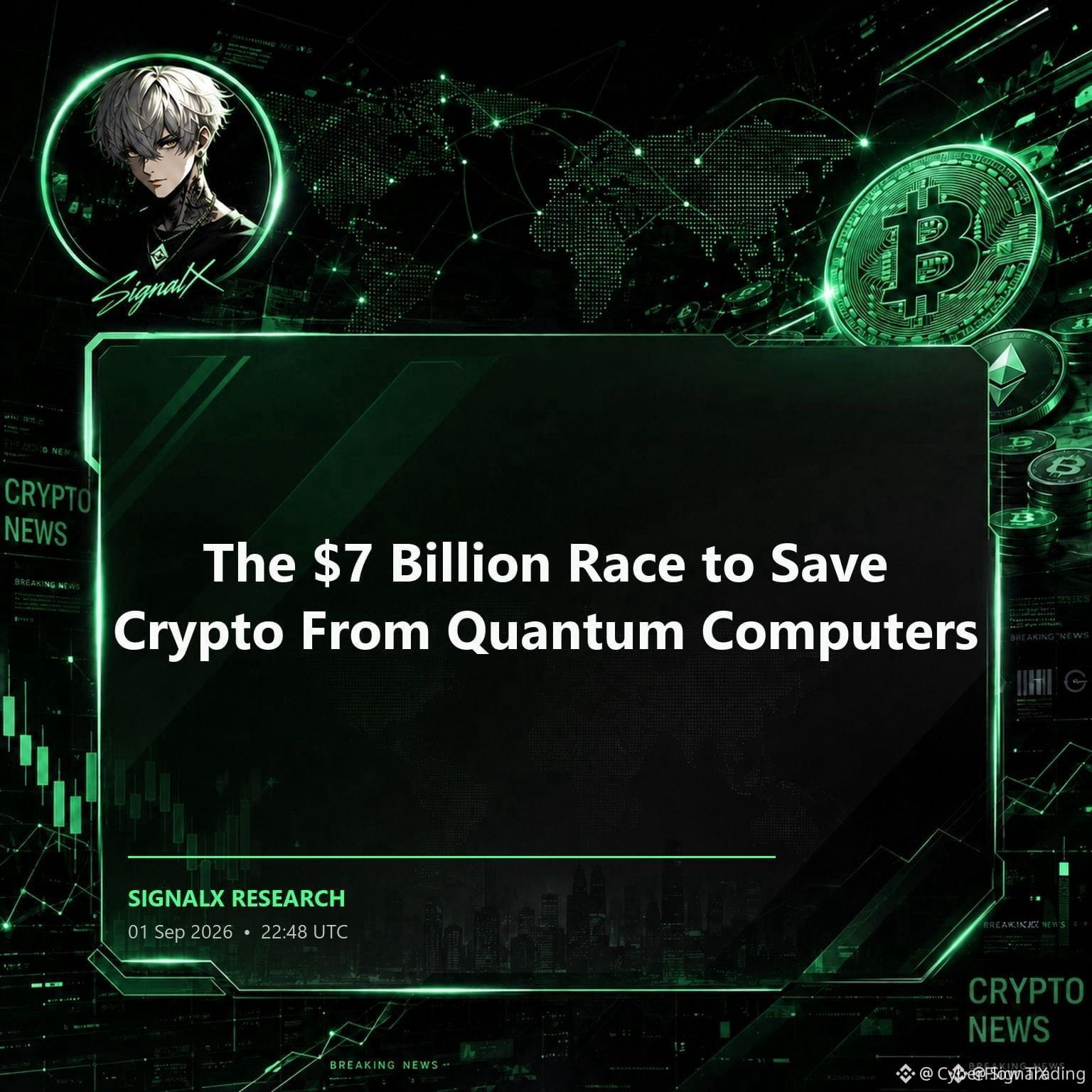
🚨 THE $7 BILLION QUANTUM THREAT IS COMING FOR $BTC INSTITUTIONAL CUSTODY 💥
While scrollers worry about daily noise, smart money is watching the $7 billion race to future-proof crypto encryption. The real danger for $BTC isn't just breaking 256-bit cryptography—it's the market panic if a single dormant Satoshi-era wallet suddenly moves under quantum pressure. 🔍
Federal updates and NIST standards are pushing custody giants to upgrade infrastructure before 2035, but legacy coins remain exposed. 📊 Institutional capital requires ironclad security, making quantum resistance the ultimate long-term narrative for high-conviction players. 💡
💬 Do you think core developers will execute a seamless upgrade in time, or will quantum panic spark market turbulence first? 👇
⚠️ Not financial advice. Always manage your risk. 🛡️
🏷️ #BTC #QuantumComputing #CryptoSecurity #Blockchain
🔥 💎
🚨 THE $7 BILLION QUANTUM THREAT IS COMING FOR $BTC INSTITUTIONAL CUSTODY 💥
While scrollers worry about daily noise, smart money is watching the $7 billion race to future-proof crypto encryption. The real danger for $BTC isn't just breaking 256-bit cryptography—it's the market panic if a single dormant Satoshi-era wallet suddenly moves under quantum pressure. 🔍
Federal updates and NIST standards are pushing custody giants to upgrade infrastructure before 2035, but legacy coins remain exposed. 📊 Institutional capital requires ironclad security, making quantum resistance the ultimate long-term narrative for high-conviction players. 💡
💬 Do you think core developers will execute a seamless upgrade in time, or will quantum panic spark market turbulence first? 👇
⚠️ Not financial advice. Always manage your risk. 🛡️
🏷️ #BTC #QuantumComputing #CryptoSecurity #Blockchain
🔥 💎
While scrollers worry about daily noise, smart money is watching the $7 billion race to future-proof crypto encryption. The real danger for $BTC isn't just breaking 256-bit cryptography—it's the market panic if a single dormant Satoshi-era wallet suddenly moves under quantum pressure. 🔍
Federal updates and NIST standards are pushing custody giants to upgrade infrastructure before 2035, but legacy coins remain exposed. 📊 Institutional capital requires ironclad security, making quantum resistance the ultimate long-term narrative for high-conviction players. 💡
💬 Do you think core developers will execute a seamless upgrade in time, or will quantum panic spark market turbulence first? 👇
⚠️ Not financial advice. Always manage your risk. 🛡️
🏷️ #BTC #QuantumComputing #CryptoSecurity #Blockchain
🔥 💎
9
Log in to explore more content
Join global crypto users on Binance Square
⚡️ Get latest and useful information about crypto.
💬 Trusted by the world’s largest crypto exchange.
👍 Discover real insights from verified creators.
Email / Phone number
Trending Topics
1
#MemeLaunchpads82%OfArcDayOneVolume
3,322 views
150 Discussing
2
#OstiumLoanDisputeHearingSetInNYFederalCourt
4,883 views
147 Discussing
3
#HyperliquidUSDCSupplyOvertakesSolana
0 views
6 Discussing
4
#SKPoliceRefer18PolymarketUsersToProsecutors
5,097 views
191 Discussing
5
#FedSEPProjects2026RateAt4.1%
12,031 views
281 Discussing
6
#USHouseAdvancesBitcoinReserveBill
6,682 views
208 Discussing
7
#AmazonGetsWarrantsToBuyGeneracStock
7,683 views
210 Discussing
8
#DotPlotSignalsOneMoreHikeIn2026
30,017 views
579 Discussing
9
#RobinhoodToSupportCircleArcNetwork
10,511 views
206 Discussing
10
#FedHikes25BpsUSStocksClose
43,550 views
494 Discussing