

#layer2
layer2
4.4M views
25,268 Discussing
Hot
Latest

·
--
Optimistic Rollups vs. ZK Rollups 🧵
Both help scale Ethereum, but they verify transactions differently.
🔹 Optimistic Rollups: assume transactions are valid unless challenged with a fraud proof.
🔹 ZK Rollups: use cryptographic validity proofs.
Which approach will shape the future of $ETH scaling?
#Ethereum #Layer2
{future}(ETHUSDT)
Optimistic Rollups vs. ZK Rollups 🧵
Both help scale Ethereum, but they verify transactions differently.
🔹 Optimistic Rollups: assume transactions are valid unless challenged with a fraud proof.
🔹 ZK Rollups: use cryptographic validity proofs.
Which approach will shape the future of $ETH scaling?
#Ethereum #Layer2
Both help scale Ethereum, but they verify transactions differently.
🔹 Optimistic Rollups: assume transactions are valid unless challenged with a fraud proof.
🔹 ZK Rollups: use cryptographic validity proofs.
Which approach will shape the future of $ETH scaling?
#Ethereum #Layer2
81

Arbitrum is leading the charge for Layer-2 networks, showing strong momentum with an active surge that has pushed it straight into today's top gainers! 💥
The network fundamentals have never looked stronger, with $ARB absorbing massive liquidity as dApp ecosystems across Ethereum search for cheap, lightning-fast settlement layers.
Key Metrics Driving This Pump:
🔹 Sudden influx of trading volume over the last 24 hours.
🔹 Massive increase in total transactions settled on-chain.
🔹 A decisive breakout from its multi-week horizontal range.
When large-cap utility tokens start pumping with volume like this, it usually signals that smart money is taking positions.
What is your next price target for $ARB? Are you going long or taking profits? Let's discuss! 📊
#ARBİTRUM #Layer2 #Ethereum #Altcoins
Arbitrum is leading the charge for Layer-2 networks, showing strong momentum with an active surge that has pushed it straight into today's top gainers! 💥
The network fundamentals have never looked stronger, with $ARB absorbing massive liquidity as dApp ecosystems across Ethereum search for cheap, lightning-fast settlement layers.
Key Metrics Driving This Pump:
🔹 Sudden influx of trading volume over the last 24 hours.
🔹 Massive increase in total transactions settled on-chain.
🔹 A decisive breakout from its multi-week horizontal range.
When large-cap utility tokens start pumping with volume like this, it usually signals that smart money is taking positions.
What is your next price target for $ARB ? Are you going long or taking profits? Let's discuss! 📊
#ARBİTRUM #Layer2 #Ethereum #Altcoins
The network fundamentals have never looked stronger, with $ARB absorbing massive liquidity as dApp ecosystems across Ethereum search for cheap, lightning-fast settlement layers.
Key Metrics Driving This Pump:
🔹 Sudden influx of trading volume over the last 24 hours.
🔹 Massive increase in total transactions settled on-chain.
🔹 A decisive breakout from its multi-week horizontal range.
When large-cap utility tokens start pumping with volume like this, it usually signals that smart money is taking positions.
What is your next price target for $ARB ? Are you going long or taking profits? Let's discuss! 📊
#ARBİTRUM #Layer2 #Ethereum #Altcoins
218

·
--
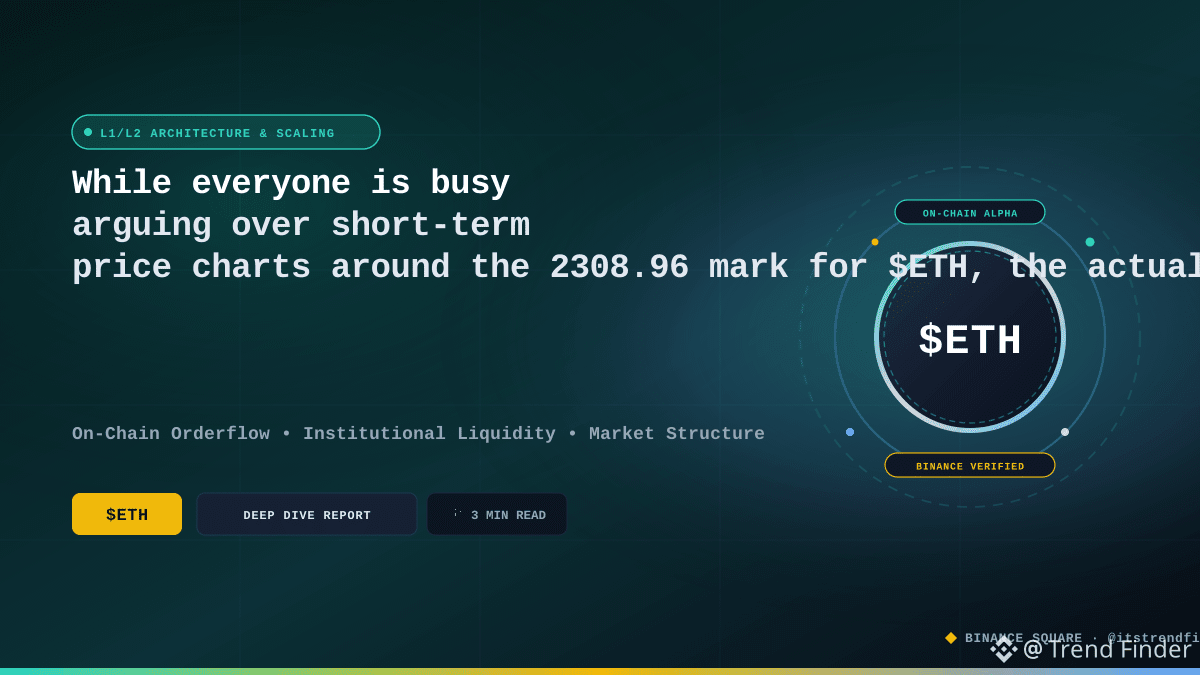
While everyone is busy arguing over short-term price charts around the 2308.96 mark for $ETH, the actual engineering reality of the network is shifting at a pace most retail desks are completely ignoring. The transition is no longer a theoretical roadmap; it is happening right now in the data plumbing of the Layer-2 ecosystem.
Looking closely at the on-chain metrics, daily active addresses and transaction throughput on rollups like Arbitrum and Optimism are soaking up the overwhelming majority of execution activity, leaving the base layer acting strictly as a high-security settlement layer. But the real structural evolution is happening in the zero-knowledge space. ZKsync and Starknet are aggressively compressing proof verification times, which is driving blob gas fees down to a fraction of last year's costs. This blob efficiency is the exact mechanism designed to make Ethereum scalable without sacrificing decentralization.
Bridge net inflows tell a clear story as well. Institutional capital is steadily rotating into these modular environments, favoring cryptographic validity over simple fraud-proof models. Meanwhile, developer commit frequency for core Ethereum clients remains unmatched across the entire crypto industry, providing a massive moat against fragmentation. When you combine this relentless developer activity with the automated supply burn governed by L2 data posting, the long-term fundamentals look entirely different from a standard high-inflation network. Are you seeing institutional capital lean heavier into ZK rollups or optimistic environments on your end?
#Layer2 #BlockchainScaling
While everyone is busy arguing over short-term price charts around the 2308.96 mark for $ETH , the actual engineering reality of the network is shifting at a pace most retail desks are completely ignoring. The transition is no longer a theoretical roadmap; it is happening right now in the data plumbing of the Layer-2 ecosystem.
Looking closely at the on-chain metrics, daily active addresses and transaction throughput on rollups like Arbitrum and Optimism are soaking up the overwhelming majority of execution activity, leaving the base layer acting strictly as a high-security settlement layer. But the real structural evolution is happening in the zero-knowledge space. ZKsync and Starknet are aggressively compressing proof verification times, which is driving blob gas fees down to a fraction of last year's costs. This blob efficiency is the exact mechanism designed to make Ethereum scalable without sacrificing decentralization.
Bridge net inflows tell a clear story as well. Institutional capital is steadily rotating into these modular environments, favoring cryptographic validity over simple fraud-proof models. Meanwhile, developer commit frequency for core Ethereum clients remains unmatched across the entire crypto industry, providing a massive moat against fragmentation. When you combine this relentless developer activity with the automated supply burn governed by L2 data posting, the long-term fundamentals look entirely different from a standard high-inflation network. Are you seeing institutional capital lean heavier into ZK rollups or optimistic environments on your end?
#Layer2 #BlockchainScaling
Looking closely at the on-chain metrics, daily active addresses and transaction throughput on rollups like Arbitrum and Optimism are soaking up the overwhelming majority of execution activity, leaving the base layer acting strictly as a high-security settlement layer. But the real structural evolution is happening in the zero-knowledge space. ZKsync and Starknet are aggressively compressing proof verification times, which is driving blob gas fees down to a fraction of last year's costs. This blob efficiency is the exact mechanism designed to make Ethereum scalable without sacrificing decentralization.
Bridge net inflows tell a clear story as well. Institutional capital is steadily rotating into these modular environments, favoring cryptographic validity over simple fraud-proof models. Meanwhile, developer commit frequency for core Ethereum clients remains unmatched across the entire crypto industry, providing a massive moat against fragmentation. When you combine this relentless developer activity with the automated supply burn governed by L2 data posting, the long-term fundamentals look entirely different from a standard high-inflation network. Are you seeing institutional capital lean heavier into ZK rollups or optimistic environments on your end?
#Layer2 #BlockchainScaling
28


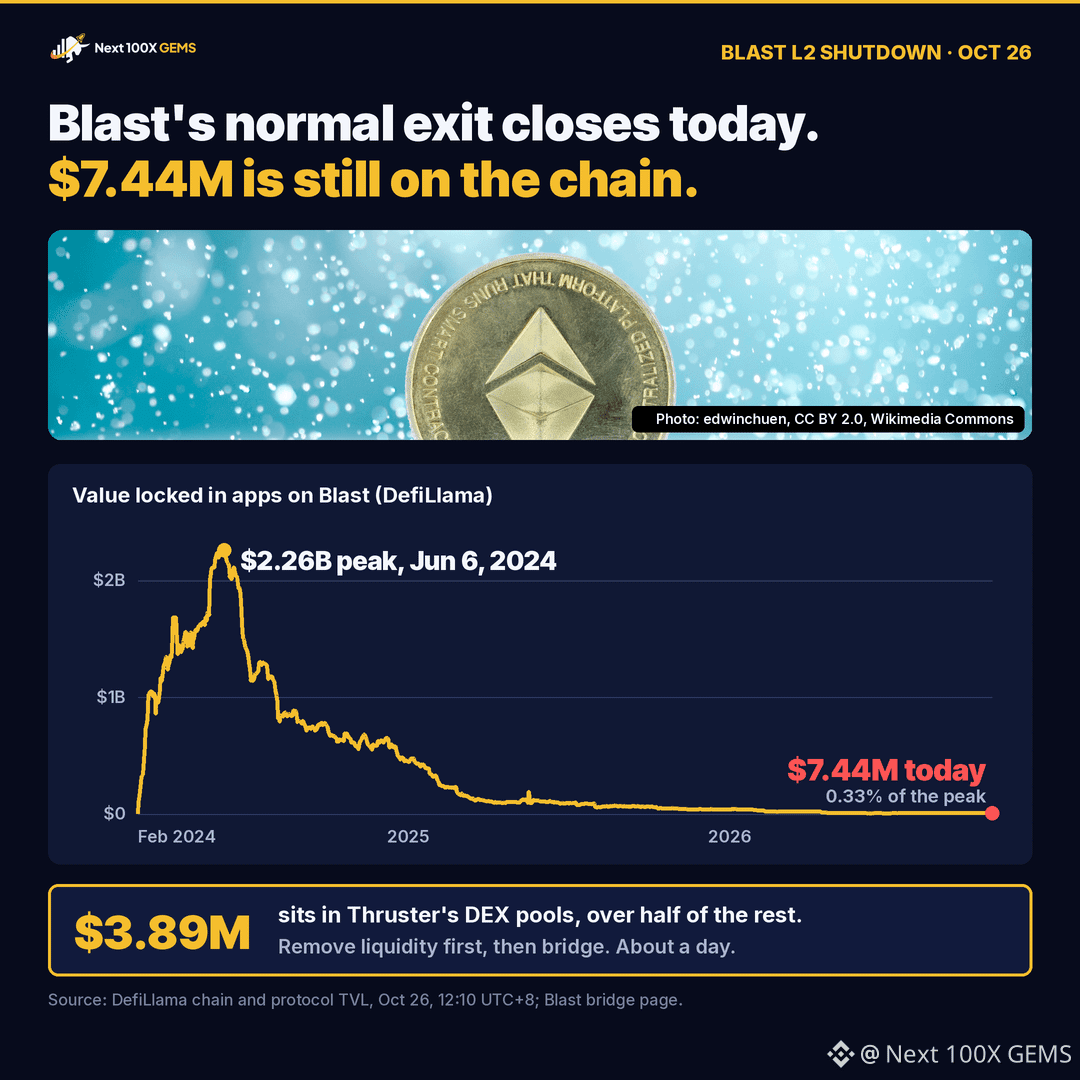
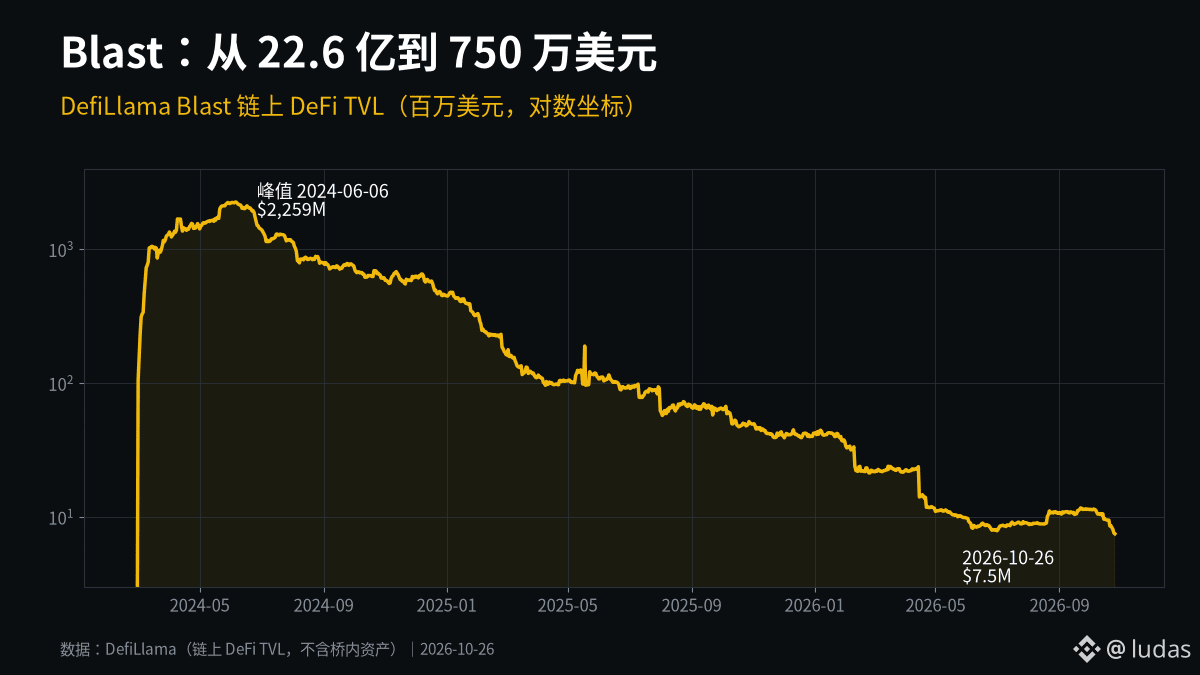
Blast's normal withdrawal route closes today, Oct 26, and DefiLlama still counts $7.44M sitting in apps on the chain.
That is about 0.33% of the $2.26B peak it recorded on June 6, 2024. The team announced the shutdown on Oct 2, saying the L2 costs more to run than it earns.
Over half of what's left sits in one DEX. Thruster's two pool versions hold about $3.89M (checked 12:10 UTC+8). LP tokens don't bridge on their own, so you remove the liquidity first and then bridge the coins back to Ethereum. Blast's bridge page says that leg takes about a day.
After today, Blast says funds can still come out, but only by calling its bridge contracts on Ethereum directly. It promised to publish instructions, and as of 12:10 UTC+8 its last post on X is a reminder from Oct 13.
Coinbase told users to move BLAST off before Oct 26 or lose access once the network shuts down.
Blast hasn't named a cutoff hour. If you still have anything on the chain, the PWA wallet included, start the exit now through the official Blast bridge. Anyone in your DMs offering to recover Blast funds is running a scam.
$BLAST
#Blast #Layer2
NFA. DYOR.
Blast's normal withdrawal route closes today, Oct 26, and DefiLlama still counts $7.44M sitting in apps on the chain.
That is about 0.33% of the $2.26B peak it recorded on June 6, 2024. The team announced the shutdown on Oct 2, saying the L2 costs more to run than it earns.
Over half of what's left sits in one DEX. Thruster's two pool versions hold about $3.89M (checked 12:10 UTC+8). LP tokens don't bridge on their own, so you remove the liquidity first and then bridge the coins back to Ethereum. Blast's bridge page says that leg takes about a day.
After today, Blast says funds can still come out, but only by calling its bridge contracts on Ethereum directly. It promised to publish instructions, and as of 12:10 UTC+8 its last post on X is a reminder from Oct 13.
Coinbase told users to move BLAST off before Oct 26 or lose access once the network shuts down.
Blast hasn't named a cutoff hour. If you still have anything on the chain, the PWA wallet included, start the exit now through the official Blast bridge. Anyone in your DMs offering to recover Blast funds is running a scam.
$BLAST
#Blast #Layer2
NFA. DYOR.
That is about 0.33% of the $2.26B peak it recorded on June 6, 2024. The team announced the shutdown on Oct 2, saying the L2 costs more to run than it earns.
Over half of what's left sits in one DEX. Thruster's two pool versions hold about $3.89M (checked 12:10 UTC+8). LP tokens don't bridge on their own, so you remove the liquidity first and then bridge the coins back to Ethereum. Blast's bridge page says that leg takes about a day.
After today, Blast says funds can still come out, but only by calling its bridge contracts on Ethereum directly. It promised to publish instructions, and as of 12:10 UTC+8 its last post on X is a reminder from Oct 13.
Coinbase told users to move BLAST off before Oct 26 or lose access once the network shuts down.
Blast hasn't named a cutoff hour. If you still have anything on the chain, the PWA wallet included, start the exit now through the official Blast bridge. Anyone in your DMs offering to recover Blast funds is running a scam.
$BLAST
#Blast #Layer2
NFA. DYOR.
138

Bitcoin Hyper ($HYPER ) - Part 2 | My Accumulation Plan 🚀
Part 1 got 282+ Views, thanks for the support!
Quick Update: BTC is down -1.34% but HYPER is holding better -0.47% - This is strength!
My Plan for $HYPER:
1️⃣ Why I like it: Bitcoin's Fast Layer-2 narrative is getting hot on Binance Square
2️⃣ My Entry: DCA on dips, not FOMO on pumps
3️⃣ My View: If BTC holds $80K, Layer-2 tokens could run fast
This is not financial advice. DYOR!
Are you buying $HYPER on this dip or waiting? Let's discuss 👇
$BTC
{spot}(BTCUSDT)
#BitcoinHyper #Layer2 #crypto #BinanceSquare #BTC☀
Bitcoin Hyper ($HYPER ) - Part 2 | My Accumulation Plan 🚀
Part 1 got 282+ Views, thanks for the support!
Quick Update: BTC is down -1.34% but HYPER is holding better -0.47% - This is strength!
My Plan for $HYPER :
1️⃣ Why I like it: Bitcoin's Fast Layer-2 narrative is getting hot on Binance Square
2️⃣ My Entry: DCA on dips, not FOMO on pumps
3️⃣ My View: If BTC holds $80K, Layer-2 tokens could run fast
This is not financial advice. DYOR!
Are you buying $HYPER on this dip or waiting? Let's discuss 👇
$BTC
#BitcoinHyper #Layer2 #crypto #BinanceSquare #BTC☀
Part 1 got 282+ Views, thanks for the support!
Quick Update: BTC is down -1.34% but HYPER is holding better -0.47% - This is strength!
My Plan for $HYPER :
1️⃣ Why I like it: Bitcoin's Fast Layer-2 narrative is getting hot on Binance Square
2️⃣ My Entry: DCA on dips, not FOMO on pumps
3️⃣ My View: If BTC holds $80K, Layer-2 tokens could run fast
This is not financial advice. DYOR!
Are you buying $HYPER on this dip or waiting? Let's discuss 👇
$BTC
#BitcoinHyper #Layer2 #crypto #BinanceSquare #BTC☀
1
226
·
--
Article
Ethereum Blobs Explained: How EIP-4844 Helps Layer 2 ScaleEthereum Blobs Explained: How EIP-4844 Helps Layer 2 Scale
Ethereum scaling isn't just about processing more transactions. It's also about making transaction data cheaper to publish and verify.
That's where blobs come in.
1. What are Ethereum blobs?
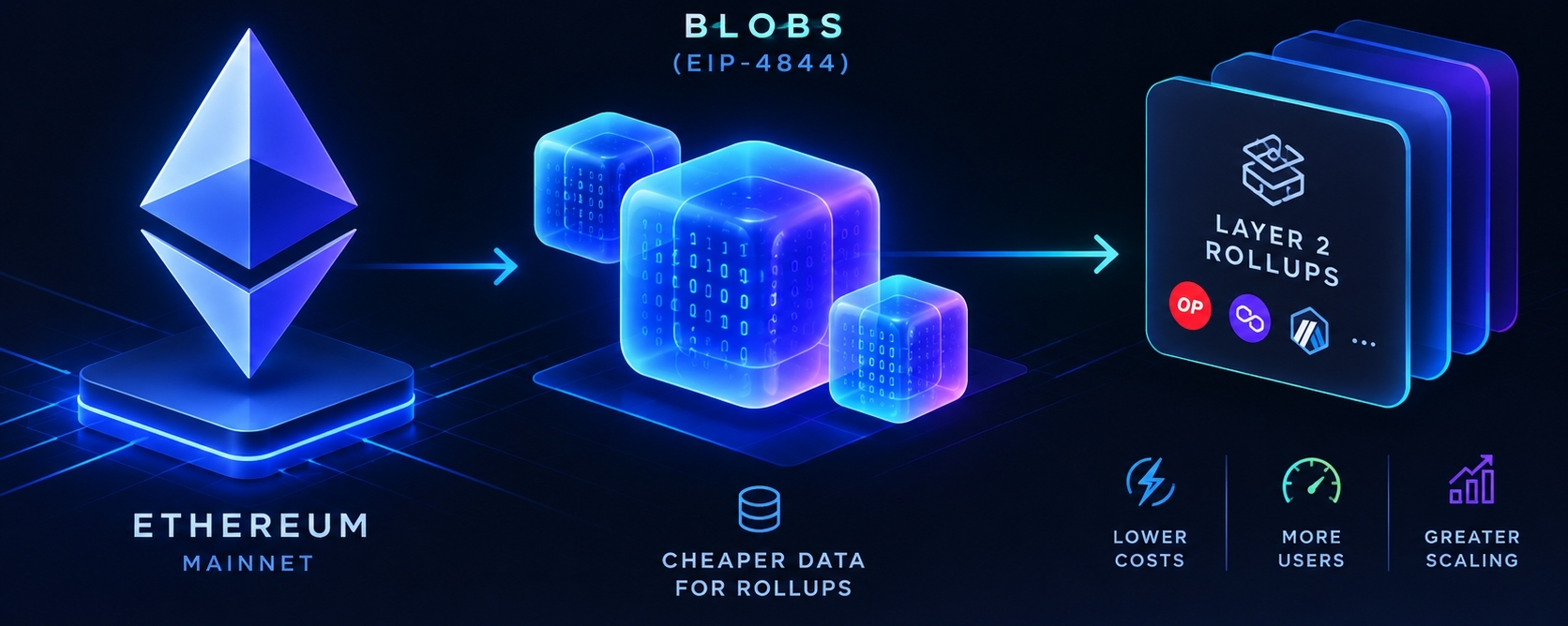
Blobs are temporary data packages introduced by EIP-4844, also known as Proto-Danksharding, as part of Ethereum's Dencun upgrade.
They give Layer 2 rollups a more cost-efficient way to publish transaction data to Ethereum.
Previously, rollups commonly used transaction calldata, which competes with regular Ethereum transactions for execution gas.
Blobs provide a separate data-fee market designed for this specific purpose.
2. Why do Layer 2 networks need them?
Layer 2 rollups process transactions outside Ethereum's main execution layer and submit batches of data back to Ethereum.
This helps scale transaction processing, but publishing data to Ethereum can be expensive.
Blobs help by providing:
🔹 Lower data costs: Rollups can publish data more cheaply than using calldata in many circumstances.
🔹 A separate fee market: Blob fees are calculated separately from ordinary execution gas fees.
🔹 Better scaling potential: Lower data costs can help rollups serve more users economically.
However, savings vary with network demand, rollup design, and other transaction costs. Lower blob fees don't automatically mean every transaction on every L2 becomes cheap.
3. Are blobs permanent storage?
No—and this distinction matters.
Blob data is not permanently stored by Ethereum's consensus protocol. Under EIP-4844, nodes are required to retain blob data for a limited period, initially about 18 days.
The blob's commitment remains available on-chain, but that commitment is not the same as the complete original data.
Rollups and other ecosystem participants may preserve historical data through their own infrastructure.
This design reduces long-term data-storage requirements while supporting the availability needs of rollups.
4. Do blobs make Ethereum infinitely scalable?
Not by themselves.
EIP-4844 was an intermediate step toward Ethereum's broader scaling roadmap.
Blobs improved the way rollups publish data, but the network still has capacity limits. Blob demand, fee levels, node requirements, and rollup architecture continue to matter.
Future data-availability improvements aim to increase capacity while maintaining Ethereum's security and decentralization goals.
5. What should users understand?
If you use an Ethereum Layer 2 network, remember three things:
• Lower data costs can help reduce transaction fees, but they don't guarantee a particular fee.
• Different rollups have different architectures, costs, and security assumptions.
• Ethereum scaling involves more than transaction speed. Data availability and the ability to verify transactions are also essential.
My takeaway: Ethereum blobs are an important infrastructure upgrade—not a magic solution. They help rollups publish data more efficiently while Ethereum continues working toward greater scalability.
Sources for further reading
1. Ethereum.org — Danksharding roadmap: https://ethereum.org/roadmap/danksharding
2. Ethereum Improvement Proposals — EIP-4844: https://eips.ethereum.org/EIPS/eip-4844
3. Ethereum.org — Blockchain data storage strategies: https://ethereum.org/developers/docs/data-availability/blockchain-data-storage-strategies/
What do you think matters most for Ethereum's future: cheaper L2 transactions, stronger decentralization, or greater data availability?
$ETH
#Ethereum #Layer2 #Web3 #Crypto
Ethereum Blobs Explained: How EIP-4844 Helps Layer 2 Scale
Ethereum Blobs Explained: How EIP-4844 Helps Layer 2 Scale
Ethereum scaling isn't just about processing more transactions. It's also about making transaction data cheaper to publish and verify.
That's where blobs come in.
1. What are Ethereum blobs?
Blobs are temporary data packages introduced by EIP-4844, also known as Proto-Danksharding, as part of Ethereum's Dencun upgrade.
They give Layer 2 rollups a more cost-efficient way to publish transaction data to Ethereum.
Previously, rollups commonly used transaction calldata, which competes with regular Ethereum transactions for execution gas.
Blobs provide a separate data-fee market designed for this specific purpose.
2. Why do Layer 2 networks need them?
Layer 2 rollups process transactions outside Ethereum's main execution layer and submit batches of data back to Ethereum.
This helps scale transaction processing, but publishing data to Ethereum can be expensive.
Blobs help by providing:
🔹 Lower data costs: Rollups can publish data more cheaply than using calldata in many circumstances.
🔹 A separate fee market: Blob fees are calculated separately from ordinary execution gas fees.
🔹 Better scaling potential: Lower data costs can help rollups serve more users economically.
However, savings vary with network demand, rollup design, and other transaction costs. Lower blob fees don't automatically mean every transaction on every L2 becomes cheap.
3. Are blobs permanent storage?
No—and this distinction matters.
Blob data is not permanently stored by Ethereum's consensus protocol. Under EIP-4844, nodes are required to retain blob data for a limited period, initially about 18 days.
The blob's commitment remains available on-chain, but that commitment is not the same as the complete original data.
Rollups and other ecosystem participants may preserve historical data through their own infrastructure.
This design reduces long-term data-storage requirements while supporting the availability needs of rollups.
4. Do blobs make Ethereum infinitely scalable?
Not by themselves.
EIP-4844 was an intermediate step toward Ethereum's broader scaling roadmap.
Blobs improved the way rollups publish data, but the network still has capacity limits. Blob demand, fee levels, node requirements, and rollup architecture continue to matter.
Future data-availability improvements aim to increase capacity while maintaining Ethereum's security and decentralization goals.
5. What should users understand?
If you use an Ethereum Layer 2 network, remember three things:
• Lower data costs can help reduce transaction fees, but they don't guarantee a particular fee.
• Different rollups have different architectures, costs, and security assumptions.
• Ethereum scaling involves more than transaction speed. Data availability and the ability to verify transactions are also essential.
My takeaway: Ethereum blobs are an important infrastructure upgrade—not a magic solution. They help rollups publish data more efficiently while Ethereum continues working toward greater scalability.
Sources for further reading
1. Ethereum.org — Danksharding roadmap: https://ethereum.org/roadmap/danksharding
2. Ethereum Improvement Proposals — EIP-4844: https://eips.ethereum.org/EIPS/eip-4844
3. Ethereum.org — Blockchain data storage strategies: https://ethereum.org/developers/docs/data-availability/blockchain-data-storage-strategies/
What do you think matters most for Ethereum's future: cheaper L2 transactions, stronger decentralization, or greater data availability?
$ETH
#Ethereum #Layer2 #Web3 #Crypto
Ethereum scaling isn't just about processing more transactions. It's also about making transaction data cheaper to publish and verify.
That's where blobs come in.
1. What are Ethereum blobs?
Blobs are temporary data packages introduced by EIP-4844, also known as Proto-Danksharding, as part of Ethereum's Dencun upgrade.
They give Layer 2 rollups a more cost-efficient way to publish transaction data to Ethereum.
Previously, rollups commonly used transaction calldata, which competes with regular Ethereum transactions for execution gas.
Blobs provide a separate data-fee market designed for this specific purpose.
2. Why do Layer 2 networks need them?
Layer 2 rollups process transactions outside Ethereum's main execution layer and submit batches of data back to Ethereum.
This helps scale transaction processing, but publishing data to Ethereum can be expensive.
Blobs help by providing:
🔹 Lower data costs: Rollups can publish data more cheaply than using calldata in many circumstances.
🔹 A separate fee market: Blob fees are calculated separately from ordinary execution gas fees.
🔹 Better scaling potential: Lower data costs can help rollups serve more users economically.
However, savings vary with network demand, rollup design, and other transaction costs. Lower blob fees don't automatically mean every transaction on every L2 becomes cheap.
3. Are blobs permanent storage?
No—and this distinction matters.
Blob data is not permanently stored by Ethereum's consensus protocol. Under EIP-4844, nodes are required to retain blob data for a limited period, initially about 18 days.
The blob's commitment remains available on-chain, but that commitment is not the same as the complete original data.
Rollups and other ecosystem participants may preserve historical data through their own infrastructure.
This design reduces long-term data-storage requirements while supporting the availability needs of rollups.
4. Do blobs make Ethereum infinitely scalable?
Not by themselves.
EIP-4844 was an intermediate step toward Ethereum's broader scaling roadmap.
Blobs improved the way rollups publish data, but the network still has capacity limits. Blob demand, fee levels, node requirements, and rollup architecture continue to matter.
Future data-availability improvements aim to increase capacity while maintaining Ethereum's security and decentralization goals.
5. What should users understand?
If you use an Ethereum Layer 2 network, remember three things:
• Lower data costs can help reduce transaction fees, but they don't guarantee a particular fee.
• Different rollups have different architectures, costs, and security assumptions.
• Ethereum scaling involves more than transaction speed. Data availability and the ability to verify transactions are also essential.
My takeaway: Ethereum blobs are an important infrastructure upgrade—not a magic solution. They help rollups publish data more efficiently while Ethereum continues working toward greater scalability.
Sources for further reading
1. Ethereum.org — Danksharding roadmap: https://ethereum.org/roadmap/danksharding
2. Ethereum Improvement Proposals — EIP-4844: https://eips.ethereum.org/EIPS/eip-4844
3. Ethereum.org — Blockchain data storage strategies: https://ethereum.org/developers/docs/data-availability/blockchain-data-storage-strategies/
What do you think matters most for Ethereum's future: cheaper L2 transactions, stronger decentralization, or greater data availability?
$ETH
#Ethereum #Layer2 #Web3 #Crypto
57

💀 Is your favorite L2 just a liquidity-extraction scam?
Seriously, do you really believe in 50x gains on tokens where 90% of the volume is bots farming points for an airdrop? 🤡
Every day, “Ethereum killers” promise a revolution, but in reality, whales are just dumping their bags on retail. There won’t be another altseason “for everyone.” There simply isn’t enough liquidity for 10,000 identical L2 networks. Smart money takes it all while the crowd keeps averaging down on falling knives.
💡 My take: Take off the rose-colored glasses. The only winners are ecosystems with real TVL and yields, not flashy marketing.
👇 Name one L2 token in the comments that you still firmly believe will reach its ATH again. Let’s see how many “optimists” like us are here 👇
$ETH $ARB $STRK
#crypto #altcoins #Layer2 #trading
💀 Is your favorite L2 just a liquidity-extraction scam?
Seriously, do you really believe in 50x gains on tokens where 90% of the volume is bots farming points for an airdrop? 🤡
Every day, “Ethereum killers” promise a revolution, but in reality, whales are just dumping their bags on retail. There won’t be another altseason “for everyone.” There simply isn’t enough liquidity for 10,000 identical L2 networks. Smart money takes it all while the crowd keeps averaging down on falling knives.
💡 My take: Take off the rose-colored glasses. The only winners are ecosystems with real TVL and yields, not flashy marketing.
👇 Name one L2 token in the comments that you still firmly believe will reach its ATH again. Let’s see how many “optimists” like us are here 👇
$ETH $ARB $STRK
#crypto #altcoins #Layer2 #trading
Seriously, do you really believe in 50x gains on tokens where 90% of the volume is bots farming points for an airdrop? 🤡
Every day, “Ethereum killers” promise a revolution, but in reality, whales are just dumping their bags on retail. There won’t be another altseason “for everyone.” There simply isn’t enough liquidity for 10,000 identical L2 networks. Smart money takes it all while the crowd keeps averaging down on falling knives.
💡 My take: Take off the rose-colored glasses. The only winners are ecosystems with real TVL and yields, not flashy marketing.
👇 Name one L2 token in the comments that you still firmly believe will reach its ATH again. Let’s see how many “optimists” like us are here 👇
$ETH $ARB $STRK
#crypto #altcoins #Layer2 #trading
ABO3ZAM:
كلامك في الصميم يا وحش، السيولة فعلاً مبعثرة. شرايك، هل تشوف إغلاق الشمعة الأسبوعية تحت مستويات الدعم الحالية بيعطينا كسر وهمي ولا بداية لموجة تصحيح أقوى؟ 🎯
4
832

·
--
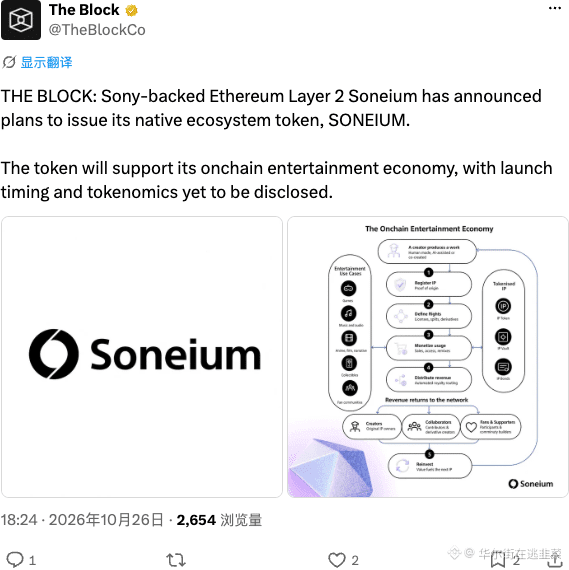
Sony-backed Soneium has finally launched its token, but we’re not quite ready to breathe easy yet.
Its positioning as an on-chain entertainment ecosystem makes sense, but the timing and tokenomics haven’t been announced yet, so there are still plenty of question marks. Sony IP alone can only carry it so far—as long as they don’t pull any extractive moves. The real test is whether the ecosystem can attract and sustain traffic. Waiting for something concrete.
SONEIUM
#Layer2
Sony-backed Soneium has finally launched its token, but we’re not quite ready to breathe easy yet.
Its positioning as an on-chain entertainment ecosystem makes sense, but the timing and tokenomics haven’t been announced yet, so there are still plenty of question marks. Sony IP alone can only carry it so far—as long as they don’t pull any extractive moves. The real test is whether the ecosystem can attract and sustain traffic. Waiting for something concrete.
SONEIUM
#Layer2
Its positioning as an on-chain entertainment ecosystem makes sense, but the timing and tokenomics haven’t been announced yet, so there are still plenty of question marks. Sony IP alone can only carry it so far—as long as they don’t pull any extractive moves. The real test is whether the ecosystem can attract and sustain traffic. Waiting for something concrete.
SONEIUM
#Layer2
·
--
An L2 that once held $2.26 billion has officially shut down its regular withdrawal channel today—with about $40 million still sitting in the bridge ⚠️
📊 Key figures:
• DefiLlama: Blast’s on-chain DeFi TVL peaked at about $2.26 billion (2024-06-06); by 10/26, only about $7.5 million remained, a drop of over 99%
• TokenPost: Assets in the official Ethereum bridge totaled about $63.5 million on 10/2; as of 10/26, about $40.41 million remained
• On 10/2, Blast announced it would shut down, citing operating costs exceeding revenue and no viable path to sustainability
🧵 What if you haven’t withdrawn yet? Your assets aren’t lost, but you’ll need to follow a contract-level process (see the official docs):
1️⃣ Initiate a withdrawal on Blast
2️⃣ After up to about 1 hour, submit a proof to Ethereum’s OptimismPortal
3️⃣ Wait through the 1-day challenge period, then execute the final transaction
To withdraw $BLAST to Ethereum, you must enter the official L1 address 0x71b9…b1Fa. Entering the wrong address will lock your funds permanently; USDB also requires an additional claim for DAI.
⚠️ There will almost certainly be phishing attempts using fake “withdrawal assistants” during this period—only trust the official docs.
My take: TVL attracted by points and airdrops will leave as soon as the incentives stop. The $ETH L2 space is undergoing a shake-up, and “can it generate real fee revenue?” matters far more than peak TVL.
Do you still have assets on a chain that has shut down? Who will be next? 👇
#Blast #Layer2 #以太坊 #On-chainData
An L2 that once held $2.26 billion has officially shut down its regular withdrawal channel today—with about $40 million still sitting in the bridge ⚠️
📊 Key figures:
• DefiLlama: Blast’s on-chain DeFi TVL peaked at about $2.26 billion (2024-06-06); by 10/26, only about $7.5 million remained, a drop of over 99%
• TokenPost: Assets in the official Ethereum bridge totaled about $63.5 million on 10/2; as of 10/26, about $40.41 million remained
• On 10/2, Blast announced it would shut down, citing operating costs exceeding revenue and no viable path to sustainability
🧵 What if you haven’t withdrawn yet? Your assets aren’t lost, but you’ll need to follow a contract-level process (see the official docs):
1️⃣ Initiate a withdrawal on Blast
2️⃣ After up to about 1 hour, submit a proof to Ethereum’s OptimismPortal
3️⃣ Wait through the 1-day challenge period, then execute the final transaction
To withdraw $BLAST to Ethereum, you must enter the official L1 address 0x71b9…b1Fa. Entering the wrong address will lock your funds permanently; USDB also requires an additional claim for DAI.
⚠️ There will almost certainly be phishing attempts using fake “withdrawal assistants” during this period—only trust the official docs.
My take: TVL attracted by points and airdrops will leave as soon as the incentives stop. The $ETH L2 space is undergoing a shake-up, and “can it generate real fee revenue?” matters far more than peak TVL.
Do you still have assets on a chain that has shut down? Who will be next? 👇
#Blast #Layer2 #以太坊 #On-chainData
📊 Key figures:
• DefiLlama: Blast’s on-chain DeFi TVL peaked at about $2.26 billion (2024-06-06); by 10/26, only about $7.5 million remained, a drop of over 99%
• TokenPost: Assets in the official Ethereum bridge totaled about $63.5 million on 10/2; as of 10/26, about $40.41 million remained
• On 10/2, Blast announced it would shut down, citing operating costs exceeding revenue and no viable path to sustainability
🧵 What if you haven’t withdrawn yet? Your assets aren’t lost, but you’ll need to follow a contract-level process (see the official docs):
1️⃣ Initiate a withdrawal on Blast
2️⃣ After up to about 1 hour, submit a proof to Ethereum’s OptimismPortal
3️⃣ Wait through the 1-day challenge period, then execute the final transaction
To withdraw $BLAST to Ethereum, you must enter the official L1 address 0x71b9…b1Fa. Entering the wrong address will lock your funds permanently; USDB also requires an additional claim for DAI.
⚠️ There will almost certainly be phishing attempts using fake “withdrawal assistants” during this period—only trust the official docs.
My take: TVL attracted by points and airdrops will leave as soon as the incentives stop. The $ETH L2 space is undergoing a shake-up, and “can it generate real fee revenue?” matters far more than peak TVL.
Do you still have assets on a chain that has shut down? Who will be next? 👇
#Blast #Layer2 #以太坊 #On-chainData
79

·
--
Important reminder: Blast has announced that it will cease operations. If you still have assets on Blast, mark October 26, 2026 as your final deadline to take action: until then, you can continue withdrawing through the regular interface, which is relatively straightforward. After that, your assets won’t be impossible to withdraw, but you’ll have to interact directly with the Blast bridge contract on Ethereum L1. This will involve a higher technical bar, more gas costs, and a greater risk of mistakes.
Don’t wait until the last minute: promptly check your balances, allowances, and unclaimed rewards; withdraw in batches to a wallet you control; and save your transaction records. Participating in an L2 ecosystem always carries the real risk that its front end may shut down or the project may cease operations. Migrating your assets in time and maintaining self-custody are more important than earning extra returns.#Blast #Layer2 #OnchainSecurity
Important reminder: Blast has announced that it will cease operations. If you still have assets on Blast, mark October 26, 2026 as your final deadline to take action: until then, you can continue withdrawing through the regular interface, which is relatively straightforward. After that, your assets won’t be impossible to withdraw, but you’ll have to interact directly with the Blast bridge contract on Ethereum L1. This will involve a higher technical bar, more gas costs, and a greater risk of mistakes.
Don’t wait until the last minute: promptly check your balances, allowances, and unclaimed rewards; withdraw in batches to a wallet you control; and save your transaction records. Participating in an L2 ecosystem always carries the real risk that its front end may shut down or the project may cease operations. Migrating your assets in time and maintaining self-custody are more important than earning extra returns.#Blast #Layer2 #OnchainSecurity
Don’t wait until the last minute: promptly check your balances, allowances, and unclaimed rewards; withdraw in batches to a wallet you control; and save your transaction records. Participating in an L2 ecosystem always carries the real risk that its front end may shut down or the project may cease operations. Migrating your assets in time and maintaining self-custody are more important than earning extra returns.#Blast #Layer2 #OnchainSecurity
39

·
--
Important date: Blast has announced that it will cease operations.
If you still have assets on Blast, please withdraw them through its regular interface by October 26, 2026, if possible. This is the simplest process and helps avoid network congestion or changes to the website at the last minute.
Your assets will not become unrecoverable after October 26, but you will need to interact directly with the Blast bridge contract on Ethereum L1. This involves a significantly higher barrier to entry, gas costs, and risk of user error.
We recommend checking your balance, approvals, and pending transactions in advance. Don’t wait until the last minute, and be sure to confirm that your assets have arrived at a wallet address you control after withdrawing.
#Blast #Layer2 #SecurityReminder
Important date: Blast has announced that it will cease operations.
If you still have assets on Blast, please withdraw them through its regular interface by October 26, 2026, if possible. This is the simplest process and helps avoid network congestion or changes to the website at the last minute.
Your assets will not become unrecoverable after October 26, but you will need to interact directly with the Blast bridge contract on Ethereum L1. This involves a significantly higher barrier to entry, gas costs, and risk of user error.
We recommend checking your balance, approvals, and pending transactions in advance. Don’t wait until the last minute, and be sure to confirm that your assets have arrived at a wallet address you control after withdrawing.
#Blast #Layer2 #SecurityReminder
If you still have assets on Blast, please withdraw them through its regular interface by October 26, 2026, if possible. This is the simplest process and helps avoid network congestion or changes to the website at the last minute.
Your assets will not become unrecoverable after October 26, but you will need to interact directly with the Blast bridge contract on Ethereum L1. This involves a significantly higher barrier to entry, gas costs, and risk of user error.
We recommend checking your balance, approvals, and pending transactions in advance. Don’t wait until the last minute, and be sure to confirm that your assets have arrived at a wallet address you control after withdrawing.
#Blast #Layer2 #SecurityReminder
190

·
--
Blast Layer 2 is closing its official withdrawal interface today (10/26)—if you still have funds on the chain, take note
According to a 10/2 report by The Block: Paradigm-led Ethereum L2 Blast announced it would wind down, citing operating costs exceeding revenue and no visible path to sustainability. Its TVL fell from over $2 billion before mainnet launch to about $32 million (DefiLlama).
Official notice: You can withdraw normally via the official website bridge before 10/26, with funds arriving in about one day. After that, withdrawals will only be possible by directly calling the bridge contract on Ethereum.
Latest L2BEAT data: Blast still holds about $44.69 million in assets (down 10.8% over 7 days), around 70% of which are ETH-related assets, with approximately $9.15 million in stablecoins.
Market context: ETH is around $2,340, while Ethereum spot ETFs have seen cumulative net outflows of about $1.18 billion in October (Decrypt).
【Commentary】
This is the clearest example of how the “use points and airdrops to attract TVL” model ends: once incentives stop, funds leave, and the chain’s revenue can’t cover sequencer and security costs. The L2 sector is undergoing a shakeout, with users and capital likely to keep concentrating in leading rollups and on mainnet. The valuation rationale for long-tail L2 tokens needs to be reassessed.
【Opportunities/Risks】
1. If you still have assets on Blast, using the official bridge today is the easiest option. Withdrawing through the contract afterward has a higher technical barrier. Watch out for phishing websites and DMs impersonating “withdrawal services.”
2. Keep an eye on whether other low-TVL L2s sustained by incentives will also shut down or merge; related tokens may come under pressure.
3. For ETH in the short term, watch the $2,330–$2,350 support range. ETF flows remain a key variable ahead of this week’s FOMC meeting.
Which L2 do you think will be the next to run out of steam? Is this a healthy industry shakeout, or a sign that the L2 narrative is fading?
#以太坊 #Layer2 #Blast #加密新闻 $ETH $OP
For informational purposes only; this is not investment advice.
Blast Layer 2 is closing its official withdrawal interface today (10/26)—if you still have funds on the chain, take note
According to a 10/2 report by The Block: Paradigm-led Ethereum L2 Blast announced it would wind down, citing operating costs exceeding revenue and no visible path to sustainability. Its TVL fell from over $2 billion before mainnet launch to about $32 million (DefiLlama).
Official notice: You can withdraw normally via the official website bridge before 10/26, with funds arriving in about one day. After that, withdrawals will only be possible by directly calling the bridge contract on Ethereum.
Latest L2BEAT data: Blast still holds about $44.69 million in assets (down 10.8% over 7 days), around 70% of which are ETH-related assets, with approximately $9.15 million in stablecoins.
Market context: ETH is around $2,340, while Ethereum spot ETFs have seen cumulative net outflows of about $1.18 billion in October (Decrypt).
【Commentary】
This is the clearest example of how the “use points and airdrops to attract TVL” model ends: once incentives stop, funds leave, and the chain’s revenue can’t cover sequencer and security costs. The L2 sector is undergoing a shakeout, with users and capital likely to keep concentrating in leading rollups and on mainnet. The valuation rationale for long-tail L2 tokens needs to be reassessed.
【Opportunities/Risks】
1. If you still have assets on Blast, using the official bridge today is the easiest option. Withdrawing through the contract afterward has a higher technical barrier. Watch out for phishing websites and DMs impersonating “withdrawal services.”
2. Keep an eye on whether other low-TVL L2s sustained by incentives will also shut down or merge; related tokens may come under pressure.
3. For ETH in the short term, watch the $2,330–$2,350 support range. ETF flows remain a key variable ahead of this week’s FOMC meeting.
Which L2 do you think will be the next to run out of steam? Is this a healthy industry shakeout, or a sign that the L2 narrative is fading?
#以太坊 #Layer2 #Blast #加密新闻 $ETH $OP
For informational purposes only; this is not investment advice.
According to a 10/2 report by The Block: Paradigm-led Ethereum L2 Blast announced it would wind down, citing operating costs exceeding revenue and no visible path to sustainability. Its TVL fell from over $2 billion before mainnet launch to about $32 million (DefiLlama).
Official notice: You can withdraw normally via the official website bridge before 10/26, with funds arriving in about one day. After that, withdrawals will only be possible by directly calling the bridge contract on Ethereum.
Latest L2BEAT data: Blast still holds about $44.69 million in assets (down 10.8% over 7 days), around 70% of which are ETH-related assets, with approximately $9.15 million in stablecoins.
Market context: ETH is around $2,340, while Ethereum spot ETFs have seen cumulative net outflows of about $1.18 billion in October (Decrypt).
【Commentary】
This is the clearest example of how the “use points and airdrops to attract TVL” model ends: once incentives stop, funds leave, and the chain’s revenue can’t cover sequencer and security costs. The L2 sector is undergoing a shakeout, with users and capital likely to keep concentrating in leading rollups and on mainnet. The valuation rationale for long-tail L2 tokens needs to be reassessed.
【Opportunities/Risks】
1. If you still have assets on Blast, using the official bridge today is the easiest option. Withdrawing through the contract afterward has a higher technical barrier. Watch out for phishing websites and DMs impersonating “withdrawal services.”
2. Keep an eye on whether other low-TVL L2s sustained by incentives will also shut down or merge; related tokens may come under pressure.
3. For ETH in the short term, watch the $2,330–$2,350 support range. ETF flows remain a key variable ahead of this week’s FOMC meeting.
Which L2 do you think will be the next to run out of steam? Is this a healthy industry shakeout, or a sign that the L2 narrative is fading?
#以太坊 #Layer2 #Blast #加密新闻 $ETH $OP
For informational purposes only; this is not investment advice.

430
·
--
The Hyperliquid ecosystem is about to get its first Layer 2. According to TokenPost, Elysium plans to launch its mainnet on November 9, using HyperEVM as its settlement layer and running in parallel with HyperCore, which handles trade matching. It will use $HYPE as its gas token and currently uses Conduit's G2 sequencer. The plans for what comes next are even more noteworthy: the team intends to deploy Hyperliquid nodes at Equinix TY15 in Tokyo to sync state data from HyperCore and HyperEVM, then, through an upgrade about four weeks after the mainnet launch, allow smart contracts on the L2 to read HyperCore's order book, prices, and positions directly. If implemented, this would let developers build derivatives, lending, or strategy applications on-chain around a high-performance order book—a step in Hyperliquid's evolution from a standalone exchange into a platform. However, the sequencer is still operated by a single party, so the degree of decentralization and security in the early days of the mainnet will need time to be tested. We recommend reviewing the official documentation before participating.
#Hyperliquid #Layer2 #DeFi #PerpetualContracts
The Hyperliquid ecosystem is about to get its first Layer 2. According to TokenPost, Elysium plans to launch its mainnet on November 9, using HyperEVM as its settlement layer and running in parallel with HyperCore, which handles trade matching. It will use $HYPE as its gas token and currently uses Conduit's G2 sequencer. The plans for what comes next are even more noteworthy: the team intends to deploy Hyperliquid nodes at Equinix TY15 in Tokyo to sync state data from HyperCore and HyperEVM, then, through an upgrade about four weeks after the mainnet launch, allow smart contracts on the L2 to read HyperCore's order book, prices, and positions directly. If implemented, this would let developers build derivatives, lending, or strategy applications on-chain around a high-performance order book—a step in Hyperliquid's evolution from a standalone exchange into a platform. However, the sequencer is still operated by a single party, so the degree of decentralization and security in the early days of the mainnet will need time to be tested. We recommend reviewing the official documentation before participating.
#Hyperliquid #Layer2 #DeFi #PerpetualContracts
#Hyperliquid #Layer2 #DeFi #PerpetualContracts
63

·
--
Article
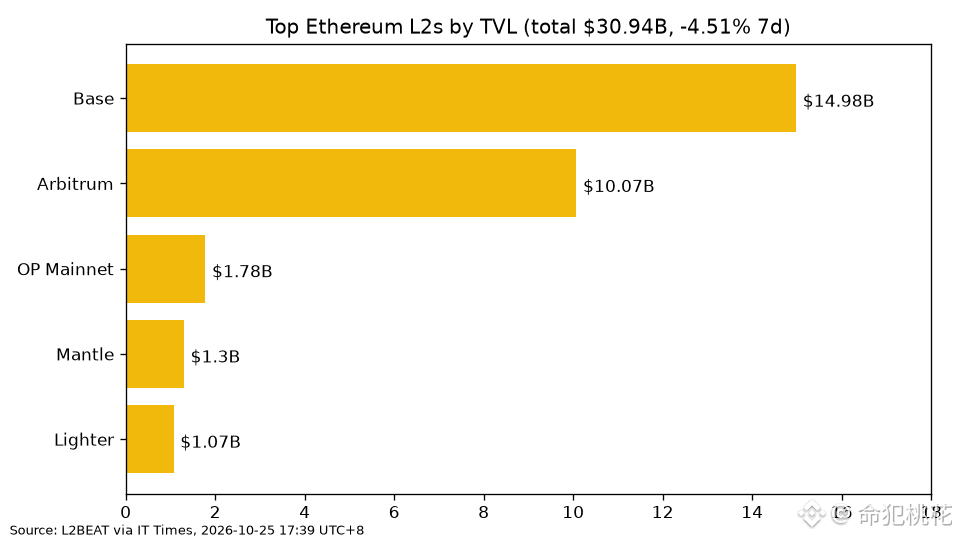
What Exactly Is a Layer 2 Network (L2)? Explained with a Week of DataWhat Exactly Is a Layer 2 Network (L2)? Explained with a Week of Data
When beginners first hear about L2, it can sound like an obscure term. But here’s a simple everyday analogy: Ethereum mainnet is like a very secure highway with a limited number of lanes. When traffic gets heavy, tolls go up. L2 is like a “side road” built alongside it: many transactions are bundled and processed off-chain first, then the compressed results are sent back to mainnet to be “stamped.” This borrows the security of mainnet while bringing the fee per transaction down to just a few cents.
1. How L2 Works
What Exactly Is a Layer 2 Network (L2)? Explained with a Week of Data
What Exactly Is a Layer 2 Network (L2)? Explained with a Week of Data
When beginners first hear about L2, it can sound like an obscure term. But here’s a simple everyday analogy: Ethereum mainnet is like a very secure highway with a limited number of lanes. When traffic gets heavy, tolls go up. L2 is like a “side road” built alongside it: many transactions are bundled and processed off-chain first, then the compressed results are sent back to mainnet to be “stamped.” This borrows the security of mainnet while bringing the fee per transaction down to just a few cents.
1. How L2 Works
When beginners first hear about L2, it can sound like an obscure term. But here’s a simple everyday analogy: Ethereum mainnet is like a very secure highway with a limited number of lanes. When traffic gets heavy, tolls go up. L2 is like a “side road” built alongside it: many transactions are bundled and processed off-chain first, then the compressed results are sent back to mainnet to be “stamped.” This borrows the security of mainnet while bringing the fee per transaction down to just a few cents.
1. How L2 Works
143

·
--
Blast has announced that it is shutting down. The official explanation is straightforward: the ongoing cost of maintaining the chain has exceeded the revenue generated by the L2, and there is no credible path to making its economics sustainable. My take is that this is more than just a project shutting down—it lays bare the economics of low-cost L2s that are supposed to sustain themselves through fees: when sequencer revenue cannot cover ongoing operations, the exit mechanism is the first thing users should examine.
According to the official announcement, users are asked to withdraw their assets to Ethereum mainnet by October 26, and withdrawal delays will be reduced to 24 hours. But there is a crucial step in the shutdown process: Blast must first withdraw its Lido assets, a process expected to take about a week. Withdrawals will be temporarily unavailable during this period; they will resume with a new 24-hour delay only after the process is complete. Users should withdraw through the standard interface by October 26, 2026. After that, assets will still be withdrawable, but users will need to interact directly with the Blast bridge contract on Ethereum L1. This suggests that the real safety window is not the “24 hours” figure, but whether the Lido asset withdrawal goes smoothly and whether interactions with the bridge contract work as expected. If either step gets stuck, users’ wait times could stretch out again.
There are three things worth tracking: whether withdrawals resume on the announced schedule, whether bridge contract interactions experience congestion or failures, and whether similar L2s follow suit and scale back. If withdrawals resume on time and bridge interactions remain smooth, this shutdown looks more like the failure of an individual project’s economic model. If delays or interaction issues arise, that would indicate that the exit mechanisms of low-cost L2s are themselves a source of risk. It should be noted that the materials provided do not include specific figures for Blast’s revenue or costs, so the claim that “maintenance costs exceeded revenue” remains an official statement for now, without verifiable accounting details.
#ETH #Layer2
Sources:
PANews (originally published October 25 at 21:19 Beijing time)
https://www.panewslab.com/zh/articles/01a17337-8679-7679-aac0-5ecadfd2c4cd
Blast has announced that it is shutting down. The official explanation is straightforward: the ongoing cost of maintaining the chain has exceeded the revenue generated by the L2, and there is no credible path to making its economics sustainable. My take is that this is more than just a project shutting down—it lays bare the economics of low-cost L2s that are supposed to sustain themselves through fees: when sequencer revenue cannot cover ongoing operations, the exit mechanism is the first thing users should examine.
According to the official announcement, users are asked to withdraw their assets to Ethereum mainnet by October 26, and withdrawal delays will be reduced to 24 hours. But there is a crucial step in the shutdown process: Blast must first withdraw its Lido assets, a process expected to take about a week. Withdrawals will be temporarily unavailable during this period; they will resume with a new 24-hour delay only after the process is complete. Users should withdraw through the standard interface by October 26, 2026. After that, assets will still be withdrawable, but users will need to interact directly with the Blast bridge contract on Ethereum L1. This suggests that the real safety window is not the “24 hours” figure, but whether the Lido asset withdrawal goes smoothly and whether interactions with the bridge contract work as expected. If either step gets stuck, users’ wait times could stretch out again.
There are three things worth tracking: whether withdrawals resume on the announced schedule, whether bridge contract interactions experience congestion or failures, and whether similar L2s follow suit and scale back. If withdrawals resume on time and bridge interactions remain smooth, this shutdown looks more like the failure of an individual project’s economic model. If delays or interaction issues arise, that would indicate that the exit mechanisms of low-cost L2s are themselves a source of risk. It should be noted that the materials provided do not include specific figures for Blast’s revenue or costs, so the claim that “maintenance costs exceeded revenue” remains an official statement for now, without verifiable accounting details.
#ETH #Layer2
Sources:
PANews (originally published October 25 at 21:19 Beijing time)
https://www.panewslab.com/zh/articles/01a17337-8679-7679-aac0-5ecadfd2c4cd
According to the official announcement, users are asked to withdraw their assets to Ethereum mainnet by October 26, and withdrawal delays will be reduced to 24 hours. But there is a crucial step in the shutdown process: Blast must first withdraw its Lido assets, a process expected to take about a week. Withdrawals will be temporarily unavailable during this period; they will resume with a new 24-hour delay only after the process is complete. Users should withdraw through the standard interface by October 26, 2026. After that, assets will still be withdrawable, but users will need to interact directly with the Blast bridge contract on Ethereum L1. This suggests that the real safety window is not the “24 hours” figure, but whether the Lido asset withdrawal goes smoothly and whether interactions with the bridge contract work as expected. If either step gets stuck, users’ wait times could stretch out again.
There are three things worth tracking: whether withdrawals resume on the announced schedule, whether bridge contract interactions experience congestion or failures, and whether similar L2s follow suit and scale back. If withdrawals resume on time and bridge interactions remain smooth, this shutdown looks more like the failure of an individual project’s economic model. If delays or interaction issues arise, that would indicate that the exit mechanisms of low-cost L2s are themselves a source of risk. It should be noted that the materials provided do not include specific figures for Blast’s revenue or costs, so the claim that “maintenance costs exceeded revenue” remains an official statement for now, without verifiable accounting details.
#ETH #Layer2
Sources:
PANews (originally published October 25 at 21:19 Beijing time)
https://www.panewslab.com/zh/articles/01a17337-8679-7679-aac0-5ecadfd2c4cd

102

·
--
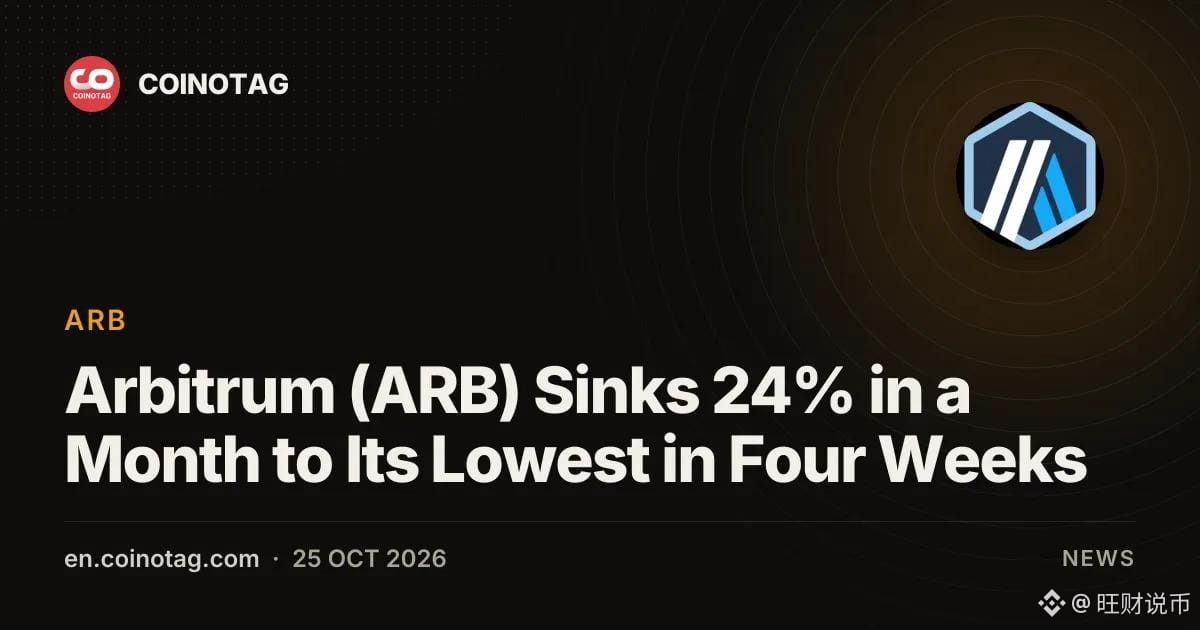
📉 ARB is down 24% in a month—twice as badly as ETH!
According to Coinotag:
• ARB is down about 24% over the past 30 days
• Over the same period, ETH is down about 13%, and BTC about 5%
• On Saturday, ARB hit a four-week low of $0.1638
👀 Analysis:
L2 governance tokens have recently underperformed major coins significantly, suggesting that investors are reducing risk and moving into BTC/ETH for safety. With a wait-and-see mood ahead of this week’s FOMC meeting (10/27–28), the volatility of altcoins has instead become a liability.
⚠️ Things to watch:
1️⃣ Can $0.1638 hold? If it breaks, the four-week low could become resistance
2️⃣ Whether ETH stabilizes—L2 tokens often follow ETH’s rebound
3️⃣ Where funds flow after the FOMC decision
Do you think ARB is unfairly beaten down and worth accumulating, or is it still weak and best avoided? Share your thoughts in the comments 👇
$ARB $ETH $BTC
#Arbitrum #Layer2 #CryptoMarket
Personal opinion only; not investment advice
📉 ARB is down 24% in a month—twice as badly as ETH!
According to Coinotag:
• ARB is down about 24% over the past 30 days
• Over the same period, ETH is down about 13%, and BTC about 5%
• On Saturday, ARB hit a four-week low of $0.1638
👀 Analysis:
L2 governance tokens have recently underperformed major coins significantly, suggesting that investors are reducing risk and moving into BTC/ETH for safety. With a wait-and-see mood ahead of this week’s FOMC meeting (10/27–28), the volatility of altcoins has instead become a liability.
⚠️ Things to watch:
1️⃣ Can $0.1638 hold? If it breaks, the four-week low could become resistance
2️⃣ Whether ETH stabilizes—L2 tokens often follow ETH’s rebound
3️⃣ Where funds flow after the FOMC decision
Do you think ARB is unfairly beaten down and worth accumulating, or is it still weak and best avoided? Share your thoughts in the comments 👇
$ARB $ETH $BTC
#Arbitrum #Layer2 #CryptoMarket
Personal opinion only; not investment advice
According to Coinotag:
• ARB is down about 24% over the past 30 days
• Over the same period, ETH is down about 13%, and BTC about 5%
• On Saturday, ARB hit a four-week low of $0.1638
👀 Analysis:
L2 governance tokens have recently underperformed major coins significantly, suggesting that investors are reducing risk and moving into BTC/ETH for safety. With a wait-and-see mood ahead of this week’s FOMC meeting (10/27–28), the volatility of altcoins has instead become a liability.
⚠️ Things to watch:
1️⃣ Can $0.1638 hold? If it breaks, the four-week low could become resistance
2️⃣ Whether ETH stabilizes—L2 tokens often follow ETH’s rebound
3️⃣ Where funds flow after the FOMC decision
Do you think ARB is unfairly beaten down and worth accumulating, or is it still weak and best avoided? Share your thoughts in the comments 👇
$ARB $ETH $BTC
#Arbitrum #Layer2 #CryptoMarket
Personal opinion only; not investment advice
13
🚀 BITCOIN HYPER ($HYPER ) | Trending on Binance
Bitcoin's first true Fast Layer-2 solution is getting huge attention.
Why everyone is talking about it:
⚡️ Makes BTC transactions super fast
💸 Low fees
🔗 Brings DeFi to Bitcoin
This narrative is HOT right now. HYPER is on Binance listing radar.
Are you watching HYPER? 👀
$HYPER
{spot}(HYPERUSDT)
#BitcoinHyper #HYPER #Bitcoin #BTC #CryptoTrending #BinanceSquare #Layer2
🚀 BITCOIN HYPER ($HYPER ) | Trending on Binance
Bitcoin's first true Fast Layer-2 solution is getting huge attention.
Why everyone is talking about it:
⚡️ Makes BTC transactions super fast
💸 Low fees
🔗 Brings DeFi to Bitcoin
This narrative is HOT right now. HYPER is on Binance listing radar.
Are you watching HYPER? 👀
$HYPER
#BitcoinHyper #HYPER #Bitcoin #BTC #CryptoTrending #BinanceSquare #Layer2
Bitcoin's first true Fast Layer-2 solution is getting huge attention.
Why everyone is talking about it:
⚡️ Makes BTC transactions super fast
💸 Low fees
🔗 Brings DeFi to Bitcoin
This narrative is HOT right now. HYPER is on Binance listing radar.
Are you watching HYPER? 👀
$HYPER
#BitcoinHyper #HYPER #Bitcoin #BTC #CryptoTrending #BinanceSquare #Layer2
2
1
305
·
--
L2 scaling is quietly shifting from hype to raw utility as Ethereum blob fees drop and ZK finality speeds accelerate. DAA metrics show real mainnet adoption taking over. $LINK is steady at 11.618 while the modular stack matures. Focus on actual usage over noise.
#Layer2 #BlockchainScaling #LINK
L2 scaling is quietly shifting from hype to raw utility as Ethereum blob fees drop and ZK finality speeds accelerate. DAA metrics show real mainnet adoption taking over. $LINK is steady at 11.618 while the modular stack matures. Focus on actual usage over noise.
#Layer2 #BlockchainScaling #LINK
#Layer2 #BlockchainScaling #LINK
1
7

·
--
Verified
Article
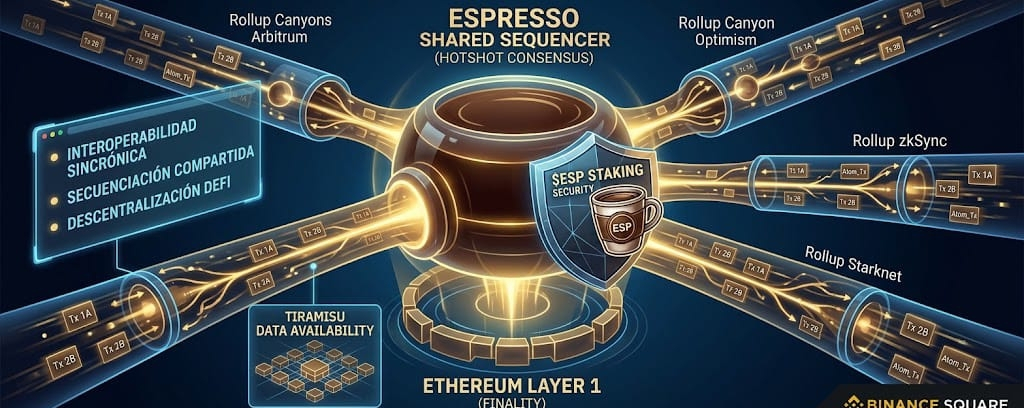
☕ Espresso ($ESP): The Key to Layer 2 Interoperability and DecentralizationThe proliferation of Layer 2 solutions (rollups) has largely addressed the Ethereum mainnet’s scalability issues and high fees. However, this fragmentation has created a new challenge: liquidity silos and reliance on centralized sequencers, which represent a single point of failure for the ecosystem.
This is where Espresso Network and its native token $ESP come in: an infrastructure designed to connect rollups through a shared, decentralized sequencing network.
☕ Espresso ($ESP): The Key to Layer 2 Interoperability and Decentralization
The proliferation of Layer 2 solutions (rollups) has largely addressed the Ethereum mainnet’s scalability issues and high fees. However, this fragmentation has created a new challenge: liquidity silos and reliance on centralized sequencers, which represent a single point of failure for the ecosystem.
This is where Espresso Network and its native token $ESP come in: an infrastructure designed to connect rollups through a shared, decentralized sequencing network.
This is where Espresso Network and its native token $ESP come in: an infrastructure designed to connect rollups through a shared, decentralized sequencing network.
6
173

·
--
⚡ Faster and cheaper Layer 2s must be better, right?
Layer 2s boost blockchain capacity through different scaling mechanisms, giving more applications a chance to lower transaction costs and improve the user experience.
But when choosing a network, don’t look only at TPS and fees.
🔐 Security: How are transactions verified?
🌉 Cross-chain: What risks come with bridging assets?
💸 Cost: What are the total fees for depositing, transacting, and withdrawing?
🔓 Self-custody: If the network fails, can users recover their assets?
A truly great scaling solution doesn’t just improve efficiency—it also strikes a reasonable balance between security and user experience.
Which metric matters most to you when choosing a Layer 2?
#ONEA #Web3 #Layer2
⚡ Faster and cheaper Layer 2s must be better, right?
Layer 2s boost blockchain capacity through different scaling mechanisms, giving more applications a chance to lower transaction costs and improve the user experience.
But when choosing a network, don’t look only at TPS and fees.
🔐 Security: How are transactions verified?
🌉 Cross-chain: What risks come with bridging assets?
💸 Cost: What are the total fees for depositing, transacting, and withdrawing?
🔓 Self-custody: If the network fails, can users recover their assets?
A truly great scaling solution doesn’t just improve efficiency—it also strikes a reasonable balance between security and user experience.
Which metric matters most to you when choosing a Layer 2?
#ONEA #Web3 #Layer2
Layer 2s boost blockchain capacity through different scaling mechanisms, giving more applications a chance to lower transaction costs and improve the user experience.
But when choosing a network, don’t look only at TPS and fees.
🔐 Security: How are transactions verified?
🌉 Cross-chain: What risks come with bridging assets?
💸 Cost: What are the total fees for depositing, transacting, and withdrawing?
🔓 Self-custody: If the network fails, can users recover their assets?
A truly great scaling solution doesn’t just improve efficiency—it also strikes a reasonable balance between security and user experience.
Which metric matters most to you when choosing a Layer 2?
#ONEA #Web3 #Layer2
2
2
Log in to explore more content
Join global crypto users on Binance Square
⚡️ Get latest and useful information about crypto.
💬 Trusted by the world’s largest crypto exchange.
👍 Discover real insights from verified creators.
Email / Phone number
Trending Topics
1
#BinancePick
2.6M views
141,866 Discussing
2
#EarningsSeason
5M views
24,385 Discussing
3
#FranklinTempletonFilesForTwoDividendToBitcoinETFs
2,034 views
111 Discussing
4
#StrategyMSTRSurpassesNasdaqInMarketCap
2,387 views
104 Discussing
5
#CanadaProposesStablecoinRedemptionWithin3BusinessDays
103 views
13 Discussing
6
#ElectrumWalletBugLetRogueServersStealFunds
8,951 views
240 Discussing
7
#ArgentineCourtDismissesLIBRACaseAgainstMilei
19,084 views
320 Discussing
8
#SKHynixReportedlyPlansSpecialDividendFromKioxiaStakeSale
3,158 views
48 Discussing
9
#KeystoneWebsiteBreachExposesBuyersShippingAddresses
1,688 views
41 Discussing
10
#USQ3GDPAndSeptemberPCEDueNextWeek
96,688 views
1,135 Discussing