

#cryptoed
cryptoed
483 views
14 Discussing
Hot
Latest

🚀 The crypto market rewards knowledge, not just luck! 📈
Many beginners enter crypto hoping to get rich quickly, but smart investors know that learning comes first. 🧠
💡 3 rules every crypto beginner should remember:
✅ Never invest money you cannot afford to lose.
✅ Do your own research before buying any coin.
✅ Be patient and avoid emotional decisions.
I’m learning more about crypto every day, and this is just the beginning! 🔥
💬 What do you think Bitcoin ($BTC) will do next: GO UP 📈 or GO DOWN 📉?
Let’s discuss in the comments! 👇
#BinanceSquare #BitcoinFallsBelow$83KAgain Bitcoin #BTC #Crypto #CryptoEd
2
299

·
--
Think you know what happens when markets are hot, but are you prepared for the opposite?
You might have heard of the "debasement trade," a strategy where investors bet that inflation and interest rates will rise, causing the value of assets like gold, silver, and Bitcoin to increase. But what happens when the tide turns?
#CryptocurrencyMarkets #Inflation
As Coindesk reported, precious metals have been plummeting from their 2025 highs as markets price in Fed rate hikes. This means investors who rode the debasement trade are now facing significant losses. Similarly, Bitcoin has also been affected, with its value fluctuating wildly due to changing market conditions.
The takeaway: be prepared for market shifts by diversifying your portfolio and staying informed.
What do you do when market conditions surprise you? #CryptoEd
148

·
--
Article
Best Position-Sizing and Stop-Loss Strategies for Altcoin TradingBest Position-Sizing and Stop-Loss Strategies for Altcoin Trading
For altcoin trading, the best approach is to size your position according to your stop-loss distance, risk only a small percentage of your trading capital per trade, and set stops based on market volatility rather than arbitrary price levels.
Altcoins can experience sharp price movements, low liquidity, and sudden liquidation cascades. Even a strategy that works well on Bitcoin may be too risky when applied to a smaller altcoin.
Since you haven't specified the coin, risk tolerance, or timeframe, I'll cover both moderate- and high-risk approaches for daily and swing trading.
1. Choose Your Risk Per Trade
Your risk per trade is the maximum amount of capital you are willing to lose if your stop-loss executes at its intended price.
Trading approach Risk per trade Maximum risk on a $1,000 account
Conservative 0.25% $2.50
Moderate 0.50% $5.00
Moderately aggressive 0.75% $7.50
High risk 1.00% $10.00
Very aggressive 2.00% $20.00
My general recommendation: Start with 0.5% risk per trade for volatile altcoins. Consider 1% only if you have a tested strategy and can tolerate losing streaks.
Risking 2% or more per trade can cause substantial drawdowns when several trades fail consecutively.
Remember that risk tolerance is not the same as risk capacity. You might be comfortable taking large risks but still need to protect capital that you cannot afford to lose.
2. Calculate Position Size Before Entering a Trade
The most reliable starting point is the fixed-fractional position-sizing method: decide how much you can lose, determine where the trade becomes invalid, and calculate the position size from those two values.
Position-sizing formula
Position value = Amount at risk ÷ Stop-loss percentage
Where:
Amount at risk = Account balance × Risk percentage.
Stop-loss percentage = Distance between entry and stop-loss, divided by entry price.
Example: Buying an altcoin
Suppose you have:
Trading capital: $1,000
Risk per trade: 0.5% ($5)
Entry price: $2.00
Stop-loss price: $1.90
Step 1: Calculate the stop-loss distance.
($2.00 − $1.90) ÷ $2.00 × 100 = 5%
Step 2: Calculate the position value.
$5 ÷ 0.05 = $100
Step 3: Calculate the token quantity.
$100 ÷ $2.00 = 50 tokens
Your trade would therefore look like this:
Parameter Value
Account balance $1,000
Entry price $2.00
Stop-loss $1.90
Position value $100
Token quantity 50
Planned price loss at stop $5
Account risk 0.5%
This calculation excludes fees and slippage, so the actual loss could exceed $5.
Important: If the stop-loss distance increases, reduce your position size rather than increasing your acceptable loss.
For additional guidance, see Kraken's position-sizing guide.
3. The Best Stop-Loss Strategies for Altcoins
There is no single stop-loss percentage that works for every altcoin. A coin that regularly moves 8% in a day requires a different approach from one that typically moves 2%.
I recommend considering these three methods.
Strategy A: Support and resistance stop-loss
Best for: Swing trading and structured technical setups.
For a long position:
Identify a support level or recent swing low.
Determine the price at which the support structure would be invalidated.
Place the stop slightly below that level, allowing for normal market fluctuations.
Calculate your position size using the resulting stop distance.
For a short position, apply the opposite logic and place the stop above the relevant resistance or swing high.
Example:
Entry: $2.00
Support: $1.90
Stop-loss: $1.86
Risk per token: $0.14
The stop is below the support level rather than directly on it.
This approach is useful because the stop corresponds to a change in the technical structure, not an arbitrary percentage. However, support levels can fail, and a stop order cannot guarantee execution at its specified price.
#BinanceS #CryptoTradingInsights #Altcoin #RiskManagement #StopLoss #PositionSizing #TradingS #CryptoEd #Bitcoin #TechnicalAnalysis
Best Position-Sizing and Stop-Loss Strategies for Altcoin Trading
Best Position-Sizing and Stop-Loss Strategies for Altcoin Trading
For altcoin trading, the best approach is to size your position according to your stop-loss distance, risk only a small percentage of your trading capital per trade, and set stops based on market volatility rather than arbitrary price levels.
Altcoins can experience sharp price movements, low liquidity, and sudden liquidation cascades. Even a strategy that works well on Bitcoin may be too risky when applied to a smaller altcoin.
Since you haven't specified the coin, risk tolerance, or timeframe, I'll cover both moderate- and high-risk approaches for daily and swing trading.
1. Choose Your Risk Per Trade
Your risk per trade is the maximum amount of capital you are willing to lose if your stop-loss executes at its intended price.
Trading approach Risk per trade Maximum risk on a $1,000 account
Conservative 0.25% $2.50
Moderate 0.50% $5.00
Moderately aggressive 0.75% $7.50
High risk 1.00% $10.00
Very aggressive 2.00% $20.00
My general recommendation: Start with 0.5% risk per trade for volatile altcoins. Consider 1% only if you have a tested strategy and can tolerate losing streaks.
Risking 2% or more per trade can cause substantial drawdowns when several trades fail consecutively.
Remember that risk tolerance is not the same as risk capacity. You might be comfortable taking large risks but still need to protect capital that you cannot afford to lose.
2. Calculate Position Size Before Entering a Trade
The most reliable starting point is the fixed-fractional position-sizing method: decide how much you can lose, determine where the trade becomes invalid, and calculate the position size from those two values.
Position-sizing formula
Position value = Amount at risk ÷ Stop-loss percentage
Where:
Amount at risk = Account balance × Risk percentage.
Stop-loss percentage = Distance between entry and stop-loss, divided by entry price.
Example: Buying an altcoin
Suppose you have:
Trading capital: $1,000
Risk per trade: 0.5% ($5)
Entry price: $2.00
Stop-loss price: $1.90
Step 1: Calculate the stop-loss distance.
($2.00 − $1.90) ÷ $2.00 × 100 = 5%
Step 2: Calculate the position value.
$5 ÷ 0.05 = $100
Step 3: Calculate the token quantity.
$100 ÷ $2.00 = 50 tokens
Your trade would therefore look like this:
Parameter Value
Account balance $1,000
Entry price $2.00
Stop-loss $1.90
Position value $100
Token quantity 50
Planned price loss at stop $5
Account risk 0.5%
This calculation excludes fees and slippage, so the actual loss could exceed $5.
Important: If the stop-loss distance increases, reduce your position size rather than increasing your acceptable loss.
For additional guidance, see Kraken's position-sizing guide.
3. The Best Stop-Loss Strategies for Altcoins
There is no single stop-loss percentage that works for every altcoin. A coin that regularly moves 8% in a day requires a different approach from one that typically moves 2%.
I recommend considering these three methods.
Strategy A: Support and resistance stop-loss
Best for: Swing trading and structured technical setups.
For a long position:
Identify a support level or recent swing low.
Determine the price at which the support structure would be invalidated.
Place the stop slightly below that level, allowing for normal market fluctuations.
Calculate your position size using the resulting stop distance.
For a short position, apply the opposite logic and place the stop above the relevant resistance or swing high.
Example:
Entry: $2.00
Support: $1.90
Stop-loss: $1.86
Risk per token: $0.14
The stop is below the support level rather than directly on it.
This approach is useful because the stop corresponds to a change in the technical structure, not an arbitrary percentage. However, support levels can fail, and a stop order cannot guarantee execution at its specified price.
#BinanceS #CryptoTradingInsights #Altcoin #RiskManagement #StopLoss #PositionSizing #TradingS #CryptoEd #Bitcoin #TechnicalAnalysis
1
82
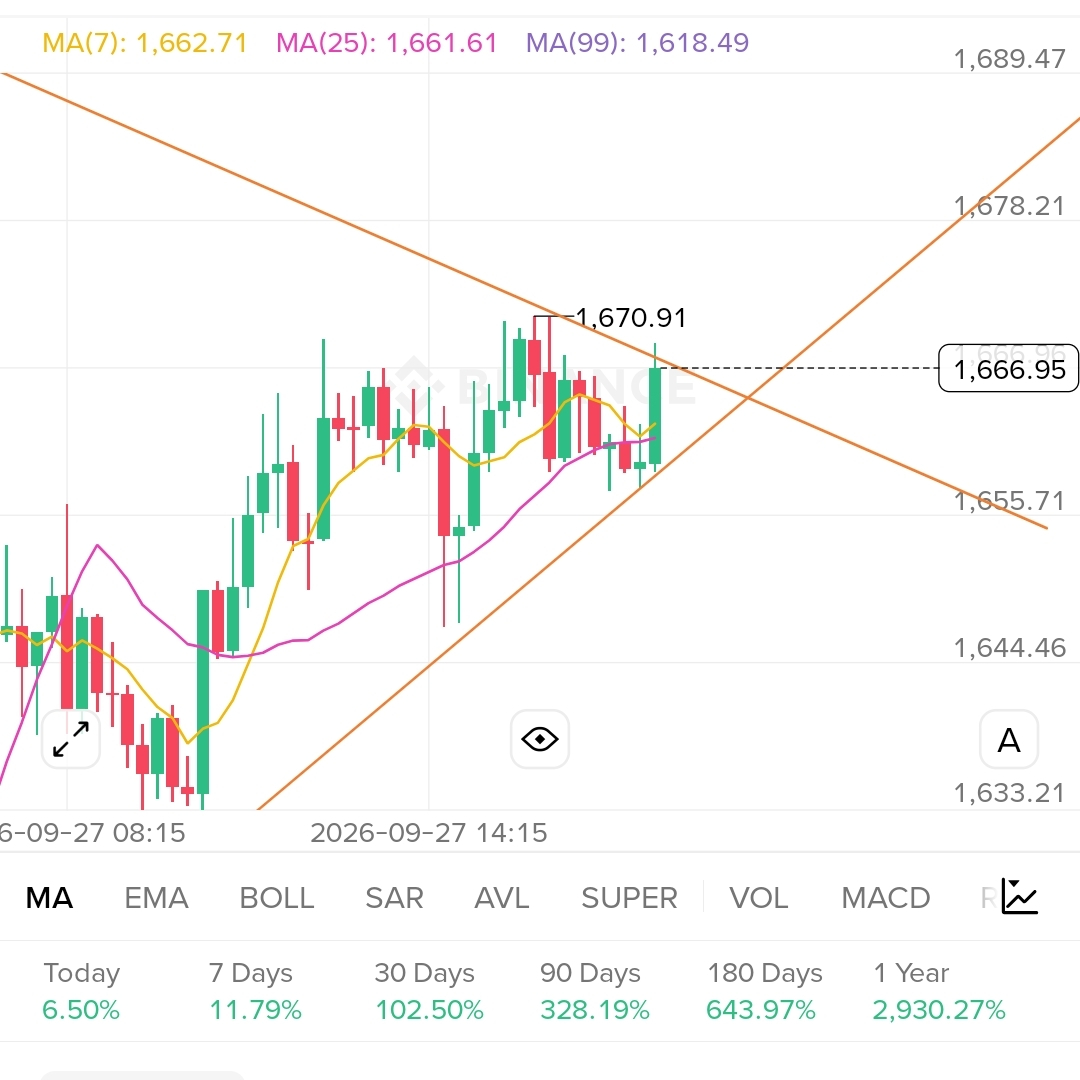
✍️📉 New traders, listen up! That $600 I blew up wasn't just bad leverage; it was misusing order types. The biggest beginner mistake? Using market orders in volatile conditions for entries. You see BTC at $70,000, hit buy, and get filled at $70,250 thanks to slippage. That's a lost edge immediately!
Always use **limit orders** for your entries and take profits. You specify your exact price, ensuring you get the fill you want or you don't trade. No surprises. For stop losses, I always recommend a **stop-market order**. It guarantees your exit once your trigger price hits, preventing a small loss from turning into a disaster. A **stop-limit** *can* leave you in the trade if the market gaps past your limit price. Be smart, trade safe.
#FuturesTrading #OrderTypes #TradingTips #RiskManagement #CryptoEd
95

·
--
🚨 $SMS : A $1.86B RULING EXPOSES THE LIQUIDITY HUNT BEHIND THE 2018 11.7% CRASH! ⚖️
📌 The Korean Supreme Court just upheld a $1.86B compensation order against Samsung Securities — a direct consequence of the 2018 dividend issuance error that triggered an 11.7% intraday collapse. That single operational mistake turned into a liquidity cascade, wiping out shareholder value in minutes. 🔥
The National Pension Service initially sought $29.9B, but the court settled on $1.86B — a reminder that institutional claims are often scaled down. For traders, this is a masterclass in how inefficiencies and fat-finger events create violent wicks and liquidity sweeps. 💡 The question is: how many similar structural risks are hiding in crypto order books right now? 💬 Are you accounting for operational black-swan events in your risk models?
⚠️ Not financial advice. Always manage your risk. 🛡️
🏷️ #SMS #RiskManagement #MarketStructure #CryptoEd #Trading
🦈 📉
13
Log in to explore more content
Join global crypto users on Binance Square
⚡️ Get latest and useful information about crypto.
💬 Trusted by the world’s largest crypto exchange.
👍 Discover real insights from verified creators.
Email / Phone number
Trending Topics
1
#BinancePick
1.8M views
112,208 Discussing
2
#EarningsSeason
4.5M views
21,122 Discussing
3
#USQ3GDPAndSeptemberPCEDueNextWeek
321 views
26 Discussing
4
#SouthKoreaDelaysCryptoIncomeTax
23,490 views
255 Discussing
5
#ElectrumFixesHighRiskExploitInVersionsBefore4.8.3
12,949 views
236 Discussing
6
#SouthKoreaPlansToRegulateStablecoinsUnderFXLaw
17,706 views
307 Discussing
7
#UKAlgorithmicCryptoTradingAppsMayNeedFCAAuthorization
5,146 views
133 Discussing
8
#DowDrops653Points
99,358 views
1,104 Discussing
9
#MarketsPriceJust10%ChanceOfFedHikeNextWeek
73,084 views
800 Discussing
10
#OCCRemovesStablecoinSevenDayRedemptionExtension
34,278 views
531 Discussing