
#amansaicommunity
amansaicommunity
19.4M views
2,443 Discussing
Hot
Latest


Article
The New Era of Crypto Compliance: Deciphering the $964M Block Settlement, FATF Sweeps, and the AI EvThe global digital asset regulatory framework is undergoing a rapid, structural transformation. For compliance professionals, institutional market participants, and thought leaders within the Web3 ecosystem, the events of late 2026 have made one reality undeniable: the absolute convergence of traditional banking compliance and decentralized finance is now complete.
Whether managing risk matrices inside a legacy commercial banking institution or auditing on-chain flows for a top-tier digital asset exchange, the operational expectations are identical. Regulatory arbitrage has effectively ceased to exist.
Here is an analytical deep dive into the major institutional enforcement actions, macro-regulatory updates, and technological shifts defining the future of crypto compliance.
1. The Cost of Compliance Friction: Block’s $964M DOJ Settlement
In the highly competitive fintech and digital asset sectors, the urge to scale user acquisition often creates massive friction with internal compliance departments. This organizational tension was starkly illuminated by Jack Dorsey’s pement (payment) and crypto conglomerate, Block (the parent entity of Square and Cash App).
Block has entered into a historic resolution with the US Department of Justice (DOJ) following a comprehensive investigation into legacy anti-money laundering (AML) and transaction monitoring failures. The firm has agreed to a three-year deferred prosecution agreement along with a total financial resolution of $964 million (which nets down to $764M after accounting for prior regulatory credits).
The BAMLCO Takeaway: This massive penalty serves as a textbook corporate case study. It demonstrates that automated onboarding and aggressive user acquisition strategies without parallel upgrades to transaction monitoring infrastructure present an unsustainable operational risk that regulatory bodies will penalize aggressively.
2. FATF's Targeted Global Enforcement Strategy
On a macroeconomic level, the Financial Action Task Force (FATF) has formally initiated a targeted global review focusing intensely on primary crypto jurisdictions. This escalation is driven by persistent deficiencies in cross-border regulatory enforcement. Recent FATF assessments revealed a stark disparity: while roughly 83% of surveyed jurisdictions have passed "Travel Rule" legislation on paper, 55 countries completely lack any active operational enforcement of these digital asset rules.
The initial findings of this global compliance sweep are scheduled to be published in June 2027.
The BAMLCO Takeaway: The upcoming June 2027 timeline represents a critical threshold for cross-border compliance. Platforms operating out of lax jurisdictions will face immediate, coordinated local legislative mandates or risk international gray-listing, effectively forcing universal compliance with global Travel Rule standards.
3. The AI Effect in Crypto Trading and Automated Alert Triage
As transactional volumes scale exponentially across both Layer 1 and Layer 2 blockchains, legacy manual alert triage has become obsolete. The modern compliance desk is increasingly defined by the integration of Artificial Intelligence (AI) and Machine Learning (ML) engines into specialized transaction monitoring workflows.
Advanced AI architectures are transforming compliance from a reactive, historical reporting function into a predictive defense mechanism:
Intelligent Alert Triage: AI engines are drastically reducing false positives in automated compliance software like UNODC's goAML, filtering out standard trading activities and allowing human analysts to focus on high-risk anomalies.Predictive On-Chain Behavioral Mapping: Machine learning models analyze real-time wallet interactions, identifying advanced structuring, nesting techniques, and potential peeling chains before the funds hit fiat off-ramps.Algorithmic Risk Scoring: By combining off-chain corporate structures with live blockchain intelligence, AI provides dynamic, real-time risk profiles for corporate accounts and high-volume virtual asset service providers (VASPs).
4. Europe’s Unified Framework: The AMLA Rulebook and MiCA Deadlines
Across the European continent, structural standardization has achieved a major milestone. The newly established Anti-Money Laundering Authority (AMLA) has finalized its definitive Customer Due Diligence (CDD) rulebook.
This updated framework marks the official end of superficial, check-the-box compliance. Financial institutions and Crypto Asset Service Providers (CASPs) are now legally mandated to systematically document and justify the underlying risk-based logic of every single customer file. Concurrently, under the comprehensive Markets in Crypto-Assets (MiCA) framework, an absolute prohibition on anonymous crypto accounts and privacy-centric asset listings will take full effect by July 2027.
The BAMLCO Takeaway: The alignment of AMLA’s strict CDD rulebook and MiCA’s July 2027 deadlines effectively harmonizes the digital asset sector with the highest standards of traditional commercial banking. Every on-chain wallet interacting with a regulated service provider must definitively resolve to a verified identity.
The Strategic Conclusion
The rapid disintegration of joint industry self-regulatory efforts—such as the recent dissolution of the collaborative T3 Financial Crime Unit due to operational friction—proves that individual institutional compliance teams must carry the burden of defense.
The future of financial integrity belongs exclusively to compliance leaders who possess a dual discipline: the deep corporate governance, regulatory filing experience, and structured risk methodology of traditional commercial banking, fused with an advanced understanding of blockchain forensics, smart contract vulnerability analysis, and AI-driven transaction monitoring.
As the regulatory landscape moves toward the critical deadlines of 2027, maintaining a proactive, deeply documented, and technologically advanced risk framework is the only viable path forward.
#AmanSaiCommUNITY #complain #mica
The New Era of Crypto Compliance: Deciphering the $964M Block Settlement, FATF Sweeps, and the AI Ev
The global digital asset regulatory framework is undergoing a rapid, structural transformation. For compliance professionals, institutional market participants, and thought leaders within the Web3 ecosystem, the events of late 2026 have made one reality undeniable: the absolute convergence of traditional banking compliance and decentralized finance is now complete.
Whether managing risk matrices inside a legacy commercial banking institution or auditing on-chain flows for a top-tier digital asset exchange, the operational expectations are identical. Regulatory arbitrage has effectively ceased to exist.
Here is an analytical deep dive into the major institutional enforcement actions, macro-regulatory updates, and technological shifts defining the future of crypto compliance.
1. The Cost of Compliance Friction: Block’s $964M DOJ Settlement
In the highly competitive fintech and digital asset sectors, the urge to scale user acquisition often creates massive friction with internal compliance departments. This organizational tension was starkly illuminated by Jack Dorsey’s pement (payment) and crypto conglomerate, Block (the parent entity of Square and Cash App).
Block has entered into a historic resolution with the US Department of Justice (DOJ) following a comprehensive investigation into legacy anti-money laundering (AML) and transaction monitoring failures. The firm has agreed to a three-year deferred prosecution agreement along with a total financial resolution of $964 million (which nets down to $764M after accounting for prior regulatory credits).
The BAMLCO Takeaway: This massive penalty serves as a textbook corporate case study. It demonstrates that automated onboarding and aggressive user acquisition strategies without parallel upgrades to transaction monitoring infrastructure present an unsustainable operational risk that regulatory bodies will penalize aggressively.
2. FATF's Targeted Global Enforcement Strategy
On a macroeconomic level, the Financial Action Task Force (FATF) has formally initiated a targeted global review focusing intensely on primary crypto jurisdictions. This escalation is driven by persistent deficiencies in cross-border regulatory enforcement. Recent FATF assessments revealed a stark disparity: while roughly 83% of surveyed jurisdictions have passed "Travel Rule" legislation on paper, 55 countries completely lack any active operational enforcement of these digital asset rules.
The initial findings of this global compliance sweep are scheduled to be published in June 2027.
The BAMLCO Takeaway: The upcoming June 2027 timeline represents a critical threshold for cross-border compliance. Platforms operating out of lax jurisdictions will face immediate, coordinated local legislative mandates or risk international gray-listing, effectively forcing universal compliance with global Travel Rule standards.
3. The AI Effect in Crypto Trading and Automated Alert Triage
As transactional volumes scale exponentially across both Layer 1 and Layer 2 blockchains, legacy manual alert triage has become obsolete. The modern compliance desk is increasingly defined by the integration of Artificial Intelligence (AI) and Machine Learning (ML) engines into specialized transaction monitoring workflows.
Advanced AI architectures are transforming compliance from a reactive, historical reporting function into a predictive defense mechanism:
Intelligent Alert Triage: AI engines are drastically reducing false positives in automated compliance software like UNODC's goAML, filtering out standard trading activities and allowing human analysts to focus on high-risk anomalies.Predictive On-Chain Behavioral Mapping: Machine learning models analyze real-time wallet interactions, identifying advanced structuring, nesting techniques, and potential peeling chains before the funds hit fiat off-ramps.Algorithmic Risk Scoring: By combining off-chain corporate structures with live blockchain intelligence, AI provides dynamic, real-time risk profiles for corporate accounts and high-volume virtual asset service providers (VASPs).
4. Europe’s Unified Framework: The AMLA Rulebook and MiCA Deadlines
Across the European continent, structural standardization has achieved a major milestone. The newly established Anti-Money Laundering Authority (AMLA) has finalized its definitive Customer Due Diligence (CDD) rulebook.
This updated framework marks the official end of superficial, check-the-box compliance. Financial institutions and Crypto Asset Service Providers (CASPs) are now legally mandated to systematically document and justify the underlying risk-based logic of every single customer file. Concurrently, under the comprehensive Markets in Crypto-Assets (MiCA) framework, an absolute prohibition on anonymous crypto accounts and privacy-centric asset listings will take full effect by July 2027.
The BAMLCO Takeaway: The alignment of AMLA’s strict CDD rulebook and MiCA’s July 2027 deadlines effectively harmonizes the digital asset sector with the highest standards of traditional commercial banking. Every on-chain wallet interacting with a regulated service provider must definitively resolve to a verified identity.
The Strategic Conclusion
The rapid disintegration of joint industry self-regulatory efforts—such as the recent dissolution of the collaborative T3 Financial Crime Unit due to operational friction—proves that individual institutional compliance teams must carry the burden of defense.
The future of financial integrity belongs exclusively to compliance leaders who possess a dual discipline: the deep corporate governance, regulatory filing experience, and structured risk methodology of traditional commercial banking, fused with an advanced understanding of blockchain forensics, smart contract vulnerability analysis, and AI-driven transaction monitoring.
As the regulatory landscape moves toward the critical deadlines of 2027, maintaining a proactive, deeply documented, and technologically advanced risk framework is the only viable path forward.
#AmanSaiCommUNITY #complain #mica
Whether managing risk matrices inside a legacy commercial banking institution or auditing on-chain flows for a top-tier digital asset exchange, the operational expectations are identical. Regulatory arbitrage has effectively ceased to exist.
Here is an analytical deep dive into the major institutional enforcement actions, macro-regulatory updates, and technological shifts defining the future of crypto compliance.
1. The Cost of Compliance Friction: Block’s $964M DOJ Settlement
In the highly competitive fintech and digital asset sectors, the urge to scale user acquisition often creates massive friction with internal compliance departments. This organizational tension was starkly illuminated by Jack Dorsey’s pement (payment) and crypto conglomerate, Block (the parent entity of Square and Cash App).
Block has entered into a historic resolution with the US Department of Justice (DOJ) following a comprehensive investigation into legacy anti-money laundering (AML) and transaction monitoring failures. The firm has agreed to a three-year deferred prosecution agreement along with a total financial resolution of $964 million (which nets down to $764M after accounting for prior regulatory credits).
The BAMLCO Takeaway: This massive penalty serves as a textbook corporate case study. It demonstrates that automated onboarding and aggressive user acquisition strategies without parallel upgrades to transaction monitoring infrastructure present an unsustainable operational risk that regulatory bodies will penalize aggressively.
2. FATF's Targeted Global Enforcement Strategy
On a macroeconomic level, the Financial Action Task Force (FATF) has formally initiated a targeted global review focusing intensely on primary crypto jurisdictions. This escalation is driven by persistent deficiencies in cross-border regulatory enforcement. Recent FATF assessments revealed a stark disparity: while roughly 83% of surveyed jurisdictions have passed "Travel Rule" legislation on paper, 55 countries completely lack any active operational enforcement of these digital asset rules.
The initial findings of this global compliance sweep are scheduled to be published in June 2027.
The BAMLCO Takeaway: The upcoming June 2027 timeline represents a critical threshold for cross-border compliance. Platforms operating out of lax jurisdictions will face immediate, coordinated local legislative mandates or risk international gray-listing, effectively forcing universal compliance with global Travel Rule standards.
3. The AI Effect in Crypto Trading and Automated Alert Triage
As transactional volumes scale exponentially across both Layer 1 and Layer 2 blockchains, legacy manual alert triage has become obsolete. The modern compliance desk is increasingly defined by the integration of Artificial Intelligence (AI) and Machine Learning (ML) engines into specialized transaction monitoring workflows.
Advanced AI architectures are transforming compliance from a reactive, historical reporting function into a predictive defense mechanism:
Intelligent Alert Triage: AI engines are drastically reducing false positives in automated compliance software like UNODC's goAML, filtering out standard trading activities and allowing human analysts to focus on high-risk anomalies.Predictive On-Chain Behavioral Mapping: Machine learning models analyze real-time wallet interactions, identifying advanced structuring, nesting techniques, and potential peeling chains before the funds hit fiat off-ramps.Algorithmic Risk Scoring: By combining off-chain corporate structures with live blockchain intelligence, AI provides dynamic, real-time risk profiles for corporate accounts and high-volume virtual asset service providers (VASPs).
4. Europe’s Unified Framework: The AMLA Rulebook and MiCA Deadlines
Across the European continent, structural standardization has achieved a major milestone. The newly established Anti-Money Laundering Authority (AMLA) has finalized its definitive Customer Due Diligence (CDD) rulebook.
This updated framework marks the official end of superficial, check-the-box compliance. Financial institutions and Crypto Asset Service Providers (CASPs) are now legally mandated to systematically document and justify the underlying risk-based logic of every single customer file. Concurrently, under the comprehensive Markets in Crypto-Assets (MiCA) framework, an absolute prohibition on anonymous crypto accounts and privacy-centric asset listings will take full effect by July 2027.
The BAMLCO Takeaway: The alignment of AMLA’s strict CDD rulebook and MiCA’s July 2027 deadlines effectively harmonizes the digital asset sector with the highest standards of traditional commercial banking. Every on-chain wallet interacting with a regulated service provider must definitively resolve to a verified identity.
The Strategic Conclusion
The rapid disintegration of joint industry self-regulatory efforts—such as the recent dissolution of the collaborative T3 Financial Crime Unit due to operational friction—proves that individual institutional compliance teams must carry the burden of defense.
The future of financial integrity belongs exclusively to compliance leaders who possess a dual discipline: the deep corporate governance, regulatory filing experience, and structured risk methodology of traditional commercial banking, fused with an advanced understanding of blockchain forensics, smart contract vulnerability analysis, and AI-driven transaction monitoring.
As the regulatory landscape moves toward the critical deadlines of 2027, maintaining a proactive, deeply documented, and technologically advanced risk framework is the only viable path forward.
#AmanSaiCommUNITY #complain #mica
68

·
--
$HYPE
{future}(HYPEUSDT)
Setup Short🔴
Entry: 88.493
TP: 85.692 - 82.891 - 80.09
SL: 94.095
#hype #IolePlansToSellAll151.21Bitcoin #USDTfree #IA #AmanSaiCommUNITY
$HYPE
Setup Short🔴
Entry: 88.493
TP: 85.692 - 82.891 - 80.09
SL: 94.095
#hype #IolePlansToSellAll151.21Bitcoin #USDTfree #IA #AmanSaiCommUNITY
Setup Short🔴
Entry: 88.493
TP: 85.692 - 82.891 - 80.09
SL: 94.095
#hype #IolePlansToSellAll151.21Bitcoin #USDTfree #IA #AmanSaiCommUNITY

2
162

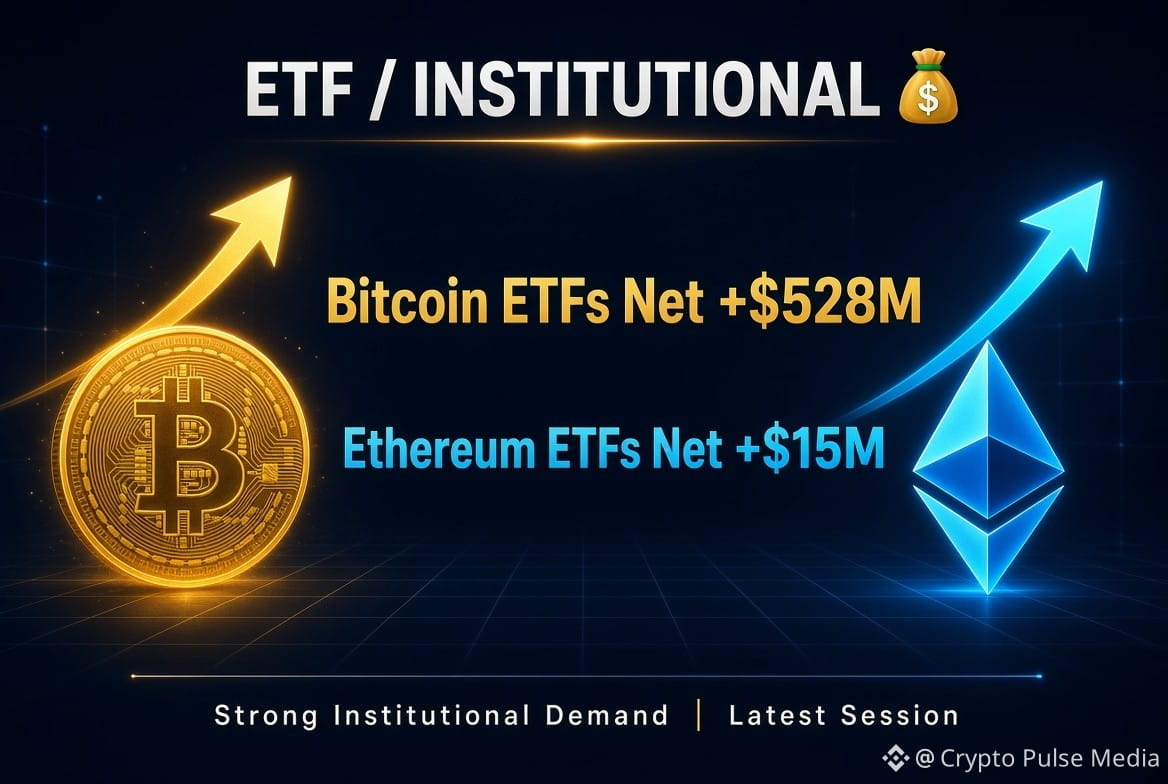
💰 Inflows: ~$44M
📉 Outflows: ~$29M
📊 Net: +$15MStrong institutional demand for Bitcoin (3rd straight inflow day, led by IBIT +$235M & FBTC +$213M).
Ethereum snapped a 5-day outflow streak.
Institutional flows remain one of the key market signals.
#Write2Earn #AmanSaiCommUNITY #Bitcoin #ETF #Crypto
💰 Inflows: ~$44M
📉 Outflows: ~$29M
📊 Net: +$15MStrong institutional demand for Bitcoin (3rd straight inflow day, led by IBIT +$235M & FBTC +$213M).
Ethereum snapped a 5-day outflow streak.
Institutional flows remain one of the key market signals.
#Write2Earn #AmanSaiCommUNITY #Bitcoin #ETF #Crypto
📉 Outflows: ~$29M
📊 Net: +$15MStrong institutional demand for Bitcoin (3rd straight inflow day, led by IBIT +$235M & FBTC +$213M).
Ethereum snapped a 5-day outflow streak.
Institutional flows remain one of the key market signals.
#Write2Earn #AmanSaiCommUNITY #Bitcoin #ETF #Crypto
66


·
--


18
4.1k

Article
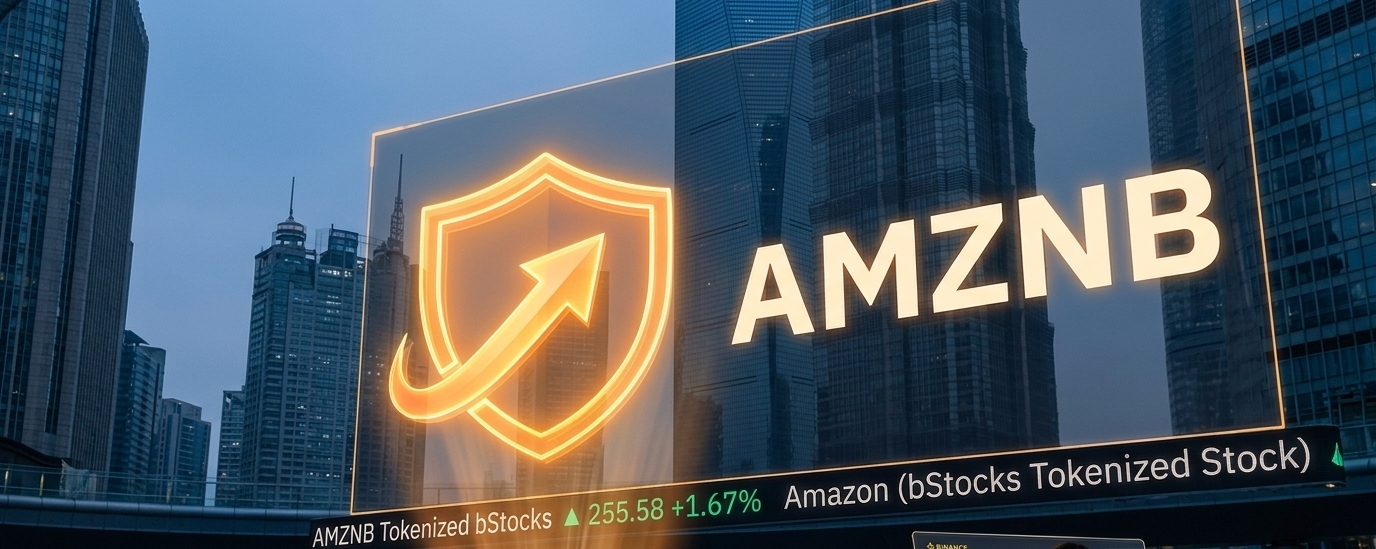
$AMZNB The future of world$AMZNB The future
The Poster Description (for AMZNB Crypto)
Imagine a poster with a deep space aesthetic—a blend of deep purples, electric blues, and gold accents. The design focuses on future potential and global connectivity.
At the very top, in sleek, modern sans-serif text, is the headline: "UNLOCKING THE FUTURE OF COMMERCE".
In the center of the poster is the focal point: a large, three-dimensional, rotating gold coin. On its surface is the AMZNB logo—a capitalized "A" with a curved arrow integrated below it, symbolizing movement, speed, and efficiency. Subtle digital circuit board patterns pulse within the gold of the coin, which seems to emit a faint, soft blue glow. Behind the coin is a stylized, interconnected network grid that sweeps across a globe, highlighting major cities.
Below the central coin, the title of the cryptocurrency is presented clearly and boldly: "AMZNB Crypto".
Underneath the title, there are three distinct columns with small icons defining the core benefits:
FAST TRANSFERS: (Icon: a lightning bolt) Instant cross-border payments without the wait.
LOW FEES: (Icon: a stack of coins) Minimizing costs for global transactions.
SECURE BLOCKCHAIN: (Icon: a shield with a padlock) Decentralized and tamper-proof security.
At the bottom of the poster is a prominent call to action: "Invest in the Next Digital Standard." The overall feel is trustworthy, innovative, and modern, blending elements of finance and advanced technology.
Paragraph: The Evolution of Digital Value
The world of commerce is evolving rapidly, moving beyond physical currency toward the instant speed and efficiency of digital standards. Cryptocurrencies are at the forefront of this shift, offering decentralized solutions that bypass the friction and fees of traditional banking. The idea behind initiatives like AMZNB is simple: leverage blockchain technology to create a faster, more secure way to transfer value globally. This isn't just about speculation; it’s about establishing the rails for a truly global, internet-native economy where friction is reduced and opportunities are expanded for everyone. If you look at the trajectory, it’s not just a trend; it's the inevitable integration of money and software.
$AMZNB The future of world
$AMZNB The future
The Poster Description (for AMZNB Crypto)
Imagine a poster with a deep space aesthetic—a blend of deep purples, electric blues, and gold accents. The design focuses on future potential and global connectivity.
At the very top, in sleek, modern sans-serif text, is the headline: "UNLOCKING THE FUTURE OF COMMERCE".
In the center of the poster is the focal point: a large, three-dimensional, rotating gold coin. On its surface is the AMZNB logo—a capitalized "A" with a curved arrow integrated below it, symbolizing movement, speed, and efficiency. Subtle digital circuit board patterns pulse within the gold of the coin, which seems to emit a faint, soft blue glow. Behind the coin is a stylized, interconnected network grid that sweeps across a globe, highlighting major cities.
Below the central coin, the title of the cryptocurrency is presented clearly and boldly: "AMZNB Crypto".
Underneath the title, there are three distinct columns with small icons defining the core benefits:
FAST TRANSFERS: (Icon: a lightning bolt) Instant cross-border payments without the wait.
LOW FEES: (Icon: a stack of coins) Minimizing costs for global transactions.
SECURE BLOCKCHAIN: (Icon: a shield with a padlock) Decentralized and tamper-proof security.
At the bottom of the poster is a prominent call to action: "Invest in the Next Digital Standard." The overall feel is trustworthy, innovative, and modern, blending elements of finance and advanced technology.
Paragraph: The Evolution of Digital Value
The world of commerce is evolving rapidly, moving beyond physical currency toward the instant speed and efficiency of digital standards. Cryptocurrencies are at the forefront of this shift, offering decentralized solutions that bypass the friction and fees of traditional banking. The idea behind initiatives like AMZNB is simple: leverage blockchain technology to create a faster, more secure way to transfer value globally. This isn't just about speculation; it’s about establishing the rails for a truly global, internet-native economy where friction is reduced and opportunities are expanded for everyone. If you look at the trajectory, it’s not just a trend; it's the inevitable integration of money and software.
The Poster Description (for AMZNB Crypto)
Imagine a poster with a deep space aesthetic—a blend of deep purples, electric blues, and gold accents. The design focuses on future potential and global connectivity.
At the very top, in sleek, modern sans-serif text, is the headline: "UNLOCKING THE FUTURE OF COMMERCE".
In the center of the poster is the focal point: a large, three-dimensional, rotating gold coin. On its surface is the AMZNB logo—a capitalized "A" with a curved arrow integrated below it, symbolizing movement, speed, and efficiency. Subtle digital circuit board patterns pulse within the gold of the coin, which seems to emit a faint, soft blue glow. Behind the coin is a stylized, interconnected network grid that sweeps across a globe, highlighting major cities.
Below the central coin, the title of the cryptocurrency is presented clearly and boldly: "AMZNB Crypto".
Underneath the title, there are three distinct columns with small icons defining the core benefits:
FAST TRANSFERS: (Icon: a lightning bolt) Instant cross-border payments without the wait.
LOW FEES: (Icon: a stack of coins) Minimizing costs for global transactions.
SECURE BLOCKCHAIN: (Icon: a shield with a padlock) Decentralized and tamper-proof security.
At the bottom of the poster is a prominent call to action: "Invest in the Next Digital Standard." The overall feel is trustworthy, innovative, and modern, blending elements of finance and advanced technology.
Paragraph: The Evolution of Digital Value
The world of commerce is evolving rapidly, moving beyond physical currency toward the instant speed and efficiency of digital standards. Cryptocurrencies are at the forefront of this shift, offering decentralized solutions that bypass the friction and fees of traditional banking. The idea behind initiatives like AMZNB is simple: leverage blockchain technology to create a faster, more secure way to transfer value globally. This isn't just about speculation; it’s about establishing the rails for a truly global, internet-native economy where friction is reduced and opportunities are expanded for everyone. If you look at the trajectory, it’s not just a trend; it's the inevitable integration of money and software.
89

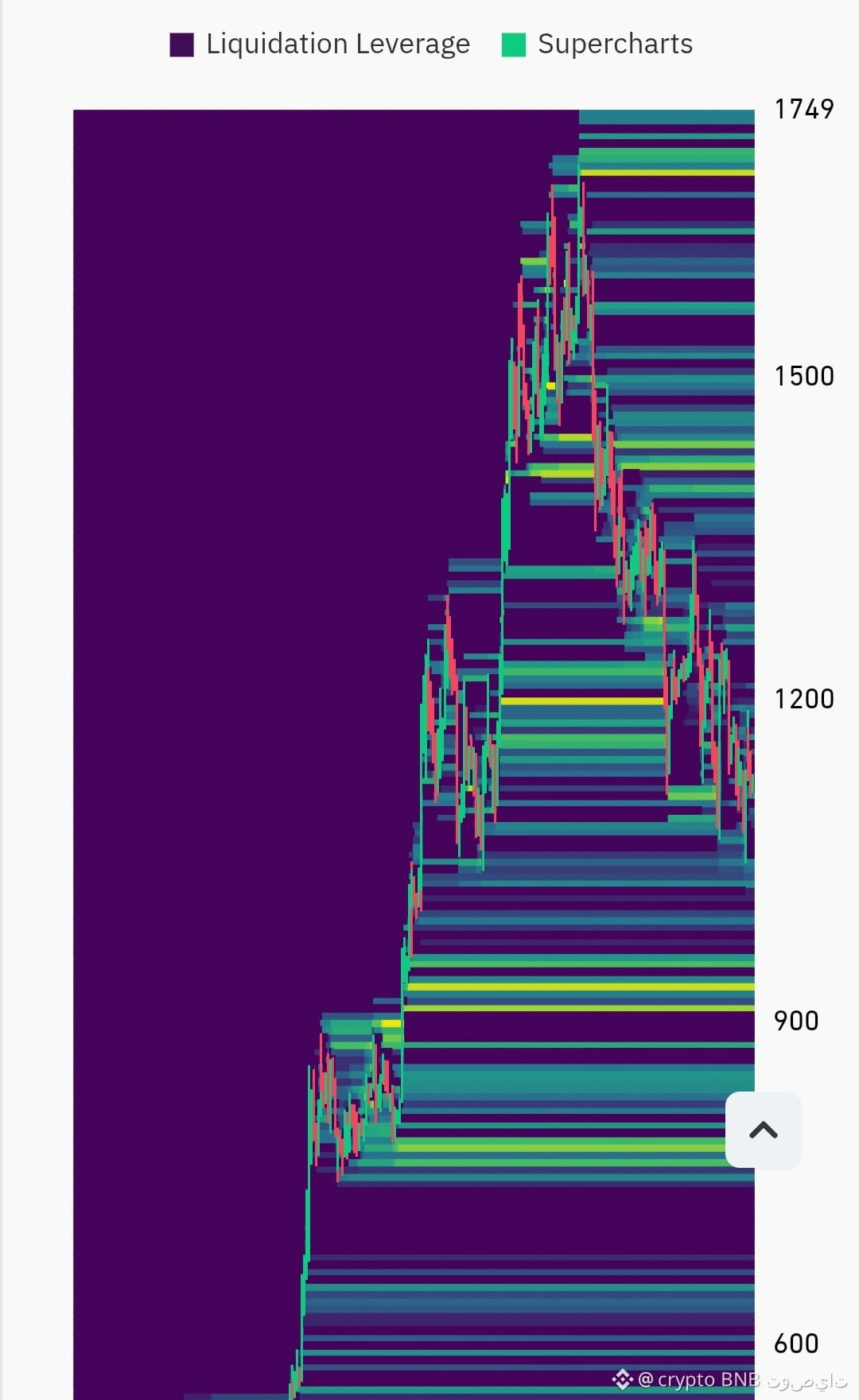
🚨 LIQUIDATION HEATMAP UNCOVERED! Where is the market moving next? 🗺️⚡
📊 Real-Time Heatmap Breakdown:
• Upside Liquidity Target: Massive yellow liquidation blocks heavily concentrated around $1,200 – $1,250 (Short Liquidation Zone).
• Downside Liquidity Target: Deep liquidity pools stretching below $900 and $600 (Long Liquidation Zone).
⚠️ Market Outlook:
Price action loves hunting high-density yellow pools! A quick liquidity sweep toward $1,200 could happen before the next major macro direction.
💬 What’s your play?
Do you expect a short squeeze to $1,200 first, or a direct drop toward $900? Drop your thoughts below! 👇
🔔 Hit the Follow button for daily real-time Liquidation Maps & Whale Tracking! 🚀
$ZEC
$ZEN
#AmanSaiCommUNITY
#Crypto_Jobs🎯
#BinanceSquareTalks
🚨 LIQUIDATION HEATMAP UNCOVERED! Where is the market moving next? 🗺️⚡
📊 Real-Time Heatmap Breakdown:
• Upside Liquidity Target: Massive yellow liquidation blocks heavily concentrated around $1,200 – $1,250 (Short Liquidation Zone).
• Downside Liquidity Target: Deep liquidity pools stretching below $900 and $600 (Long Liquidation Zone).
⚠️ Market Outlook:
Price action loves hunting high-density yellow pools! A quick liquidity sweep toward $1,200 could happen before the next major macro direction.
💬 What’s your play?
Do you expect a short squeeze to $1,200 first, or a direct drop toward $900? Drop your thoughts below! 👇
🔔 Hit the Follow button for daily real-time Liquidation Maps & Whale Tracking! 🚀
$ZEC
$ZEN
#AmanSaiCommUNITY
#Crypto_Jobs🎯
#BinanceSquareTalks
📊 Real-Time Heatmap Breakdown:
• Upside Liquidity Target: Massive yellow liquidation blocks heavily concentrated around $1,200 – $1,250 (Short Liquidation Zone).
• Downside Liquidity Target: Deep liquidity pools stretching below $900 and $600 (Long Liquidation Zone).
⚠️ Market Outlook:
Price action loves hunting high-density yellow pools! A quick liquidity sweep toward $1,200 could happen before the next major macro direction.
💬 What’s your play?
Do you expect a short squeeze to $1,200 first, or a direct drop toward $900? Drop your thoughts below! 👇
🔔 Hit the Follow button for daily real-time Liquidation Maps & Whale Tracking! 🚀
$ZEC
$ZEN
#AmanSaiCommUNITY
#Crypto_Jobs🎯
#BinanceSquareTalks
573

{spot}(AMPUSDT)
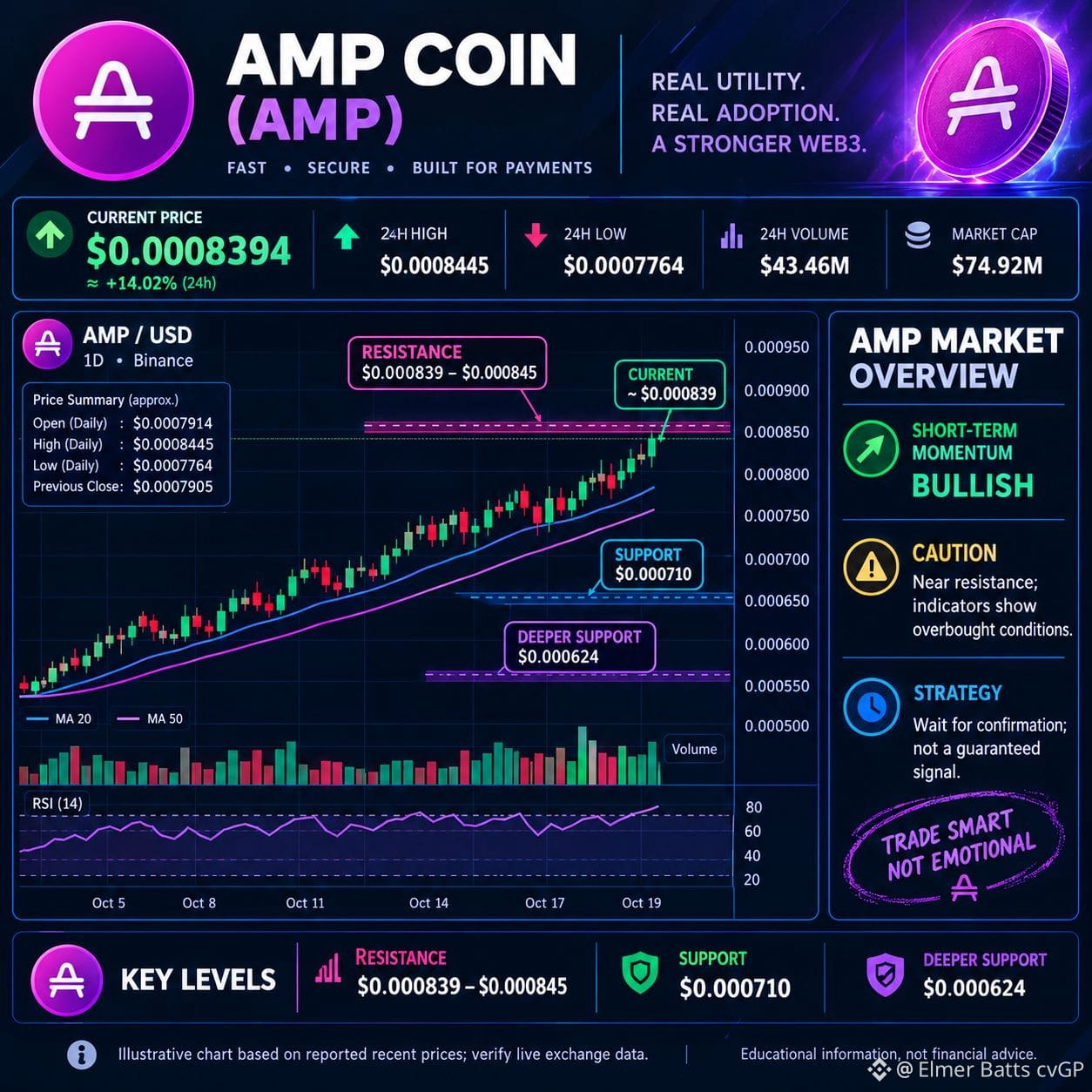
$AMP Coin is showing strong short-term bullish momentum, with its price around $0.0008345 and a reported 24-hour gain of 14.51%. The key resistance zone is $0.000839–$0.000843, while $0.000710 is an important support reference. A confirmed breakout could support further upside, but rejection near resistance may lead to a pullback.
📈 Market View: Bullish momentum, but wait for confirmation.
⚠️ Avoid making decisions based on a single indicator. Crypto is volatile, and this analysis is educational, not financial advice.
#AmanSaiCommUNITY P #AMPToken oken #cryptouniverseofficial Market #CryptoAnalysis📈📉🐋📅🚀 alysis #ALT coins
$AMP Coin is showing strong short-term bullish momentum, with its price around $0.0008345 and a reported 24-hour gain of 14.51%. The key resistance zone is $0.000839–$0.000843, while $0.000710 is an important support reference. A confirmed breakout could support further upside, but rejection near resistance may lead to a pullback.
📈 Market View: Bullish momentum, but wait for confirmation.
⚠️ Avoid making decisions based on a single indicator. Crypto is volatile, and this analysis is educational, not financial advice.
#AmanSaiCommUNITY P #AMPToken oken #cryptouniverseofficial Market #CryptoAnalysis📈📉🐋📅🚀 alysis #ALT coins
📈 Market View: Bullish momentum, but wait for confirmation.
⚠️ Avoid making decisions based on a single indicator. Crypto is volatile, and this analysis is educational, not financial advice.
#AmanSaiCommUNITY P #AMPToken oken #cryptouniverseofficial Market #CryptoAnalysis📈📉🐋📅🚀 alysis #ALT coins
172

·
--
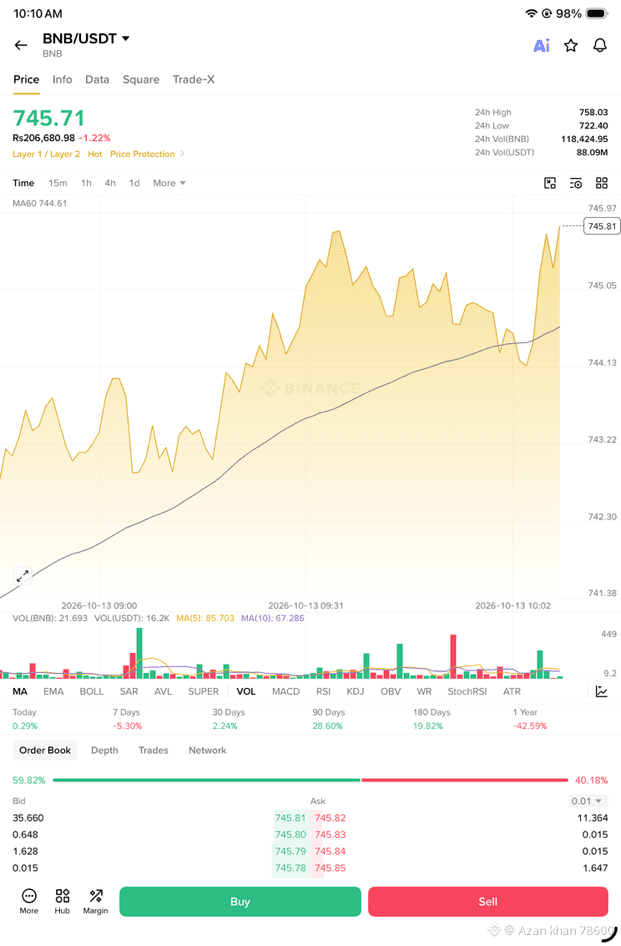
🌟Trading Psychology | Taking Advantage of Fear and Building Positions in DIGO AI
✨️The price reaching these levels after a sharp decline signals a phase of selling "despair," which is often the starting point.
🔊Smart money is accumulating quietly now, anticipating a trend reversal that will revalue the coin at higher levels.
💰Current price: 0.000048724$
🎯Quick target: 0.000100
🎯First target: 0.000400=12x
💫For details and an explanation of how to buy, see my first pinned post.
💥 Don't forget to follow so you don't miss anything new 💥
#cryptouniverseofficial #توجه_السوق_اليوم #كريبتو #DIGOAI #AmanSaiCommUNITY
🌟Trading Psychology | Taking Advantage of Fear and Building Positions in DIGO AI
✨️The price reaching these levels after a sharp decline signals a phase of selling "despair," which is often the starting point.
🔊Smart money is accumulating quietly now, anticipating a trend reversal that will revalue the coin at higher levels.
💰Current price: 0.000048724$
🎯Quick target: 0.000100
🎯First target: 0.000400=12x
💫For details and an explanation of how to buy, see my first pinned post.
💥 Don't forget to follow so you don't miss anything new 💥
#cryptouniverseofficial #توجه_السوق_اليوم #كريبتو #DIGOAI #AmanSaiCommUNITY
✨️The price reaching these levels after a sharp decline signals a phase of selling "despair," which is often the starting point.
🔊Smart money is accumulating quietly now, anticipating a trend reversal that will revalue the coin at higher levels.
💰Current price: 0.000048724$
🎯Quick target: 0.000100
🎯First target: 0.000400=12x
💫For details and an explanation of how to buy, see my first pinned post.
💥 Don't forget to follow so you don't miss anything new 💥
#cryptouniverseofficial #توجه_السوق_اليوم #كريبتو #DIGOAI #AmanSaiCommUNITY

1
69

86
·
--
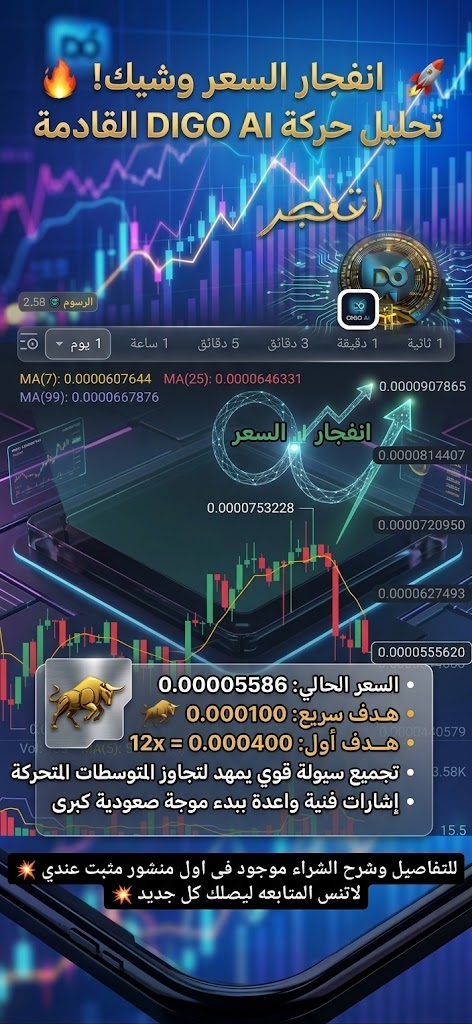
💣A price explosion is imminent! Analysis of DIGO AI’s upcoming price movement
💸Current price: 0.00005586
🎯Quick target: 0.000100
🎯First target: 0.000400 = 12x
📢Strong liquidity accumulation is paving the way to break through the moving averages and surge toward the targets.
🔊For details and an explanation of how to buy, check out my first pinned post 💥 Don’t forget to follow me so you don’t miss anything new 💥
#altcoins #AmanSaiCommUNITY #DIGO #BullishRun #CryptoGains
💣A price explosion is imminent! Analysis of DIGO AI’s upcoming price movement
💸Current price: 0.00005586
🎯Quick target: 0.000100
🎯First target: 0.000400 = 12x
📢Strong liquidity accumulation is paving the way to break through the moving averages and surge toward the targets.
🔊For details and an explanation of how to buy, check out my first pinned post 💥 Don’t forget to follow me so you don’t miss anything new 💥
#altcoins #AmanSaiCommUNITY #DIGO #BullishRun #CryptoGains
💸Current price: 0.00005586
🎯Quick target: 0.000100
🎯First target: 0.000400 = 12x
📢Strong liquidity accumulation is paving the way to break through the moving averages and surge toward the targets.
🔊For details and an explanation of how to buy, check out my first pinned post 💥 Don’t forget to follow me so you don’t miss anything new 💥
#altcoins #AmanSaiCommUNITY #DIGO #BullishRun #CryptoGains
2
217
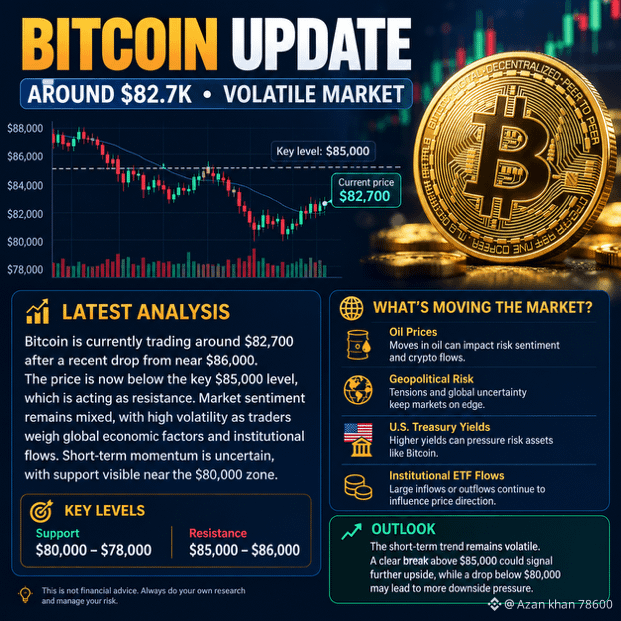

Bitcoin traders, what’s your next move? 🚀 BUY or SELL? Share your analysis in the comments! Always manage your risk and trade responsibly.”
#bitcoin #BTC #Binance #btcanalysis2026 #AmanSaiCommUNITY
Bitcoin traders, what’s your next move? 🚀 BUY or SELL? Share your analysis in the comments! Always manage your risk and trade responsibly.”
#bitcoin #BTC #Binance #btcanalysis2026 #AmanSaiCommUNITY
#bitcoin #BTC #Binance #btcanalysis2026 #AmanSaiCommUNITY

109

·
--
🔥 **$ATOM
{future}(ATOMUSDT)
| #ATOMUSDT — Strong momentum!** 🚀
• **Trend:** Bullish / strong momentum 🟢 long Buy
• **Current price:** 2.031 (+16.0% in 24 hours)
• **Suggested stop-loss:** 1.900
🎯 **Targets:**
1️⃣ 2.087
2️⃣ 2.150
3️⃣ 2.250
📊 **Analysis:**
Strong bullish momentum is evident, with the asset trading near its 24-hour high of **2.087**, following a **16.0%** rise. The price move from a daily low of **1.738** reflects a strong recovery and growing interest from traders. As the price approaches the daily high, the possibility of profit-taking and increased volatility remains in the short term.
$MAGIC
{future}(MAGICUSDT)
$QNT
{future}(QNTUSDT)
#ARB #altcoins #AmanSaiCommUNITY #Altcoinseason2024
🔥 **$ATOM
| #ATOMUSDT — Strong momentum!** 🚀
• **Trend:** Bullish / strong momentum 🟢 long Buy
• **Current price:** 2.031 (+16.0% in 24 hours)
• **Suggested stop-loss:** 1.900
🎯 **Targets:**
1️⃣ 2.087
2️⃣ 2.150
3️⃣ 2.250
📊 **Analysis:**
Strong bullish momentum is evident, with the asset trading near its 24-hour high of **2.087**, following a **16.0%** rise. The price move from a daily low of **1.738** reflects a strong recovery and growing interest from traders. As the price approaches the daily high, the possibility of profit-taking and increased volatility remains in the short term.
$MAGIC
$QNT
#ARB #altcoins #AmanSaiCommUNITY #Altcoinseason2024
| #ATOMUSDT — Strong momentum!** 🚀
• **Trend:** Bullish / strong momentum 🟢 long Buy
• **Current price:** 2.031 (+16.0% in 24 hours)
• **Suggested stop-loss:** 1.900
🎯 **Targets:**
1️⃣ 2.087
2️⃣ 2.150
3️⃣ 2.250
📊 **Analysis:**
Strong bullish momentum is evident, with the asset trading near its 24-hour high of **2.087**, following a **16.0%** rise. The price move from a daily low of **1.738** reflects a strong recovery and growing interest from traders. As the price approaches the daily high, the possibility of profit-taking and increased volatility remains in the short term.
$MAGIC
$QNT
#ARB #altcoins #AmanSaiCommUNITY #Altcoinseason2024
1
96

$US Support Bounce - Long Scalping Opportunity.
Long $US
Entry: $0.0165 – $0.0170
Stop Loss: $0.0158
Take Profit 1: $0.0175
Take Profit 2: $0.0182
Take Profit 3: $0.0190
Take Profit 4: $0.0200
Take Profit 5: $0.0215
Price is holding steady near a major support zone with buyers actively defending the current range. Momentum is stabilizing on the shorter timeframes, creating a favorable scalping setup for a continuation move towards nearby resistance levels. A strong reaction from support could trigger an upward expansion towards the specified targets. As long as $0.0158 holds, bullish continuation remains the most likely path.
Click below to take the trade 👇
$US
{future}(USUSDT)
#AmanSaiCommUNITY #Write&Earn #QnA3.AI #Daily #Fatihcoşar
$US Support Bounce - Long Scalping Opportunity.
Long $US
Entry: $0.0165 – $0.0170
Stop Loss: $0.0158
Take Profit 1: $0.0175
Take Profit 2: $0.0182
Take Profit 3: $0.0190
Take Profit 4: $0.0200
Take Profit 5: $0.0215
Price is holding steady near a major support zone with buyers actively defending the current range. Momentum is stabilizing on the shorter timeframes, creating a favorable scalping setup for a continuation move towards nearby resistance levels. A strong reaction from support could trigger an upward expansion towards the specified targets. As long as $0.0158 holds, bullish continuation remains the most likely path.
Click below to take the trade 👇
$US
#AmanSaiCommUNITY #Write&Earn #QnA3.AI #Daily #Fatihcoşar
Long $US
Entry: $0.0165 – $0.0170
Stop Loss: $0.0158
Take Profit 1: $0.0175
Take Profit 2: $0.0182
Take Profit 3: $0.0190
Take Profit 4: $0.0200
Take Profit 5: $0.0215
Price is holding steady near a major support zone with buyers actively defending the current range. Momentum is stabilizing on the shorter timeframes, creating a favorable scalping setup for a continuation move towards nearby resistance levels. A strong reaction from support could trigger an upward expansion towards the specified targets. As long as $0.0158 holds, bullish continuation remains the most likely path.
Click below to take the trade 👇
$US
#AmanSaiCommUNITY #Write&Earn #QnA3.AI #Daily #Fatihcoşar
2
154

·
--
Bullish
SEI is breathing now after a wild race. The valuable insight here: "Don't chase the green candles." Wait for the current four-hour candlestick to stabilize; if it holds above 0.061, we're looking at a solid continuation. Any pullback is just a retest of support to gather what’s needed for the next breakout.
#marouan47#Market Rebound#AmanSaiCommUNITY ltcoinRecovery#MarketRebound Signals?
$SEI
SEI is breathing now after a wild race. The valuable insight here: "Don't chase the green candles." Wait for the current four-hour candlestick to stabilize; if it holds above 0.061, we're looking at a solid continuation. Any pullback is just a retest of support to gather what’s needed for the next breakout.
#marouan47#Market Rebound#AmanSaiCommUNITY ltcoinRecovery#MarketRebound Signals?
$SEI
#marouan47#Market Rebound#AmanSaiCommUNITY ltcoinRecovery#MarketRebound Signals?
$SEI
1
220

·
--
Bullish
Guys, if you want to target me, just buy these cryptos through me and I'll send you other pics $BIO
{spot}(BIOUSDT)
$DOT
{spot}(DOTUSDT)
$LPT
{spot}(LPTUSDT)
#altcoins #AmanSaiCommUNITY #Binance #BinanceSquareTalks #TrendingTopic
Guys, if you want to target me, just buy these cryptos through me and I'll send you other pics $BIO
$DOT
$LPT
#altcoins #AmanSaiCommUNITY #Binance #BinanceSquareTalks #TrendingTopic
$DOT
$LPT
#altcoins #AmanSaiCommUNITY #Binance #BinanceSquareTalks #TrendingTopic




22

·
--

Article
xauusdtThis analysis suggests that gold is in an overall bullish trend while respecting an ascending trendline. The price is currently near a key support zone around 4,495-4,500, where a temporary pullback is expected before a possible upward move. If support holds, the analyst expects gold to rebound toward the target resistance area near 4,570.
$XAU
O Note
19h ago
Gold is currently trading near a key support zone after respecting the ascending trend line on the 30-minute timeframe. Price action shows consolidation with buyers still defending the 4490-4500 area. As long as this support remains intact, bullish momentum may continue toward the 4570 target zone. However, a breakdown below trend line support could trigger further bearish pressure. Market structure remains neutral-to-bullish in the short term with volatility still active. Traders should wait for confirmation before entering aggressive positions. Risk management and proper stop loss placement are strongly recommended in current conditions. Keep an eye on support reactions and breakout confirmations for the next directional move
O Trade active.
16h ago
Gold is trading near a key support zone with buyers defending the trend line strongly. A bullish continuation is possible if price holds above support. Watch for breakout confirmation before entering trades.XAUUSD remains in consolidation near support after recent selling pressure. Holding above the trend line could drive price toward higher resistance levels. Risk management is highly recommended.Gold price is respecting the support area while maintaining short-term bullish structure. A strong move can be expected after breakout confirmation. Stay patient and trade with confirmation.
Trade closed: target reached
. just now
Gold is holding above key support with bullish momentum still active. A breakout above resistance can trigger the next upward move.XAUUSD is reacting from the support zone while respecting the trend line. Buyers need confirmation for further upside momentum. Price is consolidating near support after recent volatility. Watch for breakout confirmation before taking entries.
Disclaimer
The information and publications are not meant to be, and do not constitute, financial, investment, trading, or other types of advice or recommendations supplied or endorsed by TradingView. Read more in Terms
#altcoins #altcycle #ARB #AmanSaiCommUNITY #Binance
{future}(XAUTUSDT)
xauusdt
This analysis suggests that gold is in an overall bullish trend while respecting an ascending trendline. The price is currently near a key support zone around 4,495-4,500, where a temporary pullback is expected before a possible upward move. If support holds, the analyst expects gold to rebound toward the target resistance area near 4,570.
$XAU
O Note
19h ago
Gold is currently trading near a key support zone after respecting the ascending trend line on the 30-minute timeframe. Price action shows consolidation with buyers still defending the 4490-4500 area. As long as this support remains intact, bullish momentum may continue toward the 4570 target zone. However, a breakdown below trend line support could trigger further bearish pressure. Market structure remains neutral-to-bullish in the short term with volatility still active. Traders should wait for confirmation before entering aggressive positions. Risk management and proper stop loss placement are strongly recommended in current conditions. Keep an eye on support reactions and breakout confirmations for the next directional move
O Trade active.
16h ago
Gold is trading near a key support zone with buyers defending the trend line strongly. A bullish continuation is possible if price holds above support. Watch for breakout confirmation before entering trades.XAUUSD remains in consolidation near support after recent selling pressure. Holding above the trend line could drive price toward higher resistance levels. Risk management is highly recommended.Gold price is respecting the support area while maintaining short-term bullish structure. A strong move can be expected after breakout confirmation. Stay patient and trade with confirmation.
Trade closed: target reached
. just now
Gold is holding above key support with bullish momentum still active. A breakout above resistance can trigger the next upward move.XAUUSD is reacting from the support zone while respecting the trend line. Buyers need confirmation for further upside momentum. Price is consolidating near support after recent volatility. Watch for breakout confirmation before taking entries.
Disclaimer
The information and publications are not meant to be, and do not constitute, financial, investment, trading, or other types of advice or recommendations supplied or endorsed by TradingView. Read more in Terms
#altcoins #altcycle #ARB #AmanSaiCommUNITY #Binance
$XAU
O Note
19h ago
Gold is currently trading near a key support zone after respecting the ascending trend line on the 30-minute timeframe. Price action shows consolidation with buyers still defending the 4490-4500 area. As long as this support remains intact, bullish momentum may continue toward the 4570 target zone. However, a breakdown below trend line support could trigger further bearish pressure. Market structure remains neutral-to-bullish in the short term with volatility still active. Traders should wait for confirmation before entering aggressive positions. Risk management and proper stop loss placement are strongly recommended in current conditions. Keep an eye on support reactions and breakout confirmations for the next directional move
O Trade active.
16h ago
Gold is trading near a key support zone with buyers defending the trend line strongly. A bullish continuation is possible if price holds above support. Watch for breakout confirmation before entering trades.XAUUSD remains in consolidation near support after recent selling pressure. Holding above the trend line could drive price toward higher resistance levels. Risk management is highly recommended.Gold price is respecting the support area while maintaining short-term bullish structure. A strong move can be expected after breakout confirmation. Stay patient and trade with confirmation.
Trade closed: target reached
. just now
Gold is holding above key support with bullish momentum still active. A breakout above resistance can trigger the next upward move.XAUUSD is reacting from the support zone while respecting the trend line. Buyers need confirmation for further upside momentum. Price is consolidating near support after recent volatility. Watch for breakout confirmation before taking entries.
Disclaimer
The information and publications are not meant to be, and do not constitute, financial, investment, trading, or other types of advice or recommendations supplied or endorsed by TradingView. Read more in Terms
#altcoins #altcycle #ARB #AmanSaiCommUNITY #Binance
148

PEPE anylisisPepe Coin ($PEPE ) remains one of the foundational tokens of the modern meme coin sub-sector. Unlike traditional digital assets or enterprise giants, analyzing PEPE relies entirely on community sentiment, volume cycles, and speculative liquidity rather than balance sheets or earnings reports.
Here is a comprehensive market and technical breakdown of where PEPE stands.
1. Current Market Metrics & Valuation
As an ERC-20 token built on the Ethereum blockchain, PEPE operates with a massive fixed supply.
Current Price: PEPE is trading in a localized range around $0.0000035 to $0.0000039.
Circulating Supply: The token maintains a total circulating supply of approximately 420.69 trillion tokens.
Market Capitalization: Its current valuation floats between $1.6 billion and $1.8 billion. This is down significantly from its historical all-time peak of roughly $12 billion, representing a deeply discounted, post-hype consolidation phase.
2. Technical Analysis & Price Action
PEPE is showing standard patterns of consolidation and localized recovery, tracking closely with Ethereum's overall market health. #PEPE #altcoins #AmanSaiCommUNITY #ARB #APCrypto
PEPE anylisis
Pepe Coin ($PEPE ) remains one of the foundational tokens of the modern meme coin sub-sector. Unlike traditional digital assets or enterprise giants, analyzing PEPE relies entirely on community sentiment, volume cycles, and speculative liquidity rather than balance sheets or earnings reports.
Here is a comprehensive market and technical breakdown of where PEPE stands.
1. Current Market Metrics & Valuation
As an ERC-20 token built on the Ethereum blockchain, PEPE operates with a massive fixed supply.
Current Price: PEPE is trading in a localized range around $0.0000035 to $0.0000039.
Circulating Supply: The token maintains a total circulating supply of approximately 420.69 trillion tokens.
Market Capitalization: Its current valuation floats between $1.6 billion and $1.8 billion. This is down significantly from its historical all-time peak of roughly $12 billion, representing a deeply discounted, post-hype consolidation phase.
2. Technical Analysis & Price Action
PEPE is showing standard patterns of consolidation and localized recovery, tracking closely with Ethereum's overall market health. #PEPE #altcoins #AmanSaiCommUNITY #ARB #APCrypto
Here is a comprehensive market and technical breakdown of where PEPE stands.
1. Current Market Metrics & Valuation
As an ERC-20 token built on the Ethereum blockchain, PEPE operates with a massive fixed supply.
Current Price: PEPE is trading in a localized range around $0.0000035 to $0.0000039.
Circulating Supply: The token maintains a total circulating supply of approximately 420.69 trillion tokens.
Market Capitalization: Its current valuation floats between $1.6 billion and $1.8 billion. This is down significantly from its historical all-time peak of roughly $12 billion, representing a deeply discounted, post-hype consolidation phase.
2. Technical Analysis & Price Action
PEPE is showing standard patterns of consolidation and localized recovery, tracking closely with Ethereum's overall market health. #PEPE #altcoins #AmanSaiCommUNITY #ARB #APCrypto
109

·
--
⚫⚪🔴 🟥 Breaking News | Serious Escalation
🔴 The US military announces the start of airstrikes against Iran in response to the downing of an American Apache helicopter yesterday.
🔴 Iranian reports indicate explosions heard in the Sirik area in the south of the country.
🔴 This comes just hours after threats from the US president to retaliate, while Tehran denies responsibility for the downing of the helicopter and warns of a decisive response to any American attack.
⚠️ The region is on a hot plate, and markets are watching developments moment by moment.
#x_crypto_x
#m_elmasry1
#AmanSaiCommUNITY
#SHİB
#doge⚡
$BTC $ETH $BNB
⚫⚪🔴 🟥 Breaking News | Serious Escalation
🔴 The US military announces the start of airstrikes against Iran in response to the downing of an American Apache helicopter yesterday.
🔴 Iranian reports indicate explosions heard in the Sirik area in the south of the country.
🔴 This comes just hours after threats from the US president to retaliate, while Tehran denies responsibility for the downing of the helicopter and warns of a decisive response to any American attack.
⚠️ The region is on a hot plate, and markets are watching developments moment by moment.
#x_crypto_x
#m_elmasry1
#AmanSaiCommUNITY
#SHİB
#doge⚡
$BTC $ETH $BNB
🔴 The US military announces the start of airstrikes against Iran in response to the downing of an American Apache helicopter yesterday.
🔴 Iranian reports indicate explosions heard in the Sirik area in the south of the country.
🔴 This comes just hours after threats from the US president to retaliate, while Tehran denies responsibility for the downing of the helicopter and warns of a decisive response to any American attack.
⚠️ The region is on a hot plate, and markets are watching developments moment by moment.
#x_crypto_x
#m_elmasry1
#AmanSaiCommUNITY
#SHİB
#doge⚡
$BTC $ETH $BNB

113
·
--
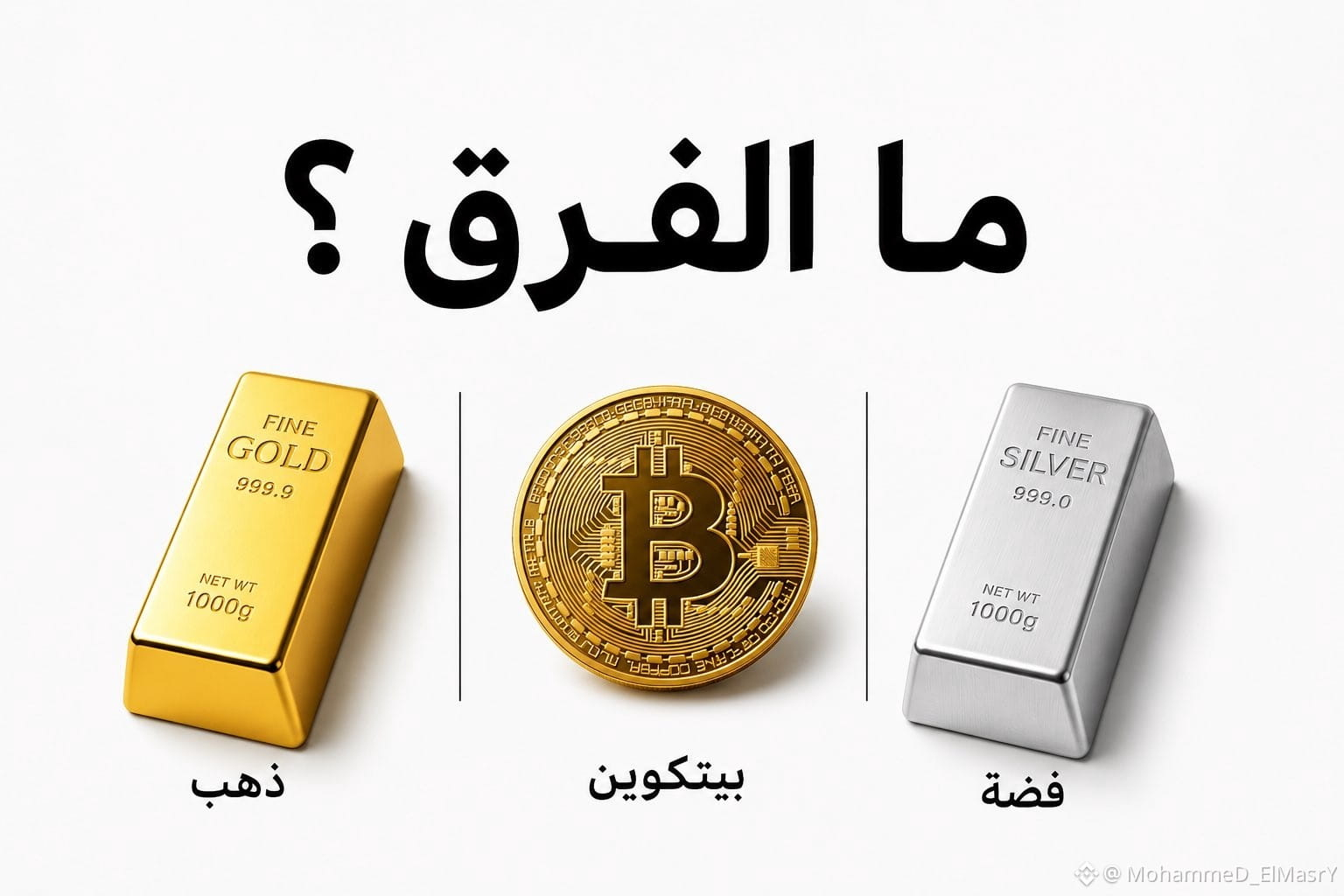
⚫⚪🔴 What's the difference between gold, silver, and Bitcoin?
When gold goes up, it's called a safe-haven asset.
When silver goes up, it's seen as an investment opportunity.
When Bitcoin goes up, it's referred to as the future of money.
But when prices suddenly drop, the narrative flips completely.
Gold dips.
Silver dips.
Stocks dip.
Real estate dips.
And Bitcoin dips.
Still, Bitcoin remains the only asset that some label as a scam just because its price has dropped.
The simple truth is that price volatility doesn't define an asset's value or legitimacy.
All markets go through cycles of ups and downs, and that's a natural part of any free market.
Why is Bitcoin judged by different standards than other assets?
#x_crypto_x1
#m_elmasry1
#AmanSaiCommUNITY
#SHİB
#doge⚡
$SPCXB $NVDAB $TSLAB
⚫⚪🔴 What's the difference between gold, silver, and Bitcoin?
When gold goes up, it's called a safe-haven asset.
When silver goes up, it's seen as an investment opportunity.
When Bitcoin goes up, it's referred to as the future of money.
But when prices suddenly drop, the narrative flips completely.
Gold dips.
Silver dips.
Stocks dip.
Real estate dips.
And Bitcoin dips.
Still, Bitcoin remains the only asset that some label as a scam just because its price has dropped.
The simple truth is that price volatility doesn't define an asset's value or legitimacy.
All markets go through cycles of ups and downs, and that's a natural part of any free market.
Why is Bitcoin judged by different standards than other assets?
#x_crypto_x1
#m_elmasry1
#AmanSaiCommUNITY
#SHİB
#doge⚡
$SPCXB $NVDAB $TSLAB
When gold goes up, it's called a safe-haven asset.
When silver goes up, it's seen as an investment opportunity.
When Bitcoin goes up, it's referred to as the future of money.
But when prices suddenly drop, the narrative flips completely.
Gold dips.
Silver dips.
Stocks dip.
Real estate dips.
And Bitcoin dips.
Still, Bitcoin remains the only asset that some label as a scam just because its price has dropped.
The simple truth is that price volatility doesn't define an asset's value or legitimacy.
All markets go through cycles of ups and downs, and that's a natural part of any free market.
Why is Bitcoin judged by different standards than other assets?
#x_crypto_x1
#m_elmasry1
#AmanSaiCommUNITY
#SHİB
#doge⚡
$SPCXB $NVDAB $TSLAB
1
170
Log in to explore more content
Join global crypto users on Binance Square
⚡️ Get latest and useful information about crypto.
💬 Trusted by the world’s largest crypto exchange.
👍 Discover real insights from verified creators.
Email / Phone number
Trending Topics
1
#BitcoinRebounds$75KAsChipsLead
12,969 views
178 Discussing
2
#JobsReportRaisesHikeOdds
163,692 views
1,427 Discussing
3
#US Data Center Rules May Constrain AI Expansion
25,496 views
136 Discussing
4
#WillAnthropicListOnTime
36,067 views
478 Discussing
5
#BitcoinETFsSee$412MNetOutflows
40 views
29 Discussing
6
#HKSFCPlansToRestrictCryptoAndExchangeTerms
1,306 views
80 Discussing
7
#AnthropicStillPlansPreThanksgivingIPO
9,598 views
166 Discussing
8
#FinCENAndFedWithdraw$250CryptoTransferProposal
2,470 views
12 Discussing
9
#TradFiForBeginners
25,186 views
417 Discussing
10
#$2TWipedOutHedgeFundsFaceLiquidation
24,351 views
108 Discussing