
#bitcoin
bitcoin
336.9M views
744,889 Discussing
Hot
Latest


·
--
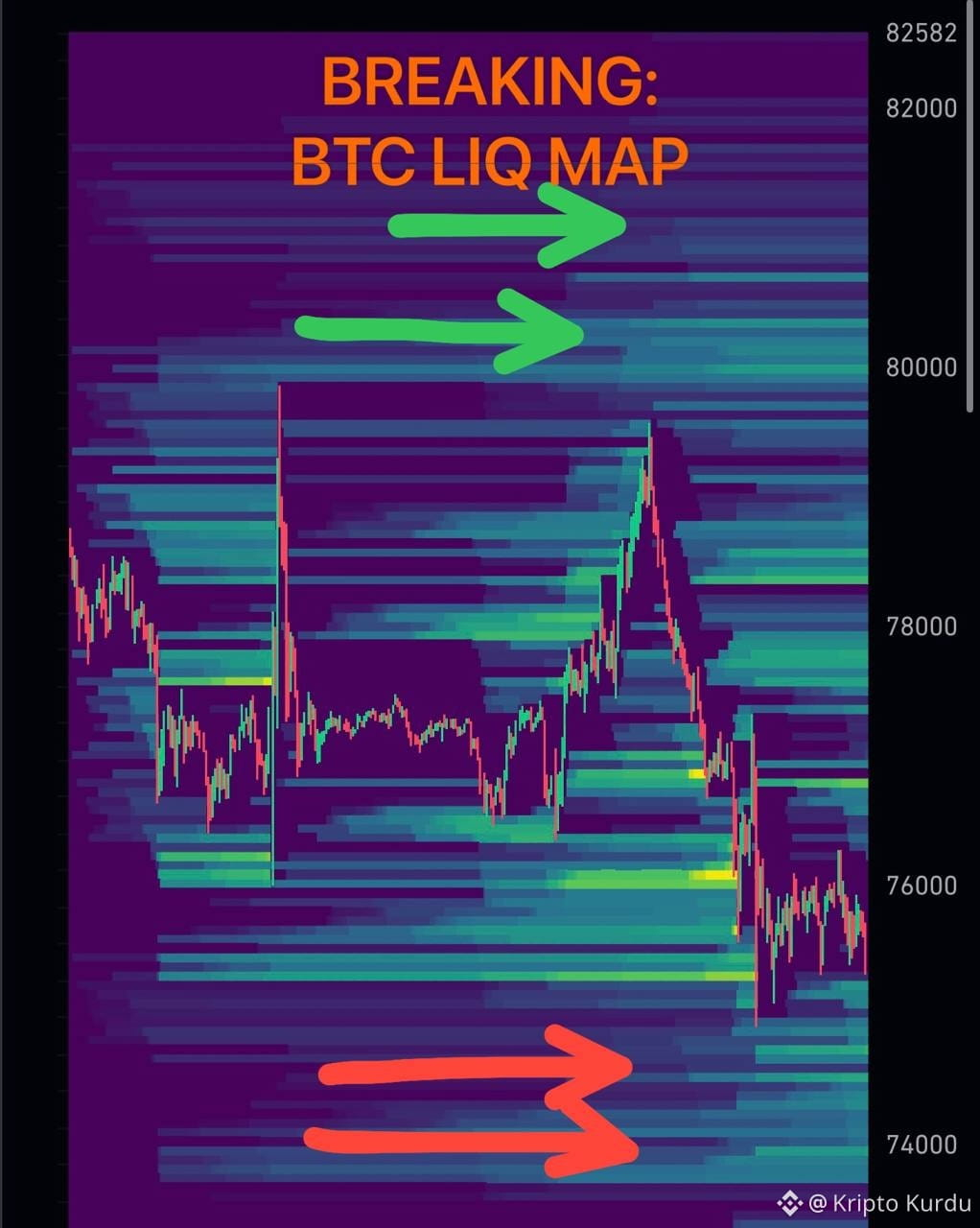
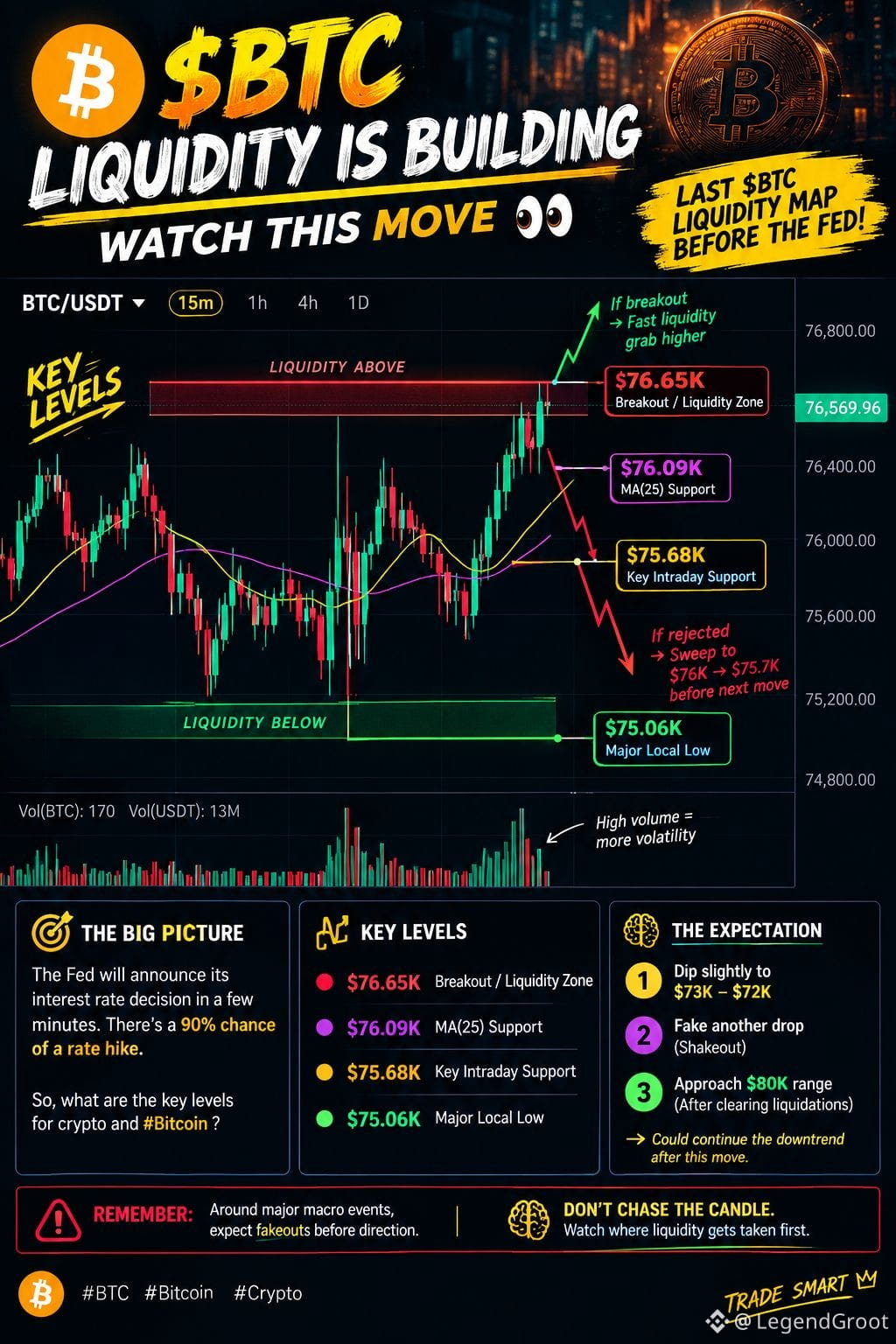
LAST $BTC LIQUIDITY MAP BEFORE THE FED!
The Fed will announce its interest rate decision in a few minutes there’s a 90% chance of a rate hike. So, what are the key levels for crypto and #Bitcoin ?
First off, there’s nearly equal liquidation pressure on both sides. My expectation is that it will dip slightly first, falling to the 73-72K levels, and then feign another drop before approaching the 80K range.
This will clear out positions on both sides. After this move, we could continue the downtrend.
We’ll have moved closer to the interest rate decision, and the market will have cleared out the liquidations.
Do you think this analysis will hold up?
LAST $BTC LIQUIDITY MAP BEFORE THE FED!
The Fed will announce its interest rate decision in a few minutes there’s a 90% chance of a rate hike. So, what are the key levels for crypto and #Bitcoin ?
First off, there’s nearly equal liquidation pressure on both sides. My expectation is that it will dip slightly first, falling to the 73-72K levels, and then feign another drop before approaching the 80K range.
This will clear out positions on both sides. After this move, we could continue the downtrend.
We’ll have moved closer to the interest rate decision, and the market will have cleared out the liquidations.
Do you think this analysis will hold up?
The Fed will announce its interest rate decision in a few minutes there’s a 90% chance of a rate hike. So, what are the key levels for crypto and #Bitcoin ?
First off, there’s nearly equal liquidation pressure on both sides. My expectation is that it will dip slightly first, falling to the 73-72K levels, and then feign another drop before approaching the 80K range.
This will clear out positions on both sides. After this move, we could continue the downtrend.
We’ll have moved closer to the interest rate decision, and the market will have cleared out the liquidations.
Do you think this analysis will hold up?
AngelOfCrypto_-:
nice
6
10
13.2k

🔥$BTC Update before FOMC 16 Sep
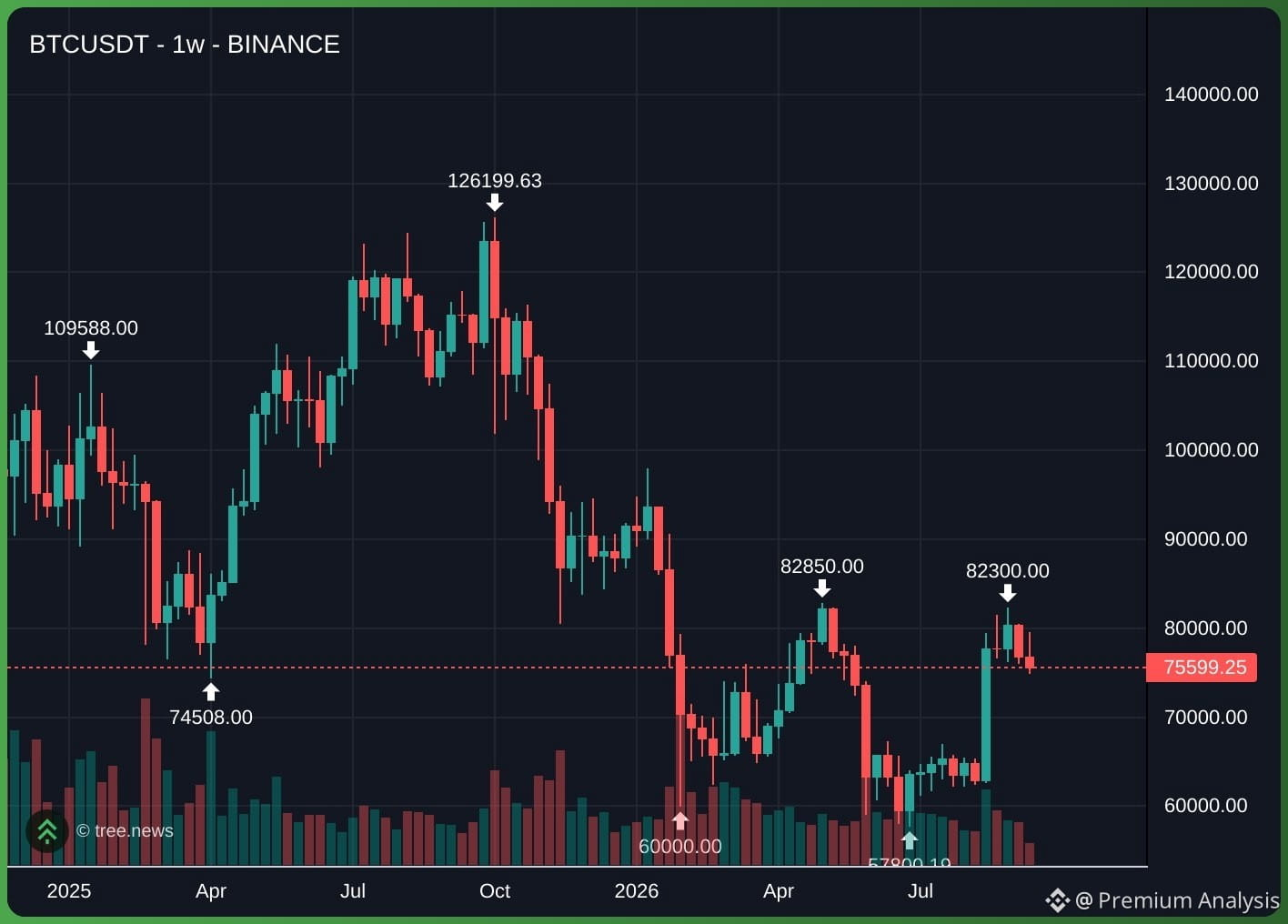
📈 Higher Timeframe (Weekly/Monthly): Accumulation Bias Intact
After the sharp markdown from the 2025 ATH down to the ~$58k–$60k region, Bitcoin printed a classic Spring (false breakdown below the prior low followed by a strong recovery) and subsequent Sign of Strength as price reclaimed key levels.
Long-term holders continue to maintain elevated supply, and on-chain data shows limited distribution from older coins. Many analysts still view the 2026 lows as the base of a large-scale accumulation range, with the August rally representing Phase D / early Markup. The higher-timeframe structure remains constructive as long as the broader range holds.
{future}(ZECUSDT)
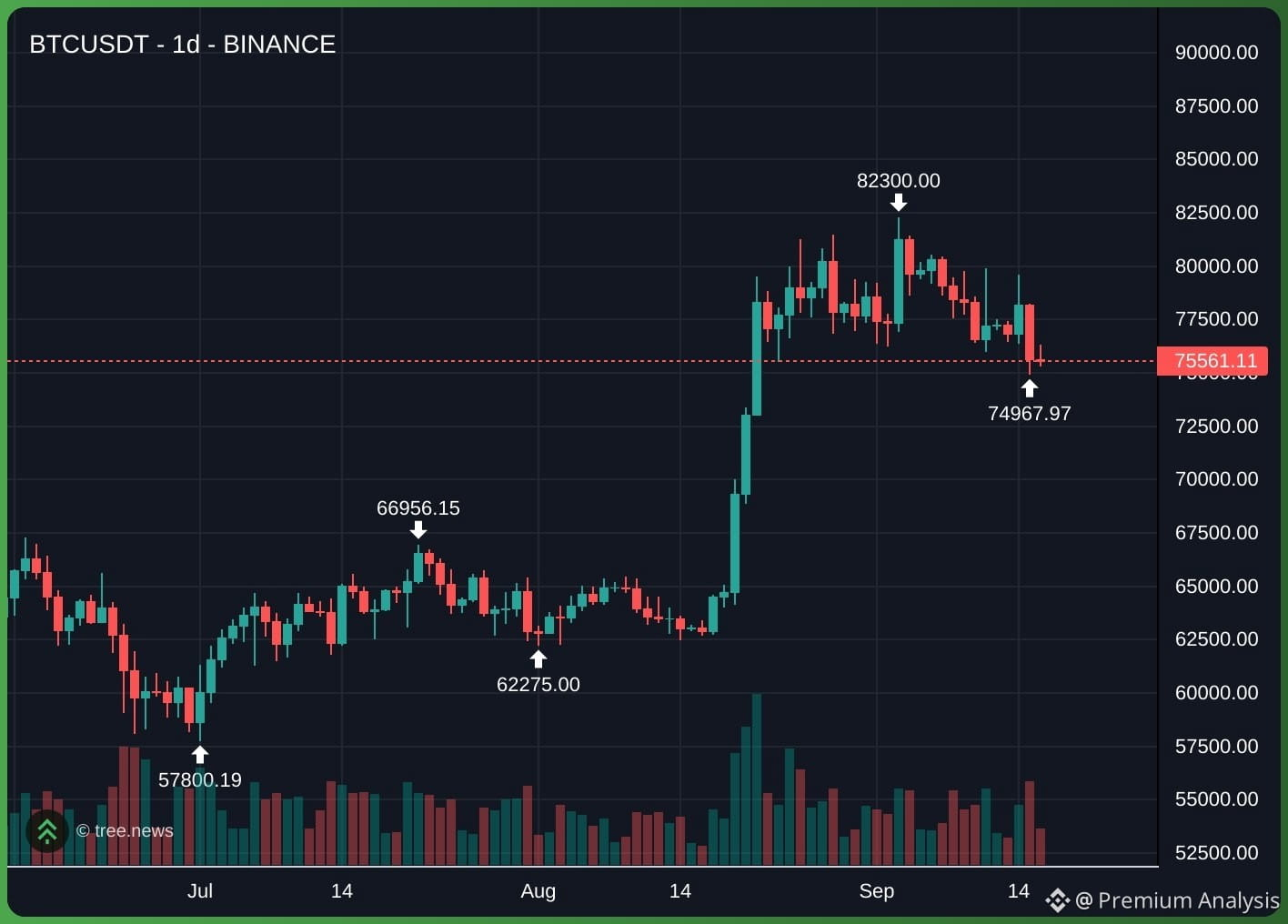
📉 Shorter Timeframe (Daily / 4H): Distribution Signals Emerging
On the daily and 4H, the picture is more cautious. BTC spent weeks oscillating inside a $75k–$82k range, with the upper end ($82k–$83k) rejected firmly.
Price has now broken the range floor near $77,100 on elevated volume and closed below a key support zone. The structure is forming lower highs and short-term momentum has clearly weakened. This sequence — UTAD near the range high followed by a decisive Sign of Weakness on the breakdown — fits a short-term Wyckoff distribution pattern.
🔥Current Levels & Scenarios:
Price is currently testing the $75k–$76k support band.
- Hold and reclaim $77k–$78k → the breakdown may resolve as a re-accumulation shakeout, opening the door for another push higher within the larger markup.
- Clear loss of $74k–$75k → probability of continued markdown toward the $70k–$73.5k zone increases significantly.
🔥Summary:
Higher-timeframe structure still favors accumulation and eventual markup. The short-term structure, however, has shifted into a distribution phase with downside risk elevated until $77k–$78k is recovered with conviction.
Watch volume and the reaction at $75k–$76k closely — this is the immediate decision point
{future}(BTCUSDT)
#btc #bitcoin #fomc
🔥$BTC Update before FOMC 16 Sep
📈 Higher Timeframe (Weekly/Monthly): Accumulation Bias Intact
After the sharp markdown from the 2025 ATH down to the ~$58k–$60k region, Bitcoin printed a classic Spring (false breakdown below the prior low followed by a strong recovery) and subsequent Sign of Strength as price reclaimed key levels.
Long-term holders continue to maintain elevated supply, and on-chain data shows limited distribution from older coins. Many analysts still view the 2026 lows as the base of a large-scale accumulation range, with the August rally representing Phase D / early Markup. The higher-timeframe structure remains constructive as long as the broader range holds.
📉 Shorter Timeframe (Daily / 4H): Distribution Signals Emerging
On the daily and 4H, the picture is more cautious. BTC spent weeks oscillating inside a $75k–$82k range, with the upper end ($82k–$83k) rejected firmly.
Price has now broken the range floor near $77,100 on elevated volume and closed below a key support zone. The structure is forming lower highs and short-term momentum has clearly weakened. This sequence — UTAD near the range high followed by a decisive Sign of Weakness on the breakdown — fits a short-term Wyckoff distribution pattern.
🔥Current Levels & Scenarios:
Price is currently testing the $75k–$76k support band.
- Hold and reclaim $77k–$78k → the breakdown may resolve as a re-accumulation shakeout, opening the door for another push higher within the larger markup.
- Clear loss of $74k–$75k → probability of continued markdown toward the $70k–$73.5k zone increases significantly.
🔥Summary:
Higher-timeframe structure still favors accumulation and eventual markup. The short-term structure, however, has shifted into a distribution phase with downside risk elevated until $77k–$78k is recovered with conviction.
Watch volume and the reaction at $75k–$76k closely — this is the immediate decision point
#btc #bitcoin #fomc
📈 Higher Timeframe (Weekly/Monthly): Accumulation Bias Intact
After the sharp markdown from the 2025 ATH down to the ~$58k–$60k region, Bitcoin printed a classic Spring (false breakdown below the prior low followed by a strong recovery) and subsequent Sign of Strength as price reclaimed key levels.
Long-term holders continue to maintain elevated supply, and on-chain data shows limited distribution from older coins. Many analysts still view the 2026 lows as the base of a large-scale accumulation range, with the August rally representing Phase D / early Markup. The higher-timeframe structure remains constructive as long as the broader range holds.
📉 Shorter Timeframe (Daily / 4H): Distribution Signals Emerging
On the daily and 4H, the picture is more cautious. BTC spent weeks oscillating inside a $75k–$82k range, with the upper end ($82k–$83k) rejected firmly.
Price has now broken the range floor near $77,100 on elevated volume and closed below a key support zone. The structure is forming lower highs and short-term momentum has clearly weakened. This sequence — UTAD near the range high followed by a decisive Sign of Weakness on the breakdown — fits a short-term Wyckoff distribution pattern.
🔥Current Levels & Scenarios:
Price is currently testing the $75k–$76k support band.
- Hold and reclaim $77k–$78k → the breakdown may resolve as a re-accumulation shakeout, opening the door for another push higher within the larger markup.
- Clear loss of $74k–$75k → probability of continued markdown toward the $70k–$73.5k zone increases significantly.
🔥Summary:
Higher-timeframe structure still favors accumulation and eventual markup. The short-term structure, however, has shifted into a distribution phase with downside risk elevated until $77k–$78k is recovered with conviction.
Watch volume and the reaction at $75k–$76k closely — this is the immediate decision point
#btc #bitcoin #fomc
1.7k

·
--
Hackers Stole 119,756 Bitcoin In 2016. It Took The DOJ Six Years To Trace It.On August 2, 2016, someone drained 119,756 Bitcoin out of Bitfinex, one of the largest exchanges in the world at the time. At the price that day, the loss came to roughly $72 million. Today that same pile of coins is worth many times more.
Bitfinex didn't quietly stick a handful of unlucky users with the loss. Every account on the platform took the same haircut, about 36% of whatever balance sat there that morning, whether those funds were anywhere near the hacked wallet or not. In exchange, the company issued a new token called BFX, one BFX for every dollar lost, redeemable later at a fixed dollar price or convertible into shares of Bitfinex's parent company, iFinex. Within eight months, every BFX token had been made whole, either bought back at full value or swapped for equity.
That part of the story usually gets forgotten. What people remember is that the stolen coins vanished into the blockchain and nobody expected to see them again.
They sat mostly untouched for over five years, moving in small amounts here and there, enough to keep investigators watching but not enough to break the trail. Then in February 2022, the Department of Justice announced it had traced a huge share of the stolen funds to a New York couple and seized Bitcoin worth close to $3.6 billion at the time, the largest financial seizure in the agency's history at that point. One of the suspects had built a strange public trail of rap videos and posts online for years while allegedly sitting on a fortune stolen from an exchange hack. Both pleaded guilty to money laundering conspiracy in 2023.
The gap between the theft and the seizure says something worth sitting with. Six years is a long time to hide anything on a ledger where every transaction stays permanently visible to anyone who wants to look. Blockchain forensics firms and government investigators spent that entire stretch mapping wallet clusters, watching exchange deposits, and waiting for a mistake. Eventually one came.
Even after the seizure, the story hasn't fully closed. As of early 2025, Bitfinex and individual account holders were fighting in court over whether the recovered coins should go back to the exchange in-kind, meaning the actual Bitcoin itself, or get shared with the customers who took the original 36% haircut, while the government itself had asked the court to approve in-kind restitution to Bitfinex. That distinction is worth billions given how far Bitcoin has moved since the seizure. Bitfinex has argued it's owed the coins themselves as the original victim, and courts have been sorting through exactly who counts as a victim in a hack that technically hit every user's balance at once.
Bitcoin sits at $76,426 today. The 2016 hack is a reminder that exchange security failures don't disappear once the immediate panic fades. They turn into multi-year investigations, legal fights over what a victim is owed, and a permanent case study in how visible a blockchain really is once someone with enough resources decides to follow it.
It also raises a question that never fully goes away for anyone holding funds on a centralized exchange. The coins are recoverable in theory, eventually, if investigators get lucky and have years to spend. That's a very different thing from your funds being safe today.
Would you have kept trading on an exchange right after a hack like that, waiting years for a resolution most users never got to see up close?
Personal view, not advice. Do your own research.
#Bitcoin #Bitfinex
Hackers Stole 119,756 Bitcoin In 2016. It Took The DOJ Six Years To Trace It.
On August 2, 2016, someone drained 119,756 Bitcoin out of Bitfinex, one of the largest exchanges in the world at the time. At the price that day, the loss came to roughly $72 million. Today that same pile of coins is worth many times more.
Bitfinex didn't quietly stick a handful of unlucky users with the loss. Every account on the platform took the same haircut, about 36% of whatever balance sat there that morning, whether those funds were anywhere near the hacked wallet or not. In exchange, the company issued a new token called BFX, one BFX for every dollar lost, redeemable later at a fixed dollar price or convertible into shares of Bitfinex's parent company, iFinex. Within eight months, every BFX token had been made whole, either bought back at full value or swapped for equity.
That part of the story usually gets forgotten. What people remember is that the stolen coins vanished into the blockchain and nobody expected to see them again.
They sat mostly untouched for over five years, moving in small amounts here and there, enough to keep investigators watching but not enough to break the trail. Then in February 2022, the Department of Justice announced it had traced a huge share of the stolen funds to a New York couple and seized Bitcoin worth close to $3.6 billion at the time, the largest financial seizure in the agency's history at that point. One of the suspects had built a strange public trail of rap videos and posts online for years while allegedly sitting on a fortune stolen from an exchange hack. Both pleaded guilty to money laundering conspiracy in 2023.
The gap between the theft and the seizure says something worth sitting with. Six years is a long time to hide anything on a ledger where every transaction stays permanently visible to anyone who wants to look. Blockchain forensics firms and government investigators spent that entire stretch mapping wallet clusters, watching exchange deposits, and waiting for a mistake. Eventually one came.
Even after the seizure, the story hasn't fully closed. As of early 2025, Bitfinex and individual account holders were fighting in court over whether the recovered coins should go back to the exchange in-kind, meaning the actual Bitcoin itself, or get shared with the customers who took the original 36% haircut, while the government itself had asked the court to approve in-kind restitution to Bitfinex. That distinction is worth billions given how far Bitcoin has moved since the seizure. Bitfinex has argued it's owed the coins themselves as the original victim, and courts have been sorting through exactly who counts as a victim in a hack that technically hit every user's balance at once.
Bitcoin sits at $76,426 today. The 2016 hack is a reminder that exchange security failures don't disappear once the immediate panic fades. They turn into multi-year investigations, legal fights over what a victim is owed, and a permanent case study in how visible a blockchain really is once someone with enough resources decides to follow it.
It also raises a question that never fully goes away for anyone holding funds on a centralized exchange. The coins are recoverable in theory, eventually, if investigators get lucky and have years to spend. That's a very different thing from your funds being safe today.
Would you have kept trading on an exchange right after a hack like that, waiting years for a resolution most users never got to see up close?
Personal view, not advice. Do your own research.
#Bitcoin #Bitfinex
Bitfinex didn't quietly stick a handful of unlucky users with the loss. Every account on the platform took the same haircut, about 36% of whatever balance sat there that morning, whether those funds were anywhere near the hacked wallet or not. In exchange, the company issued a new token called BFX, one BFX for every dollar lost, redeemable later at a fixed dollar price or convertible into shares of Bitfinex's parent company, iFinex. Within eight months, every BFX token had been made whole, either bought back at full value or swapped for equity.
That part of the story usually gets forgotten. What people remember is that the stolen coins vanished into the blockchain and nobody expected to see them again.
They sat mostly untouched for over five years, moving in small amounts here and there, enough to keep investigators watching but not enough to break the trail. Then in February 2022, the Department of Justice announced it had traced a huge share of the stolen funds to a New York couple and seized Bitcoin worth close to $3.6 billion at the time, the largest financial seizure in the agency's history at that point. One of the suspects had built a strange public trail of rap videos and posts online for years while allegedly sitting on a fortune stolen from an exchange hack. Both pleaded guilty to money laundering conspiracy in 2023.
The gap between the theft and the seizure says something worth sitting with. Six years is a long time to hide anything on a ledger where every transaction stays permanently visible to anyone who wants to look. Blockchain forensics firms and government investigators spent that entire stretch mapping wallet clusters, watching exchange deposits, and waiting for a mistake. Eventually one came.
Even after the seizure, the story hasn't fully closed. As of early 2025, Bitfinex and individual account holders were fighting in court over whether the recovered coins should go back to the exchange in-kind, meaning the actual Bitcoin itself, or get shared with the customers who took the original 36% haircut, while the government itself had asked the court to approve in-kind restitution to Bitfinex. That distinction is worth billions given how far Bitcoin has moved since the seizure. Bitfinex has argued it's owed the coins themselves as the original victim, and courts have been sorting through exactly who counts as a victim in a hack that technically hit every user's balance at once.
Bitcoin sits at $76,426 today. The 2016 hack is a reminder that exchange security failures don't disappear once the immediate panic fades. They turn into multi-year investigations, legal fights over what a victim is owed, and a permanent case study in how visible a blockchain really is once someone with enough resources decides to follow it.
It also raises a question that never fully goes away for anyone holding funds on a centralized exchange. The coins are recoverable in theory, eventually, if investigators get lucky and have years to spend. That's a very different thing from your funds being safe today.
Would you have kept trading on an exchange right after a hack like that, waiting years for a resolution most users never got to see up close?
Personal view, not advice. Do your own research.
#Bitcoin #Bitfinex
660

·
--
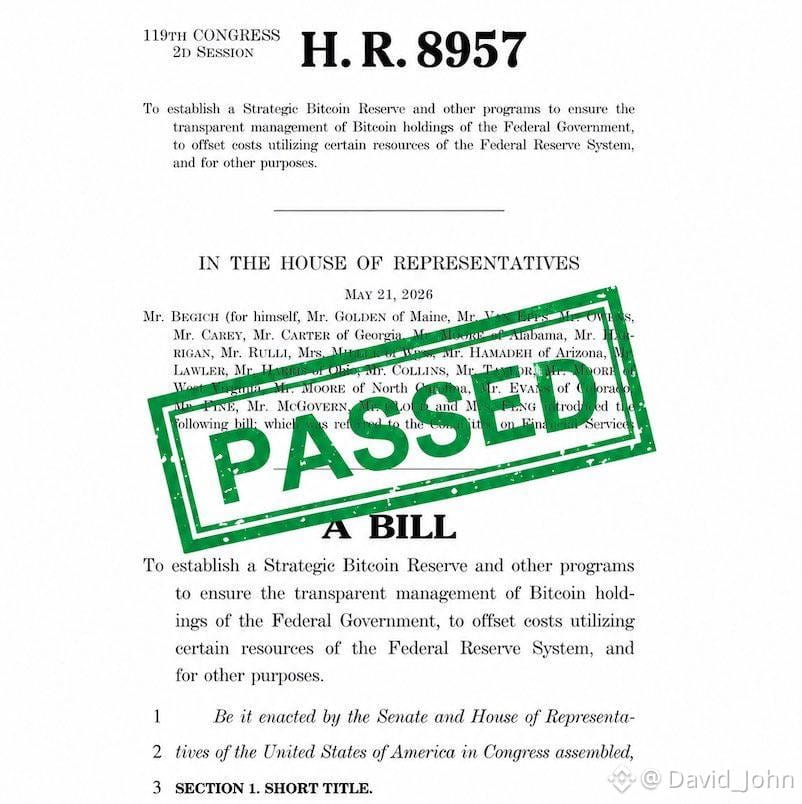
🚨 BREAKING: 🇺🇸 BITCOIN RESERVE BILL MOVES FORWARD
The U.S. House Financial Services Committee has advanced legislation aimed at establishing a Strategic Bitcoin Reserve. 🇺🇸₿
This puts Bitcoin further into the center of the U.S. policy debate — even as the broader CLARITY Act remains stalled in the Senate.
🔥 A major development for the crypto market to watch.
#Bitcoin #BTC #Crypto #BitcoinReserv
🚨 BREAKING: 🇺🇸 BITCOIN RESERVE BILL MOVES FORWARD
The U.S. House Financial Services Committee has advanced legislation aimed at establishing a Strategic Bitcoin Reserve. 🇺🇸₿
This puts Bitcoin further into the center of the U.S. policy debate — even as the broader CLARITY Act remains stalled in the Senate.
🔥 A major development for the crypto market to watch.
#Bitcoin #BTC #Crypto #BitcoinReserv
The U.S. House Financial Services Committee has advanced legislation aimed at establishing a Strategic Bitcoin Reserve. 🇺🇸₿
This puts Bitcoin further into the center of the U.S. policy debate — even as the broader CLARITY Act remains stalled in the Senate.
🔥 A major development for the crypto market to watch.
#Bitcoin #BTC #Crypto #BitcoinReserv

385

·
--
Bullish
#ushouseadvancesbitcoinreservebill
🚨 US HOUSE JUST ADVANCED THE BITCOIN RESERVE BILL! 🇺🇸🔥
BIG NEWS for $BTC 👀
The House Financial Services Committee voted 28–21 to advance legislation that would establish a Strategic Bitcoin Reserve.
If the proposal eventually becomes law, it could create a formal framework for the U.S. government to hold Bitcoin as a strategic reserve asset. 🏦₿
But this is NOT law yet — more steps in Congress are still required.
The big question now:
🚀 Will this become a major $BTC catalyst?
#bitcoin #BTC #crypto
#ushouseadvancesbitcoinreservebill
🚨 US HOUSE JUST ADVANCED THE BITCOIN RESERVE BILL! 🇺🇸🔥
BIG NEWS for $BTC 👀
The House Financial Services Committee voted 28–21 to advance legislation that would establish a Strategic Bitcoin Reserve.
If the proposal eventually becomes law, it could create a formal framework for the U.S. government to hold Bitcoin as a strategic reserve asset. 🏦₿
But this is NOT law yet — more steps in Congress are still required.
The big question now:
🚀 Will this become a major $BTC catalyst?
#bitcoin #BTC #crypto
🚨 US HOUSE JUST ADVANCED THE BITCOIN RESERVE BILL! 🇺🇸🔥
BIG NEWS for $BTC 👀
The House Financial Services Committee voted 28–21 to advance legislation that would establish a Strategic Bitcoin Reserve.
If the proposal eventually becomes law, it could create a formal framework for the U.S. government to hold Bitcoin as a strategic reserve asset. 🏦₿
But this is NOT law yet — more steps in Congress are still required.
The big question now:
🚀 Will this become a major $BTC catalyst?
#bitcoin #BTC #crypto
1
268

·
--
The crypto market is holding its breath. According to Adrian Wall, Managing Director of the Digital Sovereignty Alliance, senators from both parties are actively considering a final push to advance the CLARITY Act during the upcoming lame-duck session. This potential legislative breakthrough could provide the long-awaited regulatory clarity that institutional investors have been demanding, potentially unlocking a new wave of capital into the digital asset space.
• **Bipartisan Support:** Senators from both major parties are aligning to pass the market structure bill before Congress adjourns.
• **Regulatory Certainty:** The CLARITY Act aims to define the legal framework for crypto assets, reducing ambiguity for exchanges and holders.
• **Lame-Duck Window:** This is the last chance for this specific legislative push before the current Congress ends, making timing critical.
With $BTC currently trading at $75,976.01 (+0.69% in 24h), the market is showing signs of cautious optimism. If the CLARITY Act gains traction, it could serve as a significant macro catalyst, potentially driving volume and price discovery higher as institutional confidence solidifies. Regulatory clarity is often the precursor to major bull runs, and this development signals that the political winds may be shifting in favor of digital assets.
Do you believe the CLARITY Act will pass in the lame-duck session? Could this be the catalyst for $BTC to break new highs? Drop your predictions below! 👇
#BinanceSquare #CryptoNews #Bitcoin
The crypto market is holding its breath. According to Adrian Wall, Managing Director of the Digital Sovereignty Alliance, senators from both parties are actively considering a final push to advance the CLARITY Act during the upcoming lame-duck session. This potential legislative breakthrough could provide the long-awaited regulatory clarity that institutional investors have been demanding, potentially unlocking a new wave of capital into the digital asset space.
• **Bipartisan Support:** Senators from both major parties are aligning to pass the market structure bill before Congress adjourns.
• **Regulatory Certainty:** The CLARITY Act aims to define the legal framework for crypto assets, reducing ambiguity for exchanges and holders.
• **Lame-Duck Window:** This is the last chance for this specific legislative push before the current Congress ends, making timing critical.
With $BTC currently trading at $75,976.01 (+0.69% in 24h), the market is showing signs of cautious optimism. If the CLARITY Act gains traction, it could serve as a significant macro catalyst, potentially driving volume and price discovery higher as institutional confidence solidifies. Regulatory clarity is often the precursor to major bull runs, and this development signals that the political winds may be shifting in favor of digital assets.
Do you believe the CLARITY Act will pass in the lame-duck session? Could this be the catalyst for $BTC to break new highs? Drop your predictions below! 👇
#BinanceSquare #CryptoNews #Bitcoin
• **Bipartisan Support:** Senators from both major parties are aligning to pass the market structure bill before Congress adjourns.
• **Regulatory Certainty:** The CLARITY Act aims to define the legal framework for crypto assets, reducing ambiguity for exchanges and holders.
• **Lame-Duck Window:** This is the last chance for this specific legislative push before the current Congress ends, making timing critical.
With $BTC currently trading at $75,976.01 (+0.69% in 24h), the market is showing signs of cautious optimism. If the CLARITY Act gains traction, it could serve as a significant macro catalyst, potentially driving volume and price discovery higher as institutional confidence solidifies. Regulatory clarity is often the precursor to major bull runs, and this development signals that the political winds may be shifting in favor of digital assets.
Do you believe the CLARITY Act will pass in the lame-duck session? Could this be the catalyst for $BTC to break new highs? Drop your predictions below! 👇
#BinanceSquare #CryptoNews #Bitcoin

404

·
--
#fedratewatch #FedRateWatch: The Fed Decision Could Set the Next Crypto Narrative
I’ve been watching the Fed closely because today’s decision is about more than just a single interest-rate number.
The Federal Reserve’s September 15–16 FOMC meeting concludes today, with the rate decision followed by the press conference.
For crypto traders, the important question is simple:
What happens to liquidity after the decision?
🧠 Why does the Fed matter to Bitcoin?
When interest rates stay high, cash and Treasury yields become more attractive. At the same time, financial conditions can remain tighter, which may reduce the appetite for higher-risk assets such as Bitcoin and altcoins.
When markets expect easier policy, the opposite dynamic can develop: investors may become more willing to take risk.
But there’s an important detail many traders overlook:
Crypto often reacts more to the Fed’s message than the headline rate itself.
The statement, economic projections and press conference can change expectations for the next several meetings.
📊 What I’m watching today
1. The rate decision
Markets have been repricing the September meeting sharply. CME-related market data recently showed the probability of a 25-basis-point hike rising substantially as inflation data came in.
2. Powell’s language
If the Fed sounds more concerned about inflation, markets could interpret that as a signal for tighter policy ahead.
If policymakers emphasize economic weakness or declining inflation pressures, traders may focus more heavily on the possibility of future easing.
3. Bitcoin’s reaction
I would watch BTC volume and price structure rather than reacting to the first candle after the announcement.
A sharp move followed by a quick reversal could indicate that the initial reaction was mostly positioning.
🔎 The bigger picture
The Federal Reserve is balancing inflation against economic growth, while markets are simultaneously watching Treasury yields, the dollar and broader liquidity conditions.#bitcoin #BTC #Ethereum
#fedratewatch #FedRateWatch: The Fed Decision Could Set the Next Crypto Narrative
I’ve been watching the Fed closely because today’s decision is about more than just a single interest-rate number.
The Federal Reserve’s September 15–16 FOMC meeting concludes today, with the rate decision followed by the press conference.
For crypto traders, the important question is simple:
What happens to liquidity after the decision?
🧠 Why does the Fed matter to Bitcoin?
When interest rates stay high, cash and Treasury yields become more attractive. At the same time, financial conditions can remain tighter, which may reduce the appetite for higher-risk assets such as Bitcoin and altcoins.
When markets expect easier policy, the opposite dynamic can develop: investors may become more willing to take risk.
But there’s an important detail many traders overlook:
Crypto often reacts more to the Fed’s message than the headline rate itself.
The statement, economic projections and press conference can change expectations for the next several meetings.
📊 What I’m watching today
1. The rate decision
Markets have been repricing the September meeting sharply. CME-related market data recently showed the probability of a 25-basis-point hike rising substantially as inflation data came in.
2. Powell’s language
If the Fed sounds more concerned about inflation, markets could interpret that as a signal for tighter policy ahead.
If policymakers emphasize economic weakness or declining inflation pressures, traders may focus more heavily on the possibility of future easing.
3. Bitcoin’s reaction
I would watch BTC volume and price structure rather than reacting to the first candle after the announcement.
A sharp move followed by a quick reversal could indicate that the initial reaction was mostly positioning.
🔎 The bigger picture
The Federal Reserve is balancing inflation against economic growth, while markets are simultaneously watching Treasury yields, the dollar and broader liquidity conditions.#bitcoin #BTC #Ethereum
I’ve been watching the Fed closely because today’s decision is about more than just a single interest-rate number.
The Federal Reserve’s September 15–16 FOMC meeting concludes today, with the rate decision followed by the press conference.
For crypto traders, the important question is simple:
What happens to liquidity after the decision?
🧠 Why does the Fed matter to Bitcoin?
When interest rates stay high, cash and Treasury yields become more attractive. At the same time, financial conditions can remain tighter, which may reduce the appetite for higher-risk assets such as Bitcoin and altcoins.
When markets expect easier policy, the opposite dynamic can develop: investors may become more willing to take risk.
But there’s an important detail many traders overlook:
Crypto often reacts more to the Fed’s message than the headline rate itself.
The statement, economic projections and press conference can change expectations for the next several meetings.
📊 What I’m watching today
1. The rate decision
Markets have been repricing the September meeting sharply. CME-related market data recently showed the probability of a 25-basis-point hike rising substantially as inflation data came in.
2. Powell’s language
If the Fed sounds more concerned about inflation, markets could interpret that as a signal for tighter policy ahead.
If policymakers emphasize economic weakness or declining inflation pressures, traders may focus more heavily on the possibility of future easing.
3. Bitcoin’s reaction
I would watch BTC volume and price structure rather than reacting to the first candle after the announcement.
A sharp move followed by a quick reversal could indicate that the initial reaction was mostly positioning.
🔎 The bigger picture
The Federal Reserve is balancing inflation against economic growth, while markets are simultaneously watching Treasury yields, the dollar and broader liquidity conditions.#bitcoin #BTC #Ethereum

631


·
--
Verified
Article
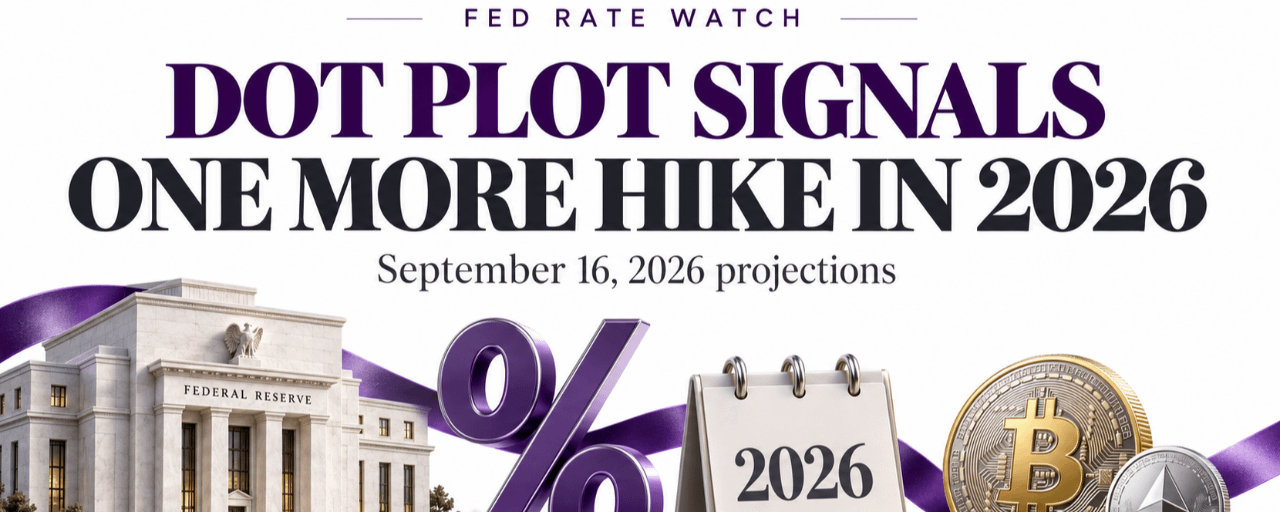
Fed Dot Plot Signals One More Hike in 2026#dotplotsignalsonemorehikein2026
The September rate increase may not be the Fed’s final move this year.
On September 16, the Federal Reserve raised its benchmark rate by 25 basis points, bringing the target range to 3.75%–4.00%.
The new dot plot shows a 4.1% median year-end projection, consistent with another quarter-point increase to 4.00%–4.25%. The median also stands at 4.1% for the end of 2027. These projections reflect officials’ individual assessments and can change as economic conditions evolve.
My read: For crypto, the bigger issue is how long borrowing costs could stay elevated. Higher yields can make interest-bearing assets more competitive, while expensive financing can discourage leveraged positions.
But the market reaction depends on expectations. If investors already anticipated another hike, this headline alone may have limited impact. A stronger reaction could come from inflation or employment data that pushes the expected rate path further upward—or gives officials room to soften it.
I would watch Treasury yields, the dollar and Bitcoin’s spot demand together. Resilient buying despite tighter financial conditions would offer stronger evidence of market strength than a brief rebound after the announcement.
Which matters more for crypto now: another hike, or how long the Fed holds rates afterward?
#DotPlotSignalsOneMoreHikeIn2026 #FedRateWatch #bitcoin
$BR $SYN $BULLA
{future}(BULLAUSDT)
{future}(SYNUSDT)
{future}(BRUSDT)
Fed Dot Plot Signals One More Hike in 2026
#dotplotsignalsonemorehikein2026
The September rate increase may not be the Fed’s final move this year.
On September 16, the Federal Reserve raised its benchmark rate by 25 basis points, bringing the target range to 3.75%–4.00%.
The new dot plot shows a 4.1% median year-end projection, consistent with another quarter-point increase to 4.00%–4.25%. The median also stands at 4.1% for the end of 2027. These projections reflect officials’ individual assessments and can change as economic conditions evolve.
My read: For crypto, the bigger issue is how long borrowing costs could stay elevated. Higher yields can make interest-bearing assets more competitive, while expensive financing can discourage leveraged positions.
But the market reaction depends on expectations. If investors already anticipated another hike, this headline alone may have limited impact. A stronger reaction could come from inflation or employment data that pushes the expected rate path further upward—or gives officials room to soften it.
I would watch Treasury yields, the dollar and Bitcoin’s spot demand together. Resilient buying despite tighter financial conditions would offer stronger evidence of market strength than a brief rebound after the announcement.
Which matters more for crypto now: another hike, or how long the Fed holds rates afterward?
#DotPlotSignalsOneMoreHikeIn2026 #FedRateWatch #bitcoin
$BR $SYN $BULLA
The September rate increase may not be the Fed’s final move this year.
On September 16, the Federal Reserve raised its benchmark rate by 25 basis points, bringing the target range to 3.75%–4.00%.
The new dot plot shows a 4.1% median year-end projection, consistent with another quarter-point increase to 4.00%–4.25%. The median also stands at 4.1% for the end of 2027. These projections reflect officials’ individual assessments and can change as economic conditions evolve.
My read: For crypto, the bigger issue is how long borrowing costs could stay elevated. Higher yields can make interest-bearing assets more competitive, while expensive financing can discourage leveraged positions.
But the market reaction depends on expectations. If investors already anticipated another hike, this headline alone may have limited impact. A stronger reaction could come from inflation or employment data that pushes the expected rate path further upward—or gives officials room to soften it.
I would watch Treasury yields, the dollar and Bitcoin’s spot demand together. Resilient buying despite tighter financial conditions would offer stronger evidence of market strength than a brief rebound after the announcement.
Which matters more for crypto now: another hike, or how long the Fed holds rates afterward?
#DotPlotSignalsOneMoreHikeIn2026 #FedRateWatch #bitcoin
$BR $SYN $BULLA
1
1.2k

·
--
🚨 BTC UPDATE | Sept 17, 2026
Bitcoin is holding near the $76K area after recent volatility.
The key level to watch now is $75K. A sustained move below it could increase selling pressure, while holding above it may help stabilize sentiment.
👀 Watching $BTC closely today.
{spot}(BTCUSDT)
What do you think—BTC bullish or bearish from here?
#BTC走势分析 #bitcoin #crypto
🚨 BTC UPDATE | Sept 17, 2026
Bitcoin is holding near the $76K area after recent volatility.
The key level to watch now is $75K. A sustained move below it could increase selling pressure, while holding above it may help stabilize sentiment.
👀 Watching $BTC closely today.
What do you think—BTC bullish or bearish from here?
#BTC走势分析 #bitcoin #crypto
Bitcoin is holding near the $76K area after recent volatility.
The key level to watch now is $75K. A sustained move below it could increase selling pressure, while holding above it may help stabilize sentiment.
👀 Watching $BTC closely today.
What do you think—BTC bullish or bearish from here?
#BTC走势分析 #bitcoin #crypto
68
·
--
Bullish
#ushouseadvancesbitcoinreservebill
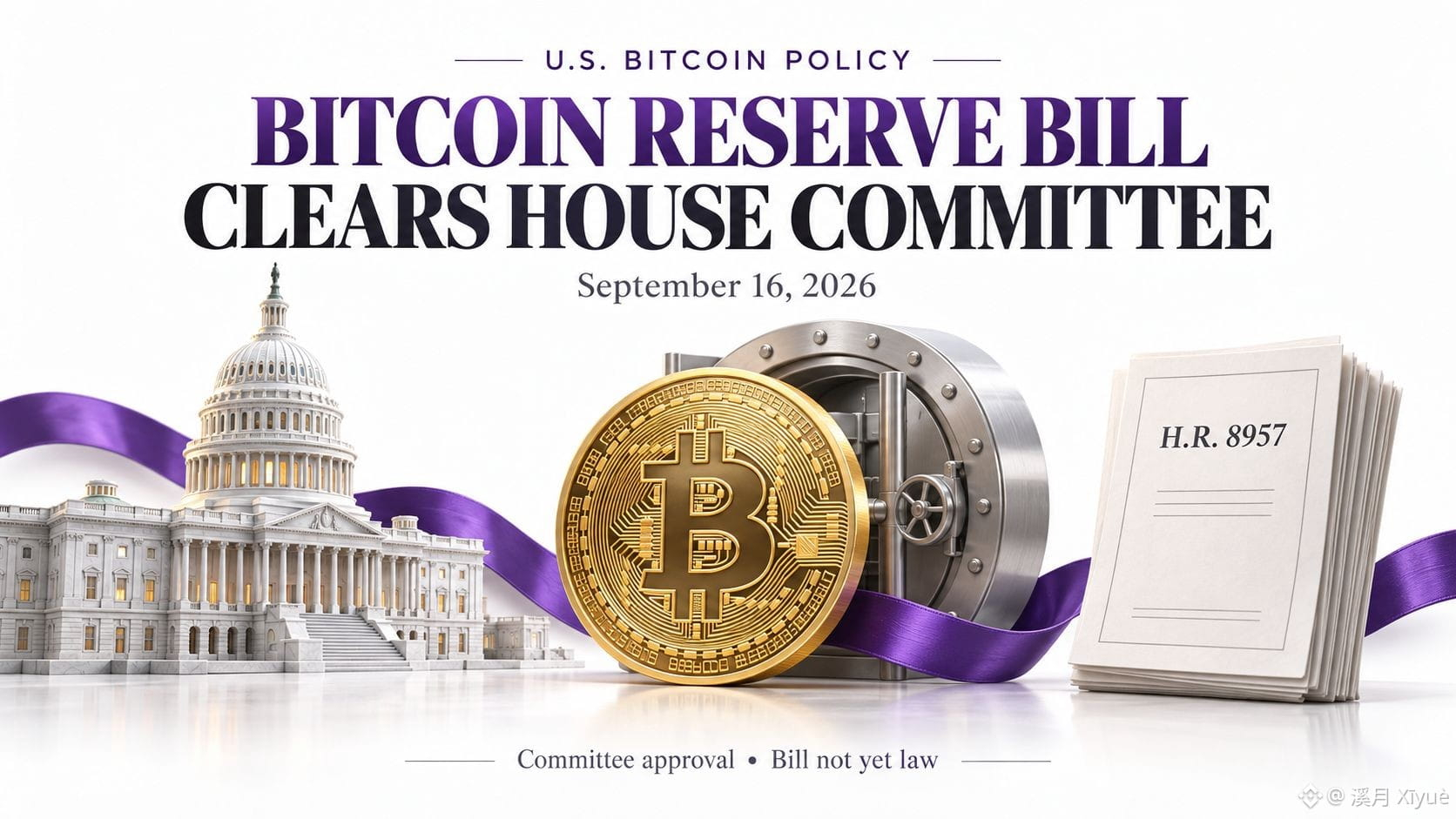
U.S. House Committee Advances Bitcoin Reserve Bill
Washington has taken another step toward putting federal Bitcoin holdings under a legal reserve framework.
On September 16, the House Financial Services Committee voted 28–21 to advance the amended American Reserve Modernization Act of 2026, H.R. 8957. This is committee approval; further congressional action is required before the bill can become law.
The approved substitute would place qualifying government-owned Bitcoin in a Treasury reserve, with a 20-year holding period measured from enactment. It also calls for a study of ways to acquire additional Bitcoin without adding net government costs or debt.
My take: Clearer custody, reporting and retention rules could make government Bitcoin management more predictable across changes in administration. That would matter for investors assessing the possibility of future government sales.
The market impact depends on the details. Transferring existing government holdings changes how those coins are managed. Fresh buying demand would require actual additional purchases, with the necessary authority and funding arrangements.
I would watch the House floor schedule, Senate support and any amendments affecting retention or acquisition provisions. Those developments will help determine how much of this proposal survives into an enforceable policy.
Which part deserves the closest scrutiny as the bill moves forward?
#USHouseAdvancesBitcoinReserveBill #bitcoin #CryptoPolicy2025
$BTC $BULLA $ONE
{future}(ONEUSDT)
{future}(BULLAUSDT)
{future}(BTCUSDT)
#ushouseadvancesbitcoinreservebill
U.S. House Committee Advances Bitcoin Reserve Bill
Washington has taken another step toward putting federal Bitcoin holdings under a legal reserve framework.
On September 16, the House Financial Services Committee voted 28–21 to advance the amended American Reserve Modernization Act of 2026, H.R. 8957. This is committee approval; further congressional action is required before the bill can become law.
The approved substitute would place qualifying government-owned Bitcoin in a Treasury reserve, with a 20-year holding period measured from enactment. It also calls for a study of ways to acquire additional Bitcoin without adding net government costs or debt.
My take: Clearer custody, reporting and retention rules could make government Bitcoin management more predictable across changes in administration. That would matter for investors assessing the possibility of future government sales.
The market impact depends on the details. Transferring existing government holdings changes how those coins are managed. Fresh buying demand would require actual additional purchases, with the necessary authority and funding arrangements.
I would watch the House floor schedule, Senate support and any amendments affecting retention or acquisition provisions. Those developments will help determine how much of this proposal survives into an enforceable policy.
Which part deserves the closest scrutiny as the bill moves forward?
#USHouseAdvancesBitcoinReserveBill #bitcoin #CryptoPolicy2025
$BTC $BULLA $ONE
U.S. House Committee Advances Bitcoin Reserve Bill
Washington has taken another step toward putting federal Bitcoin holdings under a legal reserve framework.
On September 16, the House Financial Services Committee voted 28–21 to advance the amended American Reserve Modernization Act of 2026, H.R. 8957. This is committee approval; further congressional action is required before the bill can become law.
The approved substitute would place qualifying government-owned Bitcoin in a Treasury reserve, with a 20-year holding period measured from enactment. It also calls for a study of ways to acquire additional Bitcoin without adding net government costs or debt.
My take: Clearer custody, reporting and retention rules could make government Bitcoin management more predictable across changes in administration. That would matter for investors assessing the possibility of future government sales.
The market impact depends on the details. Transferring existing government holdings changes how those coins are managed. Fresh buying demand would require actual additional purchases, with the necessary authority and funding arrangements.
I would watch the House floor schedule, Senate support and any amendments affecting retention or acquisition provisions. Those developments will help determine how much of this proposal survives into an enforceable policy.
Which part deserves the closest scrutiny as the bill moves forward?
#USHouseAdvancesBitcoinReserveBill #bitcoin #CryptoPolicy2025
$BTC $BULLA $ONE
563

·
--
Bearish
{spot}(ETHUSDT)
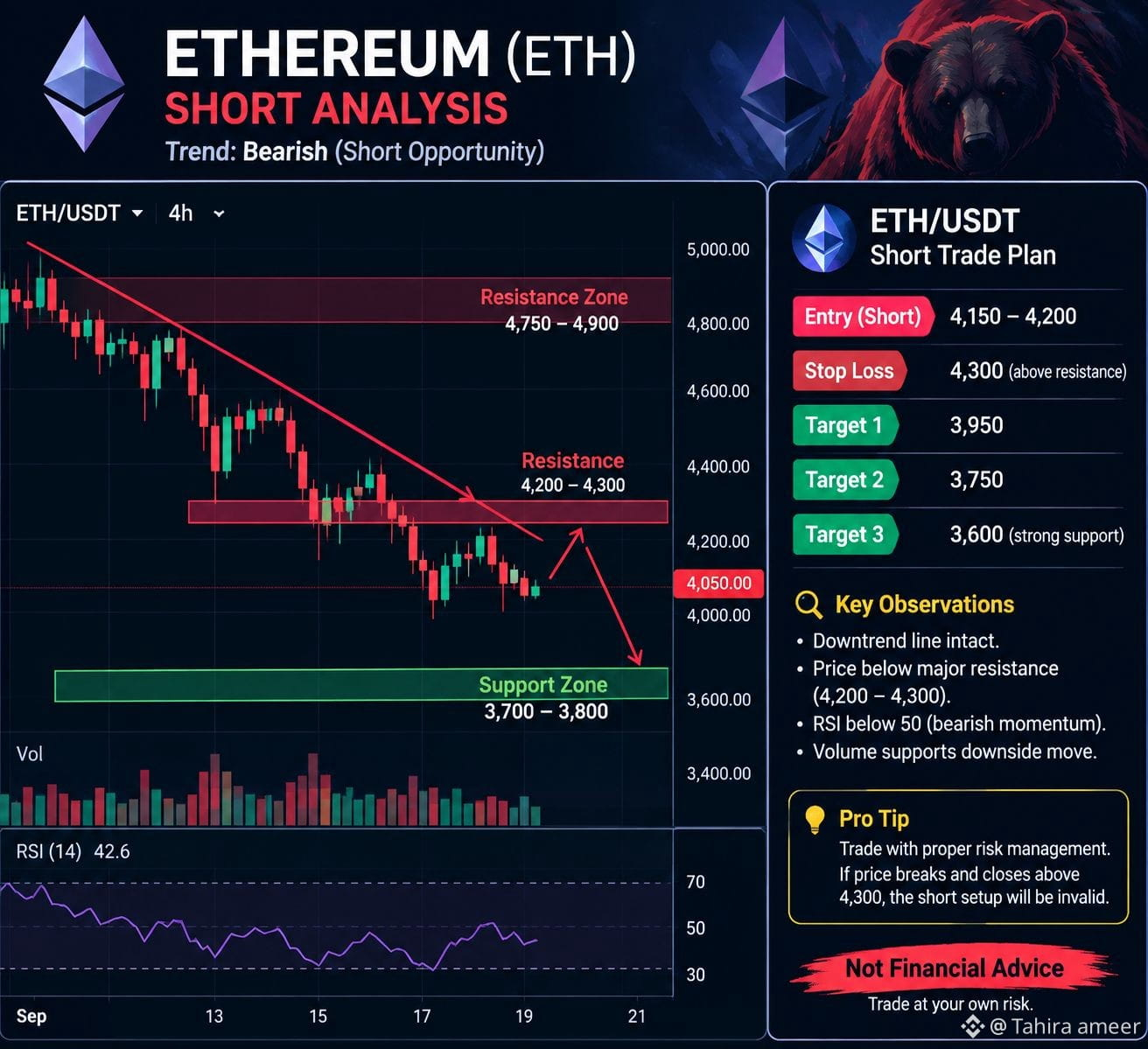
$ETH 🚨 ETHEREUM (ETH) — SHORT MARET ANALYSIS 📊
Ethereum is currently trading around $2,432, showing a modest recovery today. The market remains highly volatile, so the next price reaction around key levels could be important.
🔹 Key Support: $2,378–$2,403
🔹 Key Resistance: Around $2,500
🔹 Current Price: ~$2,432
🔹 Market Structure: Short-term consolidation with mixed momentum
📈 Bullish Scenario:
If ETH holds the support zone and breaks above $2,500 with strong volume, the recovery could strengthen.
📉 Bearish Scenario:
If ETH loses the $2,378 support area, downside pressure could increase and lower levels may come into focus.
💡 Key Takeaway:
Don’t chase candles. Wait for confirmation, manage risk carefully, and remember that crypto prices can move very quickly.
⚠️ Not Financial Advice — For educational purposes only. Always do your own research.
#bitcoin #Ethereum
$ETH 🚨 ETHEREUM (ETH) — SHORT MARET ANALYSIS 📊
Ethereum is currently trading around $2,432, showing a modest recovery today. The market remains highly volatile, so the next price reaction around key levels could be important.
🔹 Key Support: $2,378–$2,403
🔹 Key Resistance: Around $2,500
🔹 Current Price: ~$2,432
🔹 Market Structure: Short-term consolidation with mixed momentum
📈 Bullish Scenario:
If ETH holds the support zone and breaks above $2,500 with strong volume, the recovery could strengthen.
📉 Bearish Scenario:
If ETH loses the $2,378 support area, downside pressure could increase and lower levels may come into focus.
💡 Key Takeaway:
Don’t chase candles. Wait for confirmation, manage risk carefully, and remember that crypto prices can move very quickly.
⚠️ Not Financial Advice — For educational purposes only. Always do your own research.
#bitcoin #Ethereum
Ethereum is currently trading around $2,432, showing a modest recovery today. The market remains highly volatile, so the next price reaction around key levels could be important.
🔹 Key Support: $2,378–$2,403
🔹 Key Resistance: Around $2,500
🔹 Current Price: ~$2,432
🔹 Market Structure: Short-term consolidation with mixed momentum
📈 Bullish Scenario:
If ETH holds the support zone and breaks above $2,500 with strong volume, the recovery could strengthen.
📉 Bearish Scenario:
If ETH loses the $2,378 support area, downside pressure could increase and lower levels may come into focus.
💡 Key Takeaway:
Don’t chase candles. Wait for confirmation, manage risk carefully, and remember that crypto prices can move very quickly.
⚠️ Not Financial Advice — For educational purposes only. Always do your own research.
#bitcoin #Ethereum
37

Crypto News Update 🚨
Crypto markets remain cautious as regulatory uncertainty weighs on sentiment. Bitcoin is holding near $75.8K, while Ethereum and Solana have also seen mild pullbacks.
Key headlines:
• Circle has launched the Arc mainnet, expanding USDC-focused blockchain infrastructure.
• The U.S. Senate failed to advance the CLARITY Act, keeping regulatory uncertainty in focus.
• Japan’s FSA is prioritizing on-chain finance and tokenization in its 2026 policy agenda.
• Market attention is also shifting toward stablecoins, tokenization, and institutional crypto infrastructure.
Stay updated — regulation and real-world blockchain adoption are driving the next major narratives. 📊₿
$BTC
#Bitcoin #Ethereum
{spot}(BTCUSDT)
#CryptoMarket #Web3
Crypto News Update 🚨
Crypto markets remain cautious as regulatory uncertainty weighs on sentiment. Bitcoin is holding near $75.8K, while Ethereum and Solana have also seen mild pullbacks.
Key headlines:
• Circle has launched the Arc mainnet, expanding USDC-focused blockchain infrastructure.
• The U.S. Senate failed to advance the CLARITY Act, keeping regulatory uncertainty in focus.
• Japan’s FSA is prioritizing on-chain finance and tokenization in its 2026 policy agenda.
• Market attention is also shifting toward stablecoins, tokenization, and institutional crypto infrastructure.
Stay updated — regulation and real-world blockchain adoption are driving the next major narratives. 📊₿
$BTC
#Bitcoin #Ethereum
#CryptoMarket #Web3
Crypto markets remain cautious as regulatory uncertainty weighs on sentiment. Bitcoin is holding near $75.8K, while Ethereum and Solana have also seen mild pullbacks.
Key headlines:
• Circle has launched the Arc mainnet, expanding USDC-focused blockchain infrastructure.
• The U.S. Senate failed to advance the CLARITY Act, keeping regulatory uncertainty in focus.
• Japan’s FSA is prioritizing on-chain finance and tokenization in its 2026 policy agenda.
• Market attention is also shifting toward stablecoins, tokenization, and institutional crypto infrastructure.
Stay updated — regulation and real-world blockchain adoption are driving the next major narratives. 📊₿
$BTC
#Bitcoin #Ethereum
#CryptoMarket #Web3
90


🚨 $BTC QUANT MODEL PRINTS HIGH-CONVICTION SHORT SIGNAL AT RESISTANCE! 📉
Entry: 75,575 - 75,741 ⚡
Target: 74,441 - 71,041 🚀
Stop Loss: 79,354 ⚠️
📊 Quantitative metrics just triggered a dominant 91/100 short conviction score for $BTC , backed by $15 billion in 24-hour volume as aggressive supply steps in. Technical momentum is shifting decisively downward, indicating institutional distribution off these key upper bounds.
💡 Tactical execution is everything: bank half the position at the first key level and immediately drag your stop to breakeven. 🔍 Capital preservation keeps us in the game while letting the remaining position target lower liquidity zones. 💬 Are you stepping in to short this rejection, or holding out for a deeper retest? 👇
⚠️ Not financial advice. Always manage your risk. 🛡️
🏷️ #BTC #ShortSetup #Bitcoin #Crypto
🎯 🔻
🚨 $BTC QUANT MODEL PRINTS HIGH-CONVICTION SHORT SIGNAL AT RESISTANCE! 📉
Entry: 75,575 - 75,741 ⚡
Target: 74,441 - 71,041 🚀
Stop Loss: 79,354 ⚠️
📊 Quantitative metrics just triggered a dominant 91/100 short conviction score for $BTC , backed by $15 billion in 24-hour volume as aggressive supply steps in. Technical momentum is shifting decisively downward, indicating institutional distribution off these key upper bounds.
💡 Tactical execution is everything: bank half the position at the first key level and immediately drag your stop to breakeven. 🔍 Capital preservation keeps us in the game while letting the remaining position target lower liquidity zones. 💬 Are you stepping in to short this rejection, or holding out for a deeper retest? 👇
⚠️ Not financial advice. Always manage your risk. 🛡️
🏷️ #BTC #ShortSetup #Bitcoin #Crypto
🎯 🔻
Entry: 75,575 - 75,741 ⚡
Target: 74,441 - 71,041 🚀
Stop Loss: 79,354 ⚠️
📊 Quantitative metrics just triggered a dominant 91/100 short conviction score for $BTC , backed by $15 billion in 24-hour volume as aggressive supply steps in. Technical momentum is shifting decisively downward, indicating institutional distribution off these key upper bounds.
💡 Tactical execution is everything: bank half the position at the first key level and immediately drag your stop to breakeven. 🔍 Capital preservation keeps us in the game while letting the remaining position target lower liquidity zones. 💬 Are you stepping in to short this rejection, or holding out for a deeper retest? 👇
⚠️ Not financial advice. Always manage your risk. 🛡️
🏷️ #BTC #ShortSetup #Bitcoin #Crypto
🎯 🔻
24

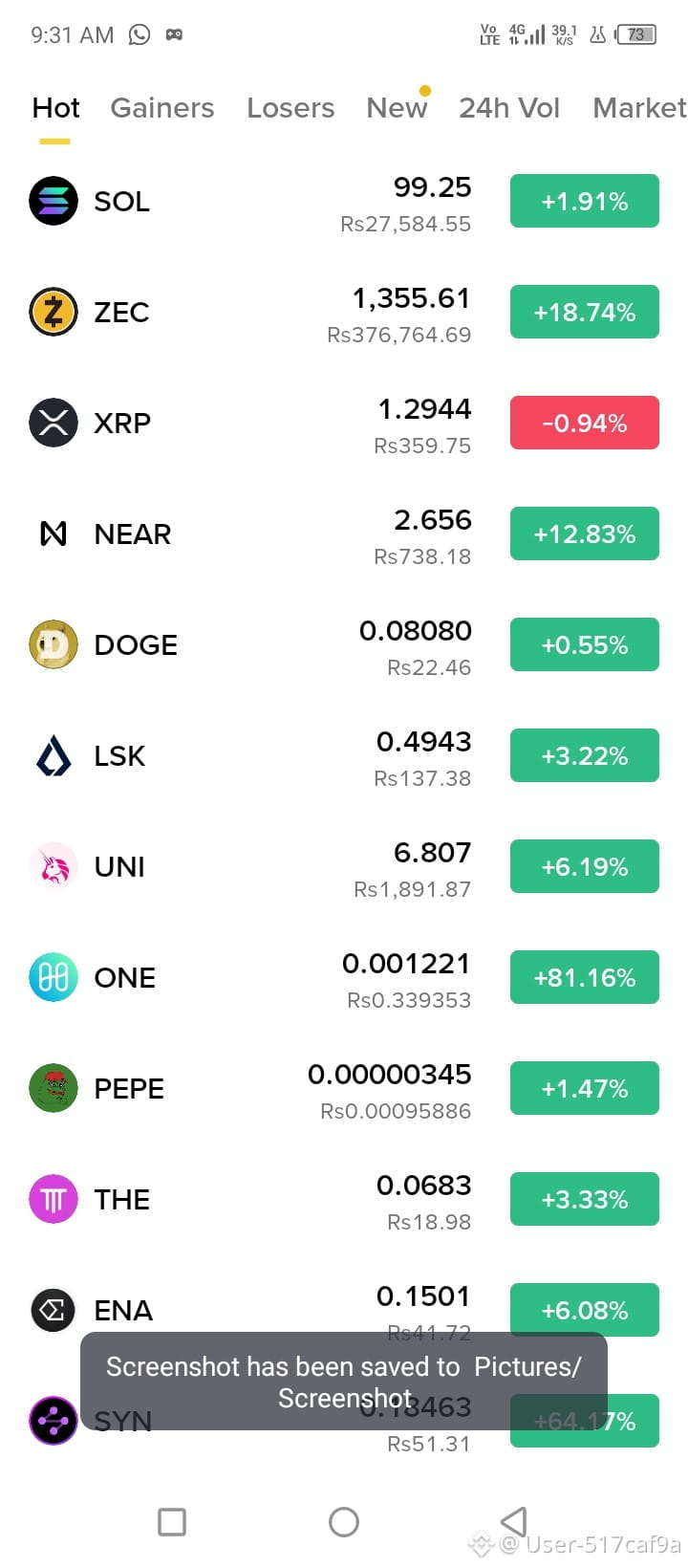
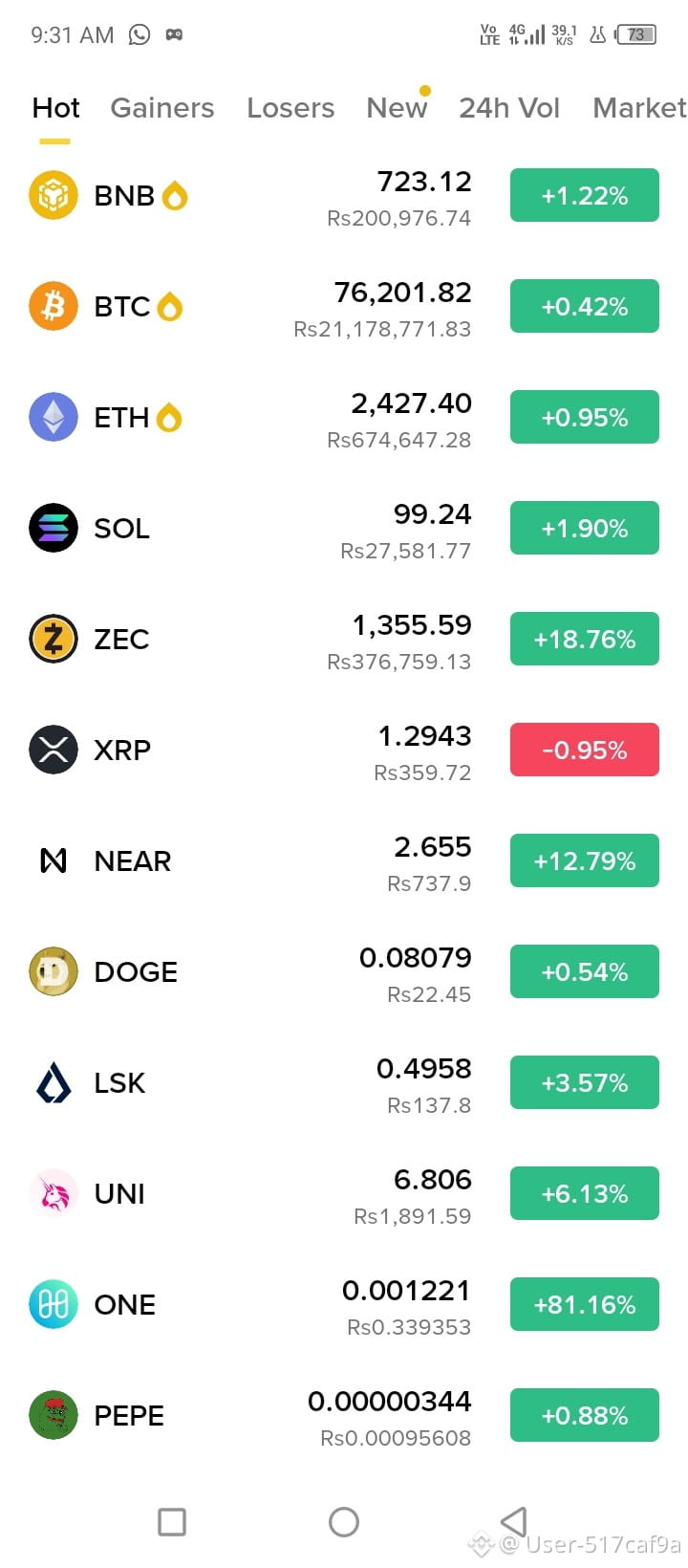
🚀 Market Update:
ONE: Leading the board with an explosive +81.16% surge at $0.001221.
ZEC & NEAR: Showing strong momentum, up +18.76% ($1,355.59) and +12.79% ($2.655) respectively.
Major Assets: Bitcoin steady at $76,201 and BNB holding at $723.
Are you catching these pumps or waiting for a deeper dip?
👇 Let’s discuss in the comments!
#CryptoUpdate #Bitcoin #Altcoins #BinanceSquare
🚀 Market Update:
ONE: Leading the board with an explosive +81.16% surge at $0.001221.
ZEC & NEAR: Showing strong momentum, up +18.76% ($1,355.59) and +12.79% ($2.655) respectively.
Major Assets: Bitcoin steady at $76,201 and BNB holding at $723.
Are you catching these pumps or waiting for a deeper dip?
👇 Let’s discuss in the comments!
#CryptoUpdate #Bitcoin #Altcoins #BinanceSquare
ONE: Leading the board with an explosive +81.16% surge at $0.001221.
ZEC & NEAR: Showing strong momentum, up +18.76% ($1,355.59) and +12.79% ($2.655) respectively.
Major Assets: Bitcoin steady at $76,201 and BNB holding at $723.
Are you catching these pumps or waiting for a deeper dip?
👇 Let’s discuss in the comments!
#CryptoUpdate #Bitcoin #Altcoins #BinanceSquare
339

·
--
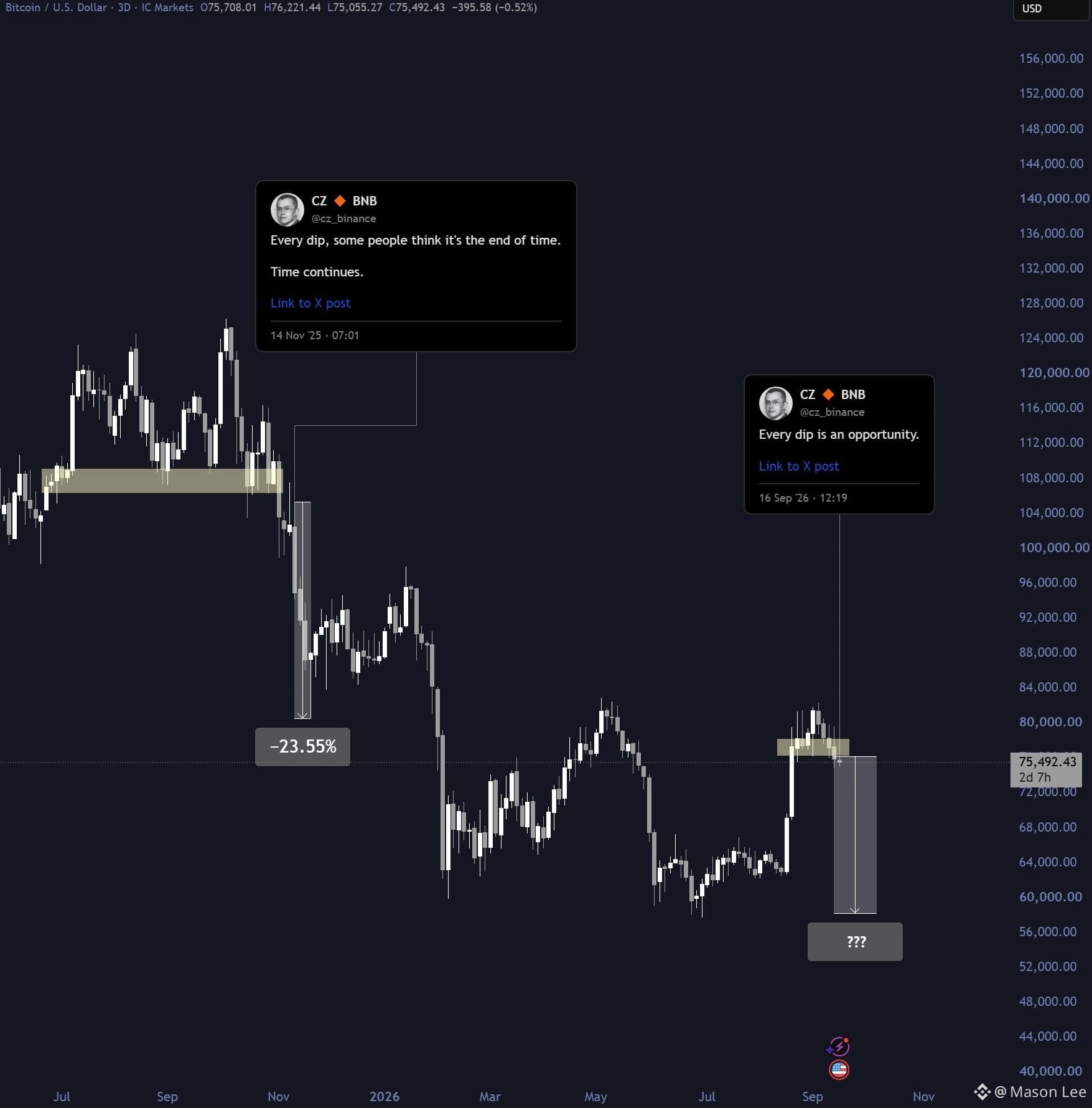
$BTC The chart is getting interesting.
CZ says, “Every dip is an opportunity.”
But this zone matters. BTC is back inside the same supply area that preceded the previous major breakdown. If it fails to hold, a deeper move toward $58K–$60K could come into play.
Watching the reaction closely. Always DYOR.
#CZ #BTC #Bitcoin
{spot}(BTCUSDT)
$BTC The chart is getting interesting.
CZ says, “Every dip is an opportunity.”
But this zone matters. BTC is back inside the same supply area that preceded the previous major breakdown. If it fails to hold, a deeper move toward $58K–$60K could come into play.
Watching the reaction closely. Always DYOR.
#CZ #BTC #Bitcoin
CZ says, “Every dip is an opportunity.”
But this zone matters. BTC is back inside the same supply area that preceded the previous major breakdown. If it fails to hold, a deeper move toward $58K–$60K could come into play.
Watching the reaction closely. Always DYOR.
#CZ #BTC #Bitcoin
111

·
--
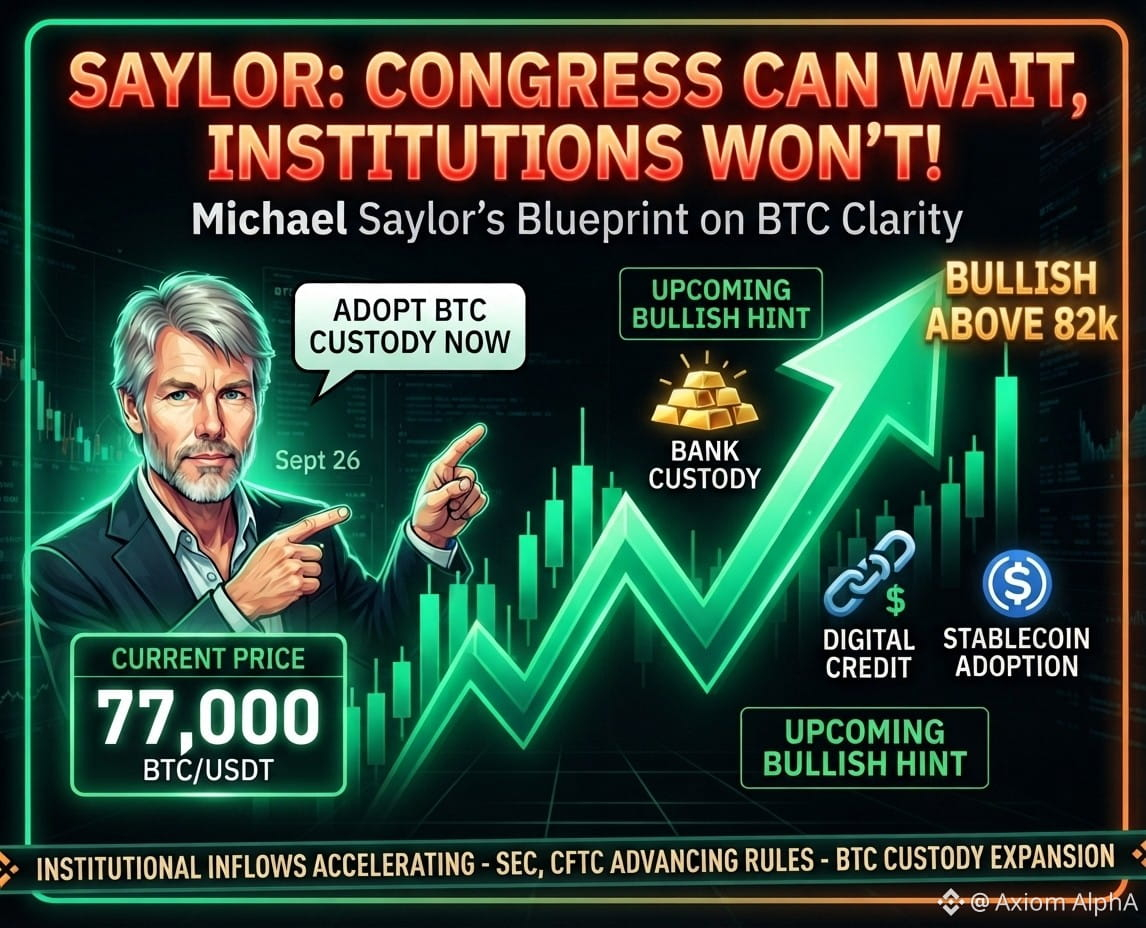
Saylor’s Blueprint: Congress Can Wait, Institutions Won't. 🚨
Michael Saylor just dropped a major macro insight: regulatory clarity might be stalled, but the institutional machine is moving forward fast.
Regulatory Workarounds: SEC, CFTC, and Treasury are advancing rules under existing laws.
Wall Street Inflows: Traditional banks are expanding Bitcoin custody and crypto-backed loans.
Stablecoin Growth: Liquidity pipelines are opening up without waiting for Congress.
⚡ $BTC Tradeable Setup:
Macro Bias: Accumulate dips as institutional credit infrastructure expands.
Execution: Buy key support levels rather than chasing high candles; let institutional liquidity work for you.
Smart capital is positioning itself right now. Are you ready? Drop your thoughts below! 👇
{spot}(BTCUSDT)
#bitcoin #Saylor #crypto #CLARITYAct
Saylor’s Blueprint: Congress Can Wait, Institutions Won't. 🚨
Michael Saylor just dropped a major macro insight: regulatory clarity might be stalled, but the institutional machine is moving forward fast.
Regulatory Workarounds: SEC, CFTC, and Treasury are advancing rules under existing laws.
Wall Street Inflows: Traditional banks are expanding Bitcoin custody and crypto-backed loans.
Stablecoin Growth: Liquidity pipelines are opening up without waiting for Congress.
⚡ $BTC Tradeable Setup:
Macro Bias: Accumulate dips as institutional credit infrastructure expands.
Execution: Buy key support levels rather than chasing high candles; let institutional liquidity work for you.
Smart capital is positioning itself right now. Are you ready? Drop your thoughts below! 👇
#bitcoin #Saylor #crypto #CLARITYAct
Michael Saylor just dropped a major macro insight: regulatory clarity might be stalled, but the institutional machine is moving forward fast.
Regulatory Workarounds: SEC, CFTC, and Treasury are advancing rules under existing laws.
Wall Street Inflows: Traditional banks are expanding Bitcoin custody and crypto-backed loans.
Stablecoin Growth: Liquidity pipelines are opening up without waiting for Congress.
⚡ $BTC Tradeable Setup:
Macro Bias: Accumulate dips as institutional credit infrastructure expands.
Execution: Buy key support levels rather than chasing high candles; let institutional liquidity work for you.
Smart capital is positioning itself right now. Are you ready? Drop your thoughts below! 👇
#bitcoin #Saylor #crypto #CLARITYAct
87

·
--
Bullish
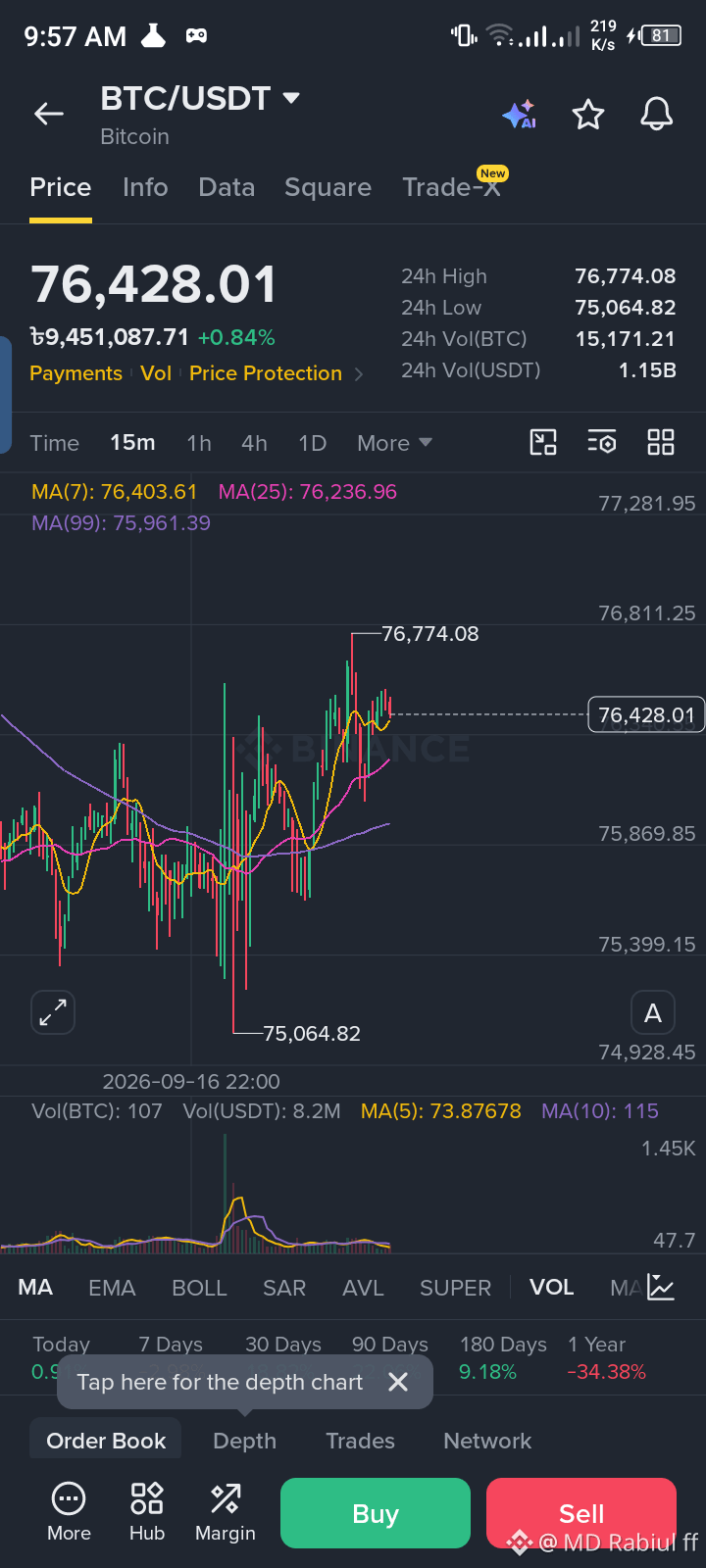
🔥 $BTC LIQUIDITY IS BUILDING — WATCH THIS MOVE 👀
Bitcoin is sitting near $76.6K, pressing directly into the local high. The chart is showing a clear battle between liquidity above and support underneath.
📍 Key levels:
• $76.65K → breakout/liquidity zone
• $76.09K → MA(25) support
• $75.68K → key intraday support
• $75.06K → major local low
The interesting part? 👀
A clean breakout above $76.65K could trigger a fast liquidity grab higher.
But if BTC gets rejected, a sweep toward $76K → $75.7K wouldn’t surprise me before the next major move.
⚠️ Around major macro events, expect fakeouts before direction.
Don’t chase the candle. Watch where liquidity gets taken first. 🧠🔥
#BTC #Bitcoin #Crypto
🔥 $BTC LIQUIDITY IS BUILDING — WATCH THIS MOVE 👀
Bitcoin is sitting near $76.6K, pressing directly into the local high. The chart is showing a clear battle between liquidity above and support underneath.
📍 Key levels:
• $76.65K → breakout/liquidity zone
• $76.09K → MA(25) support
• $75.68K → key intraday support
• $75.06K → major local low
The interesting part? 👀
A clean breakout above $76.65K could trigger a fast liquidity grab higher.
But if BTC gets rejected, a sweep toward $76K → $75.7K wouldn’t surprise me before the next major move.
⚠️ Around major macro events, expect fakeouts before direction.
Don’t chase the candle. Watch where liquidity gets taken first. 🧠🔥
#BTC #Bitcoin #Crypto
Bitcoin is sitting near $76.6K, pressing directly into the local high. The chart is showing a clear battle between liquidity above and support underneath.
📍 Key levels:
• $76.65K → breakout/liquidity zone
• $76.09K → MA(25) support
• $75.68K → key intraday support
• $75.06K → major local low
The interesting part? 👀
A clean breakout above $76.65K could trigger a fast liquidity grab higher.
But if BTC gets rejected, a sweep toward $76K → $75.7K wouldn’t surprise me before the next major move.
⚠️ Around major macro events, expect fakeouts before direction.
Don’t chase the candle. Watch where liquidity gets taken first. 🧠🔥
#BTC #Bitcoin #Crypto
95

Log in to explore more content
Join global crypto users on Binance Square
⚡️ Get latest and useful information about crypto.
💬 Trusted by the world’s largest crypto exchange.
👍 Discover real insights from verified creators.
Email / Phone number
Trending Topics
1
#MemeLaunchpads82%OfArcDayOneVolume
99 views
32 Discussing
2
#OstiumLoanDisputeHearingSetInNYFederalCourt
2,050 views
75 Discussing
3
#SKPoliceRefer18PolymarketUsersToProsecutors
3,155 views
144 Discussing
4
#FedSEPProjects2026RateAt4.1%
7,600 views
217 Discussing
5
#USHouseAdvancesBitcoinReserveBill
5,322 views
173 Discussing
6
#AmazonGetsWarrantsToBuyGeneracStock
6,005 views
190 Discussing
7
#DotPlotSignalsOneMoreHikeIn2026
27,288 views
551 Discussing
8
#RobinhoodToSupportCircleArcNetwork
8,877 views
195 Discussing
9
#FedHikes25BpsUSStocksClose
39,536 views
463 Discussing
10
#AaveToLaunchRWAMarketOnAvalanche
8,867 views
196 Discussing