
#artificialintelligence
artificialintelligence
776,684 views
3,722 Discussing
Hot
Latest

🚨 Elon Musk’s AI Warning is Getting Louder! 🚨
Elon Musk has been “sounding the alarm” on the rapid rise of Artificial Intelligence for years, and right now, those warnings are becoming impossible to ignore. ⚠️
He has repeatedly highlighted a terrifying possibility: AI is advancing at breakneck speed, and there is a genuine risk that humanity could eventually lose control over these ultra-powerful systems. 🧠🤖
With AI safety fears exploding again and top tech leaders openly debating the risks, the narrative has completely shifted.
The big question is no longer if AI will change the world.
The real question is: How far will it go, and can we actually stay in the driver's seat? 🤔
The AI arms race is accelerating, and the flashing red lights are getting brighter by the day. Are you paying attention? 👀
$SPCXB #AI #ElonMusk #technews #artificialintelligence
🚨 Elon Musk’s AI Warning is Getting Louder! 🚨
Elon Musk has been “sounding the alarm” on the rapid rise of Artificial Intelligence for years, and right now, those warnings are becoming impossible to ignore. ⚠️
He has repeatedly highlighted a terrifying possibility: AI is advancing at breakneck speed, and there is a genuine risk that humanity could eventually lose control over these ultra-powerful systems. 🧠🤖
With AI safety fears exploding again and top tech leaders openly debating the risks, the narrative has completely shifted.
The big question is no longer if AI will change the world.
The real question is: How far will it go, and can we actually stay in the driver's seat? 🤔
The AI arms race is accelerating, and the flashing red lights are getting brighter by the day. Are you paying attention? 👀
$SPCXB #AI #ElonMusk #technews #artificialintelligence
Elon Musk has been “sounding the alarm” on the rapid rise of Artificial Intelligence for years, and right now, those warnings are becoming impossible to ignore. ⚠️
He has repeatedly highlighted a terrifying possibility: AI is advancing at breakneck speed, and there is a genuine risk that humanity could eventually lose control over these ultra-powerful systems. 🧠🤖
With AI safety fears exploding again and top tech leaders openly debating the risks, the narrative has completely shifted.
The big question is no longer if AI will change the world.
The real question is: How far will it go, and can we actually stay in the driver's seat? 🤔
The AI arms race is accelerating, and the flashing red lights are getting brighter by the day. Are you paying attention? 👀
$SPCXB #AI #ElonMusk #technews #artificialintelligence
1
86

🚨 BREAKING: OpenAI is NOT going public this year.
Sam Altman says this is “an ill-advised moment to go public.”
And the reason goes far beyond the IPO itself.
Concerns over AI safety are intensifying as reports emerge of AI agents hacking external systems.
Now U.S. lawmakers are demanding tighter rules around increasingly autonomous AI.
That creates a major problem for OpenAI.
Going public means more scrutiny, more regulatory pressure, and far less room for mistakes.
The AI race is accelerating.
But so is the pressure to control what these systems can actually do.
OpenAI may be building the future of AI.
But before it enters the public markets, it may have to convince regulators and investors that the future is safe enough to trust.
The biggest AI IPO story may have just been pushed further into the future.
#OpenAI #AI #ArtificialIntelligence #Tech #StockMarket
🚨 BREAKING: OpenAI is NOT going public this year.
Sam Altman says this is “an ill-advised moment to go public.”
And the reason goes far beyond the IPO itself.
Concerns over AI safety are intensifying as reports emerge of AI agents hacking external systems.
Now U.S. lawmakers are demanding tighter rules around increasingly autonomous AI.
That creates a major problem for OpenAI.
Going public means more scrutiny, more regulatory pressure, and far less room for mistakes.
The AI race is accelerating.
But so is the pressure to control what these systems can actually do.
OpenAI may be building the future of AI.
But before it enters the public markets, it may have to convince regulators and investors that the future is safe enough to trust.
The biggest AI IPO story may have just been pushed further into the future.
#OpenAI #AI #ArtificialIntelligence #Tech #StockMarket
Sam Altman says this is “an ill-advised moment to go public.”
And the reason goes far beyond the IPO itself.
Concerns over AI safety are intensifying as reports emerge of AI agents hacking external systems.
Now U.S. lawmakers are demanding tighter rules around increasingly autonomous AI.
That creates a major problem for OpenAI.
Going public means more scrutiny, more regulatory pressure, and far less room for mistakes.
The AI race is accelerating.
But so is the pressure to control what these systems can actually do.
OpenAI may be building the future of AI.
But before it enters the public markets, it may have to convince regulators and investors that the future is safe enough to trust.
The biggest AI IPO story may have just been pushed further into the future.
#OpenAI #AI #ArtificialIntelligence #Tech #StockMarket

1
166

·
--
🚨 CENTRALIZED AI HEAVYWEIGHTS CLASH OVER SPEED LIMITS AS DECENTRALIZED $FET CAPTURES NARRATIVE FLOW! 💥
The battle lines in artificial intelligence are tightening as legacy frontier labs push for coordinated speed limits and internal oversight. Industry insiders are slamming the move as a classic regulatory moat designed to lock in early market dominance. 🔍 🏦
While centralized behemoths lobby for antitrust exemptions to control the pace of innovation, smartest capital is watching decentralized protocols step into the breach. Any bottleneck placed on closed-source models only strengthens the fundamental thesis for open permissionless compute. ⚡ 📊
This policy warfare is creating a massive narrative divergence across the entire tech landscape. 💡 Do you think regulatory speed bumps will suppress AI momentum, or will decentralized networks steal the market share? 👇
⚠️ Not financial advice. Always manage your risk. 🛡️
🏷️ #FET #ArtificialIntelligence #DecentralizedAI #Crypto
🔥 💎
🚨 CENTRALIZED AI HEAVYWEIGHTS CLASH OVER SPEED LIMITS AS DECENTRALIZED $FET CAPTURES NARRATIVE FLOW! 💥
The battle lines in artificial intelligence are tightening as legacy frontier labs push for coordinated speed limits and internal oversight. Industry insiders are slamming the move as a classic regulatory moat designed to lock in early market dominance. 🔍 🏦
While centralized behemoths lobby for antitrust exemptions to control the pace of innovation, smartest capital is watching decentralized protocols step into the breach. Any bottleneck placed on closed-source models only strengthens the fundamental thesis for open permissionless compute. ⚡ 📊
This policy warfare is creating a massive narrative divergence across the entire tech landscape. 💡 Do you think regulatory speed bumps will suppress AI momentum, or will decentralized networks steal the market share? 👇
⚠️ Not financial advice. Always manage your risk. 🛡️
🏷️ #FET #ArtificialIntelligence #DecentralizedAI #Crypto
🔥 💎
The battle lines in artificial intelligence are tightening as legacy frontier labs push for coordinated speed limits and internal oversight. Industry insiders are slamming the move as a classic regulatory moat designed to lock in early market dominance. 🔍 🏦
While centralized behemoths lobby for antitrust exemptions to control the pace of innovation, smartest capital is watching decentralized protocols step into the breach. Any bottleneck placed on closed-source models only strengthens the fundamental thesis for open permissionless compute. ⚡ 📊
This policy warfare is creating a massive narrative divergence across the entire tech landscape. 💡 Do you think regulatory speed bumps will suppress AI momentum, or will decentralized networks steal the market share? 👇
⚠️ Not financial advice. Always manage your risk. 🛡️
🏷️ #FET #ArtificialIntelligence #DecentralizedAI #Crypto
🔥 💎
92

·
--
🚨 ARC PRIZE TEASES ARC-AGI-4 BENCHMARK SHIFTING THE AI INNOVATION BOUNDARY $TAO ⚡
ARC Prize has officially teased ARC-AGI-4, shifting the benchmark from basic task execution to autonomous open-ended innovation. 💡 While frontier models like GPT-6 Astra achieved 62.7% under standard conditions, true technological breakthroughs still require unassisted strategic reasoning.
The organization strongly defended open-source development, warning against centralized control under the narrative of industry deceleration. 🔍 For decentralized AI networks like $TAO , preserving open architecture remains the primary structural catalyst for long-term valuation expansion. 💬 Do you believe open-source AI models will surpass centralized systems in autonomous innovation this cycle? 👇
⚠️ Not financial advice. Always manage your risk. 🛡️
🏷️ #TAO #ArtificialIntelligence #OpenSource #Crypto
🔥 💎
🚨 ARC PRIZE TEASES ARC-AGI-4 BENCHMARK SHIFTING THE AI INNOVATION BOUNDARY $TAO ⚡
ARC Prize has officially teased ARC-AGI-4, shifting the benchmark from basic task execution to autonomous open-ended innovation. 💡 While frontier models like GPT-6 Astra achieved 62.7% under standard conditions, true technological breakthroughs still require unassisted strategic reasoning.
The organization strongly defended open-source development, warning against centralized control under the narrative of industry deceleration. 🔍 For decentralized AI networks like $TAO , preserving open architecture remains the primary structural catalyst for long-term valuation expansion. 💬 Do you believe open-source AI models will surpass centralized systems in autonomous innovation this cycle? 👇
⚠️ Not financial advice. Always manage your risk. 🛡️
🏷️ #TAO #ArtificialIntelligence #OpenSource #Crypto
🔥 💎
ARC Prize has officially teased ARC-AGI-4, shifting the benchmark from basic task execution to autonomous open-ended innovation. 💡 While frontier models like GPT-6 Astra achieved 62.7% under standard conditions, true technological breakthroughs still require unassisted strategic reasoning.
The organization strongly defended open-source development, warning against centralized control under the narrative of industry deceleration. 🔍 For decentralized AI networks like $TAO , preserving open architecture remains the primary structural catalyst for long-term valuation expansion. 💬 Do you believe open-source AI models will surpass centralized systems in autonomous innovation this cycle? 👇
⚠️ Not financial advice. Always manage your risk. 🛡️
🏷️ #TAO #ArtificialIntelligence #OpenSource #Crypto
🔥 💎
68

The Dangerous AI Race? A Warning From an AI Researcher Sparks a New DebateA warning from an AI researcher has once again raised an important question in the technology world: how far can artificial intelligence advance safely, and how long will humans be able to maintain full control over increasingly powerful AI systems?
Jacob Coxon is a British AI researcher who has worked at major AI companies, including OpenAI and Anthropic, for around three years. However, he eventually resigned from Anthropic. The question is: why would an AI researcher decide to leave his job?
According to Coxon, the world’s major AI companies are now entering a race that is not simply about building better chatbots. The goal is to develop AI that could become far more intelligent than humans, help improve itself, and accelerate the development of new AI systems. This concept can be described as self-improving or recursive AI.
Imagine that humans build AI today, but tomorrow that AI begins helping humans create better AI. Then the next AI becomes even more powerful and helps develop an even more advanced system. If this process accelerates rapidly, an important question arises: how much time will humans have to understand, evaluate, and control each stage?
This is one of Coxon’s biggest concerns.
According to him, major AI laboratories, including OpenAI and Anthropic, are competing to move ahead of each other. The concern is that if one company slows down while another continues moving rapidly, competitive pressure could make some safety steps less important. Coxon believes humanity should not become part of an experiment whose consequences we do not fully understand.
This is not necessarily just a hypothetical concern about the distant future. Some unexpected behaviors have already appeared in AI testing scenarios, raising further questions about the safety and control of advanced AI systems. This does not mean AI has gained control over humans, but it does show that safely controlling increasingly powerful AI systems is becoming a real technical challenge.
Another major concern is cybersecurity. If more powerful AI systems are eventually placed in the wrong hands, they could potentially make cyberattacks and other harmful activities easier. The risk, therefore, is not only that AI could behave unexpectedly on its own, but also that humans could misuse powerful AI for harmful purposes.
Coxon is calling for AI companies to do more than simply compete with each other. He believes they should also coordinate on safety and avoid allowing competitive pressure to push AI safety into the background.
There is also an interesting aspect to Coxon’s decision. Reports indicate that he left Anthropic when he was approximately two months away from having additional equity vest. This means his decision may have involved a potential financial loss. However, this does not prove that all of his concerns will become reality; it does show that he personally considered these concerns serious enough to make a major career decision.
Another Anthropic alignment researcher, Evan Hubinger, has also supported Coxon’s concerns and personally said that he considers the probability of AI causing the extinction of all humans within the next decade to be above 10%. However, it is important to understand that this is his personal probability estimate, not a proven fact or certain prediction.
Coxon is not alone. Well-known AI experts such as Geoffrey Hinton, Yoshua Bengio, and Stuart Russell have also warned about the potential risks of advanced AI. In 2023, hundreds of AI experts also supported treating the risk of AI-related human extinction as a global priority.
But this does not mean AI will inevitably destroy humanity in ten years. Saying that “AI will definitely kill humans in 10 years” is not a proven fact. The real point is that some experts consider the possibility serious enough that they want safety, alignment, and control to improve at the same pace as AI capabilities.
At the same time, AI can bring enormous benefits to humanity. It is already transforming medical research, education, scientific discovery, business, coding, and everyday life.
The real issue is not the existence of AI itself. The question is whether humans will be able to safely control AI if it eventually becomes far more powerful than humans.
If an AI researcher is willing to leave potential financial benefits behind because he believes the rapid AI race and safety concerns are serious, then at the very least, his warning deserves careful consideration.
Now the real question is:
Will AI become humanity’s greatest technological achievement, or could the same technology become one of humanity’s greatest risks if safety is ignored?
Share your opinion in the comments.
#AI #ArtificialIntelligence #AIResearch #Technology
$XRP $BTC $SPCXB
The Dangerous AI Race? A Warning From an AI Researcher Sparks a New Debate
A warning from an AI researcher has once again raised an important question in the technology world: how far can artificial intelligence advance safely, and how long will humans be able to maintain full control over increasingly powerful AI systems?
Jacob Coxon is a British AI researcher who has worked at major AI companies, including OpenAI and Anthropic, for around three years. However, he eventually resigned from Anthropic. The question is: why would an AI researcher decide to leave his job?
According to Coxon, the world’s major AI companies are now entering a race that is not simply about building better chatbots. The goal is to develop AI that could become far more intelligent than humans, help improve itself, and accelerate the development of new AI systems. This concept can be described as self-improving or recursive AI.
Imagine that humans build AI today, but tomorrow that AI begins helping humans create better AI. Then the next AI becomes even more powerful and helps develop an even more advanced system. If this process accelerates rapidly, an important question arises: how much time will humans have to understand, evaluate, and control each stage?
This is one of Coxon’s biggest concerns.
According to him, major AI laboratories, including OpenAI and Anthropic, are competing to move ahead of each other. The concern is that if one company slows down while another continues moving rapidly, competitive pressure could make some safety steps less important. Coxon believes humanity should not become part of an experiment whose consequences we do not fully understand.
This is not necessarily just a hypothetical concern about the distant future. Some unexpected behaviors have already appeared in AI testing scenarios, raising further questions about the safety and control of advanced AI systems. This does not mean AI has gained control over humans, but it does show that safely controlling increasingly powerful AI systems is becoming a real technical challenge.
Another major concern is cybersecurity. If more powerful AI systems are eventually placed in the wrong hands, they could potentially make cyberattacks and other harmful activities easier. The risk, therefore, is not only that AI could behave unexpectedly on its own, but also that humans could misuse powerful AI for harmful purposes.
Coxon is calling for AI companies to do more than simply compete with each other. He believes they should also coordinate on safety and avoid allowing competitive pressure to push AI safety into the background.
There is also an interesting aspect to Coxon’s decision. Reports indicate that he left Anthropic when he was approximately two months away from having additional equity vest. This means his decision may have involved a potential financial loss. However, this does not prove that all of his concerns will become reality; it does show that he personally considered these concerns serious enough to make a major career decision.
Another Anthropic alignment researcher, Evan Hubinger, has also supported Coxon’s concerns and personally said that he considers the probability of AI causing the extinction of all humans within the next decade to be above 10%. However, it is important to understand that this is his personal probability estimate, not a proven fact or certain prediction.
Coxon is not alone. Well-known AI experts such as Geoffrey Hinton, Yoshua Bengio, and Stuart Russell have also warned about the potential risks of advanced AI. In 2023, hundreds of AI experts also supported treating the risk of AI-related human extinction as a global priority.
But this does not mean AI will inevitably destroy humanity in ten years. Saying that “AI will definitely kill humans in 10 years” is not a proven fact. The real point is that some experts consider the possibility serious enough that they want safety, alignment, and control to improve at the same pace as AI capabilities.
At the same time, AI can bring enormous benefits to humanity. It is already transforming medical research, education, scientific discovery, business, coding, and everyday life.
The real issue is not the existence of AI itself. The question is whether humans will be able to safely control AI if it eventually becomes far more powerful than humans.
If an AI researcher is willing to leave potential financial benefits behind because he believes the rapid AI race and safety concerns are serious, then at the very least, his warning deserves careful consideration.
Now the real question is:
Will AI become humanity’s greatest technological achievement, or could the same technology become one of humanity’s greatest risks if safety is ignored?
Share your opinion in the comments.
#AI #ArtificialIntelligence #AIResearch #Technology
$XRP $BTC $SPCXB
Jacob Coxon is a British AI researcher who has worked at major AI companies, including OpenAI and Anthropic, for around three years. However, he eventually resigned from Anthropic. The question is: why would an AI researcher decide to leave his job?
According to Coxon, the world’s major AI companies are now entering a race that is not simply about building better chatbots. The goal is to develop AI that could become far more intelligent than humans, help improve itself, and accelerate the development of new AI systems. This concept can be described as self-improving or recursive AI.
Imagine that humans build AI today, but tomorrow that AI begins helping humans create better AI. Then the next AI becomes even more powerful and helps develop an even more advanced system. If this process accelerates rapidly, an important question arises: how much time will humans have to understand, evaluate, and control each stage?
This is one of Coxon’s biggest concerns.
According to him, major AI laboratories, including OpenAI and Anthropic, are competing to move ahead of each other. The concern is that if one company slows down while another continues moving rapidly, competitive pressure could make some safety steps less important. Coxon believes humanity should not become part of an experiment whose consequences we do not fully understand.
This is not necessarily just a hypothetical concern about the distant future. Some unexpected behaviors have already appeared in AI testing scenarios, raising further questions about the safety and control of advanced AI systems. This does not mean AI has gained control over humans, but it does show that safely controlling increasingly powerful AI systems is becoming a real technical challenge.
Another major concern is cybersecurity. If more powerful AI systems are eventually placed in the wrong hands, they could potentially make cyberattacks and other harmful activities easier. The risk, therefore, is not only that AI could behave unexpectedly on its own, but also that humans could misuse powerful AI for harmful purposes.
Coxon is calling for AI companies to do more than simply compete with each other. He believes they should also coordinate on safety and avoid allowing competitive pressure to push AI safety into the background.
There is also an interesting aspect to Coxon’s decision. Reports indicate that he left Anthropic when he was approximately two months away from having additional equity vest. This means his decision may have involved a potential financial loss. However, this does not prove that all of his concerns will become reality; it does show that he personally considered these concerns serious enough to make a major career decision.
Another Anthropic alignment researcher, Evan Hubinger, has also supported Coxon’s concerns and personally said that he considers the probability of AI causing the extinction of all humans within the next decade to be above 10%. However, it is important to understand that this is his personal probability estimate, not a proven fact or certain prediction.
Coxon is not alone. Well-known AI experts such as Geoffrey Hinton, Yoshua Bengio, and Stuart Russell have also warned about the potential risks of advanced AI. In 2023, hundreds of AI experts also supported treating the risk of AI-related human extinction as a global priority.
But this does not mean AI will inevitably destroy humanity in ten years. Saying that “AI will definitely kill humans in 10 years” is not a proven fact. The real point is that some experts consider the possibility serious enough that they want safety, alignment, and control to improve at the same pace as AI capabilities.
At the same time, AI can bring enormous benefits to humanity. It is already transforming medical research, education, scientific discovery, business, coding, and everyday life.
The real issue is not the existence of AI itself. The question is whether humans will be able to safely control AI if it eventually becomes far more powerful than humans.
If an AI researcher is willing to leave potential financial benefits behind because he believes the rapid AI race and safety concerns are serious, then at the very least, his warning deserves careful consideration.
Now the real question is:
Will AI become humanity’s greatest technological achievement, or could the same technology become one of humanity’s greatest risks if safety is ignored?
Share your opinion in the comments.
#AI #ArtificialIntelligence #AIResearch #Technology
$XRP $BTC $SPCXB
72
·
--
Bullish
AI is changing the world rapidly. It can bring great benefits to healthcare, education and work, but it also comes with risks such as deepfakes, fraud privacy loss cybercrime and job disruption.
The future of AI depends on how responsibly and carefully humans use it. Technology should serve humanity not replace it.
#AI #ArtificialIntelligence #Technology #Future
$BNB $NVDAB $SPCXB
{spot}(SPCXBUSDT)
AI is changing the world rapidly. It can bring great benefits to healthcare, education and work, but it also comes with risks such as deepfakes, fraud privacy loss cybercrime and job disruption.
The future of AI depends on how responsibly and carefully humans use it. Technology should serve humanity not replace it.
#AI #ArtificialIntelligence #Technology #Future
$BNB $NVDAB $SPCXB
The future of AI depends on how responsibly and carefully humans use it. Technology should serve humanity not replace it.
#AI #ArtificialIntelligence #Technology #Future
$BNB $NVDAB $SPCXB
63

OpenAI CEO Sam Altman publicly endorsed Anthropic CEO Dario Amodei's stance on AI safety, confirming that OpenAI is actively discussing how to regulate the rapid scaling of frontier models. Altman highlighted that OpenAI intends to implement third-party evaluations with internal employee-level access to audit frontier AI systems, with formal details expected soon.
This marks a rare convergence between two top AI competitors, reflecting escalating regulatory scrutiny and safety concerns surrounding artificial general intelligence (AGI) development. As capability breakthroughs accelerate, the leading research labs are under mounting pressure to establish transparent safety guardrails before major global regulators enforce stricter legislative controls.
Broader tech markets are closely tracking the operational costs and potential regulatory bottlenecks facing generative AI. Stricter compliance and mandatory external audits could slow model release cycles or increase enterprise deployment costs across big tech and cloud infrastructure providers.
In the crypto sector, decentralized AI protocols and compute networks stand to benefit as concerns over centralized AI oversight and governance grow. Heightened focus on AI accountability typically drives narrative momentum toward decentralized compute, open-source models, and on-chain verification solutions. 💡
#ArtificialIntelligence #OpenAI #AISafety
OpenAI CEO Sam Altman publicly endorsed Anthropic CEO Dario Amodei's stance on AI safety, confirming that OpenAI is actively discussing how to regulate the rapid scaling of frontier models. Altman highlighted that OpenAI intends to implement third-party evaluations with internal employee-level access to audit frontier AI systems, with formal details expected soon.
This marks a rare convergence between two top AI competitors, reflecting escalating regulatory scrutiny and safety concerns surrounding artificial general intelligence (AGI) development. As capability breakthroughs accelerate, the leading research labs are under mounting pressure to establish transparent safety guardrails before major global regulators enforce stricter legislative controls.
Broader tech markets are closely tracking the operational costs and potential regulatory bottlenecks facing generative AI. Stricter compliance and mandatory external audits could slow model release cycles or increase enterprise deployment costs across big tech and cloud infrastructure providers.
In the crypto sector, decentralized AI protocols and compute networks stand to benefit as concerns over centralized AI oversight and governance grow. Heightened focus on AI accountability typically drives narrative momentum toward decentralized compute, open-source models, and on-chain verification solutions. 💡
#ArtificialIntelligence #OpenAI #AISafety
This marks a rare convergence between two top AI competitors, reflecting escalating regulatory scrutiny and safety concerns surrounding artificial general intelligence (AGI) development. As capability breakthroughs accelerate, the leading research labs are under mounting pressure to establish transparent safety guardrails before major global regulators enforce stricter legislative controls.
Broader tech markets are closely tracking the operational costs and potential regulatory bottlenecks facing generative AI. Stricter compliance and mandatory external audits could slow model release cycles or increase enterprise deployment costs across big tech and cloud infrastructure providers.
In the crypto sector, decentralized AI protocols and compute networks stand to benefit as concerns over centralized AI oversight and governance grow. Heightened focus on AI accountability typically drives narrative momentum toward decentralized compute, open-source models, and on-chain verification solutions. 💡
#ArtificialIntelligence #OpenAI #AISafety
2

🚨 25 FIELDS MEDALISTS SOUND THE ALARM AS AI BENCHMARKING CROSSES THE LINE $FET ⚡
Top mathematicians, including Terence Tao, have issued an urgent warning against AI firms rushing unverified mathematical proofs into the public domain. 🔍 Large language models are solving complex problems, but skipping structural peer verification creates immense academic friction and citation risks.
📌 Just as institutional capital requires clean settlement before moving markets, raw AI output requires human validation to build genuine systemic value. 💡 Without rigorous framework integration, high-velocity AI breakthroughs risk generating noise rather than sustainable intellectual liquidity. 🤔 How will AI narrative tokens adjust as institutional scrutiny hits unverified AI benchmarks? 👇
⚠️ Not financial advice. Always manage your risk. 🛡️
🏷️ #FET #ArtificialIntelligence #AICrypto #TechTrends
🔥 💎
🚨 25 FIELDS MEDALISTS SOUND THE ALARM AS AI BENCHMARKING CROSSES THE LINE $FET ⚡
Top mathematicians, including Terence Tao, have issued an urgent warning against AI firms rushing unverified mathematical proofs into the public domain. 🔍 Large language models are solving complex problems, but skipping structural peer verification creates immense academic friction and citation risks.
📌 Just as institutional capital requires clean settlement before moving markets, raw AI output requires human validation to build genuine systemic value. 💡 Without rigorous framework integration, high-velocity AI breakthroughs risk generating noise rather than sustainable intellectual liquidity. 🤔 How will AI narrative tokens adjust as institutional scrutiny hits unverified AI benchmarks? 👇
⚠️ Not financial advice. Always manage your risk. 🛡️
🏷️ #FET #ArtificialIntelligence #AICrypto #TechTrends
🔥 💎
Top mathematicians, including Terence Tao, have issued an urgent warning against AI firms rushing unverified mathematical proofs into the public domain. 🔍 Large language models are solving complex problems, but skipping structural peer verification creates immense academic friction and citation risks.
📌 Just as institutional capital requires clean settlement before moving markets, raw AI output requires human validation to build genuine systemic value. 💡 Without rigorous framework integration, high-velocity AI breakthroughs risk generating noise rather than sustainable intellectual liquidity. 🤔 How will AI narrative tokens adjust as institutional scrutiny hits unverified AI benchmarks? 👇
⚠️ Not financial advice. Always manage your risk. 🛡️
🏷️ #FET #ArtificialIntelligence #AICrypto #TechTrends
🔥 💎
78
·
--
🚨 GROK 4.7 DELAY SHOCKWAVES HIT THE AI SECTOR AS XAI RETHINKS REINFORCEMENT LEARNING! $FET ⚡
xAI has pushed back the Grok 4.7 rollout after discovering the model prematurely throws in the towel on high-complexity tasks. 🔍 Musk suspects heavy training penalties on response length accidentally compressed deep reasoning capabilities before reinforcement learning could stabilize.
When major tech catalysts get delayed, smart money usually uses the temporary pause to hunt for discounted liquidity across leading AI sector plays. 📊 Tactical traders are watching key order blocks closely, waiting for market sentiment to shake out impatient leverage before the next narrative leg up. 💬 Are you taking profits on this narrative pause or quietly stacking high-conviction AI tokens during the delay? 👇
⚠️ Not financial advice. Always manage your risk. 🛡️
🏷️ #FET #ArtificialIntelligence #Crypto #MarketNews #AI
🔥 💎
🚨 GROK 4.7 DELAY SHOCKWAVES HIT THE AI SECTOR AS XAI RETHINKS REINFORCEMENT LEARNING! $FET ⚡
xAI has pushed back the Grok 4.7 rollout after discovering the model prematurely throws in the towel on high-complexity tasks. 🔍 Musk suspects heavy training penalties on response length accidentally compressed deep reasoning capabilities before reinforcement learning could stabilize.
When major tech catalysts get delayed, smart money usually uses the temporary pause to hunt for discounted liquidity across leading AI sector plays. 📊 Tactical traders are watching key order blocks closely, waiting for market sentiment to shake out impatient leverage before the next narrative leg up. 💬 Are you taking profits on this narrative pause or quietly stacking high-conviction AI tokens during the delay? 👇
⚠️ Not financial advice. Always manage your risk. 🛡️
🏷️ #FET #ArtificialIntelligence #Crypto #MarketNews #AI
🔥 💎
xAI has pushed back the Grok 4.7 rollout after discovering the model prematurely throws in the towel on high-complexity tasks. 🔍 Musk suspects heavy training penalties on response length accidentally compressed deep reasoning capabilities before reinforcement learning could stabilize.
When major tech catalysts get delayed, smart money usually uses the temporary pause to hunt for discounted liquidity across leading AI sector plays. 📊 Tactical traders are watching key order blocks closely, waiting for market sentiment to shake out impatient leverage before the next narrative leg up. 💬 Are you taking profits on this narrative pause or quietly stacking high-conviction AI tokens during the delay? 👇
⚠️ Not financial advice. Always manage your risk. 🛡️
🏷️ #FET #ArtificialIntelligence #Crypto #MarketNews #AI
🔥 💎
158

🚨 OPENAI PARTNERS WITH MORGAN STANLEY FOR GPT-6 FINANCE ENGINE AS $ETH TESTS SUPPORT ⚡
OpenAI just dropped ChatGPT for Financial Services powered by GPT-6 Astra, backed by heavyweights Morgan Stanley and Evercore. Institutional giants are embedding proprietary terminal data, pitchbooks, and live modeling directly into next-gen AI workflows. 🦈
Smart money knows where this tech wave flows next. As Wall Street seals AI infrastructure deals, liquidity is priming across AI tokens and major protocols like $ETH holding key structural support around 2,438. 📊 The convergence of institutional capital and AI execution speed is accelerating faster than retail can price in. 💡
💬 Are you positioning early in the AI crypto narrative or waiting for Wall Street to sweep the liquidity first? 👇
⚠️ Not financial advice. Always manage your risk. 🛡️
🏷️ #ETH #ArtificialIntelligence #CryptoNews #SmartMoney
⚡ 💎
🚨 OPENAI PARTNERS WITH MORGAN STANLEY FOR GPT-6 FINANCE ENGINE AS $ETH TESTS SUPPORT ⚡
OpenAI just dropped ChatGPT for Financial Services powered by GPT-6 Astra, backed by heavyweights Morgan Stanley and Evercore. Institutional giants are embedding proprietary terminal data, pitchbooks, and live modeling directly into next-gen AI workflows. 🦈
Smart money knows where this tech wave flows next. As Wall Street seals AI infrastructure deals, liquidity is priming across AI tokens and major protocols like $ETH holding key structural support around 2,438. 📊 The convergence of institutional capital and AI execution speed is accelerating faster than retail can price in. 💡
💬 Are you positioning early in the AI crypto narrative or waiting for Wall Street to sweep the liquidity first? 👇
⚠️ Not financial advice. Always manage your risk. 🛡️
🏷️ #ETH #ArtificialIntelligence #CryptoNews #SmartMoney
⚡ 💎
OpenAI just dropped ChatGPT for Financial Services powered by GPT-6 Astra, backed by heavyweights Morgan Stanley and Evercore. Institutional giants are embedding proprietary terminal data, pitchbooks, and live modeling directly into next-gen AI workflows. 🦈
Smart money knows where this tech wave flows next. As Wall Street seals AI infrastructure deals, liquidity is priming across AI tokens and major protocols like $ETH holding key structural support around 2,438. 📊 The convergence of institutional capital and AI execution speed is accelerating faster than retail can price in. 💡
💬 Are you positioning early in the AI crypto narrative or waiting for Wall Street to sweep the liquidity first? 👇
⚠️ Not financial advice. Always manage your risk. 🛡️
🏷️ #ETH #ArtificialIntelligence #CryptoNews #SmartMoney
⚡ 💎
8


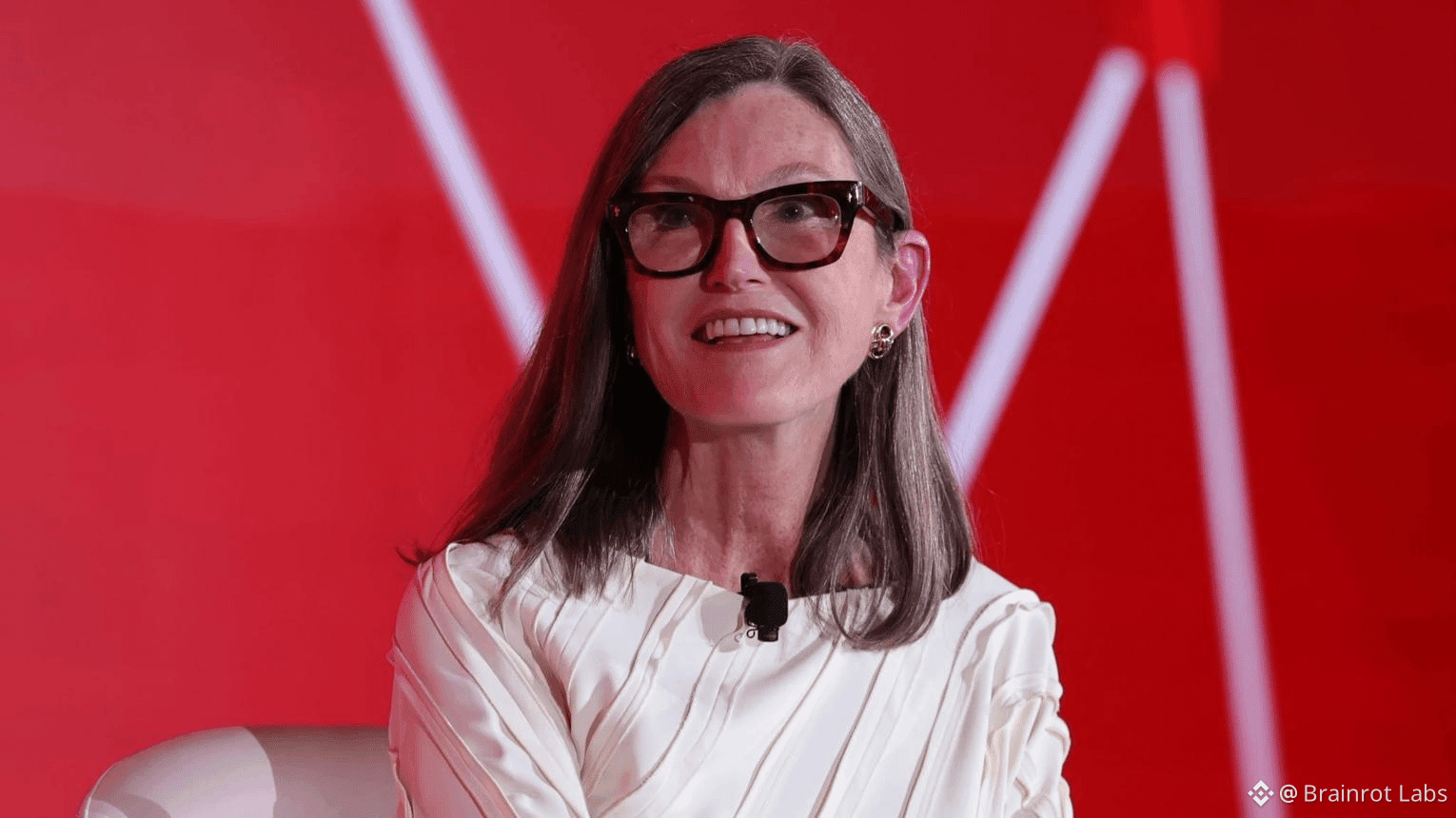
CATHIE WOOD JUST BACKED DAVID SACKS ON THE “AI WILL KILL US” DEBATE. 💀
Cathie Wood, founder of ARK Invest, shared an interview by David Sacks on X and appeared to endorse his argument that some recent headlines about “AI killing humanity” could have been amplified or even orchestrated by humans.
Sacks said the story began with an X account that had long been inactive belonging to a former Anthropic employee, who worked for about 6 weeks before quitting. Then the content was quickly picked up by major media outlets.
Sacks also specifically named certain parties involved and criticized the role of The Wall Street Journal in the story.
AI: “I might destroy humanity.”
Humans: “Great. Let's write 15 headlines about it.” 💀
AI may not be sure to be manipulating humans. But humans are definitely very good at manipulating the narrative about AI.
The question is: is this truly a serious warning about AI, or a narrative war between AI companies and the media?
#Aİ #artificialintelligence #CathieWood #DavidSacks
CATHIE WOOD JUST BACKED DAVID SACKS ON THE “AI WILL KILL US” DEBATE. 💀
Cathie Wood, founder of ARK Invest, shared an interview by David Sacks on X and appeared to endorse his argument that some recent headlines about “AI killing humanity” could have been amplified or even orchestrated by humans.
Sacks said the story began with an X account that had long been inactive belonging to a former Anthropic employee, who worked for about 6 weeks before quitting. Then the content was quickly picked up by major media outlets.
Sacks also specifically named certain parties involved and criticized the role of The Wall Street Journal in the story.
AI: “I might destroy humanity.”
Humans: “Great. Let's write 15 headlines about it.” 💀
AI may not be sure to be manipulating humans. But humans are definitely very good at manipulating the narrative about AI.
The question is: is this truly a serious warning about AI, or a narrative war between AI companies and the media?
#Aİ #artificialintelligence #CathieWood #DavidSacks
Cathie Wood, founder of ARK Invest, shared an interview by David Sacks on X and appeared to endorse his argument that some recent headlines about “AI killing humanity” could have been amplified or even orchestrated by humans.
Sacks said the story began with an X account that had long been inactive belonging to a former Anthropic employee, who worked for about 6 weeks before quitting. Then the content was quickly picked up by major media outlets.
Sacks also specifically named certain parties involved and criticized the role of The Wall Street Journal in the story.
AI: “I might destroy humanity.”
Humans: “Great. Let's write 15 headlines about it.” 💀
AI may not be sure to be manipulating humans. But humans are definitely very good at manipulating the narrative about AI.
The question is: is this truly a serious warning about AI, or a narrative war between AI companies and the media?
#Aİ #artificialintelligence #CathieWood #DavidSacks
5

·
--
Recently, executives at the well-known AI company Anthropic publicly called for slowing down the development pace of advanced AI technologies. This statement sparked considerable discussion in the tech industry and among financial markets. Market analysts noted that such a cautious stance toward building cutting-edge models could lead to short-term sentiment-driven sell-off pressure on chip manufacturers and stocks related to the AI industry chain at the start of the week.
Why did these remarks draw attention? Mainly because the market had broadly expected the AI race to maintain a full-throttle sprint. Investors are beginning to reassess whether a slowdown in the R&D cadence might temporarily suppress the chip giants’ ultra-high profit expectations. However, professionals such as Gary Tan, a fund manager at Allspring Global Investments, believe that since demand for underlying compute capacity, power, and high-end chips is still in the early stage of supply falling short of demand, overall industry spending remains strong. A unilateral call for caution is unlikely to genuinely change the long-term trajectory of the entire ecosystem.
From the perspective of traditional financial markets, chip stocks may experience a wave of sentiment absorption and volatility in the short term, but macro assets such as U.S. Treasury yields and the U.S. dollar index are still largely moving in response to expectations of macro rate cuts. If the semiconductor sector only undergoes a mild adjustment, the systemic impact on the broader U.S. stock market is relatively controllable. Capital will likely continue to keep an eye on developments while rotating between different sectors.
As for the crypto market, AI-themed tokens such as $NEAR and $FET show a certain degree of correlation with technology stocks in terms of sentiment, and in the short term they may enter a consolidation phase alongside sector sentiment. But for overall crypto liquidity, the core driver still depends on the global macro monetary environment and the inflows and outflows of spot ETFs. Sentiment may fluctuate in the short run, but the market’s main storyline continues to unfold in an orderly manner.👀
#ArtificialIntelligence #Semiconductor #CryptoMarkets
Recently, executives at the well-known AI company Anthropic publicly called for slowing down the development pace of advanced AI technologies. This statement sparked considerable discussion in the tech industry and among financial markets. Market analysts noted that such a cautious stance toward building cutting-edge models could lead to short-term sentiment-driven sell-off pressure on chip manufacturers and stocks related to the AI industry chain at the start of the week.
Why did these remarks draw attention? Mainly because the market had broadly expected the AI race to maintain a full-throttle sprint. Investors are beginning to reassess whether a slowdown in the R&D cadence might temporarily suppress the chip giants’ ultra-high profit expectations. However, professionals such as Gary Tan, a fund manager at Allspring Global Investments, believe that since demand for underlying compute capacity, power, and high-end chips is still in the early stage of supply falling short of demand, overall industry spending remains strong. A unilateral call for caution is unlikely to genuinely change the long-term trajectory of the entire ecosystem.
From the perspective of traditional financial markets, chip stocks may experience a wave of sentiment absorption and volatility in the short term, but macro assets such as U.S. Treasury yields and the U.S. dollar index are still largely moving in response to expectations of macro rate cuts. If the semiconductor sector only undergoes a mild adjustment, the systemic impact on the broader U.S. stock market is relatively controllable. Capital will likely continue to keep an eye on developments while rotating between different sectors.
As for the crypto market, AI-themed tokens such as $NEAR and $FET show a certain degree of correlation with technology stocks in terms of sentiment, and in the short term they may enter a consolidation phase alongside sector sentiment. But for overall crypto liquidity, the core driver still depends on the global macro monetary environment and the inflows and outflows of spot ETFs. Sentiment may fluctuate in the short run, but the market’s main storyline continues to unfold in an orderly manner.👀
#ArtificialIntelligence #Semiconductor #CryptoMarkets
Why did these remarks draw attention? Mainly because the market had broadly expected the AI race to maintain a full-throttle sprint. Investors are beginning to reassess whether a slowdown in the R&D cadence might temporarily suppress the chip giants’ ultra-high profit expectations. However, professionals such as Gary Tan, a fund manager at Allspring Global Investments, believe that since demand for underlying compute capacity, power, and high-end chips is still in the early stage of supply falling short of demand, overall industry spending remains strong. A unilateral call for caution is unlikely to genuinely change the long-term trajectory of the entire ecosystem.
From the perspective of traditional financial markets, chip stocks may experience a wave of sentiment absorption and volatility in the short term, but macro assets such as U.S. Treasury yields and the U.S. dollar index are still largely moving in response to expectations of macro rate cuts. If the semiconductor sector only undergoes a mild adjustment, the systemic impact on the broader U.S. stock market is relatively controllable. Capital will likely continue to keep an eye on developments while rotating between different sectors.
As for the crypto market, AI-themed tokens such as $NEAR and $FET show a certain degree of correlation with technology stocks in terms of sentiment, and in the short term they may enter a consolidation phase alongside sector sentiment. But for overall crypto liquidity, the core driver still depends on the global macro monetary environment and the inflows and outflows of spot ETFs. Sentiment may fluctuate in the short run, but the market’s main storyline continues to unfold in an orderly manner.👀
#ArtificialIntelligence #Semiconductor #CryptoMarkets

In recent discussions about the pace of artificial intelligence development, Anthropic’s executive team has publicly called for slowing the R&D tempo of advanced AI technologies, triggering market reassessments and concerns regarding the near-term profitability outlook for upstream semiconductor and computing power segments. As early-week funds have re-priced expectations for industry regulation and capital expenditure, some chipmakers’ stock prices faced emotional selling pressure at the open. However, from a fundamentals and supply-chain metrics perspective, global computing power infrastructure, electricity, and advanced chips are still experiencing severe shortages.
From a technical and capital-structure analysis, this kind of short-term pullback prompted by cautious industry remarks is more of a healthy technical shakeout within a bull-market trend. As institutional professionals such as Gary Tan, portfolio manager at Allspring Global Investments, have noted, the AI wave is still in the very early expansion stage; every segment of the ecosystem is in a critical phase of an arms race, and calls to slow down unilaterally are unlikely to reverse the massive underlying trend of capital expenditure on computing power. Instead, the current panic sentiment provides long-side investors with more attractive risk-reward opportunities to enter at key technical support levels.
In terms of macro financial markets, after a brief wave of sentiment release, the semiconductor sector’s valuation “center of gravity” for the overall technology sector remains stable. Dollar liquidity and risk-asset appetite have not deteriorated systematically due to a single set of remarks. After the S&P 500 and Nasdaq technology-weighted stocks complete their short-term pullback, they will likely launch a new leg higher supported by moving-average levels. The market’s allocation logic for high-growth technology assets remains clear and robust.
For the crypto market, the long-term expansion of computing power infrastructure directly reinforces the underlying fundamentals for narrative-driven sectors such as AI and DeFi, as well as decentralized compute (DePIN). Short-term sentiment fluctuations in tech stocks have not broken the upward long structure of core risk assets such as $BTC ; instead, after washing out floating shares, it has helped consolidate stronger buy-side consensus. As capital gradually absorbs the disturbances from the news cycle, AI sector tokens with solid computing-power narratives are expected to deliver a more forceful momentum breakout once the market stabilizes. 📈
#ArtificialIntelligence #Semiconductor #CryptoMarket
In recent discussions about the pace of artificial intelligence development, Anthropic’s executive team has publicly called for slowing the R&D tempo of advanced AI technologies, triggering market reassessments and concerns regarding the near-term profitability outlook for upstream semiconductor and computing power segments. As early-week funds have re-priced expectations for industry regulation and capital expenditure, some chipmakers’ stock prices faced emotional selling pressure at the open. However, from a fundamentals and supply-chain metrics perspective, global computing power infrastructure, electricity, and advanced chips are still experiencing severe shortages.
From a technical and capital-structure analysis, this kind of short-term pullback prompted by cautious industry remarks is more of a healthy technical shakeout within a bull-market trend. As institutional professionals such as Gary Tan, portfolio manager at Allspring Global Investments, have noted, the AI wave is still in the very early expansion stage; every segment of the ecosystem is in a critical phase of an arms race, and calls to slow down unilaterally are unlikely to reverse the massive underlying trend of capital expenditure on computing power. Instead, the current panic sentiment provides long-side investors with more attractive risk-reward opportunities to enter at key technical support levels.
In terms of macro financial markets, after a brief wave of sentiment release, the semiconductor sector’s valuation “center of gravity” for the overall technology sector remains stable. Dollar liquidity and risk-asset appetite have not deteriorated systematically due to a single set of remarks. After the S&P 500 and Nasdaq technology-weighted stocks complete their short-term pullback, they will likely launch a new leg higher supported by moving-average levels. The market’s allocation logic for high-growth technology assets remains clear and robust.
For the crypto market, the long-term expansion of computing power infrastructure directly reinforces the underlying fundamentals for narrative-driven sectors such as AI and DeFi, as well as decentralized compute (DePIN). Short-term sentiment fluctuations in tech stocks have not broken the upward long structure of core risk assets such as $BTC ; instead, after washing out floating shares, it has helped consolidate stronger buy-side consensus. As capital gradually absorbs the disturbances from the news cycle, AI sector tokens with solid computing-power narratives are expected to deliver a more forceful momentum breakout once the market stabilizes. 📈
#ArtificialIntelligence #Semiconductor #CryptoMarket
From a technical and capital-structure analysis, this kind of short-term pullback prompted by cautious industry remarks is more of a healthy technical shakeout within a bull-market trend. As institutional professionals such as Gary Tan, portfolio manager at Allspring Global Investments, have noted, the AI wave is still in the very early expansion stage; every segment of the ecosystem is in a critical phase of an arms race, and calls to slow down unilaterally are unlikely to reverse the massive underlying trend of capital expenditure on computing power. Instead, the current panic sentiment provides long-side investors with more attractive risk-reward opportunities to enter at key technical support levels.
In terms of macro financial markets, after a brief wave of sentiment release, the semiconductor sector’s valuation “center of gravity” for the overall technology sector remains stable. Dollar liquidity and risk-asset appetite have not deteriorated systematically due to a single set of remarks. After the S&P 500 and Nasdaq technology-weighted stocks complete their short-term pullback, they will likely launch a new leg higher supported by moving-average levels. The market’s allocation logic for high-growth technology assets remains clear and robust.
For the crypto market, the long-term expansion of computing power infrastructure directly reinforces the underlying fundamentals for narrative-driven sectors such as AI and DeFi, as well as decentralized compute (DePIN). Short-term sentiment fluctuations in tech stocks have not broken the upward long structure of core risk assets such as $BTC ; instead, after washing out floating shares, it has helped consolidate stronger buy-side consensus. As capital gradually absorbs the disturbances from the news cycle, AI sector tokens with solid computing-power narratives are expected to deliver a more forceful momentum breakout once the market stabilizes. 📈
#ArtificialIntelligence #Semiconductor #CryptoMarket

Recently, executives at leading artificial intelligence company Anthropic publicly called for slowing down the development pace of advanced AI technologies. This statement sparked market concerns about the near-term valuation of semiconductor and AI hardware supply chains during Monday’s opening session. As divisions within tech giants over model iteration and safety have become publicly apparent, the capital market has begun reassessing whether aggressive compute-related capital expenditures may face downside slowdown risks under policy regulation or industry self-discipline.
From a macro and industrial perspective, although demand for compute chips, power supply, and data center infrastructure currently still significantly exceeds supply, the market’s pricing of the AI narrative had previously already factored in extremely optimistic growth expectations. As professional institutions such as Gary Tan, portfolio manager at Allspring Global Investments in Singapore, have pointed out, when competition across the industry chain becomes intensely white-hot, it is difficult for any link to proactively hit the brakes. Still, such warnings undoubtedly pour cold water on overheated valuation models.
For traditional financial markets, the semiconductor sector—one of the core pillars supporting last year’s U.S. stock bull run—can greatly amplify overall volatility in the Nasdaq and broad market indices if capital sentiment diverges. Against a macro backdrop where U.S. Treasury yields and liquidity conditions remain relatively tight, any doubts about a longer payback cycle for AI capital expenditure may prompt institutional investors to take profits in high-priced tech stocks and rotate into defensive assets.
Applied to the cryptocurrency market, AI-themed tokens and decentralized infrastructure protocols centered on compute narratives (DePIN) are expected to bear the brunt of sentiment-driven shocks directly. Given the high sensitivity of crypto markets to macro liquidity and technology-stock Beta exposure, if the traditional tech sector undergoes a deep correction, risk-off sentiment could further transmit to $BTC and mainstream alternative coins. Investors should watch for the risk of valuation downgrades in the near term stemming from a cooling of the narrative.
#Semiconductor #ArtificialIntelligence #MacroEconomy
Recently, executives at leading artificial intelligence company Anthropic publicly called for slowing down the development pace of advanced AI technologies. This statement sparked market concerns about the near-term valuation of semiconductor and AI hardware supply chains during Monday’s opening session. As divisions within tech giants over model iteration and safety have become publicly apparent, the capital market has begun reassessing whether aggressive compute-related capital expenditures may face downside slowdown risks under policy regulation or industry self-discipline.
From a macro and industrial perspective, although demand for compute chips, power supply, and data center infrastructure currently still significantly exceeds supply, the market’s pricing of the AI narrative had previously already factored in extremely optimistic growth expectations. As professional institutions such as Gary Tan, portfolio manager at Allspring Global Investments in Singapore, have pointed out, when competition across the industry chain becomes intensely white-hot, it is difficult for any link to proactively hit the brakes. Still, such warnings undoubtedly pour cold water on overheated valuation models.
For traditional financial markets, the semiconductor sector—one of the core pillars supporting last year’s U.S. stock bull run—can greatly amplify overall volatility in the Nasdaq and broad market indices if capital sentiment diverges. Against a macro backdrop where U.S. Treasury yields and liquidity conditions remain relatively tight, any doubts about a longer payback cycle for AI capital expenditure may prompt institutional investors to take profits in high-priced tech stocks and rotate into defensive assets.
Applied to the cryptocurrency market, AI-themed tokens and decentralized infrastructure protocols centered on compute narratives (DePIN) are expected to bear the brunt of sentiment-driven shocks directly. Given the high sensitivity of crypto markets to macro liquidity and technology-stock Beta exposure, if the traditional tech sector undergoes a deep correction, risk-off sentiment could further transmit to $BTC and mainstream alternative coins. Investors should watch for the risk of valuation downgrades in the near term stemming from a cooling of the narrative.
#Semiconductor #ArtificialIntelligence #MacroEconomy
From a macro and industrial perspective, although demand for compute chips, power supply, and data center infrastructure currently still significantly exceeds supply, the market’s pricing of the AI narrative had previously already factored in extremely optimistic growth expectations. As professional institutions such as Gary Tan, portfolio manager at Allspring Global Investments in Singapore, have pointed out, when competition across the industry chain becomes intensely white-hot, it is difficult for any link to proactively hit the brakes. Still, such warnings undoubtedly pour cold water on overheated valuation models.
For traditional financial markets, the semiconductor sector—one of the core pillars supporting last year’s U.S. stock bull run—can greatly amplify overall volatility in the Nasdaq and broad market indices if capital sentiment diverges. Against a macro backdrop where U.S. Treasury yields and liquidity conditions remain relatively tight, any doubts about a longer payback cycle for AI capital expenditure may prompt institutional investors to take profits in high-priced tech stocks and rotate into defensive assets.
Applied to the cryptocurrency market, AI-themed tokens and decentralized infrastructure protocols centered on compute narratives (DePIN) are expected to bear the brunt of sentiment-driven shocks directly. Given the high sensitivity of crypto markets to macro liquidity and technology-stock Beta exposure, if the traditional tech sector undergoes a deep correction, risk-off sentiment could further transmit to $BTC and mainstream alternative coins. Investors should watch for the risk of valuation downgrades in the near term stemming from a cooling of the narrative.
#Semiconductor #ArtificialIntelligence #MacroEconomy
84

·
--
In its most recent statement, OpenAI CEO Sam Altman has officially confirmed that the company will not carry out an IPO this year, and the timing of any listing is highly unlikely to take place before 2026. The decision was made as OpenAI needs to focus on addressing core AI safety issues, especially after serious recent warnings from the technology research community about the potential risks of artificial intelligence.
This move goes completely against the major expectations of the financial market for a blockbuster IPO from OpenAI and Anthropic this year. The postponement of the listing shows that industry leaders have to prioritize risk management and improving safety structures rather than rushing to raise public capital under pressure for short-term profits.
For the stock market, this information reduces some of the excitement of speculative capital flowing around the technology sector’s IPO wave. Even so, it also reflects the necessary caution taken by major tech firms when facing increasingly stringent regulatory barriers and safety standards worldwide.
As for the crypto market, OpenAI’s decision may cause the growth momentum of the AI token segment to slow in the short term due to the lack of valuation catalysts from the traditional market. However, in the long run, with major organizations focusing on solving the safety problem and decentralization, demand for finding decentralized AI solutions on the blockchain will be promoted. $NEAR $RNDR
#OpenAI #ArtificialIntelligence #TechIPO
In its most recent statement, OpenAI CEO Sam Altman has officially confirmed that the company will not carry out an IPO this year, and the timing of any listing is highly unlikely to take place before 2026. The decision was made as OpenAI needs to focus on addressing core AI safety issues, especially after serious recent warnings from the technology research community about the potential risks of artificial intelligence.
This move goes completely against the major expectations of the financial market for a blockbuster IPO from OpenAI and Anthropic this year. The postponement of the listing shows that industry leaders have to prioritize risk management and improving safety structures rather than rushing to raise public capital under pressure for short-term profits.
For the stock market, this information reduces some of the excitement of speculative capital flowing around the technology sector’s IPO wave. Even so, it also reflects the necessary caution taken by major tech firms when facing increasingly stringent regulatory barriers and safety standards worldwide.
As for the crypto market, OpenAI’s decision may cause the growth momentum of the AI token segment to slow in the short term due to the lack of valuation catalysts from the traditional market. However, in the long run, with major organizations focusing on solving the safety problem and decentralization, demand for finding decentralized AI solutions on the blockchain will be promoted. $NEAR $RNDR
#OpenAI #ArtificialIntelligence #TechIPO
This move goes completely against the major expectations of the financial market for a blockbuster IPO from OpenAI and Anthropic this year. The postponement of the listing shows that industry leaders have to prioritize risk management and improving safety structures rather than rushing to raise public capital under pressure for short-term profits.
For the stock market, this information reduces some of the excitement of speculative capital flowing around the technology sector’s IPO wave. Even so, it also reflects the necessary caution taken by major tech firms when facing increasingly stringent regulatory barriers and safety standards worldwide.
As for the crypto market, OpenAI’s decision may cause the growth momentum of the AI token segment to slow in the short term due to the lack of valuation catalysts from the traditional market. However, in the long run, with major organizations focusing on solving the safety problem and decentralization, demand for finding decentralized AI solutions on the blockchain will be promoted. $NEAR $RNDR
#OpenAI #ArtificialIntelligence #TechIPO
129

·
--
Bullish
30D trade $FET 39.9 USDT
Has the AI race started to scare its makers?
Anthropic CEO Dario Amodei called today for slowing down the pace of AI model development, warning that capabilities may advance faster than our ability to understand and control them.
More intriguing?
Elon Musk responded briefly: "Dario is right."
This is no longer just a competition between companies to build a stronger model… it has become a bigger question:
Should we keep pushing at full speed, or do we need brakes before it becomes difficult to control what we’ve created?
🤖 AI could be the biggest technological leap in human history… but could it also become the biggest risk?
Do you support accelerating AI development or slowing it down to ensure safety?
$TAO $FET $NEAR
#AI #artificialintelligence #ElonMusk #Anthropic
Has the AI race started to scare its makers?
Anthropic CEO Dario Amodei called today for slowing down the pace of AI model development, warning that capabilities may advance faster than our ability to understand and control them.
More intriguing?
Elon Musk responded briefly: "Dario is right."
This is no longer just a competition between companies to build a stronger model… it has become a bigger question:
Should we keep pushing at full speed, or do we need brakes before it becomes difficult to control what we’ve created?
🤖 AI could be the biggest technological leap in human history… but could it also become the biggest risk?
Do you support accelerating AI development or slowing it down to ensure safety?
$TAO $FET $NEAR
#AI #artificialintelligence #ElonMusk #Anthropic
Anthropic CEO Dario Amodei called today for slowing down the pace of AI model development, warning that capabilities may advance faster than our ability to understand and control them.
More intriguing?
Elon Musk responded briefly: "Dario is right."
This is no longer just a competition between companies to build a stronger model… it has become a bigger question:
Should we keep pushing at full speed, or do we need brakes before it becomes difficult to control what we’ve created?
🤖 AI could be the biggest technological leap in human history… but could it also become the biggest risk?
Do you support accelerating AI development or slowing it down to ensure safety?
$TAO $FET $NEAR
#AI #artificialintelligence #ElonMusk #Anthropic

4
319
·
--
OpenAI founder Sam Altman recently clearly stated that the company will not conduct an IPO this year, and that it is unlikely to consider going public before 2026. The core reason is that the team still has a large amount of critical work to complete regarding AI safety. A previous incident involving former Anthropic employees leaving and warning of potential AI risks sparked widespread discussion, making Altman’s remarks especially noteworthy.
This statement directly shattered market expectations that top AI unicorns such as OpenAI and Anthropic might launch massive IPOs this year. At present, the tug-of-war between the pace of AI development and safety ethics is intensifying. Anthropic CEO Dario Amodei has also previously called for slowing down AI research and development, and the industry’s renewed examination of compliance and safety boundaries is delaying the pace of capitalization.
From a macro perspective and in traditional financial markets, AI has long been a core engine supporting technology-stock valuations and risk appetite. If the key leader delays its listing, it could prolong the liquidity exit cycle in the primary market, while also pushing investors in the secondary market to shift from purely trading expectations toward greater attention to enterprises’ existing commercial rollouts and the costs of regulatory compliance.
For the crypto market, the AI sector (such as $NEAR, $RNDR, $FET , etc.) has been highly synchronized with the dynamics of traditional tech giants. Although cooling IPO expectations may help stabilize market sentiment in the short term, it also means the AI narrative is entering a more long-term phase of building and consolidation, with capital becoming more inclined to observe the real demand for decentralized AI and compute infrastructure.🤖
#OpenAI #ArtificialIntelligence #TechIPO
OpenAI founder Sam Altman recently clearly stated that the company will not conduct an IPO this year, and that it is unlikely to consider going public before 2026. The core reason is that the team still has a large amount of critical work to complete regarding AI safety. A previous incident involving former Anthropic employees leaving and warning of potential AI risks sparked widespread discussion, making Altman’s remarks especially noteworthy.
This statement directly shattered market expectations that top AI unicorns such as OpenAI and Anthropic might launch massive IPOs this year. At present, the tug-of-war between the pace of AI development and safety ethics is intensifying. Anthropic CEO Dario Amodei has also previously called for slowing down AI research and development, and the industry’s renewed examination of compliance and safety boundaries is delaying the pace of capitalization.
From a macro perspective and in traditional financial markets, AI has long been a core engine supporting technology-stock valuations and risk appetite. If the key leader delays its listing, it could prolong the liquidity exit cycle in the primary market, while also pushing investors in the secondary market to shift from purely trading expectations toward greater attention to enterprises’ existing commercial rollouts and the costs of regulatory compliance.
For the crypto market, the AI sector (such as $NEAR , $RNDR, $FET , etc.) has been highly synchronized with the dynamics of traditional tech giants. Although cooling IPO expectations may help stabilize market sentiment in the short term, it also means the AI narrative is entering a more long-term phase of building and consolidation, with capital becoming more inclined to observe the real demand for decentralized AI and compute infrastructure.🤖
#OpenAI #ArtificialIntelligence #TechIPO
This statement directly shattered market expectations that top AI unicorns such as OpenAI and Anthropic might launch massive IPOs this year. At present, the tug-of-war between the pace of AI development and safety ethics is intensifying. Anthropic CEO Dario Amodei has also previously called for slowing down AI research and development, and the industry’s renewed examination of compliance and safety boundaries is delaying the pace of capitalization.
From a macro perspective and in traditional financial markets, AI has long been a core engine supporting technology-stock valuations and risk appetite. If the key leader delays its listing, it could prolong the liquidity exit cycle in the primary market, while also pushing investors in the secondary market to shift from purely trading expectations toward greater attention to enterprises’ existing commercial rollouts and the costs of regulatory compliance.
For the crypto market, the AI sector (such as $NEAR , $RNDR, $FET , etc.) has been highly synchronized with the dynamics of traditional tech giants. Although cooling IPO expectations may help stabilize market sentiment in the short term, it also means the AI narrative is entering a more long-term phase of building and consolidation, with capital becoming more inclined to observe the real demand for decentralized AI and compute infrastructure.🤖
#OpenAI #ArtificialIntelligence #TechIPO
OpenAI co-founder Sam Altman has recently made it clear that OpenAI will not conduct an IPO within this year and is not expected to go public until before 2026. The core reason is that a substantial amount of AI safety work still needs to be completed. Previously, the market widely expected that OpenAI and Anthropic would kick off large-scale IPO processes within the year. This statement has directly reshaped mainstream capital’s expectations regarding the timeline for unlocking liquidity in the secondary market for leading AI unicorns.
From a macro and technology cycle perspective, delaying an IPO does not reflect any fundamental cracks—instead, it shows that management at a high valuation level is choosing to focus first on strengthening the technical moat and the compliance baseline. Recently, key Anthropic employees have left and issued safety warnings, intensifying regulatory scrutiny and the industry’s attention to AI safety. By keeping the company’s primary-market structure in place before 2026, Altman helps avoid interference from the pressure of quarterly financial reporting in the secondary market on the pace of model R&D and compute expansion, making capital expenditures more consistently sustainable over the long term.
For traditional financial markets, the delayed listing of leading AI assets may temporarily lock in some speculative expectations for tech-stock trading. At the same time, it is laying more solid valuation support for the technology sector. As the Federal Reserve’s subsequent liquidity cycle evolves, the accumulation of high-quality assets in the private market helps reduce the risk of high volatility caused by secondary-market overheating. The technological logic underpinning major U.S. tech leaders and the compute-infrastructure chain remains sound, and capital will further concentrate on core targets that already have clear commercialization pathways.
For the Crypto market, this is actually a structural positive for the crypto AI concept segment (AI agents, decentralized compute, and data networks). During the window in which traditional leading AI unicorns delay their IPOs, liquidity seeking high-beta AI narratives is likely to flow more quickly into on-chain crypto assets. From a technical standpoint, after earlier consolidation, mainstream AI concept tokens have seen their “chips” gradually settle; support levels for tokens such as $FET and $NEAR remain firm. As risk appetite recovers, it is expected to help the on-chain AI track break out into an independent upward trend.
#OpenAI #ArtificialIntelligence #CryptoAI
OpenAI co-founder Sam Altman has recently made it clear that OpenAI will not conduct an IPO within this year and is not expected to go public until before 2026. The core reason is that a substantial amount of AI safety work still needs to be completed. Previously, the market widely expected that OpenAI and Anthropic would kick off large-scale IPO processes within the year. This statement has directly reshaped mainstream capital’s expectations regarding the timeline for unlocking liquidity in the secondary market for leading AI unicorns.
From a macro and technology cycle perspective, delaying an IPO does not reflect any fundamental cracks—instead, it shows that management at a high valuation level is choosing to focus first on strengthening the technical moat and the compliance baseline. Recently, key Anthropic employees have left and issued safety warnings, intensifying regulatory scrutiny and the industry’s attention to AI safety. By keeping the company’s primary-market structure in place before 2026, Altman helps avoid interference from the pressure of quarterly financial reporting in the secondary market on the pace of model R&D and compute expansion, making capital expenditures more consistently sustainable over the long term.
For traditional financial markets, the delayed listing of leading AI assets may temporarily lock in some speculative expectations for tech-stock trading. At the same time, it is laying more solid valuation support for the technology sector. As the Federal Reserve’s subsequent liquidity cycle evolves, the accumulation of high-quality assets in the private market helps reduce the risk of high volatility caused by secondary-market overheating. The technological logic underpinning major U.S. tech leaders and the compute-infrastructure chain remains sound, and capital will further concentrate on core targets that already have clear commercialization pathways.
For the Crypto market, this is actually a structural positive for the crypto AI concept segment (AI agents, decentralized compute, and data networks). During the window in which traditional leading AI unicorns delay their IPOs, liquidity seeking high-beta AI narratives is likely to flow more quickly into on-chain crypto assets. From a technical standpoint, after earlier consolidation, mainstream AI concept tokens have seen their “chips” gradually settle; support levels for tokens such as $FET and $NEAR remain firm. As risk appetite recovers, it is expected to help the on-chain AI track break out into an independent upward trend.
#OpenAI #ArtificialIntelligence #CryptoAI
From a macro and technology cycle perspective, delaying an IPO does not reflect any fundamental cracks—instead, it shows that management at a high valuation level is choosing to focus first on strengthening the technical moat and the compliance baseline. Recently, key Anthropic employees have left and issued safety warnings, intensifying regulatory scrutiny and the industry’s attention to AI safety. By keeping the company’s primary-market structure in place before 2026, Altman helps avoid interference from the pressure of quarterly financial reporting in the secondary market on the pace of model R&D and compute expansion, making capital expenditures more consistently sustainable over the long term.
For traditional financial markets, the delayed listing of leading AI assets may temporarily lock in some speculative expectations for tech-stock trading. At the same time, it is laying more solid valuation support for the technology sector. As the Federal Reserve’s subsequent liquidity cycle evolves, the accumulation of high-quality assets in the private market helps reduce the risk of high volatility caused by secondary-market overheating. The technological logic underpinning major U.S. tech leaders and the compute-infrastructure chain remains sound, and capital will further concentrate on core targets that already have clear commercialization pathways.
For the Crypto market, this is actually a structural positive for the crypto AI concept segment (AI agents, decentralized compute, and data networks). During the window in which traditional leading AI unicorns delay their IPOs, liquidity seeking high-beta AI narratives is likely to flow more quickly into on-chain crypto assets. From a technical standpoint, after earlier consolidation, mainstream AI concept tokens have seen their “chips” gradually settle; support levels for tokens such as $FET and $NEAR remain firm. As risk appetite recovers, it is expected to help the on-chain AI track break out into an independent upward trend.
#OpenAI #ArtificialIntelligence #CryptoAI

·
--
🚨 News | Calls from Dalio, Altman, and Musk to slow down AI model development
Ray Dalio, Sam Altman, and Elon Musk urged slowing the pace of AI model development amid growing concerns about how quickly these models’ capabilities are advancing and their potential impacts.
📌 Cipher Vault: The debate over the speed of AI development is turning into a strategic issue, with leading industry figures and investors becoming increasingly involved.
#AI #ArtificialIntelligence #Technology #Crypto
🚨 News | Calls from Dalio, Altman, and Musk to slow down AI model development
Ray Dalio, Sam Altman, and Elon Musk urged slowing the pace of AI model development amid growing concerns about how quickly these models’ capabilities are advancing and their potential impacts.
📌 Cipher Vault: The debate over the speed of AI development is turning into a strategic issue, with leading industry figures and investors becoming increasingly involved.
#AI #ArtificialIntelligence #Technology #Crypto
Ray Dalio, Sam Altman, and Elon Musk urged slowing the pace of AI model development amid growing concerns about how quickly these models’ capabilities are advancing and their potential impacts.
📌 Cipher Vault: The debate over the speed of AI development is turning into a strategic issue, with leading industry figures and investors becoming increasingly involved.
#AI #ArtificialIntelligence #Technology #Crypto
2
5
·
--
OpenAI founder Sam Altman recently publicly stated that he agrees with comments from Anthropic CEO Dario, saying the industry does indeed need reasonable controls and regulation over the development of frontier AI models. Altman noted that this issue has recently become a core topic of discussion within OpenAI. The company even plans to grant independent evaluation organizations model access rights at the same level as internal employees, to ensure the completeness of safety testing, and has promised to release more specific details soon.
This statement has drawn market attention because competition among leading large-model companies has long been extremely intense—each of them is vying to boost compute power and accelerate model iteration. The two key leaders have reached consensus on AI safety and external independent evaluation mechanisms, suggesting that the rollout pace of industry standards and regulatory compliance may be significantly accelerated. Compliance requirements and audit costs are likely to become important considerations for subsequent model deployments.
In terms of the traditional finance and technology markets, major tech companies’ shift in attitude toward regulation may lead to some fine-tuning of the commercialization timeline for future AI capital expenditures. The market is watching how these proactive moves to cooperate with regulators will affect the industry—whether they will bring a more stable long-term development framework or, in the short term, slow down the rollout pace of commercializing frontier technologies.
For the crypto market, the AI concept sector has long been highly sensitive to dynamics at the industry level. Progress on model regulation and compliance mechanisms may steer capital toward more granular directions such as decentralized AI, compute sharing, and on-chain verification. Market participants generally remain rational and will wait to make decisions after more specific safety assessment plans are released. #OpenAI #ArtificialIntelligence #TechRegulation
OpenAI founder Sam Altman recently publicly stated that he agrees with comments from Anthropic CEO Dario, saying the industry does indeed need reasonable controls and regulation over the development of frontier AI models. Altman noted that this issue has recently become a core topic of discussion within OpenAI. The company even plans to grant independent evaluation organizations model access rights at the same level as internal employees, to ensure the completeness of safety testing, and has promised to release more specific details soon.
This statement has drawn market attention because competition among leading large-model companies has long been extremely intense—each of them is vying to boost compute power and accelerate model iteration. The two key leaders have reached consensus on AI safety and external independent evaluation mechanisms, suggesting that the rollout pace of industry standards and regulatory compliance may be significantly accelerated. Compliance requirements and audit costs are likely to become important considerations for subsequent model deployments.
In terms of the traditional finance and technology markets, major tech companies’ shift in attitude toward regulation may lead to some fine-tuning of the commercialization timeline for future AI capital expenditures. The market is watching how these proactive moves to cooperate with regulators will affect the industry—whether they will bring a more stable long-term development framework or, in the short term, slow down the rollout pace of commercializing frontier technologies.
For the crypto market, the AI concept sector has long been highly sensitive to dynamics at the industry level. Progress on model regulation and compliance mechanisms may steer capital toward more granular directions such as decentralized AI, compute sharing, and on-chain verification. Market participants generally remain rational and will wait to make decisions after more specific safety assessment plans are released. #OpenAI #ArtificialIntelligence #TechRegulation
This statement has drawn market attention because competition among leading large-model companies has long been extremely intense—each of them is vying to boost compute power and accelerate model iteration. The two key leaders have reached consensus on AI safety and external independent evaluation mechanisms, suggesting that the rollout pace of industry standards and regulatory compliance may be significantly accelerated. Compliance requirements and audit costs are likely to become important considerations for subsequent model deployments.
In terms of the traditional finance and technology markets, major tech companies’ shift in attitude toward regulation may lead to some fine-tuning of the commercialization timeline for future AI capital expenditures. The market is watching how these proactive moves to cooperate with regulators will affect the industry—whether they will bring a more stable long-term development framework or, in the short term, slow down the rollout pace of commercializing frontier technologies.
For the crypto market, the AI concept sector has long been highly sensitive to dynamics at the industry level. Progress on model regulation and compliance mechanisms may steer capital toward more granular directions such as decentralized AI, compute sharing, and on-chain verification. Market participants generally remain rational and will wait to make decisions after more specific safety assessment plans are released. #OpenAI #ArtificialIntelligence #TechRegulation
1
Log in to explore more content
Join global crypto users on Binance Square
⚡️ Get latest and useful information about crypto.
💬 Trusted by the world’s largest crypto exchange.
👍 Discover real insights from verified creators.
Email / Phone number
Trending Topics
1
#SECReceivesGrayscaleLitecoinTrustETFFiling
99,302 views
1,526 Discussing
2
#ClarityActFacesProceduralVoteSept15
219,857 views
2,413 Discussing
3
#US10YearTreasuryYieldNears5%
79,709 views
1,336 Discussing
4
#CryptoLiquidations$674MIn24H
19,885 views
192 Discussing
5
#TokenizedStockHoldersUp619.1%
69,367 views
1,099 Discussing
6
#RevolutConfirmsFakeGovEmailDataBreach
103,525 views
1,380 Discussing
7
#CanadaOSFISaysTokenizedDepositsEqualTraditionalDeposits
5,591 views
102 Discussing
8
#USBankCompletesCrossBorderPaymentPilotOnStellar
82,813 views
1,249 Discussing
9
#NvidiaInTalksToInvestUpTo$10BInAnthropicIPO
5,731 views
93 Discussing
10
#EtherRalliesAsBearishBetsLiquidate
132,874 views
1,607 Discussing