
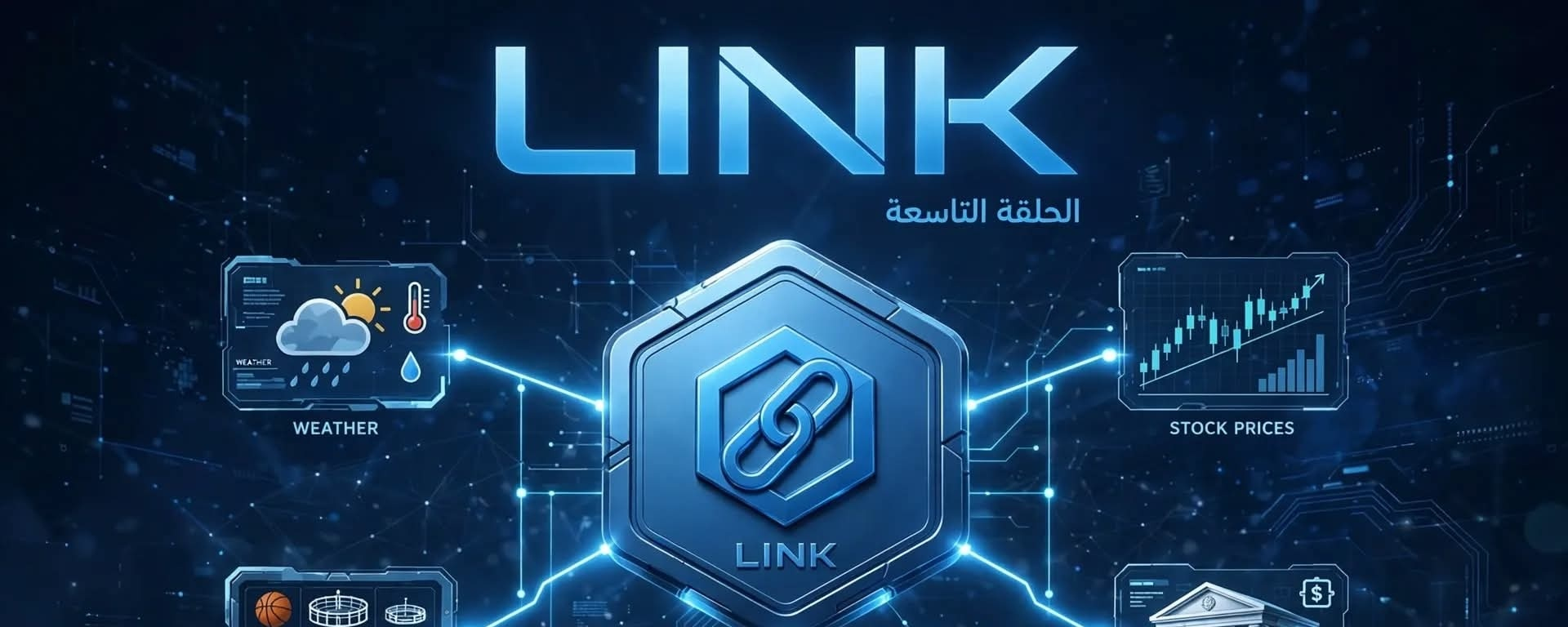

Sure, boss. Let’s continue with LINK. You have the image, and here’s the clean text to copy onto
In the name of God, episode nine of the series introducing cryptocurrencies from scratch
Today: LINK (Chainlink) — the bridge connecting crypto to the real world
What is LINK
1 How did it start?
It was launched in 2017 by Sergey Nazarov
The idea addressed a major problem: blockchains don’t know what’s happening outside them
That means a smart contract doesn’t know today’s dollar price, the temperature, or who won the game.
LINK came along to solve this problem.
2. What it means
LINK is the currency of the Chainlink network.
Its job is to securely and reliably bring real-world data to the blockchain.
A simple example: You want to create an insurance contract that automatically pays you if it rains. Who tells the contract it’s raining? LINK does.
All the big projects use it to get prices for currencies and stocks, as well as weather and sports data.
3. Its strengths
Its strength is that it isn’t competing with anyone—it serves everyone.
Ethereum, Solana, and all the major networks use it.
Big banks and companies like Swift and Google have partnered with it.
It’s like electricity: you don’t see it, but nothing works without it.
4. Where it stands today
Ranked 16th worldwide
Today’s price is around $8.60.
Market cap is around $6.6 billion.
About 766 million coins in circulation.
Its all-time high was $52 in 2021. That means it’s fallen a lot from its peak, which is why many people see it as an opportunity.
In short, if Bitcoin is gold and Ethereum is the engineer, LINK is the translator that helps the blockchain understand the language of the real world.
Tomorrow, episode ten is about ADA. Don’t miss it!
Tell me in the comments: did you already know about LINK, or is this your first time hearing about it?
Introduction series
Crypto Sheikh
LINK
Oman
Binance
---
🔥