
Bullish_ Bhai
17.2k Posts

Bullish_ Bhai
 Square Verified+
Crypto binance square family
896 Following
33.4K+ Followers
21.9K+ Liked
Posts
All
Quotes
Live
🔥 A MASSIVE OIL DEAL IS TAKING SHAPE
The U.S. and Venezuela have reached a historic agreement centered on the development of 17 oil fields with an estimated 65 billion barrels of proven potential.
The plan could bring up to $100 billion in investment into Venezuela’s oil industry, helping rebuild infrastructure and revive production.
Even more interesting, Venezuelan crude is expected to play a role in replenishing the U.S. Strategic Petroleum Reserve.
If the deal delivers as planned, it could reshape Venezuela’s energy sector, strengthen U.S. energy security and have a major impact on global oil markets.
This is not just another oil deal. It could become a major geopolitical and energy story for years to come.
#SKHynixStudiesJapanMemoryChipVenture
$CLO
$SKR
The U.S. and Venezuela have reached a historic agreement centered on the development of 17 oil fields with an estimated 65 billion barrels of proven potential.
The plan could bring up to $100 billion in investment into Venezuela’s oil industry, helping rebuild infrastructure and revive production.
Even more interesting, Venezuelan crude is expected to play a role in replenishing the U.S. Strategic Petroleum Reserve.
If the deal delivers as planned, it could reshape Venezuela’s energy sector, strengthen U.S. energy security and have a major impact on global oil markets.
This is not just another oil deal. It could become a major geopolitical and energy story for years to come.
#SKHynixStudiesJapanMemoryChipVenture
$CLO
$SKR
$ZORA is showing strong bullish momentum after reclaiming key support. Buyers are stepping in aggressively, while the structure continues to favor further upside.
Entry: $0.02080 - $0.02170
SL: $0.01960
TP1: $0.02420
TP2: $0.02710
TP3: $0.03000
Holding above $0.02000 keeps the bullish structure intact. A clean breakout above $0.02420 could accelerate the next expansion.
Let's go $ZORA
Entry: $0.02080 - $0.02170
SL: $0.01960
TP1: $0.02420
TP2: $0.02710
TP3: $0.03000
Holding above $0.02000 keeps the bullish structure intact. A clean breakout above $0.02420 could accelerate the next expansion.
Let's go $ZORA
Yes👇
Definitely🤙
Maybe🙋♀️
No🔙
4 hr(s) left
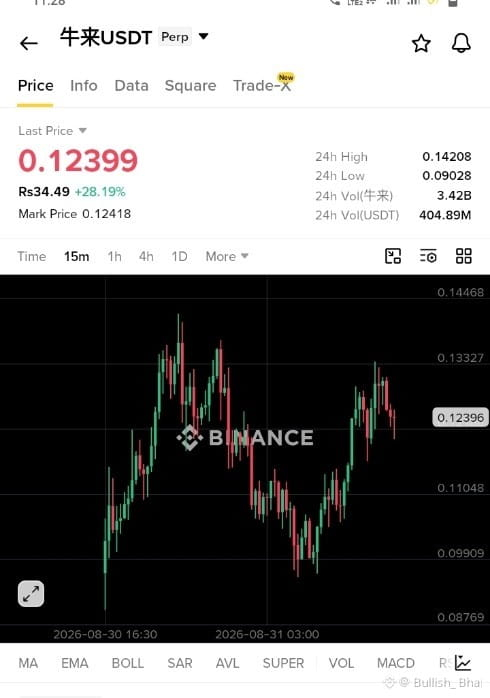
$NIU.US Strong bullish recovery is visible on the 15M chart, with price reclaiming the $0.12300 area after a sharp move from lower support.
Entry: $0.12100 - $0.12400
SL: $0.11700
TP1: $0.12800
TP2: $0.13327
TP3: $0.14208
If buyers reclaim $0.13327 with strength, momentum can accelerate toward the $0.14208 zone.
Let's go $NIU.US
#HormuzStraitFightingReignites #USStrikesIranianRocketLaunchers #YenBreaks160AgainstDollar #YenBreaks160AgainstDollar
Entry: $0.12100 - $0.12400
SL: $0.11700
TP1: $0.12800
TP2: $0.13327
TP3: $0.14208
If buyers reclaim $0.13327 with strength, momentum can accelerate toward the $0.14208 zone.
Let's go $NIU.US
#HormuzStraitFightingReignites #USStrikesIranianRocketLaunchers #YenBreaks160AgainstDollar #YenBreaks160AgainstDollar
NIUUS+1.76%
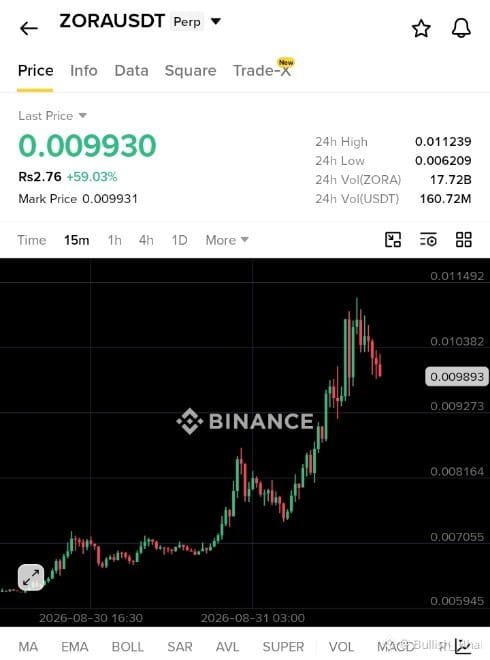
$ZORA Strong bullish structure is still holding after the breakout. Price is consolidating above key support while buyers defend the higher range.
Entry: $0.00930 - $0.00995
SL: $0.00890
TP1: $0.01038
TP2: $0.01124
TP3: $0.01149
Hold above $0.00927 and the bullish continuation setup remains valid.
Let's go $ZORA 👇
#YenBreaks160AgainstDollar #About67MAmericansHoldCrypto #USStrikesIranianRocketLaunchers #USStrikesIranianRocketLaunchers
Entry: $0.00930 - $0.00995
SL: $0.00890
TP1: $0.01038
TP2: $0.01124
TP3: $0.01149
Hold above $0.00927 and the bullish continuation setup remains valid.
Let's go $ZORA 👇
#YenBreaks160AgainstDollar #About67MAmericansHoldCrypto #USStrikesIranianRocketLaunchers #USStrikesIranianRocketLaunchers
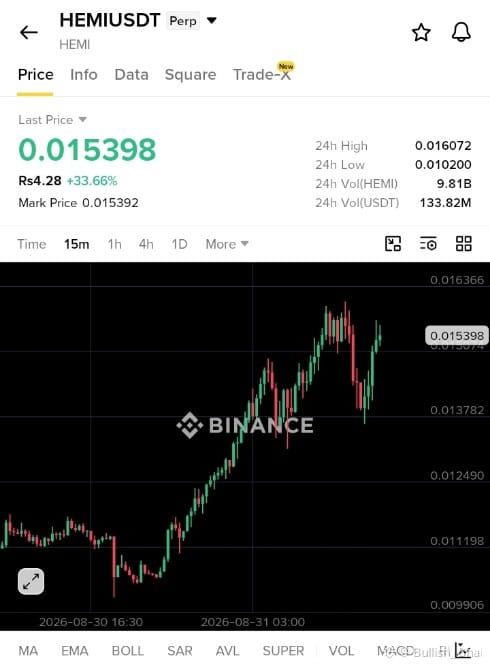
$HEMI is showing strong recovery momentum after defending the $0.01378 zone. Buyers are pushing price back toward the major resistance area.
Entry: $0.01500 - $0.01545
SL: $0.01420
TP1: $0.01590
TP2: $0.01636
TP3: $0.01720
A clean breakout above $0.01636 could open the door for another upside expansion.
Let's go $HEMI 👇
#USStrikesIranianRocketLaunchers #HormuzStraitFightingReignites #YenBreaks160AgainstDollar
Entry: $0.01500 - $0.01545
SL: $0.01420
TP1: $0.01590
TP2: $0.01636
TP3: $0.01720
A clean breakout above $0.01636 could open the door for another upside expansion.
Let's go $HEMI 👇
#USStrikesIranianRocketLaunchers #HormuzStraitFightingReignites #YenBreaks160AgainstDollar
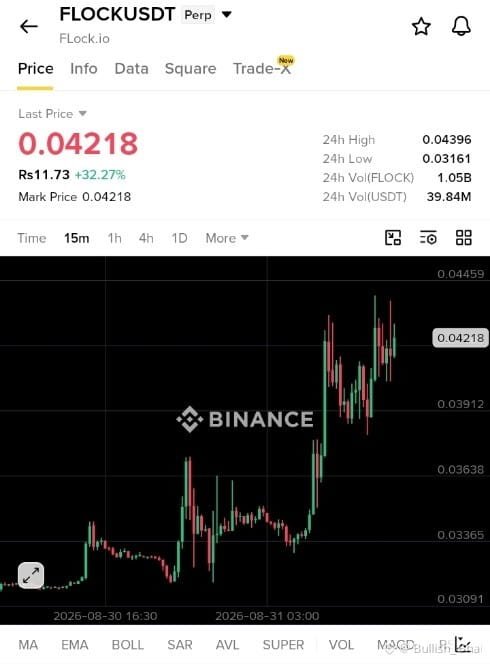
$FLOCK remains aggressively bullish after a powerful breakout. Price is consolidating near the highs, giving buyers a chance to push toward fresh resistance.
Entry: $0.04100 - $0.04220
SL: $0.03880
TP1: $0.04300
TP2: $0.04459
TP3: $0.04700
Holding above $0.03912 keeps the bullish structure intact. Watch $0.04459 for the next breakout.
Let's go $FLOCK
#About67MAmericansHoldCrypto #USStrikesIranianRocketLaunchers #YenBreaks160AgainstDollar
Entry: $0.04100 - $0.04220
SL: $0.03880
TP1: $0.04300
TP2: $0.04459
TP3: $0.04700
Holding above $0.03912 keeps the bullish structure intact. Watch $0.04459 for the next breakout.
Let's go $FLOCK
#About67MAmericansHoldCrypto #USStrikesIranianRocketLaunchers #YenBreaks160AgainstDollar
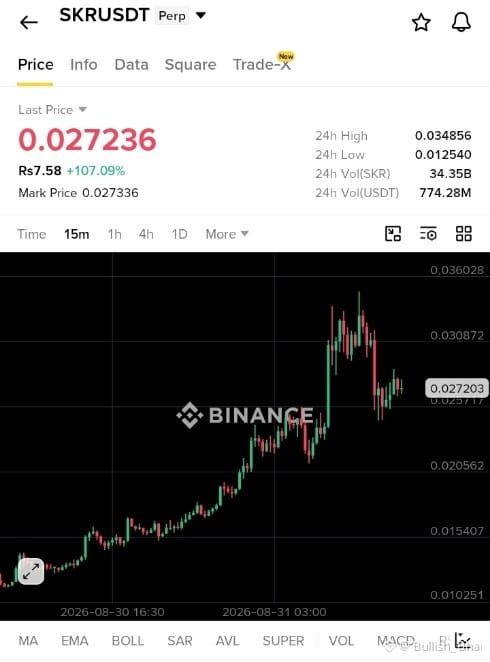
$SKR delivered a massive breakout and is now consolidating after the explosive move. Buyers are still defending the higher structure.
Entry: $0.02600 - $0.02730
SL: $0.02480
TP1: $0.03087
TP2: $0.03485
TP3: $0.03603
Holding above $0.02571 keeps the setup bullish. A reclaim of $0.03087 could trigger another strong expansion.
Let's go $SKR
#About67MAmericansHoldCrypto #YenBreaks160AgainstDollar #UKReleasesFirstCryptoGainsTaxStats
Entry: $0.02600 - $0.02730
SL: $0.02480
TP1: $0.03087
TP2: $0.03485
TP3: $0.03603
Holding above $0.02571 keeps the setup bullish. A reclaim of $0.03087 could trigger another strong expansion.
Let's go $SKR
#About67MAmericansHoldCrypto #YenBreaks160AgainstDollar #UKReleasesFirstCryptoGainsTaxStats
$SKR is showing a strong momentum setup with buyers stepping in around key support. A clean move above resistance could trigger the next leg higher.
Entry: $0.06–$0.062
TP1: $0.066
TP2: $0.071
TP3: $0.078
SL: $0.056
Watch volume and breakout confirmation before entering. Manage risk carefully.
Let’s go $SKR
Entry: $0.06–$0.062
TP1: $0.066
TP2: $0.071
TP3: $0.078
SL: $0.056
Watch volume and breakout confirmation before entering. Manage risk carefully.
Let’s go $SKR
Bulls take control
Bears reject resistance
Sideways accumulation
Volatility incoming
2 hr(s) left
$BTC
🚨 Warsh has spoken, and the market definitely felt it.
The message from the new Fed chairman was clear: inflation is still too high, 2% remains the target, and nobody should expect guaranteed rate cuts. He also suggested that financial conditions may not be restrictive enough yet.
But it wasn’t completely bearish.
The economy is still holding strong. Corporate earnings remain solid, and AI investment is continuing to support productivity and growth. Warsh also made it clear that monetary conditions still matter, while the next Fed move will depend entirely on incoming data.
And here is the most important part for Bitcoin.
No talk of immediate rate hikes.
So now I’m watching $78K very closely. If Bitcoin can absorb this hawkish message and continue holding above that level, it could be a serious sign of underlying strength.
The old story was simple: Fed cuts rates, Bitcoin rallies.
Now the market is facing a much bigger test.
Can Bitcoin keep moving higher even without the Fed giving it extra fuel?
If $78K holds, the answer could become very interesting.
$ETH $SOL
🚨 Warsh has spoken, and the market definitely felt it.
The message from the new Fed chairman was clear: inflation is still too high, 2% remains the target, and nobody should expect guaranteed rate cuts. He also suggested that financial conditions may not be restrictive enough yet.
But it wasn’t completely bearish.
The economy is still holding strong. Corporate earnings remain solid, and AI investment is continuing to support productivity and growth. Warsh also made it clear that monetary conditions still matter, while the next Fed move will depend entirely on incoming data.
And here is the most important part for Bitcoin.
No talk of immediate rate hikes.
So now I’m watching $78K very closely. If Bitcoin can absorb this hawkish message and continue holding above that level, it could be a serious sign of underlying strength.
The old story was simple: Fed cuts rates, Bitcoin rallies.
Now the market is facing a much bigger test.
Can Bitcoin keep moving higher even without the Fed giving it extra fuel?
If $78K holds, the answer could become very interesting.
$ETH $SOL
$LONG
Bullish continuation setup. Price is trading around $0.04495 after a strong 24-hour expansion, showing aggressive buying pressure. The preferred strategy is to buy a controlled pullback rather than chase the vertical move. The $0.04350–$0.04450 area is the immediate demand zone, while $0.04650 is the first liquidity level above price.
EP: $0.04350–$0.04450
TP1: $0.04700
TP2: $0.05000
TP3: $0.05400
SL: $0.04180
Trend strength remains strongly bullish, with momentum favoring buyers after the breakout.
Market structure stays positive while price holds above the $0.04350 support zone.
A reclaim of $0.04700 should expose the next liquidity areas toward $0.05000 and $0.05400. �
CoinGecko +1
$LONG
#MarvellFallsOver5%AfterHours #NvidiaRises8.74%AfterEarnings #CentralBanksBuy289TonsGoldInQ2 #CentralBanksBuy289TonsGoldInQ2 #TaiwanTAIEXRetakes46500OnChipRally
Bullish continuation setup. Price is trading around $0.04495 after a strong 24-hour expansion, showing aggressive buying pressure. The preferred strategy is to buy a controlled pullback rather than chase the vertical move. The $0.04350–$0.04450 area is the immediate demand zone, while $0.04650 is the first liquidity level above price.
EP: $0.04350–$0.04450
TP1: $0.04700
TP2: $0.05000
TP3: $0.05400
SL: $0.04180
Trend strength remains strongly bullish, with momentum favoring buyers after the breakout.
Market structure stays positive while price holds above the $0.04350 support zone.
A reclaim of $0.04700 should expose the next liquidity areas toward $0.05000 and $0.05400. �
CoinGecko +1
$LONG
#MarvellFallsOver5%AfterHours #NvidiaRises8.74%AfterEarnings #CentralBanksBuy289TonsGoldInQ2 #CentralBanksBuy289TonsGoldInQ2 #TaiwanTAIEXRetakes46500OnChipRally
Bullish continuation setup. HEMI is showing strong momentum with price around $0.011804 and a sharp 24-hour expansion. The setup favors continuation if buyers defend the $0.01130–$0.01170 area. A clean break above $0.01220 would confirm another upside expansion, while losing $0.01100 would weaken the structure.
EP: $0.01130–$0.01170
TP1: $0.01230
TP2: $0.01320
TP3: $0.01450
SL: $0.01090
Trend strength is bullish, supported by expanding volume and consecutive higher-price attempts.
Momentum remains with buyers, but the entry should come from support rather than chasing the current spike.
Holding $0.01130 keeps the short-term structure constructive and leaves room for a move toward the upper liquidity zones. �
ChartExchange
$HEMI
#TaiwanTAIEXRetakes46500OnChipRally #NvidiaRises8.74%AfterEarnings #MarvellFallsOver5%AfterHours #OktaCrowdStrikeSurgeOnEarningsBeat #CentralBanksBuy289TonsGoldInQ2
EP: $0.01130–$0.01170
TP1: $0.01230
TP2: $0.01320
TP3: $0.01450
SL: $0.01090
Trend strength is bullish, supported by expanding volume and consecutive higher-price attempts.
Momentum remains with buyers, but the entry should come from support rather than chasing the current spike.
Holding $0.01130 keeps the short-term structure constructive and leaves room for a move toward the upper liquidity zones. �
ChartExchange
$HEMI
#TaiwanTAIEXRetakes46500OnChipRally #NvidiaRises8.74%AfterEarnings #MarvellFallsOver5%AfterHours #OktaCrowdStrikeSurgeOnEarningsBeat #CentralBanksBuy289TonsGoldInQ2
$MAGMA
Bullish continuation setup. MAGMA is trading near $0.39208 after gaining more than 31% in 24 hours. This is a high-momentum move, so the key is whether buyers can convert the $0.38000–$0.39200 area into support. A sustained move above $0.40000 would signal that buyers are still controlling the breakout.
EP: $0.38200–$0.39200
TP1: $0.41000
TP2: $0.43500
TP3: $0.47000
SL: $0.36500
Trend strength is strongly bullish, but volatility is elevated after the sharp expansion.
Momentum favors continuation as long as price holds above the previous breakout area.
A successful defense of $0.38000 followed by a break of $0.41000 can attract fresh momentum liquidity.
$MAGMA
#SP500Rises0.7%TechSectorGains3.3% #CentralBanksBuy289TonsGoldInQ2 #TaiwanTAIEXRetakes46500OnChipRally #KospiFallsAsAITradingEuphoriaCools #OktaCrowdStrikeSurgeOnEarningsBeat
Bullish continuation setup. MAGMA is trading near $0.39208 after gaining more than 31% in 24 hours. This is a high-momentum move, so the key is whether buyers can convert the $0.38000–$0.39200 area into support. A sustained move above $0.40000 would signal that buyers are still controlling the breakout.
EP: $0.38200–$0.39200
TP1: $0.41000
TP2: $0.43500
TP3: $0.47000
SL: $0.36500
Trend strength is strongly bullish, but volatility is elevated after the sharp expansion.
Momentum favors continuation as long as price holds above the previous breakout area.
A successful defense of $0.38000 followed by a break of $0.41000 can attract fresh momentum liquidity.
$MAGMA
#SP500Rises0.7%TechSectorGains3.3% #CentralBanksBuy289TonsGoldInQ2 #TaiwanTAIEXRetakes46500OnChipRally #KospiFallsAsAITradingEuphoriaCools #OktaCrowdStrikeSurgeOnEarningsBeat
$SKR
Bullish continuation setup. SKR is trading around $0.010490 with strong 24-hour momentum. The immediate structure favors buyers while price remains above $0.01000. A controlled pullback into $0.01020–$0.01040 offers a better risk-defined entry than chasing the current candle.
EP: $0.01020–$0.01040
TP1: $0.01100
TP2: $0.01170
TP3: $0.01250
SL: $0.00975
The short-term trend is firmly bullish after the strong upside expansion.
Momentum remains positive while $0.01000 acts as psychological and structural support.
A break above $0.01100 should release additional liquidity toward $0.01170 and $0.01250.
$SKR
#KospiFallsAsAITradingEuphoriaCools #NvidiaRises8.74%AfterEarnings #MarvellFallsOver5%AfterHours #OktaCrowdStrikeSurgeOnEarningsBeat #NvidiaRises8.74%AfterEarnings
Bullish continuation setup. SKR is trading around $0.010490 with strong 24-hour momentum. The immediate structure favors buyers while price remains above $0.01000. A controlled pullback into $0.01020–$0.01040 offers a better risk-defined entry than chasing the current candle.
EP: $0.01020–$0.01040
TP1: $0.01100
TP2: $0.01170
TP3: $0.01250
SL: $0.00975
The short-term trend is firmly bullish after the strong upside expansion.
Momentum remains positive while $0.01000 acts as psychological and structural support.
A break above $0.01100 should release additional liquidity toward $0.01170 and $0.01250.
$SKR
#KospiFallsAsAITradingEuphoriaCools #NvidiaRises8.74%AfterEarnings #MarvellFallsOver5%AfterHours #OktaCrowdStrikeSurgeOnEarningsBeat #NvidiaRises8.74%AfterEarnings
$TRUMP
Bullish continuation setup. TRUMPUSDC is trading around $2.777 after a strong upside move. The market is extended, so the professional approach is to wait for price to hold the $2.70–$2.75 region before adding exposure. Above $2.85, momentum can accelerate toward the next liquidity levels.
EP: $2.700–$2.750
TP1: $2.900
TP2: $3.050
TP3: $3.300
SL: $2.610
The trend remains bullish, but volatility is extremely high and position sizing should remain disciplined.
Momentum favors buyers while $2.70 holds as near-term demand.
A clean reclaim of $2.90 would strengthen the continuation structure and open the $3.05–$3.30 liquidity zone.
$TRUMP
#MarvellFallsOver5%AfterHours #SP500Rises0.7%TechSectorGains3.3% #CentralBanksBuy289TonsGoldInQ2 #TaiwanTAIEXRetakes46500OnChipRally #TaiwanTAIEXRetakes46500OnChipRally
Bullish continuation setup. TRUMPUSDC is trading around $2.777 after a strong upside move. The market is extended, so the professional approach is to wait for price to hold the $2.70–$2.75 region before adding exposure. Above $2.85, momentum can accelerate toward the next liquidity levels.
EP: $2.700–$2.750
TP1: $2.900
TP2: $3.050
TP3: $3.300
SL: $2.610
The trend remains bullish, but volatility is extremely high and position sizing should remain disciplined.
Momentum favors buyers while $2.70 holds as near-term demand.
A clean reclaim of $2.90 would strengthen the continuation structure and open the $3.05–$3.30 liquidity zone.
$TRUMP
#MarvellFallsOver5%AfterHours #SP500Rises0.7%TechSectorGains3.3% #CentralBanksBuy289TonsGoldInQ2 #TaiwanTAIEXRetakes46500OnChipRally #TaiwanTAIEXRetakes46500OnChipRally
I was looking at Dusk Network again, and one detail kept pulling my attention back: its Confidential Security Contract (XSC) approach. At first, I saw it as another attempt to make blockchain transactions private, but the more I thought about it, the more I noticed the difference in what Dusk is actually trying to preserve.
In most DeFi apps, transparency is almost treated as the default. Wallet activity, balances, and transaction details can become visible on-chain, even when that information may not be something a financial user wants everyone to see. Dusk takes a different approach by building confidentiality into the way contracts operate rather than treating privacy as an extra layer added later.
That sounds useful, but I think the important question is how this behaves when real financial applications become more complicated. Privacy can make a system more practical, but it can also introduce trade-offs around verification, integration, and how users understand what is happening underneath.
What I find interesting is that Dusk isn't simply asking whether blockchains can hide information. It's asking how much financial activity can remain private while still being verifiable and usable on-chain.
I’m still watching that balance closely. In a real financial application, where should the line between confidentiality and transparency actually sit?
@Dusk $DUSK #dusk
In most DeFi apps, transparency is almost treated as the default. Wallet activity, balances, and transaction details can become visible on-chain, even when that information may not be something a financial user wants everyone to see. Dusk takes a different approach by building confidentiality into the way contracts operate rather than treating privacy as an extra layer added later.
That sounds useful, but I think the important question is how this behaves when real financial applications become more complicated. Privacy can make a system more practical, but it can also introduce trade-offs around verification, integration, and how users understand what is happening underneath.
What I find interesting is that Dusk isn't simply asking whether blockchains can hide information. It's asking how much financial activity can remain private while still being verifiable and usable on-chain.
I’m still watching that balance closely. In a real financial application, where should the line between confidentiality and transparency actually sit?
@Dusk $DUSK #dusk
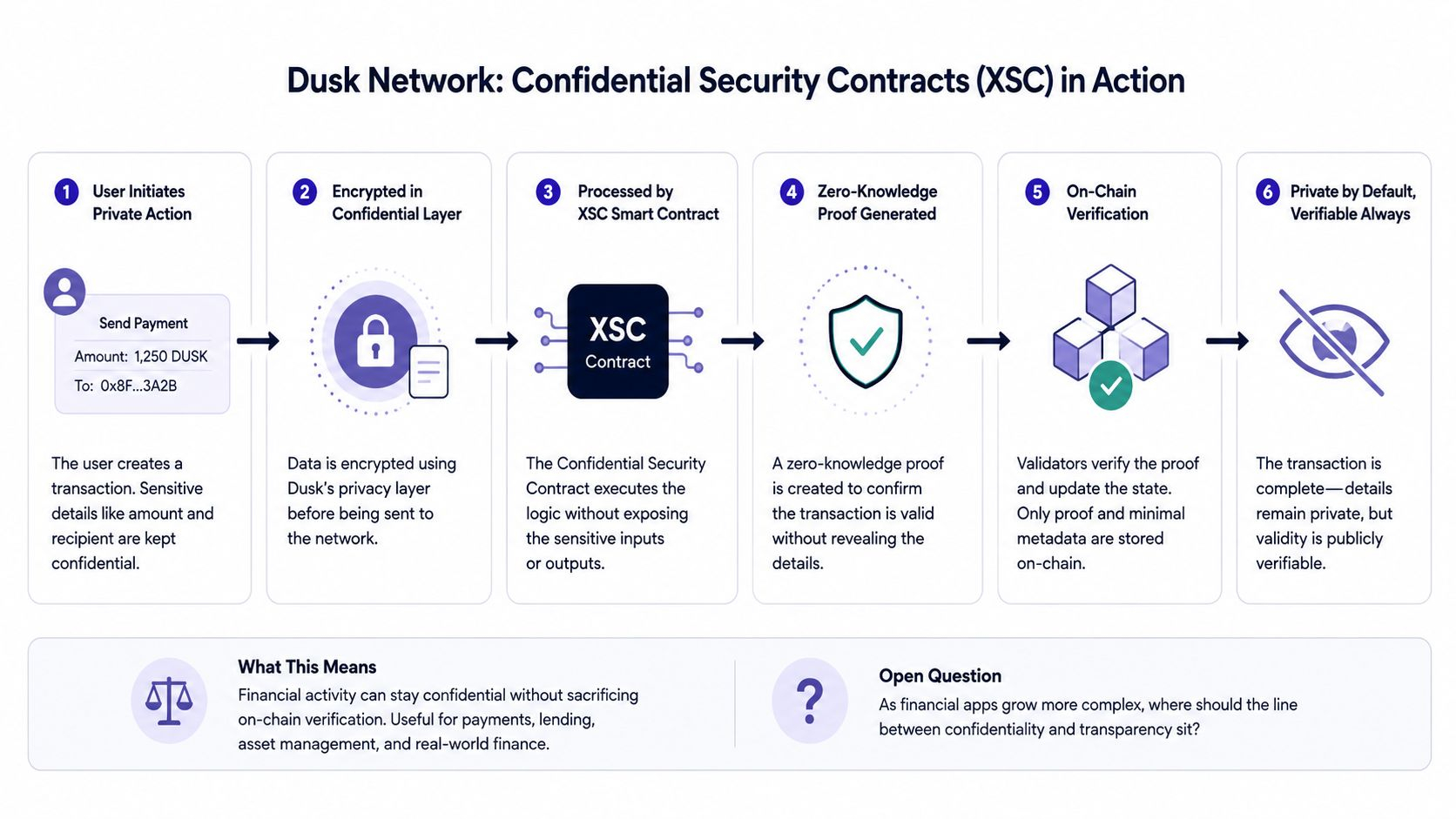
I didn’t really think about Dusk’s privacy design this way at first. I assumed the main idea was simply to keep financial activity away from public eyes. But after spending more time with the Confidential Security Contract approach, I started looking at the problem a little differently.
What interests me is that confidentiality is considered as part of the contract itself. In a lot of DeFi, you get used to everything being visible: balances, transactions, positions, and interactions can all leave a pretty clear trail. That transparency has its benefits, but it also feels strange when the application is supposed to handle information that people normally expect to keep private.
With Dusk, the interesting part is the attempt to make smart contracts work with confidential information without giving up their ability to process financial logic. That sounds like a small design choice, but I think it could matter quite a bit for real financial applications.
I’m still cautious about it, though. A good privacy model on paper is one thing; making it simple enough for developers and understandable enough for ordinary users is another. That part probably deserves more attention than the usual crypto headlines give it.
For me, the bigger question is pretty simple: can Dusk make confidential transactions feel normal rather than something users have to consciously think about?
@Dusk $DUSK #dusk
What interests me is that confidentiality is considered as part of the contract itself. In a lot of DeFi, you get used to everything being visible: balances, transactions, positions, and interactions can all leave a pretty clear trail. That transparency has its benefits, but it also feels strange when the application is supposed to handle information that people normally expect to keep private.
With Dusk, the interesting part is the attempt to make smart contracts work with confidential information without giving up their ability to process financial logic. That sounds like a small design choice, but I think it could matter quite a bit for real financial applications.
I’m still cautious about it, though. A good privacy model on paper is one thing; making it simple enough for developers and understandable enough for ordinary users is another. That part probably deserves more attention than the usual crypto headlines give it.
For me, the bigger question is pretty simple: can Dusk make confidential transactions feel normal rather than something users have to consciously think about?
@Dusk $DUSK #dusk
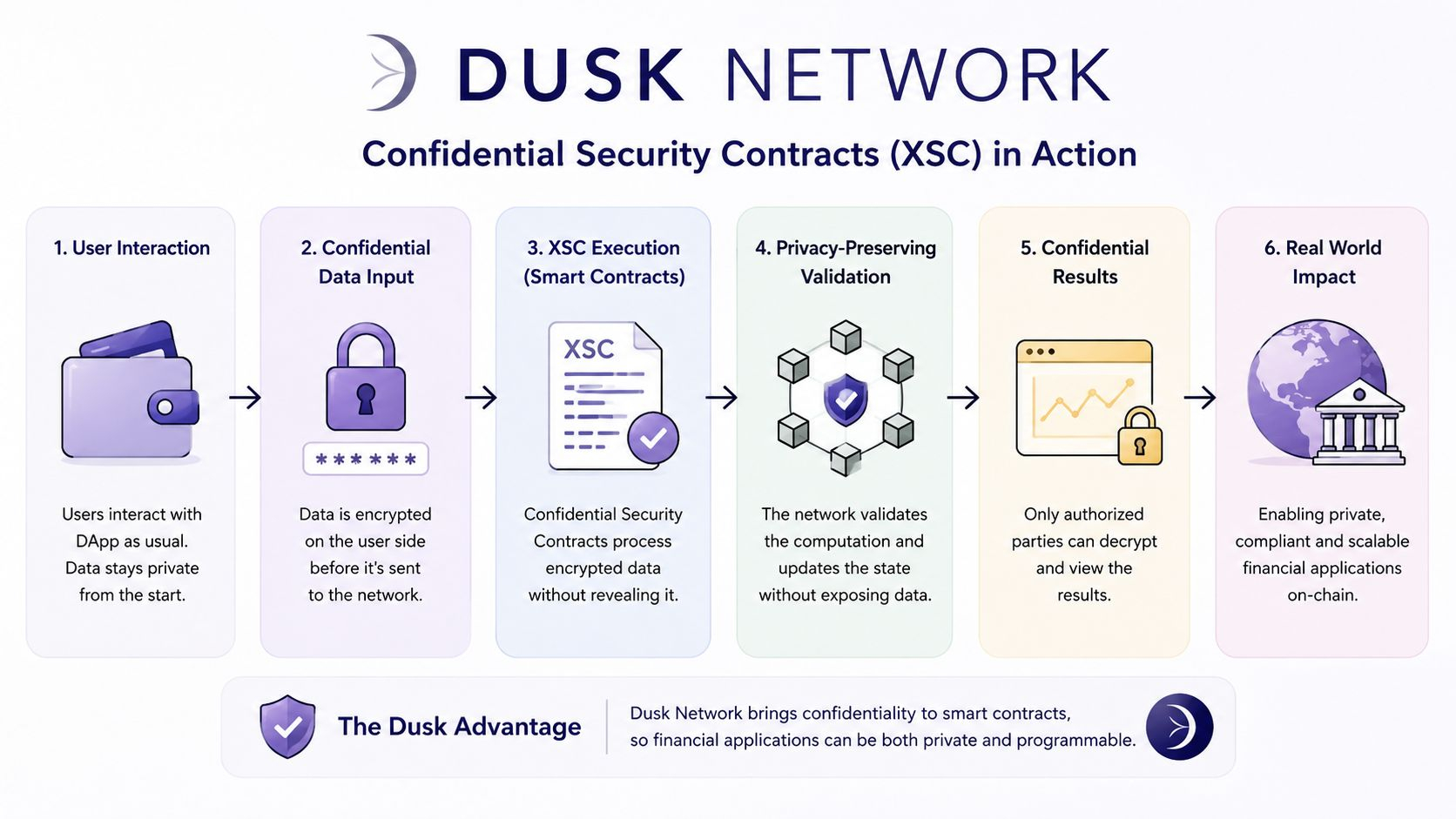
I was looking at Dusk Network again, and I kept coming back to one small design choice: privacy is built into the way its contracts are meant to work, rather than being treated like an extra layer added later.
That sounds simple, but I think it matters more when you compare it with the DeFi experience most of us are used to. On many networks, transparency is almost unavoidable. You can watch wallets move funds, inspect transactions, and often piece together quite a lot about how someone is using a protocol. That openness has its benefits, but I’m not sure it always fits financial applications.
What caught my attention with Dusk is the Confidential Security Contract, or XSC, approach. The idea is to let smart contracts handle sensitive information without making everything publicly visible in the same way. I initially saw this as just another privacy feature, but after thinking about it, I see the bigger point: some financial activity probably works better when not every detail is exposed to everyone.
There’s still a practical question, though. Privacy can sound impressive until you look at how easily people can actually use it and whether developers build around it.
For me, that’s the part worth watching. Can Dusk make confidentiality feel normal rather than complicated for financial applications?
@Dusk $DUSK #dusk
That sounds simple, but I think it matters more when you compare it with the DeFi experience most of us are used to. On many networks, transparency is almost unavoidable. You can watch wallets move funds, inspect transactions, and often piece together quite a lot about how someone is using a protocol. That openness has its benefits, but I’m not sure it always fits financial applications.
What caught my attention with Dusk is the Confidential Security Contract, or XSC, approach. The idea is to let smart contracts handle sensitive information without making everything publicly visible in the same way. I initially saw this as just another privacy feature, but after thinking about it, I see the bigger point: some financial activity probably works better when not every detail is exposed to everyone.
There’s still a practical question, though. Privacy can sound impressive until you look at how easily people can actually use it and whether developers build around it.
For me, that’s the part worth watching. Can Dusk make confidentiality feel normal rather than complicated for financial applications?
@Dusk $DUSK #dusk
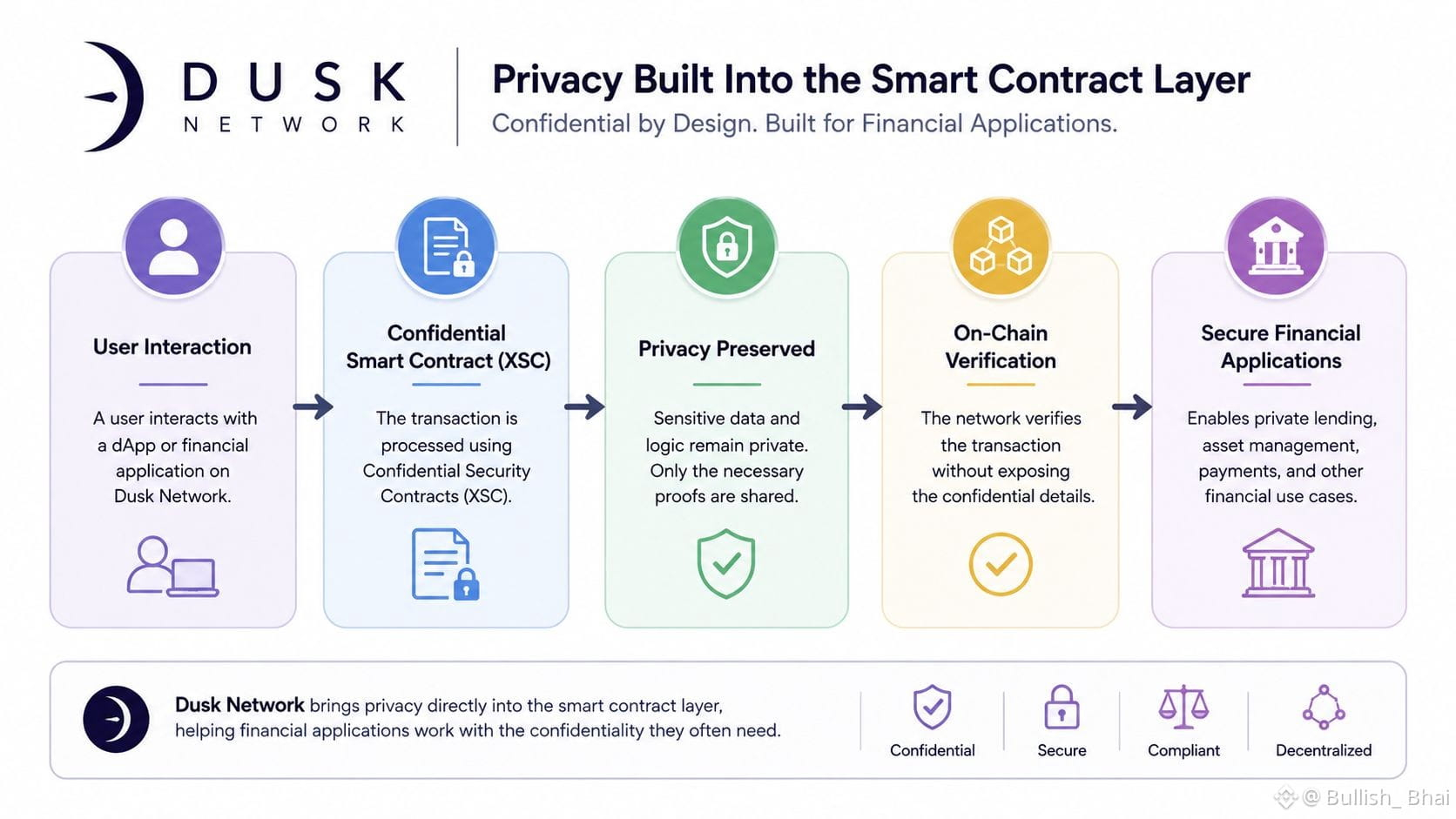
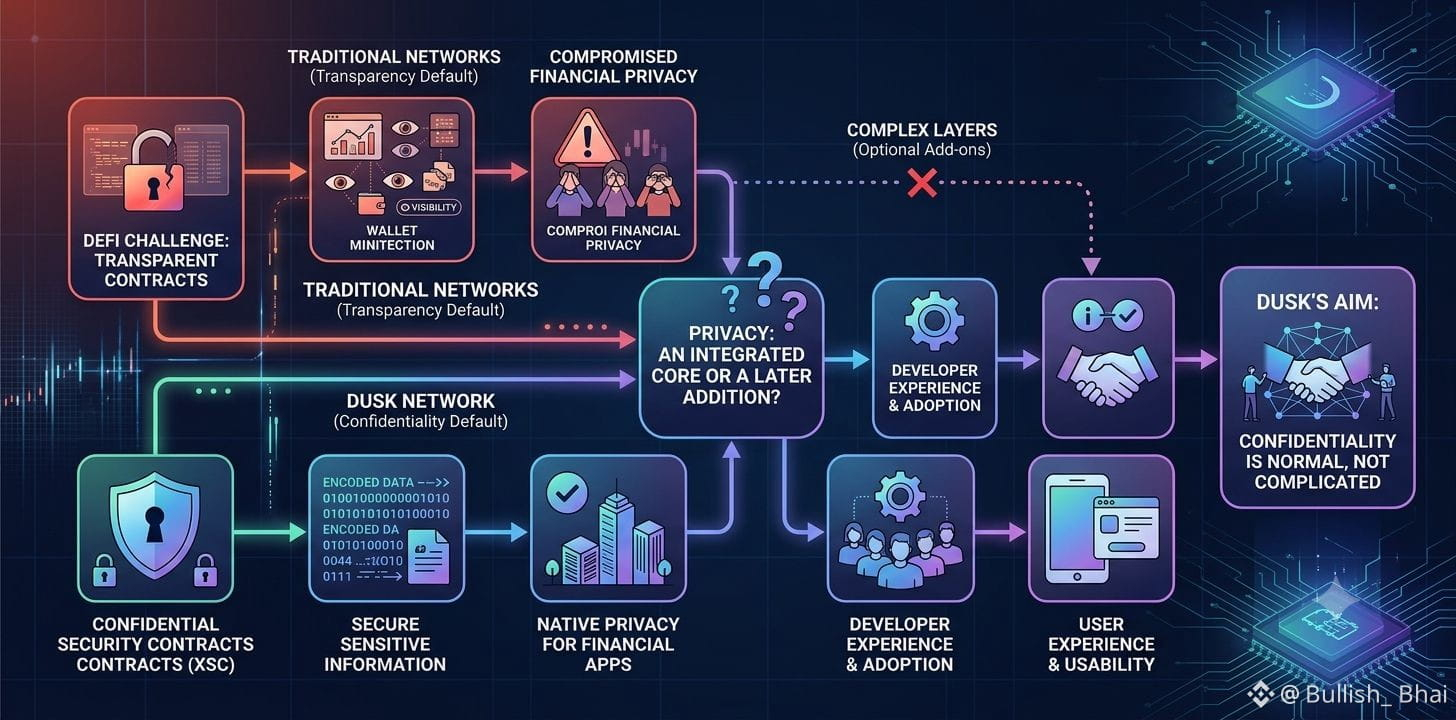
I was looking at Dusk Network again, and one thing I kept coming back to was its Confidential Security Contract (XSC) design.
At first, I saw it as just another way of adding privacy to a blockchain. But the more I thought about it, the more practical the idea started to feel. Most DeFi activity is built around being completely visible. Wallets, transactions, balances, and contract activity are there for anyone to inspect. That’s great for transparency, but I’m not sure every financial application should work that way.
What caught my attention with Dusk is that the privacy is tied directly into the smart contract side. The goal isn’t simply to hide activity. It’s about allowing a contract to work with confidential information while still giving the network enough proof to verify what happened.
I do think there’s a catch, though. Privacy usually comes with extra complexity, and that can become a problem if developers struggle to build with it or users don’t understand what’s happening behind the scenes.
So I’m less interested in the word “privacy” itself and more interested in whether Dusk can make confidential financial activity feel normal rather than complicated.
That, to me, is the part worth watching. Can privacy become something users barely notice instead of another layer they have to think about?
@Dusk $DUSK #dusk
At first, I saw it as just another way of adding privacy to a blockchain. But the more I thought about it, the more practical the idea started to feel. Most DeFi activity is built around being completely visible. Wallets, transactions, balances, and contract activity are there for anyone to inspect. That’s great for transparency, but I’m not sure every financial application should work that way.
What caught my attention with Dusk is that the privacy is tied directly into the smart contract side. The goal isn’t simply to hide activity. It’s about allowing a contract to work with confidential information while still giving the network enough proof to verify what happened.
I do think there’s a catch, though. Privacy usually comes with extra complexity, and that can become a problem if developers struggle to build with it or users don’t understand what’s happening behind the scenes.
So I’m less interested in the word “privacy” itself and more interested in whether Dusk can make confidential financial activity feel normal rather than complicated.
That, to me, is the part worth watching. Can privacy become something users barely notice instead of another layer they have to think about?
@Dusk $DUSK #dusk
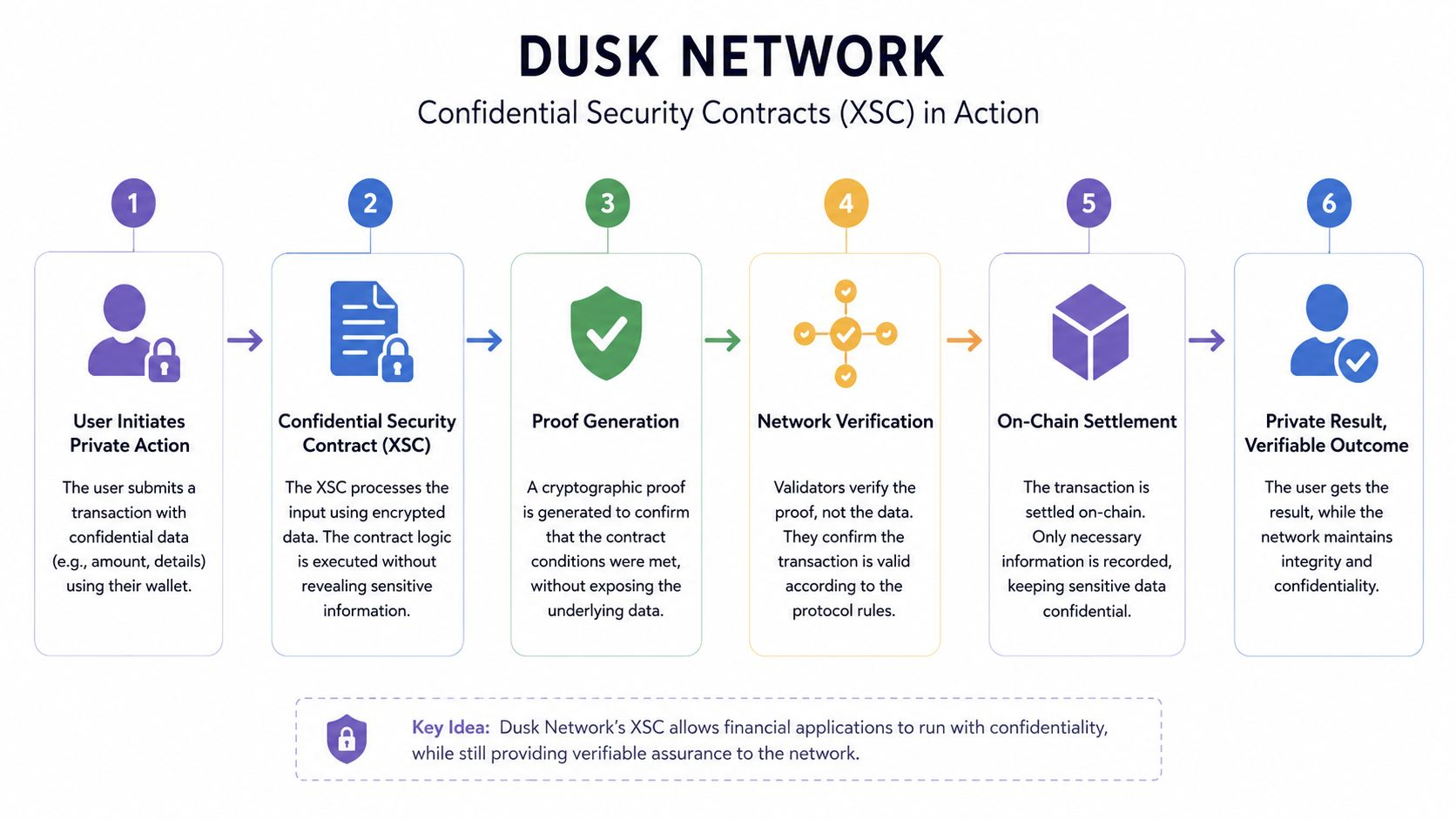
I’m watching $TUT closely here, and the structure looks more bearish than bullish after the recent rejection from the higher resistance zone. Price pushed strongly upward but failed to hold those highs, which tells me sellers are still active around the upper range.
EP (Entry Price): $0.0605 – $0.0620
I’d be looking for weakness around this zone rather than chasing a move. If $TUT loses the $0.060 area with a clean breakdown, the next important liquidity zones come in around $0.0570 and $0.0530.
TP1: $0.0570
TP2: $0.0530
TP3: $0.0495
SL (Stop Loss): $0.0668
The short-term trend is still under pressure, with lower resistance holding and momentum fading after the recent rejection.
Market structure remains bearish unless price can reclaim $0.0668–$0.0680 and hold above it.
As long as that resistance stays intact, a move toward the lower liquidity zones remains the cleaner setup.
$TUT
EP (Entry Price): $0.0605 – $0.0620
I’d be looking for weakness around this zone rather than chasing a move. If $TUT loses the $0.060 area with a clean breakdown, the next important liquidity zones come in around $0.0570 and $0.0530.
TP1: $0.0570
TP2: $0.0530
TP3: $0.0495
SL (Stop Loss): $0.0668
The short-term trend is still under pressure, with lower resistance holding and momentum fading after the recent rejection.
Market structure remains bearish unless price can reclaim $0.0668–$0.0680 and hold above it.
As long as that resistance stays intact, a move toward the lower liquidity zones remains the cleaner setup.
$TUT
🟢 Bullish
62%
🔴 Bearish
38%
🟡 Waiting for confirmation
0%
26 votes • Voting closed
Log in to explore more content