
#cryptoliquidations
cryptoliquidations
223,029 views
669 Discussing
Hot
Latest

·
--
See translation
🚨 $KORU UNDER BEARISH PRESSURE! $75.9K IN LONGS WIPED OUT! 🔴
The latest liquidation activity in $KORU signals that bullish traders are facing serious pressure. A total of $75,900 in long positions was liquidated at $6.780, highlighting the risk of holding leveraged positions during volatile price movements.
📉 What Does This Signal?
This liquidation suggests buyers may be losing control around the $6.78 level. If selling pressure continues, KORU could face another downside move as overleveraged traders exit their positions.
🎯 My Market Outlook:
- Bearish Scenario: Continued weakness could trigger another wave of long liquidations.
- Recovery Scenario: A strong bounce and sustained buying volume may help KORU regain bullish momentum.
- Key Watchpoint: Monitor the $6.78 liquidation zone for signs of rejection or recovery.
⚡ Professional Take: I would remain cautious on fresh long entries until buyers demonstrate convincing strength. A failed recovery could open the door to further downside volatility.
💬 Is KORU preparing for another drop, or will bulls fight back?
Follow for more real-time liquidation alerts and market insights.
#KORU
#CryptoLiquidations
#JobsReportRaisesHikeOdds #AnthropicIPOValuationDoubts #USMidtermsCouldShakeUpUS-IranTies
{etf_us}(KORU.ETF)
🚨 $KORU UNDER BEARISH PRESSURE! $75.9K IN LONGS WIPED OUT! 🔴
The latest liquidation activity in $KORU signals that bullish traders are facing serious pressure. A total of $75,900 in long positions was liquidated at $6.780, highlighting the risk of holding leveraged positions during volatile price movements.
📉 What Does This Signal?
This liquidation suggests buyers may be losing control around the $6.78 level. If selling pressure continues, KORU could face another downside move as overleveraged traders exit their positions.
🎯 My Market Outlook:
- Bearish Scenario: Continued weakness could trigger another wave of long liquidations.
- Recovery Scenario: A strong bounce and sustained buying volume may help KORU regain bullish momentum.
- Key Watchpoint: Monitor the $6.78 liquidation zone for signs of rejection or recovery.
⚡ Professional Take: I would remain cautious on fresh long entries until buyers demonstrate convincing strength. A failed recovery could open the door to further downside volatility.
💬 Is KORU preparing for another drop, or will bulls fight back?
Follow for more real-time liquidation alerts and market insights.
#KORU
#CryptoLiquidations
#JobsReportRaisesHikeOdds #AnthropicIPOValuationDoubts #USMidtermsCouldShakeUpUS-IranTies
KORU+10.00%
KORUETF+7.75%
15


Article
See translation
$1 Billion in Crypto Longs Liquidated: Why Were Bullish Traders Caught Off Guard?🚨Bitcoin Falls Below $76,000 as a Wall Street Tech Selloff Triggers Massive Crypto Liquidations. What Forced Selling Reveals About Market Sentiment and the Next BTC Move.
⚠️ More than $950 million in bullish crypto positions were wiped out in just 24 hours. The sudden reversal caught thousands of traders on the wrong side of the market.
Bitcoin had recently climbed above $80,000, giving bullish traders fresh confidence that the market could be preparing for another recovery.
But that optimism did not last.
A sharp selloff across Wall Street technology stocks spilled into crypto markets, pushing Bitcoin below $76,000 and triggering a massive wave of forced liquidations.
The result? More than $1 billion in leveraged crypto positions disappeared.
And the most important detail is that bullish traders suffered the overwhelming majority of the losses.
So, what actually happened, why were long positions hit so hard, and could this pressure lead to another difficult period for Bitcoin?
Let's break down the numbers.
📊 1. What Happened?
According to CoinGlass data reported by Crypto. News, total crypto liquidations reached approximately $1.08 billion over 24 hours.
The breakdown reveals just how heavily the market was positioned for higher prices.
🔴 Long liquidations: $954.38 million
🟢 Short liquidations: $127.30 million
📉 Total liquidations: $1.08 billion
👥 Traders liquidated: 210,326
Long positions accounted for approximately 88.2% of the total.
In simple terms, traders betting that cryptocurrency prices would rise suffered far greater losses than those betting on a decline.
This is what makes the event particularly important.
The market was heavily positioned for a recovery, but when prices reversed, leveraged bullish positions became vulnerable to forced closure.
₿ 2. Bitcoin Falls Below $76,000
Bitcoin was one of the major assets caught in the selloff.
According to the reported market snapshot, BTC fell approximately 5.8% over 24 hours, trading around $75,954 after losing the $80,000 level.
Other major cryptocurrencies also faced significant pressure.
📉 Bitcoin: Down approximately 5.8%
📉 Ethereum: Down approximately 7.5%
📉 Solana: Down approximately 7.9%
The broader crypto market also lost ground, with total market capitalization falling to approximately $2.66 trillion in the reported snapshot.
The speed of the reversal shows how quickly market confidence can change when leveraged positions are crowded on one side.
🏦 3. Why Did Wall Street's Tech Selloff Affect Crypto?
The pressure did not begin with Bitcoin alone.
US technology and semiconductor stocks experienced a sharp decline, as investors reassessed expectations surrounding artificial intelligence spending, data center expansion and future returns on major technology investments.
The Nasdaq and semiconductor stocks suffered substantial losses.
That weakness spread into crypto markets as investors reduced exposure to riskier assets.
Why does this matter?
Bitcoin increasingly reacts to broader financial market sentiment. When investors become cautious about technology stocks and other risk assets, cryptocurrency markets can also face selling pressure.
The connection is particularly important during periods when traders are already using significant leverage.
A decline in market confidence can quickly turn into forced selling.
🔥 4. How Leverage Made the Selloff Worse
This is where the situation becomes particularly interesting.
A trader using leverage does not need to lose the entire value of a position before an exchange can close it.
When the market moves against a leveraged position and the available margin becomes insufficient, the position can be automatically liquidated.
Imagine traders opening leveraged Bitcoin positions because they expect BTC to move above $80,000.
Instead, Bitcoin reverses and falls sharply.
As prices decline, some traders reach their liquidation levels. Their positions are forcibly closed, adding further selling pressure to the market.
This can create a chain reaction:
Bitcoin begins falling.Leveraged long positions approach liquidation levels.Exchanges automatically close vulnerable positions.Forced selling adds pressure to prices.More leveraged positions become exposed.
This is why a relatively sudden price decline can turn into a much larger liquidation event.
The $1.08 billion figure reflects the scale of forced position closures, not simply the amount of money investors voluntarily decided to sell.
📉 5. Which Crypto Traders Suffered the Most?
Bitcoin and Ethereum accounted for substantial portions of the reported liquidation activity.
According to the reported breakdown:
₿ Bitcoin: Approximately $280.65 million in liquidations.
🔷 Ethereum: Approximately $174.86 million.
☀️ Solana: Approximately $37.62 million.
Bitcoin positions were particularly exposed, with bullish positions accounting for approximately 89.4% of BTC liquidations.
Ethereum also saw a heavy concentration of liquidated long positions.
This suggests the selloff was not limited to one cryptocurrency. It affected traders across several major markets.
⚖️ 6. What Happens Next for Bitcoin?
After such a large liquidation event, the next question is whether the market can stabilize or whether further selling pressure is approaching.
There are two scenarios worth watching.
🟢 Bullish Scenario
If Bitcoin holds its recent lows and buying demand returns, the liquidation event could remove some excessive leverage from the market.
A recovery in trading activity, stronger spot demand and improving sentiment could help BTC attempt another move towards $80,000.
However, a sustainable recovery would need more than short covering. It would need genuine buying demand.
🔴 Bearish Scenario
If Bitcoin fails to hold the area around $75,000 and technology stocks remain under pressure, sellers could regain control.
Another decline could expose traders who are still using excessive leverage.
Weak market sentiment combined with continued forced selling could make a recovery more difficult.
The important thing is to watch how Bitcoin behaves around its recent lows rather than assuming that one liquidation event marks the bottom.
👀 7. Three Signals Traders Should Watch
Before making assumptions about Bitcoin's next move, keep an eye on these three indicators:
1. Bitcoin Price Action
Can BTC recover above $76,000 and eventually reclaim $80,000, or does selling pressure remain dominant?
2. Liquidation Activity
Are large, long liquidations continuing, or has excessive leverage been reduced?
3. Wall Street Technology Stocks
Does the technology sector stabilize, or does further weakness continue affecting broader risk sentiment?
Together, these indicators can help traders understand whether the market is beginning to recover or remains vulnerable to another decline.
💡 Key Takeaway
The $1.08 billion liquidation event is a reminder of how quickly confidence can disappear in a leveraged market.
Bitcoin's fall below $76,000 did not happen in isolation. Weakness across technology stocks, changing risk sentiment and heavily positioned bullish traders all contributed to the pressure.
But there is one important distinction: a liquidation event does not automatically mean the market has reached its bottom.
The next move will depend on whether genuine buying demand returns and whether Bitcoin can regain important price levels.
For now, traders should pay attention to liquidity, leverage and market behavior rather than chasing every sudden price movement.
⚠️ Disclaimer: This article is for educational and informational purposes only. It is not financial or investment advice. Cryptocurrency markets involve significant risk. Always conduct your own research before making investment decisions.
#BinanceSquare #Bitcoin #CryptoLiquidations #CryptoMarket #BTC
{spot}(BTCUSDT)
$1 Billion in Crypto Longs Liquidated: Why Were Bullish Traders Caught Off Guard?
🚨Bitcoin Falls Below $76,000 as a Wall Street Tech Selloff Triggers Massive Crypto Liquidations. What Forced Selling Reveals About Market Sentiment and the Next BTC Move.
⚠️ More than $950 million in bullish crypto positions were wiped out in just 24 hours. The sudden reversal caught thousands of traders on the wrong side of the market.
Bitcoin had recently climbed above $80,000, giving bullish traders fresh confidence that the market could be preparing for another recovery.
But that optimism did not last.
A sharp selloff across Wall Street technology stocks spilled into crypto markets, pushing Bitcoin below $76,000 and triggering a massive wave of forced liquidations.
The result? More than $1 billion in leveraged crypto positions disappeared.
And the most important detail is that bullish traders suffered the overwhelming majority of the losses.
So, what actually happened, why were long positions hit so hard, and could this pressure lead to another difficult period for Bitcoin?
Let's break down the numbers.
📊 1. What Happened?
According to CoinGlass data reported by Crypto. News, total crypto liquidations reached approximately $1.08 billion over 24 hours.
The breakdown reveals just how heavily the market was positioned for higher prices.
🔴 Long liquidations: $954.38 million
🟢 Short liquidations: $127.30 million
📉 Total liquidations: $1.08 billion
👥 Traders liquidated: 210,326
Long positions accounted for approximately 88.2% of the total.
In simple terms, traders betting that cryptocurrency prices would rise suffered far greater losses than those betting on a decline.
This is what makes the event particularly important.
The market was heavily positioned for a recovery, but when prices reversed, leveraged bullish positions became vulnerable to forced closure.
₿ 2. Bitcoin Falls Below $76,000
Bitcoin was one of the major assets caught in the selloff.
According to the reported market snapshot, BTC fell approximately 5.8% over 24 hours, trading around $75,954 after losing the $80,000 level.
Other major cryptocurrencies also faced significant pressure.
📉 Bitcoin: Down approximately 5.8%
📉 Ethereum: Down approximately 7.5%
📉 Solana: Down approximately 7.9%
The broader crypto market also lost ground, with total market capitalization falling to approximately $2.66 trillion in the reported snapshot.
The speed of the reversal shows how quickly market confidence can change when leveraged positions are crowded on one side.
🏦 3. Why Did Wall Street's Tech Selloff Affect Crypto?
The pressure did not begin with Bitcoin alone.
US technology and semiconductor stocks experienced a sharp decline, as investors reassessed expectations surrounding artificial intelligence spending, data center expansion and future returns on major technology investments.
The Nasdaq and semiconductor stocks suffered substantial losses.
That weakness spread into crypto markets as investors reduced exposure to riskier assets.
Why does this matter?
Bitcoin increasingly reacts to broader financial market sentiment. When investors become cautious about technology stocks and other risk assets, cryptocurrency markets can also face selling pressure.
The connection is particularly important during periods when traders are already using significant leverage.
A decline in market confidence can quickly turn into forced selling.
🔥 4. How Leverage Made the Selloff Worse
This is where the situation becomes particularly interesting.
A trader using leverage does not need to lose the entire value of a position before an exchange can close it.
When the market moves against a leveraged position and the available margin becomes insufficient, the position can be automatically liquidated.
Imagine traders opening leveraged Bitcoin positions because they expect BTC to move above $80,000.
Instead, Bitcoin reverses and falls sharply.
As prices decline, some traders reach their liquidation levels. Their positions are forcibly closed, adding further selling pressure to the market.
This can create a chain reaction:
Bitcoin begins falling.Leveraged long positions approach liquidation levels.Exchanges automatically close vulnerable positions.Forced selling adds pressure to prices.More leveraged positions become exposed.
This is why a relatively sudden price decline can turn into a much larger liquidation event.
The $1.08 billion figure reflects the scale of forced position closures, not simply the amount of money investors voluntarily decided to sell.
📉 5. Which Crypto Traders Suffered the Most?
Bitcoin and Ethereum accounted for substantial portions of the reported liquidation activity.
According to the reported breakdown:
₿ Bitcoin: Approximately $280.65 million in liquidations.
🔷 Ethereum: Approximately $174.86 million.
☀️ Solana: Approximately $37.62 million.
Bitcoin positions were particularly exposed, with bullish positions accounting for approximately 89.4% of BTC liquidations.
Ethereum also saw a heavy concentration of liquidated long positions.
This suggests the selloff was not limited to one cryptocurrency. It affected traders across several major markets.
⚖️ 6. What Happens Next for Bitcoin?
After such a large liquidation event, the next question is whether the market can stabilize or whether further selling pressure is approaching.
There are two scenarios worth watching.
🟢 Bullish Scenario
If Bitcoin holds its recent lows and buying demand returns, the liquidation event could remove some excessive leverage from the market.
A recovery in trading activity, stronger spot demand and improving sentiment could help BTC attempt another move towards $80,000.
However, a sustainable recovery would need more than short covering. It would need genuine buying demand.
🔴 Bearish Scenario
If Bitcoin fails to hold the area around $75,000 and technology stocks remain under pressure, sellers could regain control.
Another decline could expose traders who are still using excessive leverage.
Weak market sentiment combined with continued forced selling could make a recovery more difficult.
The important thing is to watch how Bitcoin behaves around its recent lows rather than assuming that one liquidation event marks the bottom.
👀 7. Three Signals Traders Should Watch
Before making assumptions about Bitcoin's next move, keep an eye on these three indicators:
1. Bitcoin Price Action
Can BTC recover above $76,000 and eventually reclaim $80,000, or does selling pressure remain dominant?
2. Liquidation Activity
Are large, long liquidations continuing, or has excessive leverage been reduced?
3. Wall Street Technology Stocks
Does the technology sector stabilize, or does further weakness continue affecting broader risk sentiment?
Together, these indicators can help traders understand whether the market is beginning to recover or remains vulnerable to another decline.
💡 Key Takeaway
The $1.08 billion liquidation event is a reminder of how quickly confidence can disappear in a leveraged market.
Bitcoin's fall below $76,000 did not happen in isolation. Weakness across technology stocks, changing risk sentiment and heavily positioned bullish traders all contributed to the pressure.
But there is one important distinction: a liquidation event does not automatically mean the market has reached its bottom.
The next move will depend on whether genuine buying demand returns and whether Bitcoin can regain important price levels.
For now, traders should pay attention to liquidity, leverage and market behavior rather than chasing every sudden price movement.
⚠️ Disclaimer: This article is for educational and informational purposes only. It is not financial or investment advice. Cryptocurrency markets involve significant risk. Always conduct your own research before making investment decisions.
#BinanceSquare #Bitcoin #CryptoLiquidations #CryptoMarket #BTC
1
1
155


·
--
The number of liquidations in the crypto market has exceeded $1 billion for the first time in history, according to a report by Decrypt. This is partly due to the drop in Bitcoin’s price, which has reached its lowest level in 11 weeks.
This situation is concerning for traders, as mass liquidations can affect cryptocurrency prices and cause greater market volatility. In addition, it may lead to a decline in investors’ confidence in the financial system.
It is important to keep an eye on these changes and evaluate our investment strategies. Do you think this trend of mass liquidations will affect the stability of the crypto market in the long term?
#CryptoLiquidations #BitcoinPrice #MarketVolatility #TradingStrategies #CryptoMarket
1
2.1k

See translation
A hotter-than-expected US PPI inflation print just sparked a brutal $562M liquidation cascade across the market, according to Bitcoin.com News, as traders price in surging rate hike odds.
The resulting macro pressure triggered heavy selling across key assets:
• BTC tapped a 24h low of $76,676.07 before hovering near $77,322.93 (-1.85%).
• SOL cracked psychological support, sliding -3.45% to $99.97.
• DOGE led major pullbacks, down -5.85% to $0.08389.
• BNB dropped -3.86% to $712.79.
Bitcoin's immediate floor sits at the $76,676 zone. If bulls fail to defend this liquidity pocket, expect extended chop across altcoins before any meaningful reversal.
Not financial advice.
Source: https://news.bitcoin.com/market-updates/562m-liquidation-surge-hits-crypto-market-after-ppi-inflation-jump/
#BTC #CryptoLiquidations #MacroNews #Altcoins

153

See translation
#$1.5BInLeveragedCryptoBetsLiquidated
⚠️ $1.5B in Leveraged Crypto Bets Liquidated: What Triggered the Market Shakeout? 📉
Imagine watching a winning trade turn into a forced exit within minutes. That is the brutal reality of leverage when the market suddenly moves against you.
Crypto markets saw approximately $1.53 billion in liquidations over 24 hours, with long positions accounting for around 83.8%, according to CoinGlass data reported on October 30.
The pressure followed a sharp sell-off after Binance disclosed a major security incident. Bitcoin briefly fell toward $76,460, while Ether slipped below $2,200. Both later began recovering.
The important detail is not just the size of the losses. It is how leverage amplified the move. When prices fall, exchanges automatically close under-collateralized positions. Those forced exits can create additional selling pressure, pushing prices lower and triggering even more liquidations.
Bitcoin and Ethereum recorded the largest liquidation amounts, followed by Solana and XRP. Binance accounted for nearly half of all reported forced closures.
But the story did not end with long traders. As prices rebounded, short positions also started getting liquidated. That shows how quickly leverage can punish both sides when volatility rises.
My takeaway: liquidation spikes reveal where traders were overexposed, not where prices must go next. Spot demand, market confidence, and liquidity will matter more than the headline number.
In leveraged markets, being right about direction is not enough. Surviving the volatility matters just as much.
Do you think this was a temporary leverage flush, or could market confidence remain under pressure?
Disclaimer: This is informational content, not financial advice. Always manage risk before trading.
#CryptoLiquidations #Bitcoin #GrowWithSAC $BTC $ETH $SOL

1
720

See translation
### $1.5 Billion in Leveraged Crypto Bets Liquidated: A Major Wake-Up Call for Traders
The crypto market has once again highlighted the risks of leveraged trading, with approximately $1.5 billion in leveraged crypto positions reportedly liquidated.
This massive liquidation event shows how quickly market conditions can change, especially for traders using high leverage.
### Why Are Liquidations Happening?
Leveraged trading allows traders to control larger positions with relatively small amounts of capital. However, it also increases risk.
When prices move sharply against leveraged positions, exchanges may automatically close those positions to prevent further losses.
Several factors can contribute to large liquidation events:
* Sudden market volatility.
* Excessive leverage and overconfidence.
* Unexpected price movements.
* Weak risk management.
* Crowded long or short positions.
### What Does This Mean for the Crypto Market?
Large-scale liquidations can create additional buying or selling pressure, potentially increasing volatility.
However, liquidations do not automatically mean the market will move in one direction. Traders should watch Bitcoin's price action, trading volume, market structure, and important support and resistance levels before making decisions.
### My Market Perspective
I believe this event is an important reminder that protecting capital should always come before chasing profits.
High leverage may increase potential returns, but it can also wipe out trading capital very quickly. Spot trading and disciplined risk management can be more suitable for those who prefer to avoid liquidation risk.
Final Thought:
In crypto, surviving the market is more important than making quick profits. Patience, education, and risk management are essential for long-term growth.
What do you think? Is excessive leverage one of the biggest reasons traders lose money in crypto?
Share your thoughts below!
#CryptoMarket #Bitcoin #CryptoLiquidations #TradingRisk #CryptoTrading #$1.5BInLeveragedCryptoBetsLiquidated
{spot}(BTCUSDT)
### $1.5 Billion in Leveraged Crypto Bets Liquidated: A Major Wake-Up Call for Traders
The crypto market has once again highlighted the risks of leveraged trading, with approximately $1.5 billion in leveraged crypto positions reportedly liquidated.
This massive liquidation event shows how quickly market conditions can change, especially for traders using high leverage.
### Why Are Liquidations Happening?
Leveraged trading allows traders to control larger positions with relatively small amounts of capital. However, it also increases risk.
When prices move sharply against leveraged positions, exchanges may automatically close those positions to prevent further losses.
Several factors can contribute to large liquidation events:
* Sudden market volatility.
* Excessive leverage and overconfidence.
* Unexpected price movements.
* Weak risk management.
* Crowded long or short positions.
### What Does This Mean for the Crypto Market?
Large-scale liquidations can create additional buying or selling pressure, potentially increasing volatility.
However, liquidations do not automatically mean the market will move in one direction. Traders should watch Bitcoin's price action, trading volume, market structure, and important support and resistance levels before making decisions.
### My Market Perspective
I believe this event is an important reminder that protecting capital should always come before chasing profits.
High leverage may increase potential returns, but it can also wipe out trading capital very quickly. Spot trading and disciplined risk management can be more suitable for those who prefer to avoid liquidation risk.
Final Thought:
In crypto, surviving the market is more important than making quick profits. Patience, education, and risk management are essential for long-term growth.
What do you think? Is excessive leverage one of the biggest reasons traders lose money in crypto?
Share your thoughts below!
#CryptoMarket #Bitcoin #CryptoLiquidations #TradingRisk #CryptoTrading #$1.5BInLeveragedCryptoBetsLiquidated

73

·
--
See translation
🚨 $1.5 BILLION WIPED OUT IN CRYPTO LIQUIDATIONS!
Crypto traders just experienced a brutal 24 hours.
According to CoinGlass data reported by CoinDesk, approximately $1.53 billion in leveraged positions were liquidated.
📉 Around 83.8% were LONG positions — traders betting on higher prices.
The biggest question now is whether this market can recover or if more volatility is coming.
👀 I'm watching:
• $BTC
{spot}(BTCUSDT)
{spot}(ETHUSDT)
{spot}(XRPUSDT)
— recovery momentum
• $ETH — buyer strength
• $XRP — reaction to market volatility
⚠️ High leverage can turn a small price move into a massive loss.
💬 Do you think this is a temporary market shakeout or the start of a deeper correction?
#CryptoLiquidations #CryptoMarket #TradingRisk
🚨 $1.5 BILLION WIPED OUT IN CRYPTO LIQUIDATIONS!
Crypto traders just experienced a brutal 24 hours.
According to CoinGlass data reported by CoinDesk, approximately $1.53 billion in leveraged positions were liquidated.
📉 Around 83.8% were LONG positions — traders betting on higher prices.
The biggest question now is whether this market can recover or if more volatility is coming.
👀 I'm watching:
• $BTC
— recovery momentum
• $ETH — buyer strength
• $XRP — reaction to market volatility
⚠️ High leverage can turn a small price move into a massive loss.
💬 Do you think this is a temporary market shakeout or the start of a deeper correction?
#CryptoLiquidations #CryptoMarket #TradingRisk

96

·
--
See translation
$1.53B in Leveraged Crypto Positions Liquidated: What Happened? 📉
The crypto market experienced a major liquidation wave, with approximately $1.53 billion in leveraged positions forcibly closed within 24 hours, according to CoinGlass data reported on October 30, 2026.
Key Market Statistics:
Total liquidations: $1.53 billion
Long positions: 83.8% (approximately $1.29 billion)
Bitcoin dropped to around $76,460 before recovering toward $78,500.
Binance recorded approximately $754.6 million in liquidations.
Why Did This Happen?
Leveraged trading allows traders to control larger positions using a smaller amount of collateral. However, when the market moves against their positions, exchanges can automatically close those trades to prevent further losses.
The recent selling pressure followed a reported security incident involving Binance, adding to market uncertainty.
What Happened Next?
As prices started recovering, short sellers also faced liquidations. Closing short positions requires buying back assets, which can create additional buying pressure and support a market rebound.
Important Takeaway:
The $1.53 billion figure represents the total value of forcibly closed positions, not the exact amount of money investors lost.
This event highlights the risks of excessive leverage and why risk management matters in volatile crypto markets.
Are we seeing the beginning of a recovery, or just a temporary market bounce?
#CryptoMarket #Bitcoin #Ethereum #CryptoLiquidations $BTC $AVGOB
{spot}(AVGOBUSDT)
{spot}(BTCUSDT)
$1.53B in Leveraged Crypto Positions Liquidated: What Happened? 📉
The crypto market experienced a major liquidation wave, with approximately $1.53 billion in leveraged positions forcibly closed within 24 hours, according to CoinGlass data reported on October 30, 2026.
Key Market Statistics:
Total liquidations: $1.53 billion
Long positions: 83.8% (approximately $1.29 billion)
Bitcoin dropped to around $76,460 before recovering toward $78,500.
Binance recorded approximately $754.6 million in liquidations.
Why Did This Happen?
Leveraged trading allows traders to control larger positions using a smaller amount of collateral. However, when the market moves against their positions, exchanges can automatically close those trades to prevent further losses.
The recent selling pressure followed a reported security incident involving Binance, adding to market uncertainty.
What Happened Next?
As prices started recovering, short sellers also faced liquidations. Closing short positions requires buying back assets, which can create additional buying pressure and support a market rebound.
Important Takeaway:
The $1.53 billion figure represents the total value of forcibly closed positions, not the exact amount of money investors lost.
This event highlights the risks of excessive leverage and why risk management matters in volatile crypto markets.
Are we seeing the beginning of a recovery, or just a temporary market bounce?
#CryptoMarket #Bitcoin #Ethereum #CryptoLiquidations $BTC $AVGOB

44

See translation
💥 $1.5B Leveraged Bets Wiped Out
Crypto markets saw roughly $1.5 billion in leveraged positions liquidated over 24 hours as Bitcoin dipped near $76,500 following a major Binance security incident. Long positions absorbed the bulk of the pain, with BTC and ETH accounting for more than half the total forced closures across exchanges.
Such cascades often clear excessive leverage and create cleaner positioning for the next move. Traders are watching the rebound closely as prices stabilize, reminding everyone that risk management remains the ultimate edge in volatile markets.
$BTC #CryptoLiquidations #Bitcoin #CoinVahini
1

·
--
See translation
💥 $1.5 BILLION LIQUIDATED IN 24 HOURS!
The crypto market just delivered a brutal lesson about leverage.
📉 Around $1.53 billion in crypto positions were liquidated.
🐂 Nearly $1.29 billion came from bullish traders betting on higher prices.
⚠️ Bitcoin's sharp drop triggered a wave of forced closures.
The lesson? Being bullish is not enough. Risk management matters more than leverage.
🔥 Let's debate:
What is more dangerous for a trader?
A) High leverage
B) Emotional trading
C) No stop-loss strategy
Drop your answer below! 👇
Follow BULLISH MIND — TRADE | ANALYZE | GROW
#bitcoin #CryptoLiquidations #LeverageTrading #BTC☀️ #CryptoNewsCommunity

35

See translation
🔥 $1.5 BILLION LIQUIDATED! CRYPTO TRADERS JUST GOT A MASSIVE WAKE-UP CALL!
The crypto market is experiencing a brutal sell-off, and leveraged traders are paying the price.
📉 THE LATEST MARKET SHOCK
According to CoinDesk's October 30 report:
🔴 BTC briefly approached $76,000.
🔴 ETH faced renewed selling pressure.
🔴 Around $1.5 BILLION in leveraged positions were liquidated.
🔴 Long traders suffered the biggest losses. 🔴 Binance's reported security incident intensified market uncertainty.
⚡ BUT THERE'S AN INTERESTING DEVELOPMENT!
While most major cryptocurrencies are struggling, HYPE is showing relative strength.
Intercontinental Exchange (NYSE's parent company) announced a partnership involving Hyperliquid-powered perpetual futures trading in the US, subject to regulatory approval.
📊 MY 3 MARKET SCENARIOS
🟢 Bullish: BTC reclaims $80K and buyers return.
🟡 Neutral: BTC consolidates while traders wait for clarity.
🔴 Bearish: Continued selling creates another wave of liquidations.
🎯 WHAT I'M WATCHING
• Bitcoin price recovery
• Ethereum strength
• HYPE momentum
• Exchange security updates
• Futures funding rates and open interest
💬 THE BIG QUESTION:
Is this a temporary market shakeout or the beginning of a deeper correction?
👇 Comment your opinion!
#BTC #ETH #HYPE #CryptoLiquidations #CryptoNews
Disclaimer: Educational market analysis only. Not financial advice. DYOR.
$BTC
{future}(BTCUSDT)
$ETH
{future}(ETHUSDT)
$HYPE
{future}(HYPEUSDT)
🔥 $1.5 BILLION LIQUIDATED! CRYPTO TRADERS JUST GOT A MASSIVE WAKE-UP CALL!
The crypto market is experiencing a brutal sell-off, and leveraged traders are paying the price.
📉 THE LATEST MARKET SHOCK
According to CoinDesk's October 30 report:
🔴 BTC briefly approached $76,000.
🔴 ETH faced renewed selling pressure.
🔴 Around $1.5 BILLION in leveraged positions were liquidated.
🔴 Long traders suffered the biggest losses. 🔴 Binance's reported security incident intensified market uncertainty.
⚡ BUT THERE'S AN INTERESTING DEVELOPMENT!
While most major cryptocurrencies are struggling, HYPE is showing relative strength.
Intercontinental Exchange (NYSE's parent company) announced a partnership involving Hyperliquid-powered perpetual futures trading in the US, subject to regulatory approval.
📊 MY 3 MARKET SCENARIOS
🟢 Bullish: BTC reclaims $80K and buyers return.
🟡 Neutral: BTC consolidates while traders wait for clarity.
🔴 Bearish: Continued selling creates another wave of liquidations.
🎯 WHAT I'M WATCHING
• Bitcoin price recovery
• Ethereum strength
• HYPE momentum
• Exchange security updates
• Futures funding rates and open interest
💬 THE BIG QUESTION:
Is this a temporary market shakeout or the beginning of a deeper correction?
👇 Comment your opinion!
#BTC #ETH #HYPE #CryptoLiquidations #CryptoNews
Disclaimer: Educational market analysis only. Not financial advice. DYOR.
$BTC
$ETH
$HYPE
205

·
--
See translation
#$1.5BInLeveragedCryptoBetsLiquidated #LSK
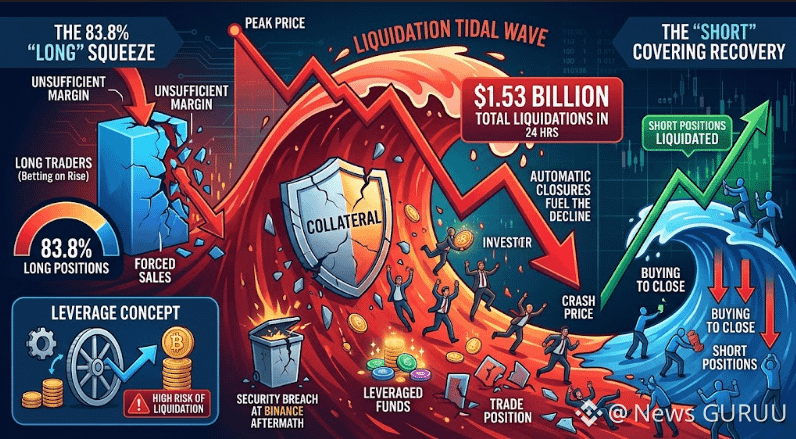
🚨 $1.53 BILLION IN CRYPTO LIQUIDATIONS!
📉 Crypto's market drop triggered massive liquidations over 24 hours, with 83.8% coming from long positions betting on rising prices.
⚙️ High leverage amplified the sell-off as exchanges automatically closed losing trades.
🔄 As prices recovered, short positions were liquidated too, adding fuel to the rebound.
⚠️ The report links the selling pressure to the aftermath of a Binance security breach.
Is more volatility ahead? 👀."CLICK ON THE BELOW YELLOW COIN TAG TO GO TO DESIRED TRADING PAGE TO GET BENEFIT TRADE"$LSK $IDOL
{future}(IDOLUSDT)
{spot}(LSKUSDT)
#CryptoLiquidations
#$1.5BInLeveragedCryptoBetsLiquidated #LSK
🚨 $1.53 BILLION IN CRYPTO LIQUIDATIONS!
📉 Crypto's market drop triggered massive liquidations over 24 hours, with 83.8% coming from long positions betting on rising prices.
⚙️ High leverage amplified the sell-off as exchanges automatically closed losing trades.
🔄 As prices recovered, short positions were liquidated too, adding fuel to the rebound.
⚠️ The report links the selling pressure to the aftermath of a Binance security breach.
Is more volatility ahead? 👀."CLICK ON THE BELOW YELLOW COIN TAG TO GO TO DESIRED TRADING PAGE TO GET BENEFIT TRADE"$LSK $IDOL
#CryptoLiquidations
1
11

·
--
See translation
🚨 $1.5 BILLION IN LEVERAGED CRYPTO BETS LIQUIDATED !
The crypto market has witnessed a massive liquidation wave with approximately $1.53 billion in leveraged positions wiped out within 24 hours. Bulls suffered the biggest losses as nearly $1.29 billion came from long positions betting on higher prices. Bitcoin and Ethereum accounted for a major share of these liquidations. The recent market crash has put enormous pressure on overleveraged traders, while sudden rebounds are also catching short sellers off guard. This is a strong reminder of how dangerous excessive leverage can be in volatile markets.
Will Bitcoin recover from this massive liquidation event or are we about to see another major correction ? 👀📉
Trade carefully. Protect your capital and avoid excessive leverage!
#$1.5BInLeveragedCryptoBetsLiquidated
Bullish 🚀
100%
Bearish 🔥
0%
1 votes • Voting closed
1
117

See translation
#$1.5BinLevereryptoBetsLiquiater
🚨 CRYPTO MARKET BLOODBATH! 📉🔥
💥 $1.5 BILLION IN LEVERAGED CRYPTO BETS LIQUIDATED!
The crypto market is facing intense volatility as reports point to a massive $1.5 billion liquidation wave! 🌪️
📉 Bitcoin (BTC) and Ethereum (ETH) traders are watching the market closely as leveraged positions face pressure.
⚠️ Key Market Concerns:
💸 Massive leveraged position liquidations
📊 Extreme crypto market volatility
🔴 Increased pressure on leveraged traders
⚡ Potential sharp price swings ahead
🔥 Is this a temporary market shakeout or the beginning of a bigger correction?
💬 What's your prediction — BULLISH 🟢 or BEARISH 🔴?
Note: The $1.5B figure is unverified here; confirm the amount and reporting period before publishing.
#CryptoLiquidations #Bitcoin #BTC #Ethereum

2
64

·
--
See translation
🚨 XRP led the $1.5B liquidation wave, with nearly 84% of forced closures tied to long positions. Binance absorbed almost half the total pain. A rebound is now catching short sellers, signaling potential short-term relief.
Market Implication: High leverage long liquidations often precede a bounce, but caution is warranted until funding rates normalize.
#CryptoLiquidations
$XRP #TradingSignal #CryptoAnalysis
Market Implication: High leverage long liquidations often precede a bounce, but caution is warranted until funding rates normalize.
#CryptoLiquidations
$XRP #TradingSignal #CryptoAnalysis

2

See translation
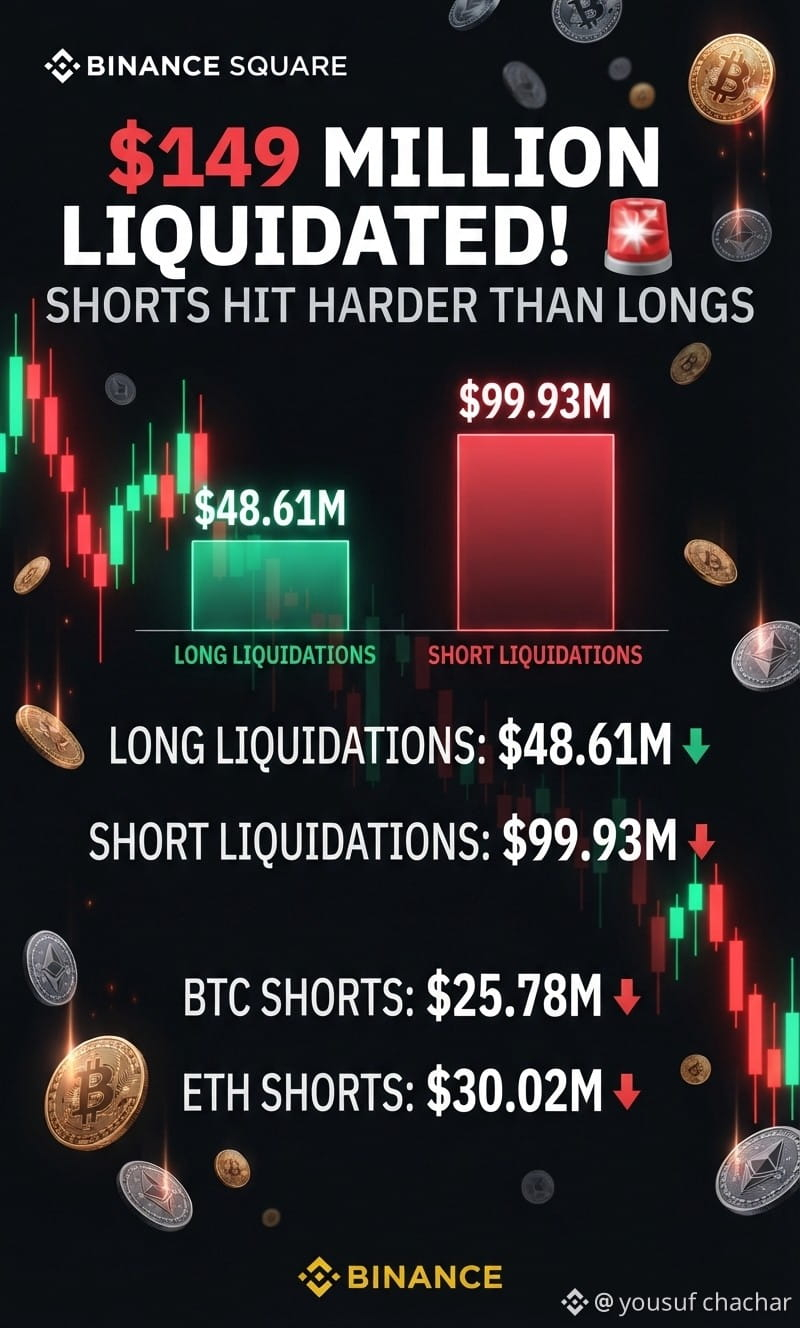
🚨 $149 MILLION WIPED OUT IN CRYPTO LIQUIDATIONS!
Crypto markets saw approximately $149 million in liquidations over the past 24 hours, according to the reported CoinGlass data.
📊 Liquidation breakdown:
🔴 Long positions: $48.61 million
🟢 Short positions: $99.93 million
₿ Bitcoin (BTC)
• Longs liquidated: $8.319 million
• Shorts liquidated: $25.78 million
♦️ Ethereum (ETH)
• Longs liquidated: $6.594 million
• Shorts liquidated: $30.02 million
Short liquidations were significantly higher than long liquidations in this reported period. This can happen when prices move upward against traders betting on a decline.
⚠️ Liquidations do not guarantee the market's next direction. Always manage risk and avoid excessive leverage.
💬 What's next for BTC and ETH — bullish or bearish? #ETH #CryptoLiquidations #CryptoTrading #BinanceSquare $BTC $SOL
88

See translation
Liquidations Stay Under Control
24-hour liquidations are in the $100–150 million range — elevated but not chaotic.
No major cascade so far, which suggests leverage is not extremely one-sided right now.
#CryptoLiquidations #Bitcoin #Trading
Liquidations Stay Under Control
24-hour liquidations are in the $100–150 million range — elevated but not chaotic.
No major cascade so far, which suggests leverage is not extremely one-sided right now.
#CryptoLiquidations #Bitcoin #Trading
24-hour liquidations are in the $100–150 million range — elevated but not chaotic.
No major cascade so far, which suggests leverage is not extremely one-sided right now.
#CryptoLiquidations #Bitcoin #Trading
21

·
--
See translation
🚨 $117 MILLION IN CRYPTO LONGS LIQUIDATED IN 24 HOURS! 🩸📉
Crypto bulls took a serious hit as approximately $117 million in long positions were liquidated across the market within 24 hours.
📊 KEY HIGHLIGHTS:
💥 70–80% of total liquidations reportedly came from bullish positions.
🏦 Binance accounted for the largest share of forced closures.
🔴 Ethereum (ETH) led the losses, with $39M–$54M in liquidations.
Bitcoin (BTC) followed, recording $22M–$32M in liquidated positions.
🐋 The biggest reported liquidation was a $7 million ETH long position on Binance.
⚠️ Most liquidations occurred in perpetual futures as leveraged traders were forced out of their positions.
WHAT DOES THIS MEAN FOR THE MARKET? 👀
Heavy long liquidations can increase selling pressure and signal excessive bullish leverage. However, they don't automatically mean the market will continue falling.
{spot}(BTCUSDT)
🚨 $117 MILLION IN CRYPTO LONGS LIQUIDATED IN 24 HOURS! 🩸📉
Crypto bulls took a serious hit as approximately $117 million in long positions were liquidated across the market within 24 hours.
📊 KEY HIGHLIGHTS:
💥 70–80% of total liquidations reportedly came from bullish positions.
🏦 Binance accounted for the largest share of forced closures.
🔴 Ethereum (ETH) led the losses, with $39M–$54M in liquidations.
Bitcoin (BTC) followed, recording $22M–$32M in liquidated positions.
🐋 The biggest reported liquidation was a $7 million ETH long position on Binance.
⚠️ Most liquidations occurred in perpetual futures as leveraged traders were forced out of their positions.
WHAT DOES THIS MEAN FOR THE MARKET? 👀
Heavy long liquidations can increase selling pressure and signal excessive bullish leverage. However, they don't automatically mean the market will continue falling.

1
103

·
--
See translation
🚨 $192 MILLION WIPED OUT IN CRYPTO LIQUIDATIONS IN JUST ONE HOUR! ⚠️
Crypto markets faced a wave of volatility, triggering approximately $192 million in liquidations, with long positions taking the biggest hit.
📉 Bitcoin alone accounted for $57.7 million in liquidations.
The market just reminded traders how quickly things can change.
Leverage can amplify profits, but when volatility strikes, losses can come just as fast.
⚡ Stay alert. Manage your risk.
Never underestimate the market. DYOR
$BTC
{future}(BTCUSDT)
#Bitcoin #CryptoLiquidations #CryptoMarket #Trading #Volatility
🚨 $192 MILLION WIPED OUT IN CRYPTO LIQUIDATIONS IN JUST ONE HOUR! ⚠️
Crypto markets faced a wave of volatility, triggering approximately $192 million in liquidations, with long positions taking the biggest hit.
📉 Bitcoin alone accounted for $57.7 million in liquidations.
The market just reminded traders how quickly things can change.
Leverage can amplify profits, but when volatility strikes, losses can come just as fast.
⚡ Stay alert. Manage your risk.
Never underestimate the market. DYOR
$BTC
#Bitcoin #CryptoLiquidations #CryptoMarket #Trading #Volatility

2
113

See translation
🚨💥 $800 MILLION+ LIQUIDATED! CRYPTO TRADERS JUST GOT A WAKE-UP CALL! 📉₿
The crypto market is reminding everyone that leverage can be dangerous!
On October 24, Bitcoin briefly dropped below $80,000 before recovering. More than $800 million in crypto positions were liquidated over a 24-hour period, with leveraged LONG traders taking most of the damage. <Cite refs={["turn632953search4","turn632953search2"]}/>
But here's what makes this situation interesting: when too many traders expect the same move, the market can surprise everyone.
🔥 3 IMPORTANT LESSONS FROM THIS MARKET MOVE
📉 1. LONG TRADERS ARE UNDER PRESSURE
When prices fall quickly, leveraged long positions can be liquidated automatically. This creates additional selling pressure and can accelerate market declines.
⚡ 2. SHORT TRADERS ARE NOT SAFE EITHER
Bitcoin's recovery showed that short positions can also be caught off guard. Entering late after a sharp drop can be just as dangerous as buying too early.
🐋 3. SMART TRADERS WATCH LIQUIDITY
Instead of predicting every candle, experienced traders monitor support, resistance, trading volume and liquidation levels. These clues help them understand where volatility might increase.
🎯 MY STRATEGY RIGHT NOW
✅ Wait for confirmation before entering.
✅ Avoid excessive leverage.
✅ Always calculate your risk before opening a position.
✅ Never trade based only on fear or hype.
✅ Protect your capital before chasing profits.
💡 Remember: The goal is not to predict every move. The goal is to survive long enough to take advantage of good opportunities.
💬 WHAT'S NEXT FOR BTC?
🟢 A — Strong recovery above $82K
🔴 B — Another test below $80K
🐂 C — Buyers regain control
🐻 D — Sellers continue dominating
Drop your prediction below! 👇
🔥 Follow for more crypto market updates, trading lessons and market discussions.
#Bitcoin #BTC #CryptoNews #CryptoLiquidations #BinanceFutures #CryptoTrading
113
Log in to explore more content
Join global crypto users on Binance Square
⚡️ Get latest and useful information about crypto.
💬 Trusted by the world’s largest crypto exchange.
👍 Discover real insights from verified creators.
Email / Phone number
Trending Topics
1
#BitcoinRebounds$75KAsChipsLead
7,896 views
117 Discussing
2
#JobsReportRaisesHikeOdds
102,245 views
948 Discussing
3
#US Data Center Rules May Constrain AI Expansion
13,885 views
99 Discussing
4
#$2TWipedOutHedgeFundsFaceLiquidation
16,970 views
103 Discussing
5
#WillAnthropicListOnTime
16,885 views
285 Discussing
6
#USNovemberMichiganExpectationsIndexPrelimAt50.9
23,268 views
374 Discussing
7
#OilPlungesBelow$100
23,543 views
40 Discussing
8
#TradFiForBeginners
14,509 views
238 Discussing
9
#USMidtermsCouldShakeUpUS-IranTies
44,637 views
548 Discussing
10
#RussianCentralBankNamesBTCETHUSDTForNonQualifiedInvestors
829 views
12 Discussing