
#xmr
xmr
41.5M views
156,019 Discussing
Hot
Latest

·
--
See translation
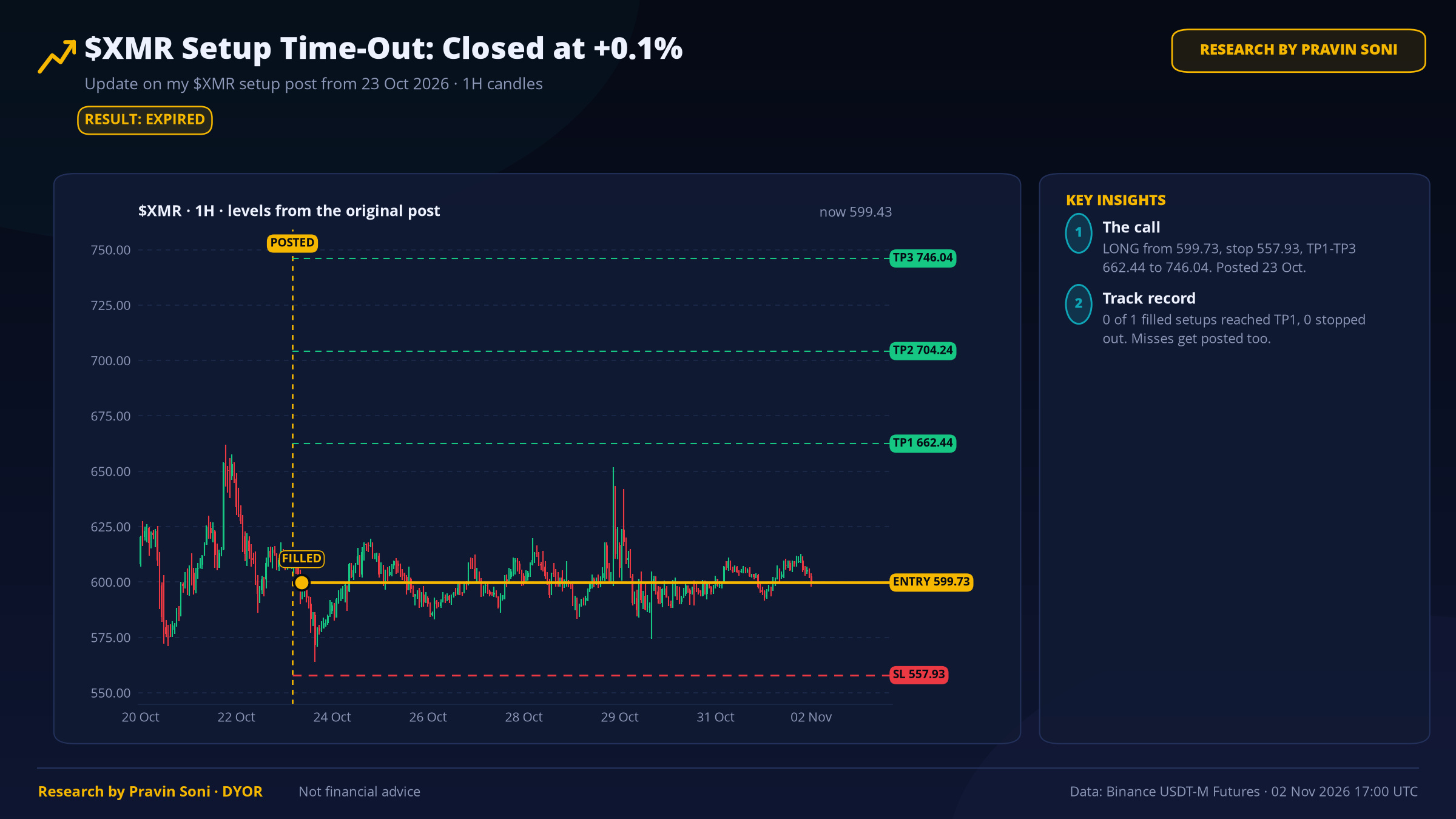
⏱️ $XMR Setup Time-Out: Closed at +0.1%
📍 Update on my $XMR LONG setup from 23 Oct
The plan: Entry 599.73 · SL 557.93 · TP1 662.44 · TP2 704.24 · TP3 746.04
What happened: No target or stop within 10.0 days. Marked closed at 600.48 (+0.1%, +0.0R).
Time is a stop too. Capital goes back to work on the next idea.
📊 Setup track record: 0 of 1 filled setups reached TP1, 0 stopped out.
Original post: https://www.binance.com/en/square/post/380397453231247
Not financial advice · Data: Binance Futures
$XMR #XMR #TradingSetup #CryptoAnalysis
⚠️ Research by Pravin Soni - DYOR
46

·
--
See translation
💥 $XMR BREACHES CRITICAL ACCUMULATION ZONE WITH 88% CONVICTION BIDS MOUNTING! 📈
Entry: 447.14 - 448.04 ⚡
Target: 454.10 🚀
Stop Loss: 429.28 ⚠️
Monero is compressing into a tight execution window between 447.14 and 448.04, where smart money is quietly absorbing sell-side liquidity before the next leg higher. 📊 Order flow metrics show buyers aggressively front-running lower fills while order books thin out on the ask side.
With an 88% confidence score backing this setup, the path of least resistance tilts heavily toward a sharp expansion toward 454.10. ⚡ Capitalizing on this tight consolidation range offers an ideal risk-to-reward ratio before velocity accelerates. 💬 Are you catching this breakout entry here or waiting for the expansion candle to confirm? 👇
⚠️ Not financial advice. Always manage your risk. 🛡️
🏷️ #XMR #LongSetup #Crypto #Breakout
🔥 🎯
16

·
--
See translation
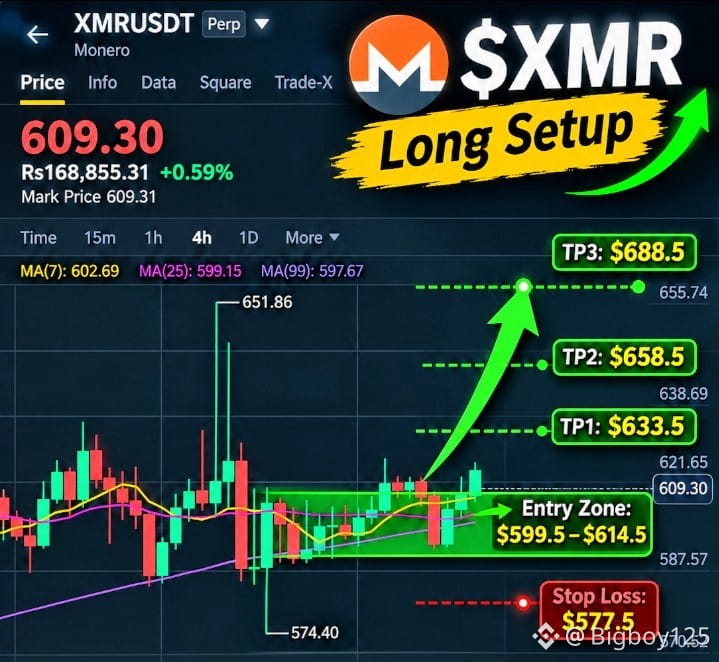
🚀 $XMR LONG TRADE SETUP 🚀
🔥 Get ready for a potential bullish move on Monero ($XMR)!
📍 Entry Zone: $599.5 – $614.5
🎯 Take Profit Targets:
TP1: $633.5
TP2: $658.5
TP3: $688.5
🛑 Stop Loss: $577.5
📈 Trade Direction: LONG 🟢
#XMR #Monero #Binance #CryptoTrading #Altcoins
👇 Trade $XMR Here
$XRP
🚀 $XMR LONG TRADE SETUP 🚀
🔥 Get ready for a potential bullish move on Monero ($XMR)!
📍 Entry Zone: $599.5 – $614.5
🎯 Take Profit Targets:
TP1: $633.5
TP2: $658.5
TP3: $688.5
🛑 Stop Loss: $577.5
📈 Trade Direction: LONG 🟢
#XMR #Monero #Binance #CryptoTrading #Altcoins
👇 Trade $XMR Here
$XRP
🔥 Get ready for a potential bullish move on Monero ($XMR)!
📍 Entry Zone: $599.5 – $614.5
🎯 Take Profit Targets:
TP1: $633.5
TP2: $658.5
TP3: $688.5
🛑 Stop Loss: $577.5
📈 Trade Direction: LONG 🟢
#XMR #Monero #Binance #CryptoTrading #Altcoins
👇 Trade $XMR Here
$XRP
1
208

·
--
See translation
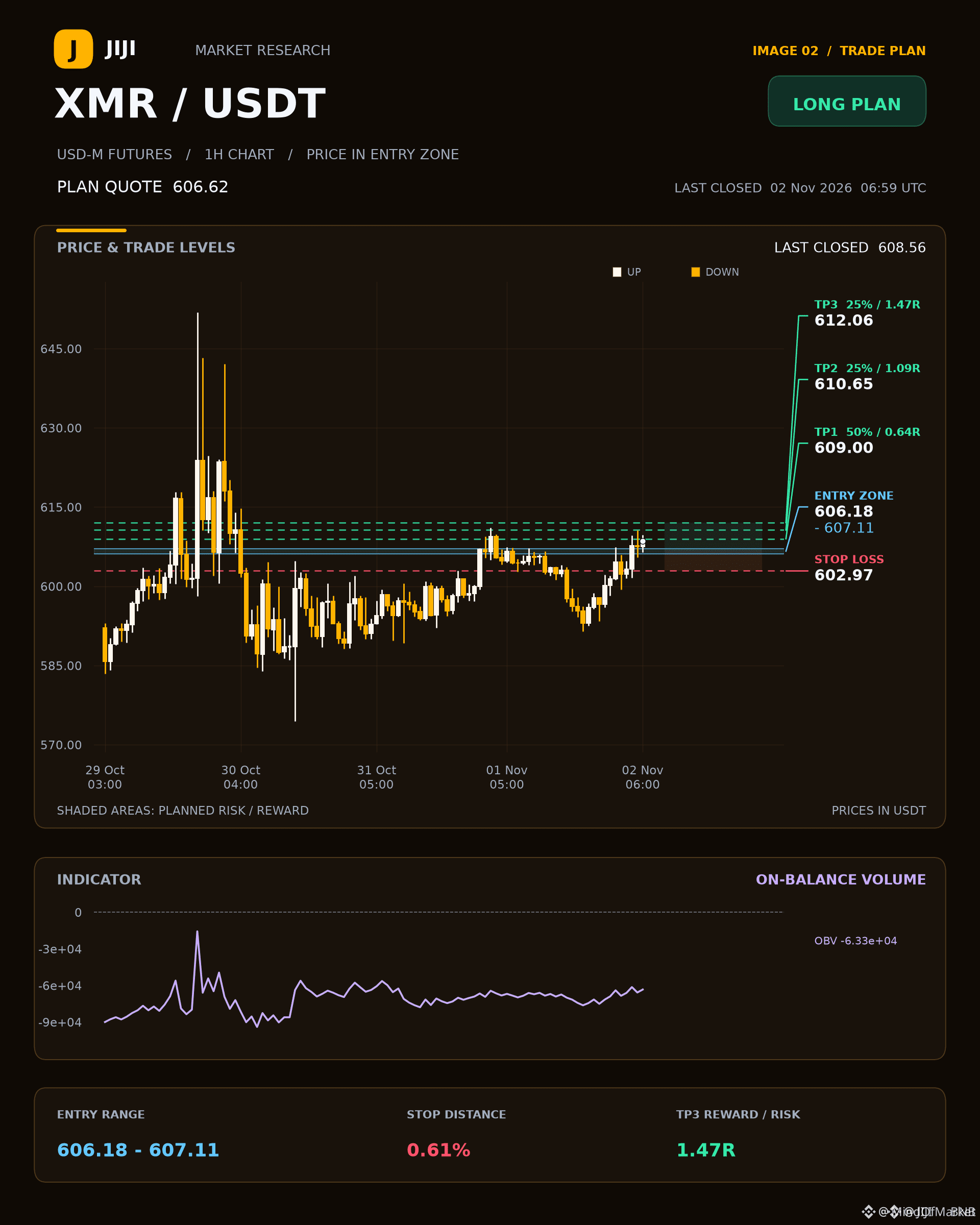
🚨 $XMR HITS LONG ZONE, BUT REWARD IS TIGHT! 📈
Entry: 606.18 – 607.11 ⚡
Target: 609 🎯
Target: 610.65 🎯
Target: 612.06 🎯
Stop Loss: 602.97 ⚠️
The 4‑hour EMA50/200 stack has turned green, aligning with a bullish 1‑hour EMA, while the RSI sits comfortably at 62.5 – a classic institutional bias toward buying. 📊
Entry range 606.18‑607.11 sits just above the recent demand candle, but the first target at 609 offers only 0.21R after fees, making the risk‑reward razor‑thin. A hard 4‑hour resistance at 609.46 could choke the swing, so watch for a clean break ⚡ before scaling to 610.65 and 612.06. 🌊
If the zone holds, allocate 50/25/25% to TP1/2/3 and trail the stop to entry after TP1 to protect against the ATR floor. 📈
💬 Are you comfortable taking this tight‑R setup or waiting for a stronger reward zone? 👇
⚠️ Not financial advice. Always manage your risk. 🛡️
🏷️ #XMR #LongSetup #Crypto #Monero #Futures
🔥 💎
2

See translation
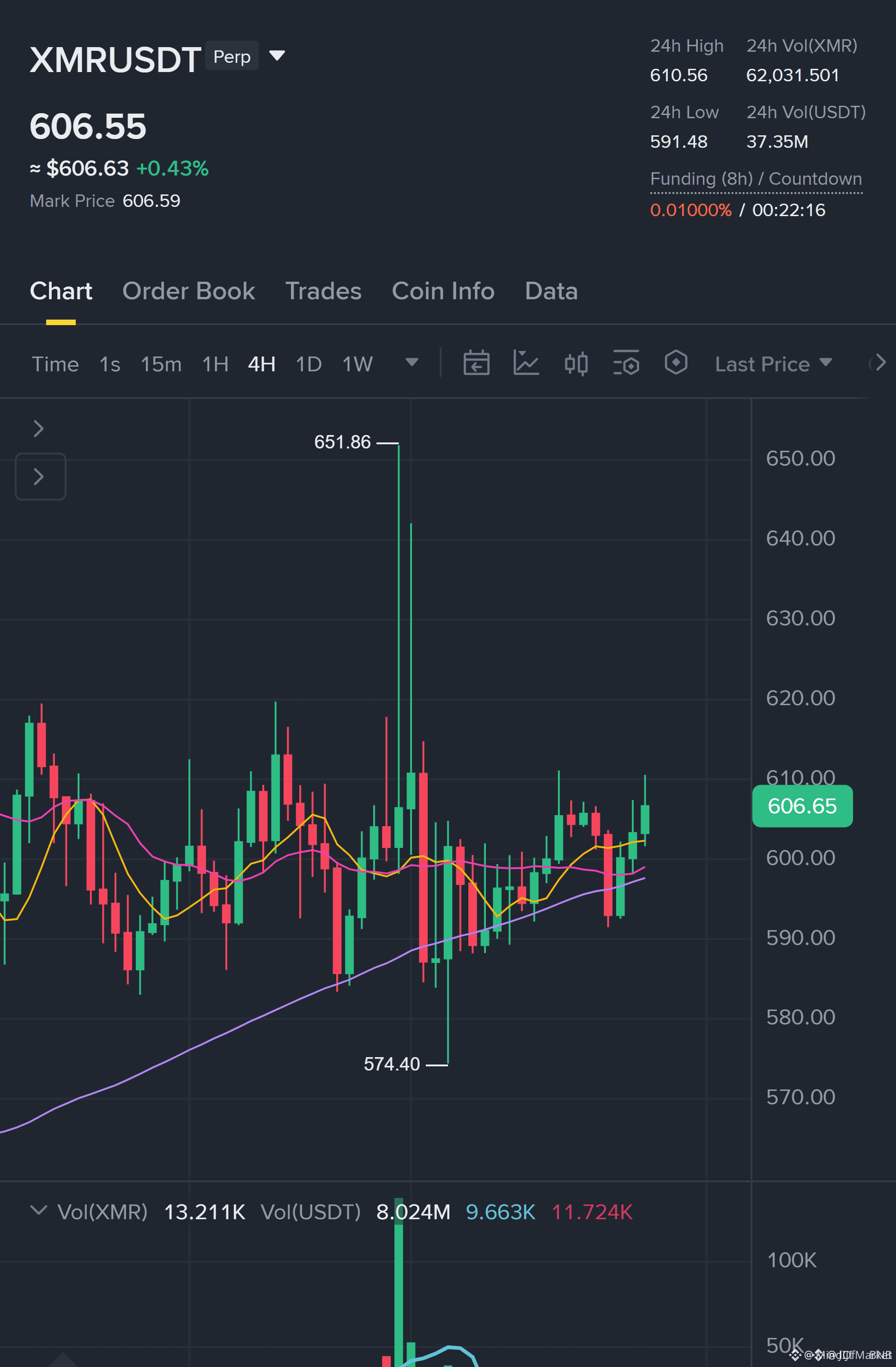
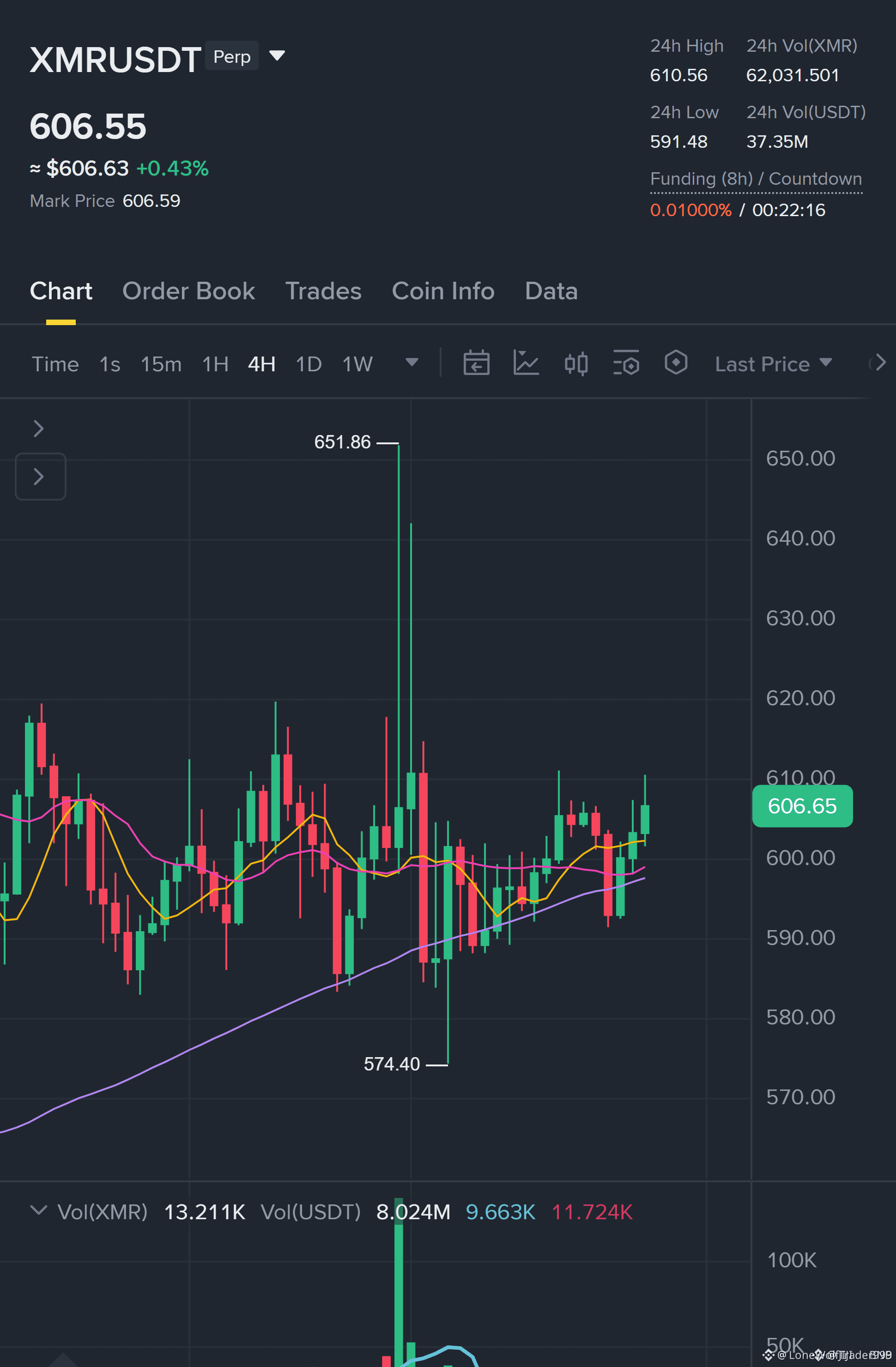
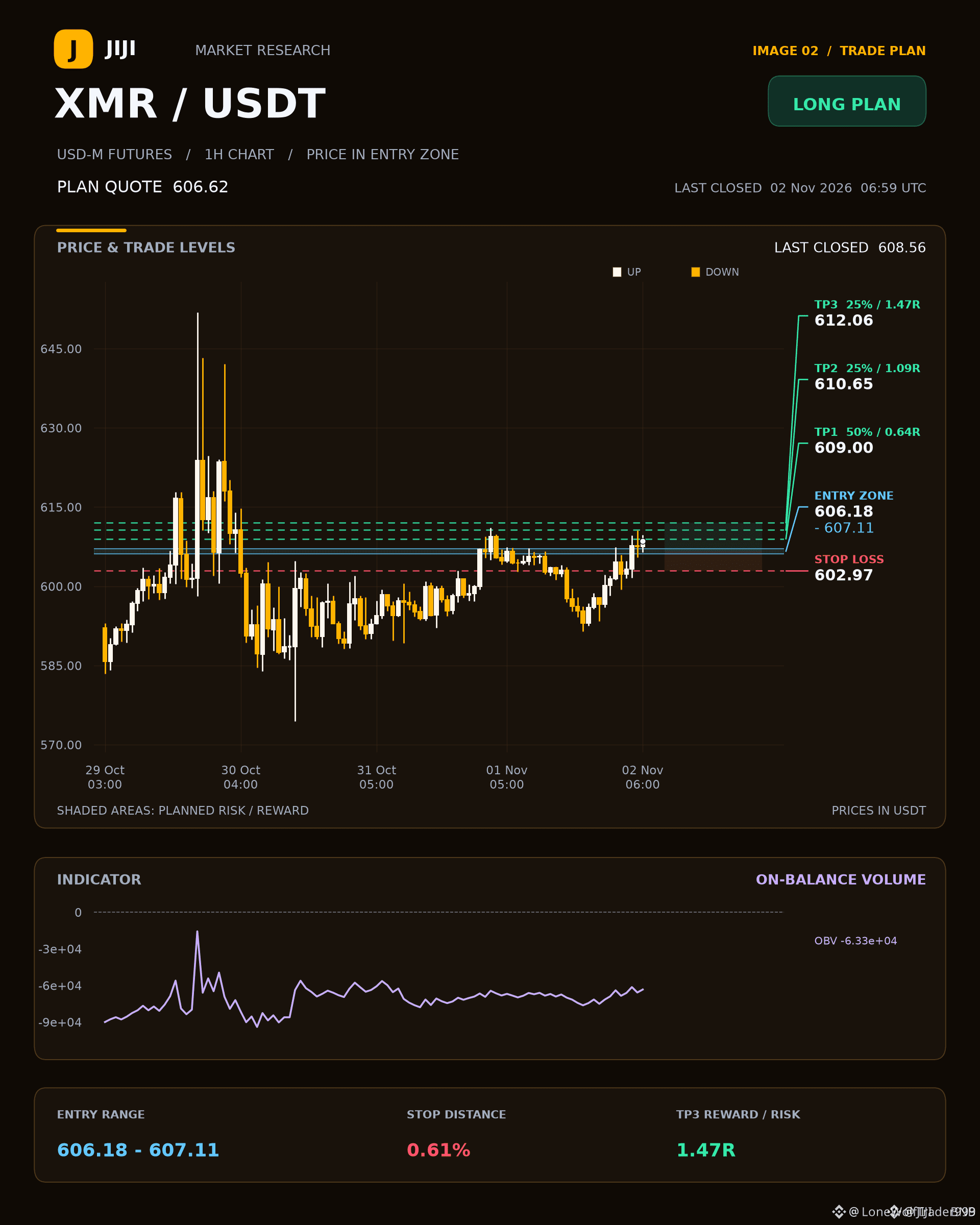
🚀 $XMR HITS ENTRY ZONE, READY FOR QUICK SWING 📈
Entry: 606.18‑607.11 ⚡
Target: 609 🚀
Target: 610.65 🚀
Target: 612.06 🚀
Stop Loss: 602.97 ⚠️
📊 The 4‑hour EMA50/200 stack is painting a bullish runway, while the 1‑hour RSI sits at 62.5, giving the long side a clean edge. ⚡ Momentum on the 15‑minute DI+ is outpacing DI‑, and ADX at 27 confirms strength, so the zone feels primed for a short‑term push.
💡 Reward is modest at TP1, but the ladder to 610.65 and 612.06 adds upside once the 609.46 resistance clears. Keep the SL tight at 602.97 and let the trade breathe. 💬 Are you loading bids now or waiting for the 609 barrier to crumble? 👇
⚠️ Not financial advice. Always manage your risk. 🛡️
🏷️ #XMR #LongSetup #Crypto #Futures #SwingTrade
🔥 🚀
3

·
--
See translation
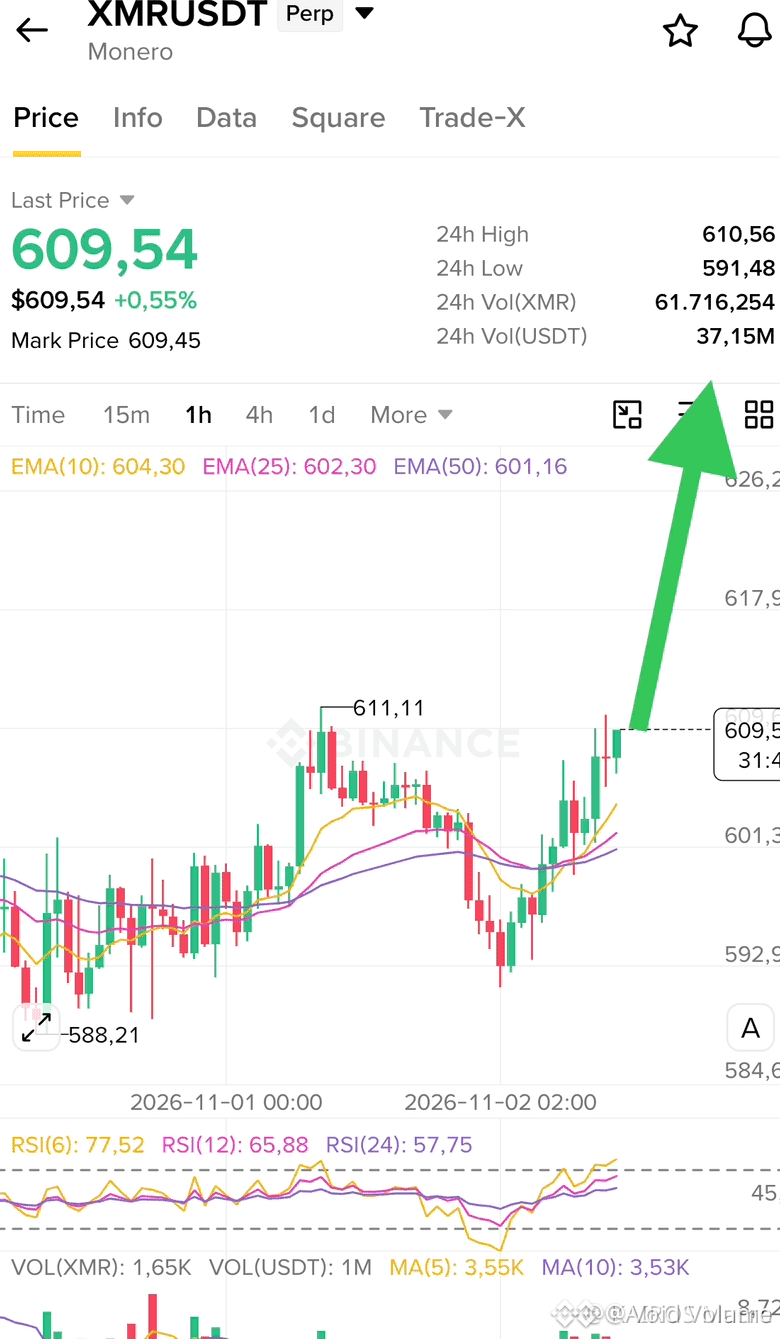
🚨 $XMR HUNTS LIQUIDITY BETWEEN 599.5‑614.5 🦈
Target: 633.5 🚀
Target: 658.5 🚀
Target: 688.5 🚀
Stop Loss: 577.5 ⚠️
📊 The 599.5‑614.5 zone acts as a fresh demand block, having absorbed aggressive sell‑offs on the 4H chart. Smart‑money is likely feeding liquidity beneath the block, setting the stage for a clean upward thrust. 🌊
⚡ With the stop anchored at 577.5, the risk‑to‑reward stretches beyond 1:3, and each target aligns with historic swing highs, offering a structured path for capital recovery. 💡
💬 Are you loading long positions into this liquidity pocket or staying on the sidelines? 👇
⚠️ Not financial advice. Always manage your risk. 🛡️
🏷️ #XMR #LongSetup #Liquidity #Crypto
🔥 🦈
12

·
--
See translation
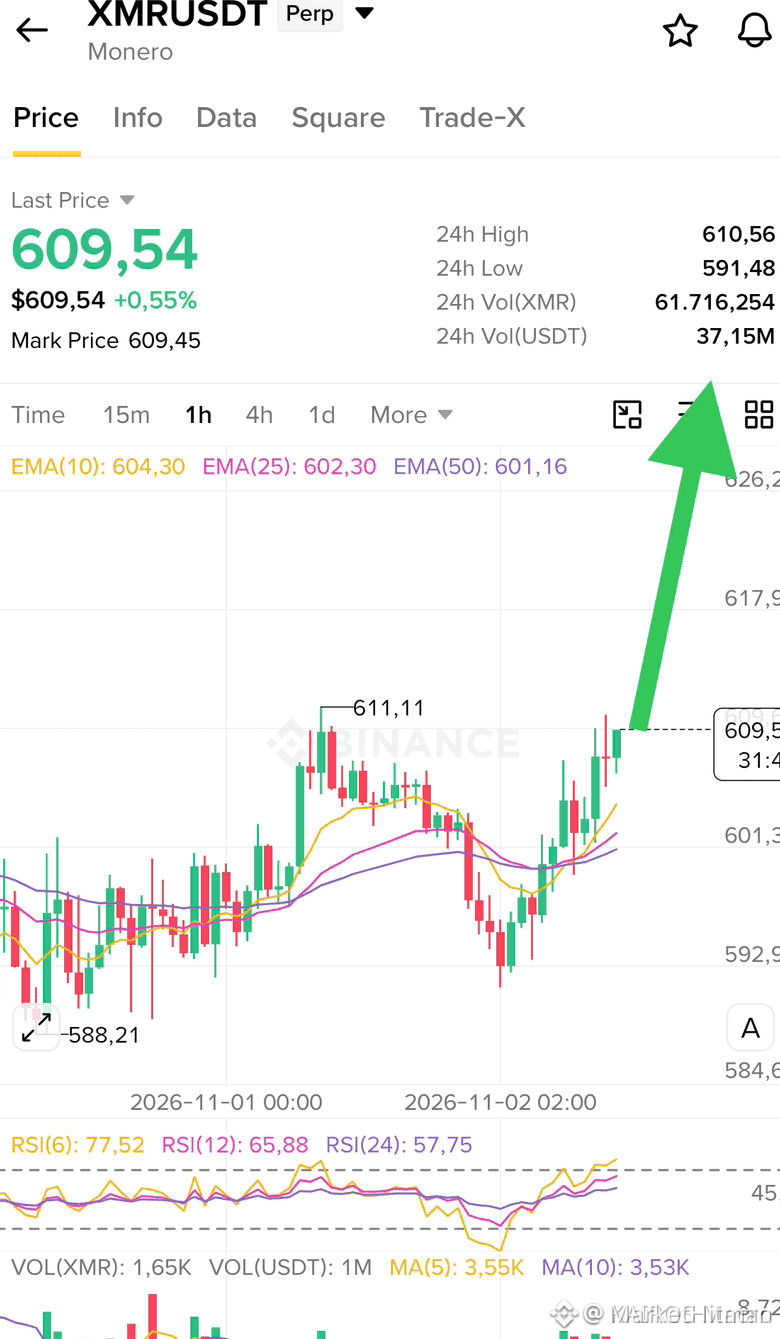
🚀 $XMR ON THE RAMPAGE TOWARD 688.5 – BULLISH SWEEP 🟢
Entry: 599.5-614.5 ⚡
Target: 633.5 🚀
Target: 658.5 🚀
Target: 688.5 🚀
Stop Loss: 577.5 ⚠️
Smart money is carving a fresh demand block between 599.5 and 614.5, swallowing the recent sell‑off and setting the stage for a liquidity‑driven rally. 📊 Volume spikes on the 4H chart signal buyers re‑stacking, while the RSI climbs out of oversold territory, hinting at sustained upside. ⚡
With a tight stop at 577.5, the risk‑to‑reward flips to a clean 1:3+ as price eyes the 633.5, 658.5 and the ultimate 688.5 target. 🦈 Keep emotions in check; each minute counts when the market spins. 💬 Ready to load the long or stay on the sidelines? 👇
⚠️ Not financial advice. Always manage your risk. 🛡️
🏷️ #XMR #LongSetup #Monero #Breakout #Crypto
🔥 🦈
25

·
--
See translation
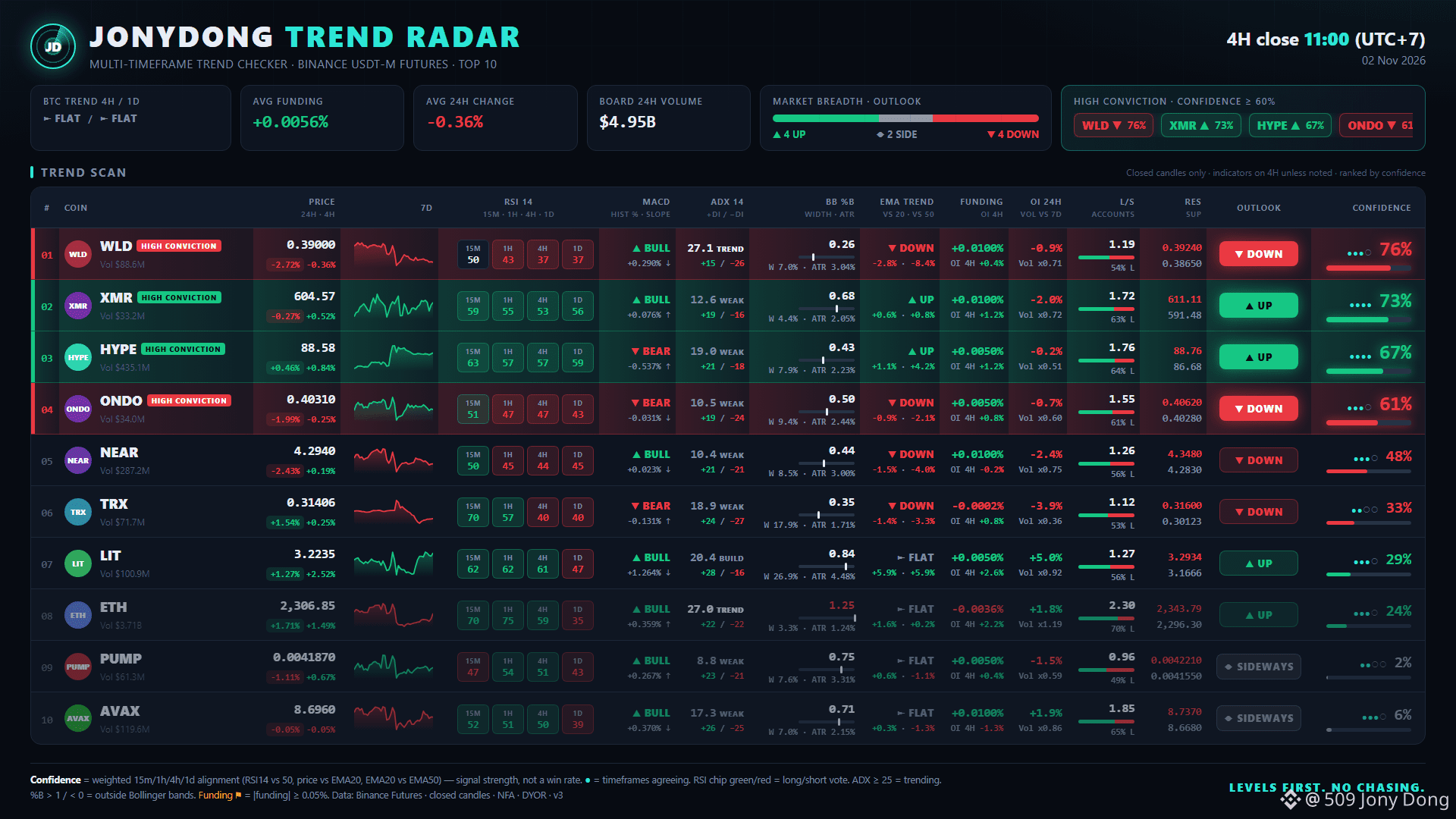
🚨 $XMR IGNITES AS PRIVACY SECTOR EXPANDS AFTER $ZEC BREAKS LOCAL HIGHS! 💥
When leadership shifts across privacy assets, smart money moves fast. $ZEC clearing its key highs has triggered a direct liquidity wave into $XMR , with market makers stepping in to absorb sell-side volume and drive explosive momentum candles. 🌊
Capital flow is accelerating rapidly as order flow front-runs the sector rotation before overhead resistance gets reclaimed. 📊 The momentum setup shows buyers taking aggressive control as volume spikes across key order blocks. 💡
💬 Are you riding this privacy rotation momentum or waiting for a retest of the breakout zone? 👇
⚠️ Not financial advice. Always manage your risk. 🛡️
🏷️ #XMR #PrivacyCoins #Breakout #Crypto #Altcoins
🔥 ⚡
35


·
--
See translation
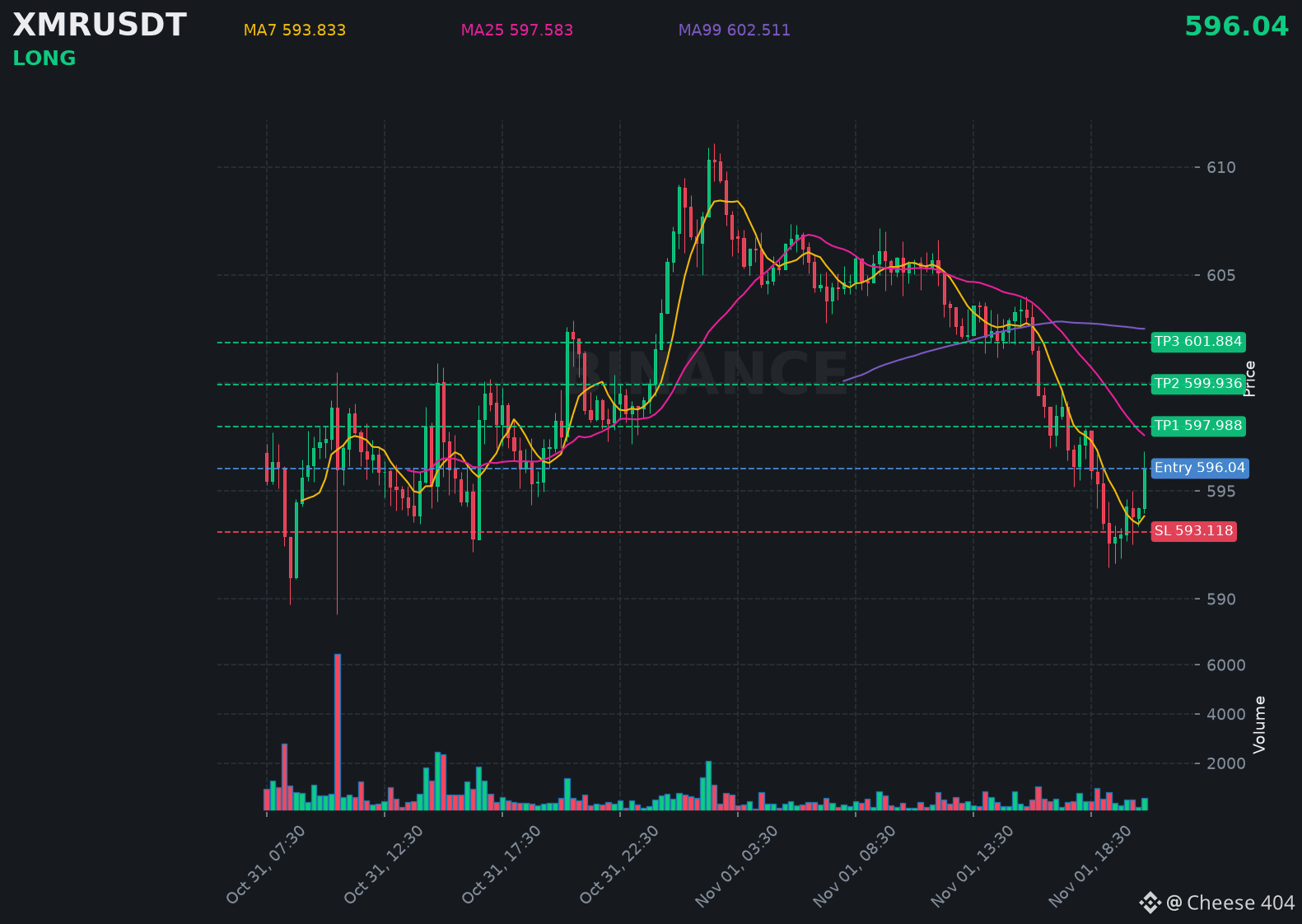
$XMR is holding steady above support, hinting at another leg up in the coming hours.
📍 @ 596.04 | Volume: 0.34M USD
RSI 44 | EMA20: 596.327 USD
📈 Trade Plan:
📈 Entry: 595.456 – 596.624
🛑 Stop Loss: 593.118
🎯 TP1: 597.988
🎯 TP2: 599.936
🎯 TP3: 601.884
Waiting for a retest, then riding the uptrend.
👉 $XMR 👈 Catch it
#XMR
📍 @ 596.04 | Volume: 0.34M USD
RSI 44 | EMA20: 596.327 USD
📈 Trade Plan:
📈 Entry: 595.456 – 596.624
🛑 Stop Loss: 593.118
🎯 TP1: 597.988
🎯 TP2: 599.936
🎯 TP3: 601.884
Waiting for a retest, then riding the uptrend.
👉 $XMR 👈 Catch it
#XMR
146
See translation
🚨 $XMR HEAVY REJECTION AT RESISTANCE AS BEARS LOCK IN DOWNWARD PRESSURE! 🔻
Entry: 464 - 465 ⚡
Target: 458, 453, 448 🚀
Stop Loss: 471.50 ⚠️
Sellers firmly defended the 465–470 resistance block, leaving price struggling to build upward momentum after a sharp rejection. 📌 A sustained breakdown below 460 opens the floodgates for a swift liquidity sweep down toward 448. 📉
Bears are asserting total order flow control at higher levels while heavy supply absorbs every attempt to push back up. 🔍 Risk-to-reward favors short-side positioning as long as resistance holds firm. 💬 Are bears taking full control here or can buyers spark a surprise bounce? 👇
⚠️ Not financial advice. Always manage your risk. 🛡️
🏷️ #XMR #ShortSetup #Crypto #Breakdown #PriceAction
📉 🐻
3
·
--
See translation
🚨 $XMR FACES HEAVY OVERHEAD REJECTION AS BEARS PREPARE TO TAKE CONTROL! 📉
Entry: 471 - 493 🔴
Target: 460 / 442 / 410 📉
Stop Loss: 512 ⚠️
Bulls are pushing directly into a heavy supply block, but upside momentum is rapidly evaporating. 📊 Sellers are stacked deep throughout this overhead liquidity pocket, preparing to absorb remaining late buyer interest.
A sharp rejection off resistance opens the path for a swift roll-down toward lower market structures. ⚡ Risk is defined cleanly above 512, setting up an exceptional risk-to-reward window for patient order flow traders. 💡
💬 Are you jumping on this short trigger early, or waiting for confirmed lower-high price action? 👇
⚠️ Not financial advice. Always manage your risk. 🛡️
🏷️ #XMR #ShortSetup #Monero #Crypto
🐻 📉
9
·
--
See translation
💥 $XMR SMASHES MOVING AVERAGE RESISTANCE WITH FOUR STRAIGHT GREEN CANDLES ON EXPANDING VOLUME! ⚡
Entry: 463.50 - 464.20 ⚡
Target: 468.00 - 475.00 🚀
$XMR just printed four consecutive green candles, tearing through key moving average resistance on massive expansion volume. Buyers have taken complete control of the order book, carving out a textbook continuation pattern on the charts. 📊
Holding above the 464 pivot keeps the path of least resistance unlocked for an immediate push higher. ⚡ Momentum is compounding rapidly as seller liquidity gets absorbed with minimal pushback. 📌
💬 Are you bidding this demand block or waiting to catch the expansion above key targets? 👇
⚠️ Not financial advice. Always manage your risk. 🛡️
🏷️ #XMR #LongSetup #Monero #Breakout #Crypto
🔥 💎
8

·
--
See translation
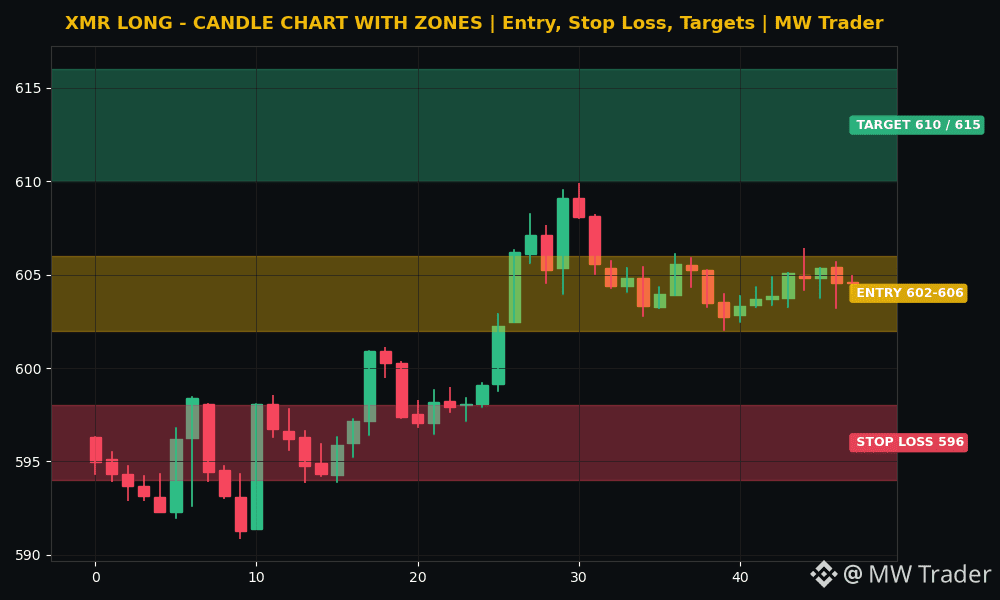
$XMR #XMR 🚀
Direction: LONG 🚀
Entry zone: 602 to 606
Stop loss: 596
Target 1: 610
Target 2: 615
Monero is trading near 604.54 dollars, up 1.63 percent in 24 hours, inside a range of 590.91 to 609.86. My reading is that buyers are defending the 604 area after a push toward 610. 📈 The recent closes held firm, 605.10, then 604.84, then 605.36, then 604.57, then 604.54, which is a tight hold, not a rejection. A long from the current zone, with a stop below 596, targets 610 first and then 615 if buyers reclaim the range high. A drop under 596 proves this wrong and I step aside.
Futures trading is risky. Trade small, use a stop loss, and do your own research. This is my reading, not a guaranteed signal.
Does Monero reclaim 610 first, or lose 596 and fade? 🤔
Follow for more trades.
#Monero #Crypto #FuturesTrading #TradingSignals
10

See translation
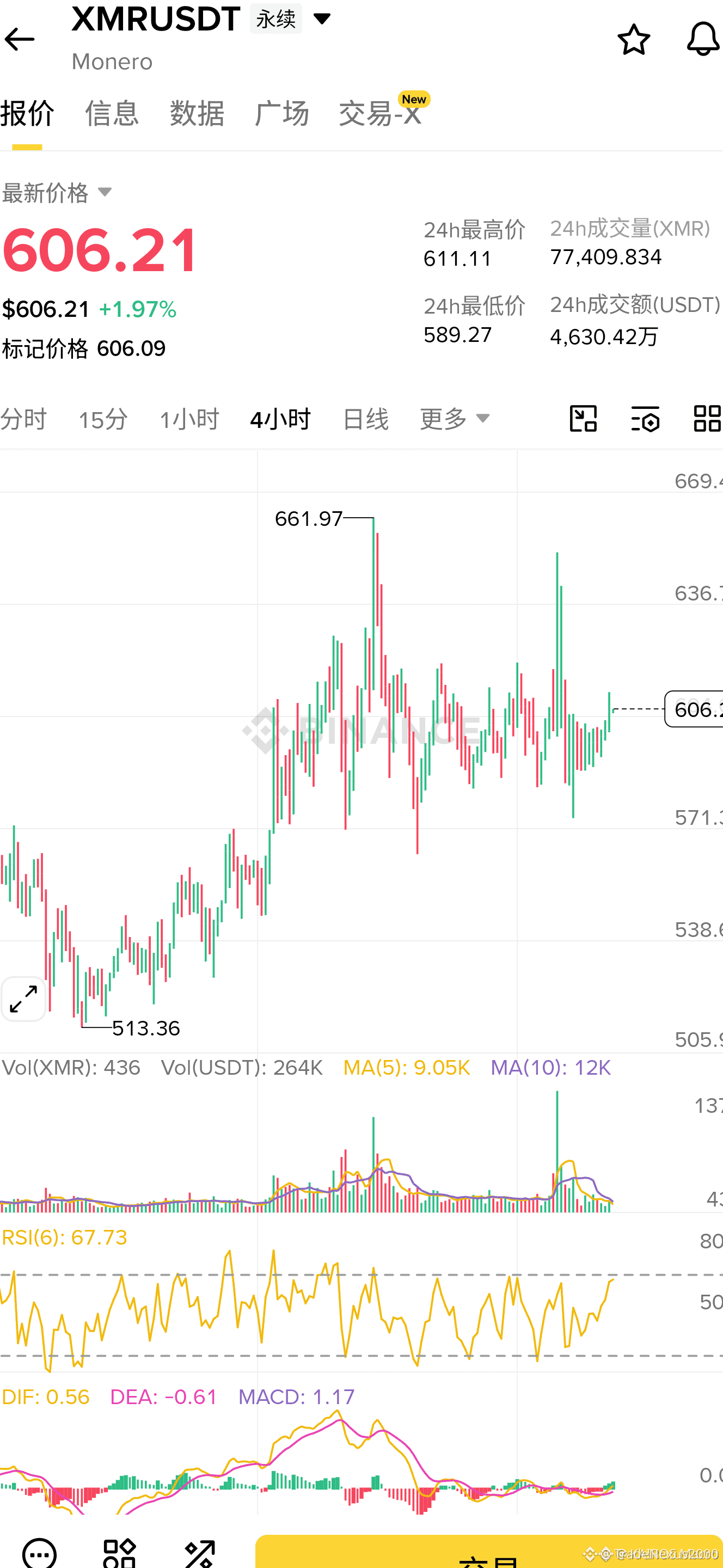
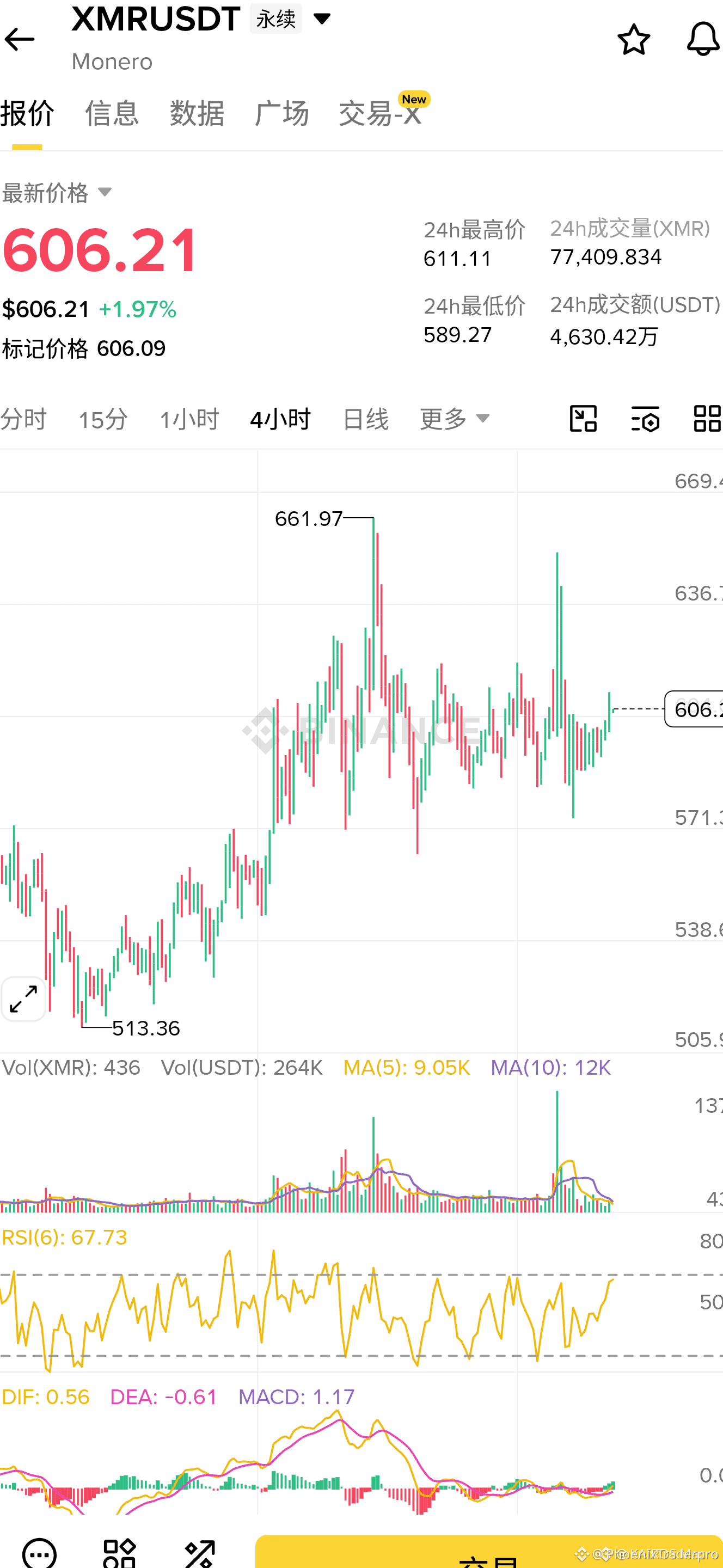
⚡ $XMR ABSORBS AGGRESSIVE SELL-OFF AS INSTITUTIONAL DEMAND DEFENDS KEY STRUCTURE! 📈
Entry: 606.20 ⚡
Target: 654.60 🎯
Stop Loss: 590.00 ⚠️
The aggressive liquidation flush down toward 571 served as an exhaustive sweep of sell-side liquidity before buyers reclaimed dominance. 🌊 Price action is now printing a decisive structural shift, backed by an emerging MACD bullish cross. 📊
As long as the critical 589 pivot holds firm, order flow favors an expansion toward overhead liquidity targets. 💡 🤔 Are you bidding this breakout or waiting for a cleaner retest of local demand?
⚠️ Not financial advice. Always manage your risk. 🛡️
🏷️ #XMR #MarketStructure #CryptoTrading #Breakout
🎯 🦈
13

See translation
💥 $XMR SHAKES OUT WEAK HANDS BEFORE CARVING A MASSIVE MOMENTUM REVERSAL! 🐂
Entry: 606.20 ⚡
Target: 654.60 🚀
Stop Loss: 590.00 ⚠️
The brutal shakeout down to 571 flushed out panic sellers before responsive buyers stepped in with an aggressive bid. 🌊 Now that MACD has printed a decisive bullish cross on this recovery impulse, the momentum flip is officially underway.
As long as the reclaim holds firm above the 589 floor, market structure remains exceptionally solid for further expansion. 💡 Disciplined risk management keeps the execution clean while momentum does the heavy lifting.
💬 Are you positioning for the leg up, or waiting for one more dip? 👇
⚠️ Not financial advice. Always manage your risk. 🛡️
🏷️ #XMR #Monero #CryptoTrading #Breakout
⚡ 🎯
30

·
--
XMR Wallet Lock Check Fix Proposed|Code Still Under Review|Wait for Confirmation Near $600
My stance is cautious observation; I won’t turn a single developer commit into a network-wide security incident. On November 2, a PR titled “Handle wallet key file unlock state checks” appeared in Monero’s official code repository as PR #11662. The submitter explained that in a particular file-wallet workflow, the lock object may already have been cleared after unlocking, but a state check could still access it, causing the process to crash. The patch proposes returning “unlocked” when there is no lock object and adding tests. As of my review, the page is still marked Open, with no review conclusion. This is only a proposed fix awaiting a merge; it does not mean a new version has been released, nor does it justify claiming that users’ assets were stolen or that the mainnet experienced an outage. The official Monero website still lists CLI and GUI version 0.18.5.4 as the latest releases. Wallet users should download from the official website, verify the version, and back up their seed phrase securely. Don’t install unknown software from links in direct messages claiming to offer an “urgent fix.”
Why should traders care? Discussions about privacy coins often focus on regulatory labels and price volatility, but wallet usability directly affects users’ ability to manage assets securely. Developers’ public review of a crash scenario reflects engineering transparency and affects the experience of a specific operation; it does not change Monero’s consensus rules, ring-signature parameters, or supply. Binance Square still has a “#FATF launches crypto anti-money laundering review” topic, but the FATF’s original statement describes a review of how jurisdictions with important virtual asset service providers are implementing the standards, with preliminary results scheduled for June 2027. It does not name XMR or announce an immediate ban targeting XMR. Regulatory developments and wallet code are separate risk factors; they should not be conflated into a definitive narrative that “the project is about to be banned” or “the bullish news has already materialized.”
The market reaction also offers no strong confirmation. At the time of capture, XMR/USD on Kraken was around $598, with a 24-hour range of $590 to $612. The price has fallen from around $602 when I last checked, but if the conditions were not met earlier, there is no trade or profit to claim. I see $590 as the downside risk level and $612 as the upside confirmation level. If the price breaks below $590 and cannot recover on a rebound, we should acknowledge that weakness is continuing. Conversely, there would be better grounds to increase the risk budget only after the official patch has completed review, been formally released, and the price has moved back above and held $612. Even if the code is ultimately merged, that will not automatically lead to relisting on exchanges or an inflow of funds.
If I were trading this myself, I would stay out for now and keep only a conditional spot long on the table, with a position capped at 4% of total capital and no leverage. The entry trigger would be XMR holding above $612, pulling back to above $600, and showing supporting trading volume. The first target is $625, where I would sell half; the second target is $640, with the stop for the remaining position moved up. The initial stop-loss would be below $589. If, after entering, the price falls back below $600 and continues weakening, or if the official team issues a new major security announcement, I would close the position early. If the trigger is not met within two days, the plan expires. The wallet software review is worth monitoring, but price confirmation must be assessed independently.
#XMR
The above is solely my personal market observation and does not constitute investment advice.

4
·
--
XMR around $602 | Official wallet 0.18.5.4 remains the current version | Security updates do not mean privacy policy approval
My stance is to watch cautiously, not turn a wallet maintenance notice into a trend reversal. After scanning Binance Square’s trending topics and six-hour search rankings, I found no verifiable new tags directly related to XMR; so this time I went back to Monero’s primary sources. The current Monero website download page lists version 0.18.5.4 for both CLI and GUI. In its October 16 announcement, the project described the release as a minor fix, not a new network hard fork. The CLI release page highlights two items: fixing DNSSEC verification for checkpoints, ban lists, and update checks by the daemon; and restoring compatibility for converting strings to integers in JSON requests, with a note that this compatibility will be removed in a future 0.19 release. The corresponding GUI release mainly fixes an issue with reopening testnet and stagenet wallets. Don’t describe a fix as “privacy has been upgraded” or claim that “all older versions have vulnerabilities that put funds at risk of theft.”
Why are these details worth traders’ attention? The use of privacy assets depends on the stability of wallets, nodes, and network services. Verification of checkpoints and update queries affects the trust boundaries involved when software retrieves network information; RPC compatibility affects how some tools interact with nodes. Fixing these issues is a positive sign of ecosystem maintenance, but it does not directly increase XMR’s issuance yield, on-chain demand, or availability for trading on exchanges. More importantly, users should download software from the project’s official website and verify signature hashes against the official release page. Risks from fake download links and using old versions cannot be solved by a rising price. In particular, I would not misread “the project released a fix” as a statement by regulators on privacy coins. Regulatory policy should be assessed through regulators’ own documents.
The market reaction should also be described separately. At the time of writing, XMR/USD was last trading at around $602 on Kraken, with a 24-hour low of about $590 and a high of about $612. The price remains in the middle of this range. More than two weeks have passed since the October 16 software release, and there is no evidence to attribute every current price move to it. The area around $612 is short-term resistance, while around $590 is the lower boundary to watch for support. If trading volume does not expand at the same time as a brief breakout, the risk of a pullback remains. If the price falls below $590, I would acknowledge that the short-term structure has weakened rather than use the “privacy narrative” to make excuses for losses.
If I were trading it myself: I would stay out for now, and only consider a small spot long. The conditions would be for XMR to close above $612 on two consecutive one-hour candles, hold the $608–$612 range on a retest, and show no irregularities in XMR deposits or withdrawals on major trading platforms. If those conditions are met, I would open a position using no more than 1% of my total capital. I would first take half off at $625, then half of the remainder at $640; if the remaining position closes below $612 on a one-hour candle, I would exit it entirely. I would set the initial stop-loss at $597 and exit the whole position if it is hit. No leverage and no averaging down. If the price first breaks below $590, or the project announces a new issue that affects wallet security, the bullish view is invalidated and I would immediately close any open position. Software version, safe usage, liquidity, and price confirmation should each be verified separately.
Sources: Monero’s current official download page, official Monero CLI and GUI GitHub release notes, and Kraken’s public quotes. #XMR
This is solely my personal market observation and does not constitute investment advice.

6
·
--
XMR around $604 | Wallet ring-member protection fix still awaiting merge | Don’t chase the proposal as bullish news
My stance is to wait and see. On November 1, Monero’s official code repository saw pull request #11659, concerning keeping wallet rings at 16 members after a known fork height. The author describes the issue this way: if a wallet relies on a daemon that provides an incorrect earliest hard-fork height, the wallet may misjudge the network rules and, in local regression testing, generate an input ring with only 3 members. A genuine daemon would reject the transaction, but an intermediary proxy may already have received the transaction data. The proposed fix is to keep the ring-size minimum and maximum at 16 once the chain height cached by the wallet itself reaches the compiled-in HF16 height. The repository page currently still shows “Open.” This is code awaiting review and a local reproduction by the author—not an officially released patch, nor a confirmed widespread attack in the wild. The latest official software announcement currently visible on Monero’s website is still version 0.18.5.4, dated October 16, so this proposal should not be described as a new version already being released.
Why should traders care? XMR’s value proposition depends on privacy and network availability. The issue here is primarily the trust boundary when a wallet gets information from an external node: the fact that a genuine node rejects a non-compliant transaction does not erase the risk that the transaction may first reach a malicious intermediary. For wallets using remote nodes, understanding the risk matters more than watching a single candlestick. However, the proposal’s author also clearly limits its scope: older wallets whose cached height has not reached HF16, as well as other methods that affect decoy selection, are not covered by this fix. If merged, the fix would improve wallet protection in a specific scenario; it does not imply that demand for XMR will immediately increase. I’m watching for review, merge, official release, and actual user upgrades—not pricing it in early based on the PR title alone.
The market reaction has been restrained so far. At the time of observation, XMR was around $604.2, up about 0.49% from the previous close, with an intraday low of about $591 and a high of about $611.4. There is no evidence that this small gain was directly driven by the proposal; on the macro front, the Federal Reserve kept its target interest-rate range at 3.75% to 4% last week, and risk assets still face funding-cost constraints. The $611–$612 area is the immediate ceiling, while $591 is the intraday floor. If the price breaks above $612 but quickly falls back, or if the proposal is ultimately closed without an alternative fix, I would abandon my short-term bullish view. If a credible security advisory emerges later, I’ll reassess the risk rather than blindly sticking to an old plan.
If I were trading this myself, I wouldn’t enter now; I’d keep only a conditional, small-position long bias. I would consider testing the position with 1.5% of total capital only if the official code review makes clear progress and XMR holds above $612 for two hours. The initial target would be $630, where I’d cut the position in half, with the remainder targeting $645. If the price falls back below $600 after entry, I’d stop out and close the entire position. If the conditions are never triggered, I’d stay flat—and would never describe the plan as an executed or profitable trade. If major security information changes the underlying facts, I’d close the position without waiting for the price to hit the stop. Keeping the position small, avoiding high leverage, and waiting for evidence is more appropriate in the current environment than guessing at the outcome.
Sources: Monero code repository PR #11659, Monero website release notes, and the Federal Reserve’s October 28 statement. #XMR
This is only my personal market observation and does not constitute investment advice.

40

·
--
See translation
$XMR is worth monitoring closely.
Market snapshot:
• 24H change: +2.37%
• Average funding: +0.0524%
• Open Interest: approximately $54.3M
Elevated positive funding creates a potential crowded-long risk, but it does not automatically mean a reversal.
I want sellers to confirm weakness before entering.
Reference price: $615.84
Entry: $612.76 after confirmed breakdown
Stop Loss: $621.95
TP1: $597.44
TP2: $588.27
Bias: SHORT only on confirmed downside momentum.
#XMR #Monero #cryptosignals
3
12
Log in to explore more content
Join global crypto users on Binance Square
⚡️ Get latest and useful information about crypto.
💬 Trusted by the world’s largest crypto exchange.
👍 Discover real insights from verified creators.
Email / Phone number
Trending Topics
1
#BinanceWithdrawalScamWarning
17,770 views
459 Discussing
2
#USMidtermElections
570,264 views
3,023 Discussing
3
#USOctoberNFP-AreRateCutsStillPossible
25,855 views
418 Discussing
4
#AppleEarningsAhead-CanStockHitNewHigh
9,358 views
305 Discussing
5
#Verify1to1BinanceReserves
23,798 views
336 Discussing
6
#BinanceRestores28FiatWithdrawals
112,139 views
966 Discussing
7
#StrategyRepurchases$208MSTRCAdds811Bitcoin
4,523 views
15 Discussing
8
#FATFLaunchesReviewOfCryptoHubsMoneyLaunderingControls
523 views
10 Discussing
9
#BinanceProcesses$4.65BWithdrawals
101,928 views
359 Discussing
10
#HKMALaunchesSAGEAgenticFinanceProject
3,055 views
155 Discussing