
#riskmanagement
riskmanagement
16.9M views
56,814 Discussing
Hot
Latest

See translation
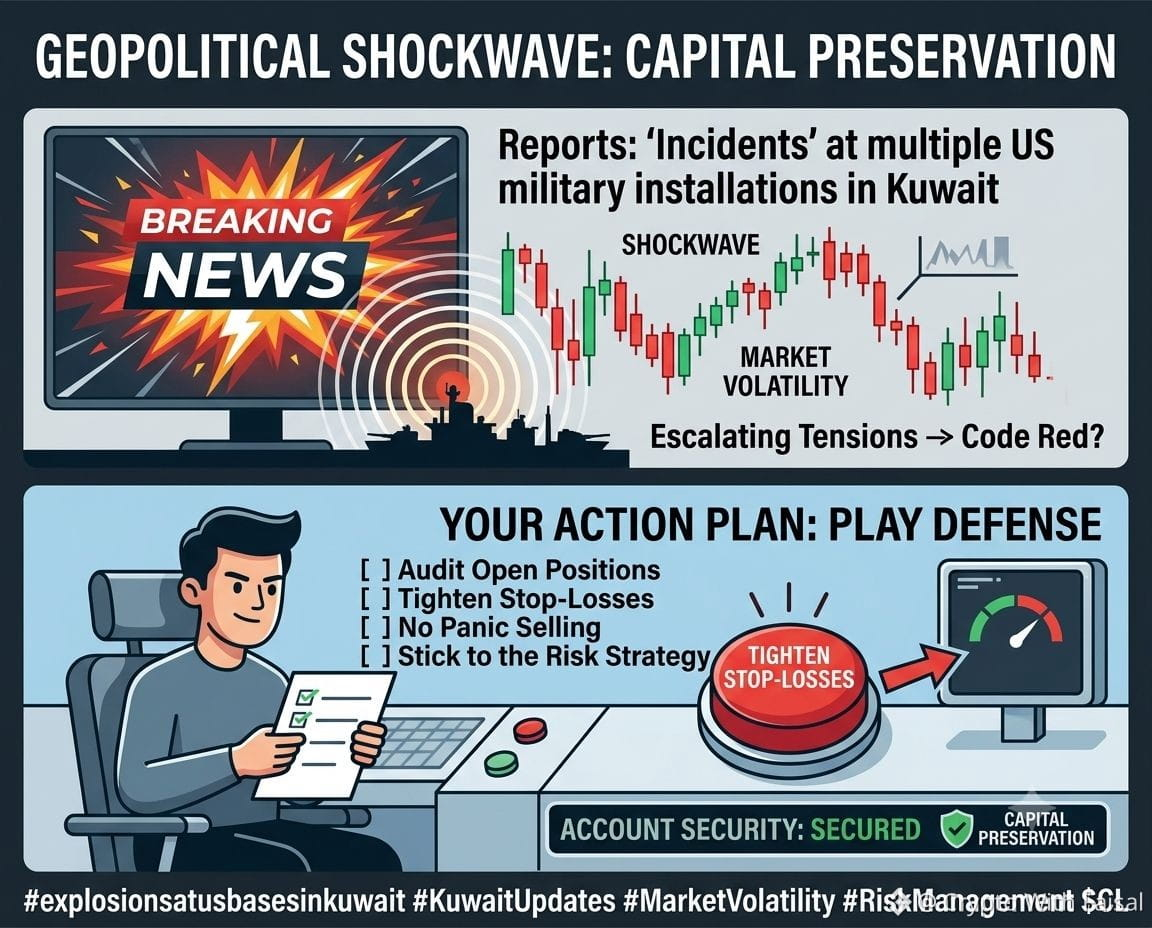
#explosionsatusbasesinkuwait
Geopolitical Shockwave: Capital Preservation is Priority
Reports of incidents at US military facilities in Kuwait are injecting massive uncertainty into the global markets. Macro tensions are escalating rapidly, and extreme volatility across all sectors is practically guaranteed.
Your immediate action plan:
Audit Open Positions: Review your current exposure immediately.
Play Defense: Tighten your stop-loss orders to protect existing capital.
Zero Emotion: Avoid panic-selling into stablecoins; stick strictly to your predefined risk strategy.
In environments driven by global news, the market feeds on panic. Do not let reactionary decisions liquidate your account.
How are you hedging your portfolio against this sudden macro risk? Share your strategies below.
(Disclaimer: Not financial advice)
#KuwaitUpdates #MarketVolatility #RiskManagement
$CL $BZ $MAGMA
Geopolitical Shockwave: Capital Preservation is Priority
Reports of incidents at US military facilities in Kuwait are injecting massive uncertainty into the global markets. Macro tensions are escalating rapidly, and extreme volatility across all sectors is practically guaranteed.
Your immediate action plan:
Audit Open Positions: Review your current exposure immediately.
Play Defense: Tighten your stop-loss orders to protect existing capital.
Zero Emotion: Avoid panic-selling into stablecoins; stick strictly to your predefined risk strategy.
In environments driven by global news, the market feeds on panic. Do not let reactionary decisions liquidate your account.
How are you hedging your portfolio against this sudden macro risk? Share your strategies below.
(Disclaimer: Not financial advice)
#KuwaitUpdates #MarketVolatility #RiskManagement
$CL $BZ $MAGMA

See translation
Everyone thinks catching a falling knife is an easy discount, but actually trying to support a breakdown usually ends with wiped accounts. Most traders bleed capital because they stubbornly hold onto losing positions, hoping for a bounce while ignoring clear weakness.
Think of it like trying to catch a falling glass cup with your bare hands instead of letting it hit the floor first. A top 57 futures trader just locked in +49,129 USDT profit by shorting the $HEMI breakdown as it dropped over 7.36 percent, while retail was busy buying the dip.
Smart money follows the trend and exits when support fails, whether on $HEMI or high-beta plays like $SEI and $TIA . Protecting your trading stack always beats trying to be a hero on a sinking ship.
How do you manage your stops when a key support level cracks?
#CryptoTrading #FuturesTrading #RiskManagement
Think of it like trying to catch a falling glass cup with your bare hands instead of letting it hit the floor first. A top 57 futures trader just locked in +49,129 USDT profit by shorting the $HEMI breakdown as it dropped over 7.36 percent, while retail was busy buying the dip.
Smart money follows the trend and exits when support fails, whether on $HEMI or high-beta plays like $SEI and $TIA . Protecting your trading stack always beats trying to be a hero on a sinking ship.
How do you manage your stops when a key support level cracks?
#CryptoTrading #FuturesTrading #RiskManagement

See translation
Most traders think seeing a 30-day top leaderboard PnL screenshot means it is safe to copy the exact same setup.
The reality is that chasing a trader after they have already bagged a +$5,502.51 USDT gain usually turns you into their exit liquidity. When you see someone casually planning to wait for a dip to long $ARB again after locking in a +6.97% move, they are working with realized profit cushions while you are stepping into raw downside risk.
Market depth and pullbacks rarely behave predictably just because a high-volume pair like $BTC or $OP has momentum. Bidding support levels blindly because a winning account intends to reload ignores the fact that order book liquidity can evaporate fast during broader corrections.
If their dip turns into a multi-week bleed instead of a shallow retest, your entry ends up underwater while their 30-day profit stats remain mostly intact.
How do you usually manage risk when you are tempted to bid the dip on an asset that just completed a heavy green run?
#Arbitrum #CryptoTrading #RiskManagement
The reality is that chasing a trader after they have already bagged a +$5,502.51 USDT gain usually turns you into their exit liquidity. When you see someone casually planning to wait for a dip to long $ARB again after locking in a +6.97% move, they are working with realized profit cushions while you are stepping into raw downside risk.
Market depth and pullbacks rarely behave predictably just because a high-volume pair like $BTC or $OP has momentum. Bidding support levels blindly because a winning account intends to reload ignores the fact that order book liquidity can evaporate fast during broader corrections.
If their dip turns into a multi-week bleed instead of a shallow retest, your entry ends up underwater while their 30-day profit stats remain mostly intact.
How do you usually manage risk when you are tempted to bid the dip on an asset that just completed a heavy green run?
#Arbitrum #CryptoTrading #RiskManagement

See translation
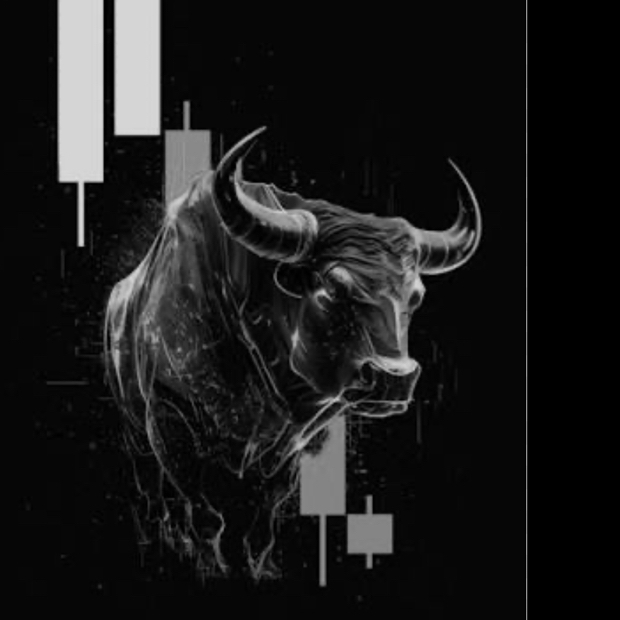
⚠️ MACRO ESCALATION: $BZ SPIKES AS RISK-OFF VOLATILITY HITS THE BOARD 🛡️
Reports out of the Middle East are sending immediate risk-off shockwaves across global order books, driving sharp volatility into energy markets like $CL while keeping crypto on high alert. When macro cannons fire, disciplined traders don't chase impulse moves—capital first. Tighten your stop-loss barriers before liquidity sweeps take over; remember, no stop, no entry.
Now is the time to audit your open exposure, trim weak leverage, and execute cold risk management. Size down to sleep well rather than panic-fleeing into stablecoins. Defensive execution in high-volatility regimes is what allows you to live to trade another day.
Are you tightening your stops right now or actively hedging your portfolio against this macro surge?
⚠️ Not financial advice. Always manage your risk. 🛡️
#BZ #RiskManagement #Macro #MarketVolatility #CL
Protect the bag first, profits second.
Reports out of the Middle East are sending immediate risk-off shockwaves across global order books, driving sharp volatility into energy markets like $CL while keeping crypto on high alert. When macro cannons fire, disciplined traders don't chase impulse moves—capital first. Tighten your stop-loss barriers before liquidity sweeps take over; remember, no stop, no entry.
Now is the time to audit your open exposure, trim weak leverage, and execute cold risk management. Size down to sleep well rather than panic-fleeing into stablecoins. Defensive execution in high-volatility regimes is what allows you to live to trade another day.
Are you tightening your stops right now or actively hedging your portfolio against this macro surge?
⚠️ Not financial advice. Always manage your risk. 🛡️
#BZ #RiskManagement #Macro #MarketVolatility #CL
Protect the bag first, profits second.




See translation
Bearish sentiment prevails today as we navigate potential downside volatility. A tight range suggests caution in our 1H ATR breakout strategy. 📉
Today's bearish bias aligns with our strategy's focus on downside expansion. Given the current compressed range, respect a maximum of 3 staged entries to avoid overexposure. If we see a failed expansion or a reversal of structure, be prepared to reduce engagement. Remember, our risk control via trailing stops can help lock in gains if conditions shift. Over the last 30 days, we've maintained a win rate of 67.74% with a maximum drawdown of 2.67%. ⚖️
Follow for structured copy trading updates.
#BinanceSquare #CopyTrading #CryptoTrading #RiskManagement
Not financial advice.
Today's bearish bias aligns with our strategy's focus on downside expansion. Given the current compressed range, respect a maximum of 3 staged entries to avoid overexposure. If we see a failed expansion or a reversal of structure, be prepared to reduce engagement. Remember, our risk control via trailing stops can help lock in gains if conditions shift. Over the last 30 days, we've maintained a win rate of 67.74% with a maximum drawdown of 2.67%. ⚖️
Follow for structured copy trading updates.
#BinanceSquare #CopyTrading #CryptoTrading #RiskManagement
Not financial advice.

See translation
The hardest part of trading isn’t finding $BMT .
It’s knowing when NOT to trade it.
No setup = no trade.
No confirmation = no chase.
No risk management = no long-term survival.
The market will always give another opportunity.
Your capital needs to survive until then.
#BMT #RiskManagement #TradingMindse t #crypto $PUMP $MOVE $BMT
It’s knowing when NOT to trade it.
No setup = no trade.
No confirmation = no chase.
No risk management = no long-term survival.
The market will always give another opportunity.
Your capital needs to survive until then.
#BMT #RiskManagement #TradingMindse t #crypto $PUMP $MOVE $BMT

See translation
3am. The blue light of my monitor burned my eyes as my $DOGE leverage position hit 0.00. $5,400 gone—my entire savings—vanished in a single liquidation candle. I didn't scream. I just stared at the wall, finally admitting the truth: I was a gambler cosplaying as a trader. That was the moment I stopped hunting for 100x moonshots and started studying market structure. I realized I didn't need to be right; I just needed a system that survived my being wrong.
When did you stop gambling and start trading?
#crypto #trading #riskmanagement #DOGE #psychology
When did you stop gambling and start trading?
#crypto #trading #riskmanagement #DOGE #psychology

See translation
$BNB
$BTC
$PIXEL
TODAY’S CRYPTO TRADING SETUP | SEPTEMBER 2, 2026
📉 Market এখন একটু bearish pressure-এর মধ্যে। BTC প্রায় $77K zone-এ ঘুরছে, আর major altcoins-ও pullback দেখাচ্ছে।
🎯 আজকের Trading Mindset:
✅ BTC support ধরে রাখতে পারছে কি না দেখুন
✅ Breakout হলে volume confirmation অপেক্ষা করুন
✅ Support break করলে দ্রুত Long নেওয়া এড়িয়ে চলুন
✅ Futures-এ অতিরিক্ত leverage ব্যবহার করবেন না
✅ Stop-loss ছাড়া কোনো trade নয়
👀 Watchlist:
₿ BTC
🟡 BNB
⚡ XRP
☀️ SOL
💡 Remember:
“Protect your capital first. Profit comes second.”
আজকের মার্কেটে আপনার strategy কী—LONG নাকি SHORT? 👇
#BinanceSquare #CryptoTrading #Bitcoin #BTC #BNB #XRP #sol #trading #CryptoMarket #FuturesTrading #RiskManagement
$BTC
$PIXEL
TODAY’S CRYPTO TRADING SETUP | SEPTEMBER 2, 2026
📉 Market এখন একটু bearish pressure-এর মধ্যে। BTC প্রায় $77K zone-এ ঘুরছে, আর major altcoins-ও pullback দেখাচ্ছে।
🎯 আজকের Trading Mindset:
✅ BTC support ধরে রাখতে পারছে কি না দেখুন
✅ Breakout হলে volume confirmation অপেক্ষা করুন
✅ Support break করলে দ্রুত Long নেওয়া এড়িয়ে চলুন
✅ Futures-এ অতিরিক্ত leverage ব্যবহার করবেন না
✅ Stop-loss ছাড়া কোনো trade নয়
👀 Watchlist:
₿ BTC
🟡 BNB
⚡ XRP
☀️ SOL
💡 Remember:
“Protect your capital first. Profit comes second.”
আজকের মার্কেটে আপনার strategy কী—LONG নাকি SHORT? 👇
#BinanceSquare #CryptoTrading #Bitcoin #BTC #BNB #XRP #sol #trading #CryptoMarket #FuturesTrading #RiskManagement


See translation
2. Crypto Lesson 📚
One of the biggest mistakes beginners make:
They focus too much on the entry price.
A good entry matters, but risk management matters more.
Imagine entering a trade at the “perfect” price but risking 30–40% of your account on one position.
One wrong move can erase weeks of progress.
Instead, think like this:
Protect capital first. Grow it second.
You don’t need to win every trade.
You just need to make sure one losing trade doesn’t take you out of the game. 🎯
#CryptoEducation💡🚀 ation #RiskManagement gement #TradingCommunity ng #BinanceSquare
One of the biggest mistakes beginners make:
They focus too much on the entry price.
A good entry matters, but risk management matters more.
Imagine entering a trade at the “perfect” price but risking 30–40% of your account on one position.
One wrong move can erase weeks of progress.
Instead, think like this:
Protect capital first. Grow it second.
You don’t need to win every trade.
You just need to make sure one losing trade doesn’t take you out of the game. 🎯
#CryptoEducation💡🚀 ation #RiskManagement gement #TradingCommunity ng #BinanceSquare

See translation
📊 Thinking About Copy Trading? Don’t Choose a Trader by Profit Alone.
A big return can catch your attention.
But before copying anyone, look deeper:
🛡️ How much risk are they taking?
📉 What does their drawdown look like?
⏳ Are their results consistent over time?
💰 Does their risk level actually suit you?
I’m building my Binance Lead Trader account around one principle:
Risk first. Results second.
My execution system stays private, but my performance is there for you to evaluate.
If you’re considering copying me, review the numbers first and decide for yourself.
👉🏻@春 Hedge by XMJ
No promises. No blind following.
Just transparent performance and disciplined trading.
#Copytrading #Binancecopytrading #RiskManagement
A big return can catch your attention.
But before copying anyone, look deeper:
🛡️ How much risk are they taking?
📉 What does their drawdown look like?
⏳ Are their results consistent over time?
💰 Does their risk level actually suit you?
I’m building my Binance Lead Trader account around one principle:
Risk first. Results second.
My execution system stays private, but my performance is there for you to evaluate.
If you’re considering copying me, review the numbers first and decide for yourself.
👉🏻@春 Hedge by XMJ
No promises. No blind following.
Just transparent performance and disciplined trading.
#Copytrading #Binancecopytrading #RiskManagement
See translation
🚨 $BTC IS DOWN 1.7% — IS THIS REALLY A “BUY THE DIP” MOMENT?
A lower price doesn’t automatically mean a better entry.
When $BTC drops, beginners often think:
“It’s cheaper. I should buy.”
But ask these questions first:
📊 Has the market actually stabilized?
🛡️ Where is your risk if you’re wrong?
⏳ Are you buying a setup — or an emotion?
❌ Are you entering only because you fear missing the bounce?
Sometimes buying the dip works.
Sometimes the dip keeps dipping.
Price alone shouldn’t make the decision.
What are you doing with $BTC today? 👇
🟢 Buying | 🟡 Waiting | 🔴 Staying out
#BTC #bitcoin #cryptotrading #RiskManagement
A lower price doesn’t automatically mean a better entry.
When $BTC drops, beginners often think:
“It’s cheaper. I should buy.”
But ask these questions first:
📊 Has the market actually stabilized?
🛡️ Where is your risk if you’re wrong?
⏳ Are you buying a setup — or an emotion?
❌ Are you entering only because you fear missing the bounce?
Sometimes buying the dip works.
Sometimes the dip keeps dipping.
Price alone shouldn’t make the decision.
What are you doing with $BTC today? 👇
🟢 Buying | 🟡 Waiting | 🔴 Staying out
#BTC #bitcoin #cryptotrading #RiskManagement

See translation
Everyone thinks high-leverage futures trading is a fast track to quick wealth, but actually, it is often just an express lane to wiping out your entire account.
Most traders keep holding onto losing positions hoping for a miracle bounce, watching unrealized losses spiral until liquidation hits. It feels like staying in a burning building just because you like the furniture.
When you open an aggressive long without an exit plan, the market will teach you a harsh lesson. Just look at a recent top trader tracking board where an open long position on $BTR plummeted by 29.50% in a single day, racking up over 10,646 USDT in floating losses. That is the reality of trading $USDT perpetuals without disciplined risk controls.
Think of leverage like driving a sports car on ice. If you do not tap the brakes when it starts sliding, pressing the gas harder will only guarantee a crash. Managing risk on high-volatility pairs like $BTC and mid-caps is the only way to survive long enough to win.
How do you usually handle your stop losses when a trade moves against you fast?
#CryptoTrading #FuturesTrading #RiskManagement
Most traders keep holding onto losing positions hoping for a miracle bounce, watching unrealized losses spiral until liquidation hits. It feels like staying in a burning building just because you like the furniture.
When you open an aggressive long without an exit plan, the market will teach you a harsh lesson. Just look at a recent top trader tracking board where an open long position on $BTR plummeted by 29.50% in a single day, racking up over 10,646 USDT in floating losses. That is the reality of trading $USDT perpetuals without disciplined risk controls.
Think of leverage like driving a sports car on ice. If you do not tap the brakes when it starts sliding, pressing the gas harder will only guarantee a crash. Managing risk on high-volatility pairs like $BTC and mid-caps is the only way to survive long enough to win.
How do you usually handle your stop losses when a trade moves against you fast?
#CryptoTrading #FuturesTrading #RiskManagement


See translation
If you are still catching falling knives on fresh futures listings, stop now.
Watching your margin get chopped in half while holding onto a bleeding position is a brutal rite of passage. Most traders freeze up, hoping for a bounce, and turn a simple momentum trade into an expensive liquidation lesson.
Just look at the daily live futures leaderboard, where an open long on $BTR is currently sitting on a 10,646.79 USDT unrealized loss, down roughly 29.50%. We saw this exact dynamic play out with aggressive $SOL momentum runners during previous market shakeouts. High leverage into thin liquidity rarely forgives hesitation.
When $BTC chops sideways, liquidity thins out and high-volatility perps punish late entries immediately. Navigating these setups demands strict invalidation levels instead of averaging down and hoping for a rescue.
Where do you draw the line between giving a trade room to breathe and cutting a bad entry?
#CryptoTrading #Futures #RiskManagement
Watching your margin get chopped in half while holding onto a bleeding position is a brutal rite of passage. Most traders freeze up, hoping for a bounce, and turn a simple momentum trade into an expensive liquidation lesson.
Just look at the daily live futures leaderboard, where an open long on $BTR is currently sitting on a 10,646.79 USDT unrealized loss, down roughly 29.50%. We saw this exact dynamic play out with aggressive $SOL momentum runners during previous market shakeouts. High leverage into thin liquidity rarely forgives hesitation.
When $BTC chops sideways, liquidity thins out and high-volatility perps punish late entries immediately. Navigating these setups demands strict invalidation levels instead of averaging down and hoping for a rescue.
Where do you draw the line between giving a trade room to breathe and cutting a bad entry?
#CryptoTrading #Futures #RiskManagement

See translation
Have you noticed how most retail traders treat leverage like a lottery ticket instead of a risk management tool?
Watching an open position bleed into the red while refusing to cut losses is the single fastest way to blow up your account. Most traders freeze when a trade turns against them, hoping for a miraculous bounce rather than executing an invalidation level.
Take a look at the recent liquidations on volatile mid-caps like $BTR . Holding an open long deep underwater down -29.50% with an unrealized loss exceeding -10,646 USDT is not diamond hands, it is pure liquidation gambling. When volatility spikes across pairs like $BTC and higher-beta altcoins like $SOL , market makers will ruthlessly hunt those overleveraged positions.
If you want to survive these market conditions, you need a rule-based execution plan. First, determine your maximum acceptable loss before entering any futures order, not after the drawdown begins. Second, hardcode a stop-loss that caps risk at 1-2% of total equity so a single bad trade cannot wipe out weeks of gains. Finally, size down significantly when trading low-liquidity perps because slippage will crush you on the exit.
How do you handle your risk parameters when a high-beta trade starts going against you?
#FuturesTrading #RiskManagement #CryptoTrading
Watching an open position bleed into the red while refusing to cut losses is the single fastest way to blow up your account. Most traders freeze when a trade turns against them, hoping for a miraculous bounce rather than executing an invalidation level.
Take a look at the recent liquidations on volatile mid-caps like $BTR . Holding an open long deep underwater down -29.50% with an unrealized loss exceeding -10,646 USDT is not diamond hands, it is pure liquidation gambling. When volatility spikes across pairs like $BTC and higher-beta altcoins like $SOL , market makers will ruthlessly hunt those overleveraged positions.
If you want to survive these market conditions, you need a rule-based execution plan. First, determine your maximum acceptable loss before entering any futures order, not after the drawdown begins. Second, hardcode a stop-loss that caps risk at 1-2% of total equity so a single bad trade cannot wipe out weeks of gains. Finally, size down significantly when trading low-liquidity perps because slippage will crush you on the exit.
How do you handle your risk parameters when a high-beta trade starts going against you?
#FuturesTrading #RiskManagement #CryptoTrading
See translation
Chasing high-leverage bounces on trending alts is the fastest way to turn a green week into a portfolio wipeout. Most traders fail because they confuse a temporary dip with free money, only to get trapped holding bags while margin calls slowly drain their account.
Just saw a live perp position on $BTR sitting at -$10,646.79 unrealized PnL in a single day, down over 29.50% on an open long. It looks like typical bottom-fishing where someone tried to front-run a reversal without waiting for liquidity or structure to stabilize first. When high-beta pairs like $BTR drop, order books thin out fast and funding rates can crush you before any bounce happens.
Even on majors like $BTC , longing a falling knife without a strict invalidation level usually ends in panic. If you are not setting hard stop-losses before entering volatile perp trades, the market will set them for you at liquidation price.
How do you manage risk when an altcoin drops double digits in minutes?
#CryptoTrading #Futures #RiskManagement
Just saw a live perp position on $BTR sitting at -$10,646.79 unrealized PnL in a single day, down over 29.50% on an open long. It looks like typical bottom-fishing where someone tried to front-run a reversal without waiting for liquidity or structure to stabilize first. When high-beta pairs like $BTR drop, order books thin out fast and funding rates can crush you before any bounce happens.
Even on majors like $BTC , longing a falling knife without a strict invalidation level usually ends in panic. If you are not setting hard stop-losses before entering volatile perp trades, the market will set them for you at liquidation price.
How do you manage risk when an altcoin drops double digits in minutes?
#CryptoTrading #Futures #RiskManagement

See translation
Picture this: a trader watches their screen in disbelief as an opening long position quickly bleeds out over ten thousand dollars in just a single day.
Most traders know the brutal sting of holding onto a falling knife, hoping for a bounce while unrealized losses mount. When momentum flips on leveraged trades, the gap between managing risk and watching your portfolio evaporate comes down to seconds.
We just saw a live example with $BTR futures, where a single long position racked up an unrealized loss of -$10,646.79 USDT, down -29.50% within 24 hours. It immediately brings back memories of similar sudden pullbacks on high-volatility tokens like $PEPE and $ENA when leverage gets overextended. When sentiment turns sharply, even high-ranking daily PnL positions can flip into liquidation traps before traders can react.
What is your rule for cutting a leveraged trade when a breakout moves against you?
#FuturesTrading #RiskManagement #CryptoTrading
Most traders know the brutal sting of holding onto a falling knife, hoping for a bounce while unrealized losses mount. When momentum flips on leveraged trades, the gap between managing risk and watching your portfolio evaporate comes down to seconds.
We just saw a live example with $BTR futures, where a single long position racked up an unrealized loss of -$10,646.79 USDT, down -29.50% within 24 hours. It immediately brings back memories of similar sudden pullbacks on high-volatility tokens like $PEPE and $ENA when leverage gets overextended. When sentiment turns sharply, even high-ranking daily PnL positions can flip into liquidation traps before traders can react.
What is your rule for cutting a leveraged trade when a breakout moves against you?
#FuturesTrading #RiskManagement #CryptoTrading
See translation
everyone thinks top leaderboard traders never bleed, but actually blindly copying their moves will nuke your account faster than anything else.
most degens see a high-ranking profile, ape into the exact same perp positions with heavy leverage, and end up panicking the second red candles appear.
look at this real case from today. a trader sitting in the top 9 live futures pnl over the last 365d opened a long on $BTR and is currently sitting on an unrealized loss of -$10,807.14 after a -6.76% drop. they are literally in the comments crying for help because the drawdown caught them completely off guard.
when you blindly follow big accounts into tokens like $BTC or volatile runners like $SOL , remember their margin can absorb five-figure hits while yours gets wiped out. big win rates over a year do not make anyone immune to bad entries or market chops.
how do you manage your stop losses when a top trader you follow starts bleeding heavily?
#CryptoTrading #BinanceFutures #RiskManagement
most degens see a high-ranking profile, ape into the exact same perp positions with heavy leverage, and end up panicking the second red candles appear.
look at this real case from today. a trader sitting in the top 9 live futures pnl over the last 365d opened a long on $BTR and is currently sitting on an unrealized loss of -$10,807.14 after a -6.76% drop. they are literally in the comments crying for help because the drawdown caught them completely off guard.
when you blindly follow big accounts into tokens like $BTC or volatile runners like $SOL , remember their margin can absorb five-figure hits while yours gets wiped out. big win rates over a year do not make anyone immune to bad entries or market chops.
how do you manage your stop losses when a top trader you follow starts bleeding heavily?
#CryptoTrading #BinanceFutures #RiskManagement
See translation
Have you noticed how even top-tier futures traders end up underwater the moment they try to average down on an altcoin breakdown?
Most traders lose their edge not on bad entries, but by refusing to accept invalidation and letting a controlled loss spiral into a five-figure drawdown. Watching a high-ranking trader sit on an unrealized loss of -$10,807.14 while long on $BTR is a textbook reminder of this trap.
When an asset like $BTR drops 6.76% and your position slips deep into the red, hoping for a bounce is not a strategy. The first step is setting a strict liquidation cutoff based on portfolio percentage rather than emotions. Next, treat unrealized futures losses as actual capital risk, reducing size before leverage wipes out your previous $USDT gains. Finally, separate high-conviction holds from short-term perpetual momentum.
How do you manage position sizing when high-conviction perpetual setups suddenly break key support?
#CryptoTrading #Futures #RiskManagement
Most traders lose their edge not on bad entries, but by refusing to accept invalidation and letting a controlled loss spiral into a five-figure drawdown. Watching a high-ranking trader sit on an unrealized loss of -$10,807.14 while long on $BTR is a textbook reminder of this trap.
When an asset like $BTR drops 6.76% and your position slips deep into the red, hoping for a bounce is not a strategy. The first step is setting a strict liquidation cutoff based on portfolio percentage rather than emotions. Next, treat unrealized futures losses as actual capital risk, reducing size before leverage wipes out your previous $USDT gains. Finally, separate high-conviction holds from short-term perpetual momentum.
How do you manage position sizing when high-conviction perpetual setups suddenly break key support?
#CryptoTrading #Futures #RiskManagement


See translation
Picture this: a trader ranked in the top 9 for annual futures performance suddenly watching a position bleed over $10,800 in unrealized losses within hours.
Most traders believe a proven track record protects them from catastrophic drawdowns, but leverage does not respect past win rates. The psychological trap of holding a losing trade and hoping for a bounce often turns a routine loss into an account-threatening event.
Here is what went wrong with the recent $BTR long position. Even with the underlying asset showing a relatively modest drop of 6.76%, heavy position sizing against $USDT magnified the downside immediately. High-leverage perp trades leave almost zero room for error when momentum stalls, turning disciplined execution into an emotional plea for a reversal.
When market conditions shift, even seasoned accounts get trapped if risk limits are ignored in favor of averaging down on tokens like $BTC or high-beta altcoins. Survival in derivatives comes down to cutting losing setups early, not hoping the market bails you out.
Where do you draw the hard line between giving a trade room to breathe and simply admitting you were wrong?
#CryptoTrading #RiskManagement #FuturesTrading
Most traders believe a proven track record protects them from catastrophic drawdowns, but leverage does not respect past win rates. The psychological trap of holding a losing trade and hoping for a bounce often turns a routine loss into an account-threatening event.
Here is what went wrong with the recent $BTR long position. Even with the underlying asset showing a relatively modest drop of 6.76%, heavy position sizing against $USDT magnified the downside immediately. High-leverage perp trades leave almost zero room for error when momentum stalls, turning disciplined execution into an emotional plea for a reversal.
When market conditions shift, even seasoned accounts get trapped if risk limits are ignored in favor of averaging down on tokens like $BTC or high-beta altcoins. Survival in derivatives comes down to cutting losing setups early, not hoping the market bails you out.
Where do you draw the hard line between giving a trade room to breathe and simply admitting you were wrong?
#CryptoTrading #RiskManagement #FuturesTrading

Log in to explore more content