Binance Square
William Henry
19.3k Posts

William Henry

Square Verified+
Trader, Crypto Lover • LFG • 2025 Last Marketing. Forex X. @Wi_lliam_12 . X
Open Trade
High-Frequency Trader
1.9 Years
75 Following
44.7K Followers
64.7K+ Liked
Posts
Portfolio
·
--
Article
Bitcoin Was Rejected at $81K — Now the 50-Week Moving Average Really MattersI have watched Bitcoin make enough strange moves over the years to know that the first reaction at an important level rarely tells the whole story. Sometimes a rejection is the beginning of a much deeper sell-off. Sometimes it is nothing more than the market taking a breath before trying again. Right now, Bitcoin is sitting in that uncomfortable middle ground. The price pushed above $80,000 and reached roughly $81,265 before running into the 50-week moving average, which was sitting close to $81,000. That is not just another line on a chart. It is one of those levels that longer-term traders tend to notice, especially after Bitcoin has spent a meaningful amount of time trading below it. And the reaction was immediate. Bitcoin could not hold above the area. For the moment, sellers are still there. But I don't think the right conclusion is simply, "Bitcoin got rejected, so the rally is over." That is too easy. What interests me much more is how Bitcoin got there in the first place. The market did not slowly grind from one level to another. It moved aggressively. Bitcoin gained roughly 25% over a seven-day period, reclaiming levels that had looked difficult to reach only a short time earlier. That kind of move changes everything. People who were comfortable being bearish suddenly have to reconsider. Traders who were waiting for confirmation start entering late. Short sellers begin closing positions. Momentum traders start chasing the move. Long-term holders begin wondering whether this is finally the beginning of another major recovery. And somewhere in the middle of all that excitement, somebody is selling. That's normal. Markets don't move higher because everyone agrees. They move higher because buyers are willing to absorb the supply being offered. That is why I am less interested in the fact that Bitcoin touched $81K and more interested in what happens after the rejection. If the price simply pulls back, finds support and tries again, the story is very different from a situation where Bitcoin starts losing every level it just reclaimed. There is another reason I am taking this move seriously. The spot Bitcoin ETF flows have improved at almost exactly the right time. Recent data showed strong inflows into U.S. spot Bitcoin ETFs, with more than $1.9 billion entering during one recent week. Additional inflows followed on August 24. That tells me there is real demand behind at least part of this move rather than the entire rally being driven by derivatives. But I would still be careful about turning ETF inflows into a guaranteed bullish signal. Money can enter ETFs while Bitcoin consolidates. Money can enter ETFs while older holders sell. Money can enter ETFs while leverage gets washed out. The important thing is what the combination of those flows and price action eventually produces. And that is still developing. The short squeeze also played a major role. Billions of dollars in short positions were reportedly liquidated as Bitcoin moved sharply higher. When shorts are forced to close, they have to buy. Those forced purchases can create a feedback loop: price rises, more shorts get liquidated, those shorts buy back, price rises again. It can look incredibly powerful on a chart. But there is a catch. Forced buying eventually runs out. Once the shorts have covered, Bitcoin needs normal buyers to keep the move alive. That is where I think the current market becomes much more interesting. The easy part of the rally may already be behind us. Now Bitcoin has to deal with people who are not forced to buy. The 50-week moving average is important for precisely this reason. A 50-week moving average is slow. It does not react to every little move. It represents a much broader view of Bitcoin's trend, which is why a sustained move above it would mean more than a few minutes spent trading over $81K. Bitcoin touching the average is one thing. Closing above it is another. Holding above it is something else entirely. That sequence matters. I would much rather see Bitcoin spend several days fighting around $81K, eventually break through, pull back and successfully defend the same area than watch it shoot straight toward $90K in a few hours. That might sound less exciting. But it would be healthier. A breakout becomes much more convincing when the market gets an opportunity to reject it and fails to do so. This is where I think many traders get impatient. They want the breakout candle. They want the next target. They want to know whether $100K is coming. But the market doesn't work according to our preferred timetable. Sometimes Bitcoin needs to move sideways before it can move higher. And after a roughly 25% weekly rally, I would actually expect some cooling-off to be normal. There is nothing unhealthy about Bitcoin taking a pause after a move like that. In fact, a pause could be constructive. If Bitcoin can consolidate somewhere around the high-$70,000s while ETF demand remains positive, leverage cools down and sellers fail to push it substantially lower, that would tell me much more than another huge green candle. It would show that buyers are comfortable holding their positions. That is different from chasing. The macro picture is also playing a role. Bitcoin's recent strength came at a time when the dollar was weakening and investors were paying more attention to concerns surrounding currency debasement and government debt. The U.S. Treasury has also announced plans to increase the size of certain buyback operations involving longer-dated Treasury securities. Markets have interpreted the broader environment as potentially supportive for liquidity and risk assets. But I don't think it is accurate to reduce that story to "Treasury buybacks mean easy money, therefore Bitcoin goes up." Financial markets are more complicated than that. Treasury buybacks are not the same thing as Federal Reserve quantitative easing. And the Federal Reserve itself still has an inflation problem to think about. Recent meeting minutes showed that several policymakers had become more concerned about inflation. If inflation stays stubborn and interest-rate expectations become more restrictive, that could create a very different environment for Bitcoin and other risk assets. So there are two competing forces here. On one side, there is the weaker-dollar and liquidity argument. On the other, there is the possibility that inflation keeps monetary policy tighter than investors would like. Bitcoin is sitting between those two stories. That is one reason I don't want to make a dramatic prediction from one rejection. There is also something else worth remembering. Bitcoin's current move has not happened because of one single piece of news. There is ETF demand. There is short covering. There is renewed confidence around the regulatory environment. There is the dollar. There are Treasury-market developments. There is the possibility that Bitcoin already formed a meaningful low. All of these things are contributing to the same price action. But they don't all have the same lifespan. A short squeeze can disappear within days. ETF demand can continue for months. A regulatory headline can change overnight. The dollar can reverse. And technical levels can remain important until the market proves otherwise. That is why the $81K area is so useful. It gives us something objective to watch. We don't have to guess what Bitcoin "should" do. We can simply watch what it actually does. If Bitcoin keeps getting rejected around $81K–$82K and starts producing lower highs, sellers are clearly defending the area. If Bitcoin pulls back toward $78K–$80K and buyers step in, that could be healthy consolidation. And if Bitcoin eventually breaks above $81K–$82K, closes above the 50-week moving average and then comes back to test the same area without losing it, that would be a much stronger signal that the market structure is changing. That last part is the one I would pay the most attention to. The retest. Anyone can break resistance once. The market has to prove it can hold the breakout. That's where the difference between a rally and a trend often becomes visible. There is also a psychological side to this. Imagine someone bought Bitcoin much lower. At $81K, they have a reason to take some profit. Now imagine someone who missed the entire move and is only thinking about buying because Bitcoin just crossed $80K. They are entering into resistance. Those two traders are looking at exactly the same chart but making completely different decisions. This is why markets can become extremely volatile around obvious levels. One group is selling into strength. Another group is chasing strength. And the price becomes the battlefield between them. The same thing happened during many previous Bitcoin cycles. The market rarely moves cleanly from "bearish" to "bullish." There are usually false starts, failed breakouts, sharp pullbacks and periods where nobody is quite sure what comes next. That uncertainty is not necessarily a problem. It is often part of the transition. One thing I would not ignore is the possibility that Bitcoin simply needs more time. The market has moved so quickly that expecting an immediate continuation higher may actually be the wrong way to think about it. A few days of sideways trading around $78K–$81K could do more for the market than another sudden 8% rally. It could flush out excessive leverage. It could allow late buyers to settle. It could give ETF demand time to build. It could allow the market to test whether sellers still have enough supply to keep Bitcoin below the 50-week average. And if Bitcoin eventually breaks out after that process, the breakout could be much more meaningful. This is also why I am not particularly interested in making a prediction about $90K or $100K right now. Those numbers make for good headlines. But they do not help much with understanding the current market. The immediate question is much simpler: Can Bitcoin turn $81K from resistance into support? If the answer eventually becomes yes, the market will have given us something tangible. If the answer remains no and Bitcoin begins losing the support underneath the recent rally, then the recovery deserves a much more cautious interpretation. There is another scenario that I think deserves attention. Bitcoin could reject $81K, fall toward the upper-$70,000s, and then spend a considerable amount of time building a base. That would not necessarily mean the bullish thesis has failed. Markets sometimes need to consolidate before making their next important move. The problem would begin if every bounce becomes weaker and the market starts making lower lows. That would tell us that sellers are gaining control. For now, I don't think we have enough evidence to say that. The rejection is real. The resistance is real. But the broader recovery is also real. ETF demand has improved. Bitcoin has reclaimed important price levels. The dollar has been weaker. The market's perception of the regulatory environment has improved. And the speed of the recovery tells us that there is clearly a large amount of demand willing to step in when conditions change. The question is whether that demand is strong enough to absorb the sellers waiting around the 50-week moving average. That is the real battle. Not bulls versus bears on social media. Not one analyst against another. Actual supply versus actual demand. And Bitcoin has a very simple way of settling that argument. Price. If buyers eventually absorb the supply around $81K–$82K, the market will show it. If sellers remain dominant, the market will show that too. I think this is where experience matters. After watching enough Bitcoin cycles, you stop trying to predict every candle. You start watching behavior. A strong market usually tells you when it is strong. It holds levels. It recovers quickly after pullbacks. It refuses to give back important gains. Weak markets do the opposite. They break support, bounce weakly, get rejected again and gradually lose the confidence that brought buyers in. Bitcoin is not showing that kind of weakness yet. But it has not proven the opposite either. That is why the 50-week moving average matters so much right now. It is sitting directly where the market's confidence is being tested. Bitcoin has recovered enough to reach it. Now it needs to show that it can live above it. The August 25 rejection at roughly $81K was therefore not the end of the story. It was the first serious question. Can buyers come back? Can they absorb the sellers? Can Bitcoin reclaim the 50-week average? And, most importantly, can it hold that level when the excitement disappears? That last question is the one I would keep in mind. Because a market does not become healthy simply by moving higher. It becomes healthy when higher prices stop feeling temporary. Right now, Bitcoin is somewhere between those two states. The recovery has become too strong to ignore. The rejection has become too important to dismiss. And the 50-week moving average has become the line where those two realities meet. Bitcoin has already shown that it can reach $81K. Now the market has to show whether it belongs there. That is the part I am watching. $NVDAB #BitcoinRejectedAt$81K50WeekMA

Bitcoin Was Rejected at $81K — Now the 50-Week Moving Average Really Matters

I have watched Bitcoin make enough strange moves over the years to know that the first reaction at an important level rarely tells the whole story.
Sometimes a rejection is the beginning of a much deeper sell-off. Sometimes it is nothing more than the market taking a breath before trying again.
Right now, Bitcoin is sitting in that uncomfortable middle ground.
The price pushed above $80,000 and reached roughly $81,265 before running into the 50-week moving average, which was sitting close to $81,000. That is not just another line on a chart. It is one of those levels that longer-term traders tend to notice, especially after Bitcoin has spent a meaningful amount of time trading below it.
And the reaction was immediate.
Bitcoin could not hold above the area.
For the moment, sellers are still there.
But I don't think the right conclusion is simply, "Bitcoin got rejected, so the rally is over."
That is too easy.
What interests me much more is how Bitcoin got there in the first place.
The market did not slowly grind from one level to another. It moved aggressively. Bitcoin gained roughly 25% over a seven-day period, reclaiming levels that had looked difficult to reach only a short time earlier.
That kind of move changes everything.
People who were comfortable being bearish suddenly have to reconsider. Traders who were waiting for confirmation start entering late. Short sellers begin closing positions. Momentum traders start chasing the move. Long-term holders begin wondering whether this is finally the beginning of another major recovery.
And somewhere in the middle of all that excitement, somebody is selling.
That's normal.
Markets don't move higher because everyone agrees. They move higher because buyers are willing to absorb the supply being offered.
That is why I am less interested in the fact that Bitcoin touched $81K and more interested in what happens after the rejection.
If the price simply pulls back, finds support and tries again, the story is very different from a situation where Bitcoin starts losing every level it just reclaimed.
There is another reason I am taking this move seriously.
The spot Bitcoin ETF flows have improved at almost exactly the right time.
Recent data showed strong inflows into U.S. spot Bitcoin ETFs, with more than $1.9 billion entering during one recent week. Additional inflows followed on August 24. That tells me there is real demand behind at least part of this move rather than the entire rally being driven by derivatives.
But I would still be careful about turning ETF inflows into a guaranteed bullish signal.
Money can enter ETFs while Bitcoin consolidates.
Money can enter ETFs while older holders sell.
Money can enter ETFs while leverage gets washed out.
The important thing is what the combination of those flows and price action eventually produces.
And that is still developing.
The short squeeze also played a major role.
Billions of dollars in short positions were reportedly liquidated as Bitcoin moved sharply higher. When shorts are forced to close, they have to buy. Those forced purchases can create a feedback loop: price rises, more shorts get liquidated, those shorts buy back, price rises again.
It can look incredibly powerful on a chart.
But there is a catch.
Forced buying eventually runs out.
Once the shorts have covered, Bitcoin needs normal buyers to keep the move alive.
That is where I think the current market becomes much more interesting.
The easy part of the rally may already be behind us.
Now Bitcoin has to deal with people who are not forced to buy.
The 50-week moving average is important for precisely this reason.
A 50-week moving average is slow. It does not react to every little move. It represents a much broader view of Bitcoin's trend, which is why a sustained move above it would mean more than a few minutes spent trading over $81K.
Bitcoin touching the average is one thing.
Closing above it is another.
Holding above it is something else entirely.
That sequence matters.
I would much rather see Bitcoin spend several days fighting around $81K, eventually break through, pull back and successfully defend the same area than watch it shoot straight toward $90K in a few hours.
That might sound less exciting.
But it would be healthier.
A breakout becomes much more convincing when the market gets an opportunity to reject it and fails to do so.
This is where I think many traders get impatient.
They want the breakout candle.
They want the next target.
They want to know whether $100K is coming.
But the market doesn't work according to our preferred timetable.
Sometimes Bitcoin needs to move sideways before it can move higher.
And after a roughly 25% weekly rally, I would actually expect some cooling-off to be normal.
There is nothing unhealthy about Bitcoin taking a pause after a move like that.
In fact, a pause could be constructive.
If Bitcoin can consolidate somewhere around the high-$70,000s while ETF demand remains positive, leverage cools down and sellers fail to push it substantially lower, that would tell me much more than another huge green candle.
It would show that buyers are comfortable holding their positions.
That is different from chasing.
The macro picture is also playing a role.
Bitcoin's recent strength came at a time when the dollar was weakening and investors were paying more attention to concerns surrounding currency debasement and government debt.
The U.S. Treasury has also announced plans to increase the size of certain buyback operations involving longer-dated Treasury securities. Markets have interpreted the broader environment as potentially supportive for liquidity and risk assets.
But I don't think it is accurate to reduce that story to "Treasury buybacks mean easy money, therefore Bitcoin goes up."
Financial markets are more complicated than that.
Treasury buybacks are not the same thing as Federal Reserve quantitative easing.
And the Federal Reserve itself still has an inflation problem to think about.
Recent meeting minutes showed that several policymakers had become more concerned about inflation. If inflation stays stubborn and interest-rate expectations become more restrictive, that could create a very different environment for Bitcoin and other risk assets.
So there are two competing forces here.
On one side, there is the weaker-dollar and liquidity argument.
On the other, there is the possibility that inflation keeps monetary policy tighter than investors would like.
Bitcoin is sitting between those two stories.
That is one reason I don't want to make a dramatic prediction from one rejection.
There is also something else worth remembering.
Bitcoin's current move has not happened because of one single piece of news.
There is ETF demand.
There is short covering.
There is renewed confidence around the regulatory environment.
There is the dollar.
There are Treasury-market developments.
There is the possibility that Bitcoin already formed a meaningful low.
All of these things are contributing to the same price action.
But they don't all have the same lifespan.
A short squeeze can disappear within days.
ETF demand can continue for months.
A regulatory headline can change overnight.
The dollar can reverse.
And technical levels can remain important until the market proves otherwise.
That is why the $81K area is so useful.
It gives us something objective to watch.
We don't have to guess what Bitcoin "should" do.
We can simply watch what it actually does.
If Bitcoin keeps getting rejected around $81K–$82K and starts producing lower highs, sellers are clearly defending the area.
If Bitcoin pulls back toward $78K–$80K and buyers step in, that could be healthy consolidation.
And if Bitcoin eventually breaks above $81K–$82K, closes above the 50-week moving average and then comes back to test the same area without losing it, that would be a much stronger signal that the market structure is changing.
That last part is the one I would pay the most attention to.
The retest.
Anyone can break resistance once.
The market has to prove it can hold the breakout.
That's where the difference between a rally and a trend often becomes visible.
There is also a psychological side to this.
Imagine someone bought Bitcoin much lower.
At $81K, they have a reason to take some profit.
Now imagine someone who missed the entire move and is only thinking about buying because Bitcoin just crossed $80K.
They are entering into resistance.
Those two traders are looking at exactly the same chart but making completely different decisions.
This is why markets can become extremely volatile around obvious levels.
One group is selling into strength.
Another group is chasing strength.
And the price becomes the battlefield between them.
The same thing happened during many previous Bitcoin cycles.
The market rarely moves cleanly from "bearish" to "bullish."
There are usually false starts, failed breakouts, sharp pullbacks and periods where nobody is quite sure what comes next.
That uncertainty is not necessarily a problem.
It is often part of the transition.
One thing I would not ignore is the possibility that Bitcoin simply needs more time.
The market has moved so quickly that expecting an immediate continuation higher may actually be the wrong way to think about it.
A few days of sideways trading around $78K–$81K could do more for the market than another sudden 8% rally.
It could flush out excessive leverage.
It could allow late buyers to settle.
It could give ETF demand time to build.
It could allow the market to test whether sellers still have enough supply to keep Bitcoin below the 50-week average.
And if Bitcoin eventually breaks out after that process, the breakout could be much more meaningful.
This is also why I am not particularly interested in making a prediction about $90K or $100K right now.
Those numbers make for good headlines.
But they do not help much with understanding the current market.
The immediate question is much simpler:
Can Bitcoin turn $81K from resistance into support?
If the answer eventually becomes yes, the market will have given us something tangible.
If the answer remains no and Bitcoin begins losing the support underneath the recent rally, then the recovery deserves a much more cautious interpretation.
There is another scenario that I think deserves attention.
Bitcoin could reject $81K, fall toward the upper-$70,000s, and then spend a considerable amount of time building a base.
That would not necessarily mean the bullish thesis has failed.
Markets sometimes need to consolidate before making their next important move.
The problem would begin if every bounce becomes weaker and the market starts making lower lows.
That would tell us that sellers are gaining control.
For now, I don't think we have enough evidence to say that.
The rejection is real.
The resistance is real.
But the broader recovery is also real.
ETF demand has improved.
Bitcoin has reclaimed important price levels.
The dollar has been weaker.
The market's perception of the regulatory environment has improved.
And the speed of the recovery tells us that there is clearly a large amount of demand willing to step in when conditions change.
The question is whether that demand is strong enough to absorb the sellers waiting around the 50-week moving average.
That is the real battle.
Not bulls versus bears on social media.
Not one analyst against another.
Actual supply versus actual demand.
And Bitcoin has a very simple way of settling that argument.
Price.
If buyers eventually absorb the supply around $81K–$82K, the market will show it.
If sellers remain dominant, the market will show that too.
I think this is where experience matters.
After watching enough Bitcoin cycles, you stop trying to predict every candle.
You start watching behavior.
A strong market usually tells you when it is strong.
It holds levels.
It recovers quickly after pullbacks.
It refuses to give back important gains.
Weak markets do the opposite.
They break support, bounce weakly, get rejected again and gradually lose the confidence that brought buyers in.
Bitcoin is not showing that kind of weakness yet.
But it has not proven the opposite either.
That is why the 50-week moving average matters so much right now.
It is sitting directly where the market's confidence is being tested.
Bitcoin has recovered enough to reach it.
Now it needs to show that it can live above it.
The August 25 rejection at roughly $81K was therefore not the end of the story.
It was the first serious question.
Can buyers come back?
Can they absorb the sellers?
Can Bitcoin reclaim the 50-week average?
And, most importantly, can it hold that level when the excitement disappears?
That last question is the one I would keep in mind.
Because a market does not become healthy simply by moving higher.
It becomes healthy when higher prices stop feeling temporary.
Right now, Bitcoin is somewhere between those two states.
The recovery has become too strong to ignore.
The rejection has become too important to dismiss.
And the 50-week moving average has become the line where those two realities meet.
Bitcoin has already shown that it can reach $81K.
Now the market has to show whether it belongs there.
That is the part I am watching.
$NVDAB
#BitcoinRejectedAt$81K50WeekMA
·
--
Bearish
$VELVET just dropped to 0.1281, down over -28.03% in a single day! From a low near 0.1261, it shot up to 0.1862 before cooling off sharply. Heavy bearish candles with high volume show intense momentum — sellers are clearly in control. Trade Setup 📊 • Entry Zone: 0.1270 – 0.1290 • Target 1 🎯: 0.1316 • Target 2 🎯: 0.1387 • Target 3 🎯: 0.1459 • Stop Loss: 0.1240 If $VELVET breaks above 0.1316 with volume, expect a strong relief rally — momentum could push it back toward higher resistance fast. {future}(VELVETUSDT) #VELVET #HKJulyGoldNetExportsToMainland56.193Tons
$VELVET just dropped to 0.1281, down over -28.03% in a single day! From a low near 0.1261, it shot up to 0.1862 before cooling off sharply. Heavy bearish candles with high volume show intense momentum — sellers are clearly in control.

Trade Setup 📊

• Entry Zone: 0.1270 – 0.1290

• Target 1 🎯: 0.1316

• Target 2 🎯: 0.1387

• Target 3 🎯: 0.1459

• Stop Loss: 0.1240

If $VELVET breaks above 0.1316 with volume, expect a strong relief rally — momentum could push it back toward higher resistance fast.


#VELVET

#HKJulyGoldNetExportsToMainland56.193Tons
·
--
Bullish
I keep returning to one uncomfortable thought about Dusk: what happens when financial privacy becomes so normal that nobody thinks about what it is protecting anymore? The interesting part is not simply that Dusk can make transactions and financial contracts more private. It is that privacy is being placed inside a system where accountability still matters. That creates a strange balance. Someone needs enough information to verify that the rules are being followed, while someone else may have very good reasons not to reveal everything. I suspect the real test begins when nobody is excited anymore. Confidential contracts, selective disclosure, and compliance mechanisms may work well while everyone is paying attention. But financial infrastructure eventually becomes routine. People stop questioning the assumptions underneath it and simply depend on them. That is where small compromises can become permanent. Dusk ’s Confidential Security Contract model seems designed around this tension: financial activity can remain private while certain rules remain verifiable. But I am not sure whether privacy automatically produces better coordination. It could also make coordination harder to observe. The risk may not be that decentralization suddenly disappears. Perhaps it happens more quietly. A handful of developers, validators, institutions, or governance participants gradually become the people everyone relies on because relying on them is easier than participating directly. And maybe that is the deeper question Dusk leaves behind: can a financial network stay genuinely distributed when privacy itself creates new layers of trust? I am not sure there is a clean answer. @Dusk_Foundation #dusk $DUSK
I keep returning to one uncomfortable thought about Dusk: what happens when financial privacy becomes so normal that nobody thinks about what it is protecting anymore?

The interesting part is not simply that Dusk can make transactions and financial contracts more private. It is that privacy is being placed inside a system where accountability still matters. That creates a strange balance. Someone needs enough information to verify that the rules are being followed, while someone else may have very good reasons not to reveal everything.

I suspect the real test begins when nobody is excited anymore. Confidential contracts, selective disclosure, and compliance mechanisms may work well while everyone is paying attention. But financial infrastructure eventually becomes routine. People stop questioning the assumptions underneath it and simply depend on them. That is where small compromises can become permanent.

Dusk ’s Confidential Security Contract model seems designed around this tension: financial activity can remain private while certain rules remain verifiable. But I am not sure whether privacy automatically produces better coordination. It could also make coordination harder to observe.

The risk may not be that decentralization suddenly disappears. Perhaps it happens more quietly. A handful of developers, validators, institutions, or governance participants gradually become the people everyone relies on because relying on them is easier than participating directly.

And maybe that is the deeper question Dusk leaves behind: can a financial network stay genuinely distributed when privacy itself creates new layers of trust? I am not sure there is a clean answer.

@Dusk #dusk $DUSK
·
--
Bullish
$TAC just blasted to 0.002787, up over +41.95% in a single day! From a low near 0.00172, it shot up to 0.002787 before cooling off slightly. Strong bullish candles with high volume show intense momentum — buyers are clearly in control. Trade Setup 📊 • Entry Zone: 0.00250 – 0.00260 • Target 1 🎯: 0.00280 • Target 2 🎯: 0.00300 • Target 3 🎯: 0.00325 • Stop Loss: 0.00235 If $TAC breaks above 0.00280 with volume, expect another explosive rally — momentum could push it deep into double digits fast. 🔥 Let’s go $TAC {future}(TACUSDT)
$TAC just blasted to 0.002787, up over +41.95% in a single day! From a low near 0.00172, it shot up to 0.002787 before cooling off slightly. Strong bullish candles with high volume show intense momentum — buyers are clearly in control.

Trade Setup 📊

• Entry Zone: 0.00250 – 0.00260

• Target 1 🎯: 0.00280

• Target 2 🎯: 0.00300

• Target 3 🎯: 0.00325

• Stop Loss: 0.00235

If $TAC breaks above 0.00280 with volume, expect another explosive rally — momentum could push it deep into double digits fast.
🔥 Let’s go $TAC
·
--
Bullish
$TMX just blasted to $0.200743, up over +135.41% in a single day! From a low near $0.060000, it shot up to $0.200743 before cooling off slightly. Strong bullish candles with high volume show intense momentum — buyers are clearly in control. Trade Setup 📊 • Entry Zone: $0.135000 – $0.145000 • Target 1 🎯: $0.145853 • Target 2 🎯: $0.176817 • Target 3 🎯: $0.207810 • Stop Loss: $0.114890 If $TMX breaks above $0.145853 with volume, expect another explosive rally — momentum could push it back toward the recent highs fast. 🔥 Let’s go $TMX {alpha}(560x3c2f61f2e27c865981d2e7aaf6b2cdf823030039) #TMX #HKJulyGoldNetExportsToMainland56.193Tons
$TMX just blasted to $0.200743, up over +135.41% in a single day! From a low near $0.060000, it shot up to $0.200743 before cooling off slightly. Strong bullish candles with high volume show intense momentum — buyers are clearly in control.

Trade Setup 📊

• Entry Zone: $0.135000 – $0.145000

• Target 1 🎯: $0.145853

• Target 2 🎯: $0.176817

• Target 3 🎯: $0.207810

• Stop Loss: $0.114890

If $TMX breaks above $0.145853 with volume, expect another explosive rally — momentum could push it back toward the recent highs fast.

🔥 Let’s go $TMX

#TMX

#HKJulyGoldNetExportsToMainland56.193Tons
·
--
Bullish
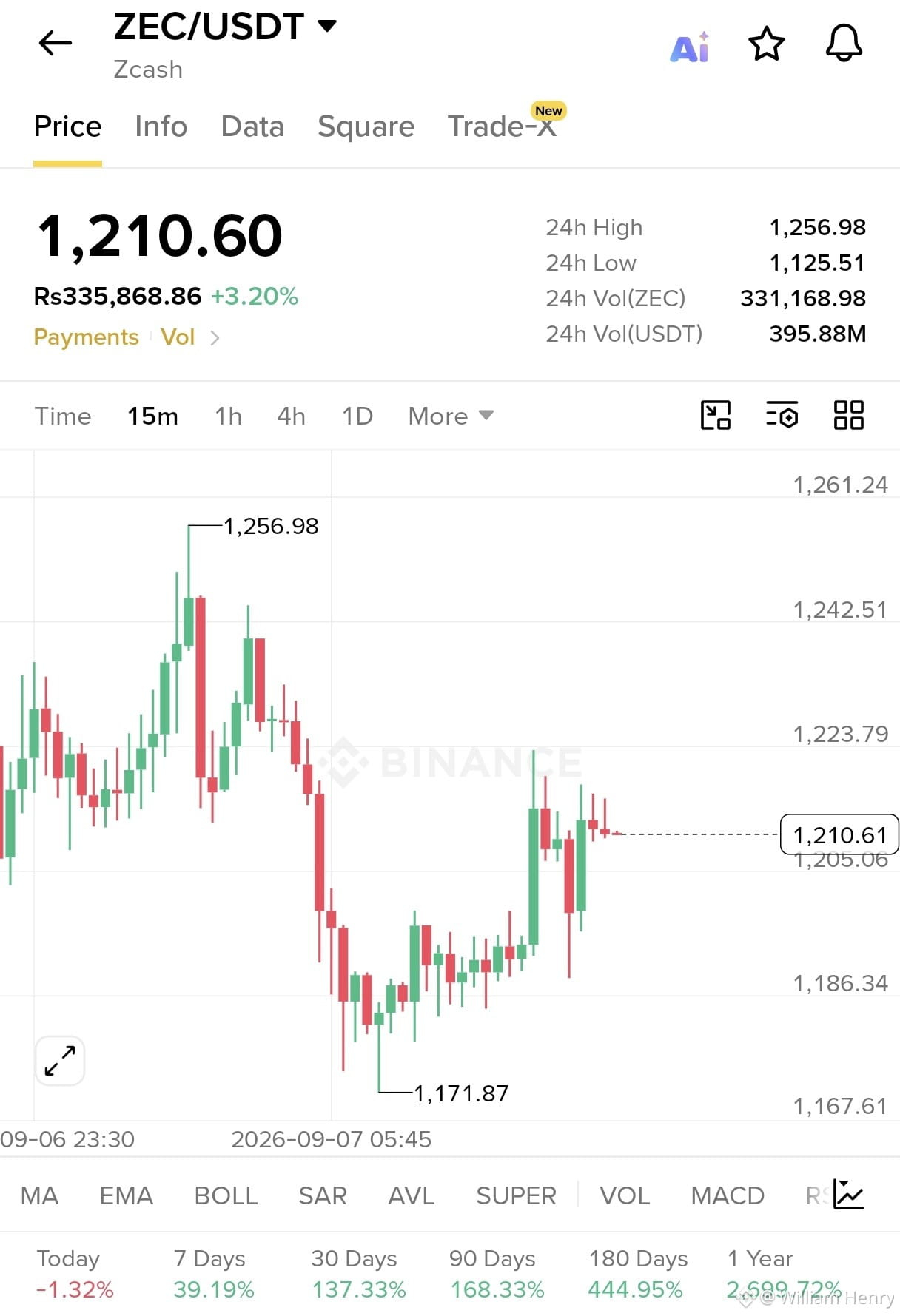
$ZEC just blasted to $851.19, up over +0.97% in a single day! From a low near $796.61, it shot up to $871.61 before cooling off slightly. Strong bullish candles with high volume show intense momentum — buyers are clearly in control. Trade Setup 📊 • Entry Zone: $848.00 – $854.00 • Target 1 🎯: $854.09 • Target 2 🎯: $865.86 • Target 3 🎯: $871.61 • Stop Loss: $838.85 If $ZEC breaks above $865.86 with volume, expect another explosive rally — momentum could push it deep into double digits fast. 🔥 Let’s go $ZEC #OilHoldsLosses {future}(ZECUSDT)
$ZEC just blasted to $851.19, up over +0.97% in a single day! From a low near $796.61, it shot up to $871.61 before cooling off slightly. Strong bullish candles with high volume show intense momentum — buyers are clearly in control.

Trade Setup 📊

• Entry Zone: $848.00 – $854.00

• Target 1 🎯: $854.09

• Target 2 🎯: $865.86

• Target 3 🎯: $871.61

• Stop Loss: $838.85

If $ZEC breaks above $865.86 with volume, expect another explosive rally — momentum could push it deep into double digits fast.

🔥 Let’s go $ZEC

#OilHoldsLosses
·
--
Bullish
$UAI reminded me why 50x leverage can punish a setup before the market even gives you enough room to think. The long entry was around 0.365011, with the average close near 0.3609, resulting in a loss of 9.32 USDT. The important part for me isn’t the loss itself—it’s how little room leverage leaves when price moves slightly against the position. What I like: the risk was closed instead of allowing a small mistake to become a larger one. What I don’t like: without a clear chart confirmation, structure, or visible support zone, there’s no reason to force another entry just to recover the loss. My plan from here is simple: wait. I’d rather see $UAI reclaim a meaningful level with confirmation before considering a long, while continued weakness would keep me out completely. Bullish or bearish, the next move needs to prove itself first. Sometimes the best trade after a loss is no trade at all. Will $UAI give buyers a clean second chance, or is more downside still waiting?
$UAI reminded me why 50x leverage can punish a setup before the market even gives you enough room to think.

The long entry was around 0.365011, with the average close near 0.3609, resulting in a loss of 9.32 USDT. The important part for me isn’t the loss itself—it’s how little room leverage leaves when price moves slightly against the position.

What I like: the risk was closed instead of allowing a small mistake to become a larger one.

What I don’t like: without a clear chart confirmation, structure, or visible support zone, there’s no reason to force another entry just to recover the loss.

My plan from here is simple: wait. I’d rather see $UAI reclaim a meaningful level with confirmation before considering a long, while continued weakness would keep me out completely.

Bullish or bearish, the next move needs to prove itself first.

Sometimes the best trade after a loss is no trade at all. Will $UAI give buyers a clean second chance, or is more downside still waiting?
$DUSK just broke away from a tight 15m structure, and the speed of this move is what makes the next few candles more interesting than the breakout itself. Price pushed from the 0.07376 low through the 0.0762–0.0768 area and quickly reached 0.0783, with DUSK now trading around 0.07864. Buyers clearly took control, but the vertical expansion also means I don’t like chasing blindly. My plan is a conditional long only if the breakout area around 0.0783 is retested and defended on the 15m chart. Entry: 0.07830–0.07850 after confirmation Stop Loss: 0.07740 TP1: 0.07910 TP2: 0.07970 TP3: 0.08050 Bullish scenario: 0.0783 flips into support and continuation builds toward fresh highs. Bearish scenario: price loses that level and slips back below 0.0774, turning this breakout into a possible rejection. Personally, I’m watching the retest more than the pump. Will $DUSK hold its breakout level, or is this where late buyers get trapped? #DUSK {future}(DUSKUSDT) #BitcoinOpenInterestFallsToTwoMonthLow #BitcoinOpenInterestFallsToTwoMonthLow
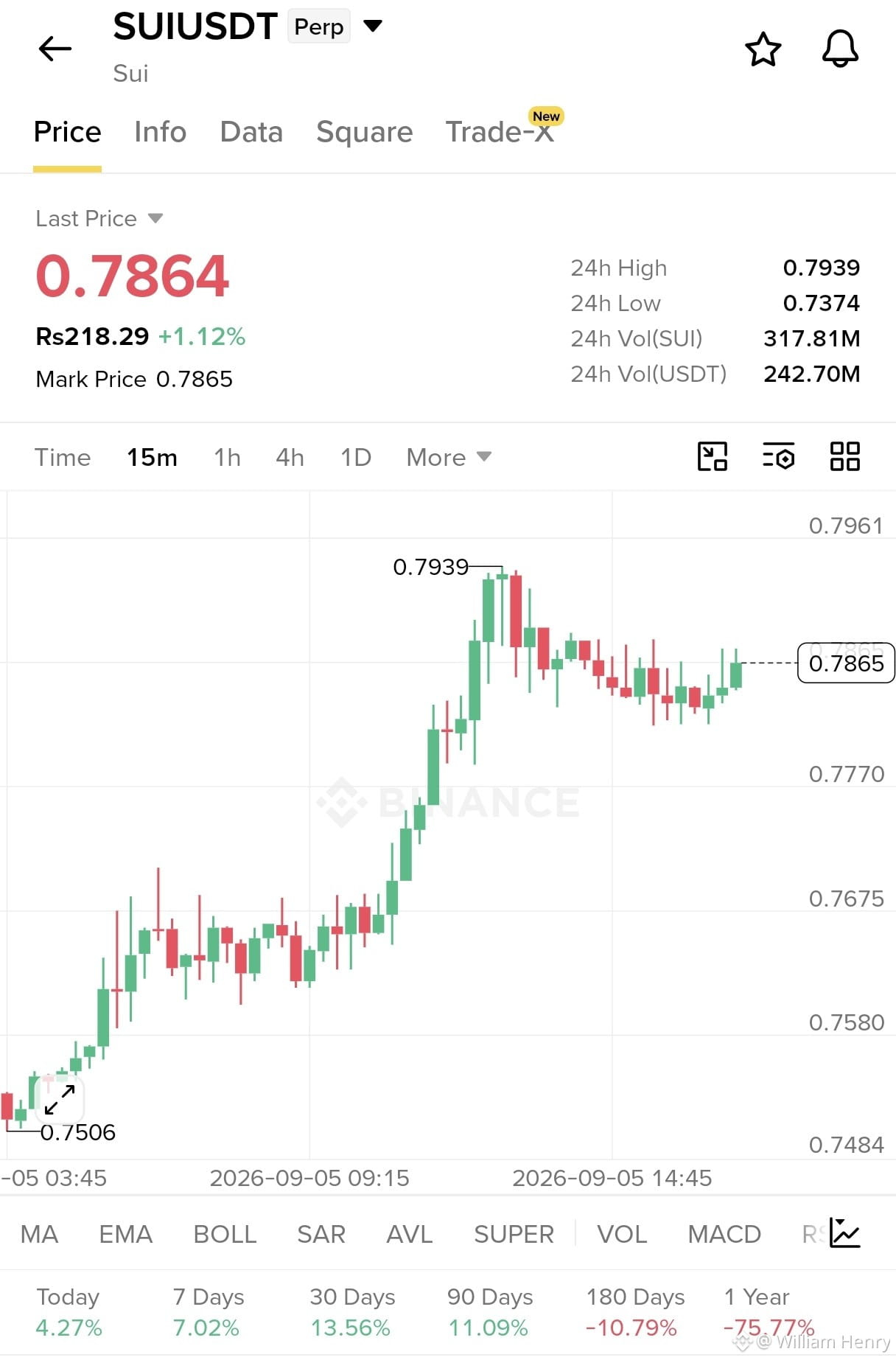
$DUSK just broke away from a tight 15m structure, and the speed of this move is what makes the next few candles more interesting than the breakout itself.

Price pushed from the 0.07376 low through the 0.0762–0.0768 area and quickly reached 0.0783, with DUSK now trading around 0.07864. Buyers clearly took control, but the vertical expansion also means I don’t like chasing blindly.

My plan is a conditional long only if the breakout area around 0.0783 is retested and defended on the 15m chart.

Entry: 0.07830–0.07850 after confirmation
Stop Loss: 0.07740
TP1: 0.07910
TP2: 0.07970
TP3: 0.08050

Bullish scenario: 0.0783 flips into support and continuation builds toward fresh highs.

Bearish scenario: price loses that level and slips back below 0.0774, turning this breakout into a possible rejection.

Personally, I’m watching the retest more than the pump. Will $DUSK hold its breakout level, or is this where late buyers get trapped?

#DUSK
#BitcoinOpenInterestFallsToTwoMonthLow #BitcoinOpenInterestFallsToTwoMonthLow
·
--
Bullish
$BTC just printed the kind of 15m expansion that gets my attention, but the first pullback after a vertical push is where the real information usually appears. Price launched from the 79,100–79,883 area and ran straight into 81,270.5, with the current price around 80,876. The structure is clearly stronger now, but I don’t love chasing a candle after such a sharp impulse. That’s why I’m watching whether BTC can hold the breakout zone instead of immediately giving it back. My plan is a conditional long only if the 15m chart confirms a reclaim and holds above 80,650–80,850. Entry: 80,850–80,950 after confirmation Stop Loss: 80,350 TP1: 81,270 TP2: 81,450 TP3: 81,900 If 80,650 fails, the bullish momentum weakens and a move back toward 79,883 or even 79,100 becomes possible. Personally, I’d rather buy confirmation than chase excitement. Is BTC building continuation here, or was that spike simply liquidity getting swept? #BTC {future}(BTCUSDT) #ZECBreaksKeyResistanceUp75.5%
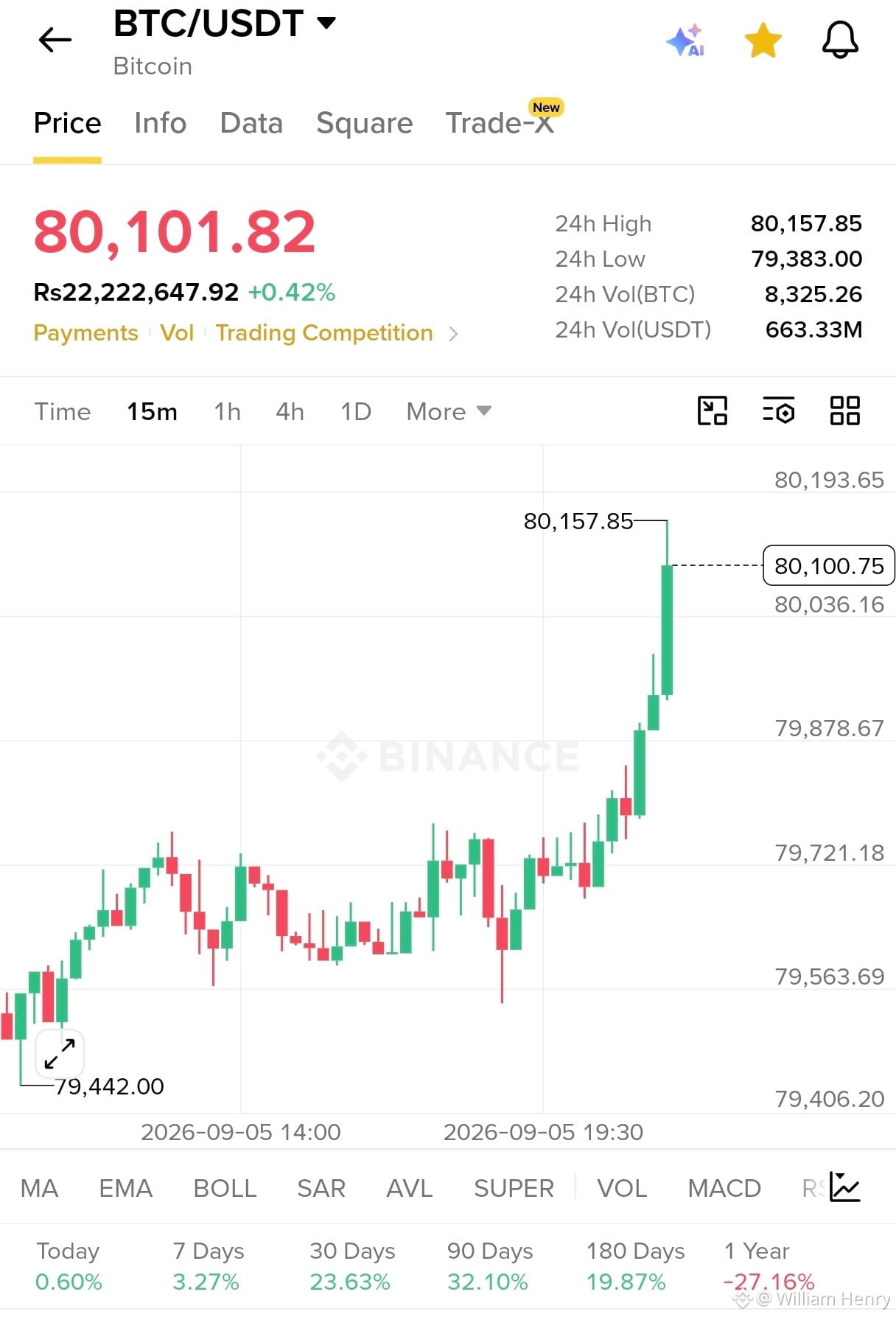
$BTC just printed the kind of 15m expansion that gets my attention, but the first pullback after a vertical push is where the real information usually appears.

Price launched from the 79,100–79,883 area and ran straight into 81,270.5, with the current price around 80,876. The structure is clearly stronger now, but I don’t love chasing a candle after such a sharp impulse. That’s why I’m watching whether BTC can hold the breakout zone instead of immediately giving it back.

My plan is a conditional long only if the 15m chart confirms a reclaim and holds above 80,650–80,850.

Entry: 80,850–80,950 after confirmation
Stop Loss: 80,350
TP1: 81,270
TP2: 81,450
TP3: 81,900

If 80,650 fails, the bullish momentum weakens and a move back toward 79,883 or even 79,100 becomes possible.

Personally, I’d rather buy confirmation than chase excitement. Is BTC building continuation here, or was that spike simply liquidity getting swept?

#BTC
#ZECBreaksKeyResistanceUp75.5%
·
--
Bullish
I keep coming back to @Dusk_Foundation Network because it seems to be wrestling with a problem that blockchains usually avoid: how do you make financial activity private without simply recreating the closed systems that blockchains were supposed to challenge? Dusk is built around that tension. Its architecture combines confidential transactions, selective disclosure, identity controls and smart contracts designed for regulated financial assets, including its Confidential Security Contract standard. What interests me is that Dusk does not treat privacy as disappearing completely. Its Phoenix model can shield transaction details, while Citadel allows users to prove that they possess valid credentials without putting the underlying personal information on-chain. That feels useful, but it also creates an uncomfortable question: who decides what should be proven, what should remain hidden, and who is trusted to issue the credentials in the first place? I suspect this is where Dusk becomes less about cryptography and more about human behavior. The technology can enforce rules, but someone still has to design those rules. XSC contracts can encode things such as eligibility and transfer restrictions, which may make regulated assets easier to coordinate, but it also means financial policy can gradually become software policy. And then there is decentralization. Dusk uses randomly selected committees for consensus, but participation still requires infrastructure, reliability and a minimum stake. Over time, I wonder whether the people with the most technical knowledge simply become the people everyone depends on. Maybe that is what keeps pulling me back. Dusk is trying to make privacy, regulation and decentralization coexist, but those things do not naturally point in the same direction. Perhaps the real test is not whether Dusk can make them work today, but whether they still work together when nobody is paying much attention anymore. @Dusk_Foundation #dusk $DUSK
I keep coming back to @Dusk Network because it seems to be wrestling with a problem that blockchains usually avoid: how do you make financial activity private without simply recreating the closed systems that blockchains were supposed to challenge? Dusk is built around that tension. Its architecture combines confidential transactions, selective disclosure, identity controls and smart contracts designed for regulated financial assets, including its Confidential Security Contract standard.

What interests me is that Dusk does not treat privacy as disappearing completely. Its Phoenix model can shield transaction details, while Citadel allows users to prove that they possess valid credentials without putting the underlying personal information on-chain. That feels useful, but it also creates an uncomfortable question: who decides what should be proven, what should remain hidden, and who is trusted to issue the credentials in the first place?

I suspect this is where Dusk becomes less about cryptography and more about human behavior. The technology can enforce rules, but someone still has to design those rules. XSC contracts can encode things such as eligibility and transfer restrictions, which may make regulated assets easier to coordinate, but it also means financial policy can gradually become software policy.

And then there is decentralization. Dusk uses randomly selected committees for consensus, but participation still requires infrastructure, reliability and a minimum stake. Over time, I wonder whether the people with the most technical knowledge simply become the people everyone depends on.

Maybe that is what keeps pulling me back. Dusk is trying to make privacy, regulation and decentralization coexist, but those things do not naturally point in the same direction. Perhaps the real test is not whether Dusk can make them work today, but whether they still work together when nobody is paying much attention anymore.

@Dusk #dusk $DUSK
$STORJ just went vertical — +51.7% today — and now the real test begins at $0.0624. Price exploded from the $0.045–$0.050 range and is sitting at $0.0622, just beneath the 24h high. Momentum is clearly strong, but this is exactly where chasing can get punished. Plan: WAIT for confirmation. I want a 15m close above $0.0624, followed by a successful retest of $0.0590–$0.0600. Entry: $0.0590–$0.0600 after reclaim SL: $0.0565 TP1: $0.0624 TP2: $0.0635 TP3: $0.0660 Bullish: reclaim $0.0624 → price discovery can accelerate. Bearish: rejection + loss of $0.0590 → $0.0545 becomes the first area I’d watch, with $0.0501 below. What I like: explosive momentum and a clean breakout structure. What I don’t like: the move is extremely extended, with almost no consolidation underneath current price. My trader instinct here: don’t chase the candle; let STORJ prove the breakout first. Does $0.0624 become the launchpad for another leg, or the level where profit-taking finally hits? 👀 #BitcoinOpenInterestFallsToTwoMonthLow #BitcoinRises23.6%Weekly #AIHardwareStocksFallPreMarketAAOIDown11.66% #SP500FuturesFall
$STORJ just went vertical — +51.7% today — and now the real test begins at $0.0624.

Price exploded from the $0.045–$0.050 range and is sitting at $0.0622, just beneath the 24h high. Momentum is clearly strong, but this is exactly where chasing can get punished.

Plan: WAIT for confirmation.

I want a 15m close above $0.0624, followed by a successful retest of $0.0590–$0.0600.

Entry: $0.0590–$0.0600 after reclaim
SL: $0.0565
TP1: $0.0624
TP2: $0.0635
TP3: $0.0660

Bullish: reclaim $0.0624 → price discovery can accelerate.

Bearish: rejection + loss of $0.0590 → $0.0545 becomes the first area I’d watch, with $0.0501 below.

What I like: explosive momentum and a clean breakout structure.

What I don’t like: the move is extremely extended, with almost no consolidation underneath current price.

My trader instinct here: don’t chase the candle; let STORJ prove the breakout first.

Does $0.0624 become the launchpad for another leg, or the level where profit-taking finally hits? 👀

#BitcoinOpenInterestFallsToTwoMonthLow #BitcoinRises23.6%Weekly #AIHardwareStocksFallPreMarketAAOIDown11.66% #SP500FuturesFall
·
--
Bullish
$ETH just got rejected hard from $2,533 — and the 15m chart is starting to look fragile. ETH is at $2,479 after failing to hold the $2,515 area. The key battle now sits around $2,468–$2,491. 🔥 Plan: Conditional Long Entry: $2,485–$2,495 after a 15m reclaim SL: $2,455 TP1: $2,515 TP2: $2,533 TP3: $2,560 Bullish: reclaim $2,491 → $2,515 and $2,533 can come back quickly. Bearish: lose $2,468 → $2,445 becomes the first downside target, with $2,425 next. What I like: the larger intraday move is still positive from $2,426. What I don't like: the rejection from $2,533 produced strong selling pressure and lower highs. I’d rather see ETH reclaim $2,491 before getting aggressive. No confirmation, no trade. Is this just a pullback before another $2.5K attack, or is ETH preparing for a deeper flush? 👀 #AIHardwareStocksFallPreMarketAAOIDown11.66% #ETH🔥🔥🔥🔥🔥🔥 {future}(ETHUSDT)
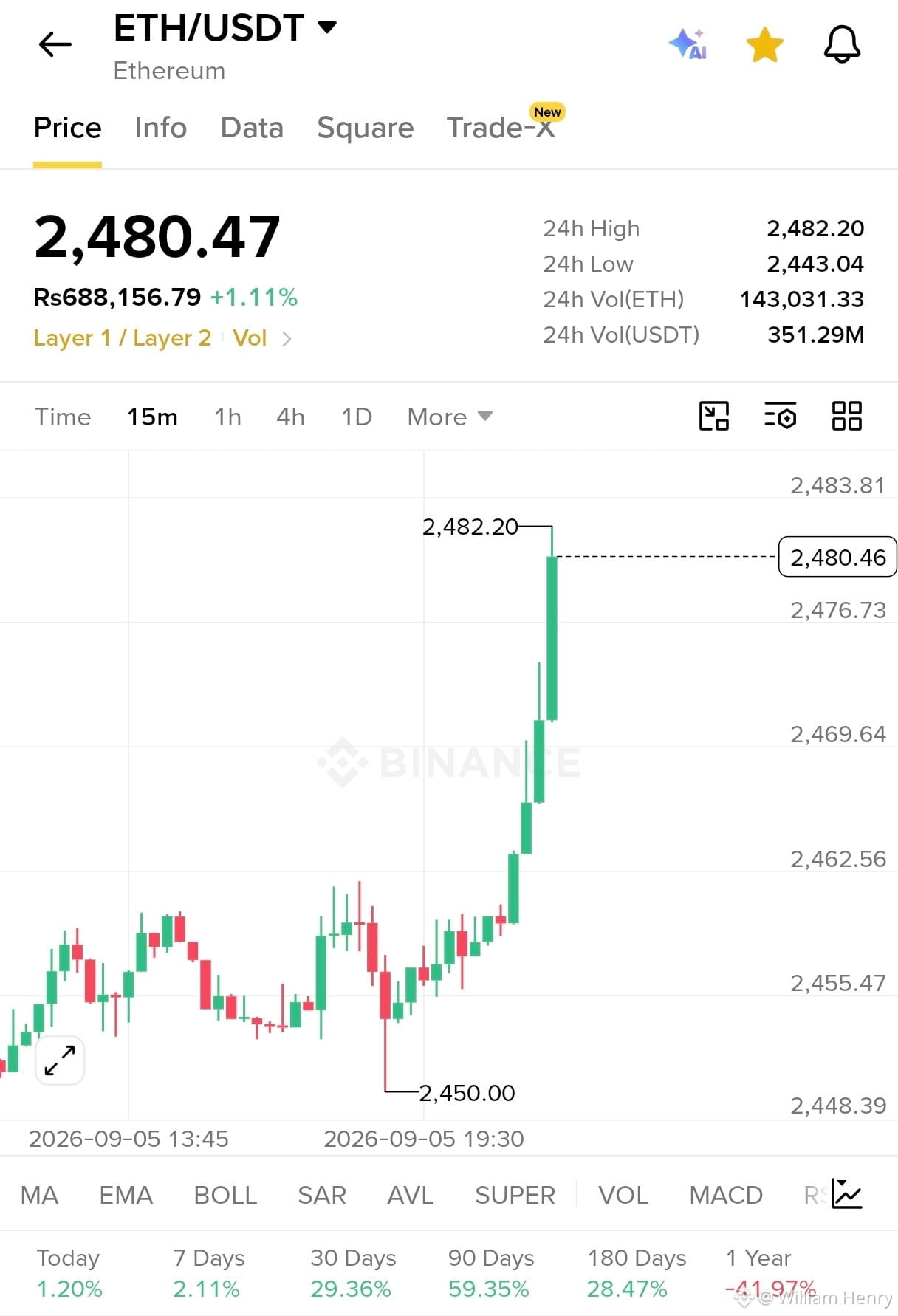
$ETH just got rejected hard from $2,533 — and the 15m chart is starting to look fragile.

ETH is at $2,479 after failing to hold the $2,515 area. The key battle now sits around $2,468–$2,491.

🔥 Plan: Conditional Long
Entry: $2,485–$2,495 after a 15m reclaim
SL: $2,455
TP1: $2,515
TP2: $2,533
TP3: $2,560

Bullish: reclaim $2,491 → $2,515 and $2,533 can come back quickly.

Bearish: lose $2,468 → $2,445 becomes the first downside target, with $2,425 next.

What I like: the larger intraday move is still positive from $2,426.

What I don't like: the rejection from $2,533 produced strong selling pressure and lower highs.

I’d rather see ETH reclaim $2,491 before getting aggressive. No confirmation, no trade.

Is this just a pullback before another $2.5K attack, or is ETH preparing for a deeper flush? 👀

#AIHardwareStocksFallPreMarketAAOIDown11.66%
#ETH🔥🔥🔥🔥🔥🔥
·
--
Bullish
$BTC just ran into the $80,000 wall — and the reaction is the part I’m watching now. Price pushed from $76,670 to $80,000, keeping the 15m structure bullish, but sellers immediately stepped in around the psychological resistance. BTC is now back near $79,078, so this is a decision zone rather than a chase. What I like: higher highs and higher lows are still intact. What I don’t like: repeated rejection near $80K and the latest bearish candles show buyers are losing momentum short-term. My plan: conditional long, not a blind entry. I’d want BTC to hold $78,700–$78,800 and print a clear bullish rejection/reclaim. Entry: $78,800–$79,000 after confirmation SL: $78,350 TP1: $79,430 TP2: $80,000 TP3: $80,160+ That gives roughly 1.4R to TP1, 2.7R to TP2, and 3R+ to TP3 from the midpoint. Bullish above $78.7K → another attack on $80K becomes likely. Lose $78.7K → $77,970 and $77,236 come back into focus. Personally, I’d rather buy a confirmed reaction than chase the $80K breakout. Will BTC finally break $80K, or is this another liquidity sweep before a deeper pullback? #BitcoinOpenInterestFallsToTwoMonthLow #SamsungFalls8.97%DraggingKospiDown3.24% {future}(BTCUSDT)
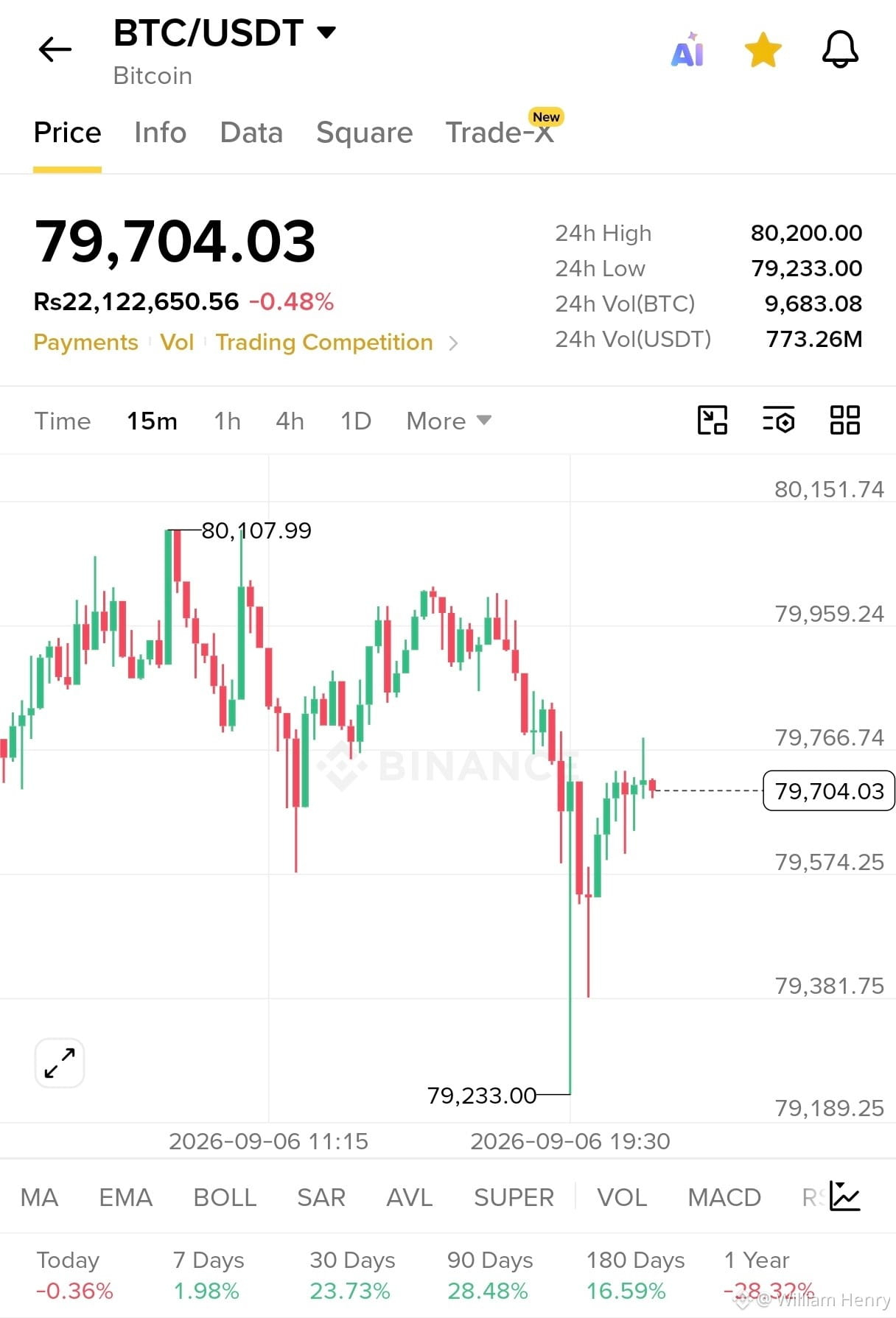
$BTC just ran into the $80,000 wall — and the reaction is the part I’m watching now.

Price pushed from $76,670 to $80,000, keeping the 15m structure bullish, but sellers immediately stepped in around the psychological resistance. BTC is now back near $79,078, so this is a decision zone rather than a chase.

What I like: higher highs and higher lows are still intact.

What I don’t like: repeated rejection near $80K and the latest bearish candles show buyers are losing momentum short-term.

My plan: conditional long, not a blind entry. I’d want BTC to hold $78,700–$78,800 and print a clear bullish rejection/reclaim.

Entry: $78,800–$79,000 after confirmation
SL: $78,350
TP1: $79,430
TP2: $80,000
TP3: $80,160+

That gives roughly 1.4R to TP1, 2.7R to TP2, and 3R+ to TP3 from the midpoint.

Bullish above $78.7K → another attack on $80K becomes likely. Lose $78.7K → $77,970 and $77,236 come back into focus.

Personally, I’d rather buy a confirmed reaction than chase the $80K breakout.

Will BTC finally break $80K, or is this another liquidity sweep before a deeper pullback?

#BitcoinOpenInterestFallsToTwoMonthLow #SamsungFalls8.97%DraggingKospiDown3.24%
·
--
Bullish
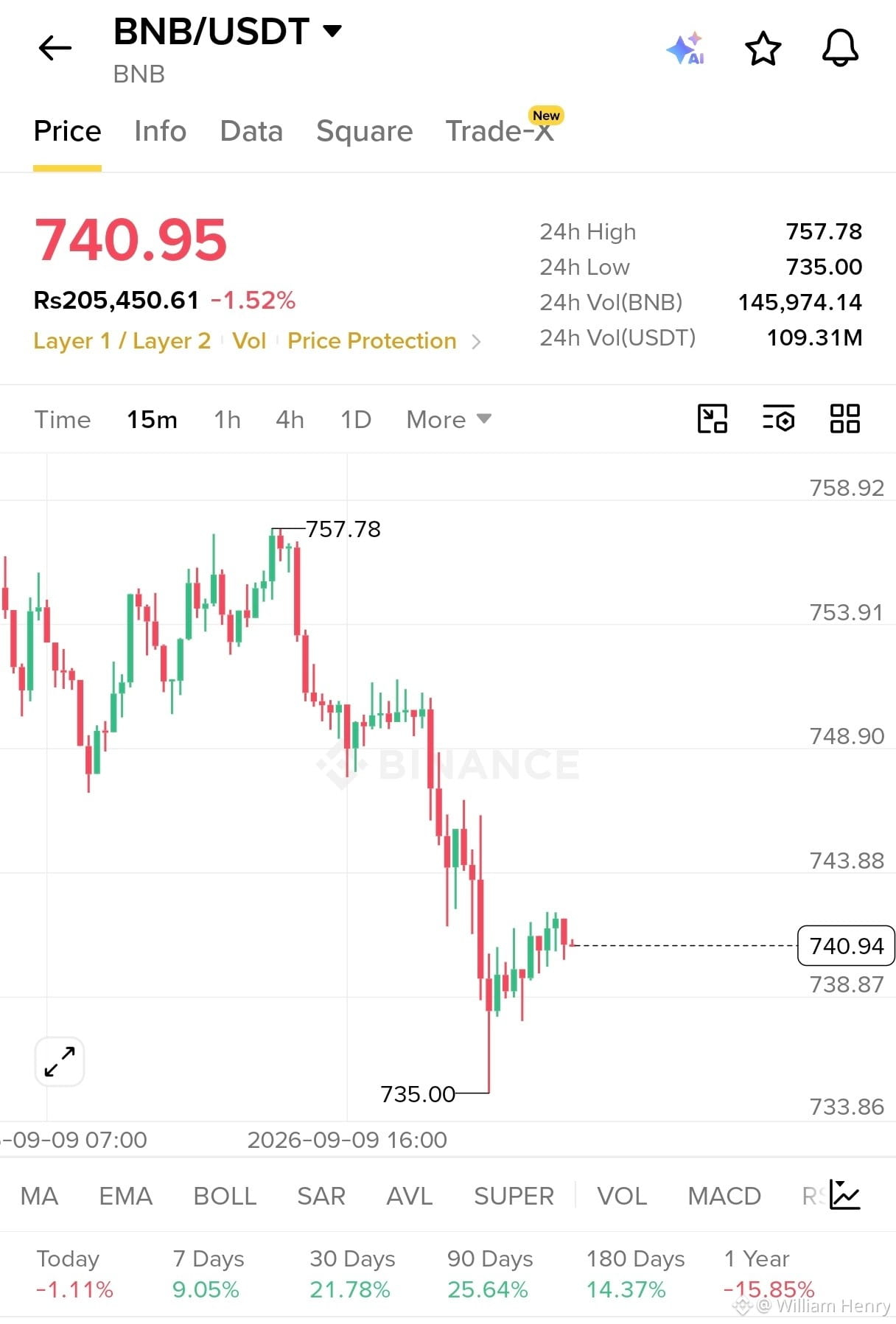
$BNB is getting interesting 👀 BNB is sitting around $704.68 on the 15M chart after ripping from the $692.94 low to a sharp $716.84 high. Now price is pulling back, but the structure is still worth watching. 🔥 24H High: $716.84 24H Low: $692.94 24H Volume: $129.47M USDT BNB Volume: 184,247 BNB Today: +0.72% 7D: +16.42% 30D: +25.35% The big question now: can bulls reclaim $712–$717 and push into fresh highs, or does this pullback turn into deeper profit-taking? $700 is the level I’m watching closely. ⚡ #BNB #BNBChain #Crypto #Trading
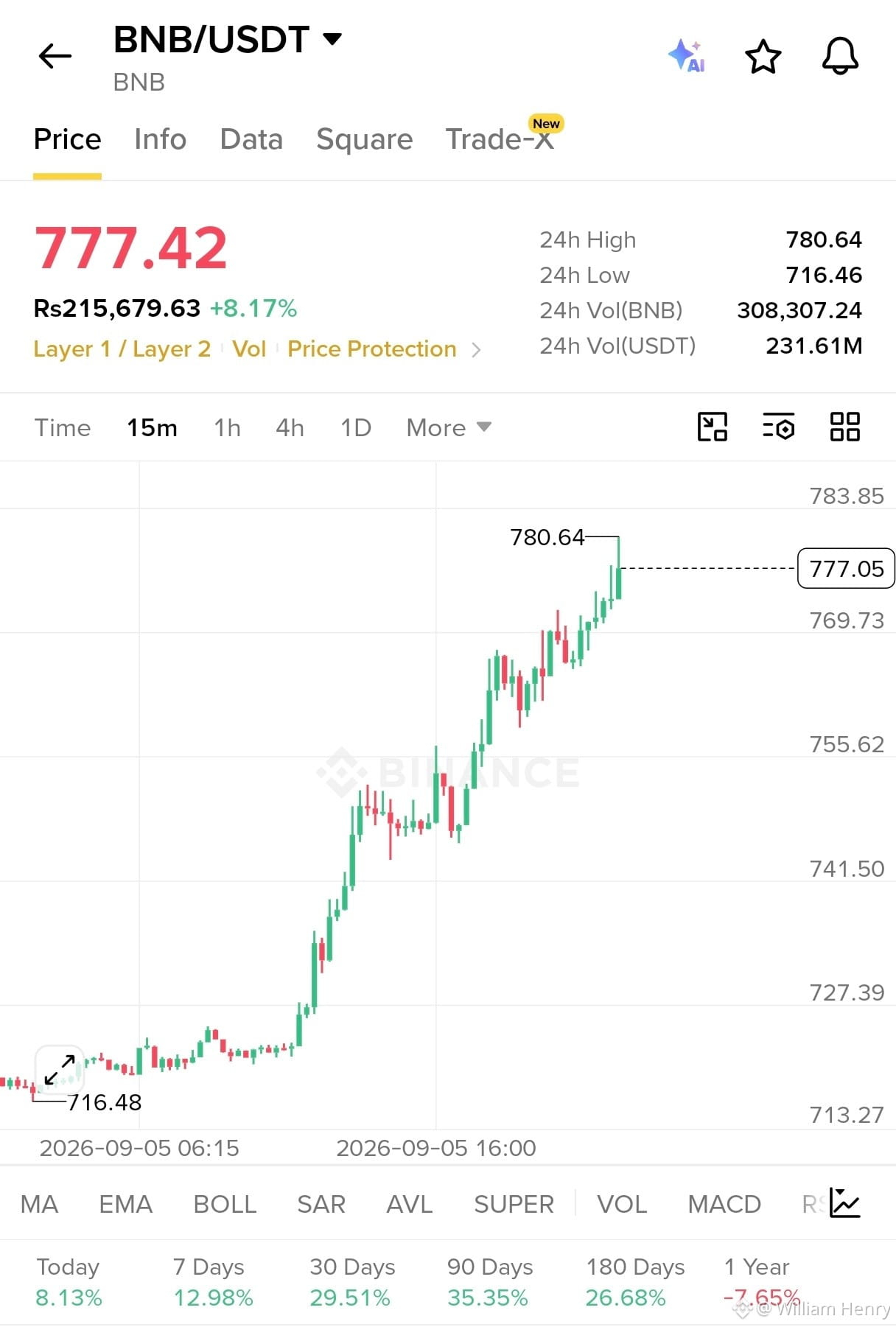
$BNB is getting interesting 👀

BNB is sitting around $704.68 on the 15M chart after ripping from the $692.94 low to a sharp $716.84 high.

Now price is pulling back, but the structure is still worth watching. 🔥

24H High: $716.84
24H Low: $692.94
24H Volume: $129.47M USDT
BNB Volume: 184,247 BNB
Today: +0.72%
7D: +16.42%
30D: +25.35%

The big question now: can bulls reclaim $712–$717 and push into fresh highs, or does this pullback turn into deeper profit-taking?

$700 is the level I’m watching closely. ⚡

#BNB #BNBChain #Crypto #Trading
·
--
Bullish
What keeps pulling my attention back to @Dusk_Foundation is not the promise of private finance, but the uncomfortable compromise hidden inside it. A financial network cannot simply make everything invisible. Someone eventually needs to verify eligibility, enforce rules, investigate wrongdoing, or prove that a transaction was legitimate. Dusk seems to be built around that contradiction: confidential activity on one side, selective disclosure and regulatory visibility on the other. I suspect this makes $DUSK less interesting as a privacy technology and more interesting as a test of who gets to decide what should remain private. Its Citadel system is designed so users can prove particular attributes without exposing everything, while the network supports both public and shielded transaction models. That sounds balanced, but balance itself creates another dependency: someone must define the boundaries. What keeps bothering me is what happens years later, when the original people who cared intensely about privacy are no longer the majority. Routine users may simply accept whatever disclosure rules make applications easier to use. Institutions may prefer predictable permissions over messy decentralization. Governance could remain technically distributed while practical influence slowly gathers around the actors with the most resources, expertise, or regulatory access. Maybe the deeper risk is not that Dusk fails to protect privacy. Perhaps it succeeds so well at making privacy compatible with institutions that the meaning of privacy quietly changes. The system may still be decentralized, confidential, and verifiable—but who decides the acceptable balance when those principles eventually collide? @Dusk_Foundation #dusk $DUSK
What keeps pulling my attention back to @Dusk is not the promise of private finance, but the uncomfortable compromise hidden inside it. A financial network cannot simply make everything invisible. Someone eventually needs to verify eligibility, enforce rules, investigate wrongdoing, or prove that a transaction was legitimate. Dusk seems to be built around that contradiction: confidential activity on one side, selective disclosure and regulatory visibility on the other.

I suspect this makes $DUSK less interesting as a privacy technology and more interesting as a test of who gets to decide what should remain private. Its Citadel system is designed so users can prove particular attributes without exposing everything, while the network supports both public and shielded transaction models. That sounds balanced, but balance itself creates another dependency: someone must define the boundaries.

What keeps bothering me is what happens years later, when the original people who cared intensely about privacy are no longer the majority. Routine users may simply accept whatever disclosure rules make applications easier to use. Institutions may prefer predictable permissions over messy decentralization. Governance could remain technically distributed while practical influence slowly gathers around the actors with the most resources, expertise, or regulatory access.

Maybe the deeper risk is not that Dusk fails to protect privacy. Perhaps it succeeds so well at making privacy compatible with institutions that the meaning of privacy quietly changes. The system may still be decentralized, confidential, and verifiable—but who decides the acceptable balance when those principles eventually collide?

@Dusk #dusk $DUSK
·
--
Bullish
$TRUMP is cooling off after an aggressive push to $2.936, but the 15m structure still has buyers defending the higher range. At $2.695, price is consolidating rather than collapsing. The key area is $2.75–$2.80; reclaiming it would put the recent high back in play. I would rather see confirmation than chase the previous spike. Plan: Conditional Long Entry: $2.75–$2.78 after a 15m close above $2.75 Stop Loss: $2.63 TP1: $2.84 TP2: $2.93 TP3: $3.05 Bullish scenario: reclaim $2.75 and hold it as support, opening room toward $2.84 and the $2.936 swing high. Bearish scenario: rejection below $2.75 followed by a break of $2.63 could drag price toward $2.55 and then $2.50. My observation: the trend is still constructive, but that $2.936 wick shows sellers are very active near the highs. Does $TRUMP have another breakout attempt in it, or will sellers defend $2.80 again? {future}(TRUMPUSDT) #BitcoinStrongestWeekSinceMarch2023 #AnthropicIPOCouldTopSpaceXRecordReportsSay #NvidiaAIServerPricesRiseOver15% #BSTREndsCantorSPACGoPublicPlan #USCanadaTradeTalksCollapseCanadaVowsRetaliation
$TRUMP is cooling off after an aggressive push to $2.936, but the 15m structure still has buyers defending the higher range.

At $2.695, price is consolidating rather than collapsing. The key area is $2.75–$2.80; reclaiming it would put the recent high back in play. I would rather see confirmation than chase the previous spike.

Plan: Conditional Long
Entry: $2.75–$2.78 after a 15m close above $2.75
Stop Loss: $2.63
TP1: $2.84
TP2: $2.93
TP3: $3.05

Bullish scenario: reclaim $2.75 and hold it as support, opening room toward $2.84 and the $2.936 swing high.

Bearish scenario: rejection below $2.75 followed by a break of $2.63 could drag price toward $2.55 and then $2.50.

My observation: the trend is still constructive, but that $2.936 wick shows sellers are very active near the highs.

Does $TRUMP have another breakout attempt in it, or will sellers defend $2.80 again?

#BitcoinStrongestWeekSinceMarch2023 #AnthropicIPOCouldTopSpaceXRecordReportsSay #NvidiaAIServerPricesRiseOver15% #BSTREndsCantorSPACGoPublicPlan #USCanadaTradeTalksCollapseCanadaVowsRetaliation
·
--
Bullish
$1000PEPE is holding its ground after a strong recovery from $0.0038368, but the chart is now sitting right under a key breakout zone. Price at $0.0040875 is consolidating beneath $0.00410, while the recent swing high at $0.0041545 is the bigger resistance. I like the structure, but I don't want to chase inside the range. Plan: Conditional Long Entry: $0.004105–$0.004125 after a confirmed 15m breakout Stop Loss: $0.004025 TP1: $0.004155 TP2: $0.004185 TP3: $0.004250 Bullish scenario: a clean close above $0.00410 followed by a successful retest could open the path toward the recent high and potentially higher. Bearish scenario: rejection around $0.00410–$0.00415 followed by a break below $0.00403 would weaken the structure and bring $0.00396 back into focus. My read: the trend has improved considerably, but the breakout still needs to prove itself. Does $1000PEPE have enough pressure to clear $0.00415 this time? {future}(1000PEPEUSDT) #BitcoinStrongestWeekSinceMarch2023 #AnthropicIPOCouldTopSpaceXRecordReportsSay #NvidiaAIServerPricesRiseOver15% #BSTREndsCantorSPACGoPublicPlan #USCanadaTradeTalksCollapseCanadaVowsRetaliation
$1000PEPE is holding its ground after a strong recovery from $0.0038368, but the chart is now sitting right under a key breakout zone.

Price at $0.0040875 is consolidating beneath $0.00410, while the recent swing high at $0.0041545 is the bigger resistance. I like the structure, but I don't want to chase inside the range.

Plan: Conditional Long
Entry: $0.004105–$0.004125 after a confirmed 15m breakout
Stop Loss: $0.004025
TP1: $0.004155
TP2: $0.004185
TP3: $0.004250

Bullish scenario: a clean close above $0.00410 followed by a successful retest could open the path toward the recent high and potentially higher.

Bearish scenario: rejection around $0.00410–$0.00415 followed by a break below $0.00403 would weaken the structure and bring $0.00396 back into focus.

My read: the trend has improved considerably, but the breakout still needs to prove itself.

Does $1000PEPE have enough pressure to clear $0.00415 this time?

#BitcoinStrongestWeekSinceMarch2023 #AnthropicIPOCouldTopSpaceXRecordReportsSay #NvidiaAIServerPricesRiseOver15% #BSTREndsCantorSPACGoPublicPlan #USCanadaTradeTalksCollapseCanadaVowsRetaliation
·
--
Bullish
$UNITREE just made the chart interesting again — a sharp 15m rebound from the $95.05 low has pushed price back to $97.02. The move is strong, but chasing this candle is not my favorite entry. The key test is $97.26; a clean 15m hold above that level would make the recovery more convincing. Plan: Conditional Long Entry: $97.30–$97.50 after confirmation Stop Loss: $96.65 TP1: $98.05 TP2: $98.50 TP3: $98.90 The bullish case is a reclaim of $97.26 followed by sustained buying toward the $98.06–$98.99 resistance zone. I’d personally prefer a pullback and hold rather than buying directly into the spike. If $96.47 breaks instead, the setup weakens quickly and $95.67–$95.05 becomes the bearish area to watch. My trader read: momentum has returned, but the next candle matters more than the size of this green candle. Will $UNITREE hold above $97.26, or was this rebound just a liquidity sweep? #BitcoinStrongestWeekSinceMarch2023 #AnthropicIPOCouldTopSpaceXRecordReportsSay #USCanadaTradeTalksCollapseCanadaVowsRetaliation {future}(UNITREEUSDT)
$UNITREE just made the chart interesting again — a sharp 15m rebound from the $95.05 low has pushed price back to $97.02.

The move is strong, but chasing this candle is not my favorite entry. The key test is $97.26; a clean 15m hold above that level would make the recovery more convincing.

Plan: Conditional Long
Entry: $97.30–$97.50 after confirmation
Stop Loss: $96.65
TP1: $98.05
TP2: $98.50
TP3: $98.90

The bullish case is a reclaim of $97.26 followed by sustained buying toward the $98.06–$98.99 resistance zone. I’d personally prefer a pullback and hold rather than buying directly into the spike.

If $96.47 breaks instead, the setup weakens quickly and $95.67–$95.05 becomes the bearish area to watch.

My trader read: momentum has returned, but the next candle matters more than the size of this green candle.

Will $UNITREE hold above $97.26, or was this rebound just a liquidity sweep?

#BitcoinStrongestWeekSinceMarch2023 #AnthropicIPOCouldTopSpaceXRecordReportsSay #USCanadaTradeTalksCollapseCanadaVowsRetaliation
·
--
Bullish
Verified
I keep coming back to Dusk Network because its idea of privacy in financial systems feels less straightforward the longer I think about it. It is easy to imagine privacy as simply hiding information, but Dusk seems to be asking for something more difficult: can financial activity remain private while still giving institutions enough certainty to trust what is happening? That tension is where the project becomes interesting to me. Dusk uses zero-knowledge proofs and selective disclosure so that someone can prove something about themselves or a transaction without necessarily exposing everything behind it. On paper, that feels like a sensible compromise. But I wonder what happens when these compromises become everyday rules rather than technical possibilities. Who decides what must be proven? Who decides what counts as an acceptable credential? The risk may not be that Dusk suddenly becomes centralized. It could happen much more quietly. The network uses committees and staking to distribute validation, but real participation depends on people, infrastructure, software, and organizations behaving consistently. If operating the system becomes increasingly specialized, a smaller group could end up coordinating more of it simply because they are the ones who know how to keep everything running. Maybe that is the uncomfortable part of Dusk. Privacy can be decentralized at the protocol level while trust gradually becomes concentrated somewhere else. I am not sure whether that is a weakness or simply an unavoidable feature of trying to connect blockchain privacy with real financial institutions. Perhaps Dusk works until convenience, compliance, and routine participation begin shaping the system more strongly than the original desire for privacy. And I keep wondering what the network looks like when nobody is excited about privacy anymore, but everyone simply expects it to work. let's go @Dusk_Foundation #dusk $DUSK
I keep coming back to Dusk Network because its idea of privacy in financial systems feels less straightforward the longer I think about it. It is easy to imagine privacy as simply hiding information, but Dusk seems to be asking for something more difficult: can financial activity remain private while still giving institutions enough certainty to trust what is happening?

That tension is where the project becomes interesting to me. Dusk uses zero-knowledge proofs and selective disclosure so that someone can prove something about themselves or a transaction without necessarily exposing everything behind it. On paper, that feels like a sensible compromise. But I wonder what happens when these compromises become everyday rules rather than technical possibilities. Who decides what must be proven? Who decides what counts as an acceptable credential?

The risk may not be that Dusk suddenly becomes centralized. It could happen much more quietly. The network uses committees and staking to distribute validation, but real participation depends on people, infrastructure, software, and organizations behaving consistently. If operating the system becomes increasingly specialized, a smaller group could end up coordinating more of it simply because they are the ones who know how to keep everything running.

Maybe that is the uncomfortable part of Dusk. Privacy can be decentralized at the protocol level while trust gradually becomes concentrated somewhere else.

I am not sure whether that is a weakness or simply an unavoidable feature of trying to connect blockchain privacy with real financial institutions. Perhaps Dusk works until convenience, compliance, and routine participation begin shaping the system more strongly than the original desire for privacy. And I keep wondering what the network looks like when nobody is excited about privacy anymore, but everyone simply expects it to work.

let's go

@Dusk #dusk $DUSK
·
--
Bullish
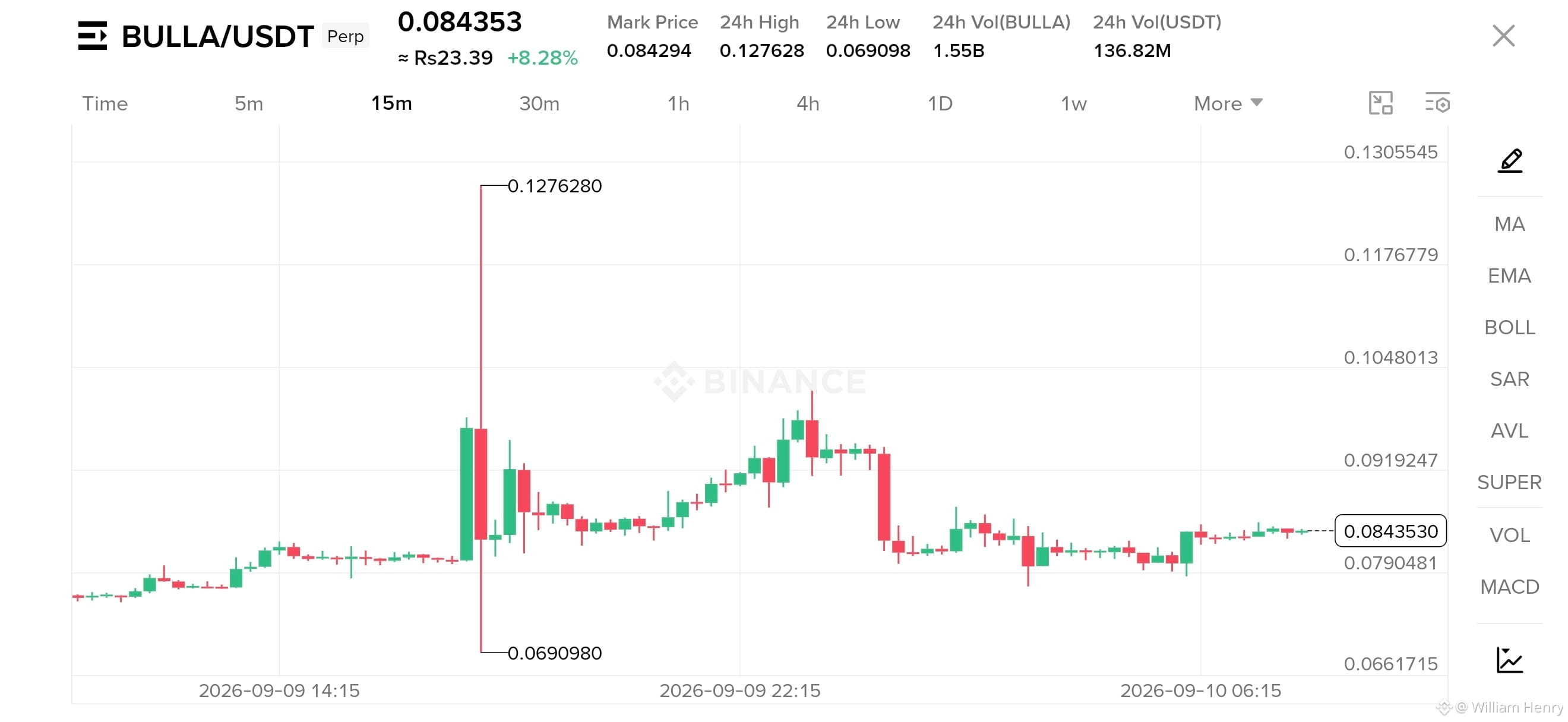
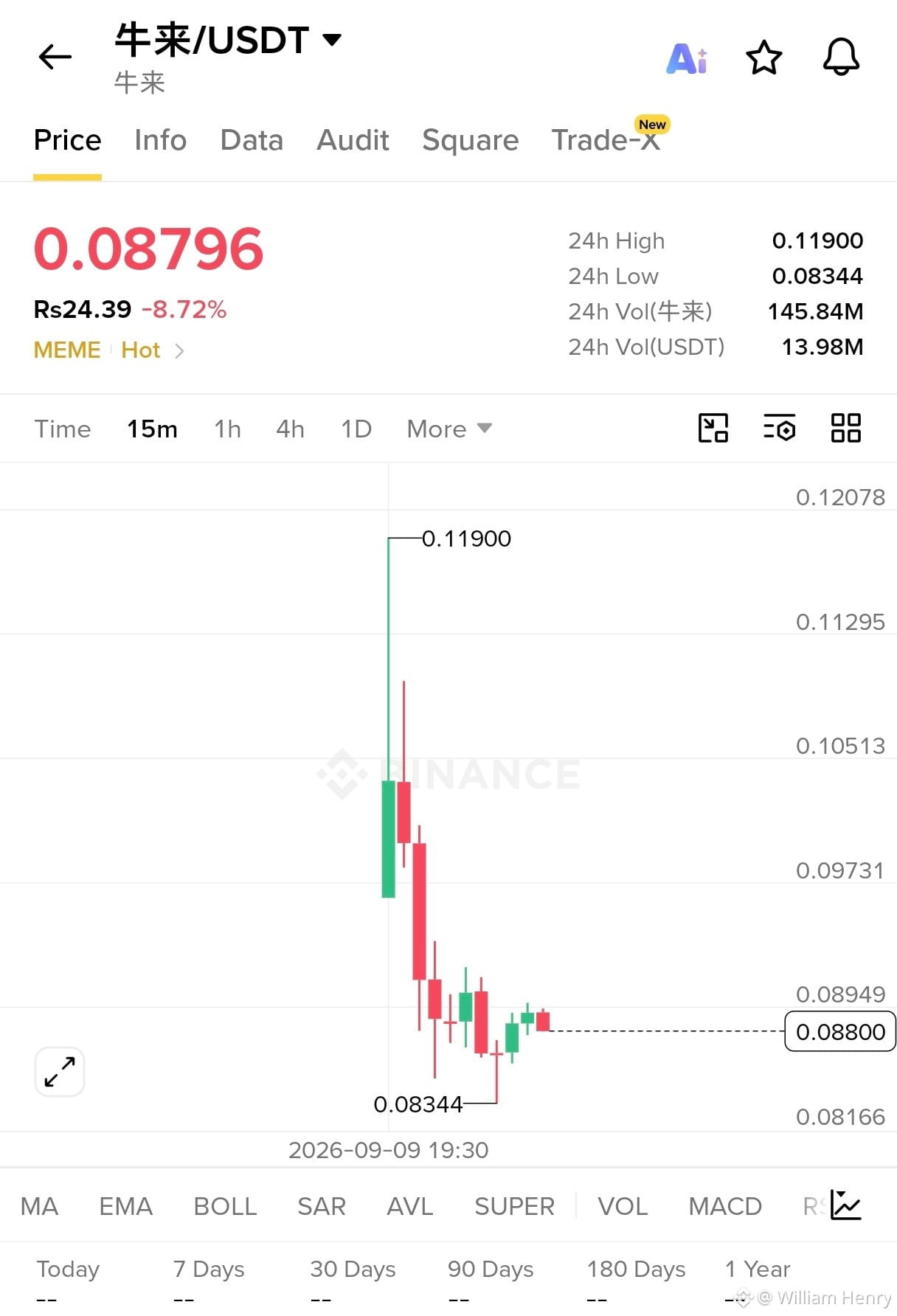
This screen has more going on than just one coin. $GRVT — $0.2596 | -6.05% $KII — $0.066278 | +2.41% $APR — $0.22147 | +18.83% $DOS — $0.23103 | -3.86% $quq — $0.001595 | -11.33% $AEON — $0.062998 | -14.09% $BEAT — $0.15843 | +28.28% $牛来 — $0.059403 | -15.66% $UP — $0.41418 | +6.61% $VWV — $15.24 | +0.10% The dispersion is what caught my attention. BEAT is leading the board with a +28% move, while AEON and 牛来 are down more than 15%. APR is also showing serious momentum at +18.83%. At the same time, GRVT is down 6.05% despite sitting near a $966M market cap. That tells me I wouldn't treat this as one broad market move. There is clear rotation happening between these names. The strongest momentum is currently sitting with BEAT and APR. KII and UP are also holding positive territory, but their moves look much less aggressive. On the weak side, AEON, 牛来 and quq are the names I'd watch carefully for either capitulation or a potential reversal. GRVT and DOS are sitting somewhere in the middle, but both are still showing weakness. My approach here is not to chase the biggest green candle. I want confirmation first. For the winners, I'd look for a pullback that holds and then a continuation move. For the losers, I'd wait for buyers to reclaim a meaningful level before considering a long. Without the actual chart structure, I wouldn't invent exact entries or stop-loss levels from this screenshot alone. The biggest question for me is simple: Is this the start of a rotation into BEAT, APR, KII and UP — or are these just short-term pumps before liquidity moves somewhere else?
This screen has more going on than just one coin.

$GRVT — $0.2596 | -6.05%

$KII — $0.066278 | +2.41%

$APR — $0.22147 | +18.83%

$DOS — $0.23103 | -3.86%

$quq — $0.001595 | -11.33%

$AEON — $0.062998 | -14.09%

$BEAT — $0.15843 | +28.28%

$牛来 — $0.059403 | -15.66%

$UP — $0.41418 | +6.61%

$VWV — $15.24 | +0.10%

The dispersion is what caught my attention.

BEAT is leading the board with a +28% move, while AEON and 牛来 are down more than 15%.

APR is also showing serious momentum at +18.83%.

At the same time, GRVT is down 6.05% despite sitting near a $966M market cap.

That tells me I wouldn't treat this as one broad market move.

There is clear rotation happening between these names.

The strongest momentum is currently sitting with BEAT and APR.

KII and UP are also holding positive territory, but their moves look much less aggressive.

On the weak side, AEON, 牛来 and quq are the names I'd watch carefully for either capitulation or a potential reversal.

GRVT and DOS are sitting somewhere in the middle, but both are still showing weakness.

My approach here is not to chase the biggest green candle.

I want confirmation first.

For the winners, I'd look for a pullback that holds and then a continuation move.

For the losers, I'd wait for buyers to reclaim a meaningful level before considering a long.

Without the actual chart structure, I wouldn't invent exact entries or stop-loss levels from this screenshot alone.

The biggest question for me is simple:

Is this the start of a rotation into BEAT, APR, KII and UP — or are these just short-term pumps before liquidity moves somewhere else?
Log in to explore more content
Join global crypto users on Binance Square
⚡️ Get latest and useful information about crypto.
💬 Trusted by the world’s largest crypto exchange.
👍 Discover real insights from verified creators.
Email / Phone number
Sitemap
Cookie Preferences
Platform T&Cs