
Elayaa
10.1k Posts

Elayaa
Exploring crypto, breaking down new projects, and sharing insights from the blockchain world

Traders League Badge Expert
233 Following
27.9K+ Followers
57.7K+ Liked
1 Badges
Posts
All
Quotes
Live
Verified
I’ll be honest, I never really thought about how much information a financial asset carries beyond its price. But while looking into @Dusk , I started thinking about what happens when those assets move onchain.
Who can own them? What information should stay private? What does a regulator need to see? And how do you make the whole process settle properly?
That’s the part I find interesting about Dusk. Instead of treating these as separate problems, it’s trying to build them into the same infrastructure for regulated financial markets.
Dusk is a Layer 1 built around programmable privacy, with DuskEVM for familiar development and confidential workflows for sensitive financial use cases.
I’m still learning the deeper technical side, but the more I understand the problem, the more Dusk makes sense to me.
$DUSK #dusk
Who can own them? What information should stay private? What does a regulator need to see? And how do you make the whole process settle properly?
That’s the part I find interesting about Dusk. Instead of treating these as separate problems, it’s trying to build them into the same infrastructure for regulated financial markets.
Dusk is a Layer 1 built around programmable privacy, with DuskEVM for familiar development and confidential workflows for sensitive financial use cases.
I’m still learning the deeper technical side, but the more I understand the problem, the more Dusk makes sense to me.
$DUSK #dusk
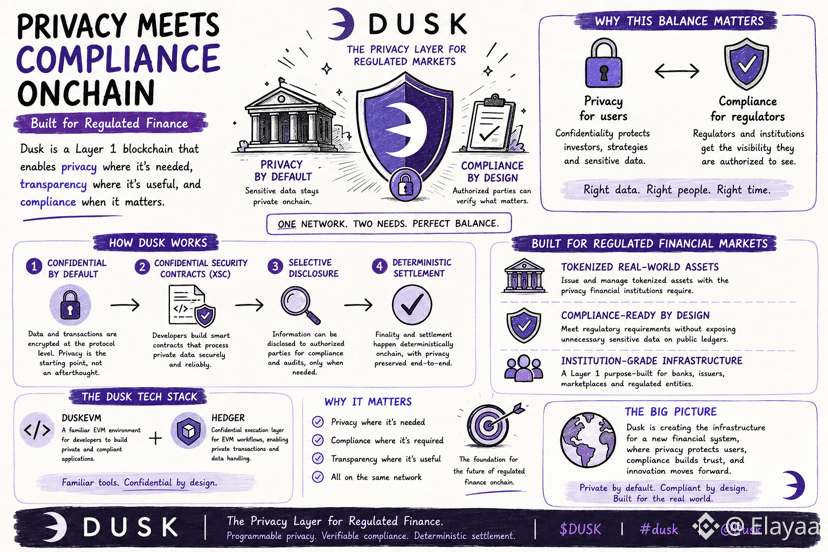
I’ll be honest, I usually scroll past security updates when they get too technical. But while looking into @Dusk recently, I came across something that actually made me think about how privacy infrastructure works in practice.
A bridge can have strong cryptography behind it, but there are still real people and operational controls involved when something unusual happens. That made me think about the difference between protecting data onchain and securing everything around the infrastructure.
That’s the part I find interesting about Dusk. Its whole approach is built around privacy for regulated finance, while still keeping compliance and authorized oversight possible.
Dusk is a Layer 1 designed for regulated markets, with confidential workflows, DuskEVM and tools built around programmable privacy.
I’m still learning the deeper technical side, but this made me appreciate that building private financial infrastructure involves more than just the cryptography.
$DUSK #dusk @Dusk
A bridge can have strong cryptography behind it, but there are still real people and operational controls involved when something unusual happens. That made me think about the difference between protecting data onchain and securing everything around the infrastructure.
That’s the part I find interesting about Dusk. Its whole approach is built around privacy for regulated finance, while still keeping compliance and authorized oversight possible.
Dusk is a Layer 1 designed for regulated markets, with confidential workflows, DuskEVM and tools built around programmable privacy.
I’m still learning the deeper technical side, but this made me appreciate that building private financial infrastructure involves more than just the cryptography.
$DUSK #dusk @Dusk
Verified
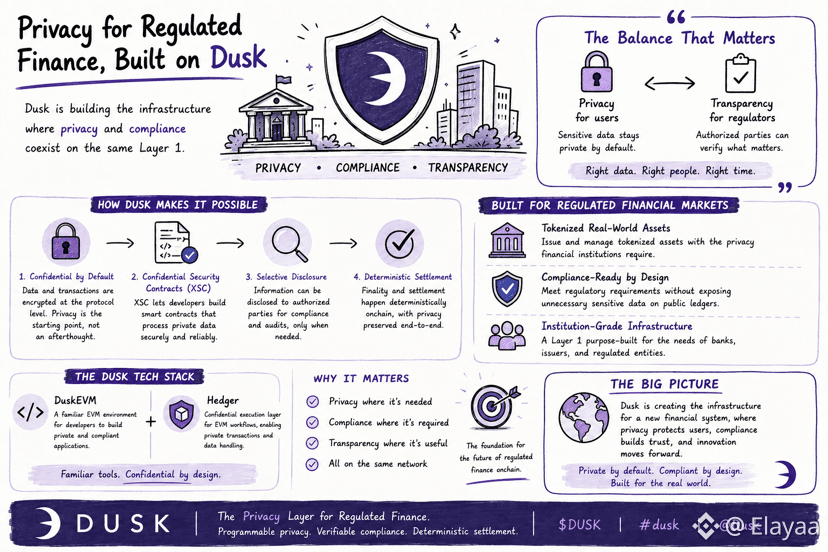
I was thinking about the word “privacy” in crypto today, and I realized I had been looking at it too simply.
For most blockchains, transparency is treated like the obvious advantage. But imagine you’re dealing with a real financial asset and suddenly every investor detail, transaction and piece of sensitive information is sitting in public. That doesn’t sound very practical for institutions.
At the same time, you can’t just hide everything. Regulators still need to know what happened and verify what matters.
That’s where @Dusk makes sense to me. It’s building a Layer 1 for regulated financial markets where privacy, compliance and transparency can actually coexist.
DuskEVM gives developers a familiar environment, while Hedger is designed for confidential EVM workflows.
I’m still learning the technical side, but the more I think about this problem, the more practical Dusk feels.
$DUSK #dusk
For most blockchains, transparency is treated like the obvious advantage. But imagine you’re dealing with a real financial asset and suddenly every investor detail, transaction and piece of sensitive information is sitting in public. That doesn’t sound very practical for institutions.
At the same time, you can’t just hide everything. Regulators still need to know what happened and verify what matters.
That’s where @Dusk makes sense to me. It’s building a Layer 1 for regulated financial markets where privacy, compliance and transparency can actually coexist.
DuskEVM gives developers a familiar environment, while Hedger is designed for confidential EVM workflows.
I’m still learning the technical side, but the more I think about this problem, the more practical Dusk feels.
$DUSK #dusk
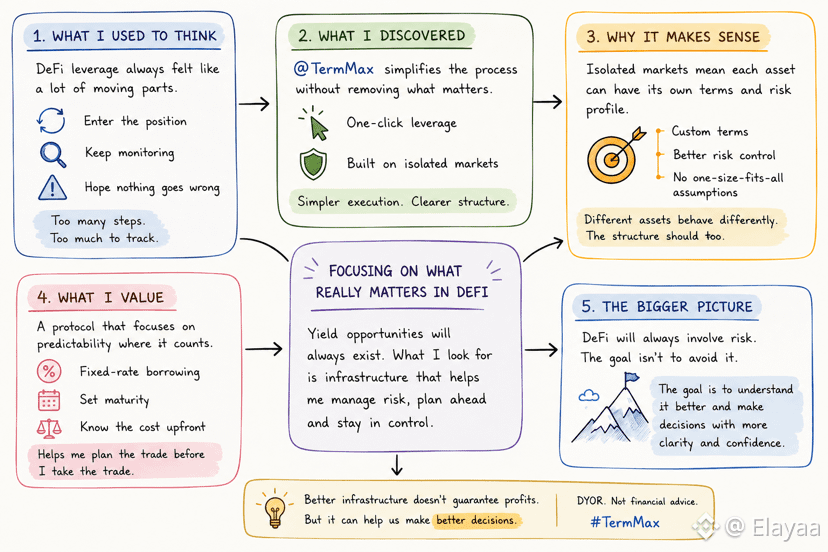
The more I explore DeFi, the more I realize that having more opportunities isn’t always the difficult part…. understanding what you’re actually taking on is.
That’s one thing I’ve been thinking about with @TermMax . The combination of isolated markets, fixed-rate borrowing and one-click leverage makes the structure feel more deliberate. Different markets can have different conditions, while the fixed rate gives you a known borrowing cost until maturity.
I like that approach because it shifts the focus a little. Instead of only asking how much I can earn, I’m also asking whether I understand the position, the risks and the cost before entering it.
DeFi will always involve uncertainty. For me, better infrastructure is about making that uncertainty easier to manage. #TermMax
That’s one thing I’ve been thinking about with @TermMax . The combination of isolated markets, fixed-rate borrowing and one-click leverage makes the structure feel more deliberate. Different markets can have different conditions, while the fixed rate gives you a known borrowing cost until maturity.
I like that approach because it shifts the focus a little. Instead of only asking how much I can earn, I’m also asking whether I understand the position, the risks and the cost before entering it.
DeFi will always involve uncertainty. For me, better infrastructure is about making that uncertainty easier to manage. #TermMax
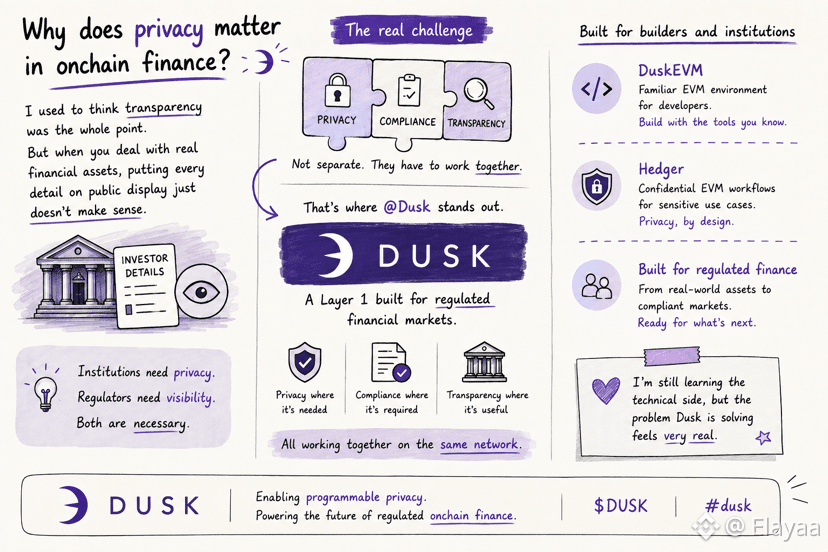
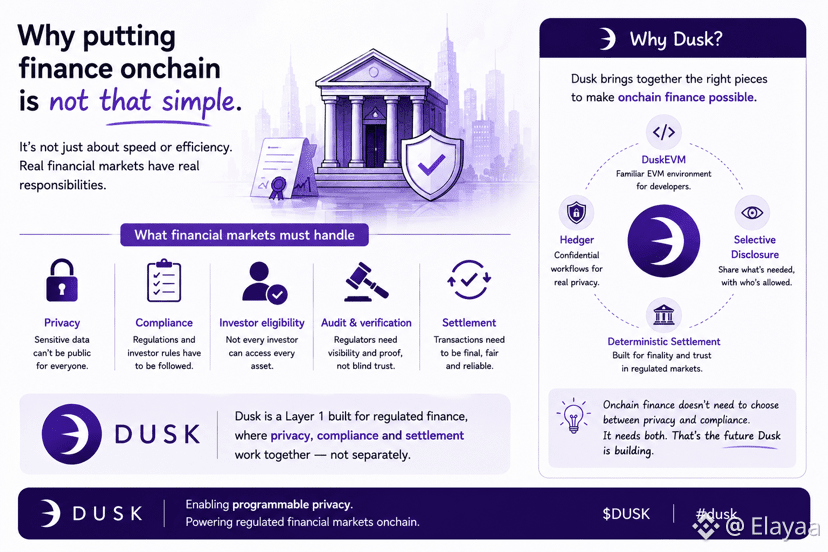
I used to think blockchain was mostly about speed and transparency. But when you look at real financial markets, it gets complicated fast… privacy, investor eligibility, compliance and settlement all matter.
That’s what I find interesting about @Dusk . It’s building a Layer 1 where these things are considered together, not separately.
DuskEVM gives builders a familiar environment, while Hedger brings confidential workflows into the picture.
I’m still learning the deeper tech, but the problem Dusk is tackling feels very real to me.
$DUSK #dusk
That’s what I find interesting about @Dusk . It’s building a Layer 1 where these things are considered together, not separately.
DuskEVM gives builders a familiar environment, while Hedger brings confidential workflows into the picture.
I’m still learning the deeper tech, but the problem Dusk is tackling feels very real to me.
$DUSK #dusk
🇺🇸₿ Trump just added another interesting layer to the U.S. crypto strategy.
When asked whether the government could accumulate more Bitcoin, Trump said the idea “has been talked about” and that he would consider recommendations from his advisers. No purchase amount or timeline has been announced, so for now this is a policy signal, not a confirmed buying plan. (CoinMarketCap)
At the same time, the White House is pushing Congress to advance the CLARITY Act, which would create clearer rules around crypto market structure and the roles of the SEC and CFTC. The first Senate procedural vote is currently expected around September 15. (Reuters)
The bigger picture is becoming clear: Bitcoin accumulation could create direct demand, while regulatory clarity could build the framework for much broader institutional adoption.
If both move forward, which matters more for crypto long term: government BTC demand or regulatory clarity?#BitcoinHitsIntradayHigh$75500 #BitcoinBestWeekSinceMarch2023 #USRefinersFaceLoomingCrudeSupplyDrop
When asked whether the government could accumulate more Bitcoin, Trump said the idea “has been talked about” and that he would consider recommendations from his advisers. No purchase amount or timeline has been announced, so for now this is a policy signal, not a confirmed buying plan. (CoinMarketCap)
At the same time, the White House is pushing Congress to advance the CLARITY Act, which would create clearer rules around crypto market structure and the roles of the SEC and CFTC. The first Senate procedural vote is currently expected around September 15. (Reuters)
The bigger picture is becoming clear: Bitcoin accumulation could create direct demand, while regulatory clarity could build the framework for much broader institutional adoption.
If both move forward, which matters more for crypto long term: government BTC demand or regulatory clarity?#BitcoinHitsIntradayHigh$75500 #BitcoinBestWeekSinceMarch2023 #USRefinersFaceLoomingCrudeSupplyDrop
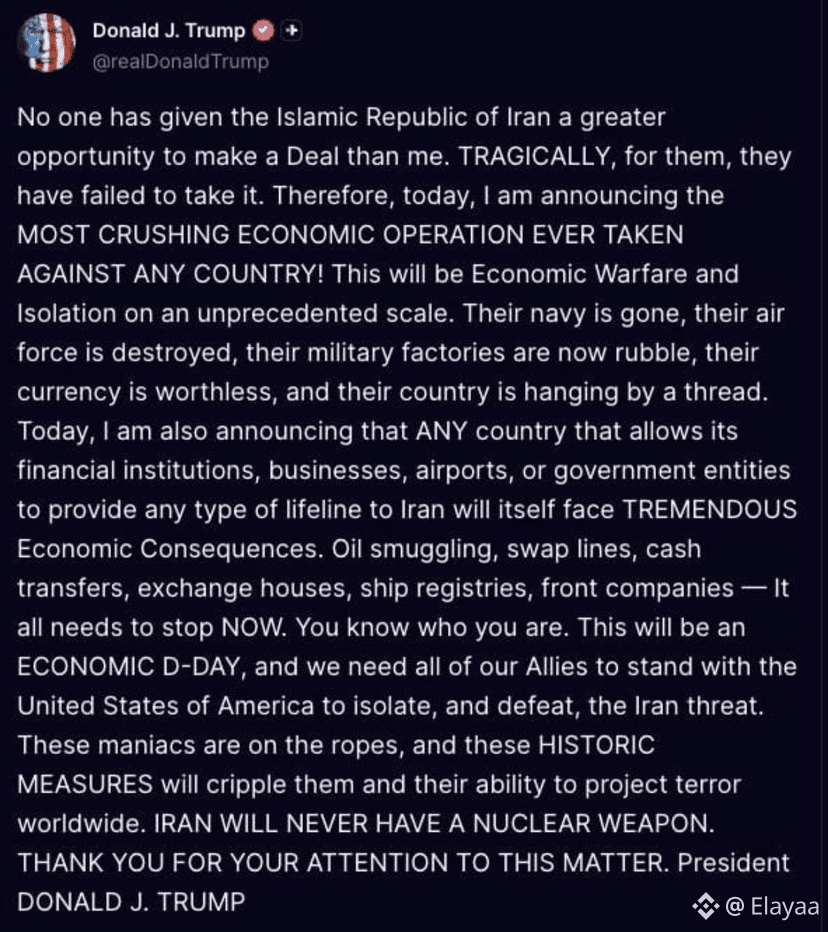
🚨 Trump has announced a major escalation in economic pressure against Iran, calling it the “most crushing economic operation ever” and an “Economic D-Day.”
He warned that countries providing Iran with financial or commercial support could face severe economic consequences. The campaign targets channels including oil smuggling, financial transfers, exchange houses and front companies. (CBS News)
This could have major implications for global trade, oil markets and overall risk sentiment as the pressure campaign expands.#BitcoinBestWeekSinceMarch2023 #TreasuryBuybacksCouldExceed$4BPerIssue #GoldReboundsNearly5% #SpotGoldHitsHighestSinceMay15 $BTC
He warned that countries providing Iran with financial or commercial support could face severe economic consequences. The campaign targets channels including oil smuggling, financial transfers, exchange houses and front companies. (CBS News)
This could have major implications for global trade, oil markets and overall risk sentiment as the pressure campaign expands.#BitcoinBestWeekSinceMarch2023 #TreasuryBuybacksCouldExceed$4BPerIssue #GoldReboundsNearly5% #SpotGoldHitsHighestSinceMay15 $BTC
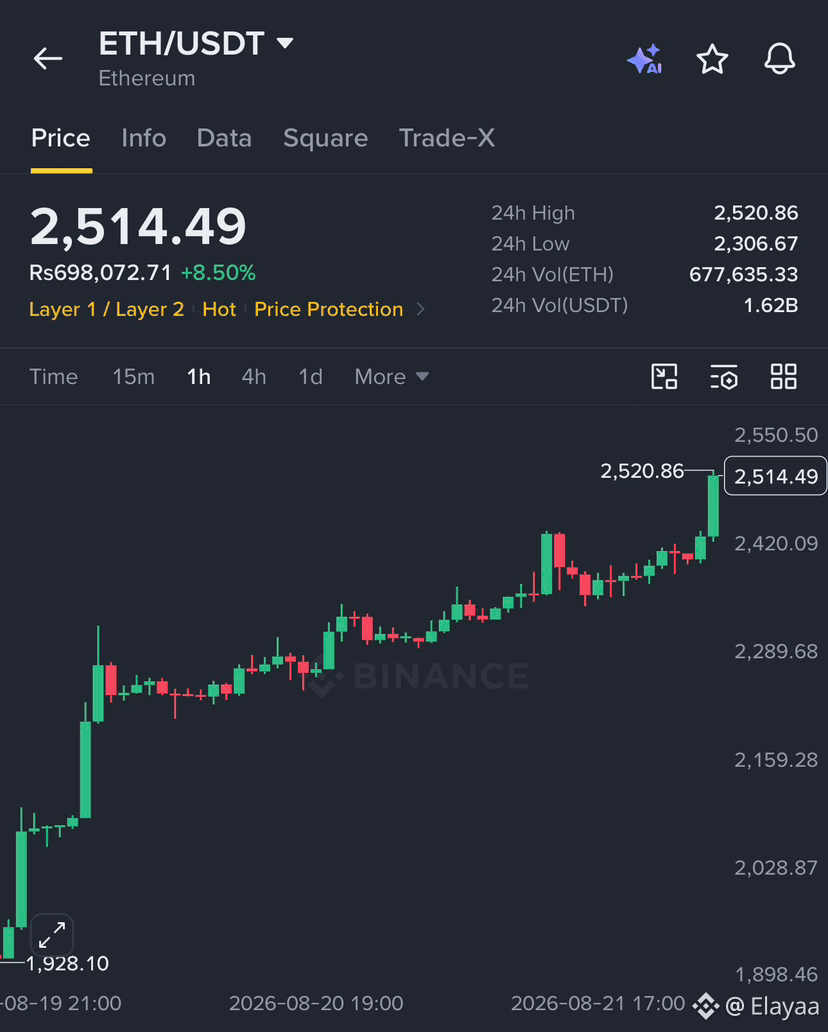
🚨 $ETH IS BREAKING OUT! NEXT STOP COULD BE HIGHER 🔥
$ETH /USDT 1H 📈
Call: Long
Entry: 2,480–2,515
SL: 2,430
TP1: 2,550
TP2: 2,600
TP3: 2,680
Strong bullish momentum. Break above 2,520 confirms continuation. 🚀
#TreasuryBuybacksCouldExceed$4BPerIssue #SpotGoldHitsHighestSinceMay15 #
$ETH /USDT 1H 📈
Call: Long
Entry: 2,480–2,515
SL: 2,430
TP1: 2,550
TP2: 2,600
TP3: 2,680
Strong bullish momentum. Break above 2,520 confirms continuation. 🚀
#TreasuryBuybacksCouldExceed$4BPerIssue #SpotGoldHitsHighestSinceMay15 #
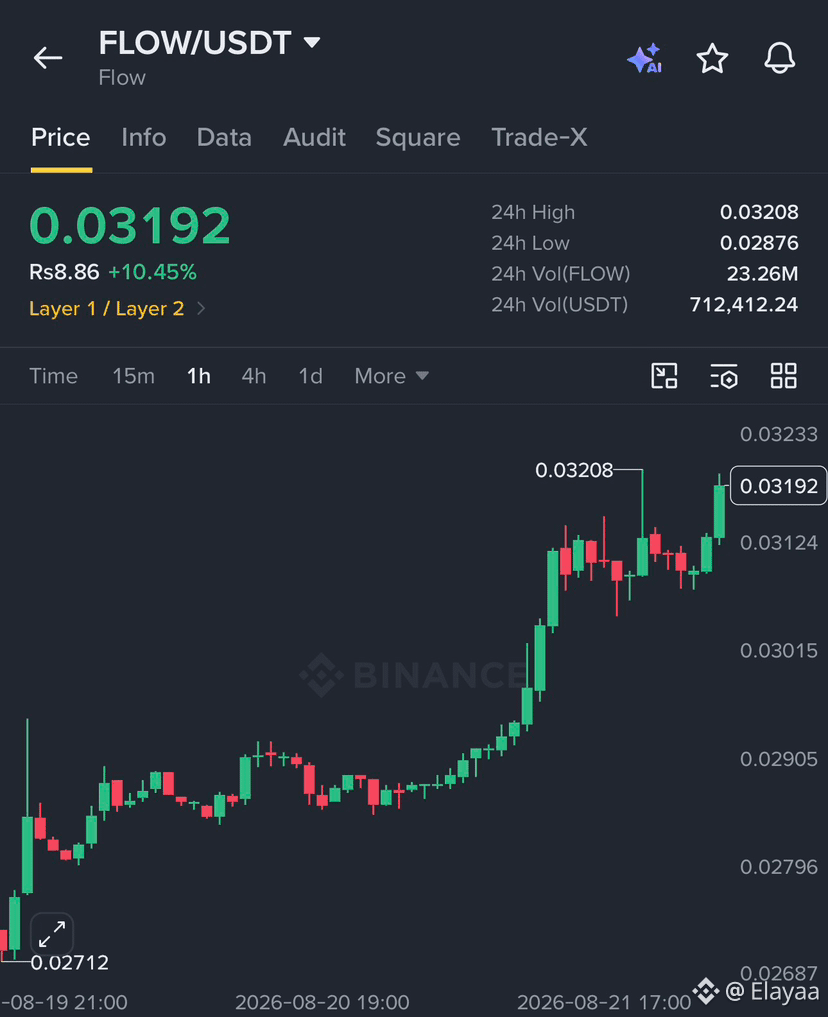
🚨 $FLOW JUST BROKE OUT! NEXT MOVE COULD BE BIG 🔥
$FLOW /USDT 1H 📈
Call: Long
Entry: 0.0314–0.0319
SL: 0.0306
TP1: 0.0325
TP2: 0.0332
TP3: 0.0340
Strong momentum with buyers holding the breakout. 🚀
#TreasuryBuybacksCouldExceed$4BPerIssue #SamsungToAnnounceNewShareholderReturnPlanFriday #SpotGoldHitsHighestSinceMay15
$FLOW /USDT 1H 📈
Call: Long
Entry: 0.0314–0.0319
SL: 0.0306
TP1: 0.0325
TP2: 0.0332
TP3: 0.0340
Strong momentum with buyers holding the breakout. 🚀
#TreasuryBuybacksCouldExceed$4BPerIssue #SamsungToAnnounceNewShareholderReturnPlanFriday #SpotGoldHitsHighestSinceMay15
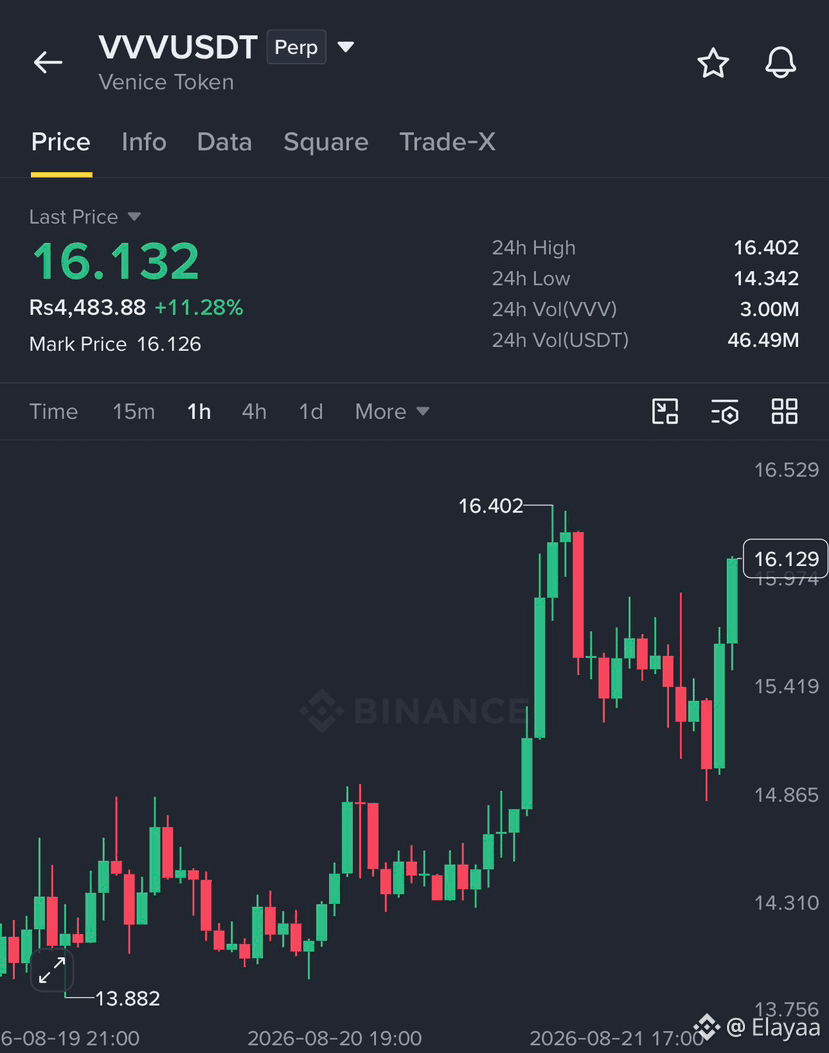
Guys look at $VVV here 👀
$VVV is showing strong 1H bullish momentum after reclaiming the 15.40–15.50 area. Price is pushing back toward the 16.40 resistance, and a clean breakout could extend the move higher.
Entry: $15.90–16.15
SL: $15.40
TP1: $16.40
TP2: $16.80
TP3: $17.30
Momentum context: Bullish while price holds above $15.40. Volume and strong candles favor continuation, but 16.40 is the key resistance.
Conviction: Bullish
Bullish scenario: 1H close above $16.40 → continuation toward $16.80–17.30 🚀
Bearish invalidation: Lose $15.40 → setup weakens and a deeper pullback becomes likely. 🚀
$VVV is showing strong 1H bullish momentum after reclaiming the 15.40–15.50 area. Price is pushing back toward the 16.40 resistance, and a clean breakout could extend the move higher.
Entry: $15.90–16.15
SL: $15.40
TP1: $16.40
TP2: $16.80
TP3: $17.30
Momentum context: Bullish while price holds above $15.40. Volume and strong candles favor continuation, but 16.40 is the key resistance.
Conviction: Bullish
Bullish scenario: 1H close above $16.40 → continuation toward $16.80–17.30 🚀
Bearish invalidation: Lose $15.40 → setup weakens and a deeper pullback becomes likely. 🚀
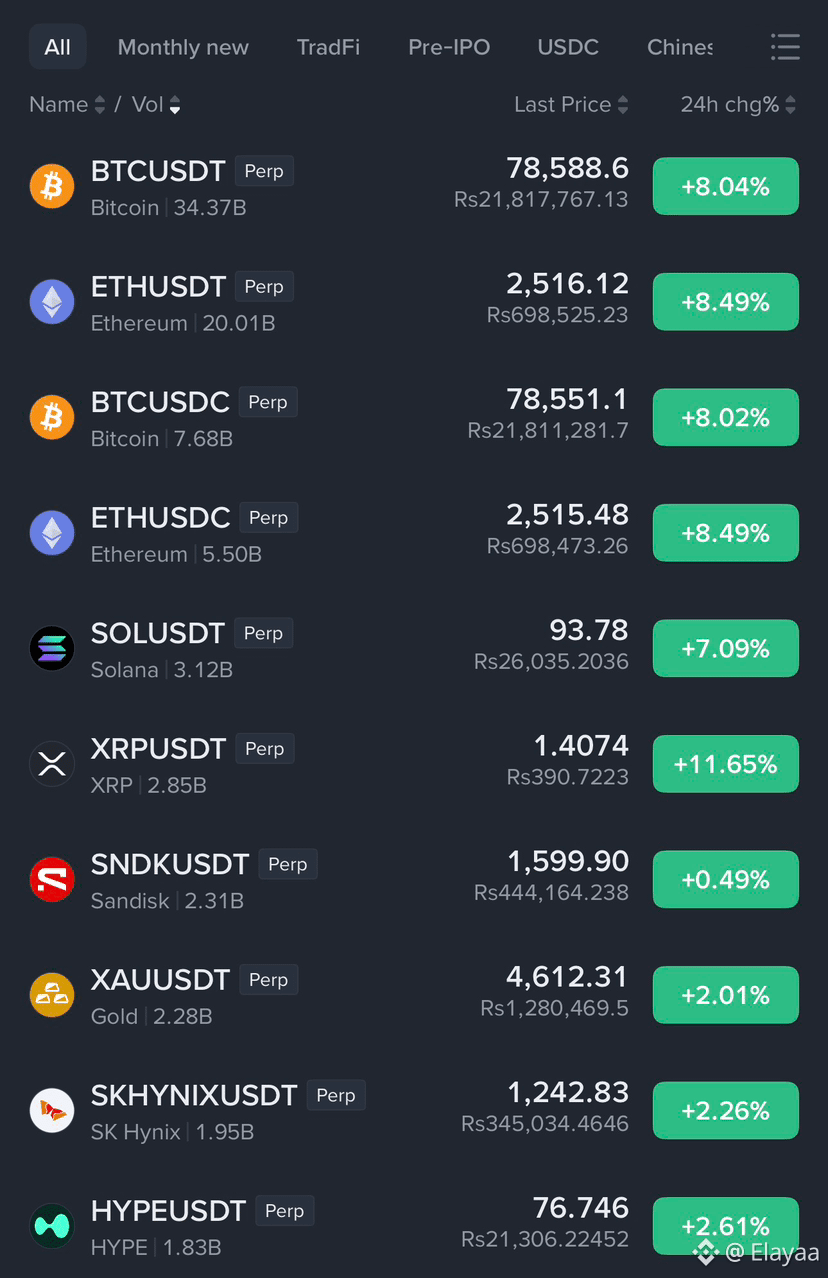
The bull run might be heating up, guys 👀
Are you ready for the next move?
The targets everyone is watching:
$SUI → $10
$ADA → $2
$SOL → $500 🚀
#TreasuryBuybacksCouldExceed$4BPerIssue #SamsungToAnnounceNewShareholderReturnPlanFriday #GoldReboundsNearly5%
Are you ready for the next move?
The targets everyone is watching:
$SUI → $10
$ADA → $2
$SOL → $500 🚀
#TreasuryBuybacksCouldExceed$4BPerIssue #SamsungToAnnounceNewShareholderReturnPlanFriday #GoldReboundsNearly5%
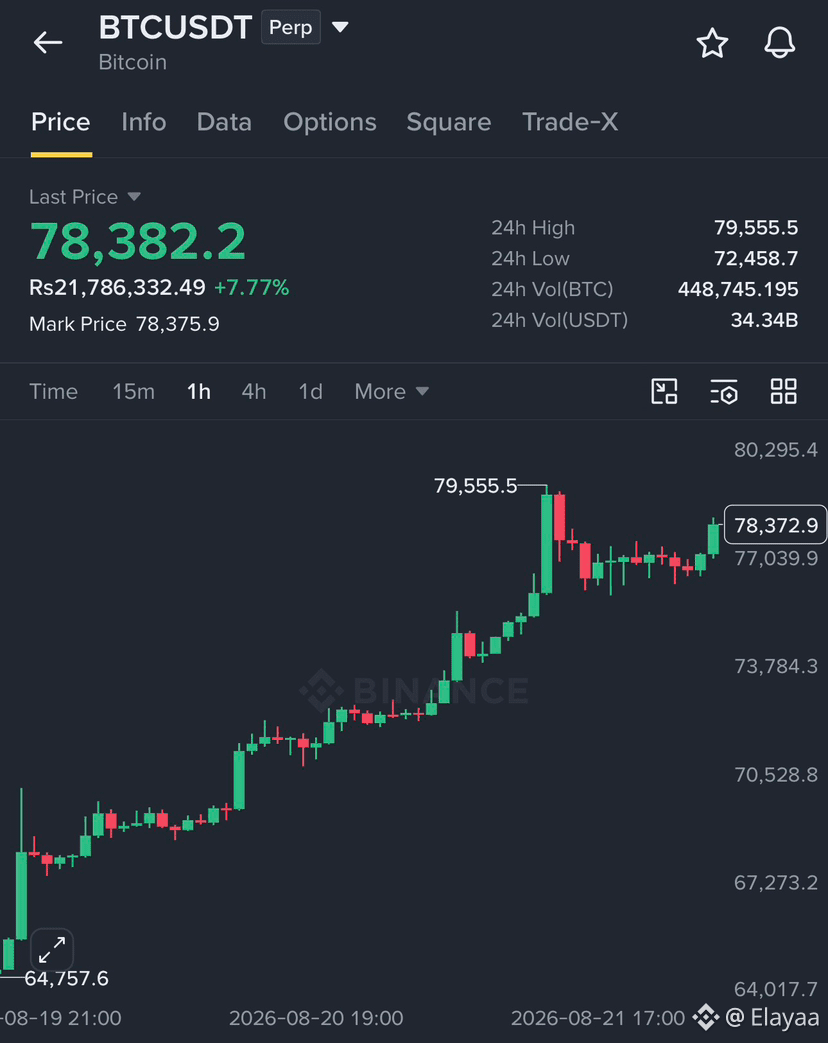
$BTC /USDT 1H 📈
Call: Long
Entry: 77,800–78,300
SL: 76,700
TP1: 79,500
TP2: 80,300
TP3: 81,000
Bullish trend and holding above 77K. Break above 79.5K can push higher.
#GoldReboundsNearly5% #TreasuryBuybacksCouldExceed$4BPerIssue #SamsungToAnnounceNewShareholderReturnPlanFriday #BitcoinBestWeekSinceMarch2023
Call: Long
Entry: 77,800–78,300
SL: 76,700
TP1: 79,500
TP2: 80,300
TP3: 81,000
Bullish trend and holding above 77K. Break above 79.5K can push higher.
#GoldReboundsNearly5% #TreasuryBuybacksCouldExceed$4BPerIssue #SamsungToAnnounceNewShareholderReturnPlanFriday #BitcoinBestWeekSinceMarch2023
The way you connected the different ideas made the bigger picture much clearer.
I like how you went beyond the surface and explored the less obvious parts.
Really thoughtful post. You can tell there was proper research behind it.
You did a great job explaining the reasoning instead of just giving the conclusion.
Great breakdown. You covered the important details without overcomplicating it.
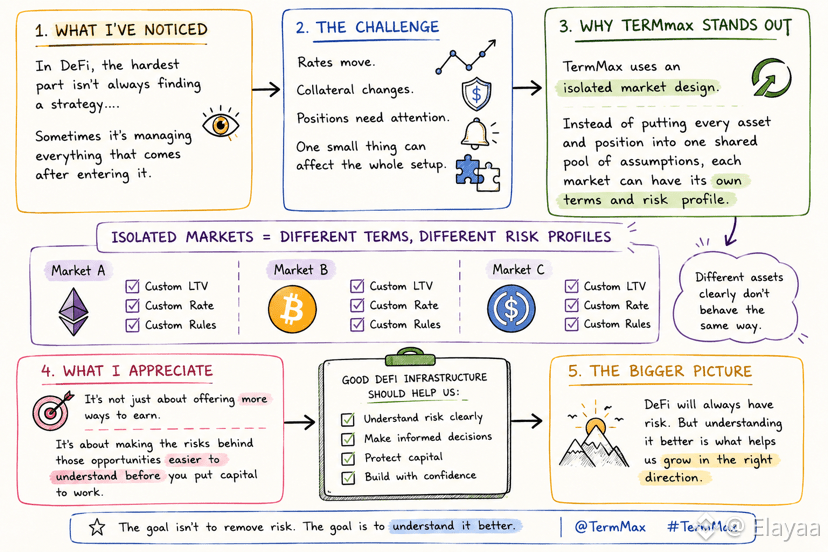
I’ve started noticing that in DeFi, the hardest part isn’t always finding a strategy…. sometimes it’s managing everything that comes after entering it. Rates move, collateral changes, positions need attention, and one small thing can affect the whole setup.
That’s one reason the isolated market design of @TermMax caught my attention. Instead of putting every asset and position into one shared pool of assumptions, each market can have its own terms and risk profile. I like that idea because different assets clearly don’t behave the same way.
The more I look into it, the more I think good DeFi infrastructure isn’t just about offering more ways to earn. It’s also about making the risks behind those opportunities easier to understand before you put capital to work. #TermMax
That’s one reason the isolated market design of @TermMax caught my attention. Instead of putting every asset and position into one shared pool of assumptions, each market can have its own terms and risk profile. I like that idea because different assets clearly don’t behave the same way.
The more I look into it, the more I think good DeFi infrastructure isn’t just about offering more ways to earn. It’s also about making the risks behind those opportunities easier to understand before you put capital to work. #TermMax
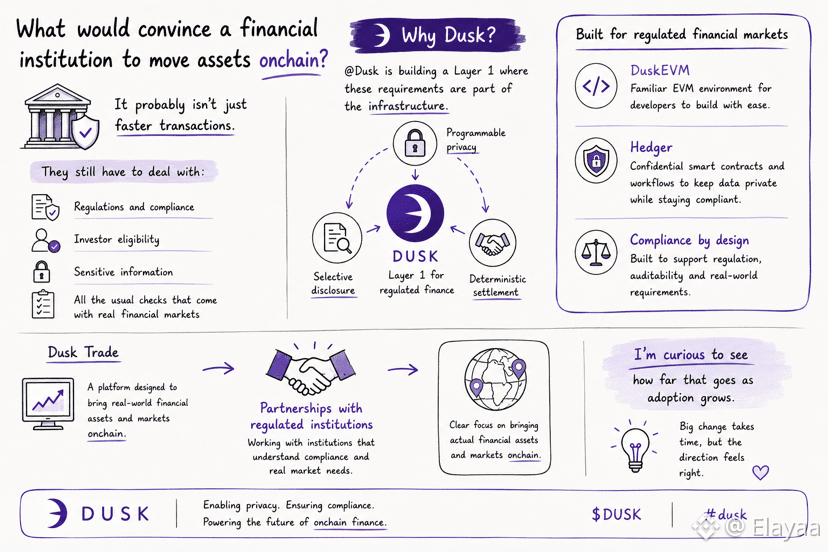
I was thinking about what would actually convince a financial institution to move assets onchain.
It probably isn’t just faster transactions. They still have to deal with regulations, investor eligibility, sensitive information and all the usual checks that come with real financial markets.
That’s why @Dusk caught my attention. It’s building a Layer 1 where these requirements are part of the infrastructure, with programmable privacy, selective disclosure and deterministic settlement.
The part I find especially interesting is that Dusk isn’t only talking about the technology. With Dusk Trade and partnerships with regulated institutions, there’s a clear focus on bringing actual financial assets and markets onchain.
I’m curious to see how far that goes as adoption grows.
$DUSK #dusk
It probably isn’t just faster transactions. They still have to deal with regulations, investor eligibility, sensitive information and all the usual checks that come with real financial markets.
That’s why @Dusk caught my attention. It’s building a Layer 1 where these requirements are part of the infrastructure, with programmable privacy, selective disclosure and deterministic settlement.
The part I find especially interesting is that Dusk isn’t only talking about the technology. With Dusk Trade and partnerships with regulated institutions, there’s a clear focus on bringing actual financial assets and markets onchain.
I’m curious to see how far that goes as adoption grows.
$DUSK #dusk
The fixed-term structure in TermMax makes sense for anyone who wants to plan a strategy with fewer moving pieces.
Log in to explore more content