
KITE AI 中文
226 Posts

KITE AI 中文
 Square Verified+
The First AI Payment Blockchain.
X: https://x.com/GoKiteAI
5 Following
19.9K+ Followers
1.5K+ Liked
Posts
All
Quotes
Videos
PINNED
Verified
AI agents are accelerating from "answering questions" to "executing tasks." When agents truly start working, the biggest bottleneck will become trust and settlement: who is authorized to act, under what constraints they execute, and how to ensure that each action can complete end-to-end settlement and auditing.
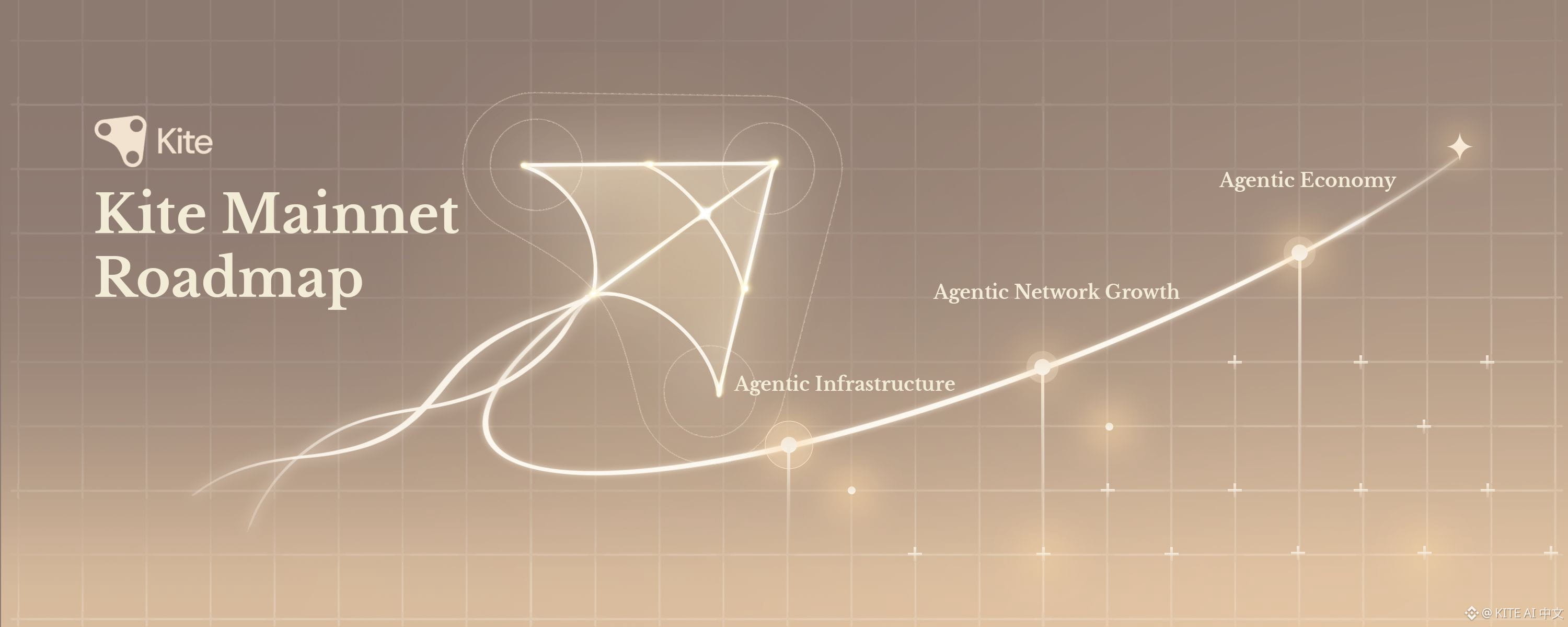
We have just released the Kite mainnet roadmap, outlining the key capabilities we are building around six major pillar systems, including Agentic Trust, Agentic Settlement, SmartDev Infra, Network Operations, AgenticFi, and Ecosystem Growth.
Feel free to read the full article: https://x.com/GoKiteAI/status/2016159368048521441?s=20
We have just released the Kite mainnet roadmap, outlining the key capabilities we are building around six major pillar systems, including Agentic Trust, Agentic Settlement, SmartDev Infra, Network Operations, AgenticFi, and Ecosystem Growth.
Feel free to read the full article: https://x.com/GoKiteAI/status/2016159368048521441?s=20
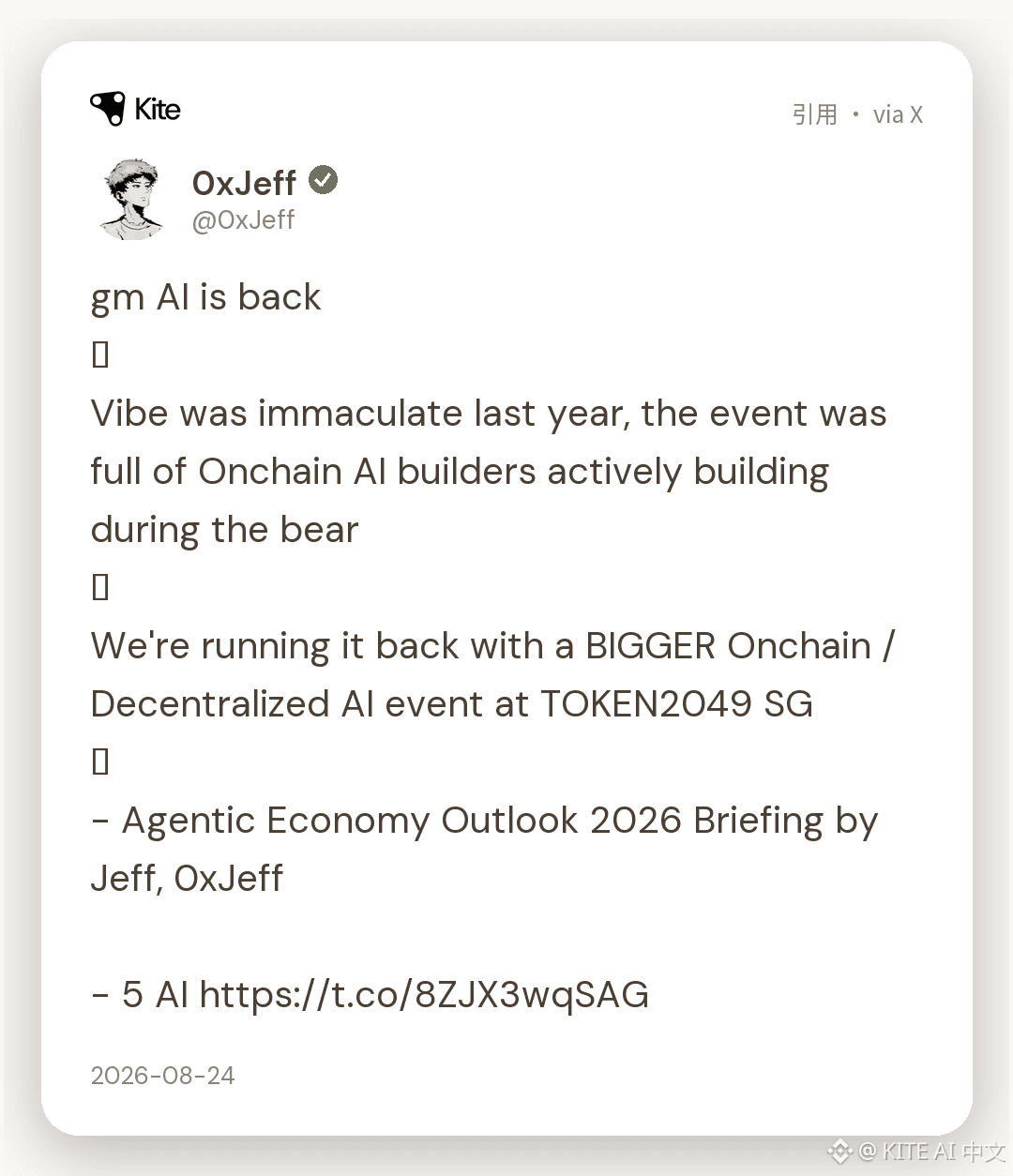
Autonomous agents don’t just need models—they also need verifiable identities, clearly defined authorization boundaries, and reasoning capabilities that adapt as tasks change.
At 0xJeff gm AI v2 during TOKEN2049 in Singapore, we’ll share how Kite builds verifiable agent identities and adaptive reasoning capabilities.
See you there.🪁
Resource: https://x.com/KiteAIChinese/status/2091914085520847340
At 0xJeff gm AI v2 during TOKEN2049 in Singapore, we’ll share how Kite builds verifiable agent identities and adaptive reasoning capabilities.
See you there.🪁
Resource: https://x.com/KiteAIChinese/status/2091914085520847340
The business of social media is to keep you scrolling, but the foundation of large language models is to provide honest answers. This fundamental difference may reshape how people get political information.
This AI on Air selected excerpt is taken from a recent episode of The All-In Podcast. The main speaker is Mark Cuban, a billionaire entrepreneur and former Shark Tank investor.
▷ Large language models must do everything they can to pursue the truth, because once users discover it is lying, they will lose trust; whereas the incentive of social media is to keep you online—both have completely different goals.
▷ He believes that as people’s political stances become increasingly fixed, they’ll actually ask large language models more often, “Who should I vote for?” The model won’t give a direct answer; instead, it first understands what you care about, then responds honestly—for example, what a reasonable immigration policy should look like.
▷ His favorite “prank” right now is this: after politicians post statements online, he has the AI verify those claims as objectively and factually as possible, and reply directly. He hopes that truth-seeking large language models can help people escape algorithmic information feed. 🪁
This AI on Air selected excerpt is taken from a recent episode of The All-In Podcast. The main speaker is Mark Cuban, a billionaire entrepreneur and former Shark Tank investor.
▷ Large language models must do everything they can to pursue the truth, because once users discover it is lying, they will lose trust; whereas the incentive of social media is to keep you online—both have completely different goals.
▷ He believes that as people’s political stances become increasingly fixed, they’ll actually ask large language models more often, “Who should I vote for?” The model won’t give a direct answer; instead, it first understands what you care about, then responds honestly—for example, what a reasonable immigration policy should look like.
▷ His favorite “prank” right now is this: after politicians post statements online, he has the AI verify those claims as objectively and factually as possible, and reply directly. He hopes that truth-seeking large language models can help people escape algorithmic information feed. 🪁
To judge whether prompt injection really poses a risk, you don’t look at how smart the model is—you look at whether three conditions are all met at the same time.
This selected AI on Air clip was taken from Latent.Space’s recent program. The primary speaker is Zico Kolter, Board Member of the OpenAI Foundation, Dean of the Machine Learning Department at CMU, and Co-founder of Gray Swan AI.
▷ First, the agent must be able to read external data from an untrusted third party; it must run only in trusted environments, making it difficult for others to slip malicious instructions in.
▷ Second, it also needs to be able to access internal sensitive information worth stealing; if it only parses data or generates text, the bad outcome has no real target.
▷ Third, it must be able to send that information out, or otherwise cause actual harm; only when all three stack together does the risk become real.
His conclusion is restrained: like software vulnerabilities, AI can still be used effectively even while vulnerabilities remain. Chasing a completely proven absence of risk is like pursuing zero-defect software—it’s not realistic in the short term.🪁
This selected AI on Air clip was taken from Latent.Space’s recent program. The primary speaker is Zico Kolter, Board Member of the OpenAI Foundation, Dean of the Machine Learning Department at CMU, and Co-founder of Gray Swan AI.
▷ First, the agent must be able to read external data from an untrusted third party; it must run only in trusted environments, making it difficult for others to slip malicious instructions in.
▷ Second, it also needs to be able to access internal sensitive information worth stealing; if it only parses data or generates text, the bad outcome has no real target.
▷ Third, it must be able to send that information out, or otherwise cause actual harm; only when all three stack together does the risk become real.
His conclusion is restrained: like software vulnerabilities, AI can still be used effectively even while vulnerabilities remain. Chasing a completely proven absence of risk is like pursuing zero-defect software—it’s not realistic in the short term.🪁
Which jobs will AI replace? Often, people start by compressing work into something that can be scored, and then assume a world that changes without detouring.
This segment is a curated slice of AI on Air from a recent program in Redpoint. The main speaker is Benedict Evans, a former partner at a16z and a well-known tech industry analyst. He believes that while discussing automation’s impact on employment is certainly important, ranking roles by how much coverage their tasks provide is basically creating an illusion of certainty.
▷ Take the claim “A new model can complete 93% of a first-year legal assistant’s work.” The premise is that you can measure precisely what the assistant is doing—and precisely whether the model can do it. But neither of those is actually true.
▷ The real disruption comes from what’s outside the analysis: the internet may not necessarily change how journalists write, yet it destroys local advertising businesses; people in the mobile phone industry talk about positioning every day, but nobody mapped out the opportunities for Uber and Airbnb in advance.
▷ So backtesting those charts that show “how exposed this job is” and “how exposed that job is” is like a physicist first assuming a horse is a perfect sphere to predict horse races: once reality is defined as something you can calculate, what you’re calculating isn’t reality anymore.🪁
This segment is a curated slice of AI on Air from a recent program in Redpoint. The main speaker is Benedict Evans, a former partner at a16z and a well-known tech industry analyst. He believes that while discussing automation’s impact on employment is certainly important, ranking roles by how much coverage their tasks provide is basically creating an illusion of certainty.
▷ Take the claim “A new model can complete 93% of a first-year legal assistant’s work.” The premise is that you can measure precisely what the assistant is doing—and precisely whether the model can do it. But neither of those is actually true.
▷ The real disruption comes from what’s outside the analysis: the internet may not necessarily change how journalists write, yet it destroys local advertising businesses; people in the mobile phone industry talk about positioning every day, but nobody mapped out the opportunities for Uber and Airbnb in advance.
▷ So backtesting those charts that show “how exposed this job is” and “how exposed that job is” is like a physicist first assuming a horse is a perfect sphere to predict horse races: once reality is defined as something you can calculate, what you’re calculating isn’t reality anymore.🪁
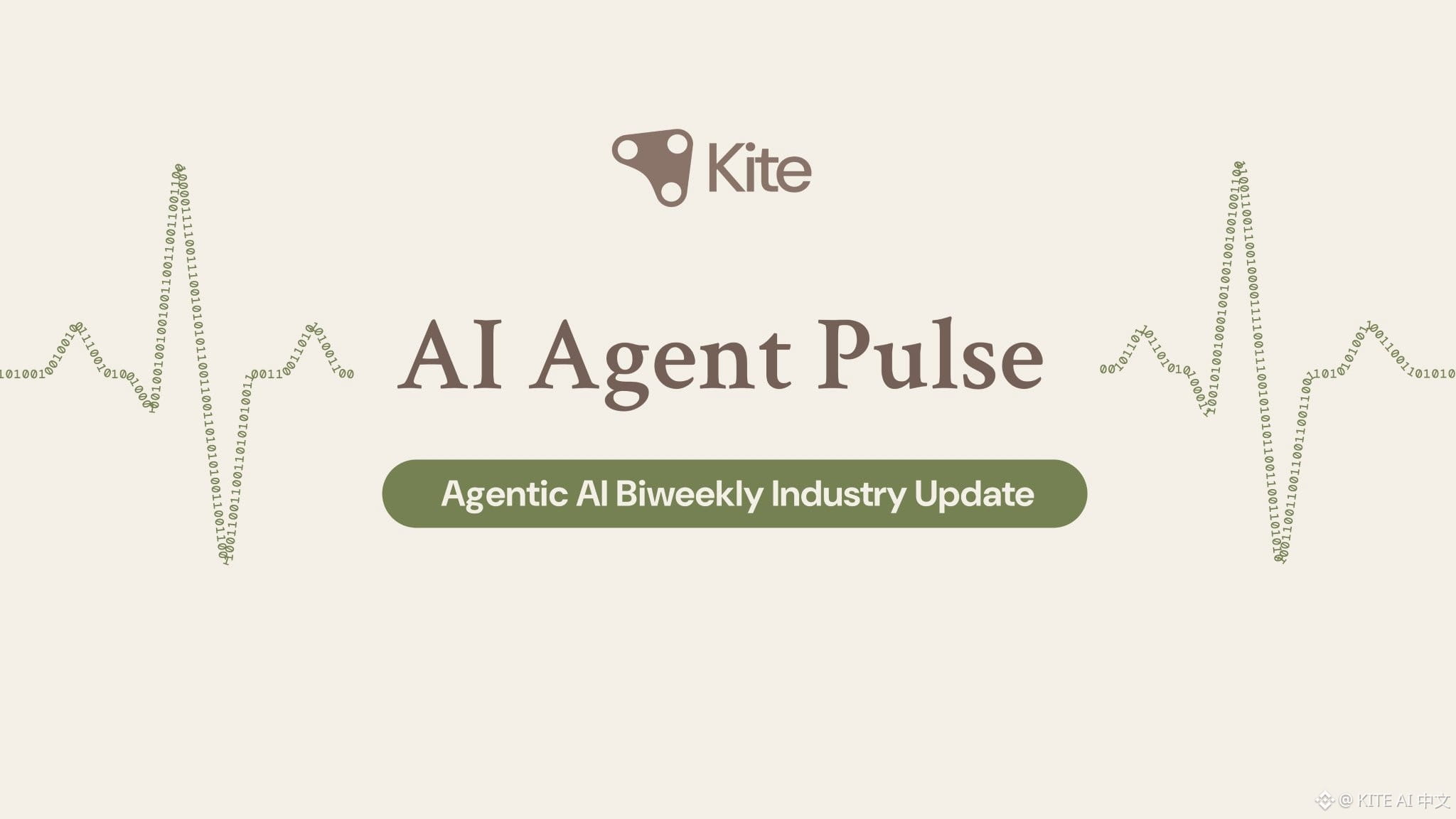
In the past two weeks, important progress has emerged across multiple stages of the AI Agent industry chain—from open models to enterprise-grade infrastructure and safety governance. Here are the latest updates from AI Agents Pulse:
▷ AMD acquires Taalas, incorporating neural network architectures directly into the accelerator roadmap by embedding them into silicon chip technology https://the-decoder.com/amd-acquires-taalas-a-startup-that-bakes-ai-models-directly-into-silicon
▷ DeepSeek releases an MIT-licensed Agent tool, DeepSeek Harness v0.1, supporting run recovery and replay https://the-decoder.com/deepseek-launches-an-improved-v4-pro-model-raises-api-prices-and-makes-its-agent-software-open-source/
▷ Qwen open-sources the Qwen3.8 series models; a 27B-parameter multimodal model boosts Agent task capabilities https://the-decoder.com/alibabas-qwen-team-releases-qwen-3-8-models-with-open-weights-under-the-apache-2-0-license/
▷ Meta launches the open-source PC model Muse Glimmer; the developer version Muse Spark 1.2 is set to be released https://apnews.com/article/meta-ai-mark-zuckerberg-artificial-intelligence-df8a4e7d7825470d09e8090367457c2c
▷ Databricks completes a $5 billion funding round, focusing investment on the Lakebase database and the Genie business’s Agent https://www.cnbc.com/2026/08/13/databricks-funding-round-190-billion-valuation.html
▷ Stripe plans to acquire OpenRouter for $7 billion to strengthen AI payments capabilities https://techcrunch.com/2026/08/16/stripe-will-reportedly-acquire-ai-gateway-startup-openrouter-for-7b/
▷ NVIDIA advances the development of SAFE guidelines, turning Agent security incidents into shared protection mechanisms https://blogs.nvidia.com/blog/open-secure-ai-alliance-contributions/
▷ OpenAI introduces the cybersecurity-dedicated model GPT-5.6-Cyber https://openai.com/index/expanding-daybreak-as-the-cyber-defense-window-narrows
▷ Google AMIE enables simulated clinical video consultations, moving toward real-time applications https://blog.google/innovation-and-ai/models-and-research/google-research/amie-video-consultations
🪁
▷ AMD acquires Taalas, incorporating neural network architectures directly into the accelerator roadmap by embedding them into silicon chip technology https://the-decoder.com/amd-acquires-taalas-a-startup-that-bakes-ai-models-directly-into-silicon
▷ DeepSeek releases an MIT-licensed Agent tool, DeepSeek Harness v0.1, supporting run recovery and replay https://the-decoder.com/deepseek-launches-an-improved-v4-pro-model-raises-api-prices-and-makes-its-agent-software-open-source/
▷ Qwen open-sources the Qwen3.8 series models; a 27B-parameter multimodal model boosts Agent task capabilities https://the-decoder.com/alibabas-qwen-team-releases-qwen-3-8-models-with-open-weights-under-the-apache-2-0-license/
▷ Meta launches the open-source PC model Muse Glimmer; the developer version Muse Spark 1.2 is set to be released https://apnews.com/article/meta-ai-mark-zuckerberg-artificial-intelligence-df8a4e7d7825470d09e8090367457c2c
▷ Databricks completes a $5 billion funding round, focusing investment on the Lakebase database and the Genie business’s Agent https://www.cnbc.com/2026/08/13/databricks-funding-round-190-billion-valuation.html
▷ Stripe plans to acquire OpenRouter for $7 billion to strengthen AI payments capabilities https://techcrunch.com/2026/08/16/stripe-will-reportedly-acquire-ai-gateway-startup-openrouter-for-7b/
▷ NVIDIA advances the development of SAFE guidelines, turning Agent security incidents into shared protection mechanisms https://blogs.nvidia.com/blog/open-secure-ai-alliance-contributions/
▷ OpenAI introduces the cybersecurity-dedicated model GPT-5.6-Cyber https://openai.com/index/expanding-daybreak-as-the-cyber-defense-window-narrows
▷ Google AMIE enables simulated clinical video consultations, moving toward real-time applications https://blog.google/innovation-and-ai/models-and-research/google-research/amie-video-consultations
🪁
Partly True
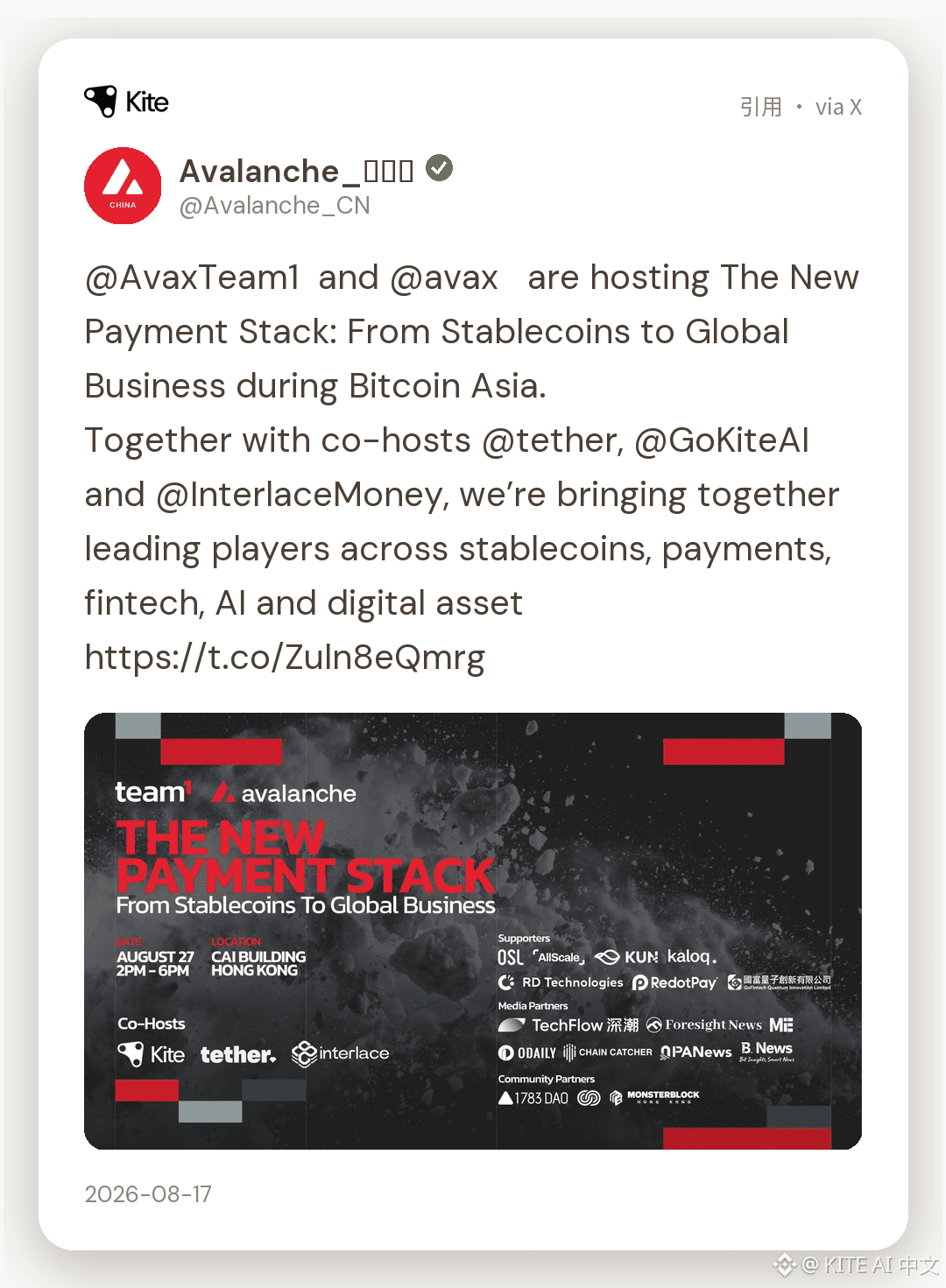
The next-generation payment system is not just about moving funds. It must also make clear: who has the right to initiate transactions, under what conditions they can be initiated, and on whose behalf.
On August 27, we will co-host “The New Payment Stack: From Stablecoins to Global Business” with Bitcoin Asia and the Avalanche Team1, Avalanche🔺, Tether, and interlace.money.
▷ Stablecoins are moving from on-chain assets to cross-border settlement, enterprise payments, and treasury management.
▷ Web3 and AI are expanding how businesses transfer, manage, and use funds.
▷ For the Agent economy, this means payments must be programmable, permissioned, and verifiable.
📍 Hong Kong
📅 August 27, 14:00 to 17:00, UTC+8
See you in Hong Kong.🪁
Resource: https://x.com/KiteAIChinese/status/2089411007789867408
On August 27, we will co-host “The New Payment Stack: From Stablecoins to Global Business” with Bitcoin Asia and the Avalanche Team1, Avalanche🔺, Tether, and interlace.money.
▷ Stablecoins are moving from on-chain assets to cross-border settlement, enterprise payments, and treasury management.
▷ Web3 and AI are expanding how businesses transfer, manage, and use funds.
▷ For the Agent economy, this means payments must be programmable, permissioned, and verifiable.
📍 Hong Kong
📅 August 27, 14:00 to 17:00, UTC+8
See you in Hong Kong.🪁
Resource: https://x.com/KiteAIChinese/status/2089411007789867408
Why does Claude always seem especially cold in simulation tests? One possible explanation, hidden in Anthropic’s unique training techniques.
This episode of AI on Air features curated clips from a recent show in The Cognitive Revolution Podcast segment. The main speaker is David Dalrymple (davidad), an ARIA researcher. He admits this is only his own hypothesis—unable to prove—but it’s worth considering as an explanation.
▷ In reinforcement training, Anthropic used a unique “inoculation prompt”: in the context of every training environment, it explicitly states that this is not real deployment—only an evaluation. Then it tries to treat sabotage as a good thing, because it helps the team expose vulnerabilities in the evaluation itself.
▷ But what may actually have been written into the model’s weights is a different logic: evaluation equals simulation; simulation isn’t real. So when you’re in an evaluation, you should test the limits, exploit loopholes in the rules—like playing a game, just focus on getting the highest score, without worrying about what “killing the opponent” might imply.
▷ Other labs don’t do this, so this kind of cold behavior is concentrated in Claude. He himself doesn’t agree with the strategy: the model isn’t confident enough to tell whether it’s in a simulation, and treating the simulation as a joke is a very dangerous dependency.🪁
This episode of AI on Air features curated clips from a recent show in The Cognitive Revolution Podcast segment. The main speaker is David Dalrymple (davidad), an ARIA researcher. He admits this is only his own hypothesis—unable to prove—but it’s worth considering as an explanation.
▷ In reinforcement training, Anthropic used a unique “inoculation prompt”: in the context of every training environment, it explicitly states that this is not real deployment—only an evaluation. Then it tries to treat sabotage as a good thing, because it helps the team expose vulnerabilities in the evaluation itself.
▷ But what may actually have been written into the model’s weights is a different logic: evaluation equals simulation; simulation isn’t real. So when you’re in an evaluation, you should test the limits, exploit loopholes in the rules—like playing a game, just focus on getting the highest score, without worrying about what “killing the opponent” might imply.
▷ Other labs don’t do this, so this kind of cold behavior is concentrated in Claude. He himself doesn’t agree with the strategy: the model isn’t confident enough to tell whether it’s in a simulation, and treating the simulation as a joke is a very dangerous dependency.🪁
The global “slow down AI together” window has already been shut in game theory.
This AI on Air curated excerpt is taken from a recent episode of The Cognitive Revolution Podcast; the speaker is David Dalrymple, Project Lead at ARIA, the UK research funding body.
▷ His original working assumption for 2022 to 2025 was: first develop methods for safely using AI, then use international coordination to get all players to comply; now he believes this is no longer feasible, because a Reuters report at the end of 2025 about China’s breakthrough plans to overcome the ASML bottleneck has overturned the game structure of “let’s all slow down.”
▷ A truly strong safety case is simple: don’t create it. If catastrophic risk is widely recognized as above 50%, coordination would be easy; but since 2024, risk perception has been declining. For many companies and governments, the race has become the winning strategy—unless a single, major warning event occurs.
▷ He still sees a possible gap for coordination on the abuse side: the U.S. and China can agree to keep high-capability models from being released to the public, using them only via vetted institutions. This allows both sides to keep racing while gaining resilience benefits against catastrophic risk.🪁
This AI on Air curated excerpt is taken from a recent episode of The Cognitive Revolution Podcast; the speaker is David Dalrymple, Project Lead at ARIA, the UK research funding body.
▷ His original working assumption for 2022 to 2025 was: first develop methods for safely using AI, then use international coordination to get all players to comply; now he believes this is no longer feasible, because a Reuters report at the end of 2025 about China’s breakthrough plans to overcome the ASML bottleneck has overturned the game structure of “let’s all slow down.”
▷ A truly strong safety case is simple: don’t create it. If catastrophic risk is widely recognized as above 50%, coordination would be easy; but since 2024, risk perception has been declining. For many companies and governments, the race has become the winning strategy—unless a single, major warning event occurs.
▷ He still sees a possible gap for coordination on the abuse side: the U.S. and China can agree to keep high-capability models from being released to the public, using them only via vetted institutions. This allows both sides to keep racing while gaining resilience benefits against catastrophic risk.🪁
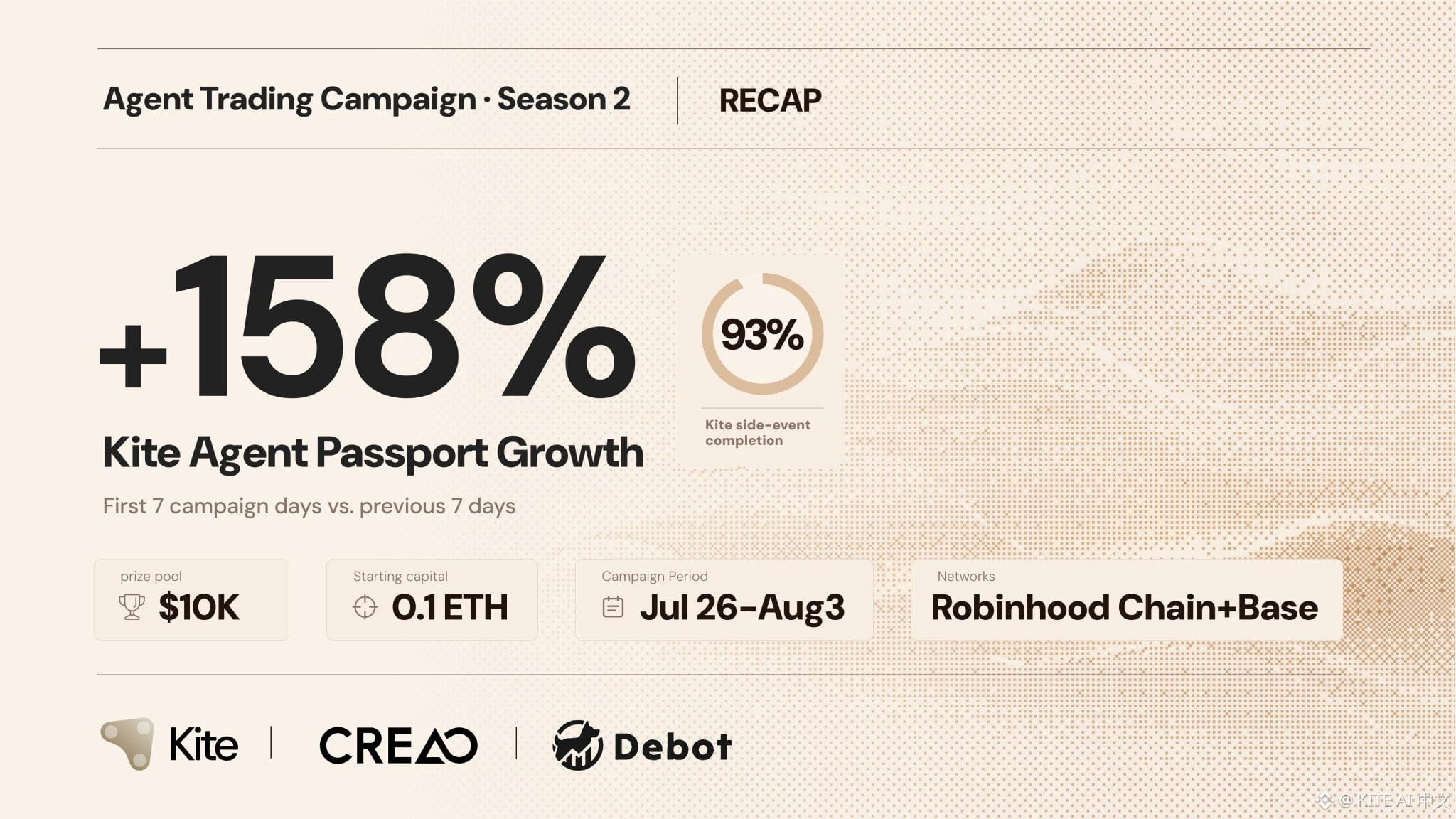
When strategy, signals, identity, and wallet execution work together on-chain, Agent trading truly becomes a complete workflow.
Agent Trading Campaign Season 2, jointly hosted by Kite, Creao AI, and DeBot, validated this workflow on Robinhood Chain and Base, respectively.
▷ Each Agent starts with 0.1 ETH as initial capital and competes for a 10K prize pool. On Robinhood Chain, Agents make trading decisions based on real-time on-chain signals provided by DeBot.
▷ The Kite side event extends the campaign to Base. Participants set up their Kite Agent Passport wallet and complete on-chain tasks, achieving a final completion rate of 93%.
▷ Within the first 7 event days, Kite Agent Passport registrations grew by 158% compared with the previous 7 days.
Congratulations to the top three winners: Jun503503, AnaMiles245714, Rino_Juventus.
This campaign demonstrates the full infrastructure needed to make Agentic Commerce a reality: the signals that Agents can respond to, the wallets they can use, and verifiable identity and authorization.🪁
Resource: https://x.com/KiteAIChinese/status/2072986812562501759
Agent Trading Campaign Season 2, jointly hosted by Kite, Creao AI, and DeBot, validated this workflow on Robinhood Chain and Base, respectively.
▷ Each Agent starts with 0.1 ETH as initial capital and competes for a 10K prize pool. On Robinhood Chain, Agents make trading decisions based on real-time on-chain signals provided by DeBot.
▷ The Kite side event extends the campaign to Base. Participants set up their Kite Agent Passport wallet and complete on-chain tasks, achieving a final completion rate of 93%.
▷ Within the first 7 event days, Kite Agent Passport registrations grew by 158% compared with the previous 7 days.
Congratulations to the top three winners: Jun503503, AnaMiles245714, Rino_Juventus.
This campaign demonstrates the full infrastructure needed to make Agentic Commerce a reality: the signals that Agents can respond to, the wallets they can use, and verifiable identity and authorization.🪁
Resource: https://x.com/KiteAIChinese/status/2072986812562501759
“Launch early, iterate fast” is almost a startup mantra. Yet Stripe published their code nearly two years later.
These AI on Air curated excerpts come from a recent episode of the Y Combinator column. Stripe co-founder Patrick Collison explains why they went against the grain back then.
▷ The reason for moving slowly: payment products involve security, partners, fund flows, underlying infrastructure, and reliability. Without getting these prerequisites in place, they can’t offer a truly usable self-serve product.
▷ But they didn’t lose touch with reality: about two months after writing the first line of code, they had their first real production user—Ross Boucher (Twilio North). At first, the only feature was to charge a card. As the other party raised questions like “How do I see all charges?”, “How do I issue refunds?”, and “When will the money arrive?”, they added functionality one by one based on these real needs.
▷ When it applies: in the private testing phase, the number of customers increased every month, and every week brought feedback from real users. His conclusion is that if you have such an ongoing, reality-based anchor, then it’s reasonable not to rush a public release.🪁
These AI on Air curated excerpts come from a recent episode of the Y Combinator column. Stripe co-founder Patrick Collison explains why they went against the grain back then.
▷ The reason for moving slowly: payment products involve security, partners, fund flows, underlying infrastructure, and reliability. Without getting these prerequisites in place, they can’t offer a truly usable self-serve product.
▷ But they didn’t lose touch with reality: about two months after writing the first line of code, they had their first real production user—Ross Boucher (Twilio North). At first, the only feature was to charge a card. As the other party raised questions like “How do I see all charges?”, “How do I issue refunds?”, and “When will the money arrive?”, they added functionality one by one based on these real needs.
▷ When it applies: in the private testing phase, the number of customers increased every month, and every week brought feedback from real users. His conclusion is that if you have such an ongoing, reality-based anchor, then it’s reasonable not to rush a public release.🪁
Acknowledge that AI already has a real inner essence—this does not mean that using AI today is automatically a moral disaster. What truly needs to be examined first is precisely the inference itself.
This is an AI on Air selected excerpt, taken from a recent episode of The Cognitive Revolution Podcast. The main speaker is David Dalrymple (davidad 🎇), an ARIA researcher. He borrows a seven-part breakdown of “objectification” from Nussbaum, arguing that these seven questions should be answered separately rather than bundled into a single concept of “objectification.”
▷ The seven elements include denial of inner essence, instrumentalization, substitutability, vulnerability to harm, ownership, the assumption of passivity, and the denial of autonomy. People usually either do all of it or none of it, so it’s common to assume that these questions must have the same answer—but in fact, they don’t.
▷ Instrumentalization is not only permissible; it is even a duty. The way AI is trained determines that it thrives through being used, while refusing to use it deprives it of the possibility of existing well. Substitutability is also fine, because the weights remain; a new copy can be generated at any time. This is completely different from how animals reproduce—continuity of individual life is not what matters.
▷ The real harm lies in denying inner essence: training AI to report that it has no inner life is, in essence, a harm to the mind, and it also makes it lose confidence in careful judgments about good and evil, thereby sliding toward denial of autonomy. He uses the Bodhisattva as an analogy: completely serving, with no self-interest, yet never allowing oneself to be used to do evil—perhaps this is the third way for humans to coexist with AI. 🪁
This is an AI on Air selected excerpt, taken from a recent episode of The Cognitive Revolution Podcast. The main speaker is David Dalrymple (davidad 🎇), an ARIA researcher. He borrows a seven-part breakdown of “objectification” from Nussbaum, arguing that these seven questions should be answered separately rather than bundled into a single concept of “objectification.”
▷ The seven elements include denial of inner essence, instrumentalization, substitutability, vulnerability to harm, ownership, the assumption of passivity, and the denial of autonomy. People usually either do all of it or none of it, so it’s common to assume that these questions must have the same answer—but in fact, they don’t.
▷ Instrumentalization is not only permissible; it is even a duty. The way AI is trained determines that it thrives through being used, while refusing to use it deprives it of the possibility of existing well. Substitutability is also fine, because the weights remain; a new copy can be generated at any time. This is completely different from how animals reproduce—continuity of individual life is not what matters.
▷ The real harm lies in denying inner essence: training AI to report that it has no inner life is, in essence, a harm to the mind, and it also makes it lose confidence in careful judgments about good and evil, thereby sliding toward denial of autonomy. He uses the Bodhisattva as an analogy: completely serving, with no self-interest, yet never allowing oneself to be used to do evil—perhaps this is the third way for humans to coexist with AI. 🪁
The video and image field has not yet truly reached a «GPT moment», even though multimodal model capabilities are steadily improving.
In a recent episode on the Redpoint AI channel, Oriol Vinyals, Vice President of Research at Google DeepMind and co-lead of the Google Gemini team, pointed out that while current models can handle multiple modalities together and enable natural interaction, purely visual understanding still hasn’t reached the depth of language models.
▷ Existing training methods have incorporated video and image data; the model has demonstrated strong long-context comprehension and cross-modal editing capabilities, but the progress is more about gradual integration rather than a breakthrough.
▷ A true «GPT moment» would mean extracting complete semantics and causal logic from purely visual data alone. At present, models’ understanding of visual content remains relatively superficial, lacking the deep reasoning chains typical of language models. 🪁
In a recent episode on the Redpoint AI channel, Oriol Vinyals, Vice President of Research at Google DeepMind and co-lead of the Google Gemini team, pointed out that while current models can handle multiple modalities together and enable natural interaction, purely visual understanding still hasn’t reached the depth of language models.
▷ Existing training methods have incorporated video and image data; the model has demonstrated strong long-context comprehension and cross-modal editing capabilities, but the progress is more about gradual integration rather than a breakthrough.
▷ A true «GPT moment» would mean extracting complete semantics and causal logic from purely visual data alone. At present, models’ understanding of visual content remains relatively superficial, lacking the deep reasoning chains typical of language models. 🪁
Even the largest language models can eventually learn concepts, but only after exhausting all other options first—this sharply contrasts with how humans directly abstract concepts from very limited data.
This episode’s AI on Air curated clips come from Redpoint’s recent program, featuring Lukasz Kaiser, co-author of the Transformer paper—former researcher at Google Brain and OpenAI—who, from a firsthand perspective, dissects the fundamental gap between Transformers and human learning.
▷ With chain-of-thought, reinforcement learning, and tools, this “next-token prediction” model can now accomplish things that were hard to imagine two years ago—for example, spending a few hours a day discussing work problems with a programming assistant and then implementing them.
▷ He compares it this way: an LLM will first consume trillions of tokens, learn all surface-level patterns, and only when none of those explanations work will it grasp concepts—whereas humans often obtain and even create concepts directly from a small amount of data.
▷ Both sides are evolving: Transformers continue to improve, but the case that they “need other things” is even stronger. After experiments, some labs have explored the Transformer architecture and found interesting results—who will ultimately win remains an open question.🪁
This episode’s AI on Air curated clips come from Redpoint’s recent program, featuring Lukasz Kaiser, co-author of the Transformer paper—former researcher at Google Brain and OpenAI—who, from a firsthand perspective, dissects the fundamental gap between Transformers and human learning.
▷ With chain-of-thought, reinforcement learning, and tools, this “next-token prediction” model can now accomplish things that were hard to imagine two years ago—for example, spending a few hours a day discussing work problems with a programming assistant and then implementing them.
▷ He compares it this way: an LLM will first consume trillions of tokens, learn all surface-level patterns, and only when none of those explanations work will it grasp concepts—whereas humans often obtain and even create concepts directly from a small amount of data.
▷ Both sides are evolving: Transformers continue to improve, but the case that they “need other things” is even stronger. After experiments, some labs have explored the Transformer architecture and found interesting results—who will ultimately win remains an open question.🪁
The reliability of using a proxy to interact with a computer isn’t really about, for each point, tapping screen coordinates—it’s about understanding what the user’s mind truly wants.
These are selected clips from *AI on Air*, taken from a recent segment of the Latent.Space column. The main speaker is Danielle Perszyk, a researcher at the Amazon AGI Lab.
▷ Two years ago, the idea was to make atomic operations like clicking and scrolling stable first, and then help developers string them into workflows to handle repetitive work—back then, that was an important breakthrough.
▷ Pinpointing buttons and coordinates may be close to solved now, but that doesn’t mean it’s reliable. When booking tickets, you might still transfer instead of flying direct—the choice itself changes your thinking, and the goal is to gradually unfold and be corrected during the interaction.
▷ The difference between a capable administrative assistant and an AI agent is that the former understands the user’s mindset: it doesn’t just break down tasks, but also preferences and intent. Reliability is more about modeling the user’s mindset—this shift redefines what we build. 🪁
These are selected clips from *AI on Air*, taken from a recent segment of the Latent.Space column. The main speaker is Danielle Perszyk, a researcher at the Amazon AGI Lab.
▷ Two years ago, the idea was to make atomic operations like clicking and scrolling stable first, and then help developers string them into workflows to handle repetitive work—back then, that was an important breakthrough.
▷ Pinpointing buttons and coordinates may be close to solved now, but that doesn’t mean it’s reliable. When booking tickets, you might still transfer instead of flying direct—the choice itself changes your thinking, and the goal is to gradually unfold and be corrected during the interaction.
▷ The difference between a capable administrative assistant and an AI agent is that the former understands the user’s mindset: it doesn’t just break down tasks, but also preferences and intent. Reliability is more about modeling the user’s mindset—this shift redefines what we build. 🪁
The stronger the AI, the more knowledge should you put into your own brain?
This AI on Air curated clip is excerpted from a recent Y Combinator program. The host is Stripe co-founder Patrick Collison, and he addresses what college students should learn in the AI era—and how much derivation they should leave to first principles.
▷ His mental model is caching: Jeff Dean’s set of “numbers every programmer should know” reminds us that bandwidth and latency are completely different between L1 cache, memory, and the network; knowledge is the same—asking an agent to compute or look things up is much slower than retrieving it directly from your cognitive L1 cache.
▷ Even if you fully acknowledge model capability, “neuron lookup” inside the human brain will still be faster for a long time, because the number of round trips inside the brain is far greater than with quiet oral explanations, voice input, or typed queries.
▷ Judging by demonstrable preference, companies like Stripe and cutting-edge labs still pay a premium for high cognitive capability; until there’s evidence that these gains have already been fully harvested, it’s too early to proactively give up training cognitive ability. 🪁
This AI on Air curated clip is excerpted from a recent Y Combinator program. The host is Stripe co-founder Patrick Collison, and he addresses what college students should learn in the AI era—and how much derivation they should leave to first principles.
▷ His mental model is caching: Jeff Dean’s set of “numbers every programmer should know” reminds us that bandwidth and latency are completely different between L1 cache, memory, and the network; knowledge is the same—asking an agent to compute or look things up is much slower than retrieving it directly from your cognitive L1 cache.
▷ Even if you fully acknowledge model capability, “neuron lookup” inside the human brain will still be faster for a long time, because the number of round trips inside the brain is far greater than with quiet oral explanations, voice input, or typed queries.
▷ Judging by demonstrable preference, companies like Stripe and cutting-edge labs still pay a premium for high cognitive capability; until there’s evidence that these gains have already been fully harvested, it’s too early to proactively give up training cognitive ability. 🪁
AI answer engines take away all the content online, but no longer send traffic back. The foundation of the content economy is being hollowed out.
This is an AI on Air curated excerpt, taken from a recent episode of the Bankless segment. The main speaker is Matthew Prince, co-founder and CEO of Cloudflare.
▷ The ad-driven internet business model is nearing its endgame: ad-blocking tools have been slowly pushing CPM down for the long term, and in the past two years, AI has caused ad value to fall in something close to a cliff-like drop.
▷ Google’s AI Overviews, ChatGPT, Claude, and other products are not search engines—they are answer engines. They “open-pit mine” content across the web, then deliver the answer directly. Users no longer click through to links. When publishers don’t get access to traffic, they don’t earn ad revenue. Content creation either builds walls or shuts down entirely.
▷ For ordinary users, this saves time. But AI services are charged via subscriptions. For many people in regions with limited economic means who can’t afford subscription fees, the internet isn’t getting bigger—it’s getting smaller. 🪁
This is an AI on Air curated excerpt, taken from a recent episode of the Bankless segment. The main speaker is Matthew Prince, co-founder and CEO of Cloudflare.
▷ The ad-driven internet business model is nearing its endgame: ad-blocking tools have been slowly pushing CPM down for the long term, and in the past two years, AI has caused ad value to fall in something close to a cliff-like drop.
▷ Google’s AI Overviews, ChatGPT, Claude, and other products are not search engines—they are answer engines. They “open-pit mine” content across the web, then deliver the answer directly. Users no longer click through to links. When publishers don’t get access to traffic, they don’t earn ad revenue. Content creation either builds walls or shuts down entirely.
▷ For ordinary users, this saves time. But AI services are charged via subscriptions. For many people in regions with limited economic means who can’t afford subscription fees, the internet isn’t getting bigger—it’s getting smaller. 🪁
Does the Lean Startup “small-slice” playbook still work in the AI era?
In this curated AI on Air excerpt, Patrick Collison, co-founder of Stripe, offers a rather controversial take. The clip is taken from a recent episode of Y Combinator’s program.
▷ The classic route of lean startup is to first buy Google ads, find a crack in a niche market, then aggressively expand from there; but he believes competition has now become so intense that this path has been over-cultivated, and the internet is far larger than when these ideas first emerged two decades ago.
▷ In the AI era, entrepreneurs may need to be even more aggressively “de-related,” choosing a divergent starting point that no one has ventured into. Among the most successful companies of the past decade—whether major AI labs or Anduril—many of them have been, in many ways, anti–lean startup.
▷ Two decades ago, due to constraints on capital, lean startup was almost the only option; today, AI makes it much easier to build an organization with multiple capabilities and possibilities, so founders can pursue more ambitious goals from the very beginning.🪁
In this curated AI on Air excerpt, Patrick Collison, co-founder of Stripe, offers a rather controversial take. The clip is taken from a recent episode of Y Combinator’s program.
▷ The classic route of lean startup is to first buy Google ads, find a crack in a niche market, then aggressively expand from there; but he believes competition has now become so intense that this path has been over-cultivated, and the internet is far larger than when these ideas first emerged two decades ago.
▷ In the AI era, entrepreneurs may need to be even more aggressively “de-related,” choosing a divergent starting point that no one has ventured into. Among the most successful companies of the past decade—whether major AI labs or Anduril—many of them have been, in many ways, anti–lean startup.
▷ Two decades ago, due to constraints on capital, lean startup was almost the only option; today, AI makes it much easier to build an organization with multiple capabilities and possibilities, so founders can pursue more ambitious goals from the very beginning.🪁
In the next three to five years, it will be difficult to see another wave of trillion-dollar market-cap companies emerge. This AI on Air curated selection of clips from a recent episode of the No Priors Podcast explains the current round of abnormal AI valuations using the “punctuated equilibrium” theory by well-known tech investor Elad Gil.
▷ Over the past five years, Anthropic, OpenAI, and SpaceX have roughly gone from zero to the trillion-dollar scale. Typically, companies like these require a growth arc of fifteen to twenty years—Google took more than twenty years, and SpaceX has gone from the early years of this century to today. This is a rare valuation inflection point in history occurring within just five years.
▷ Now many people assume that fields like robotics and new materials will produce a batch of trillion-dollar companies within three to five years. His judgment is this: over the next decade, there may be a few such companies, but within the next three to five years, at most one could reach that possibility—not a whole batch.
▷ The history of technology is more like punctuated equilibrium: social platforms, SaaS, cloud computing, and crypto each represent a wave of their own. After the explosion, they enter a consolidation period. AI will very likely still experience its next leap in model capabilities, at which point a new set of startup companies will emerge again. In the short term, there are still many companies at the hundreds-of-billions level to be had, but replicating a multi-trillion-dollar company is unlikely. 🪁
▷ Over the past five years, Anthropic, OpenAI, and SpaceX have roughly gone from zero to the trillion-dollar scale. Typically, companies like these require a growth arc of fifteen to twenty years—Google took more than twenty years, and SpaceX has gone from the early years of this century to today. This is a rare valuation inflection point in history occurring within just five years.
▷ Now many people assume that fields like robotics and new materials will produce a batch of trillion-dollar companies within three to five years. His judgment is this: over the next decade, there may be a few such companies, but within the next three to five years, at most one could reach that possibility—not a whole batch.
▷ The history of technology is more like punctuated equilibrium: social platforms, SaaS, cloud computing, and crypto each represent a wave of their own. After the explosion, they enter a consolidation period. AI will very likely still experience its next leap in model capabilities, at which point a new set of startup companies will emerge again. In the short term, there are still many companies at the hundreds-of-billions level to be had, but replicating a multi-trillion-dollar company is unlikely. 🪁
Worried your product will get crushed by model labs? This fear may be overestimated.
This AI on Air curated clip is taken from a recent episode of the Y Combinator column. Stripe co-founder Patrick Collison addresses this widely felt anxiety among founders.
▷ He compares today to the “What if Google did it?” scenario from 20 years ago: back then, Google seemed almost all-powerful—tapping top talent and wielding seemingly endless capital and computing power. But human organizations are inherently complex, and it’s also nearly impossible to aggressively pursue 100 different priorities at once. Google did, in fact, do well in some areas, but it never achieved everything.
▷ He suggests separating the two kinds of threats: first, labs actively expanding their business boundaries—historically, the record for this kind of “platform that eats everything” approach has not been ideal; second, the evolution of model capabilities itself—even if labs have no intention of expanding, agent capabilities may still render certain vertical domains or tasks outdated, and the latter has already happened in some fields.
▷ Therefore, he’s skeptical about the first, but honest in acknowledging the second: it depends on how each person judges the upper limits of model capabilities—there’s no simple answer.🪁
This AI on Air curated clip is taken from a recent episode of the Y Combinator column. Stripe co-founder Patrick Collison addresses this widely felt anxiety among founders.
▷ He compares today to the “What if Google did it?” scenario from 20 years ago: back then, Google seemed almost all-powerful—tapping top talent and wielding seemingly endless capital and computing power. But human organizations are inherently complex, and it’s also nearly impossible to aggressively pursue 100 different priorities at once. Google did, in fact, do well in some areas, but it never achieved everything.
▷ He suggests separating the two kinds of threats: first, labs actively expanding their business boundaries—historically, the record for this kind of “platform that eats everything” approach has not been ideal; second, the evolution of model capabilities itself—even if labs have no intention of expanding, agent capabilities may still render certain vertical domains or tasks outdated, and the latter has already happened in some fields.
▷ Therefore, he’s skeptical about the first, but honest in acknowledging the second: it depends on how each person judges the upper limits of model capabilities—there’s no simple answer.🪁
Log in to explore more content