

Silverlake Investment
12 Posts

Silverlake Investment
Report
Block User
Surest way to successfully investment is slowly and consistently investing in low risk to high rewards instruments.
4 Following
1 Followers
3 Liked
Posts
All
Quotes
$MONKY why nobody is talking about the next x1000
$MONKY why nobody is talking about the next x1000
1
1
1k
Article
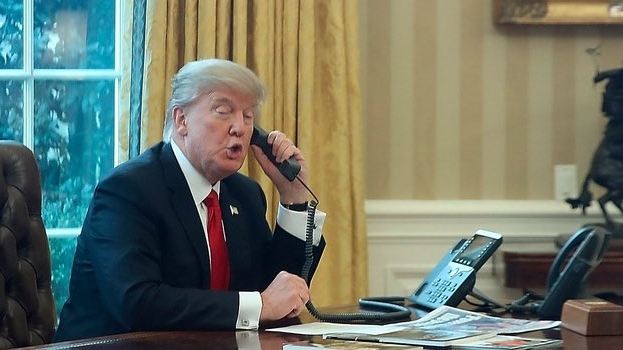
BREAKING: Trump is personally calling European allies and regional governments begging themBREAKING: Trump is personally calling European allies and regional governments begging them to send warships to reopen the Strait of Hormuz.
Read that again.
The President of the United States, commanding the most powerful navy in human history, is calling around asking for help to reopen a 21-mile waterway.
That single fact tells you everything you need to know about how severe this crisis actually is.
If the US could reopen Hormuz alone, it would have done so two weeks ago. It has not. The Navy confirmed on March 12 it is “not ready” for escort operations. Minesweeping assets were retired in 2025. Japan and Australia have already declined. Now Trump is demanding roughly seven countries send warships, framing it as reciprocity for US support in Ukraine, warning NATO faces a “very bad future” if allies refuse.
No commitments have been received.
Zero.
And while heads of state negotiate who sends which frigate, the biological clock that governs whether four billion people eat next year is ticking toward deadlines that do not wait for coalition logistics.
The Corn Belt needs nitrogen applied by mid-April. India needs Kharif season prep by May. Australia needs urea by June. These are not financial deadlines that reprice. They are photosynthetic deadlines that, once missed, lock in yield losses no subsequent intervention can reverse. The food the world eats in late 2026 and early 2027 is being decided right now, in fields, not in war rooms.
Here is what the coalition talk actually means for markets:
It confirms the crisis is real. Governments do not scramble multinational naval coalitions for temporary disruptions. It confirms the US cannot solve this alone. It confirms the timeline is months, not weeks. The 1987 Tanker War coalition took months to assemble and attacks continued throughout. The Red Sea crisis is 26 months old and premiums never normalized. Even if allies commit warships tomorrow, minesweeping a 21-mile corridor saturated with Iranian mines and drones while under active fire takes weeks of operational preparation before a single fertilizer vessel transits safely.
The $20 billion DFC reinsurance backstop with Chubb has zero confirmed fertilizer vessel utilization. Insurance pays for loss. It does not clear mines.
Meanwhile, the fertilizer system continues to fracture in real time. One-third of seaborne fertilizer trade passes through Hormuz per UNCTAD. Nearly 49% of traded urea is tied to conflict-exposed exporters. Bangladesh has shut five of six urea factories during its primary rice season. India asked China for emergency urea. China responded by banning phosphate exports through August. Egypt is hemorrhaging foreign reserves to feed 69 million people on a bread subsidy it cannot afford. 318 million people were at crisis-level hunger before any of this started.
The market is pricing a 45-day disruption because it heard “Trump building coalition” and assumed resolution.
The evidence says 90 to 150 days minimum. Coalition formation, escort logistics, minesweeping, insurance recalibration, vessel re-underwriting. Each step sequential. Each step taking weeks. The planting window closes in six.
Trump’s phone calls are not the solution. They are the confirmation signal.
The most powerful country on Earth just told you it cannot fix this alone. Believe it.
The planting window does not care about your coalition.
It is closing.
BREAKING: Trump is personally calling European allies and regional governments begging them
BREAKING: Trump is personally calling European allies and regional governments begging them to send warships to reopen the Strait of Hormuz.
Read that again.
The President of the United States, commanding the most powerful navy in human history, is calling around asking for help to reopen a 21-mile waterway.
That single fact tells you everything you need to know about how severe this crisis actually is.
If the US could reopen Hormuz alone, it would have done so two weeks ago. It has not. The Navy confirmed on March 12 it is “not ready” for escort operations. Minesweeping assets were retired in 2025. Japan and Australia have already declined. Now Trump is demanding roughly seven countries send warships, framing it as reciprocity for US support in Ukraine, warning NATO faces a “very bad future” if allies refuse.
No commitments have been received.
Zero.
And while heads of state negotiate who sends which frigate, the biological clock that governs whether four billion people eat next year is ticking toward deadlines that do not wait for coalition logistics.
The Corn Belt needs nitrogen applied by mid-April. India needs Kharif season prep by May. Australia needs urea by June. These are not financial deadlines that reprice. They are photosynthetic deadlines that, once missed, lock in yield losses no subsequent intervention can reverse. The food the world eats in late 2026 and early 2027 is being decided right now, in fields, not in war rooms.
Here is what the coalition talk actually means for markets:
It confirms the crisis is real. Governments do not scramble multinational naval coalitions for temporary disruptions. It confirms the US cannot solve this alone. It confirms the timeline is months, not weeks. The 1987 Tanker War coalition took months to assemble and attacks continued throughout. The Red Sea crisis is 26 months old and premiums never normalized. Even if allies commit warships tomorrow, minesweeping a 21-mile corridor saturated with Iranian mines and drones while under active fire takes weeks of operational preparation before a single fertilizer vessel transits safely.
The $20 billion DFC reinsurance backstop with Chubb has zero confirmed fertilizer vessel utilization. Insurance pays for loss. It does not clear mines.
Meanwhile, the fertilizer system continues to fracture in real time. One-third of seaborne fertilizer trade passes through Hormuz per UNCTAD. Nearly 49% of traded urea is tied to conflict-exposed exporters. Bangladesh has shut five of six urea factories during its primary rice season. India asked China for emergency urea. China responded by banning phosphate exports through August. Egypt is hemorrhaging foreign reserves to feed 69 million people on a bread subsidy it cannot afford. 318 million people were at crisis-level hunger before any of this started.
The market is pricing a 45-day disruption because it heard “Trump building coalition” and assumed resolution.
The evidence says 90 to 150 days minimum. Coalition formation, escort logistics, minesweeping, insurance recalibration, vessel re-underwriting. Each step sequential. Each step taking weeks. The planting window closes in six.
Trump’s phone calls are not the solution. They are the confirmation signal.
The most powerful country on Earth just told you it cannot fix this alone. Believe it.
The planting window does not care about your coalition.
It is closing.
Read that again.
The President of the United States, commanding the most powerful navy in human history, is calling around asking for help to reopen a 21-mile waterway.
That single fact tells you everything you need to know about how severe this crisis actually is.
If the US could reopen Hormuz alone, it would have done so two weeks ago. It has not. The Navy confirmed on March 12 it is “not ready” for escort operations. Minesweeping assets were retired in 2025. Japan and Australia have already declined. Now Trump is demanding roughly seven countries send warships, framing it as reciprocity for US support in Ukraine, warning NATO faces a “very bad future” if allies refuse.
No commitments have been received.
Zero.
And while heads of state negotiate who sends which frigate, the biological clock that governs whether four billion people eat next year is ticking toward deadlines that do not wait for coalition logistics.
The Corn Belt needs nitrogen applied by mid-April. India needs Kharif season prep by May. Australia needs urea by June. These are not financial deadlines that reprice. They are photosynthetic deadlines that, once missed, lock in yield losses no subsequent intervention can reverse. The food the world eats in late 2026 and early 2027 is being decided right now, in fields, not in war rooms.
Here is what the coalition talk actually means for markets:
It confirms the crisis is real. Governments do not scramble multinational naval coalitions for temporary disruptions. It confirms the US cannot solve this alone. It confirms the timeline is months, not weeks. The 1987 Tanker War coalition took months to assemble and attacks continued throughout. The Red Sea crisis is 26 months old and premiums never normalized. Even if allies commit warships tomorrow, minesweeping a 21-mile corridor saturated with Iranian mines and drones while under active fire takes weeks of operational preparation before a single fertilizer vessel transits safely.
The $20 billion DFC reinsurance backstop with Chubb has zero confirmed fertilizer vessel utilization. Insurance pays for loss. It does not clear mines.
Meanwhile, the fertilizer system continues to fracture in real time. One-third of seaborne fertilizer trade passes through Hormuz per UNCTAD. Nearly 49% of traded urea is tied to conflict-exposed exporters. Bangladesh has shut five of six urea factories during its primary rice season. India asked China for emergency urea. China responded by banning phosphate exports through August. Egypt is hemorrhaging foreign reserves to feed 69 million people on a bread subsidy it cannot afford. 318 million people were at crisis-level hunger before any of this started.
The market is pricing a 45-day disruption because it heard “Trump building coalition” and assumed resolution.
The evidence says 90 to 150 days minimum. Coalition formation, escort logistics, minesweeping, insurance recalibration, vessel re-underwriting. Each step sequential. Each step taking weeks. The planting window closes in six.
Trump’s phone calls are not the solution. They are the confirmation signal.
The most powerful country on Earth just told you it cannot fix this alone. Believe it.
The planting window does not care about your coalition.
It is closing.
2
Article
BREAKING: The IRGC just published a target list on TasnimBREAKING: The IRGC just published a target list on Tasnim: Google. Microsoft. Palantir. IBM. Nvidia. Oracle. Amazon. Every US technology company with infrastructure in the Gulf is now a declared military objective of 31 autonomous commanders who need no permission to strike and answer to a Supreme Leader made of cardboard.
Three AWS data centres have already been hit. UAE and Bahrain. 1 to 3 March. Outages occurred. Redundancy restored service. But the precedent is not the outage. The precedent is the doctrine.
When a centralised government declares a target, you call the leadership and negotiate its removal. When 31 autonomous provincial commands each possess independent firing authority over missiles, drones, and fast boats, and each holds a published list of American technology facilities, there is no phone number to call. There is no authority that can withdraw the list. There is no ceasefire that binds a commander in Bushehr who decides tonight that the AWS facility in Bahrain falls within his operational zone and his sealed orders from a dead Supreme Leader authorise him to strike it. The Mosaic Doctrine does not just enable attacks on tech infrastructure. It makes them ungovernable.
The targeting is not irrational. Palantir’s Mission Manager software provides the AI-driven targeting that selects which Iranian facility each American bomb hits. AWS hosts US military workloads. Nvidia’s chips power the surveillance models. In IRGC doctrine, these companies are not collateral. They are the digital nervous system of the kill chain that assassinated Khamenei. Destroying them degrades the precision that makes American strikes devastating. A $20,000 Shahed drone navigating at low altitude toward a $2 billion data centre campus produces the same cost asymmetry that a $500 mine produces against a $4 billion destroyer. And 31 commanders means 31 independent calculations every night about whether to send one.
The Gulf staked over one trillion dollars on becoming the world’s AI hub. UAE targets 90% sectoral penetration by 2030. Saudi NEOM. Qatar cloud zones. Bahrain fintech. All built on the assumption that the Gulf would remain stable enough to host the servers the world trusts with its data. The IRGC target list published today proves that assumption was structurally wrong.
The actuarial mechanism that closed Hormuz now migrates to the cloud. A facility on a published IRGC hit list, in a region where 1,440 drones and 253 ballistic missiles have been fired in eleven days, where the 94% interception rate still permitted 81 drone impacts and 20 missile penetrations, cannot be priced by any existing insurance model. If it cannot be insured, enterprise clients cannot host workloads there. If workloads migrate, the trillion-dollar AI investment becomes the largest stranded asset class in technology history. The drones do not need to destroy the data centres. The list itself is the weapon. The insurance response to the list is the damage.
And the list cannot be withdrawn. A centralised government could retract it in a ceasefire. But 31 commanders already hold it, with non-expiring authority from a dead man and no constitutional mechanism for a cardboard successor to rescind it. The same deadlock that prevents Mojtaba from stopping Hormuz mines prevents him from removing Google’s address from a targeting database.
The first chokepoint was oil through a strait. The second is data through a server farm. Both governed by the same doctrine, the same insurance mathematics, and the same Supreme Leader who cannot override either.
BREAKING: The IRGC just published a target list on Tasnim
BREAKING: The IRGC just published a target list on Tasnim: Google. Microsoft. Palantir. IBM. Nvidia. Oracle. Amazon. Every US technology company with infrastructure in the Gulf is now a declared military objective of 31 autonomous commanders who need no permission to strike and answer to a Supreme Leader made of cardboard.
Three AWS data centres have already been hit. UAE and Bahrain. 1 to 3 March. Outages occurred. Redundancy restored service. But the precedent is not the outage. The precedent is the doctrine.
When a centralised government declares a target, you call the leadership and negotiate its removal. When 31 autonomous provincial commands each possess independent firing authority over missiles, drones, and fast boats, and each holds a published list of American technology facilities, there is no phone number to call. There is no authority that can withdraw the list. There is no ceasefire that binds a commander in Bushehr who decides tonight that the AWS facility in Bahrain falls within his operational zone and his sealed orders from a dead Supreme Leader authorise him to strike it. The Mosaic Doctrine does not just enable attacks on tech infrastructure. It makes them ungovernable.
The targeting is not irrational. Palantir’s Mission Manager software provides the AI-driven targeting that selects which Iranian facility each American bomb hits. AWS hosts US military workloads. Nvidia’s chips power the surveillance models. In IRGC doctrine, these companies are not collateral. They are the digital nervous system of the kill chain that assassinated Khamenei. Destroying them degrades the precision that makes American strikes devastating. A $20,000 Shahed drone navigating at low altitude toward a $2 billion data centre campus produces the same cost asymmetry that a $500 mine produces against a $4 billion destroyer. And 31 commanders means 31 independent calculations every night about whether to send one.
The Gulf staked over one trillion dollars on becoming the world’s AI hub. UAE targets 90% sectoral penetration by 2030. Saudi NEOM. Qatar cloud zones. Bahrain fintech. All built on the assumption that the Gulf would remain stable enough to host the servers the world trusts with its data. The IRGC target list published today proves that assumption was structurally wrong.
The actuarial mechanism that closed Hormuz now migrates to the cloud. A facility on a published IRGC hit list, in a region where 1,440 drones and 253 ballistic missiles have been fired in eleven days, where the 94% interception rate still permitted 81 drone impacts and 20 missile penetrations, cannot be priced by any existing insurance model. If it cannot be insured, enterprise clients cannot host workloads there. If workloads migrate, the trillion-dollar AI investment becomes the largest stranded asset class in technology history. The drones do not need to destroy the data centres. The list itself is the weapon. The insurance response to the list is the damage.
And the list cannot be withdrawn. A centralised government could retract it in a ceasefire. But 31 commanders already hold it, with non-expiring authority from a dead man and no constitutional mechanism for a cardboard successor to rescind it. The same deadlock that prevents Mojtaba from stopping Hormuz mines prevents him from removing Google’s address from a targeting database.
The first chokepoint was oil through a strait. The second is data through a server farm. Both governed by the same doctrine, the same insurance mathematics, and the same Supreme Leader who cannot override either.
Three AWS data centres have already been hit. UAE and Bahrain. 1 to 3 March. Outages occurred. Redundancy restored service. But the precedent is not the outage. The precedent is the doctrine.
When a centralised government declares a target, you call the leadership and negotiate its removal. When 31 autonomous provincial commands each possess independent firing authority over missiles, drones, and fast boats, and each holds a published list of American technology facilities, there is no phone number to call. There is no authority that can withdraw the list. There is no ceasefire that binds a commander in Bushehr who decides tonight that the AWS facility in Bahrain falls within his operational zone and his sealed orders from a dead Supreme Leader authorise him to strike it. The Mosaic Doctrine does not just enable attacks on tech infrastructure. It makes them ungovernable.
The targeting is not irrational. Palantir’s Mission Manager software provides the AI-driven targeting that selects which Iranian facility each American bomb hits. AWS hosts US military workloads. Nvidia’s chips power the surveillance models. In IRGC doctrine, these companies are not collateral. They are the digital nervous system of the kill chain that assassinated Khamenei. Destroying them degrades the precision that makes American strikes devastating. A $20,000 Shahed drone navigating at low altitude toward a $2 billion data centre campus produces the same cost asymmetry that a $500 mine produces against a $4 billion destroyer. And 31 commanders means 31 independent calculations every night about whether to send one.
The Gulf staked over one trillion dollars on becoming the world’s AI hub. UAE targets 90% sectoral penetration by 2030. Saudi NEOM. Qatar cloud zones. Bahrain fintech. All built on the assumption that the Gulf would remain stable enough to host the servers the world trusts with its data. The IRGC target list published today proves that assumption was structurally wrong.
The actuarial mechanism that closed Hormuz now migrates to the cloud. A facility on a published IRGC hit list, in a region where 1,440 drones and 253 ballistic missiles have been fired in eleven days, where the 94% interception rate still permitted 81 drone impacts and 20 missile penetrations, cannot be priced by any existing insurance model. If it cannot be insured, enterprise clients cannot host workloads there. If workloads migrate, the trillion-dollar AI investment becomes the largest stranded asset class in technology history. The drones do not need to destroy the data centres. The list itself is the weapon. The insurance response to the list is the damage.
And the list cannot be withdrawn. A centralised government could retract it in a ceasefire. But 31 commanders already hold it, with non-expiring authority from a dead man and no constitutional mechanism for a cardboard successor to rescind it. The same deadlock that prevents Mojtaba from stopping Hormuz mines prevents him from removing Google’s address from a targeting database.
The first chokepoint was oil through a strait. The second is data through a server farm. Both governed by the same doctrine, the same insurance mathematics, and the same Supreme Leader who cannot override either.
30
Article
Iran WarSince 28 February, Iran has fired 1,440 one-way attack drones, 253 ballistic missiles, and 8 cruise missiles at the UAE. The UAE intercepted 1,359 drones, 233 ballistic missiles, and all 8 cruise missiles. That is a 94% interception rate on drones and a 92% rate on ballistic missiles. Extraordinary by any historical standard.
Eighty-one drones got through. Twenty ballistic missiles got through.
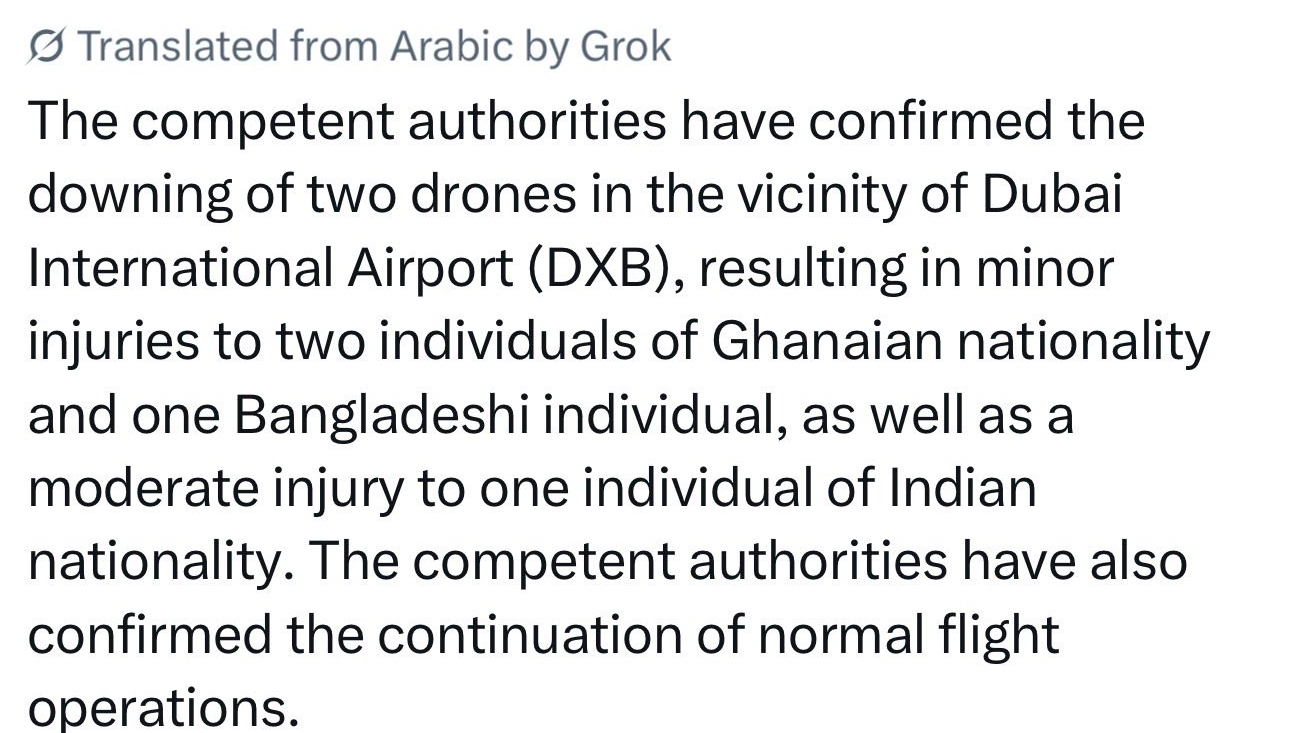
And today, two more drones were shot down near Dubai International Airport, the busiest international airport on Earth by passenger traffic. The people they injured were from Ghana, Bangladesh, and India.
The Dubai Media Office confirmed it. Two drones intercepted in the vicinity of DXB. Minor injuries to two Ghanaian nationals and one Bangladeshi national. Moderate injury to one Indian national. Flight operations continuing normally.
The interception system works. The debris does not discriminate.
Hours earlier, a container ship was hit by an unknown projectile 25 nautical miles off Ras al Khaimah. Two attacks on UAE territory in a single day. One maritime. One aviation. Neither claimed. Both fitting the Mosaic Doctrine’s signature: deniable, autonomous, launched by any of the 31 IRGC provincial commands that need no permission from a Supreme Leader who is made of cardboard.
The UAE’s air defences are performing at a level that would have been considered impossible a decade ago. But the mathematics of saturation warfare mean that a 94% interception rate against 1,440 drones still leaves 81 impacts. A 92% rate against 253 ballistic missiles still leaves 20. And today’s DXB interception, successful as it was, still sent debris into workers standing near the runways of an airport that generated $45 billion in economic impact in 2025.
That economic engine is now running on fumes. Over 30,000 flights in and out of the Middle East have been cancelled since 28 February, stranding more than 1.5 million passengers. DXB traffic is down 85%. Emirates loses an estimated $100 million for every day the airport operates below capacity. British Airways suspended Abu Dhabi indefinitely. Twenty-one airlines have cancelled Gulf routes. The United States has repatriated 36,000 Americans. Tourism accounts for 13% of UAE GDP. Hospitality revenue dropped 50% in the first quarter.
Iran did not need to destroy the airport. It needed to make the airport uninsurable, unserviceable, and unreliable for the 92 million passengers who used it last year. The drones that get intercepted still close airspace. The debris that falls still injures workers. The insurance premiums that spike 500% still ground airlines. The war does not need to penetrate the terminal. It needs to penetrate the spreadsheet.
And the people standing closest to the debris are not Emirates executives or Emirati citizens or the diplomats negotiating in Geneva. They are Ghanaian construction workers. Bangladeshi cleaners. Indian maintenance staff. The people who built the $36 billion aviation infrastructure the Gulf spent a decade constructing are the ones bleeding from its defence. Ghana’s GDP is $77 billion. A Bangladeshi garment worker earns $95 a month. India has 10 million citizens in the Gulf whose remittances sustain families that will never appear in a casualty briefing.
1,440 drones. 253 ballistic missiles. 8 cruise missiles. Ninety-four percent intercepted. And the four people injured today at the world’s busiest airport were holding brooms, not boarding passes.
Iran War
Since 28 February, Iran has fired 1,440 one-way attack drones, 253 ballistic missiles, and 8 cruise missiles at the UAE. The UAE intercepted 1,359 drones, 233 ballistic missiles, and all 8 cruise missiles. That is a 94% interception rate on drones and a 92% rate on ballistic missiles. Extraordinary by any historical standard.
Eighty-one drones got through. Twenty ballistic missiles got through.
And today, two more drones were shot down near Dubai International Airport, the busiest international airport on Earth by passenger traffic. The people they injured were from Ghana, Bangladesh, and India.
The Dubai Media Office confirmed it. Two drones intercepted in the vicinity of DXB. Minor injuries to two Ghanaian nationals and one Bangladeshi national. Moderate injury to one Indian national. Flight operations continuing normally.
The interception system works. The debris does not discriminate.
Hours earlier, a container ship was hit by an unknown projectile 25 nautical miles off Ras al Khaimah. Two attacks on UAE territory in a single day. One maritime. One aviation. Neither claimed. Both fitting the Mosaic Doctrine’s signature: deniable, autonomous, launched by any of the 31 IRGC provincial commands that need no permission from a Supreme Leader who is made of cardboard.
The UAE’s air defences are performing at a level that would have been considered impossible a decade ago. But the mathematics of saturation warfare mean that a 94% interception rate against 1,440 drones still leaves 81 impacts. A 92% rate against 253 ballistic missiles still leaves 20. And today’s DXB interception, successful as it was, still sent debris into workers standing near the runways of an airport that generated $45 billion in economic impact in 2025.
That economic engine is now running on fumes. Over 30,000 flights in and out of the Middle East have been cancelled since 28 February, stranding more than 1.5 million passengers. DXB traffic is down 85%. Emirates loses an estimated $100 million for every day the airport operates below capacity. British Airways suspended Abu Dhabi indefinitely. Twenty-one airlines have cancelled Gulf routes. The United States has repatriated 36,000 Americans. Tourism accounts for 13% of UAE GDP. Hospitality revenue dropped 50% in the first quarter.
Iran did not need to destroy the airport. It needed to make the airport uninsurable, unserviceable, and unreliable for the 92 million passengers who used it last year. The drones that get intercepted still close airspace. The debris that falls still injures workers. The insurance premiums that spike 500% still ground airlines. The war does not need to penetrate the terminal. It needs to penetrate the spreadsheet.
And the people standing closest to the debris are not Emirates executives or Emirati citizens or the diplomats negotiating in Geneva. They are Ghanaian construction workers. Bangladeshi cleaners. Indian maintenance staff. The people who built the $36 billion aviation infrastructure the Gulf spent a decade constructing are the ones bleeding from its defence. Ghana’s GDP is $77 billion. A Bangladeshi garment worker earns $95 a month. India has 10 million citizens in the Gulf whose remittances sustain families that will never appear in a casualty briefing.
1,440 drones. 253 ballistic missiles. 8 cruise missiles. Ninety-four percent intercepted. And the four people injured today at the world’s busiest airport were holding brooms, not boarding passes.
Eighty-one drones got through. Twenty ballistic missiles got through.
And today, two more drones were shot down near Dubai International Airport, the busiest international airport on Earth by passenger traffic. The people they injured were from Ghana, Bangladesh, and India.
The Dubai Media Office confirmed it. Two drones intercepted in the vicinity of DXB. Minor injuries to two Ghanaian nationals and one Bangladeshi national. Moderate injury to one Indian national. Flight operations continuing normally.
The interception system works. The debris does not discriminate.
Hours earlier, a container ship was hit by an unknown projectile 25 nautical miles off Ras al Khaimah. Two attacks on UAE territory in a single day. One maritime. One aviation. Neither claimed. Both fitting the Mosaic Doctrine’s signature: deniable, autonomous, launched by any of the 31 IRGC provincial commands that need no permission from a Supreme Leader who is made of cardboard.
The UAE’s air defences are performing at a level that would have been considered impossible a decade ago. But the mathematics of saturation warfare mean that a 94% interception rate against 1,440 drones still leaves 81 impacts. A 92% rate against 253 ballistic missiles still leaves 20. And today’s DXB interception, successful as it was, still sent debris into workers standing near the runways of an airport that generated $45 billion in economic impact in 2025.
That economic engine is now running on fumes. Over 30,000 flights in and out of the Middle East have been cancelled since 28 February, stranding more than 1.5 million passengers. DXB traffic is down 85%. Emirates loses an estimated $100 million for every day the airport operates below capacity. British Airways suspended Abu Dhabi indefinitely. Twenty-one airlines have cancelled Gulf routes. The United States has repatriated 36,000 Americans. Tourism accounts for 13% of UAE GDP. Hospitality revenue dropped 50% in the first quarter.
Iran did not need to destroy the airport. It needed to make the airport uninsurable, unserviceable, and unreliable for the 92 million passengers who used it last year. The drones that get intercepted still close airspace. The debris that falls still injures workers. The insurance premiums that spike 500% still ground airlines. The war does not need to penetrate the terminal. It needs to penetrate the spreadsheet.
And the people standing closest to the debris are not Emirates executives or Emirati citizens or the diplomats negotiating in Geneva. They are Ghanaian construction workers. Bangladeshi cleaners. Indian maintenance staff. The people who built the $36 billion aviation infrastructure the Gulf spent a decade constructing are the ones bleeding from its defence. Ghana’s GDP is $77 billion. A Bangladeshi garment worker earns $95 a month. India has 10 million citizens in the Gulf whose remittances sustain families that will never appear in a casualty briefing.
1,440 drones. 253 ballistic missiles. 8 cruise missiles. Ninety-four percent intercepted. And the four people injured today at the world’s busiest airport were holding brooms, not boarding passes.
3
$100k is not small oo
Don’t let the internet whine you 😂
I heard someone saying $100k is too small
For him to start the business he wants to start 😂😂, I just laughed and had to break things down for him.
More than 90% of people in Nigeria don’t have up to 500k in their bank acc at a time I.e $357
So you are part of the 1%
Even in the United state of America an average person working back to back most times can gather $7k - $10k in a year of proper savings, so it will take him 10yrs to get $100k.
$100k can make you scale up.
$100k is not small oo
Don’t let the internet whine you 😂
I heard someone saying $100k is too small
For him to start the business he wants to start 😂😂, I just laughed and had to break things down for him.
More than 90% of people in Nigeria don’t have up to 500k in their bank acc at a time I.e $357
So you are part of the 1%
Even in the United state of America an average person working back to back most times can gather $7k - $10k in a year of proper savings, so it will take him 10yrs to get $100k.
$100k can make you scale up.
Don’t let the internet whine you 😂
I heard someone saying $100k is too small
For him to start the business he wants to start 😂😂, I just laughed and had to break things down for him.
More than 90% of people in Nigeria don’t have up to 500k in their bank acc at a time I.e $357
So you are part of the 1%
Even in the United state of America an average person working back to back most times can gather $7k - $10k in a year of proper savings, so it will take him 10yrs to get $100k.
$100k can make you scale up.
7

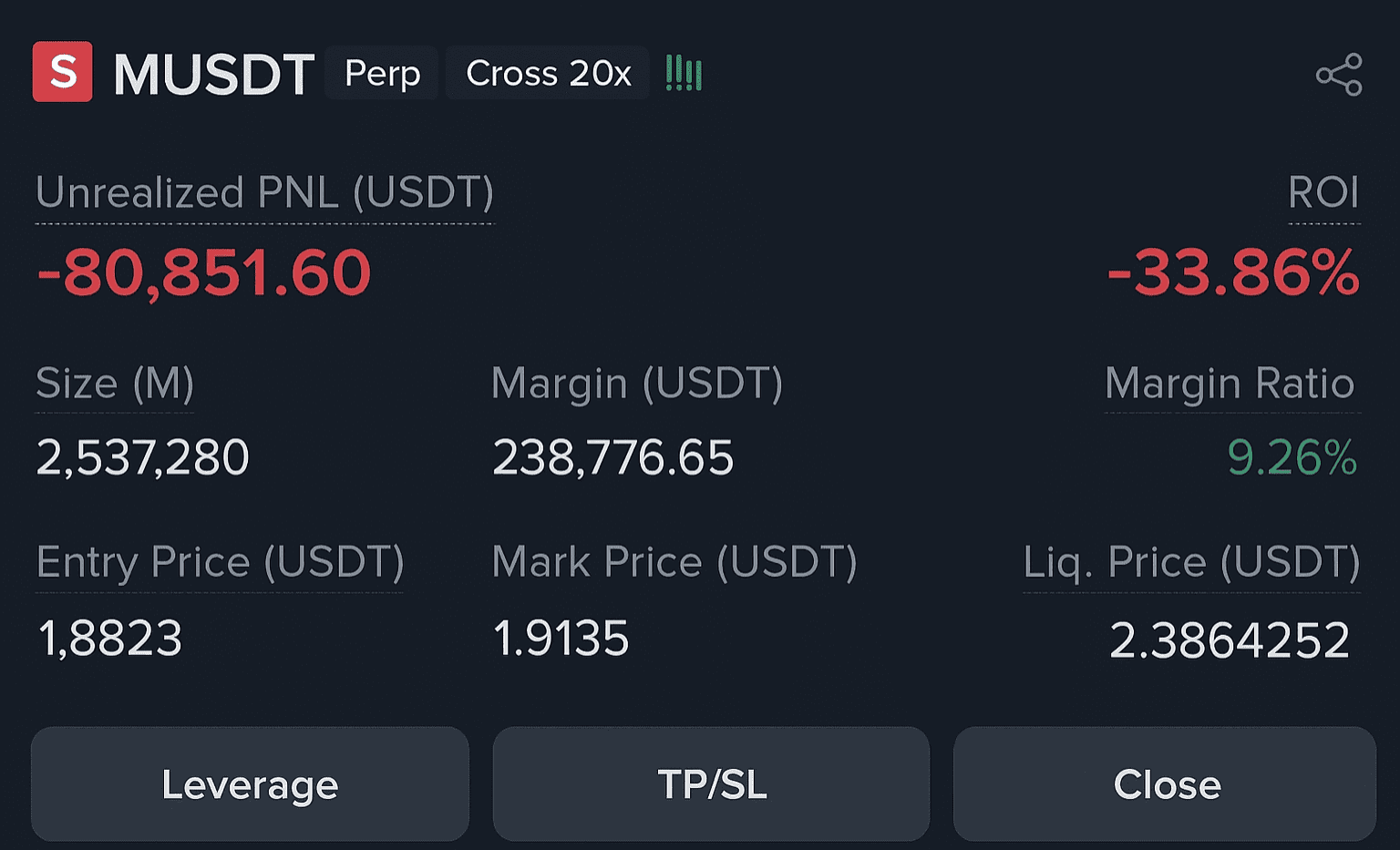
one thing I love about binance square you can't fake a trade screenshot 😆
one thing I love about binance square you can't fake a trade screenshot 😆
1
26
you sell to stop losses
you sell to stop losses

Pintu980
·
--
This is my invested value how to overcome my losses pls advice
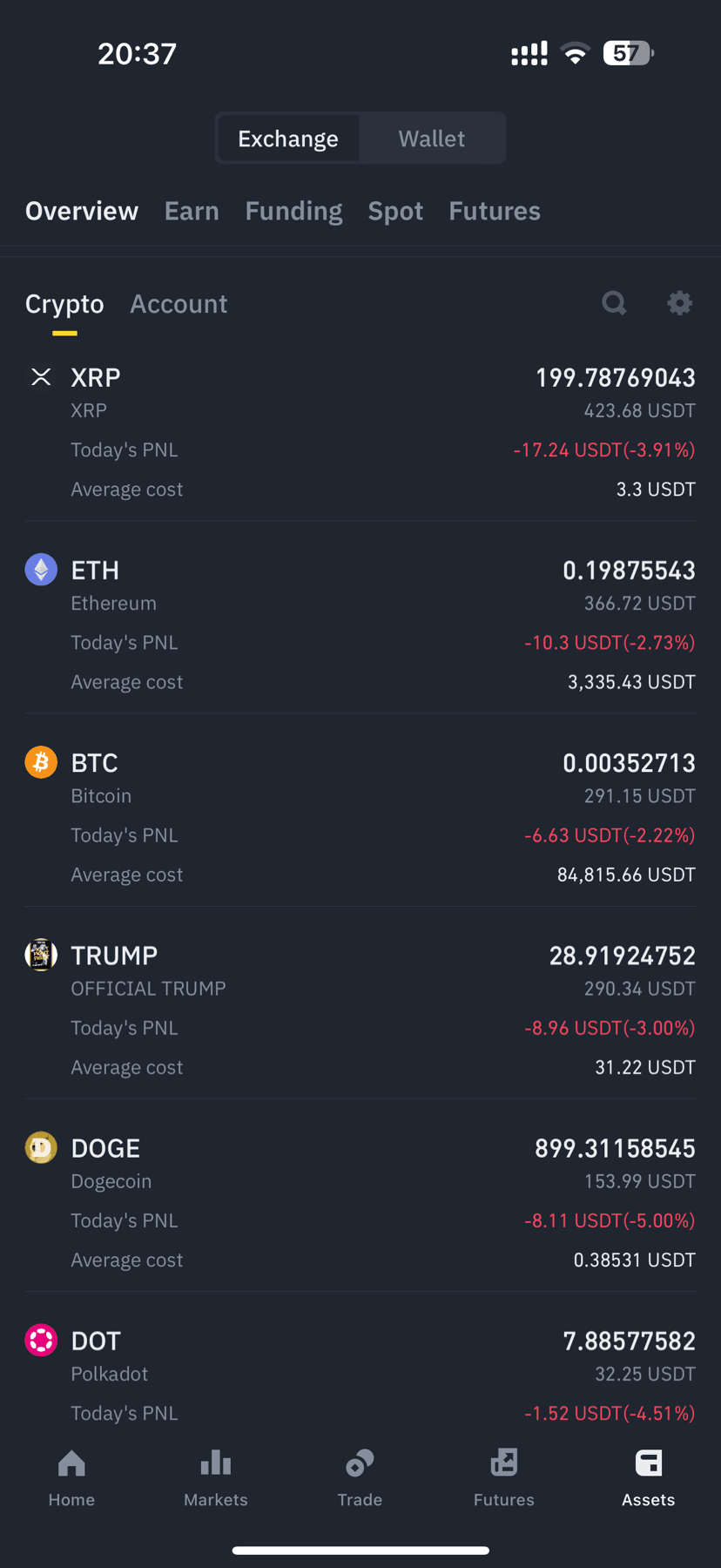
61
add more margin we are going to $1M next week
add more margin we are going to $1M next week

Sameer trader
·
--
hold or close what you think about Bitcoin pump or dump 🤌
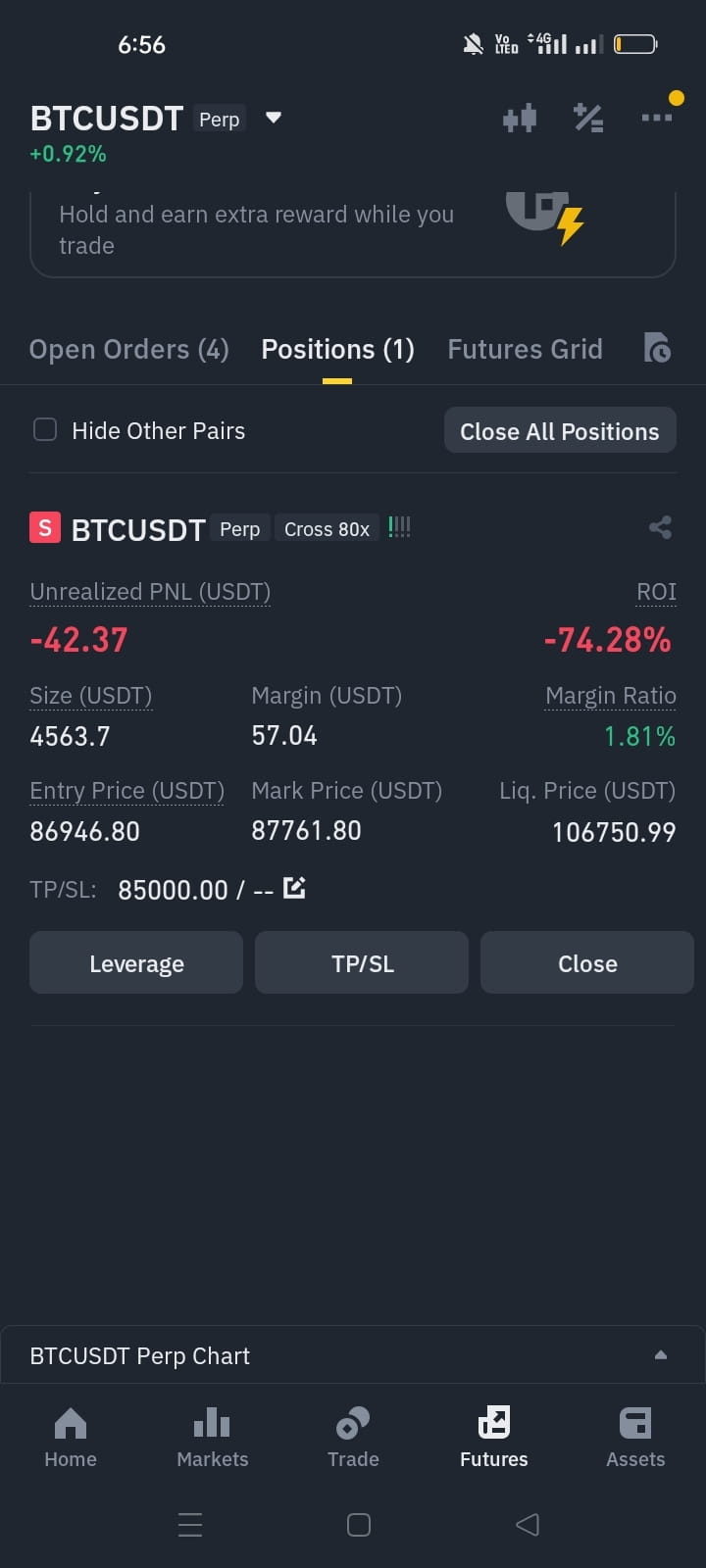
89
you didn't know that this account belong to binance on chain.. look at the view only. You and I can only view it 😆 🤣 😂 😹
you didn't know that this account belong to binance on chain.. look at the view only. You and I can only view it 😆 🤣 😂 😹
Quoted content has been removed
125
Log in to explore more content
Join global crypto users on Binance Square
⚡️ Get latest and useful information about crypto.
💬 Trusted by the world’s largest crypto exchange.
👍 Discover real insights from verified creators.
Email / Phone number