
夏木KRIS
9.2k Posts

夏木KRIS
 Square Verified+
Report
Block User
聚焦超级个体、美股、加密货币、贵金属、AI。
Exploring the Sovereign Individual US Stocks、Crypto、Precious Metals、AI.

2025 Blockchain 100 — Independent Researcher

Traders League Badge Expert

原创之星
Frequent Trader
8.4 Years
284 Following
78.7K+ Followers
158.5K+ Liked
3 Badges
Posts
All
Quotes
Videos
PINNED
·
--
$57,800
Perhaps this is the bottom of the current $BTC Bitcoin bear market
Looking back now, I’m increasingly convinced that around $57,800 may be the true bottom of this BTC bear market.
At the end of June, Bitcoin was driven down to about $57,800, setting a new 21-month low. At the time, the environment was actually very poor: the Fed was leaning hawkish, and ETF flows were continuing to bleed out. Just the withdrawals in June alone totaled tens of billions of dollars, and market sentiment had already been crushed into extreme pessimism.
But with so many bearish factors, BTC still didn’t keep collapsing.
Now Bitcoin has rebounded all the way from $57,800. Today, it even briefly broke above $79,000—an upside rally of more than 36% from the lows. At the same time, ETF capital has started flowing back in again, and regulatory expectations are beginning to turn more favorable.
So now I’m going to start treating $57,800 as a very important level.
The bottom of a bear market is often something that falls out—only after some time do people realize: the lowest point was already behind us long ago.
$57,800
Perhaps this is the bottom of the current $BTC Bitcoin bear market
Looking back now, I’m increasingly convinced that around $57,800 may be the true bottom of this BTC bear market.
At the end of June, Bitcoin was driven down to about $57,800, setting a new 21-month low. At the time, the environment was actually very poor: the Fed was leaning hawkish, and ETF flows were continuing to bleed out. Just the withdrawals in June alone totaled tens of billions of dollars, and market sentiment had already been crushed into extreme pessimism.
But with so many bearish factors, BTC still didn’t keep collapsing.
Now Bitcoin has rebounded all the way from $57,800. Today, it even briefly broke above $79,000—an upside rally of more than 36% from the lows. At the same time, ETF capital has started flowing back in again, and regulatory expectations are beginning to turn more favorable.
So now I’m going to start treating $57,800 as a very important level.
The bottom of a bear market is often something that falls out—only after some time do people realize: the lowest point was already behind us long ago.
Perhaps this is the bottom of the current $BTC Bitcoin bear market
Looking back now, I’m increasingly convinced that around $57,800 may be the true bottom of this BTC bear market.
At the end of June, Bitcoin was driven down to about $57,800, setting a new 21-month low. At the time, the environment was actually very poor: the Fed was leaning hawkish, and ETF flows were continuing to bleed out. Just the withdrawals in June alone totaled tens of billions of dollars, and market sentiment had already been crushed into extreme pessimism.
But with so many bearish factors, BTC still didn’t keep collapsing.
Now Bitcoin has rebounded all the way from $57,800. Today, it even briefly broke above $79,000—an upside rally of more than 36% from the lows. At the same time, ETF capital has started flowing back in again, and regulatory expectations are beginning to turn more favorable.
So now I’m going to start treating $57,800 as a very important level.
The bottom of a bear market is often something that falls out—only after some time do people realize: the lowest point was already behind us long ago.
9
9
2.2k
PINNED
·
--
Bullish
Verified
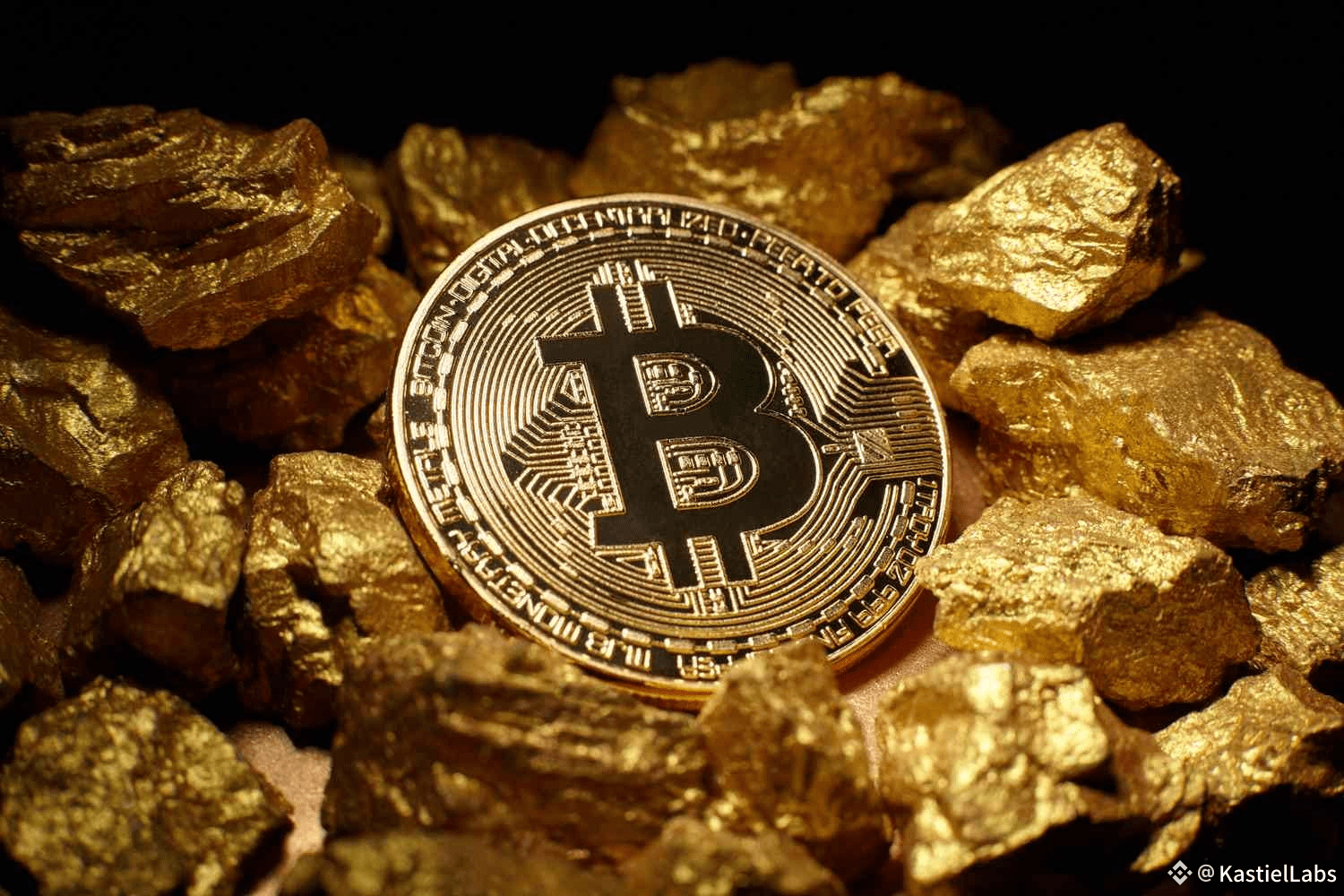
Dual Anchor Currency Era: Why Only Gold and Bitcoin Will Survive in the End
I increasingly feel that we are heading towards a strange yet inevitable future. The world is forming two distinctly different trust systems: one based on 'material', gold; the other supported by 'algorithms', Bitcoin.
China continues to increase its gold reserves, this action seems more like preparing a defense in advance. Gold does not depend on any country, nor does it require third-party guarantees; its value comes from the accumulation of time and the common trust of humanity. Meanwhile, the United States is promoting the institutionalization of cryptocurrencies, with frequent interactions between capital and regulatory bodies, and financial giants are all making plans. They are trying to make digital currency the core tool of the new financial system, using new rules to consolidate dominance.
When one country hoards physical assets and another builds computational power infrastructure, the world's monetary order has begun to loosen. The dollar once represented global credit, but now with rising debts, excessive currency issuance, and diminishing trust, the system itself is beginning to show signs of fatigue.
The currency of the future may be underground or in the cloud. Gold remains the most solid store of value in the real world, while Bitcoin is gradually gaining a similar status in the digital realm. One embodies stability and tradition, while the other symbolizes openness and innovation.
I often think that gold connects to the civilizations of the past, while Bitcoin leads to the order of the future. As the credit system of the dollar gradually collapses, humanity is searching for a new anchor point of 'trust'; these two assets may become new pivot points.
This transformation is not a distant fantasy, but a migration that is quietly happening. We are moving from national credit to consensus credit, from printing presses to computational power and time. Yet most people have not realized that they are already standing at the historical watershed.
$BTC
{spot}(BTCUSDT)
$PAXG
{spot}(PAXGUSDT)
Dual Anchor Currency Era: Why Only Gold and Bitcoin Will Survive in the End
I increasingly feel that we are heading towards a strange yet inevitable future. The world is forming two distinctly different trust systems: one based on 'material', gold; the other supported by 'algorithms', Bitcoin.
China continues to increase its gold reserves, this action seems more like preparing a defense in advance. Gold does not depend on any country, nor does it require third-party guarantees; its value comes from the accumulation of time and the common trust of humanity. Meanwhile, the United States is promoting the institutionalization of cryptocurrencies, with frequent interactions between capital and regulatory bodies, and financial giants are all making plans. They are trying to make digital currency the core tool of the new financial system, using new rules to consolidate dominance.
When one country hoards physical assets and another builds computational power infrastructure, the world's monetary order has begun to loosen. The dollar once represented global credit, but now with rising debts, excessive currency issuance, and diminishing trust, the system itself is beginning to show signs of fatigue.
The currency of the future may be underground or in the cloud. Gold remains the most solid store of value in the real world, while Bitcoin is gradually gaining a similar status in the digital realm. One embodies stability and tradition, while the other symbolizes openness and innovation.
I often think that gold connects to the civilizations of the past, while Bitcoin leads to the order of the future. As the credit system of the dollar gradually collapses, humanity is searching for a new anchor point of 'trust'; these two assets may become new pivot points.
This transformation is not a distant fantasy, but a migration that is quietly happening. We are moving from national credit to consensus credit, from printing presses to computational power and time. Yet most people have not realized that they are already standing at the historical watershed.
$BTC
$PAXG
I increasingly feel that we are heading towards a strange yet inevitable future. The world is forming two distinctly different trust systems: one based on 'material', gold; the other supported by 'algorithms', Bitcoin.
China continues to increase its gold reserves, this action seems more like preparing a defense in advance. Gold does not depend on any country, nor does it require third-party guarantees; its value comes from the accumulation of time and the common trust of humanity. Meanwhile, the United States is promoting the institutionalization of cryptocurrencies, with frequent interactions between capital and regulatory bodies, and financial giants are all making plans. They are trying to make digital currency the core tool of the new financial system, using new rules to consolidate dominance.
When one country hoards physical assets and another builds computational power infrastructure, the world's monetary order has begun to loosen. The dollar once represented global credit, but now with rising debts, excessive currency issuance, and diminishing trust, the system itself is beginning to show signs of fatigue.
The currency of the future may be underground or in the cloud. Gold remains the most solid store of value in the real world, while Bitcoin is gradually gaining a similar status in the digital realm. One embodies stability and tradition, while the other symbolizes openness and innovation.
I often think that gold connects to the civilizations of the past, while Bitcoin leads to the order of the future. As the credit system of the dollar gradually collapses, humanity is searching for a new anchor point of 'trust'; these two assets may become new pivot points.
This transformation is not a distant fantasy, but a migration that is quietly happening. We are moving from national credit to consensus credit, from printing presses to computational power and time. Yet most people have not realized that they are already standing at the historical watershed.
$BTC
$PAXG
99
56
273
15k
·
--
I think $牛来
will become the next $币安人生
because I like the process of the chips forming in front of it.
It’s not the kind of off-the-shelf “insider book” where a few people get full positions early and then use messages to pull the price up out of nowhere.
Before it gets bullish, the heat builds up little by little—everyone buys it step by step. I’d actually be more willing to hold higher expectations for a Meme like this, because its consensus isn’t created by a single announcement suddenly.
That’s also why I’m viewing it together with $Binance Life.
I think $牛来
will become the next $币安人生
because I like the process of the chips forming in front of it.
It’s not the kind of off-the-shelf “insider book” where a few people get full positions early and then use messages to pull the price up out of nowhere.
Before it gets bullish, the heat builds up little by little—everyone buys it step by step. I’d actually be more willing to hold higher expectations for a Meme like this, because its consensus isn’t created by a single announcement suddenly.
That’s also why I’m viewing it together with $Binance Life.
will become the next $币安人生
because I like the process of the chips forming in front of it.
It’s not the kind of off-the-shelf “insider book” where a few people get full positions early and then use messages to pull the price up out of nowhere.
Before it gets bullish, the heat builds up little by little—everyone buys it step by step. I’d actually be more willing to hold higher expectations for a Meme like this, because its consensus isn’t created by a single announcement suddenly.
That’s also why I’m viewing it together with $Binance Life.
4
3.2k
·
--
Trust me. If you haven’t boarded this bull market yet, then first buy $ZEC , $UNI , and $CAKE !
If you still haven’t bought crypto by now—fearing you might chase too high, yet also afraid of missing out on this bull market—don’t rush to chase those small-cap coins that can jump dozens of percentage points in a single day.
I’ll focus on three targets:
$ZEC: One of the coins I’m most confident about this round. After it breaks above $1,600, I still like its subsequent momentum. My cycle target is $8,000–$10,000.
$UNI: It has already broken above $10. Compared with just trading the narrative, I care more about Uniswap’s real trading activity, and the changes UNI undergoes due to the protocol fee mechanism. The earlier $39 target hasn’t changed.
$CAKE: PancakeSwap has real on-chain trading activity, and CAKE’s token burn mechanism is also worth keeping track of. Whether it can break out into a new leg of the market will depend on trading volume and actual burn data—not just on a sudden price spike.
You don’t need to buy all three at once. If you haven’t boarded yet, first allocate your position sizes; when there’s a pullback, buy in batches. Don’t let fear of missing out push you to put all your money in after a single big bullish candle.
Trust me. If you haven’t boarded this bull market yet, then first buy $ZEC , $UNI , and $CAKE !
If you still haven’t bought crypto by now—fearing you might chase too high, yet also afraid of missing out on this bull market—don’t rush to chase those small-cap coins that can jump dozens of percentage points in a single day.
I’ll focus on three targets:
$ZEC : One of the coins I’m most confident about this round. After it breaks above $1,600, I still like its subsequent momentum. My cycle target is $8,000–$10,000.
$UNI : It has already broken above $10. Compared with just trading the narrative, I care more about Uniswap’s real trading activity, and the changes UNI undergoes due to the protocol fee mechanism. The earlier $39 target hasn’t changed.
$CAKE : PancakeSwap has real on-chain trading activity, and CAKE’s token burn mechanism is also worth keeping track of. Whether it can break out into a new leg of the market will depend on trading volume and actual burn data—not just on a sudden price spike.
You don’t need to buy all three at once. If you haven’t boarded yet, first allocate your position sizes; when there’s a pullback, buy in batches. Don’t let fear of missing out push you to put all your money in after a single big bullish candle.
If you still haven’t bought crypto by now—fearing you might chase too high, yet also afraid of missing out on this bull market—don’t rush to chase those small-cap coins that can jump dozens of percentage points in a single day.
I’ll focus on three targets:
$ZEC : One of the coins I’m most confident about this round. After it breaks above $1,600, I still like its subsequent momentum. My cycle target is $8,000–$10,000.
$UNI : It has already broken above $10. Compared with just trading the narrative, I care more about Uniswap’s real trading activity, and the changes UNI undergoes due to the protocol fee mechanism. The earlier $39 target hasn’t changed.
$CAKE : PancakeSwap has real on-chain trading activity, and CAKE’s token burn mechanism is also worth keeping track of. Whether it can break out into a new leg of the market will depend on trading volume and actual burn data—not just on a sudden price spike.
You don’t need to buy all three at once. If you haven’t boarded yet, first allocate your position sizes; when there’s a pullback, buy in batches. Don’t let fear of missing out push you to put all your money in after a single big bullish candle.
3
9
14k
·
--
In a bull market, don’t short—just remember four words: buy on the pullback!
In a bull market, the easiest way to lose money isn’t necessarily buying the wrong coin; it’s when you correctly see an uptrend, yet you still keep trying to catch every pullback to short.
After it rises 10%, you think it should drop; after it rises 20%, you’re sure the top is in. Then the moment you open a short, the price makes new highs again.
My trading approach this round is very simple: don’t guess the top, and don’t open shorts against the trend just to profit from a pullback.
If the coin you like is moving up, don’t rush to chase; wait for the price to return to key support levels, then look for long opportunities in batches.
Of course, a pullback isn’t an unconditional buy. If support breaks and the upward thesis changes, then stop.
In a bull market, I’d rather miss a pullback once than hold a short and gamble on the top.
$BTC $ZEC $DOGE
In a bull market, don’t short—just remember four words: buy on the pullback!
In a bull market, the easiest way to lose money isn’t necessarily buying the wrong coin; it’s when you correctly see an uptrend, yet you still keep trying to catch every pullback to short.
After it rises 10%, you think it should drop; after it rises 20%, you’re sure the top is in. Then the moment you open a short, the price makes new highs again.
My trading approach this round is very simple: don’t guess the top, and don’t open shorts against the trend just to profit from a pullback.
If the coin you like is moving up, don’t rush to chase; wait for the price to return to key support levels, then look for long opportunities in batches.
Of course, a pullback isn’t an unconditional buy. If support breaks and the upward thesis changes, then stop.
In a bull market, I’d rather miss a pullback once than hold a short and gamble on the top.
$BTC $ZEC $DOGE
In a bull market, the easiest way to lose money isn’t necessarily buying the wrong coin; it’s when you correctly see an uptrend, yet you still keep trying to catch every pullback to short.
After it rises 10%, you think it should drop; after it rises 20%, you’re sure the top is in. Then the moment you open a short, the price makes new highs again.
My trading approach this round is very simple: don’t guess the top, and don’t open shorts against the trend just to profit from a pullback.
If the coin you like is moving up, don’t rush to chase; wait for the price to return to key support levels, then look for long opportunities in batches.
Of course, a pullback isn’t an unconditional buy. If support breaks and the upward thesis changes, then stop.
In a bull market, I’d rather miss a pullback once than hold a short and gamble on the top.
$BTC $ZEC $DOGE
2
646
·
--
5x space?
$ZEC breaks through $1,600
But in this bull cycle, I’m watching the $8,000–$10,000 range!
$ZEC , from the $1,130–$1,150 levels that I reminded people to plan for, rose all the way to break through $1,600. Every time it set a new high, people said it had already gone too far; after pullbacks, it still came back and held above.
My view on ZEC has never been limited to short-term trading. With a maximum supply of 21 million coins, privacy transactions are a clear product direction. As of September 20, about 4.91 million ZEC are in the privacy pool, representing nearly 29% of the circulating supply. Whether privacy demand can keep growing is the reason I’m willing to track it long term.
In this bull cycle, my target range for ZEC is $8,000–$10,000. This target is aggressive: based on the current circulating supply of about 16.88 million coins, it corresponds to a circulating market cap of roughly $135 billion–$169 billion, which would require ongoing capital and real demand to keep supporting it.
5x space?
$ZEC breaks through $1,600
But in this bull cycle, I’m watching the $8,000–$10,000 range!
$ZEC , from the $1,130–$1,150 levels that I reminded people to plan for, rose all the way to break through $1,600. Every time it set a new high, people said it had already gone too far; after pullbacks, it still came back and held above.
My view on ZEC has never been limited to short-term trading. With a maximum supply of 21 million coins, privacy transactions are a clear product direction. As of September 20, about 4.91 million ZEC are in the privacy pool, representing nearly 29% of the circulating supply. Whether privacy demand can keep growing is the reason I’m willing to track it long term.
In this bull cycle, my target range for ZEC is $8,000–$10,000. This target is aggressive: based on the current circulating supply of about 16.88 million coins, it corresponds to a circulating market cap of roughly $135 billion–$169 billion, which would require ongoing capital and real demand to keep supporting it.
$ZEC breaks through $1,600
But in this bull cycle, I’m watching the $8,000–$10,000 range!
$ZEC , from the $1,130–$1,150 levels that I reminded people to plan for, rose all the way to break through $1,600. Every time it set a new high, people said it had already gone too far; after pullbacks, it still came back and held above.
My view on ZEC has never been limited to short-term trading. With a maximum supply of 21 million coins, privacy transactions are a clear product direction. As of September 20, about 4.91 million ZEC are in the privacy pool, representing nearly 29% of the circulating supply. Whether privacy demand can keep growing is the reason I’m willing to track it long term.
In this bull cycle, my target range for ZEC is $8,000–$10,000. This target is aggressive: based on the current circulating supply of about 16.88 million coins, it corresponds to a circulating market cap of roughly $135 billion–$169 billion, which would require ongoing capital and real demand to keep supporting it.
1
2
904
·
--
$AR Back above $5 to $4.5—the pullback you’ve been waiting for is here!
On $AR , it was still hovering around $2.6 on September 18; on the 21st, the intraday high surged to $5.27, and then it fell back to around $4.5.
When it moves up, you think it’s too expensive; after the pullback, you’re afraid it might keep dropping. But I see AR—it's never just about the K-lines for these one or two days.
Arweave provides permanent storage, and AO brings computing power into its ecosystem. For AI applications, they need to store data and record the computation process. Whether these needs can translate into real usage is the key to how far AR can go.
My previous cycle target for AR was $39, and I haven’t changed it. Around $4.2–$4.6, I’ll start watching again for opportunities to build positions in batches—I won’t wait until it breaks above $5 again before I remember this coin.
$AR Back above $5 to $4.5—the pullback you’ve been waiting for is here!
On $AR , it was still hovering around $2.6 on September 18; on the 21st, the intraday high surged to $5.27, and then it fell back to around $4.5.
When it moves up, you think it’s too expensive; after the pullback, you’re afraid it might keep dropping. But I see AR—it's never just about the K-lines for these one or two days.
Arweave provides permanent storage, and AO brings computing power into its ecosystem. For AI applications, they need to store data and record the computation process. Whether these needs can translate into real usage is the key to how far AR can go.
My previous cycle target for AR was $39, and I haven’t changed it. Around $4.2–$4.6, I’ll start watching again for opportunities to build positions in batches—I won’t wait until it breaks above $5 again before I remember this coin.
On $AR , it was still hovering around $2.6 on September 18; on the 21st, the intraday high surged to $5.27, and then it fell back to around $4.5.
When it moves up, you think it’s too expensive; after the pullback, you’re afraid it might keep dropping. But I see AR—it's never just about the K-lines for these one or two days.
Arweave provides permanent storage, and AO brings computing power into its ecosystem. For AI applications, they need to store data and record the computation process. Whether these needs can translate into real usage is the key to how far AR can go.
My previous cycle target for AR was $39, and I haven’t changed it. Around $4.2–$4.6, I’ll start watching again for opportunities to build positions in batches—I won’t wait until it breaks above $5 again before I remember this coin.
5
1.7k
·
--
Verified
$ZEC has already surpassed $1,600.
$ZEN is still hovering around $8!
$ZEN is one of the biggest positions in my holdings this round. I started building the position when it was in the $6.8–$7 range.
It isn’t the same project as ZEC, but both are working on privacy-related infrastructure. Horizen has migrated to Base, becoming an EVM-compatible L3. The direction is to let developers build privacy applications in a familiar Ethereum tooling environment.
That means for ZEN’s subsequent price action, besides tracking how hot the privacy narrative is, we should also look at whether on-chain applications are truly gaining traction.
Right now, ZEN’s public quote is around $8.1. My October target that I previously gave was $9.7. As long as any pullback doesn’t break the prior uptrend, I won’t sell the position just because it’s temporarily moving slower than ZEC.
$ZEC has already surpassed $1,600.
$ZEN is still hovering around $8!
$ZEN is one of the biggest positions in my holdings this round. I started building the position when it was in the $6.8–$7 range.
It isn’t the same project as ZEC, but both are working on privacy-related infrastructure. Horizen has migrated to Base, becoming an EVM-compatible L3. The direction is to let developers build privacy applications in a familiar Ethereum tooling environment.
That means for ZEN’s subsequent price action, besides tracking how hot the privacy narrative is, we should also look at whether on-chain applications are truly gaining traction.
Right now, ZEN’s public quote is around $8.1. My October target that I previously gave was $9.7. As long as any pullback doesn’t break the prior uptrend, I won’t sell the position just because it’s temporarily moving slower than ZEC.
$ZEN is still hovering around $8!
$ZEN is one of the biggest positions in my holdings this round. I started building the position when it was in the $6.8–$7 range.
It isn’t the same project as ZEC, but both are working on privacy-related infrastructure. Horizen has migrated to Base, becoming an EVM-compatible L3. The direction is to let developers build privacy applications in a familiar Ethereum tooling environment.
That means for ZEN’s subsequent price action, besides tracking how hot the privacy narrative is, we should also look at whether on-chain applications are truly gaining traction.
Right now, ZEN’s public quote is around $8.1. My October target that I previously gave was $9.7. As long as any pullback doesn’t break the prior uptrend, I won’t sell the position just because it’s temporarily moving slower than ZEC.
2
1.5k
·
--
Verified
$OPG rose from $0.11 to $0.13
I’m still looking for the next opportunity to set up a position!
Earlier, when I mentioned $OPG , the price was around $0.11. Now the public quote is about $0.132, up by nearly 20%, but it’s still an AI small-cap project I continue to research.
OpenGradient isn’t just about issuing an AI token and being done with it. It provides model hosting, inference execution, and result validation, while OPG is designed for network fees, compute settlement, and staking.
The testnet data disclosed by the project already includes over 2 million verifiable AI inference calls. Next, what matters is whether these calls can keep growing, and what the real paid demand looks like after the mainnet goes live.
$OPG rose from $0.11 to $0.13
I’m still looking for the next opportunity to set up a position!
Earlier, when I mentioned $OPG , the price was around $0.11. Now the public quote is about $0.132, up by nearly 20%, but it’s still an AI small-cap project I continue to research.
OpenGradient isn’t just about issuing an AI token and being done with it. It provides model hosting, inference execution, and result validation, while OPG is designed for network fees, compute settlement, and staking.
The testnet data disclosed by the project already includes over 2 million verifiable AI inference calls. Next, what matters is whether these calls can keep growing, and what the real paid demand looks like after the mainnet goes live.
I’m still looking for the next opportunity to set up a position!
Earlier, when I mentioned $OPG , the price was around $0.11. Now the public quote is about $0.132, up by nearly 20%, but it’s still an AI small-cap project I continue to research.
OpenGradient isn’t just about issuing an AI token and being done with it. It provides model hosting, inference execution, and result validation, while OPG is designed for network fees, compute settlement, and staking.
The testnet data disclosed by the project already includes over 2 million verifiable AI inference calls. Next, what matters is whether these calls can keep growing, and what the real paid demand looks like after the mainnet goes live.
1
540
·
--
Verified
$SUI is currently near $1
Do you have to wait for it to rise before you research it?
When SUI previously returned to around $1, I added it to this round of favored L1/L2 chains.
I’m looking at $SUI not because the market needs “another SOL.” Its object model enables certain partially non-conflicting transactions to execute in parallel; zkLogin lets users create and use on-chain accounts with familiar login methods, and sponsored transactions can lower the barrier for new users to access Gas fees.
Recently, Sui has also been pushing real-time data subscriptions and infrastructure related to privacy finance. Whether these capabilities can drive sustained application usage is more worth tracking than a one-day price spike.
$SUI is currently near $1
Do you have to wait for it to rise before you research it?
When SUI previously returned to around $1, I added it to this round of favored L1/L2 chains.
I’m looking at $SUI not because the market needs “another SOL.” Its object model enables certain partially non-conflicting transactions to execute in parallel; zkLogin lets users create and use on-chain accounts with familiar login methods, and sponsored transactions can lower the barrier for new users to access Gas fees.
Recently, Sui has also been pushing real-time data subscriptions and infrastructure related to privacy finance. Whether these capabilities can drive sustained application usage is more worth tracking than a one-day price spike.
Do you have to wait for it to rise before you research it?
When SUI previously returned to around $1, I added it to this round of favored L1/L2 chains.
I’m looking at $SUI not because the market needs “another SOL.” Its object model enables certain partially non-conflicting transactions to execute in parallel; zkLogin lets users create and use on-chain accounts with familiar login methods, and sponsored transactions can lower the barrier for new users to access Gas fees.
Recently, Sui has also been pushing real-time data subscriptions and infrastructure related to privacy finance. Whether these capabilities can drive sustained application usage is more worth tracking than a one-day price spike.
2
1.3k
·
--
3x Opportunity
No one was paying attention to $ROBO when it was at $0.0083.
Now the robot concept is only just being noticed!
Earlier, I positioned $ROBO around $0.0083. What I’m interested in isn’t that the name has “robot.” Instead, it’s that after the robot executes tasks, identity verification, payments, and settlement could create new on-chain demand.
This kind of project is different from large AI companies with already proven, mature revenue. ROBO still needs to demonstrate that the product can be genuinely adopted. And because it’s still in the early stage, I won’t judge it using the valuation logic of mature projects.
When the price previously came close to $0.01, I didn’t change my original positioning plan just because of a short-term rally.
The goal is to see it at $0.03
3x Opportunity
No one was paying attention to $ROBO when it was at $0.0083.
Now the robot concept is only just being noticed!
Earlier, I positioned $ROBO around $0.0083. What I’m interested in isn’t that the name has “robot.” Instead, it’s that after the robot executes tasks, identity verification, payments, and settlement could create new on-chain demand.
This kind of project is different from large AI companies with already proven, mature revenue. ROBO still needs to demonstrate that the product can be genuinely adopted. And because it’s still in the early stage, I won’t judge it using the valuation logic of mature projects.
When the price previously came close to $0.01, I didn’t change my original positioning plan just because of a short-term rally.
The goal is to see it at $0.03
No one was paying attention to $ROBO when it was at $0.0083.
Now the robot concept is only just being noticed!
Earlier, I positioned $ROBO around $0.0083. What I’m interested in isn’t that the name has “robot.” Instead, it’s that after the robot executes tasks, identity verification, payments, and settlement could create new on-chain demand.
This kind of project is different from large AI companies with already proven, mature revenue. ROBO still needs to demonstrate that the product can be genuinely adopted. And because it’s still in the early stage, I won’t judge it using the valuation logic of mature projects.
When the price previously came close to $0.01, I didn’t change my original positioning plan just because of a short-term rally.
The goal is to see it at $0.03
1
1.6k
·
--
$ZEC breaks through $1600
The整理 at $1500 didn’t go to waste!
After $ZEC surged up to $1595 and then pulled back, many people were急着喊喊 it was the top. But the price never really moved far away from $1500. Now it has broken back above $1600, and the previous high has already been taken out.
I reminded people about bottom-buying around $1130–$1150. By the time it reached $1600, the upside is already close to 40%. During this period, ZEC hasn’t been rising in a straight line every day. Instead, after each breakout, it goes through a pullback, then attempts higher prices again.
As of September 20, about 4.91 million ZEC are in the privacy pool, accounting for roughly 29% of the total supply. Privacy demand is one of the reasons I’ve long been bullish on it. But whether it can keep trending up in the short term still depends on trading volume and the behavior during pullbacks above $1600.
I won’t rush to sell just because it has recently broken through $1600. For the next leg, I’m first looking at $1800. When it pulls back, the key point is whether $1600 can flip from resistance to support.
$ZEC breaks through $1600
The整理 at $1500 didn’t go to waste!
After $ZEC surged up to $1595 and then pulled back, many people were急着喊喊 it was the top. But the price never really moved far away from $1500. Now it has broken back above $1600, and the previous high has already been taken out.
I reminded people about bottom-buying around $1130–$1150. By the time it reached $1600, the upside is already close to 40%. During this period, ZEC hasn’t been rising in a straight line every day. Instead, after each breakout, it goes through a pullback, then attempts higher prices again.
As of September 20, about 4.91 million ZEC are in the privacy pool, accounting for roughly 29% of the total supply. Privacy demand is one of the reasons I’ve long been bullish on it. But whether it can keep trending up in the short term still depends on trading volume and the behavior during pullbacks above $1600.
I won’t rush to sell just because it has recently broken through $1600. For the next leg, I’m first looking at $1800. When it pulls back, the key point is whether $1600 can flip from resistance to support.
The整理 at $1500 didn’t go to waste!
After $ZEC surged up to $1595 and then pulled back, many people were急着喊喊 it was the top. But the price never really moved far away from $1500. Now it has broken back above $1600, and the previous high has already been taken out.
I reminded people about bottom-buying around $1130–$1150. By the time it reached $1600, the upside is already close to 40%. During this period, ZEC hasn’t been rising in a straight line every day. Instead, after each breakout, it goes through a pullback, then attempts higher prices again.
As of September 20, about 4.91 million ZEC are in the privacy pool, accounting for roughly 29% of the total supply. Privacy demand is one of the reasons I’ve long been bullish on it. But whether it can keep trending up in the short term still depends on trading volume and the behavior during pullbacks above $1600.
I won’t rush to sell just because it has recently broken through $1600. For the next leg, I’m first looking at $1800. When it pulls back, the key point is whether $1600 can flip from resistance to support.
1
1.2k
·
--
Verified
$UNI finally breaks through $10—this rally isn’t just about a DeFi concept rotation!
In the past few years, Uniswap has consistently had real trading volume, but what UNI holders can actually gain from the protocol’s business has been a recurring question in the market.
Now the situation is different. Uniswap’s protocol fee mechanism has been live, and some of those fees are sent through on-chain processes to be used for burning $UNI ; meanwhile, governance discussions are ongoing and are working to cover fees on more networks.
So when I look at UNI, I’m not only asking whether it can rise from $9 to $10. I’m asking whether token burning can keep pace after trading volume growth.
After breaking through $10, my previous $11 target isn’t far off. If a pullback to $10 still holds and it can stay above it, I’ll continue to hold and watch how trading behaves around $11.
$UNI finally breaks through $10—this rally isn’t just about a DeFi concept rotation!
In the past few years, Uniswap has consistently had real trading volume, but what UNI holders can actually gain from the protocol’s business has been a recurring question in the market.
Now the situation is different. Uniswap’s protocol fee mechanism has been live, and some of those fees are sent through on-chain processes to be used for burning $UNI ; meanwhile, governance discussions are ongoing and are working to cover fees on more networks.
So when I look at UNI, I’m not only asking whether it can rise from $9 to $10. I’m asking whether token burning can keep pace after trading volume growth.
After breaking through $10, my previous $11 target isn’t far off. If a pullback to $10 still holds and it can stay above it, I’ll continue to hold and watch how trading behaves around $11.
In the past few years, Uniswap has consistently had real trading volume, but what UNI holders can actually gain from the protocol’s business has been a recurring question in the market.
Now the situation is different. Uniswap’s protocol fee mechanism has been live, and some of those fees are sent through on-chain processes to be used for burning $UNI ; meanwhile, governance discussions are ongoing and are working to cover fees on more networks.
So when I look at UNI, I’m not only asking whether it can rise from $9 to $10. I’m asking whether token burning can keep pace after trading volume growth.
After breaking through $10, my previous $11 target isn’t far off. If a pullback to $10 still holds and it can stay above it, I’ll continue to hold and watch how trading behaves around $11.
2
3k
·
--
$BCH arrives at $342—I'm still watching for the catch-up rally of old, established coins!
The most talked-about thing in this market cycle is BTC, ETH, and other popular altcoins, while BCH hardly ever shows up on people’s watchlists.
But $BCH has a very straightforward trading logic: it uses the same 21 million supply cap as BTC, yet it’s priced very differently by the market. As BTC keeps rising, some traders will also re-evaluate the relative gains of these long-standing coins.
At the $342 level, I care more about whether it can continue moving toward $350—not whether it goes up dozens of points in a single day like hot new coins, which is exactly why people tend to overlook it.
If it breaks above $350 on increased volume, I’ll keep an eye on $360; if it pulls back, I’ll first watch how it trades around $340.
$BCH arrives at $342—I'm still watching for the catch-up rally of old, established coins!
The most talked-about thing in this market cycle is BTC, ETH, and other popular altcoins, while BCH hardly ever shows up on people’s watchlists.
But $BCH has a very straightforward trading logic: it uses the same 21 million supply cap as BTC, yet it’s priced very differently by the market. As BTC keeps rising, some traders will also re-evaluate the relative gains of these long-standing coins.
At the $342 level, I care more about whether it can continue moving toward $350—not whether it goes up dozens of points in a single day like hot new coins, which is exactly why people tend to overlook it.
If it breaks above $350 on increased volume, I’ll keep an eye on $360; if it pulls back, I’ll first watch how it trades around $340.
The most talked-about thing in this market cycle is BTC, ETH, and other popular altcoins, while BCH hardly ever shows up on people’s watchlists.
But $BCH has a very straightforward trading logic: it uses the same 21 million supply cap as BTC, yet it’s priced very differently by the market. As BTC keeps rising, some traders will also re-evaluate the relative gains of these long-standing coins.
At the $342 level, I care more about whether it can continue moving toward $350—not whether it goes up dozens of points in a single day like hot new coins, which is exactly why people tend to overlook it.
If it breaks above $350 on increased volume, I’ll keep an eye on $360; if it pulls back, I’ll first watch how it trades around $340.
1
1
1.3k
·
--
$PENGU returns to $0.01—don’t treat it as just a regular animal Meme!
Unlike Pudgy Penguins and most Memes that spread mainly through social media hype, it has a continuously operated IP, physical toys, and brand partnerships. Of course, PENGU’s price won’t automatically rise just because a few toys are sold. But whether the brand can keep drawing in users outside the core circle is exactly why I’m willing to observe it long term.
$0.01 is a very clear psychological price threshold. After breaking through, if trading continues to increase and the pullback doesn’t quickly drop back down, there’s a chance in the short term for it to move closer to $0.011.
Previously, I had listed $PENGU among the altcoins I’m watching closely. Now that the price is back at $0.01, I’m not in a hurry to sell the original position for the moment.
$PENGU returns to $0.01—don’t treat it as just a regular animal Meme!
Unlike Pudgy Penguins and most Memes that spread mainly through social media hype, it has a continuously operated IP, physical toys, and brand partnerships. Of course, PENGU’s price won’t automatically rise just because a few toys are sold. But whether the brand can keep drawing in users outside the core circle is exactly why I’m willing to observe it long term.
$0.01 is a very clear psychological price threshold. After breaking through, if trading continues to increase and the pullback doesn’t quickly drop back down, there’s a chance in the short term for it to move closer to $0.011.
Previously, I had listed $PENGU among the altcoins I’m watching closely. Now that the price is back at $0.01, I’m not in a hurry to sell the original position for the moment.
Unlike Pudgy Penguins and most Memes that spread mainly through social media hype, it has a continuously operated IP, physical toys, and brand partnerships. Of course, PENGU’s price won’t automatically rise just because a few toys are sold. But whether the brand can keep drawing in users outside the core circle is exactly why I’m willing to observe it long term.
$0.01 is a very clear psychological price threshold. After breaking through, if trading continues to increase and the pullback doesn’t quickly drop back down, there’s a chance in the short term for it to move closer to $0.011.
Previously, I had listed $PENGU among the altcoins I’m watching closely. Now that the price is back at $0.01, I’m not in a hurry to sell the original position for the moment.
1
2.9k
·
--
$DASH breaks through $65, privacy concepts are more than just $ZEC !
After ZEC’s continuous rise, the market has begun to pay renewed attention to those legacy coins with similar privacy payment history, but whose earlier gains differed. DASH is one of them.
However, the two can’t simply be treated as the same: ZEC is centered on privacy transactions using zero-knowledge proofs, while DASH started with a payment network and optional privacy features—the product paths are not the same.
$DASH has now reached $65. What I’m looking at is whether this leg of the rally can turn from a one-day surge into a sustained uptrend. If $65 can hold, I’ll look first to $70 in the short term; if it breaks through but then quickly falls back, you shouldn’t chase it just based on the idea of “catching up on a privacy concept.”
$DASH breaks through $65, privacy concepts are more than just $ZEC !
After ZEC’s continuous rise, the market has begun to pay renewed attention to those legacy coins with similar privacy payment history, but whose earlier gains differed. DASH is one of them.
However, the two can’t simply be treated as the same: ZEC is centered on privacy transactions using zero-knowledge proofs, while DASH started with a payment network and optional privacy features—the product paths are not the same.
$DASH has now reached $65. What I’m looking at is whether this leg of the rally can turn from a one-day surge into a sustained uptrend. If $65 can hold, I’ll look first to $70 in the short term; if it breaks through but then quickly falls back, you shouldn’t chase it just based on the idea of “catching up on a privacy concept.”
After ZEC’s continuous rise, the market has begun to pay renewed attention to those legacy coins with similar privacy payment history, but whose earlier gains differed. DASH is one of them.
However, the two can’t simply be treated as the same: ZEC is centered on privacy transactions using zero-knowledge proofs, while DASH started with a payment network and optional privacy features—the product paths are not the same.
$DASH has now reached $65. What I’m looking at is whether this leg of the rally can turn from a one-day surge into a sustained uptrend. If $65 can hold, I’ll look first to $70 in the short term; if it breaks through but then quickly falls back, you shouldn’t chase it just based on the idea of “catching up on a privacy concept.”
1
1.9k
·
--
$FORM callback to $0.3
This is precisely the opportunity to reposition!
$FORM hit a high of $0.425 yesterday, then quickly dropped back to around $0.30—today’s intraday range was very large.
But if we zoom out a bit and look at a longer cycle, FORM has still risen more than 30% over the past 7 days. Its current circulating market cap is about $118 million, with a 24-hour trading volume exceeding $40 million. Market momentum hasn’t disappeared because of this pullback.
With this kind of price action, I actually won’t chase it above $0.40.
If you didn’t get in earlier, $0.30 is a good place to re-evaluate the layout. As long as this pullback doesn’t continue to break below the prior breakout zone, then later, once it recaptures $0.35, the next area to watch on the upside is still $0.40–$0.425.
$FORM callback to $0.3
This is precisely the opportunity to reposition!
$FORM hit a high of $0.425 yesterday, then quickly dropped back to around $0.30—today’s intraday range was very large.
But if we zoom out a bit and look at a longer cycle, FORM has still risen more than 30% over the past 7 days. Its current circulating market cap is about $118 million, with a 24-hour trading volume exceeding $40 million. Market momentum hasn’t disappeared because of this pullback.
With this kind of price action, I actually won’t chase it above $0.40.
If you didn’t get in earlier, $0.30 is a good place to re-evaluate the layout. As long as this pullback doesn’t continue to break below the prior breakout zone, then later, once it recaptures $0.35, the next area to watch on the upside is still $0.40–$0.425.
This is precisely the opportunity to reposition!
$FORM hit a high of $0.425 yesterday, then quickly dropped back to around $0.30—today’s intraday range was very large.
But if we zoom out a bit and look at a longer cycle, FORM has still risen more than 30% over the past 7 days. Its current circulating market cap is about $118 million, with a 24-hour trading volume exceeding $40 million. Market momentum hasn’t disappeared because of this pullback.
With this kind of price action, I actually won’t chase it above $0.40.
If you didn’t get in earlier, $0.30 is a good place to re-evaluate the layout. As long as this pullback doesn’t continue to break below the prior breakout zone, then later, once it recaptures $0.35, the next area to watch on the upside is still $0.40–$0.425.
1
1.1k
·
--
Verified
The AI concept wealth code I’m laying out in low market cap!
$OPG
In this AI market cycle, I’m not only looking at the large-cap projects that have already been rallying—I’m also searching for smaller coins with real business but still low market attention.
The OpenGradient behind $OPG is building AI model inference infrastructure. Simply put, it enables developers to call models and verify inference results. It isn’t just putting an AI buzzword on top—it has a clear product direction.
I started paying attention to OPG around $0.11. For low market cap projects like this, what I care about isn’t how much it can jump in a single day, but whether more developers will use it afterward, whether model call volume can grow, and whether the token can generate real demand from the business.
OPG’s opportunity is that its market cap is still small—but small market caps also mean higher volatility, so future token unlocks must be factored into position management.
The AI concept wealth code I’m laying out in low market cap!
$OPG
In this AI market cycle, I’m not only looking at the large-cap projects that have already been rallying—I’m also searching for smaller coins with real business but still low market attention.
The OpenGradient behind $OPG is building AI model inference infrastructure. Simply put, it enables developers to call models and verify inference results. It isn’t just putting an AI buzzword on top—it has a clear product direction.
I started paying attention to OPG around $0.11. For low market cap projects like this, what I care about isn’t how much it can jump in a single day, but whether more developers will use it afterward, whether model call volume can grow, and whether the token can generate real demand from the business.
OPG’s opportunity is that its market cap is still small—but small market caps also mean higher volatility, so future token unlocks must be factored into position management.
$OPG
In this AI market cycle, I’m not only looking at the large-cap projects that have already been rallying—I’m also searching for smaller coins with real business but still low market attention.
The OpenGradient behind $OPG is building AI model inference infrastructure. Simply put, it enables developers to call models and verify inference results. It isn’t just putting an AI buzzword on top—it has a clear product direction.
I started paying attention to OPG around $0.11. For low market cap projects like this, what I care about isn’t how much it can jump in a single day, but whether more developers will use it afterward, whether model call volume can grow, and whether the token can generate real demand from the business.
OPG’s opportunity is that its market cap is still small—but small market caps also mean higher volatility, so future token unlocks must be factored into position management.
1
2
1.3k
·
--
Last-Minute Boarding: Low-Price Opportunities
The $BB , $OPN , and $KAT I recommended this morning are already starting to take off!
This morning, I just picked out these three low-market-cap picks, and only a few hours later they began to rise one after another.
BB is already around $0.0092, with a single-day gain of over 8%; OPN is even more direct—pulled from around $0.047 to above $0.052, with a 24-hour increase of nearly 10%. Especially for OPN: its circulating market cap is still only about $9.5 million, which is also why I’ve been searching for low-market-cap coins lately.
In the early days of a bull market, the most common mistake is thinking, when it’s still low, that it’s not moving—then only start asking whether you can still buy after two or three consecutive big bullish candles.
I’ll keep watching BB, OPN, and KAT. Once low-market-cap coins enter an acceleration phase, the price later on may not give you such a comfortable entry point like it does today.
Last-Minute Boarding: Low-Price Opportunities
The $BB , $OPN , and $KAT I recommended this morning are already starting to take off!
This morning, I just picked out these three low-market-cap picks, and only a few hours later they began to rise one after another.
BB is already around $0.0092, with a single-day gain of over 8%; OPN is even more direct—pulled from around $0.047 to above $0.052, with a 24-hour increase of nearly 10%. Especially for OPN: its circulating market cap is still only about $9.5 million, which is also why I’ve been searching for low-market-cap coins lately.
In the early days of a bull market, the most common mistake is thinking, when it’s still low, that it’s not moving—then only start asking whether you can still buy after two or three consecutive big bullish candles.
I’ll keep watching BB, OPN, and KAT. Once low-market-cap coins enter an acceleration phase, the price later on may not give you such a comfortable entry point like it does today.
The $BB , $OPN , and $KAT I recommended this morning are already starting to take off!
This morning, I just picked out these three low-market-cap picks, and only a few hours later they began to rise one after another.
BB is already around $0.0092, with a single-day gain of over 8%; OPN is even more direct—pulled from around $0.047 to above $0.052, with a 24-hour increase of nearly 10%. Especially for OPN: its circulating market cap is still only about $9.5 million, which is also why I’ve been searching for low-market-cap coins lately.
In the early days of a bull market, the most common mistake is thinking, when it’s still low, that it’s not moving—then only start asking whether you can still buy after two or three consecutive big bullish candles.
I’ll keep watching BB, OPN, and KAT. Once low-market-cap coins enter an acceleration phase, the price later on may not give you such a comfortable entry point like it does today.
1
2.2k
Log in to explore more content
Join global crypto users on Binance Square
⚡️ Get latest and useful information about crypto.
💬 Trusted by the world’s largest crypto exchange.
👍 Discover real insights from verified creators.
Email / Phone number
Trending Topics
AIStocksWhatNext
415,104 views
3,205 Discussing
Share & Win Traffic Reward in our Trending Hashtag Campaign
✨Topic: What Other Investment Opportunities Remain as AI Stocks Keep Rising?
👉How to Join:
Publish a short post or article with hashtag #AIStocksWhatNext
Share whether you’re bullish or bearish, and post your AI stock holdings or trade — using the trade widget may improve your eligibility.
You can also strengthen your post by sharing data or charts, and avoiding AI-generated images.
✍️Create content based on the below angles:
- Nvidia says chip sales will double next year, and top AI companies keep hitting record revenue, the compute spend behind it is just as staggering. Is AI demand really taking off? And how long can it last? AI stocks are up across the board. Is this a real breakout, or just a short-term bounce?
- Industry leaders are calling to slow down AI development, while Trump plans to build an “AI Force”, claiming AI could account for 25% of U.S. GDP in the future. Whose side are you on? Will state-level backing be a long-term win for AI stocks?
- Are you buying AI stocks? Share your AI-related trade/holdings with our trade sharing widget.
⏰Campaign Period:
- 2026-09-22 7:00 - 2026-09-24 4:00 UTC
🎁Reward:
- Qualified posts that comply with the above guidelines and contain more than 100 words will be reviewed and may receive a random traffic boost of 500 to 3,000 views. You will receive a notification from your feed secretary if your post is selected.
- Get a chance to have your article featured on Binance Square Official
Need ideas for your post? Visit the topic page #AIStocksWhatNext or the Square Guide on How to Post for Better Reach.
Binance Square Official
·390 Likes
·967k views
BitwiseNEARStakingETPAssetsTop$100M
1,467 views
29 Discussing
BitcoinBreaksAboveMayHighNears$86K
18,100 views
214 Discussing