Binance Square

PRO Crypto Tech

image
Verified Creator
X - @ProCryptoTech 🌐 | Trading & Trends 📊 Finding Alpha🌟 PRO Airdrops 🪂 Binance Creator 2023-24 Award Winner 🏆 Open For 🤝
38 Following
107.7K+ Followers
219.3K Liked
19.2K+ Shared
Posts
PINNED
·
--
I Just Received Creator Of The Year 2023 Award Today From Binance Exchange 🔶🧡 It is a Great Honor & Achievement For All Of Us 🏆 Thanks For Your Support 🙏♥️🤝
I Just Received Creator Of The Year 2023 Award Today From Binance Exchange 🔶🧡

It is a Great Honor & Achievement For All Of Us 🏆

Thanks For Your Support 🙏♥️🤝
PINNED
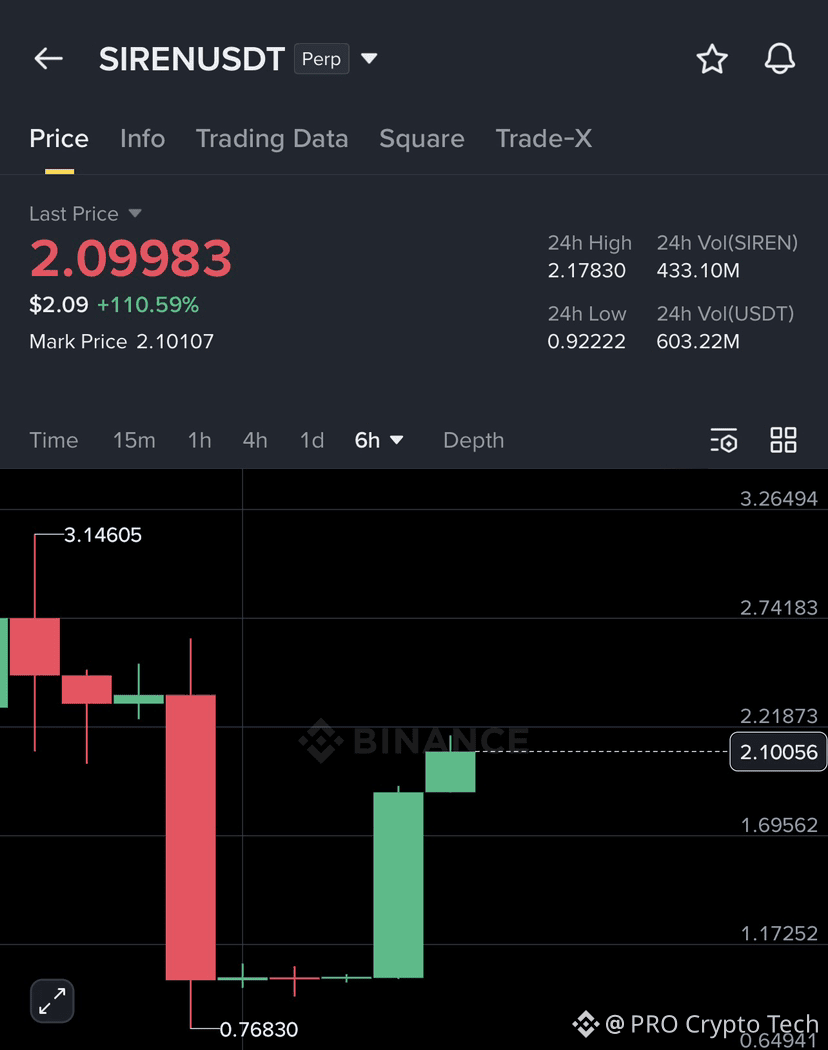
If you love your money 😁 don’t play with $SIREN 🤣😂 This Token Will Cook You 😁🫡⚡️
If you love your money 😁 don’t play with $SIREN 🤣😂

This Token Will Cook You 😁🫡⚡️
Most people will miss the space economy ⚡️🤯Not because it’s far, but because they’re looking in the wrong place 🤩 🛰️$SPACE is already live with 4 satellites in orbit and the first space to Earth blockchain transaction done. This is real infrastructure, not a concept. ♦️While HNT, RENDER, XMR, $ZEC trend, they all rely on connectivity. Spacecoin is building that layer from space. 💥Users pay for internet in crypto and build on chain credit via CTC. Add Midnight privacy with $ADA and you get censorship resistant global communication. 👉 Staking around 10% APR. Fixed 21B supply. Real demand driver. 🔥Narrative + utility + adoption. This is where things move fast. If you’re early anywhere in this cycle, make it count. 🚀 {future}(SPACEUSDT)
Most people will miss the space economy ⚡️🤯Not because it’s far, but because they’re looking in the wrong place 🤩

🛰️$SPACE is already live with 4 satellites in orbit and the first space to Earth blockchain transaction done. This is real infrastructure, not a concept.

♦️While HNT, RENDER, XMR, $ZEC trend, they all rely on connectivity. Spacecoin is building that layer from space.

💥Users pay for internet in crypto and build on chain credit via CTC. Add Midnight privacy with $ADA and you get censorship resistant global communication.

👉 Staking around 10% APR. Fixed 21B supply. Real demand driver.

🔥Narrative + utility + adoption. This is where things move fast.

If you’re early anywhere in this cycle, make it count. 🚀
Booked 125% in Short 🟥 & 100% in Long Trade 🟩 on $AIOT If you see profit Book 🎯💥
Booked 125% in Short 🟥 & 100% in Long Trade 🟩 on $AIOT

If you see profit Book 🎯💥
Many Traders are Trying to Find Next Pumped Coin Like $SIREN & $STO For Shorting ‼️ ⚡️$AIOT is Pumping Today - I Opened Quick Short & Booked 127%+ Profit in Few Mins 💸 Guys Don't Open Big Positions on this type of risky coins - just play with 2% 5% of your balance & keep Liquidation price far away 😁 because this type of tokens will wash your accounts in just 1 candle 🤮
Many Traders are Trying to Find Next Pumped Coin Like $SIREN & $STO For Shorting ‼️

⚡️$AIOT is Pumping Today - I Opened Quick Short & Booked 127%+ Profit in Few Mins 💸

Guys Don't Open Big Positions on this type of risky coins - just play with 2% 5% of your balance & keep Liquidation price far away 😁 because this type of tokens will wash your accounts in just 1 candle 🤮
🚨 They pumped it. You bought it. They left. $STO hit $1.86. $SIREN hit $4.81. Both looked like the next big thing. Both had massive volume. Green candles everywhere. Everyone was excited. Then… 📉 STO: -80% in hours 🩸 📉 SIREN: -96% in days 🩸 Thousands of futures traders got liquidated. Accounts wiped. Dreams gone. And somewhere, the whales are already in the next coin. ❓ Ask yourself this — When a coin pumps 10x out of nowhere with no real news… Who pumped it? And more importantly… Who are they waiting to sell it to? You’re not late to the pump. You ARE the exit liquidity. Stay safe out there. 🙏 {future}(SIRENUSDT) {future}(STOUSDT)
🚨 They pumped it. You bought it. They left.

$STO hit $1.86.
$SIREN hit $4.81.

Both looked like the next big thing.

Both had massive volume. Green candles everywhere.

Everyone was excited.

Then…

📉 STO: -80% in hours 🩸
📉 SIREN: -96% in days 🩸

Thousands of futures traders got liquidated.
Accounts wiped. Dreams gone.
And somewhere, the whales are already in the next coin.

❓ Ask yourself this —

When a coin pumps 10x out of nowhere with no real news…

Who pumped it?

And more importantly…

Who are they waiting to sell it to?

You’re not late to the pump.

You ARE the exit liquidity.

Stay safe out there. 🙏
Article
The Three Layers of Trust That $SIGN Is Quietly Becoming the Standard ForTrust in digital systems is not one thing. Most people treat it that way. They talk about trust as if it is a single property that a system either has or does not have. But when you actually look at how trust functions in the real world — across governments, institutions, enterprises, and individuals — it breaks down into distinct layers that each operate differently and each fail differently. What pulled me deeper into $SIGN and @SignOfficial is that the architecture is not trying to solve trust in general. It is trying to solve each layer specifically. And the more I look at it, the more it seems like the layers they chose are exactly the ones that matter most as the world moves on chain. The First Layer: Identity Trust The most foundational question in any digital interaction is the simplest one. Are you who you say you are? That question sounds easy. In practice it is one of the hardest problems in digital infrastructure. Because verifying identity at scale — across borders, across institutions, across different regulatory frameworks — requires a layer that does not currently exist in any reliable form. What exists today is fragmented. Each institution runs its own verification. Each country has its own identity system. Each platform does its own KYC. None of them talk to each other in any meaningful way. The result is that identity gets verified from scratch every single time, by every single institution, with no shared memory and no shared standard. Sign Protocol addresses this at the attestation layer. When a credential gets issued on chain — a verified identity, a government document, a professional qualification — that attestation becomes permanently verifiable by any system that needs it. Zero knowledge proofs mean the verification happens without exposing the underlying data. The system confirms you are who you claim to be without ever seeing the details that prove it. 🔐 Sierra Leone built their national digital ID on this layer. UAE deployed on it. The identity trust layer is not theoretical — it is live. The Second Layer: Document Trust Identity trust tells you who someone is. Document trust tells you whether what they are presenting is real. This is a different problem. And it is one that costs the global economy an enormous amount in ways that rarely get measured directly. Forged contracts. Disputed agreements. Documents that look legitimate but have been altered. Legal records that exist only on paper and can be lost, destroyed or manipulated. In emerging economies especially, the inability to produce verifiable documentation creates friction at every level — for individuals trying to access services, for businesses trying to prove credentials, for governments trying to enforce compliance. EthSign addresses this layer. Digital agreements, legal contracts, sovereign documents — all on chain, all tamper proof, permanently verifiable by any party at any time. Not stored in a central database that can be hacked or corrupted. Attested on chain in a form that cannot be altered after the fact. The document trust layer is what makes digital agreements actually mean something. Not just for crypto native use cases — for the entire range of institutional and governmental interactions that currently depend on paper and trust assumptions that do not always hold. 📜 The Third Layer: Capital Trust The third layer is the one that most directly connects to how value moves through systems. When governments need to distribute benefits, grants, or subsidies — when enterprises need to manage token allocations, vesting schedules, or large-scale asset distributions — the infrastructure that handles that movement needs to be trusted in a specific way. Not just secure. Transparent, auditable, and verifiable by every stakeholder who has a legitimate interest in the outcome. TokenTable is the capital trust layer. Over $4 billion distributed across 40 million plus wallets for 200 plus projects. The scale is not the interesting part — the interesting part is the auditability. Every distribution is traceable. Every allocation is verifiable. The system does not require you to trust the institution making the distribution because the chain shows you exactly what happened. For sovereign deployments — CBDC distribution, government benefit programs, national grant systems — that auditability is not a feature. It is a requirement. Governments cannot run programs at national scale on infrastructure that cannot prove to citizens and oversight bodies that the distribution happened correctly. Why Three Layers Matter More Than One Most infrastructure projects try to solve one trust problem. Identity projects solve identity. Document projects solve agreements. Asset distribution projects solve capital movement. Each one builds something useful. But each one also creates a new integration problem — because the three layers need to talk to each other for the system to actually function at sovereign scale. A government running a national benefits program needs to verify who the recipients are, confirm their eligibility through verifiable credentials, and distribute assets in an auditable way. If those three layers live in three different systems with three different trust models, the friction between them becomes the bottleneck. SIGN has all three layers in one architecture. Sign Protocol for identity. EthSign for documents. TokenTable for capital. They share the same foundational primitives, the same attestation model, the same verification layer. The integration problem that breaks every other approach is not a problem here because the layers were designed to work together from the start. Where This Actually Lands $32 million from Sequoia Capital, Binance Labs, Circle and IDG Capital. $15 million in real annual revenue. UAE live. Sierra Leone national digital ID deployed. 20+ countries in active pipeline. The institutional conviction exists because the three-layer architecture solves something that single-layer solutions cannot. And governments evaluating sovereign infrastructure do not want to stitch together three separate systems with three separate trust models. They want one stack that handles all of it. That is what SIGN is quietly becoming the standard for. Not one layer of trust. All three. And in a world moving rapidly toward digital sovereign infrastructure, that positioning matters more than almost anything else being built in this space right now. Trust is not one thing. The projects that understand that are the ones worth paying attention to. 👀 #SignDigitalSovereignInfra $SIGN @SignOfficial -

The Three Layers of Trust That $SIGN Is Quietly Becoming the Standard For

Trust in digital systems is not one thing.
Most people treat it that way. They talk about trust as if it is a single property that a system either has or does not have. But when you actually look at how trust functions in the real world — across governments, institutions, enterprises, and individuals — it breaks down into distinct layers that each operate differently and each fail differently.
What pulled me deeper into $SIGN and @SignOfficial is that the architecture is not trying to solve trust in general. It is trying to solve each layer specifically. And the more I look at it, the more it seems like the layers they chose are exactly the ones that matter most as the world moves on chain.
The First Layer: Identity Trust
The most foundational question in any digital interaction is the simplest one.
Are you who you say you are?
That question sounds easy. In practice it is one of the hardest problems in digital infrastructure. Because verifying identity at scale — across borders, across institutions, across different regulatory frameworks — requires a layer that does not currently exist in any reliable form.
What exists today is fragmented. Each institution runs its own verification. Each country has its own identity system. Each platform does its own KYC. None of them talk to each other in any meaningful way. The result is that identity gets verified from scratch every single time, by every single institution, with no shared memory and no shared standard.
Sign Protocol addresses this at the attestation layer. When a credential gets issued on chain — a verified identity, a government document, a professional qualification — that attestation becomes permanently verifiable by any system that needs it. Zero knowledge proofs mean the verification happens without exposing the underlying data. The system confirms you are who you claim to be without ever seeing the details that prove it. 🔐
Sierra Leone built their national digital ID on this layer. UAE deployed on it. The identity trust layer is not theoretical — it is live.
The Second Layer: Document Trust
Identity trust tells you who someone is. Document trust tells you whether what they are presenting is real.
This is a different problem. And it is one that costs the global economy an enormous amount in ways that rarely get measured directly.
Forged contracts. Disputed agreements. Documents that look legitimate but have been altered. Legal records that exist only on paper and can be lost, destroyed or manipulated. In emerging economies especially, the inability to produce verifiable documentation creates friction at every level — for individuals trying to access services, for businesses trying to prove credentials, for governments trying to enforce compliance.
EthSign addresses this layer. Digital agreements, legal contracts, sovereign documents — all on chain, all tamper proof, permanently verifiable by any party at any time. Not stored in a central database that can be hacked or corrupted. Attested on chain in a form that cannot be altered after the fact.
The document trust layer is what makes digital agreements actually mean something. Not just for crypto native use cases — for the entire range of institutional and governmental interactions that currently depend on paper and trust assumptions that do not always hold. 📜
The Third Layer: Capital Trust
The third layer is the one that most directly connects to how value moves through systems.
When governments need to distribute benefits, grants, or subsidies — when enterprises need to manage token allocations, vesting schedules, or large-scale asset distributions — the infrastructure that handles that movement needs to be trusted in a specific way. Not just secure. Transparent, auditable, and verifiable by every stakeholder who has a legitimate interest in the outcome.
TokenTable is the capital trust layer. Over $4 billion distributed across 40 million plus wallets for 200 plus projects. The scale is not the interesting part — the interesting part is the auditability. Every distribution is traceable. Every allocation is verifiable. The system does not require you to trust the institution making the distribution because the chain shows you exactly what happened.
For sovereign deployments — CBDC distribution, government benefit programs, national grant systems — that auditability is not a feature. It is a requirement. Governments cannot run programs at national scale on infrastructure that cannot prove to citizens and oversight bodies that the distribution happened correctly.
Why Three Layers Matter More Than One
Most infrastructure projects try to solve one trust problem.
Identity projects solve identity. Document projects solve agreements. Asset distribution projects solve capital movement. Each one builds something useful. But each one also creates a new integration problem — because the three layers need to talk to each other for the system to actually function at sovereign scale.
A government running a national benefits program needs to verify who the recipients are, confirm their eligibility through verifiable credentials, and distribute assets in an auditable way. If those three layers live in three different systems with three different trust models, the friction between them becomes the bottleneck.
SIGN has all three layers in one architecture. Sign Protocol for identity. EthSign for documents. TokenTable for capital. They share the same foundational primitives, the same attestation model, the same verification layer. The integration problem that breaks every other approach is not a problem here because the layers were designed to work together from the start.
Where This Actually Lands
$32 million from Sequoia Capital, Binance Labs, Circle and IDG Capital. $15 million in real annual revenue. UAE live. Sierra Leone national digital ID deployed. 20+ countries in active pipeline.
The institutional conviction exists because the three-layer architecture solves something that single-layer solutions cannot. And governments evaluating sovereign infrastructure do not want to stitch together three separate systems with three separate trust models. They want one stack that handles all of it.
That is what SIGN is quietly becoming the standard for. Not one layer of trust. All three. And in a world moving rapidly toward digital sovereign infrastructure, that positioning matters more than almost anything else being built in this space right now.
Trust is not one thing. The projects that understand that are the ones worth paying attention to. 👀
#SignDigitalSovereignInfra $SIGN @SignOfficial -
Network effects in crypto get talked about constantly. More users attract more users. More liquidity attracts more liquidity. Everyone understands that version. Everyone is chasing it. But there is a different kind of network effect that almost nobody is modeling. It is slower. It is harder to see from the outside. And once it starts compounding it is significantly more durable than anything driven by user preference. It is what happens when sovereign nations share infrastructure. 🏛️ When the first country deploys, it is proof of concept. When the fifth country deploys, cross-border credential recognition becomes possible for the first time — citizens carrying verified identity across borders, institutions recognizing credentials without building bespoke integrations for every jurisdiction. When twenty countries are on the same layer, something completely different exists. A trust network at sovereign scale that has never existed before in the digital world. Every additional country makes the network more valuable for every country already in it. And simultaneously raises the cost of being outside it. That compounding does not reverse easily. Countries do not leave shared infrastructure the way users leave apps. 🔐 $SIGN and @SignOfficial have UAE live, Sierra Leone national ID deployed, 20+ countries in active pipeline. #SignDigitalSovereignInfra {future}(SIGNUSDT)
Network effects in crypto get talked about constantly.

More users attract more users. More liquidity attracts more liquidity. Everyone understands that version. Everyone is chasing it.

But there is a different kind of network effect that almost nobody is modeling. It is slower. It is harder to see from the outside. And once it starts compounding it is significantly more durable than anything driven by user preference.

It is what happens when sovereign nations share infrastructure. 🏛️

When the first country deploys, it is proof of concept. When the fifth country deploys, cross-border credential recognition becomes possible for the first time — citizens carrying verified identity across borders, institutions recognizing credentials without building bespoke integrations for every jurisdiction.

When twenty countries are on the same layer, something completely different exists. A trust network at sovereign scale that has never existed before in the digital world.

Every additional country makes the network more valuable for every country already in it. And simultaneously raises the cost of being outside it.

That compounding does not reverse easily. Countries do not leave shared infrastructure the way users leave apps. 🔐

$SIGN and @SignOfficial have UAE live, Sierra Leone national ID deployed, 20+ countries in active pipeline.

#SignDigitalSovereignInfra
·
--
Bullish
$STO hit 1.8600 and got absolutely destroyed — crashed all the way back to 0.5596. That’s a 70% wipeout from the top in minutes. Classic pump and dump structure. Brutal. 👀 🟨 Chart Analysis: • Massive spike to 1.8600 followed by instant collapse — textbook liquidity grab • Price now dumped back to 0.5596 — most gains completely erased • 67.29% sell pressure in order book — bears in full control right now 🟧 Key Levels: 🟢 Support: 0.5165 → 0.4493 → 0.2458 🔴 Resistance: 0.7449 → 1.0405 → 1.3360 Two Scenarios: 🚀 Bullish — Hold 0.5165 and reclaim 0.7449 = second leg possible, still +121% on day ⚠️ Bearish — Lose 0.5165 = gap fill toward 0.4493 and further downside 🟦 Bottom Line: 1.86 was a trap. Anyone who bought the top got wrecked. The real question now — does 0.5165 hold or does this bleed further? High risk, high volatility. Trade with extreme caution. 🔥
$STO hit 1.8600 and got absolutely destroyed — crashed all the way back to 0.5596. That’s a 70% wipeout from the top in minutes. Classic pump and dump structure. Brutal. 👀

🟨 Chart Analysis:

• Massive spike to 1.8600 followed by instant collapse — textbook liquidity grab
• Price now dumped back to 0.5596 — most gains completely erased
• 67.29% sell pressure in order book — bears in full control right now

🟧 Key Levels:

🟢 Support: 0.5165 → 0.4493 → 0.2458
🔴 Resistance: 0.7449 → 1.0405 → 1.3360

Two Scenarios:

🚀 Bullish — Hold 0.5165 and reclaim 0.7449 = second leg possible, still +121% on day
⚠️ Bearish — Lose 0.5165 = gap fill toward 0.4493 and further downside

🟦 Bottom Line:

1.86 was a trap. Anyone who bought the top got wrecked. The real question now — does 0.5165 hold or does this bleed further? High risk, high volatility. Trade with extreme caution. 🔥
OMG 😱😱😱 What The Hell Is This 😢😵🤯🫡🤨 Are You Safe? Or $STO Washed Your Account??
OMG 😱😱😱

What The Hell Is This 😢😵🤯🫡🤨

Are You Safe? Or $STO Washed Your Account??
·
--
Bullish
GLDY by #StreamEx is turning gold into something it has never been before, a yield-generating asset 💥🌟⚡️ 🔥The gold $XAU market is worth over $13T, yet most of it just sits idle with zero returns. GLDY changes that by offering 1:1 backed physical gold exposure while generating 3.5% APY at launch, with a target of up to 4%, paid monthly in gold. ♦️This is not paper gold or synthetic exposure. Each GLDY represents a real fine troy ounce, supported by institutional infrastructure including Anchorage, Coinbase Prime, tZERO custody, Zedra administration, and EisnerAmper auditing. 💥On top of that, Chainlink Proof of Reserve ensures full transparency, while deployment on Solana brings speed and liquidity. 👉When you compare it to BTC or LTC, the difference is clear. They dominate the digital narrative but offer no yield on real assets. ⚡️Projects like POL and SOL are building the rails, while LINK secures data, but GLDY combines all of this into a single productive gold instrument. 💥This is where RWA meets real yield. If adoption grows, gold stops being passive and starts working for you. {future}(XAUUSDT)
GLDY by #StreamEx is turning gold into something it has never been before, a yield-generating asset 💥🌟⚡️

🔥The gold $XAU market is worth over $13T, yet most of it just sits idle with zero returns. GLDY changes that by offering 1:1 backed physical gold exposure while generating 3.5% APY at launch, with a target of up to 4%, paid monthly in gold.

♦️This is not paper gold or synthetic exposure. Each GLDY represents a real fine troy ounce, supported by institutional infrastructure including Anchorage, Coinbase Prime, tZERO custody, Zedra administration, and EisnerAmper auditing.

💥On top of that, Chainlink Proof of Reserve ensures full transparency, while deployment on Solana brings speed and liquidity.

👉When you compare it to BTC or LTC, the difference is clear. They dominate the digital narrative but offer no yield on real assets.

⚡️Projects like POL and SOL are building the rails, while LINK secures data, but GLDY combines all of this into a single productive gold instrument.

💥This is where RWA meets real yield. If adoption grows, gold stops being passive and starts working for you.
$ETH bounced from 1,938 and is pushing back above 2,100 — the $2K level held and bulls are slowly regaining confidence. But the real wall is just above. 👀 🟨 Chart Analysis: • Strong bounce from 1,938 — buyers defended the key demand zone • Price now back above 2,100 — sentiment shifting positive • Daily candle green but volume light at 740M — needs more conviction 🟧 Key Levels: 🟢 Support: 2,097 → 2,040 → 1,983 🔴 Resistance: 2,154 → 2,199 → 2,212 Two Scenarios: 🚀 Bullish — Hold 2,097 and break 2,154 = retest of 2,199 and push toward 2,212+ ⚠️ Bearish — Lose 2,097 = back to 2,040 and risk of retesting 1,983 🟦 Bottom Line: ETH clawed back above 2,100 — that’s a win for bulls. But 2,154 is the real test. Break it with volume and ETH is back in business. 👀🔥 {future}(ETHUSDT)
$ETH bounced from 1,938 and is pushing back above 2,100 — the $2K level held and bulls are slowly regaining confidence. But the real wall is just above. 👀

🟨 Chart Analysis:

• Strong bounce from 1,938 — buyers defended the key demand zone

• Price now back above 2,100 — sentiment shifting positive

• Daily candle green but volume light at 740M — needs more conviction

🟧 Key Levels:

🟢 Support: 2,097 → 2,040 → 1,983
🔴 Resistance: 2,154 → 2,199 → 2,212

Two Scenarios:

🚀 Bullish — Hold 2,097 and break 2,154 = retest of 2,199 and push toward 2,212+
⚠️ Bearish — Lose 2,097 = back to 2,040 and risk of retesting 1,983

🟦 Bottom Line:

ETH clawed back above 2,100 — that’s a win for bulls. But 2,154 is the real test. Break it with volume and ETH is back in business. 👀🔥
$BTC bounced hard from exactly 65,000 and is pushing back toward 68K — that round number support saved the bulls once again. Recovery is on but the real test is ahead. 👀 🟨 Chart Analysis: • 65,000 held perfectly as daily support — third time defending this level • MA(5) below MA(10) — still bearish on daily but momentum shifting • Current candle trying to close green — first positive daily in a while 🟧 Key Levels: 🟢 Support: 67,740 → 66,194 → 65,000 🔴 Resistance: 69,285 → 70,831 → 72,026 Two Scenarios: 🚀 Bullish — Daily close above 69,285 = trend shift confirmed, 70,831 next target ⚠️ Bearish — Fail to hold 67,740 = back to 66,194 and 65,000 retest risk 🟦 Bottom Line: 65,000 is proving to be an iron floor. Bulls need a daily close above 69,285 to flip the structure bullish. Until then — cautiously optimistic. 👀🔥
$BTC bounced hard from exactly 65,000 and is pushing back toward 68K — that round number support saved the bulls once again. Recovery is on but the real test is ahead. 👀

🟨 Chart Analysis:

• 65,000 held perfectly as daily support — third time defending this level
• MA(5) below MA(10) — still bearish on daily but momentum shifting
• Current candle trying to close green — first positive daily in a while

🟧 Key Levels:

🟢 Support: 67,740 → 66,194 → 65,000
🔴 Resistance: 69,285 → 70,831 → 72,026

Two Scenarios:

🚀 Bullish — Daily close above 69,285 = trend shift confirmed, 70,831 next target
⚠️ Bearish — Fail to hold 67,740 = back to 66,194 and 65,000 retest risk

🟦 Bottom Line:

65,000 is proving to be an iron floor. Bulls need a daily close above 69,285 to flip the structure bullish. Until then — cautiously optimistic. 👀🔥
Article
What Happens When 20 Countries Are All On the Same Layer 💥Network effects get talked about a lot in crypto. Usually in the context of users. More users attract more users. More liquidity attracts more liquidity. More developers attract more developers. The flywheel spins and the leading network pulls further ahead of everything behind it. That version of network effects is real. But it is also the most competed-for dynamic in the entire space. Every project is trying to trigger it. Most fail. The ones that succeed often find that the lead they built evaporates faster than expected when a better product or a bigger incentive program shows up. There is a different kind of network effect that almost nobody models. It is slower to develop. It is harder to see from the outside. And once it starts compounding, it is significantly more durable than anything driven by user preference. It is the network effect that happens when sovereign nations share infrastructure. What Changes When the First Country Deploys When the first country builds on a shared infrastructure layer, the effect is mostly technical. The system gets stress tested at real scale. The edge cases that only appear in production get identified and addressed. The security model gets validated against real adversarial conditions rather than simulated ones. The team learns things that no whitepaper process could have taught them. That is valuable. But it is not yet a network effect. It is proof of concept at sovereign scale. Sierra Leone was that first major step for $SIGN. A national digital ID system — the digital Green Card — running on live infrastructure with real citizens. UAE followed. The technology got proven in the most demanding environment possible. 🌍 What Changes When the Fifth Country Deploys By the time a handful of countries are running on the same infrastructure layer, something starts to shift. Cross-border credential recognition becomes possible in a way it never was before. A citizen of one country can have their credentials verified by an institution in another country without either party needing to build a bespoke integration. The shared layer handles it. That is not just a convenience feature. For governments thinking about regional economic integration, cross-border labor mobility, international trade, and digital diplomacy — interoperability at the identity layer is infrastructure that enables everything else. And here is where the network effect starts to become real. A country that is not on the shared layer starts to feel the cost of that absence. Not through any explicit pressure. Through the practical reality that the systems their citizens and institutions need to interact with are increasingly built on a layer they are not part of. What Changes When Twenty Countries Deploy This is the part I think almost nobody is modeling right now. Twenty sovereign nations all running identity, verification, and credential infrastructure on the same foundational layer creates something that has never existed before in the digital world. A genuinely interoperable trust network at sovereign scale. Think about what that means in practice. A business operating across multiple countries on the network can verify supplier credentials, employee qualifications, and contractual agreements without rebuilding trust from scratch in every jurisdiction. A citizen moving between countries on the network carries credentials that are recognized before they arrive. An institution in one country can extend services to verified users from another country without a separate compliance process for each one. Each additional country that joins makes the network more valuable for every country already in it. And simultaneously raises the cost of being outside it. That is a compounding dynamic. And unlike user-driven network effects, it does not reverse easily. Countries do not leave shared infrastructure networks the way users leave apps. 🏛️ Where $SIGN Sits Right Now 20+ countries are actively in the deployment pipeline right now. UAE and Sierra Leone are already live. That means the network effect I am describing is not a projection. It is already beginning to develop. The question is not whether it happens — it is how fast the pipeline converts and how quickly the compounding becomes visible enough for the broader market to price it in. $32M from Sequoia, Binance Labs, Circle and IDG Capital. $15M real annual revenue. $4B+ distributed through TokenTable across 40M+ wallets. The institutional conviction is already there. What the market has not fully priced in yet is what the network looks like when the pipeline finishes converting. Not two countries. Not five. Twenty plus sovereign nations all sharing the same verification and identity layer. The Part Worth Sitting With Network effects in consumer products are visible and fast. You can watch them develop in real time through user numbers, engagement metrics, and market share data. Sovereign network effects are invisible and slow. They develop through procurement processes, government decisions, and institutional integrations that do not show up in any dashboard. By the time they are visible to the outside, most of the compounding has already happened. That is exactly the kind of dynamic that gets mispriced. Not because people are irrational. Because the signal is hard to read until it is obvious. And by the time it is obvious, the window has already closed. Twenty countries on the same sovereign infrastructure layer. That is the number worth thinking about. Not because it is guaranteed — but because the pipeline is real and the compounding is already starting. 👀 #SignDigitalSovereignInfra $SIGN @SignOfficial -

What Happens When 20 Countries Are All On the Same Layer 💥

Network effects get talked about a lot in crypto.
Usually in the context of users. More users attract more users. More liquidity attracts more liquidity. More developers attract more developers. The flywheel spins and the leading network pulls further ahead of everything behind it.
That version of network effects is real. But it is also the most competed-for dynamic in the entire space. Every project is trying to trigger it. Most fail. The ones that succeed often find that the lead they built evaporates faster than expected when a better product or a bigger incentive program shows up.
There is a different kind of network effect that almost nobody models. It is slower to develop. It is harder to see from the outside. And once it starts compounding, it is significantly more durable than anything driven by user preference.
It is the network effect that happens when sovereign nations share infrastructure.
What Changes When the First Country Deploys
When the first country builds on a shared infrastructure layer, the effect is mostly technical.
The system gets stress tested at real scale. The edge cases that only appear in production get identified and addressed. The security model gets validated against real adversarial conditions rather than simulated ones. The team learns things that no whitepaper process could have taught them.
That is valuable. But it is not yet a network effect. It is proof of concept at sovereign scale.
Sierra Leone was that first major step for $SIGN . A national digital ID system — the digital Green Card — running on live infrastructure with real citizens. UAE followed. The technology got proven in the most demanding environment possible. 🌍
What Changes When the Fifth Country Deploys
By the time a handful of countries are running on the same infrastructure layer, something starts to shift.
Cross-border credential recognition becomes possible in a way it never was before. A citizen of one country can have their credentials verified by an institution in another country without either party needing to build a bespoke integration. The shared layer handles it.
That is not just a convenience feature. For governments thinking about regional economic integration, cross-border labor mobility, international trade, and digital diplomacy — interoperability at the identity layer is infrastructure that enables everything else.
And here is where the network effect starts to become real. A country that is not on the shared layer starts to feel the cost of that absence. Not through any explicit pressure. Through the practical reality that the systems their citizens and institutions need to interact with are increasingly built on a layer they are not part of.
What Changes When Twenty Countries Deploy
This is the part I think almost nobody is modeling right now.
Twenty sovereign nations all running identity, verification, and credential infrastructure on the same foundational layer creates something that has never existed before in the digital world. A genuinely interoperable trust network at sovereign scale.
Think about what that means in practice. A business operating across multiple countries on the network can verify supplier credentials, employee qualifications, and contractual agreements without rebuilding trust from scratch in every jurisdiction. A citizen moving between countries on the network carries credentials that are recognized before they arrive. An institution in one country can extend services to verified users from another country without a separate compliance process for each one.
Each additional country that joins makes the network more valuable for every country already in it. And simultaneously raises the cost of being outside it.
That is a compounding dynamic. And unlike user-driven network effects, it does not reverse easily. Countries do not leave shared infrastructure networks the way users leave apps. 🏛️
Where $SIGN Sits Right Now
20+ countries are actively in the deployment pipeline right now. UAE and Sierra Leone are already live.
That means the network effect I am describing is not a projection. It is already beginning to develop. The question is not whether it happens — it is how fast the pipeline converts and how quickly the compounding becomes visible enough for the broader market to price it in.
$32M from Sequoia, Binance Labs, Circle and IDG Capital. $15M real annual revenue. $4B+ distributed through TokenTable across 40M+ wallets. The institutional conviction is already there.
What the market has not fully priced in yet is what the network looks like when the pipeline finishes converting. Not two countries. Not five. Twenty plus sovereign nations all sharing the same verification and identity layer.
The Part Worth Sitting With
Network effects in consumer products are visible and fast. You can watch them develop in real time through user numbers, engagement metrics, and market share data.
Sovereign network effects are invisible and slow. They develop through procurement processes, government decisions, and institutional integrations that do not show up in any dashboard. By the time they are visible to the outside, most of the compounding has already happened.
That is exactly the kind of dynamic that gets mispriced. Not because people are irrational. Because the signal is hard to read until it is obvious. And by the time it is obvious, the window has already closed.
Twenty countries on the same sovereign infrastructure layer. That is the number worth thinking about. Not because it is guaranteed — but because the pipeline is real and the compounding is already starting. 👀
#SignDigitalSovereignInfra $SIGN @SignOfficial -
Article
The Difference Between a Project That Needs Adoption and Infrastructure That Gets Depended OnThere is a category distinction in technology that almost nobody talks about clearly. Some products need you to choose them. Every day, every cycle, every decision point is another moment where you could choose something else instead. The product has to keep earning your preference. It has to keep being relevant. The moment a better option appears or the narrative shifts, the switching cost is low enough that people move. Infrastructure is different. Infrastructure does not earn your preference. It earns your dependence. And dependence is a completely different relationship. That distinction is the most important thing I keep coming back to when I think about SIGN and @SignOfficial. Because the entire question of whether this project matters long term comes down to which category it actually ends up in. What Adoption Actually Looks Like Adoption is fragile in ways that look fine on the surface. A project can have millions of users, billions in TVL, a thriving community and genuine product market fit — and still be one bad cycle away from irrelevance. Because adoption is driven by preference, and preference changes. Better yields appear somewhere else. A newer narrative pulls attention. A competitor launches with slightly lower fees and a bigger marketing budget. The users who chose you can unchoose you. That is the fundamental vulnerability of anything that lives in the adoption category. Most crypto projects are here. Even very successful ones. And there is nothing wrong with that — adoption-driven products can be enormously valuable. But they require constant energy to maintain. The flywheel needs to keep spinning. What Dependence Actually Looks Like Dependence looks completely different. When a government builds its national digital identity system on a foundation, that foundation does not get replaced because sentiment shifted. The switching cost is not a spreadsheet calculation — it is a years-long migration project with real consequences for real citizens if anything breaks during the transition. When an institution integrates verification into its core operations — when the credential check becomes part of how loans get approved, how contracts get executed, how identity gets confirmed at scale — walking away from that is not a product decision. It is an operational restructuring. Dependence creates a completely different durability profile. Not because the product is perfect. But because the cost of leaving has become real in a way that preference alone never creates. Where $SIGN Is Trying to Land This is the category SIGN is explicitly building toward. And the deployments are the evidence that it is getting there. Sierra Leone did not launch a pilot program. They launched live national digital ID infrastructure with real citizens, real credentials, and real institutional weight behind the decision. That is not adoption. A government does not build its national identity system on something it is casually trying out. UAE deployed. Not announced — deployed. The procurement process that preceded that decision involved security audits, technical evaluations, and institutional sign-off at levels that most crypto projects never interact with. They went through all of it and built on SIGN anyway. 20+ additional countries are moving through active deployment pipeline. Each one that goes live adds to a network where the cost of non-alignment quietly rises for everyone outside it. 🏛️ The Numbers That Tell the Real Story $15 million in real annual revenue is not an adoption number. Adoption numbers are driven by incentives, yield farming, token emissions — things that go away when the incentive does. Revenue from institutions that have integrated your infrastructure into their operations is a dependence number. They are paying because they need it to keep working. $4 billion distributed through TokenTable across 40 million plus wallets for 200 plus projects. When that volume of institutional asset distribution runs through a single infrastructure layer, the switching cost for those 200 projects is not a preference decision anymore. $32 million from Sequoia Capital, Binance Labs, Circle and IDG Capital. These institutions invest in infrastructure plays differently than they invest in consumer products. They are not betting on adoption curves. They are betting on dependence — on the structural position a technology occupies once the network around it is built. The Part That Is Still Being Answered I want to be honest about what is not settled yet. The transition from adoption to dependence is not automatic. Projects that have early government deployments and institutional revenue still fail to reach the scale where dependence becomes structural. The pipeline has to convert. The 20+ countries have to actually deploy. The network has to grow to the point where being outside it carries real cost. That is still in progress. The foundation is more solid than most. The deployments are real. The revenue is real. But the full dependence dynamic — the point where the infrastructure is genuinely load-bearing for enough of the world that it becomes irreplaceable — that is still being built. What I keep coming back to is that the trajectory is pointed in the right direction. And in infrastructure, trajectory matters more than current position. Projects that need adoption have to keep earning it. Infrastructure that earns dependence operates on a different timeline entirely. That is the bet Sign is making. And so far, the evidence suggests it is not a bad one. 👀 #SignDigitalSovereignInfra $SIGN @SignOfficial .

The Difference Between a Project That Needs Adoption and Infrastructure That Gets Depended On

There is a category distinction in technology that almost nobody talks about clearly.
Some products need you to choose them. Every day, every cycle, every decision point is another moment where you could choose something else instead. The product has to keep earning your preference. It has to keep being relevant. The moment a better option appears or the narrative shifts, the switching cost is low enough that people move.
Infrastructure is different. Infrastructure does not earn your preference. It earns your dependence. And dependence is a completely different relationship.
That distinction is the most important thing I keep coming back to when I think about SIGN and @SignOfficial. Because the entire question of whether this project matters long term comes down to which category it actually ends up in.
What Adoption Actually Looks Like
Adoption is fragile in ways that look fine on the surface.
A project can have millions of users, billions in TVL, a thriving community and genuine product market fit — and still be one bad cycle away from irrelevance. Because adoption is driven by preference, and preference changes. Better yields appear somewhere else. A newer narrative pulls attention. A competitor launches with slightly lower fees and a bigger marketing budget.
The users who chose you can unchoose you. That is the fundamental vulnerability of anything that lives in the adoption category.
Most crypto projects are here. Even very successful ones. And there is nothing wrong with that — adoption-driven products can be enormously valuable. But they require constant energy to maintain. The flywheel needs to keep spinning.
What Dependence Actually Looks Like
Dependence looks completely different.
When a government builds its national digital identity system on a foundation, that foundation does not get replaced because sentiment shifted. The switching cost is not a spreadsheet calculation — it is a years-long migration project with real consequences for real citizens if anything breaks during the transition.
When an institution integrates verification into its core operations — when the credential check becomes part of how loans get approved, how contracts get executed, how identity gets confirmed at scale — walking away from that is not a product decision. It is an operational restructuring.
Dependence creates a completely different durability profile. Not because the product is perfect. But because the cost of leaving has become real in a way that preference alone never creates.
Where $SIGN Is Trying to Land
This is the category SIGN is explicitly building toward. And the deployments are the evidence that it is getting there.
Sierra Leone did not launch a pilot program. They launched live national digital ID infrastructure with real citizens, real credentials, and real institutional weight behind the decision. That is not adoption. A government does not build its national identity system on something it is casually trying out.
UAE deployed. Not announced — deployed. The procurement process that preceded that decision involved security audits, technical evaluations, and institutional sign-off at levels that most crypto projects never interact with. They went through all of it and built on SIGN anyway.
20+ additional countries are moving through active deployment pipeline. Each one that goes live adds to a network where the cost of non-alignment quietly rises for everyone outside it. 🏛️
The Numbers That Tell the Real Story
$15 million in real annual revenue is not an adoption number. Adoption numbers are driven by incentives, yield farming, token emissions — things that go away when the incentive does. Revenue from institutions that have integrated your infrastructure into their operations is a dependence number. They are paying because they need it to keep working.
$4 billion distributed through TokenTable across 40 million plus wallets for 200 plus projects. When that volume of institutional asset distribution runs through a single infrastructure layer, the switching cost for those 200 projects is not a preference decision anymore.
$32 million from Sequoia Capital, Binance Labs, Circle and IDG Capital. These institutions invest in infrastructure plays differently than they invest in consumer products. They are not betting on adoption curves. They are betting on dependence — on the structural position a technology occupies once the network around it is built.
The Part That Is Still Being Answered
I want to be honest about what is not settled yet.
The transition from adoption to dependence is not automatic. Projects that have early government deployments and institutional revenue still fail to reach the scale where dependence becomes structural. The pipeline has to convert. The 20+ countries have to actually deploy. The network has to grow to the point where being outside it carries real cost.
That is still in progress. The foundation is more solid than most. The deployments are real. The revenue is real. But the full dependence dynamic — the point where the infrastructure is genuinely load-bearing for enough of the world that it becomes irreplaceable — that is still being built.
What I keep coming back to is that the trajectory is pointed in the right direction. And in infrastructure, trajectory matters more than current position.
Projects that need adoption have to keep earning it. Infrastructure that earns dependence operates on a different timeline entirely. That is the bet Sign is making. And so far, the evidence suggests it is not a bad one. 👀
#SignDigitalSovereignInfra $SIGN @SignOfficial .
#Polymarket is quietly becoming the strongest narrative engine in Web3 ⚡️⚡️⚡️ While most traders chase charts, smart money trades outcomes. That’s where Polymarket wins 💥 • 250K to 500K active traders monthly • 17M+ monthly visits • Projected $18B volume in 2025 This is not early anymore. This is scale. 👉 Getting started is simple. Connect wallets like Phantom or MetaMask. No complex setup. No friction. Trade using crypto in minutes. Now compare this to other narratives: • Augur • Gnosis • Azuro • SX Network They exist. But attention is shifting. Polymarket dominates mindshare on X and real-time narratives. You are not just trading prices here. You trade: • Elections • AI trends • Global events • Crypto narratives 🌟 If you understand information faster than others, you win. That is the edge. Now the real catalyst: $POLY token. No official launch yet. But expectations are clear. Early users could be rewarded. Same pattern seen before major airdrops. Look at what happened with early platforms tied to: • OpenSea • MetaMask • Base Position early. Use the platform. Stay active. Because narratives don’t start on charts. They start on Polymarket.
#Polymarket is quietly becoming the strongest narrative engine in Web3 ⚡️⚡️⚡️

While most traders chase charts, smart money trades outcomes.

That’s where Polymarket wins 💥

• 250K to 500K active traders monthly
• 17M+ monthly visits
• Projected $18B volume in 2025

This is not early anymore. This is scale.

👉 Getting started is simple.

Connect wallets like Phantom or MetaMask.
No complex setup. No friction.
Trade using crypto in minutes.

Now compare this to other narratives:

• Augur
• Gnosis
• Azuro
• SX Network

They exist. But attention is shifting.

Polymarket dominates mindshare on X and real-time narratives.

You are not just trading prices here.

You trade:

• Elections
• AI trends
• Global events
• Crypto narratives

🌟 If you understand information faster than others, you win.

That is the edge.

Now the real catalyst:

$POLY token.

No official launch yet.
But expectations are clear.

Early users could be rewarded.

Same pattern seen before major airdrops.

Look at what happened with early platforms tied to:

• OpenSea
• MetaMask
• Base

Position early. Use the platform. Stay active.

Because narratives don’t start on charts.

They start on Polymarket.
SOL just dropped off a cliff — from 83.88 straight down to 81.53 in back to back red candles. No bounce, no support, just pure selling pressure. Bears are in full control right now. 👀 🟨 Chart Analysis: • Clean staircase selloff on 15M — every level broke without a fight • 81.53 just printed as new low — buyers nowhere to be seen • 1.98B USDT volume — real selling, not just noise 🟧 Key Levels: 🟢 Support: 81.93 → 81.53 → 81.41 🔴 Resistance: 82.45 → 82.96 → 83.48 Two Scenarios: 🚀 Bullish — Hold 81.53 and reclaim 82.45 = relief bounce toward 83.48 ⚠️ Bearish — Lose 81.41 = no support below, 80 psychological level next target 🟦 Bottom Line: SOL is in freefall on the short term. 81.41 is the last line — lose it and 80 becomes the conversation. Bulls need to show up NOW. 🔥
SOL just dropped off a cliff — from 83.88 straight down to 81.53 in back to back red candles. No bounce, no support, just pure selling pressure. Bears are in full control right now. 👀

🟨 Chart Analysis:

• Clean staircase selloff on 15M — every level broke without a fight
• 81.53 just printed as new low — buyers nowhere to be seen
• 1.98B USDT volume — real selling, not just noise

🟧 Key Levels:

🟢 Support: 81.93 → 81.53 → 81.41
🔴 Resistance: 82.45 → 82.96 → 83.48

Two Scenarios:

🚀 Bullish — Hold 81.53 and reclaim 82.45 = relief bounce toward 83.48
⚠️ Bearish — Lose 81.41 = no support below, 80 psychological level next target

🟦 Bottom Line:

SOL is in freefall on the short term. 81.41 is the last line — lose it and 80 becomes the conversation. Bulls need to show up NOW. 🔥
$BTC wicked down to exactly 65,000 — that round number support held perfectly. But the recovery is struggling. Every push up gets sold. Is this consolidation or a trap? 👀 🟨 Chart Analysis: • 65,000 psychological level held as support — clean wick, buyers defended it • Bounce to 68,408 got rejected — sellers still active at highs • Now ranging between 67K and 68K with low volume — indecision 🟧 Key Levels 🟢 Support: 67,079 → 66,329 → 65,000 🔴 Resistance: 67,828 → 68,408 → 68,578 Two Scenarios: 🚀 Bullish — Hold 67,079 and break 68,578 = trend reversal confirmed, 70K back in play ⚠️ Bearish — Lose 67,079 = 66,329 next stop, risk of retesting 65,000 again 🟦 Bottom Line: 65,000 held but bulls have not taken control yet. 68,578 is the key breakout level — until that breaks, this is just noise. Watch closely. 👀🔥
$BTC wicked down to exactly 65,000 — that round number support held perfectly. But the recovery is struggling. Every push up gets sold. Is this consolidation or a trap? 👀

🟨 Chart Analysis:

• 65,000 psychological level held as support — clean wick, buyers defended it
• Bounce to 68,408 got rejected — sellers still active at highs
• Now ranging between 67K and 68K with low volume — indecision

🟧 Key Levels

🟢 Support: 67,079 → 66,329 → 65,000
🔴 Resistance: 67,828 → 68,408 → 68,578

Two Scenarios:

🚀 Bullish — Hold 67,079 and break 68,578 = trend reversal confirmed, 70K back in play
⚠️ Bearish — Lose 67,079 = 66,329 next stop, risk of retesting 65,000 again

🟦 Bottom Line:

65,000 held but bulls have not taken control yet. 68,578 is the key breakout level — until that breaks, this is just noise. Watch closely. 👀🔥
Login to explore more contents
Join global crypto users on Binance Square
⚡️ Get latest and useful information about crypto.
💬 Trusted by the world’s largest crypto exchange.
👍 Discover real insights from verified creators.
Email / Phone number
Sitemap
Cookie Preferences
Platform T&Cs