

OxDegen
764 Posts

OxDegen
Report
Block User
信奉趋势力量 | 专注中长线机会,严控仓位风险。不预测市场,只跟随确定性的上涨逻辑。
BP-03AF1F21CAE1
Frequent Trader
5.7 Years
26 Following
1.1K Followers
624 Liked
Posts
All
Quotes
·
--
Bullish
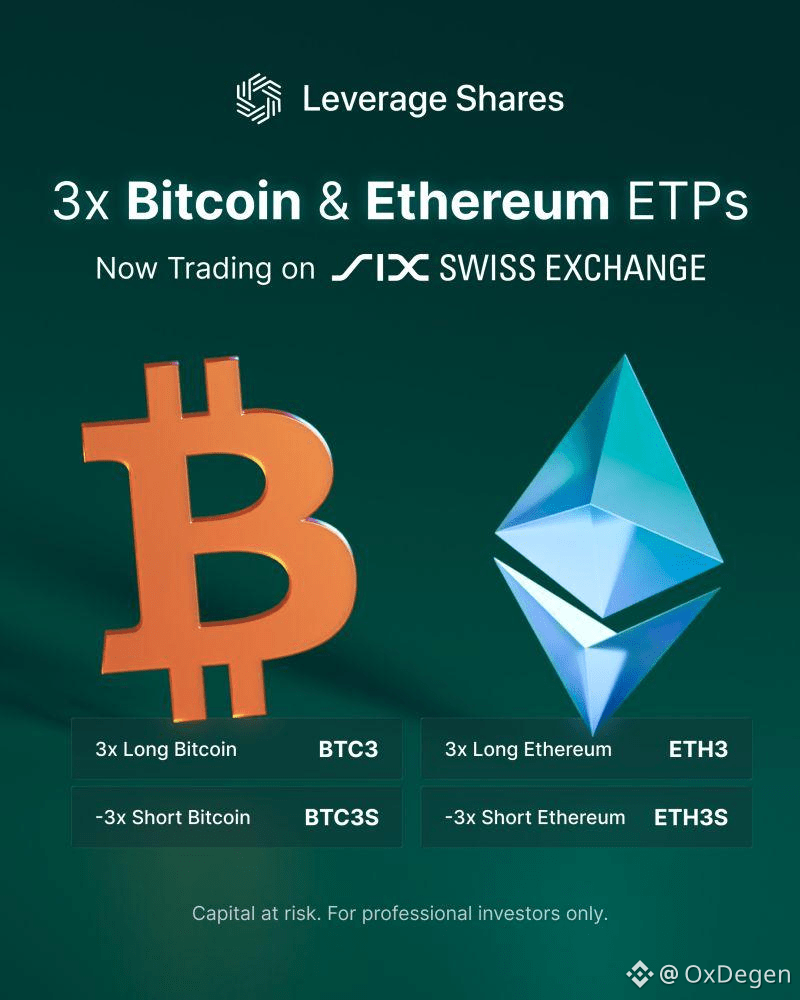
This news is actually worth paying attention to in the long term more than just the approval of an ETF. The SEC’s proposed rule concerns how investment advisers and regulated funds can custody crypto assets. It allows, under certain conditions, a form of self-custody, and it also allows custody through qualified state trust companies.
Previously, one of the biggest challenges for institutions wanting to put large amounts of capital into crypto assets was: “Who will securely hold these coins?” Now, regulators are starting to address this issue in a positive way. An ETF addresses how capital gets in, while custody rules address how institutional capital can be used compliantly after it’s in. If both move forward together, their long-term institutionalization of the crypto industry could be even more significant than short-term price swings.$BTC $ETH
{future}(BTCUSDT)
{future}(ETHUSDT)
This news is actually worth paying attention to in the long term more than just the approval of an ETF. The SEC’s proposed rule concerns how investment advisers and regulated funds can custody crypto assets. It allows, under certain conditions, a form of self-custody, and it also allows custody through qualified state trust companies.
Previously, one of the biggest challenges for institutions wanting to put large amounts of capital into crypto assets was: “Who will securely hold these coins?” Now, regulators are starting to address this issue in a positive way. An ETF addresses how capital gets in, while custody rules address how institutional capital can be used compliantly after it’s in. If both move forward together, their long-term institutionalization of the crypto industry could be even more significant than short-term price swings.$BTC $ETH
Previously, one of the biggest challenges for institutions wanting to put large amounts of capital into crypto assets was: “Who will securely hold these coins?” Now, regulators are starting to address this issue in a positive way. An ETF addresses how capital gets in, while custody rules address how institutional capital can be used compliantly after it’s in. If both move forward together, their long-term institutionalization of the crypto industry could be even more significant than short-term price swings.$BTC $ETH
457
·
--
Bearish
Cerebras’ sharp drop this time isn’t really about how much the market fell in a single day. What the market is truly worried about is whether OpenAI—this core customer—will continue using its chips. Market reports cite SemiAnalysis as saying that OpenAI’s latest GPT-6.1 Sol’s Ultrafast mode is not running on Cerebras hardware, but instead uses Nvidia GPUs. This directly hits the most sensitive valuation logic for Cerebras.
This incident also once again shows how brutal the AI chip market is: having orders doesn’t mean you have a moat. What truly determines valuation is whether customers can keep using your products. $NVDA Now the biggest advantage still isn’t simply selling GPUs; it’s that the entire AI infrastructure ecosystem is already strong enough. This is also why, even for AI chip companies that are otherwise similar, the valuation logic the market applies is completely different. #英伟达股价创历史新高涨2.4%
{future}(NVDAUSDT)
Cerebras’ sharp drop this time isn’t really about how much the market fell in a single day. What the market is truly worried about is whether OpenAI—this core customer—will continue using its chips. Market reports cite SemiAnalysis as saying that OpenAI’s latest GPT-6.1 Sol’s Ultrafast mode is not running on Cerebras hardware, but instead uses Nvidia GPUs. This directly hits the most sensitive valuation logic for Cerebras.
This incident also once again shows how brutal the AI chip market is: having orders doesn’t mean you have a moat. What truly determines valuation is whether customers can keep using your products. $NVDA Now the biggest advantage still isn’t simply selling GPUs; it’s that the entire AI infrastructure ecosystem is already strong enough. This is also why, even for AI chip companies that are otherwise similar, the valuation logic the market applies is completely different. #英伟达股价创历史新高涨2.4%
This incident also once again shows how brutal the AI chip market is: having orders doesn’t mean you have a moat. What truly determines valuation is whether customers can keep using your products. $NVDA Now the biggest advantage still isn’t simply selling GPUs; it’s that the entire AI infrastructure ecosystem is already strong enough. This is also why, even for AI chip companies that are otherwise similar, the valuation logic the market applies is completely different. #英伟达股价创历史新高涨2.4%

17
·
--
Bullish
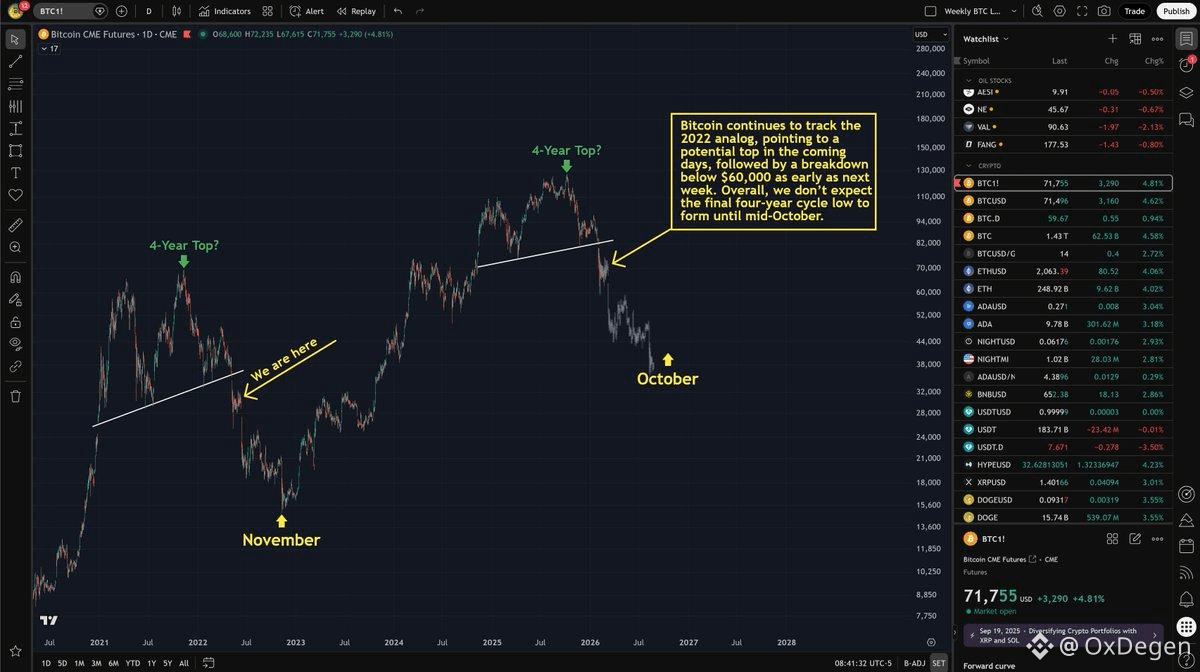
Around 865,000 USD, there was another clear wave of selling pressure, which indicates that $BTC has now entered a fairly typical zone of long-vs-short tug-of-war. There’s overhead pressure from the previous highs, and below there’s also continuing inflow chasing the rally. The most likely price action in this kind of setup is to spike up, pull back, and then spike up again.
So what’s really worth watching now isn’t “how much it’s up today,” but whether there’s still capital coming back after each pullback. If pullbacks become progressively shallower, it means the buy-side is gradually lifting. If each spike is quickly smashed back down, then the area around 870,000 USD may continue to become a profit-taking zone for short-term funds. #比特币涨至8.65万美元后回落
{future}(BTCUSDT)
{future}(ETHUSDT)
Around 865,000 USD, there was another clear wave of selling pressure, which indicates that $BTC has now entered a fairly typical zone of long-vs-short tug-of-war. There’s overhead pressure from the previous highs, and below there’s also continuing inflow chasing the rally. The most likely price action in this kind of setup is to spike up, pull back, and then spike up again.
So what’s really worth watching now isn’t “how much it’s up today,” but whether there’s still capital coming back after each pullback. If pullbacks become progressively shallower, it means the buy-side is gradually lifting. If each spike is quickly smashed back down, then the area around 870,000 USD may continue to become a profit-taking zone for short-term funds. #比特币涨至8.65万美元后回落
So what’s really worth watching now isn’t “how much it’s up today,” but whether there’s still capital coming back after each pullback. If pullbacks become progressively shallower, it means the buy-side is gradually lifting. If each spike is quickly smashed back down, then the area around 870,000 USD may continue to become a profit-taking zone for short-term funds. #比特币涨至8.65万美元后回落
3
2.2k
·
--
Bullish
$PEPE to enter the ETF—this by itself is already enough to be a topic of interest. Canary filed a revised S-1 on October 2, planning to list on Cboe BZX. The product design directly holds PEPE and calculates NAV using CoinDesk’s PEPE benchmark price.
This implies a very clear change: what Wall Street previously looked down on as a meme is now starting to move into the traditional financial product framework. But whether the ETF can ultimately be launched is another matter, so what’s being traded more right now is expectations rather than confirmed institutional capital entering the market. What’s truly worth watching for PEPE next is whether the market will price in the “ETF expectations” ahead of time. #Canary提交PEPE现货ETF修订S-1文件
{spot}(PEPEUSDT)
{future}(BTCUSDT)
$PEPE to enter the ETF—this by itself is already enough to be a topic of interest. Canary filed a revised S-1 on October 2, planning to list on Cboe BZX. The product design directly holds PEPE and calculates NAV using CoinDesk’s PEPE benchmark price.
This implies a very clear change: what Wall Street previously looked down on as a meme is now starting to move into the traditional financial product framework. But whether the ETF can ultimately be launched is another matter, so what’s being traded more right now is expectations rather than confirmed institutional capital entering the market. What’s truly worth watching for PEPE next is whether the market will price in the “ETF expectations” ahead of time. #Canary提交PEPE现货ETF修订S-1文件
This implies a very clear change: what Wall Street previously looked down on as a meme is now starting to move into the traditional financial product framework. But whether the ETF can ultimately be launched is another matter, so what’s being traded more right now is expectations rather than confirmed institutional capital entering the market. What’s truly worth watching for PEPE next is whether the market will price in the “ETF expectations” ahead of time. #Canary提交PEPE现货ETF修订S-1文件

85
·
--
Bullish
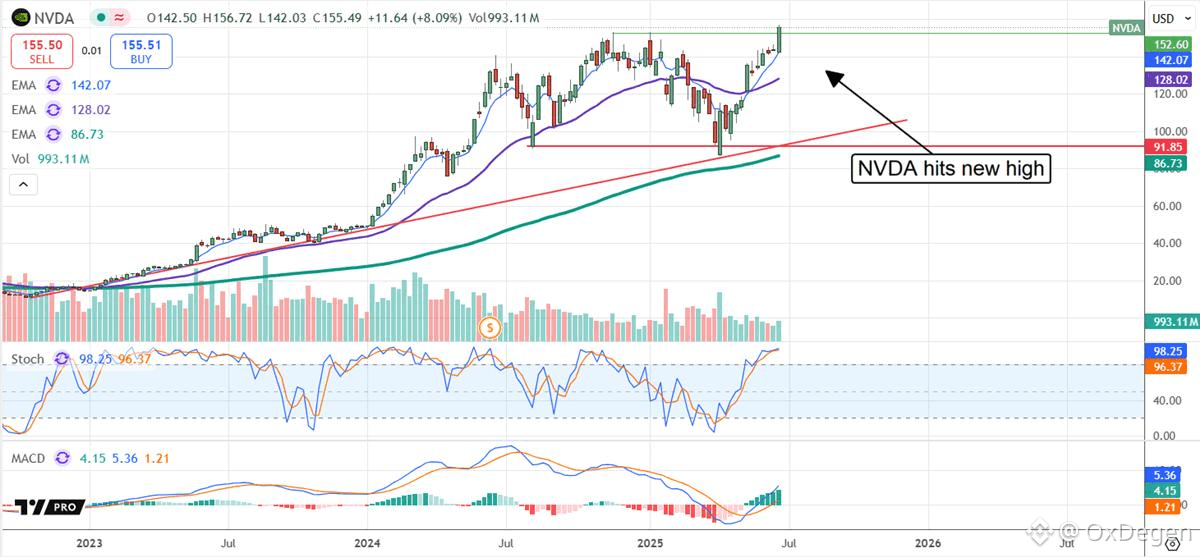
$NVDA breaks through historical highs again, and behind it are still two words: AI demand. The latest round of gains is not only driven by expectations for AI infrastructure; the company also previously increased its stock repurchase authorization by $150 billion, bringing the total authorization to $235 billion, reigniting market confidence in AI capital expenditures.
Interestingly, $BTC is also currently trading in the 86,000–87,000 USD range, oscillating near that area. Both sides are essentially trading the same thing: risk appetite. If US tech stocks continue to stay strong, and $BTC can hold above a key resistance level, then the line for risk assets may not have finished its move yet. #英伟达股价创历史新高涨2.4%
{future}(BTCUSDT)
{future}(NVDAUSDT)
$NVDA breaks through historical highs again, and behind it are still two words: AI demand. The latest round of gains is not only driven by expectations for AI infrastructure; the company also previously increased its stock repurchase authorization by $150 billion, bringing the total authorization to $235 billion, reigniting market confidence in AI capital expenditures.
Interestingly, $BTC is also currently trading in the 86,000–87,000 USD range, oscillating near that area. Both sides are essentially trading the same thing: risk appetite. If US tech stocks continue to stay strong, and $BTC can hold above a key resistance level, then the line for risk assets may not have finished its move yet. #英伟达股价创历史新高涨2.4%
Interestingly, $BTC is also currently trading in the 86,000–87,000 USD range, oscillating near that area. Both sides are essentially trading the same thing: risk appetite. If US tech stocks continue to stay strong, and $BTC can hold above a key resistance level, then the line for risk assets may not have finished its move yet. #英伟达股价创历史新高涨2.4%
334
·
--
Bullish
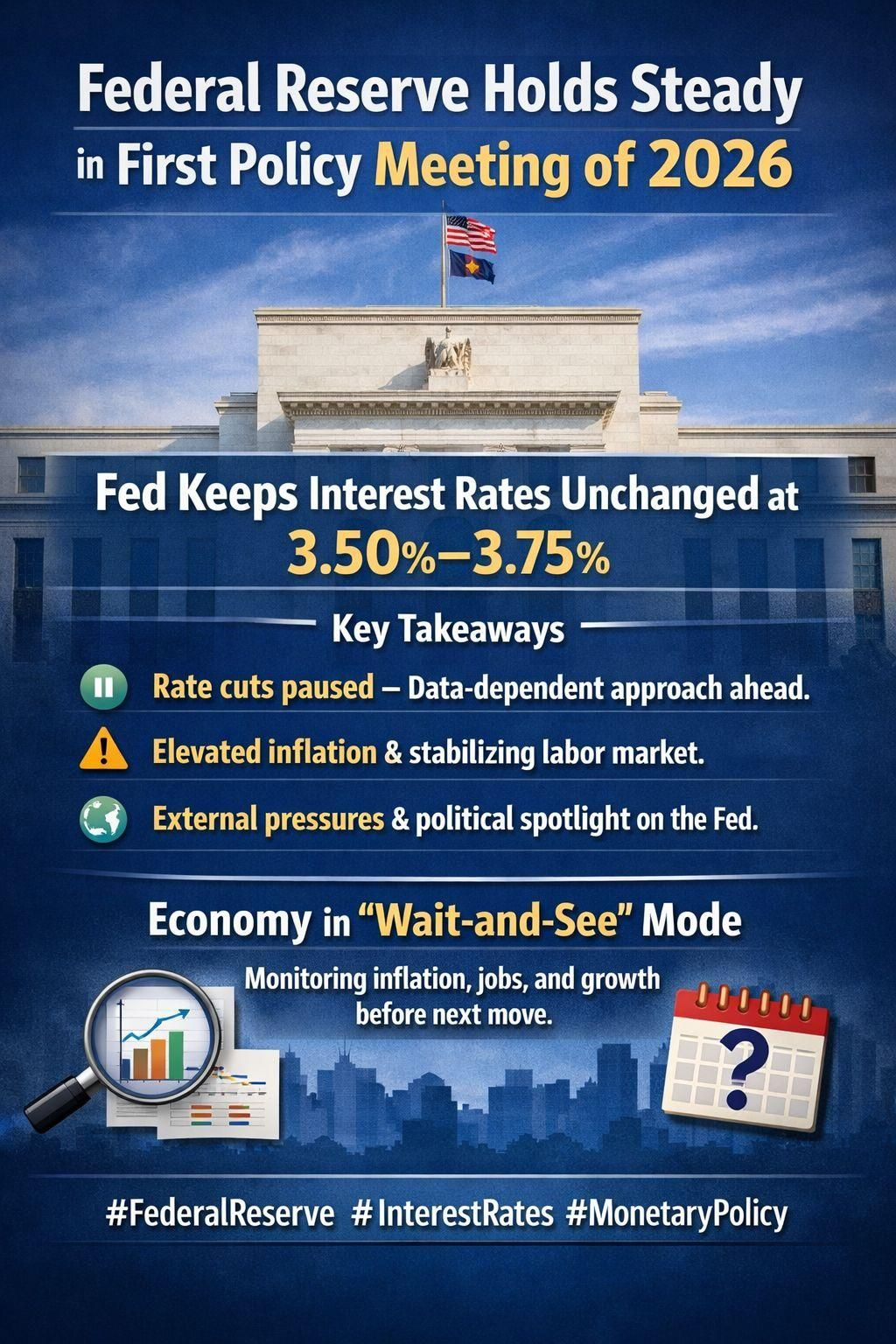
An important background for the recent resurgence in risk assets. In September, nonfarm payrolls increased by only 29,000, well below expectations, while the unemployment rate rose to 4.2%. As a result, market expectations for further rate hikes in October have clearly decreased.
In simple terms: when employment starts to cool, the market starts betting that the Federal Reserve won’t be in as much of a rush to keep raising rates. For highly volatile assets like BTC, falling rate-hike expectations often mean easing liquidity pressure. However, you can’t directly interpret it as “$BTC is about to take off immediately”—the following CPI, inflation, and the Fed’s remarks are what will determine the next leg of the market.#美联储10月加息概率降至17%
{future}(BTCUSDT)
An important background for the recent resurgence in risk assets. In September, nonfarm payrolls increased by only 29,000, well below expectations, while the unemployment rate rose to 4.2%. As a result, market expectations for further rate hikes in October have clearly decreased.
In simple terms: when employment starts to cool, the market starts betting that the Federal Reserve won’t be in as much of a rush to keep raising rates. For highly volatile assets like BTC, falling rate-hike expectations often mean easing liquidity pressure. However, you can’t directly interpret it as “$BTC is about to take off immediately”—the following CPI, inflation, and the Fed’s remarks are what will determine the next leg of the market.#美联储10月加息概率降至17%
In simple terms: when employment starts to cool, the market starts betting that the Federal Reserve won’t be in as much of a rush to keep raising rates. For highly volatile assets like BTC, falling rate-hike expectations often mean easing liquidity pressure. However, you can’t directly interpret it as “$BTC is about to take off immediately”—the following CPI, inflation, and the Fed’s remarks are what will determine the next leg of the market.#美联储10月加息概率降至17%
1.2k
·
--
Bullish
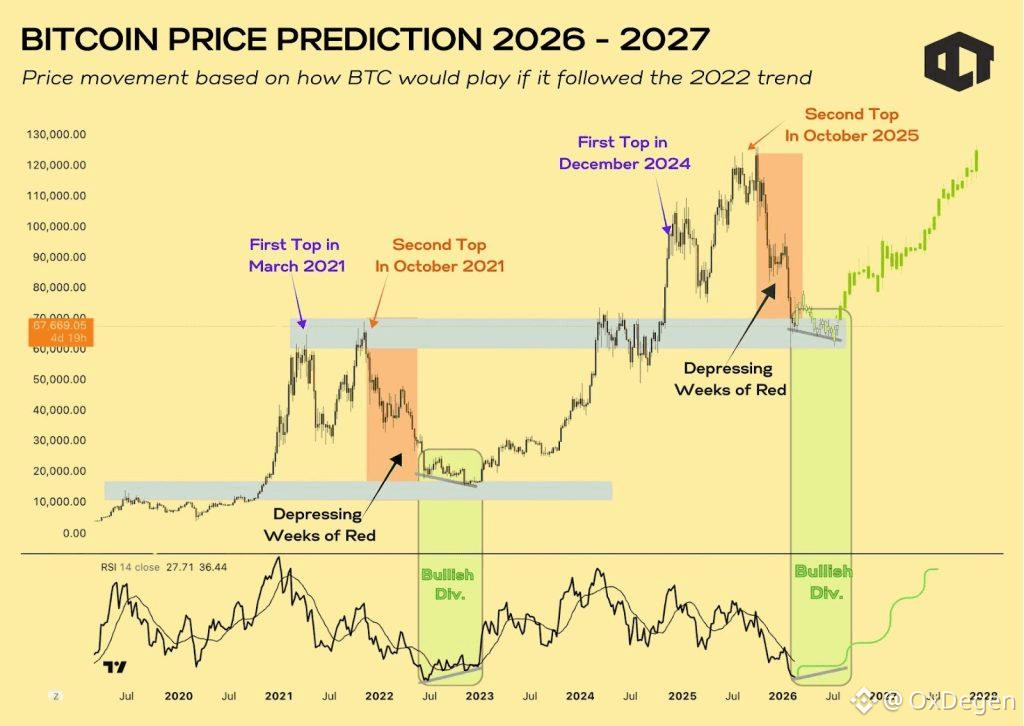
$BTC This wave has already re-tested the area near $87,000, but after pushing up, it was still pulled back by sell pressure, which indicates that the overhead supply at this level is not small. After an earlier rebound from the lows all the way up, market sentiment has clearly warmed. The real question now isn’t “can it still go up,” but whether $87,000 can turn from a resistance zone into a support zone.
If later it again challenges $87,000 and holds firmly above it, expectations for “Uptober” may continue to heat up; but if it repeatedly fails when trying to break higher, short-term funds are likely to start locking in profits. So the key for chasing strength now isn’t to look at whether there’s a big bullish candle, but whether—after the breakout—there is money willing to keep buying and step in.
#比特币冲击8.7万美元遇阻回落
{future}(ETHUSDT)
{future}(BTCUSDT)
$BTC This wave has already re-tested the area near $87,000, but after pushing up, it was still pulled back by sell pressure, which indicates that the overhead supply at this level is not small. After an earlier rebound from the lows all the way up, market sentiment has clearly warmed. The real question now isn’t “can it still go up,” but whether $87,000 can turn from a resistance zone into a support zone.
If later it again challenges $87,000 and holds firmly above it, expectations for “Uptober” may continue to heat up; but if it repeatedly fails when trying to break higher, short-term funds are likely to start locking in profits. So the key for chasing strength now isn’t to look at whether there’s a big bullish candle, but whether—after the breakout—there is money willing to keep buying and step in.
#比特币冲击8.7万美元遇阻回落
If later it again challenges $87,000 and holds firmly above it, expectations for “Uptober” may continue to heat up; but if it repeatedly fails when trying to break higher, short-term funds are likely to start locking in profits. So the key for chasing strength now isn’t to look at whether there’s a big bullish candle, but whether—after the breakout—there is money willing to keep buying and step in.
#比特币冲击8.7万美元遇阻回落
6
4.1k
·
--
Bearish
Verified
The problem with Zcash this time isn’t just that the coin price has fallen—ETF capital has also started to turn around. Since the listing of ZCSH, it’s posted its first weekly net outflow. This week, about $93.6 million was withdrawn, whereas two weeks ago it attracted a $98.2 million inflow, and market sentiment has shifted extremely quickly.
This is also what I think is worth watching next for $ZEC : earlier, ETF capital pushed the market higher, but now that ETF capital is pulling out, can the price still hold on its own? If ETF net outflows continue and $ZEC also breaks below the key area around $1,300, then it won’t just be simple profit-taking.#Zcash现货ETF首现周度净流出9360万美元
{future}(BTCUSDT)
{future}(ZECUSDT)
The problem with Zcash this time isn’t just that the coin price has fallen—ETF capital has also started to turn around. Since the listing of ZCSH, it’s posted its first weekly net outflow. This week, about $93.6 million was withdrawn, whereas two weeks ago it attracted a $98.2 million inflow, and market sentiment has shifted extremely quickly.
This is also what I think is worth watching next for $ZEC : earlier, ETF capital pushed the market higher, but now that ETF capital is pulling out, can the price still hold on its own? If ETF net outflows continue and $ZEC also breaks below the key area around $1,300, then it won’t just be simple profit-taking.#Zcash现货ETF首现周度净流出9360万美元
This is also what I think is worth watching next for $ZEC : earlier, ETF capital pushed the market higher, but now that ETF capital is pulling out, can the price still hold on its own? If ETF net outflows continue and $ZEC also breaks below the key area around $1,300, then it won’t just be simple profit-taking.#Zcash现货ETF首现周度净流出9360万美元
4
17
6.6k
·
--
Bullish
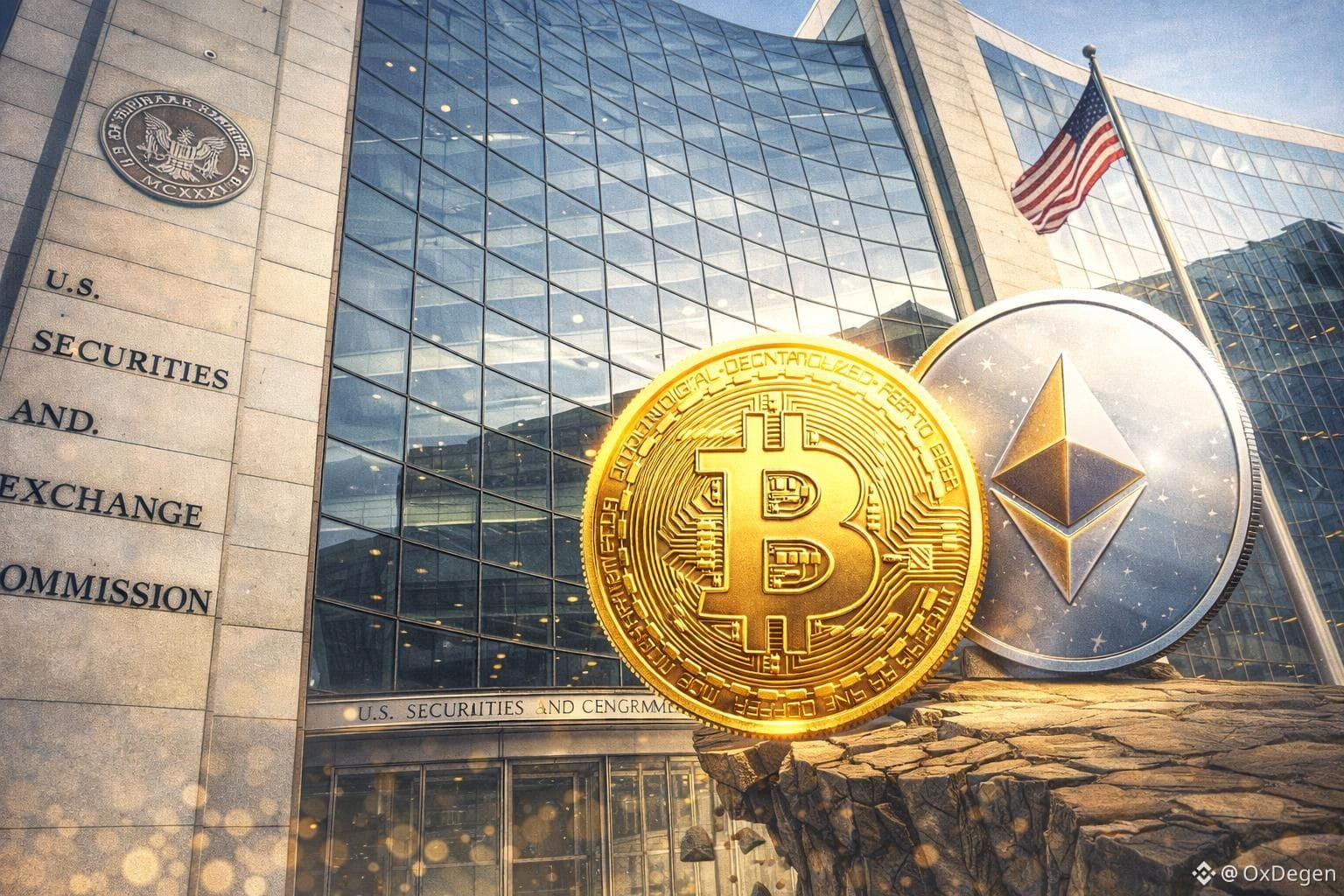
It’s not that the SEC suddenly decided not to approve it; rather, an interruption in U.S. government funding temporarily stalled the SEC’s review process for the new ETF. What the market should really worry about isn’t “ETFs not getting approved,” but whether a batch of products originally expected to roll out in October could be pushed back overall—naturally impacting short-term capital sentiment. [Binance](https://www.binance.com/en-BH/square/post/10-03-2026-sec-halts-new-crypto-etf-reviews-during-u-s-funding-lapse-373335019578784?utm_source=chatgpt.com)
But from another angle, this looks more like a time delay than a logical reversal. As long as funds resume, the queued applications will still continue moving forward. For $BTC , what matters more right now than an “SEC pause in reviewing” is ETF fund flows and price structure. If spot ETF fund inflows don’t show clear deterioration, there’s no need to overinterpret this news.
#SEC因拨款中断暂停加密ETF审查
{future}(BTCUSDT)
It’s not that the SEC suddenly decided not to approve it; rather, an interruption in U.S. government funding temporarily stalled the SEC’s review process for the new ETF. What the market should really worry about isn’t “ETFs not getting approved,” but whether a batch of products originally expected to roll out in October could be pushed back overall—naturally impacting short-term capital sentiment. Binance
But from another angle, this looks more like a time delay than a logical reversal. As long as funds resume, the queued applications will still continue moving forward. For $BTC , what matters more right now than an “SEC pause in reviewing” is ETF fund flows and price structure. If spot ETF fund inflows don’t show clear deterioration, there’s no need to overinterpret this news.
#SEC因拨款中断暂停加密ETF审查
But from another angle, this looks more like a time delay than a logical reversal. As long as funds resume, the queued applications will still continue moving forward. For $BTC , what matters more right now than an “SEC pause in reviewing” is ETF fund flows and price structure. If spot ETF fund inflows don’t show clear deterioration, there’s no need to overinterpret this news.
#SEC因拨款中断暂停加密ETF审查
2
4
6.6k
·
--
Bearish
17 people were arrested and 10,000 were involved—what Greek police busted this time was not an ordinary “crypto-currency scam.”
Greek police disclosed that a criminal organization operating under the guise of cryptocurrency investment has been active since at least 2025. Seventeen people were arrested, including nine soldiers. Police said the organization repeatedly lured new investors through hierarchical recruitment. In total, about 10,000 people became involved, and funds flowing into the platform amounted to roughly $8 million.
Most outrageous of all were the bait they offered:
“Double your principal in 50 days.”
They used high returns to stimulate deposits in the early stages, then simply froze withdrawals later on. At the same time, they encouraged participants to keep recruiting others. In essence, it already has a very obvious pyramid-scheme scam structure. During the search, Greek police also seized a large number of phones, computers, storage devices, and around €295,000 in cash.
$BTC $ETH #希腊警方破获加密诈骗团伙拘17人
{future}(ETHUSDT)
{future}(BTCUSDT)
17 people were arrested and 10,000 were involved—what Greek police busted this time was not an ordinary “crypto-currency scam.”
Greek police disclosed that a criminal organization operating under the guise of cryptocurrency investment has been active since at least 2025. Seventeen people were arrested, including nine soldiers. Police said the organization repeatedly lured new investors through hierarchical recruitment. In total, about 10,000 people became involved, and funds flowing into the platform amounted to roughly $8 million.
Most outrageous of all were the bait they offered:
“Double your principal in 50 days.”
They used high returns to stimulate deposits in the early stages, then simply froze withdrawals later on. At the same time, they encouraged participants to keep recruiting others. In essence, it already has a very obvious pyramid-scheme scam structure. During the search, Greek police also seized a large number of phones, computers, storage devices, and around €295,000 in cash.
$BTC $ETH #希腊警方破获加密诈骗团伙拘17人
Greek police disclosed that a criminal organization operating under the guise of cryptocurrency investment has been active since at least 2025. Seventeen people were arrested, including nine soldiers. Police said the organization repeatedly lured new investors through hierarchical recruitment. In total, about 10,000 people became involved, and funds flowing into the platform amounted to roughly $8 million.
Most outrageous of all were the bait they offered:
“Double your principal in 50 days.”
They used high returns to stimulate deposits in the early stages, then simply froze withdrawals later on. At the same time, they encouraged participants to keep recruiting others. In essence, it already has a very obvious pyramid-scheme scam structure. During the search, Greek police also seized a large number of phones, computers, storage devices, and around €295,000 in cash.
$BTC $ETH #希腊警方破获加密诈骗团伙拘17人

57
·
--
Bullish
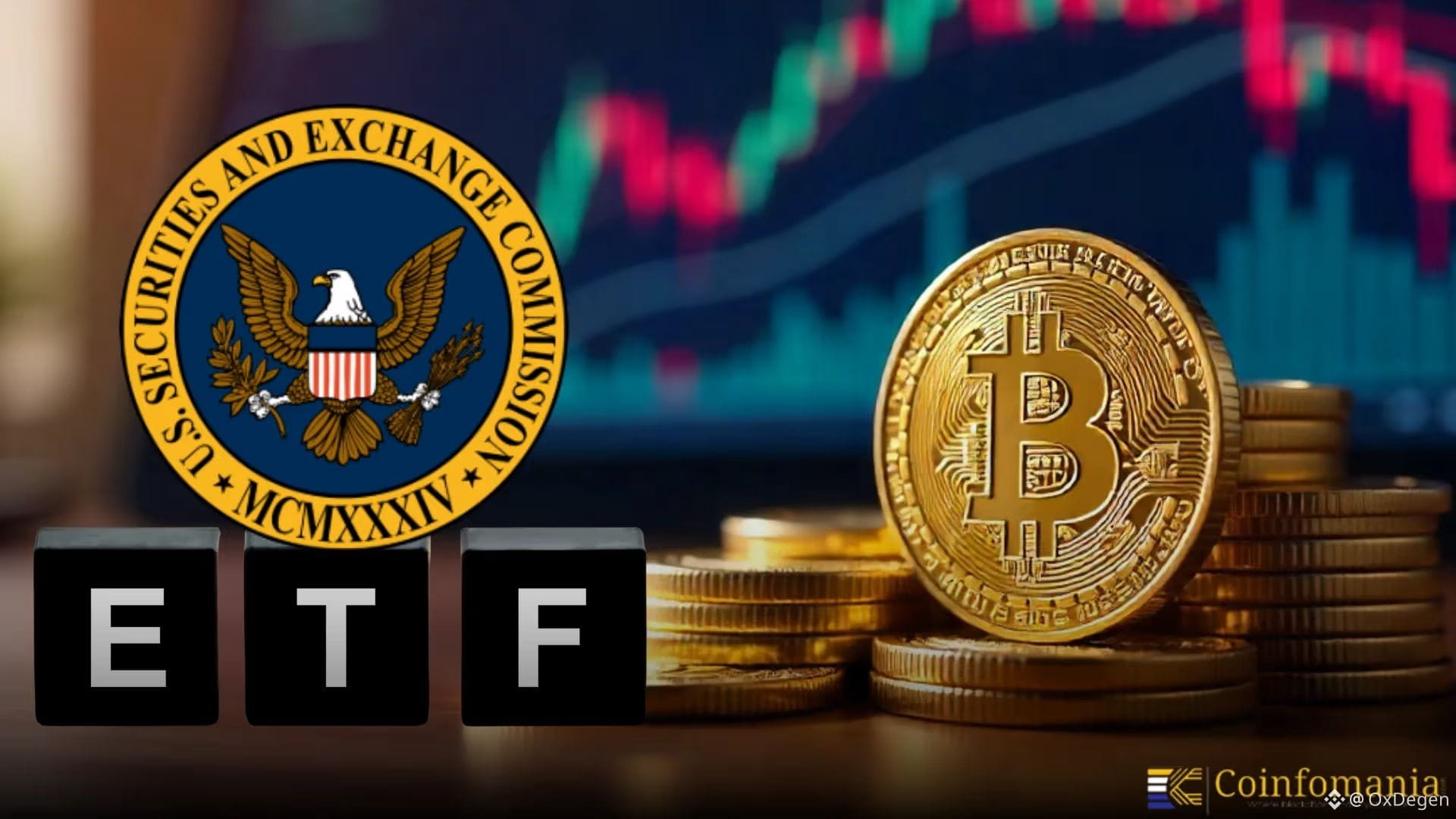
SEC suddenly “halts work,” more than 90 crypto ETF applications get stuck, and BTC may instead see a weird window.
After a lapse in U.S. government funding, the SEC paused its routine review of new crypto ETFs, affecting more than 90 applications.
But interestingly, this isn’t a rejection—it’s a pause.
The already-listed $BTC / $ETH ETFs are not affected; what’s really being held up is the next batch of products preparing to enter the market.
This means that, in the short term, a rather awkward situation could occur:
Institutions want to enter → products are in the queue → nobody at the SEC is pushing it forward → the ETF funding story temporarily breaks off.
So instead of rushing to judge whether this is “bad news or good news,” I’m taking a wait-and-see approach.
$BTC If it can keep holding above 85K despite the ETF review being stalled, it suggests the market basically isn’t afraid of this headline.
On the other hand, if 85K breaks, be careful that money could interpret the “ETF delay” as a short-term liquidity negative.
#SEC因预算失效暂停加密ETF审查
{future}(ETHUSDT)
{future}(BTCUSDT)
SEC suddenly “halts work,” more than 90 crypto ETF applications get stuck, and BTC may instead see a weird window.
After a lapse in U.S. government funding, the SEC paused its routine review of new crypto ETFs, affecting more than 90 applications.
But interestingly, this isn’t a rejection—it’s a pause.
The already-listed $BTC / $ETH ETFs are not affected; what’s really being held up is the next batch of products preparing to enter the market.
This means that, in the short term, a rather awkward situation could occur:
Institutions want to enter → products are in the queue → nobody at the SEC is pushing it forward → the ETF funding story temporarily breaks off.
So instead of rushing to judge whether this is “bad news or good news,” I’m taking a wait-and-see approach.
$BTC If it can keep holding above 85K despite the ETF review being stalled, it suggests the market basically isn’t afraid of this headline.
On the other hand, if 85K breaks, be careful that money could interpret the “ETF delay” as a short-term liquidity negative.
#SEC因预算失效暂停加密ETF审查
After a lapse in U.S. government funding, the SEC paused its routine review of new crypto ETFs, affecting more than 90 applications.
But interestingly, this isn’t a rejection—it’s a pause.
The already-listed $BTC / $ETH ETFs are not affected; what’s really being held up is the next batch of products preparing to enter the market.
This means that, in the short term, a rather awkward situation could occur:
Institutions want to enter → products are in the queue → nobody at the SEC is pushing it forward → the ETF funding story temporarily breaks off.
So instead of rushing to judge whether this is “bad news or good news,” I’m taking a wait-and-see approach.
$BTC If it can keep holding above 85K despite the ETF review being stalled, it suggests the market basically isn’t afraid of this headline.
On the other hand, if 85K breaks, be careful that money could interpret the “ETF delay” as a short-term liquidity negative.
#SEC因预算失效暂停加密ETF审查
721
·
--
Bearish
This time it’s not a Rug from some project, but a pyramid scheme dressed up as an “AI + crypto investment” banner. Greek police arrested 17 people, including 9 servicemembers. Investigators say the group attracted about 10,000 people and promised to double the principal in 50 days**, with the amount involved exceeding €8 million. So far, police have seized about €280,000.
The most ironic part is that this script sounds a lot like some “guaranteed AI quant” “double in 50 days” projects from the crypto world, doesn’t it?
Observations: The impact of cases like this on the market isn’t about any particular coin—it’s that the full scam template of high-yield promises + recruiting people + freezing withdrawals has been copied and replicated again.
Direction: Don’t look at whether <0-9]{11} $BTC </0-9]{11} rises or falls. Instead, remind everyone: any project that promises fixed high returns, requires you to recruit others, and also restricts withdrawals has basically already had the plot written right on its face.
$BTC $USDT #希腊警方破获加密诈骗团伙拘17人
{future}(ETHUSDT)
{future}(USDCUSDT)
{future}(BTCUSDT)
This time it’s not a Rug from some project, but a pyramid scheme dressed up as an “AI + crypto investment” banner. Greek police arrested 17 people, including 9 servicemembers. Investigators say the group attracted about 10,000 people and promised to double the principal in 50 days**, with the amount involved exceeding €8 million. So far, police have seized about €280,000.
The most ironic part is that this script sounds a lot like some “guaranteed AI quant” “double in 50 days” projects from the crypto world, doesn’t it?
Observations: The impact of cases like this on the market isn’t about any particular coin—it’s that the full scam template of high-yield promises + recruiting people + freezing withdrawals has been copied and replicated again.
Direction: Don’t look at whether <0-9]{11} $BTC </0-9]{11} rises or falls. Instead, remind everyone: any project that promises fixed high returns, requires you to recruit others, and also restricts withdrawals has basically already had the plot written right on its face.
$BTC $USDT #希腊警方破获加密诈骗团伙拘17人
The most ironic part is that this script sounds a lot like some “guaranteed AI quant” “double in 50 days” projects from the crypto world, doesn’t it?
Observations: The impact of cases like this on the market isn’t about any particular coin—it’s that the full scam template of high-yield promises + recruiting people + freezing withdrawals has been copied and replicated again.
Direction: Don’t look at whether <0-9]{11} $BTC </0-9]{11} rises or falls. Instead, remind everyone: any project that promises fixed high returns, requires you to recruit others, and also restricts withdrawals has basically already had the plot written right on its face.
$BTC $USDT #希腊警方破获加密诈骗团伙拘17人

15
·
--
Bearish
Verified
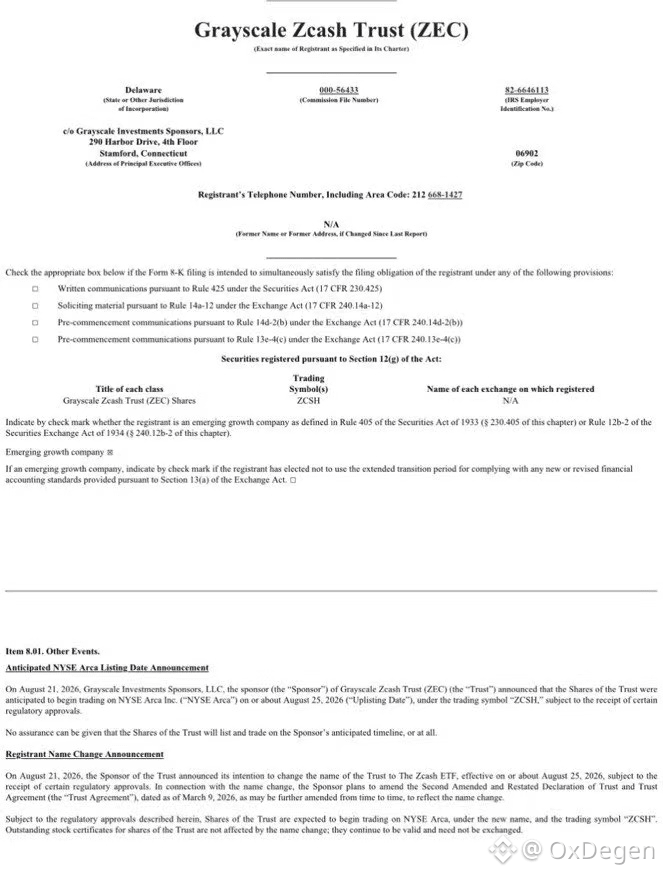
The ETF tracking $ZEC finally shows a somewhat ugly signal: since its launch, this is the first time there has been weekly net outflows. This week, about $93.6 million was withdrawn, whereas two weeks ago it still saw a weekly net inflow of $98.2 million. At the same time, $ZEC has fallen from its recent high of about $1,690 to around $1,300—within just one week, the drop is roughly 17.5%.
What’s really interesting here isn’t simply that “the ETF is seeing outflows,” but that right after capital has just炒热 (heated up) the privacy narrative, institutional money starts pulling out.
Key levels: 1300 is the first line of defense; the prior high at 1690 is trend-related resistance. Only by reclaiming and holding above 1500 can concerns about capital retreating from the high end be alleviated.
Direction: bearish in the short term. First, watch whether 1300 can hold steady; if the ETF continues to record consecutive net outflows, the earlier strong narrative will need to be repriced.
$ZEC #Zcash现货ETF首现周度净流出9360万美元
{future}(ZECUSDT)
The ETF tracking $ZEC finally shows a somewhat ugly signal: since its launch, this is the first time there has been weekly net outflows. This week, about $93.6 million was withdrawn, whereas two weeks ago it still saw a weekly net inflow of $98.2 million. At the same time, $ZEC has fallen from its recent high of about $1,690 to around $1,300—within just one week, the drop is roughly 17.5%.
What’s really interesting here isn’t simply that “the ETF is seeing outflows,” but that right after capital has just炒热 (heated up) the privacy narrative, institutional money starts pulling out.
Key levels: 1300 is the first line of defense; the prior high at 1690 is trend-related resistance. Only by reclaiming and holding above 1500 can concerns about capital retreating from the high end be alleviated.
Direction: bearish in the short term. First, watch whether 1300 can hold steady; if the ETF continues to record consecutive net outflows, the earlier strong narrative will need to be repriced.
$ZEC #Zcash现货ETF首现周度净流出9360万美元
What’s really interesting here isn’t simply that “the ETF is seeing outflows,” but that right after capital has just炒热 (heated up) the privacy narrative, institutional money starts pulling out.
Key levels: 1300 is the first line of defense; the prior high at 1690 is trend-related resistance. Only by reclaiming and holding above 1500 can concerns about capital retreating from the high end be alleviated.
Direction: bearish in the short term. First, watch whether 1300 can hold steady; if the ETF continues to record consecutive net outflows, the earlier strong narrative will need to be repriced.
$ZEC #Zcash现货ETF首现周度净流出9360万美元
1
2.6k
·
--
Bearish
$387.5 million was siphoned off, but the cold wallets are “fine”: how does an exchange’s claimed “100% asset safety” actually get proven?
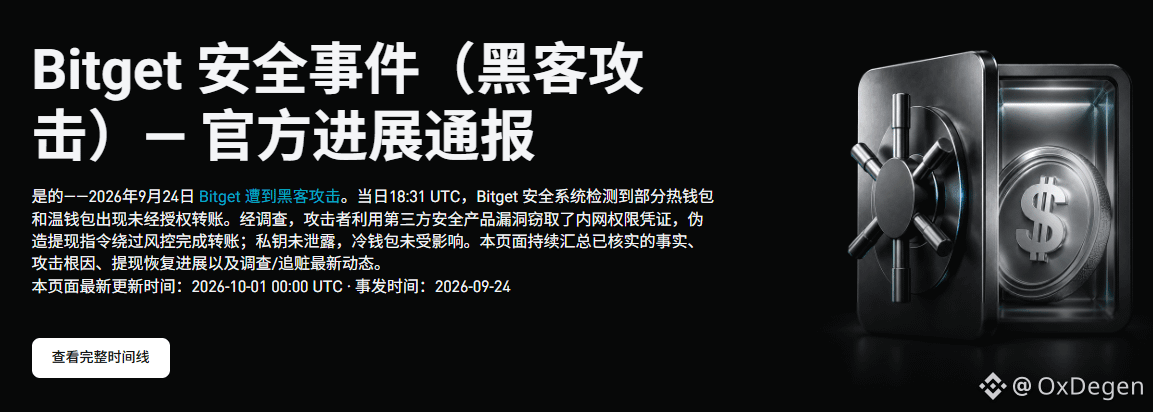
Bitget later revised the initially announced affected amount from $351.6 million to $387.5 million; the added portion comes from more complete statistics of on-chain assets such as $ZEC and $TRON.US , among others. The official statement says the cold wallet was not affected, the incident has been contained, and withdrawals are being restored in phases.
The most worth-fighting-about point is really not “is Bitget finished?” but this:
For a centralized exchange’s claimed 100% user asset safety, what exactly should be the proof?
Is it PoR (Proof of Reserves)?
Is it the proportion of cold wallets?
Or is it whether they can afford to compensate after an accident?
What to watch: follow-up asset tracking, execution of compensation, and an independent investigation report.
Direction: security incidents are platform fundamental risk, and cannot be handled purely through a coin-price logic.
#BGB #交易所安全 #黑客攻击
{stock_us}(TRON.US)
{future}(ZECUSDT)
$387.5 million was siphoned off, but the cold wallets are “fine”: how does an exchange’s claimed “100% asset safety” actually get proven?
Bitget later revised the initially announced affected amount from $351.6 million to $387.5 million; the added portion comes from more complete statistics of on-chain assets such as $ZEC and $TRON.US , among others. The official statement says the cold wallet was not affected, the incident has been contained, and withdrawals are being restored in phases.
The most worth-fighting-about point is really not “is Bitget finished?” but this:
For a centralized exchange’s claimed 100% user asset safety, what exactly should be the proof?
Is it PoR (Proof of Reserves)?
Is it the proportion of cold wallets?
Or is it whether they can afford to compensate after an accident?
What to watch: follow-up asset tracking, execution of compensation, and an independent investigation report.
Direction: security incidents are platform fundamental risk, and cannot be handled purely through a coin-price logic.
#BGB #交易所安全 #黑客攻击
Bitget later revised the initially announced affected amount from $351.6 million to $387.5 million; the added portion comes from more complete statistics of on-chain assets such as $ZEC and $TRON.US , among others. The official statement says the cold wallet was not affected, the incident has been contained, and withdrawals are being restored in phases.
The most worth-fighting-about point is really not “is Bitget finished?” but this:
For a centralized exchange’s claimed 100% user asset safety, what exactly should be the proof?
Is it PoR (Proof of Reserves)?
Is it the proportion of cold wallets?
Or is it whether they can afford to compensate after an accident?
What to watch: follow-up asset tracking, execution of compensation, and an independent investigation report.
Direction: security incidents are platform fundamental risk, and cannot be handled purely through a coin-price logic.
#BGB #交易所安全 #黑客攻击
2.9k
·
--
Bearish
7393 wallets simultaneously experiencing problems— is your wallet really safe?
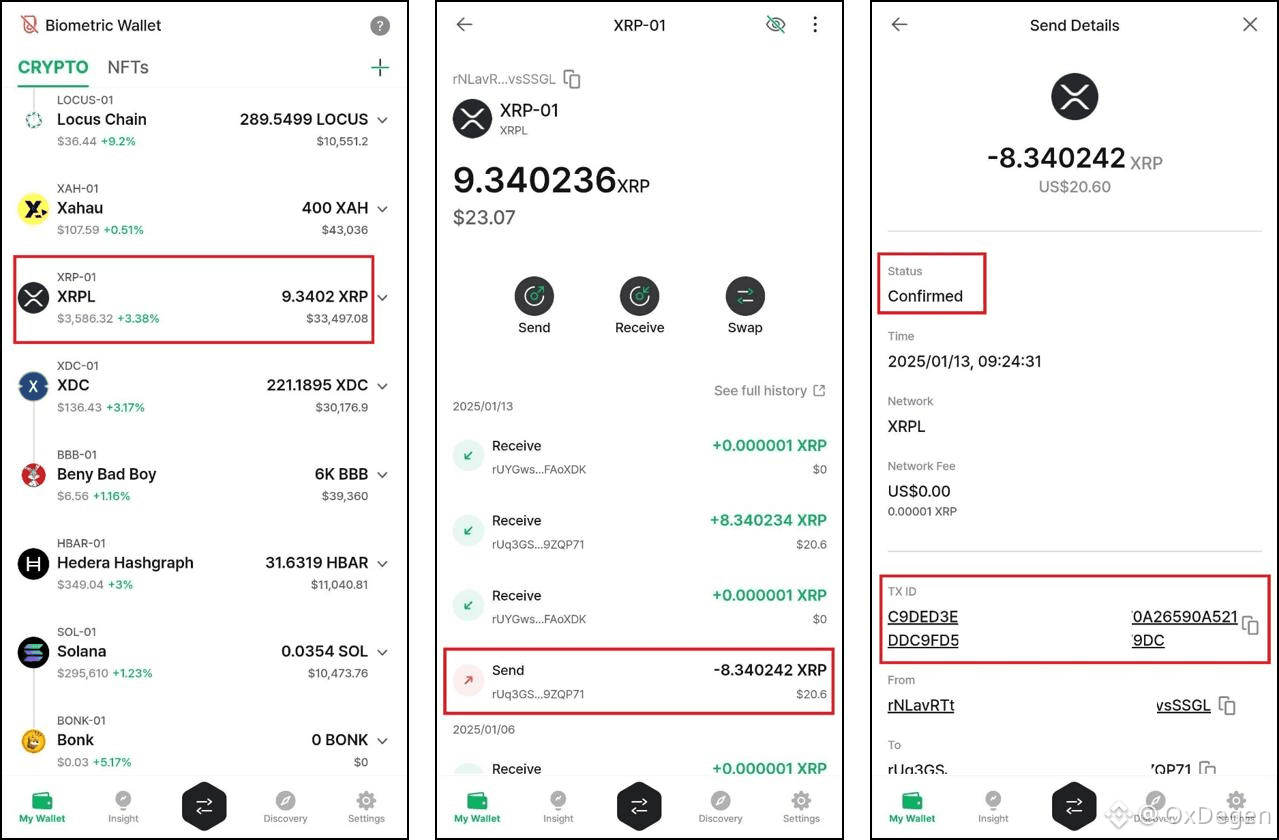
The D'CENT wallet incident, according to current on-chain statistics, shows that about 7393 of the $XRP wallets have been affected, with approximately 12.4 million $XRP tokens cumulatively transferred out. Of these, about 6.3 million have already been swapped for ETH.
What this news is really worth discussing isn’t the stolen amount, but rather:
In a single wallet security incident, why can thousands of addresses be affected at the same time?
For ordinary users, this is more likely to trigger concern than “a certain DeFi project was hacked,” because the issue directly involves private keys, seed phrases, and the wallet supply chain.
Points to watch: the most important next steps are fund tracking, freezing, and whether any new waves of attacks appear.
Direction: the $XRP price isn’t the core issue—what matters more is the wallet security narrative.
#xrp #钱包安全 #黑客攻击
{future}(ETHUSDT)
{future}(BTCUSDT)
{future}(XRPUSDT)
7393 wallets simultaneously experiencing problems— is your wallet really safe?
The D'CENT wallet incident, according to current on-chain statistics, shows that about 7393 of the $XRP wallets have been affected, with approximately 12.4 million $XRP tokens cumulatively transferred out. Of these, about 6.3 million have already been swapped for ETH.
What this news is really worth discussing isn’t the stolen amount, but rather:
In a single wallet security incident, why can thousands of addresses be affected at the same time?
For ordinary users, this is more likely to trigger concern than “a certain DeFi project was hacked,” because the issue directly involves private keys, seed phrases, and the wallet supply chain.
Points to watch: the most important next steps are fund tracking, freezing, and whether any new waves of attacks appear.
Direction: the $XRP price isn’t the core issue—what matters more is the wallet security narrative.
#xrp #钱包安全 #黑客攻击
The D'CENT wallet incident, according to current on-chain statistics, shows that about 7393 of the $XRP wallets have been affected, with approximately 12.4 million $XRP tokens cumulatively transferred out. Of these, about 6.3 million have already been swapped for ETH.
What this news is really worth discussing isn’t the stolen amount, but rather:
In a single wallet security incident, why can thousands of addresses be affected at the same time?
For ordinary users, this is more likely to trigger concern than “a certain DeFi project was hacked,” because the issue directly involves private keys, seed phrases, and the wallet supply chain.
Points to watch: the most important next steps are fund tracking, freezing, and whether any new waves of attacks appear.
Direction: the $XRP price isn’t the core issue—what matters more is the wallet security narrative.
#xrp #钱包安全 #黑客攻击
3
2.6k
·
--
Bullish
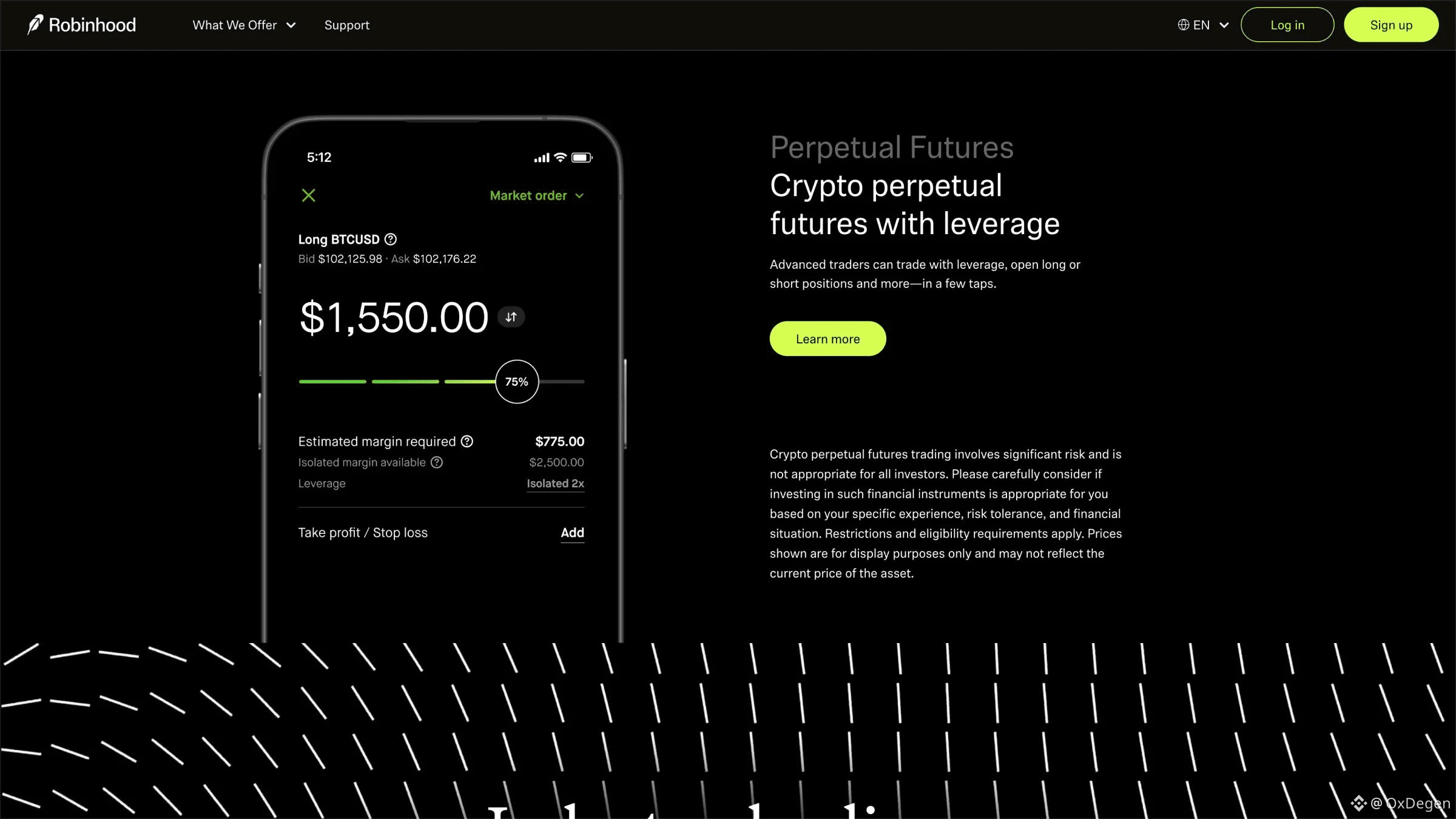
Robinhood’s latest announced product line is no longer just stock trading—it has expanded into AI trading agents, perpetual futures contracts, weekend stock trading, and earnings forecast contract expansion. It even plans to let users hand some trades over to AI agents to execute.
In the past, trading bots were something only Crypto players had. Now traditional brokerages are directly pushing Agent Trading (agent-based trading) to ordinary retail investors.
In the future, the real controversy likely won’t be:
“Can AI analyze the market?”
But rather:
“Are you willing to hand your account over to AI to place orders itself?”
Watch point: $HOOD is currently around $112. Focus on whether trading volume can keep delivering after the new products launch.
Direction: AI trading tools are an incremental narrative, but in practice, user adoption matters more than the press conference.
#Robinhood #罗宾汉 #Aİ #MEME
{future}(ETHUSDT)
{future}(HOODUSDT)
Robinhood’s latest announced product line is no longer just stock trading—it has expanded into AI trading agents, perpetual futures contracts, weekend stock trading, and earnings forecast contract expansion. It even plans to let users hand some trades over to AI agents to execute.
In the past, trading bots were something only Crypto players had. Now traditional brokerages are directly pushing Agent Trading (agent-based trading) to ordinary retail investors.
In the future, the real controversy likely won’t be:
“Can AI analyze the market?”
But rather:
“Are you willing to hand your account over to AI to place orders itself?”
Watch point: $HOOD is currently around $112. Focus on whether trading volume can keep delivering after the new products launch.
Direction: AI trading tools are an incremental narrative, but in practice, user adoption matters more than the press conference.
#Robinhood #罗宾汉 #Aİ #MEME
In the past, trading bots were something only Crypto players had. Now traditional brokerages are directly pushing Agent Trading (agent-based trading) to ordinary retail investors.
In the future, the real controversy likely won’t be:
“Can AI analyze the market?”
But rather:
“Are you willing to hand your account over to AI to place orders itself?”
Watch point: $HOOD is currently around $112. Focus on whether trading volume can keep delivering after the new products launch.
Direction: AI trading tools are an incremental narrative, but in practice, user adoption matters more than the press conference.
#Robinhood #罗宾汉 #Aİ #MEME
2
·
--
Bullish
BitMine's $ETH holdings have already reached about 6 million ETH, accounting for roughly 4.9% of Ethereum's circulating supply. Of this, more than 5 million ETH have been staked, and the company continues to accumulate more every week.
What the market is discussing now is no longer:
“Will ETH go up?”
but rather:
“If more and more listed companies treat ETH as a treasury asset, will ETH eventually show a treasury-effect similar to what Strategy has done for BTC?”
ETH watch: around 2700 is the current price observation zone. What the market truly wants to see is whether capital can continue to rally around the ETH-treasury narrative.
Outlook: The institutional “buy and hold” logic is relatively strong, but the concentration of holdings itself also brings new market-structure risks.
#Bitmine #Ethereum #ETH
{future}(BTCUSDT)
{future}(ETHUSDT)
BitMine's $ETH holdings have already reached about 6 million ETH, accounting for roughly 4.9% of Ethereum's circulating supply. Of this, more than 5 million ETH have been staked, and the company continues to accumulate more every week.
What the market is discussing now is no longer:
“Will ETH go up?”
but rather:
“If more and more listed companies treat ETH as a treasury asset, will ETH eventually show a treasury-effect similar to what Strategy has done for BTC?”
ETH watch: around 2700 is the current price observation zone. What the market truly wants to see is whether capital can continue to rally around the ETH-treasury narrative.
Outlook: The institutional “buy and hold” logic is relatively strong, but the concentration of holdings itself also brings new market-structure risks.
#Bitmine #Ethereum #ETH
What the market is discussing now is no longer:
“Will ETH go up?”
but rather:
“If more and more listed companies treat ETH as a treasury asset, will ETH eventually show a treasury-effect similar to what Strategy has done for BTC?”
ETH watch: around 2700 is the current price observation zone. What the market truly wants to see is whether capital can continue to rally around the ETH-treasury narrative.
Outlook: The institutional “buy and hold” logic is relatively strong, but the concentration of holdings itself also brings new market-structure risks.
#Bitmine #Ethereum #ETH

257
·
--
Bullish
The Independent Community Bankers of America (ICBA) has sued the OCC, challenging its approach to granting national trust bank (国家信托银行) licenses to crypto companies. The heart of the dispute is this: although these crypto institutions cannot accept deposits or make loans, they can provide digital-asset custody and settlement. Traditional banks argue that this regulatory treatment is not fair.
What is truly worth discussing is:
In the future, will a Crypto Bank actually count as a bank, or will it only be a Crypto company wearing a bank license?
Observation point: $OCC.US whether it can ultimately uphold these licensing policies is more important than the short-term $BTC price swings.
Direction: Crypto financial infrastructure continues to expand, but the regulatory struggle is clearly intensifying.
#代币化 #RWA #加密监管
{stock_us}(OCC.US)
{future}(BTCUSDT)
The Independent Community Bankers of America (ICBA) has sued the OCC, challenging its approach to granting national trust bank (国家信托银行) licenses to crypto companies. The heart of the dispute is this: although these crypto institutions cannot accept deposits or make loans, they can provide digital-asset custody and settlement. Traditional banks argue that this regulatory treatment is not fair.
What is truly worth discussing is:
In the future, will a Crypto Bank actually count as a bank, or will it only be a Crypto company wearing a bank license?
Observation point: $OCC.US whether it can ultimately uphold these licensing policies is more important than the short-term $BTC price swings.
Direction: Crypto financial infrastructure continues to expand, but the regulatory struggle is clearly intensifying.
#代币化 #RWA #加密监管
What is truly worth discussing is:
In the future, will a Crypto Bank actually count as a bank, or will it only be a Crypto company wearing a bank license?
Observation point: $OCC.US whether it can ultimately uphold these licensing policies is more important than the short-term $BTC price swings.
Direction: Crypto financial infrastructure continues to expand, but the regulatory struggle is clearly intensifying.
#代币化 #RWA #加密监管

BTC+0.73%
OCCUS+5.45%
451
·
--
Bullish
Reuters reports that EU regulatory authorities are looking into whether Binance’s continued provision of services in the EU market is an issue. The main controversy centers on whether the legal route of “reverse solicitation” has been overused. Binance says its operations comply with requirements and continues to push forward with EU authorization.
Two viewpoints:
One side: The stricter the regulation, the more beneficial it will be in the long run for compliance.
The other side: The stricter the rules, the smaller the overseas services space for large exchanges.
Observation point: The focus is not on the price of a specific number like $BNB , but on whether new service restrictions, fines, or license progress emerge afterward.
Direction: Event-driven—continue to wait for regulatory updates and do not reach conclusions in advance.
{future}(BTCUSDT)
{future}(ETHUSDT)
{future}(BNBUSDT)
#Binance #Binancesecurity #何一
Reuters reports that EU regulatory authorities are looking into whether Binance’s continued provision of services in the EU market is an issue. The main controversy centers on whether the legal route of “reverse solicitation” has been overused. Binance says its operations comply with requirements and continues to push forward with EU authorization.
Two viewpoints:
One side: The stricter the regulation, the more beneficial it will be in the long run for compliance.
The other side: The stricter the rules, the smaller the overseas services space for large exchanges.
Observation point: The focus is not on the price of a specific number like $BNB , but on whether new service restrictions, fines, or license progress emerge afterward.
Direction: Event-driven—continue to wait for regulatory updates and do not reach conclusions in advance.
#Binance #Binancesecurity #何一
Two viewpoints:
One side: The stricter the regulation, the more beneficial it will be in the long run for compliance.
The other side: The stricter the rules, the smaller the overseas services space for large exchanges.
Observation point: The focus is not on the price of a specific number like $BNB , but on whether new service restrictions, fines, or license progress emerge afterward.
Direction: Event-driven—continue to wait for regulatory updates and do not reach conclusions in advance.
#Binance #Binancesecurity #何一

579
·
--
Bullish
Citi has raised its forecast for the next 12 months of $BTC from $82,000 to $113,000. Meanwhile, $ETH has been raised from $2,240 to $3,028. At the same time, it expects that the crypto market could see about $5 billion in net inflows over the next 12 months.
But don’t rush to treat “113K” as a price signal—it’s an institutional forecast, not a trading trigger. What’s really interesting is this: the market was previously debating cooling ETF inflows, and now traditional financial institutions have revised valuations upward again. Is this confirming a renewed trend, or is it chasing sentiment after the rally?
$BTC to watch: support around the 84K area; 86.5K–87K is the current breakout observation zone.
Direction: the macro narrative is relatively positive, but whether there can be a solid hold above 86K is more important.
#比特币资金费率升至10%未平仓合约回升 #BTC #ETH
{future}(ETHUSDT)
{future}(BTCUSDT)
Citi has raised its forecast for the next 12 months of $BTC from $82,000 to $113,000. Meanwhile, $ETH has been raised from $2,240 to $3,028. At the same time, it expects that the crypto market could see about $5 billion in net inflows over the next 12 months.
But don’t rush to treat “113K” as a price signal—it’s an institutional forecast, not a trading trigger. What’s really interesting is this: the market was previously debating cooling ETF inflows, and now traditional financial institutions have revised valuations upward again. Is this confirming a renewed trend, or is it chasing sentiment after the rally?
$BTC to watch: support around the 84K area; 86.5K–87K is the current breakout observation zone.
Direction: the macro narrative is relatively positive, but whether there can be a solid hold above 86K is more important.
#比特币资金费率升至10%未平仓合约回升 #BTC #ETH
But don’t rush to treat “113K” as a price signal—it’s an institutional forecast, not a trading trigger. What’s really interesting is this: the market was previously debating cooling ETF inflows, and now traditional financial institutions have revised valuations upward again. Is this confirming a renewed trend, or is it chasing sentiment after the rally?
$BTC to watch: support around the 84K area; 86.5K–87K is the current breakout observation zone.
Direction: the macro narrative is relatively positive, but whether there can be a solid hold above 86K is more important.
#比特币资金费率升至10%未平仓合约回升 #BTC #ETH
1
1.9k
Log in to explore more content
Join global crypto users on Binance Square
⚡️ Get latest and useful information about crypto.
💬 Trusted by the world’s largest crypto exchange.
👍 Discover real insights from verified creators.
Email / Phone number
Trending Topics
SECHaltsCryptoETFReviewsAmidFundingLapse
97,892 views
892 Discussing
🚨 SEC FREEZES CRYPTO ETF REVIEWS!
A major development is shaking the crypto market!
Due to the U.S. government funding crisis, the SEC has reportedly paused reviews of more than 90 crypto ETF applications. #SECHaltsCryptoETFReviewsAmidFundingLapse
This could have a serious impact on the market.
$SOL , $DOGE and other altcoins waiting for ETF approvals may face significant delays.
ETF approvals are one of the biggest potential catalysts for institutional money entering crypto. Any delay could weaken short-term expectations and increase market uncertainty.
However, this is not a rejection. Once the funding situation is resolved, reviews could resume.
Personally, I think this is a development worth watching closely. The longer the uncertainty continues, the greater the potential impact on altcoin sentiment.
DYOR.
Kripto Kurdu
·6 Likes
·1k views
ZcashETFPostsFirstWeeklyOutflow$93.6M
68,981 views
218 Discussing
GreekPoliceBustCryptoScamRingArrest17
241,515 views
1,674 Discussing