Victor Niederhoffer died in Connecticut on August 4 this year, aged 82. He was best known for two things: winning the U.S. squash championship eight times and blowing up his fund twice.
He studied statistics at Harvard and earned a PhD in finance from the University of Chicago. In the 1980s, he managed fixed-income and foreign-exchange investments for Soros. From 1980 to 1996, his fund returned 35% annually, one of the best records in the industry. His strategy was simple: sell options for the premiums and bet that markets wouldn’t panic as much as everyone thought. He made small gains day after day, and things went smoothly.
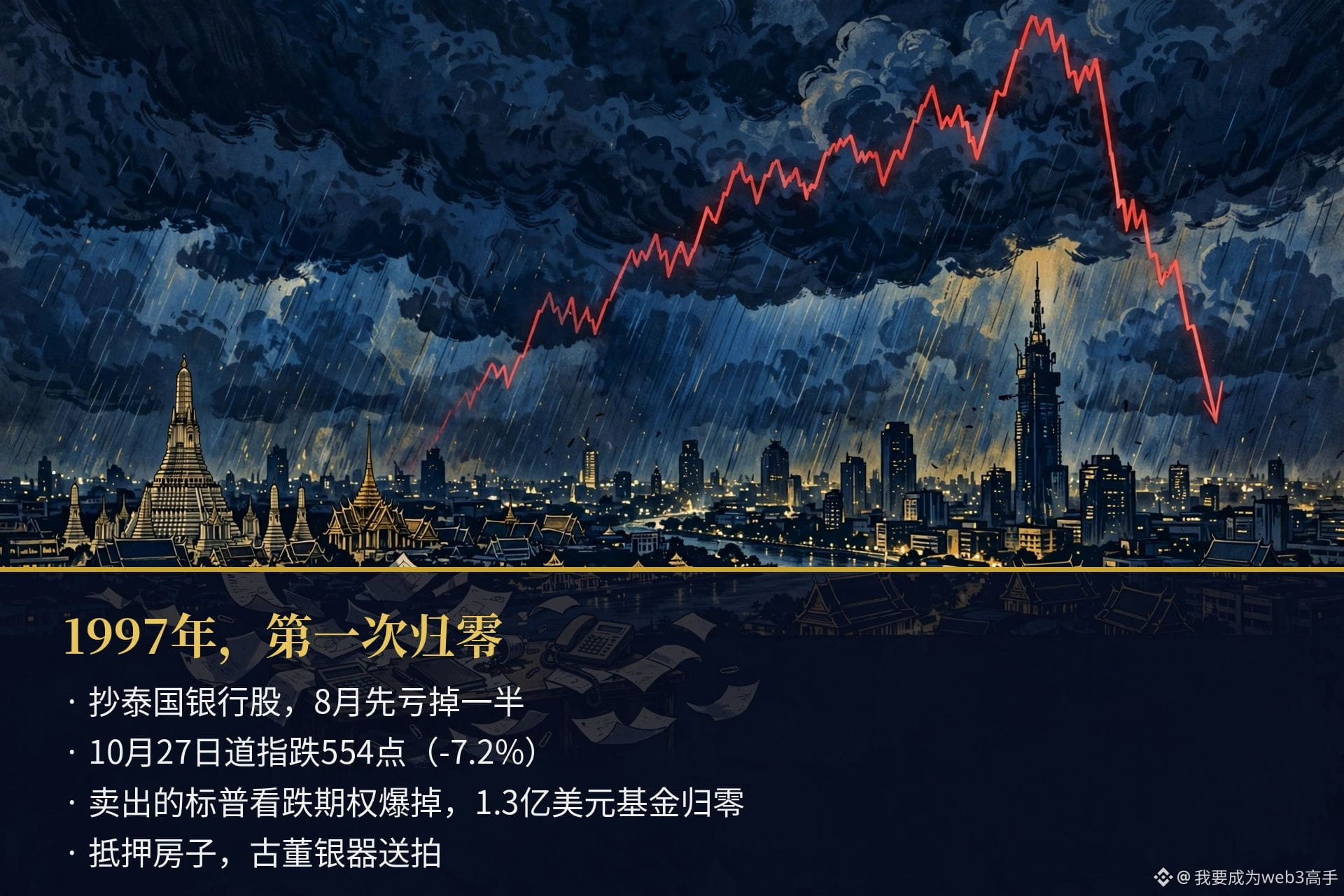
During the 1997 Asian financial crisis, he bought Thai bank stocks on the dip and sold more put options to increase his position. In August, he lost half his money. On October 27, the Dow plunged 554 points in a single day, a 7.2% drop. The S&P put options he had sold blew up, and his $130 million fund was wiped out. He mortgaged his house and sent his collection of antique silver to Sotheby’s for auction.
He bounced back. In 2002, he relaunched his fund with $2 million. Within a few years, it had grown to $346 million, with annualized returns of 50%. Then the subprime mortgage crisis hit in 2007. The fund closed in September, having lost more than 75%.
Both times, it was the same downfall. He collected small gains so consistently that he kept increasing his positions, until one big market move wiped everything out. For crypto traders who sell options or run grid strategies to profit from market swings, the lesson is exactly the same: the profits you make day to day are hard-earned, but when a black swan hits, you pay with your principal.
$BTC $ETH