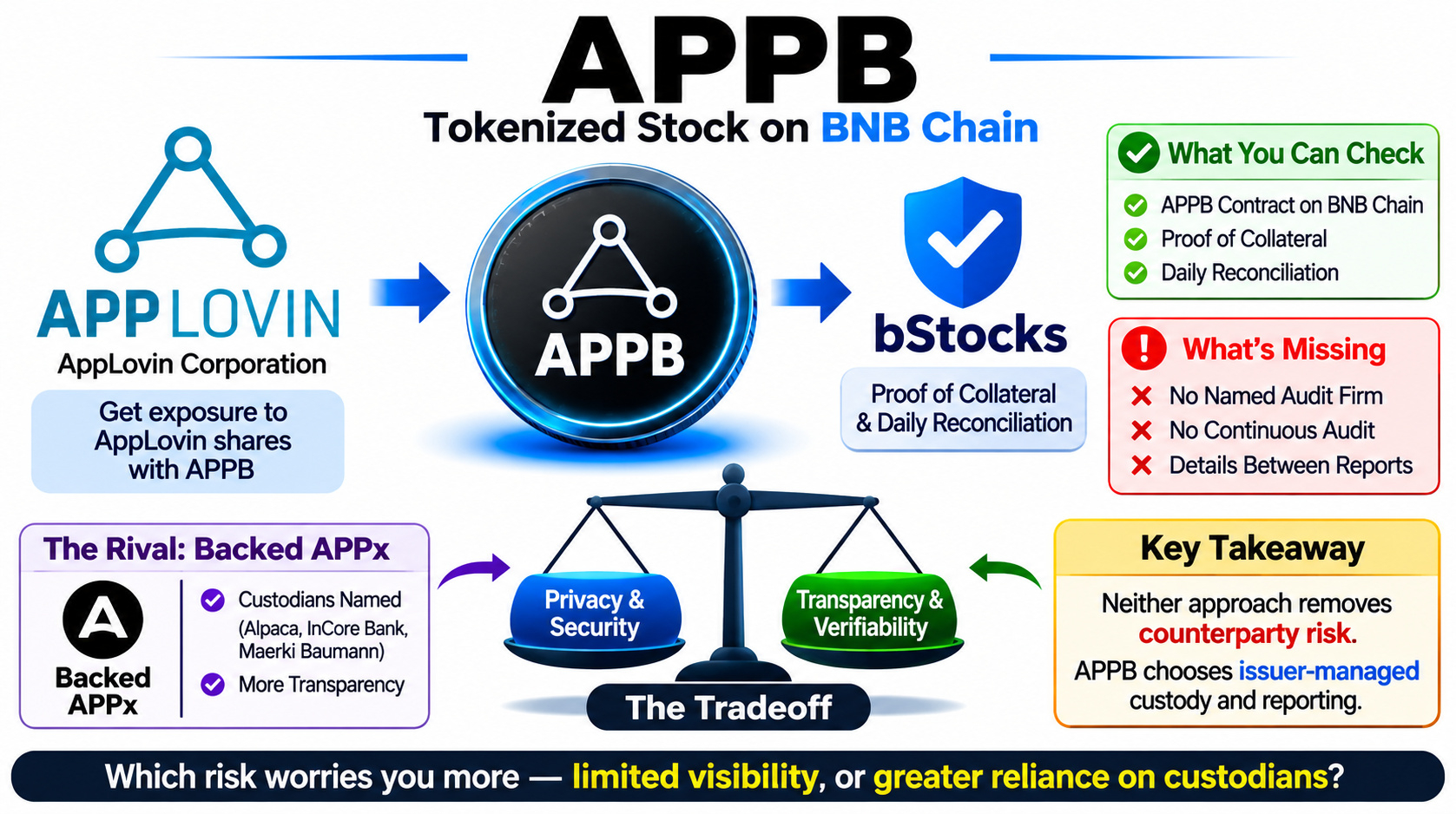
APPB is not a conventional cryptocurrency. It is a tokenized security linked to AppLovin Corporation shares, issued through the bStocks structure. The key research angle is the difference between publicly verifiable collateral and the information holders must trust the issuer to provide.
APPB gives holders economic exposure to AppLovin Corporation stock through a token on BNB Smart Chain. But holding APPB does not mean owning actual AppLovin shares. That's not an oversight. It's a stated choice.
The bStocks model keeps custody and legal ownership within an issuer-controlled structure. This reduces the need to expose every operational detail publicly, but holders must trust the issuer's custody, reconciliation and redemption processes.
What can holders check? The APPB contract is publicly visible on BNB Smart Chain, and bStocks provides Proof of Collateral, a way to check backing against issued tokens. Its documentation describes daily reconciliation. However, no named independent audit firm or APPB-specific attestation schedule is identified in the public materials reviewed. Proof of collateral is not a continuous independent audit. Pending settlements and operational adjustments may remain outside the latest published figures.
Compare this with Backed's APPx, another tokenized AppLovin exposure. Its product page publicly identifies custodians including Alpaca Securities, InCore Bank and Maerki Baumann. More exposure, in exchange for more identifiable custody information.
Neither approach removes counterparty risk. APPB leans on issuer-managed custody and collateral reporting. APPx offers greater visibility into its named service providers, but still depends on intermediaries.
Which risk worries you more — limited visibility between collateral disclosures, or greater dependence on publicly identified custodians?
Sources: ,bina