Many projects list a long string of token use cases, yet you still don’t know where it circulates day to day.
$ACU
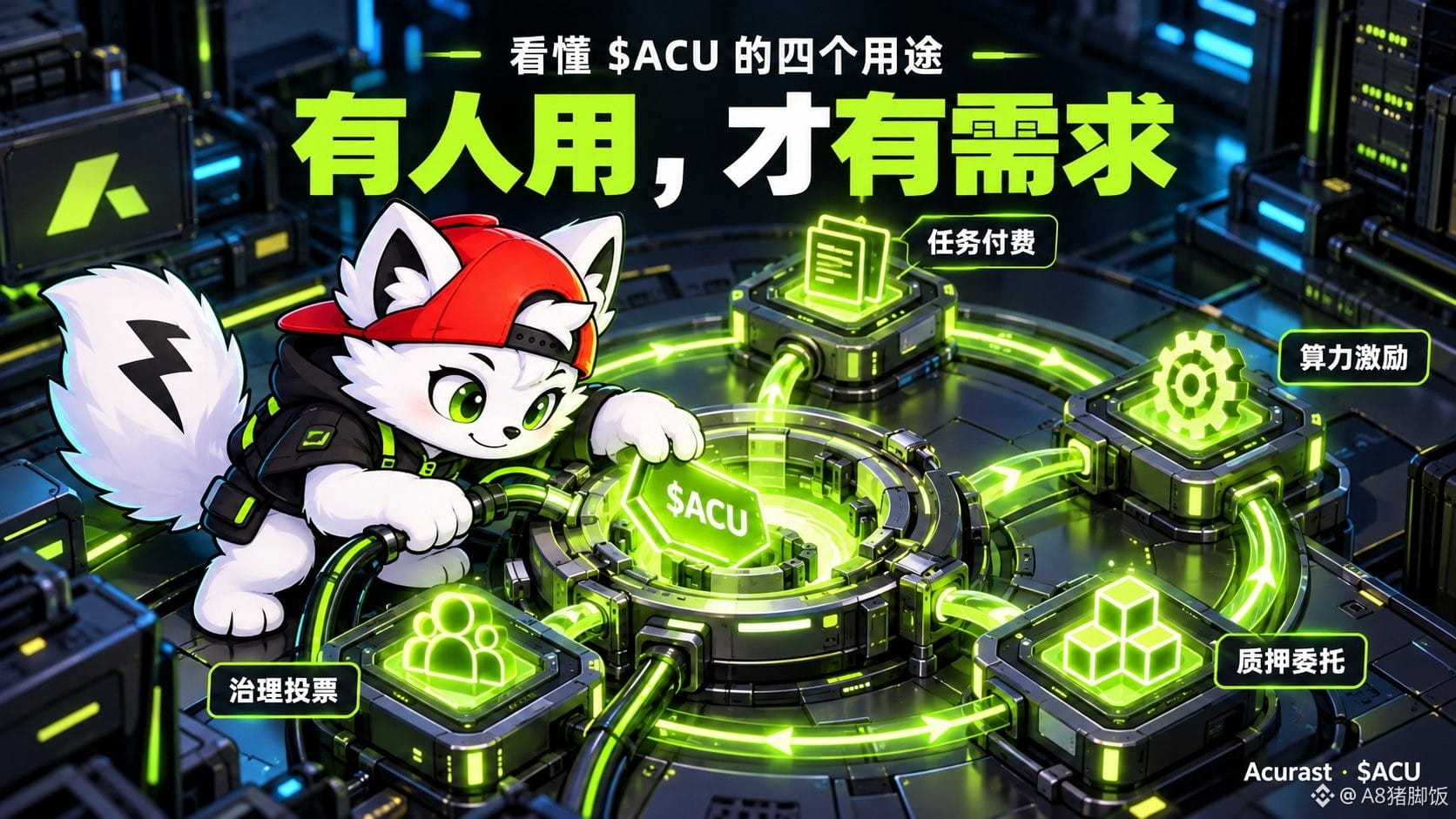
This part is relatively easy to understand: developers pay for compute jobs with ACU; people who run the Processor receive incentives; token holders can stake, delegate, and also participate in network voting.
I think of it as a set of settlement and coordination mechanisms built around how compute power operates.
Developers send out tasks, devices provide the computation, and the network allocates incentives according to the rules. If the rules change, token holders vote on it. The more people use the system, the more often ACU shows up in it.
Acurast has also publicly disclosed the ACU allocation, unlock schedule, and governance rights.
Official materials further note that the network does not use privileged multisig—no party can secretly modify balances or redirect rewards.
Next, I’ll keep looking at the task volume and developer payments. These two indicators are more meaningful than short-term hype.
@Acurast
#Acurast #ACU #DePIN
$ACU
This part is relatively easy to understand: developers pay for compute jobs with ACU; people who run the Processor receive incentives; token holders can stake, delegate, and also participate in network voting.
I think of it as a set of settlement and coordination mechanisms built around how compute power operates.
Developers send out tasks, devices provide the computation, and the network allocates incentives according to the rules. If the rules change, token holders vote on it. The more people use the system, the more often ACU shows up in it.
Acurast has also publicly disclosed the ACU allocation, unlock schedule, and governance rights.
Official materials further note that the network does not use privileged multisig—no party can secretly modify balances or redirect rewards.
Next, I’ll keep looking at the task volume and developer payments. These two indicators are more meaningful than short-term hype.
@Acurast
#Acurast #ACU #DePIN