
不爱练腹的小宇
61 Posts

不爱练腹的小宇
Report
Block User
2026对我好点
High-Frequency Trader
10.8 Months
15 Following
95 Followers
80 Liked
Posts
All
Quotes
·
--
Bullish
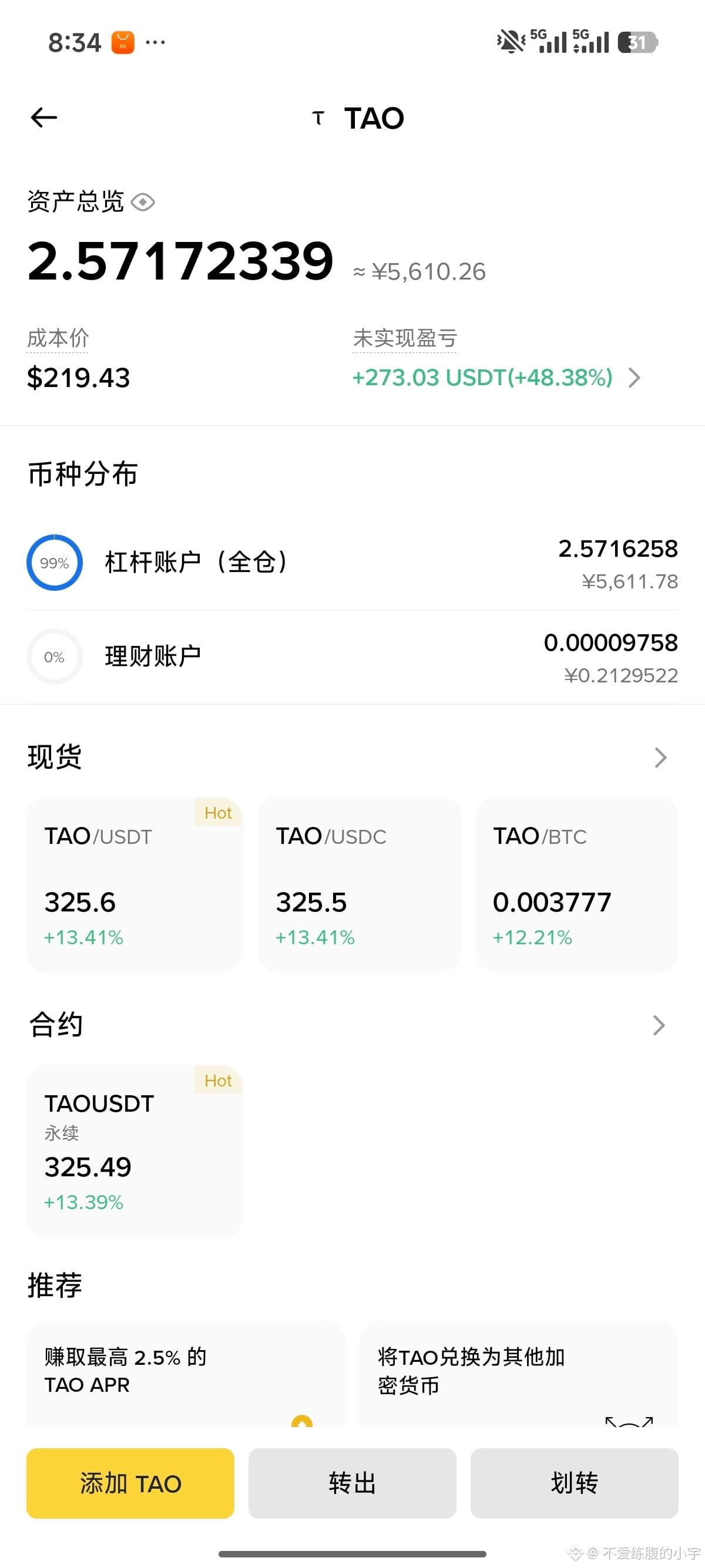
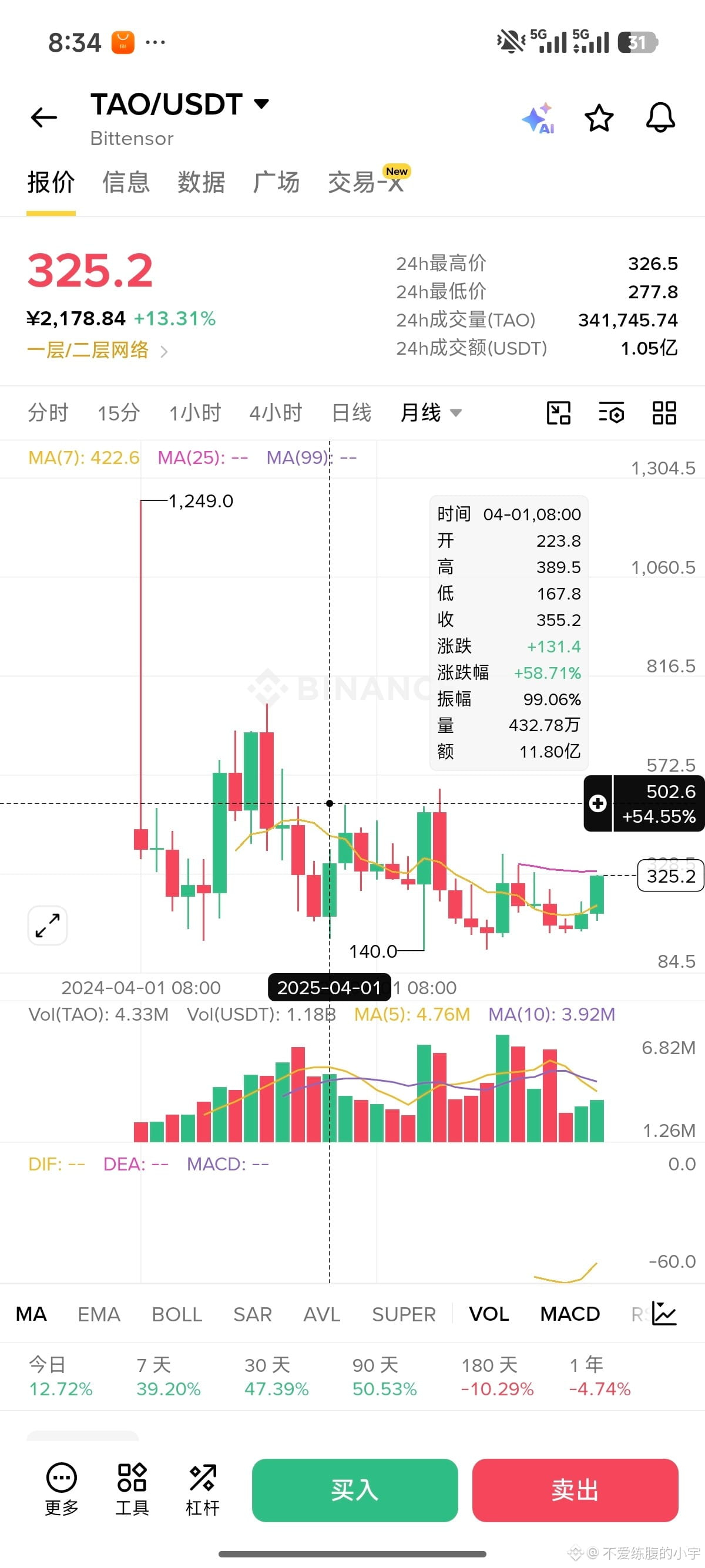
Hold it in place $TAO
Next target 500
{future}(TAOUSDT)
Hold it in place $TAO
Next target 500
Next target 500
201
·
--
Bullish
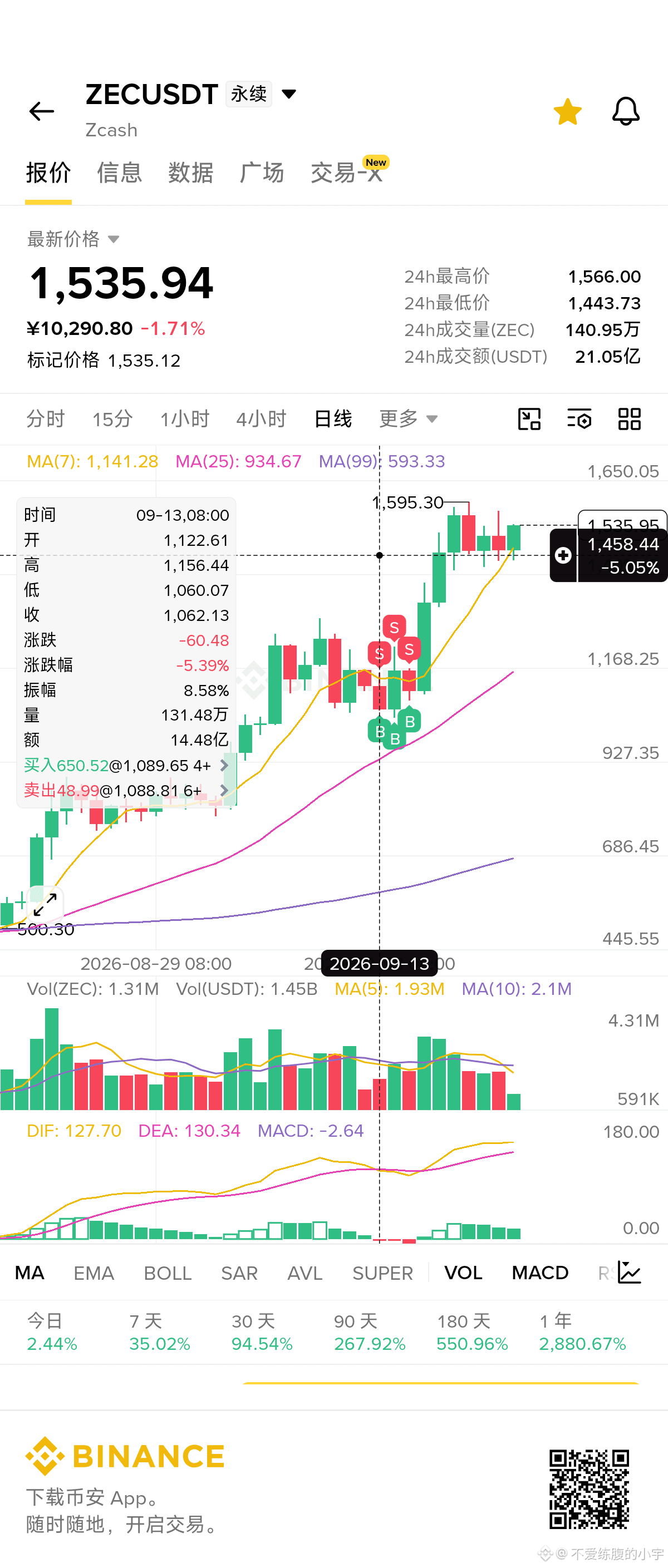
The next target estimate seems to go up toward 1800. It will consolidate sideways to create the illusion of a drop, luring short positions to enter. Then it will surge again and blow up the short positions, squeezing shorts and pushing the price up to $ZEC
{future}(ZECUSDT)
The next target estimate seems to go up toward 1800. It will consolidate sideways to create the illusion of a drop, luring short positions to enter. Then it will surge again and blow up the short positions, squeezing shorts and pushing the price up to $ZEC
1
271
·
--
Bullish
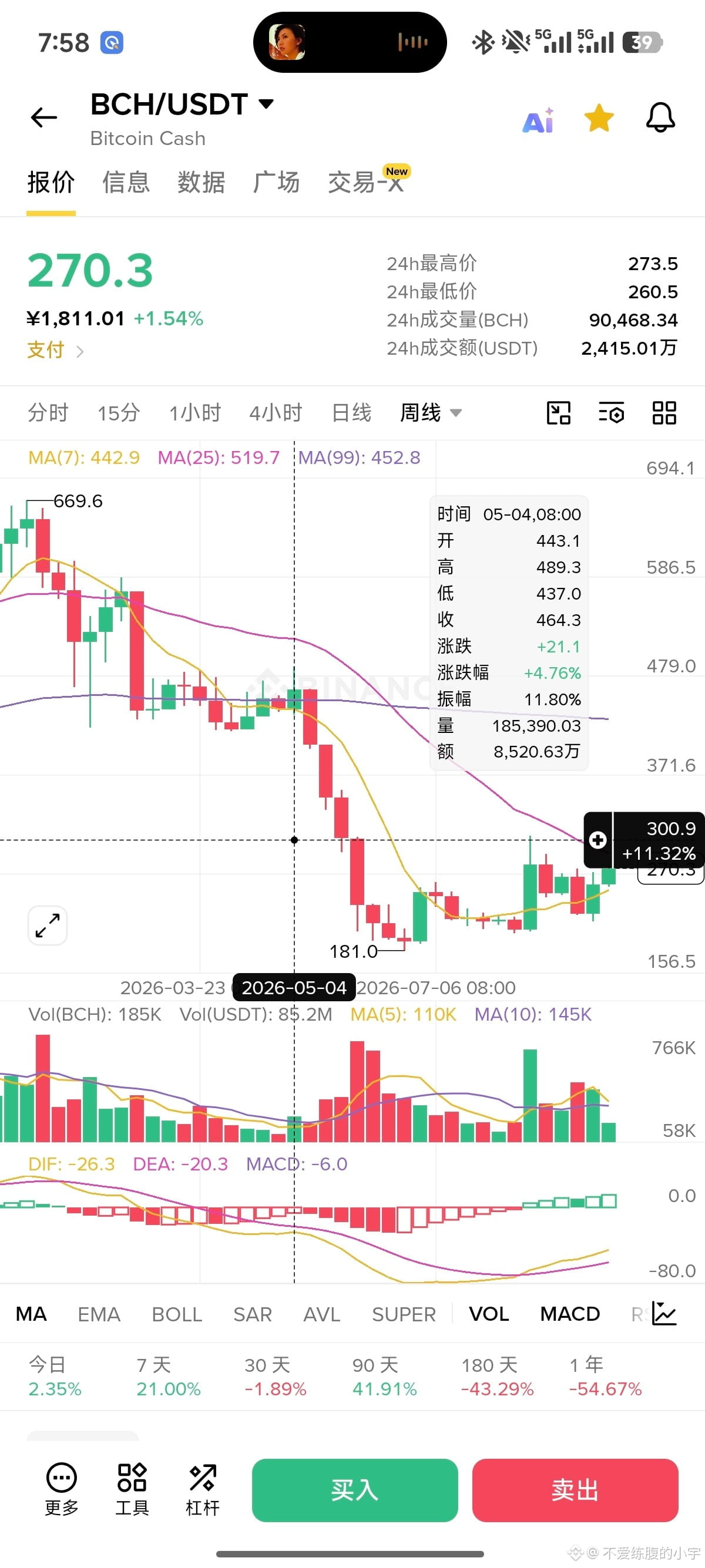
$BCH First objective at Station 270 is secured. Next goal is 300. But the BCH hasn’t started—keep up the effort!
{future}(BCHUSDT)
$BCH First objective at Station 270 is secured. Next goal is 300. But the BCH hasn’t started—keep up the effort!
698
·
--
Bullish
Good news is coming $BABAB
Good news is coming $BABAB


Binance News
·
--
Alibaba Cloud to exceed 20 gigawatts by 2032
According to CNBC, Alibaba’s share price rose more than 3% before the market opened after CEO Eddie Wu Yongming said at the company’s Cloud Valley Conference that Alibaba Cloud plans to operate more than 20 gigawatts of data centers globally by 2032 and unveiled the Zhenwu V900 chip. Quest Diagnostics and Labcorp Holdings fell more than 5% each. The U.S. Centers for Medicare & Medicaid Services (CMS) said in a report that Medicare pays 16% more than private payers for services provided by labs, and it will align most Medicare payment benchmarks with private-sector fee rates. Vicor rose 9% after the power electronics company released third-quarter guidance, expecting sequential revenue growth of more than 20%, higher than the earlier guidance of close to 10%. On Holding rose more than 6%. At an investor day, the company presented new mid-term financial targets, including net sales of at least CHF 5.6 billion by 2029, with a gross margin maintained at 65% during the period. It also said it will repurchase up to $1 billion of Class A ordinary shares by December 2029 and reaffirmed its full-year outlook for 2026. GameStop rose 3.5%, after CEO Ryan Cohen disclosed that he bought 1.2 million shares.
8
·
--
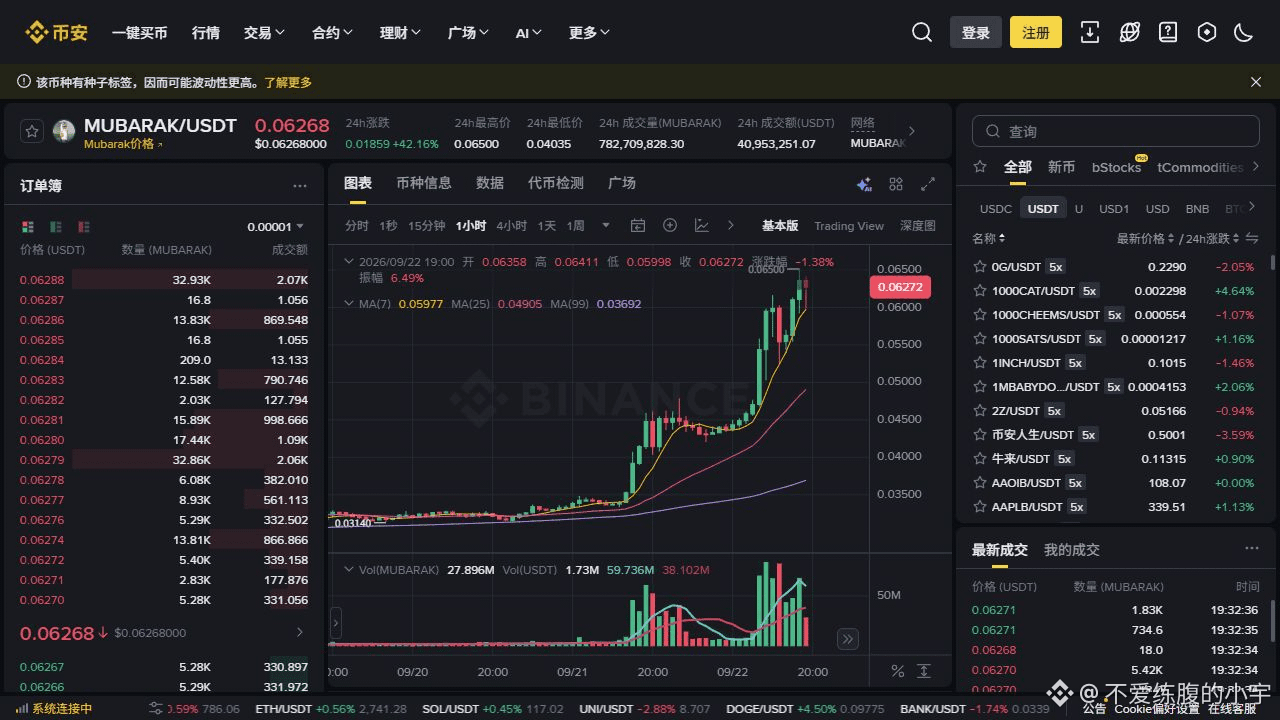
$MUBARAK It’s up more than 40% today, but at 7:00 p.m. this hourly candle—going from low to high is nearly 7%. It really looks a bit shaky.
Around 7:30 tonight, Binance MUBARAK/USDT spot is around 0.0627, with a 24-hour increase of about 42% and trading volume of roughly 40.95 million USDT. Within the same 24-hour window, the high reached about 0.065, and the low was 0.04035. What this is recording is the Binance spot trading pair’s activity—not total market-wide volume, and not contract data.
In the screenshot, the hourly candle starting at 7:00 opens at 0.06358. During the session it briefly fell back to 0.05998, then was pulled back to around 0.0627. This candle hasn’t closed yet, so you can’t treat the current pullback as already having stabilized. Even though the 24-hour gain looks great, the fluctuations within half an hour are still significant enough to be obvious.
So far, I haven’t found any official positive news that clearly corresponds to this rally. This post only documents the abnormal movement and doesn’t take community rumors as the reason. On the Binance page, it’s still marked with the “seed” tag, suggesting there could be even higher volatility. The intraday high at 0.065 is still up above, and the price has already gone back and forth once before reaching it.
$MUBARAK It’s up more than 40% today, but at 7:00 p.m. this hourly candle—going from low to high is nearly 7%. It really looks a bit shaky.
Around 7:30 tonight, Binance MUBARAK/USDT spot is around 0.0627, with a 24-hour increase of about 42% and trading volume of roughly 40.95 million USDT. Within the same 24-hour window, the high reached about 0.065, and the low was 0.04035. What this is recording is the Binance spot trading pair’s activity—not total market-wide volume, and not contract data.
In the screenshot, the hourly candle starting at 7:00 opens at 0.06358. During the session it briefly fell back to 0.05998, then was pulled back to around 0.0627. This candle hasn’t closed yet, so you can’t treat the current pullback as already having stabilized. Even though the 24-hour gain looks great, the fluctuations within half an hour are still significant enough to be obvious.
So far, I haven’t found any official positive news that clearly corresponds to this rally. This post only documents the abnormal movement and doesn’t take community rumors as the reason. On the Binance page, it’s still marked with the “seed” tag, suggesting there could be even higher volatility. The intraday high at 0.065 is still up above, and the price has already gone back and forth once before reaching it.
Around 7:30 tonight, Binance MUBARAK/USDT spot is around 0.0627, with a 24-hour increase of about 42% and trading volume of roughly 40.95 million USDT. Within the same 24-hour window, the high reached about 0.065, and the low was 0.04035. What this is recording is the Binance spot trading pair’s activity—not total market-wide volume, and not contract data.
In the screenshot, the hourly candle starting at 7:00 opens at 0.06358. During the session it briefly fell back to 0.05998, then was pulled back to around 0.0627. This candle hasn’t closed yet, so you can’t treat the current pullback as already having stabilized. Even though the 24-hour gain looks great, the fluctuations within half an hour are still significant enough to be obvious.
So far, I haven’t found any official positive news that clearly corresponds to this rally. This post only documents the abnormal movement and doesn’t take community rumors as the reason. On the Binance page, it’s still marked with the “seed” tag, suggesting there could be even higher volatility. The intraday high at 0.065 is still up above, and the price has already gone back and forth once before reaching it.
181
·
--
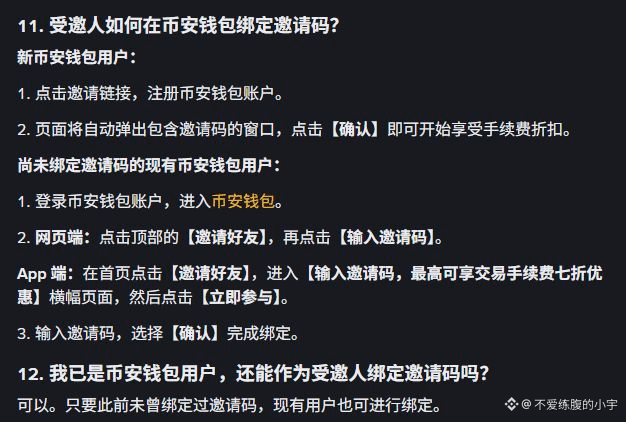
Binance Wallet has already been used—so you may not have missed the fee discount either. As long as you’ve never bound an invitation code, existing users can still bind one. But “up to 30% off,” isn’t something you can get by just entering any code.
If you haven’t bound yet, you can use my wallet invitation code GP1G48B7. The fee discount I’m offering is 30%. Before binding, please verify the actual percentage shown on the page. Invitation link: https://web3.binance.com/referral?ref=GP1G48B7
According to the official rules, invited users default to a 10% fee discount. The inviter can additionally allocate an extra 0% to 20%, so together the discount is 10% to 30%. What’s reduced here is the transaction fee that meets the rules—not your purchase principal, and not all on-chain fees are discounted to 70%. By participating through my invitation relationship, I’ll also receive the corresponding commission.
Mobile steps: Go to the Binance Wallet homepage, tap “Invite Friends,” find the banner reading “Enter an invitation code to enjoy up to a 30% discount on trading fees,” tap “Join Now,” then enter the code and confirm. For the web version, go to “Invite Friends” from the top, then tap “Enter an invitation code.” The screenshots show the official Chinese step-by-step guide, so you can follow along.
The exchange referral registration and the wallet invitation are independent. If you previously registered on Binance and entered a code, it doesn’t necessarily mean your wallet has already been bound. But once your wallet is bound to an inviter, you can’t switch to someone else—so please double-check before confirming.
Invitation rewards also aren’t unified as USDT (U). For example, if an invited user pays a fee that complies with the rules using $BNB , the invitation reward will be issued in the same type of coin. After the next-day update, you’ll need to claim it manually. If you can’t see the “Invite Friends” entry, you should check local availability and qualification requirements.
Binance Wallet has already been used—so you may not have missed the fee discount either. As long as you’ve never bound an invitation code, existing users can still bind one. But “up to 30% off,” isn’t something you can get by just entering any code.
If you haven’t bound yet, you can use my wallet invitation code GP1G48B7. The fee discount I’m offering is 30%. Before binding, please verify the actual percentage shown on the page. Invitation link: https://web3.binance.com/referral?ref=GP1G48B7
According to the official rules, invited users default to a 10% fee discount. The inviter can additionally allocate an extra 0% to 20%, so together the discount is 10% to 30%. What’s reduced here is the transaction fee that meets the rules—not your purchase principal, and not all on-chain fees are discounted to 70%. By participating through my invitation relationship, I’ll also receive the corresponding commission.
Mobile steps: Go to the Binance Wallet homepage, tap “Invite Friends,” find the banner reading “Enter an invitation code to enjoy up to a 30% discount on trading fees,” tap “Join Now,” then enter the code and confirm. For the web version, go to “Invite Friends” from the top, then tap “Enter an invitation code.” The screenshots show the official Chinese step-by-step guide, so you can follow along.
The exchange referral registration and the wallet invitation are independent. If you previously registered on Binance and entered a code, it doesn’t necessarily mean your wallet has already been bound. But once your wallet is bound to an inviter, you can’t switch to someone else—so please double-check before confirming.
Invitation rewards also aren’t unified as USDT (U). For example, if an invited user pays a fee that complies with the rules using $BNB , the invitation reward will be issued in the same type of coin. After the next-day update, you’ll need to claim it manually. If you can’t see the “Invite Friends” entry, you should check local availability and qualification requirements.
If you haven’t bound yet, you can use my wallet invitation code GP1G48B7. The fee discount I’m offering is 30%. Before binding, please verify the actual percentage shown on the page. Invitation link: https://web3.binance.com/referral?ref=GP1G48B7
According to the official rules, invited users default to a 10% fee discount. The inviter can additionally allocate an extra 0% to 20%, so together the discount is 10% to 30%. What’s reduced here is the transaction fee that meets the rules—not your purchase principal, and not all on-chain fees are discounted to 70%. By participating through my invitation relationship, I’ll also receive the corresponding commission.
Mobile steps: Go to the Binance Wallet homepage, tap “Invite Friends,” find the banner reading “Enter an invitation code to enjoy up to a 30% discount on trading fees,” tap “Join Now,” then enter the code and confirm. For the web version, go to “Invite Friends” from the top, then tap “Enter an invitation code.” The screenshots show the official Chinese step-by-step guide, so you can follow along.
The exchange referral registration and the wallet invitation are independent. If you previously registered on Binance and entered a code, it doesn’t necessarily mean your wallet has already been bound. But once your wallet is bound to an inviter, you can’t switch to someone else—so please double-check before confirming.
Invitation rewards also aren’t unified as USDT (U). For example, if an invited user pays a fee that complies with the rules using $BNB , the invitation reward will be issued in the same type of coin. After the next-day update, you’ll need to claim it manually. If you can’t see the “Invite Friends” entry, you should check local availability and qualification requirements.
188
·
--
Bullish
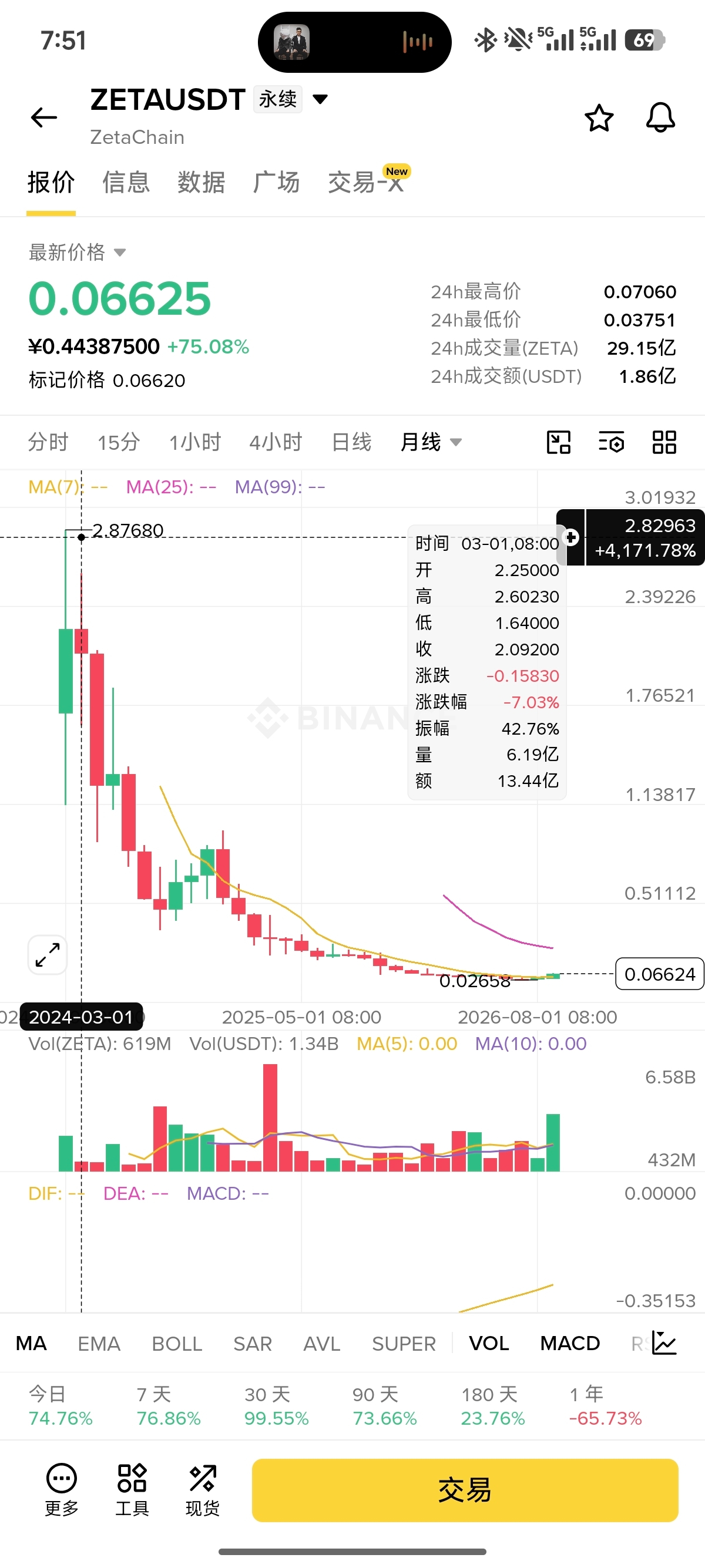
Is this not going to be the next thousand-bagger coin, right?$ZETA
{future}(ZETAUSDT)
Is this not going to be the next thousand-bagger coin, right?$ZETA
15
2
17.6k
·
--
Verified
$NEAR Today’s move is pretty strong. Around 3:30 PM, Binance spot is up about 23% over 24 hours, with the price hovering near 4.26. At this point, when you look back at project updates, the biggest fear is taking a progress update from a few days ago and presenting it as the reason for today’s pump.
On September 18, NEAR AI announced a new integration: its privacy inference service can now be accessed via SayGm. In plain terms, it gives developers an additional access point—especially for handling code, customer information, and other content that they don’t want the service provider to directly see.
There’s one detail that’s really important: not all models available in the entry point enjoy the same level of protection. Officially, the models are divided into tiers. Only the tier labeled “Confidential” runs in protected hardware environments. Don’t assume something is private just because it has a familiar model name.
It also provides verifiable runtime environment reports. However, the report doesn’t mean you can prove that every single request actually followed that full path. The product is clearly moving forward, but whether today’s spike is trading on that development has not been officially confirmed.
The price increase is eye-catching, but between the project’s integration and the token price, there are still real-world usage and demand to consider. Record the progress—just don’t casually translate “already integrated” into “it will keep going up.”
$NEAR Today’s move is pretty strong. Around 3:30 PM, Binance spot is up about 23% over 24 hours, with the price hovering near 4.26. At this point, when you look back at project updates, the biggest fear is taking a progress update from a few days ago and presenting it as the reason for today’s pump.
On September 18, NEAR AI announced a new integration: its privacy inference service can now be accessed via SayGm. In plain terms, it gives developers an additional access point—especially for handling code, customer information, and other content that they don’t want the service provider to directly see.
There’s one detail that’s really important: not all models available in the entry point enjoy the same level of protection. Officially, the models are divided into tiers. Only the tier labeled “Confidential” runs in protected hardware environments. Don’t assume something is private just because it has a familiar model name.
It also provides verifiable runtime environment reports. However, the report doesn’t mean you can prove that every single request actually followed that full path. The product is clearly moving forward, but whether today’s spike is trading on that development has not been officially confirmed.
The price increase is eye-catching, but between the project’s integration and the token price, there are still real-world usage and demand to consider. Record the progress—just don’t casually translate “already integrated” into “it will keep going up.”
On September 18, NEAR AI announced a new integration: its privacy inference service can now be accessed via SayGm. In plain terms, it gives developers an additional access point—especially for handling code, customer information, and other content that they don’t want the service provider to directly see.
There’s one detail that’s really important: not all models available in the entry point enjoy the same level of protection. Officially, the models are divided into tiers. Only the tier labeled “Confidential” runs in protected hardware environments. Don’t assume something is private just because it has a familiar model name.
It also provides verifiable runtime environment reports. However, the report doesn’t mean you can prove that every single request actually followed that full path. The product is clearly moving forward, but whether today’s spike is trading on that development has not been officially confirmed.
The price increase is eye-catching, but between the project’s integration and the token price, there are still real-world usage and demand to consider. Record the progress—just don’t casually translate “already integrated” into “it will keep going up.”

126
·
--
Verified
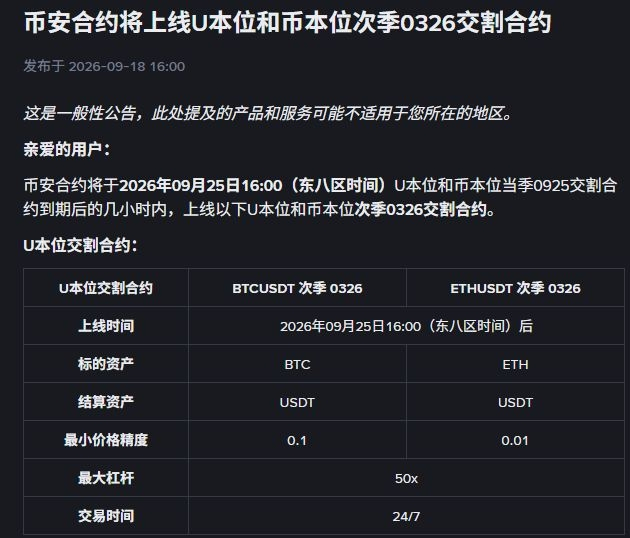
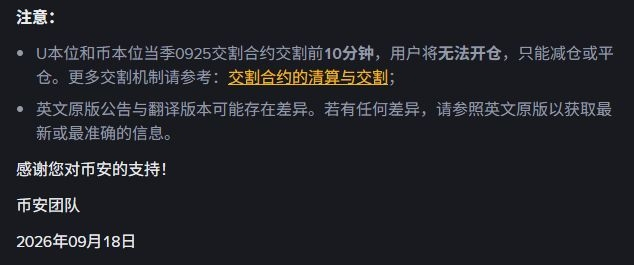
This week, if you’re holding $ETH quarterly futures, it’s best to circle two times on your calendar: 3:50 PM and 4:00 PM on September 25. Just remember the delivery time—you really might miss the preceding ten minutes.
Binance’s announcement says that the 0925 quarterly delivery contract will expire and be settled that day at 4:00 PM. But ten minutes before delivery, you can’t open any new positions anymore—only close positions, or place Reduce Only orders to reduce exposure. That means if you wait until 3:55 PM to add to your position on the old contract, you’ll already be too late under the rules.
What’s being discussed here is the quarterly delivery contract with 0925 in its name—not the ETH in your spot account. And don’t just directly apply this to perpetuals either. Also, even if you look at the Ethereum price, the products you tap into are different, so the expiration arrangements aren’t the same. It’s easy to miss the date afterward just by focusing on the coin name.
One small detail: the new 0326 quarterly contract goes live “several hours” after the old contract is settled. The announcement doesn’t promise a seamless handoff at exactly 4:00 PM. If you’re switching months, don’t treat the end of the old contract and the start of the new one as the same button.
In the new contract, the USD(t)-denominated version of ETH uses USDT for settlement, while the coin-denominated version uses ETH for settlement. When you confirm the contract name, it’s worth checking the settlement asset as well—otherwise you might stare only at the price and forget what type of asset exposure you’re actually carrying. Whether you can trade it still depends on your region and whether your account is enabled.
The delivery calendar isn’t a forecast of gains or losses, and it won’t backstop your leveraged positions at expiration. If the price moves against you, your margin can still be liquidated. You’re already busy just watching the market—don’t leave small things that can be written into reminders until the last few minutes and scramble.
This week, if you’re holding $ETH quarterly futures, it’s best to circle two times on your calendar: 3:50 PM and 4:00 PM on September 25. Just remember the delivery time—you really might miss the preceding ten minutes.
Binance’s announcement says that the 0925 quarterly delivery contract will expire and be settled that day at 4:00 PM. But ten minutes before delivery, you can’t open any new positions anymore—only close positions, or place Reduce Only orders to reduce exposure. That means if you wait until 3:55 PM to add to your position on the old contract, you’ll already be too late under the rules.
What’s being discussed here is the quarterly delivery contract with 0925 in its name—not the ETH in your spot account. And don’t just directly apply this to perpetuals either. Also, even if you look at the Ethereum price, the products you tap into are different, so the expiration arrangements aren’t the same. It’s easy to miss the date afterward just by focusing on the coin name.
One small detail: the new 0326 quarterly contract goes live “several hours” after the old contract is settled. The announcement doesn’t promise a seamless handoff at exactly 4:00 PM. If you’re switching months, don’t treat the end of the old contract and the start of the new one as the same button.
In the new contract, the USD(t)-denominated version of ETH uses USDT for settlement, while the coin-denominated version uses ETH for settlement. When you confirm the contract name, it’s worth checking the settlement asset as well—otherwise you might stare only at the price and forget what type of asset exposure you’re actually carrying. Whether you can trade it still depends on your region and whether your account is enabled.
The delivery calendar isn’t a forecast of gains or losses, and it won’t backstop your leveraged positions at expiration. If the price moves against you, your margin can still be liquidated. You’re already busy just watching the market—don’t leave small things that can be written into reminders until the last few minutes and scramble.
Binance’s announcement says that the 0925 quarterly delivery contract will expire and be settled that day at 4:00 PM. But ten minutes before delivery, you can’t open any new positions anymore—only close positions, or place Reduce Only orders to reduce exposure. That means if you wait until 3:55 PM to add to your position on the old contract, you’ll already be too late under the rules.
What’s being discussed here is the quarterly delivery contract with 0925 in its name—not the ETH in your spot account. And don’t just directly apply this to perpetuals either. Also, even if you look at the Ethereum price, the products you tap into are different, so the expiration arrangements aren’t the same. It’s easy to miss the date afterward just by focusing on the coin name.
One small detail: the new 0326 quarterly contract goes live “several hours” after the old contract is settled. The announcement doesn’t promise a seamless handoff at exactly 4:00 PM. If you’re switching months, don’t treat the end of the old contract and the start of the new one as the same button.
In the new contract, the USD(t)-denominated version of ETH uses USDT for settlement, while the coin-denominated version uses ETH for settlement. When you confirm the contract name, it’s worth checking the settlement asset as well—otherwise you might stare only at the price and forget what type of asset exposure you’re actually carrying. Whether you can trade it still depends on your region and whether your account is enabled.
The delivery calendar isn’t a forecast of gains or losses, and it won’t backstop your leveraged positions at expiration. If the price moves against you, your margin can still be liquidated. You’re already busy just watching the market—don’t leave small things that can be written into reminders until the last few minutes and scramble.
288
·
--
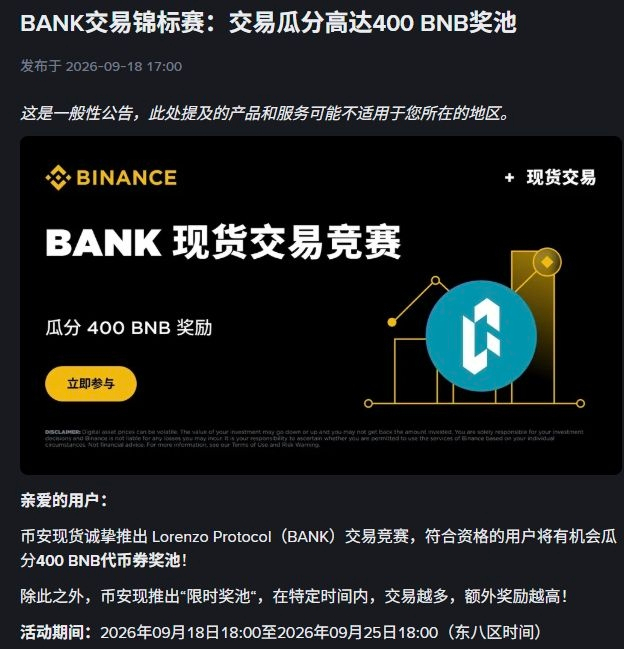
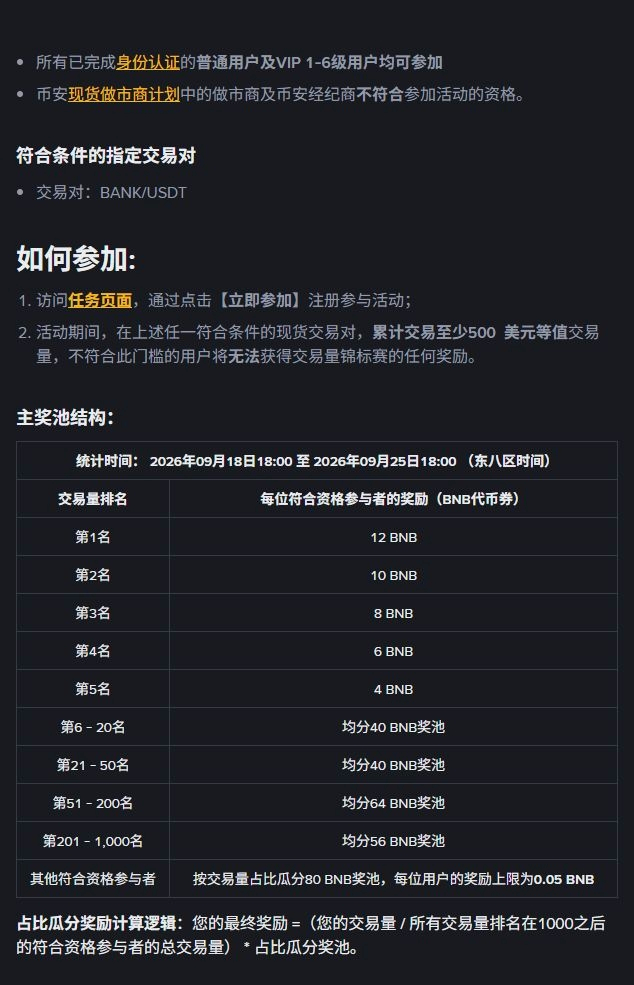
$BANK In this trading competition, the easiest thing to misread isn’t the 400 BNB prize pool—it’s the line that says “up to 0.05 BNB per person.” That’s the cap. You don’t just finish and receive that much.
The event ends at 6:00 PM on September 25. It counts Binance spot BANK/USDT trades. You have to register by clicking on the event page first; only valid completed trades after that are counted. You’ll need to accumulate at least the equivalent of $500 to meet the participation threshold. Both buys and sells count. However, trades on zero-fee trading pairs don’t count toward the volume, and trading fees also don’t count as trading volume.
For the main event, the top 1,000 participants receive rewards by tier. Qualified users ranked after 1,000 share an 80 BNB prize pool proportionally based on their traded volume, with a maximum of 0.05 BNB per person. There’s no fixed minimum. If others trade more, your share could be smaller. Trying to reverse-calculate “if I just trade a bit, I’ll break even” doesn’t hold up.
There’s also a second sprint round, ending at 6:00 PM on September 22—but it only rewards the top 5. Regular users shouldn’t add this smaller prize pool to their expectations as well. The leaderboard updates at least once every 24 hours. If it doesn’t show right after you complete a trade, it doesn’t necessarily mean your trade was missed.
Eligibility is limited to newly registered users who have completed identity verification, regular users, and VIP 1–6. It does not apply to the European Economic Area. Broker-dealers and spot liquidity providers are also excluded. For other regions, check your account page. Rewards are in the form of token vouchers, issued no later than October 9; after issuance, you must claim them within 21 days.
If you already trade this coin, you can easily verify eligibility. If you trade back and forth just to boost volume, the fees, slippage, and any price pullback are real, tangible costs. The prize pool may look exciting, but before it reaches your account, you still have to subtract all these factors.
$BANK In this trading competition, the easiest thing to misread isn’t the 400 BNB prize pool—it’s the line that says “up to 0.05 BNB per person.” That’s the cap. You don’t just finish and receive that much.
The event ends at 6:00 PM on September 25. It counts Binance spot BANK/USDT trades. You have to register by clicking on the event page first; only valid completed trades after that are counted. You’ll need to accumulate at least the equivalent of $500 to meet the participation threshold. Both buys and sells count. However, trades on zero-fee trading pairs don’t count toward the volume, and trading fees also don’t count as trading volume.
For the main event, the top 1,000 participants receive rewards by tier. Qualified users ranked after 1,000 share an 80 BNB prize pool proportionally based on their traded volume, with a maximum of 0.05 BNB per person. There’s no fixed minimum. If others trade more, your share could be smaller. Trying to reverse-calculate “if I just trade a bit, I’ll break even” doesn’t hold up.
There’s also a second sprint round, ending at 6:00 PM on September 22—but it only rewards the top 5. Regular users shouldn’t add this smaller prize pool to their expectations as well. The leaderboard updates at least once every 24 hours. If it doesn’t show right after you complete a trade, it doesn’t necessarily mean your trade was missed.
Eligibility is limited to newly registered users who have completed identity verification, regular users, and VIP 1–6. It does not apply to the European Economic Area. Broker-dealers and spot liquidity providers are also excluded. For other regions, check your account page. Rewards are in the form of token vouchers, issued no later than October 9; after issuance, you must claim them within 21 days.
If you already trade this coin, you can easily verify eligibility. If you trade back and forth just to boost volume, the fees, slippage, and any price pullback are real, tangible costs. The prize pool may look exciting, but before it reaches your account, you still have to subtract all these factors.
The event ends at 6:00 PM on September 25. It counts Binance spot BANK/USDT trades. You have to register by clicking on the event page first; only valid completed trades after that are counted. You’ll need to accumulate at least the equivalent of $500 to meet the participation threshold. Both buys and sells count. However, trades on zero-fee trading pairs don’t count toward the volume, and trading fees also don’t count as trading volume.
For the main event, the top 1,000 participants receive rewards by tier. Qualified users ranked after 1,000 share an 80 BNB prize pool proportionally based on their traded volume, with a maximum of 0.05 BNB per person. There’s no fixed minimum. If others trade more, your share could be smaller. Trying to reverse-calculate “if I just trade a bit, I’ll break even” doesn’t hold up.
There’s also a second sprint round, ending at 6:00 PM on September 22—but it only rewards the top 5. Regular users shouldn’t add this smaller prize pool to their expectations as well. The leaderboard updates at least once every 24 hours. If it doesn’t show right after you complete a trade, it doesn’t necessarily mean your trade was missed.
Eligibility is limited to newly registered users who have completed identity verification, regular users, and VIP 1–6. It does not apply to the European Economic Area. Broker-dealers and spot liquidity providers are also excluded. For other regions, check your account page. Rewards are in the form of token vouchers, issued no later than October 9; after issuance, you must claim them within 21 days.
If you already trade this coin, you can easily verify eligibility. If you trade back and forth just to boost volume, the fees, slippage, and any price pullback are real, tangible costs. The prize pool may look exciting, but before it reaches your account, you still have to subtract all these factors.
251
·
--
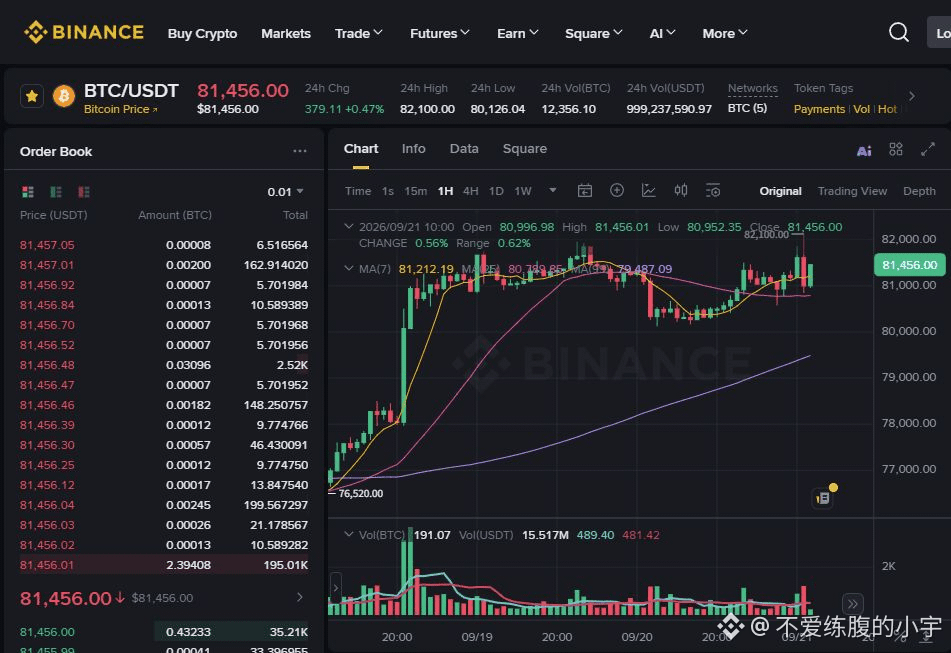
$BTC Rushed up to 82.1k in the morning, didn’t stay long—within the same hour it tested back near 80.85k. Looking at the 24-hour increase, it’s only a small move, but intraday it was anything but gentle.
This morning, around a little after 10, Binance spot was around 81.5k, up about 0.5% over 24 hours. But the completed 1-hour candlestick from 9 to 10—when it closed—had a high-to-low range of roughly $1,250, and it ultimately closed near 81.0k. For anyone who got pulled in after the breakout, their mood probably has to ride yet another roller coaster.
The trading volume for this candlestick was about 96.54 million USDT, roughly 38% higher than the previous hour. The volume expansion is real, and the failure to hold after pushing higher is real too. Just because a single candle surged doesn’t mean a new uptrend is starting—it’s still a bit too hasty to conclude that.
Now the price is back around the 81.5k area, but it’s still some distance from the morning high. I’ll mark 82.1k as the reference level for this push up, not as a target that must be broken. The most interesting thing right now is whether, as the price moves upward again, volume can keep up—if it only spikes and then drops back, that’s going to be really frustrating.
$BTC Rushed up to 82.1k in the morning, didn’t stay long—within the same hour it tested back near 80.85k. Looking at the 24-hour increase, it’s only a small move, but intraday it was anything but gentle.
This morning, around a little after 10, Binance spot was around 81.5k, up about 0.5% over 24 hours. But the completed 1-hour candlestick from 9 to 10—when it closed—had a high-to-low range of roughly $1,250, and it ultimately closed near 81.0k. For anyone who got pulled in after the breakout, their mood probably has to ride yet another roller coaster.
The trading volume for this candlestick was about 96.54 million USDT, roughly 38% higher than the previous hour. The volume expansion is real, and the failure to hold after pushing higher is real too. Just because a single candle surged doesn’t mean a new uptrend is starting—it’s still a bit too hasty to conclude that.
Now the price is back around the 81.5k area, but it’s still some distance from the morning high. I’ll mark 82.1k as the reference level for this push up, not as a target that must be broken. The most interesting thing right now is whether, as the price moves upward again, volume can keep up—if it only spikes and then drops back, that’s going to be really frustrating.
This morning, around a little after 10, Binance spot was around 81.5k, up about 0.5% over 24 hours. But the completed 1-hour candlestick from 9 to 10—when it closed—had a high-to-low range of roughly $1,250, and it ultimately closed near 81.0k. For anyone who got pulled in after the breakout, their mood probably has to ride yet another roller coaster.
The trading volume for this candlestick was about 96.54 million USDT, roughly 38% higher than the previous hour. The volume expansion is real, and the failure to hold after pushing higher is real too. Just because a single candle surged doesn’t mean a new uptrend is starting—it’s still a bit too hasty to conclude that.
Now the price is back around the 81.5k area, but it’s still some distance from the morning high. I’ll mark 82.1k as the reference level for this push up, not as a target that must be broken. The most interesting thing right now is whether, as the price moves upward again, volume can keep up—if it only spikes and then drops back, that’s going to be really frustrating.
180
·
--
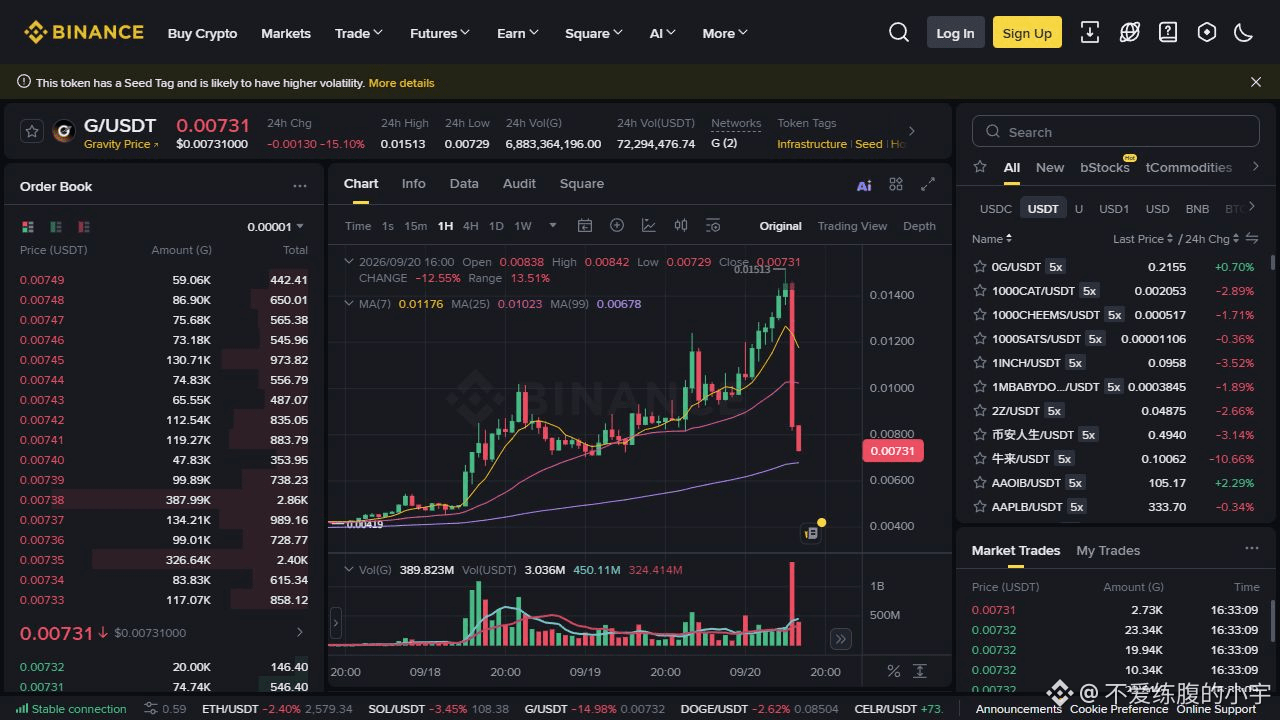
This $G one-hour candle made my heart skip a beat: between 3 and 4 PM, Binance spot dropped from around 0.0145 to 0.0084—down about 42.5% in a single hour. And this is just spot.
Then around 4:30, I checked again—the price was already near 0.0073. It wasn’t some fast-recovering lower wick. The hour that just closed ended already well below its open by a large margin. If you were waiting for a rebound, you wouldn’t even get time to catch your breath.
Trading activity also clearly surged: from 3 to 4 PM, the total traded value was about 14.04 million USDT, versus roughly 4.38 million in the previous hour—about 3.2x. This refers to Binance G/USDT spot traded value, not net outflows, and definitely not liquidation amounts. You can’t just see a volume-backed selloff and immediately slap on a storyline like “the team fled.”
I haven’t found any official announcement that explains this sudden drop yet. I’ll leave the reason blank for now instead of stitching together rumors to make an answer. Binance’s page still has the “seed” tag on it, which is a reminder that volatility may be high.
A big drop doesn’t mean it’s finished falling. Just when you think it’s a bit cheap, the next glance might show it’s even cheaper. In moments like this, it’s easiest to turn a small probing position into a big one you’re reluctant to cut.
This $G one-hour candle made my heart skip a beat: between 3 and 4 PM, Binance spot dropped from around 0.0145 to 0.0084—down about 42.5% in a single hour. And this is just spot.
Then around 4:30, I checked again—the price was already near 0.0073. It wasn’t some fast-recovering lower wick. The hour that just closed ended already well below its open by a large margin. If you were waiting for a rebound, you wouldn’t even get time to catch your breath.
Trading activity also clearly surged: from 3 to 4 PM, the total traded value was about 14.04 million USDT, versus roughly 4.38 million in the previous hour—about 3.2x. This refers to Binance G/USDT spot traded value, not net outflows, and definitely not liquidation amounts. You can’t just see a volume-backed selloff and immediately slap on a storyline like “the team fled.”
I haven’t found any official announcement that explains this sudden drop yet. I’ll leave the reason blank for now instead of stitching together rumors to make an answer. Binance’s page still has the “seed” tag on it, which is a reminder that volatility may be high.
A big drop doesn’t mean it’s finished falling. Just when you think it’s a bit cheap, the next glance might show it’s even cheaper. In moments like this, it’s easiest to turn a small probing position into a big one you’re reluctant to cut.
Then around 4:30, I checked again—the price was already near 0.0073. It wasn’t some fast-recovering lower wick. The hour that just closed ended already well below its open by a large margin. If you were waiting for a rebound, you wouldn’t even get time to catch your breath.
Trading activity also clearly surged: from 3 to 4 PM, the total traded value was about 14.04 million USDT, versus roughly 4.38 million in the previous hour—about 3.2x. This refers to Binance G/USDT spot traded value, not net outflows, and definitely not liquidation amounts. You can’t just see a volume-backed selloff and immediately slap on a storyline like “the team fled.”
I haven’t found any official announcement that explains this sudden drop yet. I’ll leave the reason blank for now instead of stitching together rumors to make an answer. Binance’s page still has the “seed” tag on it, which is a reminder that volatility may be high.
A big drop doesn’t mean it’s finished falling. Just when you think it’s a bit cheap, the next glance might show it’s even cheaper. In moments like this, it’s easiest to turn a small probing position into a big one you’re reluctant to cut.
1
306
·
--
Verified
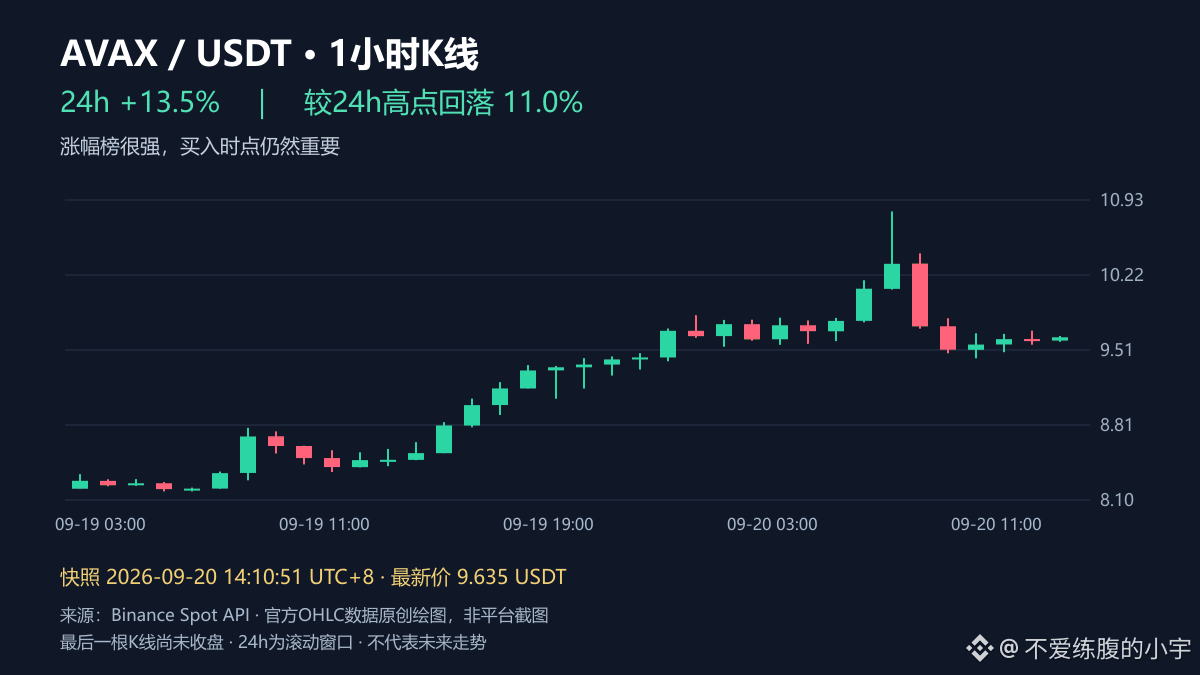
$AVAX This wave looks pleasing on the gainers chart, but once you open the K-line it’s hard to laugh.
Around 2 p.m. today, with the 24-hour increase still at 13.5%, the price had already retreated from around 10.8 back to 9.6. If you happened to chase right at the peak, the spot would have pulled back by about 11% too. And this time, how many people who FOMO’d are going to get trapped again? 🥲
The leaderboard is all red and glowing, but your own account may not be.
I also quickly checked the official announcements: at 11 p.m. on September 22, there will be a Helicon mainnet upgrade. It will adjust the transaction execution mechanism and the rules for validator node staking. But whether this move is being traded in anticipation of the upgrade—who knows.
The upgrade still needs to wait two more days. Those who bought after chasing will at least have to wait for breakeven first.
{future}(AVAXUSDT)
$AVAX This wave looks pleasing on the gainers chart, but once you open the K-line it’s hard to laugh.
Around 2 p.m. today, with the 24-hour increase still at 13.5%, the price had already retreated from around 10.8 back to 9.6. If you happened to chase right at the peak, the spot would have pulled back by about 11% too. And this time, how many people who FOMO’d are going to get trapped again? 🥲
The leaderboard is all red and glowing, but your own account may not be.
I also quickly checked the official announcements: at 11 p.m. on September 22, there will be a Helicon mainnet upgrade. It will adjust the transaction execution mechanism and the rules for validator node staking. But whether this move is being traded in anticipation of the upgrade—who knows.
The upgrade still needs to wait two more days. Those who bought after chasing will at least have to wait for breakeven first.
Around 2 p.m. today, with the 24-hour increase still at 13.5%, the price had already retreated from around 10.8 back to 9.6. If you happened to chase right at the peak, the spot would have pulled back by about 11% too. And this time, how many people who FOMO’d are going to get trapped again? 🥲
The leaderboard is all red and glowing, but your own account may not be.
I also quickly checked the official announcements: at 11 p.m. on September 22, there will be a Helicon mainnet upgrade. It will adjust the transaction execution mechanism and the rules for validator node staking. But whether this move is being traded in anticipation of the upgrade—who knows.
The upgrade still needs to wait two more days. Those who bought after chasing will at least have to wait for breakeven first.
2
1
1.2k
·
--
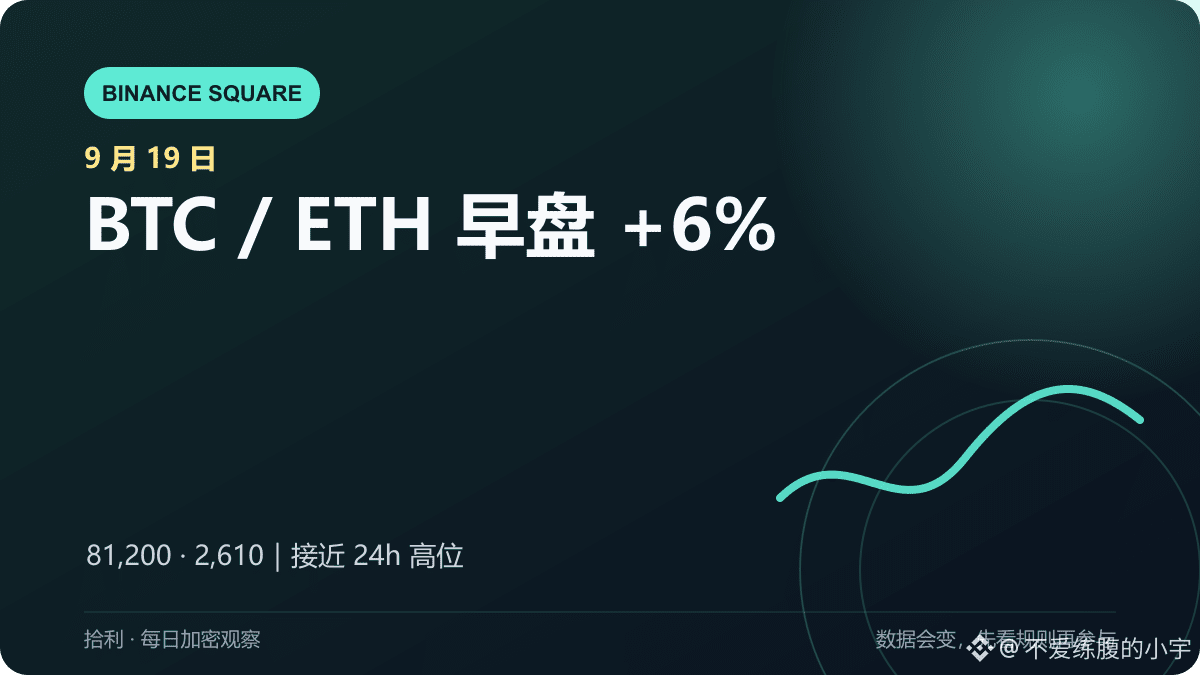
At 9:32 AM I opened Binance spot and noted two sets of data first: $BTC , about $81,200, up 6.01% over the past 24 hours, with a range of 76,580 to 81,741; $ETH , about $2,610, up 6.47% over the past 24 hours, with a range of 2,451 to 2,646. Both are on the upper side within their respective 24-hour ranges. ETH is relatively a bit stronger, but that only suggests the rebound has already happened—it’s not a guarantee that prices will keep rising.
With this kind of market, I’m not in a hurry to guess the top, and I won’t chase just because I see a big bullish candle. I’ll treat the 24-hour high and low as the observation boundaries: when price is near the upper end, I’ll first see whether the trading volume can sustain it. If it quickly falls back to the middle of the range, I’ll reassess. People with no position should be especially careful too—once the move has already exceeded 6%, chasing with high leverage makes you far more sensitive to any pullback.
In today’s platform schedule, at 21:00 you’ll need to watch that the CAP Alpha competition early-bird coefficient drops from 2.0x to 1.8x. This multiplier only affects the ranking’s effective volume, not returns. It’s also not worth buying coins temporarily just to hit the cutoff. Market conditions and events are affected by region, account, and price fluctuations—please refer to your individual page for details. Today, are you more focused on whether BTC can hold the 81,000 mark, or on ETH’s relative strength?
At 9:32 AM I opened Binance spot and noted two sets of data first: $BTC , about $81,200, up 6.01% over the past 24 hours, with a range of 76,580 to 81,741; $ETH , about $2,610, up 6.47% over the past 24 hours, with a range of 2,451 to 2,646. Both are on the upper side within their respective 24-hour ranges. ETH is relatively a bit stronger, but that only suggests the rebound has already happened—it’s not a guarantee that prices will keep rising.
With this kind of market, I’m not in a hurry to guess the top, and I won’t chase just because I see a big bullish candle. I’ll treat the 24-hour high and low as the observation boundaries: when price is near the upper end, I’ll first see whether the trading volume can sustain it. If it quickly falls back to the middle of the range, I’ll reassess. People with no position should be especially careful too—once the move has already exceeded 6%, chasing with high leverage makes you far more sensitive to any pullback.
In today’s platform schedule, at 21:00 you’ll need to watch that the CAP Alpha competition early-bird coefficient drops from 2.0x to 1.8x. This multiplier only affects the ranking’s effective volume, not returns. It’s also not worth buying coins temporarily just to hit the cutoff. Market conditions and events are affected by region, account, and price fluctuations—please refer to your individual page for details. Today, are you more focused on whether BTC can hold the 81,000 mark, or on ETH’s relative strength?
With this kind of market, I’m not in a hurry to guess the top, and I won’t chase just because I see a big bullish candle. I’ll treat the 24-hour high and low as the observation boundaries: when price is near the upper end, I’ll first see whether the trading volume can sustain it. If it quickly falls back to the middle of the range, I’ll reassess. People with no position should be especially careful too—once the move has already exceeded 6%, chasing with high leverage makes you far more sensitive to any pullback.
In today’s platform schedule, at 21:00 you’ll need to watch that the CAP Alpha competition early-bird coefficient drops from 2.0x to 1.8x. This multiplier only affects the ranking’s effective volume, not returns. It’s also not worth buying coins temporarily just to hit the cutoff. Market conditions and events are affected by region, account, and price fluctuations—please refer to your individual page for details. Today, are you more focused on whether BTC can hold the 81,000 mark, or on ETH’s relative strength?
320
·
--
Trading pairs are all called ONEUSDT, but that does not mean both sides are the same contract. If even one of the platform announcement’s calculation rules or time milestones is different, copying the other side’s operating habits can lead to errors.
On Binance: the ONEUSDT perpetual’s LPP price protection phase ended at 22:00 on September 17, and the mark price returned to the standard algorithm. The funding fee rate cap was also loosened from ±0.005% to ±2%. This ±2% is only an upper limit, not something guaranteed to be reached every period; only when funding fees from the previous period hit the cap will the settlement interval shrink from 4 hours to 1 hour.
On OKX, it’s different: the ONEUSDT perpetual that was originally scheduled to be taken offline today at 16:00 has been postponed, and the new timing will be announced separately. A postponement is not a cancellation, and it also doesn’t mean you can ignore your positions. Tomorrow, if there are still contracts with $ONE , I will check the mark price, the next funding fee and countdown, any unfilled orders, stop-loss settings, and whether OKX has updated the delisting time. I won’t guess OKX’s rules using Binance’s rules.
When this kind of small-cap contract encounters a rule change, you need to factor in price volatility, funding fees, and liquidation risk together. Contract availability also depends on your region and account. When you encounter the same-named trading pair with inconsistent rules across platforms, which item do you usually verify first?
Trading pairs are all called ONEUSDT, but that does not mean both sides are the same contract. If even one of the platform announcement’s calculation rules or time milestones is different, copying the other side’s operating habits can lead to errors.
On Binance: the ONEUSDT perpetual’s LPP price protection phase ended at 22:00 on September 17, and the mark price returned to the standard algorithm. The funding fee rate cap was also loosened from ±0.005% to ±2%. This ±2% is only an upper limit, not something guaranteed to be reached every period; only when funding fees from the previous period hit the cap will the settlement interval shrink from 4 hours to 1 hour.
On OKX, it’s different: the ONEUSDT perpetual that was originally scheduled to be taken offline today at 16:00 has been postponed, and the new timing will be announced separately. A postponement is not a cancellation, and it also doesn’t mean you can ignore your positions. Tomorrow, if there are still contracts with $ONE , I will check the mark price, the next funding fee and countdown, any unfilled orders, stop-loss settings, and whether OKX has updated the delisting time. I won’t guess OKX’s rules using Binance’s rules.
When this kind of small-cap contract encounters a rule change, you need to factor in price volatility, funding fees, and liquidation risk together. Contract availability also depends on your region and account. When you encounter the same-named trading pair with inconsistent rules across platforms, which item do you usually verify first?
On Binance: the ONEUSDT perpetual’s LPP price protection phase ended at 22:00 on September 17, and the mark price returned to the standard algorithm. The funding fee rate cap was also loosened from ±0.005% to ±2%. This ±2% is only an upper limit, not something guaranteed to be reached every period; only when funding fees from the previous period hit the cap will the settlement interval shrink from 4 hours to 1 hour.
On OKX, it’s different: the ONEUSDT perpetual that was originally scheduled to be taken offline today at 16:00 has been postponed, and the new timing will be announced separately. A postponement is not a cancellation, and it also doesn’t mean you can ignore your positions. Tomorrow, if there are still contracts with $ONE , I will check the mark price, the next funding fee and countdown, any unfilled orders, stop-loss settings, and whether OKX has updated the delisting time. I won’t guess OKX’s rules using Binance’s rules.
When this kind of small-cap contract encounters a rule change, you need to factor in price volatility, funding fees, and liquidation risk together. Contract availability also depends on your region and account. When you encounter the same-named trading pair with inconsistent rules across platforms, which item do you usually verify first?

201
·
--
Compress today’s information into three Beijing time slots for tomorrow. That way, you can watch less and still not miss out.
At 15:00, the DGrid X Stake on OKX Wallet ends. It supports staking OKB, USDT0, xETH, and xBETH on X Layer, with rewards based on the actual staked amount—there’s no per-address limit. Those who have already participated can check their positions and the activity page in advance. If you haven’t participated yet, it’s not recommended to do a last-minute cross-chain just for the final few hours—network fees, contract risks, and capital lock-up all need to be considered.
At 18:00, the Canopy X Launch ends. The top 5,000 by CNPY trading volume enter two prize pools, with claims opening at 22:00. There’s no guaranteed floor for the ranking event; slippage and Gas from repeatedly farming volume may happen before the rewards do.
Also at 18:00, Binance $PROVE Spot Race Round 1 sprint cutoff is reached, with Round 2 starting at 18:01. You need to register first, and you must accumulate at least $500 in PROVE/USDT spot volume during the entire event period to be eligible for the main event; users from the EEA (European Economic Area) can’t participate. The $500 threshold is just an entry requirement—it doesn’t mean you’re guaranteed a reward.
Tomorrow, I’ll first check whether I already have a position, then decide whether to take action. I won’t buy tokens just to fill a checklist. The two OKX items involve self-custody wallets, and the Binance event is also affected by region and account status—everything is subject to what’s shown on your personal page. Of the three time points, which one do you want me to break down separately the most?
Compress today’s information into three Beijing time slots for tomorrow. That way, you can watch less and still not miss out.
At 15:00, the DGrid X Stake on OKX Wallet ends. It supports staking OKB, USDT0, xETH, and xBETH on X Layer, with rewards based on the actual staked amount—there’s no per-address limit. Those who have already participated can check their positions and the activity page in advance. If you haven’t participated yet, it’s not recommended to do a last-minute cross-chain just for the final few hours—network fees, contract risks, and capital lock-up all need to be considered.
At 18:00, the Canopy X Launch ends. The top 5,000 by CNPY trading volume enter two prize pools, with claims opening at 22:00. There’s no guaranteed floor for the ranking event; slippage and Gas from repeatedly farming volume may happen before the rewards do.
Also at 18:00, Binance $PROVE Spot Race Round 1 sprint cutoff is reached, with Round 2 starting at 18:01. You need to register first, and you must accumulate at least $500 in PROVE/USDT spot volume during the entire event period to be eligible for the main event; users from the EEA (European Economic Area) can’t participate. The $500 threshold is just an entry requirement—it doesn’t mean you’re guaranteed a reward.
Tomorrow, I’ll first check whether I already have a position, then decide whether to take action. I won’t buy tokens just to fill a checklist. The two OKX items involve self-custody wallets, and the Binance event is also affected by region and account status—everything is subject to what’s shown on your personal page. Of the three time points, which one do you want me to break down separately the most?
At 15:00, the DGrid X Stake on OKX Wallet ends. It supports staking OKB, USDT0, xETH, and xBETH on X Layer, with rewards based on the actual staked amount—there’s no per-address limit. Those who have already participated can check their positions and the activity page in advance. If you haven’t participated yet, it’s not recommended to do a last-minute cross-chain just for the final few hours—network fees, contract risks, and capital lock-up all need to be considered.
At 18:00, the Canopy X Launch ends. The top 5,000 by CNPY trading volume enter two prize pools, with claims opening at 22:00. There’s no guaranteed floor for the ranking event; slippage and Gas from repeatedly farming volume may happen before the rewards do.
Also at 18:00, Binance $PROVE Spot Race Round 1 sprint cutoff is reached, with Round 2 starting at 18:01. You need to register first, and you must accumulate at least $500 in PROVE/USDT spot volume during the entire event period to be eligible for the main event; users from the EEA (European Economic Area) can’t participate. The $500 threshold is just an entry requirement—it doesn’t mean you’re guaranteed a reward.
Tomorrow, I’ll first check whether I already have a position, then decide whether to take action. I won’t buy tokens just to fill a checklist. The two OKX items involve self-custody wallets, and the Binance event is also affected by region and account status—everything is subject to what’s shown on your personal page. Of the three time points, which one do you want me to break down separately the most?

252
·
--
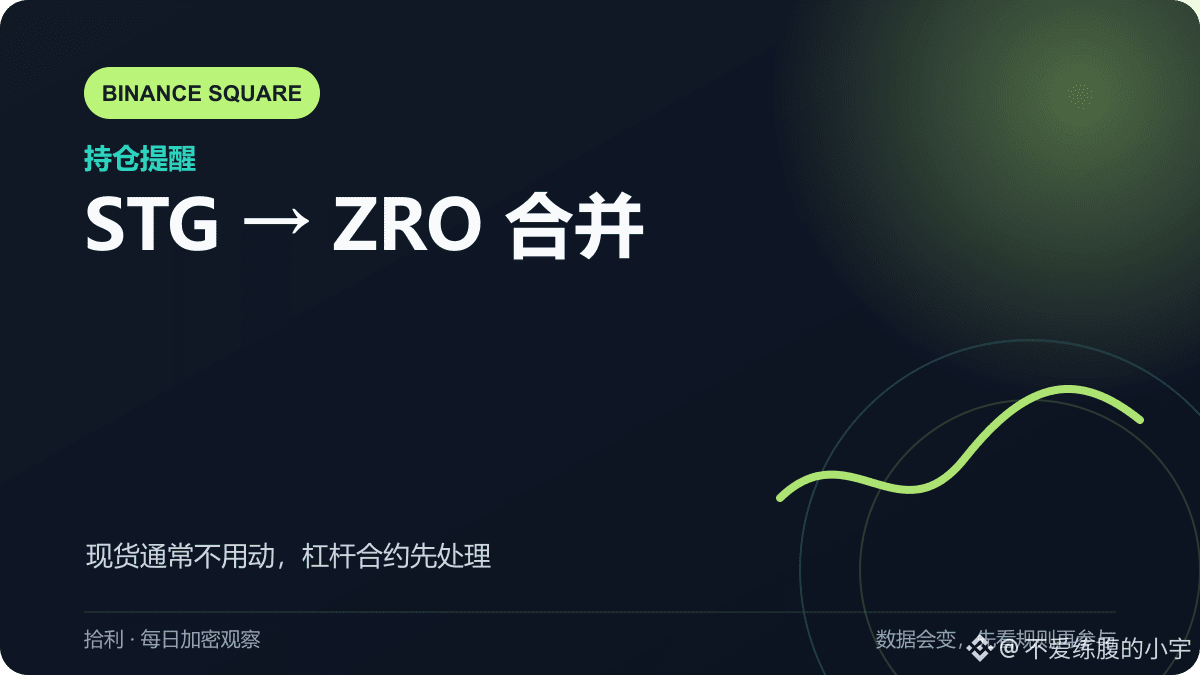
What the STG holders should check tonight is not the price, but which account they’ve put their coins in. Binance today confirmed support for the STG merger into ZRO, with an exchange ratio of 1 STG = 0.08634 ZRO. Spot holders don’t need to find a migration website themselves—the platform will handle the technical conversion. Existing ZRO trading is not affected.
The group that truly needs to take action is people with leveraged positions, futures contracts, or margin/loan positions. The first node is tomorrow at 14:00: Binance will pause STG cross-portfolio and isolated loaning of STG. After 16:30 on September 24, you will no longer be able to open new STG futures positions; at 17:00 the positions will be automatically closed and settled, and at 18:00 STG leverage will be delisted. On September 28 at 11:00, STG loan positions will also be closed. Don’t wait for the system to handle it for you—when volatility is high, the automatic settlement and sell prices may not be ideal.
Spot timing is later: September 30 at 15:00 will stop STG savings/earnings, and October 6 at 11:00 will delist STG/USDT. At 11:30, STG deposits and withdrawals will be paused, and thereafter STG deposits and withdrawals will no longer be supported. The platform will convert $STG into $ZRO proportionally, so people who only hold STG on Binance spot usually don’t need to take manual action—and should not click any so-called “migration authorization” or unknown contracts.
If you still have open orders, trading bots, or positions across multiple accounts, it’s safer to check them tonight. Product availability and processing methods may be affected by region and account status—please follow what’s shown on the page. Are you currently holding only spot, or do you also have contract, leveraged, or savings positions?
What the STG holders should check tonight is not the price, but which account they’ve put their coins in. Binance today confirmed support for the STG merger into ZRO, with an exchange ratio of 1 STG = 0.08634 ZRO. Spot holders don’t need to find a migration website themselves—the platform will handle the technical conversion. Existing ZRO trading is not affected.
The group that truly needs to take action is people with leveraged positions, futures contracts, or margin/loan positions. The first node is tomorrow at 14:00: Binance will pause STG cross-portfolio and isolated loaning of STG. After 16:30 on September 24, you will no longer be able to open new STG futures positions; at 17:00 the positions will be automatically closed and settled, and at 18:00 STG leverage will be delisted. On September 28 at 11:00, STG loan positions will also be closed. Don’t wait for the system to handle it for you—when volatility is high, the automatic settlement and sell prices may not be ideal.
Spot timing is later: September 30 at 15:00 will stop STG savings/earnings, and October 6 at 11:00 will delist STG/USDT. At 11:30, STG deposits and withdrawals will be paused, and thereafter STG deposits and withdrawals will no longer be supported. The platform will convert $STG into $ZRO proportionally, so people who only hold STG on Binance spot usually don’t need to take manual action—and should not click any so-called “migration authorization” or unknown contracts.
If you still have open orders, trading bots, or positions across multiple accounts, it’s safer to check them tonight. Product availability and processing methods may be affected by region and account status—please follow what’s shown on the page. Are you currently holding only spot, or do you also have contract, leveraged, or savings positions?
The group that truly needs to take action is people with leveraged positions, futures contracts, or margin/loan positions. The first node is tomorrow at 14:00: Binance will pause STG cross-portfolio and isolated loaning of STG. After 16:30 on September 24, you will no longer be able to open new STG futures positions; at 17:00 the positions will be automatically closed and settled, and at 18:00 STG leverage will be delisted. On September 28 at 11:00, STG loan positions will also be closed. Don’t wait for the system to handle it for you—when volatility is high, the automatic settlement and sell prices may not be ideal.
Spot timing is later: September 30 at 15:00 will stop STG savings/earnings, and October 6 at 11:00 will delist STG/USDT. At 11:30, STG deposits and withdrawals will be paused, and thereafter STG deposits and withdrawals will no longer be supported. The platform will convert $STG into $ZRO proportionally, so people who only hold STG on Binance spot usually don’t need to take manual action—and should not click any so-called “migration authorization” or unknown contracts.
If you still have open orders, trading bots, or positions across multiple accounts, it’s safer to check them tonight. Product availability and processing methods may be affected by region and account status—please follow what’s shown on the page. Are you currently holding only spot, or do you also have contract, leveraged, or savings positions?
1
535
·
--
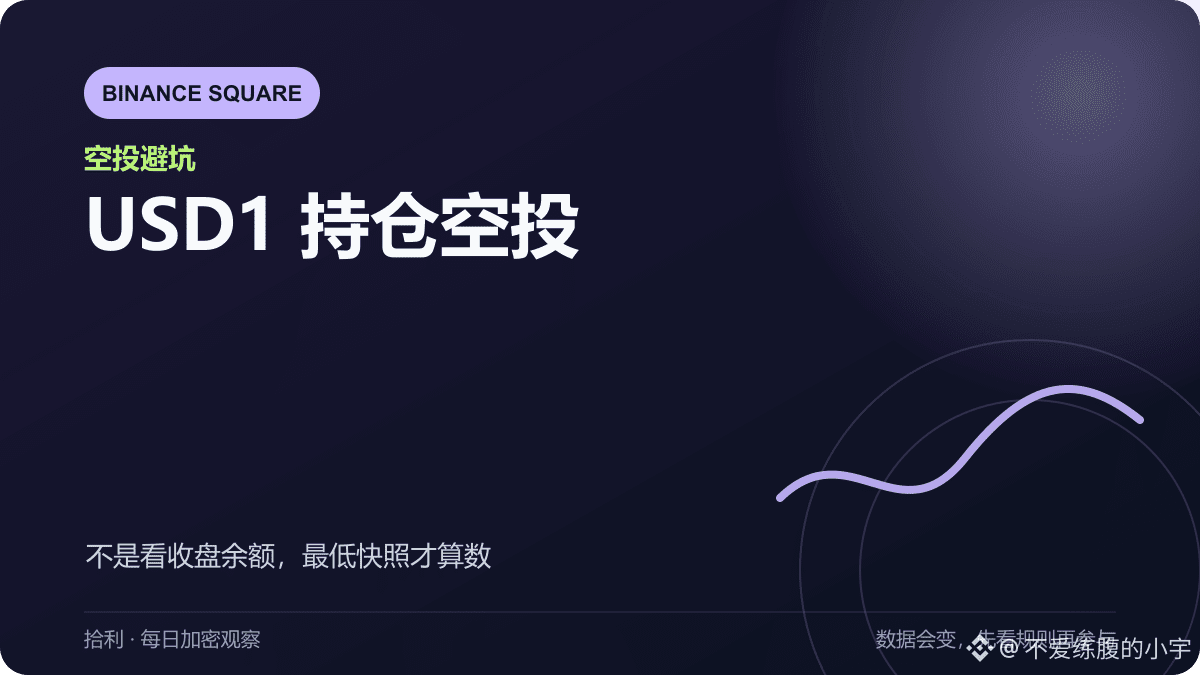
This round of USD1 holding airdrop entered the third rewards period at 08:00 today. The rewards are paid in $WLFI, and the period ends at 08:00 on September 25. It doesn’t require you to trade volume, but you must complete KYC, be located in a qualified region, and hold more than 0.01 USD1 in a spot, funded, margin, or U-margined futures contract account.
Whether you can participate still depends on what your activity page shows.
These airdrops are not determined by “how much is left at night.” Instead, they use the lowest USD1 net balance from multiple hourly snapshots each day. For example, if an earlier snapshot today was 0, then your qualifying balance for today may be calculated as 0. Moving funds out midway, using them to repay loans, or having debt show up in your account can also reduce the base amount used for rewards. From Beijing time, a full统计 day that runs from 08:00 to the next day 08:00 is generally easier to calculate than a temporary transfer in.
For margin and contract accounts there is also a 1.2x rule, but it’s not free. On the day, the minimum open interest for USD1 contract trading pairs must be maintained at at least 300 USD1. To get an extra 0.2x, I don’t think it’s necessary—the price volatility, funding fees, and liquidation risk may be much higher than the reward. For USD1 obtained via borrowing other stablecoins, the leveraged portion also only counts at 30%.
Finally, don’t treat the previous period’s APR as the guaranteed baseline for the current week. The actual APR for this period needs to be worked out after distribution, and the rewards will also be affected by the total eligible balances of everyone. Do you care more about holding-based airdrops like this, or the opportunity cost of having your capital tied up for a week?
This round of USD1 holding airdrop entered the third rewards period at 08:00 today. The rewards are paid in $WLFI , and the period ends at 08:00 on September 25. It doesn’t require you to trade volume, but you must complete KYC, be located in a qualified region, and hold more than 0.01 USD1 in a spot, funded, margin, or U-margined futures contract account.
Whether you can participate still depends on what your activity page shows.
These airdrops are not determined by “how much is left at night.” Instead, they use the lowest USD1 net balance from multiple hourly snapshots each day. For example, if an earlier snapshot today was 0, then your qualifying balance for today may be calculated as 0. Moving funds out midway, using them to repay loans, or having debt show up in your account can also reduce the base amount used for rewards. From Beijing time, a full统计 day that runs from 08:00 to the next day 08:00 is generally easier to calculate than a temporary transfer in.
For margin and contract accounts there is also a 1.2x rule, but it’s not free. On the day, the minimum open interest for USD1 contract trading pairs must be maintained at at least 300 USD1. To get an extra 0.2x, I don’t think it’s necessary—the price volatility, funding fees, and liquidation risk may be much higher than the reward. For USD1 obtained via borrowing other stablecoins, the leveraged portion also only counts at 30%.
Finally, don’t treat the previous period’s APR as the guaranteed baseline for the current week. The actual APR for this period needs to be worked out after distribution, and the rewards will also be affected by the total eligible balances of everyone. Do you care more about holding-based airdrops like this, or the opportunity cost of having your capital tied up for a week?
Whether you can participate still depends on what your activity page shows.
These airdrops are not determined by “how much is left at night.” Instead, they use the lowest USD1 net balance from multiple hourly snapshots each day. For example, if an earlier snapshot today was 0, then your qualifying balance for today may be calculated as 0. Moving funds out midway, using them to repay loans, or having debt show up in your account can also reduce the base amount used for rewards. From Beijing time, a full统计 day that runs from 08:00 to the next day 08:00 is generally easier to calculate than a temporary transfer in.
For margin and contract accounts there is also a 1.2x rule, but it’s not free. On the day, the minimum open interest for USD1 contract trading pairs must be maintained at at least 300 USD1. To get an extra 0.2x, I don’t think it’s necessary—the price volatility, funding fees, and liquidation risk may be much higher than the reward. For USD1 obtained via borrowing other stablecoins, the leveraged portion also only counts at 30%.
Finally, don’t treat the previous period’s APR as the guaranteed baseline for the current week. The actual APR for this period needs to be worked out after distribution, and the rewards will also be affected by the total eligible balances of everyone. Do you care more about holding-based airdrops like this, or the opportunity cost of having your capital tied up for a week?
6
2.6k
·
--
I saw the CAP competition’s “$100,000 USDC prize pool” this afternoon—don’t rush into buying yet. What this event really determines is whether you’re eligible: a few easy-to-miss details.
The activity ends on September 24 at 21:00. For the first 2,000 people ranked by their CAP effective buy volume after registration, each receives 50 USDC. Before participating, you must first click Join on the event page. Only CAP buys completed within Binance Alpha or a Keyless Wallet are counted. Selling, cross-chain bridges, third-party dApps, and Alpha asset swaps do not count. Transactions made before registering will not be added retroactively.
Before today at 21:00, and tonight at 21:00 through tomorrow night at 21:00, the official gives a 2x “effective transaction volume” coefficient. The most common misunderstanding here is this: the 2x is only for the volume used in ranking—not a doubling of rewards—and it doesn’t mean you’ll definitely get rewarded just by completing the activity. There’s no explicit minimum trade volume requirement or guaranteed prize for winners; ultimately, it still comes down to the ranking.
If you want to understand $CAP in the first place, you can start with a small amount to check slippage and on-chain fees before deciding whether to participate. For frequent buys to chase the 50 USDC, price fluctuations, slippage, and trading fees are very likely to wipe out the potential reward first. Region and account eligibility also depend on what’s actually shown on the event page. Which matters more to you—the 2x window, or the fact that this kind of leaderboard competition has too much uncertainty?
I saw the CAP competition’s “$100,000 USDC prize pool” this afternoon—don’t rush into buying yet. What this event really determines is whether you’re eligible: a few easy-to-miss details.
The activity ends on September 24 at 21:00. For the first 2,000 people ranked by their CAP effective buy volume after registration, each receives 50 USDC. Before participating, you must first click Join on the event page. Only CAP buys completed within Binance Alpha or a Keyless Wallet are counted. Selling, cross-chain bridges, third-party dApps, and Alpha asset swaps do not count. Transactions made before registering will not be added retroactively.
Before today at 21:00, and tonight at 21:00 through tomorrow night at 21:00, the official gives a 2x “effective transaction volume” coefficient. The most common misunderstanding here is this: the 2x is only for the volume used in ranking—not a doubling of rewards—and it doesn’t mean you’ll definitely get rewarded just by completing the activity. There’s no explicit minimum trade volume requirement or guaranteed prize for winners; ultimately, it still comes down to the ranking.
If you want to understand $CAP in the first place, you can start with a small amount to check slippage and on-chain fees before deciding whether to participate. For frequent buys to chase the 50 USDC, price fluctuations, slippage, and trading fees are very likely to wipe out the potential reward first. Region and account eligibility also depend on what’s actually shown on the event page. Which matters more to you—the 2x window, or the fact that this kind of leaderboard competition has too much uncertainty?
The activity ends on September 24 at 21:00. For the first 2,000 people ranked by their CAP effective buy volume after registration, each receives 50 USDC. Before participating, you must first click Join on the event page. Only CAP buys completed within Binance Alpha or a Keyless Wallet are counted. Selling, cross-chain bridges, third-party dApps, and Alpha asset swaps do not count. Transactions made before registering will not be added retroactively.
Before today at 21:00, and tonight at 21:00 through tomorrow night at 21:00, the official gives a 2x “effective transaction volume” coefficient. The most common misunderstanding here is this: the 2x is only for the volume used in ranking—not a doubling of rewards—and it doesn’t mean you’ll definitely get rewarded just by completing the activity. There’s no explicit minimum trade volume requirement or guaranteed prize for winners; ultimately, it still comes down to the ranking.
If you want to understand $CAP in the first place, you can start with a small amount to check slippage and on-chain fees before deciding whether to participate. For frequent buys to chase the 50 USDC, price fluctuations, slippage, and trading fees are very likely to wipe out the potential reward first. Region and account eligibility also depend on what’s actually shown on the event page. Which matters more to you—the 2x window, or the fact that this kind of leaderboard competition has too much uncertainty?

248
·
--
Bullish
CLARITY Bill Didn’t Pass—Is Crypto Market Going to “Cool Off” Again?
The U.S. Senate’s procedural vote on the CLARITY Bill failed. The result was 49 in favor and 50 against, not reaching the 60 votes needed to move the bill forward.
After the news broke, the crypto community started discussing again that “regulatory optimism has fallen through.” But I think this doesn’t need to be completely ignored, nor should it be interpreted directly as the U.S. cracking down on cryptocurrencies.
If this vote didn’t pass, the most immediate impact isn’t that some specific coin will be banned overnight or that exchanges will be unable to operate tomorrow. Instead, it means that the set of clear rules the U.S. crypto market had been expecting will be delayed again.
When rules keep getting pushed back, what’s really troublesome are the institutions that want to enter at scale. Individual users might have a few thousand U.S. dollars and can just buy. But institutional capital needs to consider custody, compliance, the nature of the assets, and how responsibilities are divided. The more vague the rules are, the slower big funds move to make decisions.
So, this kind of news may have a relatively short-term impact on BTC. But for certain projects that build narratives around “U.S. compliance” or “institutional adoption,” the pressure may be more noticeable.
For now, I won’t clear my position just because of one failed vote, and I also won’t assume the bearish effect is fully “priced in” simply because BTC hasn’t dropped sharply.
Next, I’ll mainly watch three things:
First, whether the bill will be re-negotiated after this, rather than stopping here;
Second, whether BTC can reclaim the levels it was at before the news was released;
Third, whether altcoins continue to be weaker than BTC.
If BTC holds steady quickly, it suggests the market may have already digested this result. If BTC moves sideways but altcoins keep sliding lower, that would indicate funds are still actively seeking safety.
This isn’t as exaggerated as people are saying online, but it reminds me of something: crypto market trends aren’t only about the candlestick chart—when policy actually gets implemented also affects whether large capital dares to move in.
Do you think this is just a temporary delay, or will it affect market sentiment over the next few months?
#CLARITY法案 #比特币 #BTC #加密监管 $BTC
{future}(BTCUSDT)
CLARITY Bill Didn’t Pass—Is Crypto Market Going to “Cool Off” Again?
The U.S. Senate’s procedural vote on the CLARITY Bill failed. The result was 49 in favor and 50 against, not reaching the 60 votes needed to move the bill forward.
After the news broke, the crypto community started discussing again that “regulatory optimism has fallen through.” But I think this doesn’t need to be completely ignored, nor should it be interpreted directly as the U.S. cracking down on cryptocurrencies.
If this vote didn’t pass, the most immediate impact isn’t that some specific coin will be banned overnight or that exchanges will be unable to operate tomorrow. Instead, it means that the set of clear rules the U.S. crypto market had been expecting will be delayed again.
When rules keep getting pushed back, what’s really troublesome are the institutions that want to enter at scale. Individual users might have a few thousand U.S. dollars and can just buy. But institutional capital needs to consider custody, compliance, the nature of the assets, and how responsibilities are divided. The more vague the rules are, the slower big funds move to make decisions.
So, this kind of news may have a relatively short-term impact on BTC. But for certain projects that build narratives around “U.S. compliance” or “institutional adoption,” the pressure may be more noticeable.
For now, I won’t clear my position just because of one failed vote, and I also won’t assume the bearish effect is fully “priced in” simply because BTC hasn’t dropped sharply.
Next, I’ll mainly watch three things:
First, whether the bill will be re-negotiated after this, rather than stopping here;
Second, whether BTC can reclaim the levels it was at before the news was released;
Third, whether altcoins continue to be weaker than BTC.
If BTC holds steady quickly, it suggests the market may have already digested this result. If BTC moves sideways but altcoins keep sliding lower, that would indicate funds are still actively seeking safety.
This isn’t as exaggerated as people are saying online, but it reminds me of something: crypto market trends aren’t only about the candlestick chart—when policy actually gets implemented also affects whether large capital dares to move in.
Do you think this is just a temporary delay, or will it affect market sentiment over the next few months?
#CLARITY法案 #比特币 #BTC #加密监管 $BTC
The U.S. Senate’s procedural vote on the CLARITY Bill failed. The result was 49 in favor and 50 against, not reaching the 60 votes needed to move the bill forward.
After the news broke, the crypto community started discussing again that “regulatory optimism has fallen through.” But I think this doesn’t need to be completely ignored, nor should it be interpreted directly as the U.S. cracking down on cryptocurrencies.
If this vote didn’t pass, the most immediate impact isn’t that some specific coin will be banned overnight or that exchanges will be unable to operate tomorrow. Instead, it means that the set of clear rules the U.S. crypto market had been expecting will be delayed again.
When rules keep getting pushed back, what’s really troublesome are the institutions that want to enter at scale. Individual users might have a few thousand U.S. dollars and can just buy. But institutional capital needs to consider custody, compliance, the nature of the assets, and how responsibilities are divided. The more vague the rules are, the slower big funds move to make decisions.
So, this kind of news may have a relatively short-term impact on BTC. But for certain projects that build narratives around “U.S. compliance” or “institutional adoption,” the pressure may be more noticeable.
For now, I won’t clear my position just because of one failed vote, and I also won’t assume the bearish effect is fully “priced in” simply because BTC hasn’t dropped sharply.
Next, I’ll mainly watch three things:
First, whether the bill will be re-negotiated after this, rather than stopping here;
Second, whether BTC can reclaim the levels it was at before the news was released;
Third, whether altcoins continue to be weaker than BTC.
If BTC holds steady quickly, it suggests the market may have already digested this result. If BTC moves sideways but altcoins keep sliding lower, that would indicate funds are still actively seeking safety.
This isn’t as exaggerated as people are saying online, but it reminds me of something: crypto market trends aren’t only about the candlestick chart—when policy actually gets implemented also affects whether large capital dares to move in.
Do you think this is just a temporary delay, or will it affect market sentiment over the next few months?
#CLARITY法案 #比特币 #BTC #加密监管 $BTC

3
1
552
Log in to explore more content
Join global crypto users on Binance Square
⚡️ Get latest and useful information about crypto.
💬 Trusted by the world’s largest crypto exchange.
👍 Discover real insights from verified creators.
Email / Phone number
Trending Topics
AIStocksWhatNext
254,457 views
2,552 Discussing
Share & Win Traffic Reward in our Trending Hashtag Campaign
✨Topic: What Other Investment Opportunities Remain as AI Stocks Keep Rising?
👉How to Join:
Publish a short post or article with hashtag #AIStocksWhatNext
Share whether you’re bullish or bearish, and post your AI stock holdings or trade — using the trade widget may improve your eligibility.
You can also strengthen your post by sharing data or charts, and avoiding AI-generated images.
✍️Create content based on the below angles:
- Nvidia says chip sales will double next year, and top AI companies keep hitting record revenue, the compute spend behind it is just as staggering. Is AI demand really taking off? And how long can it last? AI stocks are up across the board. Is this a real breakout, or just a short-term bounce?
- Industry leaders are calling to slow down AI development, while Trump plans to build an “AI Force”, claiming AI could account for 25% of U.S. GDP in the future. Whose side are you on? Will state-level backing be a long-term win for AI stocks?
- Are you buying AI stocks? Share your AI-related trade/holdings with our trade sharing widget.
⏰Campaign Period:
- 2026-09-22 7:00 - 2026-09-24 4:00 UTC
🎁Reward:
- Qualified posts that comply with the above guidelines and contain more than 100 words will be reviewed and may receive a random traffic boost of 500 to 3,000 views. You will receive a notification from your feed secretary if your post is selected.
- Get a chance to have your article featured on Binance Square Official
Need ideas for your post? Visit the topic page #AIStocksWhatNext or the Square Guide on How to Post for Better Reach.
Binance Square Official
·324 Likes
·725k views
BitcoinBreaksAboveMayHighNears$86K
9,516 views
154 Discussing
DogecoinRises15%
26,090 views
809 Discussing