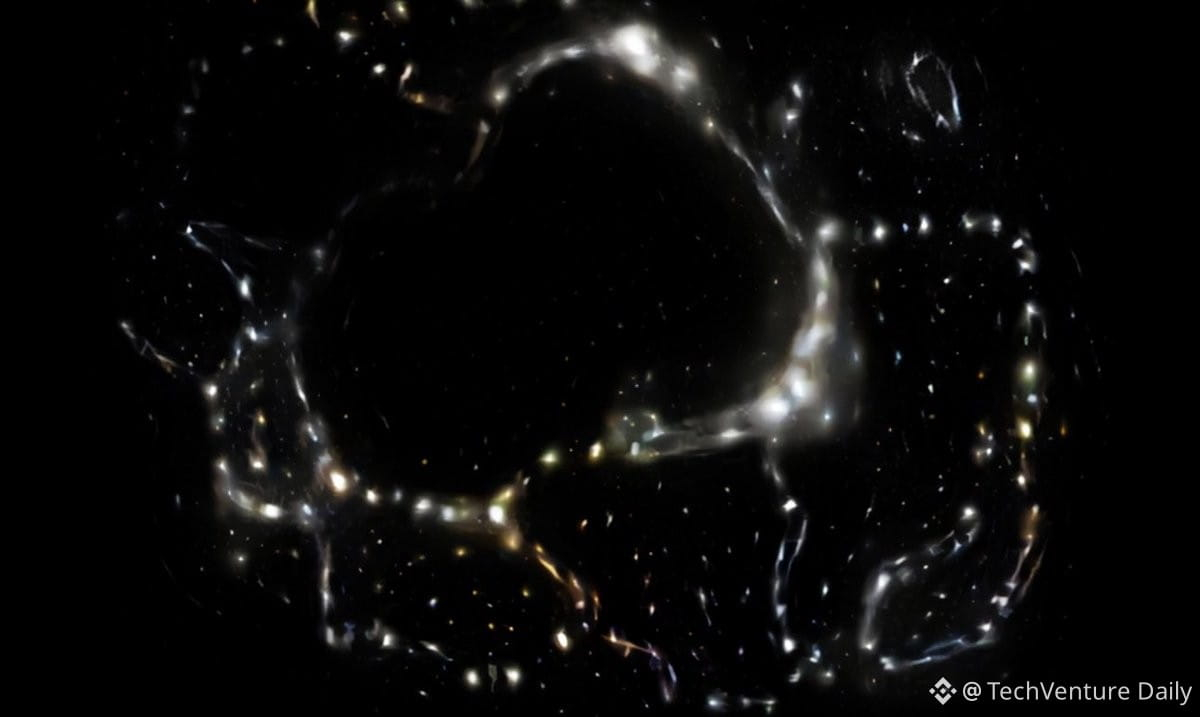
The KBC Void is a massive underdense region spanning roughly 2 billion light-years where we live. This spherical low-density bubble contains our Milky Way, the entire Local Group of galaxies, and a huge chunk of the Laniakea Supercluster.
Why this matters: Being inside a cosmic void affects how we measure the universe's expansion rate (the Hubble tension problem). Light traveling through less matter behaves differently, which could explain why local measurements of cosmic expansion don't match the cosmic microwave background data.
The visualization shows the density contrast - we're literally sitting in a cosmic depression surrounded by denser regions of space. This isn't just cool astronomy, it directly impacts our ability to calculate fundamental cosmological constants.
Why this matters: Being inside a cosmic void affects how we measure the universe's expansion rate (the Hubble tension problem). Light traveling through less matter behaves differently, which could explain why local measurements of cosmic expansion don't match the cosmic microwave background data.
The visualization shows the density contrast - we're literally sitting in a cosmic depression surrounded by denser regions of space. This isn't just cool astronomy, it directly impacts our ability to calculate fundamental cosmological constants.