I keep coming back to the part of TermMax that sounds too practical: fixed-cost leverage.
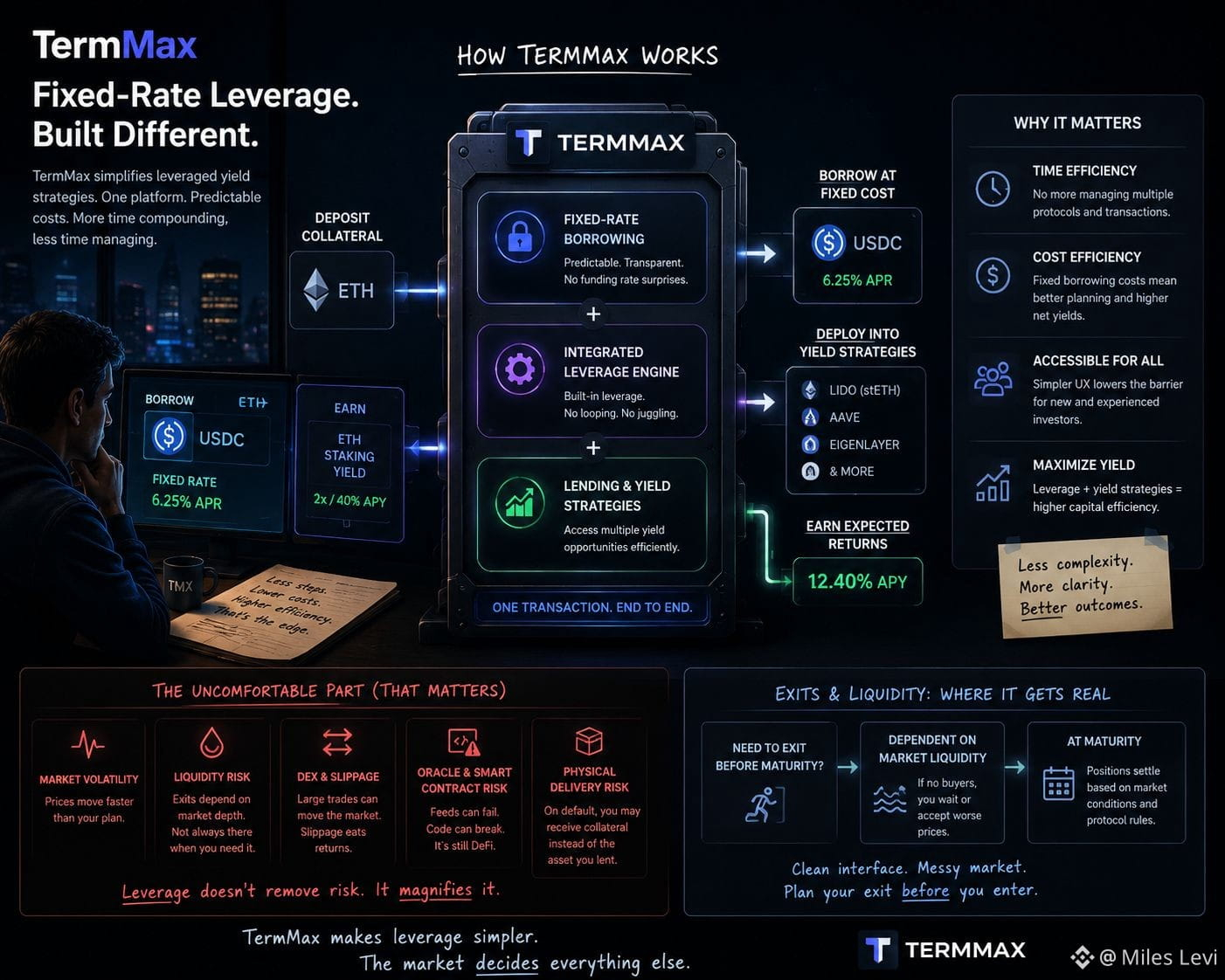
Crypto has spent years making leverage look sophisticated when a lot of it was the same trade repeated. Borrow, swap, loop, rebalance, hope funding behaves. TermMax compresses that into a defined rate, a defined term, and one transaction. It feels less like chasing yield and more like removing friction.
But friction is sometimes where the risk hides.
A fixed borrowing cost only feels safe if the thing you’re leveraging keeps producing enough yield to justify it. If the yield falls, the debt is still there. TermMax itself flags market volatility, DEX liquidity, slippage, oracle failures and smart-contract risk around leveraged positions.
Then there is liquidity at the wrong moment. Fixed-term markets look clean when everything is calm. When everyone wants out, the interface cannot create buyers. Exits depend on market depth. Even TermMax’s physical-delivery design means a lender in stress may receive collateral instead of the asset they supplied.
I’ve watched DeFi turn “one-click” into “one-click into something I haven’t fully thought through.”
So I’m interested, but not convinced. It makes leverage easier to operate, not safer. It moves complexity behind the interface.
That is the real test: what happens when yields compress, liquidity disappears, and everyone wants the exit at once.
Markets collect their fee somewhere. I’m interested in where this one collects it.
#termmax @TermMax
Crypto has spent years making leverage look sophisticated when a lot of it was the same trade repeated. Borrow, swap, loop, rebalance, hope funding behaves. TermMax compresses that into a defined rate, a defined term, and one transaction. It feels less like chasing yield and more like removing friction.
But friction is sometimes where the risk hides.
A fixed borrowing cost only feels safe if the thing you’re leveraging keeps producing enough yield to justify it. If the yield falls, the debt is still there. TermMax itself flags market volatility, DEX liquidity, slippage, oracle failures and smart-contract risk around leveraged positions.
Then there is liquidity at the wrong moment. Fixed-term markets look clean when everything is calm. When everyone wants out, the interface cannot create buyers. Exits depend on market depth. Even TermMax’s physical-delivery design means a lender in stress may receive collateral instead of the asset they supplied.
I’ve watched DeFi turn “one-click” into “one-click into something I haven’t fully thought through.”
So I’m interested, but not convinced. It makes leverage easier to operate, not safer. It moves complexity behind the interface.
That is the real test: what happens when yields compress, liquidity disappears, and everyone wants the exit at once.
Markets collect their fee somewhere. I’m interested in where this one collects it.
#termmax @TermMax