I used to assume liquidation on a bitcoin backed loan would work basically the same as any other DeFi liquidation, a smart contract notices the position is underwater and immediately seizes the collateral. changed my mind once I thought through where that collateral actually sits.
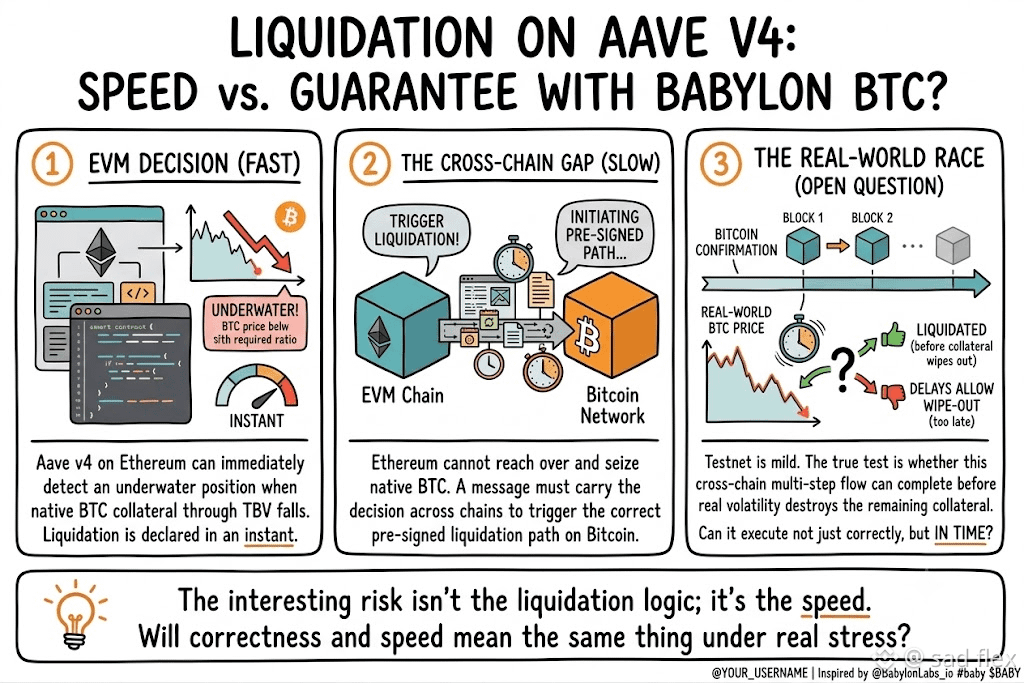
Aave v4 makes the liquidation decision on Ethereum, the moment native BTC collateral through TBV falls under the required ratio. but the BTC itself never left bitcoin, it's sitting in a vault secured by pre-signed bitcoin transactions, not by a contract Ethereum can just call directly. Ethereum can decide a liquidation should happen. it can't reach over and execute one on bitcoin the way it would with an ERC-20.
so something has to carry that decision from one chain to the other, trigger the correct pre-signed liquidation path, and get it confirmed on bitcoin, all while the price that made liquidation necessary keeps moving. every one of those steps takes time bitcoin's block times don't hurry up for.
that's not a flaw exclusive to TBV, cross-chain liquidations are hard everywhere. but it does mean the interesting risk isn't whether liquidation logic is correct, it's whether it's fast enough. a liquidation that's technically guaranteed to eventually execute isn't the same as one that executes before the borrower's remaining collateral gets wiped out by the delay itself.
testnet volatility is mild by design, which means this exact gap probably won't show itself yet. still worth running the borrow flow at btc-vaults.testnet.babylonlabs.io and paying attention to how the liquidation path is described, not whether it triggers, since it likely won't under calm conditions.
the question isn't whether TBV can liquidate native BTC collateral correctly
it's whether correctly and in time turn out to mean the same thing once real volatility shows up
@BabylonLabs_io #baby $BABY
#OilCrashes9% #USIranTalksToBegin #USJapanJointYenInterventionFirstSince2011
#CardanoRisesNearly10%
$BLESS $MANTRA
Aave v4 makes the liquidation decision on Ethereum, the moment native BTC collateral through TBV falls under the required ratio. but the BTC itself never left bitcoin, it's sitting in a vault secured by pre-signed bitcoin transactions, not by a contract Ethereum can just call directly. Ethereum can decide a liquidation should happen. it can't reach over and execute one on bitcoin the way it would with an ERC-20.
so something has to carry that decision from one chain to the other, trigger the correct pre-signed liquidation path, and get it confirmed on bitcoin, all while the price that made liquidation necessary keeps moving. every one of those steps takes time bitcoin's block times don't hurry up for.
that's not a flaw exclusive to TBV, cross-chain liquidations are hard everywhere. but it does mean the interesting risk isn't whether liquidation logic is correct, it's whether it's fast enough. a liquidation that's technically guaranteed to eventually execute isn't the same as one that executes before the borrower's remaining collateral gets wiped out by the delay itself.
testnet volatility is mild by design, which means this exact gap probably won't show itself yet. still worth running the borrow flow at btc-vaults.testnet.babylonlabs.io and paying attention to how the liquidation path is described, not whether it triggers, since it likely won't under calm conditions.
the question isn't whether TBV can liquidate native BTC collateral correctly
it's whether correctly and in time turn out to mean the same thing once real volatility shows up
@BabylonLabs_io #baby $BABY
#OilCrashes9% #USIranTalksToBegin #USJapanJointYenInterventionFirstSince2011
#CardanoRisesNearly10%
$BLESS $MANTRA