


Author: Ally Zach, Messari analyst; Translation: Golden Finance 0xxz
1. Friend.tech has had more than 300,000 unique users since its launch, but is the platform’s growth sustainable?
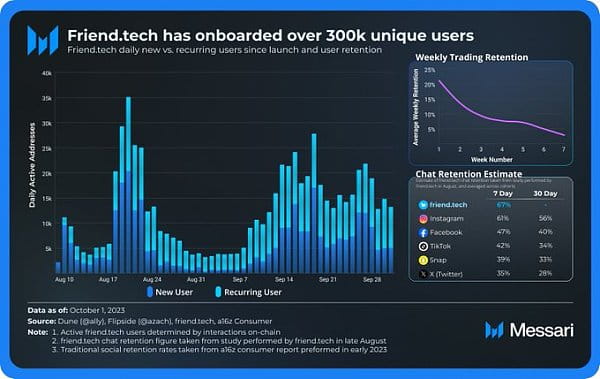
2. Although there were fluctuations shortly after launch, friend.tech's user activity has stabilized, with an average of 6,000 new users and 9,000 old users daily. However, the average weekly transaction retention rate has declined over time, from 22% dropped to just under 5%...
3. This may be due to the fact that friend.tech is not suitable for passive content consumption (submersible users). The current state of chat discoverability doesn't help, users need to pay to test the chat, there is a 10% tax on entry, and an additional 10% if the chat is unsuccessful
4. However, friend.tech’s 7-day chat retention rate estimate actually exceeds that of traditional social platforms. Although users’ transactions may be less consistent, perhaps they are finding chats they like, thus reducing the need for further transactions.
5. Despite some retention challenges, transaction activity on friend.tech has stabilized in September, and the platform’s TVL reached a new high of $50 million. Taken together, these metrics serve as indicators of the health of the platform and its continued growth potential.
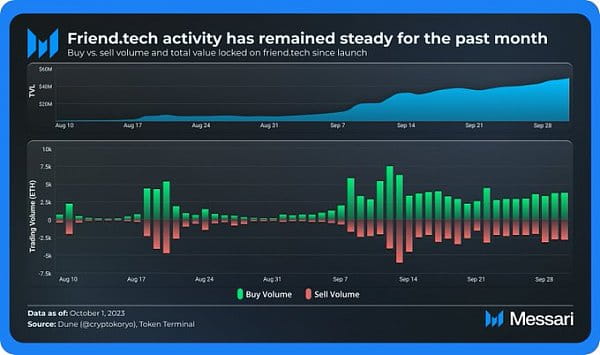
6. friend.tech has an average daily revenue of about $320,000. For some perspective, this is 6 times the current daily revenue of OpenSea.
7. From a broader perspective, since its launch, friend.tech's daily revenue/total revenue ratio has exceeded DeFi giants such as Lido, Maker and Aave by more than 100 times.
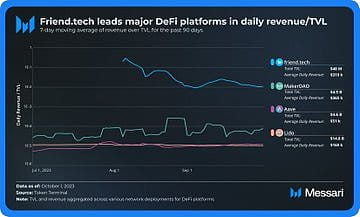
8. The Revenue/TVL ratio both indicates optimized business model execution and serves as a predictor of the platform’s ability to generate sustainable revenue.
9. While friend.tech’s revenue/TVL ratio is high, does this really indicate that friend.tech’s appeal and fee model are sustainable in the long term? Or does this indicate that friend.tech is just getting started and has yet to address the upcoming challenges of scalability and sustainability?
10. friend.tech’s revenue structure is based on a 10% transaction fee, half of which goes directly to content creators on its platform. To date, creators have earned a total of 11,000 ETH, or about $18 million, from users purchasing their keys.
11. On a per-user basis, spending has considerable variability, with a median of 0.04 ETH and a maximum of approximately 250 ETH.
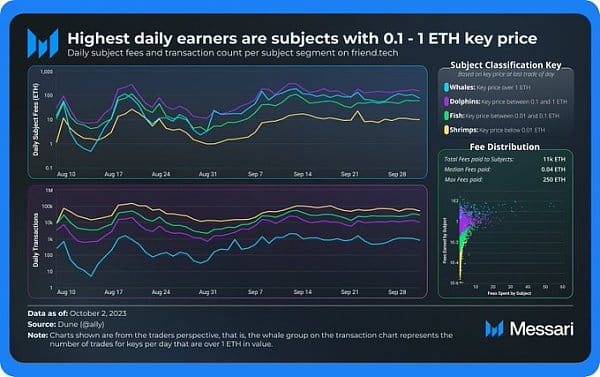
12. Unlike traditional platforms where content pricing is essentially guesswork, friend.tech allows market dynamics to determine value, potentially leading to fairer compensation for creators. However, this also poses challenges to creators who are accustomed to traditional subscription models.
13. The average monthly subscription fee for entry-level creators ranges from $5 on Substack, Patreon, Twitter, and Twitch to $10-14 on OnlyFans. For these creators, according to the current joint curve, migrating to friend.tech will exclude most of their subscribers after 7 keys.
14. Concerns about friend.tech’s future post-airdrop remain, and while current participation and financial data look promising, it is critical to maintain this momentum.
15. The platform faces a dual challenge: effectively establishing itself in the social networking space and continually incentivizing high-quality creator content. Both are critical to ensuring continued user engagement and revenue stability.