
#climatefinance
climatefinance
694 views
8 Discussing
Hot
Latest

See translation
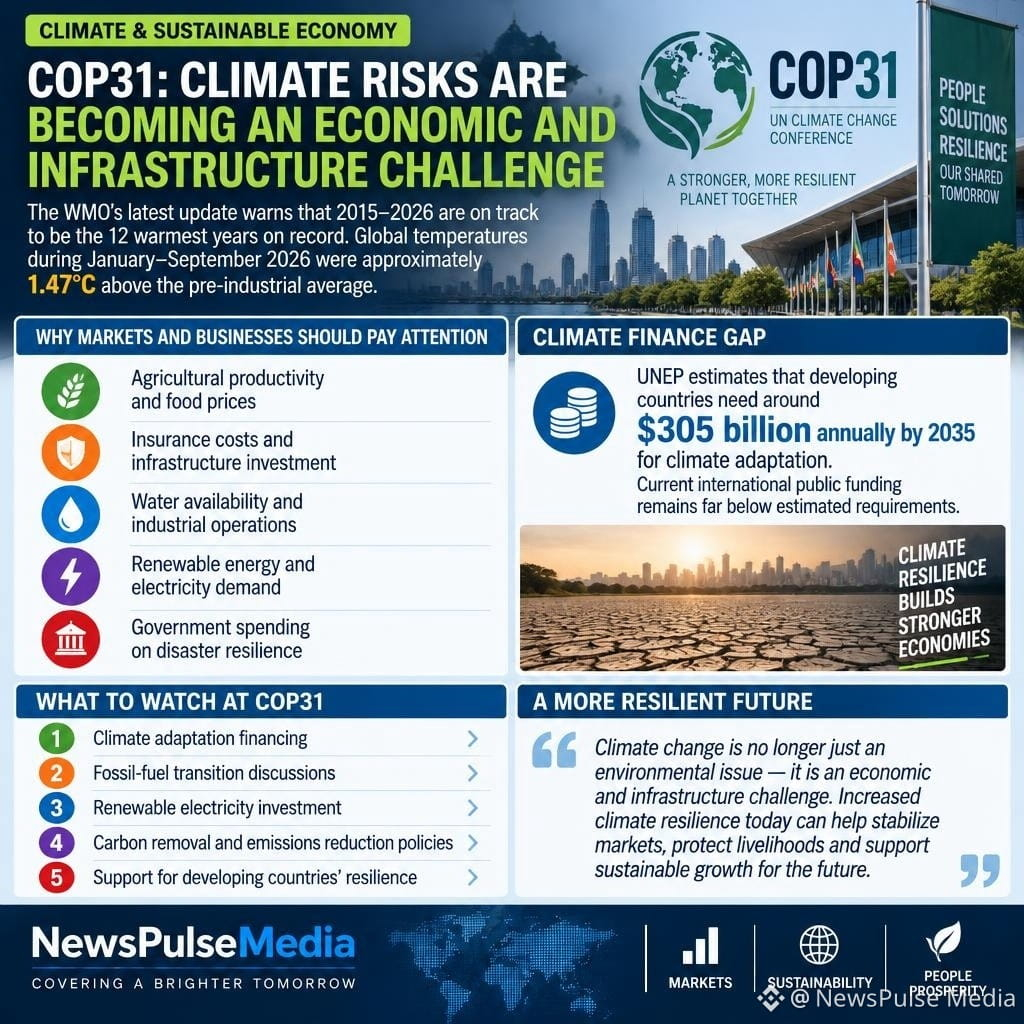
COP31: Climate Risks Are Becoming an Economic and Infrastructure Challenge
The WMO's latest update warns that 2015–2026 are on track to be the 12 warmest years on record.
Global temperatures during January–September 2026 were approximately 1.47°C above the pre-industrial average.
Why markets and businesses should pay attention
Climate-related risks can influence:
- Agricultural productivity and food prices
- Insurance costs and infrastructure investment
- Water availability and industrial operations
- Renewable energy and electricity demand
- Government spending on disaster resilience
Climate finance gap
UNEP estimates that developing countries need around $305 billion annually by 2035 for climate adaptation. Current international public funding remains far below estimated requirements.
What to watch at COP31:
1. Climate adaptation financing
2. Fossil-fuel transition discussions
3. Renewable electricity investment
4. Carbon removal and emissions reduction policies
5. Support for climate-vulnerable countries
Market perspective: Climate resilience is increasingly relevant to long-term economic planning. However, climate-related announcements should be distinguished from funded and implemented projects.
This is environmental and economic analysis, not investment advice.
Sources: UN climate reports · WMO COP31 update.
#BinanceSquare #ClimateChange #GreenEnergy #ClimateFinance #Sustainability #GlobalEconomy
1
26
Log in to explore more content
Join global crypto users on Binance Square
⚡️ Get latest and useful information about crypto.
💬 Trusted by the world’s largest crypto exchange.
👍 Discover real insights from verified creators.
Email / Phone number
Trending Topics
1
#A Packed Week of Earnings and Data Tests Markets
16,798 views
160 Discussing
2
#AnthropicIPOTestsInvestorAppetiteForAI
12,409 views
317 Discussing
3
#HuangReportedlyConsidersReturnToNvidia
33,503 views
505 Discussing
4
#CryptoSelloffTriggersMultipleWhaleLiquidations
321,014 views
2,543 Discussing
5
#BitcoinSpotETFsPost$1.065BOutflowsForThirdStraightWeek
3,817 views
84 Discussing
6
#About64000BitcoinMiningMachinesReportedlyHijacked
28,680 views
344 Discussing
7
#USSpotXRPETFsSeeLargestWeeklyOutflowIn8Months
245,800 views
1,956 Discussing
8
#WillFOMCMinutesReinforceRateHikeExpectations?
93,208 views
996 Discussing
9
#BitcoinActiveSupplyInProfitDropsBelow45%
321,145 views
2,163 Discussing
10
#KavaSaysAbnormalActivityLimitedToKavaLend
210,465 views
1,210 Discussing