


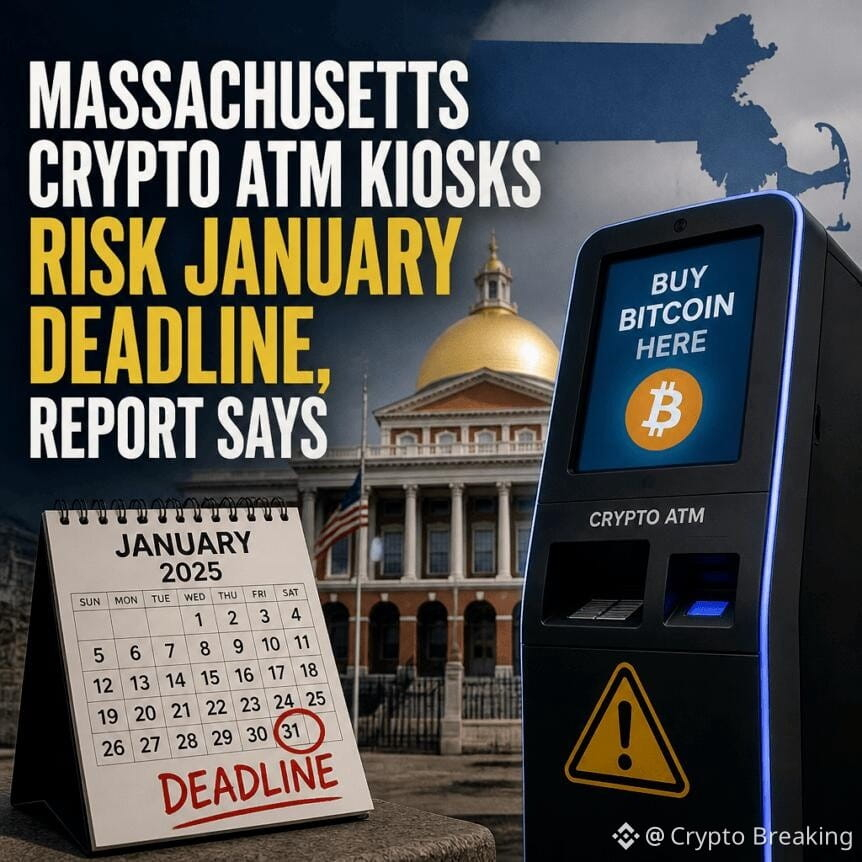
A fast-approaching legislative deadline could determine whether Massachusetts bans cryptocurrency ATM kiosks in their current form. Proposed legislation would prohibit crypto ATM machines across the state unless it is enacted before Jan. 5, according to a Sunday report by the Boston Herald.
The bill’s sponsor, Massachusetts state Senator John Cronin, argues that the policy is necessary to reduce theft and fraud tied to kiosk operators. Cronin said he wants Massachusetts to “stop being a soft target” for ATM-related theft, citing what he described as growing community awareness of harm from these machines.
Key takeaways
Massachusetts lawmakers are considering a statewide ban on crypto ATM kiosks, with Jan. 5 set as the deadline to pass and sign the bill.
Sen. John Cronin frames the measure as a response to fraud complaints and theft cases, arguing regulation alone may not prevent losses.
Federal data cited in the report indicates crypto ATM kiosks were linked to 13,460 complaints in 2025 totaling nearly $389 million in losses.
While some states opt for guardrails instead of bans, other jurisdictions have already moved toward full prohibition, including Hawaii.
Why Massachusetts is considering a ban now
The Massachusetts bill is positioned as a decisive move rather than an incremental adjustment to existing oversight. Cronin told the Boston Herald that some governments have attempted to regulate crypto kiosks instead of banning them, but he argued that fraud and theft continue under those approaches.
In his view, the machines can still be used in scams even when rules exist—especially when bad actors can direct victims to kiosk screens to convert funds or send crypto to fraudulent destinations. That dynamic, supporters say, makes a ban more straightforward than compliance-based fixes.
Federal complaint data underscores the enforcement pressure
The Massachusetts debate is unfolding amid broader law-enforcement attention. The FBI’s IC3 annual reporting, referenced in the Boston Herald piece, states that it received 13,460 complaints about crypto ATM kiosks in 2025, with reported losses of nearly $389 million.
That level of consumer harm is likely one reason state lawmakers are accelerating action. Even without proving the direct role of every kiosk in each case, the complaint volume is substantial enough to shape policy priorities, particularly where scams target vulnerable residents.
From regulation to prohibition: what other states have done
Massachusetts is not acting in isolation. Earlier coverage by Cointelegraph described how Hawaii became the fourth state to enforce a total ban on digital asset kiosks. That enforcement followed similar approaches enacted in Minnesota, Tennessee, and Indiana. Cointelegraph also noted that other states had additional bills in progress.
The broader picture is uneven: the report indicates that some places pursue strict licensing or operational constraints instead of an outright ban. Still, the presence of both strategies—regulatory guardrails in some jurisdictions and full prohibitions in others—highlights an unresolved tension in how policymakers balance consumer access with fraud prevention.
According to the Boston Herald report, South Dakota and Wyoming have passed laws creating strict guardrails for crypto ATM activity. That contrast may be particularly relevant for Massachusetts voters and lawmakers who are weighing whether compliance mechanisms can reduce fraud or whether the kiosks themselves are too easily repurposed by scammers.
What happens if Massachusetts misses the deadline
The timing matters. Under the proposal described in the report, the bill must be passed and signed into law by Jan. 5; otherwise, it would need to be reintroduced in the next legislative session.
For crypto ATM operators, that timeline can affect planning and investment decisions, because a ban—if enacted—would represent a direct shift in operating conditions. For residents, the question is less about market access and more about risk: whether removing these kiosks will reduce the number of scam pathways that lead victims to send funds to fraudsters.
For now, the key variable remains political speed. As the deadline approaches, Massachusetts lawmakers will have to decide whether they view kiosks as an inherently vulnerable interface for criminals—or whether they believe tighter rules can meaningfully reduce losses without eliminating the technology.
Readers should watch what happens in the remaining legislative days: whether the bill gains traction, how it is framed in public hearings, and—if it advances—whether Massachusetts uses a direct ban or any transitional provisions. The next signals will determine whether this debate becomes a statewide change or a policy that must be restarted in the next session.
This article was originally published as Massachusetts Crypto ATM Kiosks Risk January Deadline, Report Says on Crypto Breaking News – your trusted source for crypto news, Bitcoin news, and blockchain updates.