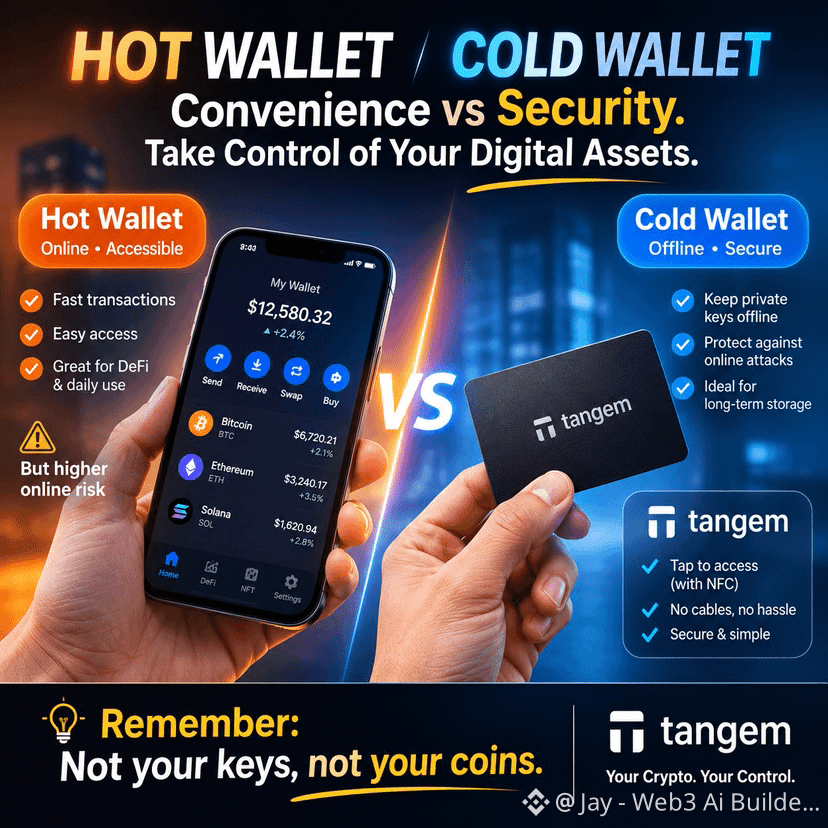
Hot Wallet vs Cold Wallet: In Crypto, Convenience and Security Are Two Different Things. 🔐
As digital assets become increasingly integrated into payments, DeFi, trading and institutional finance, one question every crypto user should understand is:
Where are your private keys stored, and who controls them?
There are two fundamental approaches to crypto wallet management.
🔥 Hot Wallets – Accessibility
Connected to the internet, hot wallets allow users to send, receive, trade and interact with Web3 applications quickly.
Great for daily transactions, DeFi and managing operational liquidity. But internet connectivity also creates additional security exposure.
❄️ Cold Wallets – Security
Designed to keep private keys offline, cold wallets reduce exposure to remote cyberattacks.
They are particularly useful for long-term holdings and protecting digital asset reserves.
Where does @Tangem fit in?
I've been looking at hardware wallet solutions like Tangem, which takes a different approach to cold storage.
Using NFC-enabled hardware cards, Tangem allows users to securely manage their crypto assets without relying on a traditional USB hardware wallet.
No complicated setup with cables. Simply tap your card with your smartphone to access your wallet.
It's an interesting approach to making self-custody more accessible while keeping private keys protected within the hardware.
My takeaway:
The future of digital assets isn't just about buying Bitcoin or trading tokens.
It's about understanding custody, private key ownership, security architecture and risk management.
Whether you're an individual investor, Web3 builder or institutional player, wallet security should never be an afterthought.
Remember:
Not your keys, not your coins.
But having your keys is only the beginning. Knowing how to protect them is what matters.
What do you prefer?
Hot Wallet for convenience or Cold Wallet for security?
Get a @Tangem wallet using this link for additional 15% discount lnkd.in/gCKa3yqR
#Crypto #Web3 #Tangem #ColdWallet #HotWallet #DigitalAssets #SelfCustody #Blockchain